
New Copelandia Grow Kits: Hawaiian and Florida Arrive
Definition
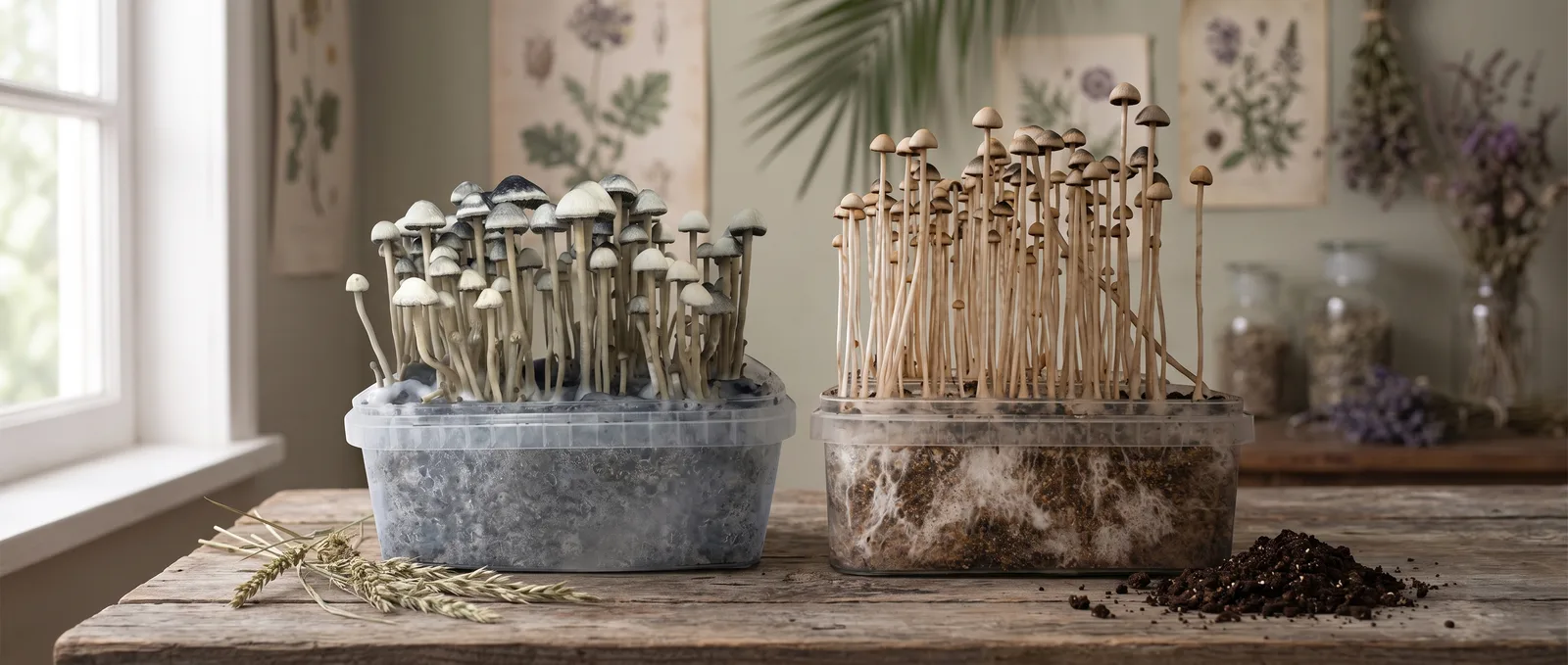
Azarius has added two Panaeolus cyanescens kits to the shop: the Copelandia Hawaiian and the Copelandia Florida. Both are several times stronger than cubensis, and one is far easier to grow than the other.
The new Copelandia grow kits are ready-to-fruit Panaeolus cyanescens kits that let you grow one of the strongest dung-loving mushroom species at home, straight from a fully colonised block. As of September 2026 there are two of them in the Azarius shop: the Copelandia Hawaiian Grow Kit and the Copelandia Florida Grow Kit. This post is written for adults aged 18 and over, and it covers the basics: what Copelandia actually is, why it behaves so differently from the Psilocybe cubensis kits most beginners start with, and which of the two new arrivals suits which grower.
We've been selling grow kits since the early days of Azarius in 1999. It's easy to mistake Panaeolus cyanescens for just another cubensis strain with an exotic name. It isn't. It's a different genus on a different substrate, and it's several times stronger. One tip before you read any further: if you already grow cubensis, keep your Copelandia harvest in a separate, clearly labelled container. Everything else follows from that.
What makes the new Copelandia grow kits different from cubensis
The new Copelandia grow kits contain Panaeolus cyanescens, a separate species from Psilocybe cubensis. It grows on horse dung, looks nothing like a cubensis and is several times as potent. Copelandia is the old genus name, and you'll still see it on packaging and in forums. Panaeolus cyanescens is the current one. Both names mean the same mushroom.
A different mushroom on a different substrate
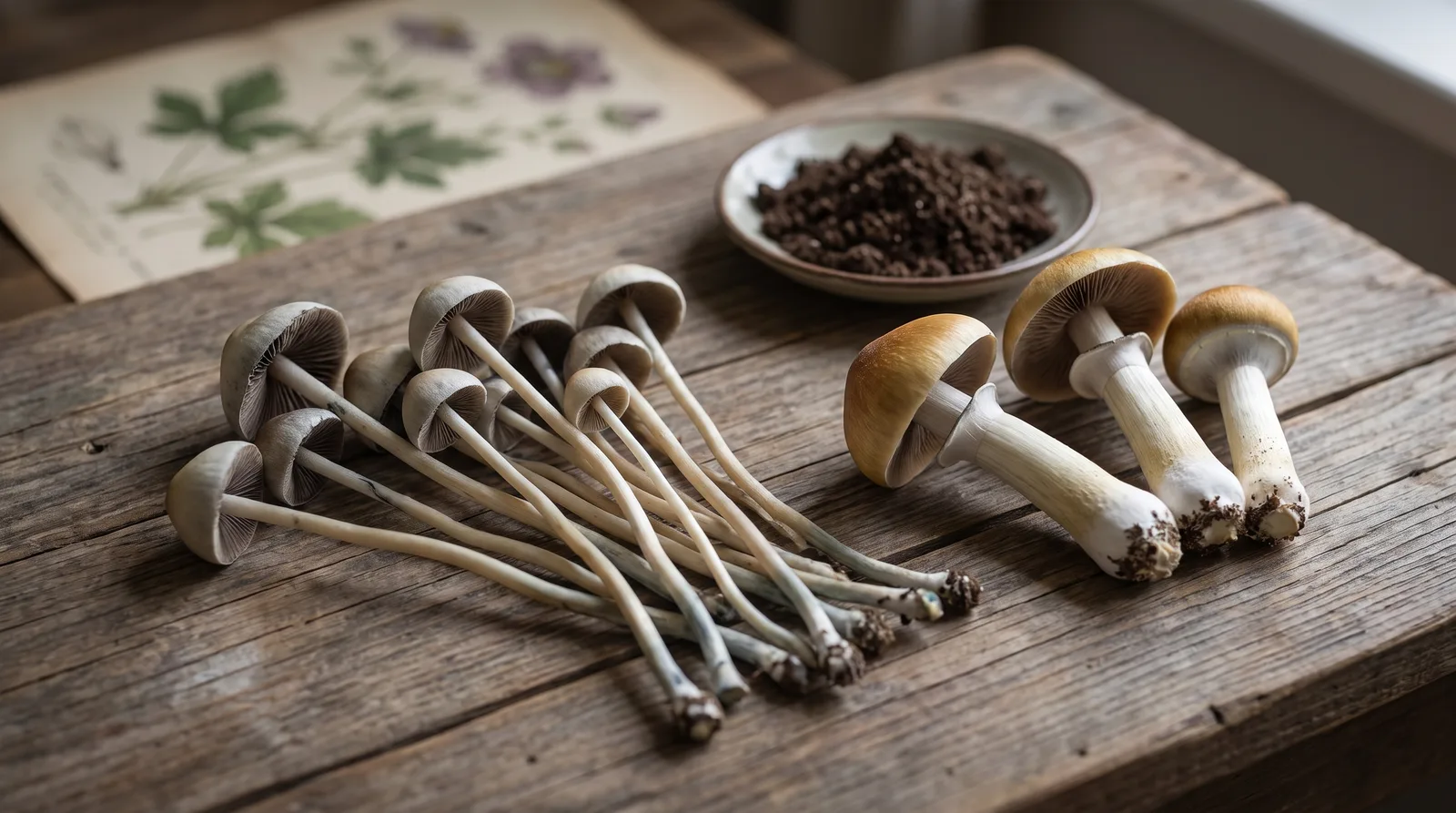
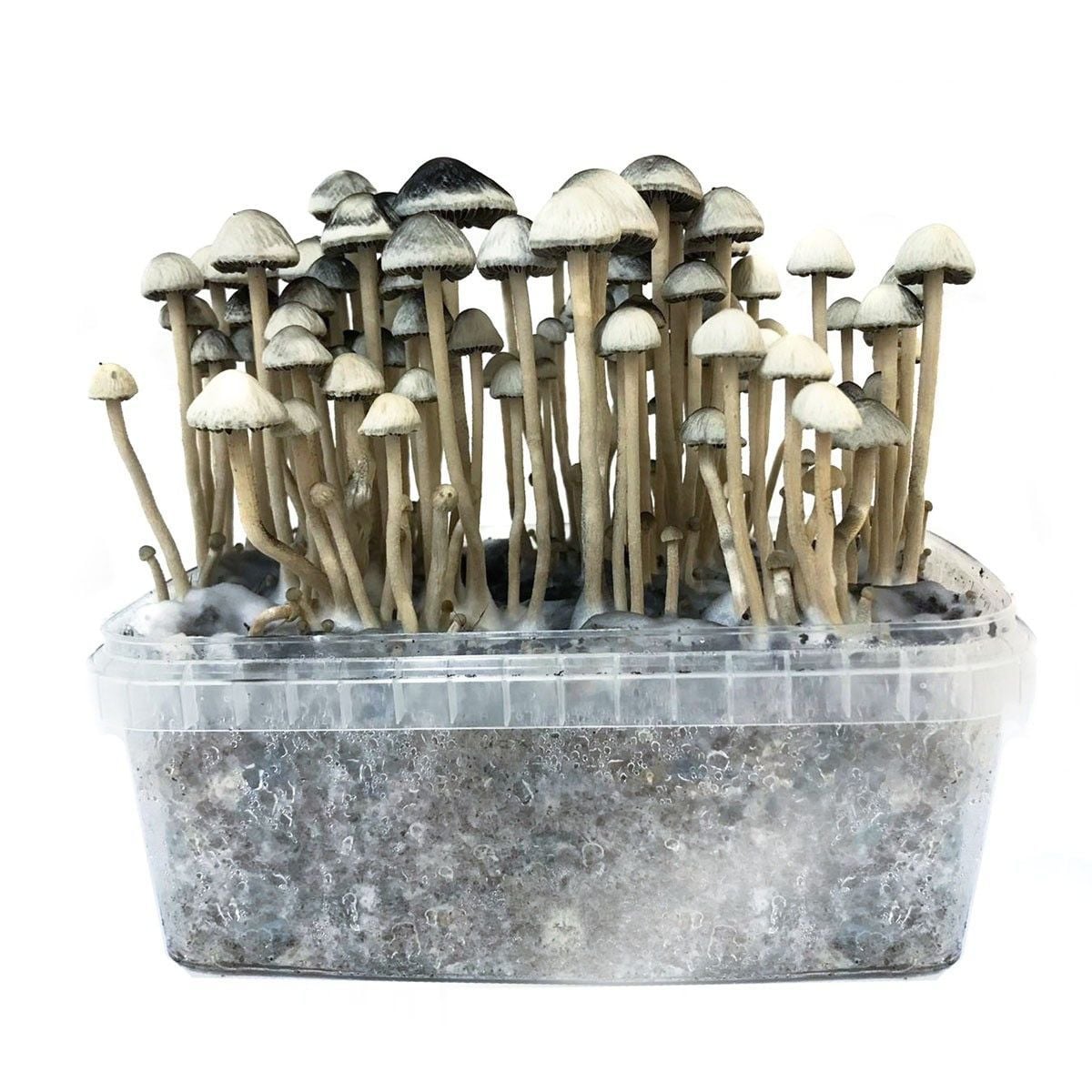
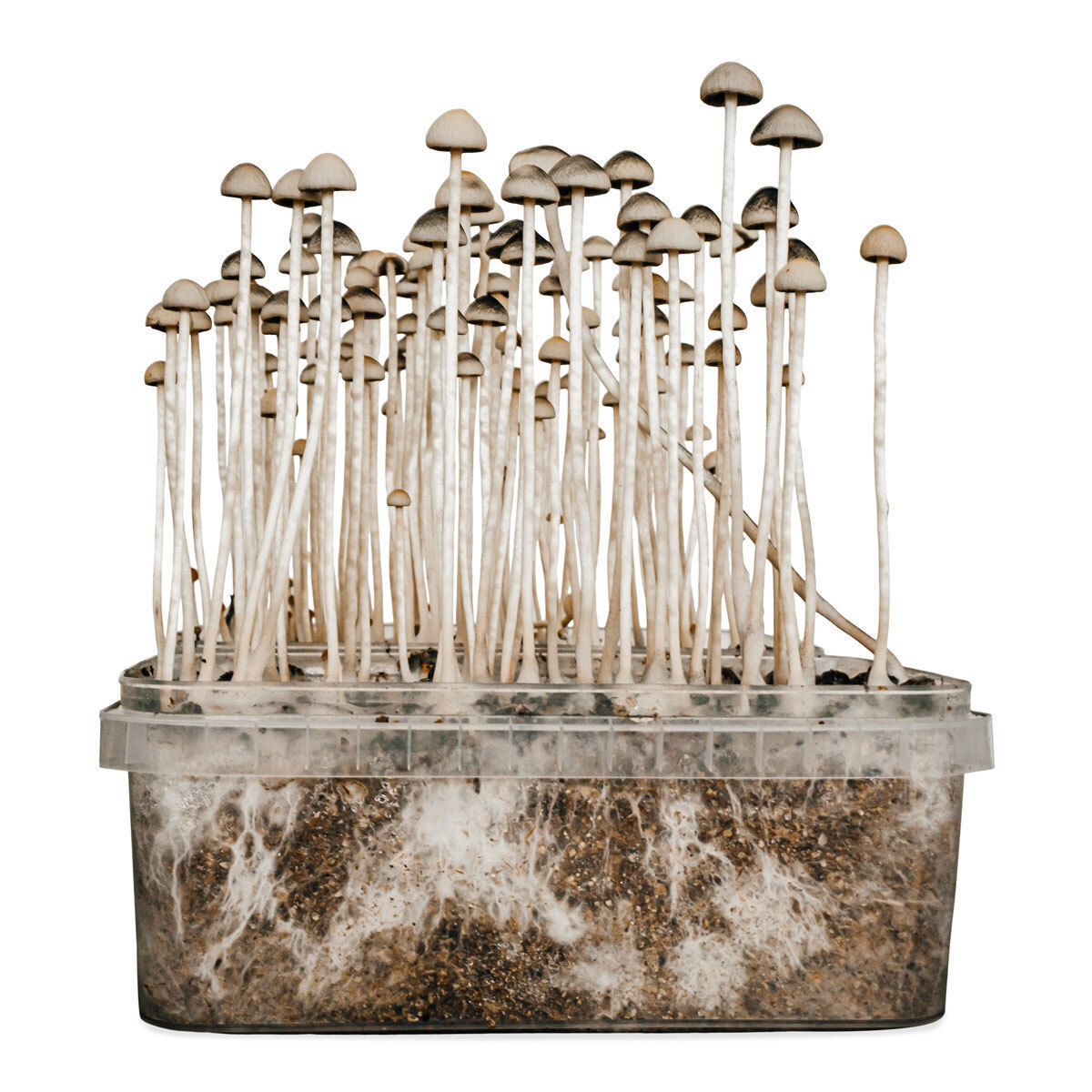
Cubensis kits usually run on grain. Both new Copelandia grow kits ship as a fully colonised 1200 ml horse dung grow block, because Panaeolus cyanescens is a dung specialist and fruits best on what it grows on in the wild. You also get 1 cup of topsoil casing layer and a grow bag. Expect slender mushrooms with thin stems and pale greyish caps that bruise blue when handled. The species name cyanescens refers to that bluing. If you're used to chunky cubensis, your first flush will look almost delicate by comparison.
Potency you have to respect
This is the part that matters most. The Hawaiian strain comes in at up to five times the potency of Psilocybe cubensis, and the Florida at more than four times. Paul Stamets' field guide Psilocybin Mushrooms of the World (1996) already placed Panaeolus cyanescens among the stronger species, so this isn't marketing inflation. The practical upshot is that the portions you know from cubensis don't carry over. Treat it as a new substance, keep set and setting in mind, and never mix it into a cubensis harvest.
| New Copelandia grow kits (Panaeolus cyanescens) | Typical cubensis kit (Psilocybe cubensis) | |
|---|---|---|
| Substrate | 1200 ml horse dung block | Usually grain-based |
| Casing | 1 cup of topsoil | Varies by kit |
| Mushroom shape | Slender, thin stems, pale caps | Stocky, thick stems, brown caps |
| Potency vs cubensis | More than 4x (Florida) to up to 5x (Hawaiian) | Baseline |
| Spore print | Black | Purple-brown |
Hawaiian vs Florida: how the new Copelandia grow kits compare
Both new Copelandia grow kits use the same 1200 ml horse dung block, grow bag and topsoil casing. They differ in difficulty, number of flushes and potency. In short, the Florida is the easier, more forgiving grower, and the Hawaiian is the stronger, fussier one.
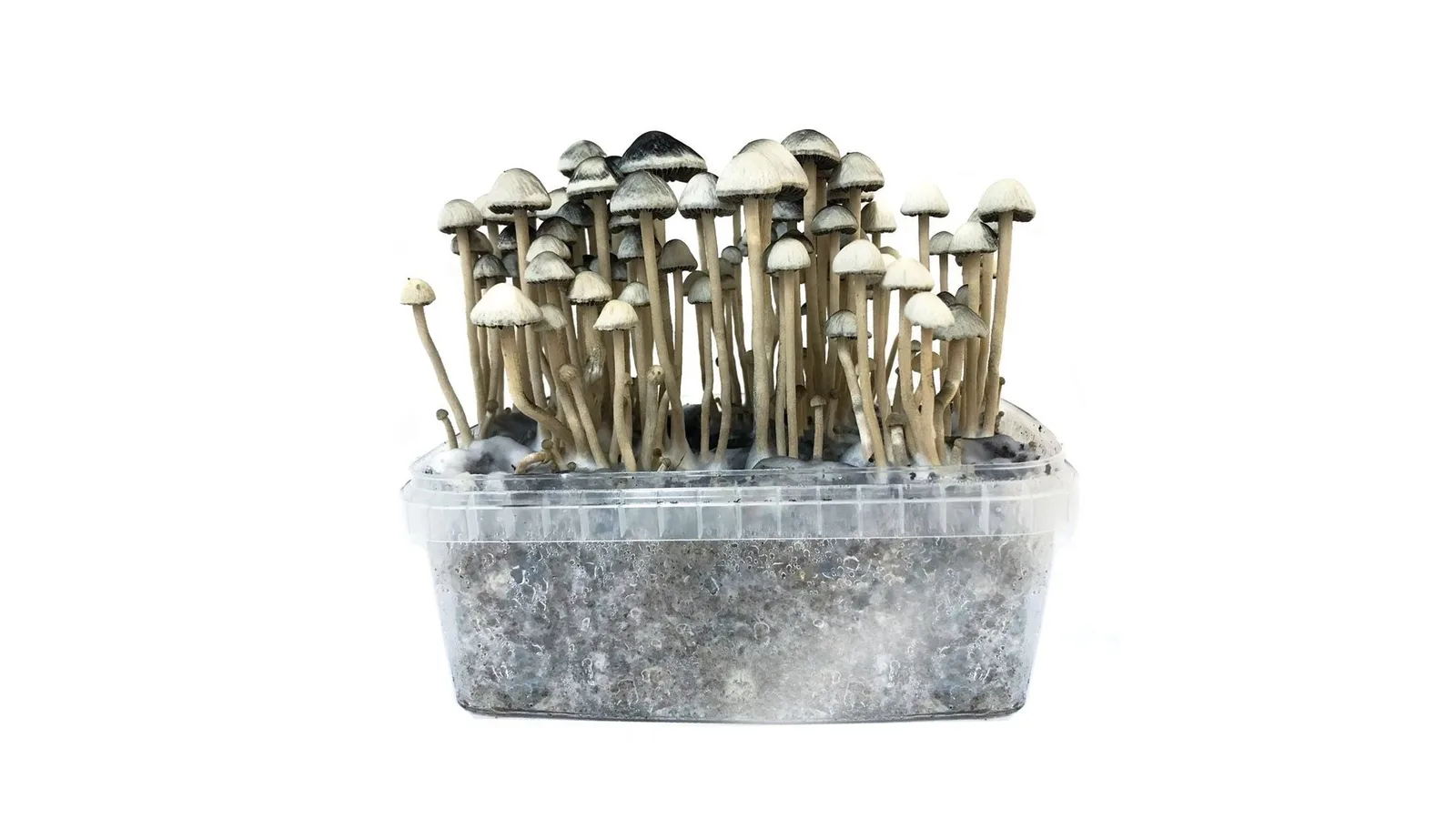
Copelandia Hawaiian Grow Kit
The Hawaiian is the one for people who already have a few grows behind them. It yields 90-130 g of fresh mushrooms in total, spread over 2-3 flushes. That's fewer flushes than the Florida, so each one counts. It ships with species-specific growing instructions, and you should read them properly. Panaeolus doesn't reward cubensis habits. The grow bag has small perforation holes, and they're there on purpose. They aren't damage, so don't tape them over. At up to five times the potency of cubensis, it is the stronger of the two new kits.
Copelandia Florida Grow Kit
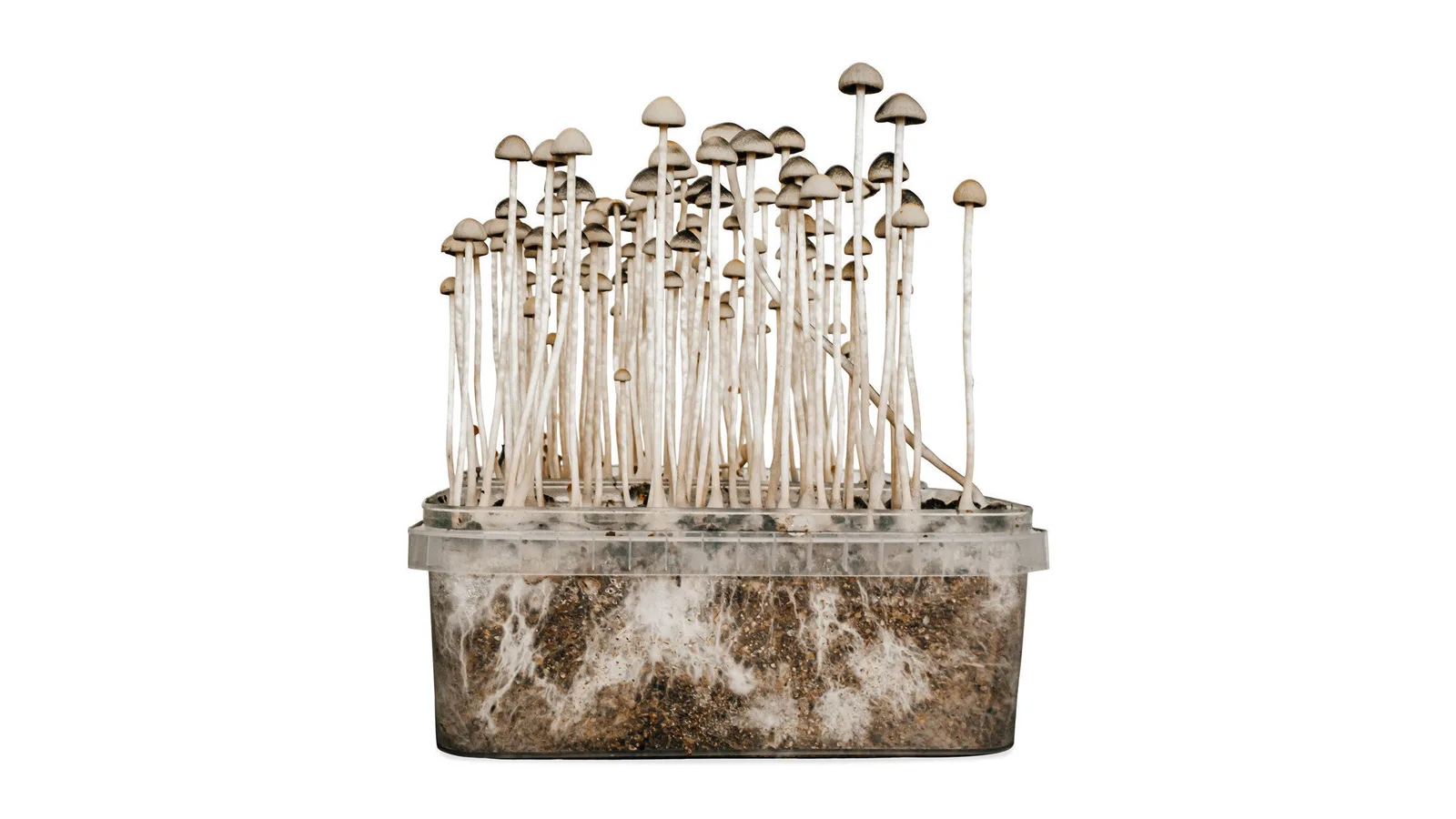
The Florida, named after the US state its strain comes from, is rated easy. It yields 100-130 g fresh in total across 3-5 flushes, and it's happiest at a steady 23-25 °C. More flushes mean a gentler learning curve: if your first one is a bit patchy, you still have plenty of chances to dial things in. Potency sits at more than four times cubensis, and the Florida experience leans towards the visual.
| Copelandia Hawaiian Grow Kit | Copelandia Florida Grow Kit | |
|---|---|---|
| Grow block | 1200 ml horse dung, fully colonised | 1200 ml horse dung, fully colonised |
| In the box | Grow bag, 1 cup topsoil casing, species-specific instructions | Grow bag, 1 cup topsoil casing |
| Total fresh yield | 90-130 g over 2-3 flushes | 100-130 g over 3-5 flushes |
| Difficulty | For experienced growers | Easy |
| Temperature | See included instructions | 23-25 °C |
| Potency vs cubensis | Up to 5x | More than 4x |
A note on those yield figures: they're totals for the whole kit, not per flush. It's an easy detail to misread.
Who each of the new Copelandia grow kits suits
Get the Florida if Panaeolus is new to you. Get the Hawaiian if you've grown before and want the strongest option. If you want our recommendation for the best Copelandia kit for a first go at Panaeolus cyanescens, it's the Copelandia Florida Grow Kit. Easy rating, a clear temperature window and up to five flushes give you room to make mistakes.
From our counter
A few cubensis kits behind you doesn't mean you're ready for the Hawaiian. Cubensis grows on grain don't teach you much about dung-loving Panaeolus, and the Hawaiian gives you only 2-3 flushes to get it right. Run a Florida first, then come back for the Hawaiian with some Copelandia experience. The Hawaiian isn't a bad kit. It just rewards people who've already made their mistakes on something more forgiving.
Honest limitations
Neither kit will out-yield a good cubensis kit by weight. Panaeolus mushrooms are slim, so 100-130 g fresh looks modest on the scale. It's also worth being upfront about the numbers. "Up to five times" and "more than four times" describe a ceiling, and we honestly can't promise you'll notice a clear strength gap between the two strains. Both play in the same heavy league. Pick on growing difficulty first and potency second.
Before you open either box
- Find a spot where the temperature stays stable. For the Florida, that means 23-25 °C.
- Leave the small holes in the grow bag alone. They're intentional.
- Have the cup of topsoil casing ready before you start, not halfway through.
- With the Hawaiian, read the species-specific instructions from start to finish before you touch the block.
- Label your Copelandia harvest and store it apart from any cubensis. At four to five times the potency, a mix-up is the last thing you want.
The short version
Two new kits, one new species for the shop. Panaeolus cyanescens is a different mushroom from cubensis: it grows on horse dung, it's slimmer, and it's several times stronger. If you're new to it, start with the Copelandia Florida Grow Kit. Save the Copelandia Hawaiian Grow Kit for when you know how Panaeolus behaves. Both are now in the grow kits section.
Last updated: September 2026
Frequently Asked Questions
5 questionsIs Copelandia the same as Panaeolus cyanescens?
Are Copelandia grow kits harder than cubensis kits?
How much does a Copelandia grow kit yield?
Which is stronger, Hawaiian or Florida Copelandia?
Why does the Copelandia grow bag have holes in it?
About this article


Joshua Askew serves as Editorial Director for Azarius wiki content. He is Managing Director at Yuqo, a content agency specialising in cannabis, psychedelics and ethnobotanical editorial work across multiple languages. Th
This blog article was drafted with AI assistance and reviewed by Joshua Askew, Managing Director at Yuqo. Editorial oversight by Adam Parsons.
Last reviewed September 25, 2026
Available at Azarius
Lab-tested quality · Amsterdam since 1999
Related Articles
Autoflower World Cup 2026 Winners: The Azarius Recap
The full Autoflower World Cup 2026 winners list plus our recap from Berlin — how the judging works and why Fast Buds and Royal Queen Seeds dominated…
Mary Jane Berlin 2026: Our Recap from the Azarius Team
The Azarius team's first-person recap of Mary Jane Berlin 2026 — the 10th anniversary of the world's biggest cannabis festival, 11–14 June at Messe…
Big Tobacco Dutch Cannabis Experiment: Marlboro Buys In
Big Tobacco Dutch cannabis experiment: Altria (Marlboro) is now a stakeholder in CanAdelaar via Cronos. Why this should worry every consumer.
Royal Queen Seeds Wins 3× First Place at HighLife Cup 2026
Royal Queen Seeds HighLife Cup 2026: three trophies for Green Crack Punch, Triple G and Sticky Queen at Europe's oldest cannabis competition.
Mary Jane Berlin 2026: Why We're Going (And You Should Too)
Mary Jane Berlin 2026 runs 11–14 June at Messe Berlin. Here's why the Azarius team makes the visit every year — and how to attend yourself.

THE PLANT Documentary: Trailer, Premiere & Cast Revealed
THE PLANT documentary trailer is here. Royal Queen Seeds and High Films premiere at Mary Jane Berlin on 11 June 2026. Watch and save the date.