
This article discusses psychoactive substances intended for adults (18+). If you have a health condition or take medication, consult a doctor before use. Our age policy
Common Grow Kit Mistakes: 9 Issues That Ruin Flushes
Definition
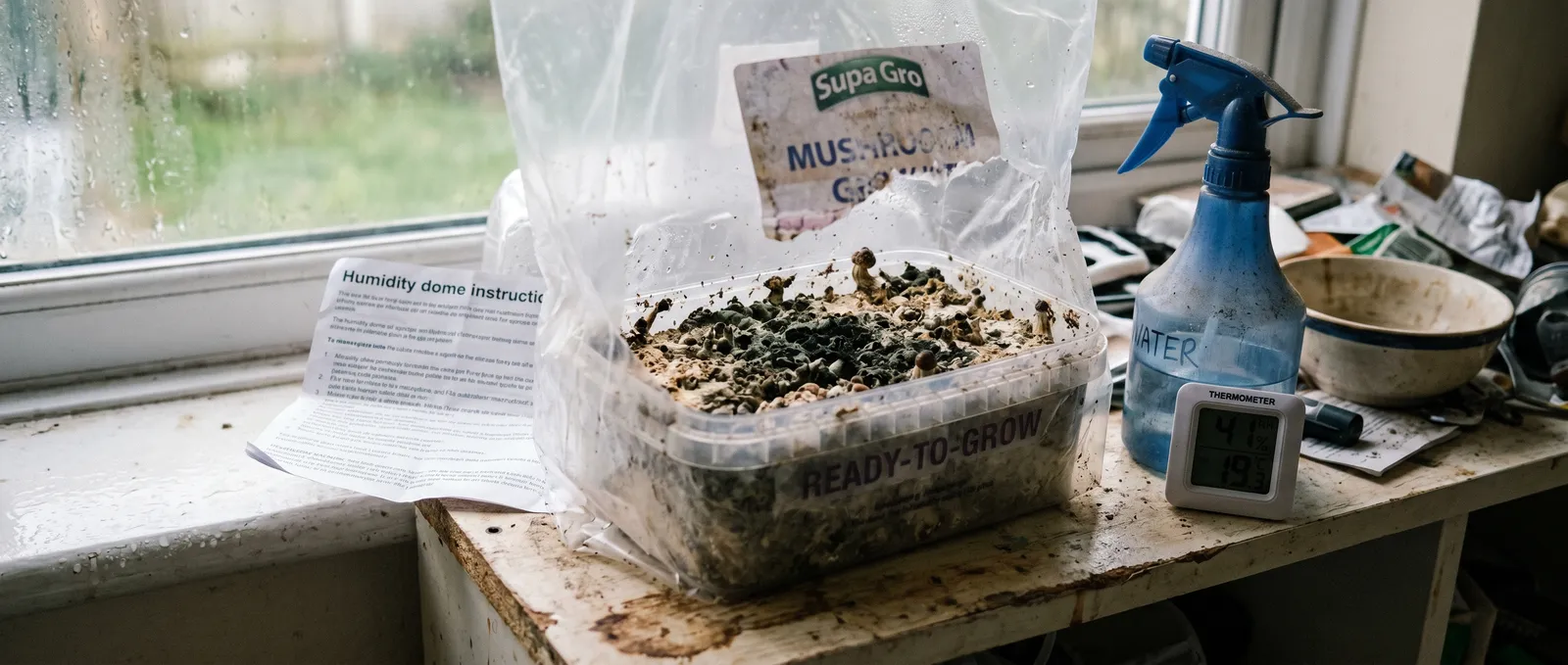
Common grow kit mistakes are the recurring errors — skipping cold shock, oversoaking, CO₂ buildup, misidentifying contamination, late harvest — that turn a fully colonised kit into a failed flush. Most are preventable with correct temperature (21–24°C), humidity (85–95%) and daily fresh air exchange (Stamets, 2005).
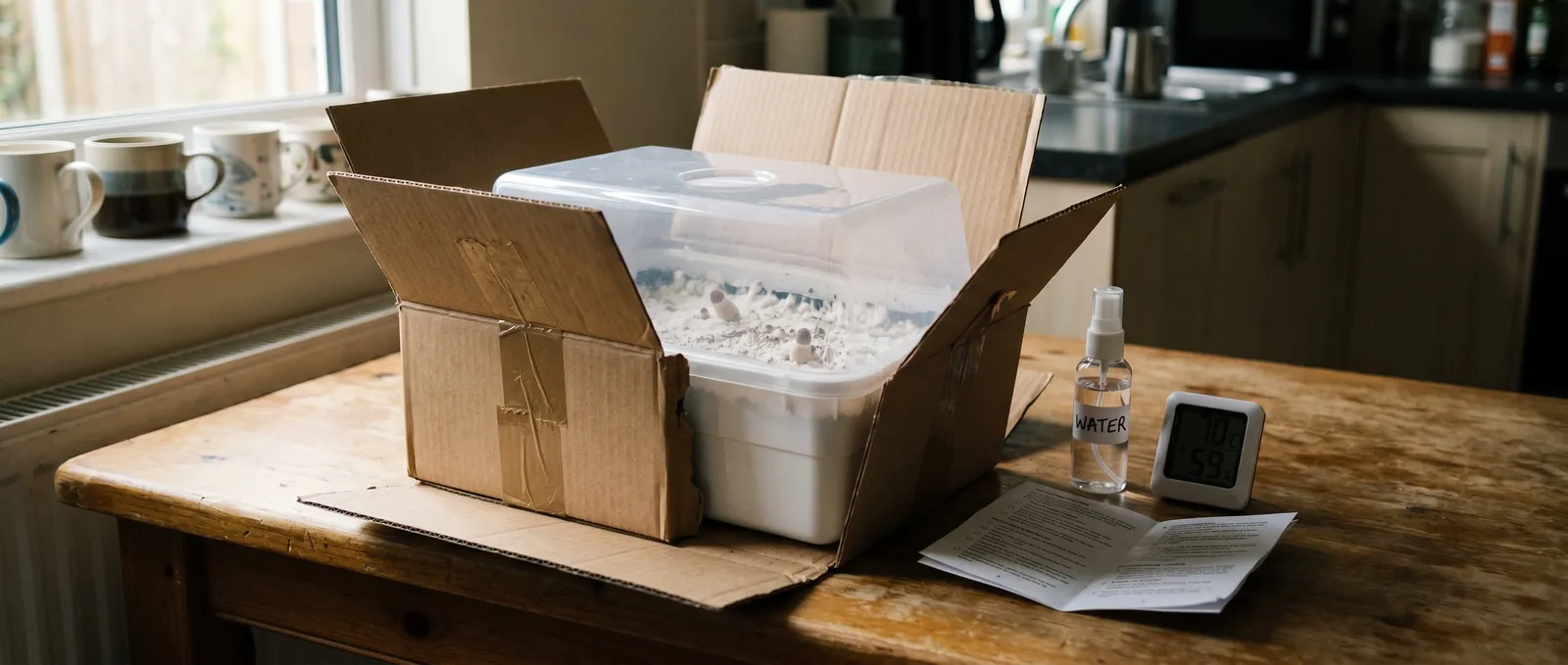
Common grow kit mistakes are a recurring set of user errors that turn a fully colonised kit into a failed flush. Grow kits are designed to be close to foolproof — fully colonised substrate, casing layer pre-applied, filter bag ready to go. And yet the same handful of common grow kit mistakes show up flush after flush, year after year. This guide walks through the most common grow kit mistakes in the order they tend to happen, from the moment you get the box to the moment you wonder why flush two never came. If you want to buy a grow kit and get started, this guide will help you avoid the pitfalls before you order one.
This guide is educational. Azarius does not provide formal advice.
Mistake 1: Skipping the cold shock
Cold shock is the 5–12 hour fridge step at 2–5°C that triggers pinning, and it is the single most skipped step on the instruction leaflet. After soaking the cake and adding water to the filter bag, the kit needs that temperature drop before it moves to room temperature. This mimics a seasonal shift and triggers pinning — without it, mycelium stays in vegetative mode and either pins late, pins unevenly, or aborts.
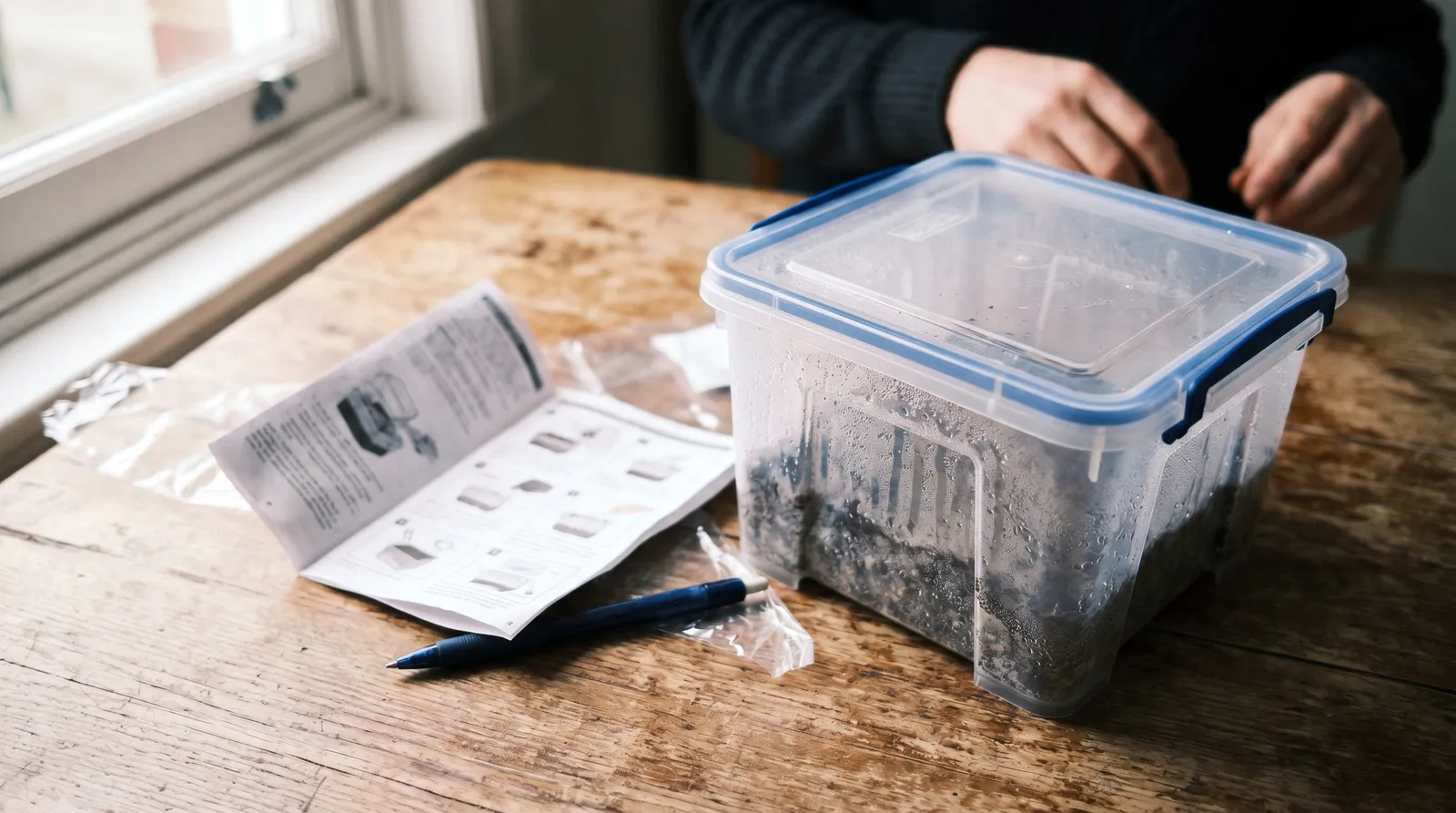
Kits that go straight from the postbox to a warm windowsill are the number one reason a Golden Teacher Grow Kit "just sits there" for three weeks. Cold shock is not optional. Chamberlin and Stamets (2005) describe the same temperature-drop mechanism across cubensis strains — a drop of 6–10°C reliably initiates fruiting.
Mistake 2: Drowning the cake
Soak the cake for no more than 12 hours — not 24, not 48. The instruction "soak for 12 hours" gets stretched by growers who figure more water equals more mushrooms. It doesn't. Oversoaked substrate loses oxygen exchange, bacteria take the opportunity, and you get pink or yellow wet-rot patches within days. The casing layer turns slimy instead of firm.
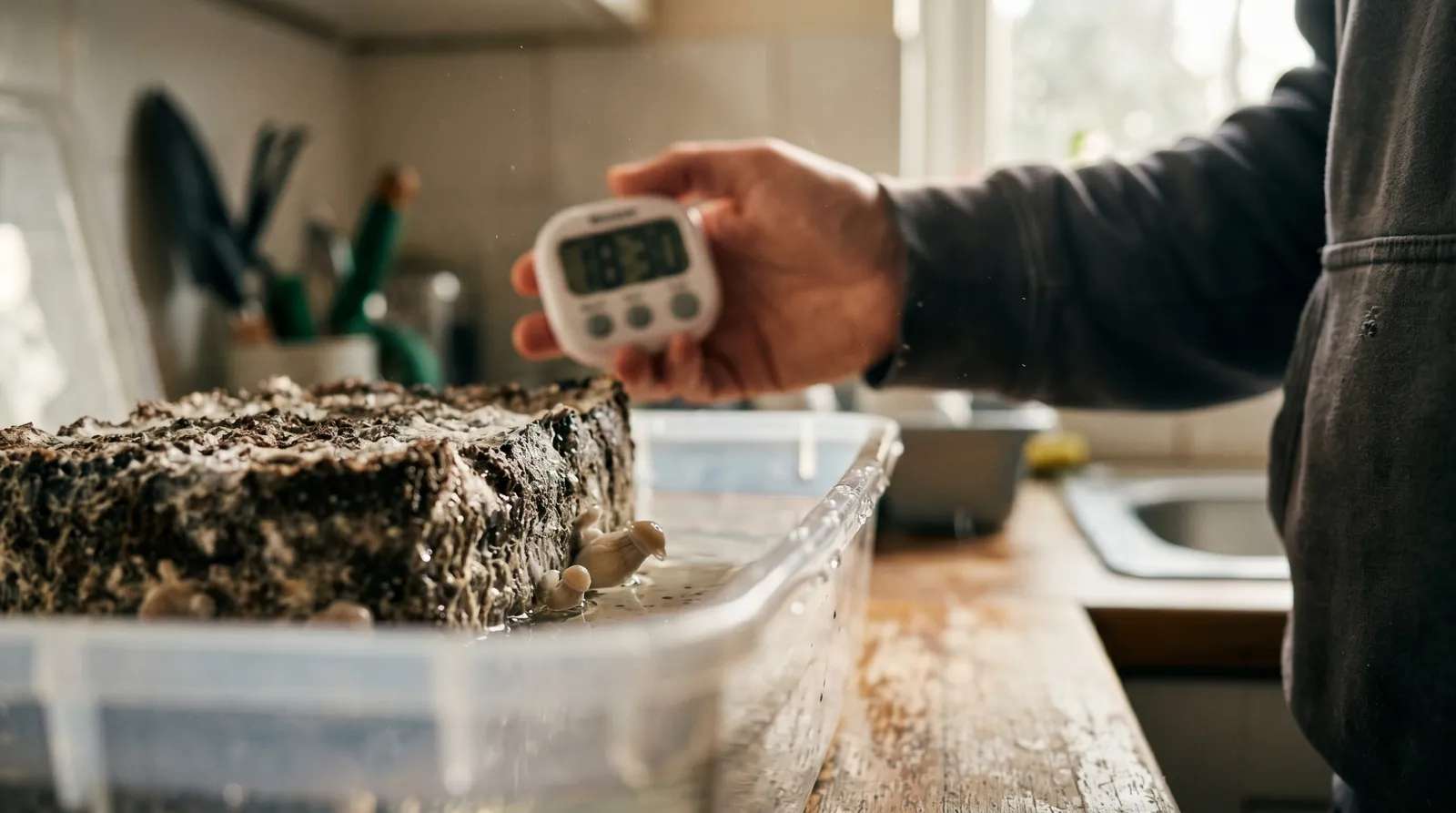
12 hours under cold tap water is the ceiling. Tip the bag to drain thoroughly before resealing — residual standing water in the bottom corner of the filter bag is where contamination starts. On a Ready-2-Grow Bag the situation is different: you don't soak it at all. Flip the bag, leave it sealed, wait for pins. Treating a sealed R2G like a plastic-tub Grow Kit is a classic cross-format error.
Mistake 3: Misting the mushrooms, not the bag
Mist the inside walls of the filter bag, not the casing or the pins themselves. Water droplets landing directly on developing primordia cause "bruising" — blue-black spots that aren't contamination but do degrade the harvest. A few pumps of a fine spray bottle twice daily, with the bag briefly opened and fanned for fresh air exchange (FAE), is all the humidity management a kit needs.
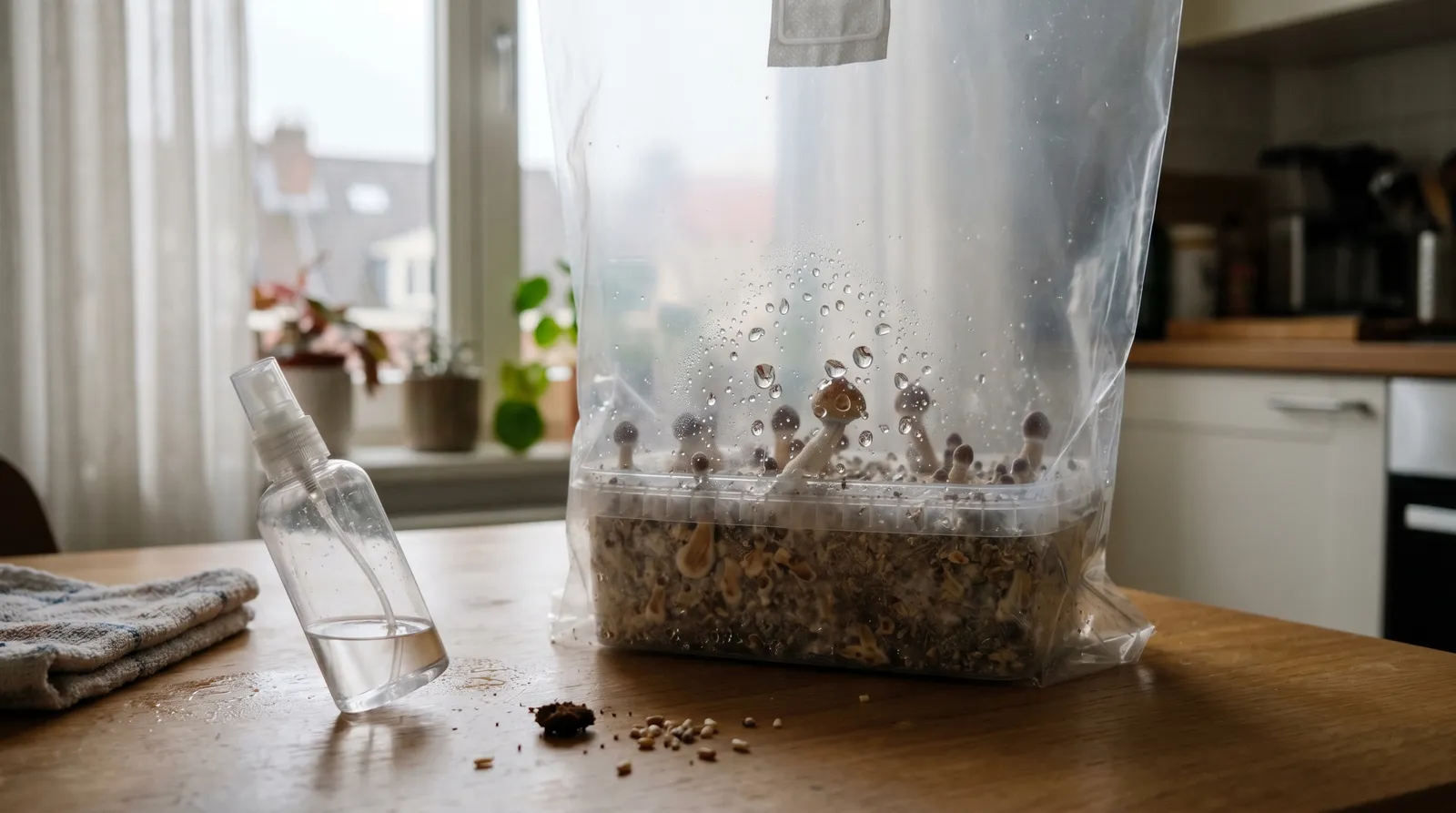
Target relative humidity inside the bag is 90–95% during pinning, dropping to 85–90% during fruit body development. You cannot measure this accurately inside a filter bag without a probe, so use the visual cue: condensation should form on the upper walls but not pool at the bottom.
Mistake 4: Wrong temperature, wrong spot
Psilocybe cubensis fruits between 21–24°C, and stable placement matters more than most growers realise. Below 18°C, pinning stalls. Above 28°C, the mycelium stresses and trichoderma (the green mould) gets a foothold. The worst spots in a typical flat: on top of a fridge (too warm from the motor), next to a radiator (temperature swings), on a windowsill (light and cold spikes at night).
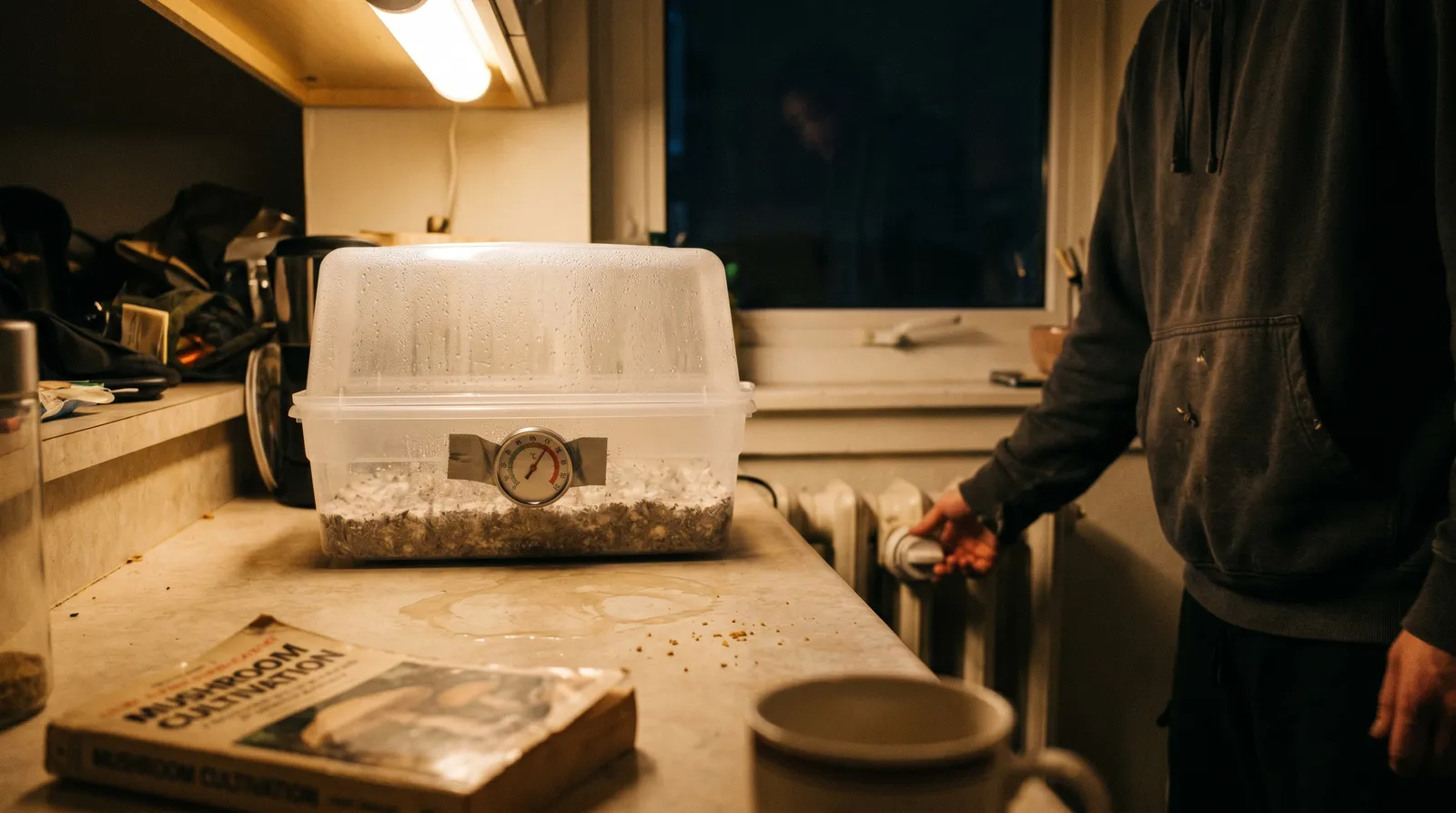
Best spots: an interior cupboard shelf, a spare room maintained around 22°C, or on top of a heat mat with a thermostat if the room runs cold. Temperature swings of more than 3–4°C within 24 hours are more damaging than a steady 20°C or a steady 25°C. A Mazatapec or Cambodia Grow Kit sitting in a room that hits 28°C in the afternoon and 16°C at night will underperform badly even if the "average" looks right.
Mistake 5: Ignoring fresh air exchange
Fresh air exchange removes CO₂ buildup that causes long thin stems, tiny caps, and aborts — the classic "alien finger" look. Trapped CO₂ above ~1,000 ppm is the cause. The microporous filter on the bag provides passive exchange, but it isn't enough once fruit bodies are growing.
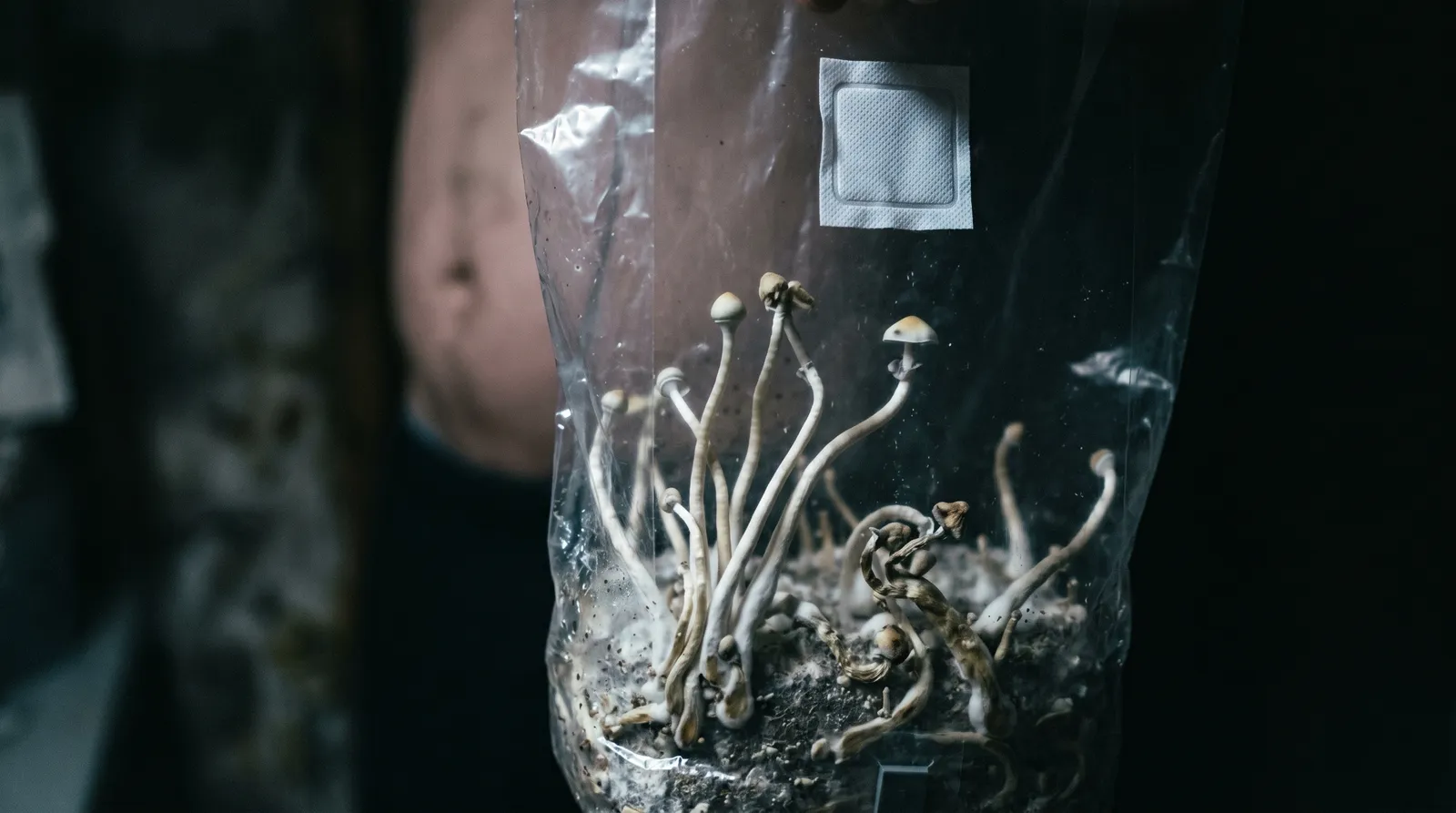
Open the bag once or twice a day, fan it with the lid or a piece of card for 10–20 seconds, then reseal with the paperclip. This is called "fanning" in cultivation shorthand and it matters as much as misting. A McKennaii Grow Kit that produces stringy, spindly fruits nine times out of ten is suffering from CO₂ buildup, not temperature or humidity.
Mistake 6: Misidentifying contamination (and trying to save it)
Contamination is almost never salvageable and every hour spent hoping is an hour it spreads. Know what you're looking at:
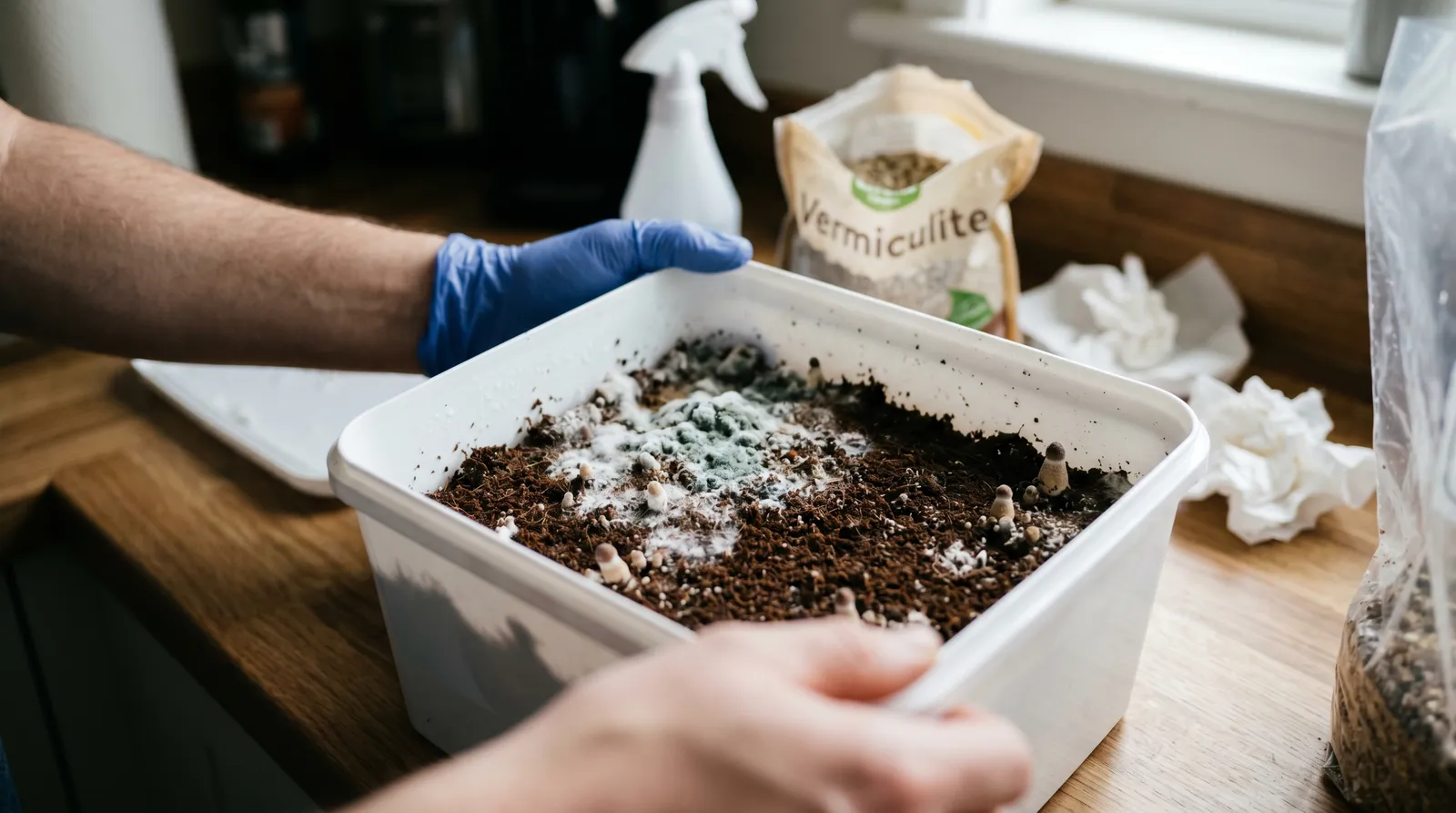
- Trichoderma: bright forest-green patches, often starting white before turning green within 24–48 hours. Contagious and fast. Toss the kit, sealed, in an outdoor bin.
- Cobweb mould: fluffy grey-white growth that looks like actual cobwebs, spreading across the casing surface. Easy to confuse with young mycelium, but it grows faster and has a less-defined texture. Treat as contamination.
- Wet rot / bacterial blotch: pink, yellow, or orange slimy patches, often with a sour smell. Toss.
- Healthy mycelium: bright white, firm, evenly distributed. Pins start as tiny white bumps, then develop pinheads that darken.
Quick reference for identifying what you're seeing on the casing layer:
| Symptom | Likely cause | Action |
|---|---|---|
| Bright green patches | Trichoderma | Bin sealed, outdoors |
| Grey-white fluff, fast spreading | Cobweb mould | Bin sealed, outdoors |
| Pink/yellow slime, sour smell | Wet rot / bacteria | Bin sealed, outdoors |
| Bright white, firm, even | Healthy mycelium | Continue fruiting |
| Tiny white bumps on casing | Primordia (pins) | Continue, mist walls only |
There is no salvaging a contaminated kit. Scraping off a mould patch does not remove the spores you can't see. A 2020 review in Frontiers in Microbiology (Sánchez-Díaz et al., 2020) notes trichoderma spores disperse at concentrations detectable up to 2 metres from a source colony within hours — meaning a contaminated kit on your kitchen counter is a contamination risk for anything else growing nearby. The EMCDDA (2023) profile of hallucinogenic mushrooms notes that home cultivation hygiene is the single biggest determinant of a successful flush.
Mistake 7: Harvesting too late
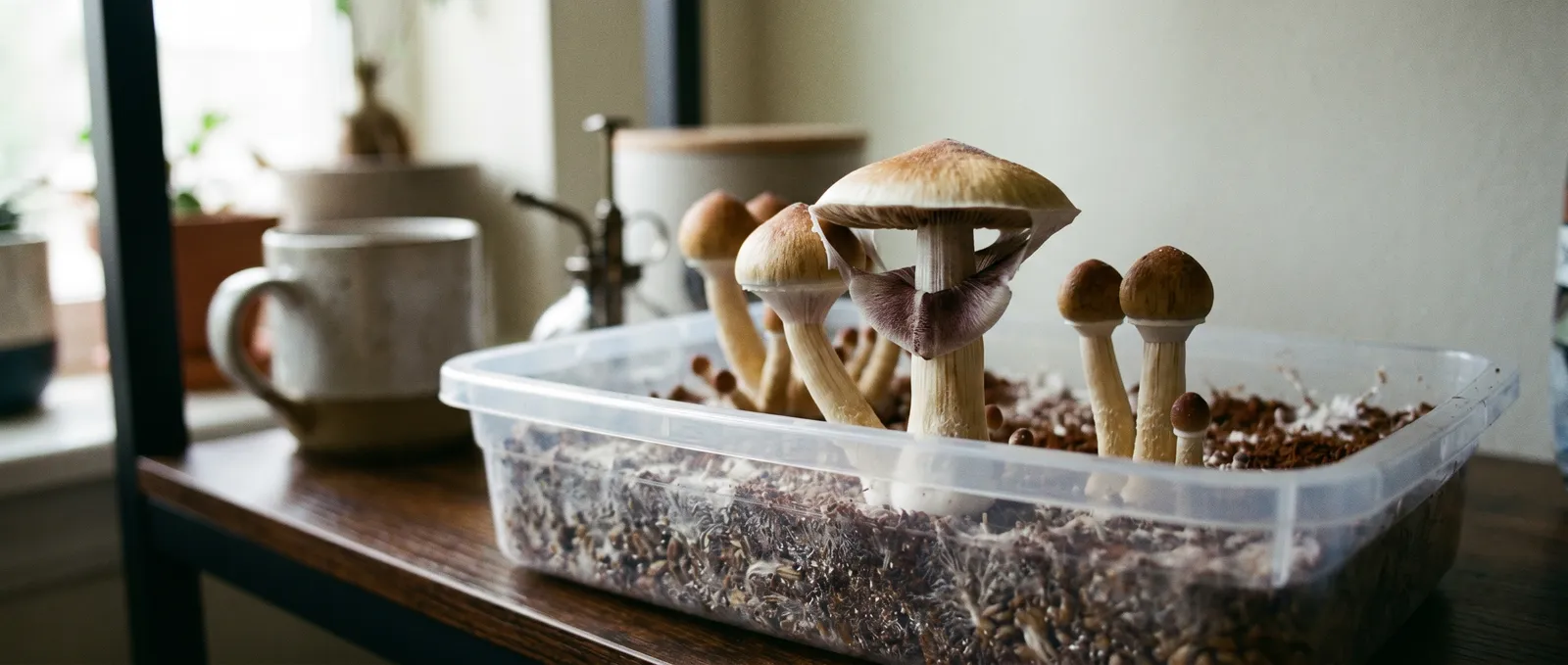
The harvest window opens when the veil under the cap starts to tear and closes before it fully tears and releases spores. Once spores drop, two things happen: the mushrooms lose potency as they redirect energy to sporulation, and the casing gets coated in a purple-black spore layer that shortens the viable life of subsequent flushes.
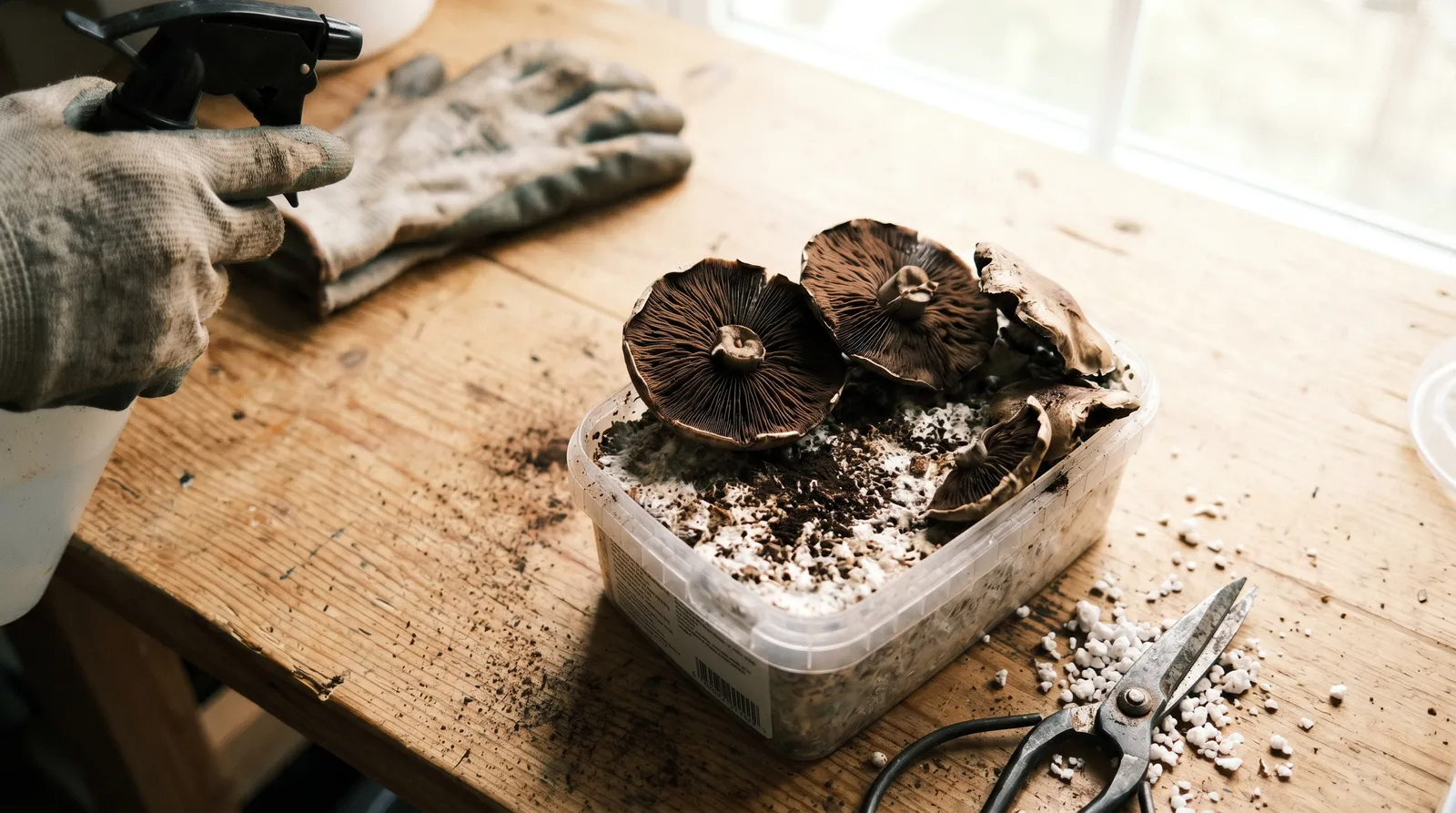
Pick the whole flush at once, even the smaller fruits, by gripping low at the base and twisting. Don't cut with scissors — the stump left behind rots. Bigwood and Beug (1982) documented alkaloid content peaking at the partial-veil-break stage across Psilocybe cubensis fruit bodies, with declines of 10–25% in fully mature specimens.
Mistake 8: Giving up after flush one
A Grow Kit typically produces 2–4 flushes, so don't bin it after the first harvest. Between flushes: soak the cake again for 12 hours in cold water, drain fully, return to the bag, and cold-shock again. Yields drop with each flush — the first flush is usually the biggest, the second around 60–70% of that, the third smaller still. Anyone tossing the kit after one harvest is leaving half the yield in the bin.
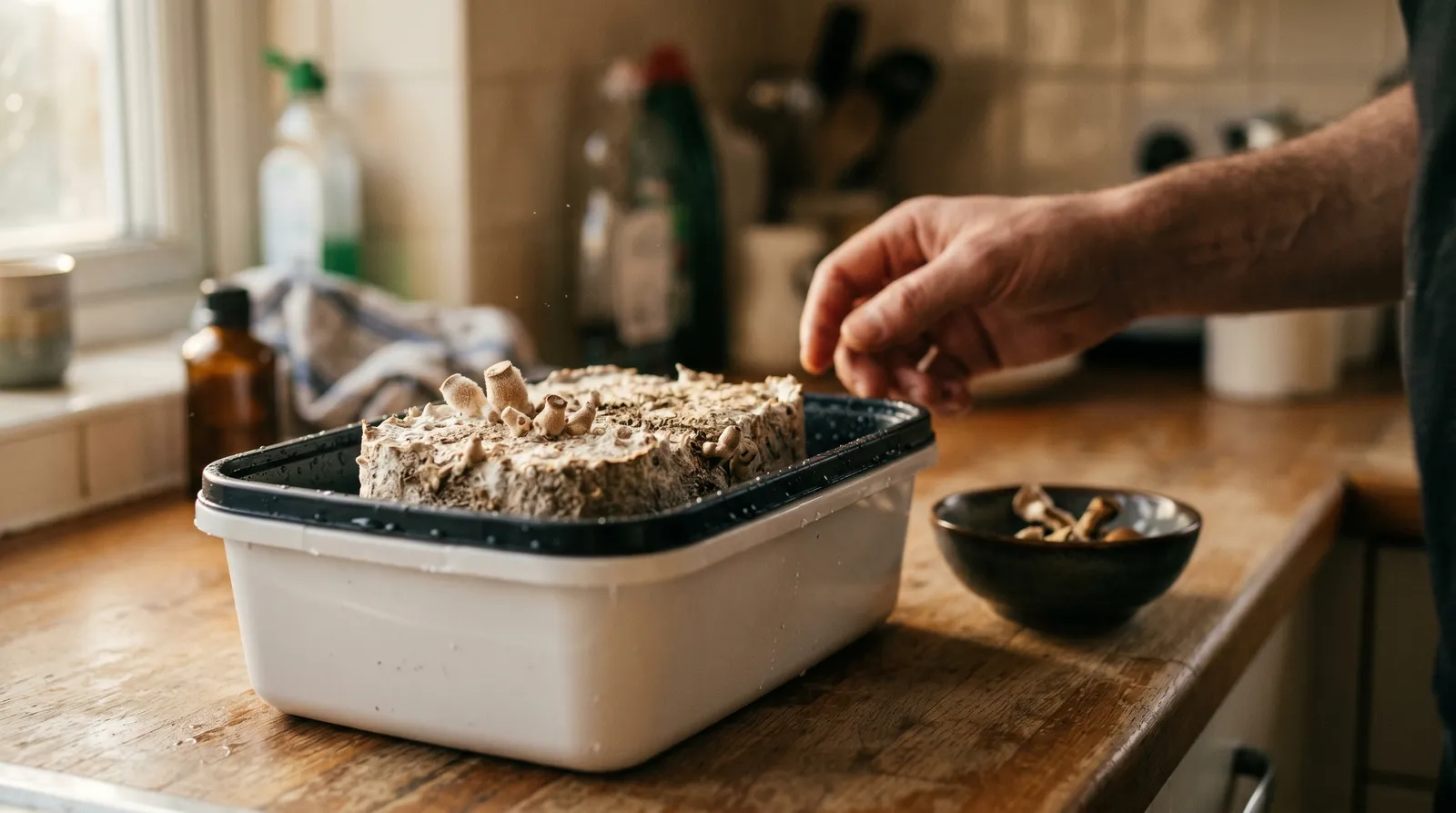
R2G bags are designed as single-flush products — one bag, one strong flush, zero fuss. Trying to coax a second flush from an R2G is generally not worth the contamination risk.
Mistake 9: Poor drying
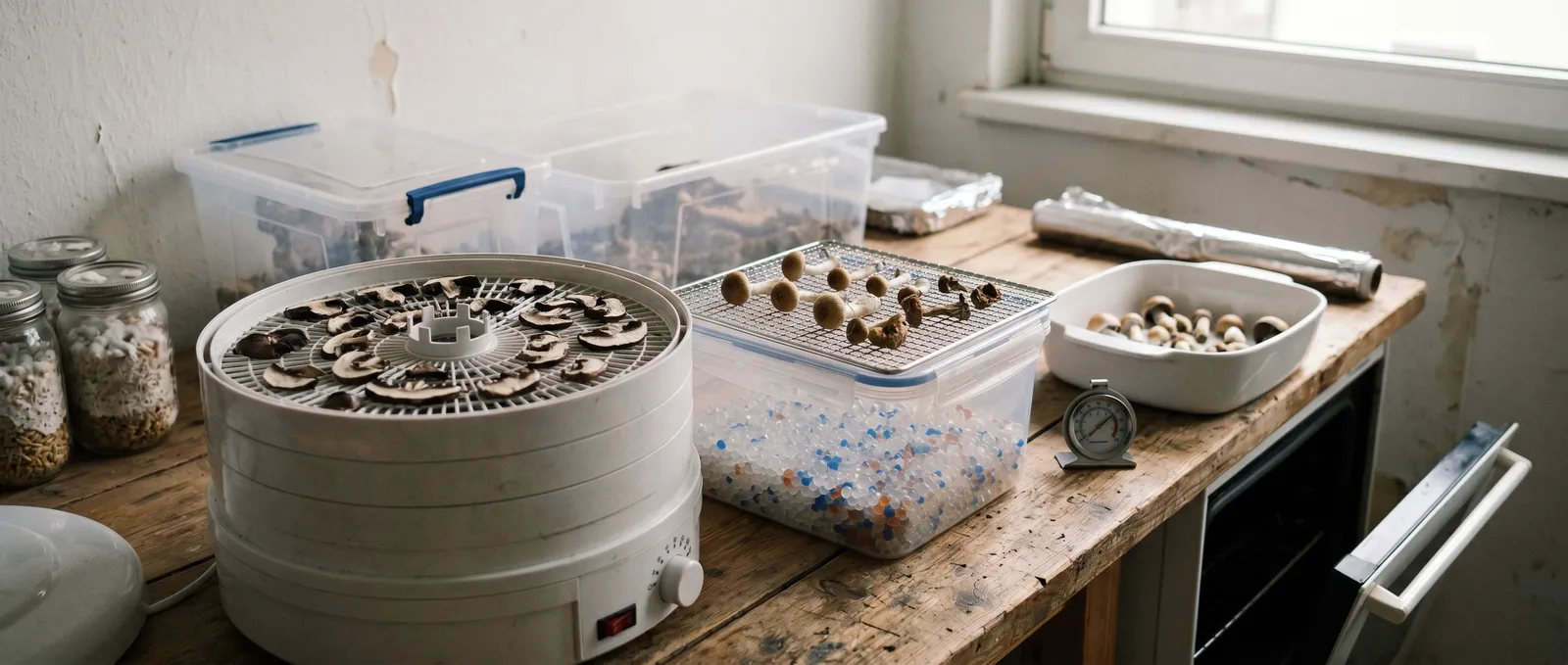
Dry mushrooms until they are "cracker dry" — so dry they snap cleanly when bent — using silica gel or a dehydrator at 35–40°C. Fresh mushrooms are ~90% water. Air-drying on a paper towel gets them to about 80% dry; the final 20% requires a desiccant like silica gel or anhydrous calcium chloride in a sealed container. Oven drying above 50°C degrades psilocybin. A food dehydrator at 35–40°C works, as does a sealed box with silica gel for 24–48 hours after initial air drying.
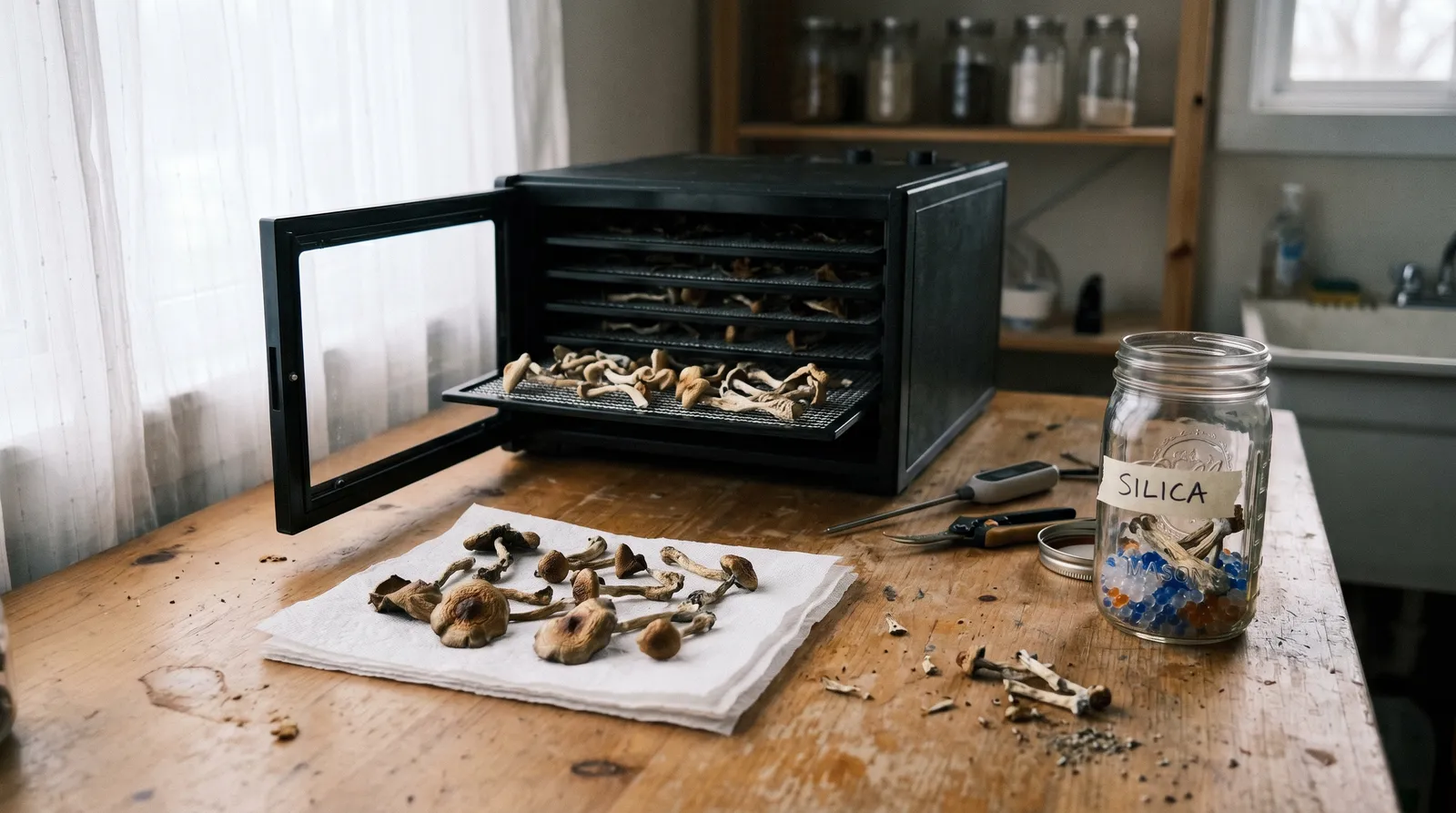
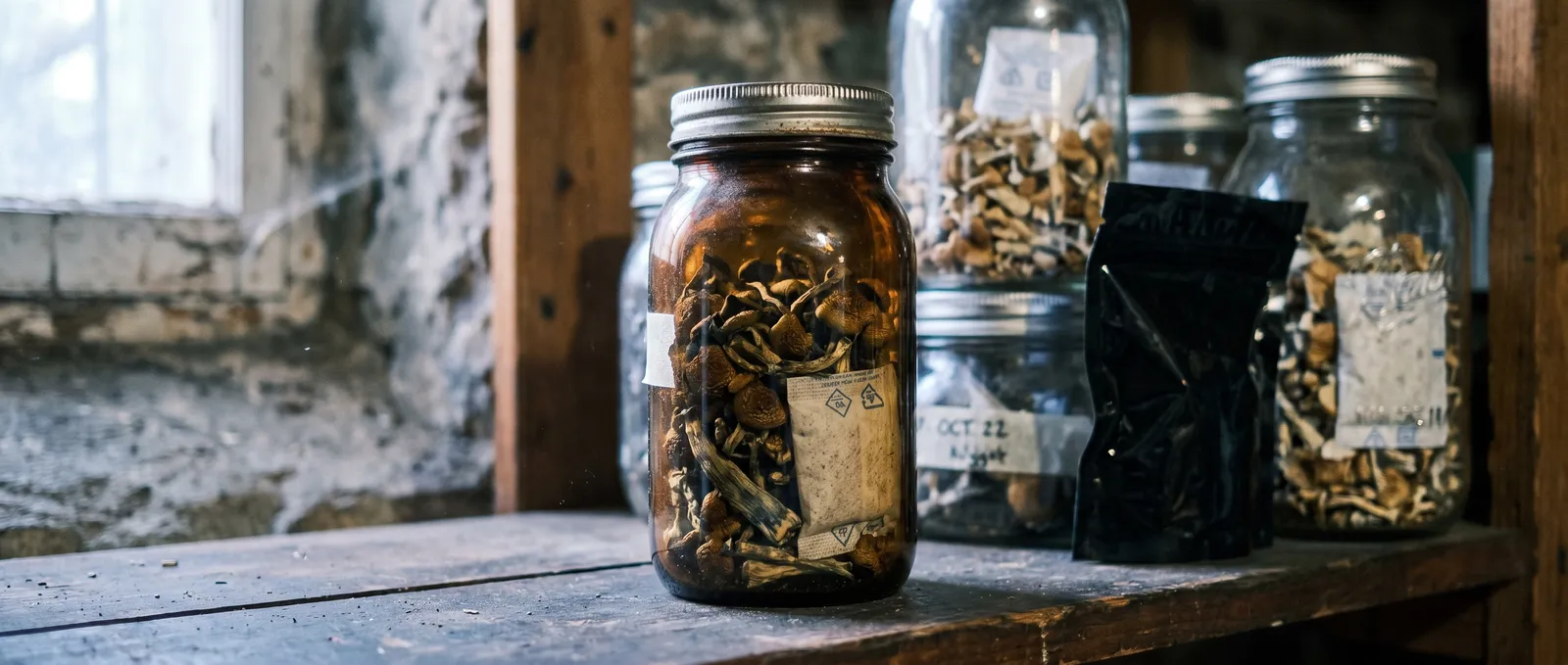
Store the cracker-dry product in an airtight glass jar with a fresh silica sachet, in a cool dark cupboard, out of reach of children and pets — dried psilocybin mushrooms are visually indistinguishable from edible species and lock-up storage is mandatory. Tsujikawa et al. (2003) found psilocybin in properly dried and sealed specimens remained stable for over a year at room temperature. The Beckley Foundation (2022) cultivation and potency briefing reaches similar conclusions on long-term stability with proper desiccant storage.
Grow Kit vs R2G Bag: quick comparison
Choose the plastic-tub Grow Kit for multiple flushes and learning, or the Ready-2-Grow Bag for a single sealed, low-effort flush. A quick side-by-side to help first-time growers decide which format to order:
- Plastic-tub Grow Kit: 2–4 flushes, daily misting and fanning required, higher total yield, more hands-on. Better for growers who want to learn the process.
- Ready-2-Grow Bag: single flush, no soaking, no misting, sealed format. Better for first-timers who want the shortest path from box to fruit.
One more note on interactions
Cultivation is the scope of this article; anything involving consumption, dose, or combining psilocybin with other substances belongs in a different resource. Combinations with MAOIs, SSRIs and lithium especially belong in the psilocybin safety and interactions articles — don't improvise from a growing guide.
Azarius mushroom grow kits
Azarius carries two formats if you want to buy a grow kit: the plastic-tub Grow Kit (8 strains including Golden Teacher, McKennaii, B+, Mazatapec, Mexican, Cambodia, PES Amazonian, Treasure Coast) and the sealed Ready-2-Grow Bag (9 strains including APE, Enigma, Jedi Mind Fuck, Makilla Gorilla and others). Order a Grow Kit if you want multiple flushes and don't mind daily misting; get an R2G bag if you want the shortest path from box to fruit.
Last updated: April 2026
Frequently Asked Questions
8 questionsWhy is my grow kit not producing after three weeks?
Can I save a contaminated grow kit?
How many flushes should I expect from a Grow Kit?
Should I mist my grow kit every day?
What temperature is ideal during fruiting?
When exactly should I harvest?
Why is there standing water at the bottom of my grow kit bag?
Do I need to cold shock my grow kit between flushes?
About this article


Adam Parsons is an external cannabis and psychedelics writer and editor who contributes to Azarius's wiki as both author and reviewer. On the writing side, he authors Azarius's kratom and kanna clusters, drawing on exten
This wiki article was drafted with AI assistance and reviewed by Adam Parsons, External contributor. Editorial oversight by Joshua Askew.
Medical disclaimer. This content is for informational purposes only and does not constitute medical advice. Consult a qualified healthcare provider before use of any substance.
Last reviewed April 25, 2026
References (1)
- [1]Sánchez-Díaz, J. A., Salinas-Sánchez, D. O., Cruz-Sosa, F., et al. (2020). Substrate composition and yield of Psilocybe cubensis on agricultural by-products. Bioresource Technology Reports, 12, 100590. DOI: 10.1016/j.biteb.2020.100590
Related Articles
Cannabis Hermaphrodite: Identify, Prevent, Act
A cannabis hermaphrodite is a female plant that develops male pollen sacs or banana-shaped anthers (nanners), self-pollinating and seeding your harvest.
DIY Cannabis Fertilizer: Homemade Nutrient Guide
DIY cannabis fertilizer guide: compost, teas, banana ferments and feed schedules, with safety notes and cited research for home growers.
What To Do With Male Cannabis Plants: 6 Practical Uses
What to do with male cannabis plants: identify, isolate, breed, extract, or compost. A practical 6-step guide with sourcing and safety notes.
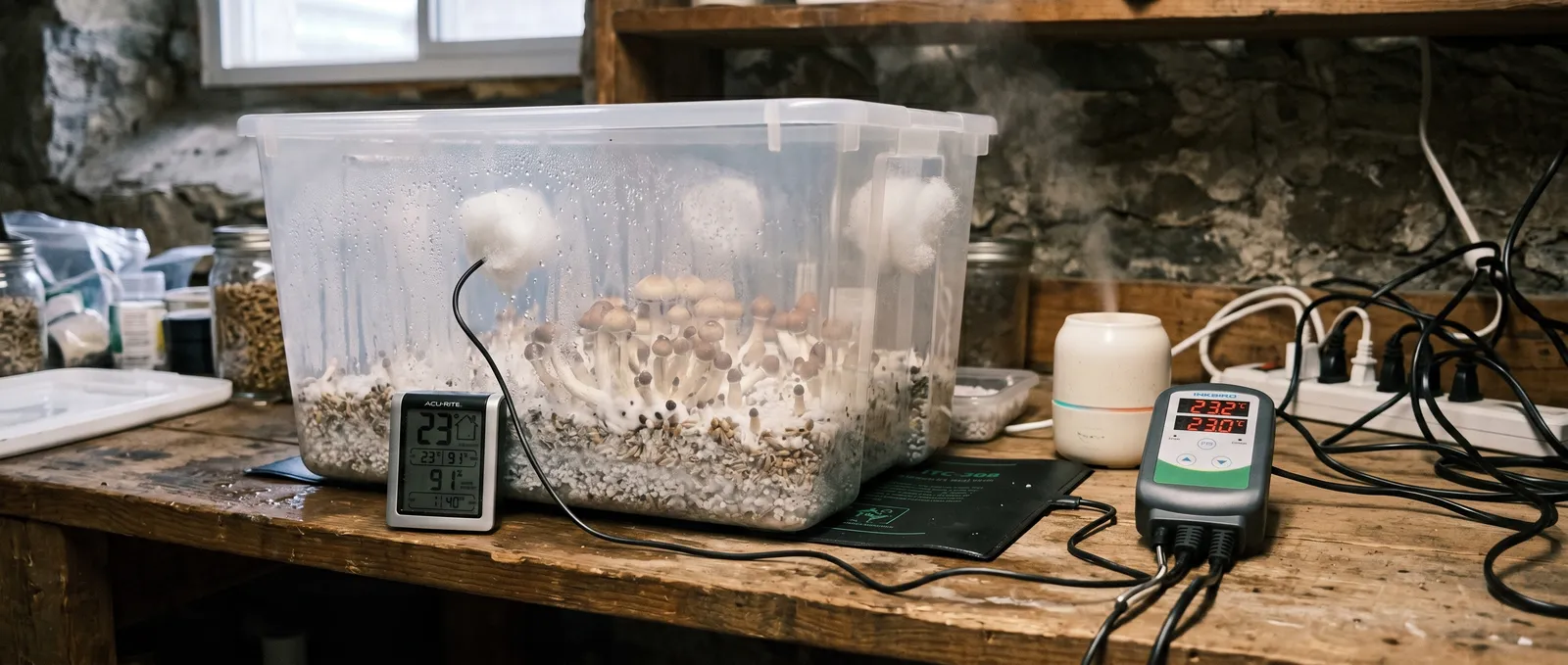
Mushroom Grow Kit Temperature & Humidity: Full Setup Guide
A temperature humidity control grow kit is the small set of climate tools — hygrometer, heat mat, humidifier or perlite tray — that keeps a mushroom fruiting…
When to Harvest Mushrooms: Veil Break Timing Explained
Harvest timing veil break is a cultivation technique that uses the tearing of the partial veil on maturing Psilocybe cubensis to mark peak alkaloid content.
First Grow Checklist: What You Need for Mushroom Kits
A first grow checklist is the short list of supplies and environmental conditions needed to run a home psilocybin mushroom kit from inoculated substrate to…
Sclerotia vs Fruit Bodies: Cultivation Comparison
Sclerotia and fruit bodies are two different life stages of Psilocybe fungi: sclerotia are hardened underground mycelial storage bodies (the 'magic…
Storing Dried Mushrooms Long Term: Full Guide
Storing dried mushrooms long term means keeping well-dried Psilocybe fruit bodies in airtight, opaque containers with desiccant, cool and dark, to slow…
Drying Mushrooms Air Desiccant Oven: Methods Compared
Drying mushrooms air desiccant oven refers to the three home methods for reducing fresh fruit bodies from ~90% water to cracker-dry (<5%). Gotvaldová et al.