
This article discusses psychoactive substances intended for adults (18+). If you have a health condition or take medication, consult a doctor before use. Our age policy
Mushroom Flushes Explained: First, Second & Third Flush Yields
Definition
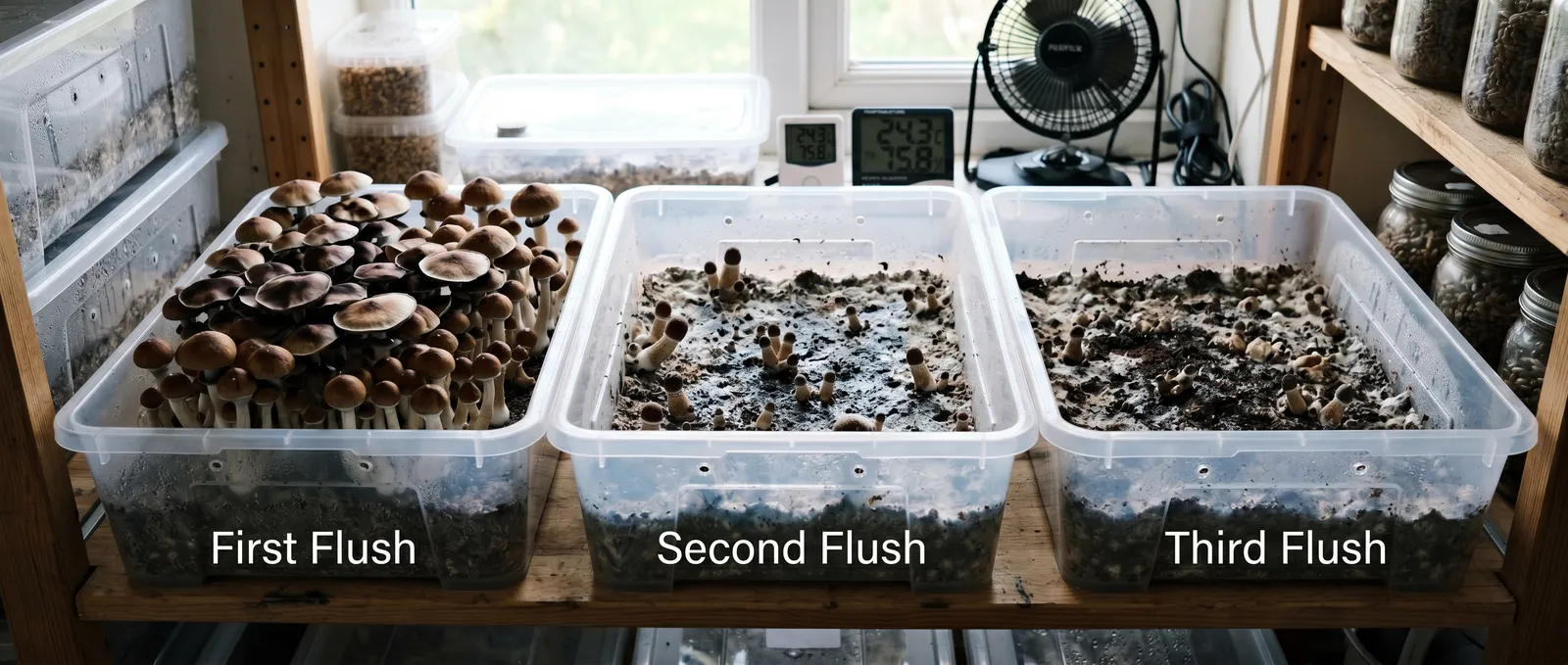
Flush cycles first second third flush yields is a predictable decay pattern that tells home growers how much mushroom mass to expect from each wave of fruiting on a colonised substrate. Most cubensis grow kits produce 2-4 flushes, with the first delivering 40-50% of total yield and each subsequent flush tapering off, matching the decay curve documented by Stamets (2000).
Flush cycles first second third flush yields is a predictable decay pattern that tells home growers how much mushroom mass to expect from each wave of fruiting on a colonised substrate. This guide covers home cultivation for adult growers and explains how to plan, buy kits, and get the most from each harvest cycle.
Flush yields at a glance
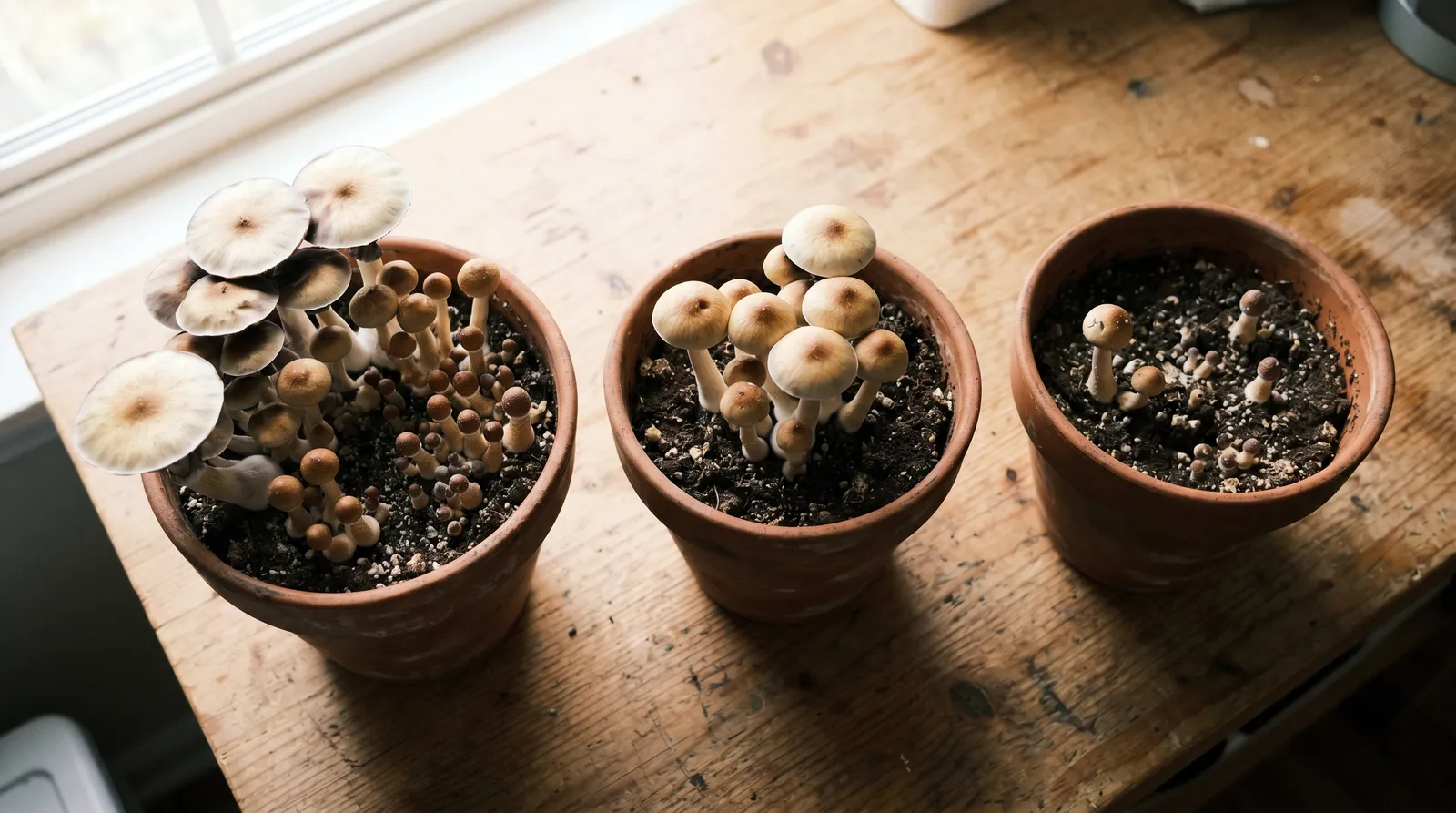
Flush cycles first second third flush yields follow a predictable curve: the first is largest, the second solid, the third smaller. A flush is one complete wave of mushroom development — pin formation, fruiting, harvest — on a colonised substrate. A single grow kit or Ready-2-Grow Bag typically produces 2-4 flushes before the mycelium runs out of usable nutrients or contamination closes the show.
| Flush | Typical fresh yield (1.2 kg kit) | Share of total harvest | Time between flushes | Reliability |
|---|---|---|---|---|
| 1st flush | 350-500 g | ~40-50% | 10-18 days from casing | Very high |
| 2nd flush | 200-350 g | ~25-35% | 7-14 days after 1st | High |
| 3rd flush | 80-200 g | ~10-20% | 10-21 days after 2nd | Moderate — contamination risk rising |
| 4th flush (if it happens) | 30-100 g | ~5-10% | 14-28 days after 3rd | Low — often aborts or contaminates |
Numbers above are drawn from Stamets' fruiting-body studies (Stamets, 2000) on rye-grain substrates with perlite/vermiculite casing — the same setup used in Grow Kit format — and match what European home growers have been reporting on Shroomery cultivation logs for two decades. EMCDDA monitoring reports confirm cubensis cultivation patterns across European jurisdictions. Strain, hydration, and temperature swing these figures by ±30% easily.
Why the first flush is the biggest
The first flush is biggest because the mycelium dumps most of its stored nutrient reserve into the opening wave of pins. On a healthy Golden Teacher Grow Kit in fruiting conditions (21°C, 90-95% humidity, 2-3 fresh air exchanges per hour), that means 350-500 grams wet — roughly 35-50 g dry once you've taken it down to cracker-dry on a desiccant.
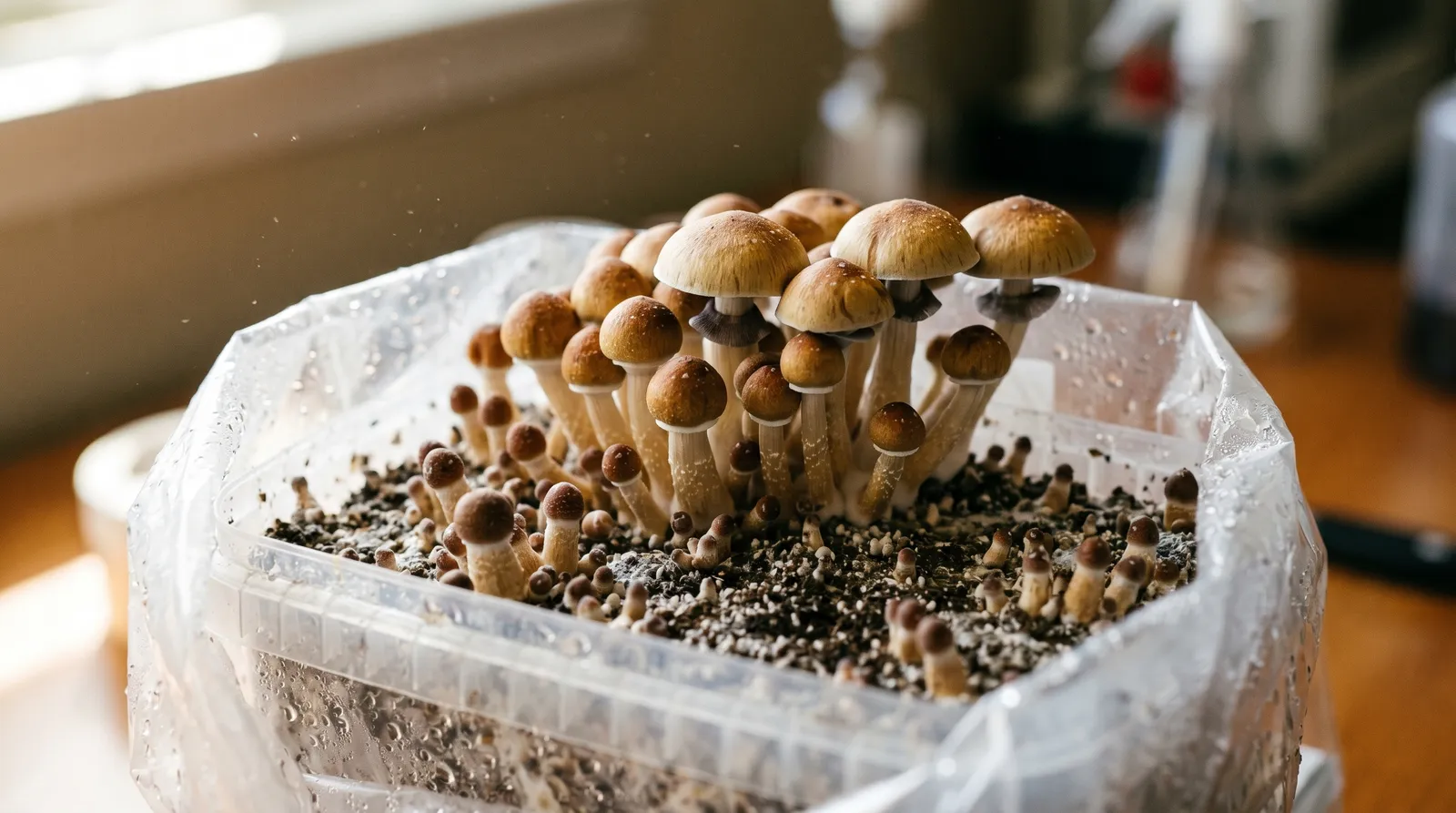
Three things drive first-flush size: substrate mass, colonisation completeness, and casing hydration. A 1.2 kg kit that went into fruiting fully colonised (white, no visible grain) and was soaked properly at the start will outproduce a patchy one by a factor of two. Cold-shocking the kit in the fridge for 12 hours before initial fruiting — a trick documented by Stamets — tightens pinning and synchronises the first flush, which means a bigger single harvest rather than a dribble over a week.
What happens between flushes
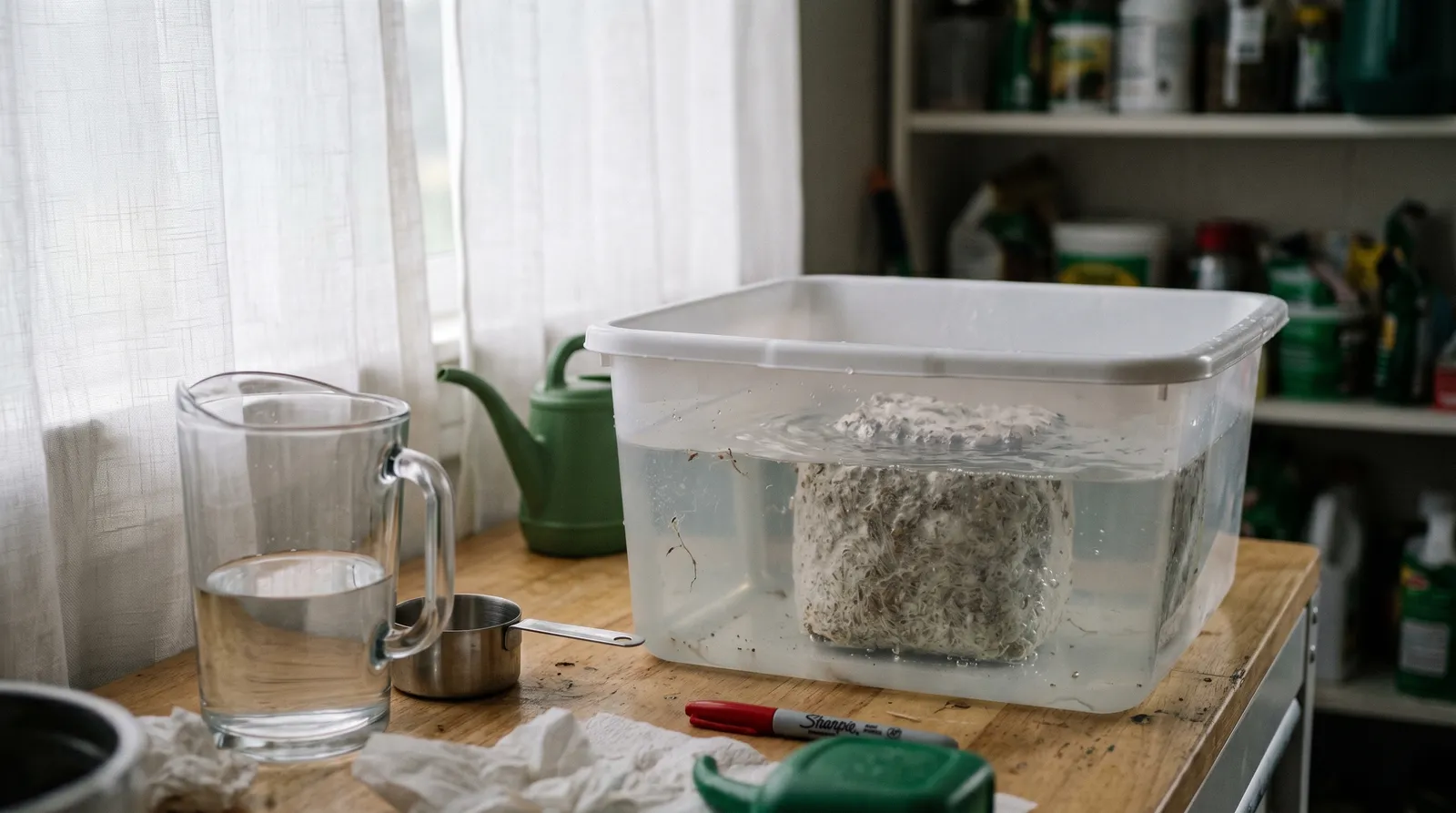
Between harvests, the mycelium rehydrates and rebuilds its water reserve before the next wave can pin. The standard "dunk" method — submerging the cake in cold, filtered water for 12-24 hours at around 4°C — replaces the water lost during the previous flush and often triggers a decent second wave. Research on Pleurotus and Agaricus flushing cycles (Royse & Sanchez, 2017) shows substrate water content drops 15-25% per flush, and without rehydration the mycelium can't pressurise the hyphae enough to form pins.
Second flushes on cubensis kits typically deliver 60-70% of the first. If the first was 400 g, expect 240-280 g second time round. That's still a serious harvest — roughly 25-30 g dry — and for most home growers the second flush is what turns a kit from "interesting experiment" into "worthwhile project."
The third flush and the law of diminishing returns
By the third flush, the substrate is tired and yields typically drop to 30-50% of the first. Nitrogen is depleted, the casing has compacted, and contaminant spores (trichoderma, cobweb, bacterial wet rot) have had weeks to find an opening — so 120-200 g wet on a kit that opened with 400 g. Potency per gram stays roughly stable within a single kit; what drops is total mass, not alkaloid concentration (Bigwood & Beug, 1982, found psilocybin levels within the same substrate batch varied more between individual fruits than between flushes).
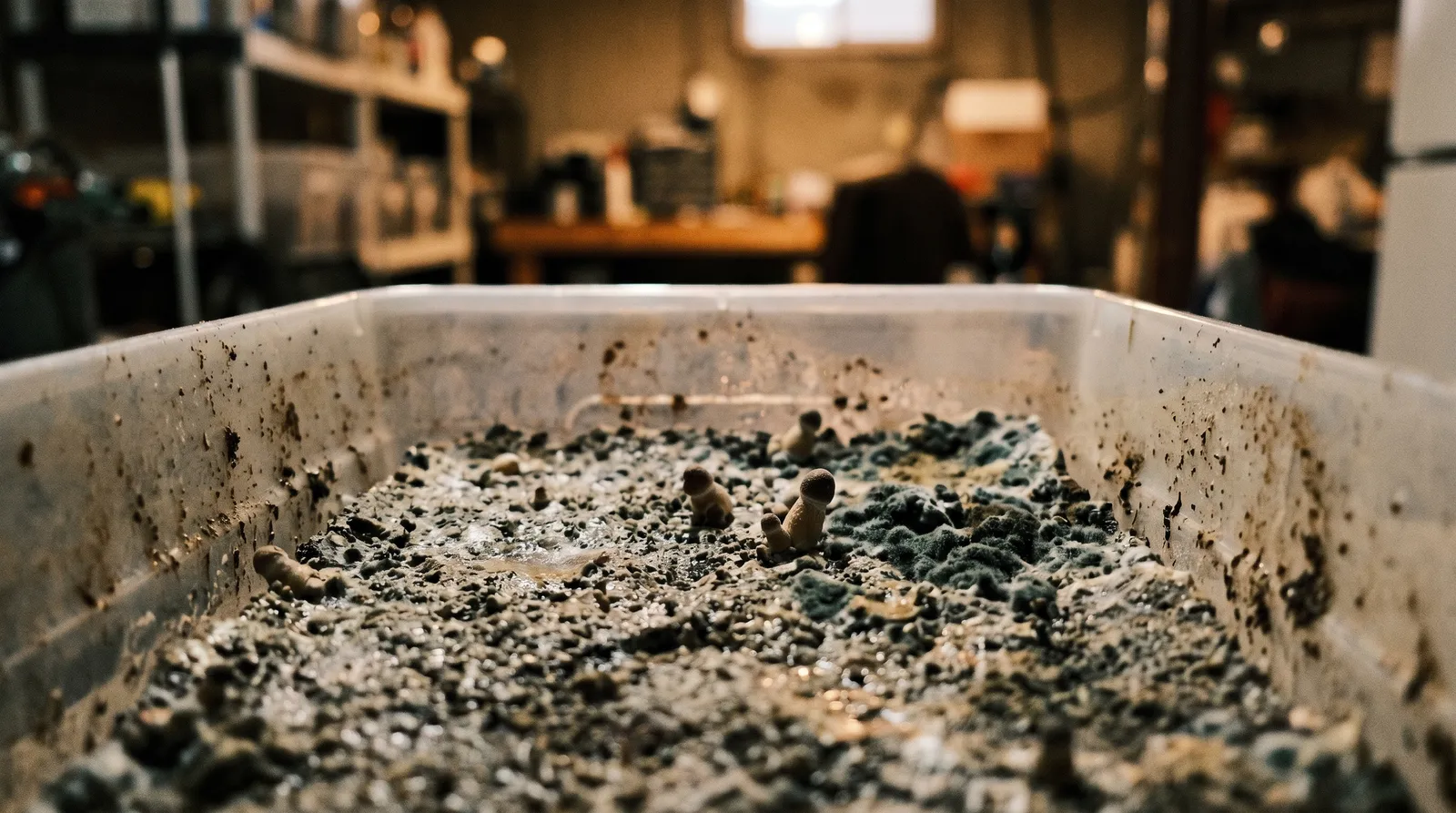
Visual cues that your third flush is the last: green patches of trichoderma at the casing edge, grey cobweb-like growth across the surface, yellowing or browning of the substrate, or a sour/ammonia smell when you open the bag. Any of those, and the kit is done — no amount of misting will bring it back. Toss it, don't salvage.
Strain differences in flush behaviour
Not every cubensis strain flushes the same way — strain genetics shape how yield distributes across the three-to-four flush window. Based on customer feedback logged over years of kit sales, the pattern roughly sorts like this:
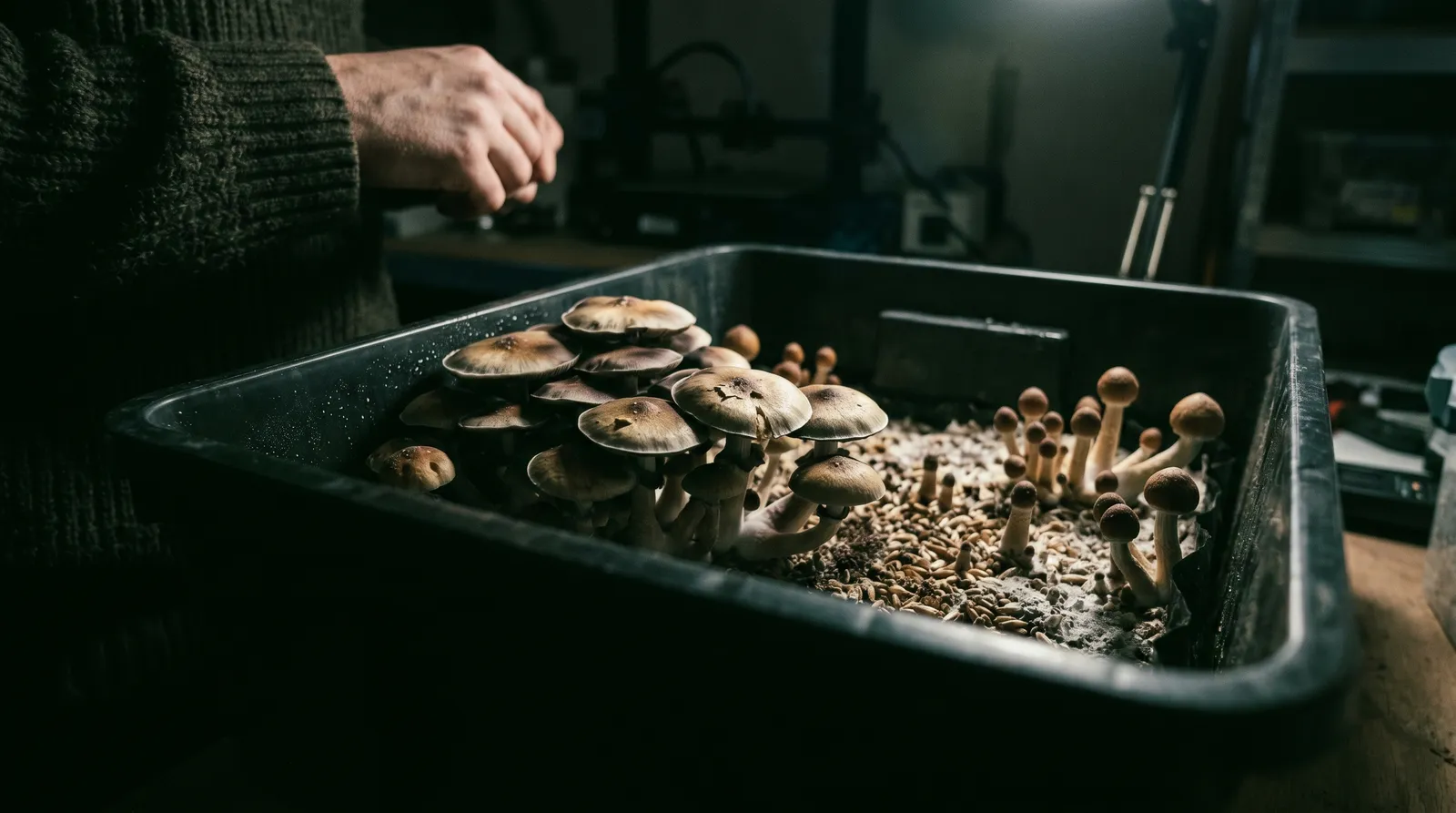
- Golden Teacher, Mexican, Mazatapec — classic 3-flush strains. First flush dominant, second reliable, third smaller but usually present. The workhorses.
- McKennaii, PES Amazonian — front-loaded. First flush is often huge, second drops off more sharply. Don't count on a productive third.
- B+, Cambodia — more even distribution. First and second flushes closer in size; slower overall cycle but sometimes a decent third.
- Treasure Coast — variable. Some kits produce four flushes, some tap out after two. Known for abundant but lighter fruits.
Ready-2-Grow Bags (APE, Enigma, Jack Rabbit, Jedi Mind Fuck, MVP, Makilla Gorilla, Hillbilly Pumpkin, Golden Teacher, McKennaii) are built for a different model — one bag, one flush, no fuss. The sealed all-in-one format trades flush count for reliability: you get a single big harvest off a 2 kg substrate, and the bag is spent. That's by design, not a defect. For growers who buy kits without wanting to mess around with dunking and re-misting, it's the simpler route.
Calculating total lifetime yield
Total kit yield across all flushes lands in the 600-900 g wet range (roughly 60-90 g dry) for a 1.2 kg cubensis Grow Kit run properly. Distribution looks something like: 45% from flush 1, 30% from flush 2, 15% from flush 3, 10% from flush 4 (if it arrives). That matches the curve reported for Pleurotus substrates in mushroom yield studies (Kües & Liu, 2000), where third and fourth flushes correlate strongly with total harvest but contribute less per event.
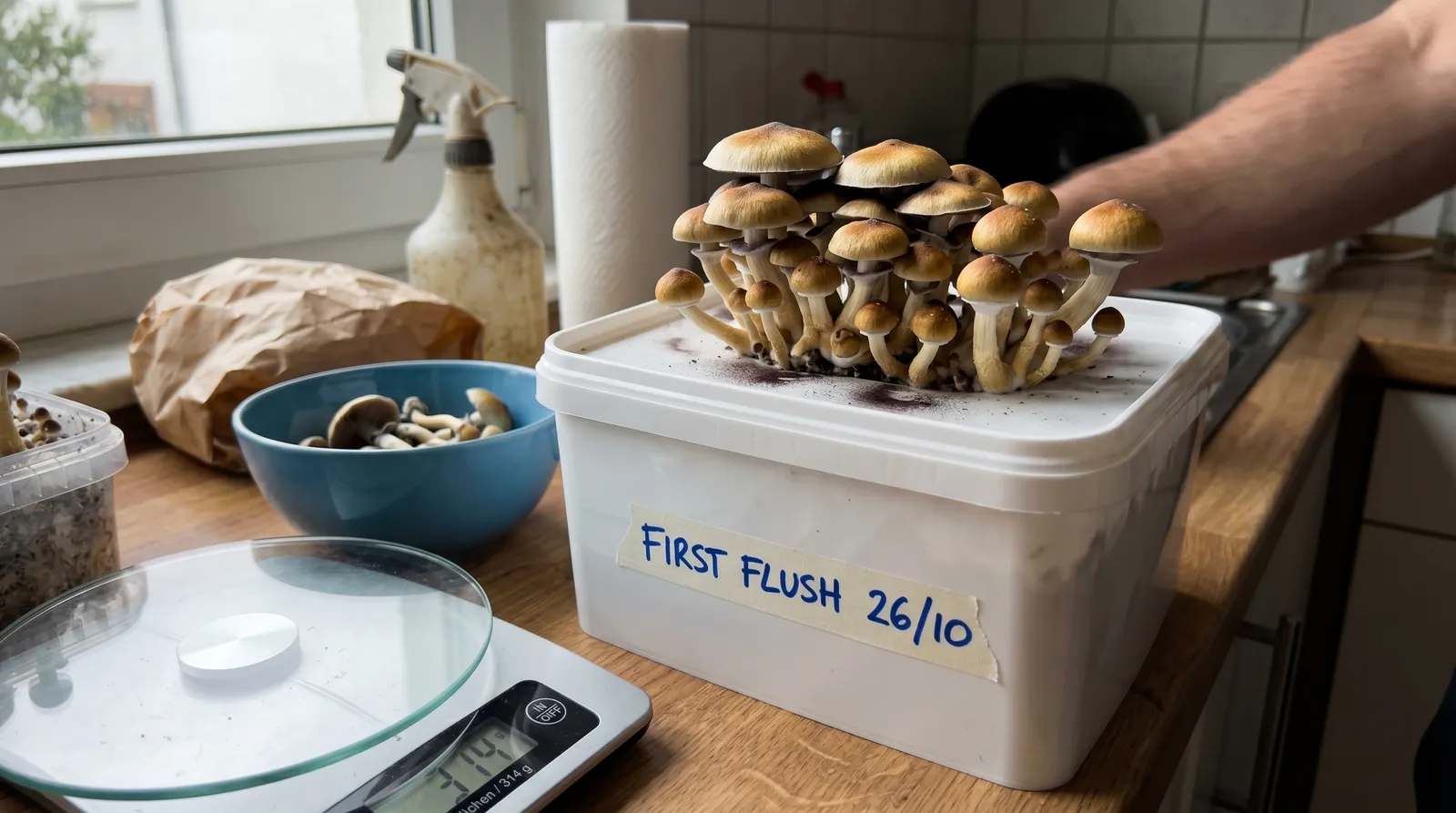
Dry weight runs at roughly 10% of wet weight for properly dried cubensis. So a kit with 800 g total wet yield gives about 80 g dry. The data on long-term dry storage comes mostly from fruit-body studies rather than truffles — sclerotia behave differently — but sealed, desiccated, and kept dark, dried cubensis holds its alkaloid content reasonably well for 6-12 months.
When to call it and stop flushing
Stop flushing when yield drops below 50 g wet, visible contamination appears, or the casing compacts into a waterlogged mat. Most growers stop at three flushes voluntarily — the time-to-yield ratio on a fourth flush is poor, and the contamination risk climbs with every rehydration cycle.
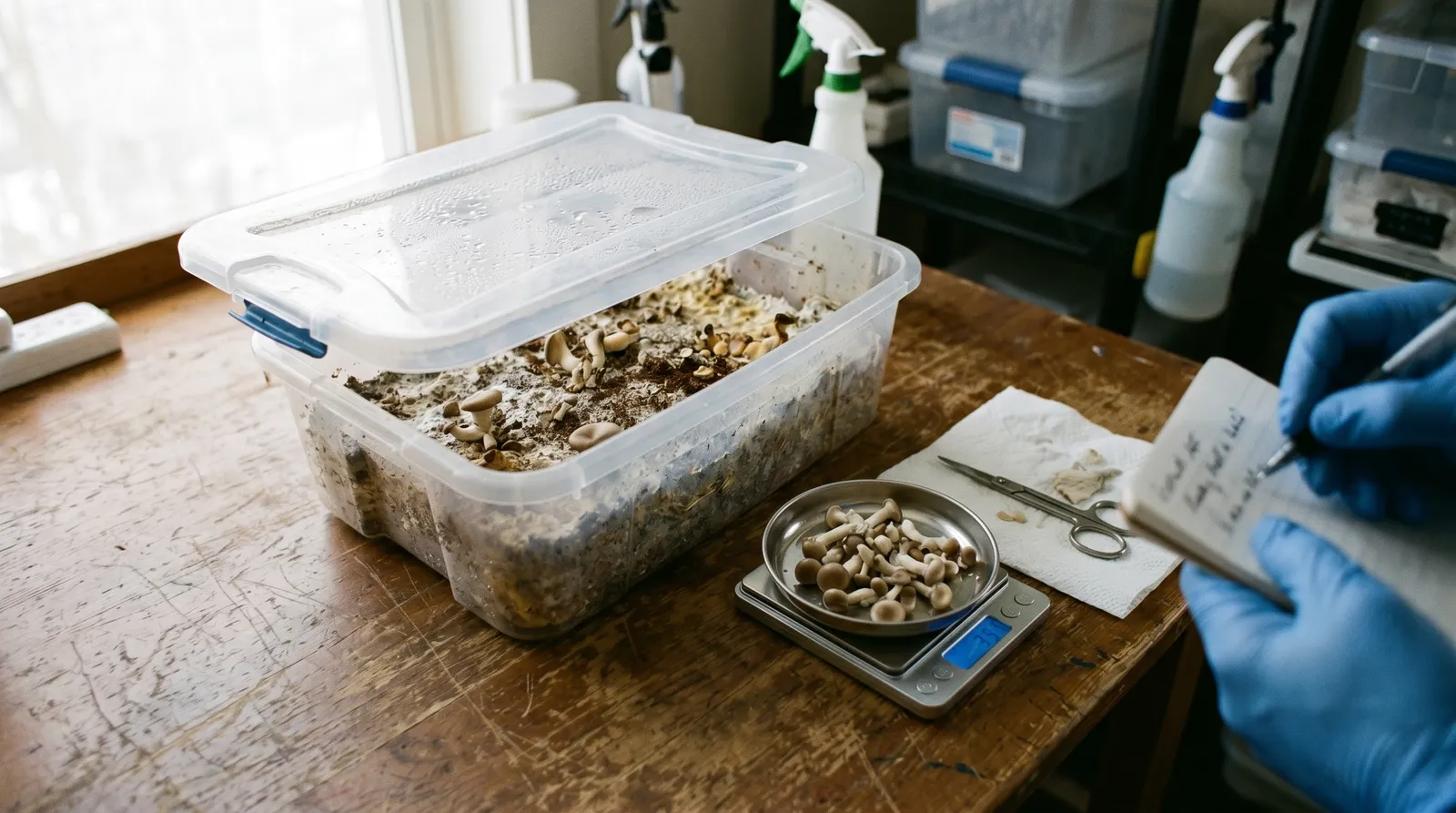
Safety-wise: wear a dust mask during harvest and drying. Dried mushroom dust can trigger hypersensitivity reactions, and by flush three the casing is throwing spores into the air every time you open the bag. Store dried product in airtight containers with silica gel, locked away from children and pets — dried cubensis looks indistinguishable from ordinary dried edible mushrooms.
Consumption, dosing, microdose protocols, and interactions with MAOIs, SSRIs, or lithium are out of scope for the cultivation hub. See the psilocybin hub's dedicated dose and interactions articles for that side of the picture.
Related products
Azarius stocks the Grow Kit format (B+, Cambodia, Golden Teacher, Mazatapec, McKennaii, Mexican, PES Amazonian, Treasure Coast) for growers who want to buy the multi-flush rye-grain experience, and the Ready-2-Grow Bag format (APE, Enigma, Golden Teacher, Hillbilly Pumpkin, Jack Rabbit, Jedi Mind Fuck, Makilla Gorilla, McKennaii, MVP) for those who order single-harvest simplicity. Compared to outdoor patch growing, indoor kits get you a predictable harvest in 4-6 weeks rather than waiting on a seasonal fruiting window.
Educational information for adult home growers. Not medical advice — consult a qualified professional for health-related questions.
Last updated: April 2026
Frequently Asked Questions
8 questionsHow much should my first flush yield on a standard grow kit?
Why is my second flush smaller than the first?
Is it worth waiting for a third flush?
Does potency change between flushes?
Can I get four or five flushes from a single kit?
Do Ready-2-Grow Bags produce multiple flushes?
How do I rehydrate (dunk) my grow kit between flushes?
Does cold-shocking a grow kit before the first flush really increase yields?
About this article


Adam Parsons is an external cannabis and psychedelics writer and editor who contributes to Azarius's wiki as both author and reviewer. On the writing side, he authors Azarius's kratom and kanna clusters, drawing on exten
This wiki article was drafted with AI assistance and reviewed by Adam Parsons, External contributor. Editorial oversight by Joshua Askew.
Medical disclaimer. This content is for informational purposes only and does not constitute medical advice. Consult a qualified healthcare provider before use of any substance.
Last reviewed April 25, 2026
References (3)
- [1]Stamets, P. (2000). Growing Gourmet and Medicinal Mushrooms (3rd ed.). Ten Speed Press, Berkeley, CA. Source
- [2]Royse, D. J., & Sánchez, J. E. (2017). Current trends in world mushroom production. Mushroom News, 65(11), 6-10.
- [3]Kües, U., & Liu, Y. (2000). Fruiting body production in basidiomycetes. Applied Microbiology and Biotechnology, 54(2), 141-152. DOI: 10.1007/s002530000396
Related Articles
Cannabis Hermaphrodite: Identify, Prevent, Act
A cannabis hermaphrodite is a female plant that develops male pollen sacs or banana-shaped anthers (nanners), self-pollinating and seeding your harvest.
DIY Cannabis Fertilizer: Homemade Nutrient Guide
DIY cannabis fertilizer guide: compost, teas, banana ferments and feed schedules, with safety notes and cited research for home growers.
What To Do With Male Cannabis Plants: 6 Practical Uses
What to do with male cannabis plants: identify, isolate, breed, extract, or compost. A practical 6-step guide with sourcing and safety notes.
Mushroom Grow Kit Temperature & Humidity: Full Setup Guide
A temperature humidity control grow kit is the small set of climate tools — hygrometer, heat mat, humidifier or perlite tray — that keeps a mushroom fruiting…
When to Harvest Mushrooms: Veil Break Timing Explained
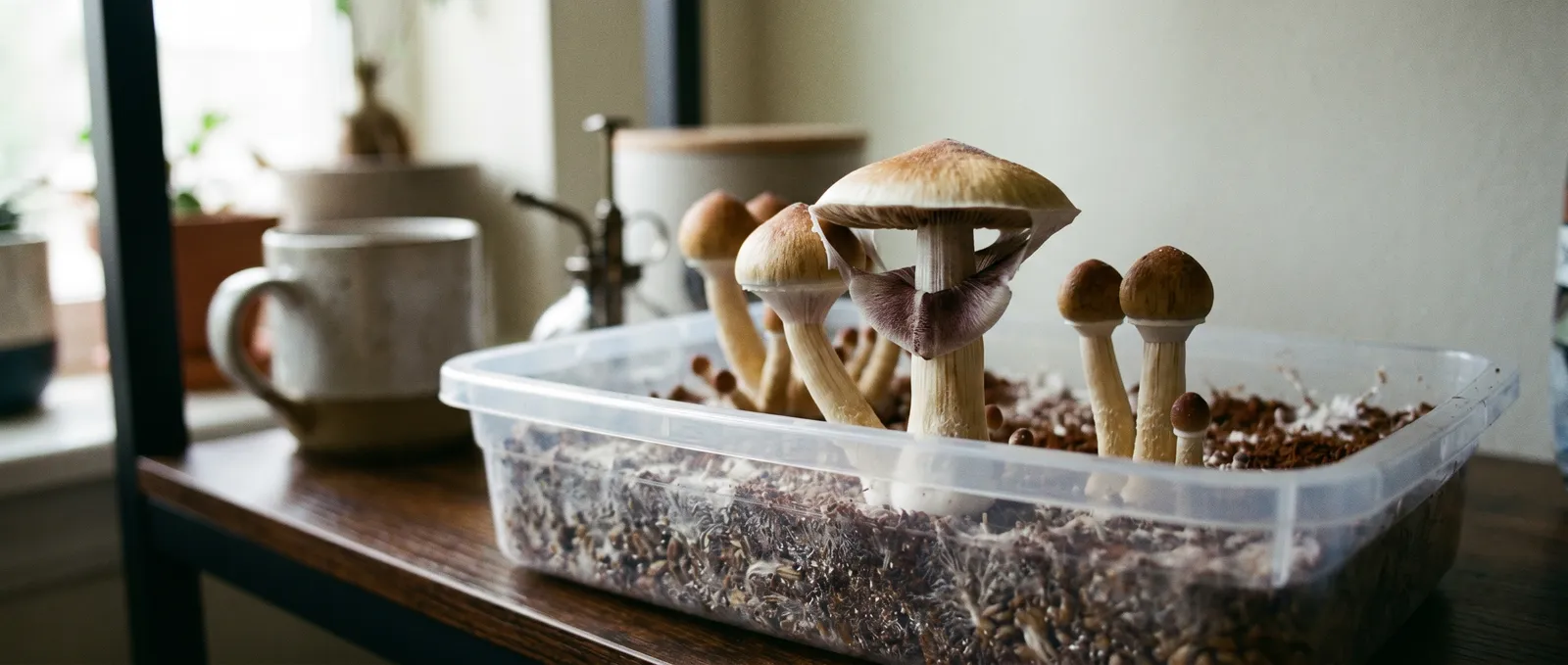
Harvest timing veil break is a cultivation technique that uses the tearing of the partial veil on maturing Psilocybe cubensis to mark peak alkaloid content.
First Grow Checklist: What You Need for Mushroom Kits
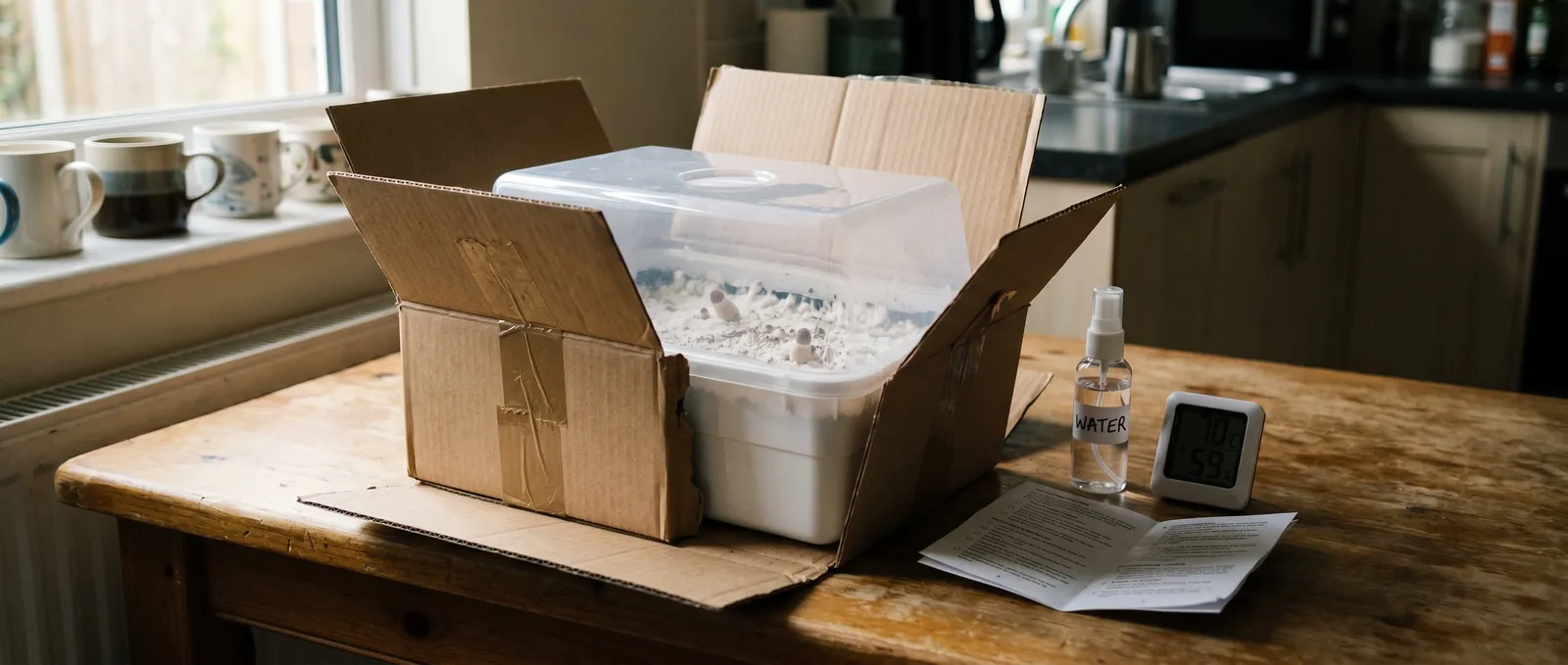
A first grow checklist is the short list of supplies and environmental conditions needed to run a home psilocybin mushroom kit from inoculated substrate to…
Sclerotia vs Fruit Bodies: Cultivation Comparison
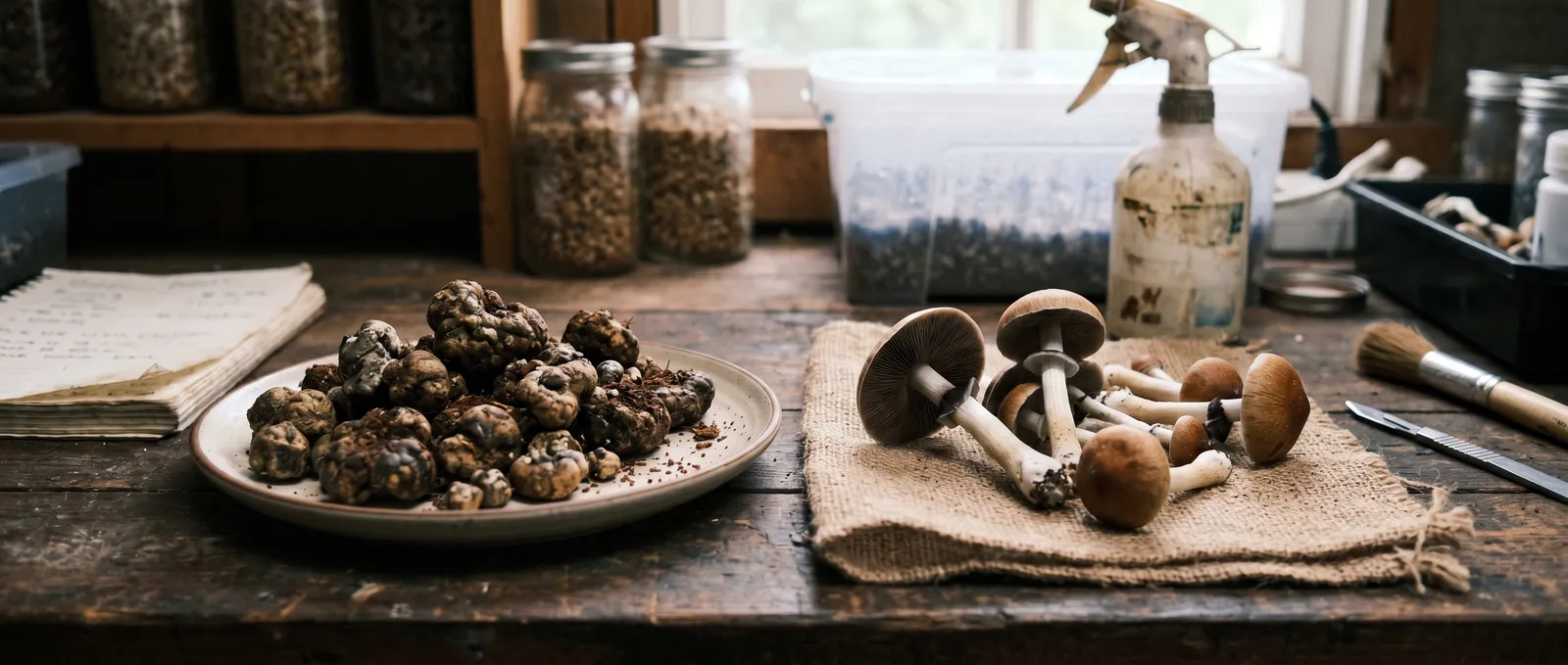
Sclerotia and fruit bodies are two different life stages of Psilocybe fungi: sclerotia are hardened underground mycelial storage bodies (the 'magic…
Storing Dried Mushrooms Long Term: Full Guide
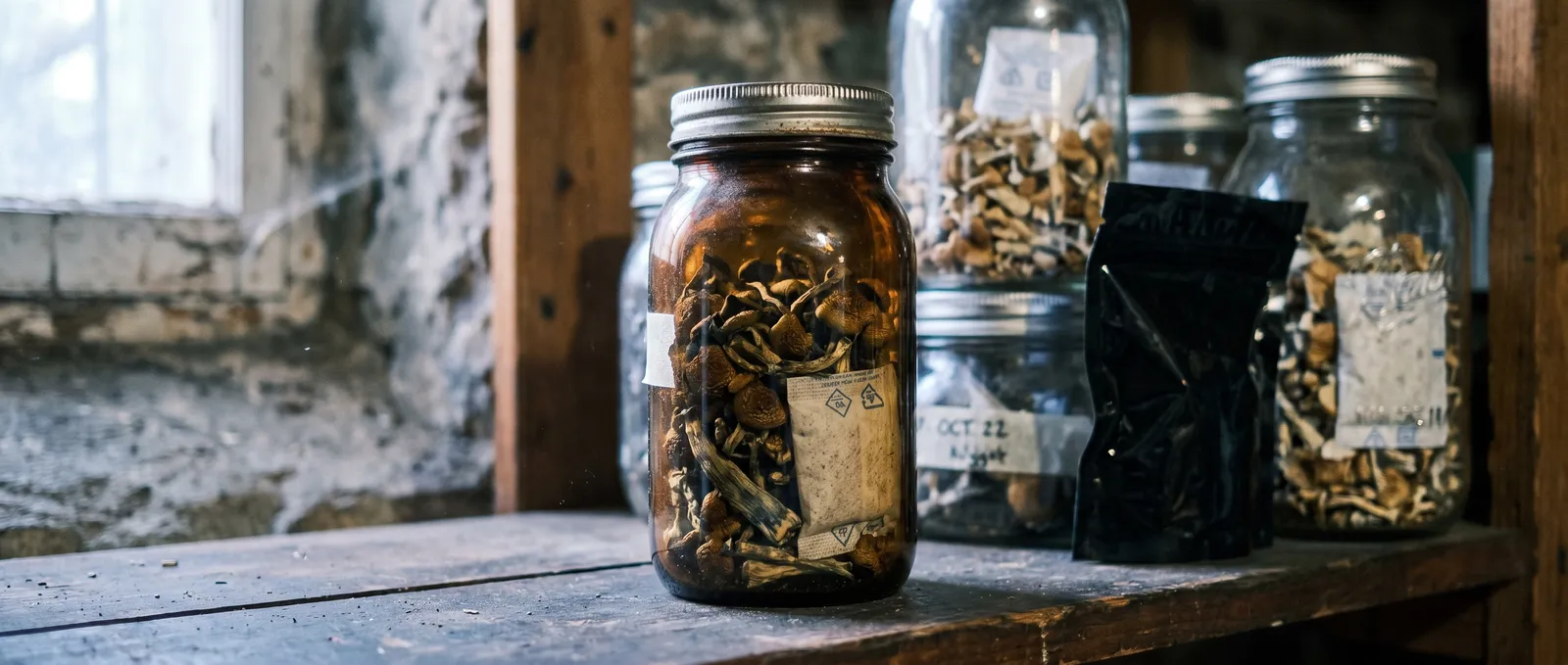
Storing dried mushrooms long term means keeping well-dried Psilocybe fruit bodies in airtight, opaque containers with desiccant, cool and dark, to slow…
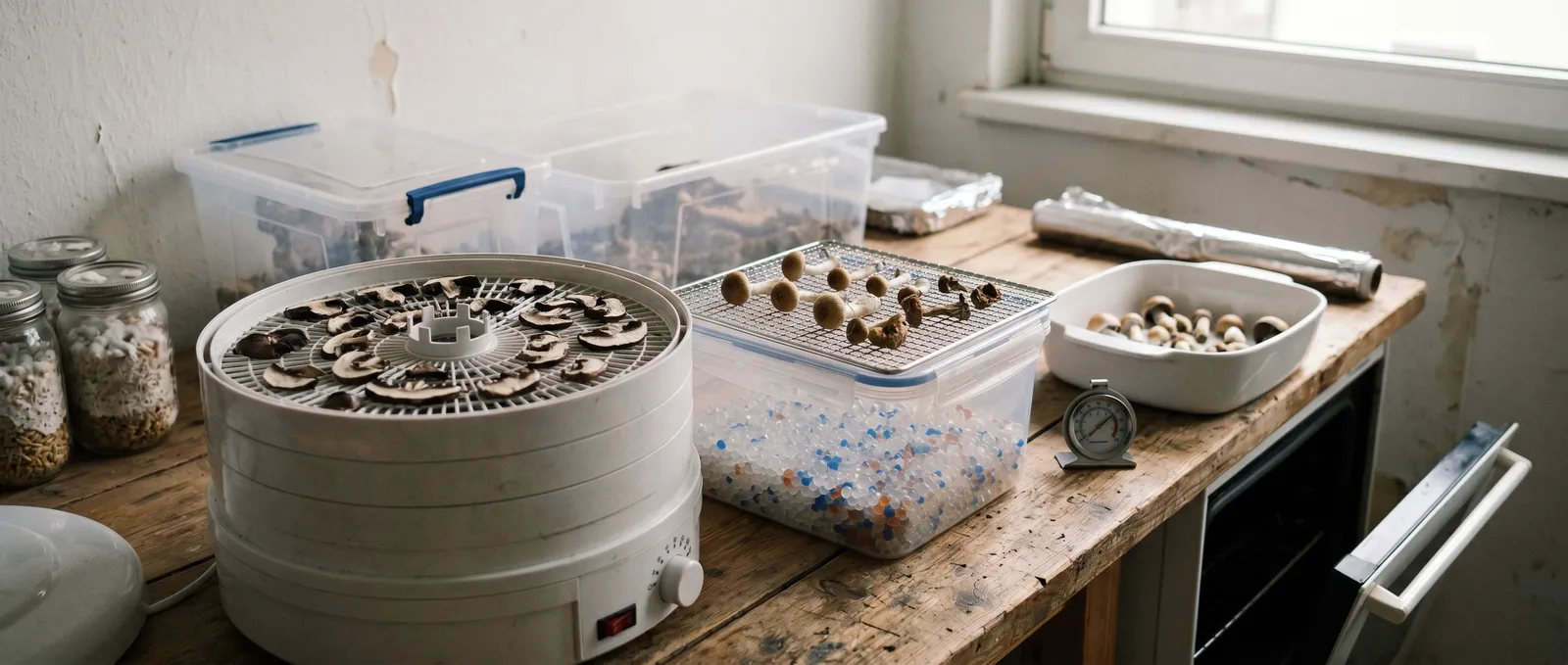
Drying Mushrooms Air Desiccant Oven: Methods Compared
Drying mushrooms air desiccant oven refers to the three home methods for reducing fresh fruit bodies from ~90% water to cracker-dry (<5%). Gotvaldová et al.