
Buy more, pay less
We'll only email you about this product — no marketing.
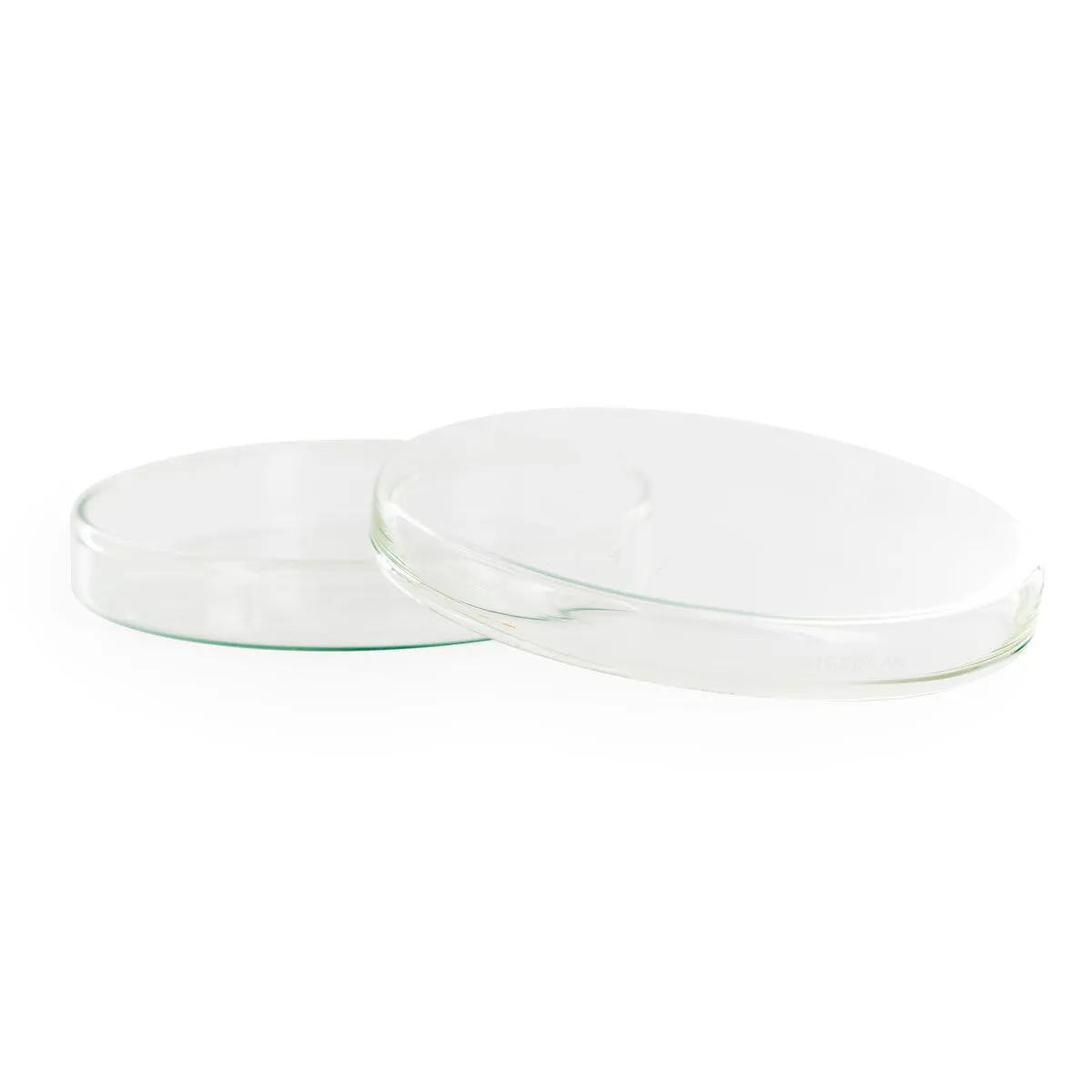
Soda-Lime Glass Petri Dish by Steriplan
The Steriplan soda-lime glass petri dish is a reusable, sterilisable lab dish built for growing mycelium cultures on agar medium. Measuring 100mm in diameter and 15mm in height, it's the standard size used in mycology work worldwide — and because it's proper glass rather than disposable plastic, you can autoclave it, clean it, and run it again indefinitely.
Why a Glass Petri Dish Changes Your Grow Setup
A glass petri dish is the foundation of clean mycology work — and skipping it (or using cheap plastic alternatives) is how growers lose entire batches before they've even started. If you're doing agar transfers, isolating mycelium, or cloning from a fruit body, you need a sterile, flat, transparent surface that you can trust. That's what this Steriplan dish gives you.
We've seen growers try all sorts of workarounds — takeaway containers, plastic cups with cling film, even jar lids. Some of those work in a pinch, but none of them survive a pressure cooker cycle at 121°C. That's the critical difference. Soda-lime glass handles autoclave temperatures without warping, cracking, or releasing anything dodgy into your agar. You pour your medium, let it set, inoculate, and seal with parafilm. The flat base sits stable, the lid fits snugly with just enough gap for gas exchange, and you can see your mycelium colonising clearly through the glass.
The honest limitation? Soda-lime glass is less thermally resistant than borosilicate glass. The normal service temperature sits around 110°C, and the extreme service temperature reaches approximately 460°C according to Corning's specifications for soda-lime silica glass. For standard pressure cooker sterilisation at 121°C, that's well within range — but don't go tossing these directly onto a hot plate or exposing them to sudden temperature swings. Let them cool gradually after autoclaving. Thermal shock is what cracks glass, not the temperature itself.
Compared to borosilicate petri dishes (which you'll find in university labs and professional research settings), soda-lime glass is lighter on the wallet and does the job for home mycology. If you're running a sterile agar workflow for Lion's Mane, Cordyceps, or any Psilocybe cubensis variety, this is the dish we'd point you towards. Borosilicate is overkill unless you're doing repeated high-temperature work beyond standard autoclaving.
Specifications for the Steriplan Soda-Lime Glass Petri Dish
Every measurement matters when you're stacking dishes in a still air box or fitting them inside a pressure cooker. Here's what you're working with.
| Spec | Value |
|---|---|
| Brand | Steriplan |
| Material | Soda-lime glass |
| Diameter | 100mm |
| Height | 15mm |
| Sterilisation temperature | 121°C (standard autoclave cycle) |
| Thermal expansion | 93.5 × 10⁻⁷ cm/cm/°C |
| Normal service temperature | 110°C |
| Extreme service temperature | 460°C |
| Reusable | Yes — indefinitely with proper care |
| SKU | HS1194 |
Complete your agar work setup: pair these petri dishes with a mushroom grow kit to take your isolated cultures from dish to full flush. Parafilm tape for sealing dishes and a still air box or laminar flow hood will keep contamination rates close to zero.
How to Use a Soda-Lime Glass Petri Dish for Agar Work
Agar work is where good grows start. Here's the process from sterile dish to colonised plate, step by step.
- Wrap your Steriplan petri dishes (lid and base together) loosely in aluminium foil. This keeps condensation from dripping into the dish during sterilisation.
- Place the wrapped dishes into your pressure cooker alongside your prepared agar medium (malt extract agar is the standard — 20g malt extract, 20g agar powder, 1 litre of water).
- Run the pressure cooker at 121°C and 15 PSI for 15–20 minutes. This is the standard autoclave cycle that kills virtually all contaminants.
- Let the pressure cooker depressurise and cool naturally. Do not force-cool — sudden temperature drops risk cracking the soda-lime glass.
- In a still air box or in front of a laminar flow hood, pour roughly 15–20ml of liquid agar into each petri dish. Replace the lid immediately.
- Allow the agar to solidify at room temperature. This takes about 30–45 minutes. You'll see the medium turn from liquid to a firm, slightly translucent gel.
- Inoculate with a spore syringe, liquid culture, or agar wedge from an existing colonised plate. Work quickly and keep the lid off for as few seconds as possible.
- Seal the gap between lid and base with a strip of parafilm. This allows gas exchange while blocking airborne contaminants.
- Store the inoculated dishes upside down (agar on top) at 22–26°C. Flipping them prevents condensation from pooling on the mycelium surface.
- Check daily. You should see white mycelium growth within 3–7 days, depending on the species. Any green, black, or orange spots mean contamination — toss that plate and try again with a fresh dish.
Soda-Lime Glass Petri Dishes Compared to Borosilicate
This comes up constantly, so here's a straight comparison to help you decide.
| Feature | Soda-Lime Glass (Steriplan) | Borosilicate Glass |
|---|---|---|
| Thermal resistance | Normal service 110°C, extreme 460°C | Normal service 230°C, extreme 500°C+ |
| Thermal shock resistance | Moderate — cool gradually | High — handles rapid temperature changes |
| Thermal expansion coefficient | 93.5 × 10⁻⁷ cm/cm/°C | ~33 × 10⁻⁷ cm/cm/°C |
| Price | Lower | Significantly higher |
| Suitable for 121°C autoclave | Yes | Yes |
| Best for | Home mycology, agar work, culture storage | Research labs, repeated high-heat cycles |
| Weight | Slightly heavier | Slightly lighter |
For home growers doing standard agar work at 121°C, soda-lime glass is the practical choice. You'd only need borosilicate if you're doing dry-heat sterilisation at 160°C+ or working in a setting that demands it. Save your money and put the difference towards spore syringes or grain spawn.
Frequently Asked Questions
Can I sterilise soda-lime glass petri dishes in a pressure cooker?
Yes. Standard pressure cooker sterilisation runs at 121°C and 15 PSI for 15–20 minutes, which is within the operating range of soda-lime glass. Wrap dishes in foil before placing them inside, and always let the cooker depressurise naturally to avoid thermal shock.
How many times can I reuse a Steriplan glass petri dish?
Indefinitely, as long as the glass remains smooth and unchipped. Inspect dishes regularly for micro-scratches or cracks. A damaged surface harbours contaminants that survive sterilisation, so retire any dish that looks frosted or scored.
Will soda-lime glass leach anything into my agar medium?
For short-term agar culture work (days to weeks), leaching is not a practical concern. Prolonged storage of liquid media in soda-lime glass can release trace metal ions over time, which is why long-term media storage is better done in borosilicate bottles. For standard petri dish use, you're fine.
What size agar plates do these dishes make?
With a 100mm diameter and 15mm height, each dish holds roughly 15–20ml of agar medium. This produces a standard-thickness plate that gives mycelium plenty of surface area to colonise — the same size used in most mycology guides and tutorials.
Do I need parafilm to seal these petri dishes?
Strongly recommended. Parafilm creates a semi-permeable seal that allows gas exchange while blocking airborne contaminants. Without it, you're relying on the lid alone, and even a snug-fitting glass lid leaves enough of a gap for mould spores to find their way in.
Can I use these petri dishes in a microwave or oven?
Not recommended. Soda-lime glass has a lower thermal shock tolerance than borosilicate. Microwaves heat unevenly, and oven temperatures can exceed the normal service range of 110°C rapidly. Stick to pressure cooker or autoclave sterilisation.
Are these the same petri dishes used in professional labs?
Steriplan is a recognised laboratory glassware brand. Professional research labs often use borosilicate dishes for their higher thermal resistance, but Steriplan soda-lime glass dishes meet the same dimensional standards (100mm × 15mm) and work identically for culture growth at standard incubation temperatures.
Last updated: April 2026
Related products
Medical disclaimer. This content is for informational purposes only and does not constitute medical advice. Consult a qualified healthcare provider before use of any substance.