
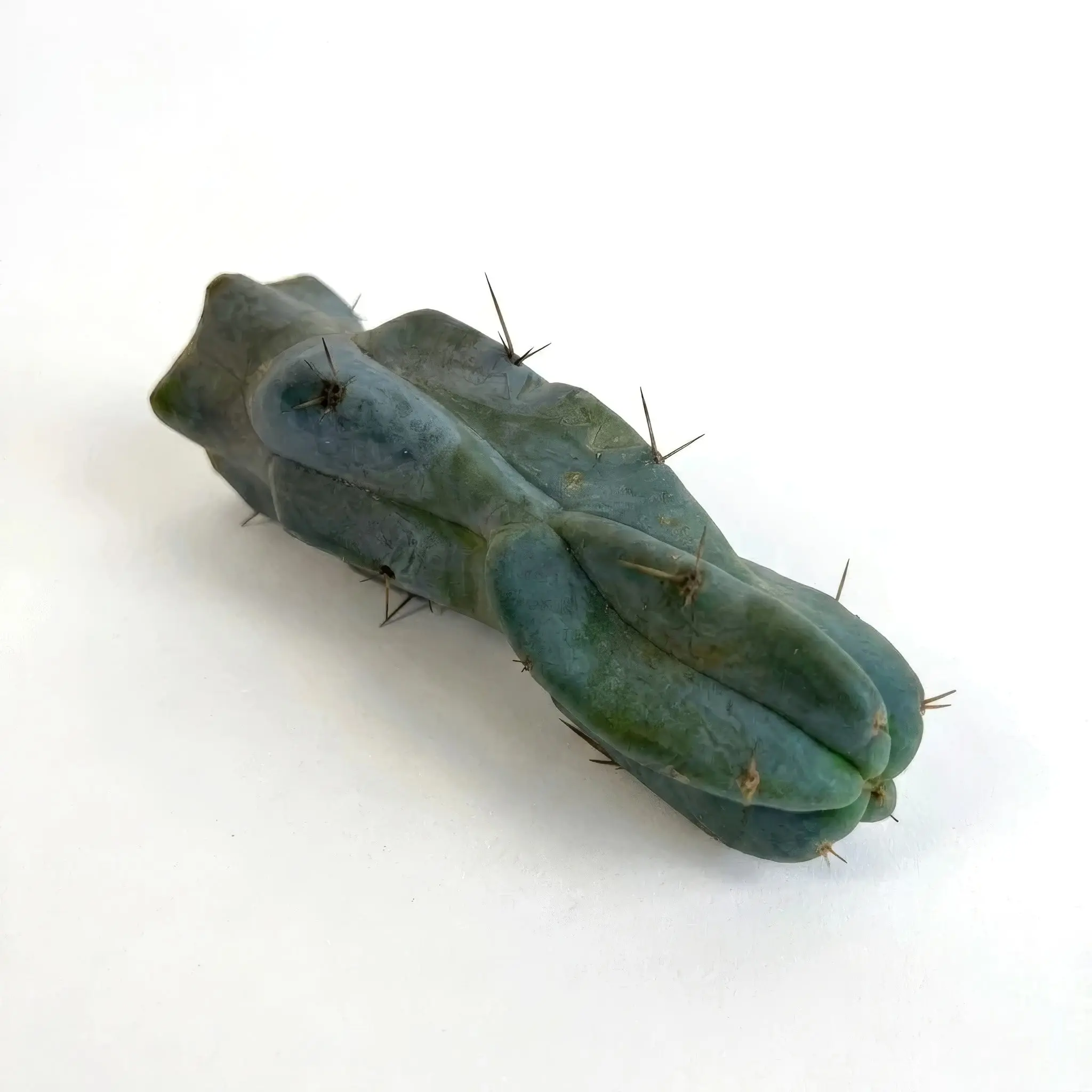
Bolivian Torch 'Melted Wax - Bonobo' (Echinopsis lageniformis)
Bolivian Torch 'Melted Wax - Bonobo': a monstrose cactus that looks poured, not grown
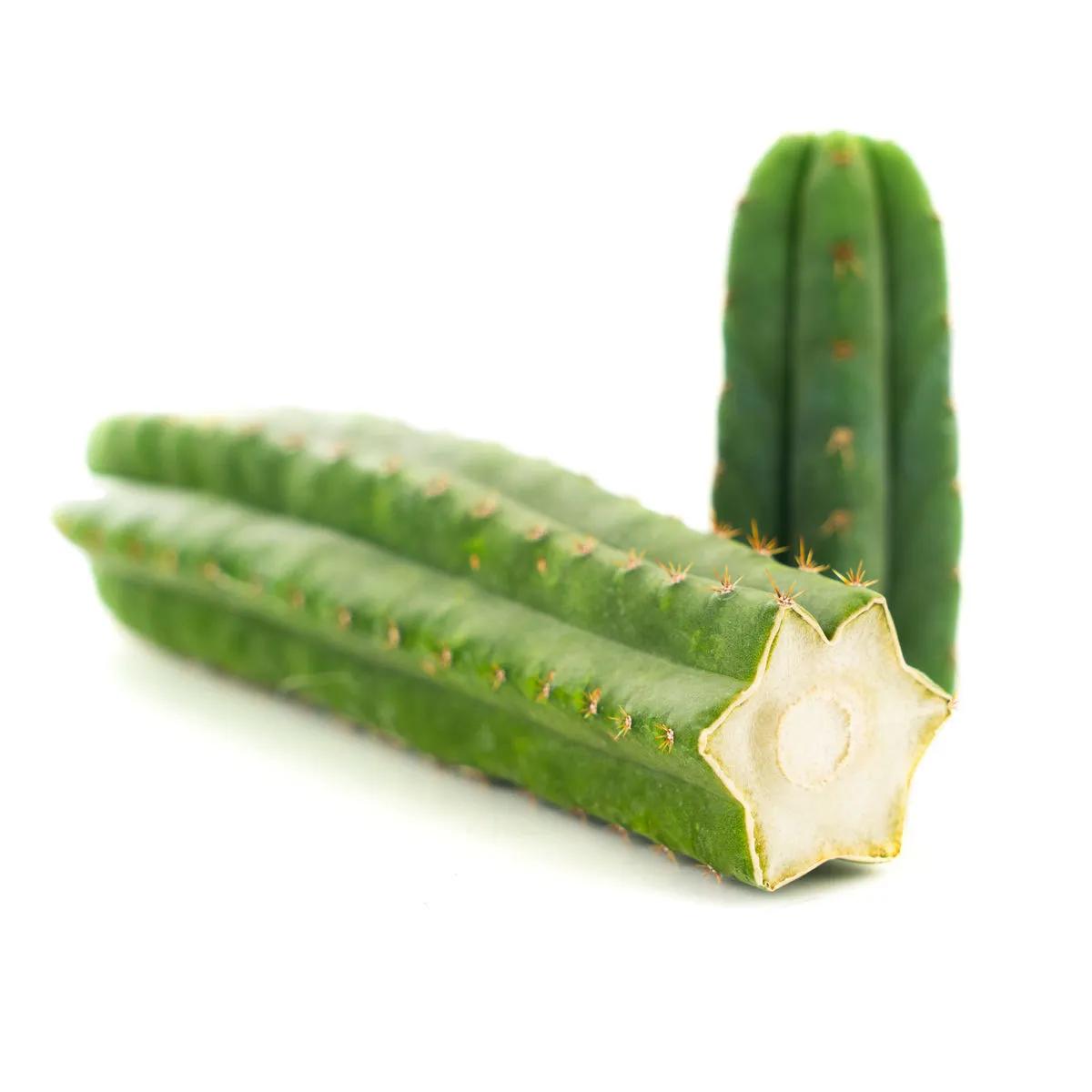
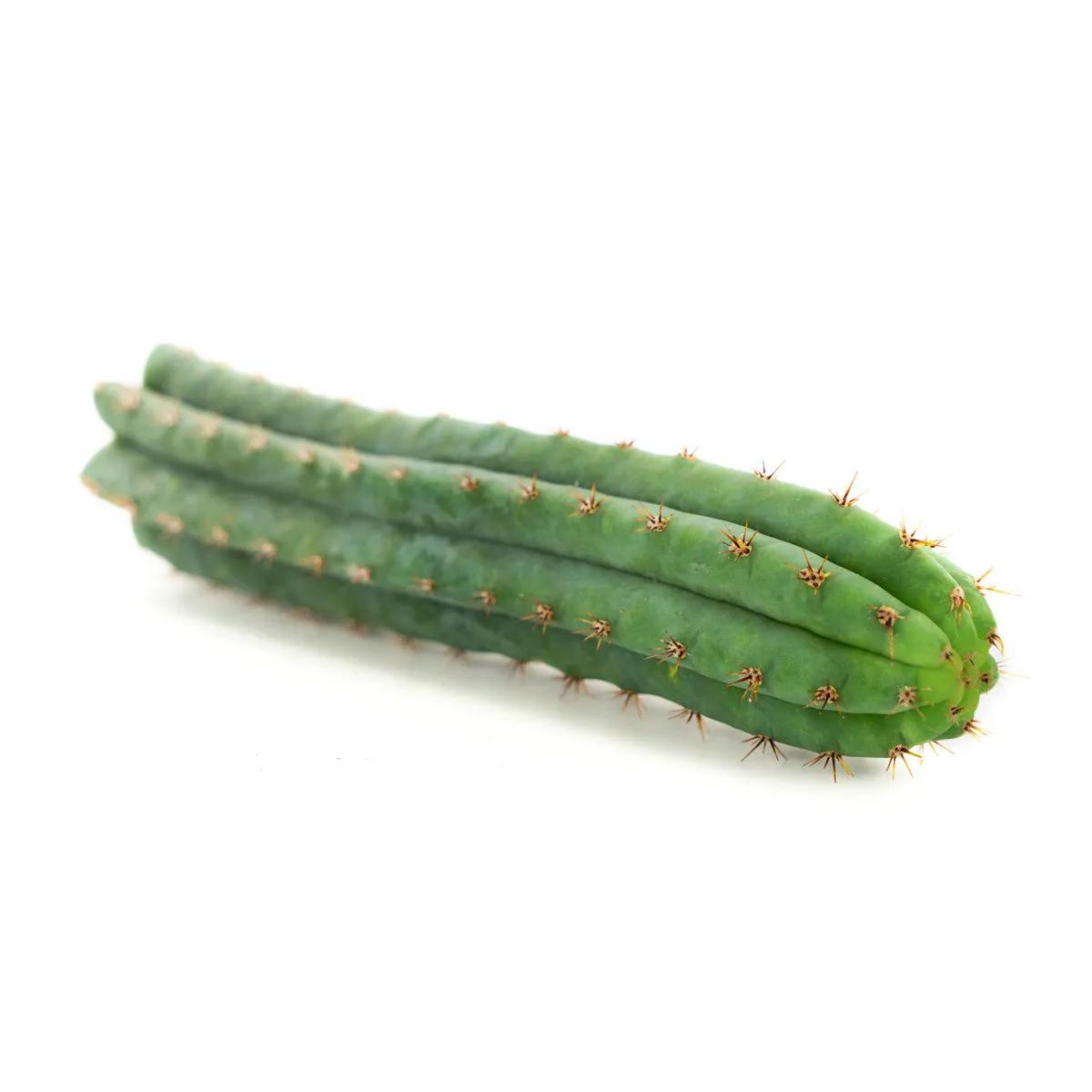
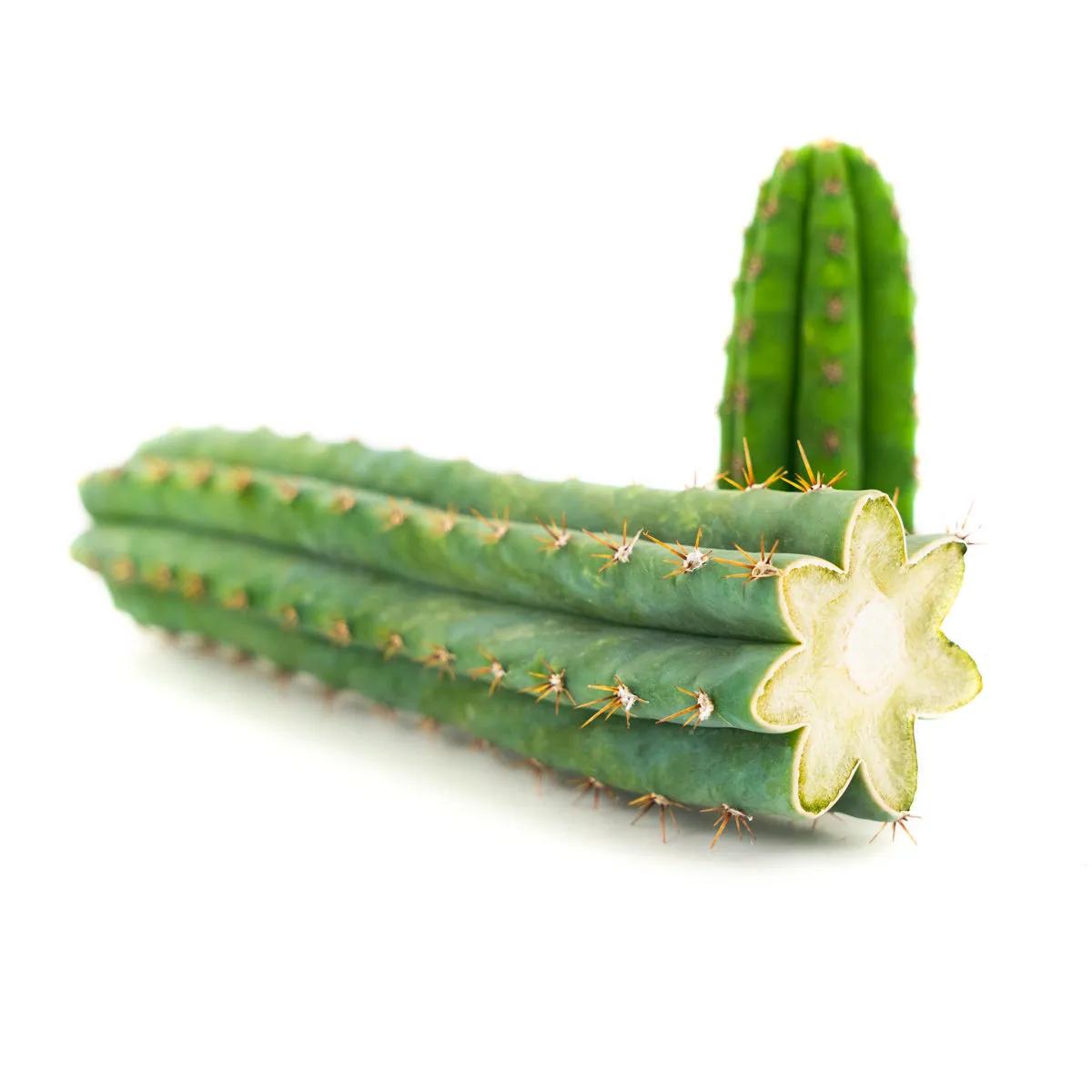
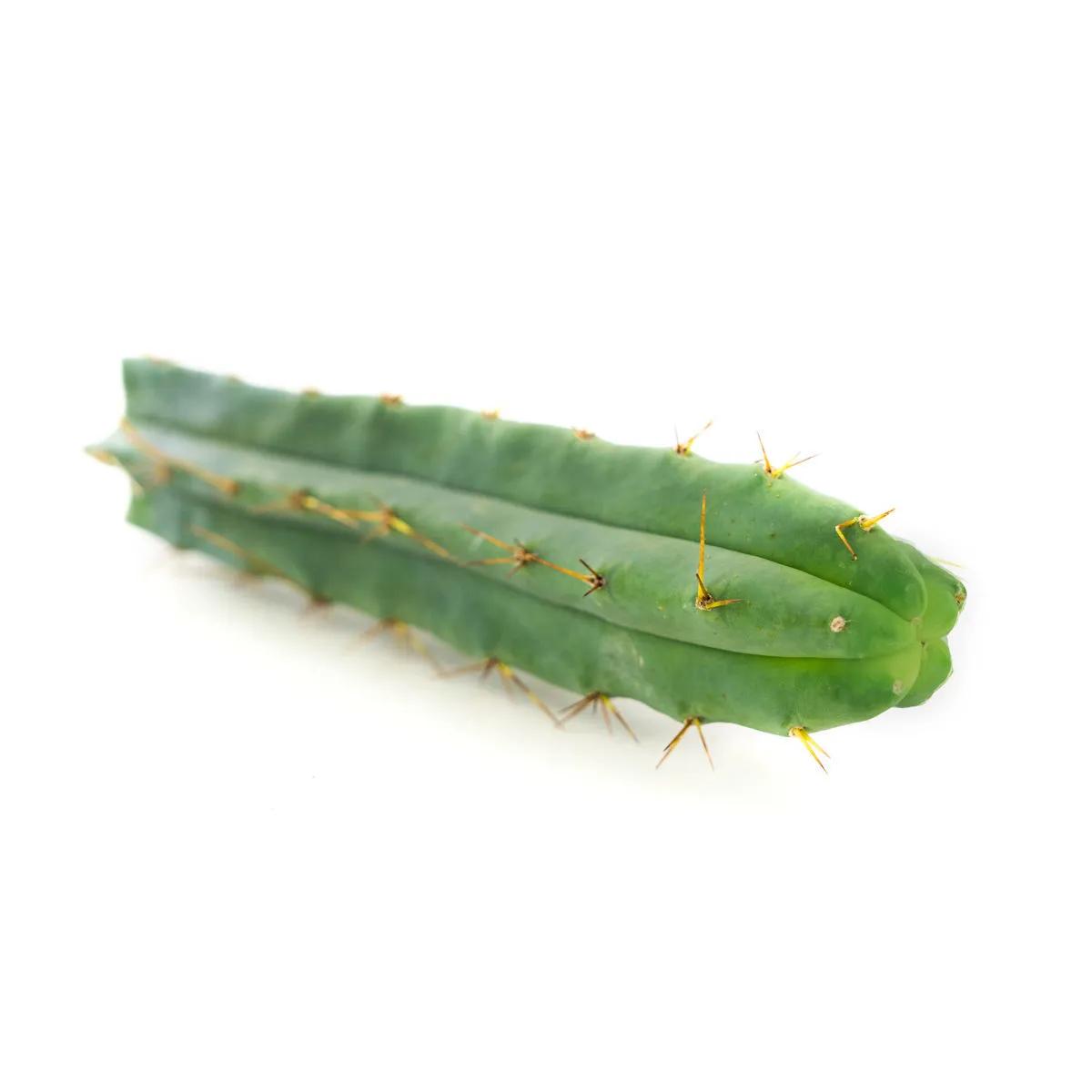
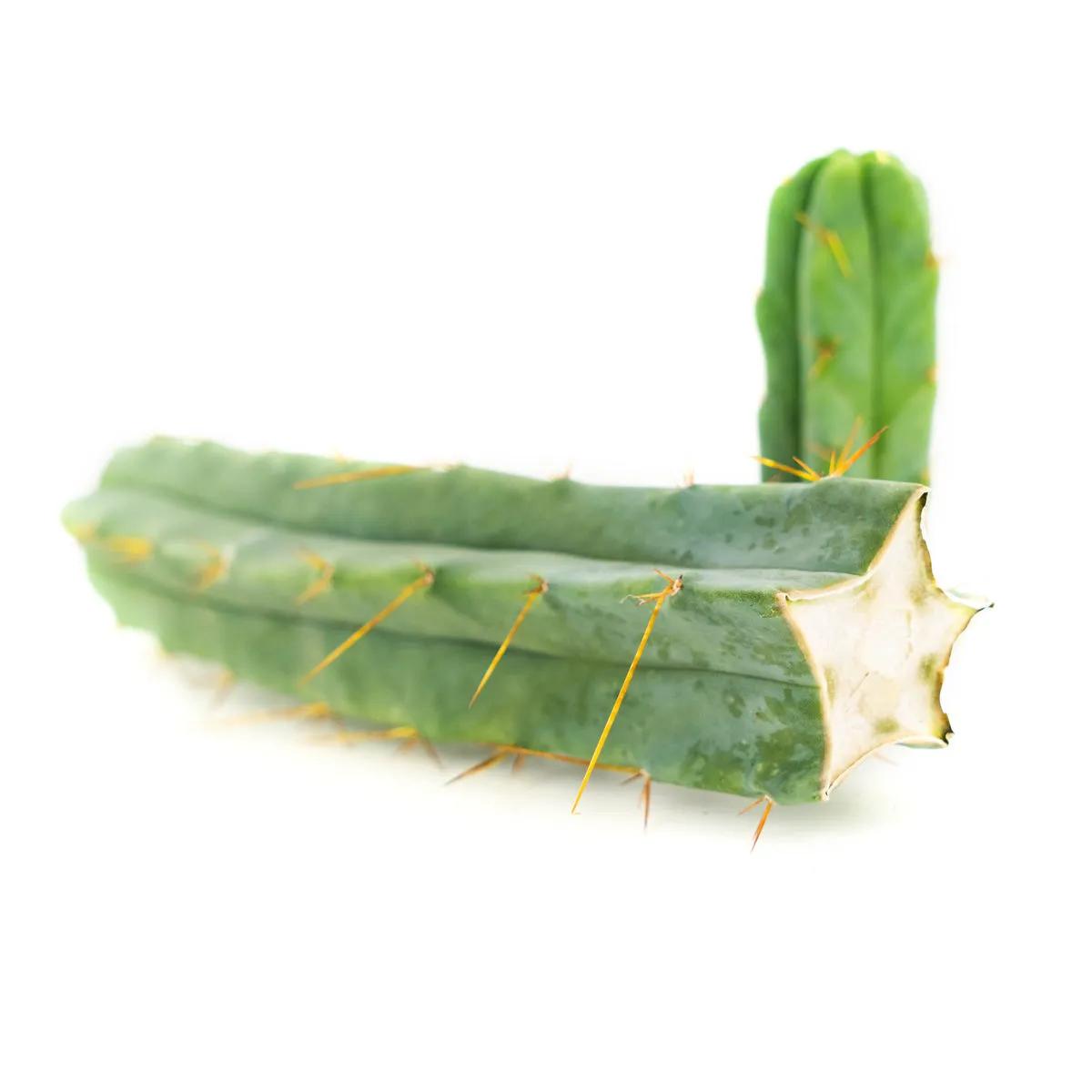
Bolivian Torch 'Melted Wax - Bonobo' is an Echinopsis lageniformis monstrose: a cultivar of the Bolivian Torch cactus that grows swollen, fused ribs instead of a straight column. Where a normal Bolivian Torch is a tidy pillar with neat rows of spines, this one bulges, folds and runs together like candle wax that dripped and set. We sell it as a single 14-15cm cutting.
In short: same species, same care as our standard Bolivian Torch, completely different shape. Every cutting is unique, so before you buy, know that the plant you get will have its own folds and its own spine pattern.
Specifications
| Species | Echinopsis lageniformis (syn. Trichocereus bridgesii) |
| Form | f. monstrosa, cultivar 'Melted Wax - Bonobo' |
| Common name | Bolivian Torch (Achuma) |
| Cutting length | 14-15cm |
| Colour | Blue-green with a pale, waxy bloom |
| Ribs | Swollen, flattened and fused into lobes |
| Spines | Sparse; small clusters of 1-4 dark spines |
| Shape | Unique per cutting; yours will differ from the photo |
Building a Bolivian Torch collection? Put Bonobo next to a standard Bolivian Torch cutting to see what the species does when it grows "normally", or next to Bolivian Torch Monstrose (TBM) for the other famous mutation. All three want the same gritty cactus soil.
What makes an Echinopsis lageniformis monstrose
An Echinopsis lageniformis monstrose is a Bolivian Torch with a growth mutation that scatters its growing points. A normal Echinopsis lageniformis grows from one tip at the top, so it builds a straight column with 4-8 even ribs that can reach 2-5 metres in its Bolivian habitat. In a monstrose plant, many points grow at once and in different directions, and the stem bulges, folds and fuses where they meet.
It isn't a disease and it doesn't weaken the plant; it's a different way of growing. Collectors keep the forms they like going by cuttings, because a cutting carries the same growth pattern as its mother plant. That's how named clones such as 'Melted Wax - Bonobo' are passed on.
Look closely at the Bonobo cutting and you can see what that means in practice. The ribs have lost their straight lines: they swell into rounded lobes, flatten, run into each other and fold back over. The surface has the soft, matte feel of a waxy bloom, and the colour sits somewhere between sea green and slate blue. Spines are rare, a cluster of one to four dark spines here and there instead of a row down every rib, which also makes it a lot easier to handle than most columnar cacti.
Bonobo vs Bolivian Torch Monstrose (TBM) vs the standard Bolivian Torch
All three are Echinopsis lageniformis, and they differ in shape, not in species. Here's how they compare:
| 'Melted Wax - Bonobo' | Bolivian Torch Monstrose (TBM) | Standard Bolivian Torch | |
|---|---|---|---|
| Growth | Broad, fused, wax-like lobes | Smooth, finger-like segments | Straight column, 4-8 ribs |
| Spines | Sparse, in small clusters | Few to none on most segments | Regular rows, up to 6-7cm long |
| Predictability | Every cutting different | Clone A and B each recognisable | Very predictable |
| Growth speed | Slower than a normal column | Slower than a normal column | Fast for a columnar cactus |
| Best for | Collectors who want a sculptural piece | Collectors who want a talking point | Growing a big plant quickly |
Verdict: if you want size and speed, the standard Bolivian Torch is the alternative to pick; it puts on visible growth within a single season. If you want the famous "penis plant", that's TBM. The best Bolivian Torch for a collector who already has the classic column and wants something that looks like nothing else on the windowsill is Bonobo: a unique shape, very few spines, and the same easy care.
One limitation to be honest about: monstrose growth is slow and irregular compared to a normal column. A 14-15cm cutting stays a compact, sculptural piece for a long time. If you're expecting a metre of cactus in a few years, this isn't that plant.
How to care for an Echinopsis lageniformis monstrose cutting
A Bolivian Torch cutting roots best when the cut end has dried to a hard callus before it touches soil. That's the step people skip, and it's the one that decides whether the cutting roots or rots.
- Let the cut end callus. Stand the cutting in a dry, shaded spot for 2-4 weeks, until the base is hard and dry.
- Prepare a gritty mix: cactus compost with 40-50% perlite or pumice. A terracotta pot drains and breathes better than plastic.
- Push the callused end 3-5cm into dry soil. If the cutting leans, prop it up with a few stones. Don't water yet.
- Wait 1-2 weeks, then water thoroughly and let the soil dry out completely before the next watering.
- Keep it in bright light but out of hard midday sun while it roots, then get it used to more sun over 2-3 weeks.
- In winter, keep it frost-free (above about 10°C is safest) and water once a month at most.
Tip: check the folds now and then. The creases of a monstrose cactus are exactly where mealybugs like to hide; a cotton bud dipped in rubbing alcohol deals with a small outbreak.
Echinopsis lageniformis is, with San Pedro and Peruvian Torch, one of the three columnar Andean cacti known as mescaline cacti, which is why it sits in that section of our shop. We don't know of any measurement for this particular clone, and we sell it as a collector's plant.
Frequently Asked Questions
Will my Bonobo cutting look like the photo?
No. Each monstrose cutting has its own folds and spine pattern. The photo shows the type of growth, not the specific plant you'll receive.
What is the difference between Bonobo and Bolivian Torch Monstrose (TBM)?
Both are monstrose forms of Echinopsis lageniformis. TBM grows smooth, finger-like segments; Bonobo grows broad, fused lobes that look like melted wax.
What is the growth rate of a monstrose Bolivian Torch?
Slower than a normal Bolivian Torch, because the growth is spread over many points instead of one tip. Expect a compact plant that changes shape gradually rather than one that shoots up.
How do you take care of an Echinopsis lageniformis monstrose?
The same way as a normal Bolivian Torch: gritty soil, little water in winter and plenty of light once rooted. Keep an eye on the folds for mealybugs.
How do I root a Bolivian Torch cutting?
Let the cut end callus for 2-4 weeks, plant it 3-5cm deep in dry gritty cactus soil, and wait 1-2 weeks before the first watering.
Why does it have so few spines?
Sparse spines are part of this cultivar's look. It makes Bonobo one of the easier Echinopsis cuttings to handle and repot.
What is the difference between a Bolivian Torch and San Pedro?
They are related columnar cacti. San Pedro (Echinopsis pachanoi) comes from Ecuador and Peru and has short spines or none; the Bolivian Torch (Echinopsis lageniformis) comes from Bolivia and normally carries long spines of up to 6-7cm.
Last updated: November 2026
Related products
Medical disclaimer. This content is for informational purposes only and does not constitute medical advice. Consult a qualified healthcare provider before use of any substance.