
This article discusses psychoactive substances intended for adults (18+). If you have a health condition or take medication, consult a doctor before use. Our age policy
Palo Santo Bursera graveolens — Chemistry, Use & Safety Guide
Definition
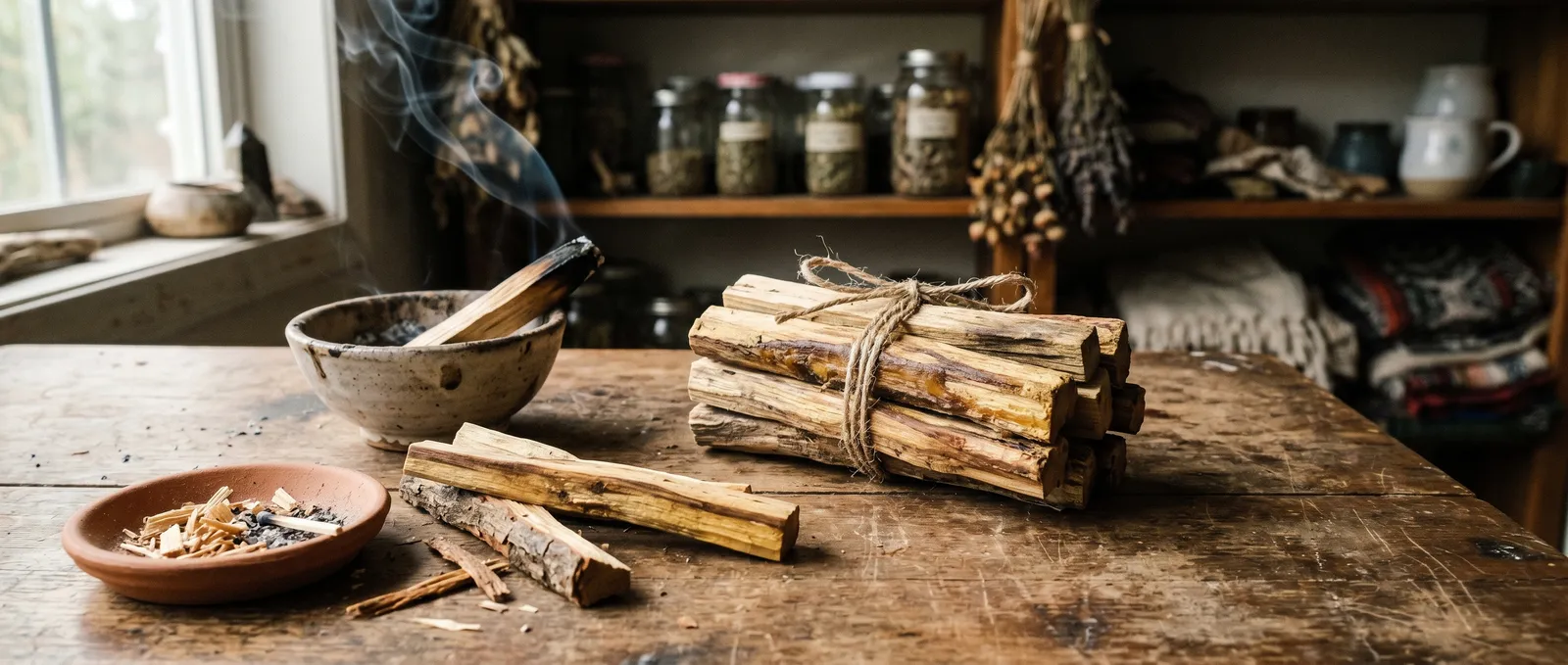
Palo santo (Bursera graveolens Kunth) is a South American tree whose naturally fallen, years-cured heartwood is burned as ceremonial incense. Rich in limonene — up to 70% of the essential oil (Yukawa et al., 2006) — the wood produces a sweet citrus-mint smoke used in cleansing rituals by Kichwa, Shuar, and coastal Peruvian communities.
What Is Palo Santo?
Palo santo Bursera graveolens is a resinous South American tree whose naturally fallen, years-cured heartwood is burned as aromatic ceremonial incense. Palo santo — literally "holy wood" in Spanish — is the common name for Bursera graveolens Kunth, a wild tree native to the dry tropical forests of South America. The species belongs to the Burseraceae family, the same botanical family as frankincense (Boswellia) and myrrh (Commiphora), which goes some way toward explaining why all three have been burned as ceremonial incense for centuries. The tree grows across a belt stretching from the Yucatán Peninsula through Ecuador, Peru, and into the Gran Chaco region of Argentina and Paraguay. It rarely exceeds 10 metres in height, prefers arid, rocky soil, and produces a resinous heartwood that only develops its characteristic aromatic profile after the tree has died and been left to cure on the forest floor — typically for three to eight years (Yukawa et al., 2006).
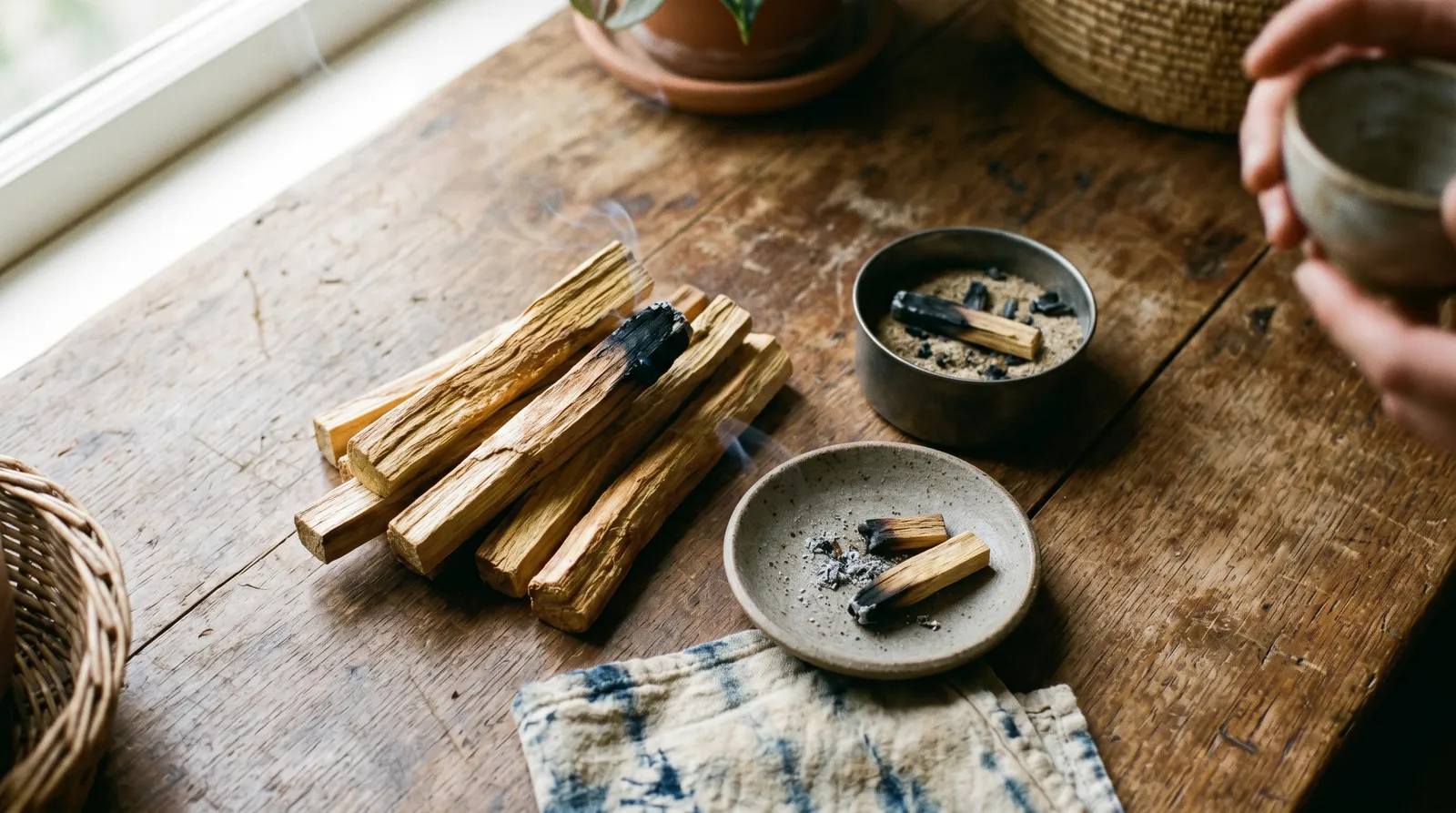
That curing period is not a marketing story. A freshly felled Bursera graveolens trunk smells faintly of turpentine and not much else. The sweet, citrus-and-mint scent that people associate with palo santo develops through slow enzymatic and oxidative changes in the dead wood over years of exposure to sun, rain, and microbial activity. This is why the traditional harvesting method — collecting naturally fallen branches and trunks — is not just an ecological nicety but a practical requirement for producing aromatic wood.
The Chemistry Behind the Scent
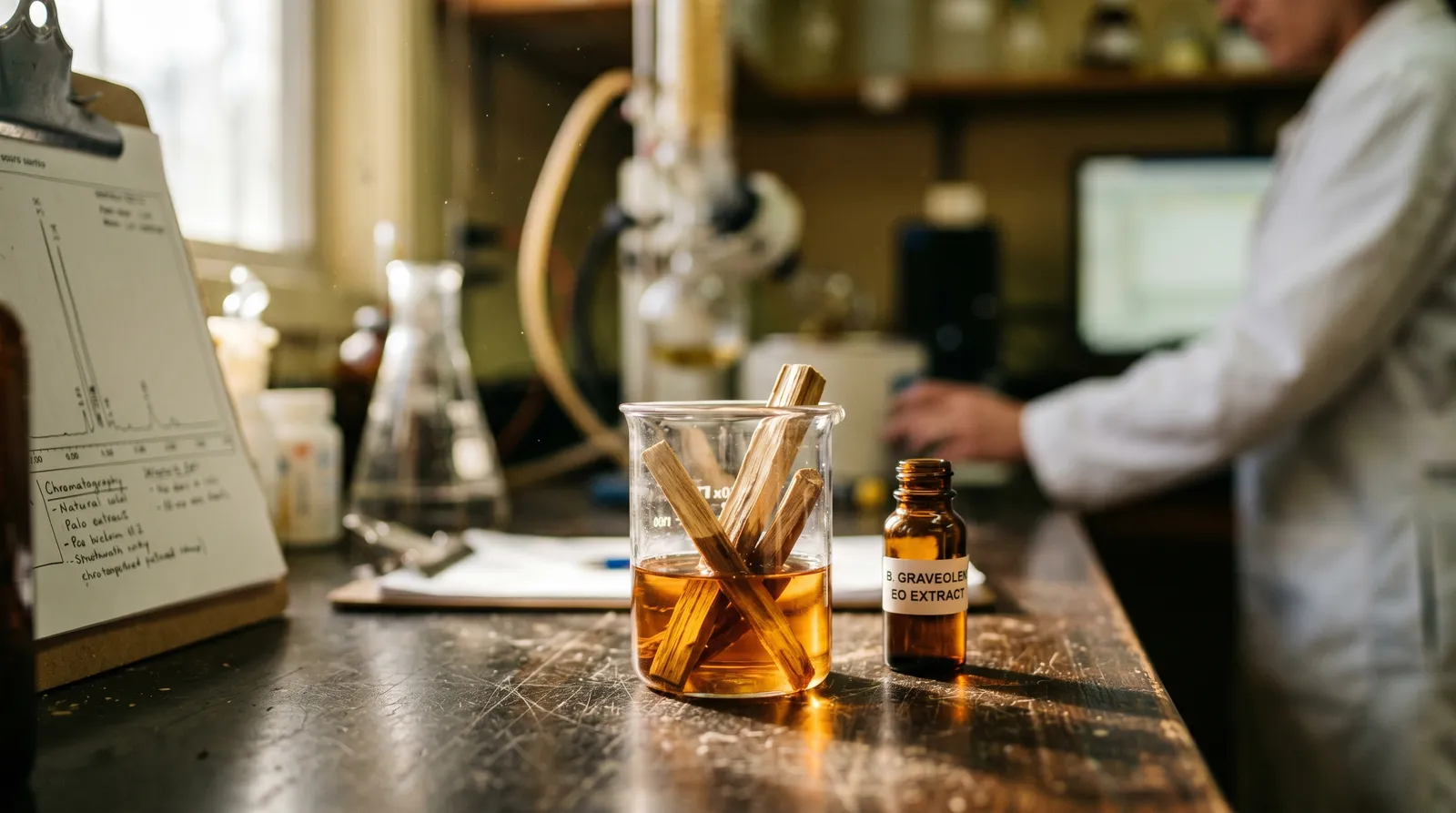
Palo santo Bursera graveolens heartwood owes its distinctive aroma primarily to limonene, which makes up roughly 60–70 % of the essential oil in well-cured wood. A gas chromatography–mass spectrometry (GC-MS) analysis by Yukawa et al. (2006) confirmed this dominance. That is an unusually high concentration — for context, sweet orange peel oil typically contains around 90 % limonene, so palo santo is not far behind a citrus fruit in terms of this single monoterpene.
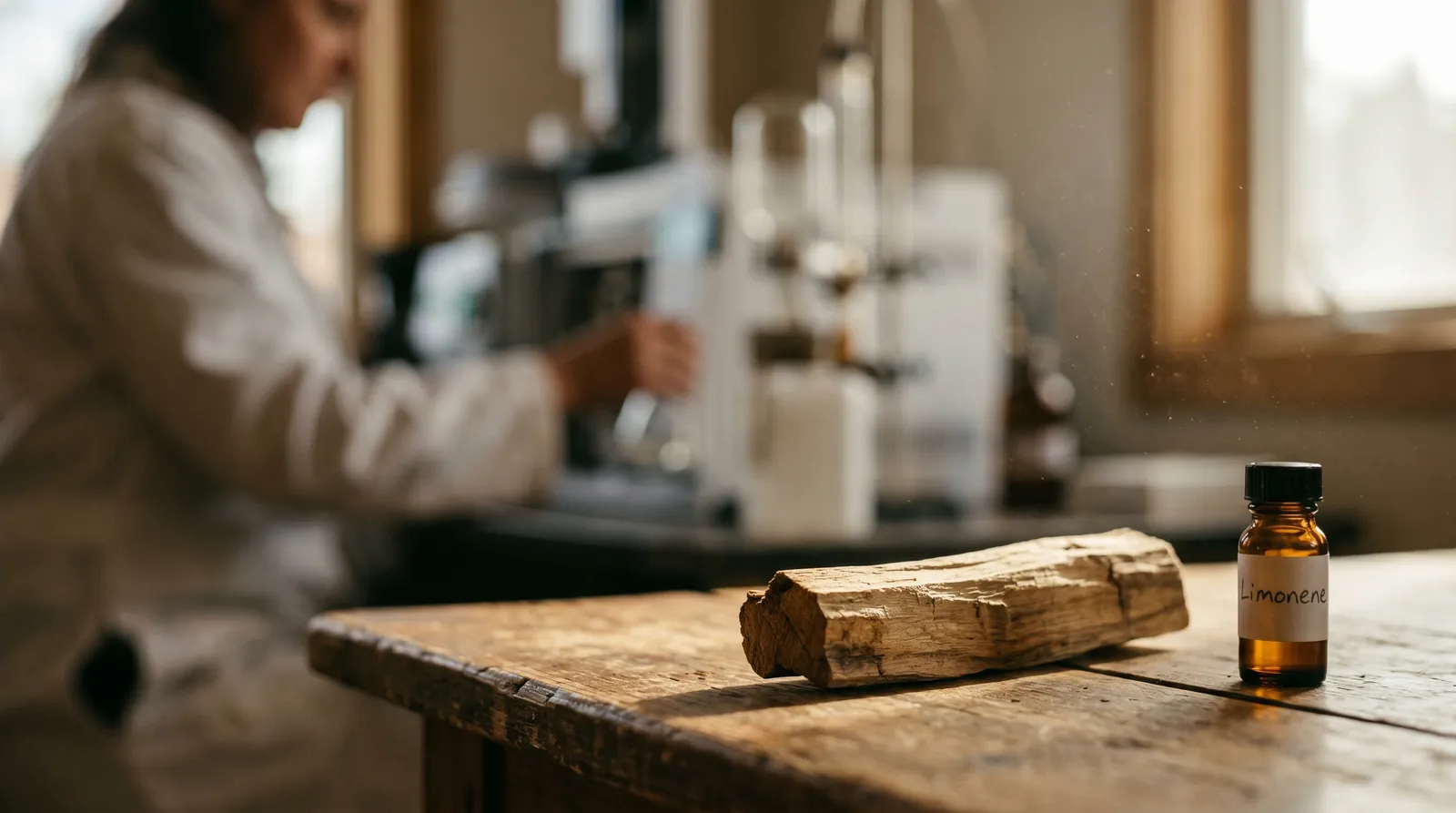
Beyond limonene, the oil contains α-terpineol (responsible for the floral-pine note), menthofuran (the minty undertone), and smaller fractions of carvone, germacrene D, and trans-carveol (Nakanishi et al., 2016). A 2020 analysis by Monzote et al. also detected p-cymene and γ-terpinene, both of which have been studied independently for antimicrobial activity in vitro — though jumping from "kills bacteria in a petri dish" to "purifies your living room" is exactly the kind of leap that the evidence does not support. In vitro antimicrobial activity at concentrated doses tells you something about the chemistry; it tells you almost nothing about what happens when you light a stick in your bedroom.
Traditional and Ceremonial Use
The ceremonial burning of palo santo Bursera graveolens dates back at least to approximately 500 CE in coastal Ecuador. The Manteño-Huancavilca culture of pre-Columbian Ecuador used palo santo in funerary and ritual contexts, and archaeological evidence from the Santa Elena Peninsula includes charred wood fragments identified as Bursera species in burial sites (Rätsch, 2005). Among contemporary Kichwa and Shuar communities in Ecuador, the wood is burned during limpieza (cleansing) ceremonies to mark transitions — a new home, a birth, the start of a healing ritual. It is also used by curanderos in northern Peru's coastal desert, often alongside other aromatic resins such as copal (Protium spp.).
The Spanish colonial term "palo santo" was applied to several different aromatic trees across the Americas, which creates some confusion in historical sources. Bulnesia sarmientoi, a completely unrelated species from the Zygophyllaceae family native to the Gran Chaco, is also marketed as "palo santo" in the timber trade. The two are not interchangeable: Bulnesia is an endangered hardwood used for flooring and essential oil extraction, while Bursera graveolens is the lighter, softer wood sold as incense sticks. If you encounter palo santo essential oil at unusually low prices, it may well be Bulnesia-derived — a species listed under CITES Appendix III (Argentina) since 2010.
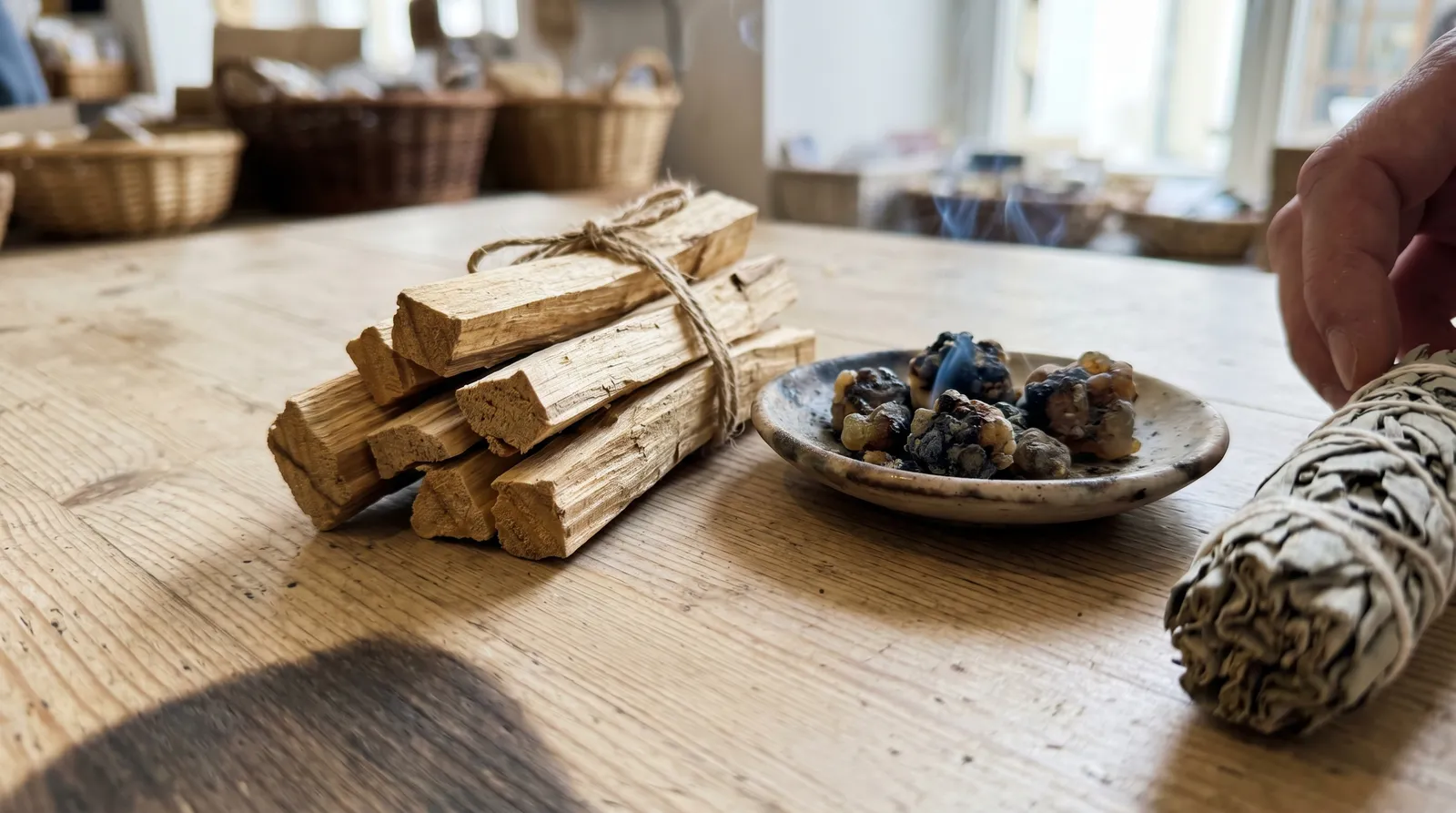
Outside South America, palo santo entered the North American and European wellness and spiritual-practice markets primarily in the 2000s, often alongside white sage (Salvia apiana) smudge bundles. The two are frequently sold together, though they come from entirely different botanical families, different continents, and different cultural traditions. For more on the cultural context of white sage, see the Azarius article on Salvia apiana cultural smudging practices.
Sustainability and Sourcing
Bursera graveolens is not currently listed as endangered by the IUCN, but the sustainability picture is more complicated than a single Red List status suggests. The global demand spike for palo santo over the past fifteen years has raised real questions about overharvesting. In 2019, Ecuador's Ministry of Environment issued rules restricting the commercial harvest and export of Bursera graveolens, requiring permits and traceability documentation. Peru has similar export controls. The concern is not that the species is about to vanish — it regenerates well in its native dry-forest habitat — but that commercial-scale collection of fallen wood can outstrip the natural die-off rate, and that felling of live trees (which then get passed off as "naturally fallen") undermines both the ecology and the aromatic quality of the product.
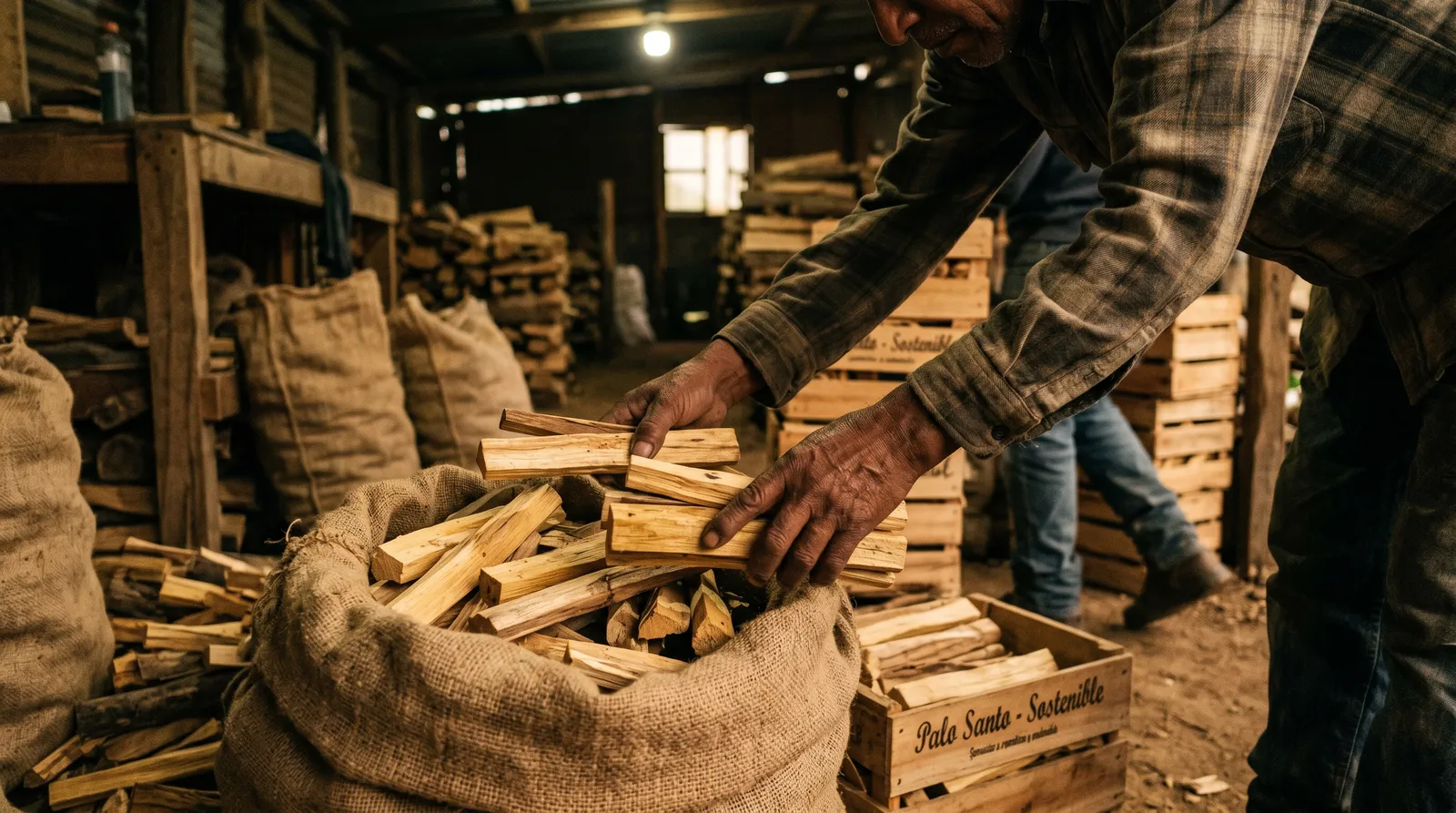
Certified-sustainable sourcing programmes do exist. Several Ecuadorian cooperatives operate reforestation schemes where new Bursera graveolens seedlings are planted for every tree harvested, and only dead wood that has cured for a minimum period is collected. The certification field is patchy, though — there is no single universally recognised "sustainable palo santo" label equivalent to FSC for timber. Buyers who care about sourcing (and the evidence suggests a growing number do) should look for traceability to a named cooperative or region, and be sceptical of bulk palo santo at rock-bottom prices, which is more likely to come from unregulated harvesting or misidentified Bulnesia wood.
How the Wood Is Actually Used
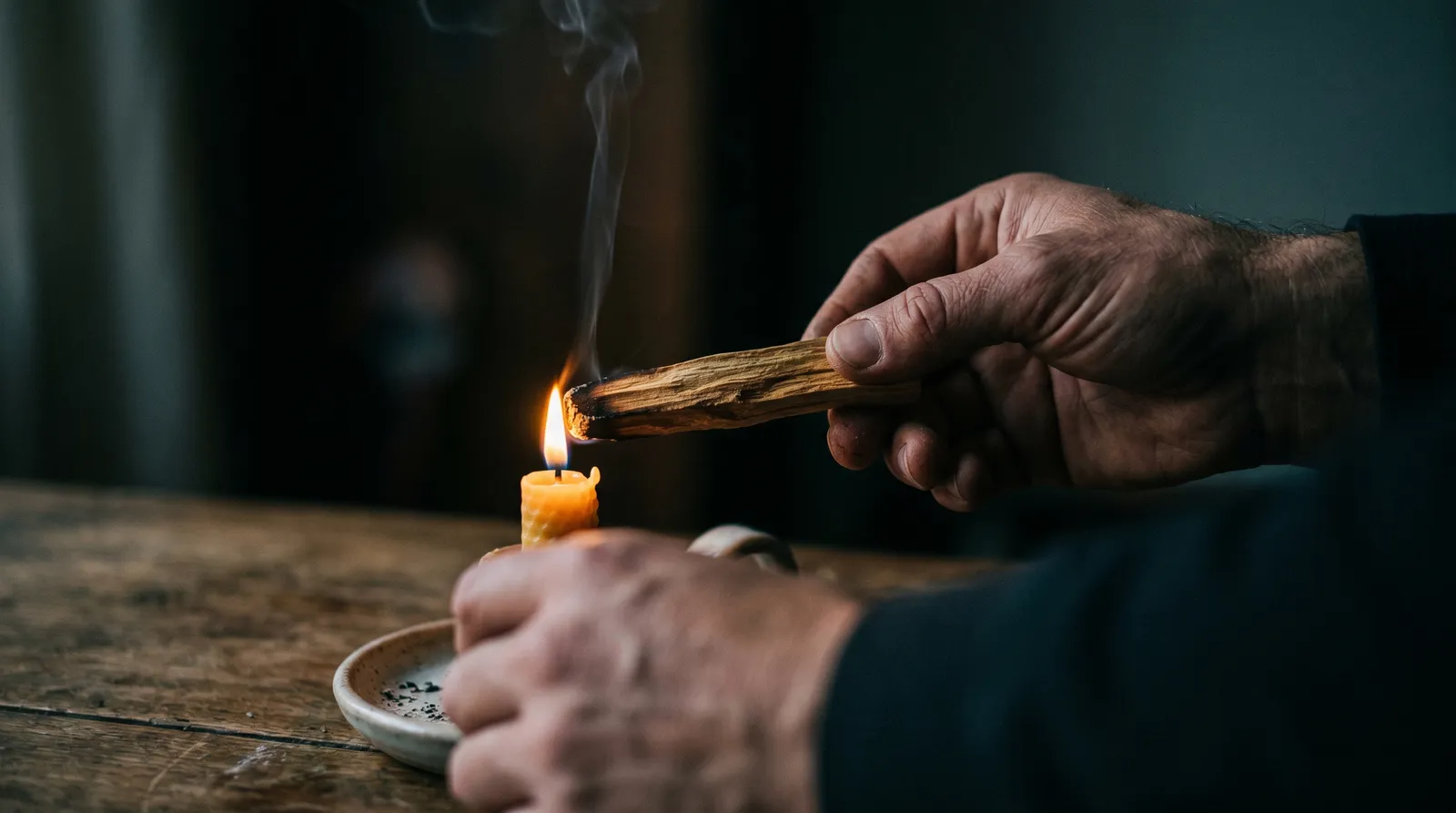
The most common way to use palo santo Bursera graveolens is as a raw stick — a piece of cured heartwood roughly 10 cm long and 1–2 cm thick. To burn it, you hold one end over a flame (a candle works, a lighter works, a match is fiddly) for 30–60 seconds until the wood catches, then blow out the flame and let it smoulder. The stick produces a white, resinous smoke with that distinctive sweet-citrus-mint scent. It self-extinguishes after a minute or two, which is actually a useful feature — unlike a cone incense that burns continuously, a palo santo stick can be relit multiple times.
Palo santo incense sticks — where ground palo santo powder is blended with a natural binder and formed into a traditional incense-stick shape — offer a more consistent, longer burn. These tend to produce a lighter, more diffuse scent compared to the raw wood.
Essential oil extracted from cured heartwood is also available, typically by steam distillation. A few drops in a diffuser will scent a room without any combustion at all, which sidesteps the respiratory considerations of smoke entirely. If you want to order palo santo sticks, incense, or essential oil, look for products that state the species as Bursera graveolens and name a traceable origin.
| Format | Burn Time | Scent Intensity | Smoke Output | Relightable? |
|---|---|---|---|---|
| Raw heartwood stick | 1–2 min per light | Strong, resinous | Moderate | Yes — many times |
| Formed incense stick | 20–40 min continuous | Medium, diffuse | Light | Not easily |
| Essential oil (diffuser) | N/A — no combustion | Adjustable | None | N/A |
| Resin chips (charcoal burner) | 5–15 min | Very strong | Heavy | Add more chips |
Palo Santo vs White Sage vs Frankincense
Palo santo Bursera graveolens is often sold alongside white sage and frankincense, so a direct comparison helps clarify what you are actually getting. White sage (Salvia apiana) produces a heavier, more herbaceous smoke and burns faster; it is native to the coastal sage scrub of southern California and northern Mexico. Frankincense (Boswellia sacra and related species) is a hardened resin, not a wood, and requires a charcoal disc or dedicated burner — it produces a deeper, balsamic scent with less citrus character than palo santo. Of the three, palo santo has the lightest smoke, the most pronounced citrus note, and the most convenient format for casual home use. All three belong to the broader Burseraceae family tree, but their aromatic profiles, burn characteristics, and cultural origins are distinct.
Safety Considerations
Palo santo (Bursera graveolens) is used as ceremonial incense. Inhaling smoke directly is not advised; ventilate the room and remove pets and respiratory-sensitive persons before burning. Palo santo sourcing carries documented sustainability concerns; choose certified-sustainable supply where possible.
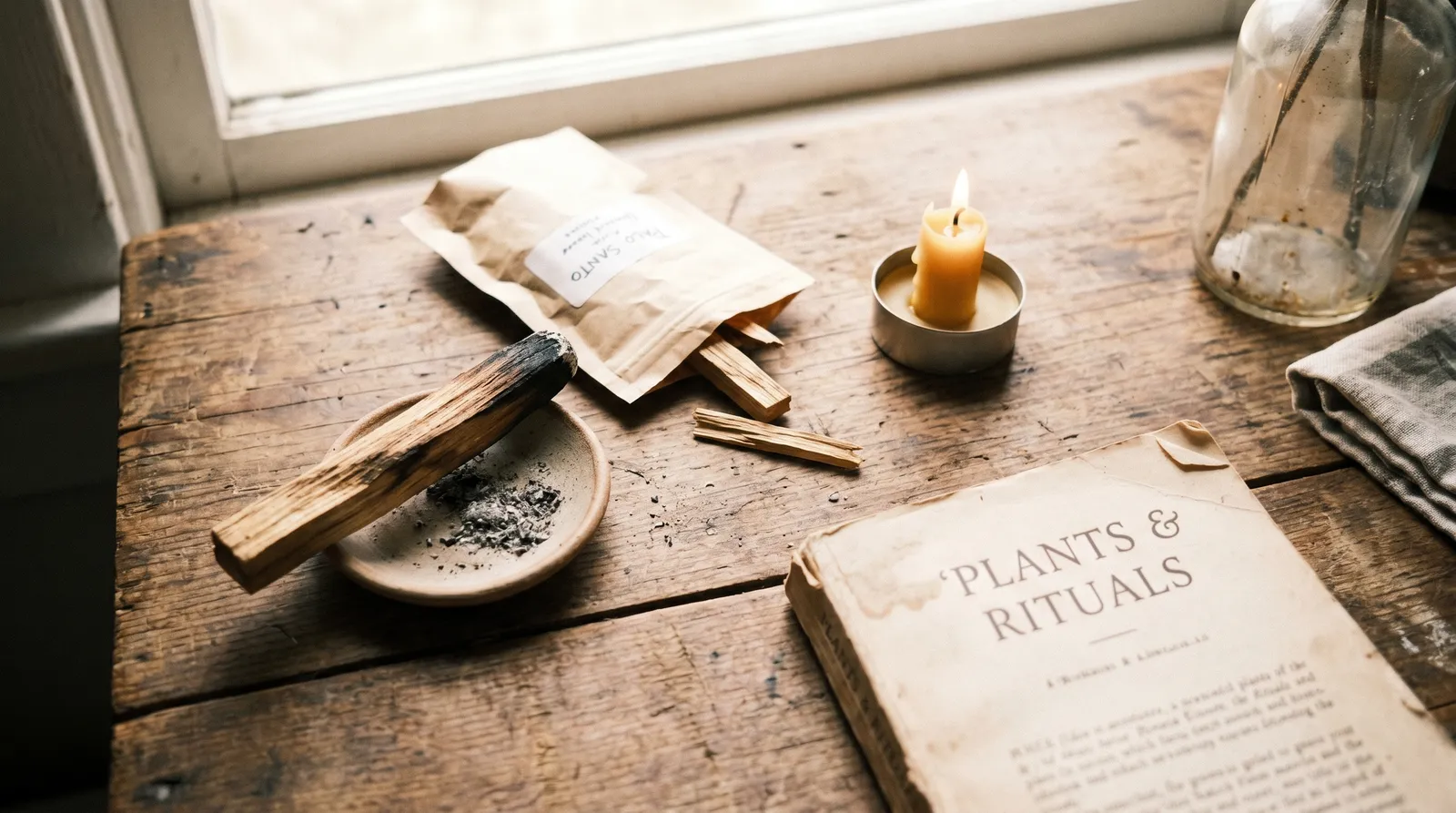
Any combustion of plant material produces particulate matter, carbon monoxide, and volatile organic compounds. This applies equally to palo santo, white sage, frankincense, and a birthday candle. People with asthma, chronic obstructive pulmonary conditions, or general smoke sensitivity should avoid direct exposure. If you burn palo santo indoors, crack a window — the ventilation matters more than the ritual.
Skin contact with palo santo essential oil can cause irritation in sensitive individuals. The high limonene content is a known contact sensitiser, particularly when the oil has oxidised (limonene hydroperoxides form on exposure to air). Patch-test before applying diluted oil to skin, and store essential oil in a dark, sealed bottle to slow oxidation.
There is very little published clinical data on the safety of chronic inhalation of palo santo smoke. The peer-reviewed literature covers the chemical composition of the essential oil and some in vitro biological activity, but long-term human exposure studies simply do not exist — a gap worth acknowledging plainly.
What the Research Actually Says
The peer-reviewed evidence base for palo santo Bursera graveolens is thin compared to well-studied botanicals such as valerian or ashwagandha. Most published studies focus on essential-oil composition and in vitro bioactivity. Monzote et al. (2012) tested palo santo essential oil against Leishmania amazonensis promastigotes in vitro and reported antiparasitic activity at concentrations of 3.1–12.5 μg/mL — interesting pharmacognosy, but not remotely translatable to burning a stick in your living room. A 2016 study by Nakanishi et al. characterised the sesquiterpene fraction of the oil and noted antioxidant activity in a DPPH assay, again strictly in vitro. The EMCDDA does not maintain a monograph on Bursera graveolens, which itself reflects how little clinical attention the species has received in European institutional frameworks.
Claims that palo santo "reduces stress" or "clears negative energy" circulate widely online but sit outside the domain of peer-reviewed science. The pleasant scent may well contribute to a calming atmosphere — olfactory cues do influence mood, and a 2016 review by Herz in Chemical Senses documented the well-established link between odour perception and emotional state — but attributing specific anxiolytic properties to palo santo smoke requires evidence that does not currently exist.
This article is consumer education, not medical advice. Traditional and ceremonial uses are described for cultural and historical context. Botanicals can interact with medications and are not a substitute for professional care. If you are pregnant, nursing, taking prescription medication, or managing a health condition, consult a qualified healthcare practitioner before use.
References
- Yukawa, C., Kurosawa, M., Watanabe, Y. & Toda, M. (2006). GC-MS analysis of volatile components from Bursera graveolens heartwood. Journal of Essential Oil Research, 18(5), 554–557.
- Nakanishi, T., Inatomi, Y., Murata, H., et al. (2016). Sesquiterpene composition and antioxidant activity of Bursera graveolens essential oil. Natural Product Communications, 11(11), 1695–1698.
- Monzote, L., Hill, G. M., Cuellar, A., et al. (2012). In vitro and in vivo activities of Bursera graveolens essential oil against Leishmania amazonensis. Journal of Ethnopharmacology, 140(3), 670–675.
- Rätsch, C. (2005). The Encyclopedia of Psychoactive Plants: Ethnopharmacology and Its Applications. Park Street Press.
- Herz, R. S. (2016). The role of odor-evoked memory in psychological and physiological health. Chemical Senses, 41(1), 1–7.
- Monzote, L., Pastor, J., Scull, R. & Gille, L. (2020). Antioxidant and prooxidant activities of Bursera graveolens essential oil. Oxidative Medicine and Cellular Longevity, 2020, 6940741.
Last updated: April 2026
Frequently Asked Questions
8 questionsWhy does palo santo need to cure before it smells good?
Is palo santo endangered?
What is the difference between palo santo sticks and palo santo incense sticks?
Can palo santo smoke trigger asthma?
Is palo santo the same as Bulnesia sarmientoi?
How do I get the best scent from a palo santo stick?
Where can I buy sustainably sourced palo santo?
Can I use palo santo essential oil instead of burning the wood?
About this article


Adam Parsons is an external cannabis and psychedelics writer and editor who contributes to Azarius's wiki as both author and reviewer. On the writing side, he authors Azarius's kratom and kanna clusters, drawing on exten
This wiki article was drafted with AI assistance and reviewed by Adam Parsons, External contributor. Editorial oversight by Joshua Askew.
Medical disclaimer. This content is for informational purposes only and does not constitute medical advice. Consult a qualified healthcare provider before use of any substance.
Last reviewed April 26, 2026
Related Articles
Blue Lotus vs Kanna: Effects & Safety
Blue lotus vs kanna compared — Nymphaea caerulea's aporphine profile against Sceletium tortuosum's mesembrine chemistry, with interaction warnings.

Lotus Clinical Research Overview
What does lotus clinical research actually show? A critical review of Nymphaea caerulea and Nelumbo nucifera pharmacology, preclinical data, and…
Kanna South Africa To West History
Sceletium tortuosum was used by San and Khoekhoe communities in southern Africa for centuries before European colonists first documented it in the 1660s.
Sceletium Tortuosum Plant
Learn about the sceletium tortuosum plant: botany, alkaloids, fermentation, safety warnings, and where to buy kanna.
Kanna Pharmacokinetics Explained
Complete guide to kanna pharmacokinetics: how Sceletium tortuosum alkaloids are absorbed, metabolised via CYP2D6, and eliminated.
Kanna Chemistry: Sceletium Alkaloids Explained
Kanna chemistry explained: mesembrine, mesembrenone, their mechanisms, how fermentation and extraction change alkaloid profiles, and why it matters…
Rapé Shamanic Snuff Guide: How to Use It Safely
A practical rapé shamanic snuff guide covering dose, kuripe technique, effects, nicotine safety, interactions and Amazonian tradition.
White Sage Salvia Apiana Cultural Smudging Guide
Salvia apiana is a non-psychoactive shrub native to southern California's coastal sage scrub, burned as ceremonial incense in Indigenous North American…
Mulungu Erythrina Traditional Amazonian Use — Bark, Alkaloids & Research
Erythrina mulungu is a Brazilian legume tree whose bark has been brewed as a calming decoction in rural folk medicine for generations.