
This article discusses psychoactive substances intended for adults (18+). If you have a health condition or take medication, consult a doctor before use. Our age policy
Passionflower Traditional Use and Research
Definition
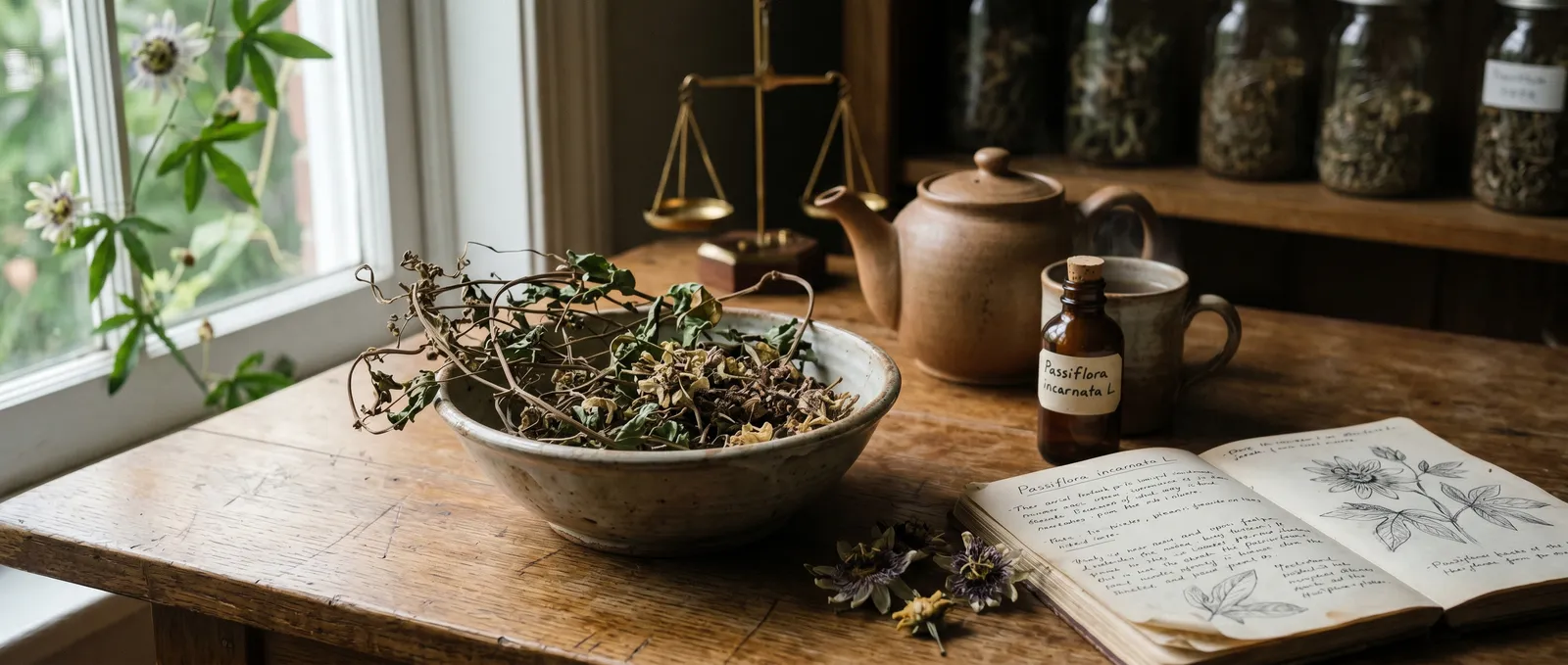
Passiflora incarnata L. — passionflower — is a North American climbing vine whose dried aerial parts have been brewed as a calming tea for centuries. Clinical trials suggest mild anxiolytic and subjective sleep-quality effects, though evidence remains limited by small sample sizes (Janda et al., 2020). The flavonoid-rich herb sits at the intersection of strong traditional reputation and still-developing clinical proof.
A Vine That Climbs Through Centuries
Passionflower traditional use and research centres on Passiflora incarnata L. — a perennial climbing vine native to the southeastern United States whose dried aerial parts have been brewed as a calming tea for centuries. The genus Passiflora contains over 500 species, but P. incarnata is the one that has attracted the most attention from both traditional herbalists and modern researchers. Its aerial parts (leaves, stems, and flowers) have been prepared as teas, tinctures, and dried-herb infusions across multiple cultures, with traditional use centred on calming restlessness and supporting sleep onset. The plant produces a distinctive radial flower — white petals with a purple-and-white filamentous corona — that Spanish missionaries in the Americas interpreted as a symbol of the Passion of Christ, giving the genus its European name in the sixteenth century.
The species belongs to the family Passifloraceae and thrives in sandy, well-drained soils across USDA zones 5–9. It spreads aggressively via underground runners, which is partly why colonists in Virginia and the Carolinas called the fruit "maypop" — the hollow fruits pop underfoot in late spring. The fruit itself is edible and mildly sweet, though it is the dried herb (leaves, stems, and flowers) rather than the fruit that forms the basis of most traditional and commercial preparations. Those who want to buy passionflower herb today will find it in formats ranging from loose-leaf tea to concentrated extract capsules.
Indigenous and Colonial-Era Use
The earliest documented use of Passiflora incarnata comes from the Cherokee, Houma, and other Indigenous peoples of the southeastern woodlands of North America, making passionflower traditional use and research inseparable from Indigenous knowledge systems. Cherokee oral tradition describes the plant's leaves being prepared as a poultice for wounds and as a tea for calming agitation. The Houma used a root infusion traditionally associated with weaning infants. These accounts were recorded by European naturalists and ethnobotanists from the late sixteenth century onward, though the oral traditions themselves predate European contact by an unknown span.
Spanish explorers encountered the plant in the 1560s and 1570s, and the Augustinian friar Nicolás Monardes described it in his 1574 work Historia medicinal de las cosas que se traen de nuestras Indias Occidentales. Monardes was more interested in the flower's religious symbolism than its herbal properties, but subsequent Spanish and Portuguese accounts noted Indigenous peoples brewing the aerial parts into calming infusions. By the early seventeenth century, dried Passiflora herb was being shipped to European apothecaries, where it appeared in herbals and materia medica as a mild nervine — a plant traditionally used to calm the nerves.
In North American folk medicine of the eighteenth and nineteenth centuries, passionflower tea became a household standby in Appalachian and Southern communities. It was listed in the National Formulary of the United States from 1916 until 1936 — a period when botanical preparations still sat comfortably alongside synthetic pharmaceuticals in official compendia. Its removal reflected a broader shift toward single-molecule pharmacology rather than any specific safety concern.
Phytochemistry: What Is Actually in the Leaf
The aerial parts of P. incarnata contain a complex mixture of flavonoids, alkaloids, and other secondary metabolites that underpin passionflower traditional use and research. The flavonoid fraction is the most studied and includes chrysin, vitexin, isovitexin, orientin, isoorientin, and apigenin — the last of which also appears in chamomile and is a known ligand for the benzodiazepine binding site on GABAA receptors (Wasowski & Marder, 2012). The total flavonoid content varies with growing conditions, harvest time, and part of the plant, typically ranging from 1.5% to 2.5% of dry weight.
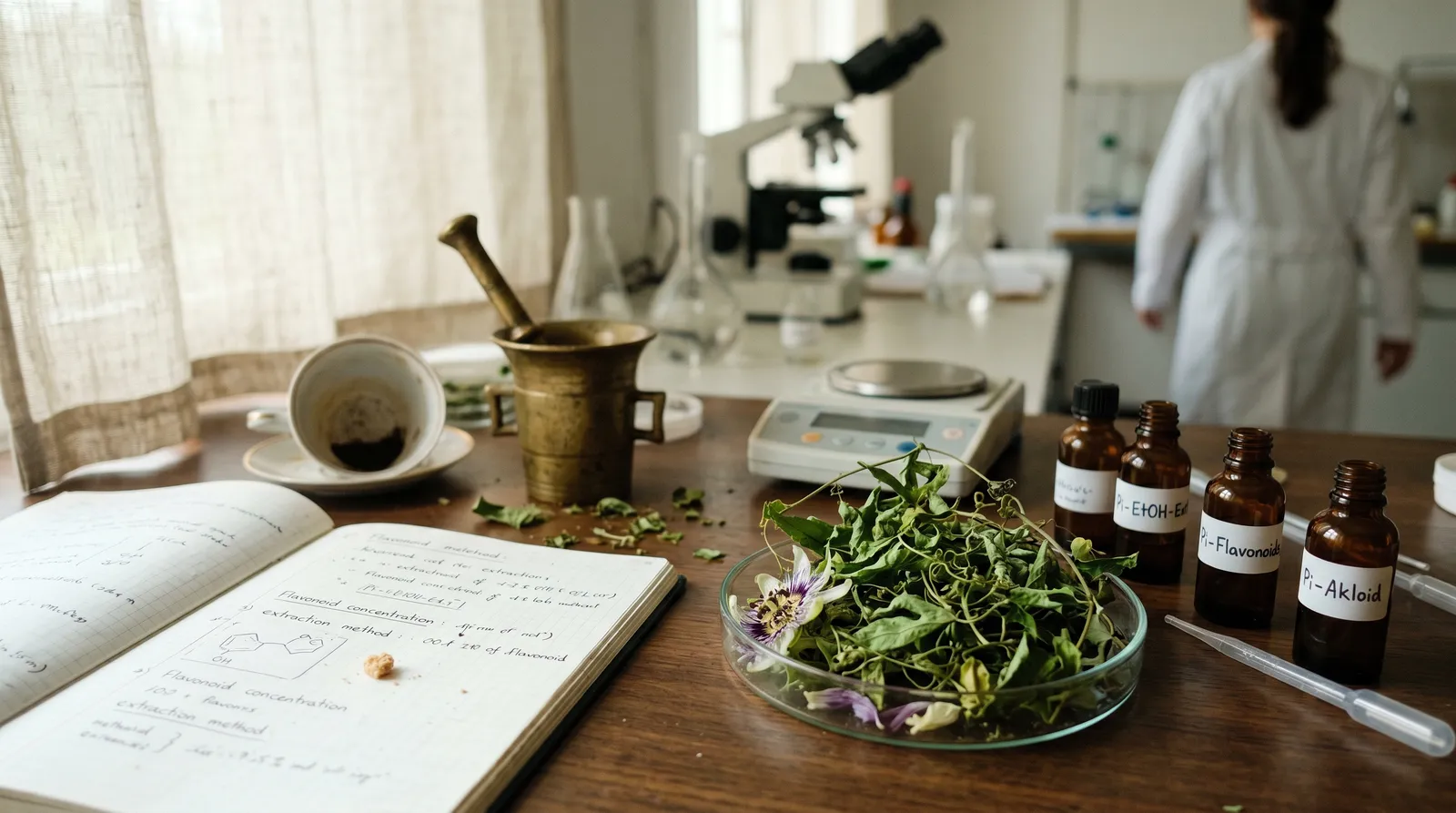
A group of indole alkaloids — harman, harmine, harmaline, and harmol — has been identified in P. incarnata, though concentrations are extremely low (often below 0.01% of dry weight) and their contribution to the plant's traditional effects remains debated. At the trace levels found in passionflower tea, these harmala alkaloids are unlikely to produce meaningful monoamine oxidase inhibition, though this is an area where the phytochemical data is thinner than many popular sources suggest. Some analytical studies have failed to detect them at all in commercial dried-herb samples (Dhawan et al., 2004).
A maltol derivative and gamma-aminobutyric acid (GABA) itself have also been isolated from P. incarnata extracts. A 2014 study by Appel and colleagues identified a benzoflavone moiety (BZF) that showed affinity for GABAA receptors in vitro, suggesting a possible mechanism for the plant's traditional reputation as a calming herb. The picture, though, is one of a multi-compound matrix rather than a single "active ingredient" — which makes standardisation tricky and partly explains why clinical results vary between extract types.
| Compound Class | Examples | Typical Concentration (% dry weight) | Proposed Activity |
|---|---|---|---|
| Flavonoids | Apigenin, chrysin, vitexin, isovitexin, orientin | 1.5–2.5% | GABAA receptor binding (in vitro) |
| Indole alkaloids | Harman, harmine, harmaline, harmol | <0.01% | Weak MAO inhibition (theoretical at trace levels) |
| Amino acids | GABA | Trace | Inhibitory neurotransmitter |
| Benzoflavone (BZF) | Uncharacterised moiety | Trace | GABAA receptor affinity (in vitro) |
| Maltol derivatives | Ethyl maltol | Trace | Under investigation |
The Clinical Evidence
Clinical trials on P. incarnata suggest mild anxiolytic and subjective sleep-quality effects, though the evidence base remains limited by small sample sizes and varied extract preparations. The peer-reviewed literature is modest compared to, say, valerian or ashwagandha, but a handful of controlled trials do exist.
Akhondzadeh and colleagues (2001) conducted a four-week randomised, double-blind trial comparing a Passiflora incarnata extract (45 drops per day of a liquid preparation) with oxazepam (30 mg per day) in 36 outpatients diagnosed with generalised anxiety. Both groups showed similar reductions in Hamilton Anxiety Rating Scale scores by day 28, though the passionflower group reported less impairment of job performance. The sample size was small and the study has not been independently replicated at the same scale, so the result is suggestive rather than definitive.
Ngan and Conduit (2011) ran a crossover trial in 41 healthy volunteers who drank passionflower tea (2 g of dried P. incarnata steeped for 10 minutes) or a placebo tea for seven nights each. Sleep-diary data showed a statistically significant improvement in subjective sleep quality for the passionflower period compared to placebo. Polysomnography data, however, showed no significant difference in total sleep time, sleep efficiency, or sleep-onset latency. The authors suggested that the subjective improvement might relate to a mild anxiolytic effect rather than a direct sedative one — an interesting distinction that often gets lost in popular summaries.
A 2020 systematic review by Janda and colleagues, published in Nutrients, pooled data from available clinical studies on Passiflora species and concluded that the evidence for anxiolytic and sleep-supportive effects was "promising but limited by small sample sizes, heterogeneous extract preparations, and short study durations" (Janda et al., 2020). That is a fair summary of where things stand: the traditional reputation is plausible, the mechanism has some in-vitro support, but the clinical data is not yet strong enough to draw firm conclusions.
A preoperative anxiety trial by Movafegh and colleagues (2008) gave 60 surgical patients either 500 mg of oral Passiflora incarnata extract or placebo 90 minutes before spinal anaesthesia. The passionflower group showed significantly lower anxiety scores on a numerical rating scale without increased sedation, suggesting a possible anxiolytic window that does not impair alertness at that dose. Again, a single small trial — but it adds a data point.
For context, compare this evidence base to valerian, which has multiple Cochrane-level reviews, or ashwagandha, which has dozens of RCTs across different extract types. Passionflower sits in the "traditional use with early-stage clinical support" category — not the "well-established evidence" category. That is worth being straight about.
Pharmacopoeia and Monograph Status
Multiple pharmacopoeias formally recognise Passiflora incarnata as a traditional herbal medicine for nervous restlessness. The European Pharmacopoeia includes a monograph for Passiflorae herba (passionflower herb), defining it as the dried aerial parts of P. incarnata containing not less than 1.5% total flavonoids expressed as vitexin. The ESCOP (European Scientific Cooperative on Phytotherapy) monograph lists the traditional indication as "tenseness, restlessness, and irritability with difficulty in falling asleep." The WHO monograph on selected medicinal plants (Volume 3, 2007) similarly describes traditional use for "nervous restlessness" and "mild sleep disorders." These monograph entries describe traditional indications — they are not treatment claims and should not be read as endorsements of efficacy.
The German Commission E, which evaluated herbal medicines for the former Federal Health Agency, issued a positive monograph for Passiflora incarnata in 1985 for "nervous restlessness," though Commission E monographs are historical documents and do not carry the same weight as a modern clinical-trial evaluation. The EMCDDA does not classify passionflower as a substance of concern, which reflects its long safety record at traditional doses.
Extract Types and Preparation Forms
Passionflower preparations differ meaningfully in their flavonoid profile and overall composition depending on format. The herb is commercially available as dried loose herb (for tea infusion), cut leaves, concentrated extracts (often labelled as 10x, meaning ten parts of raw herb concentrated into one part of extract), tinctures (hydroalcoholic extracts), and capsules containing powdered herb or standardised extract.
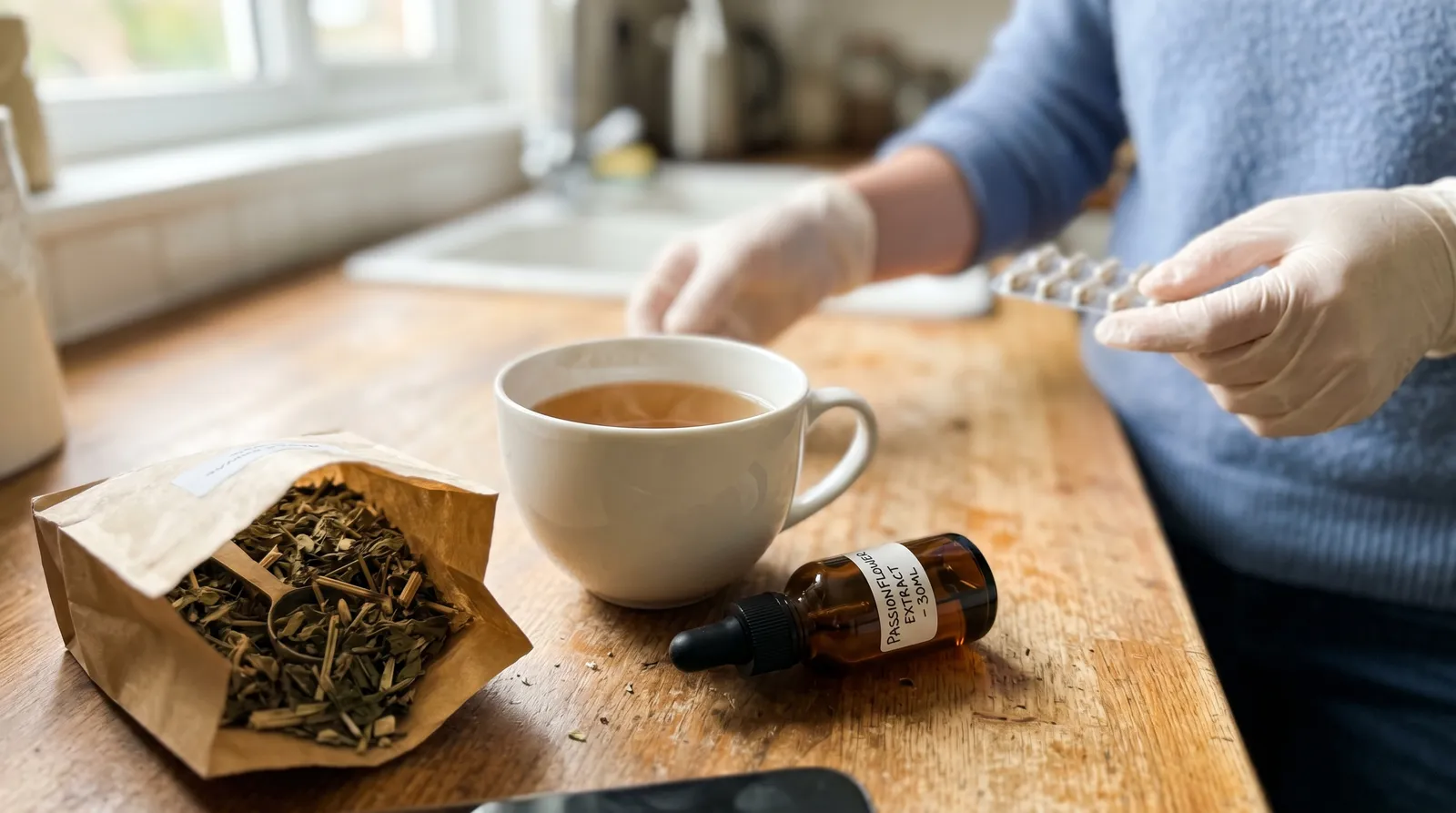
A simple tea infusion — 1 to 2 grams of dried herb steeped in near-boiling water for 10 to 15 minutes — extracts water-soluble flavonoid glycosides and free amino acids, including trace GABA. This is the preparation closest to the traditional use described in ethnobotanical sources and is also the format used in the Ngan and Conduit (2011) sleep trial.
Concentrated extracts (such as a 10x extract) use solvent extraction and evaporation to produce a more potent product per gram. These are not directly comparable to tea in terms of dose or onset, and the concentration process may shift the ratio of compounds present. Anyone switching between formats should not assume equivalent dosing — a gram of 10x extract is not the same experience as a gram of dried leaf.
Tinctures (typically 1:5 in 45–55% ethanol) offer a middle ground: more concentrated than tea, less so than a dry extract, and with the added variable of alcohol as a co-solvent that may extract slightly different compound classes than water alone.
How Passionflower Compares to Other Relaxant Herbs
Passionflower is milder than valerian in most head-to-head user reports and lacks the distinctive musty odour that makes valerian polarising. Compared to ashwagandha, which acts primarily as an adaptogen modulating cortisol over weeks of use, passionflower's effects are more acute — noticeable within an hour of drinking a tea rather than building over a supplementation period. Lemon balm is probably the closest comparison in terms of subtlety and onset speed, though lemon balm's mechanism leans more toward rosmarinic acid and GABA transaminase inhibition. Hops flowers are another comparable wind-down herb, often combined with valerian in traditional sleep blends. Choosing between these herbs depends on what you are looking for: a gentle evening ritual (passionflower, lemon balm), or a stronger sedative push (valerian, hops). Each herb sits on a different point of the relaxant spectrum, and most users find the right fit through trial across a few options.
Safety and Interactions
Passionflower herb is generally well-tolerated at traditional tea doses, with side effects in clinical trials limited to drowsiness, dizziness, and occasional gastrointestinal discomfort. A 2012 review of adverse-event reports to poison control centres found that Passiflora was among the ten most frequently reported plants associated with neurotoxicity and gastrointestinal symptoms, though the absolute numbers were low and causality was not established in most cases (Forrester, 2012). Some of these reports involved multi-ingredient products where passionflower was one component among several.
Passionflower has sedative-leaning activity and should not be combined with alcohol or other CNS depressants without medical supervision. Do not drive or operate machinery after a sedative dose.
Specific interactions to be aware of: the herb may potentiate the effects of sedative medications (benzodiazepines, barbiturates, sleep aids) and anticoagulant drugs. The harmala alkaloid content, while trace-level, means that theoretical MAOI interactions exist — though at the concentrations present in normal tea or extract preparations, this is considered a low-probability concern rather than a documented clinical risk. Anyone taking prescription medication — particularly sedatives, anxiolytics, or blood thinners — should discuss passionflower use with a qualified healthcare practitioner. Pregnancy safety data is insufficient; most sources recommend avoidance during pregnancy and breastfeeding as a precaution, partly because some Passiflora species (not necessarily P. incarnata) have shown uterotonic activity in animal models.
Passionflower in Combination
Traditional European herbal practice frequently combines passionflower with other relaxant herbs, and this stacking approach remains the most common way people use the plant today. Valerian (Valeriana officinalis), hops (Humulus lupulus), and lemon balm (Melissa officinalis) appear alongside it in many commercial evening-tea blends. A 2013 study by Maroo and colleagues compared a fixed combination of valerian and passionflower extracts against zolpidem in 78 patients with insomnia and found comparable improvements in total sleep time and sleep quality over two weeks, though the study had methodological limitations including a lack of placebo arm (Maroo et al., 2013). Whether the combination is more effective than either herb alone is genuinely unclear — the controlled data comparing single-herb to multi-herb preparations is sparse.
This stacking question — single herb versus blend — is one of the more honest gaps in the relaxant-herb literature. Most traditional formulations use combinations, most modern trials test single extracts, and the two approaches do not map neatly onto each other. Articles on valerian and lemon balm in this wiki cover those plants' individual evidence bases in more detail.
What the Evidence Adds Up To
Passiflora incarnata has a long, well-documented history of traditional use as a calming herb across Indigenous North American, colonial American, and European herbal traditions. The phytochemistry — particularly the flavonoid fraction including apigenin and chrysin, plus trace indole alkaloids — provides a plausible mechanistic basis for the traditional reputation. Clinical evidence from a small number of controlled trials suggests mild anxiolytic and subjective sleep-quality effects, but the evidence base is limited by small sample sizes, varied extract preparations, and short study durations. It is an herb where the traditional record is strong, the pharmacological rationale is reasonable, and the clinical proof is still catching up.
This article is consumer education, not medical advice. Traditional and ceremonial uses are described for cultural and historical context. Botanicals can interact with medications and are not a substitute for professional care. If you are pregnant, nursing, taking prescription medication, or managing a health condition, consult a qualified healthcare practitioner before use.
References
- Akhondzadeh, S., Naghavi, H.R., Vazirian, M., Shayeganpour, A., Rashidi, H. & Khani, M. (2001). Passionflower in the treatment of generalized anxiety: a pilot double-blind randomized controlled trial with oxazepam. Journal of Clinical Pharmacy and Therapeutics, 26(5), 363–367.
- Appel, K., Rose, T., Fiebich, B., Kammler, T., Hoffmann, C. & Weiss, G. (2011). Modulation of the γ-aminobutyric acid (GABA) system by Passiflora incarnata L. Phytotherapy Research, 25(6), 838–843.
- Dhawan, K., Dhawan, S. & Sharma, A. (2004). Passiflora: a review update. Journal of Ethnopharmacology, 94(1), 1–23.
- Forrester, M.B. (2012). Exposures to passionflower reported to Texas poison centers. Toxicology and Environmental Chemistry, 94(10), 2006–2014.
- Janda, K., Wojtkowska, K., Jakubczyk, K., Antoniewicz, J. & Skonieczna-Żydecka, K. (2020). Passiflora incarnata in neuropsychiatric disorders — a systematic review. Nutrients, 12(12), 3894.
- Maroo, N., Hazra, A. & Das, T. (2013). Efficacy and safety of a polyherbal sedative-hypnotic formulation NSF-3 in primary insomnia in comparison to zolpidem: a randomized controlled trial. Indian Journal of Pharmacology, 45(1), 34–39.
- Movafegh, A., Alizadeh, R., Hajimohamadi, F., Esfehani, F. & Nejatfar, M. (2008). Preoperative oral Passiflora incarnata reduces anxiety in ambulatory surgery patients. Anesthesia & Analgesia, 106(6), 1728–1732.
- Ngan, A. & Conduit, R. (2011). A double-blind, placebo-controlled investigation of the effects of Passiflora incarnata (passionflower) herbal tea on subjective sleep quality. Phytotherapy Research, 25(8), 1153–1159.
- Wasowski, C. & Marder, M. (2012). Flavonoids as GABAA receptor ligands: the whole story? Journal of Experimental Pharmacology, 4, 159–167.
- World Health Organization (2007). WHO Monographs on Selected Medicinal Plants, Volume 3. Geneva: WHO.
Last updated: April 2026
Frequently Asked Questions
9 questionsDoes passionflower tea actually improve sleep quality?
What are the main active compounds in Passiflora incarnata?
Is passionflower as effective as prescription anti-anxiety medication?
Can passionflower be combined with valerian or other herbs?
How much passionflower was used in clinical studies?
Are the harmala alkaloids in passionflower a safety concern?
Where can I buy passionflower herb or extract?
How does passionflower compare to kava for anxiety?
Is passionflower safe during pregnancy?
About this article


Adam Parsons is an external cannabis and psychedelics writer and editor who contributes to Azarius's wiki as both author and reviewer. On the writing side, he authors Azarius's kratom and kanna clusters, drawing on exten
This wiki article was drafted with AI assistance and reviewed by Adam Parsons, External contributor. Editorial oversight by Joshua Askew.
Medical disclaimer. This content is for informational purposes only and does not constitute medical advice. Consult a qualified healthcare provider before use of any substance.
Last reviewed April 26, 2026
Related Articles
Blue Lotus vs Kanna: Effects & Safety
Blue lotus vs kanna compared — Nymphaea caerulea's aporphine profile against Sceletium tortuosum's mesembrine chemistry, with interaction warnings.
Lotus Clinical Research Overview
What does lotus clinical research actually show? A critical review of Nymphaea caerulea and Nelumbo nucifera pharmacology, preclinical data, and…
Kanna South Africa To West History
Sceletium tortuosum was used by San and Khoekhoe communities in southern Africa for centuries before European colonists first documented it in the 1660s.
Sceletium Tortuosum Plant
Learn about the sceletium tortuosum plant: botany, alkaloids, fermentation, safety warnings, and where to buy kanna.
Kanna Pharmacokinetics Explained
Complete guide to kanna pharmacokinetics: how Sceletium tortuosum alkaloids are absorbed, metabolised via CYP2D6, and eliminated.
Kanna Chemistry: Sceletium Alkaloids Explained
Kanna chemistry explained: mesembrine, mesembrenone, their mechanisms, how fermentation and extraction change alkaloid profiles, and why it matters…
Rapé Shamanic Snuff Guide: How to Use It Safely
A practical rapé shamanic snuff guide covering dose, kuripe technique, effects, nicotine safety, interactions and Amazonian tradition.
White Sage Salvia Apiana Cultural Smudging Guide
Salvia apiana is a non-psychoactive shrub native to southern California's coastal sage scrub, burned as ceremonial incense in Indigenous North American…
Mulungu Erythrina Traditional Amazonian Use — Bark, Alkaloids & Research
Erythrina mulungu is a Brazilian legume tree whose bark has been brewed as a calming decoction in rural folk medicine for generations.