
This article discusses psychoactive substances intended for adults (18+). If you have a health condition or take medication, consult a doctor before use. Our age policy
Lotus and Dreams
Definition
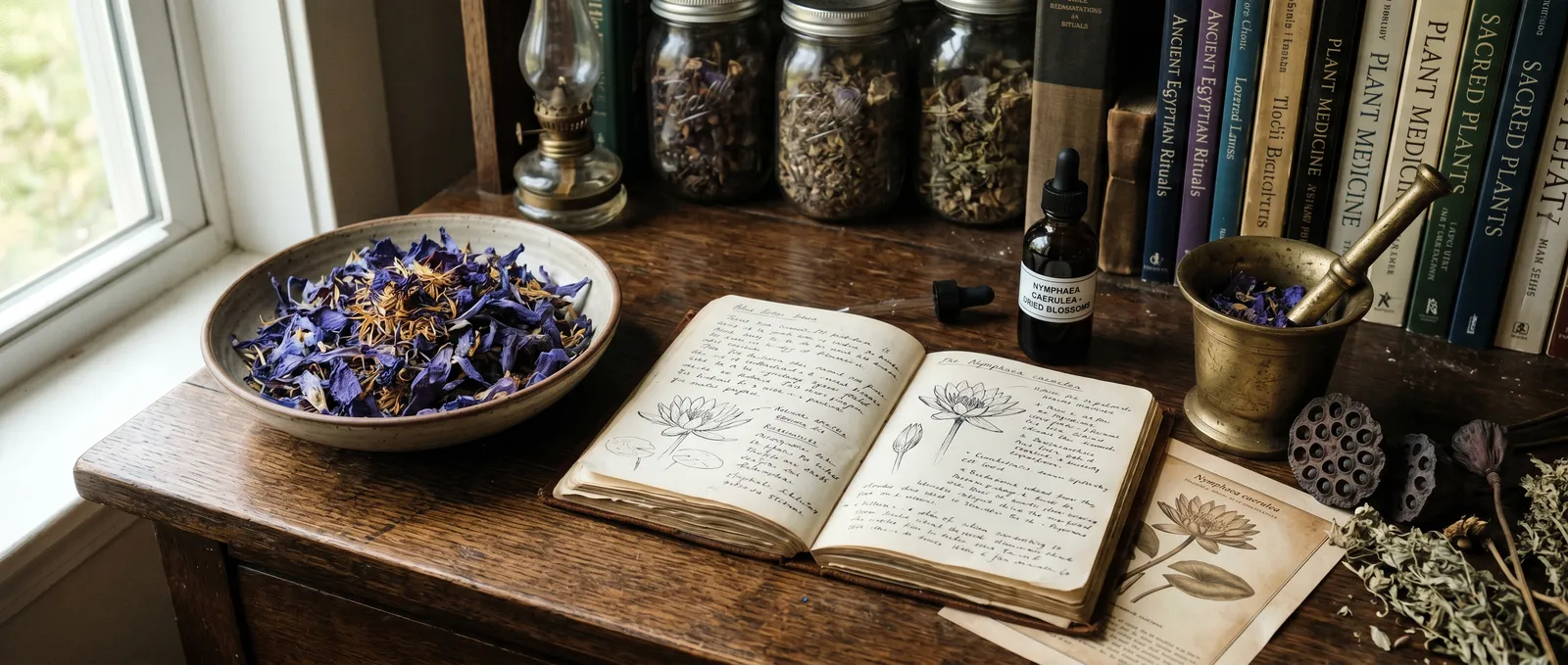
Nymphaea caerulea (blue lotus) is a psychoactive water lily that contains aporphine alkaloids believed to influence dream vividness through dopamine receptor modulation. Its principal compounds — nuciferine and apomorphine — interact with dopamine receptors involved in REM sleep regulation (Perogamvros et al., 2016). Users consistently report more vivid dreams and better recall, though no controlled human study has confirmed the effect or ruled out expectation bias.
Lotus and dreams is a topic spanning thousands of years of human curiosity — from Egyptian tomb art to modern online forums. Specifically, Nymphaea caerulea (blue lotus) is a psychoactive water lily that contains aporphine alkaloids believed to influence dream vividness through dopamine receptor modulation. Its principal compounds — nuciferine and apomorphine — offer a plausible pharmacological basis for the dream-enhancement reports that users consistently describe, but the gap between "plausible" and "proven" is wide. Understanding what's actually happening — and what remains unknown — matters if you're considering drinking a cup of blue lotus tea before bed.
Adult audience (18+). The dosing ranges and effects described in this article apply to adult physiology. This content is not intended for minors.
What Users Actually Report
Users of Nymphaea caerulea most commonly report more vivid dream imagery, richer colour saturation, stronger emotional tone, and improved dream recall upon waking. Browse any forum thread on lotus and dreams, and you'll find this cluster repeated with remarkable consistency. Some users describe experiences that border on lucid dreaming, where they become aware they're dreaming and can partially direct the narrative. Others report nothing beyond a slightly deeper sleep.

The consistency of these reports is interesting, but consistency alone isn't evidence of a pharmacological mechanism. People expecting vivid dreams after drinking a "dream herb" tea will, unsurprisingly, pay more attention to their dreams. That attentional priming alone can boost dream recall substantially. A 2017 review of dream-enhancement supplements by Aspy et al. (2017) noted that expectation effects in dream research are notoriously difficult to control for, and no substance in the "oneirogens" category — including Nymphaea caerulea — has been tested in a properly blinded, placebo-controlled sleep study.
That said, the pharmacology isn't empty. There are real molecules doing real things at real receptors, which makes the lotus and dreams connection worth exploring beyond the anecdotal.
The Pharmacology Behind the Reports
The two principal aporphine alkaloids in Nymphaea caerulea — nuciferine and apomorphine — both interact with dopamine receptors involved in REM sleep regulation (Agnihotri et al., 2008). Dopamine plays a well-documented role in sleep architecture — particularly in REM sleep, the phase where most vivid dreaming occurs.
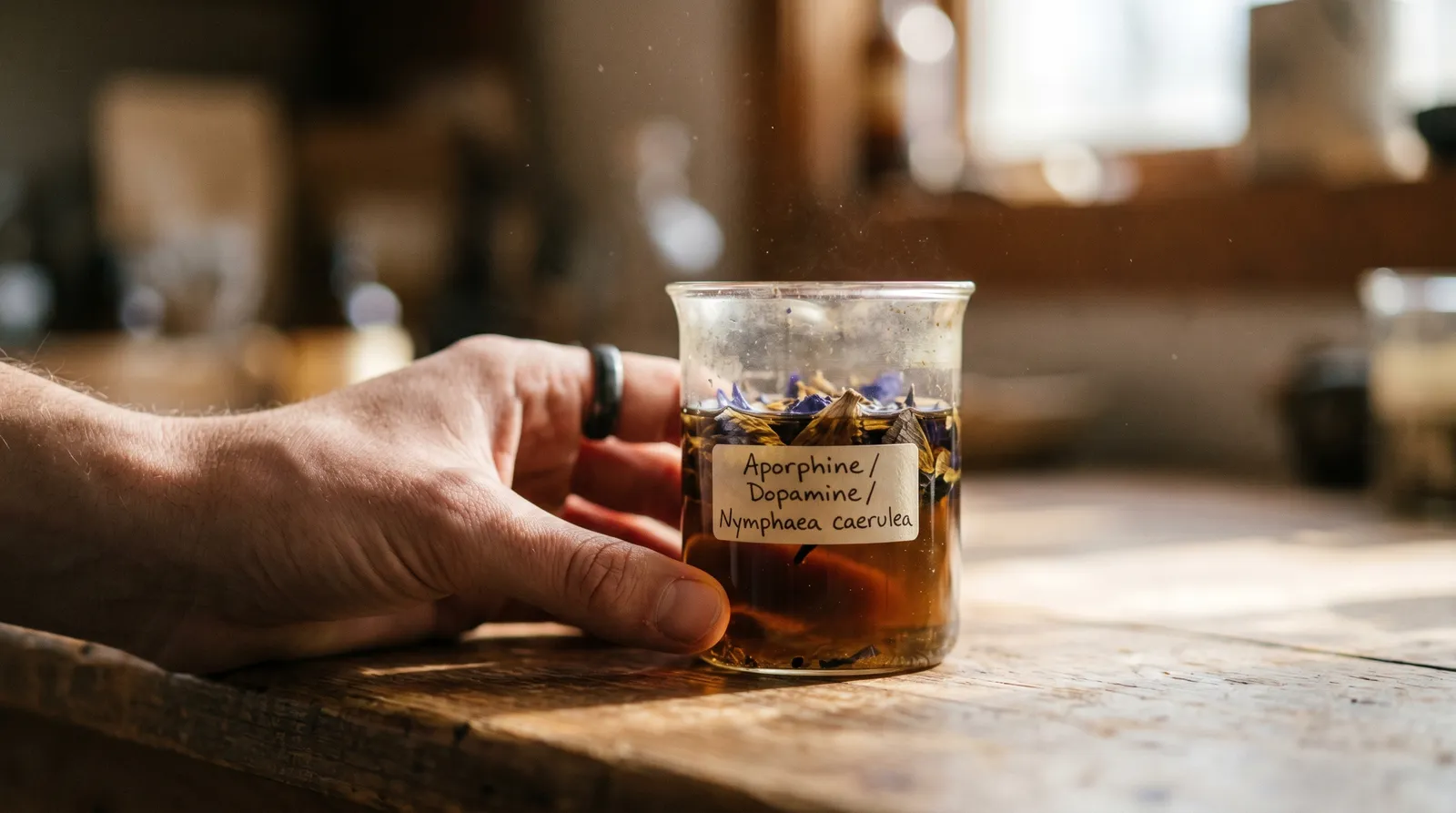
Nuciferine has been characterised as a partial agonist at dopamine D2 receptors, with some affinity for serotonin 5-HT2A receptors as well (Agnihotri et al., 2008). The D2 receptor involvement is the most pharmacologically interesting piece for dream enhancement. Dopamine signalling during REM sleep is complex: too much suppresses REM; too little flattens dream content. A partial agonist — a molecule that activates the receptor but less strongly than the full endogenous signal — could theoretically modulate REM activity without shutting it down entirely. This is the proposed mechanism behind the lotus and dreams effects users report from Nymphaea caerulea, though it remains proposed rather than confirmed in human studies.
Apomorphine, the other key alkaloid in Nymphaea caerulea, is a more potent dopamine receptor agonist. In clinical medicine, synthetic apomorphine is used at specific doses for Parkinson's disease. The concentrations present in dried blue lotus petals are far lower than therapeutic apomorphine doses, but the direction of action — dopaminergic stimulation — is the same. This overlap is also why the interaction warnings matter, but more on that below.
It's worth flagging here that Nelumbo nucifera (pink or sacred lotus, a separate genus in the family Nelumbonaceae) shares nuciferine but adds its own alkaloids — nelumbine, liensinine, and neferine. Neferine has shown sedative properties in animal models (Sugimoto et al., 2010), which could contribute to sleep quality through a different pathway. The dream-enhancement reports online, however, centre overwhelmingly on Nymphaea caerulea rather than Nelumbo nucifera, and the two should not be treated as interchangeable.
REM Sleep, Dopamine, and the Missing Data
Dopaminergic neurons in the ventral tegmental area (VTA) are active during REM sleep, and their firing patterns correlate with dream vividness (Perogamvros et al., 2016). Research using polysomnography has confirmed this, and a 2016 study by Perogamvros et al. found that dopaminergic reward circuits are engaged during dreaming in ways that parallel waking motivation — suggesting that dopamine doesn't just permit dreams but actively shapes their emotional intensity.

If nuciferine's partial D2 agonism gently nudges this system, you'd predict exactly what users describe: lotus and dreams experiences that feel more emotionally saturated and easier to remember. The problem is that nobody has actually measured this. No published study has administered Nymphaea caerulea extract to human subjects, monitored their sleep with EEG, and compared dream reports against placebo. The pharmacological logic is sound; the clinical confirmation doesn't exist yet.
The route of administration also matters and remains poorly characterised. Drinking Nymphaea caerulea as a tea — the most common method for lotus and dreams exploration — means the alkaloids pass through first-pass hepatic metabolism. How much nuciferine and apomorphine actually reach the brain, and at what concentration, after a cup of petal tea is genuinely unknown. Extracts concentrate the aporphine alkaloids relative to shredded petals, so a standardised extract dose would deliver a meaningfully different alkaloid load than a teaspoon of dried flowers steeped for ten minutes. Anyone experimenting with dream enhancement should understand that extract doses are not interchangeable with shredded-petal doses — the concentrated forms carry a proportionally higher pharmacological load.
Blue Lotus vs Other Dream Herbs
Blue lotus (Nymphaea caerulea) is the most pharmacologically specific dream herb available, with a proposed mechanism — dopamine D2 partial agonism — that directly targets REM sleep regulation (Agnihotri et al., 2008). Comparing it to other popular oneirogens helps clarify what makes it distinctive. The table below summarises the most commonly discussed dream herbs and their proposed mechanisms.
| Plant | Key Compound(s) | Proposed Dream Mechanism | Evidence Level |
|---|---|---|---|
| Nymphaea caerulea (blue lotus) | Nuciferine, apomorphine | Dopamine D2 partial agonism during REM | Pharmacologically plausible; no human trials |
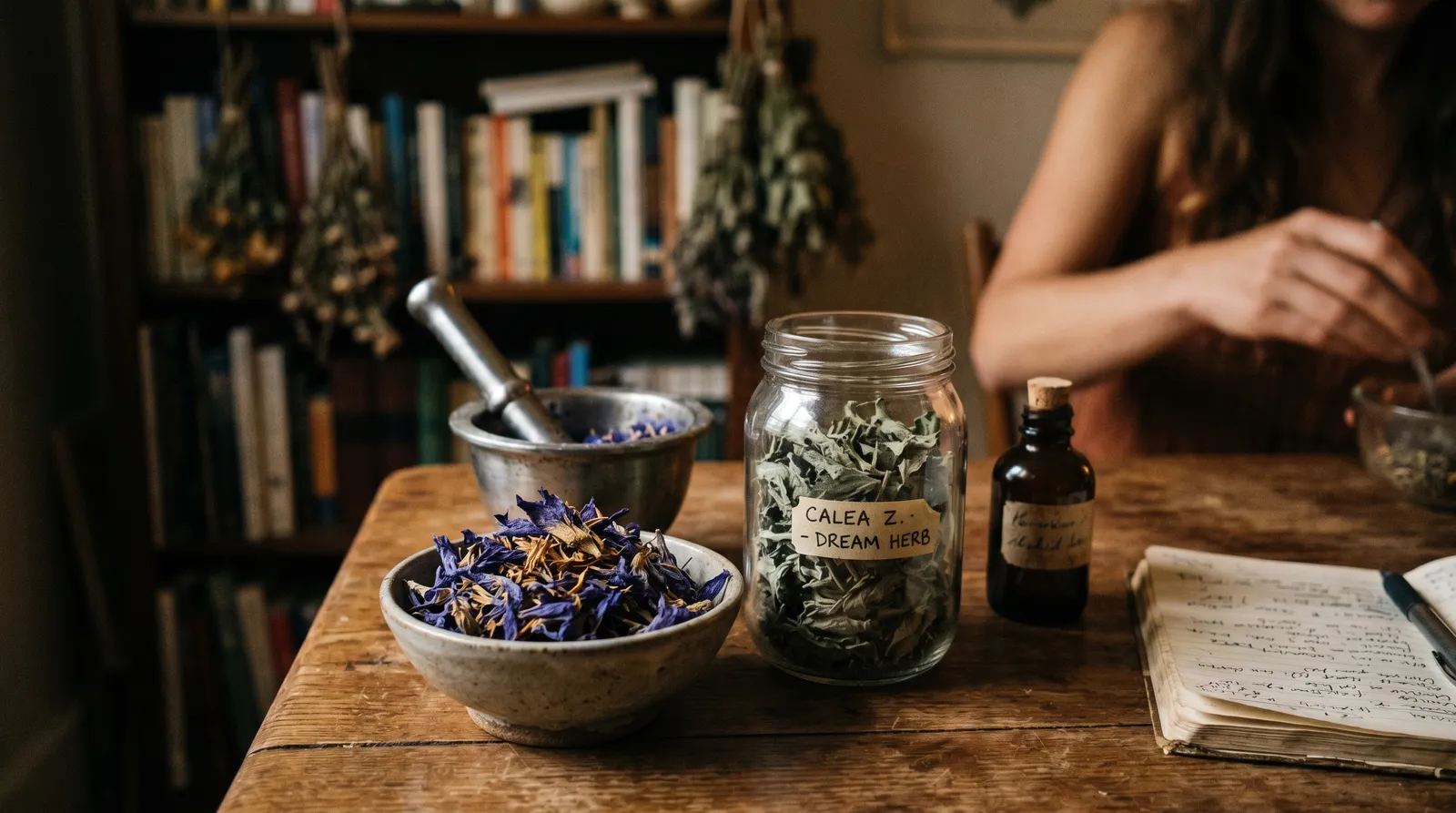
| Calea zacatechichi (dream herb) | Germacranolides, flavones | Possible increase in hypnagogic imagery | One small human study (LaBerge, 1988); limited replication |
| Silene capensis (African dream root) | Triterpenoid saponins | Unknown; traditional Xhosa use for prophetic dreams | Ethnobotanical only; no pharmacological studies |
| Artemisia vulgaris (mugwort) | Thujone, cineole | Mild GABAergic sedation; aromatic priming | Anecdotal; no controlled dream studies |
| Nelumbo nucifera (pink lotus) | Nuciferine, neferine, liensinine | Shared nuciferine pathway plus sedative neferine | Animal sedation data; minimal dream-specific reports |
What stands out is that blue lotus has the most pharmacologically specific proposed mechanism — dopamine D2 partial agonism — while most other dream herbs rely on vague sedative or aromatic effects. That doesn't make it proven, but it does make it the most interesting candidate for future clinical research. If you want to buy blue lotus to explore lotus and dreams yourself, the form you choose (shredded petals, extract, or tincture) will meaningfully affect the alkaloid dose you receive. Customers looking to compare can also order Calea zacatechichi or Silene capensis from the Azarius dream herbs category, though neither has the same pharmacological specificity.
The Historical Thread
The earliest documented association between Nymphaea caerulea and altered states dates to the Egyptian New Kingdom period, roughly 1550–1070 BCE (Emboden, 1978). Tomb reliefs from this era depict the blue water lily prominently in banquet and ceremonial scenes. Emboden (1978) argued that these depictions represent ritual use of Nymphaea caerulea as a psychoactive substance, possibly steeped in wine. The flower appears in contexts associated with transition — funerary rites, offerings to the dead, scenes of rebirth — which has led some ethnobotanists to connect it specifically to dream states and liminal consciousness.

This is archaeologically documented but interpretively contested. We know the Egyptians depicted Nymphaea caerulea in ritual contexts. We don't know with certainty that they used it for dream enhancement specifically, as opposed to general ceremonial intoxication, symbolic decoration, or perfumery. Transferring tomb-relief imagery directly onto modern pharmacological claims about lotus and dreams overstates what the historical record actually tells us.
Nelumbo nucifera carries its own historical weight in Buddhist and Ayurvedic traditions, but its traditional associations lean more toward meditation, spiritual purity, and general sedation than dream enhancement per se. The two histories — Egyptian ceremonial use of Nymphaea caerulea and South/East Asian sacred use of Nelumbo nucifera — are distinct traditions involving distinct plants from distinct families. For more on the botanical and cultural distinctions, the Azarius wiki article on blue lotus versus sacred lotus covers the taxonomy in detail.
Practical Considerations and Safety
The most important safety fact is that the aporphine alkaloids in Nymphaea caerulea interact with dopamine receptors, creating clinically relevant interaction potential with several medication classes (Agnihotri et al., 2008; EMCDDA, 2023). Anyone exploring lotus and dreams should review these interactions before their first dose.

The aporphine alkaloids carry interaction potential with dopaminergic medications — levodopa, pramipexole, ropinirole, and notably apomorphine itself (stacking plant-derived aporphines on top of therapeutic apomorphine is a clear risk). Dopamine-receptor-active antiemetics like metoclopramide and domperidone are also a concern, as are MAOIs, which affect monoamine metabolism broadly. The European Monitoring Centre for Drugs and Drug Addiction (EMCDDA, 2023) has noted Nymphaea caerulea in its monitoring of novel psychoactive substances, reflecting the regulatory ambiguity surrounding this plant across EU member states. For a full breakdown, the Azarius wiki article on blue lotus interactions covers this in detail.
Apomorphine analogs can lower blood pressure. If you're taking antihypertensives or have cardiovascular disease — particularly uncontrolled blood pressure in either direction — combining with Nymphaea caerulea is not advisable.
The mild sedation that makes blue lotus interesting for dream work also makes it clearly inappropriate to use before driving or operating machinery. Give yourself at least four hours between use and anything requiring sharp reflexes. This applies doubly to extracts, which deliver higher alkaloid concentrations per dose than shredded petals.
Timing matters for dream-related use. Most users who report enhanced dreaming describe taking Nymphaea caerulea tea roughly 30–60 minutes before sleep, which aligns with the general onset window for orally consumed aporphine alkaloids. The reported duration of noticeable effects runs one to three hours, which would place the peak pharmacological activity during early sleep cycles — consistent with influencing the first REM periods of the night. This is logical but, again, not confirmed by controlled measurement.
How to Get Started with Lotus for Dreams
The best starting point for exploring lotus and dreams is dried Nymphaea caerulea petals brewed as tea, taken 30–60 minutes before bed. Here is a practical summary of what most experienced users recommend:

- Shredded petals (tea): Steep 3–5 grams in hot (not boiling) water for 10–15 minutes. This is the gentlest introduction and the form with the longest traditional use. You can buy blue lotus shredded flowers from the Azarius blue lotus product page.
- Standardised extract: Follow the product-specific dosing guidance. Extracts deliver significantly more alkaloid per gram — start low. You can order blue lotus extract from the Azarius blue lotus extract range, which offers several concentration options.
- Tincture: Alcohol-based tinctures offer faster onset but shorter duration. Less commonly reported for dream use specifically. You can get blue lotus tincture from the Azarius blue lotus tincture page.
- Dream journal: Keep one beside your bed. Dream recall improves dramatically with the simple act of writing immediately upon waking, and this lets you separate pharmacological effects from attentional priming.
- Avoid combinations: Do not combine with alcohol, cannabis, or other sedatives during your initial experiments. Isolate the variable.
For broader context on dream-enhancing botanicals, the Azarius wiki article on oneirogens covers the full category. The Azarius blog guide to blue lotus preparation walks through brewing technique in more detail, and the Azarius dream herbs category page lets you compare blue lotus alongside Calea zacatechichi, Silene capensis, and mugwort.
Quick-Reference: Dosing by Form
| Form | Suggested Starting Dose | Onset | Duration | Best For |
|---|---|---|---|---|
| Shredded petals (tea) | 3–5 g steeped 10–15 min | 30–60 min | 1–3 hours | Beginners; gentle lotus and dreams exploration |
| Standardised extract | Per product label (typically 0.25–0.5 g) | 20–45 min | 2–4 hours | Experienced users wanting stronger effects |
| Tincture | 1–2 ml sublingually | 15–30 min | 1–2 hours | Faster onset; less commonly used for dreams |
What We Know, What We Don't
Nymphaea caerulea contains aporphine alkaloids that interact with dopamine receptors involved in REM sleep regulation — that much is established pharmacology (Agnihotri et al., 2008). Users consistently report enhanced dream vividness and recall when exploring lotus and dreams. The pharmacological mechanism is plausible and internally coherent. But no controlled human study has confirmed the effect, quantified the dose-response relationship, or ruled out expectation bias as the primary driver. The magnitude of any genuine dream-enhancement effect — whether it's a subtle nudge or a dramatic shift — remains an open question.
For Nelumbo nucifera, the dream-enhancement picture is even thinner. Shared nuciferine content provides a theoretical basis, but the additional alkaloids (neferine, liensinine, nelumbine) act through partially different pathways, and user reports specifically linking pink lotus to dream enhancement are far less common than those for blue lotus.
The field is genuinely under-researched. If a well-designed sleep study with polysomnography and standardised Nymphaea caerulea extract ever gets funded, the results would be valuable regardless of which direction they point. Until then, the connection between lotus and dreams sits in that familiar ethnobotanical grey zone: too pharmacologically grounded to dismiss, too clinically untested to confirm. If you want to get started exploring for yourself, the Azarius dream herbs collection and the Azarius blog guide to blue lotus preparation are good places to begin.
Disclaimer: This article is for informational purposes only and does not constitute medical advice. Nymphaea caerulea has not been evaluated for safety or efficacy by the EMA or any equivalent regulatory body. If you are pregnant, nursing, taking medication (particularly dopaminergic drugs, MAOIs, or antihypertensives), or have a pre-existing medical condition, consult a qualified healthcare professional before use. The pharmacological claims discussed here are based on preclinical data and user reports, not confirmed clinical outcomes.
Last updated: April 2026
Frequently Asked Questions
Does blue lotus actually cause lucid dreams?
No controlled study has confirmed that blue lotus causes lucid dreams. Users of Nymphaea caerulea frequently report more vivid and emotionally rich dreams, and some describe experiences approaching lucidity. The aporphine alkaloids nuciferine and apomorphine interact with dopamine D2 receptors involved in REM sleep (Agnihotri et al., 2008), which provides a plausible pharmacological basis, but expectation effects are difficult to separate from genuine pharmacological action without blinded trials.
How long before sleep should you take blue lotus for dreams?
Most users take Nymphaea caerulea tea roughly 30–60 minutes before sleep for dream effects. This aligns with the general oral onset window for aporphine alkaloids, placing peak activity during early REM cycles. Clinical confirmation of this timing is lacking.
Is pink lotus (Nelumbo nucifera) as effective for dreams as blue lotus?
Dream-enhancement reports centre overwhelmingly on Nymphaea caerulea, not Nelumbo nucifera. While both share nuciferine, Nelumbo's additional alkaloids — neferine, liensinine — act through partially different pathways, including sedative mechanisms documented in animal models (Sugimoto et al., 2010). User reports linking pink lotus specifically to enhanced dreaming are far less common.
Does the form of blue lotus (tea vs extract) affect dream intensity?
Extracts concentrate aporphine alkaloids relative to shredded petals, delivering a higher alkaloid load per dose. This likely affects intensity, though no study has compared routes for dream-related outcomes. Extract doses are not interchangeable with petal doses, and the stronger cardiovascular and dopaminergic interaction concerns apply more to extracts. If you want to buy blue lotus extract, the Azarius blue lotus extract range offers several concentration options.
How long do blue lotus dream effects last?
Users typically report noticeable effects lasting one to three hours after drinking Nymphaea caerulea tea. For dream-related use, this window covers the first REM sleep cycles. Driving or operating machinery within approximately four hours of use is not advisable due to the mild sedation.
Where can I buy blue lotus for dream enhancement?
Blue lotus (Nymphaea caerulea) is available as dried shredded petals, standardised extracts, and tinctures from specialist ethnobotanical retailers like Azarius. You can buy blue lotus shredded flowers from the Azarius blue lotus product page, or order blue lotus extract from the Azarius blue lotus extract range. Choose the form that matches your experience level — shredded petals for a gentle introduction, extracts for a more concentrated dose.
Can you combine blue lotus with other dream herbs?
Combining blue lotus with other oneirogens like Calea zacatechichi or Silene capensis is not recommended during initial experiments — isolating the variable lets you identify what's actually affecting your dreams. Once you have a baseline with Nymphaea caerulea alone, some experienced users do layer in a second herb, but there is no pharmacological data on interactions between dream herbs. You can get Calea zacatechichi and Silene capensis from the Azarius dream herbs category to try them individually first.
Is blue lotus legal in Europe?
Nymphaea caerulea occupies a regulatory grey zone across EU member states. The European Monitoring Centre for Drugs and Drug Addiction (EMCDDA, 2023) has noted it in its monitoring of novel psychoactive substances, but it is not uniformly scheduled. Legal status varies by country, and buyers should verify local regulations before they order. The Azarius wiki article on blue lotus legality provides a country-by-country overview.
Frequently Asked Questions
7 questionsDoes blue lotus actually cause lucid dreams?
How long before sleep should you take blue lotus for dreams?
Is pink lotus (Nelumbo nucifera) as effective for dreams as blue lotus?
Does the form of blue lotus (tea vs extract) affect dream intensity?
How long do blue lotus dream effects last?
Can you combine blue lotus with other dream herbs like mugwort?
Does blue lotus affect REM sleep or dream recall?
About this article


Adam Parsons is an external cannabis and psychedelics writer and editor who contributes to Azarius's wiki as both author and reviewer. On the writing side, he authors Azarius's kratom and kanna clusters, drawing on exten
This wiki article was drafted with AI assistance and reviewed by Adam Parsons, External contributor. Editorial oversight by Joshua Askew.
Medical disclaimer. This content is for informational purposes only and does not constitute medical advice. Consult a qualified healthcare provider before use of any substance.
Last reviewed April 24, 2026
References (6)
- [1]Agnihotri, V.K. et al. (2008). Constituents of Nymphaea caerulea . Phytochemistry Letters , 1(1), 44–50.
- [2]Aspy, D.J. et al. (2017). Reality testing and the mnemonic induction of lucid dreams: Findings from the national Australian lucid dream induction study. Dreaming , 27(3), 206–231.
- [3]Emboden, W.A. (1978). The sacred narcotic lily of the Nile: Nymphaea caerulea . Economic Botany , 32(4), 395–407. DOI: 10.1007/bf02907935
- [4]EMCDDA (2023). European Drug Report: New psychoactive substances monitoring. European Monitoring Centre for Drugs and Drug Addiction.
- [5]Perogamvros, L. et al. (2016). The role of the reward system in sleep and dreaming. Neuroscience & Biobehavioral Reviews , 77, 177–193.
- [6]Sugimoto, Y. et al. (2010). Sedative effects of neferine, a bisbenzylisoquinoline alkaloid from Nelumbo nucifera . Journal of Ethnopharmacology , 128(1), 307–313.
Related Articles
Blue Lotus vs Kanna: Effects & Safety
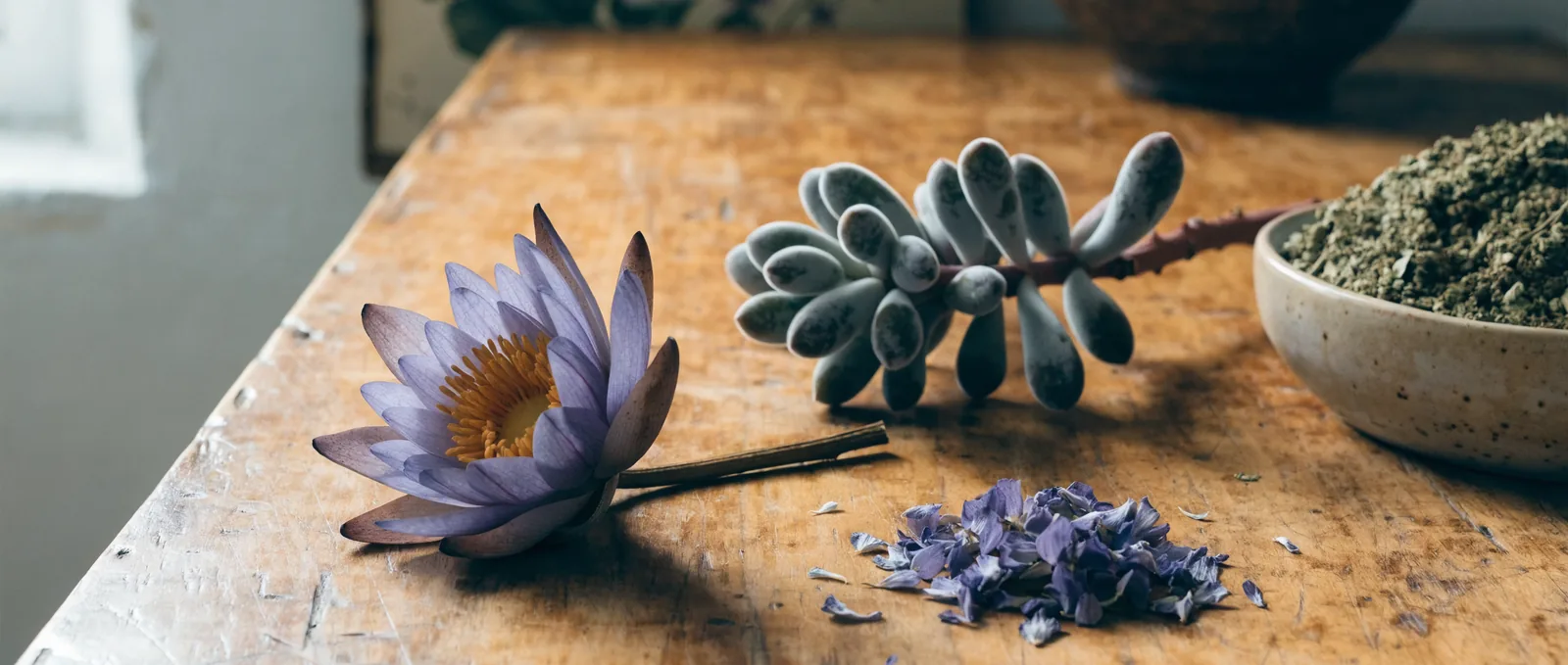
Blue lotus vs kanna compared — Nymphaea caerulea's aporphine profile against Sceletium tortuosum's mesembrine chemistry, with interaction warnings.

Lotus Clinical Research Overview
What does lotus clinical research actually show? A critical review of Nymphaea caerulea and Nelumbo nucifera pharmacology, preclinical data, and…
Kanna South Africa To West History
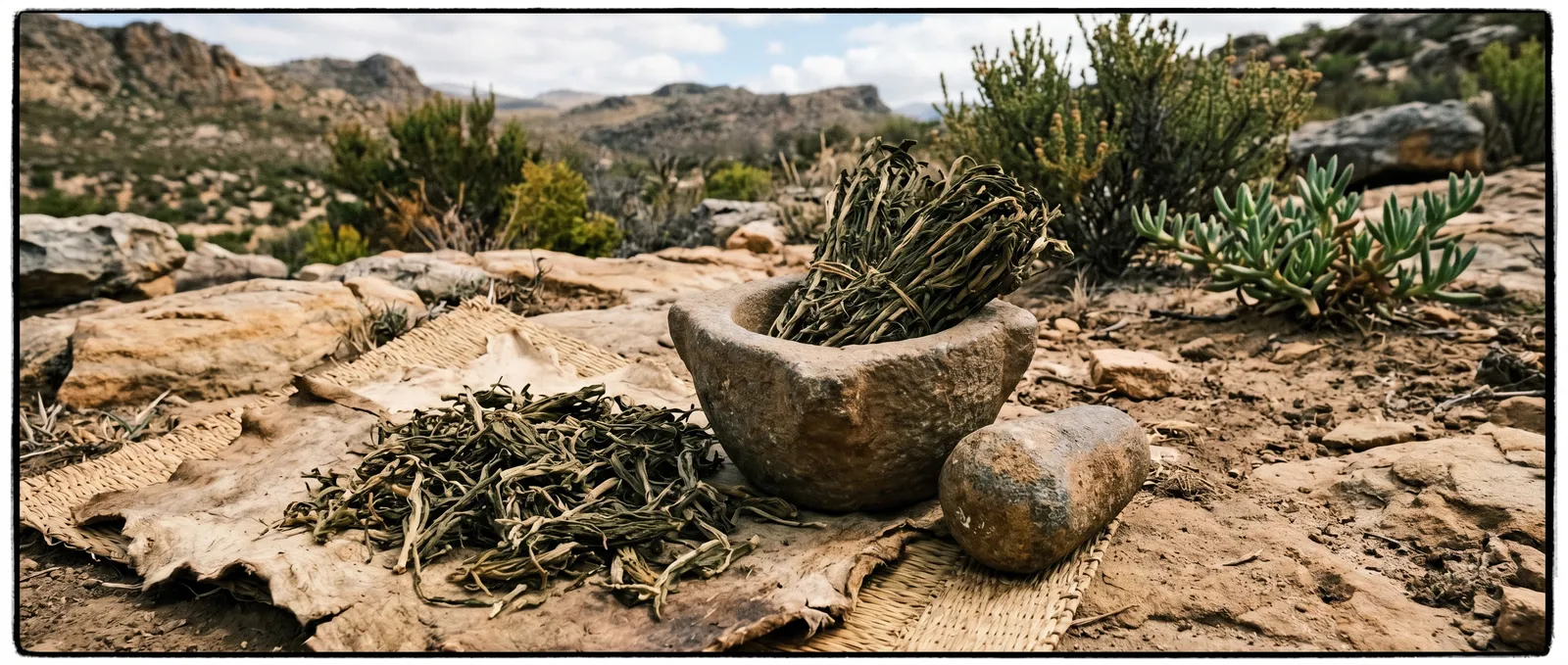
Sceletium tortuosum was used by San and Khoekhoe communities in southern Africa for centuries before European colonists first documented it in the 1660s.
Sceletium Tortuosum Plant
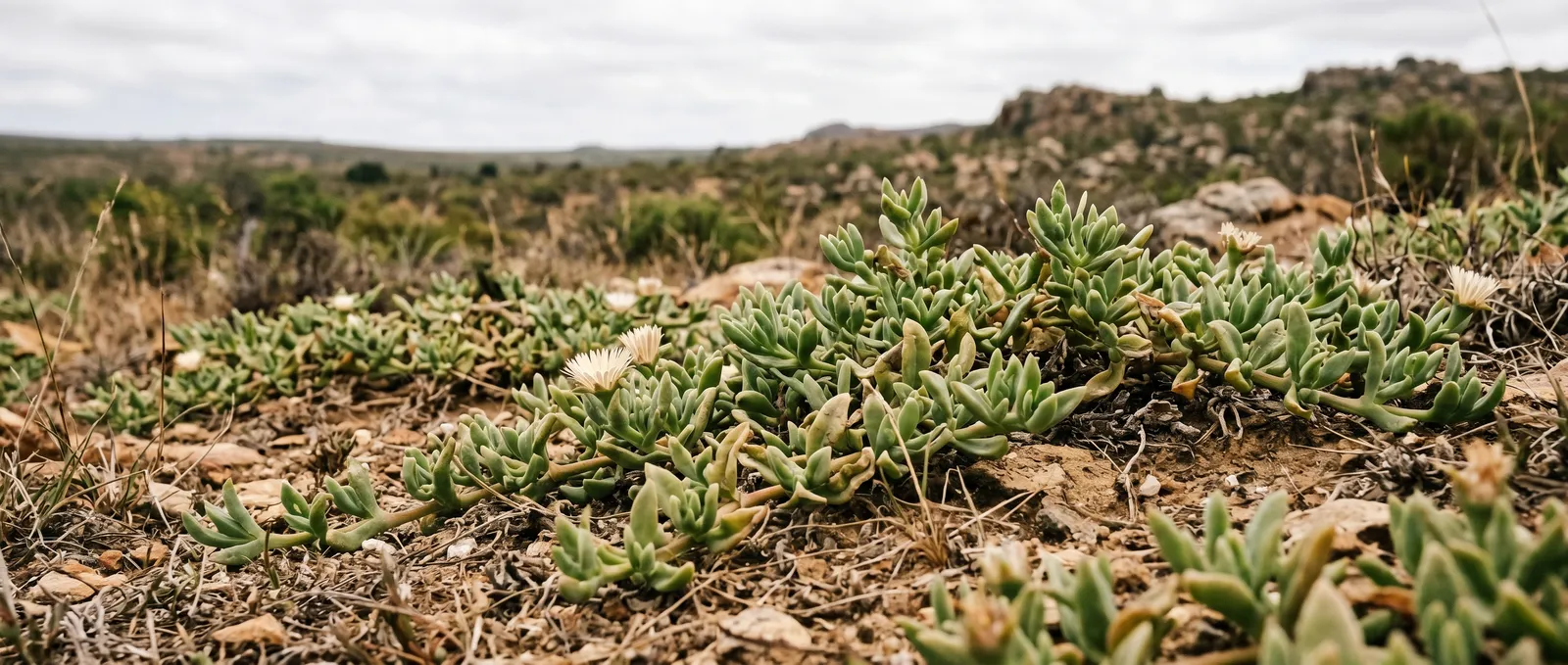
Learn about the sceletium tortuosum plant: botany, alkaloids, fermentation, safety warnings, and where to buy kanna.
Kanna Pharmacokinetics Explained
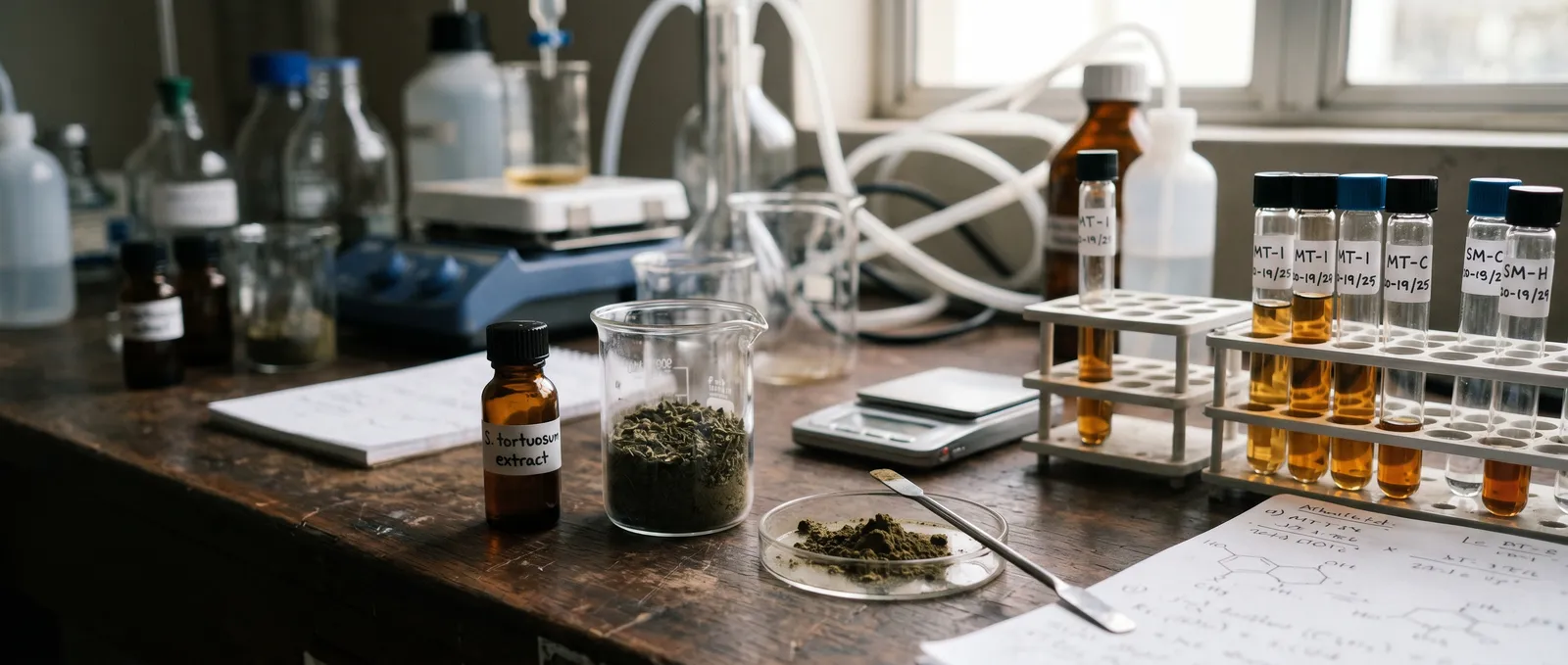
Complete guide to kanna pharmacokinetics: how Sceletium tortuosum alkaloids are absorbed, metabolised via CYP2D6, and eliminated.
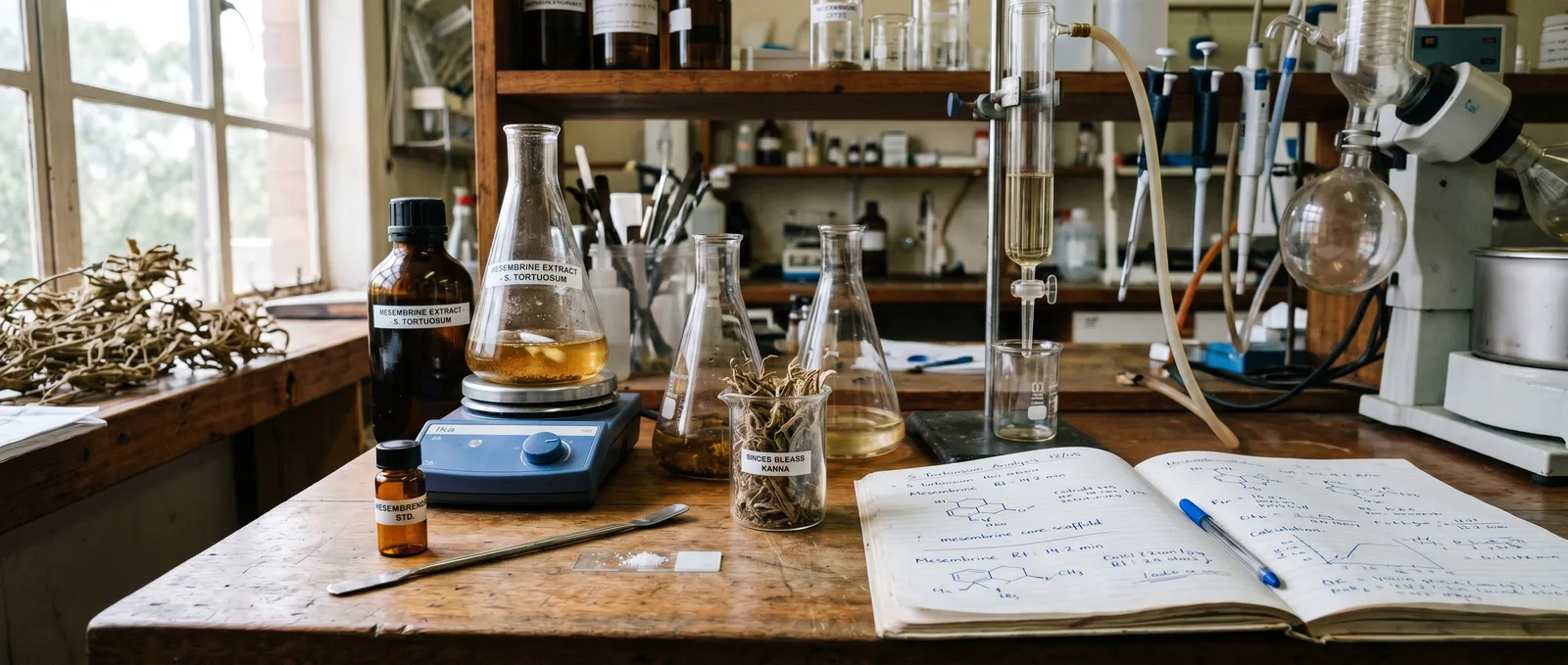
Kanna Chemistry: Sceletium Alkaloids Explained
Kanna chemistry explained: mesembrine, mesembrenone, their mechanisms, how fermentation and extraction change alkaloid profiles, and why it matters…

Rapé Shamanic Snuff Guide: How to Use It Safely
A practical rapé shamanic snuff guide covering dose, kuripe technique, effects, nicotine safety, interactions and Amazonian tradition.
White Sage Salvia Apiana Cultural Smudging Guide
Salvia apiana is a non-psychoactive shrub native to southern California's coastal sage scrub, burned as ceremonial incense in Indigenous North American…
Mulungu Erythrina Traditional Amazonian Use — Bark, Alkaloids & Research
Erythrina mulungu is a Brazilian legume tree whose bark has been brewed as a calming decoction in rural folk medicine for generations.