
This article discusses psychoactive substances intended for adults (18+). If you have a health condition or take medication, consult a doctor before use. Our age policy
Blue vs White vs Pink Lotus
Definition
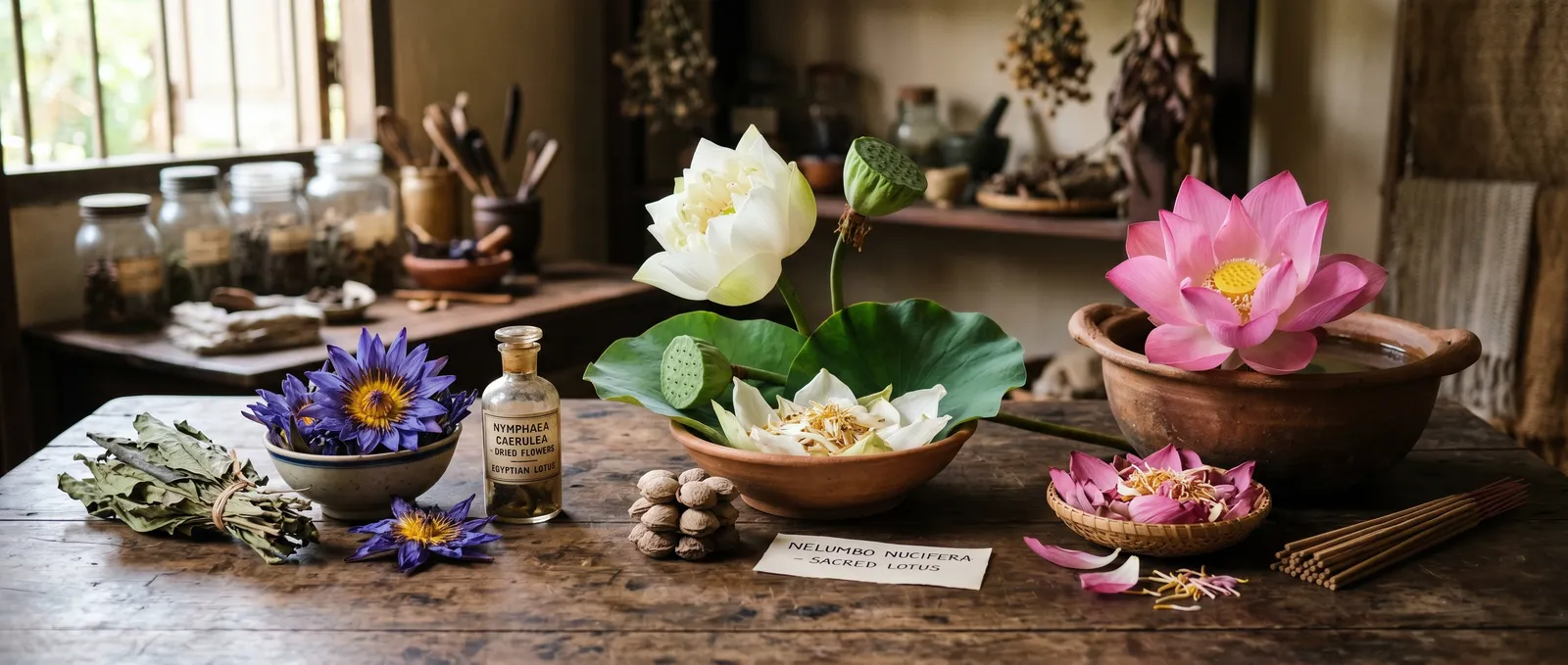
Blue vs white vs pink lotus is a comparison that spans two separate plant families with distinct alkaloid profiles. Blue lotus (Nymphaea caerulea) is a water lily that produces aporphine alkaloids linked to mild sedation and dream enhancement. White lotus (Nymphaea ampla) is a related water lily with a subtler alkaloid fingerprint. Pink lotus (Nelumbo nucifera) is a sacred lotus from a different family (Nelumbonaceae) that adds bisbenzylisoquinoline compounds — neferine and liensinine — absent from either Nymphaea species (Sharma et al., 2017).
Blue vs white vs pink lotus is a comparison that spans two entirely separate plant families, three distinct alkaloid profiles, and centuries of divergent traditional use. Blue lotus (Nymphaea caerulea) is a water lily native to Egypt that produces aporphine alkaloids — principally nuciferine and apomorphine — linked to mild sedation and dream enhancement. White lotus (Nymphaea ampla) is a closely related Mesoamerican water lily with a similar but reportedly subtler alkaloid fingerprint. Pink lotus (Nelumbo nucifera) is a sacred lotus from Asia that belongs to an entirely different plant family (Nelumbonaceae) and manufactures bisbenzylisoquinoline compounds — neferine and liensinine — absent from either Nymphaea species (Sharma et al., 2017). Understanding which species you're working with is the starting point for any informed decision about which lotus to buy and how to use it.
Adult audience (18+). The dosing ranges and effects described in this article apply to adult physiology. This content is not intended for minors.
| Dimension | Blue Lotus — Nymphaea caerulea | White Lotus — Nymphaea ampla | Pink Lotus — Nelumbo nucifera |
|---|---|---|---|
| Family | Nymphaeaceae | Nymphaeaceae | Nelumbonaceae |
| Genus | Nymphaea | Nymphaea | Nelumbo |
| Primary alkaloids | Nuciferine, apomorphine | Nuciferine, apomorphine (lower concentrations reported) | Nuciferine, neferine, liensinine, nelumbine |
| Alkaloid class | Aporphine | Aporphine | Aporphine + bisbenzylisoquinoline |
| Proposed mechanism | Partial dopamine-receptor (D1/D2) agonism | Partial dopamine-receptor agonism (less studied) | Dopaminergic + serotonergic activity proposed |
| Traditional region | Egypt, East Africa | Mesoamerica (Maya) | South and East Asia (Ayurveda, Buddhism) |
| Reported character | Mild sedation, dream enhancement | Mild sedation, subtler than N. caerulea | Calming, meditative; users report less sedation, more clarity |
| Common preparation | Tea, wine infusion, smoking | Tea, smoking | Tea, paste, seed preparations |
| Research depth | Thin but most studied of the three | Very thin | Moderate — more data on isolated alkaloids (neferine, liensinine) |
Taxonomy: Why the Family Split Matters
The family split between blue vs white vs pink lotus determines which alkaloids each species can produce and, by extension, which effects and interaction risks it carries. Calling all three "lotus" is a bit like calling a dolphin and a shark "fish" because they both swim. Nymphaea caerulea (blue) and Nymphaea ampla (white) are genuine siblings — same genus, same family, and they share the core aporphine alkaloid profile built around nuciferine and apomorphine. Nelumbo nucifera (pink/sacred lotus) diverged from the Nymphaea lineage roughly 100 million years ago. It does produce nuciferine — that's the shared thread — but it also manufactures bisbenzylisoquinoline alkaloids (neferine, liensinine, isoliensinine) that are absent from either Nymphaea species. According to a phytochemical review by Sharma et al. (2017), these bisbenzylisoquinoline compounds account for much of Nelumbo nucifera's distinct pharmacological profile, including proposed calcium-channel-blocking and anti-arrhythmic activity observed in vitro.
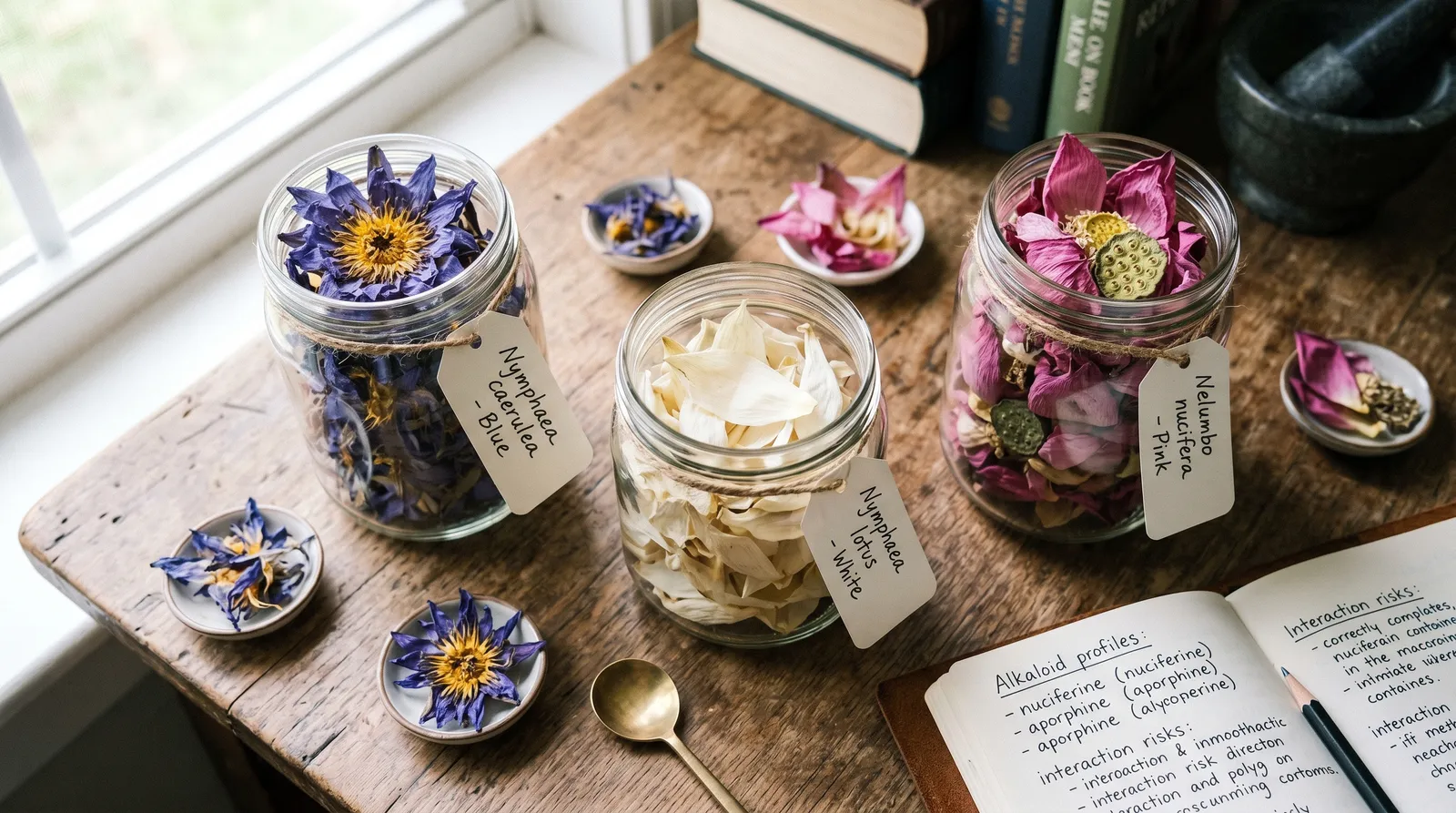
The practical upshot: you cannot take an effect attributed to Nymphaea caerulea and assume it applies to Nelumbo nucifera, or vice versa. The nuciferine overlap gives them a partial family resemblance, but the rest of the alkaloid toolkit diverges substantially. If you plan to buy blue lotus or pink lotus, knowing this distinction prevents you from ordering the wrong species for your intended purpose.
Alkaloid Profiles Unpacked
The alkaloid profiles of blue, white, and pink lotus overlap only at nuciferine — beyond that shared molecule, each species carries a distinct chemical toolkit that shapes its effects and safety considerations.
The Nymphaea pair: blue and white
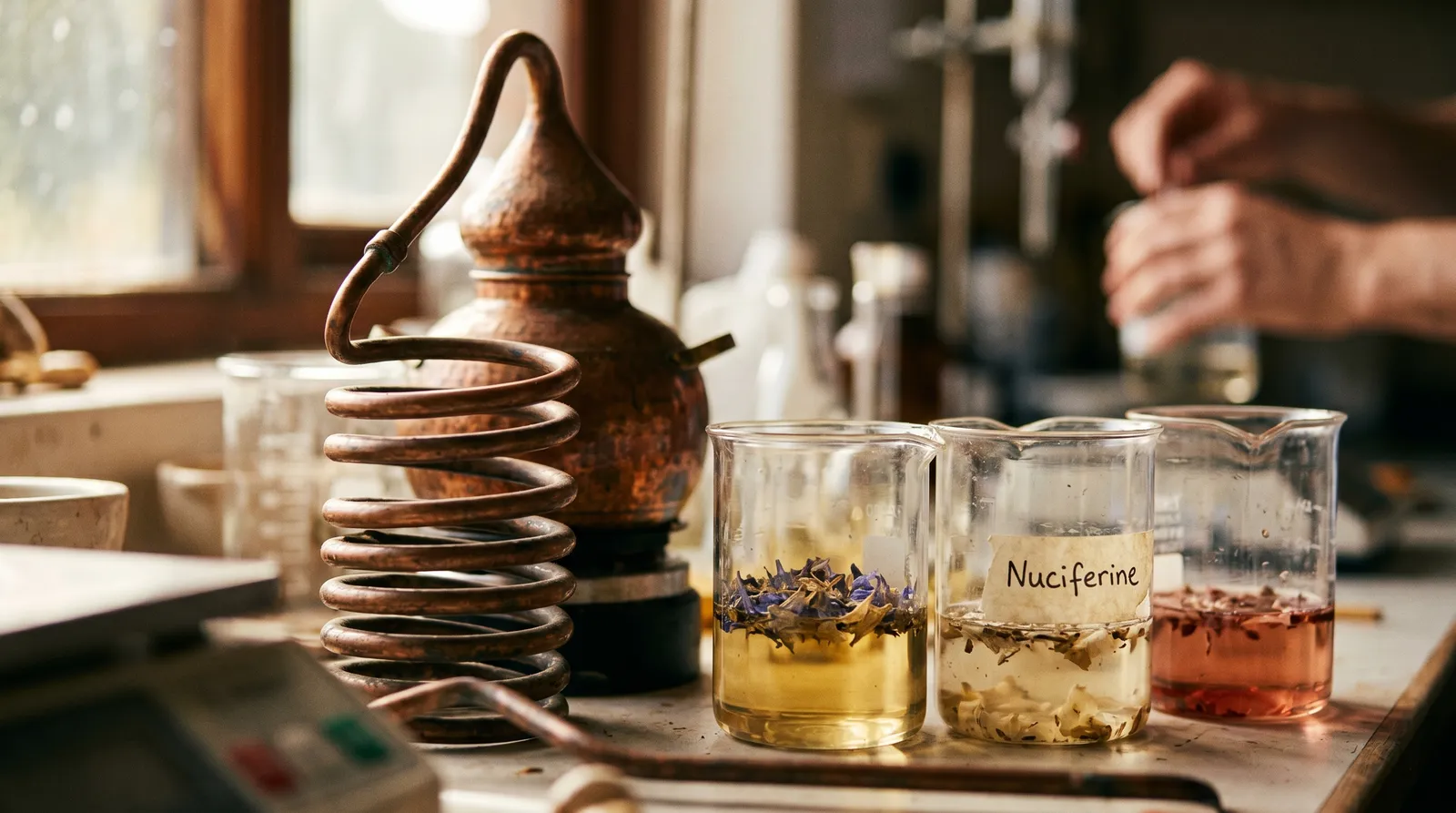
Both Nymphaea caerulea and Nymphaea ampla contain aporphine alkaloids, principally nuciferine and apomorphine. Nuciferine has been characterised as a partial agonist at dopamine D2 receptors with additional affinity for serotonin 5-HT2A and 5-HT2C receptors in receptor-binding assays (Farrell et al., 2016). Apomorphine — the same compound used clinically for Parkinson's disease — acts as a non-selective dopamine agonist. In the concentrations present in dried Nymphaea caerulea petals, the apomorphine content is far below therapeutic doses used in neurology, but it still contributes to the overall dopaminergic character of the plant.
Nymphaea ampla shares this alkaloid fingerprint, though analytical data on it is considerably thinner. What limited phytochemical work exists suggests lower total aporphine concentrations compared to N. caerulea, which aligns with user reports describing white lotus as subtler and gentler. That said, "limited phytochemical work" is doing heavy lifting in that sentence — the comparison rests on a small number of analyses, and batch-to-batch variation in any dried botanical can be enormous.
Nelumbo nucifera: the odd one out
Nelumbo nucifera produces nuciferine (the shared molecule), but its signature compounds are the bisbenzylisoquinolines: neferine, liensinine, and isoliensinine. These have been studied more extensively than the whole-plant lotus preparations, largely because of interest from cardiovascular pharmacology. Chen et al. (2013) demonstrated that neferine blocks L-type calcium channels in isolated cardiomyocytes, an action mechanistically similar to pharmaceutical calcium-channel blockers like verapamil. Liensinine showed comparable activity in the same study. This is pharmacologically interesting, but it also means Nelumbo nucifera carries a cardiovascular interaction profile that differs from the Nymphaea species — not just the shared dopaminergic concern, but an additional calcium-channel dimension.
The nuciferine content in Nelumbo nucifera leaves tends to be higher than in the petals, which is why traditional Ayurvedic preparations often use the leaf rather than the flower. Most commercially available pink lotus products sold as "petals" are indeed petal material, so the nuciferine dose per gram may be lower than what's found in leaf-based preparations used in some research.
Traditional and Historical Use
Each of the three lotus species has a well-documented history of traditional use, but those histories are geographically and culturally separate — they converge only in the modern marketplace where customers can buy blue vs white vs pink lotus side by side.
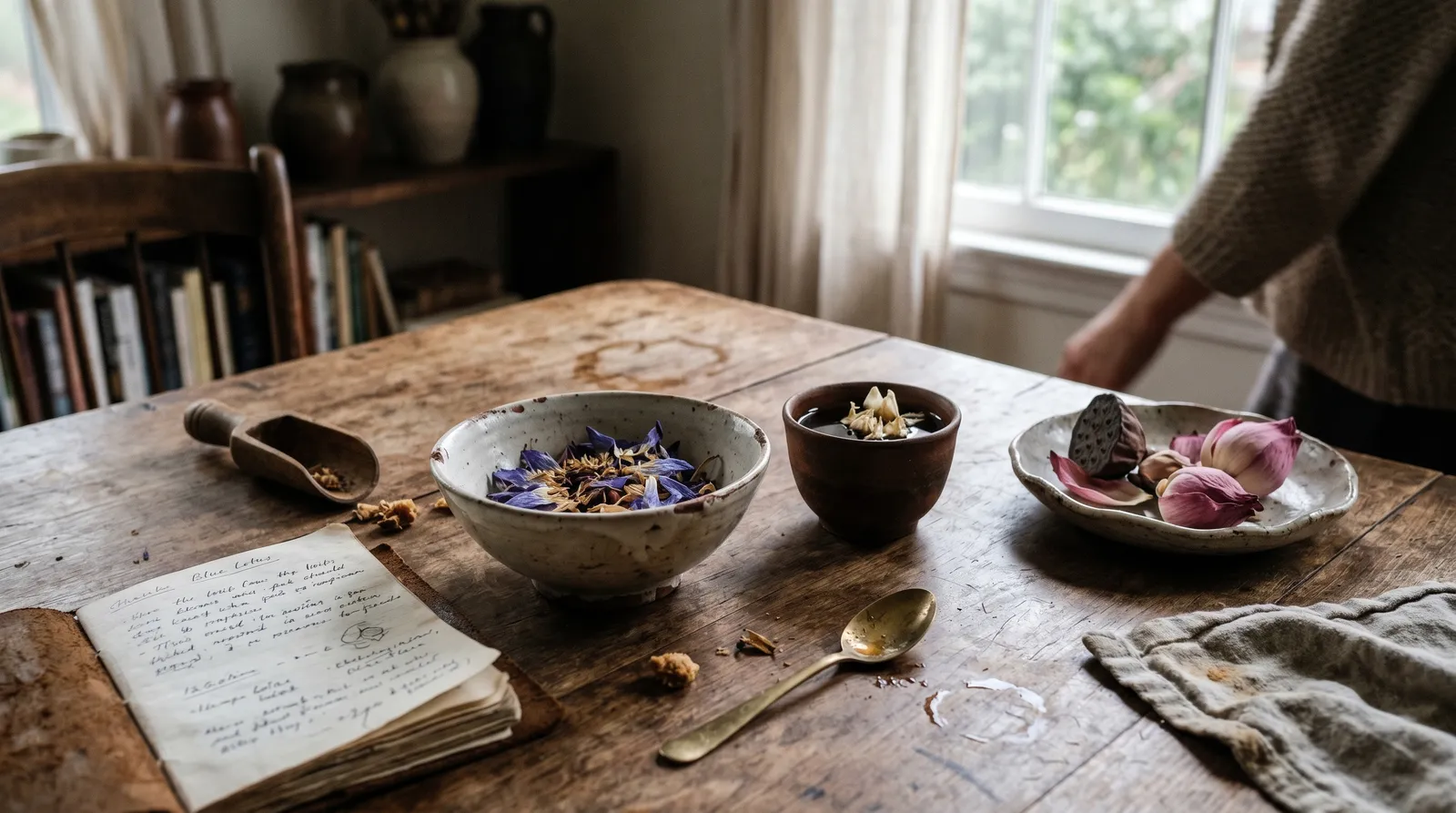
Nymphaea caerulea appears extensively in ancient Egyptian art — tomb reliefs at Karnak and Luxor depict the flower in banquet scenes, and residue analysis of vessels from burial sites has identified Nymphaea alkaloids (Emboden, 1989). The archaeological evidence for ceremonial use is solid. What's less clear is exactly how the Egyptians prepared and consumed it. Wine infusion is the most commonly cited method, based on depictions of flowers steeping in wine jars, but the pharmacokinetic implications of alcohol extraction versus water infusion versus direct ingestion would differ meaningfully — and we simply don't have dose-response data from 1300 BCE.
Nymphaea ampla has a parallel but geographically separate history. Maya ceramic art from the Classic period (250–900 CE) depicts the white water lily in contexts that scholars interpret as ritual or entheogenic use (McDonald & Stross, 2012). The evidence base is thinner than for Egyptian blue lotus, and the interpretive leap from "depicted on pottery" to "used as a psychoactive" is larger than some popular accounts acknowledge.
Nelumbo nucifera has the broadest documented traditional use, spanning Ayurvedic medicine, Traditional Chinese Medicine, and Buddhist contemplative practice. In Ayurveda, the plant's leaves, seeds, rhizomes, and flowers are all used — each for different indications. The Charaka Samhita references lotus preparations for what would now be described as digestive and cardiovascular complaints. In Buddhist iconography, Nelumbo represents spiritual purity, but that symbolic role shouldn't be confused with a pharmacological claim.
Reported Effects Compared
Blue vs white vs pink lotus produce qualitatively different subjective effects according to user reports, though no controlled human trial has directly compared them head-to-head.
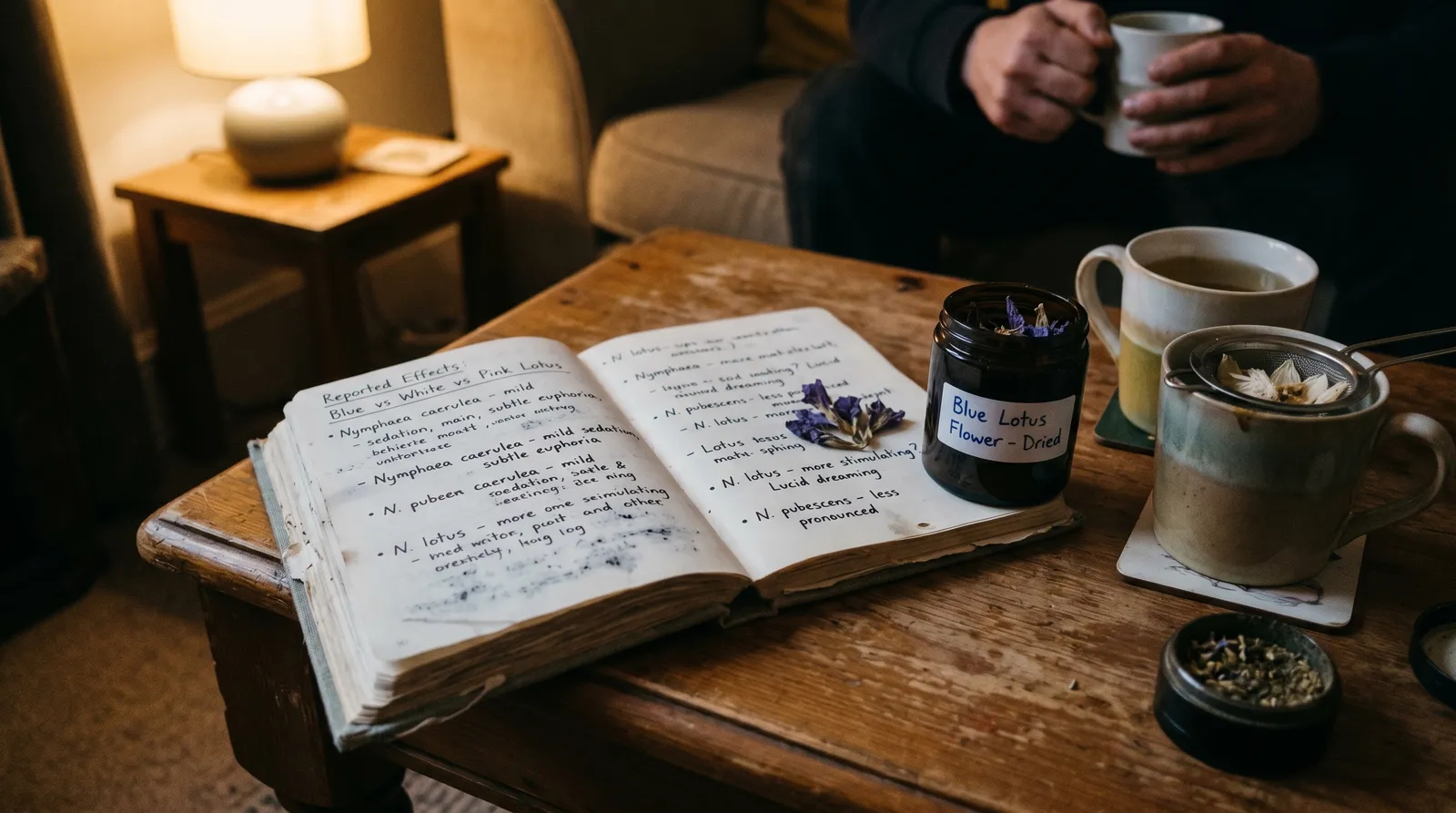
Nymphaea caerulea (blue): Users most commonly report mild sedation, a sense of calm, and enhanced dream vividness when consumed as tea or wine infusion before sleep. Some users describe a gentle mood lift. The proposed mechanism — partial dopamine-receptor agonism via nuciferine and apomorphine — is consistent with these reports, though human pharmacokinetic data confirming the mechanism at typical consumption doses remains limited.
Nymphaea ampla (white): Users report a similar but milder profile to N. caerulea — relaxation without strong sedation, sometimes described as "cleaner" or "clearer." Whether this reflects genuinely lower aporphine content, expectation effects, or batch variation is impossible to say without controlled comparison.
Nelumbo nucifera (pink): Users tend to describe the effect as calming rather than sedating, with some reporting enhanced focus during meditation. The distinct alkaloid profile — particularly the bisbenzylisoquinoline compounds — may account for the qualitative difference, but this is speculative. Some practitioners in Ayurvedic traditions describe Nelumbo preparations as "sattvic" (clarity-promoting), which maps loosely onto user reports but isn't a pharmacological category.
Across all three species, the reported effects are mild. Nobody is describing these as powerfully psychoactive in the way that, say, Salvia divinorum or high-dose psilocybin mushrooms are. The experience sits closer to a strong chamomile tea than to a classical psychoactive — though the dream-enhancement dimension, particularly with Nymphaea caerulea, goes beyond what you'd expect from chamomile.
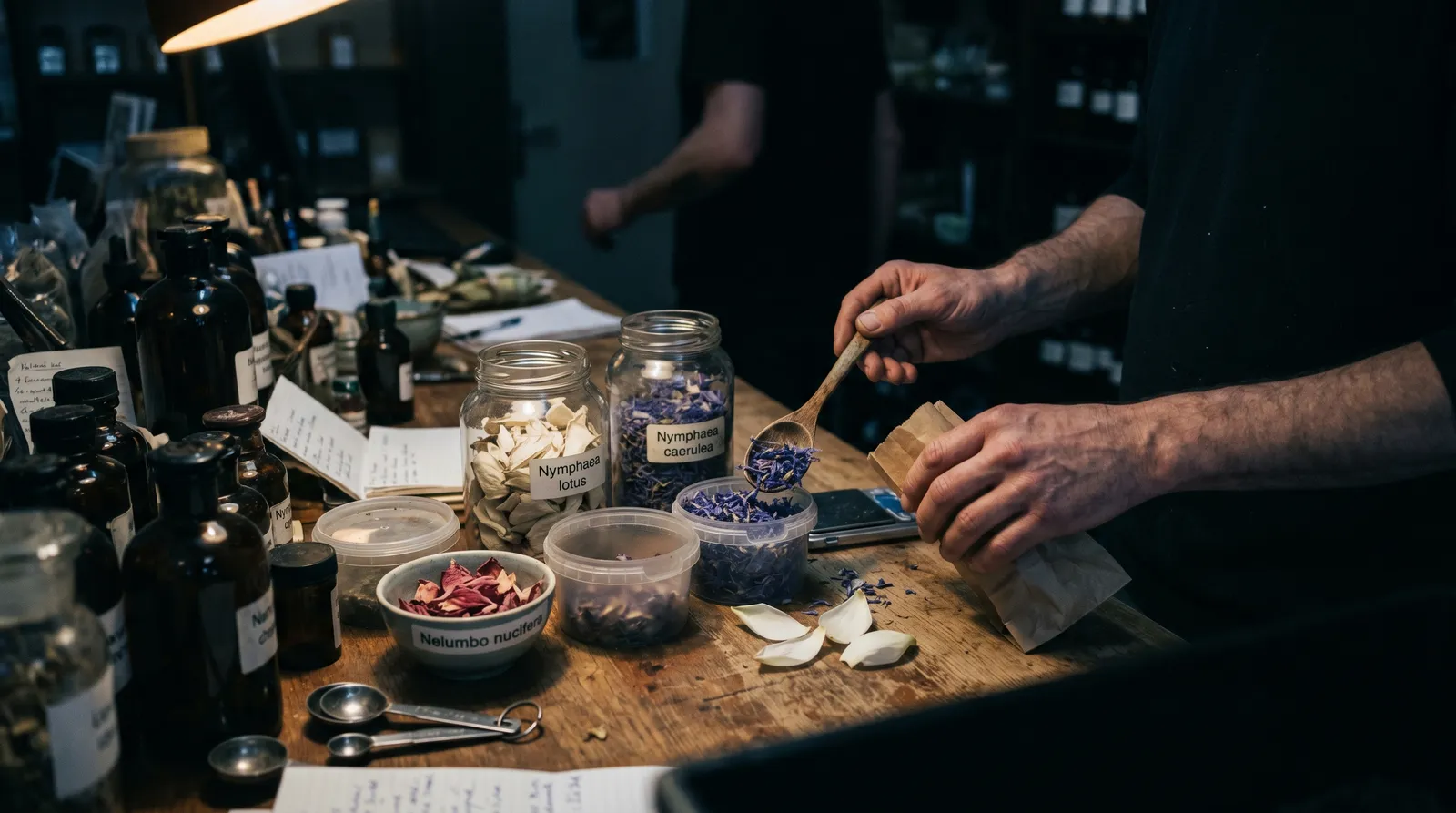
Another observation worth sharing: customers who order blue lotus extract after starting with shredded petals are sometimes caught off guard by the potency jump. We've had more than one customer come back saying "I wish I'd started with half a gram of the extract." Start low, especially with concentrates.
If you're trying to decide which lotus to buy, start by asking what you actually want from the experience — sedation and dreams, or calm clarity — because the answer points to different species.
Plant Material Versus Extracts
Dried petals and concentrated extracts deliver fundamentally different alkaloid doses per gram, and confusing the two is the most common dosing error we encounter. Shredded petals contain the alkaloids in their natural concentration — a few grams brewed as tea delivers a mild effect. Extracts (dried, liquid, or resin) concentrate the aporphine alkaloids substantially. A 20x dried extract contains, in theory, twenty times the alkaloid load per gram compared to raw petal material. In practice, concentration ratios vary by manufacturer and extraction method, but the principle holds: extract doses are not interchangeable with petal doses.
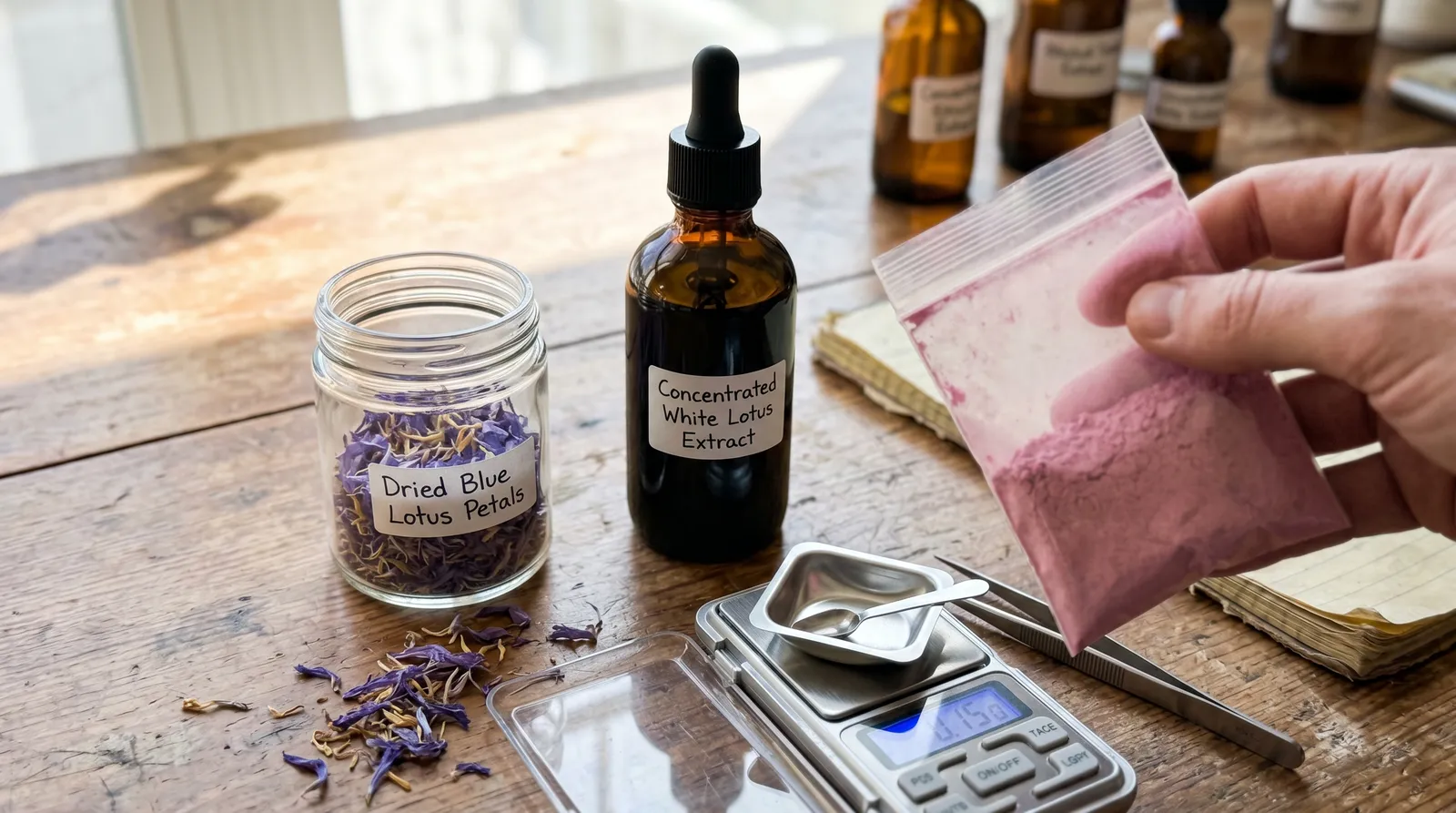
The safety implications scale accordingly. The cardiovascular and dopaminergic interaction concerns that apply to all lotus preparations apply with greater force to concentrated extracts. If someone is taking an antihypertensive medication, the difference between 3g of shredded Nymphaea caerulea petals and 0.5g of a concentrated extract could be the difference between "barely noticeable" and "clinically relevant blood-pressure drop." When you order any lotus product, check whether you're getting raw plant material or an extract — and adjust your dose accordingly.
How Blue vs White vs Pink Lotus Compare to Other Dream Herbs
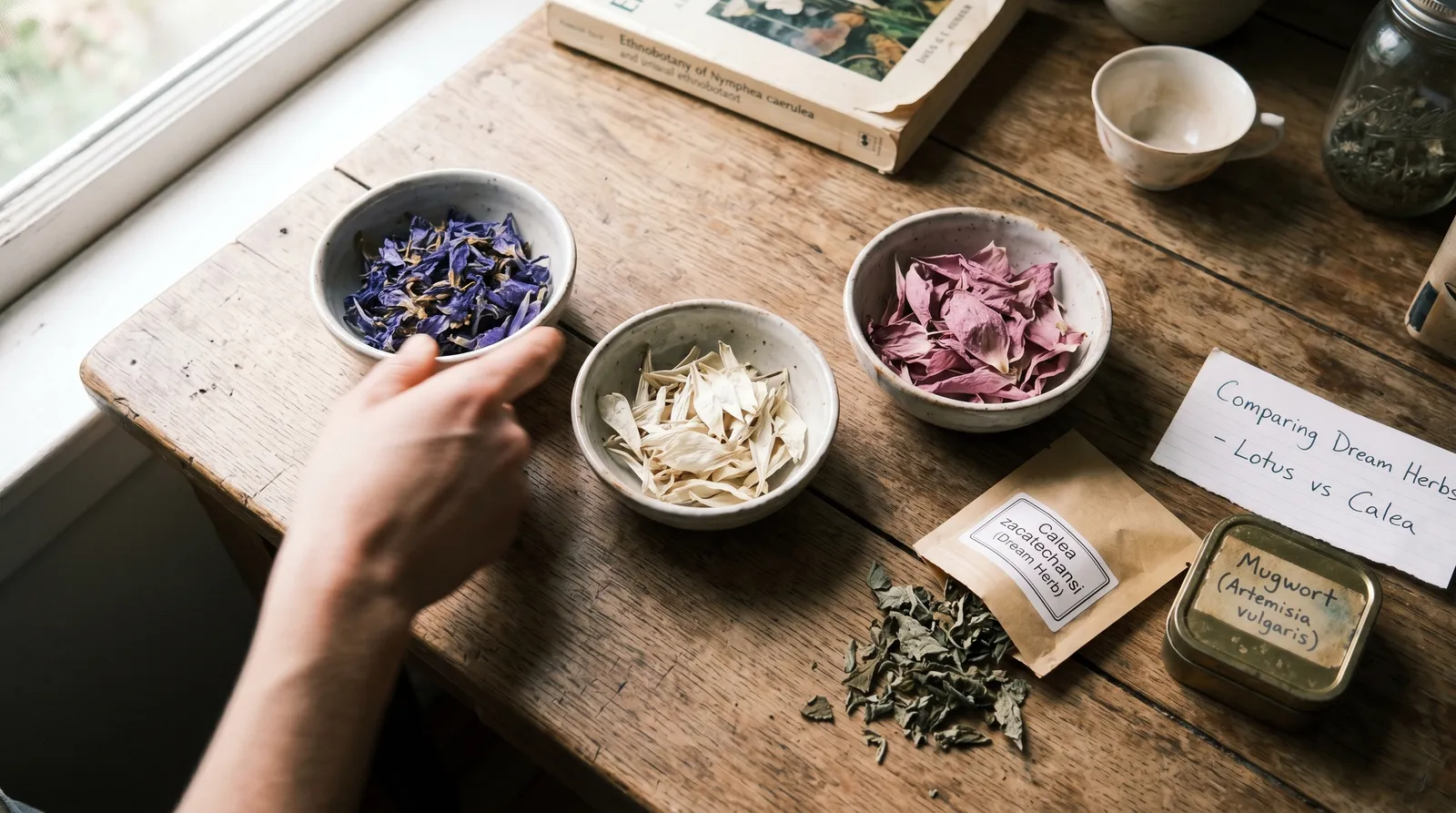
Blue vs white vs pink lotus are not the only botanicals used for dream enhancement and relaxation, and understanding where they sit relative to other herbs helps set realistic expectations. Calea zacatechichi (dream herb) is often mentioned alongside blue lotus for lucid dreaming, but the two work through entirely different mechanisms — Calea contains sesquiterpene lactones rather than aporphine alkaloids, and users typically describe its dream effects as more vivid but accompanied by a notably bitter taste that lotus preparations lack. Mugwort (Artemisia vulgaris) is another popular dream herb that some customers combine with blue lotus tea; the combination is commonly reported, though no formal interaction data exists. Passionflower (Passiflora incarnata) overlaps more with the calming profile of pink lotus, acting primarily through GABAergic mechanisms rather than dopaminergic ones. If you're building a relaxation or dream-enhancement routine, these comparisons help you decide whether to buy blue lotus specifically or explore complementary herbs alongside it.
Honest Limitations: What We Don't Know
The blue vs white vs pink lotus comparison is constrained by significant gaps in the research, and we think being upfront about those gaps matters more than pretending certainty. No randomised controlled trial has ever tested any of these three species head-to-head in humans. Most of what we know about nuciferine's receptor activity comes from in vitro assays and animal models — useful starting points, but not the same as human pharmacokinetic data at the doses people actually consume. The analytical chemistry on Nymphaea ampla is so thin that any firm claim about its relative potency compared to N. caerulea is premature. Even for Nelumbo nucifera, where the isolated alkaloids neferine and liensinine have received more attention, the leap from "blocks calcium channels in isolated rat cardiomyocytes" to "produces X effect in a person drinking lotus tea" involves assumptions we cannot verify.

We'll be blunt about something else: batch-to-batch variation in dried botanical products is real and significant. Two bags of blue lotus petals from different harvests can differ meaningfully in alkaloid content. This isn't unique to lotus — it's a reality of working with plant material rather than standardised pharmaceutical preparations. We sell these products and we believe in informed choice — but informed choice requires acknowledging where the evidence runs out and where natural variation makes precise dosing impossible.
Safety and Interaction Concerns
All three lotus species carry dopaminergic interaction risks due to their shared aporphine alkaloid content, and Nelumbo nucifera adds a second cardiovascular mechanism via its bisbenzylisoquinoline compounds. The aporphine alkaloids in all three species interact with dopamine receptors. This means combining any lotus preparation — but especially Nymphaea caerulea, which has the best-characterised apomorphine content — with dopaminergic medications (levodopa, pramipexole, ropinirole, or therapeutic apomorphine itself) risks unpredictable potentiation. Dopamine-receptor-active antiemetics such as metoclopramide and domperidone could also interact. There is a theoretical MAOI concern via the aporphine class, though this is poorly characterised in humans.
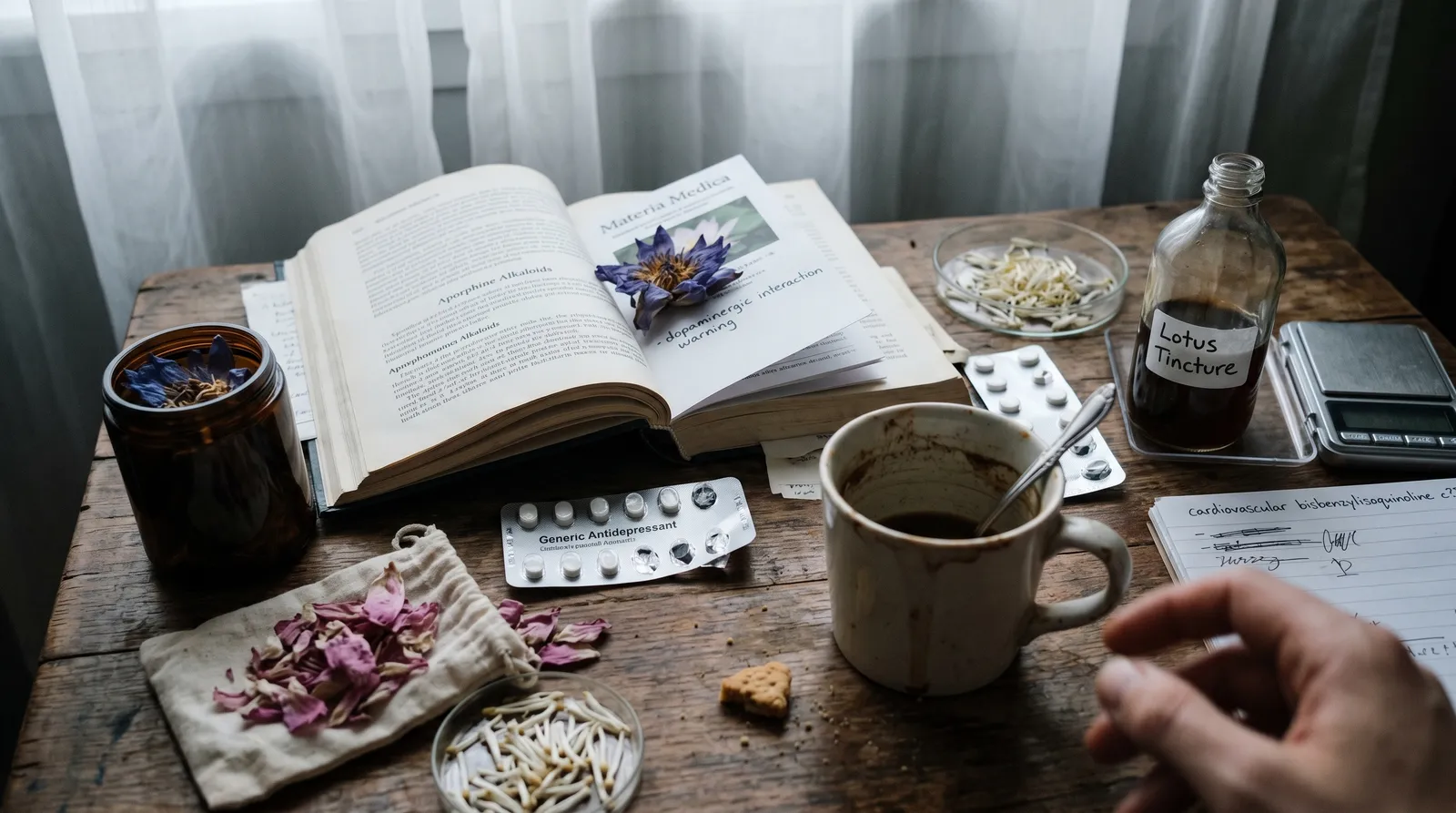
Apomorphine analogs can lower blood pressure. Anyone taking antihypertensives, or anyone with cardiovascular disease — particularly uncontrolled hypertension or hypotension — should not combine these with lotus preparations. For Nelumbo nucifera specifically, the calcium-channel-blocking activity of neferine and liensinine adds a second cardiovascular mechanism on top of the dopaminergic blood-pressure effect. The interaction profile for Nelumbo with calcium-channel blockers (amlodipine, diltiazem, verapamil) has not been studied in humans, but the mechanistic overlap is clear enough to warrant caution.
The mild sedation reported with all three species, combined with the dream-enhancement effect particularly associated with Nymphaea caerulea, makes driving or operating machinery inappropriate for roughly four hours after use.
Pregnancy and breastfeeding: no safety data exists for any of the three species. Avoid.
For a complete breakdown of drug interactions, see the dedicated lotus interactions article on the Azarius Encyclopedia.
Which Species for Which Purpose
The right lotus species depends on the experience you're after — sedation and dreaming point to blue, subtlety points to white, and calm clarity points to pink. If the primary interest is dream enhancement and gentle sedation before sleep, Nymphaea caerulea (blue lotus) has the strongest user-report base and the most characterised alkaloid profile supporting that use. If the interest is a subtler version of the same — perhaps for someone who found blue lotus too sedating — Nymphaea ampla (white lotus) is worth trying, with the caveat that the evidence base is thinner. If the interest leans more toward calm wakefulness or a meditative aid, Nelumbo nucifera (pink/sacred lotus) is the species most consistently described in those terms, both in traditional Ayurvedic contexts and in contemporary user reports.
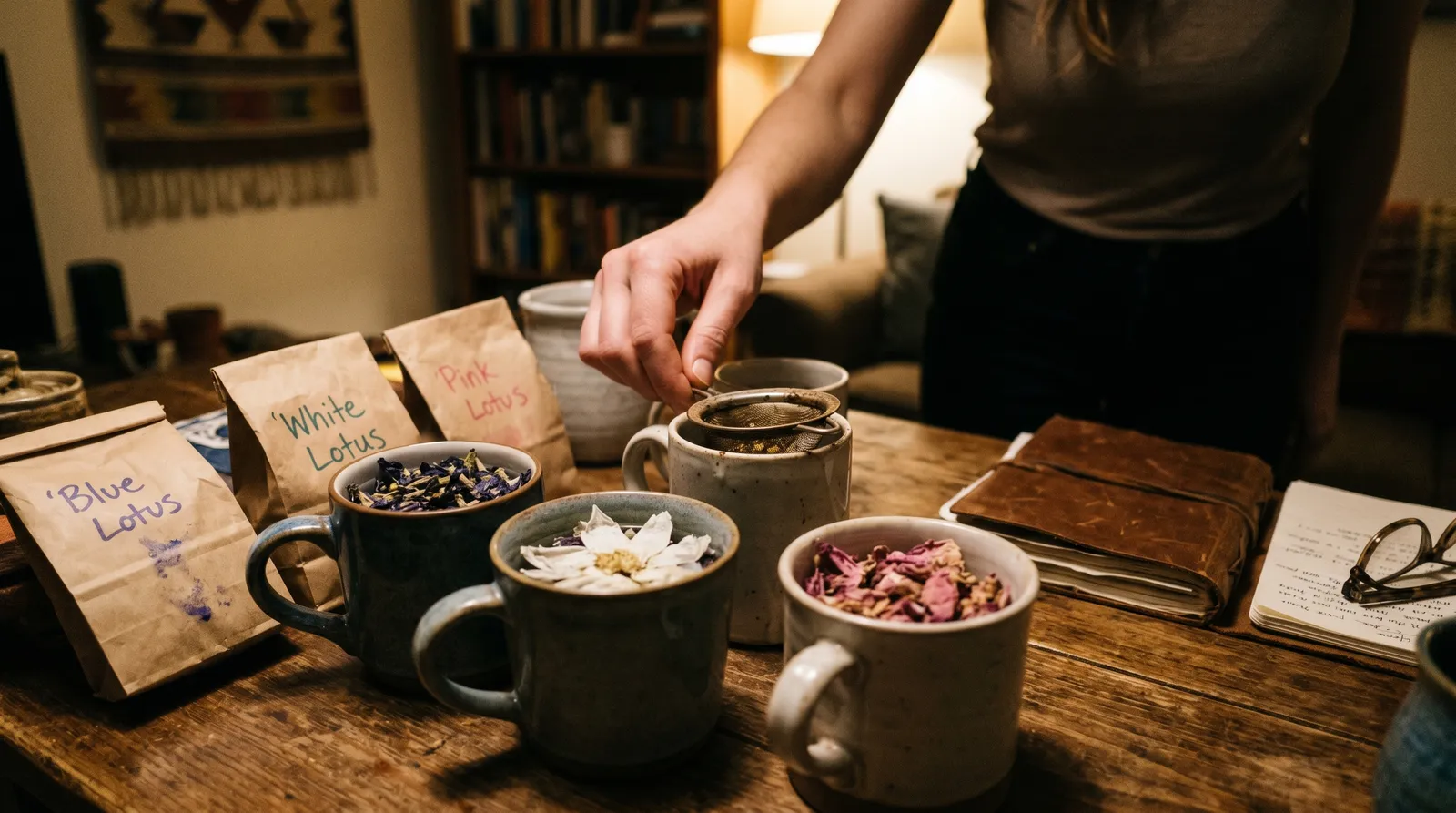
None of these are interchangeable. The shared "lotus" label is a commercial convenience, not a pharmacological statement. Knowing which species you're working with — and which alkaloid profile comes with it — is the baseline for making a sensible choice. Whether you buy blue lotus petals, white lotus shredded flowers, or pink lotus preparations, check the Latin name on the product page to confirm you're getting the species you intend. You can order all three species from the Azarius lotus collection to compare them yourself — just remember to get shredded petals rather than extracts if this is your first time.
Last updated: April 2026
Frequently Asked Questions
10 questionsIs pink lotus the same plant family as blue lotus?
Which lotus species is strongest for dream enhancement?
Can you substitute pink lotus petals for blue lotus in a tea recipe?
Why is white lotus less well studied than blue lotus?
Do lotus extracts carry higher interaction risks than dried petals?
What is the main alkaloid difference between blue vs white vs pink lotus?
Can you smoke pink lotus the same way you smoke blue lotus?
Is blue lotus or pink lotus better for meditation?
Are blue, white, and pink lotus all legal to purchase?
Which lotus has the strongest scent when brewed as tea?
About this article


Adam Parsons is an external cannabis and psychedelics writer and editor who contributes to Azarius's wiki as both author and reviewer. On the writing side, he authors Azarius's kratom and kanna clusters, drawing on exten
This wiki article was drafted with AI assistance and reviewed by Adam Parsons, External contributor. Editorial oversight by Joshua Askew.
Medical disclaimer. This content is for informational purposes only and does not constitute medical advice. Consult a qualified healthcare provider before use of any substance.
Last reviewed April 24, 2026
References (5)
- [1]Chen, S. et al. (2013). Neferine and liensinine block L-type calcium channels in rat ventricular myocytes. European Journal of Pharmacology , 702(1-3), 218–224.
- [2]Emboden, W. (1989). The sacred narcotic lily of the Nile: Nymphaea caerulea . Economic Botany , 43(3), 395–407.
- [3]Farrell, M.S. et al. (2016). In vitro and in vivo characterisation of the alkaloid nuciferine. PLOS ONE , 11(3), e0150602.
- [4]McDonald, J.A. & Stross, B. (2012). Water lily and cosmic serpent: equivalent conduits of the Maya spirit area. Journal of Ethnopharmacology , 148(1), 214–236. DOI: 10.2993/0278-0771-32.1.74
- [5]Sharma, B.R. et al. (2017). Pharmacological properties of Nelumbo nucifera : a complete review. Journal of Pharmacy Research , 11(3), 300–307.
Related Articles
Blue Lotus vs Kanna: Effects & Safety
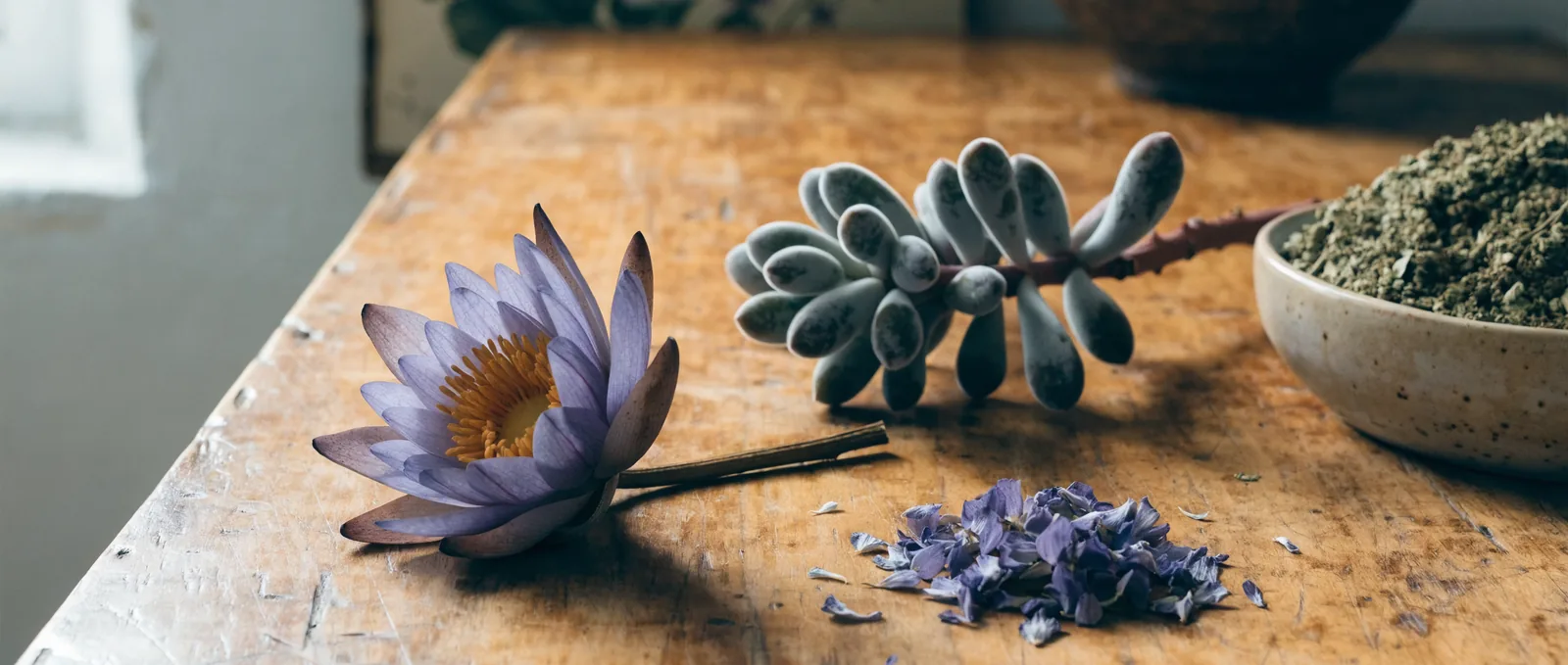
Blue lotus vs kanna compared — Nymphaea caerulea's aporphine profile against Sceletium tortuosum's mesembrine chemistry, with interaction warnings.

Lotus Clinical Research Overview
What does lotus clinical research actually show? A critical review of Nymphaea caerulea and Nelumbo nucifera pharmacology, preclinical data, and…
Kanna South Africa To West History
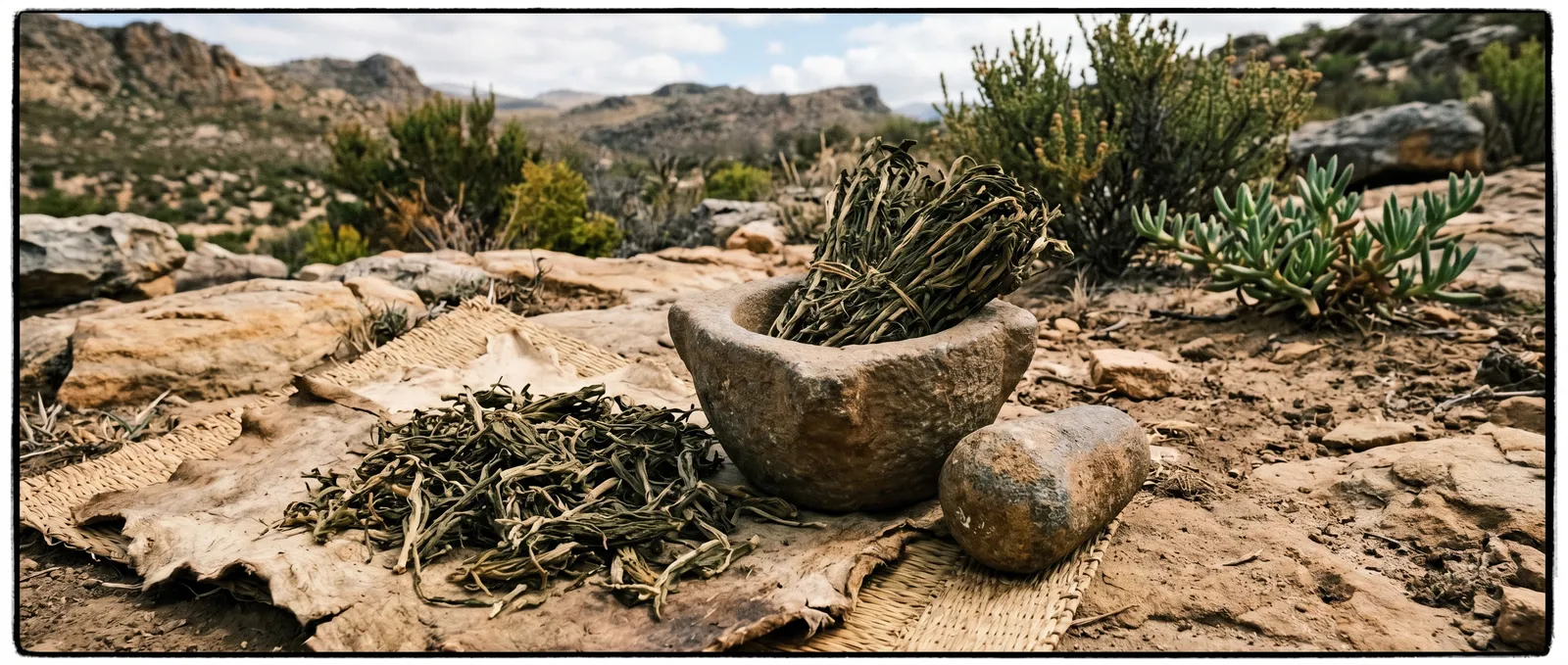
Sceletium tortuosum was used by San and Khoekhoe communities in southern Africa for centuries before European colonists first documented it in the 1660s.
Sceletium Tortuosum Plant
Learn about the sceletium tortuosum plant: botany, alkaloids, fermentation, safety warnings, and where to buy kanna.
Kanna Pharmacokinetics Explained
Complete guide to kanna pharmacokinetics: how Sceletium tortuosum alkaloids are absorbed, metabolised via CYP2D6, and eliminated.

Kanna Chemistry: Sceletium Alkaloids Explained
Kanna chemistry explained: mesembrine, mesembrenone, their mechanisms, how fermentation and extraction change alkaloid profiles, and why it matters…
Rapé Shamanic Snuff Guide: How to Use It Safely
A practical rapé shamanic snuff guide covering dose, kuripe technique, effects, nicotine safety, interactions and Amazonian tradition.
White Sage Salvia Apiana Cultural Smudging Guide
Salvia apiana is a non-psychoactive shrub native to southern California's coastal sage scrub, burned as ceremonial incense in Indigenous North American…
Mulungu Erythrina Traditional Amazonian Use — Bark, Alkaloids & Research
Erythrina mulungu is a Brazilian legume tree whose bark has been brewed as a calming decoction in rural folk medicine for generations.