
This article discusses psychoactive substances intended for adults (18+). If you have a health condition or take medication, consult a doctor before use. Our age policy
Watering Cannabis Frequency Volume Runoff: Full Guide
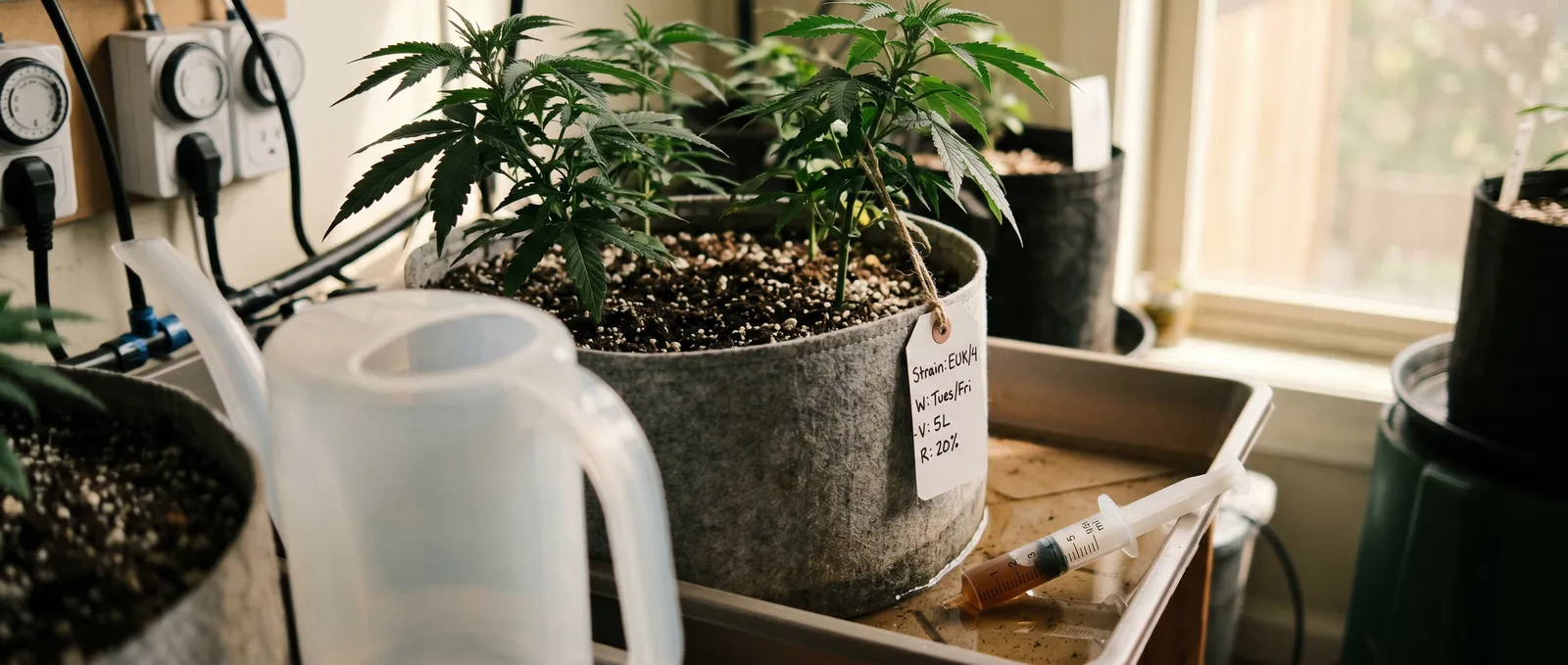
Definition
Watering cannabis frequency volume runoff is the feedback loop between how often you irrigate, how much you apply, and what drains from the pot. Research in coir substrates (Caplan et al., 2017) shows yield responds sharply to irrigation management, with medium, pot size and plant stage setting the schedule — not the calendar.
Adult use only — this guide is written for growers aged 18 and over. This guide is educational only and does not constitute advice. Azarius does not provide advice on cultivation in your jurisdiction.
Watering cannabis frequency volume runoff is a feedback loop that matches irrigation to medium, pot size and plant stage so roots get oxygen, nutrients and moisture in the right balance (Zheng et al., 2007). Getting it right is the single biggest separator between a tent that produces and a tent that stalls. Overwatering drowns roots and invites fungus gnats (Zheng et al., 2007); underwatering stunts growth and locks out nutrients (Burgel et al., 2020). The fix isn't a schedule — it's a feedback loop between medium weight, pot size, plant size, and what drains out the bottom.
Why frequency, volume and runoff are one decision, not three
Watering is a physics problem, not a calendar problem. Most beginner guides treat it as "every 2–3 days." It isn't. It's about how much water the medium holds at field capacity, how fast the plant and evaporation pull it back out, and whether the salts you feed in are flushing through or stacking up in the rootzone. Frequency is set by how fast the pot dries. Volume is set by pot size and desired runoff. Runoff (the liquid that drains from the bottom) is your diagnostic tool — its pH and EC tell you what's actually happening at the roots.
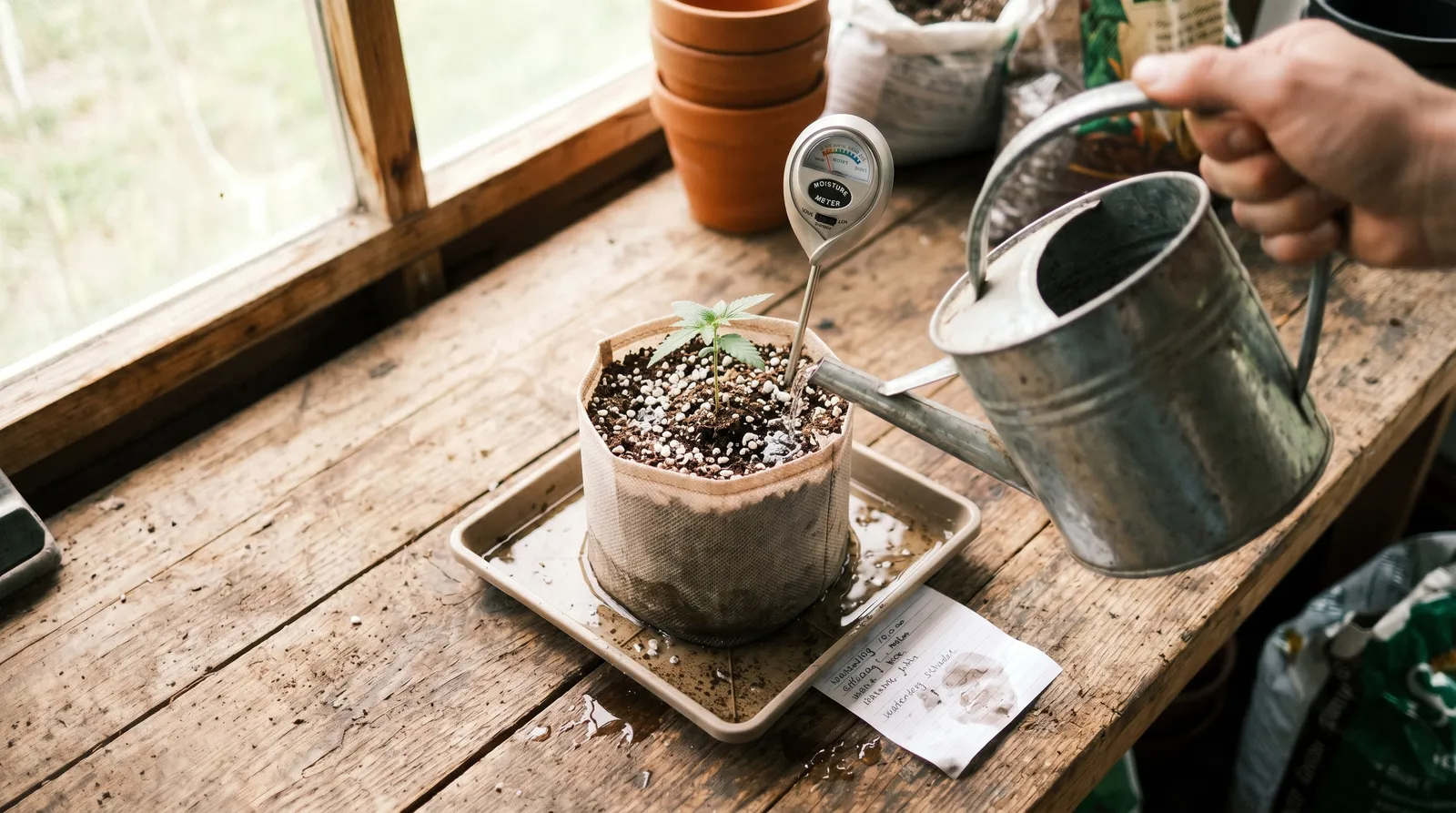
Soil, coco coir and hydroponic media behave differently enough that a single rule doesn't travel. Research in coir-based substrates shows cannabis yield responds sharply to fertigation rate and irrigation management (Caplan et al., 2017), with flowering-stage plants pulling substantially more water than vegetative ones under identical conditions (Caplan et al., 2019).
Step 1 — Know which medium you're actually growing in
Your medium sets every other watering decision. The first question isn't "how often" — it's "in what."
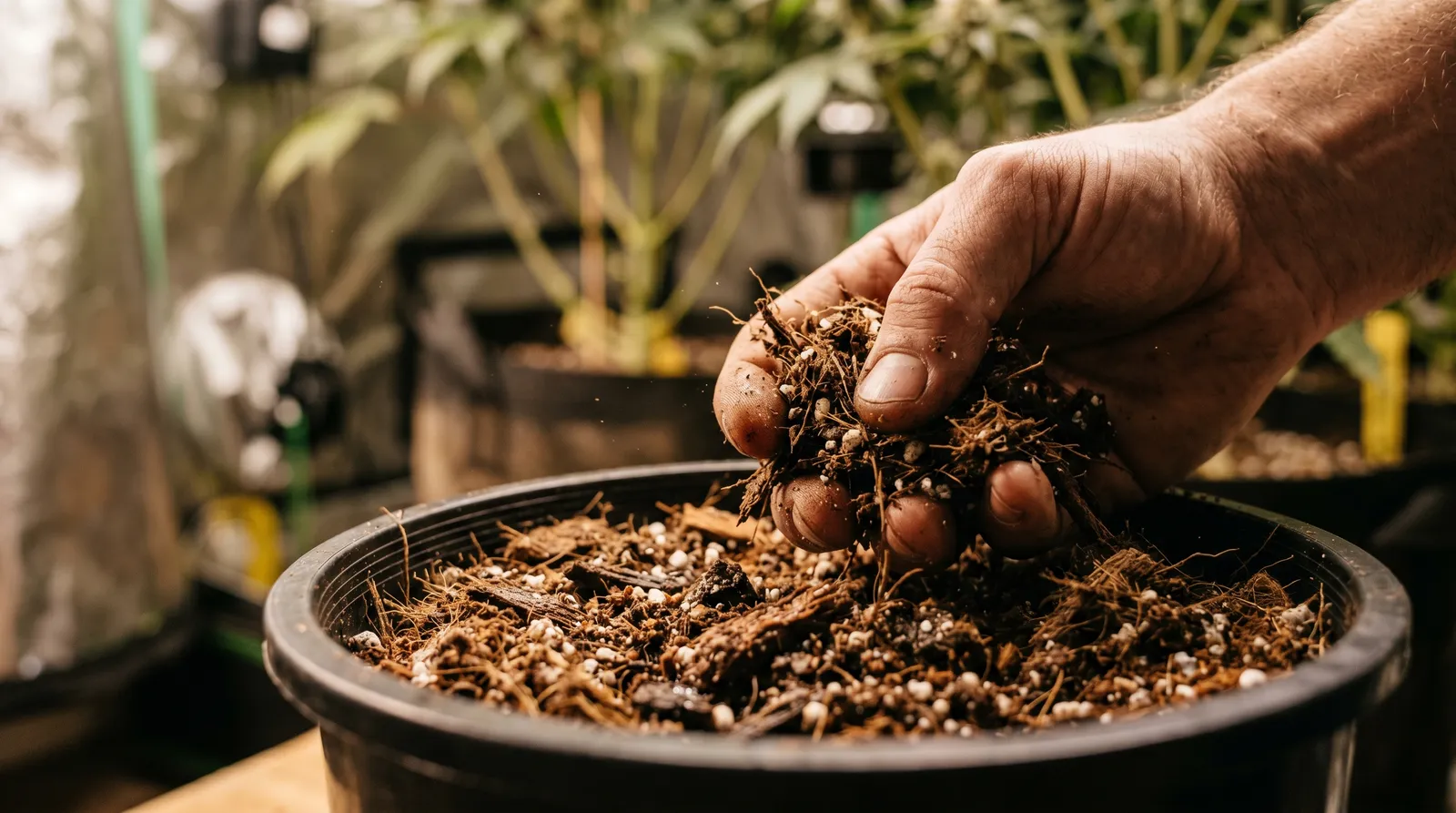
- Soil (peat-based potting mix): Holds water longest. Buffers pH. Target pH at the root zone 6.2–6.8. Water when the top 2–3 cm is dry and the pot feels noticeably lighter when lifted.
- Coco coir: Behaves more like hydro than soil. Target pH 5.8–6.2, EC 1.2–2.0 depending on stage (Saloner & Bernstein, 2020). Needs feeding every irrigation because it holds no nutrients of its own. Volumetric water content at saturation sits around 65% (UC ANR, 2011).
- Hydroponics (DWC, RDWC, NFT, ebb & flow): Frequency is continuous or near-continuous. pH 5.5–6.0, EC 1.0–2.2. "Watering" here means nutrient solution management, not pouring a can.
If you don't know which of these you have, stop and figure it out before reading the next step. A "water every 3 days" rule that works in a 5L soil pot will flood a 1L coco seedling and starve a 15L flowering coco plant the same week.
Step 2 — Match volume to pot size, not to plant size
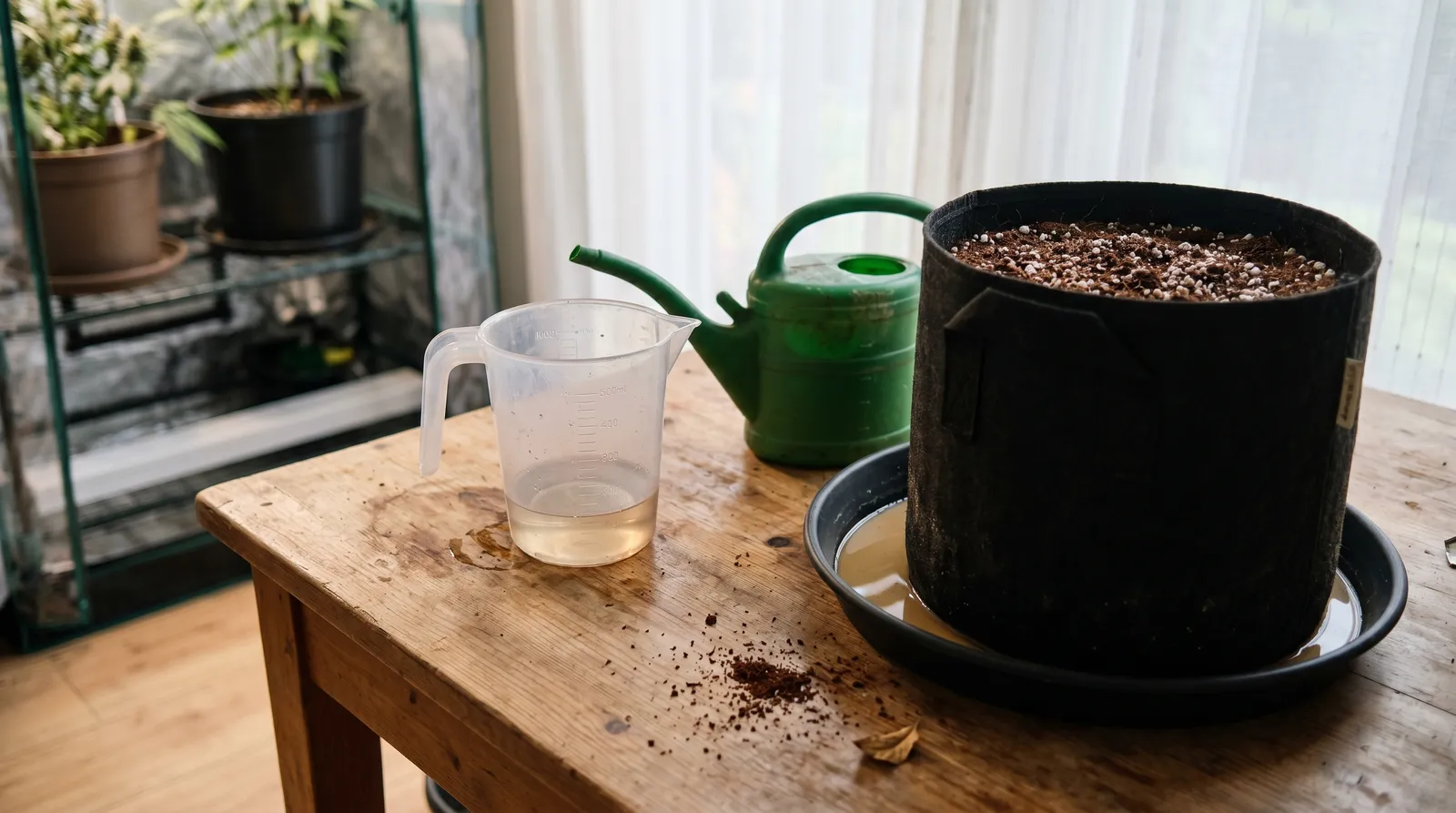
Apply 10–20% of pot volume per feed and aim for 10–20% of that as runoff (UC ANR, 2011). That working rule covers most European home grows across soil and coco.
| Pot size | Approximate feed volume | Target runoff |
|---|---|---|
| 0.5–1 L (seedling) | 50–150 ml | A few drops to 15 ml |
| 5 L | 500–1000 ml | 50–150 ml |
| 11 L | 1.1–2.2 L | 110–330 ml |
| 15–20 L | 1.5–4 L | 150–600 ml |
In coco, you'll feed smaller volumes more often — some growers irrigate 3–6 times daily at low volume in late flower. In soil, bigger volumes less often. Either way: the runoff number matters more than the feed number. No runoff = salt buildup over time. Too much runoff = wasted nutrients and a wet floor.
Step 3 — Set frequency by pot weight, not by the clock
Lift the pot — that is the method. Saturated pots are heavy; dry pots are noticeably light. Over a week you'll learn the weight of "needs water now" versus "still fine."
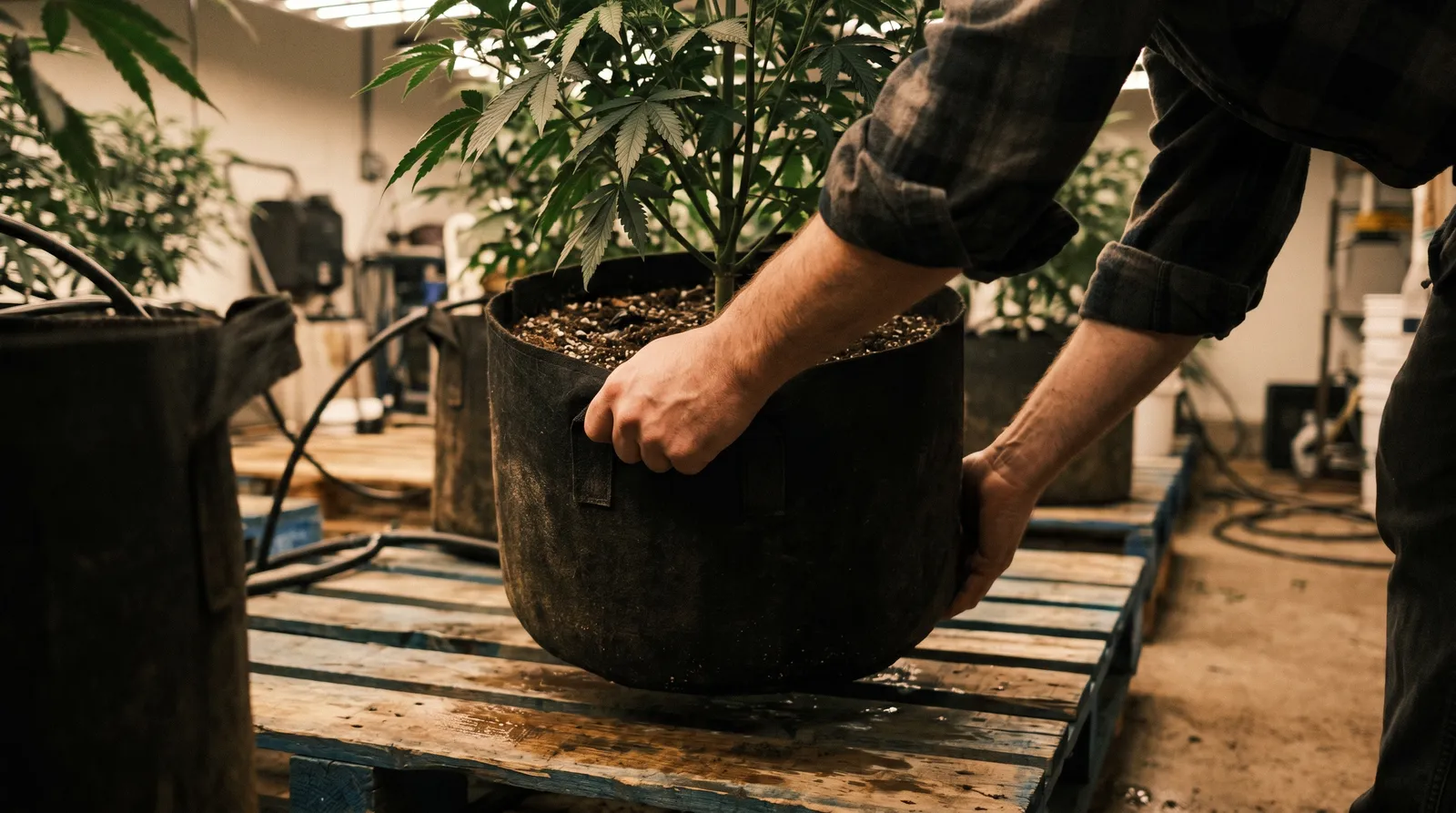
- Seedlings (weeks 1–2): Water every 2–4 days in soil, daily or twice daily in coco at tiny volumes (50–100 ml around the stem). Overwatering kills more seedlings than anything else.
- Veg (weeks 3–6 photoperiod, weeks 2–4 autoflower): Every 1–3 days in soil, daily in coco. Plants are doubling weekly and water demand climbs fast.
- Early flower (stretch, weeks 1–3 of 12/12): Every 1–2 days in soil, 1–3 times daily in coco. Transpiration peaks as canopy fills out (Burgel et al., 2020).
- Mid to late flower: Largest draw. A 15L soil pot with a well-developed plant under 400W LED can drink 2–3 L a day in a warm tent.
Honest limitation: these ranges are starting points, not prescriptions. Environment is half the equation. Warmer tents, lower humidity, higher PPFD and better airflow all accelerate transpiration (Fluence, 2021). A plant under 900 PPFD at VPD 1.3 kPa drinks far more than the same plant at 500 PPFD and 0.9 kPa (Caplan et al., 2019; Fluence, 2021) — compared side by side in the same tent, the difference can be double.
Step 4 — Use runoff as your diagnostic, not just drainage
Runoff is data, not waste. Once per week (soil) or every few feeds (coco), catch the runoff in a clean tray and measure two things:
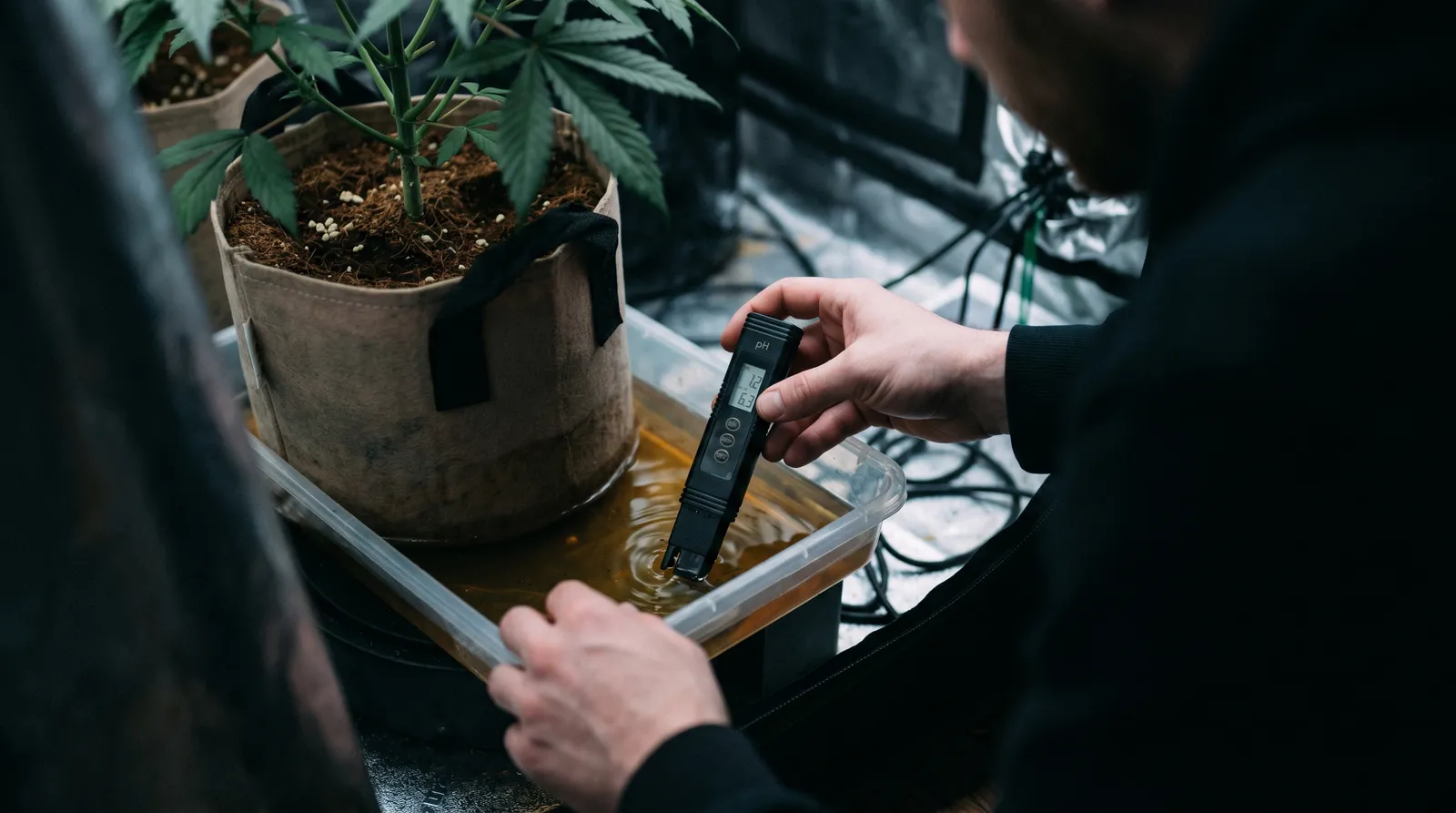
- pH: Compare runoff pH to feed pH. If you fed at 6.2 and runoff comes out at 5.4, the rootzone is acidifying — expect calcium/magnesium lockout (Shiponi & Bernstein, 2021).
- EC: Compare runoff EC to feed EC. Runoff EC significantly higher than input EC = salts stacking up (Saloner & Bernstein, 2020); time to flush or reduce feed strength. Runoff EC much lower than input = plant is drinking heavily and you can push a stronger feed.
This is the single most useful habit a grower can build. A cheap combo pH/EC pen pays for itself the first time it catches a lockout before the leaves start clawing — worth the small outlay to buy one before your next grow.
A 15L fabric pot of coco in week 6 of flower, Royal Queen Seeds Northern Light Auto under a 250W LED: the runoff EC crept from 1.8 (input) to 3.1 over ten days while we kept feeding on the same schedule. No visible leaf damage yet — but the lower fans were slightly duller than they should have been. Two plain-water irrigations at 20% runoff brought it back to 2.0 and the plant put on another 30g of weight in the final fortnight. Lifting and guessing wouldn't have caught it. The pen did.
Step 5 — Avoid the five mistakes that kill most first grows
Most first-grow failures trace back to a short list of repeat offenders. Here they are:
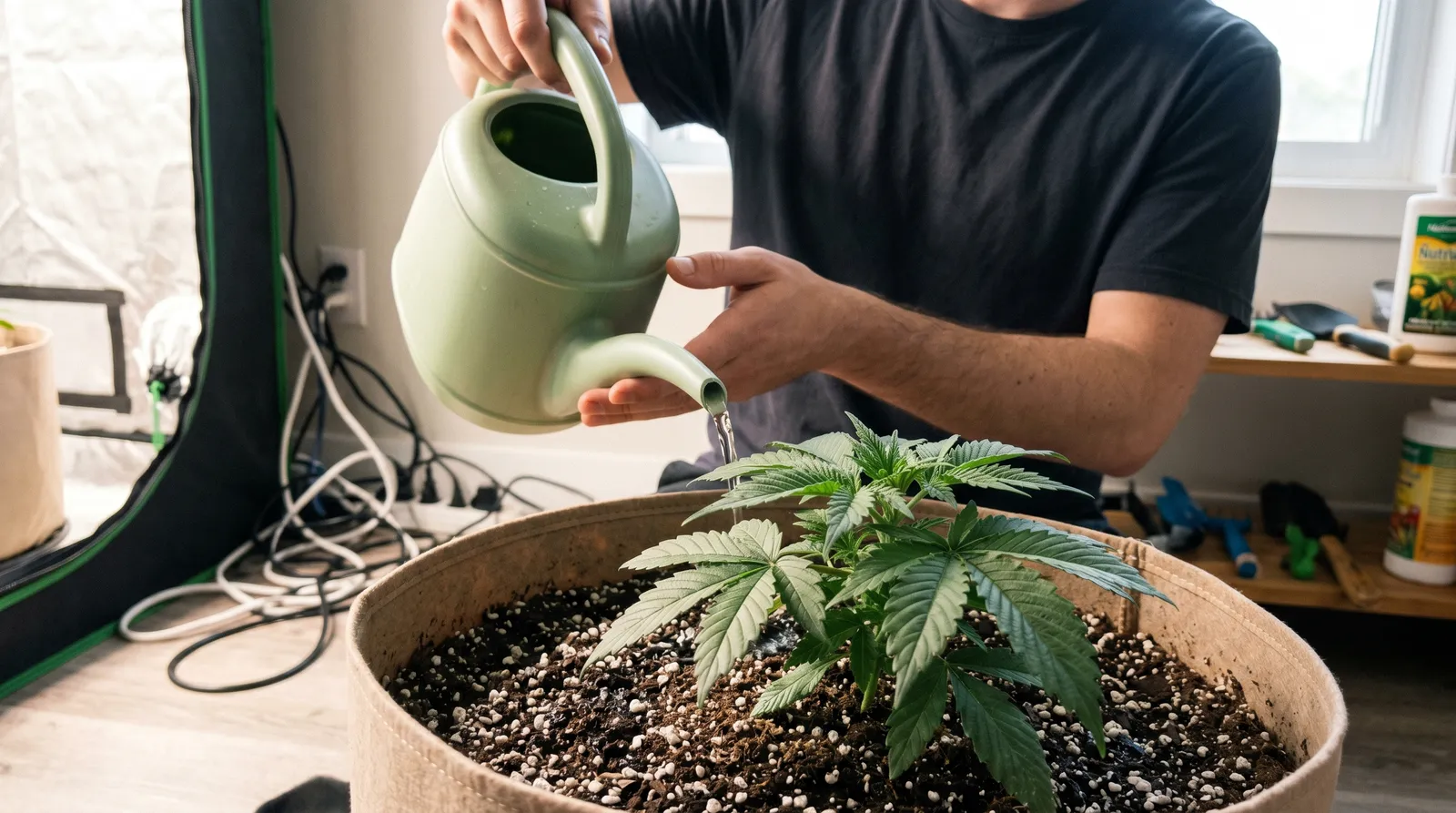
- Watering on a fixed schedule regardless of pot weight. Week 2 seedlings don't need what week 6 flowering plants need.
- Oversized pots for small plants. A seedling in a 15L pot will sit in wet medium for a week. Start in 0.5–1L and pot up, or go straight-to-final only with autoflowers and careful low-volume watering around the stem.
- Never checking runoff EC/pH. You're flying blind. Fix this first.
- Zero runoff feeds for weeks on end. Salt accumulation is cumulative and invisible until it isn't (Shiponi & Bernstein, 2021).
- Cold water straight from the tap. Aim for 18–22°C at the root zone. Cold water shocks roots and slows uptake; Dutch tap water in winter is around 8–10°C.
Dutch tap water is generally fine for cannabis (moderate hardness) but let it stand 24 hours or use a dechlorinator if you're on a heavily chlorinated supply. RO water is only necessary if your tap EC is above ~0.6.
A note on flushing
Flushing means running plain pH-adjusted water through the medium to strip accumulated salts. It's worth doing when runoff EC runs persistently high, or when a mid-grow lockout needs reset. Whether a final two-week flush before harvest meaningfully improves cure quality is contested; a 2020 study (Stenerson & Oden) found no significant difference in cannabinoid content or ash quality between flushed and unflushed plants across 0, 7, and 14-day flush periods. Growers still report subjective taste differences. Cure discipline matters more either way.
Related Azarius grow supplies
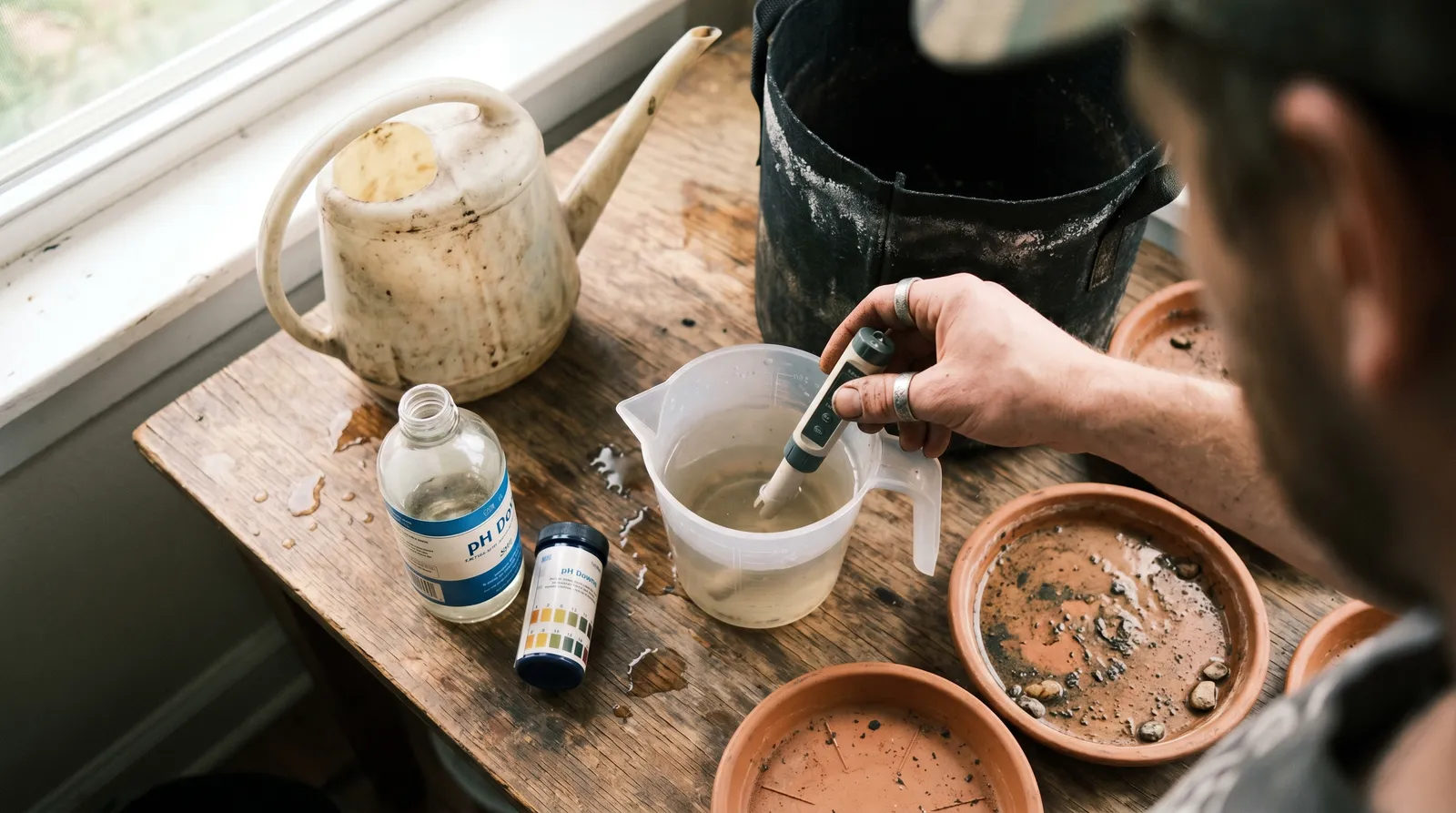
For growers setting up irrigation and measurement, Azarius stocks pH/EC meters, fabric pots across sizes, and coco-friendly nutrient lines from brands including BioBizz, Plagron and Canna. If you're still choosing genetics before you order seeds, the feminised and autoflower catalogue from Royal Queen Seeds, Dutch Passion and Sensi Seeds is where most home growers start — get the medium and measurement sorted first, then buy the genetics.
Legal notice: Cannabis cultivation laws vary by country and region and change frequently. This guide is educational. Before growing, verify current laws for your specific jurisdiction. Azarius does not provide legal advice.
Last updated: April 2026
Frequently Asked Questions
8 questionsHow often should I water cannabis in soil versus coco?
How much runoff should I aim for when watering?
What does runoff EC and pH tell me?
Can you overwater cannabis in fabric pots?
Why is my runoff EC higher than what I fed?
Should I water cannabis plants at lights-on or lights-off?
How do I know when my cannabis plant needs watering by lifting the pot?
How do I adjust watering frequency and volume when switching from veg to flower?
About this article


Luke Sholl has been writing about cannabis, cannabinoids, and the broader benefits of nature since 2011, and has personally grown cannabis in home grow tents for more than a decade. That first-hand cultivation experience
This wiki article was drafted with AI assistance and reviewed by Luke Sholl, External contributor since 2026. Editorial oversight by Adam Parsons.
Medical disclaimer. This content is for informational purposes only and does not constitute medical advice. Consult a qualified healthcare provider before use of any substance.
Last reviewed April 24, 2026
References
- [1]Caplan, D., Dixon, M., & Zheng, Y. (2017). Optimal rate of organic fertilizer during the vegetative-stage for cannabis grown in two coir-based substrates. HortScience, 52(9), 1307-1312. DOI: 10.21273/HORTSCI11903-17
- [2]Caplan, D., Dixon, M., & Zheng, Y. (2019). Increasing inflorescence dry weight and cannabinoid content in medical cannabis using controlled drought stress. HortScience, 54(5), 964-969. DOI: 10.21273/HORTSCI13510-18
- [3]Zheng, Y., Wang, L., & Dixon, M. (2007). An upper limit for elevated root zone dissolved oxygen concentration for tomato. Scientia Horticulturae, 113, 162-168. DOI: 10.1016/j.scienta.2007.03.011
- [4]Burgel, L., Hartung, J., Schibano, D., & Graeff-Hönninger, S. (2020). Impact of different phytohormones on morphology, yield and cannabinoid content of Cannabis sativa L.. Plants, 9(6), 725. DOI: 10.3390/plants9060725
- [5]Saloner, A. & Bernstein, N. (2020). Response of medical cannabis (Cannabis sativa L.) to nitrogen supply under long photoperiod. Frontiers in Plant Science, 11, 572293. DOI: 10.3389/fpls.2020.572293
- [6]Shiponi, S. & Bernstein, N. (2021). The highs and lows of P supply in medical cannabis: Effects on cannabinoids, the ionome, and morpho-physiology. Frontiers in Plant Science, 12, 657323. DOI: 10.3389/fpls.2021.657323
- [7]Fulton, A., Schwankl, L., Lynn, K., Lampinen, B., Edstrom, J., & Prichard, T. (2011). Using EM and VERIS technology to assess land suitability for orchard and vineyard development. University of California Agriculture and Natural Resources, Publication 8498. Source
- [8]Fluence Bioengineering (2021). Cannabis cultivation guide: Best practices for growing with LED technology. Fluence Technical White Paper. Source
Related Articles
Cannabis Hermaphrodite: Identify, Prevent, Act
A cannabis hermaphrodite is a female plant that develops male pollen sacs or banana-shaped anthers (nanners), self-pollinating and seeding your harvest.
DIY Cannabis Fertilizer: Homemade Nutrient Guide
DIY cannabis fertilizer guide: compost, teas, banana ferments and feed schedules, with safety notes and cited research for home growers.
What To Do With Male Cannabis Plants: 6 Practical Uses
What to do with male cannabis plants: identify, isolate, breed, extract, or compost. A practical 6-step guide with sourcing and safety notes.
When To Harvest Cannabis Trichomes: A Grower's Guide
Deciding when to harvest cannabis trichomes means reading the resin glands on your calyxes under 60x–100x magnification and cutting when the milky-to-amber…
When To Flip Cannabis To 12/12: Timing The Switch
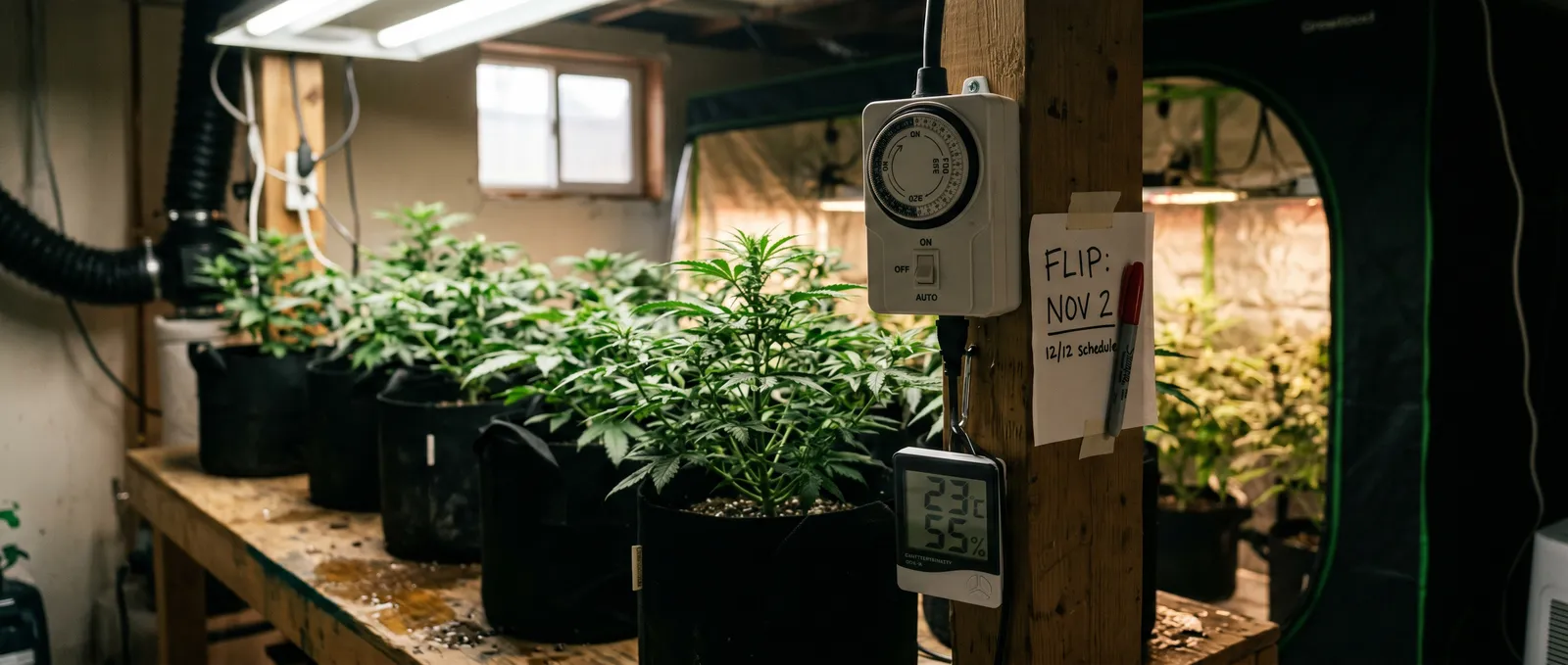
When to flip cannabis to 12/12 is a timing decision that switches photoperiod plants to 12 hours light and 12 hours dark to trigger flowering via florigen…
VPD for Cannabis: Targets by Growth Stage
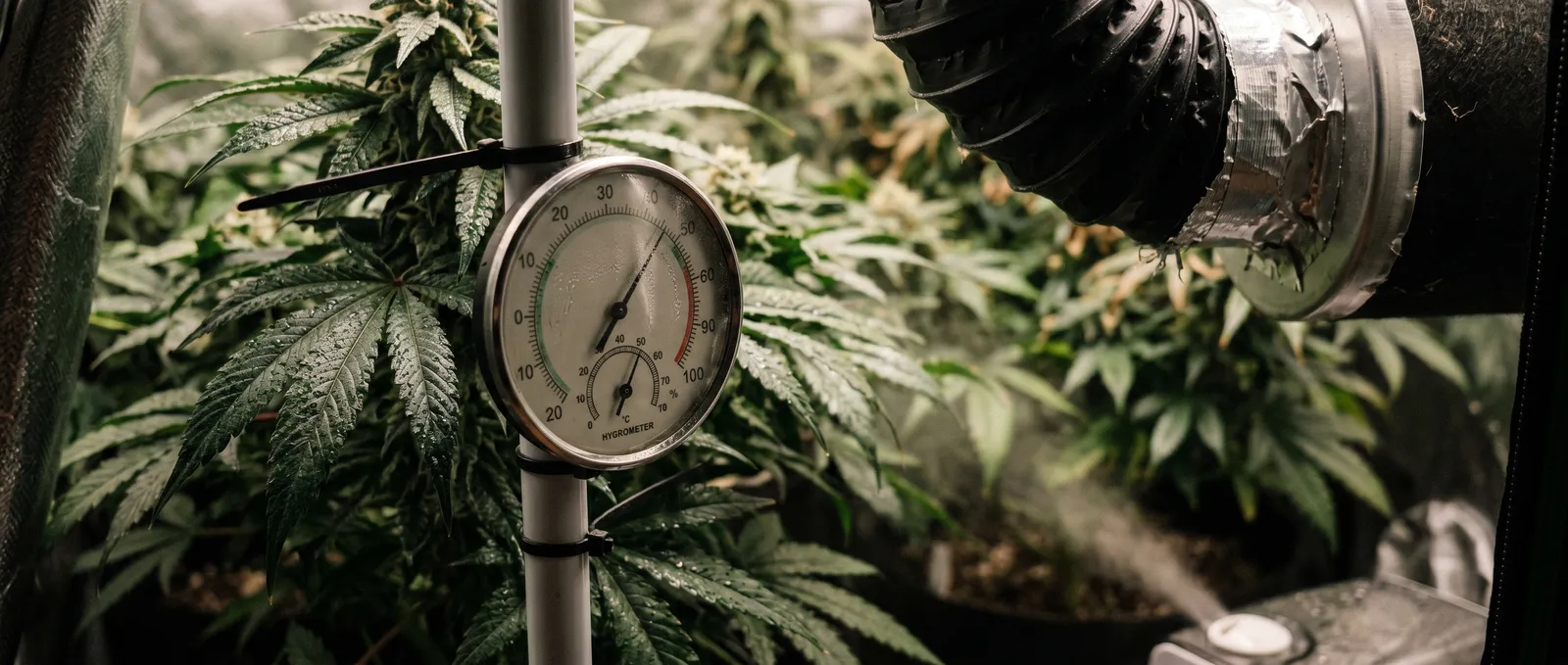
VPD for cannabis is the kilopascal gap between the moisture the air holds and its saturation point, controlling how fast plants transpire.