
Buy more, pay less
Lion's Mane Liquid Culture Syringe — Grow Hericium erinaceus at Home
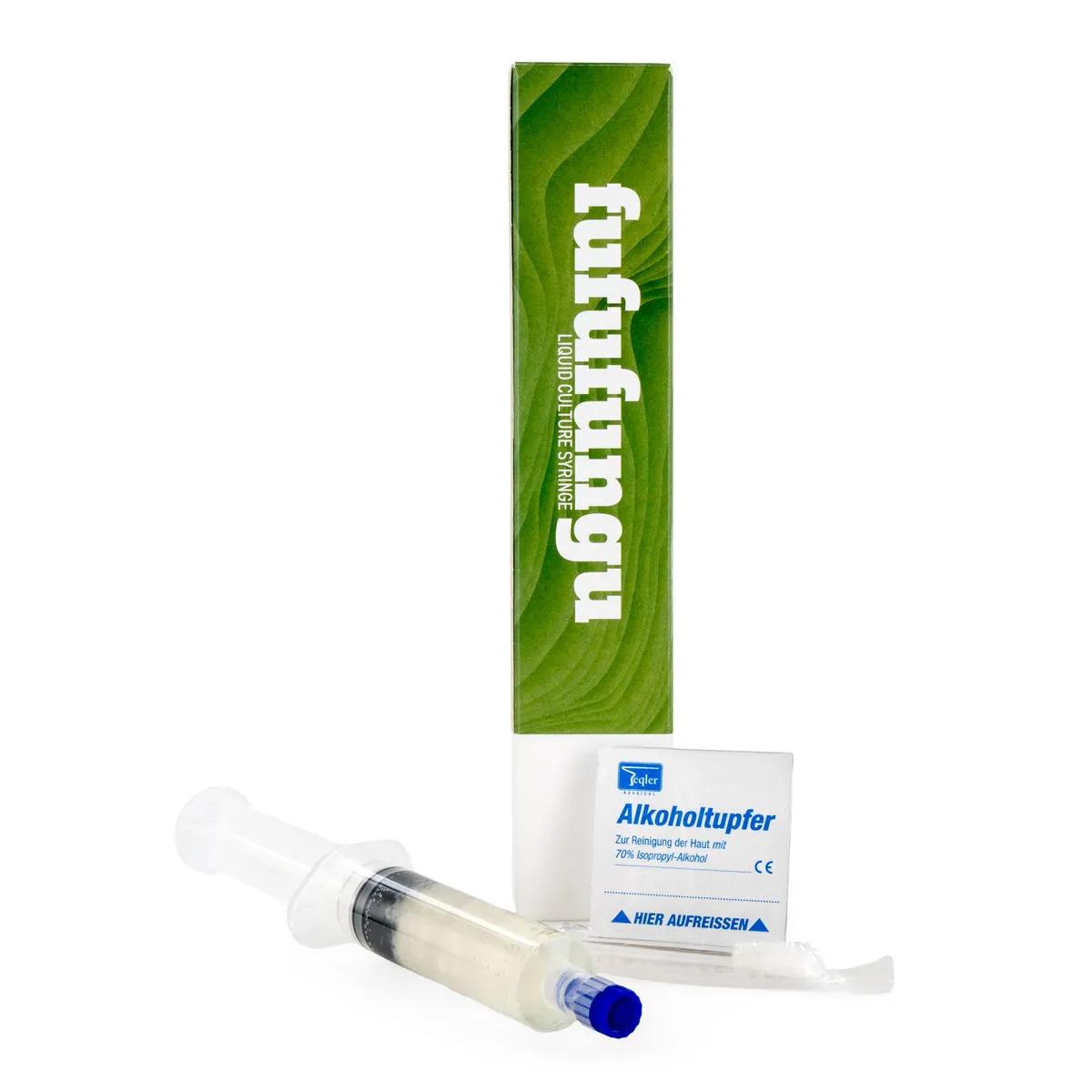
The Lion's Mane Liquid Culture Syringe is a 20ml syringe containing live mycelium of Hericium erinaceus, ready to inoculate your substrate and produce those unmistakable cascading white tendrils within roughly six weeks. Unlike spore syringes, this liquid culture comes with already-developed mycelium — so colonisation is both faster and more reliable straight out of the gate.
Lion's mane mushrooms are genuinely odd-looking organisms. Instead of forming a cap and gills like most fungi, they grow long, drooping, icicle-like spines that cluster together into a shaggy white mass. They fruit naturally on hardwood trees across European and Asian deciduous forests, and they've been a staple in East Asian cuisine and traditional wellness practices for centuries. Now you can grow them on your kitchen counter — or on a log in your garden.
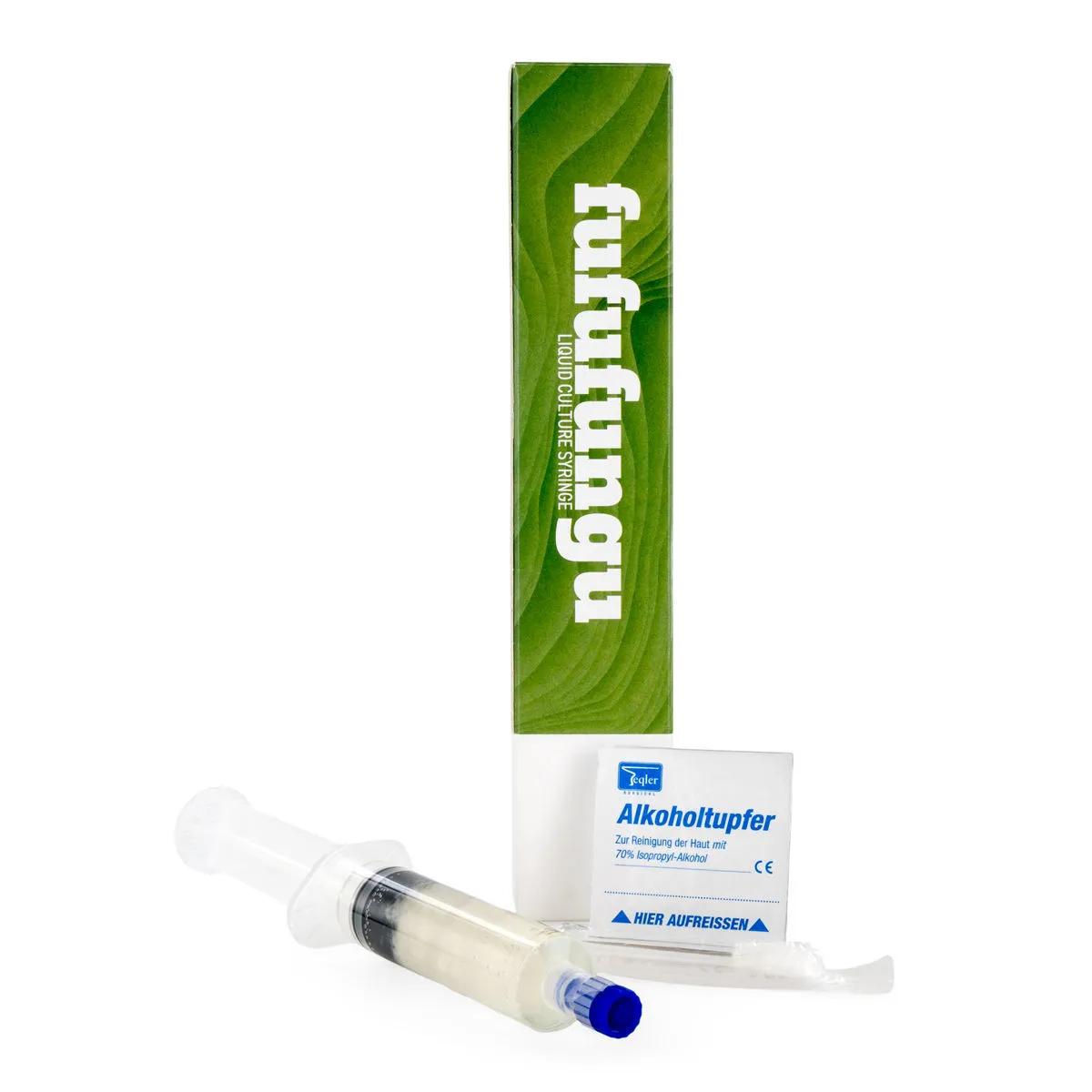
What's Included in the Lion's Mane Liquid Culture Syringe
Everything you need to inoculate your first substrate is in the pack. No hunting around for needles or sterilisation supplies.
| Item | Quantity |
|---|---|
| Liquid culture syringe (live Hericium erinaceus mycelium) | 1x 20ml |
| Sterilised needle | 1x |
| Alcohol wipes | 2x |
Specifications — Lion's Mane Liquid Culture
Here are the key specs for this Mycotech lion's mane liquid culture syringe at a glance.
| Spec | Value |
|---|---|
| Brand | Mycotech |
| Species | Hericium erinaceus (Lion's Mane) |
| Culture type | Liquid culture (live mycelium) |
| Volume | 20ml |
| Inoculation rate | 2–5ml per litre of substrate |
| Approx. time to fruiting | ~6 weeks from inoculation |
| Storage | Cool, dark place (fridge recommended) |
| Shelf life | Use within 2 months of delivery |
| Accessories included | 1x sterile needle, 2x alcohol wipes |
Why Liquid Culture Beats Spore Syringes for Lion's Mane
A liquid culture syringe contains mycelium that's already germinated and growing — think of it as a head start. With a spore syringe, you're waiting for spores to germinate, then form mycelium, then colonise your substrate. With liquid culture, you skip that first stage entirely.
The practical difference? Faster colonisation, more consistent results, and fewer failed jars. We've seen growers lose weeks waiting on spore syringes that never quite took hold, especially with lion's mane, which can be pickier than your average oyster mushroom. Liquid culture removes a lot of that uncertainty. One 20ml syringe at 2–5ml per litre gives you enough to inoculate roughly 4–10 litres of substrate, depending on your preferred inoculation rate.
The one honest limitation: liquid culture has a shorter shelf life than spores. Spores can sit for months; this syringe needs to be used within 2 months of delivery. So don't buy it until your substrate is ready or nearly ready. Plan ahead, and you'll be fine.
How to Use the Lion's Mane Liquid Culture Syringe
Sterile technique is everything with mushroom cultivation. One ungloved hand, one unsanitised surface, and you're growing trichoderma instead of lion's mane. Follow these steps carefully.
- Prepare your workspace. Wipe down all surfaces with isopropyl alcohol. Work in a still-air box or in front of a laminar flow hood if you have one. At minimum, close windows and turn off fans to reduce airborne contaminants.
- Shake the syringe. Give it a good shake for 15–20 seconds to distribute the mycelium evenly throughout the liquid.
- Attach the sterile needle. Unwrap the needle and attach it to the syringe. Use one of the alcohol wipes to sterilise the needle tip before injection.
- Inoculate your substrate. Inject 2–5ml of liquid culture per litre (or quart) of prepared substrate through the injection port of your grain bag or jar. If you're using multiple jars, use the second alcohol wipe between injections to re-sterilise the needle.
- Incubate. Store your inoculated substrate at 20–24°C in a dark place. You should see white mycelium spreading within 1–2 weeks.
- Spawn to bulk (optional). Once your grain is fully colonised, break it up and mix it into your bulk substrate — hardwood sawdust supplemented with bran, or a master's mix of 50% hardwood sawdust and 50% soybean hulls.
- Fruit. Once the bulk substrate is fully colonised, introduce fresh air exchange, humidity (85–95%), and indirect light. Lion's mane fruits best at 15–20°C. Expect your first mushrooms roughly 6 weeks after initial inoculation.
Choosing Your Lion's Mane Substrate
Lion's mane is a hardwood-loving species. It won't fruit on straw the way oyster mushrooms will — you need proper wood-based substrates. Here are your three main routes.
Master's mix is the gold standard for indoor lion's mane cultivation: a 1:1 blend of hardwood sawdust and soybean hulls, hydrated to around 60% moisture and sterilised. It's nutrient-rich and produces dense, heavy fruits. If you're growing for the kitchen, this is the one we'd pick.
Supplemented hardwood sawdust works well too. Poplar, oak, alder, aspen, maple, birch, ash, beech, willow, and elm are all suitable. Add 10–20% wheat bran for supplementation. Slightly lower yields than master's mix, but easier to source if you can't find soybean hulls.
Outdoor log cultivation is the slowest method but arguably the most satisfying. Drill holes into fresh-cut hardwood logs, pack in your colonised grain spawn, seal with wax, and wait. You're looking at 6–12 months before the first flush, but the logs can keep producing for several years. Good if you've got patience and a shady garden corner.
Lion's Mane — What the Research Says
Beyond the kitchen, lion's mane has attracted serious scientific interest. Hericium erinaceus contains compounds called hericenones and erinacines, which according to a review published in PMC, have demonstrated neurotrophic and neuroprotective effects in laboratory settings (PMC, 2023). Specifically, research suggests these compounds may stimulate nerve growth factor (NGF) synthesis.
According to a clinical trial reviewed in PMC, supplementation with H. erinaceus was investigated for its effects on cognitive function in 50- to 80-year-old Japanese adults, with the supplementation group showing improvements in cognitive scores during the intake period (PMC, 2025). A separate review noted that H. erinaceus may also play a role in mood and sleep, according to research published in Evidence-Based Complementary and Alternative Medicine (Vigna et al., 2019).
That said, the NCBI Bookshelf entry on lion's mane notes plainly that "at present, lion's mane is not approved for treatment of symptoms or any diseases in humans in the United States" (LiverTox, NCBI). The research is promising, but it's still early days — most positive findings come from animal models or small-scale human trials. We're watching this space with interest, not certainty.
Safety and Interactions
Lion's mane mushrooms are a traditional food with a long history of culinary use, and adverse effects are uncommon. However, there are a few things to be aware of. Although there are no widely documented side effects, lion's mane could potentially interact with blood thinners, blood sugar medications, and bleeding disorders. If you're on any of these medications, speak with your doctor before consuming lion's mane regularly.
Mild digestive discomfort has been reported in some cases, particularly at higher intake levels. Clinical studies have typically used doses in the range of 500–3,000mg daily of dried lion's mane, often divided across the day. Start at the lower end and see how you respond.
Complete your grow setup: If this is your first time cultivating gourmet mushrooms, pair this lion's mane liquid culture syringe with sterilised grain spawn bags and a monotub or fruiting chamber. Already growing other species? Mycotech also produces liquid cultures for oyster and shiitake varieties — worth running a few species side by side to see what thrives in your space.
Related products
Medical disclaimer. This content is for informational purposes only and does not constitute medical advice. Consult a qualified healthcare provider before use of any substance.