
Buy more, pay less
Grey Oyster Liquid Culture Syringe — Fast-Track Your Mushroom Grow
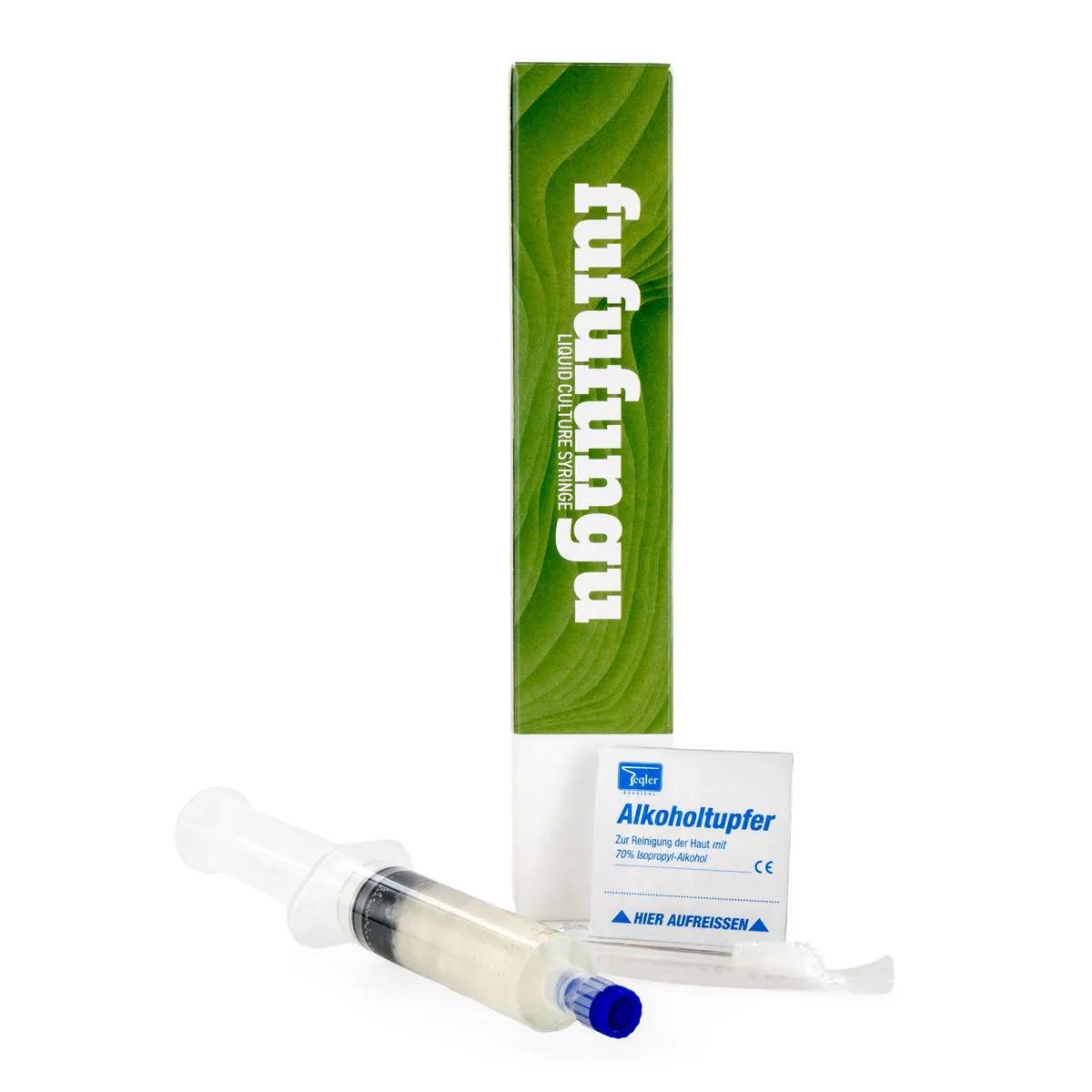
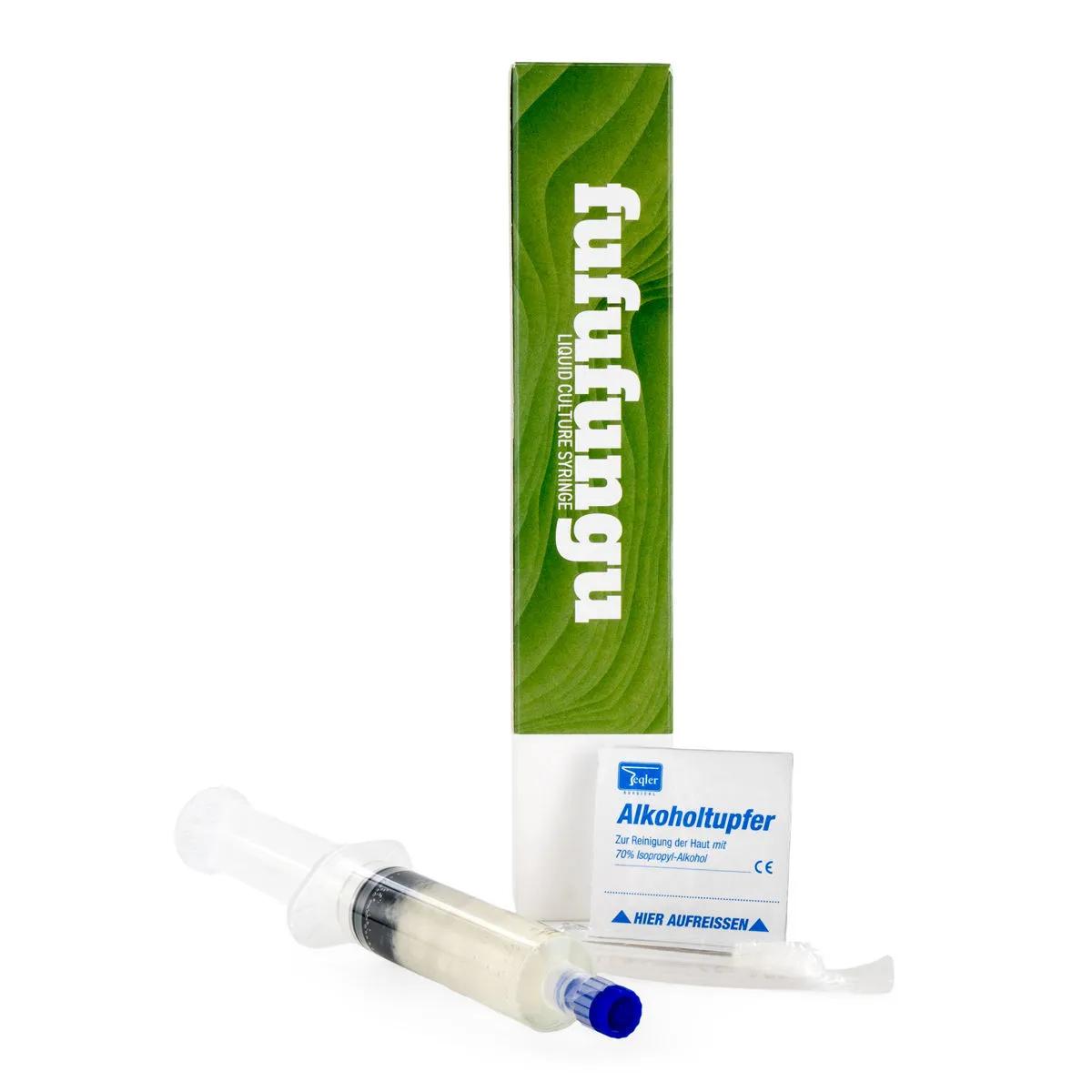
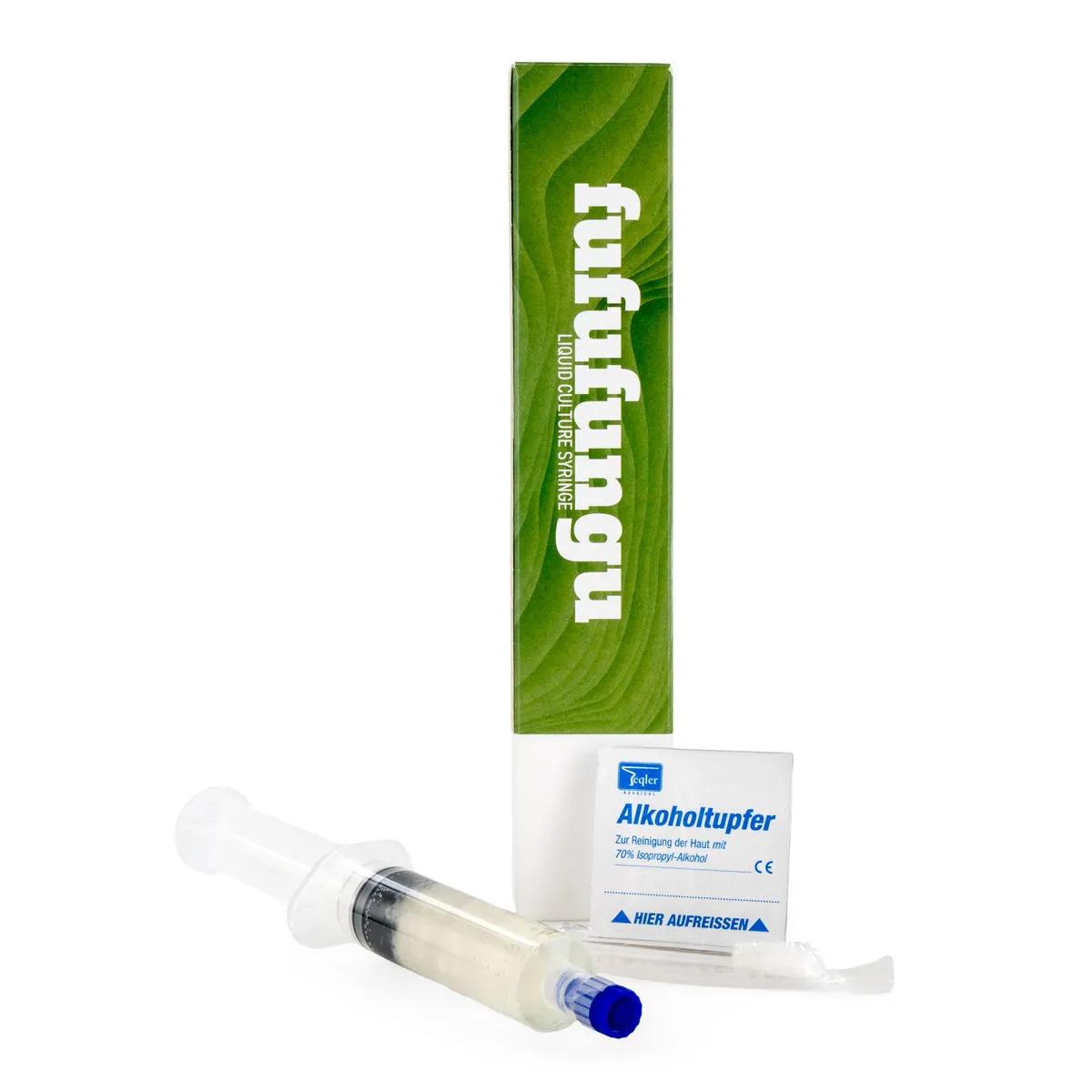
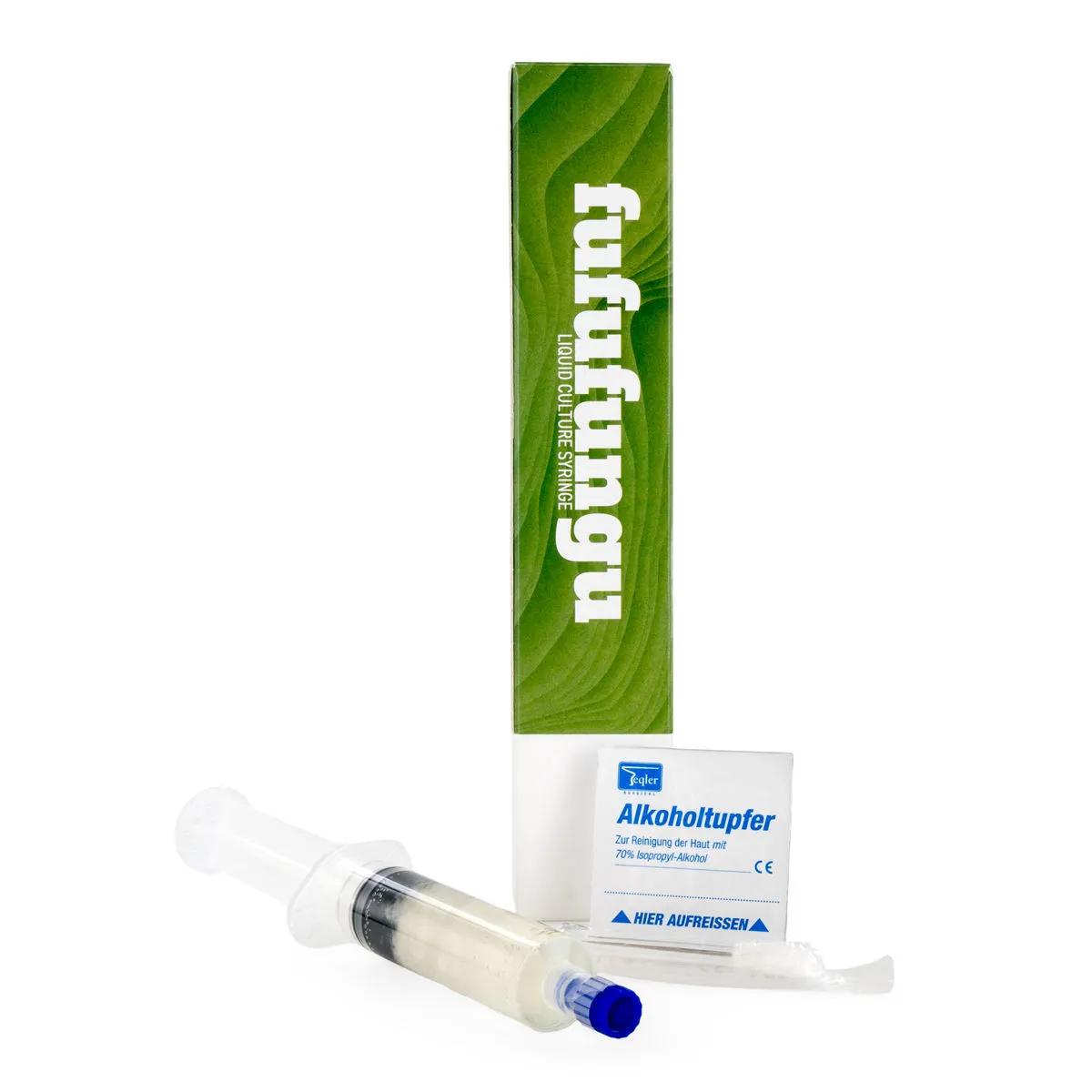
The Grey Oyster Liquid Culture Syringe is a 20ml syringe containing live mycelium of Pleurotus ostreatus (grey oyster mushroom) suspended in a nutrient-rich liquid solution. Unlike spore syringes, where germination is still a question mark, liquid culture gives you actively growing mycelium from the moment you inoculate — cutting colonisation time significantly and giving you a head start on your first flush.
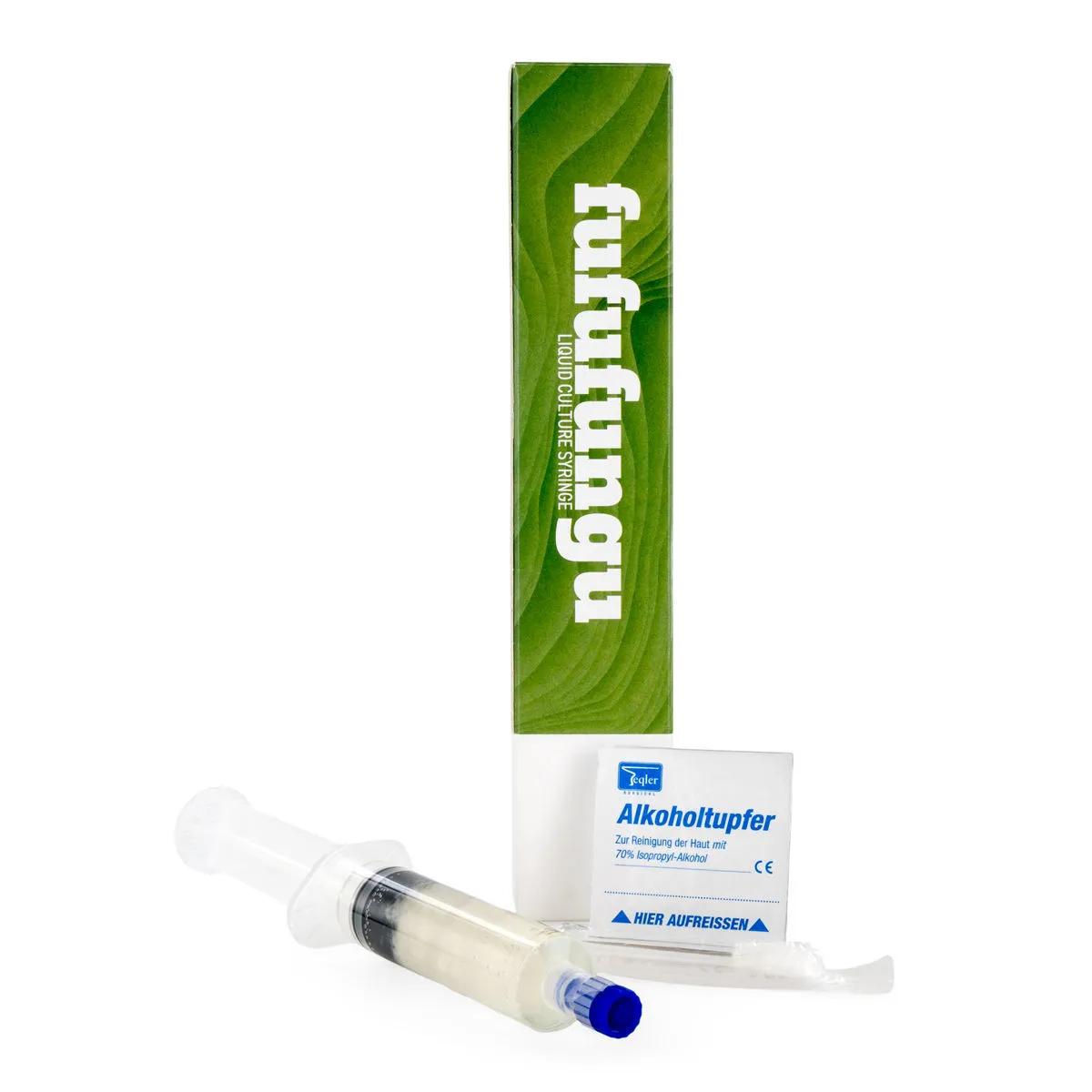
Made by Fufufungu, this syringe ships with two alcohol wipes and a sterilised needle, so you can get straight to work. Grey oysters are one of the most forgiving gourmet species to cultivate, and pairing that tolerance with the speed of liquid culture means you're set up for a genuinely satisfying harvest — even on your first attempt.
What You Get in the Box
Each Grey Oyster Liquid Culture Syringe kit arrives ready to inoculate — no extra purchases needed to get started with grain spawn.
| Item | Quantity |
|---|---|
| Liquid culture syringe (20ml) | 1 |
| Sterilised needle | 1 |
| Alcohol wipes | 2 |
Grey Oyster Liquid Culture Syringe Specifications
Here are the key specs and growing parameters for this liquid culture syringe — everything you need to plan your grow before you crack the seal.
| Specification | Detail |
|---|---|
| Species | Pleurotus ostreatus (Grey Oyster) |
| Culture Type | Liquid culture (live mycelium) |
| Syringe Volume | 20ml |
| Inoculation Rate | 2–5ml per litre/quart jar of sterilised grain |
| Brand | Fufufungu |
| Shelf Life | Use within 2 months of delivery |
| Storage | Cool, dark place (refrigerator recommended) |
| Compatible Substrates | Straw, hardwood, coffee grounds, masters mix, paper |
| Cultivation Methods | Straw bales, wood logs, mushroom patches, indoor mycelium bags |
| Sterile Technique Required | Yes — laminar flow hood or still air box recommended |
Complete your setup: pair this grey oyster liquid culture syringe with sterilised grain spawn bags for a smooth inoculation process. If you're growing indoors, a mushroom grow bag with a filter patch keeps contamination out while letting your mycelium breathe. Already got spawn sorted? Straw pellets or supplemented hardwood sawdust (masters mix) are the substrates we'd reach for first with grey oysters.
Why Liquid Culture Beats Spore Syringes
We get asked this constantly, so here it is straight: liquid culture contains living, actively growing mycelium. A spore syringe contains spores that still need to germinate, pair up, and form mycelium before colonisation even begins. That extra step adds days — sometimes weeks — and introduces more opportunity for contamination to take hold.
With 2–5ml of this grey oyster liquid culture per litre jar of sterilised grain, you're looking at visibly faster colonisation. The mycelium has a running start. It grabs the grain, spreads through the jar, and gives competing moulds less time to establish. For anyone who's lost a jar to green Trichoderma and stared at it wondering where things went wrong — speed matters. Liquid culture is the single biggest upgrade you can make to your success rate without buying a flow hood.
The honest limitation? Liquid culture is more perishable than spores. Spore syringes can sit in a fridge for months. This syringe needs to be used within 2 months of delivery, and it must stay refrigerated. If you forget about it at the back of a warm cupboard for six weeks, you'll likely end up with a cloudy syringe full of dead mycelium. Treat it like fresh produce — use it while it's good.
Why Grey Oyster Mushrooms Are Worth Growing
Grey oysters (Pleurotus ostreatus) are a white-rot saprotrophic fungus — they break down both lignin and cellulose in dead organic matter. In practical terms, this means they'll colonise almost anything plant-based you throw at them: straw, hardwood sawdust, coffee grounds, even shredded cardboard in a pinch. That versatility is why grey oysters are the species we'd point any new grower towards.
The flavour is mild, slightly savoury, with a texture that holds up well in stir-fries and soups. Fresh grey oysters from your own grow taste noticeably different from the ones that have been sitting in plastic at the supermarket for four days — there's a firmness and a clean, almost anise-like note that disappears once they start drying out on a shelf. That alone makes home cultivation worth the effort.
Beyond the kitchen, grey oyster mushrooms have attracted research attention. According to a study referenced in Potential Beneficial Effects and Pharmacological Properties (PMC, 2023), antioxidant extracts from grey oyster mushrooms (Pleurotus pulmonarius, a closely related species) showed protective effects in preclinical models. And research published in Antioxidant and Anti-Inflammatory Activity of Five Mushroom Species (PMC, 2022) noted antioxidant and anti-inflammatory activity across Pleurotus species. Separately, according to a review in Ergothioneine: An Antioxidative, Neuroprotective and Anti-Inflammatory Compound (PMC, 2025), mushroom stems — including oyster mushrooms — contain significant amounts of ergothioneine (EGT), a compound with documented antioxidant properties. Grey oysters are packed with protein, B vitamins, and all essential amino acids, making them one of the more nutritionally dense gourmet mushrooms you can grow at home.
How to Use the Grey Oyster Liquid Culture Syringe
This is a step-by-step process. Sterile technique is non-negotiable — one ungloved finger touching the wrong surface and you're growing Trichoderma instead of oysters. We've seen growers lose entire batches to a single moment of carelessness.
- Prepare your workspace. Work in front of a laminar flow hood or inside a still air box. Wipe all surfaces with isopropyl alcohol. No flow hood? A still air box made from a clear plastic tote with two arm holes works — it's not glamorous, but it does the job.
- Shake the syringe well. The mycelium settles during storage. Give it 30 seconds of vigorous shaking to distribute the culture evenly through the liquid. You should see wispy white strands swirling through the solution.
- Attach the sterilised needle. Keep the cap on until you're ready to inject. Use one of the included alcohol wipes to clean the needle and the injection port of your grain jar or bag.
- Inoculate your grain. Inject 2–5ml of liquid culture per litre (quart) jar of sterilised grain. Push the needle through the self-healing injection port or through the micropore tape covering your inoculation hole. Distribute the liquid across multiple points in the jar if possible — more inoculation points means faster colonisation.
- Seal and incubate. Place your inoculated grain jars in a dark spot at 20–24°C. You should see visible mycelium growth within 3–7 days. Full colonisation typically takes 2–3 weeks depending on grain type and temperature.
- Spawn to bulk substrate. Once your grain is fully colonised (100% white, no bare patches), break it up and mix with your chosen bulk substrate. Grey oysters thrive on straw, hardwood sawdust (poplar, oak, alder, aspen, maple, birch, ash, beech, willow, elm), masters mix (50/50 hardwood sawdust and soy hulls), coffee grounds, or paper-based substrates.
- Fruit. Once the bulk substrate is colonised, introduce fresh air exchange, humidity above 85%, and indirect light. Grey oysters fruit aggressively — expect large clusters within 5–10 days of initiating fruiting conditions.
- Store remaining culture. If you didn't use the full 20ml, recap the syringe, wipe the needle with alcohol, and store it in the refrigerator. Use within 2 months of delivery.
Related products
Medical disclaimer. This content is for informational purposes only and does not constitute medical advice. Consult a qualified healthcare provider before use of any substance.