
Buy more, pay less
Screw-Top Bottle Duran: Lab-Grade Glass for Mushroom Agar Preparation
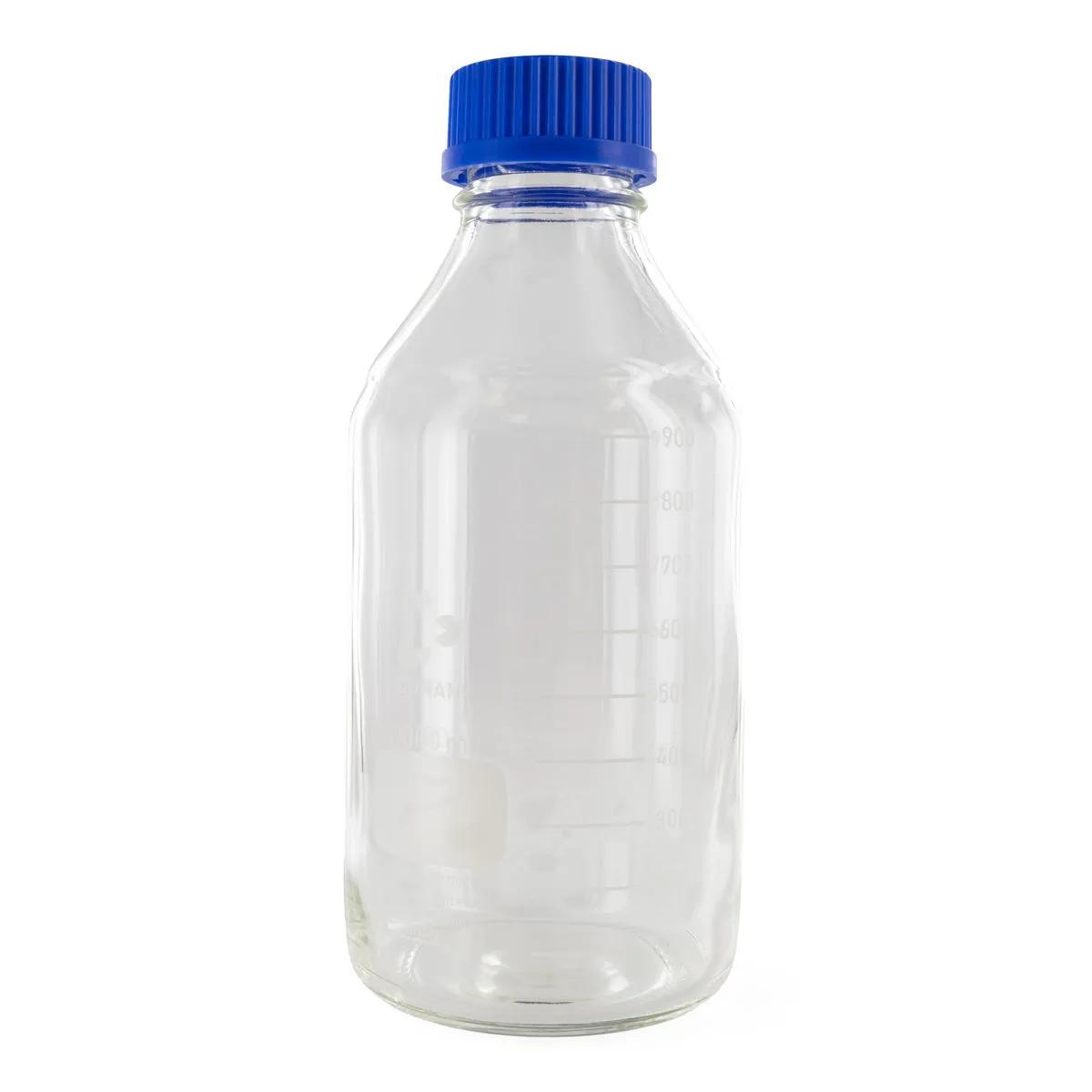
The screw-top bottle Duran is a 1000 ml borosilicate glass lab bottle built for preparing mushroom growing media — agar solutions, liquid cultures, and grain water. Made in Germany by Duran (formerly Schott Duran), this is the same glassware you'd find in a university mycology lab, not a cheap knockoff that cracks the second you autoclave it. If you're serious about sterile technique, you can order this bottle and know your workflow starts on solid ground.
Why a Proper Lab Bottle Changes Your Agar Game
A Duran screw-top bottle eliminates the single biggest headache in mushroom cultivation: contamination during media preparation. You mix your agar powder and water, screw the cap on loosely, autoclave the whole thing at 121°C for 15–20 minutes, then pour directly into petri dishes. No transferring between containers, no exposure to open air, no fumbling with cling film and elastic bands like it's 2004.
We've seen growers try to get away with mason jars, old pasta sauce bottles, even Pyrex measuring jugs covered in aluminium foil. Some of those work — once. The problem is thermal shock. Regular glass isn't rated for pressure cooker temperatures. Borosilicate glass (the stuff Duran uses) handles temperature swings from -70°C to over 500°C without cracking. That's not marketing fluff — it's a material property. The coefficient of thermal expansion for borosilicate is roughly 3.3 × 10⁻⁶/K, about a third of standard soda-lime glass. Research published through the Beckley Foundation's broader psychedelic science network has noted that proper sterile technique — starting with reliable lab equipment — is foundational to any serious mycology work. In plain English: borosilicate doesn't shatter when you move it from a pressure cooker to your pour station.
The pouring ring is the detail that separates this from cheaper alternatives. When you're pouring 20 ml of molten agar into a 90 mm petri dish, you need a controlled, drip-free stream. One stray drip on the rim of the dish and you've got a contamination entry point. The Duran pouring ring channels the liquid cleanly every time. It's a small thing, but after you've poured 40 plates in a session, you'll notice the difference.
Specifications for the Screw-Top Bottle Duran 1000 ml
The Duran 1000 ml screw-top bottle meets ISO 4796 standards for laboratory glassware, with certified borosilicate 3.3 construction and a universal GL 45 thread.
| Spec | Value |
|---|---|
| Brand | Duran (Germany) |
| Volume | 1000 ml |
| Material | Borosilicate glass 3.3 |
| Thread | GL 45 (standard lab thread) |
| Graduation | Clear measurement markings |
| Pouring ring | Included |
| Temperature range | -70°C to 500°C |
| Autoclave safe | Yes (121°C / 15 psi) |
| SKU | SH0124 |
How to Prepare Agar Media in a Screw-Top Bottle Duran
Agar preparation requires five steps: measure water, add powder, autoclave, cool to 50°C, and pour into dishes — all in the same vessel. The Duran bottle makes the process cleaner because mixing, sterilising, and pouring happen without transferring between containers.
- Measure 500 ml of water using the graduated markings on the bottle. No need for a separate measuring cylinder.
- Add your agar powder. A standard malt extract agar (MEA) recipe uses roughly 20 g of agar powder and 20 g of light malt extract per litre. For 500 ml, halve those amounts: 10 g agar, 10 g malt extract.
- Swirl gently to combine. The powder won't fully dissolve yet — that happens under heat.
- Place the screw cap on loosely. This is critical: a fully tightened cap in an autoclave builds pressure inside the bottle and can cause it to crack or explode. Leave the cap about a quarter turn from closed so steam can escape.
- Autoclave or pressure cook at 121°C (15 psi) for 15–20 minutes. Place the bottle on a rack or towel — never directly on the metal base of the cooker.
- After the cycle, let the pressure drop naturally. Don't rush-release the valve. Remove the bottle carefully (it's hot — use heat-resistant gloves) and tighten the cap immediately.
- Let the agar cool to around 50–55°C. It should be warm to the touch but not scalding. If it drops below 45°C, it starts setting inside the bottle.
- Pour into sterile petri dishes in front of a laminar flow hood or still air box. The pouring ring gives you a clean, controlled stream — aim for about 15–20 ml per 90 mm dish.
- Let plates cool with lids slightly ajar for 10 minutes, then close and stack upside down to prevent condensation dripping onto the agar surface.
The Honest Limitation
The main drawback is weight: at 1000 ml, this bottle holds roughly 1.3 kg of hot liquid at arm's length while you pour into small dishes. If you've got smaller hands or you're pouring a lot of plates, the weight gets tiring by plate 30. Some growers prefer a 500 ml bottle for agar work and keep the 1000 ml for liquid cultures or grain soak water where precision pouring matters less. We'd still pick the 1000 ml as your first screw-top bottle Duran — it's more versatile, and you can always fill it to the 500 ml line. But if you already know you're doing high-volume agar work, consider getting two: one large, one small.
One more thing: the GL 45 cap that ships with the bottle is polypropylene. It survives autoclaving without warping, but over dozens of cycles the seal can degrade. Replacement caps are cheap and widely available — the GL 45 thread is an international lab standard, so you're not locked into a proprietary system.
Complete your sterile workspace with a Still Air Box and pre-poured agar plates if you want to skip the mixing step entirely. For grain spawn preparation, pair this bottle with sterilisable grain bags and a pressure cooker — the screw-top bottle Duran works brilliantly for soaking and draining grain water before inoculation. Browse our Mushroom Cultivation Supplies category for the full range, or check the Mushroom Growing Wiki for step-by-step cultivation guides. Our Agar Plates product page covers ready-made alternatives if you'd rather skip the prep entirely.
Duran vs. Generic Lab Bottles — What You're Actually Paying For
Duran bottles outlast generic alternatives by a factor of 5–10× in autoclave longevity, and that's the core reason to buy one. You can find no-name 1000 ml lab bottles for less. We carry this one specifically because of what happens after 10 autoclave cycles. Cheaper borosilicate bottles (and some that claim to be borosilicate but aren't) develop micro-fractures around the thread and base. You won't see them until the bottle fails catastrophically inside a pressure cooker — and cleaning up a litre of molten agar from the inside of your cooker is exactly as fun as it sounds.
| Feature | Duran (Germany) | Generic lab bottle |
|---|---|---|
| Glass type | Borosilicate 3.3 (certified) | Often unspecified |
| Thermal shock resistance | Up to 500°C | Varies — often untested |
| Pouring ring | Included | Rarely included |
| Graduation accuracy | ISO 4796 standard | Approximate markings |
| Cap thread | GL 45 (universal) | GL 45 (usually) |
| Autoclave longevity | Hundreds of cycles | 10–50 cycles typical |
The Duran bottle weighs noticeably more in your hand than a generic — thicker walls, denser glass. Pick one up and you can feel the difference. The graduation lines are etched, not printed, so they won't fade after repeated sterilisation. It's the kind of tool you buy once and use for years.
Related products
Medical disclaimer. This content is for informational purposes only and does not constitute medical advice. Consult a qualified healthcare provider before use of any substance.