
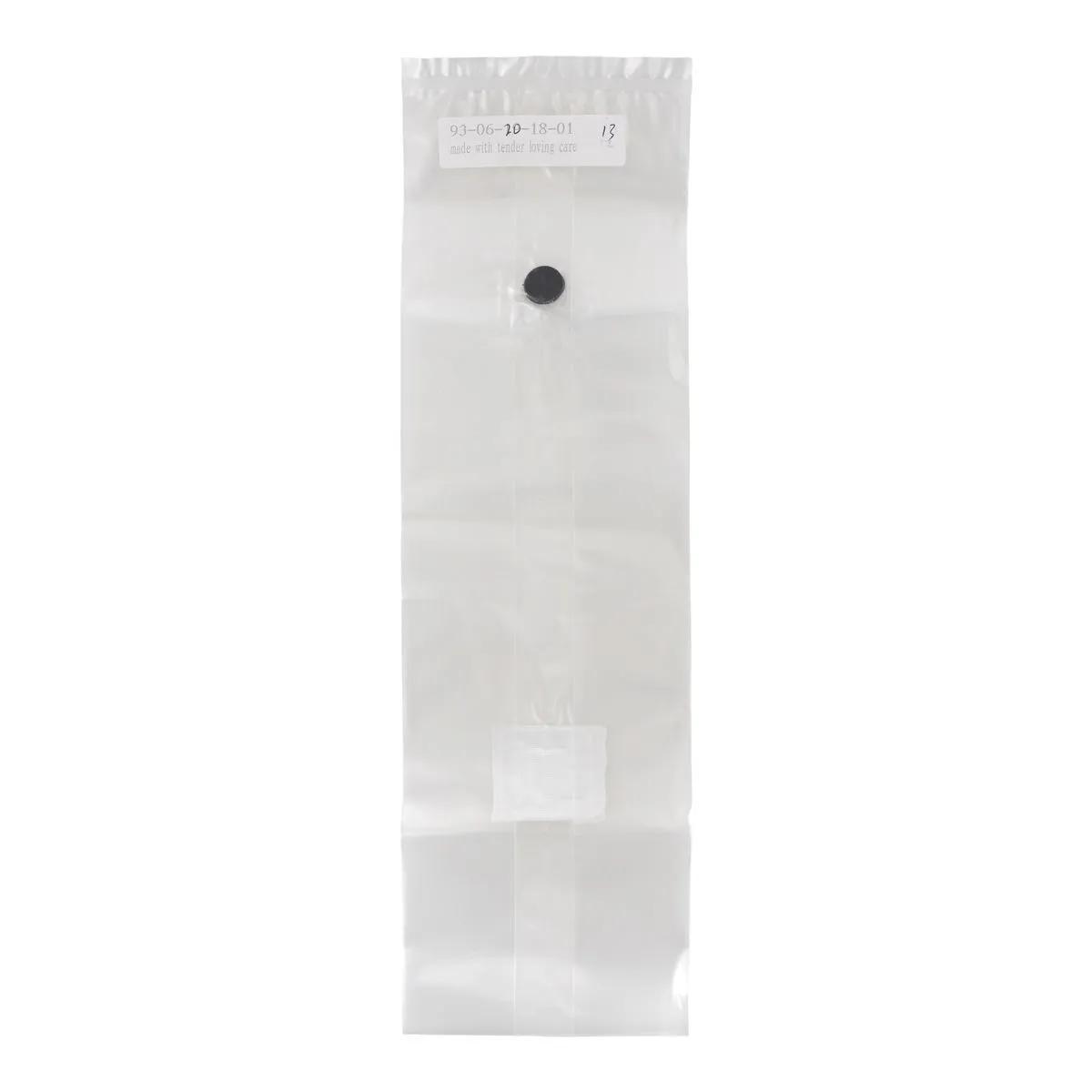
Mushroom Spawn Bag with Injection Port
Grow supplies
by Unicorn Bags
Mushroom Spawn Bag with Injection Port — Sterile Cultivation Made Simple
The Mushroom Spawn Bag with Injection Port is a sterile, autoclavable polypropylene bag designed to give your mushroom spores or liquid culture the cleanest possible environment to colonise substrate. Made by Unicorn Bags — the name most growers recognise in the cultivation supply world — these bags come in two sizes (T4 and T10) and feature Tyvek filter patches with the smallest pore size available, keeping contaminants out while letting your mycelium breathe. If you've ever lost a batch to mould or bacteria sneaking in through a dodgy seal, you already know why a proper spawn bag matters.
T4 or T10 — Which Spawn Bag Size Do You Need?
Both bags are built from the same 3.0 mil polypropylene and use identical Tyvek filter ports. The difference is capacity, and picking the right one depends on how much substrate you're working with per batch.
| Spec | T4 (SH0136) | T10 (SH0137) |
|---|---|---|
| Dimensions | 10 x 7.5 x 45 cm | 12 x 10 x 45 cm |
| Substrate capacity | Just under 1 kg | Approximately 2 kg |
| Filter type | Tyvek (smallest pore size) | Tyvek (smallest pore size) |
| Material thickness | 3.0 mil polypropylene | 3.0 mil polypropylene |
| Autoclave safe | Yes — up to 120°C | Yes — up to 120°C |
| Reusable | Yes | Yes |
The T4 is your go-to for single-strain small runs or if you're working in a tight space — a cupboard, a small shelf, a corner of the spare room. Under 1 kg of substrate fits neatly, and the smaller footprint means you can run several bags side by side without them crowding each other.
The T10 doubles your capacity to around 2 kg of substrate, which means faster colonisation across a larger volume and — ultimately — a bigger yield per bag. If you already know what you're doing and want fewer bags to manage per cycle, the T10 saves time. We'd pick the T10 for anything beyond a first experiment, honestly. The extra substrate volume gives mycelium more room to establish before fruiting, and that usually translates to healthier flushes.
Specifications
| Spec | Value |
|---|---|
| Brand | Unicorn Bags |
| Material | 3.0 mil polypropylene |
| Filter type | Tyvek (T) — smallest pore size |
| Injection port | Self-healing, airtight seal |
| Autoclave rating | Up to 120°C / steam sterilisation |
| Reusable | Yes |
| T4 dimensions | 10 x 7.5 x 45 cm |
| T4 capacity | ~1 kg substrate |
| T10 dimensions | 12 x 10 x 45 cm |
| T10 capacity | ~2 kg substrate |
| SKU (T4) | SH0136 |
| SKU (T10) | SH0137 |
Complete your cultivation setup: pair these spawn bags with a Spore Syringe for inoculation and a Magic Mushroom Grow Kit if you want a side-by-side comparison between bag cultivation and an all-in-one kit. A Still Air Box or laminar flow hood will also dramatically cut your contamination risk during inoculation.
Why a Proper Mushroom Spawn Bag Changes Everything
We've been selling grow supplies since 1999, and the single biggest reason people fail at home cultivation hasn't changed in 25 years: contamination. One ungloved finger, one sneeze near an open jar, one bag that wasn't properly sealed — and you're watching green mould eat your mycelium instead of the other way around. It's demoralising, and it's almost always preventable.
The Mushroom Spawn Bag with Injection Port tackles this head-on. The Tyvek filter patch allows gas exchange (your mycelium needs to breathe) while blocking airborne contaminants. The injection port creates an airtight seal the moment you pull your syringe out — no fumbling with micropore tape, no exposed substrate. You load your grain or substrate, autoclave the entire bag at up to 120°C to sterilise it, let it cool, inject your spores or liquid culture through the port, and walk away. The bag does the rest.
The honest limitation? These bags don't come with substrate or spores — you need to source those separately. And while the bags themselves are reusable after autoclaving, the injection port can only take so many punctures before the self-healing seal starts to weaken. We'd say 2-3 uses per bag is realistic before you want a fresh one. Still, at this price point, that's not exactly a hardship.
What Makes These Spawn Bags Different from Jars or Monotubs
Grain jars work, but they're heavy, breakable, and a pain to sterilise in bulk. Monotubs are great for fruiting but not designed for the colonisation stage. A mushroom spawn bag sits in the sweet spot: lightweight, autoclavable, self-sealing, and collapsible for storage. You can stack a dozen in a cupboard and barely notice them. Try that with mason jars.
Compared to cheaper no-name bags, Unicorn Bags have earned their reputation for a reason. The 3.0 mil polypropylene feels noticeably thicker in hand — there's a stiffness to it that cheaper bags lack, which matters when you're handling a bag full of hot, wet substrate fresh out of a pressure cooker. Thin bags tear. These don't. The Tyvek filter is also a step above the synthetic filter patches you'll find on budget alternatives — tighter pore size means better contamination resistance.
How to Use the Mushroom Spawn Bag with Injection Port
- Prepare your substrate. Fill the spawn bag with your chosen substrate — rye grain, wild bird seed, brown rice flour, or whatever your recipe calls for. Leave enough headroom for the bag to be sealed above the substrate line. For the T4, aim for just under 1 kg; for the T10, around 2 kg.
- Seal and sterilise. Fold the top of the bag and seal it with an impulse sealer or fold-and-clip method, making sure the Tyvek filter patch is not obstructed. Place the bag in a pressure cooker or autoclave and sterilise at 120°C for 60-90 minutes depending on substrate volume.
- Cool completely. Let the bag cool to room temperature before inoculation. This can take 8-12 hours. Rushing this step kills your spores on contact with hot substrate — patience here is non-negotiable.
- Inoculate through the injection port. Wipe the injection port with an alcohol swab. Insert your spore syringe or liquid culture syringe through the port and inject 2-4 cc of solution, moving the needle tip around as you inject to distribute the genetic material. According to cultivation guides, 2 ml of tested spore solution is sufficient for a 1 kg grain bag, while 3-4 ml suits a 1.5 kg bag.
- Incubate. Store the inoculated bag in a dark, warm spot — 24-27°C is the sweet spot for most cubensis strains. You should see white mycelial growth within 5-10 days. Full colonisation typically takes 2-4 weeks depending on strain, temperature, and inoculation volume.
- Spawn to bulk or fruit directly. Once the substrate is fully colonised (100% white, no bare patches), you can either break up the colonised grain and transfer it to a bulk substrate in a monotub, or — with the right substrate mix — fruit directly from the bag by cutting it open and introducing fruiting conditions.
Related products
You might also like
Medical disclaimer. This content is for informational purposes only and does not constitute medical advice. Consult a qualified healthcare provider before use of any substance.