
Lion's Mane Home Cultivation
Definition
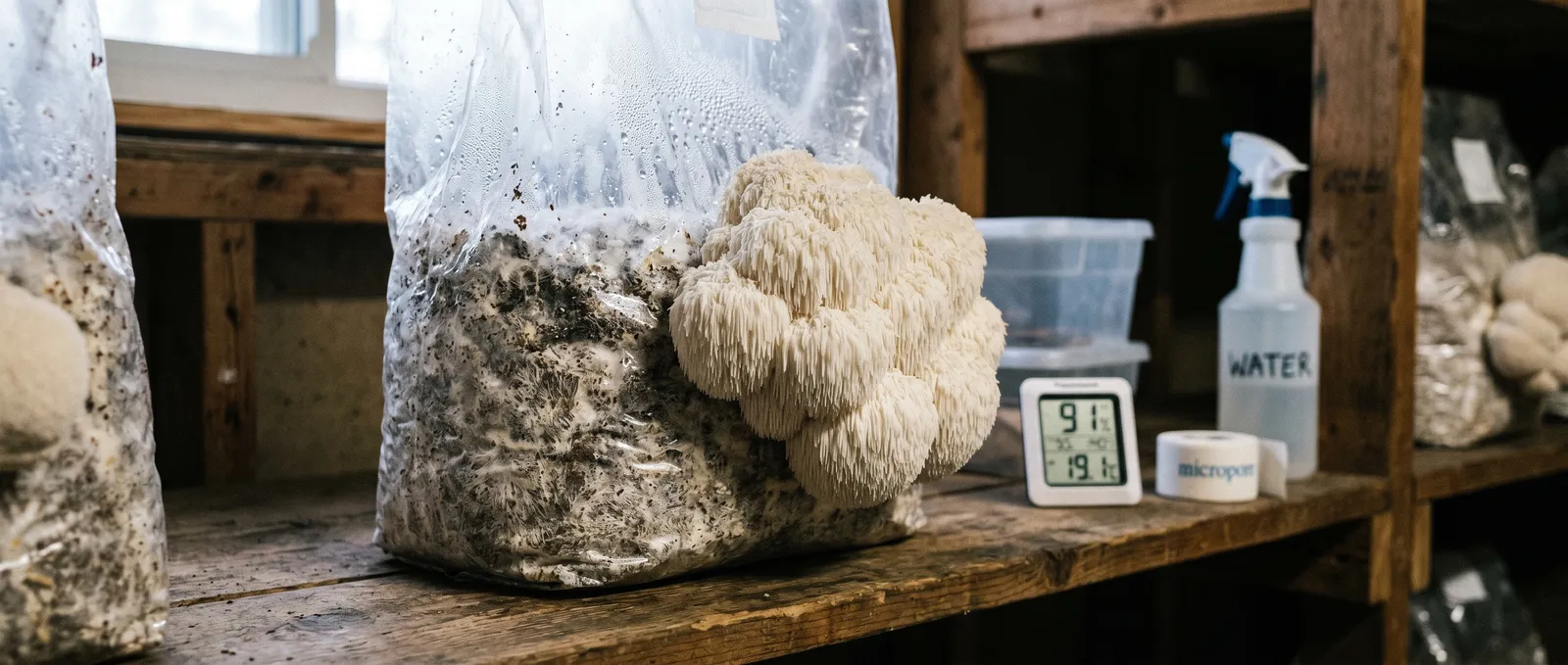
Lion's mane home cultivation is a process in which the grower sterilises a supplemented hardwood substrate, inoculates it with Hericium erinaceus spawn, and manages humidity (85–95% RH) and fresh air exchange to produce edible fruit bodies indoors. Hericium erinaceus fruits reliably on supplemented hardwood substrates when humidity stays above 85% (Stamets & Chilton, 1983), rewarding the grower with fresh clusters that taste faintly of lobster and contain bioactive compounds difficult to source at peak freshness.
Lion's mane home cultivation is a rewarding process in which the grower sterilises a supplemented hardwood substrate, inoculates it with Hericium erinaceus spawn, and manages humidity and fresh air exchange to produce edible fruit bodies indoors. Unlike oyster mushrooms that practically fruit if you look at them sternly, lion's mane demands a bit more attention to humidity, fresh air exchange, and substrate preparation. But the payoff is real: fresh clusters that taste faintly of lobster, harvested metres from your kitchen, with full control over what goes into the growing medium. According to Stamets and Chilton (1983), Hericium species fruit reliably on supplemented hardwood substrates when humidity stays above 85%, making them well-suited to small-scale indoor setups.
This guide walks you through the full lion's mane home cultivation process — from choosing your starting material to slicing your first harvest. It's written for adults (18+) growing lion's mane for personal culinary or supplemental use.
Step 1: Choose Your Starting Material
The best starting material for most beginners is grain spawn — pre-colonised grain ready to mix into a fruiting substrate. You have three realistic options for getting started, and each trades convenience for cost.
Liquid culture or agar culture: A syringe or petri dish containing live mycelium. Cheapest per grow if you plan multiple batches, but requires sterile technique to inoculate grain. Best for growers who already own a still-air box or laminar flow hood. You can order liquid culture syringes from specialist mycology suppliers; Azarius carries lion's mane grow kits that skip this step entirely.
Grain spawn: Pre-colonised grain (usually rye or millet) ready to mix into your fruiting substrate. Skips the most contamination-prone step. A 1 kg bag of grain spawn typically inoculates 5–10 kg of substrate, depending on your spawn-to-substrate ratio. If you want to buy grain spawn, look for suppliers who ship with cold packs in summer.
Ready-to-fruit blocks: Fully colonised substrate bags that only need cutting open and misting. Lowest effort, highest cost per gram of harvest. A single 2.5 kg block yields roughly 200–400 g of fresh lion's mane across 2–3 flushes. These are the easiest way to get started with lion's mane home cultivation if you just want to see results fast. You can order ready-to-fruit lion's mane kits from the Azarius mushroom grow kit range.
If you've never grown mushrooms before, start with grain spawn and a simple hardwood substrate. The learning curve is manageable and the failure rate drops considerably compared to working from liquid culture without proper sterile equipment.
Step 2: Prepare Your Substrate
The best substrate for lion's mane home cultivation is supplemented hardwood sawdust or fuel pellets — the species is a hardwood decomposer in the wild, so your substrate should mimic that. The standard home recipe:
- Hardwood fuel pellets (beech or oak) — 5 parts by weight
- Soy hull pellets or wheat bran — 1 part by weight
- Water — enough to reach 60–65% moisture content (the substrate should hold together when squeezed but not drip freely)
Mix the dry ingredients, hydrate, then load into autoclavable grow bags (polypropylene with a filter patch). Each bag holds roughly 1.5–2.5 kg of wet substrate. Sterilise at 121 °C / 15 PSI for 90–120 minutes. A standard kitchen pressure cooker works, though you'll process fewer bags per cycle than a dedicated autoclave.
Pasteurisation (soaking at 65–80 °C for 1–2 hours) is sometimes used for oyster mushrooms, but lion's mane is pickier — the supplemented substrate invites contaminants like Trichoderma that pasteurisation alone won't eliminate. Sterilisation is strongly recommended here.
Once cooled to room temperature (below 25 °C), inoculate each bag with grain spawn at a ratio of roughly 10–20% spawn to substrate by weight. Seal the bag, mix the spawn through the substrate by kneading gently, and leave the filter patch exposed for gas exchange.
Substrate Options Compared
| Substrate | Suitability for Lion's Mane | Sterilisation Required? | Typical Biological Efficiency | Notes |
|---|---|---|---|---|
| Hardwood pellets + soy hulls (masters mix) | Excellent | Yes | 10–20% | Standard choice; documented by Stamets (2000) |
| Hardwood pellets + wheat bran | Excellent | Yes | 10–18% | Slightly cheaper than soy hulls in Europe |
| Plain hardwood sawdust (no supplement) | Fair | Yes | 5–10% | Lower yields but also lower contamination risk |
| Straw | Poor | Pasteurisation possible | <5% | Not recommended — lion's mane is a hardwood species |
| Coffee grounds | Poor | Yes | <5% | Contaminates quickly; nitrogen too high |
Step 3: Colonisation
Full colonisation takes 14–21 days for a well-inoculated 2 kg bag stored at 21–24 °C. Store inoculated bags in a clean, dark space. A cupboard works. You don't need light during colonisation — the mycelium is just eating its way through the substrate.
You'll see white, ropy mycelium spreading from each grain kernel outward. The bag should eventually be entirely white with no patches of green, black, or orange. Any colour other than white or very pale yellow is contamination — bin the bag, don't try to salvage it.
A 2017 study by Siwulski et al. found that Hericium erinaceus mycelium colonised supplemented hardwood substrates 15–20% faster at 24 °C compared to 20 °C, though temperatures above 26 °C slowed growth and increased contamination risk. Keep things in that 21–24 °C sweet spot.
Step 4: Fruiting Conditions
Lion's mane needs three simultaneous environmental triggers to fruit: lower CO₂, high humidity (85–95% RH), and a temperature drop to 15–20 °C. The mycelium needs these shifts to start forming fruit bodies:
- Fresh air exchange (FAE): CO₂ levels need to drop. In a sealed bag, CO₂ builds up and the mycelium stays vegetative. Cut an X-shaped slit (about 5 cm across) in the bag, or remove the bag entirely and place the block in a fruiting chamber.
- Humidity: 85–95% relative humidity, consistently. This is the single biggest failure point for home growers. Lion's mane primordia (the tiny initial growths) abort quickly if humidity dips below 80% for more than a few hours.
- Temperature drop: Reduce ambient temperature to 15–20 °C. A 3–5 °C drop from colonisation temperature helps trigger pinning.
Light isn't a primary trigger for lion's mane the way it is for some species, but indirect ambient light (a nearby window, not direct sun) helps orient the fruit bodies and encourages more compact growth rather than stringy, elongated spines.
Step 5: Build or Buy a Fruiting Chamber
The simplest effective fruiting chamber is a large plastic storage tub (50–80 litres) with holes drilled in the sides, lined with damp perlite at the bottom. Mist the interior 2–4 times daily. This is the "shotgun fruiting chamber" (SGFC) approach — low-tech, effective for 1–3 blocks.
For more consistent results, a small grow tent (60 × 60 cm or larger) with a humidifier on a timer works well. Set the humidifier to maintain 90% RH, and crack the tent's ventilation port for passive air exchange. A small USB fan on a timer (30 seconds on, 5 minutes off) prevents CO₂ pooling without drying things out too fast.
Automated setups with humidity controllers (hygrostat plugged into the humidifier) reduce daily fiddling to nearly zero. The controller switches the humidifier on when RH drops below your set point — typically 88–92% — and off when it's reached.
Step 6: Harvest and Subsequent Flushes
Harvest when the cascading spines are 0.5–1 cm long, still white and firm — this is peak flavour and texture. Primordia appear 5–10 days after introducing fruiting conditions — small, bumpy white formations at the slit or opening. Over the next 5–7 days, these develop into the characteristic cascading spines.
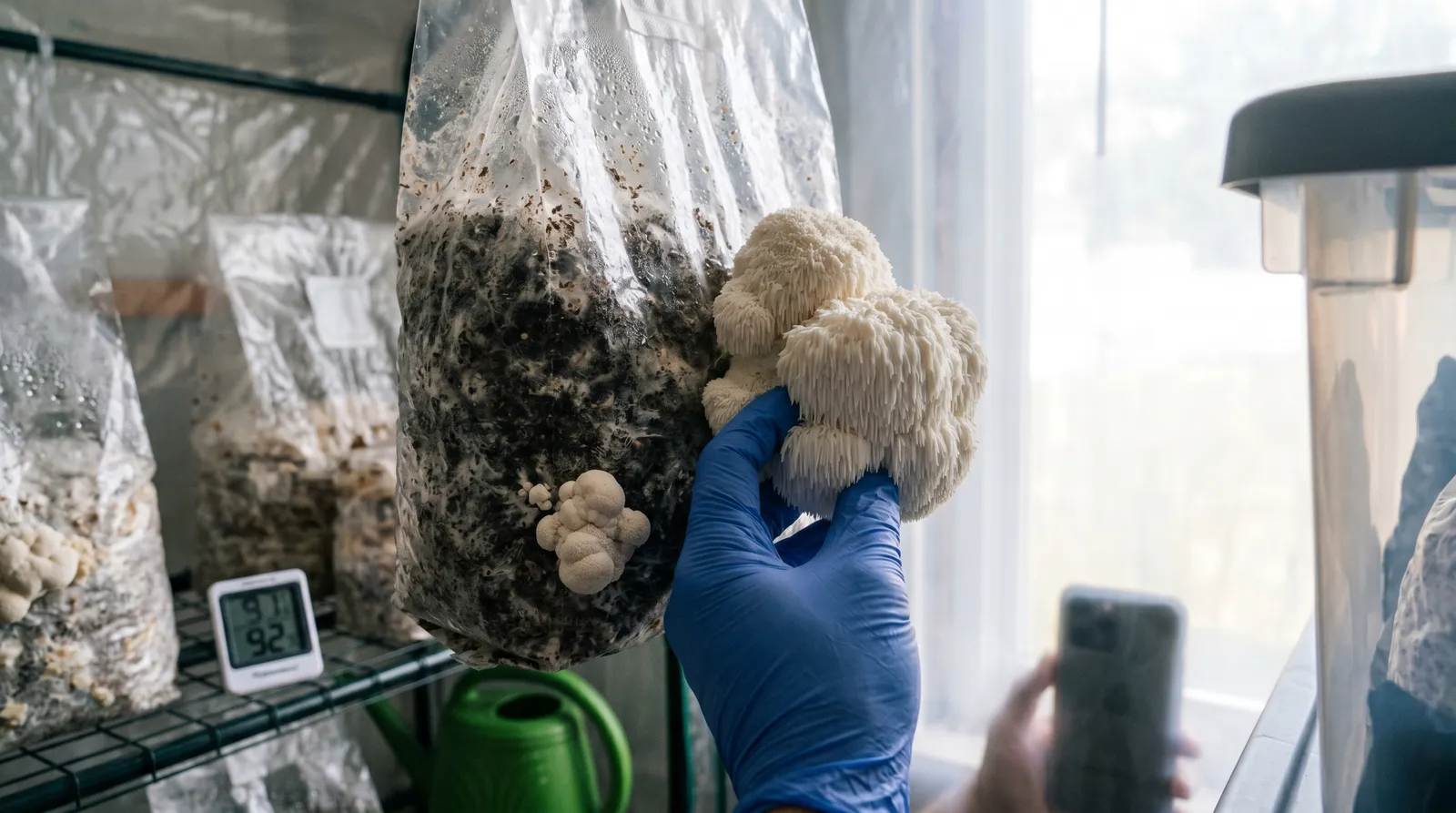
If you wait until the spines elongate and start to yellow or brown at the tips, you've gone slightly past peak — still edible, but the texture turns spongy and the flavour weakens. Use a clean knife and cut the cluster at the base where it meets the substrate.
After the first harvest, let the block rest for 7–10 days. Continue misting. A second flush typically produces 50–70% of the first flush's weight, and a third flush is possible but often produces smaller, less uniform clusters. Total yield across all flushes from a 2 kg supplemented hardwood block: roughly 200–400 g fresh weight, or about 10–20% biological efficiency. That's lower than oyster mushrooms (which can hit 100%+ BE on straw), but the culinary and supplemental value per gram is considerably higher.
Common Mistakes and How to Avoid Them
Not enough humidity: This is the number one reason lion's mane home cultivation fails. If your primordia keep aborting (turning brown and shrivelling before developing spines), humidity is almost certainly the issue.
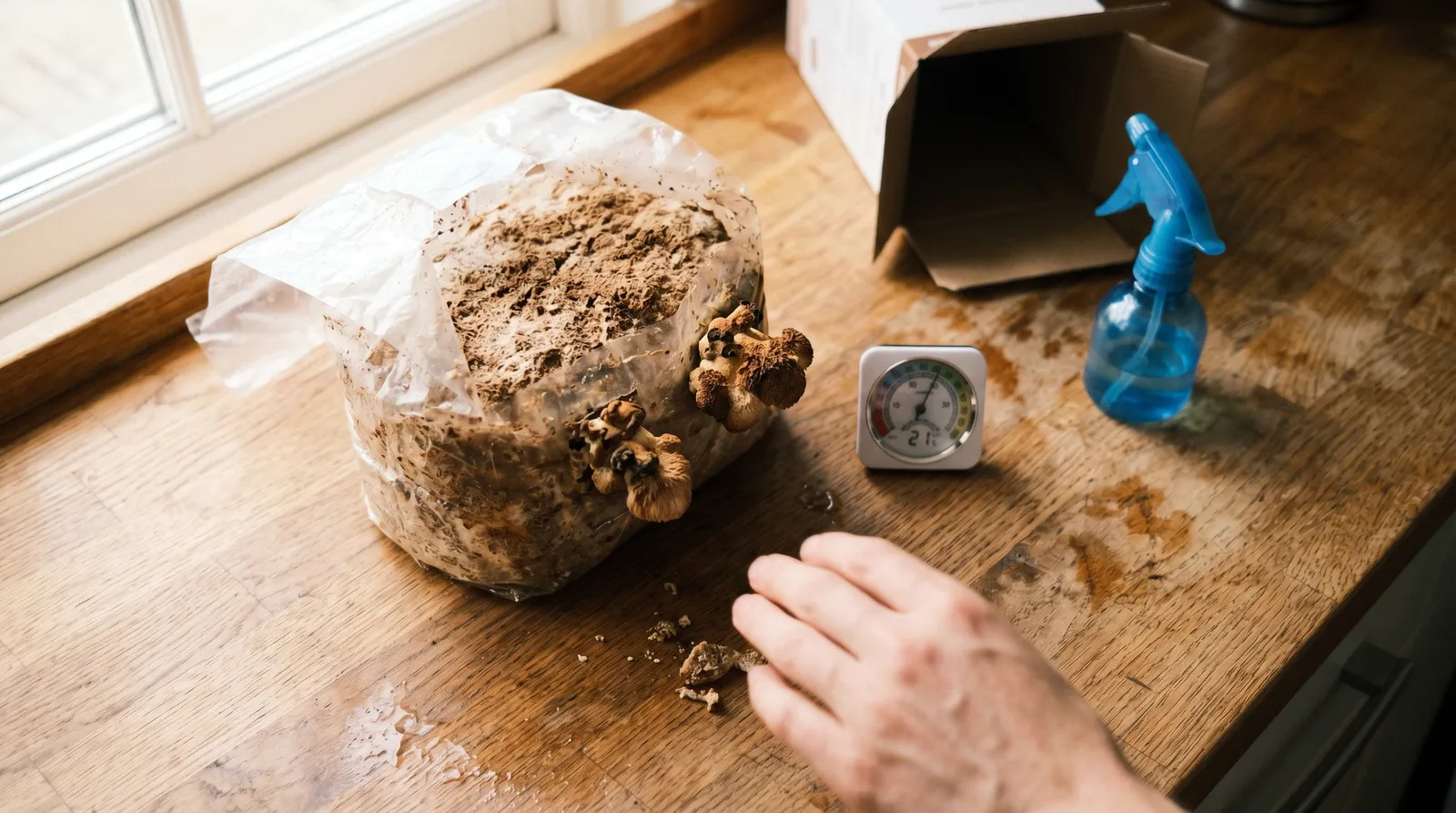
Too much humidity with no air exchange: The opposite problem. Stagnant, saturated air breeds bacterial blotch — slimy, discoloured patches on the fruit body. You need both high humidity and fresh air. A gentle fan on a timer solves this.
Contaminated substrate: If you see green mould (Trichoderma) during colonisation, the substrate wasn't properly sterilised or the inoculation wasn't clean enough. There's no saving it. Toss the bag, sterilise longer next time, and work in a still-air box.
Harvesting too late: Lion's mane doesn't have a cap and gills to signal maturity the way button mushrooms do. The visual cue is spine length and colour. White, short, firm spines = harvest. Yellowing, drooping, soft spines = you waited a day too long.
Wrong substrate: Straw alone won't work well for lion's mane — it's a hardwood species. Supplemented hardwood sawdust or pellets are the standard. Some growers have success with masters mix (50/50 hardwood and soy hulls), which Stamets (2000) documented as producing above-average yields for Hericium species in small-scale trials.
Lion's Mane vs. Oyster Mushrooms for Beginners
Lion's mane is a harder first grow than oyster mushrooms, but not dramatically so. The key differences come down to humidity tolerance and substrate flexibility.
| Factor | Lion's Mane | Oyster Mushrooms |
|---|---|---|
| Humidity requirement | 85–95% RH (strict) | 80–90% RH (forgiving) |
| Substrate | Supplemented hardwood only | Straw, cardboard, coffee grounds, hardwood |
| Sterilisation needed? | Yes (strongly recommended) | Pasteurisation often sufficient |
| Colonisation speed | 14–21 days | 10–14 days |
| Biological efficiency | 10–20% | 50–150% |
| Culinary value per gram | High | Moderate |
| Contamination risk | Moderate–high | Low–moderate |
If you've never grown any mushroom, an oyster mushroom grow kit is the lowest-risk starting point. Once you've seen a full flush cycle and understand humidity management, stepping up to lion's mane home cultivation is a natural progression. The Azarius catalogue includes grow kits for both species — get a lion's mane kit or an oyster kit depending on your confidence level.
Fresh vs. Dried: What to Do with Your Harvest
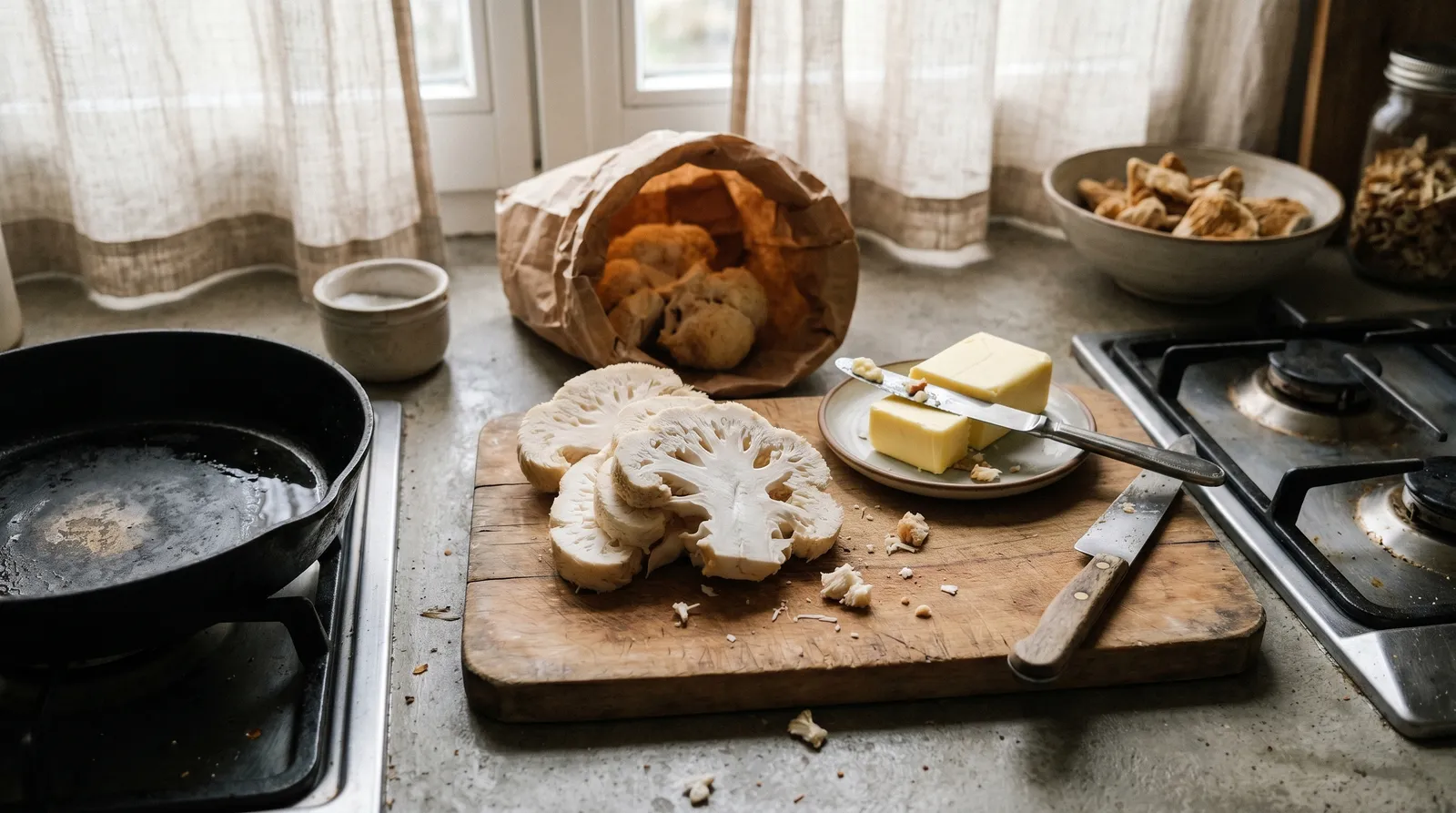
Fresh lion's mane keeps 5–7 days in the fridge in a paper bag — use it quickly for the best texture. It's best sliced thick (1–2 cm), dry-seared in a hot pan until golden, then finished with butter and salt. The texture is remarkably meat-like — dense, slightly chewy, with a subtle sweetness.
For longer storage, dehydrate slices at 50–60 °C until cracker-dry (8–12 hours in a standard food dehydrator). Dried lion's mane stores for 6–12 months in an airtight container. You can rehydrate it for cooking or grind it into powder for use in hot drinks or food. The bioactive compounds — hericenones and erinacines — appear to survive standard dehydration, though one 2020 analysis by Lee et al. noted a 10–15% reduction in extractable erinacine A content after drying at temperatures above 60 °C. Keep your dehydrator on the lower end to be safe.
If you'd rather skip the growing process and buy lion's mane in supplement form, Azarius stocks lion's mane extract capsules and dried lion's mane powder — convenient for daily use, though nothing matches the culinary experience of a freshly harvested cluster you grew yourself.
Where to Buy Lion's Mane Growing Supplies
You can buy lion's mane grow kits, spawn, and supplements from the Azarius online shop. For beginners attempting lion's mane home cultivation for the first time, a ready-to-fruit grow kit is the fastest way to get your first harvest without investing in sterilisation equipment. The Azarius mushroom grow kit range includes both lion's mane and oyster mushroom options. For growers ready to work from scratch, order grain spawn and prepare your own supplemented hardwood blocks following the substrate recipe above. Azarius also carries lion's mane extract capsules and dried lion's mane powder for those who want the benefits without the growing process.
Safety and Legal Information
Disclaimer: The information in this guide is provided for educational purposes only and does not constitute medical advice. Lion's mane (Hericium erinaceus) is a legal culinary mushroom in the EU and most jurisdictions worldwide, but if you are taking medication — particularly anticoagulants or immunosuppressants — consult a healthcare professional before consuming lion's mane regularly, as interactions have been reported anecdotally. The EMCDDA does not schedule Hericium erinaceus. Azarius products are intended for adults aged 18 and over. Always verify local regulations before cultivating any fungal species. Yields, timelines, and bioactive compound levels described here are approximations based on published research and staff experience; your results may vary depending on genetics, environment, and technique.
Last updated: April 2026
Frequently Asked Questions
10 questionsWhat substrate is best for growing lion's mane at home?
How much lion's mane does one block produce?
Why do my lion's mane primordia keep aborting?
How do I know when lion's mane is ready to harvest?
Can I grow lion's mane without a grow tent?
Is lion's mane harder to grow than oyster mushrooms?
What temperature does lion's mane need to fruit?
How much fresh air exchange does lion's mane need?
Can I reuse a lion's mane block for a second flush?
Why is my lion's mane growing long spines instead of a round cluster?
About this article


Joshua Askew serves as Editorial Director for Azarius wiki content. He is Managing Director at Yuqo, a content agency specialising in cannabis, psychedelics and ethnobotanical editorial work across multiple languages. Th
This wiki article was drafted with AI assistance and reviewed by Joshua Askew, Managing Director at Yuqo. Editorial oversight by Adam Parsons.
Medical disclaimer. This content is for informational purposes only and does not constitute medical advice. Consult a qualified healthcare provider before use of any substance.
Last reviewed April 24, 2026
References (5)
- [1]Stamets, P. & Chilton, J. S. (1983). The Mushroom Cultivator. Agarikon Press.
- [2]Siwulski, M. et al. (2017). "Mycelial growth of Hericium erinaceus on different substrates." Acta Scientiarum Polonorum, Hortorum Cultus, 16(3), 67–76.
- [3]Stamets, P. (2000). Growing Gourmet and Medicinal Mushrooms. Ten Speed Press.
- [4]Lee, K. et al. (2020). "Effect of drying methods on bioactive compounds in Hericium erinaceus." Food Science and Biotechnology, 29(11), 1527–1534.
- [5]EMCDDA (European Monitoring Centre for Drugs and Drug Addiction). Accessed April 2026. Hericium erinaceus is not listed as a controlled substance under EU drug scheduling frameworks.
Related Articles
Medicinal Mushrooms TCM Western Pharmacognosy Guide
Guide to medicinal mushrooms TCM Western pharmacognosy — how reishi, lion's mane, cordyceps are classified, extracted, and studied.
Research on Immune Modulation by Functional Mushrooms
What does research on immune modulation by functional mushrooms actually show? Beta-glucans, Dectin-1 signalling, human trials, and the honest gap...
Allergic Reactions & Mushroom Sensitivities
Understand allergic reactions and mushroom sensitivities: mould cross-reactivity, shiitake dermatitis, species-specific risks, and safer product…
Turkey Tail Trametes versicolor — Buy Supplements
Buy turkey tail Trametes versicolor supplements at Azarius. PSK and PSP evidence, beta-glucan dosage, extraction methods, and safety.
Triterpenes In Medicinal Mushrooms
Triterpenes in medicinal mushrooms are a class of 30-carbon terpenoid compounds produced as secondary metabolites by several functional mushroom species…
Chaga Siberian Nordic Folk Use
Chaga Siberian Nordic folk use is a centuries-old tradition in which indigenous Siberians and Nordic communities brewed the birch-parasitising fungus…
Red and Black Reishi Varieties
Red reishi (Ganoderma lucidum) and black reishi (Ganoderma sinense) both fall under the lingzhi umbrella in traditional Chinese medicine, but they differ in…
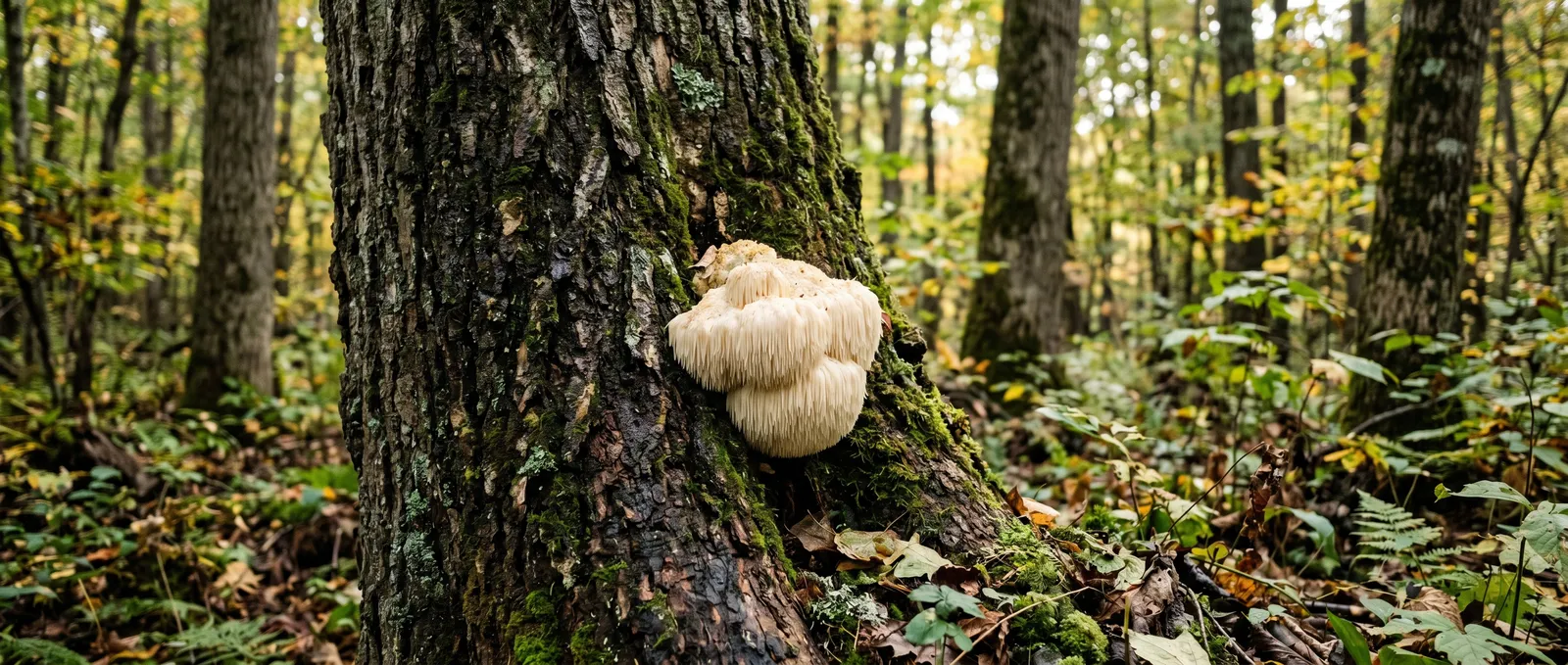
Lion's Mane Identification & Habitat
Hericium erinaceus is a tooth fungus that fruits as a single white, spine-covered mass on wounded or dead hardwood trees.
Cordyceps Lifecycle
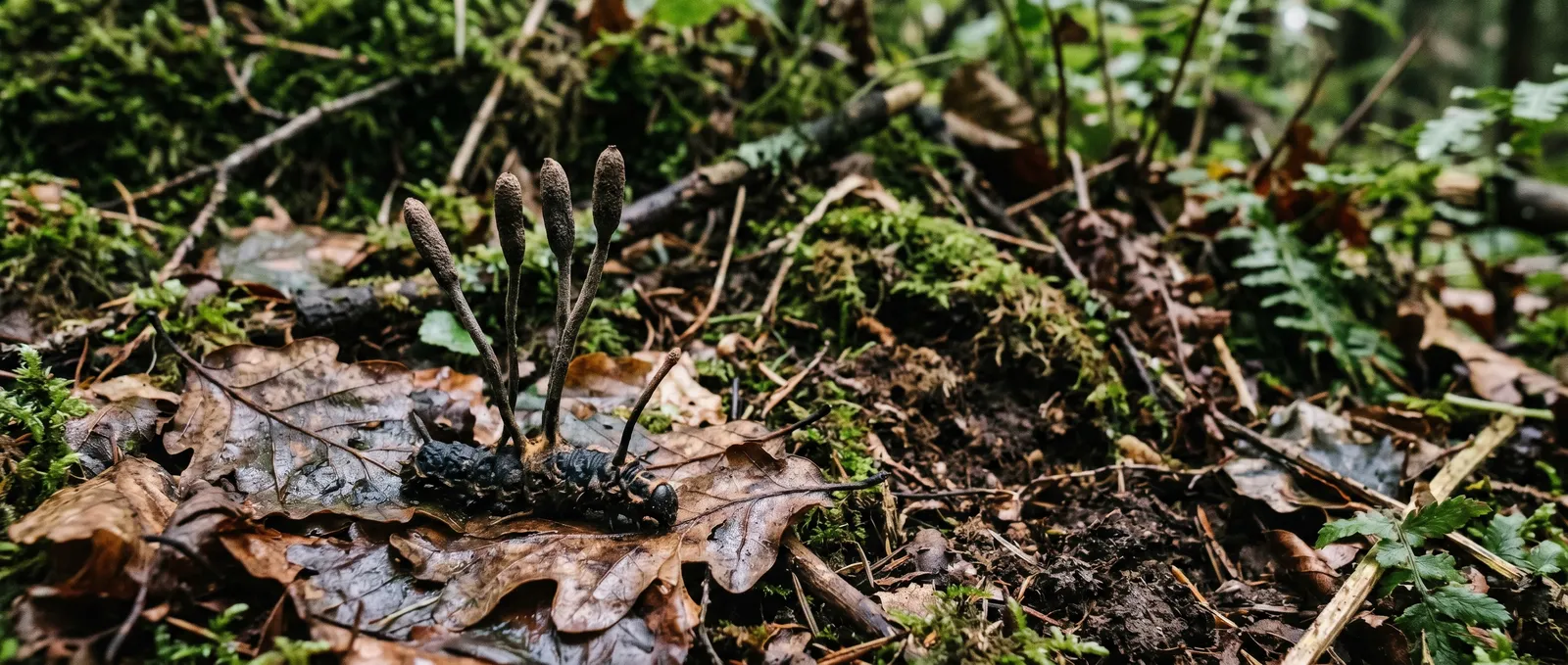
The cordyceps lifecycle is a parasitic biological sequence in which a fungus infects an insect host, colonises its body from within, and erupts as a…