
This article discusses psychoactive substances intended for adults (18+). If you have a health condition or take medication, consult a doctor before use. Our age policy
LSA Legal Status in Europe
Definition
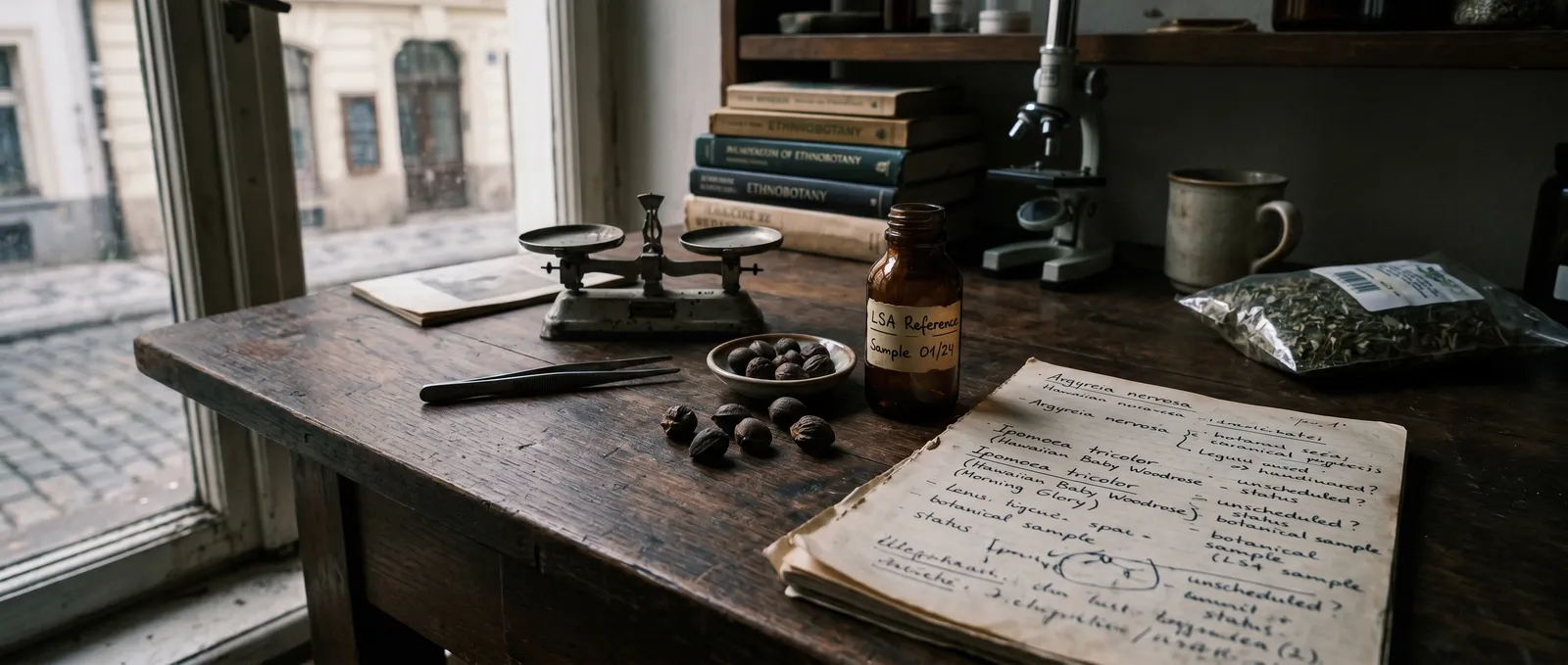
LSA (lysergic acid amide, or ergine) occupies a legal grey zone across Europe — rarely scheduled as a compound, yet subject to varied NPS legislation that differs sharply between countries. The EMCDDA's 2023 European Drug Report lists LSA-containing seeds among monitored novel psychoactive substances, though seizure volumes remain negligible continent-wide.
LSA legal status in Europe is a complex patchwork: LSA (lysergic acid amide, also called ergine) is a naturally occurring ergoline alkaloid that remains unscheduled in most European countries, yet the seeds containing it face varied restrictions under national NPS laws. Understanding where LSA-containing seeds — morning glory and Hawaiian baby woodrose — fall on the legal spectrum requires tracking not just drug schedules but novel psychoactive substance legislation, which varies wildly from one member state to the next.
18+ only — this article covers a psychoactive substance and is written for adults.
What LSA Is and Why It Matters
LSA (lysergic acid amide) is a psychoactive ergoline alkaloid found in over 30 plant species, most notably in morning glory seeds (Ipomoea tricolor) and Hawaiian baby woodrose seeds (Argyreia nervosa). Unlike LSD — which is specifically listed in the 1971 UN Convention on Psychotropic Substances (Schedule I) — LSA was never included in any international scheduling treaty. This means individual countries had no treaty obligation to ban it, and most simply didn't bother. People who want to explore LSA-containing seeds can order Hawaiian baby woodrose seeds or get morning glory seeds from various sources, but the legality of doing so depends entirely on where they live.
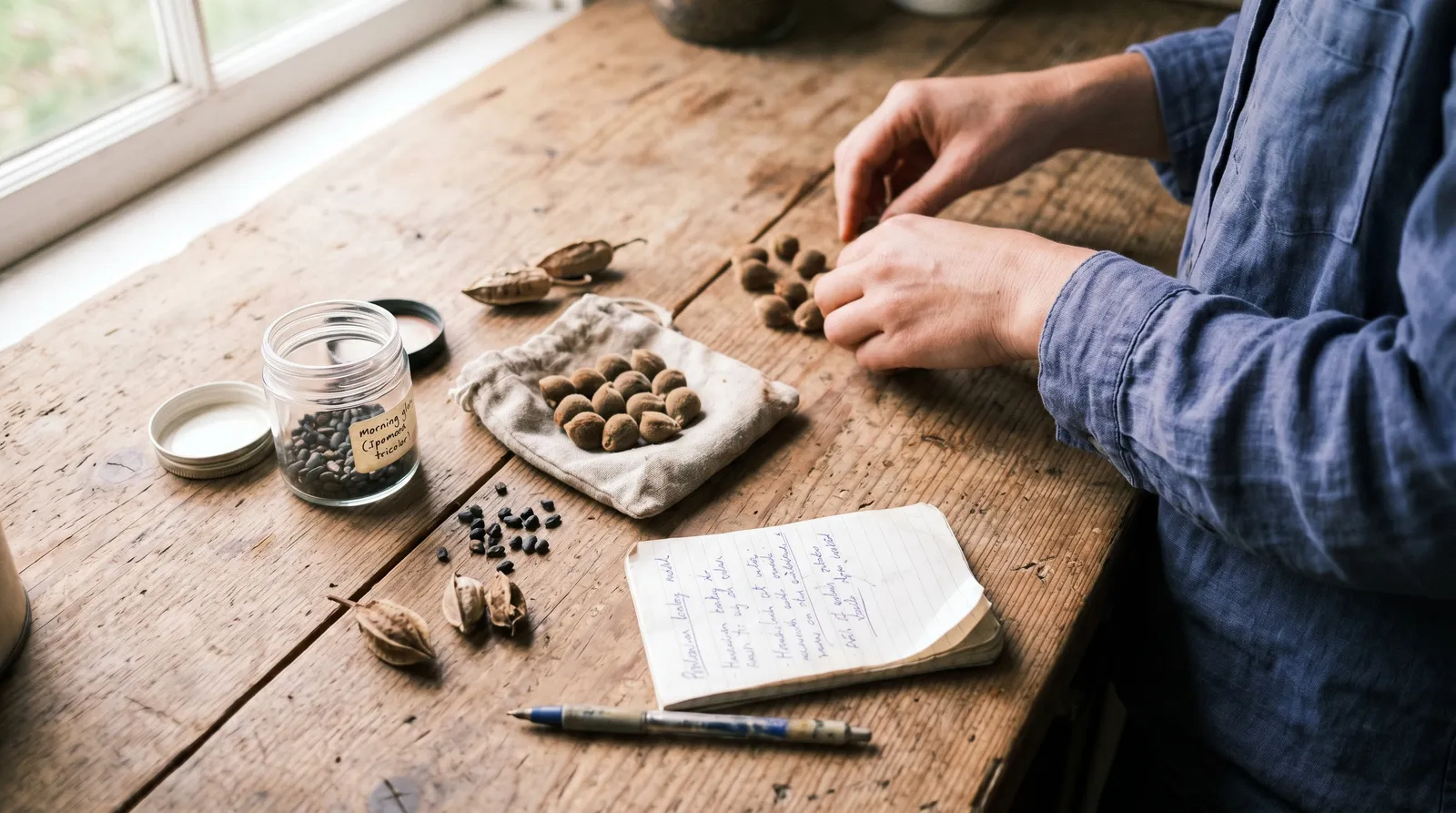
The EMCDDA's 2023 European Drug Report lists LSA-containing seeds among monitored NPS but notes that seizure volumes across Europe remain negligible compared to synthetic cathinones or novel benzodiazepines. In practical terms, law enforcement attention is minimal. According to the RIVM's 2014 risk assessment of Argyreia nervosa, the institute could not apply a "presumption of safety" approach because no historic use data with known exposure levels existed for large European populations (RIVM, 2014). That assessment didn't recommend scheduling — it simply flagged a data gap.
Country-by-Country Legal Status
The LSA legal status in Europe breaks down into three broad categories: fully legal, grey zone, and restricted. The table below summarises the current regulatory position of LSA, morning glory seeds, and Hawaiian baby woodrose seeds across major European jurisdictions. Where a country uses blanket NPS legislation rather than scheduling LSA by name, that's noted. Enforcement varies — a substance can be technically covered by an analogue law yet never prosecuted in practice.
| Country | LSA (compound) | Morning Glory Seeds | HBWR Seeds | Mechanism | Notes |
|---|---|---|---|---|---|
| Netherlands | Not scheduled | Legal | Legal | Opium Act (Opiumwet) | LSA is not listed on List I or II. Seeds sold openly. |
| Spain | Not scheduled | Legal | Legal | No NPS blanket law | Personal possession and sale of seeds not prosecuted. |
| Portugal | Not scheduled | Legal | Legal | 2001 decriminalisation framework | Personal use decriminalised; seeds not controlled. |
| Czech Republic | Not scheduled | Legal | Legal | Act No. 167/1998 | Neither LSA nor its plant sources appear on the scheduled list. |
| Germany | Not explicitly scheduled | Legal (ornamental) | Legal (ornamental) | BtMG / NpSG (2016) | The NpSG covers psychoactive substances but exempts plants not specifically listed. Seeds sold as ornamental. Prosecution cases are extremely rare. |
| Austria | Not explicitly scheduled | Legal (ornamental) | Legal (ornamental) | NPSG (2012) | Austrian NPS law could theoretically apply if intent to consume is established, but seeds remain available in garden shops. |
| France | Not scheduled by name | Legal | Grey area | Public Health Code / ANSM | LSA not on the narcotics list. HBWR seeds have attracted occasional regulatory attention but are not formally banned as of 2025. |
| Italy | Not scheduled | Legal | Legal | DPR 309/1990 | Argyreia nervosa was briefly discussed in NPS monitoring but never formally scheduled. |
| United Kingdom | Covered by PSA | Legal (horticultural) | Legal (horticultural) | Psychoactive Substances Act 2016 | The PSA bans supply of any psychoactive substance not exempted. Seeds sold for gardening are legal; selling them for consumption is an offence. |
| Poland | Monitored | Legal | Restricted since 2009 | Act on Counteracting Drug Addiction (amended 2009) | HBWR seeds were added to the list of controlled plant materials in 2009. Morning glory seeds remain legal. |
| Sweden | Not scheduled | Legal | Monitored | Narcotics Act / NPS regulation | Sweden's strict NPS monitoring means HBWR has been flagged. No formal scheduling of LSA itself. |
Sources: EMCDDA European Drug Report 2023; national narcotics legislation per country; RIVM risk assessment of Argyreia nervosa (2014). Data reflects the position as of early 2025.
NPS Legislation: The Wildcard
Blanket NPS laws are the single biggest variable affecting LSA legal status in Europe, because they can criminalise supply without ever naming the compound. The UK's Psychoactive Substances Act 2016 is the broadest example. It bans the production, supply, and import of any substance capable of producing a psychoactive effect in a person — with exemptions for alcohol, tobacco, caffeine, food, and medicines. Under this framework, selling HBWR seeds explicitly for consumption is illegal, even though the seeds themselves aren't named in any schedule. Selling them as ornamental plants? Perfectly fine. The offence lies in the intent, not the seed.

Germany's NpSG (Neue-Psychoaktive-Substanzen-Gesetz), enacted in November 2016, takes a different approach: it defines banned substance groups by chemical structure. LSA's ergoline backbone could theoretically fall within scope, but the law contains exemptions for natural plant materials not explicitly listed. Morning glory seeds continue to be sold in German garden centres without issue. Whether selling them in a smartshop context with implied psychoactive intent would trigger prosecution is untested in court — the honest answer is that nobody knows, because it hasn't been tried.
Austria's 2012 NPS law is structurally similar to Germany's. It targets "new psychoactive substances" defined by their psychoactive effect and chemical novelty. Seeds of Argyreia nervosa are available in Austrian shops, though marketing them with consumption instructions would likely attract regulatory scrutiny.
The Plant-vs-Compound Distinction
Most European drug laws schedule specific compounds, not every plant that happens to contain them — and this distinction is the core reason LSA-containing seeds remain widely available. Psilocybin is scheduled across the EU, but fresh psilocybin truffles remain legal in the Netherlands because Dutch law specifically exempts sclerotia. The same logic applies to LSA: even if a country were to schedule the pure compound, the seeds would only become illegal if the legislation explicitly included them or if case law established that possessing the seeds constituted possession of the alkaloid.
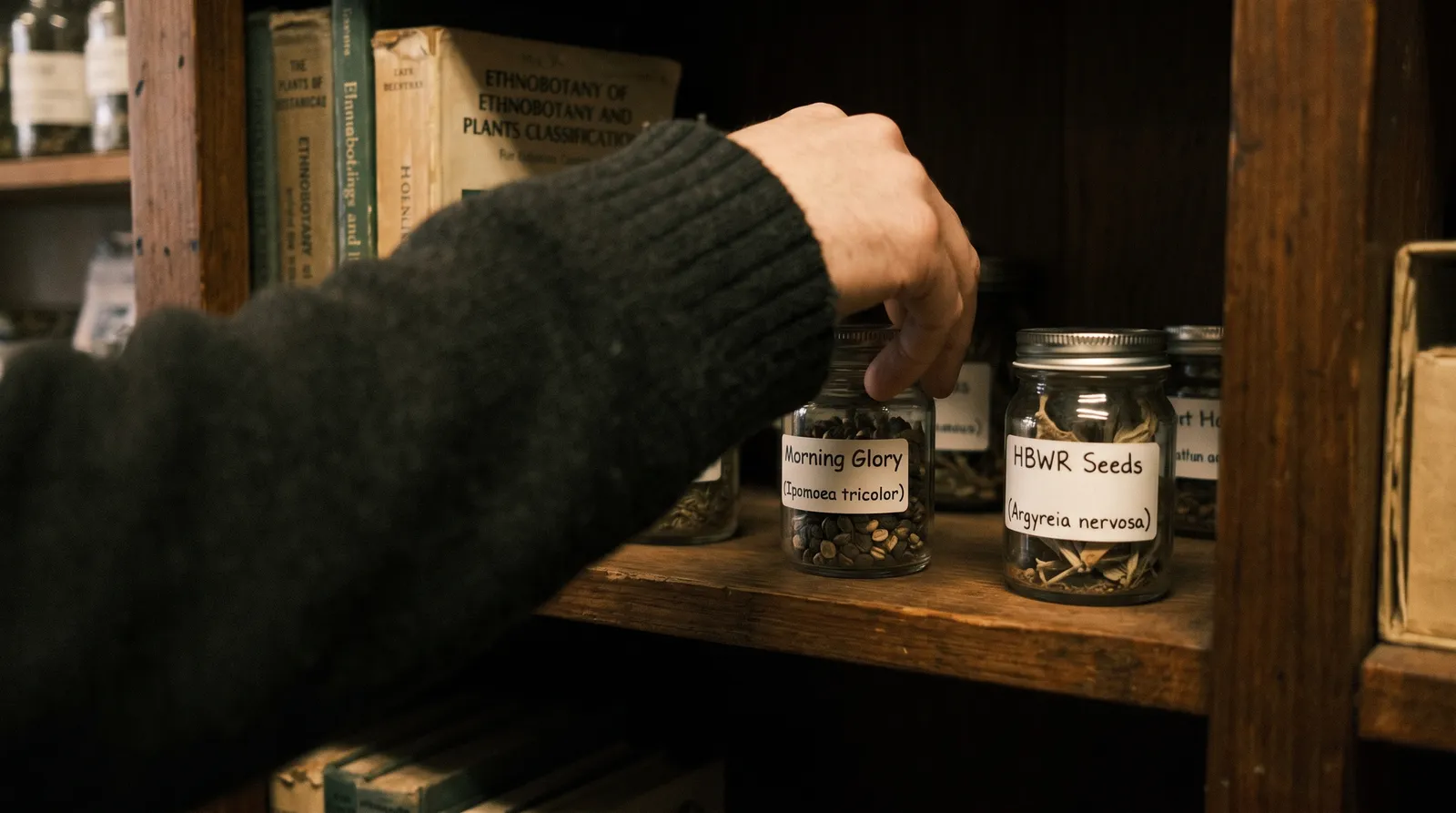
Poland is the clearest example of a country that went after the plant material directly. In 2009, Polish authorities added Argyreia nervosa seeds to their list of controlled plant materials following a spate of hospital admissions linked to HBWR consumption. Morning glory seeds, which contain lower concentrations of LSA, were not included — a distinction that shows how regulation often responds to specific incidents rather than systematic pharmacological review.
Castro and Maia (2022), in a clinical case review published via PubMed Central, documented adverse psychiatric outcomes associated with LSA-containing seeds, including acute psychosis in individuals with no prior psychiatric history. Their findings — while based on a small case series — illustrate why some countries have moved towards monitoring or restricting these seeds, even without scheduling the compound itself.
How LSA Compares to Other Psychedelics Legally
LSA is the least restricted classical psychedelic in Europe by a wide margin. LSD is Schedule I under the 1971 UN Convention and banned in every European country without exception. Psilocybin is similarly scheduled internationally, though the Netherlands carved out an exemption for truffles. Mescaline is controlled across Europe, yet San Pedro cactus — which contains it — is legal to buy as an ornamental plant in most countries, mirroring the LSA seed situation almost exactly.
The comparison to mescaline-containing cacti is particularly instructive. You can buy a San Pedro cactus in nearly any European garden centre, just as you can buy morning glory seeds. The compound inside is scheduled; the plant is not. LSA takes this one step further because the compound itself usually isn't scheduled either, making it doubly removed from prohibition. For anyone researching ethnobotanical products, the Azarius Encyclopaedia articles on mescaline cacti and psilocybin truffles cover those parallel situations in detail.
Practical Implications for Buying LSA Seeds
If you're in the Netherlands, Spain, Portugal, or the Czech Republic, LSA-containing seeds are straightforwardly legal to buy, possess, and — in practical terms — consume. In Germany, Austria, France, and Belgium, the seeds exist in a grey zone: legal to sell as horticultural products, potentially problematic if marketed for ingestion. In the UK, supply for consumption is a criminal offence under the PSA, though possession for personal use is not criminalised. In Poland, HBWR seeds specifically are controlled.
The broader pattern is this: Europe's approach to LSA legal status in Europe is reactive, not proactive. Most countries haven't legislated because the compound hasn't caused enough public health incidents to trigger political action. The EMCDDA monitors it, the RIVM assessed it, and individual countries occasionally flag it — but formal scheduling remains rare. That could change. A single high-profile incident or a shift in NPS policy could move any country from "not scheduled" to "banned" within months, as Poland demonstrated in 2009.
We should be honest about what we don't know: enforcement discretion is invisible. A substance can be technically legal yet still get you questioned at a border crossing if a customs officer doesn't recognise the seeds. Conversely, a substance can be technically covered by an NPS law yet never prosecuted. The gap between law-on-paper and law-in-practice is wide, and no guide — including this one — can fully bridge it.
For the most current information in your specific country, the EMCDDA's national drug law profiles — updated annually — remain the most reliable public source. Our dedicated article on LSA safety and interactions covers the pharmacological risks, including contraindications with MAOIs and SSRIs, which matter regardless of what the law says. The Azarius Encyclopaedia article on Hawaiian baby woodrose seeds provides further background on the seeds themselves. Those interested in exploring ethnobotanical products can browse the Azarius herbal seeds category or read the morning glory seeds product page for specifics on that variety.
Last updated: April 2025
Frequently Asked Questions
3 questionsIs LSA itself listed in any international drug treaty?
Are Hawaiian baby woodrose seeds legal to buy in the Netherlands?
What is the difference between LSA and LSD in terms of legal scheduling?
About this article


Joshua Askew serves as Editorial Director for Azarius wiki content. He is Managing Director at Yuqo, a content agency specialising in cannabis, psychedelics and ethnobotanical editorial work across multiple languages. Th
This wiki article was drafted with AI assistance and reviewed by Joshua Askew, Managing Director at Yuqo. Editorial oversight by Adam Parsons.
Medical disclaimer. This content is for informational purposes only and does not constitute medical advice. Consult a qualified healthcare provider before use of any substance.
Last reviewed April 24, 2026
References (5)
- [1]EMCDDA (2023). European Drug Report 2023: Trends and Developments. European Monitoring Centre for Drugs and Drug Addiction, Lisbon.
- [2]RIVM (2014). Risk Assessment of Argyreia nervosa. National Institute for Public Health and the Environment, Bilthoven, Netherlands.
- [3]Castro, P. and Maia, J. (2022). Adverse psychiatric outcomes associated with LSA-containing seeds: a clinical case review. PubMed Central.
- [4]Psychoactive Substances Act 2016, c. 2. United Kingdom.
- [5]Neue-Psychoaktive-Substanzen-Gesetz (NpSG), November 2016. Federal Republic of Germany.
Related Articles
Hawaiian Baby Woodrose Sourcing
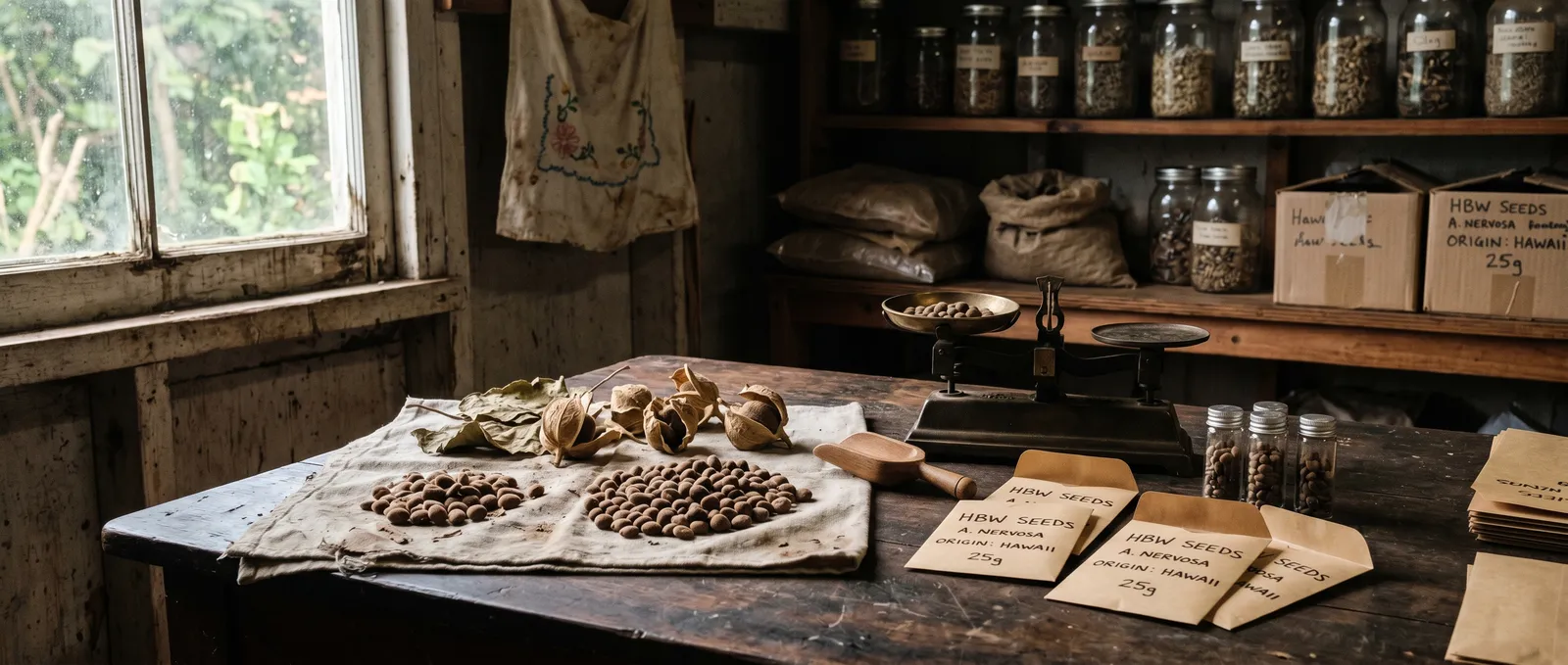
Hawaiian baby woodrose sourcing is a practice that covers how to obtain quality Argyreia nervosa seeds — a vine whose seeds contain LSA (lysergic acid amide).
Ololiuqui Mazatec Tradition: Ceremonial Seeds of the Sierra Mazateca
Ololiuqui — the seeds of Turbina corymbosa — played a specific ceremonial role among the Mazatec people of Oaxaca, distinct from their better-known use of…
Morning Glory LSA Plants Family
Morning glory LSA plants family is a group of Convolvulaceae vines whose seeds contain d-lysergic acid amide (ergine), a naturally occurring tryptamine first…
Hawaiian Baby Woodrose Plant Botany
Argyreia nervosa, commonly called Hawaiian baby woodrose, is a perennial climbing vine native to the Indian subcontinent, not Hawai'i.
Magic Truffle Quality Indicators
Magic truffle quality indicators are the measurable and sensory characteristics — psilocybin content, texture, aroma, packaging integrity, and storage…
Mescaline Cactus Market Observations
Mescaline cactus market observations is a research and retail term that describes the shifting patterns in sourcing, species selection, and consumption of…
Growing Mescaline Cacti as Ornamental Plants
Growing mescaline cacti ornamental is a horticultural practice that involves cultivating species like San Pedro, Peruvian Torch, and peyote for their…
Commercial Magic Truffle Cultivation
Commercial magic truffle cultivation is a large-scale agricultural process that produces psilocybin-containing sclerotia in climate-controlled indoor…
Huachuma Andean Tradition
The huachuma Andean tradition is a ceremonial healing lineage centred on the San Pedro cactus (Echinopsis pachanoi) that has been documented across at least…