
This article discusses psychoactive substances intended for adults (18+). If you have a health condition or take medication, consult a doctor before use. Our age policy
Hawaiian Baby Woodrose Sourcing
Definition
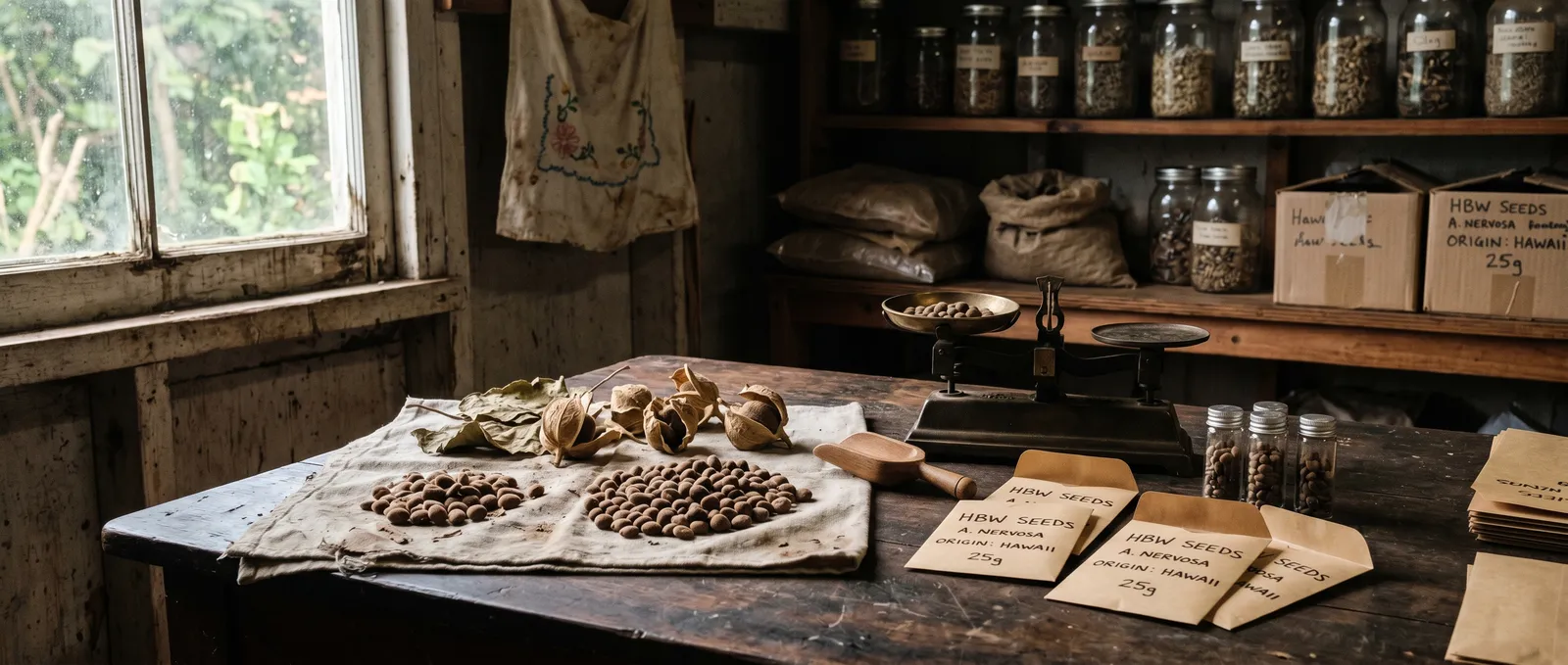
Hawaiian baby woodrose sourcing is a practice that covers how to obtain quality Argyreia nervosa seeds — a vine whose seeds contain LSA (lysergic acid amide). Alkaloid concentrations vary up to eightfold between commercially available seeds (Klinke et al., 2009), making supplier reliability and seed handling critical factors in both safety and consistency.
18+ only
Hawaiian baby woodrose sourcing is the practice of obtaining quality seeds of Argyreia nervosa — a perennial climbing vine whose seeds contain lysergic acid amide (LSA) and related ergine alkaloids. This guide is written for adults; the information below applies to adult physiology, and the substance is not appropriate for anyone under 18. Where you get these seeds, and how they've been handled before they reach you, affects everything from alkaloid content to the likelihood of a nausea-heavy experience that goes nowhere pleasant. Not all seeds are equal, and the difference between a reliable source and a dodgy one is bigger than most people expect. Whether you plan to buy Hawaiian baby woodrose seeds from a smartshop or order them online, understanding the supply chain is essential.
Why does sourcing matter for HBW seeds?
Sourcing matters because LSA content in Argyreia nervosa seeds varies wildly — not just between batches, but between individual seeds from the same plant. A 2009 analysis published in Forensic Science International (Klinke et al., 2009) found that ergine concentrations in commercially available seeds ranged from 0.005% to 0.04% by dry weight, a roughly eightfold spread. That alone should tell you why "just take four seeds" is shaky advice without knowing what you're actually holding.
Beyond alkaloid variation, the real sourcing risk is contamination. Seeds sold through ornamental gardening channels are frequently treated with fungicides, pesticides, or anti-germination coatings. These chemicals — mercury-based fungicides were common historically, and neonicotinoid seed coatings remain widespread in the horticultural trade — are a major contributor to the severe nausea and cramping that people associate with HBW. Some of that gastrointestinal distress is genuinely from the ergot alkaloids themselves, but a portion comes from ingesting agricultural chemicals that were never meant to enter a human stomach. The EMCDDA has noted the emergence of LSA-containing seeds as novel psychoactive substances in European drug monitoring reports, underscoring that quality control in this market remains minimal.
What is the difference between treated and untreated seeds?
Treated seeds have been coated or soaked in chemical agents to prevent fungal infection during storage or to discourage germination, while untreated seeds have had none of this done. The distinction matters enormously if you plan to consume them.
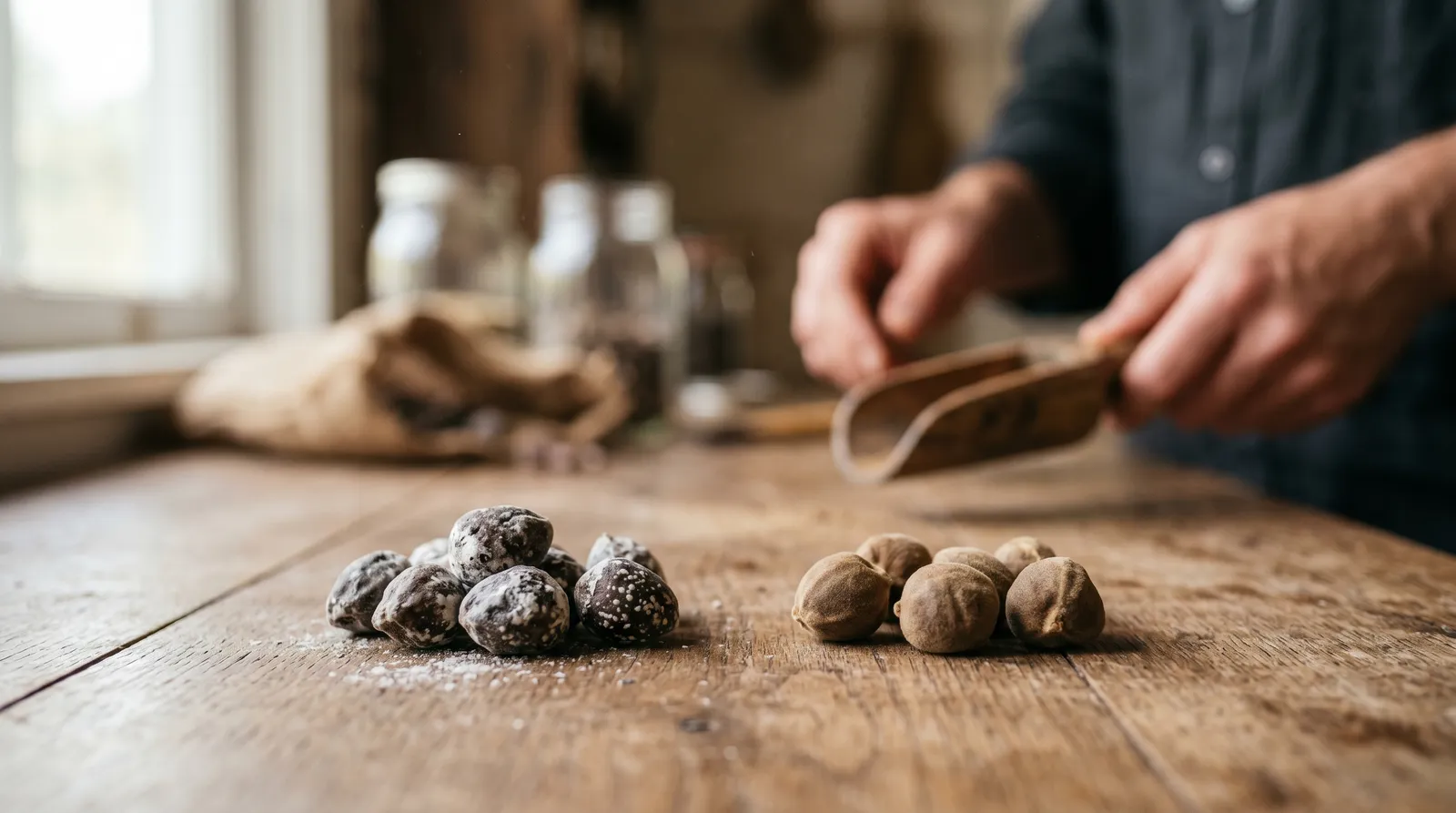
Treated seeds often have a slightly different surface texture — sometimes a visible powdery or waxy residue, sometimes a faint chemical smell that untreated seeds lack. But you cannot reliably identify treatment by appearance alone. The RIVM (Netherlands National Institute for Public Health and the Environment) flagged in a 2008 risk assessment that commercially available "party seeds" in the Netherlands contained variable and sometimes unidentifiable surface contaminants, making consumer-level quality assessment essentially impossible without laboratory testing.
Smartshops that specifically stock seeds for consumption source from suppliers who guarantee no chemical treatment. Horticultural suppliers make no such guarantee, because they're selling to gardeners, not to people who plan to eat the product.
Treated vs untreated seeds at a glance
| Feature | Treated seeds | Untreated seeds |
|---|---|---|
| Surface texture | Powdery, waxy, or chemically coated | Smooth, natural shell |
| Smell | Faint chemical or metallic odour possible | Earthy, mild |
| Intended market | Horticultural / ornamental | Smartshops, ethnobotanical suppliers |
| Nausea risk | Higher — chemical residues compound alkaloid-related GI distress | Lower — nausea from alkaloids only |
| Reliable identification | Lab testing only | Supplier guarantee + lab testing |
| Suitability for consumption | No | Yes, when sourced from reputable vendors |
Where do HBW seeds actually come from geographically?
Most commercial HBW seeds come from India, Ghana, and Hawaii, with smaller quantities from Madagascar and parts of Southeast Asia. Despite the name, Argyreia nervosa is native to the Indian subcontinent — particularly southern India, Bangladesh, and Sri Lanka. The "Hawaiian" tag stuck because the plant naturalised in Hawaii after being introduced as an ornamental, and that's where Western psychonauts first encountered it in the mid-20th century.
Indian-origin seeds dominate the bulk market. They're cheap and abundant, but quality control is inconsistent. Seeds harvested from wild or semi-wild populations in Kerala or Tamil Nadu may have been stored in open-air conditions for months before export, degrading alkaloid content. A 2005 phytochemical screening (Sridhar et al., 2005) of Indian-sourced A. nervosa seeds confirmed that storage conditions — particularly humidity and light exposure — significantly reduced measurable ergine content over a 6-month period.
Hawaiian-origin seeds carry a reputation for higher potency, though controlled comparative studies are scarce. The reputation likely reflects tighter post-harvest handling rather than inherent genetic superiority, though cultivar differences may play a role — the data simply isn't robust enough to say definitively.
How can you tell if seeds are fresh?
Fresh HBW seeds are dark brown to near-black, with a smooth, hard coat and a faint earthy smell. They should feel dense and heavy for their size — roughly 8–10mm in diameter. Seeds that are grey, cracked, lightweight, or powdery on the surface are either old, improperly stored, or treated.
Freshness correlates with alkaloid content. LSA is not the most stable molecule; it degrades with exposure to heat, light, and moisture. Seeds stored in cool, dark, dry conditions retain their alkaloid profile far longer than those left in a warehouse in tropical humidity. There's no consumer-grade test for LSA content, so physical inspection and trust in your supplier are the main tools available.
A simple float test is sometimes suggested — drop seeds in water and discard floaters. Seeds that float tend to have degraded interiors or insect damage. It's a rough filter, not a guarantee, but it catches the worst specimens.
Does the strain or variety matter?
Argyreia nervosa is the only species in the genus that reliably contains LSA at meaningful levels. It's sometimes sold under the synonym Argyreia speciosa. Other Argyreia species exist — there are over 90 in the genus — but they don't reliably contain LSA at psychoactive concentrations. If a seller lists seeds simply as "baby woodrose" without specifying A. nervosa, that's a red flag.
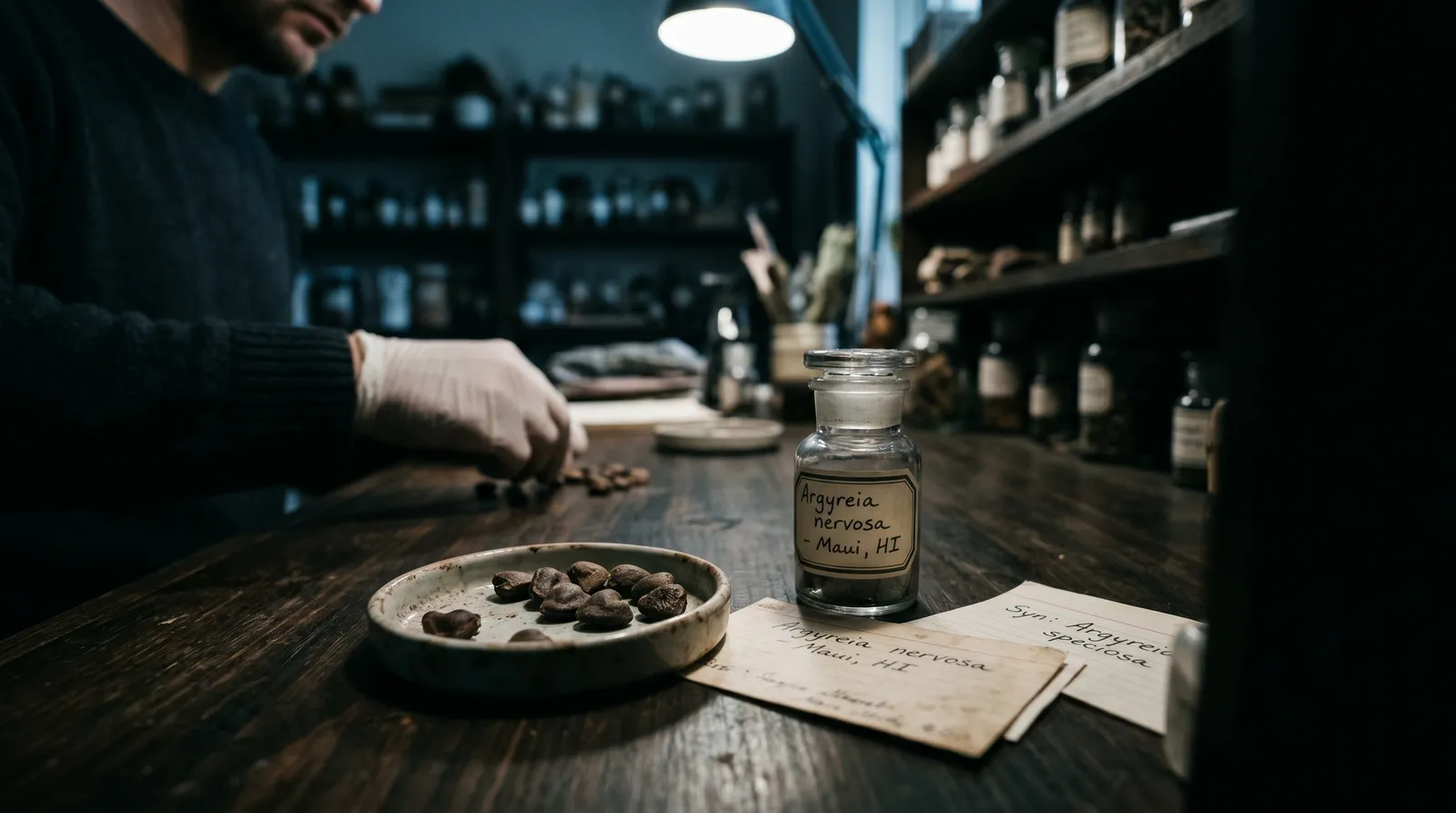
Within A. nervosa, there's no formally recognised cultivar system the way there is for, say, cannabis. You'll see sellers label seeds as "Hawaiian strain" or "Indian strain" or "Ghana strain," and these do reflect geographic origin, but the terms aren't standardised. The Hawaiian label commands a price premium — sometimes 2–3x the cost of Indian-sourced seeds — and whether that premium reflects genuine quality or just marketing is genuinely unclear. For comparison, morning glory seeds (another LSA source) are far cheaper and more widely available, but contain much lower alkaloid concentrations per seed, making Hawaiian baby woodrose the preferred option for those seeking a more predictable experience. The Azarius Hawaiian baby woodrose seeds product page provides current strain availability.
What about organic or food-grade labelling?
There is no official "food grade" certification for HBW seeds in any EU member state, because they're not classified as a food product. Organic certification through EU regulation (EC 2018/848) technically applies to agricultural products, and some suppliers do hold organic certification for their Argyreia nervosa crop — but this certifies farming practices, not alkaloid content or suitability for consumption.
An organic label does tell you the seeds weren't treated with synthetic pesticides or fungicides during cultivation, which is genuinely useful information. It doesn't tell you anything about post-harvest handling, storage conditions, or alkaloid potency. Treat organic certification as one positive signal among several, not as a complete guarantee of quality.
What are the key red flags when buying?
The biggest red flags when you buy or order HBW seeds are missing species identification, unusually low prices, and horticultural-channel sourcing. Watch for these specifically:
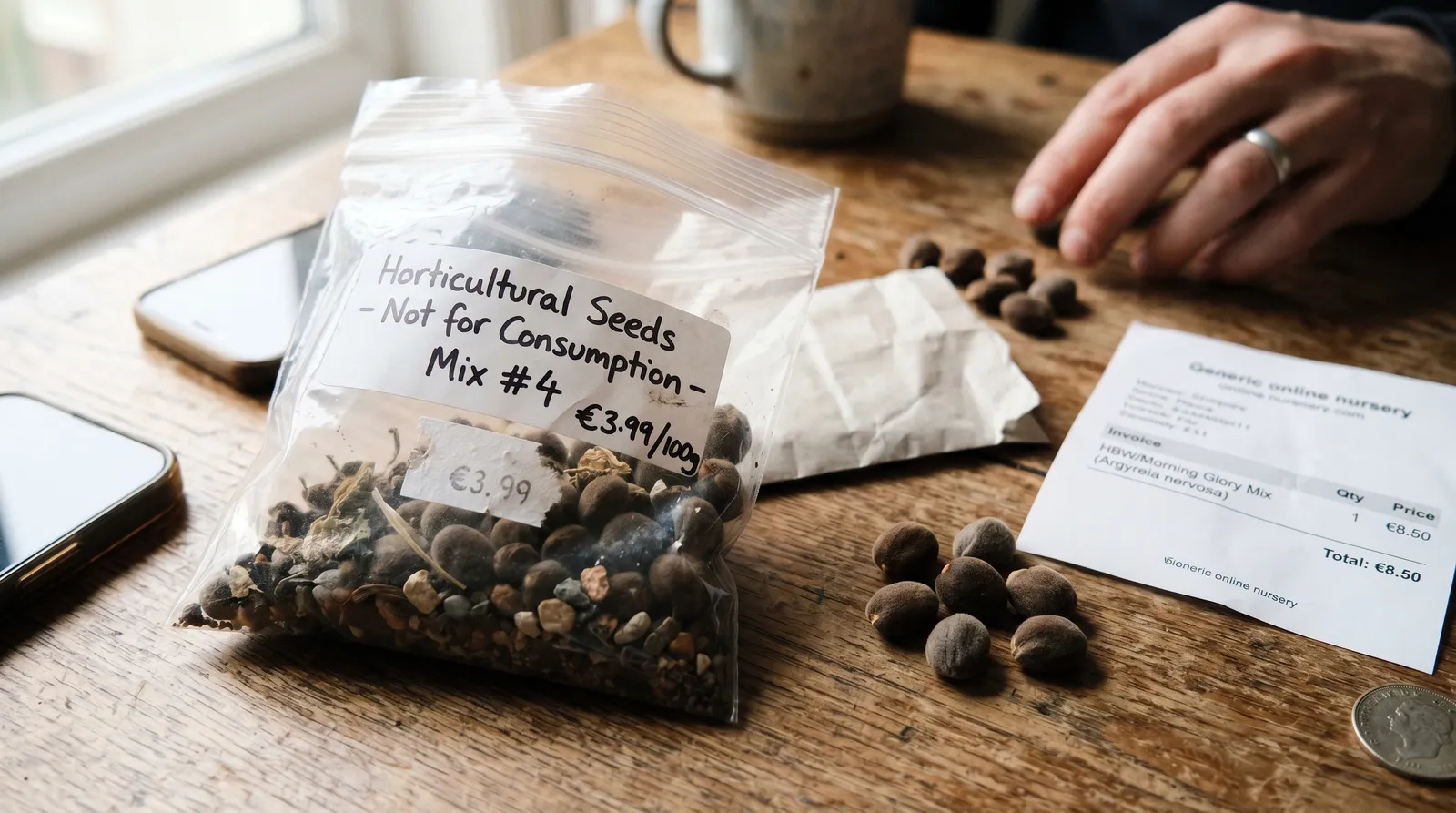
- No species identification. If the listing says "baby woodrose seeds" without Argyreia nervosa, walk away.
- Unusually low prices. Bulk Indian seeds sell at roughly €0.10–0.30 per seed at wholesale. If someone's offering 100 seeds for a fraction of that, the handling and storage are probably not what you'd want.
- Horticultural suppliers. Garden centres sell seeds to grow pretty vines. They have no reason to avoid chemical treatment and every reason to use it.
- No storage information. A supplier who can't tell you how seeds were stored — or who clearly ships in clear plastic bags exposed to light — isn't taking freshness seriously.
- Mixed batches. Seeds that vary dramatically in size, colour, and texture within the same packet likely come from multiple harvests or sources, making any kind of consistent experience impossible.
The safest approach is to get seeds from established smartshops that specifically stock them for human use and can speak to their supply chain. The Azarius encyclopedia article on Hawaiian baby woodrose safety and interactions covers the critical risks around serotonergic drug combinations — particularly SSRIs, MAOIs, and lithium — in detail. The LSA wiki article provides broader context on the alkaloid itself.
How does HBW compare to other LSA sources?
Hawaiian baby woodrose seeds are the most concentrated natural source of LSA available to consumers. Morning glory seeds (Ipomoea tricolor, particularly the Heavenly Blue variety) also contain LSA but at much lower concentrations — a typical experience requires 150–300 morning glory seeds versus 4–8 HBW seeds. This makes dosing with morning glory seeds less precise and the volume of plant material consumed much greater, which tends to worsen nausea.
| Factor | Hawaiian baby woodrose | Morning glory seeds |
|---|---|---|
| Species | Argyreia nervosa | Ipomoea tricolor |
| Typical dose (seeds) | 4–8 | 150–300 |
| LSA concentration | Higher per seed | Much lower per seed |
| Nausea potential | Moderate to high | High (larger volume of material) |
| Sourcing difficulty | Moderate — smartshops, ethnobotanical vendors | Easy — widely available, but often treated |
| Chemical treatment risk | High in horticultural channels | Very high — most commercial morning glory seeds are treated |
If you want to order LSA-containing seeds, HBW remains the more practical choice for most people, but both sources carry the same fundamental sourcing risks around chemical treatment.
How should you store HBW seeds after purchase?
Store Hawaiian baby woodrose seeds in an airtight container in a cool, dark, dry location — ideally below 20°C. LSA degrades measurably when exposed to heat, light, or humidity, and improper storage is one of the most common reasons people report weak or inactive seeds even when the source was originally reliable.
Glass jars with silicone seals work well. Adding a food-grade desiccant packet helps control residual moisture, especially if you live in a humid climate. Avoid clear containers or any storage that exposes seeds to sunlight. A kitchen cupboard away from the stove, or a dedicated drawer, is perfectly adequate — refrigeration works too, but introduce seeds to room temperature before opening the container to prevent condensation forming on the seed coat.
Properly stored seeds can retain meaningful alkaloid content for 12–18 months or longer, though there's no hard data on exact degradation curves. The practical advice is simple: buy what you'll use within a reasonable timeframe, and don't stockpile large quantities unless your storage conditions are genuinely good.
Last updated: April 2026
Frequently Asked Questions
8 questionsAre Hawaiian baby woodrose seeds treated with pesticides?
Do Hawaiian-origin HBW seeds have more LSA than Indian seeds?
How should Hawaiian baby woodrose seeds be stored to preserve potency?
Can you test Hawaiian baby woodrose seeds for LSA content at home?
Why do some HBW seeds cause more nausea than others?
Where can I buy untreated Hawaiian baby woodrose seeds?
How much does LSA content vary between individual Hawaiian baby woodrose seeds?
Are Hawaiian baby woodrose seeds from garden centres safe to consume?
About this article


Joshua Askew serves as Editorial Director for Azarius wiki content. He is Managing Director at Yuqo, a content agency specialising in cannabis, psychedelics and ethnobotanical editorial work across multiple languages. Th
This wiki article was drafted with AI assistance and reviewed by Joshua Askew, Managing Director at Yuqo. Editorial oversight by Adam Parsons.
Medical disclaimer. This content is for informational purposes only and does not constitute medical advice. Consult a qualified healthcare provider before use of any substance.
Last reviewed April 24, 2026
References (4)
- [1]Klinke, H.B., Müller, I.B., Steffenrud, S., & Dahl-Sørensen, R. (2009). Determination of lysergic acid diethylamide and related ergot alkaloids in seized blotter papers, seeds, and tablets. Forensic Science International, 189(1–3), 119–128.
- [2]RIVM (2008). Risk assessment of new psychoactive substances: Hawaiian baby woodrose seeds. National Institute for Public Health and the Environment, Netherlands.
- [3]Sridhar, K.R., Karamac, M., Amarowicz, R., & Sczepanska, A. (2005). Phytochemical screening and antioxidant activity of Argyreia nervosa seeds. International Journal of Food Sciences and Nutrition, 56(6), 427–434.
- [4]EMCDDA (2006). Report on the risk assessment of LSA-containing seeds in the context of the Council Decision on new psychoactive substances. European Monitoring Centre for Drugs and Drug Addiction.
Related Articles
LSA Legal Status in Europe
LSA (lysergic acid amide, or ergine) occupies a legal grey zone across Europe — rarely scheduled as a compound, yet subject to varied NPS legislation that…
Ololiuqui Mazatec Tradition: Ceremonial Seeds of the Sierra Mazateca
Ololiuqui — the seeds of Turbina corymbosa — played a specific ceremonial role among the Mazatec people of Oaxaca, distinct from their better-known use of…
Morning Glory LSA Plants Family
Morning glory LSA plants family is a group of Convolvulaceae vines whose seeds contain d-lysergic acid amide (ergine), a naturally occurring tryptamine first…
Hawaiian Baby Woodrose Plant Botany
Argyreia nervosa, commonly called Hawaiian baby woodrose, is a perennial climbing vine native to the Indian subcontinent, not Hawai'i.
Magic Truffle Quality Indicators
Magic truffle quality indicators are the measurable and sensory characteristics — psilocybin content, texture, aroma, packaging integrity, and storage…
Mescaline Cactus Market Observations
Mescaline cactus market observations is a research and retail term that describes the shifting patterns in sourcing, species selection, and consumption of…
Growing Mescaline Cacti as Ornamental Plants
Growing mescaline cacti ornamental is a horticultural practice that involves cultivating species like San Pedro, Peruvian Torch, and peyote for their…
Commercial Magic Truffle Cultivation
Commercial magic truffle cultivation is a large-scale agricultural process that produces psilocybin-containing sclerotia in climate-controlled indoor…
Huachuma Andean Tradition
The huachuma Andean tradition is a ceremonial healing lineage centred on the San Pedro cactus (Echinopsis pachanoi) that has been documented across at least…