
This article discusses psychoactive substances intended for adults (18+). If you have a health condition or take medication, consult a doctor before use. Our age policy
Kratom Extracts Explained
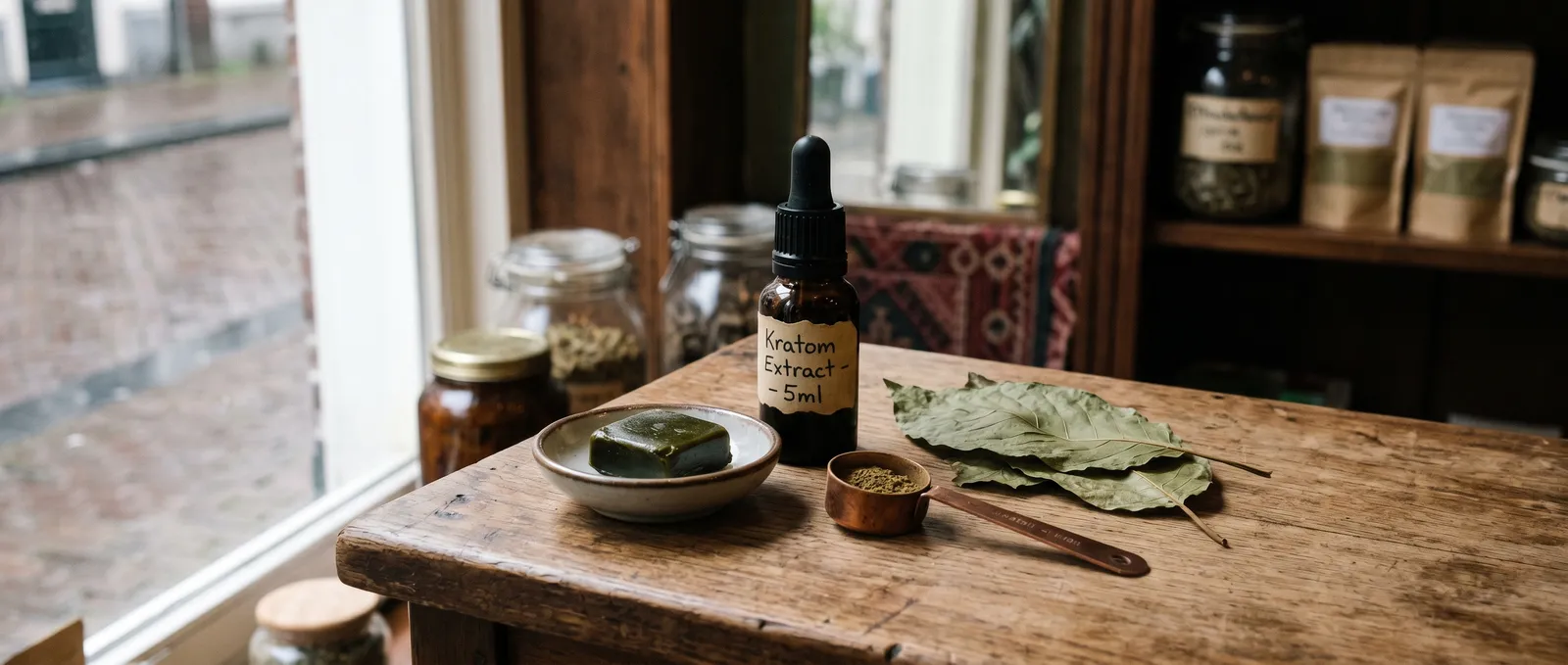
Definition
Kratom extracts are concentrated preparations of Mitragyna speciosa that amplify the plant's active alkaloids into a smaller, more potent dose. They shift the pharmacological balance compared to plain leaf — changing not just strength but the experience profile around tolerance, dependence, and dosing precision.
Kratom extracts are concentrated preparations of Mitragyna speciosa leaf that isolate and amplify the plant's active alkaloids — primarily mitragynine and 7-hydroxymitragynine — into a smaller, more potent dose. If plain leaf powder is a cup of coffee, a kratom extract is a double espresso pulled from twice the grounds. That analogy only goes so far, though, because the pharmacological shift between leaf and extract is not just about strength. It changes the experience profile in ways that matter.
Adult audience (18+). The dosing ranges and effects described in this article apply to adult physiology. This content is not intended for minors.
This article covers what kratom extracts actually are, how they're made, how they differ from plain leaf at the receptor level, and why the dosing rules you know for leaf powder do not transfer. If you're looking for general background on the plant itself, the Kratom: A Complete Guide pillar article covers the basics.
What Is a Kratom Extract, Exactly?
A kratom extract is any preparation where the alkaloid content per gram is higher than what you'd find in raw dried leaf. Plain Mitragyna speciosa leaf powder typically contains around 1–1.5% mitragynine by weight, with 7-hydroxymitragynine present in much smaller quantities — often below 0.05% (Kruegel & Grundmann, 2018). An extract concentrates these compounds, sometimes dramatically.
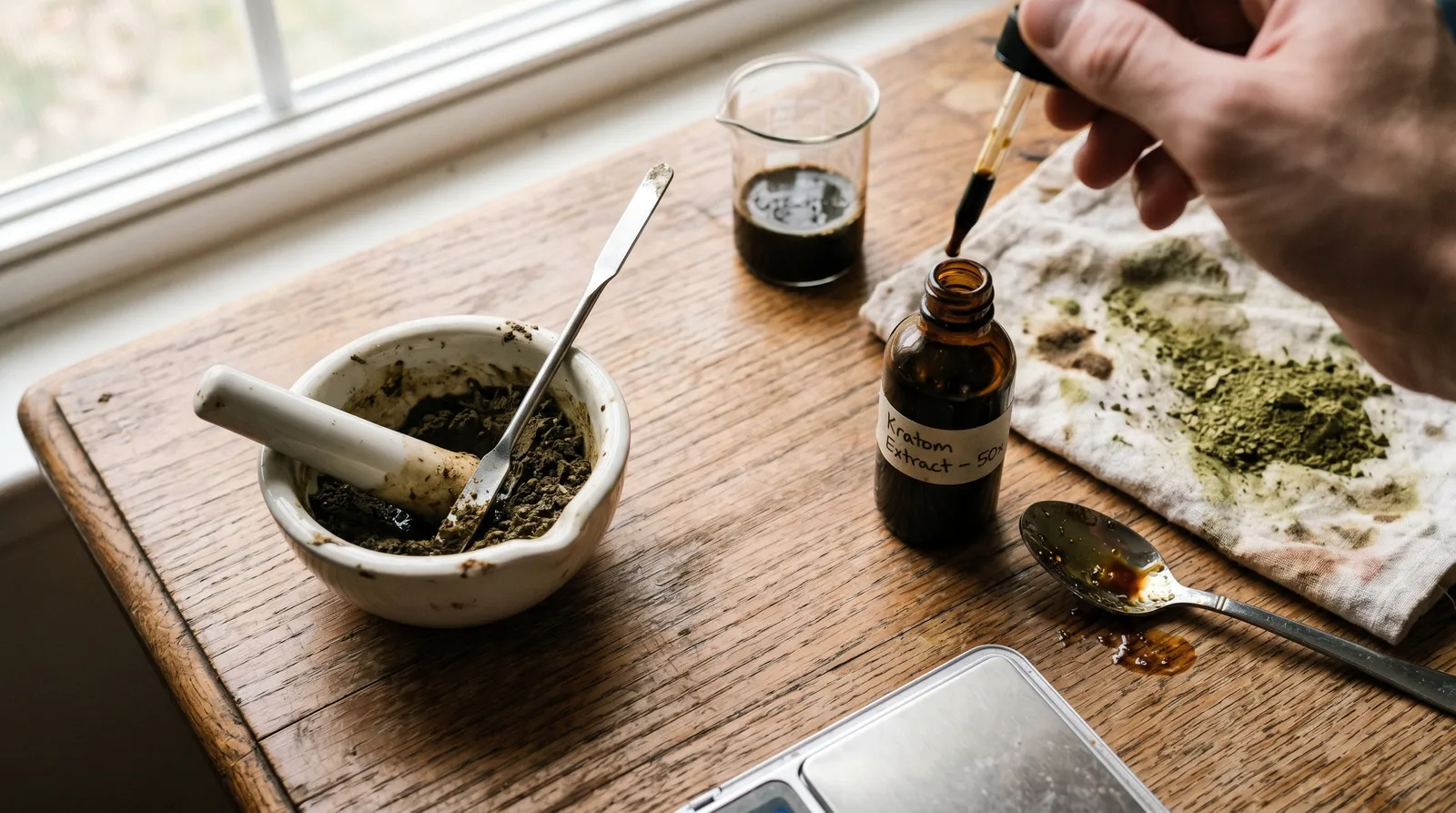
The "x" labelling you see on kratom extract products — 5x, 10x, 25x, and so on — is supposed to indicate how many grams of leaf went into producing one gram of extract. A 10x extract, in theory, means 10 grams of leaf were reduced to 1 gram of product. In practice, the "x" system is unreliable. It tells you nothing about actual alkaloid content, because extraction efficiency varies wildly depending on method, leaf quality, and processing conditions. A 15x kratom extract from one producer might contain less mitragynine than a 10x from another. The only meaningful measure is a certificate of analysis (COA) showing actual alkaloid percentages — and not all products come with one.
Kratom extracts come in several forms:
- Liquid tinctures — alkaloids dissolved in a solvent base (often ethanol or water-ethanol mix), dosed by the dropper.
- Resin — a thick, dark, tar-like substance produced by boiling down leaf tea and evaporating the liquid. Resin is dense and sticky, typically broken into small pieces for dosing.
- Enhanced leaf — plain leaf powder blended with extract to boost alkaloid concentration while keeping the broader alkaloid profile of the leaf. This sits between plain leaf and a pure extract.
- Concentrated powder — dry extract powder, often standardised to a stated mitragynine percentage.
- Full-spectrum extract — a preparation that aims to retain the full range of leaf alkaloids (over 40 have been identified in Mitragyna speciosa), not just mitragynine and 7-hydroxymitragynine.
How Kratom Extracts Are Made
Kratom extracts are produced by dissolving alkaloids out of the plant material, removing the plant matter, and concentrating what remains. The details vary by method, and the method chosen directly affects the alkaloid profile of the final product.
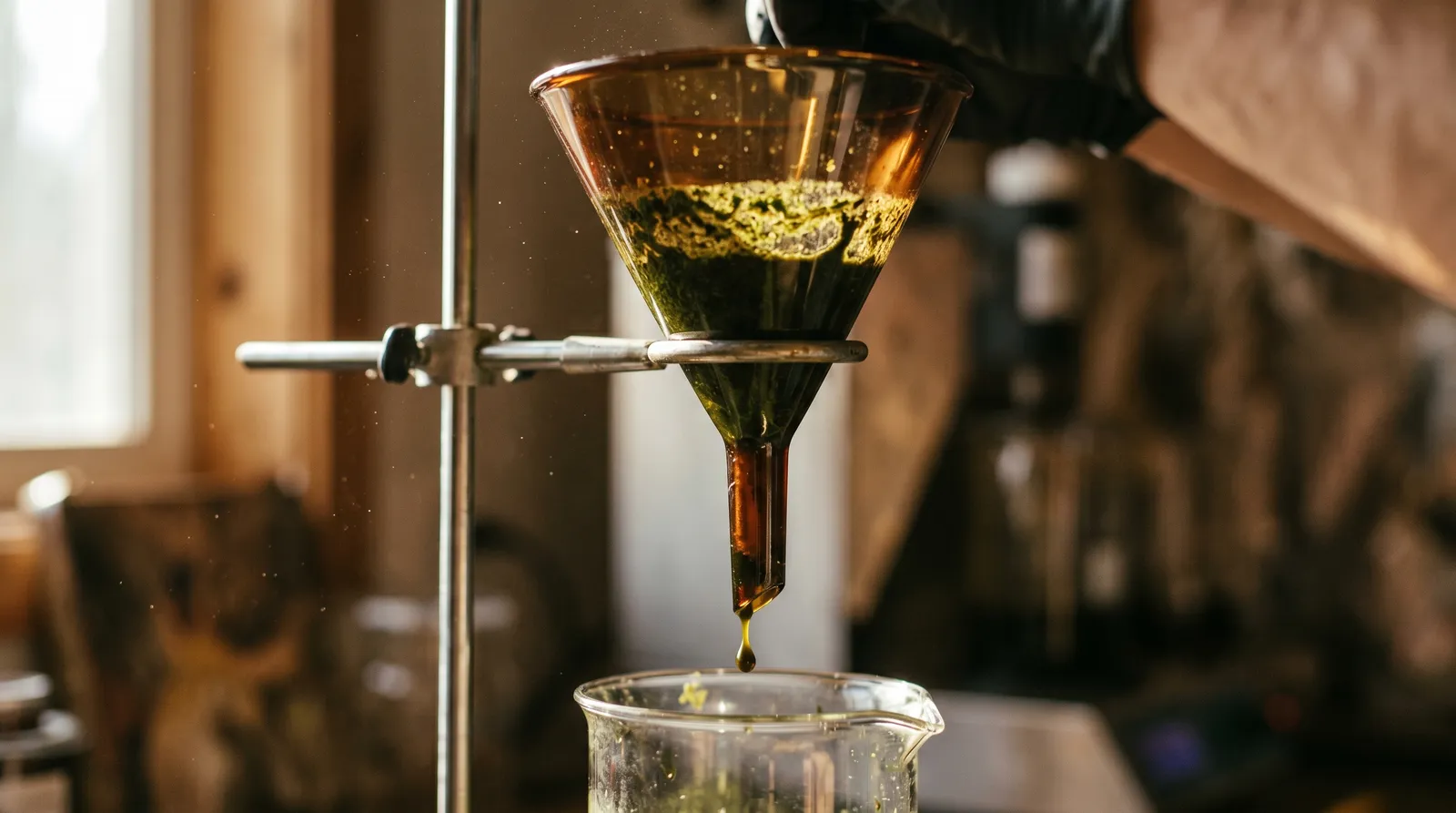
Water-based extraction is the oldest method — essentially what traditional users in Southeast Asia do when they boil leaves into a concentrated tea. Prolonged boiling pulls mitragynine and other alkaloids into solution. Evaporate the water, and you're left with a resin. This is low-tech but effective, and it tends to produce a broad-spectrum product because water pulls out a range of compounds, not just the target alkaloids.
Acid-base extraction uses pH manipulation to selectively isolate alkaloids. An acidic solution dissolves the alkaloids; the solution is then made basic, causing the alkaloids to precipitate out. This produces a cleaner, more concentrated product and is the basis for many commercial kratom extract powders.
Ethanol extraction uses alcohol as the solvent, which is efficient at pulling mitragynine specifically. Many liquid tinctures use this method. The resulting product is typically dosed by volume (millilitres) rather than weight.
More sophisticated producers use supercritical CO₂ extraction, which allows precise control over which compounds are pulled. It's the same technology used in high-end cannabis and hop extracts. The result is a cleaner product with fewer residual solvents, but the equipment is expensive, which is reflected in the price.
None of these methods are something to attempt at home. Acid-base chemistry involves caustic reagents, and even simple water reductions require careful temperature control to avoid degrading 7-hydroxymitragynine, which is heat-sensitive.
Why Kratom Extracts Are Not Just "Stronger Leaf"
Kratom extracts shift the pharmacological balance rather than simply scaling up the leaf experience — and this is the critical point most often misunderstood.
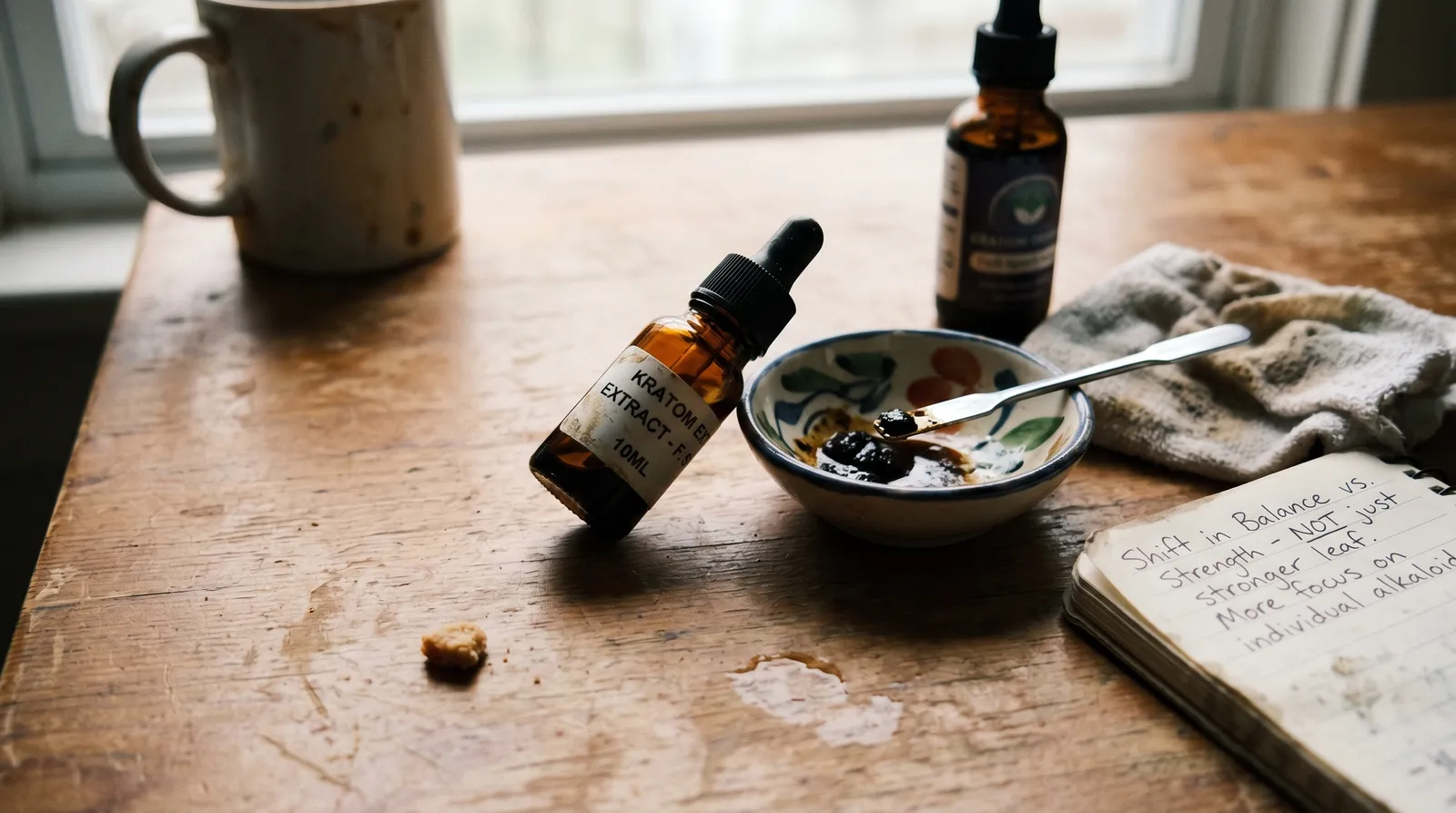
Mitragynine and 7-hydroxymitragynine are both partial agonists at the mu-opioid receptor, but 7-hydroxymitragynine binds with roughly 13-fold greater affinity than mitragynine (Kruegel et al., 2016). In plain leaf, 7-hydroxymitragynine is present in trace amounts — typically under 0.02% of dry weight. But some extraction methods concentrate it disproportionately, and some products are deliberately enriched with it. When the ratio of 7-hydroxymitragynine to mitragynine shifts upward, the subjective and physiological effects shift too: stronger mu-opioid activation, greater respiratory concern when combined with other depressants, and a steeper tolerance curve.
A 2016 analysis of commercially available kratom products found that kratom extract and enhanced products had 7-hydroxymitragynine concentrations up to 3.8 times higher than what would be expected from simple concentration of leaf alkaloids, suggesting deliberate enrichment or selective extraction (Lydecker et al., 2016). This means two "10x" kratom extracts might have very different 7-hydroxymitragynine content — and therefore very different experience profiles.
The practical consequence: dose figures for plain leaf do not translate to kratom extracts. Survey data on self-reported kratom use (Grundmann, 2017) typically references leaf powder doses in the range of 1–8 grams. Applying those numbers to an extract is a recipe for an unpleasant experience. Extract dosing depends entirely on the specific product's alkaloid content, which is why a COA matters far more here than with plain leaf.
Tolerance, Dependence, and the Extract Problem
Tolerance to kratom extracts develops faster than with plain leaf because each dose delivers a higher alkaloid load to the mu-opioid receptors. This is well-established and consistent with the pharmacology of other partial opioid agonists.
The pattern is predictable: someone switches from leaf to kratom extracts for convenience or potency, finds the same extract dose less effective within a week or two, increases the dose, and develops a level of physical dependence that would have taken much longer with leaf alone. A recognised pattern of discontinuation effects — irritability, muscle aches, insomnia, runny nose, and in some cases anxiety and low mood — has been documented in daily heavy users (Singh et al., 2014). The intensity tends to correlate with dose and duration of use, and extract users who dose daily are loading both variables.
This doesn't mean kratom extracts are inherently more problematic than leaf in a single-use context. It means the margin for error is thinner, the escalation pathway is faster, and the consequences of daily use are amplified. If you're using extracts, spacing sessions and tracking your frequency matters more, not less, than it does with plain leaf.
Extract vs. Plain Leaf: Key Differences at a Glance
| Dimension | Plain Leaf Powder | Kratom Extract |
|---|---|---|
| Typical mitragynine content | ~1–1.5% by weight (Kruegel & Grundmann, 2018) | Variable; 5–45%+ depending on product and method |
| 7-hydroxymitragynine ratio | Trace amounts (<0.05%) | May be disproportionately concentrated |
| Dose precision | Moderate — measured by gram weight | Low without COA — "x" ratings unreliable |
| Tolerance development | Gradual with daily use | Faster due to higher alkaloid load per dose |
| Dependence considerations (daily use) | Moderate at high doses | Higher — greater receptor saturation per session |
| Full alkaloid profile | Retained — 40+ alkaloids present | Depends on method; some extracts are selective |
| Typical form | Powder, capsules, crushed leaf | Tincture, resin, enhanced powder, concentrated powder |
How Kratom Extracts Compare to Other Concentrated Botanicals
Kratom extracts are not the only concentrated plant preparation available, and comparing them to analogous products helps frame what you're dealing with.
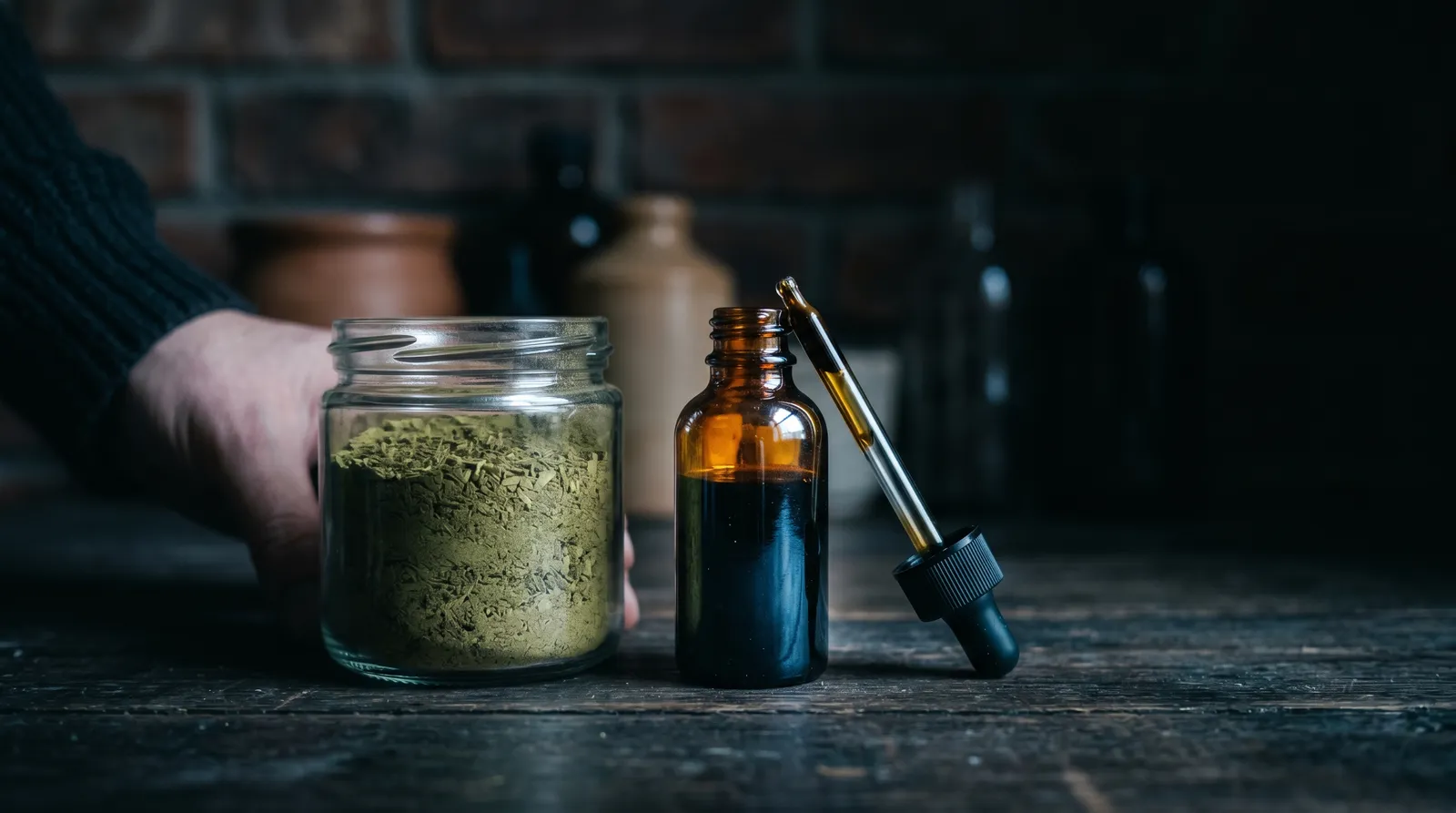
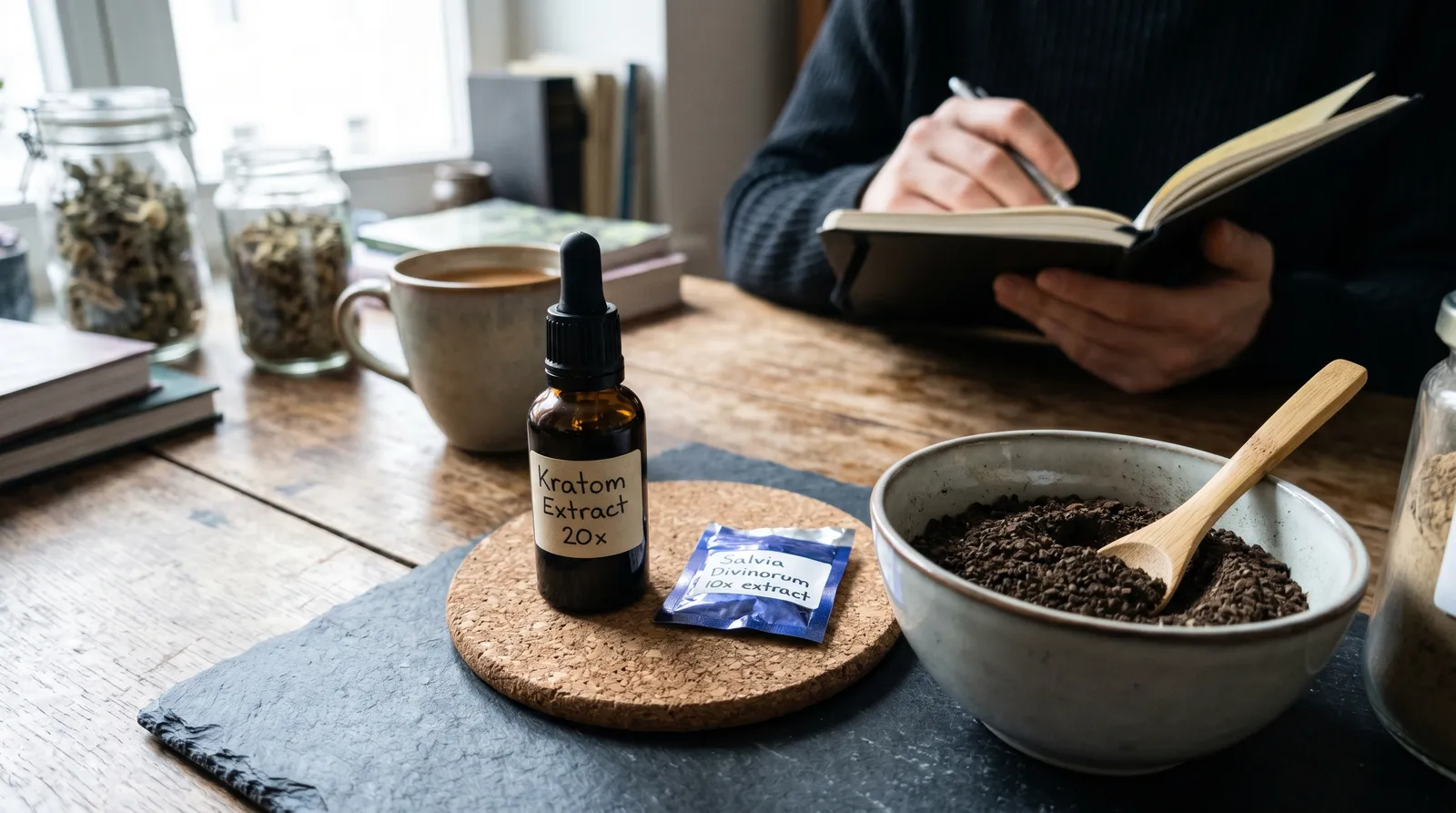
Salvia divinorum extracts follow a similar "x" convention — 5x, 10x, 20x — and share the same problem: the number tells you about the input ratio, not the output potency. But the pharmacology is completely different. Salvia acts on kappa-opioid receptors, producing dissociative effects rather than the mu-opioid warmth of kratom. You can explore Salvia divinorum extracts in the Azarius catalogue to see how the "x" labelling convention maps across different botanicals. The comparison is useful only at the level of extract labelling conventions and their unreliability.
Cannabis concentrates offer a closer parallel in terms of market dynamics. Just as the cannabis world moved from flower to dabs, shatter, and distillate — each with higher THC percentages and different experience profiles — kratom has seen a similar trajectory from plain leaf to standardised extract powders and tinctures. In both cases, the concentrated product attracts users seeking efficiency but also raises the stakes around tolerance and overconsumption. The Beckley Foundation's research on cannabis potency provides a useful framework for thinking about how concentration changes the experience, even across different substances.
Kava extracts present yet another comparison. Kavalactone-standardised extracts exist alongside traditional root preparations, and the extract market has faced similar debates about whether isolated compounds behave differently from the whole-plant matrix. With kava, concerns about liver-related effects were eventually linked more to extraction method and plant part used than to kavalactones themselves — a cautionary tale about assuming all extracts of a plant are equivalent. The Azarius kava product range includes both traditional grind and extract formats, illustrating this spectrum.
What We Honestly Don't Know
No controlled human clinical trials have compared the effects of kratom extracts against plain leaf. The pharmacokinetic data — how quickly extract alkaloids are absorbed, how long they persist, how they're metabolised at higher doses — is largely extrapolated from animal studies and single-compound research rather than from real-world extract products with their complex alkaloid mixtures.
We don't know whether full-spectrum kratom extracts are genuinely more balanced than isolated-alkaloid preparations. The "entourage effect" hypothesis — that the full range of plant compounds modulates the activity of the primary alkaloids — is plausible but unproven for kratom. It's borrowed from cannabis research where it also remains debated.
Long-term outcomes for regular extract users are essentially undocumented. Case reports exist for acute adverse events, but population-level data on what happens to people who use kratom extracts weekly or monthly over years simply doesn't exist yet. We sell these products and we think informed adults should have access to them, but we won't pretend the evidence base is more robust than it is.
Harm Reduction with Kratom Extracts
The most effective harm-reduction step for kratom extracts is knowing the actual alkaloid content of the specific product you're using. Everything else follows from that. The standard harm-reduction advice for kratom applies doubly to extracts, with a few additions:
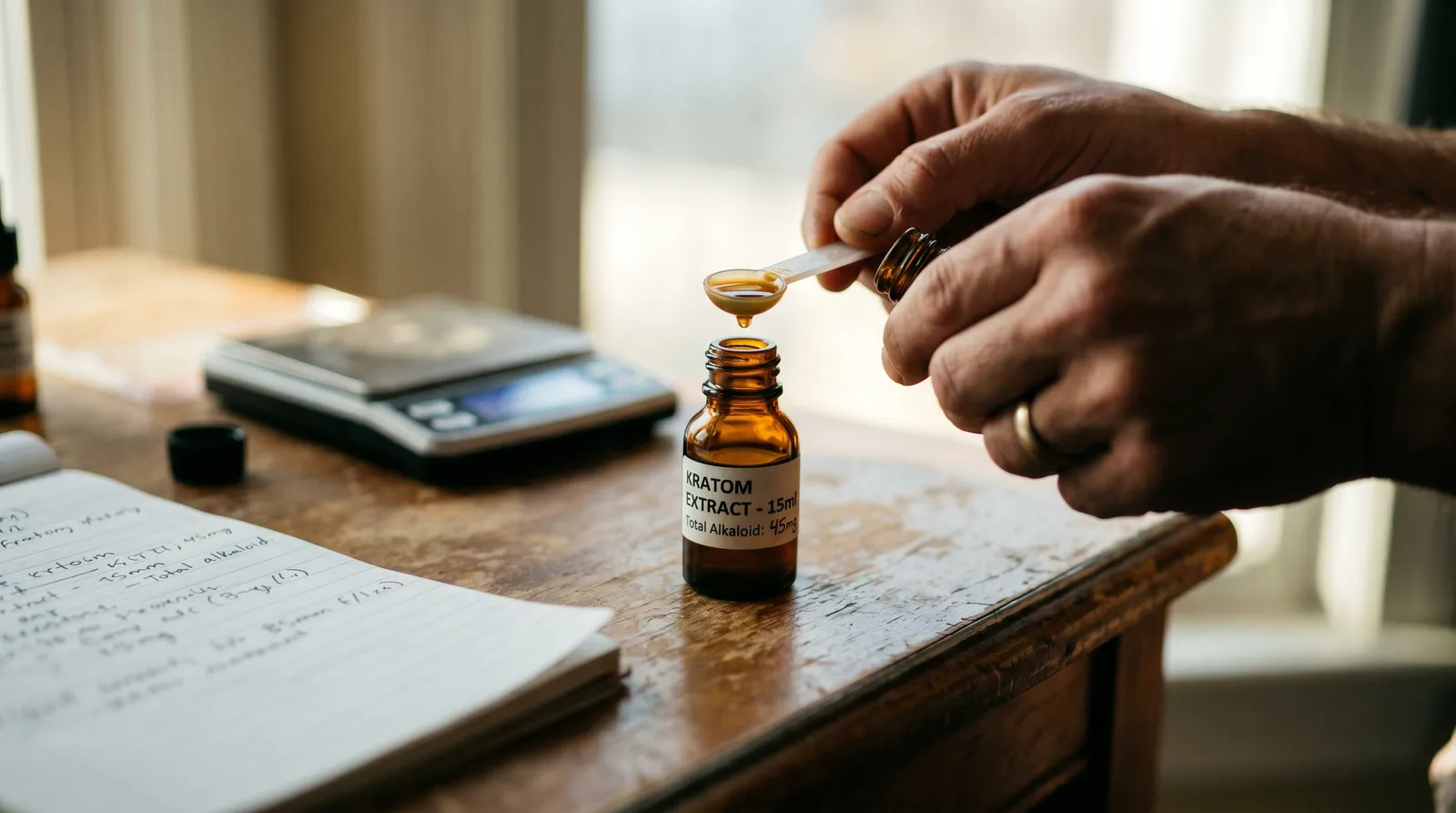
- Know what you're taking. A product with a stated alkaloid percentage backed by a COA is meaningfully better than one labelled "15x" with no further information. Prioritise extract products with transparent third-party testing.
- Do not convert leaf doses to extract doses by simple division. The alkaloid ratios differ, not just the total concentration.
- Avoid daily use. Tolerance and dependence develop faster with kratom extracts. Building in non-use days is the single most effective way to keep the experience manageable.
- Do not combine extracts with other opioids, benzodiazepines, alcohol, or MAOIs. The interaction considerations are the same as with leaf but amplified by higher alkaloid load. The dedicated Kratom Drug Interactions article covers this in detail.
- People with pre-existing liver conditions or those taking hepatotoxic medication should be particularly cautious — case reports of liver-related effects exist, though the mechanism and population-level incidence remain under investigation (Kapp et al., 2020).
- Pregnancy and breastfeeding: no data exists for extracts or leaf. Avoid both.
- Start low, go slow. If you order a new kratom extract product — even if you've used extracts before — begin with the smallest practical dose. Different products, different alkaloid profiles, different effects.
Choosing and Buying Kratom Extracts
Transparency about alkaloid content is the single most important factor when choosing a kratom extract. A reputable vendor provides a certificate of analysis from an independent lab, showing at minimum the mitragynine and 7-hydroxymitragynine percentages. Without this, you're dosing blind.

At Azarius, our kratom extract products — including Kratom 15x Extract and Kratom Gold Reserve — come with batch-specific testing. We stock both resin and concentrated powder formats. If you're new to kratom extracts, enhanced leaf products like Kratom Enhanced Leaf offer a middle ground: higher potency than plain leaf but with the full alkaloid profile retained, making the experience more predictable.
For those who prefer to get plain kratom leaf powder first and work up from there, that's the approach we'd recommend. Our Kratom Powder range covers the major vein colours. Build familiarity with how your body responds to the plant before moving to concentrated forms. Browse the Azarius kratom category to compare leaf and extract options side by side.
The Bottom Line
Kratom extracts are a different beast from plain leaf — pharmacologically, practically, and in terms of how you approach them. They concentrate the active alkaloids, particularly 7-hydroxymitragynine, in ways that change the dose-response relationship, speed up tolerance, and narrow the margin for error. None of that makes them unusable, but it does mean they demand more respect, more knowledge of what's in the specific product, and more discipline around frequency of use. If you're new to kratom, plain leaf is the sensible starting point. If you're moving to kratom extracts, a COA is your best friend.
Last updated: April 2026
Frequently Asked Questions
10 questionsWhat does the 'x' rating on kratom extracts actually mean?
Can I convert my leaf powder dose to a kratom extract dose?
Do kratom extracts cause tolerance faster than plain leaf?
What is the difference between enhanced leaf and a pure kratom extract?
Are full-spectrum kratom extracts more balanced than isolated extracts?
What should I look for when I buy kratom extracts?
How are kratom extracts made?
Is it safe to mix kratom extract with other substances?
How long does a kratom extract stay fresh once opened?
Why do kratom extracts taste more bitter than regular leaf powder?
About this article


Adam Parsons is an external cannabis and psychedelics writer and editor who contributes to Azarius's wiki as both author and reviewer. On the writing side, he authors Azarius's kratom and kanna clusters, drawing on exten
This wiki article was drafted with AI assistance and reviewed by Adam Parsons, External contributor. Editorial oversight by Joshua Askew.
Medical disclaimer. This content is for informational purposes only and does not constitute medical advice. Consult a qualified healthcare provider before use of any substance.
Last reviewed April 19, 2026
References (8)
- [1]Grundmann, O. (2017). Patterns of kratom use and health impact in the US — results from an online survey. Drug and Alcohol Dependence , 176, 63–70. DOI: 10.1016/j.drugalcdep.2017.03.007
- [2]Kruegel, A. C., & Grundmann, O. (2018). The medicinal chemistry and neuropharmacology of kratom: A preliminary discussion of a promising medicinal plant. ACS Chemical Neuroscience , 9(3), 476–488. DOI: 10.1016/j.neuropharm.2017.08.026
- [3]Kruegel, A. C., et al. (2016). Synthetic and receptor signaling explorations of the Mitragyna alkaloids: Mitragynine as an atypical molecular framework for opioid receptor modulators. Journal of the American Chemical Society , 138(21), 6754–6764. DOI: 10.1021/jacs.6b00360
- [4]Lydecker, A. G., et al. (2016). Suspected adulteration of commercial kratom products with 7-hydroxymitragynine. Journal of Medical Toxicology , 12(4), 341–349. DOI: 10.1007/s13181-016-0588-y
- [5]Kapp, F. G., et al. (2020). Intrahepatic cholestasis following use of powdered kratom (Mitragyna speciosa). Journal of Medical Toxicology , 7(3), 227–231.
- [6]Singh, D., et al. (2014). Traditional and non-traditional uses of Mitragynine (Kratom): A survey of the literature. Brain Research Bulletin , 126, 41–46.
- [7]European Monitoring Centre for Drugs and Drug Addiction. Kratom drug profile. Retrieved April 2026.
- [8]Beckley Foundation. (2021). Cannabis potency and public health. Beckley Foundation Policy Brief.
Related Articles
Blue Lotus vs Kanna: Effects & Safety
Blue lotus vs kanna compared — Nymphaea caerulea's aporphine profile against Sceletium tortuosum's mesembrine chemistry, with interaction warnings.
Lotus Clinical Research Overview
What does lotus clinical research actually show? A critical review of Nymphaea caerulea and Nelumbo nucifera pharmacology, preclinical data, and…
Kanna South Africa To West History
Sceletium tortuosum was used by San and Khoekhoe communities in southern Africa for centuries before European colonists first documented it in the 1660s.
Sceletium Tortuosum Plant
Learn about the sceletium tortuosum plant: botany, alkaloids, fermentation, safety warnings, and where to buy kanna.
Kanna Pharmacokinetics Explained
Complete guide to kanna pharmacokinetics: how Sceletium tortuosum alkaloids are absorbed, metabolised via CYP2D6, and eliminated.
Kanna Chemistry: Sceletium Alkaloids Explained
Kanna chemistry explained: mesembrine, mesembrenone, their mechanisms, how fermentation and extraction change alkaloid profiles, and why it matters…

Rapé Shamanic Snuff Guide: How to Use It Safely
A practical rapé shamanic snuff guide covering dose, kuripe technique, effects, nicotine safety, interactions and Amazonian tradition.

White Sage Salvia Apiana Cultural Smudging Guide
Salvia apiana is a non-psychoactive shrub native to southern California's coastal sage scrub, burned as ceremonial incense in Indigenous North American…

Mulungu Erythrina Traditional Amazonian Use — Bark, Alkaloids & Research
Erythrina mulungu is a Brazilian legume tree whose bark has been brewed as a calming decoction in rural folk medicine for generations.