
This article discusses psychoactive substances intended for adults (18+). If you have a health condition or take medication, consult a doctor before use. Our age policy
Kanna Clinical Research
Definition
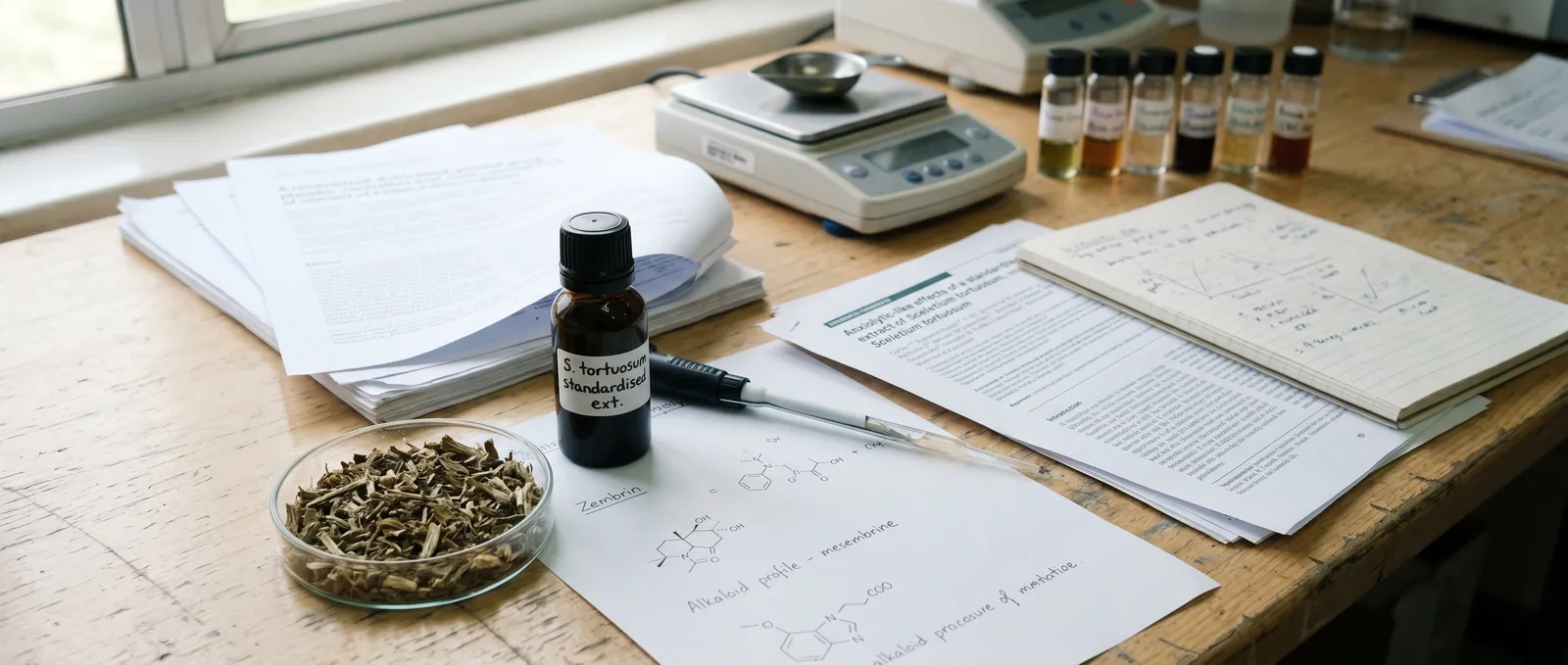
Published clinical research on Sceletium tortuosum is limited to a handful of small, short-term trials testing a specific standardised extract. The most cited studies report reduced amygdala reactivity to threat stimuli (Terburg et al., 2013) and improved cognitive flexibility (Chiu et al., 2014) in healthy volunteers — promising signals, but far from established clinical proof.
Clinical research on Sceletium tortuosum — kanna — is still in its early chapters. The handful of published human trials have tested a specific standardised extract of the plant, not raw kanna material or arbitrary commercial preparations. Those trials, mostly small and short-term, have produced some genuinely interesting signals around anxiety and cognitive flexibility, but the kanna clinical research evidence base remains thin by any conventional pharmacological standard. What follows is a plain-language walk through every major published clinical study, what each one actually found, and — just as critically — what none of them have answered yet.
Adult audience (18+). The dosing ranges and effects described in this article apply to adult physiology. This content is not intended for minors.
Disclaimer: This article is for informational purposes only and does not constitute medical advice, diagnosis, or treatment. Kanna is not approved as a medicine in any jurisdiction. Always consult a qualified healthcare professional before using kanna or any botanical supplement, especially if you take prescription medication or have a pre-existing health condition.
The clinical evidence at a glance
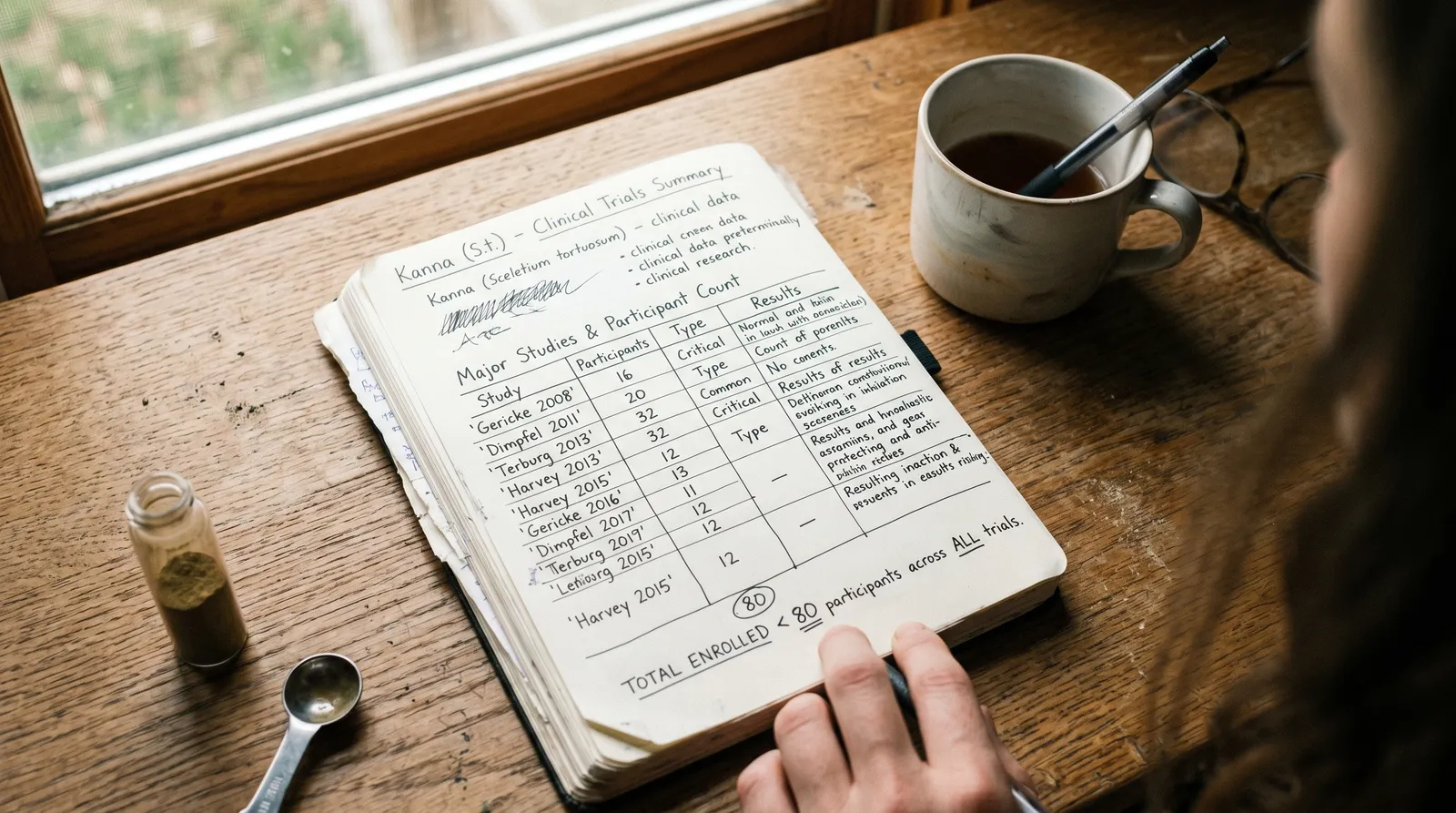
Fewer than 80 human participants have been enrolled across all published controlled kanna clinical research trials. The table below summarises every major study.
| Study | Design | Participants | Preparation | Key finding |
|---|---|---|---|---|
| Nell et al. (2013) | Randomised, double-blind, placebo-controlled; single dose | 16 healthy adults | Specific standardised extract, 25 mg | Reduced amygdala reactivity to fearful faces on fMRI (Nell et al., 2013) |
| Terburg et al. (2013) | Randomised, double-blind, placebo-controlled; single dose | 16 healthy adults (same cohort as Nell) | Specific standardised extract, 25 mg | Attenuated threat-related amygdala response; no effect on happy-face processing (Terburg et al., 2013) |
| Chiu et al. (2014) | Randomised, double-blind, placebo-controlled; 3 weeks | 21 healthy adults | Specific standardised extract, 25 mg/day | Improved cognitive set flexibility and executive function on CNS Vital Signs battery (Chiu et al., 2014) |
| Gericke (2001) | Open-label, uncontrolled; 6 weeks | ~16 subjects with anxiety and depressive symptoms | Sceletium extract (dose and standardisation details limited) | Self-reported improvements in anxiety and mood; no placebo arm, limited documentation (Gericke, 2001) |
| Smith (2011) | Safety and tolerability pilot; 3 months | 37 healthy adults | Specific standardised extract, up to 25 mg/day | No clinically significant adverse events; haematological and biochemical markers within normal range (Smith, 2011) |
A few things jump out immediately. Sample sizes are tiny — the largest published trial enrolled 37 people. Most used a single proprietary standardised extract at 25 mg per day. And none of these studies recruited participants with diagnosed psychiatric conditions as the primary population. That last point matters enormously: "reduced amygdala reactivity in healthy volunteers" is not the same thing as "treats anxiety disorder."
The amygdala studies: Nell and Terburg (2013)
The two most frequently cited kanna clinical research papers both measured amygdala reactivity after a single 25 mg dose of a specific standardised Sceletium extract using fMRI in a cohort of 16 healthy volunteers. Published in the same year, using the same participants, both used functional magnetic resonance imaging (fMRI) to measure brain activity in response to emotional faces (Nell et al., 2013; Terburg et al., 2013).
Nell et al. (2013) reported that the extract significantly reduced amygdala reactivity to faces expressing fear, compared to placebo. The amygdala is a brain region heavily involved in threat detection and anxiety responses, so this finding generated real interest. Terburg et al. (2013) extended the analysis and found that the attenuation was specific to threat-related stimuli — the extract did not blunt responses to happy faces, suggesting the effect was not simply a general dampening of emotional processing.
These are genuinely interesting neuroimaging results. But they come with serious caveats. Sixteen participants is a small sample, even for an fMRI study. A single dose tells you nothing about what happens with repeated use. And reduced amygdala reactivity on a screen is a biomarker, not a clinical outcome — it does not directly translate into "this person feels less anxious in their daily life." The authors themselves were careful to frame the results as preliminary evidence warranting larger trials, not as proof of anxiolytic efficacy.
It is also worth noting that the specific standardised extract used in these studies is a proprietary 2:1 alkaloid-ratio preparation (high in mesembrenone relative to mesembrine). The alkaloid profile of that extract is not identical to what you would find in raw kanna plant material, fermented kougoed, or a different commercial extract. Transferring these fMRI findings onto other kanna preparations is not scientifically justified.
The cognitive flexibility trial: Chiu (2014)
Chiu et al. (2014) produced the only published controlled data showing cognitive improvements from a Sceletium extract in humans. They ran a three-week, randomised, double-blind, placebo-controlled study with 21 healthy adults taking 25 mg per day of the same standardised extract. The primary outcome measures were cognitive performance scores on the CNS Vital Signs battery — a computerised test that measures things like memory, reaction time, processing speed, and cognitive flexibility (the ability to shift between tasks or mental sets) (Chiu et al., 2014).
The extract group showed statistically significant improvements in cognitive flexibility and executive function compared to placebo. No significant effects were found on memory, psychomotor speed, or reaction time. Self-reported mood and sleep quality also improved in the extract group, though these were secondary endpoints and the study was not powered to detect mood effects reliably.
This is the study most often cited when people describe kanna as a "nootropic." And again, the result is genuinely interesting — cognitive flexibility is a meaningful functional measure. But 21 participants over three weeks, in healthy volunteers, using a specific proprietary extract, is a long way from establishing kanna as a cognitive enhancer in any general sense. The cognitive flexibility improvement could reflect reduced anxiety (less mental rigidity under stress) rather than a direct pro-cognitive mechanism, but the study was not designed to tease those apart.
The safety pilot: Smith (2011)
Smith (2011) is the only published systematic safety study on kanna in humans, covering three months at up to 25 mg per day of a standardised extract in 37 healthy adults. Participants were monitored with regular blood tests (haematology, liver function, kidney function, lipid panels) and vital signs (Smith, 2011).
The results were reassuring at that dose and duration: no clinically significant adverse events were reported, and all laboratory markers remained within normal ranges. The most commonly reported side effects were mild and transient — headache, upper abdominal discomfort, and some initial appetite changes.
This study is important because it provides the only published, systematic safety data on kanna in humans. But three months, 37 people, and a single low dose of one specific extract is a very narrow safety window. It tells you that 25 mg per day of that particular preparation was well tolerated in healthy adults over 90 days. It tells you essentially nothing about higher doses, longer durations, different preparations, or use in people with pre-existing conditions — particularly those involving serotonergic medication.
The open-label data: Gericke (2001)
Gericke's 2001 open-label study is the weakest piece of published kanna clinical research in terms of methodological rigour, lacking both a placebo arm and blinding. It involved approximately 16 subjects with self-reported anxiety and depressive symptoms who took a Sceletium extract for six weeks (Gericke, 2001). Participants reported improvements in mood and anxiety.
Without a placebo arm, blinding, or standardised outcome measures, this study cannot distinguish a pharmacological effect from placebo response, expectation bias, or natural symptom fluctuation. It is best understood as a clinical observation that generated hypotheses for later controlled work — not as evidence of efficacy. The extract used also predates the specific standardised preparation tested in the later trials, making direct comparison difficult.
What the research has not established
No published kanna clinical research trial has demonstrated efficacy for any diagnosed medical condition. Given how often kanna is discussed in the context of mood and anxiety, it is worth being explicit about what the data does not support:
- Efficacy in diagnosed psychiatric conditions. No published clinical trial has tested kanna in participants with a primary diagnosis of major depressive disorder, generalised anxiety disorder, social anxiety disorder, or PTSD. The trials enrolled healthy volunteers. Any claims about treating these conditions are extrapolations from preclinical data, the small healthy-volunteer studies above, or anecdotal user reports.
- Dose-response relationships in humans. All controlled trials used a single dose level (25 mg of the standardised extract). Whether higher or lower doses produce different effects, and what the therapeutic window looks like, is unknown from published human data.
- Long-term safety beyond three months. Smith (2011) covered 90 days. Chronic daily use beyond that period has no published safety data.
- Equivalence between preparations. The trials tested one specific standardised extract with a defined alkaloid profile. Raw plant material, fermented kougoed, non-standardised extracts, and extracts with different alkaloid ratios have not been tested in controlled human studies. Assuming they produce the same effects at any dose is pharmacologically naive — alkaloid concentration, ratio, and bioavailability all differ substantially between preparations. If you buy kanna as raw herb or a non-standardised extract, you are not purchasing what was tested in these trials.
- Pharmacokinetics. Published human pharmacokinetic data for mesembrine and related alkaloids is extremely limited. Onset, peak plasma concentration, half-life, and duration of effect have not been rigorously characterised across routes of administration (oral, sublingual, insufflated). The wide variation in user-reported onset times — anywhere from 20 minutes to over an hour for oral doses — likely reflects both inter-individual metabolic differences and the variable alkaloid content of non-standardised products.
- Mechanism weighting in humans. In-vitro data supports both serotonin reuptake inhibition and PDE4 (phosphodiesterase-4) inhibition as mechanisms of action for Sceletium alkaloids (Harvey et al., 2011). Which mechanism dominates at physiologically relevant doses in living humans, and whether the balance shifts depending on the alkaloid profile of the preparation, remains contested. The fMRI data from Terburg et al. (2013) is consistent with serotonergic activity, but does not rule out PDE4 contributions.
The serotonergic risk and why it matters for research interpretation
Kanna's serotonergic activity is the single most important safety consideration arising from the kanna clinical research literature, with in-vitro evidence demonstrating serotonin reuptake inhibition by mesembrine (Harvey et al., 2011). The EMCDDA has flagged serotonergic botanicals as an area requiring pharmacovigilance when combined with prescription medications. This is the same property that makes kanna pharmacologically interesting and the same property that makes it potentially dangerous in combination with other serotonergic substances. SSRIs, SNRIs, MAOIs, tricyclic antidepressants, 5-HTP, St John's Wort, MDMA, and classical psychedelics all act on serotonin pathways. Combining kanna with any of these carries a risk of serotonin syndrome — a condition characterised by agitation, hyperthermia, rapid heart rate, and neuromuscular abnormalities (Boyer and Shannon, 2005). Anyone taking serotonergic medication should consult a qualified healthcare provider before considering kanna. For a detailed breakdown, see the dedicated article on kanna drug interactions and safety.
This is directly relevant to interpreting the kanna clinical research, because every published trial explicitly excluded participants on serotonergic medication. The safety data from Smith (2011) applies to healthy adults not taking antidepressants. It says nothing about the safety of combining kanna with SSRIs — and the pharmacological rationale for concern is strong.
How kanna research compares to other botanical anxiolytics
Kanna's evidence base is substantially smaller than that of several other botanicals studied for anxiety-related outcomes. Ashwagandha, for example, has multiple randomised controlled trials in clinically anxious populations with sample sizes exceeding 60 participants per study. Passionflower has at least one head-to-head comparison with a benzodiazepine. Kanna has neither — its controlled trials are limited to healthy volunteers, and no head-to-head comparison with any established anxiolytic has been published. This does not mean kanna is less effective; it means the kanna clinical research simply has not been done at that scale. If you are comparing options and want to order kanna or another botanical for its calming properties, understanding this gap in evidence is essential. For those interested in exploring kanna firsthand, Azarius carries several kanna products including raw herb, fermented kougoed, and concentrated extracts — but none of these are the specific standardised extract used in the published trials.
Preclinical research context
The preclinical literature on Sceletium tortuosum provides the mechanistic foundation for the human kanna clinical research discussed above. Harvey et al. (2011) characterised the in-vitro pharmacology of the principal Sceletium alkaloids — mesembrine, mesembrenone, and mesembrenol — and found serotonin reuptake inhibition (with mesembrine showing the highest affinity) alongside PDE4 inhibition (Harvey et al., 2011). Animal studies have shown anxiolytic-like effects in standard rodent models (elevated plus maze, social interaction tests), though rodent anxiety models have well-known limitations in predicting human clinical outcomes (Harvey et al., 2011).
The PDE4 inhibition finding is particularly interesting because PDE4 inhibitors are an active area of pharmaceutical research for cognitive and mood disorders — rolipram, an early PDE4 inhibitor, showed antidepressant-like effects in animal models but was abandoned due to side effects. Whether Sceletium alkaloids produce meaningful PDE4 inhibition at the doses humans actually consume is a question the current evidence cannot answer. The Beckley Foundation has noted the potential of PDE4-targeting compounds in their broader research into novel anxiolytics, though they have not published specific work on Sceletium.
Regulatory and pharmacovigilance context
Kanna is not approved as a medicine in any jurisdiction, though it is legally available as a botanical product in many countries (EMCDDA monitoring data). The EMCDDA (European Monitoring Centre for Drugs and Drug Addiction) monitors novel psychoactive substances and has noted the serotonergic activity of Sceletium alkaloids as relevant to pharmacovigilance, particularly regarding combination risks with prescription antidepressants (EMCDDA monitoring data). In South Africa, where kanna has a long ethnobotanical history, Sceletium tortuosum has been granted Generally Recognised as Safe (GRAS) status for the specific standardised extract used in the clinical trials — but that designation applies to that extract at the studied dose, not to all kanna products broadly. The traditional use of kanna by the San and Khoikhoi peoples in the Western Cape region provides ethnobotanical context, though traditional preparation methods (fermentation of the whole plant) differ substantially from modern extraction techniques. MAPS (Multidisciplinary Association for Psychedelic Studies) has not published specific kanna clinical research but has contributed to the broader conversation about serotonergic botanicals and their research status.
Where the research stands and where it might go
The total number of human participants across all controlled kanna clinical research trials is fewer than 80, making this one of the thinnest evidence bases for any widely sold botanical. There is a coherent pharmacological rationale for kanna's reported effects on mood and anxiety, supported by in-vitro data and a small number of controlled human studies showing measurable neurobiological effects (reduced amygdala reactivity) and cognitive improvements (set flexibility) with a specific standardised extract. The safety profile of that extract at low doses over three months appears benign in healthy adults.
But no study has lasted longer than three months. No study has tested kanna in people with diagnosed mood or anxiety disorders. No study has compared different preparations or dose levels. And the research that does exist applies to one specific standardised extract — not to the broader category of kanna products, plant material, or extracts with different alkaloid profiles.
Several research groups have indicated interest in larger trials, and the growing commercial market for Sceletium products may eventually generate the funding needed for phase II and phase III clinical studies. Until those studies are published, the clinical evidence for kanna is best described as preliminary and promising — not established.
For anyone considering kanna based on this research, the critical distinction between the specific standardised extract studied in clinical trials and general kanna plant material or commercial extracts cannot be overstated. The trials tested a defined, quality-controlled preparation. What you get when you buy kanna from any retailer — including us — may contain very different alkaloid concentrations and ratios, and the kanna clinical research findings do not automatically transfer. If you want to explore kanna for yourself, Azarius offers kanna raw herb, kanna fermented (kougoed), and kanna extracts in various concentrations — but we encourage you to read the research context above before making a decision.
Last updated: April 2026
Frequently Asked Questions
10 questionsHow many people have been tested in kanna clinical trials?
Were kanna trials conducted on people with anxiety or depression?
Does kanna clinical research apply to all kanna products?
What is the longest published safety study on kanna?
Has kanna's mechanism of action been confirmed in humans?
Why is the serotonin interaction warning relevant to kanna research?
What dose of kanna was used in clinical trials?
Did kanna clinical trials measure effects on cognitive function?
Are kanna clinical studies peer-reviewed or industry-funded?
Have kanna clinical trials looked at long-term daily use?
About this article


Adam Parsons is an external cannabis and psychedelics writer and editor who contributes to Azarius's wiki as both author and reviewer. On the writing side, he authors Azarius's kratom and kanna clusters, drawing on exten
This wiki article was drafted with AI assistance and reviewed by Adam Parsons, External contributor. Editorial oversight by Joshua Askew.
Medical disclaimer. This content is for informational purposes only and does not constitute medical advice. Consult a qualified healthcare provider before use of any substance.
Last reviewed April 24, 2026
References (7)
- [1]Chiu, S. et al. (2014). 'Proof-of-concept randomized controlled study of cognition effects of the proprietary extract Sceletium tortuosum (Zembrin) targeting phosphodiesterase-4 in cognitively healthy subjects.' Evidence-Based Complementary and Alternative Medicine , 2014, 682014. DOI: 10.1155/2014/682014
- [2]EMCDDA (European Monitoring Centre for Drugs and Drug Addiction). Monitoring of novel psychoactive substances and serotonergic botanicals. Available at: emcdda.europa.eu.
- [3]Gericke, N. (2001). 'Clinical application of selected South African medicinal plants.' Australian Journal of Medical Herbalism , 13(1), pp. 3–7.
- [4]Harvey, A.L. et al. (2011). 'Pharmacological actions of the South African medicinal and functional food plant Sceletium tortuosum and its principal alkaloids.' Journal of Ethnopharmacology , 137(3), pp. 1124–1129. DOI: 10.1016/j.jep.2011.07.035
- [5]Nell, H. et al. (2013). 'A randomized, double-blind, parallel-group, placebo-controlled trial of extract Sceletium tortuosum (Zembrin) in healthy adults.' Journal of Alternative and Complementary Medicine , 19(11), pp. 898–904. DOI: 10.1089/acm.2012.0185
- [6]Smith, C. (2011). 'The effects of Sceletium tortuosum in an in vivo model of psychological stress.' Journal of Ethnopharmacology , 133(1), pp. 31–36. DOI: 10.1016/j.jep.2010.08.058
- [7]Terburg, D. et al. (2013). 'Acute effects of Sceletium tortuosum (Zembrin), a dual 5-HT reuptake and PDE4 inhibitor, in the human amygdala and its connection to the hypothalamus.' Neuropsychopharmacology , 38(13), pp. 2708–2716. DOI: 10.1038/npp.2013.183
Related Articles

Blue Lotus vs Kanna: Effects & Safety
Blue lotus vs kanna compared — Nymphaea caerulea's aporphine profile against Sceletium tortuosum's mesembrine chemistry, with interaction warnings.
Lotus Clinical Research Overview
What does lotus clinical research actually show? A critical review of Nymphaea caerulea and Nelumbo nucifera pharmacology, preclinical data, and…
Kanna South Africa To West History
Sceletium tortuosum was used by San and Khoekhoe communities in southern Africa for centuries before European colonists first documented it in the 1660s.
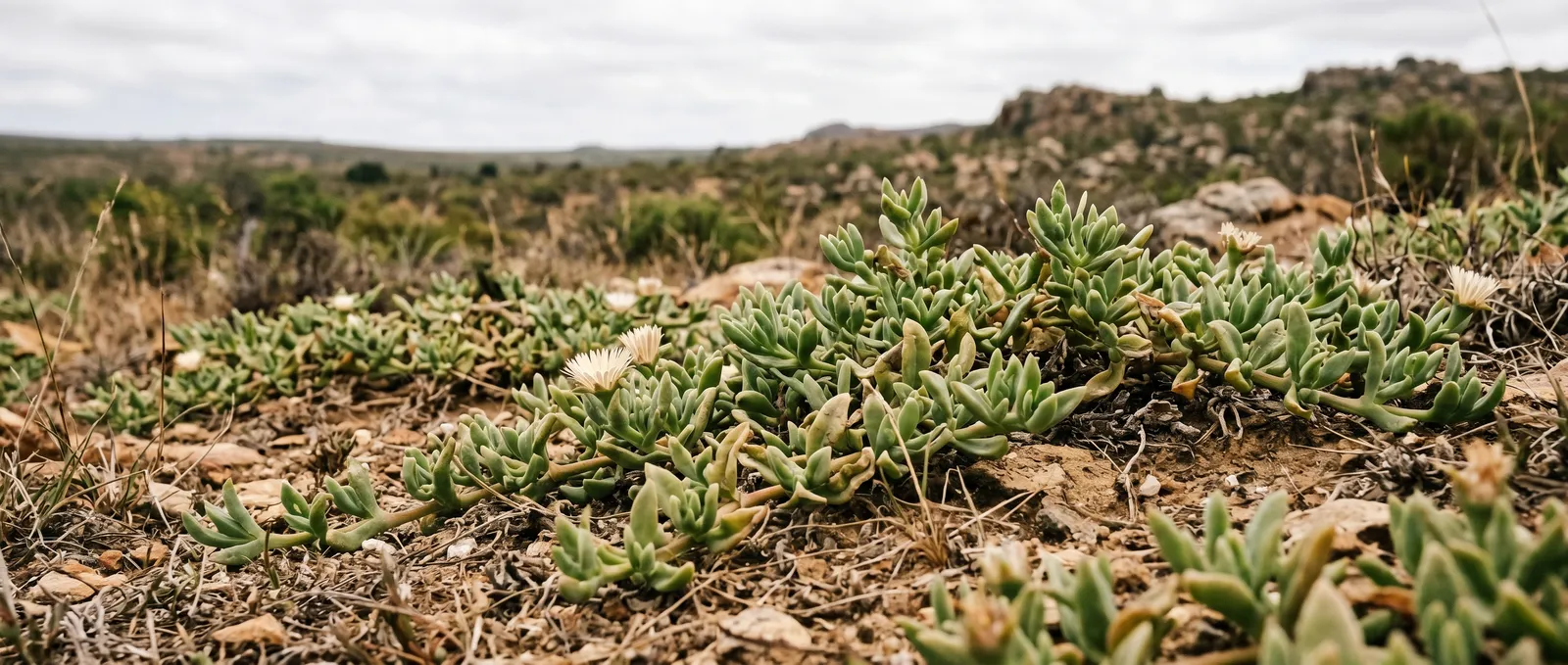
Sceletium Tortuosum Plant
Learn about the sceletium tortuosum plant: botany, alkaloids, fermentation, safety warnings, and where to buy kanna.
Kanna Pharmacokinetics Explained
Complete guide to kanna pharmacokinetics: how Sceletium tortuosum alkaloids are absorbed, metabolised via CYP2D6, and eliminated.
Kanna Chemistry: Sceletium Alkaloids Explained
Kanna chemistry explained: mesembrine, mesembrenone, their mechanisms, how fermentation and extraction change alkaloid profiles, and why it matters…

Rapé Shamanic Snuff Guide: How to Use It Safely
A practical rapé shamanic snuff guide covering dose, kuripe technique, effects, nicotine safety, interactions and Amazonian tradition.

White Sage Salvia Apiana Cultural Smudging Guide
Salvia apiana is a non-psychoactive shrub native to southern California's coastal sage scrub, burned as ceremonial incense in Indigenous North American…
Mulungu Erythrina Traditional Amazonian Use — Bark, Alkaloids & Research
Erythrina mulungu is a Brazilian legume tree whose bark has been brewed as a calming decoction in rural folk medicine for generations.