
This article discusses psychoactive substances intended for adults (18+). If you have a health condition or take medication, consult a doctor before use. Our age policy
Liquid Culture Basics: Mushroom Liquid Culture for Beginners
Definition
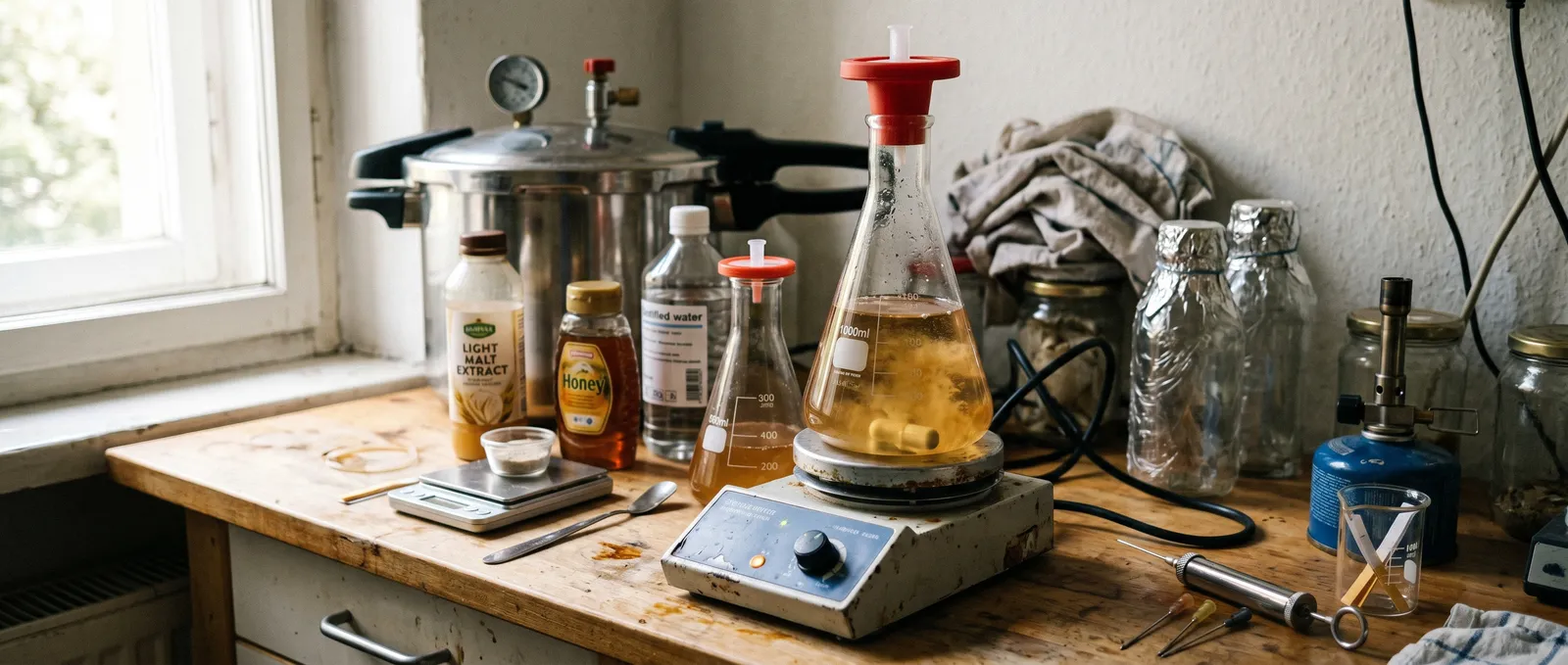
Liquid culture is live mushroom mycelium suspended in sterile nutrient broth, used to inoculate grain substrates faster than spores. According to Stamets (2000), vegetative LC inoculum colonises rye 2–3 times faster than spore syringes, making it a core technique for growers scaling beyond pre-made kits.
What liquid culture actually is
Liquid culture is a suspension of live mycelium that colonises grain substrates 2–3 times faster than spore syringes. Typically 4% light malt extract or honey in distilled water serves as the broth. Unlike a spore syringe, which carries ungerminated spores that still have to find each other and mate, an LC is already past puberty: mated, vegetative, and ready to colonise grain the moment it hits the substrate. According to Stamets (Growing Gourmet and Medicinal Mushrooms, 2000), established mycelial inoculum colonises rye grain roughly 2–3 times faster than spore-based inoculation, which is why serious home growers graduate to LC once they've done a few kits. Adult use only — this guide is written for growers aged 18 and over.
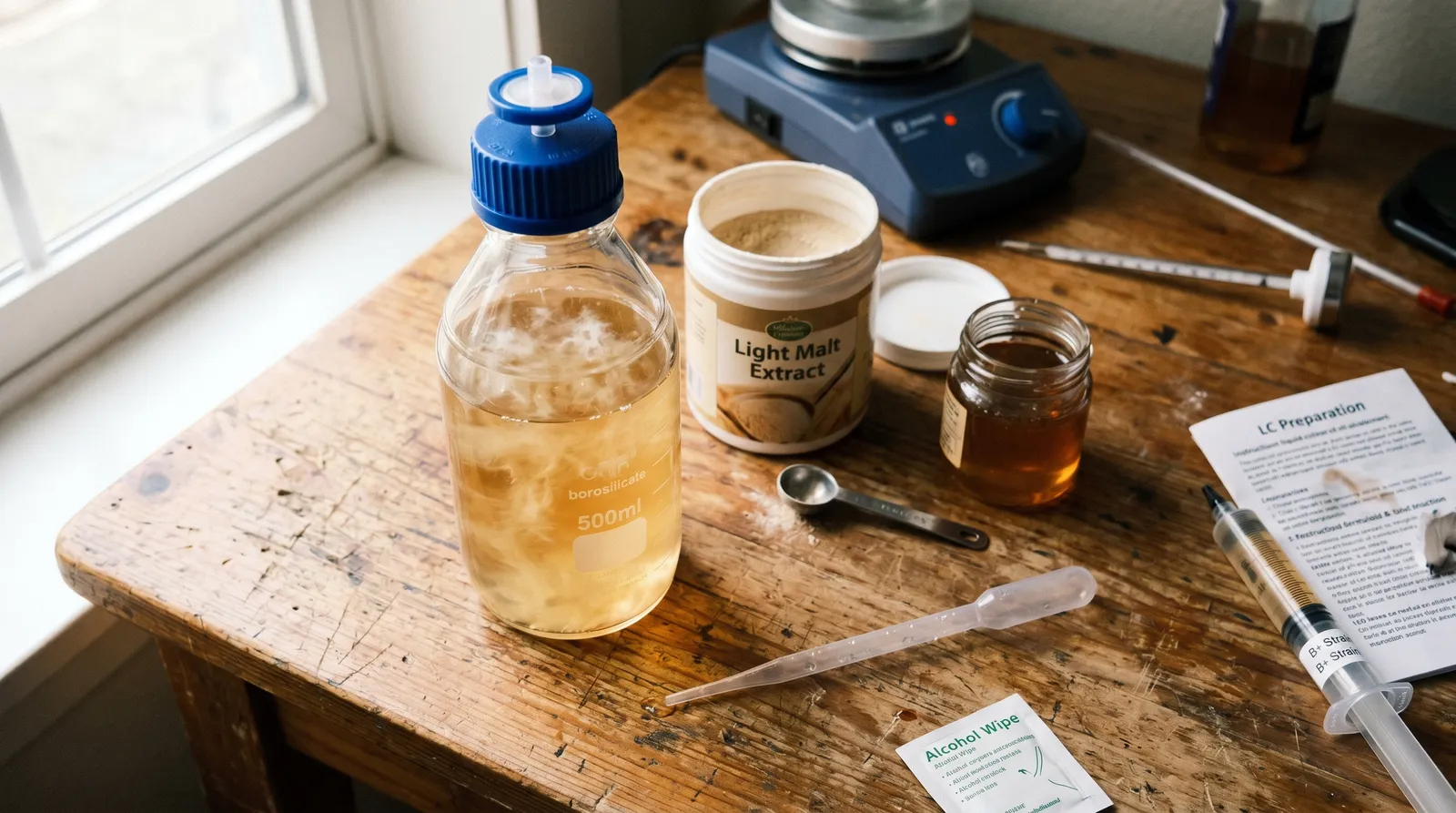
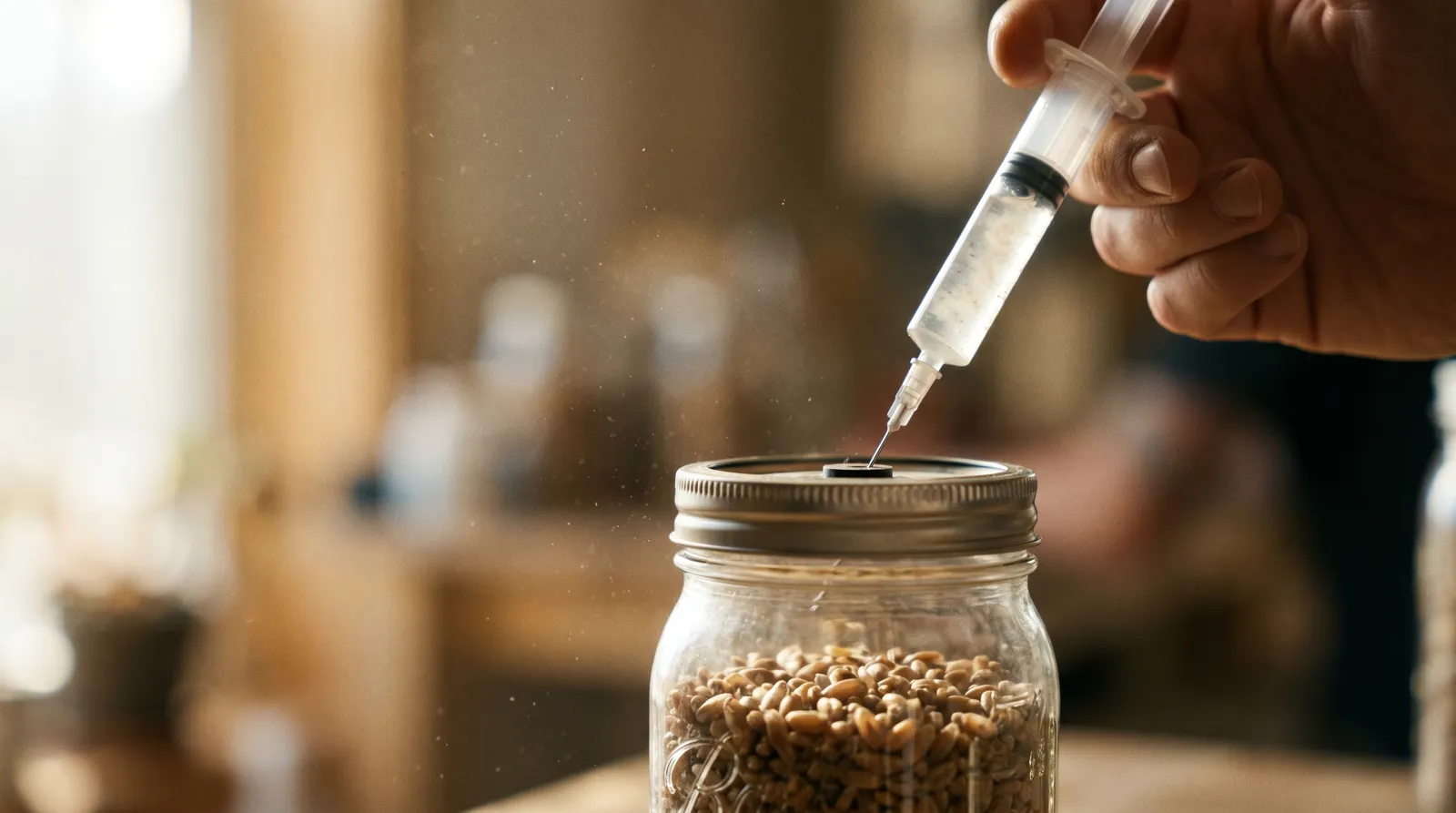
The liquid itself is nutrient broth thin enough to pass through a 16-gauge needle without clogging. Suspended in it are fragments of hyphae — each fragment capable of starting a new colony. Shake the jar, the mycelium breaks up, the cell count rises, colonisation accelerates. That's the whole trick.
LC vs spore syringes vs agar
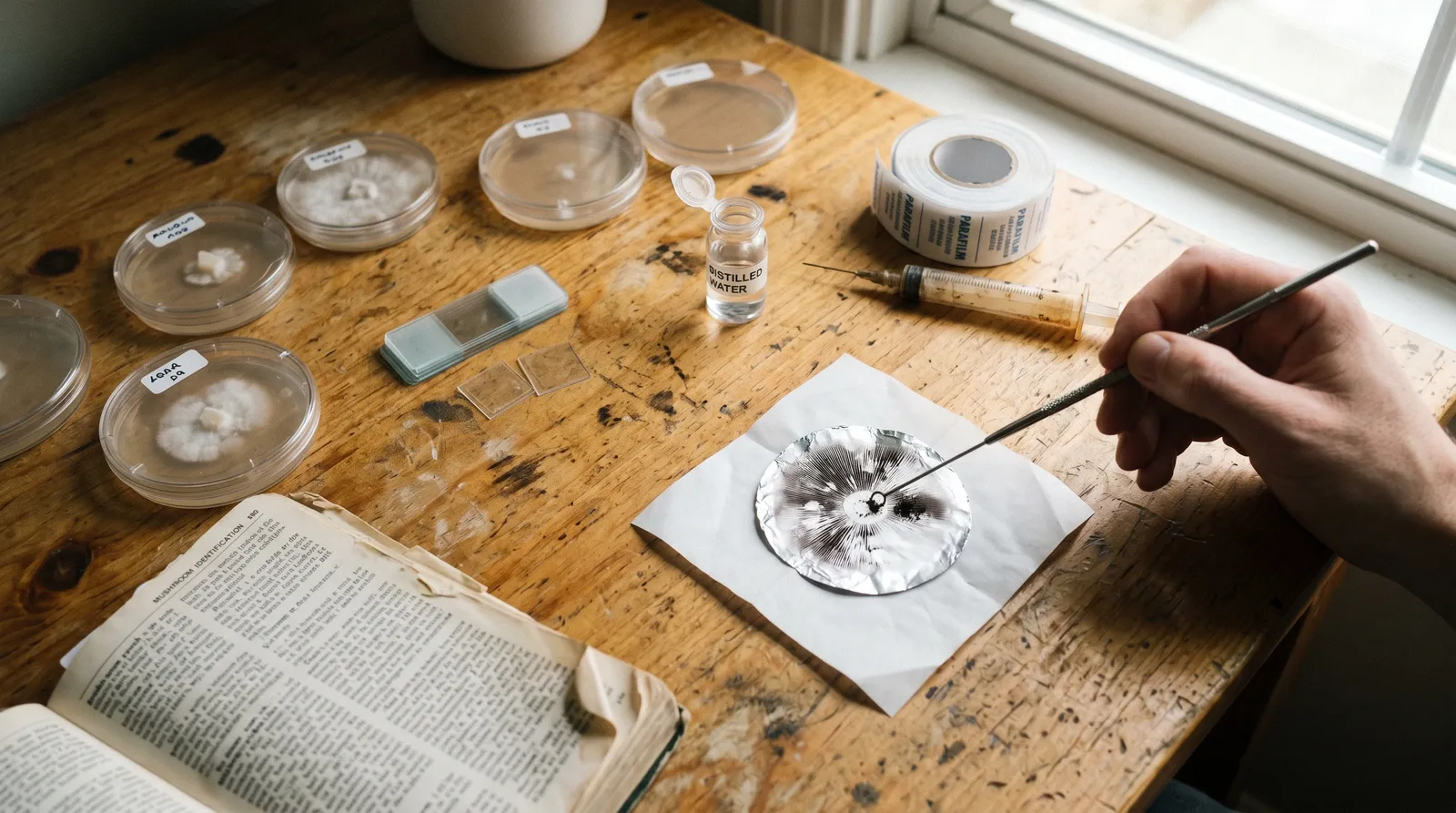
Liquid culture sits between spore syringes and agar — faster than spores, cheaper and less finicky than agar. A spore syringe is the genetic lottery ticket — millions of spores, unmated, genetically diverse, slow to colonise (10–20 days on grain is typical). Agar is the isolation tool — you grow mycelium on a petri dish of nutrient gel so you can visually pick the fastest, cleanest sector and clone it. LC is easier to scale because one 10ml LC jar can inoculate 10–20 grain jars at 0.5–1ml each.
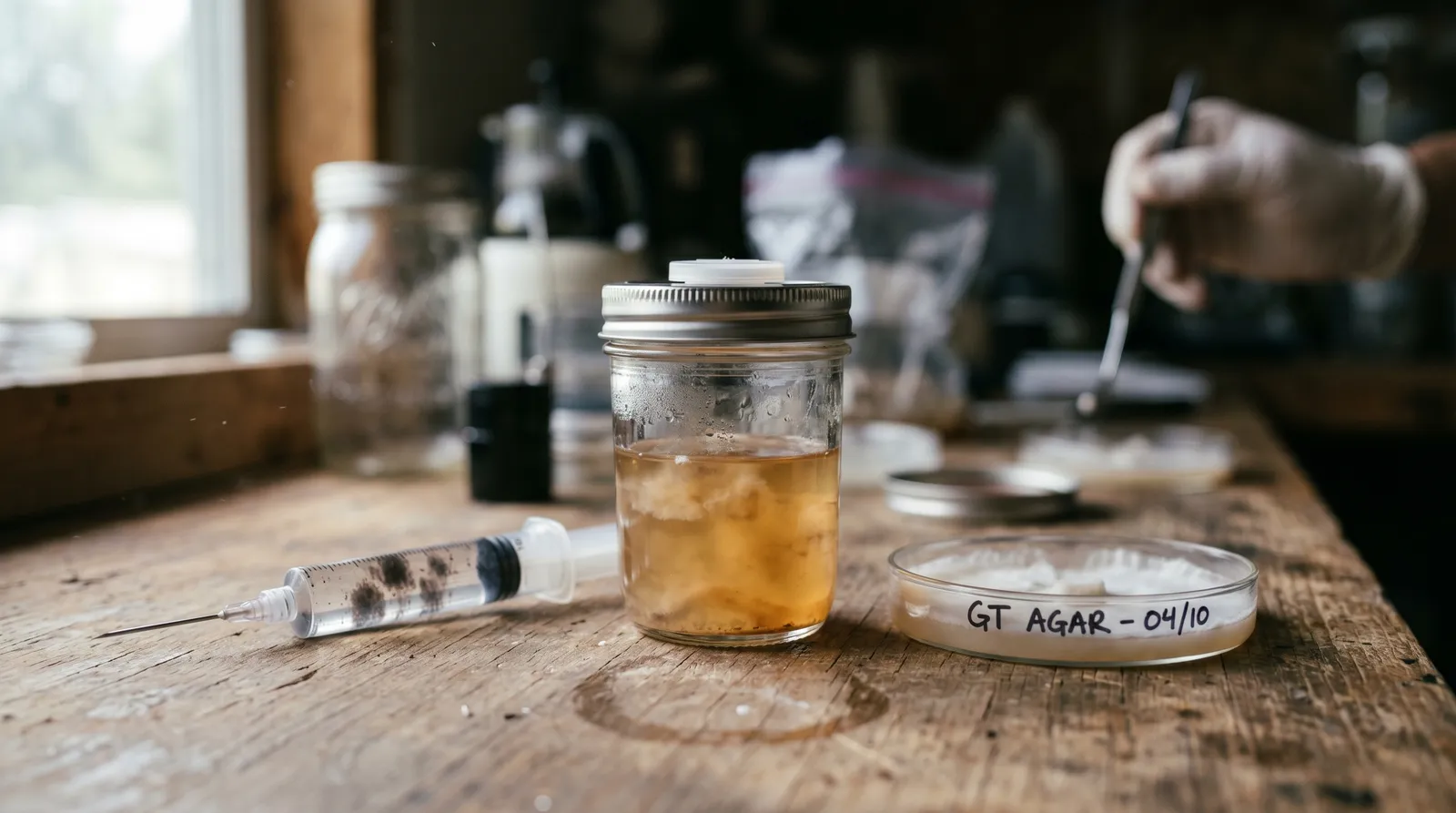
The trade-off is contamination visibility. In a spore syringe, bacterial contamination is hard to see until it's rampant. On agar, you see everything. In LC, the broth is cloudy by nature — mycelial wisps look a lot like bacterial turbidity to an untrained eye. More on that in a minute. Compared to a ready-made Grow Kit, LC demands more skill but rewards you with far more flexibility.
What goes in the jar
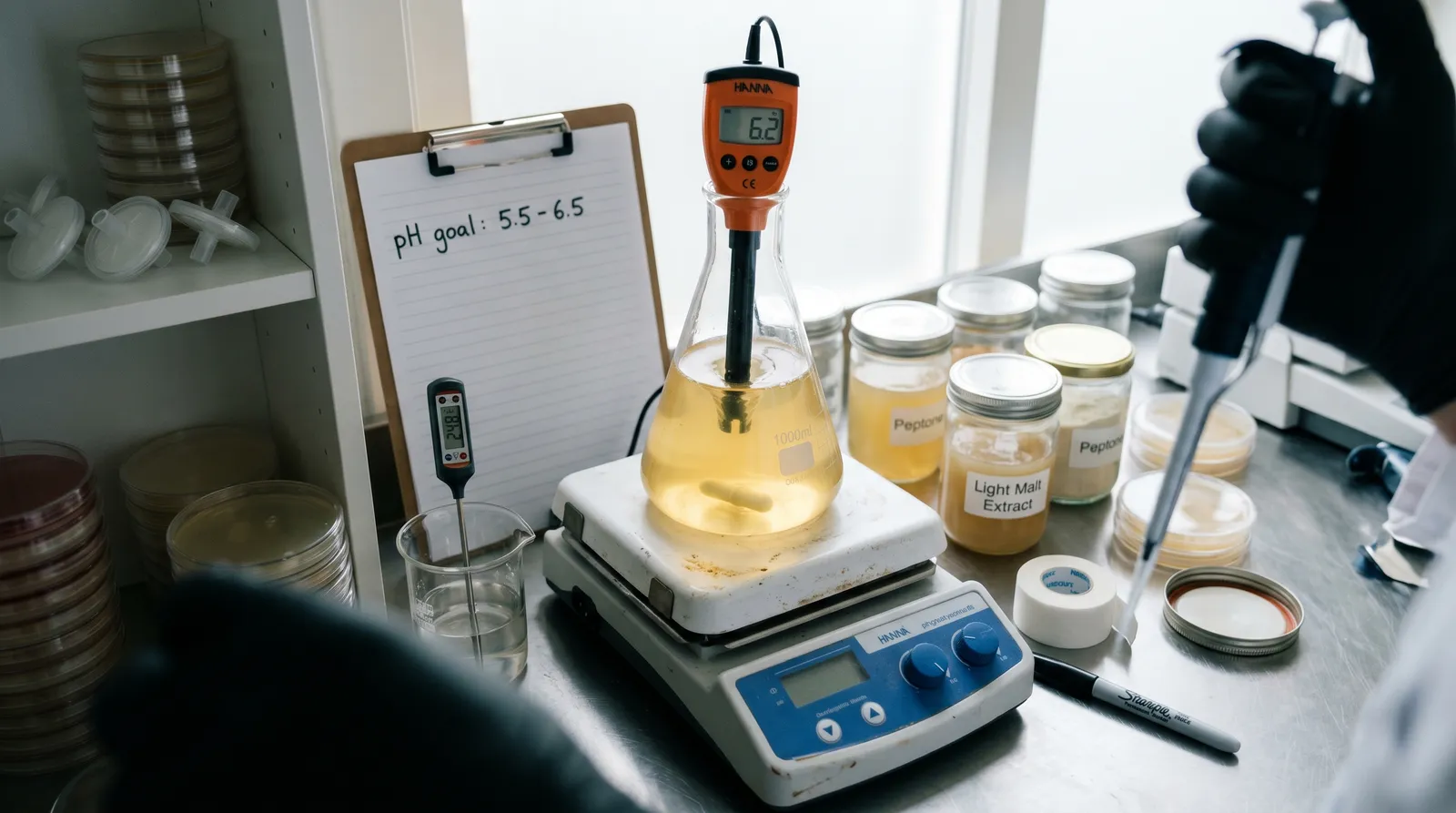
A standard LC recipe uses four ingredients: distilled water, a light sugar source, a modified jar lid, and an agitator. Deviating from this basic formula rarely improves things:
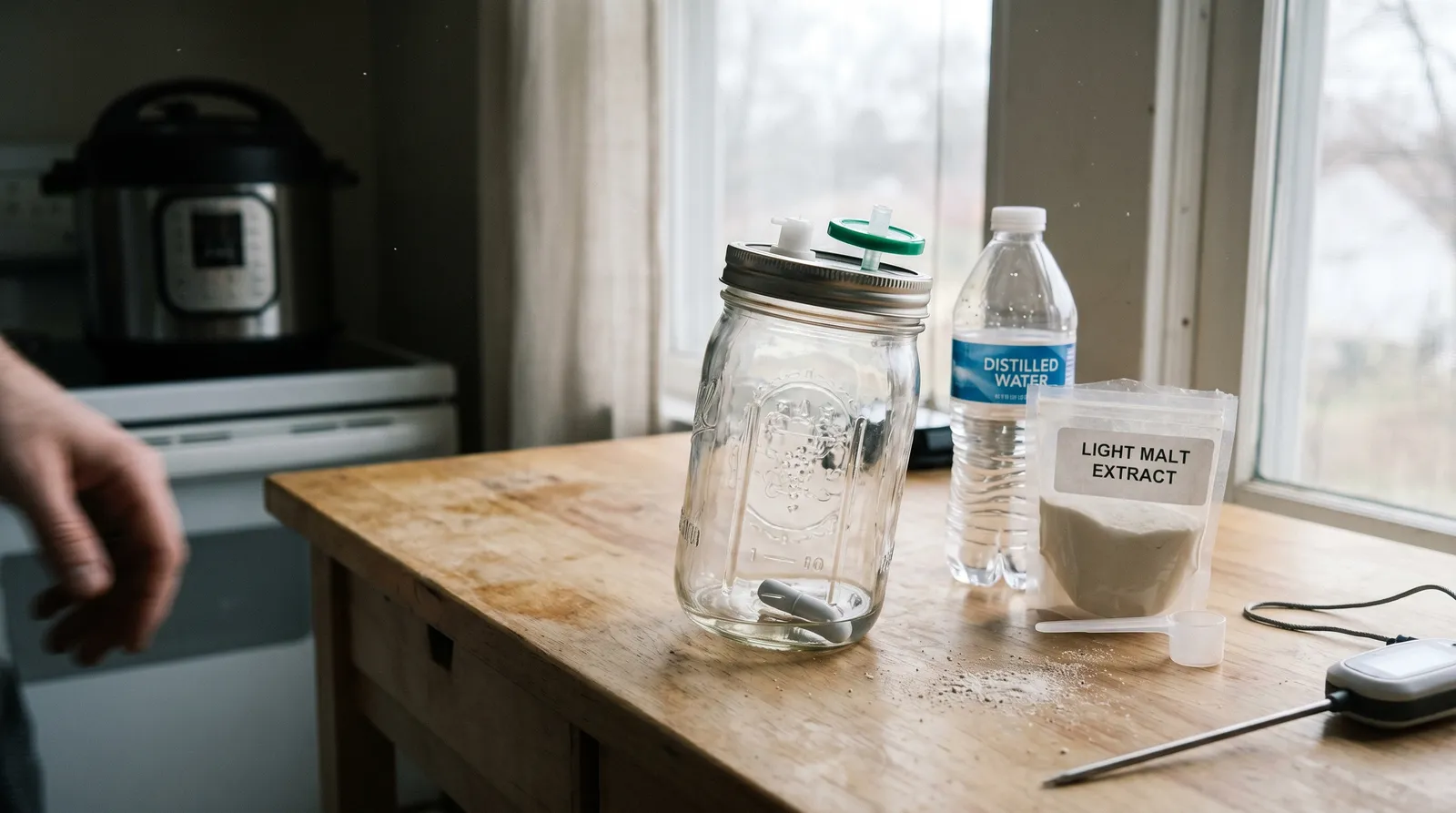
- Water: 500ml distilled or RO. Tap water works if your local water isn't heavily chlorinated, but distilled removes the variable.
- Sugar source: 20g (4%) of light malt extract, light honey, or light karo syrup. Dark malts and raw honey carry more particulates and dormant bacterial spores — harder to sterilise, harder to shoot through a needle.
- Vessel: A wide-mouth mason jar with a modified lid — usually a self-healing injection port (silicone RTV) and a 0.2µm synthetic filter patch for gas exchange. You can buy pre-modified LC lids from most mycology suppliers if you'd rather skip the DIY step.
- Agitator: 3–5 glass marbles or a magnetic stir bar. When you shake the jar, the marbles fragment the mycelial mat into thousands of smaller propagules.
Pressure-cook at 15 psi (121°C) for 25–30 minutes. Let it cool to room temperature in a still-air environment before inoculating — hot broth kills hyphae and spore germlings alike. Inoculate with 1–2ml of spore solution or a small piece of agar wedge, incubate at 24–27°C for 7–14 days, shaking gently every 2–3 days. Healthy LC looks like clear broth with fluffy white clouds or "islands" of growth that move when you swirl the jar.
Spotting contamination before you ruin a grow
Contaminated LC shows uniform cloudiness, off-colour tints, bad smells, slimy sediment, or visible mould — any one of these means bin it. A clean LC is clear broth (tea-coloured, maybe faintly golden from the malt) with discrete white mycelial structures. The specific warning signs:
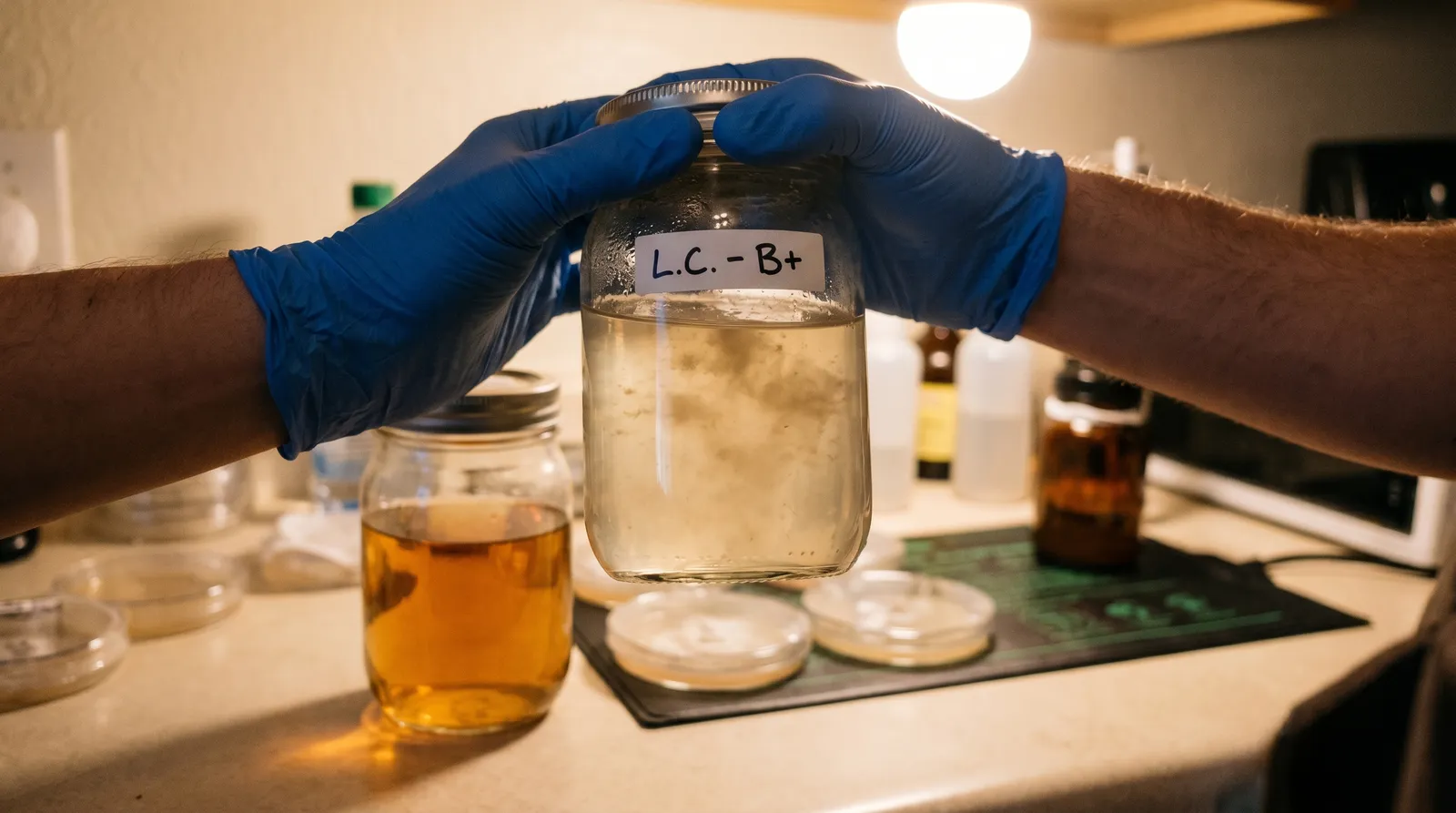
- Uniform cloudiness that doesn't settle — broth looks like skimmed milk. That's almost always bacterial. Toss it.
- Yellow, orange, or greenish tint to the broth itself. Pseudomonas and other bacterial contaminants often excrete pigmented metabolites.
- Sour, vomit-like, or sulphurous smell when you open the injection port. Healthy LC smells faintly of fresh mushroom and sweet malt. Anything else — bin it.
- Sediment that's slimy rather than fluffy. Mycelial pellets are cottony; bacterial slime is smooth and settles in a glossy layer.
- Visible mould colonies floating on the surface — green (Trichoderma), black (Aspergillus), pink (Neurospora-type). Obvious and non-negotiable: discard.
Honest limitation: field research on amateur LC contamination rates is surprisingly thin — most sterile-technique literature comes from clinical microbiology rather than home mycology. Bigwood & Beug (1982) documented that bacterial contamination rates in amateur psilocybin cultivation tended to cluster around sugar-rich liquid media, which is still the single biggest risk factor 40 years later. A well-made still-air box and genuine flame-sterilisation of the needle drops contamination rates from roughly 1-in-3 to under 1-in-20, based on Shroomery community protocols (Liquid Culture Tek threads, 2018–2023).
Storage and shelf life
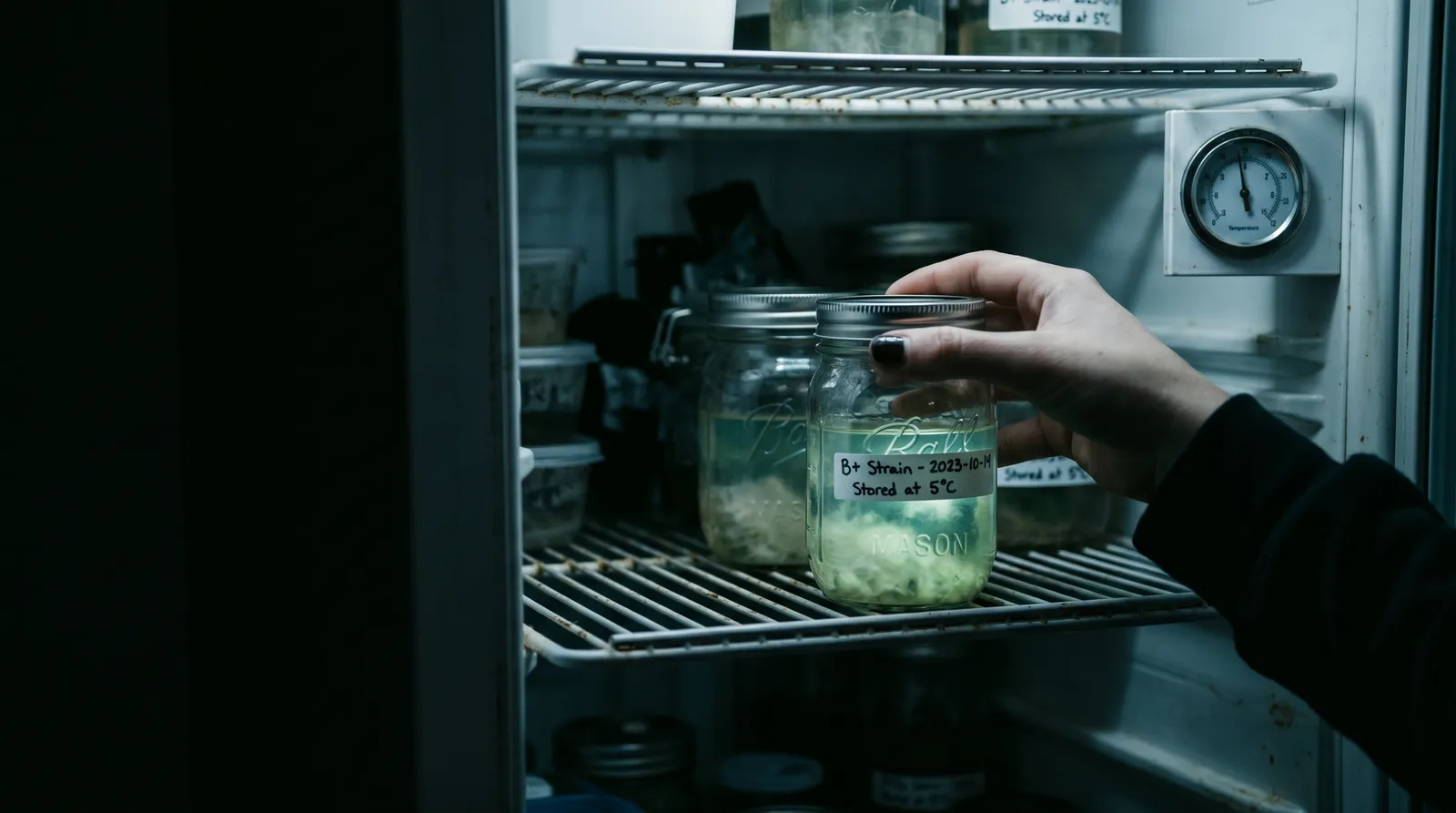
Healthy LC stored at 4–7°C stays viable for 4–6 months, with some growers reporting successful inoculation from year-old jars. Cold slows mycelial metabolism without killing it. Room-temperature storage continues active growth, which means the broth nutrients deplete within a few weeks and the culture eventually starves — noticeable as the mycelial mass stops expanding and the broth turns slightly murky. For long-term genetic preservation, agar slants or liquid-nitrogen cryopreservation outperform LC, but for active growing cycles the fridge is more than fine.
Reference parameters at a glance
| Parameter | Target range | Notes |
|---|---|---|
| Sugar concentration | 2–4% w/v | Above 4% slows growth (osmotic stress) |
| Sterilisation | 121°C / 15 psi / 25–30 min | Longer for >500ml batches |
| Incubation temp | 24–27°C | Cubensis optimum; lower slows growth |
| Incubation time | 7–14 days | Shake every 2–3 days |
| Inoculation dose | 0.5–1ml per grain jar | More doesn't colonise faster, just wastes LC |
| Fridge shelf life | 4–6 months at 4–7°C | Some viability reported beyond 12 months |
| Contamination rate | <5% with still-air box | ~30% without sterile technique (Shroomery, 2020) |
When LC is the wrong tool
LC is the right tool for scaling a trusted strain, but the wrong tool for isolating sub-strains or for one-off home growers. It's a poor choice for working with unknown spore prints where you want to isolate the best sub-strain — that's agar's job. It's also overkill for someone running a single Grow Kit once a year; the plastic-tub format arrives already colonised, so there's nothing to inoculate. LC makes sense when you're moving from kits to bulk substrate (grain-to-grain transfers, monotubs, shotgun fruiting chambers) and want to compress the colonisation window.
Worth noting: this guide is cultivation-only. Consumption, dosing, set and setting, and interaction risks (MAOIs, SSRIs, lithium — avoid combining) belong on the psilocybin hub and the dedicated interactions article, not here.
Disclaimer
This article is educational and intended for adult readers aged 18 and over. It covers cultivation technique only and does not constitute medical, safety, or professional advice. Mushroom cultivation carries risks including contamination, allergic reaction, and misidentification of species. Always verify species identity through multiple sources and consult a qualified professional before consuming any cultivated fungi. Azarius does not endorse activity that may carry personal risk.
Related products
Azarius sells grow kits in two formats for growers who'd rather skip LC work altogether and order a pre-made setup: the plastic-tub Grow Kit (fully colonised rye substrate with casing layer, available in strains like Golden Teacher, McKennaii, B+ and Cambodia) and the sealed Ready-2-Grow Bag (zero-assembly 2kg format, including APE, Enigma and Jedi Mind Fuck). Both ship pre-inoculated — no syringes, no pressure cooker, no sterile technique required. You can also buy spore syringes, spore prints, and grow supplies from the same catalogue to get started on a full LC workflow.
Last updated: April 2026
Frequently Asked Questions
8 questionsWhat is the difference between liquid culture and a spore syringe?
How long does liquid culture last in the fridge?
What does contaminated liquid culture look like?
What sugar should I use for liquid culture?
Can I make liquid culture from a grow kit?
Do you need to shake liquid culture?
What temperature should liquid culture be incubated at?
How much liquid culture do you inject per grain jar?
About this article


Adam Parsons is an external cannabis and psychedelics writer and editor who contributes to Azarius's wiki as both author and reviewer. On the writing side, he authors Azarius's kratom and kanna clusters, drawing on exten
This wiki article was drafted with AI assistance and reviewed by Adam Parsons, External contributor. Editorial oversight by Joshua Askew.
Medical disclaimer. This content is for informational purposes only and does not constitute medical advice. Consult a qualified healthcare provider before use of any substance.
Last reviewed April 25, 2026
References (1)
- [1]Shroomery Community (2020). Magic Mushroom Cultivation Wiki — community-curated grower notes. Source
Related Articles
Cannabis Hermaphrodite: Identify, Prevent, Act
A cannabis hermaphrodite is a female plant that develops male pollen sacs or banana-shaped anthers (nanners), self-pollinating and seeding your harvest.
DIY Cannabis Fertilizer: Homemade Nutrient Guide
DIY cannabis fertilizer guide: compost, teas, banana ferments and feed schedules, with safety notes and cited research for home growers.
What To Do With Male Cannabis Plants: 6 Practical Uses
What to do with male cannabis plants: identify, isolate, breed, extract, or compost. A practical 6-step guide with sourcing and safety notes.
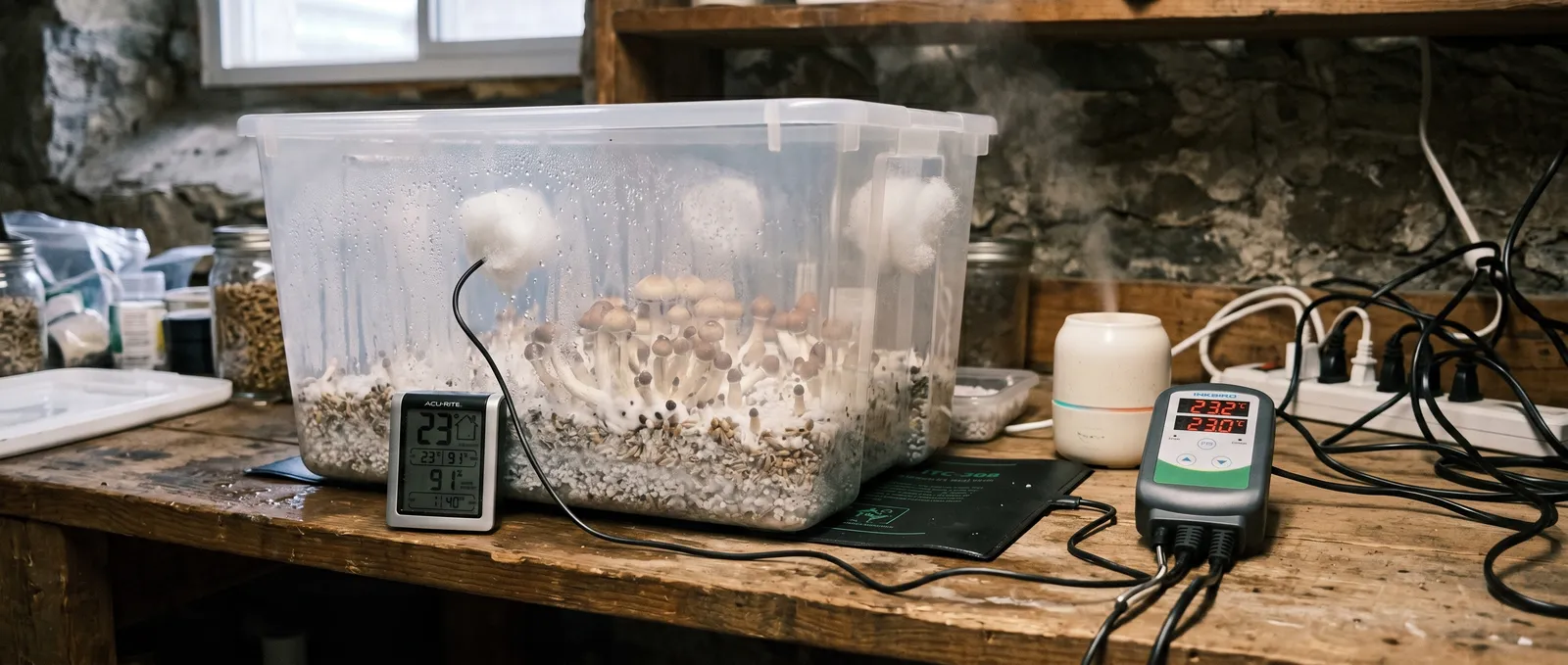
Mushroom Grow Kit Temperature & Humidity: Full Setup Guide
A temperature humidity control grow kit is the small set of climate tools — hygrometer, heat mat, humidifier or perlite tray — that keeps a mushroom fruiting…
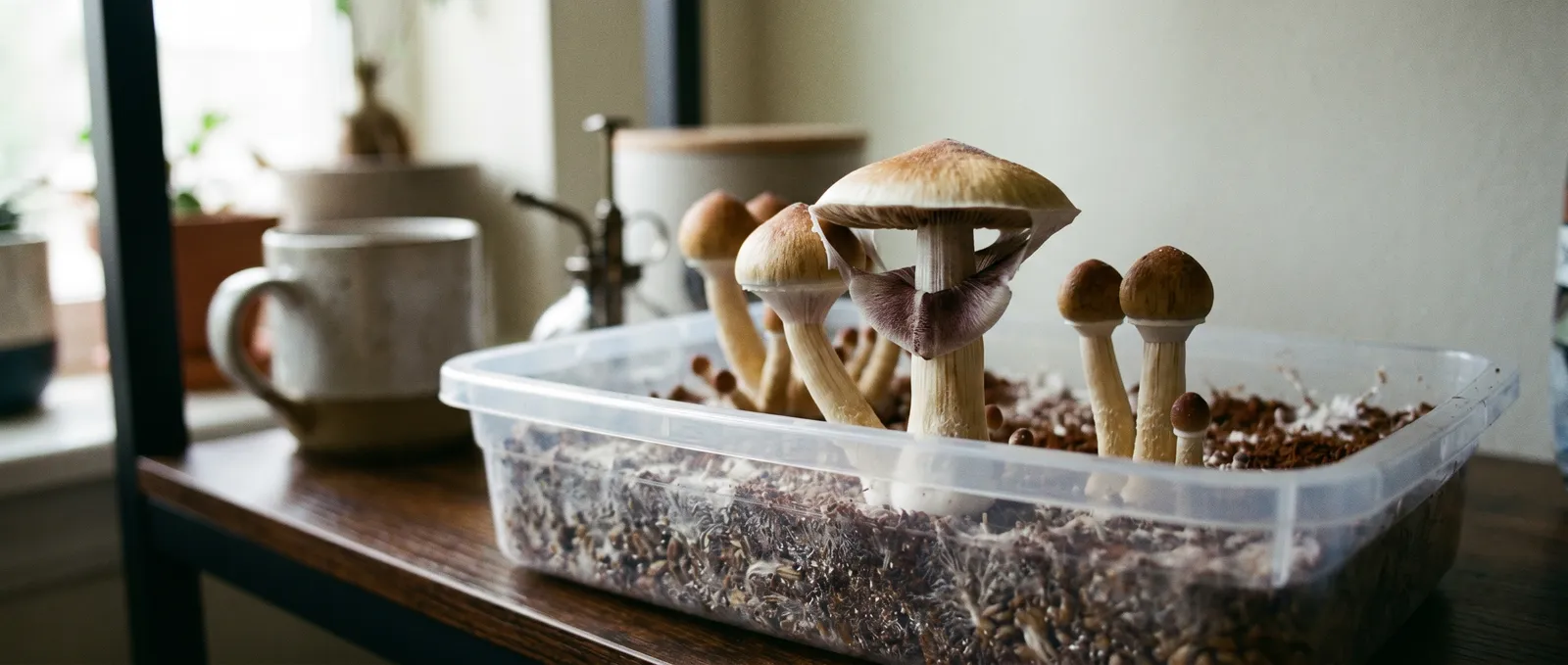
When to Harvest Mushrooms: Veil Break Timing Explained
Harvest timing veil break is a cultivation technique that uses the tearing of the partial veil on maturing Psilocybe cubensis to mark peak alkaloid content.
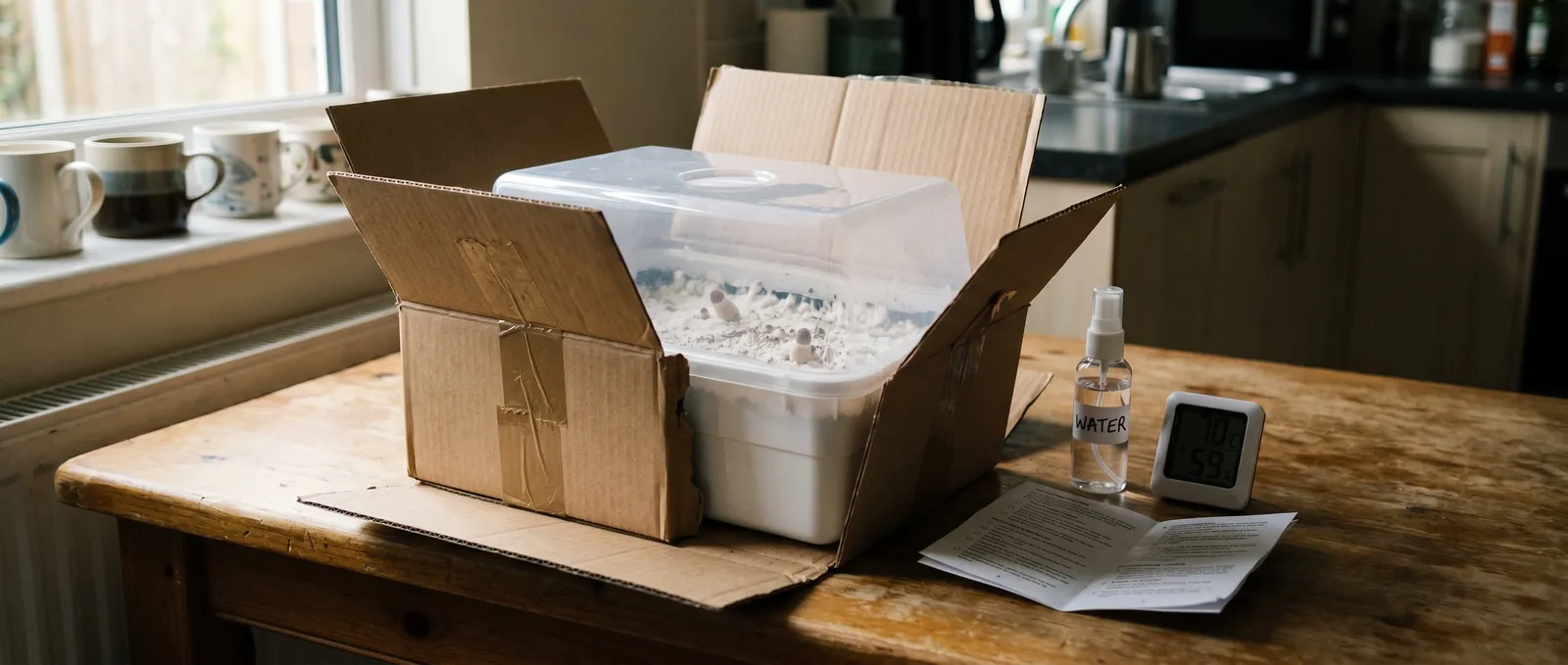
First Grow Checklist: What You Need for Mushroom Kits
A first grow checklist is the short list of supplies and environmental conditions needed to run a home psilocybin mushroom kit from inoculated substrate to…
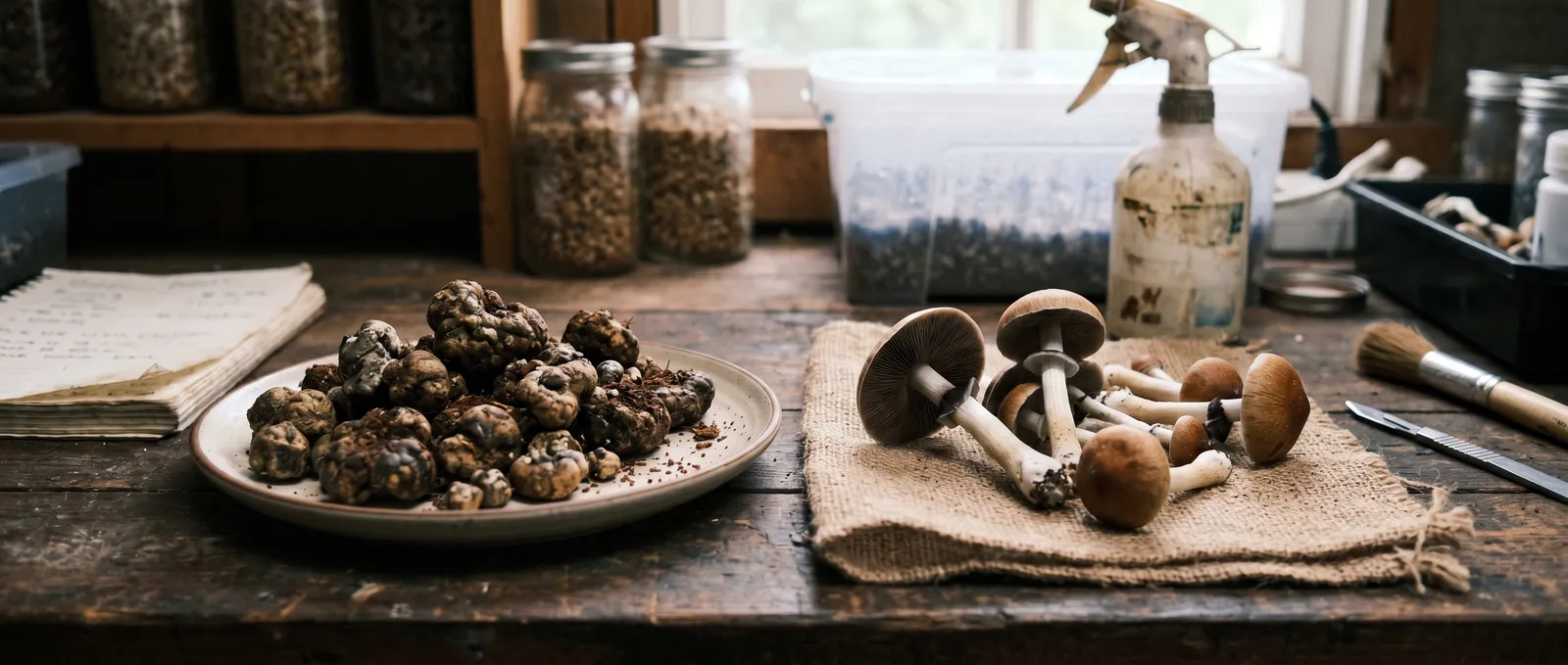
Sclerotia vs Fruit Bodies: Cultivation Comparison
Sclerotia and fruit bodies are two different life stages of Psilocybe fungi: sclerotia are hardened underground mycelial storage bodies (the 'magic…
Storing Dried Mushrooms Long Term: Full Guide
Storing dried mushrooms long term means keeping well-dried Psilocybe fruit bodies in airtight, opaque containers with desiccant, cool and dark, to slow…
Drying Mushrooms Air Desiccant Oven: Methods Compared
Drying mushrooms air desiccant oven refers to the three home methods for reducing fresh fruit bodies from ~90% water to cracker-dry (<5%). Gotvaldová et al.