
This article discusses psychoactive substances intended for adults (18+). If you have a health condition or take medication, consult a doctor before use. Our age policy
How To Choose Cannabis Seeds: Grower's Guide
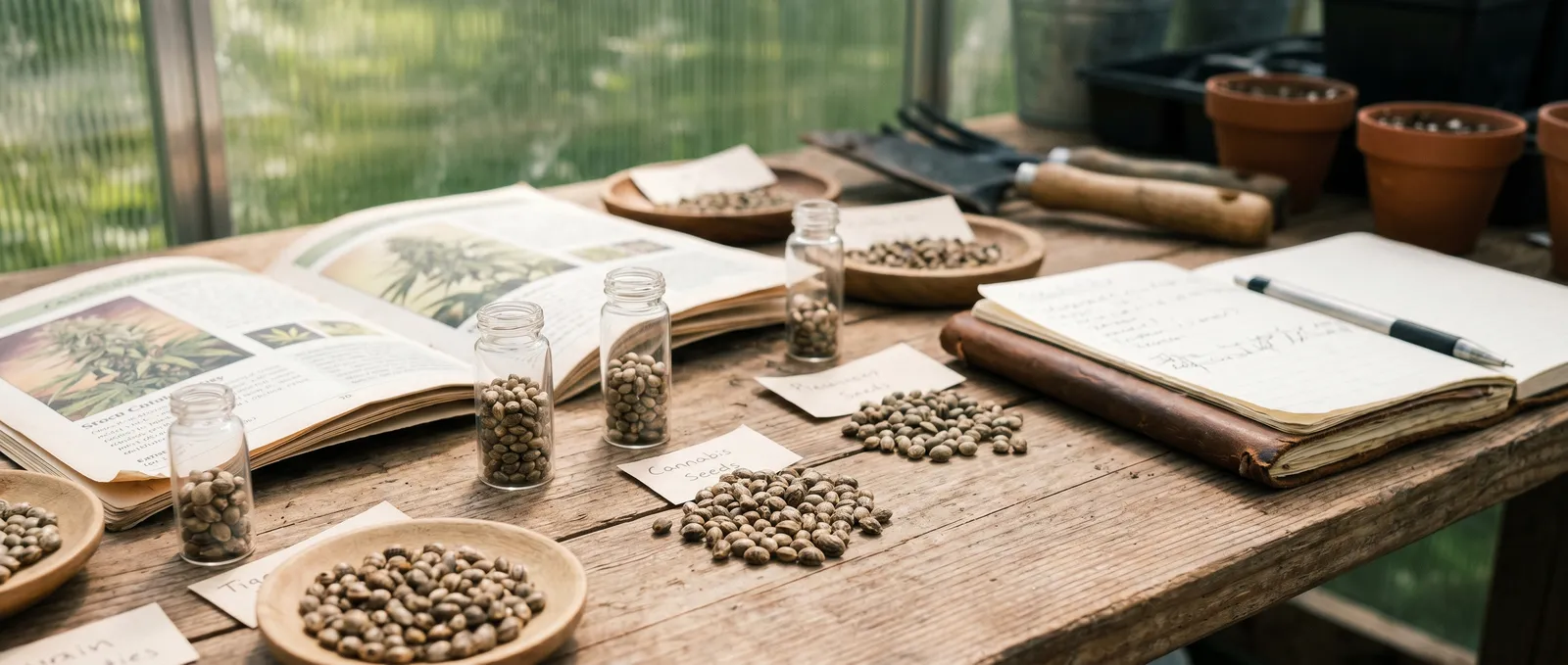
Definition
How to choose cannabis seeds is a framework for matching genetics — feminised, autoflower, or regular — to your space, climate, and timeline. Plant structure, flowering time, and breeder stability matter more than headline THC numbers, since published yields vary with lighting, medium, and grower skill (Rodriguez-Morrison et al., 2021).
How to choose cannabis seeds is a decision framework that sets the ceiling on every grow that follows. Light, nutrients, training — they all help you reach the genetic potential of the seed, but none of them change what's written in the DNA (Magagnini et al., 2018). Get the seed choice right and the rest of the journey gets a lot less stressful, whether you buy a single pack to pheno-hunt or order a mixed selection to compare.
This guide is educational information for adult growers. Cultivation rules vary by country and region. Azarius does not provide formal advice.
Step 1: Match seed type to your setup
The right seed type is the one that fits your space, your schedule, and your electricity bill. Before looking at a single strain name, work out which of the three seed categories actually fits.
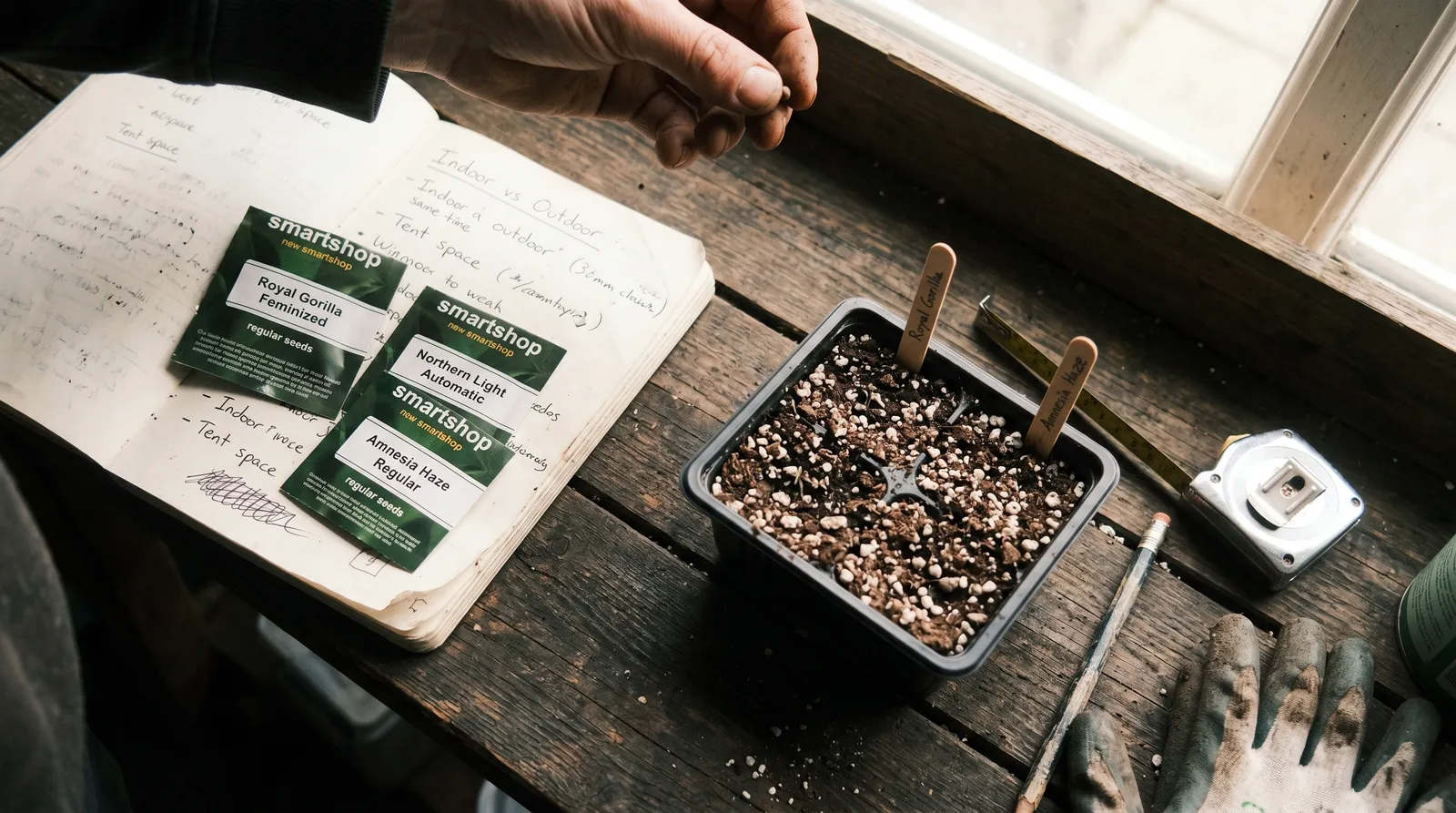
- Feminised photoperiod seeds — produce effectively all female plants and flower when you switch the light cycle to 12 hours on / 12 hours off (Spitzer-Rimon et al., 2019). Total cycle: roughly 12–20 weeks from germination to harvest depending on veg length. Best if you want a bigger plant, more training options, and higher yield per plant.
- Autoflowering seeds — flower based on age, not light cycle, and finish the full seed-to-harvest run in about 9–11 weeks (Burgel et al., 2020). They stay smaller (40–100 cm) and don't need a light timer change. Best for short summers, small tents, and anyone who wants a quick turnaround.
- Regular seeds — unsexed, roughly 50/50 male to female. You'll need to identify and cull males before flowering. Best for breeders, seed makers, and growers who want to select mothers from a pheno hunt.
If you're growing in a 60×60 tent with a single 100W LED and want to harvest in three months, autoflowers are the obvious pick. A 120×120 with a 400W LED and patience? Photoperiod feminised pulls ahead. The Royal Queen Seeds Northern Light Automatic and the Ministry of Cannabis Carnival (photoperiod feminised) are examples of the two ends of that spectrum.
Step 2: Understand the indica / sativa / hybrid label (and its limits)
The indica / sativa / hybrid shorthand is a structural predictor, not a chemistry predictor (Petit et al., 2020). Seed listings still use it, and for growers it tells you something useful about plant structure:
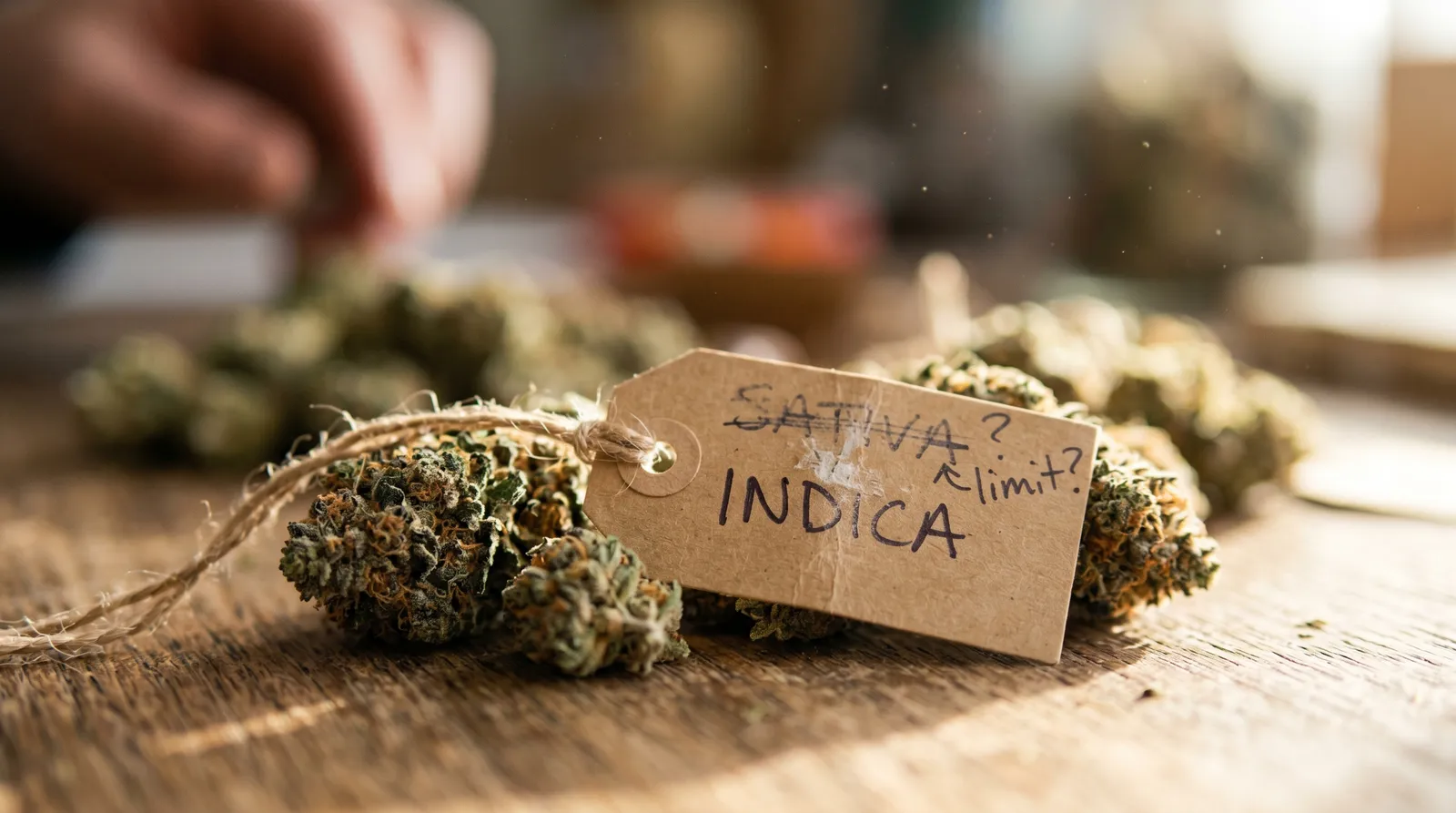
- Indica-dominant — shorter, bushier, wider leaves, flowering in ~7–9 weeks (Petit et al., 2020). Fits tents well.
- Sativa-dominant — taller, stretchier, thinner leaves, flowering in ~9–12+ weeks. Needs vertical room.
- Hybrid — a middle ground, usually leaning one way.
Modern plant science has mostly moved away from indica/sativa as a predictor of chemistry — chemovar classification (THC-dominant, CBD-dominant, balanced, plus terpene profile) is more accurate. For you, the grower, that means: use the indica/sativa label to plan your canopy height and flowering time, not to predict what the finished flower will smell or taste like. That information lives in the breeder's terpene and cannabinoid data.
Step 3: Read the breeder data sheet properly
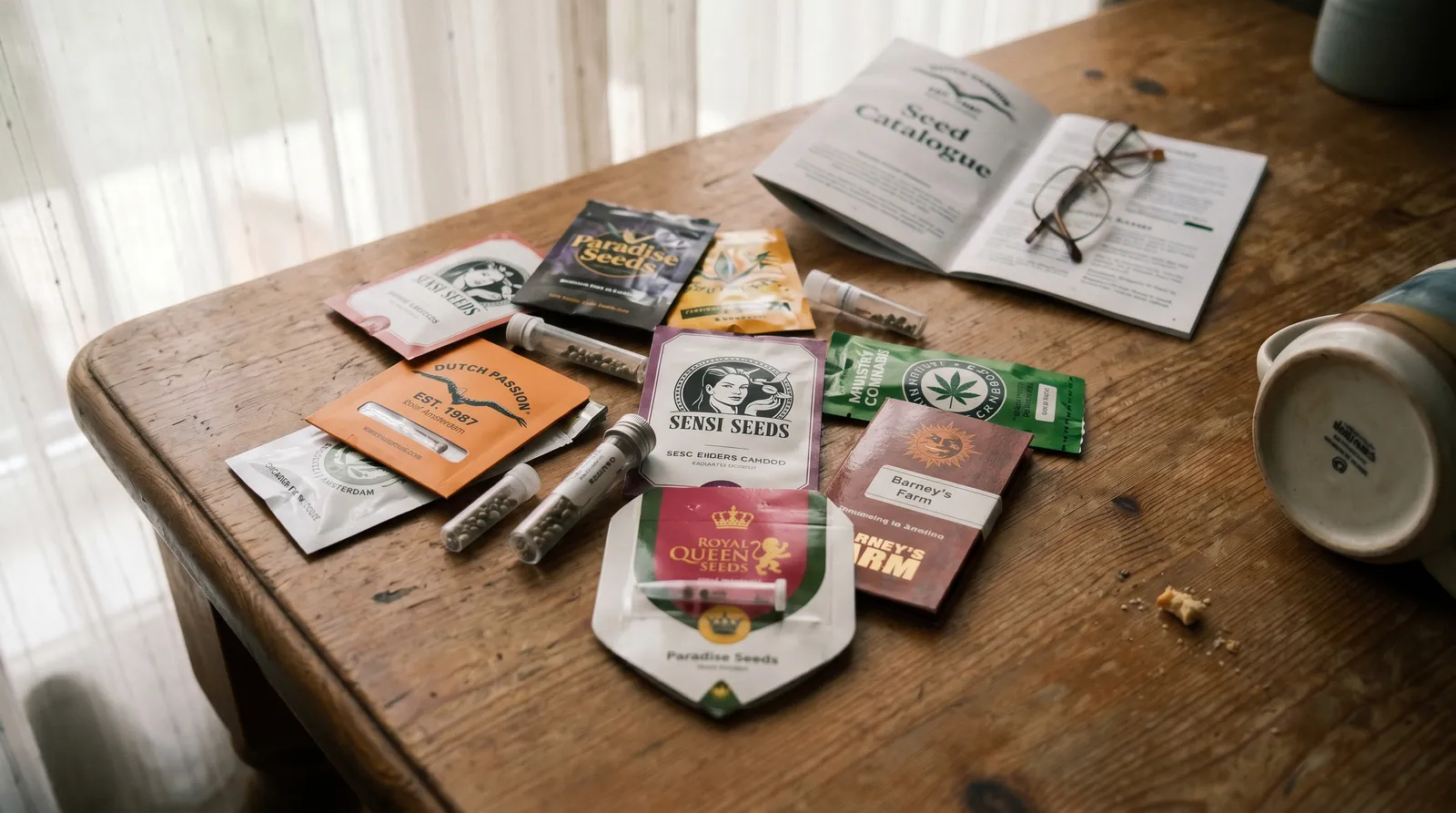
A breeder data sheet is your single best tool for choosing cannabis seeds before you order. Every reputable breeder — Dutch Passion, Sensi Seeds, Paradise Seeds, Barney's Farm, Royal Queen Seeds, Ministry of Cannabis — publishes one. Here's what actually matters:
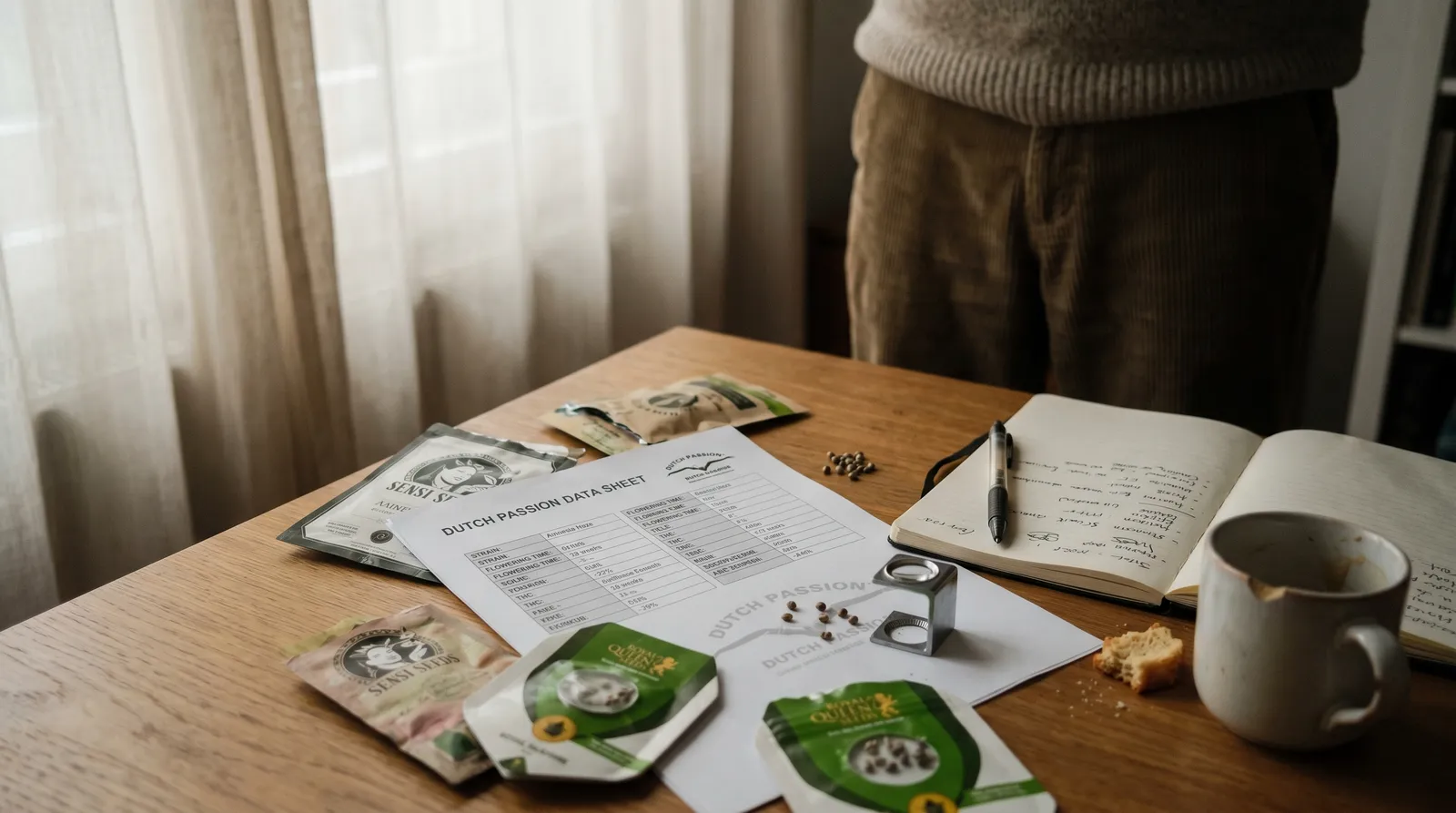
- Flowering time — photoperiod strains typically 7–12 weeks. If you're squeezed for time, a 7–8 week finisher (e.g. Dutch Passion Think Different auto, or any indica-leaning hybrid) is kinder to your patience.
- Height — most tents can handle 80–120 cm of final height comfortably. If the sheet says "can reach 2m indoors", you'd better be planning heavy training or picking a different strain.
- Yield estimates — treat these as optimistic. Breeders publish yields from ideal conditions: proper PPFD, healthy roots, no pest pressure, experienced grower. Real-world yields vary massively with lighting wattage, plant count, tent size, genetics, and grower skill (Caplan et al., 2017).
- THC / CBD percentages — these come from the breeder's lab tests on their pheno, not yours. Your results will sit somewhere in a range.
- Difficulty rating — "beginner friendly" genetics are usually more forgiving of pH swings, overwatering, and minor nutrient slips. Worth paying attention to on your first grow.
Step 4: Match genetics to your climate
Outdoor genetics must match your climate; indoor growers build the climate to suit the plant. That's the core tradeoff.
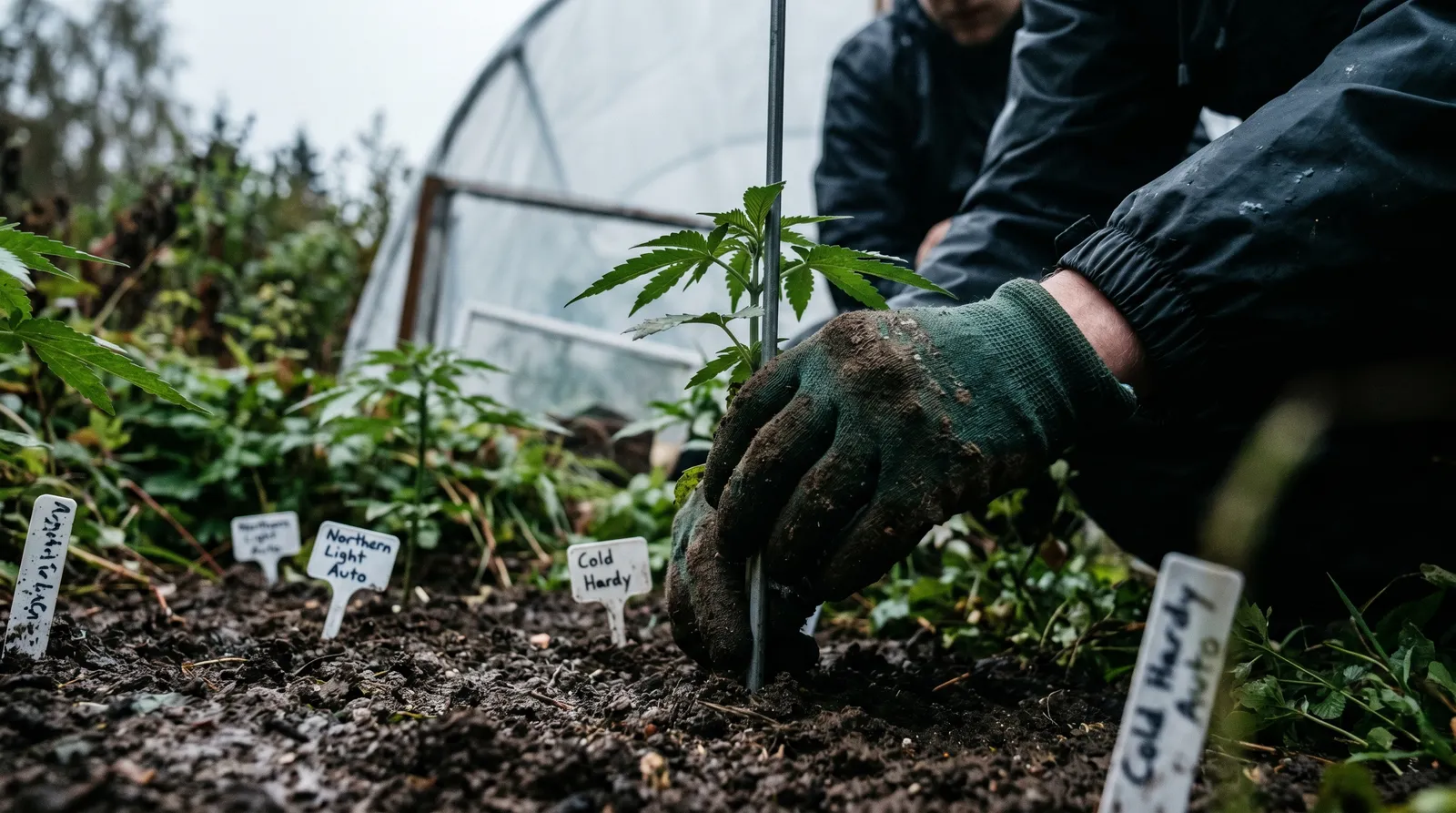
For Northern European outdoor grows (Netherlands, Germany, Belgium, UK), you're working with short summers, unpredictable rain from August onward, and botrytis pressure in tight buds (Punja, 2021). The practical shortlist:
- Autoflowers started in May–June — finish before the wet autumn rolls in. Dutch Passion's autoflower range, Royal Queen Seeds' Quick One, and similar 10-week autos are reliable.
- Early-finishing photoperiod strains — anything labelled "early" or "fast" (Sensi Seeds Early Skunk, Paradise Seeds Early Maroc) is bred to finish by late September.
- Mould-resistant genetics — airy sativa-leaning buds handle wet weather better than dense indica colas (Punja, 2021). Breeders often flag this on the data sheet.
Indoor in a sealed tent? Climate is less of a constraint — you're managing VPD (around 0.8–1.1 kPa in veg, 1.0–1.5 kPa in flower) rather than the weather (Chandra et al., 2017).
Step 5: Pick a breeder you can trust
Seed quality varies wildly between breeders. A dodgy pack means poor germination, unstable phenotypes, and hermaphrodites in your flower room. Established European breeders — Sensi Seeds (Amsterdam, since 1985), Dutch Passion (since 1987), Paradise Seeds, Royal Queen Seeds, Ministry of Cannabis, Barney's Farm — have reputations to protect and stable genetic libraries going back decades.
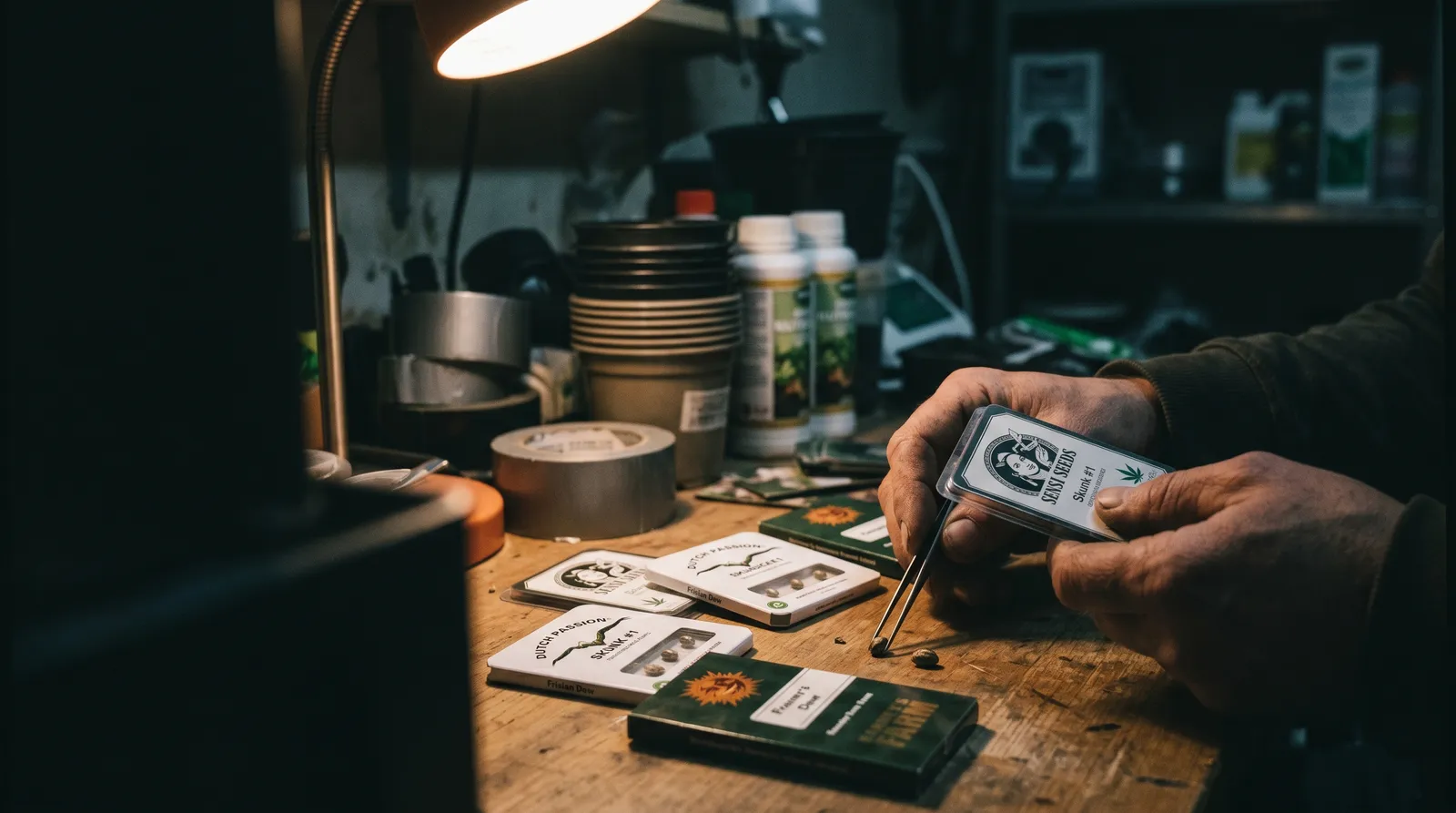
Signs of a seed worth buying:
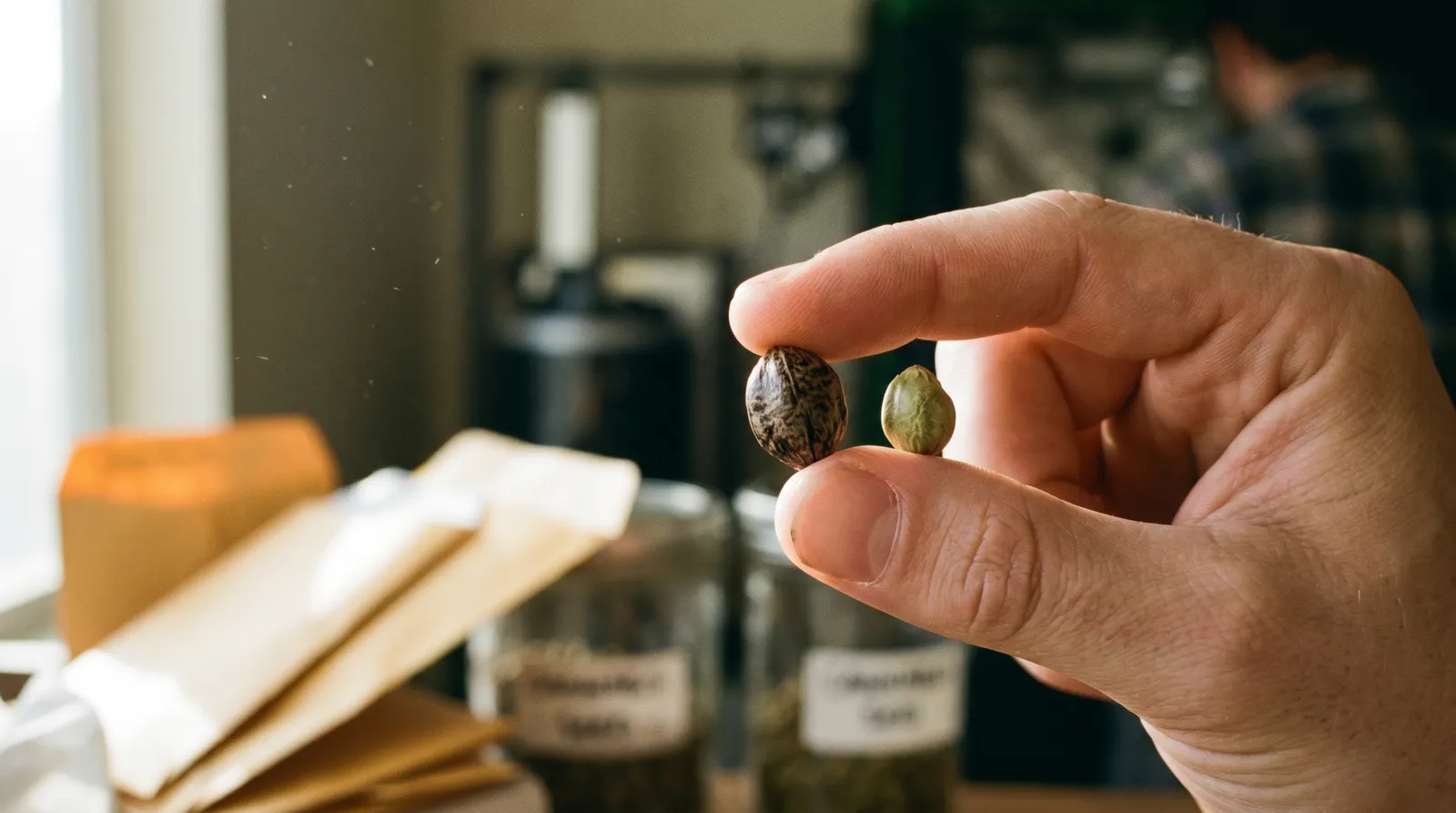
- Dark brown or grey, sometimes with tiger-stripe mottling. Shiny, not dusty.
- Firm when gently pressed between your fingers. A seed that crushes is dead.
- Packed in a labelled breeder pack with strain name, breeder, seed type, and (usually) a batch or date code.
Pale green or white seeds are typically immature and have low germination rates. That said, pale doesn't always mean dead — we've had the occasional light-coloured seed pop and grow into a perfectly healthy plant, just at lower rates than the darker ones in the same pack.
Step 6: Decide how many to buy
Seed count scales with tent size and plant training style. Rough planning guide for a typical home tent:
| Tent size | Photoperiod plants | Autoflower plants |
|---|---|---|
| 60×60 cm | 1–2 (with training) | 2–3 |
| 80×80 cm | 2–4 | 4 |
| 100×100 cm | 4 (SCROG) | 4–6 |
| 120×120 cm | 4–6 | 6–9 |
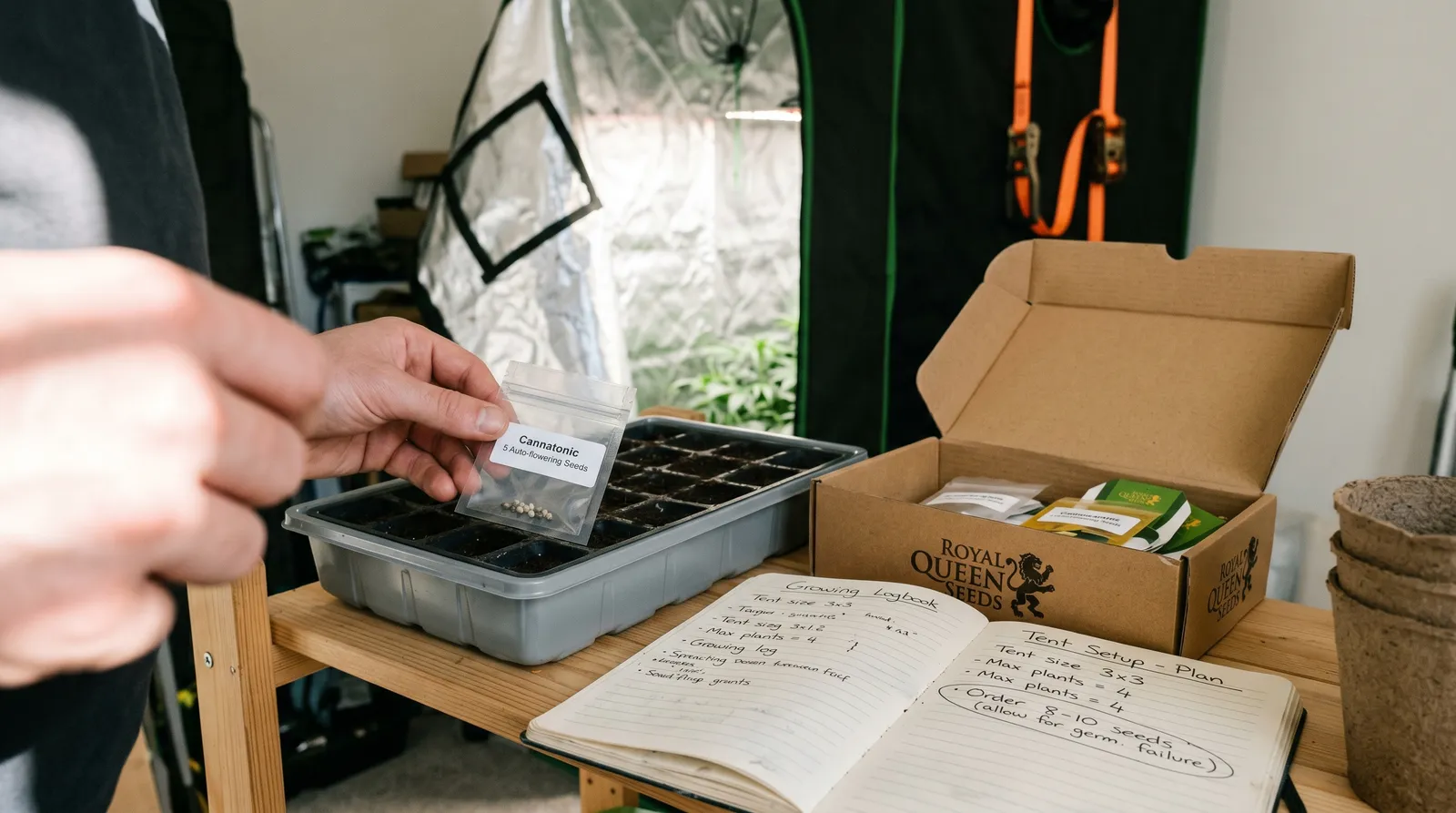
Buy more seeds than plants you intend to grow. Germination rates on good genetics typically run 85–95%, but you'll also want to cull weaker seedlings after the first two weeks. For a four-plant run, get six seeds and keep the strongest four.
Step 7: Storage if you're not planting immediately
Cannabis seeds stay viable for years if stored correctly. Cool, dark, dry, and airtight. A small sealed jar or the original breeder pack inside a larger airtight container, kept in a fridge (not freezer) at around 6–8°C, will hold germination rates above 80% for 3–5 years in most cases. Temperature swings — in and out of the fridge repeatedly — are worse than slightly warmer stable storage.
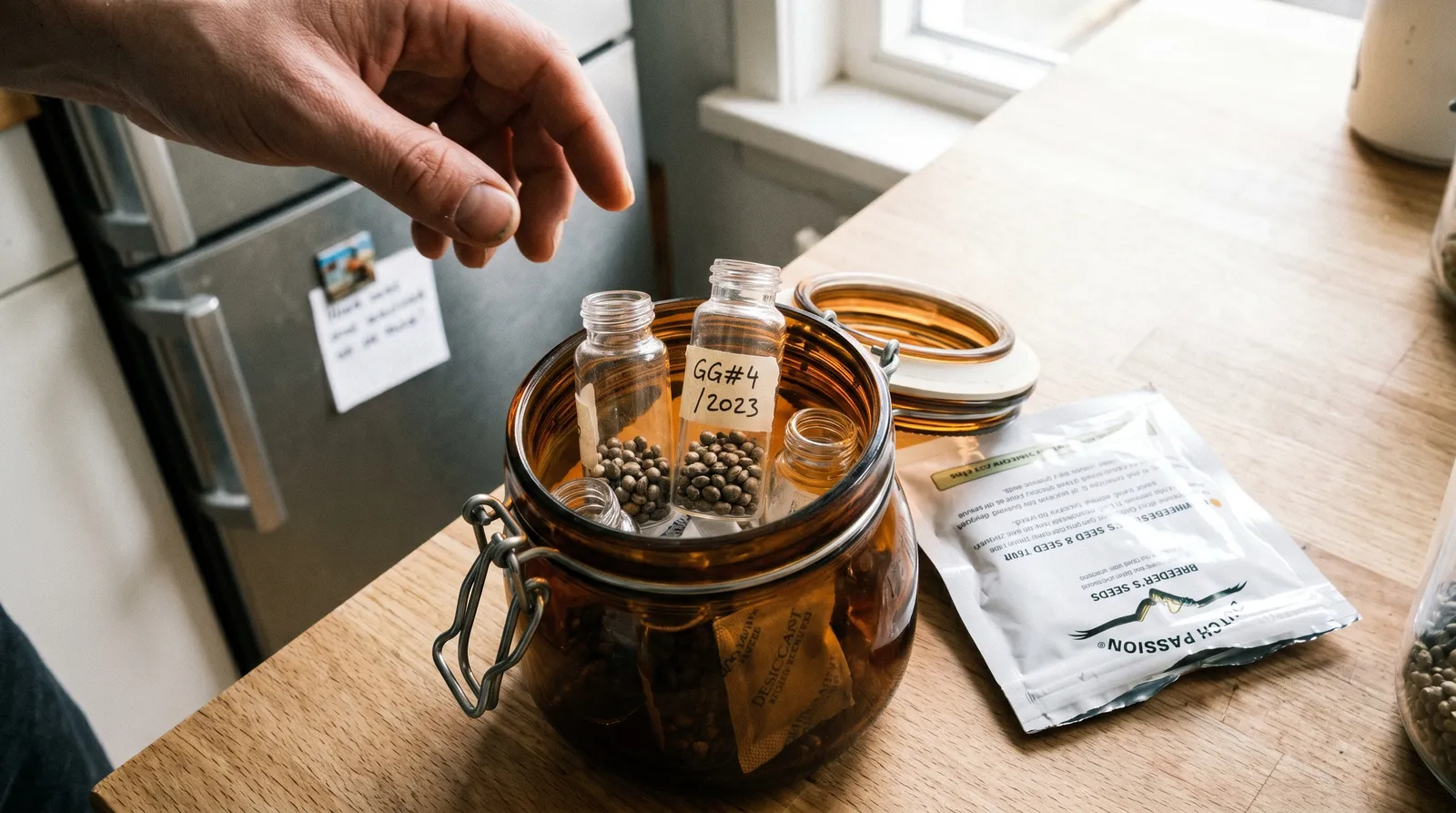
Two of us on the team run the same tent size with different seed strategies — one will buy a single pack of five photoperiod feminised and pheno-hunt for a keeper; the other runs a rotating autoflower cycle every 10 weeks for near-continuous harvests. Both work. The "right" seed depends on whether you want depth with one strain or variety across many.
No seed picking guide can predict your specific pheno. Even with the same pack, two growers in two tents will pull different results. Treat every data sheet as a starting hypothesis, not a promise — and keep notes on the packs you run so your next order is smarter than your last.
Common beginner mistakes
The most common seed-choice mistakes are about chasing numbers instead of matching the grow.
- Buying the highest-THC strain on the shelf. Those numbers are often from the breeder's best pheno, not the average pack. A stable, well-known strain at "19% THC" will outperform a chaotic new release advertised at "30%" more often than not.
- Mixing autoflowers and photoperiods in the same tent. They want different light cycles. Autoflowers prefer 18/6 or 20/4 throughout; photoperiods need 18/6 in veg and 12/12 in flower (Saloner & Bernstein, 2021). One tent, one cycle.
- Ignoring flowering time on a short schedule. A 12-week sativa looks great on paper until week 10 and your holidays start.
- Buying single seeds of ten different strains. Fun for variety, awful for consistency. Start with a pack of one strain so your feeding, training, and harvest timing line up.
Legal notice: Cannabis cultivation laws vary by country and region and change frequently. This guide is educational. Before growing, verify current laws for your specific jurisdiction. Azarius does not provide legal advice.
Azarius cannabis seeds
Azarius has stocked cannabis seeds since 1999 and carries the main European breeder catalogues — Sensi Seeds, Dutch Passion, Paradise Seeds, Royal Queen Seeds, Ministry of Cannabis, Barney's Farm, and more. If you're not sure where to start, a classic feminised photoperiod like Sensi Seeds Northern Lights or an autoflower like Dutch Passion Think Different will both forgive a first-time grower's mistakes.
Last updated: April 2026
Frequently Asked Questions
8 questionsAre feminised or autoflower seeds better for beginners?
How can I tell if a cannabis seed is viable?
How long do cannabis seeds stay viable?
Do higher THC percentages on seed packs mean better plants?
Can I grow autoflowers and photoperiod plants in the same tent?
What cannabis seeds work best for outdoor grows in Northern Europe?
What is the difference between regular and feminised cannabis seeds?
How do I choose cannabis seeds based on flowering time?
About this article


Luke Sholl has been writing about cannabis, cannabinoids, and the broader benefits of nature since 2011, and has personally grown cannabis in home grow tents for more than a decade. That first-hand cultivation experience
This wiki article was drafted with AI assistance and reviewed by Luke Sholl, External contributor since 2026. Editorial oversight by Adam Parsons.
Medical disclaimer. This content is for informational purposes only and does not constitute medical advice. Consult a qualified healthcare provider before use of any substance.
Last reviewed April 24, 2026
References
- [1]Petit, J., Salentijn, E.M.J., Paulo, M.J., Thouminot, C., van Dinter, B.J., Magagnini, G., Gusovius, H.J., Tang, K., Amaducci, S., Wang, S., Uhrlaub, B., Müssig, J., & Trindade, L.M. (2020). Genetic variability of morphological, flowering, and biomass quality traits in hemp (Cannabis sativa L.). Frontiers in Plant Science, 11, 102. DOI: 10.3389/fpls.2020.00102
- [2]Caplan, D., Dixon, M., & Zheng, Y. (2017). Optimal rate of organic fertilizer during the vegetative-stage for cannabis grown in two coir-based substrates. HortScience, 52(9), 1307-1312. DOI: 10.21273/HORTSCI11903-17
- [3]Magagnini, G., Grassi, G., & Kotiranta, S. (2018). The effect of light spectrum on the morphology and cannabinoid content of Cannabis sativa L.. Medical Cannabis and Cannabinoids, 1(1), 19-27. DOI: 10.1159/000489030
- [4]Saloner, A. & Bernstein, N. (2021). Response of medical cannabis (Cannabis sativa L.) to nitrogen supply under long photoperiod. Frontiers in Plant Science, 12, 657323. DOI: 10.3389/fpls.2021.657323
- [5]Punja, Z.K. (2021). Emerging diseases of Cannabis sativa and sustainable management. Pest Management Science, 77(9), 3857-3870. DOI: 10.1002/ps.6307
- [6]Spitzer-Rimon, B., Duchin, S., Bernstein, N., & Kamenetsky, R. (2019). Architecture and florogenesis in female Cannabis sativa plants. Frontiers in Plant Science, 10, 350. DOI: 10.3389/fpls.2019.00350
- [7]Chandra, S., Lata, H., Khan, I.A., & ElSohly, M.A. (2017). Temperature response of photosynthesis in different drug and fiber varieties of Cannabis sativa L.. Physiology and Molecular Biology of Plants, 23(2), 391-398. DOI: 10.1007/s12298-017-0429-8
- [8]Burgel, L., Hartung, J., Schibano, D., & Graeff-Hönninger, S. (2020). Impact of different phytohormones on morphology, yield and cannabinoid content of Cannabis sativa L.. Plants, 9(6), 725. DOI: 10.3390/plants9060725
Related Articles
Cannabis Hermaphrodite: Identify, Prevent, Act
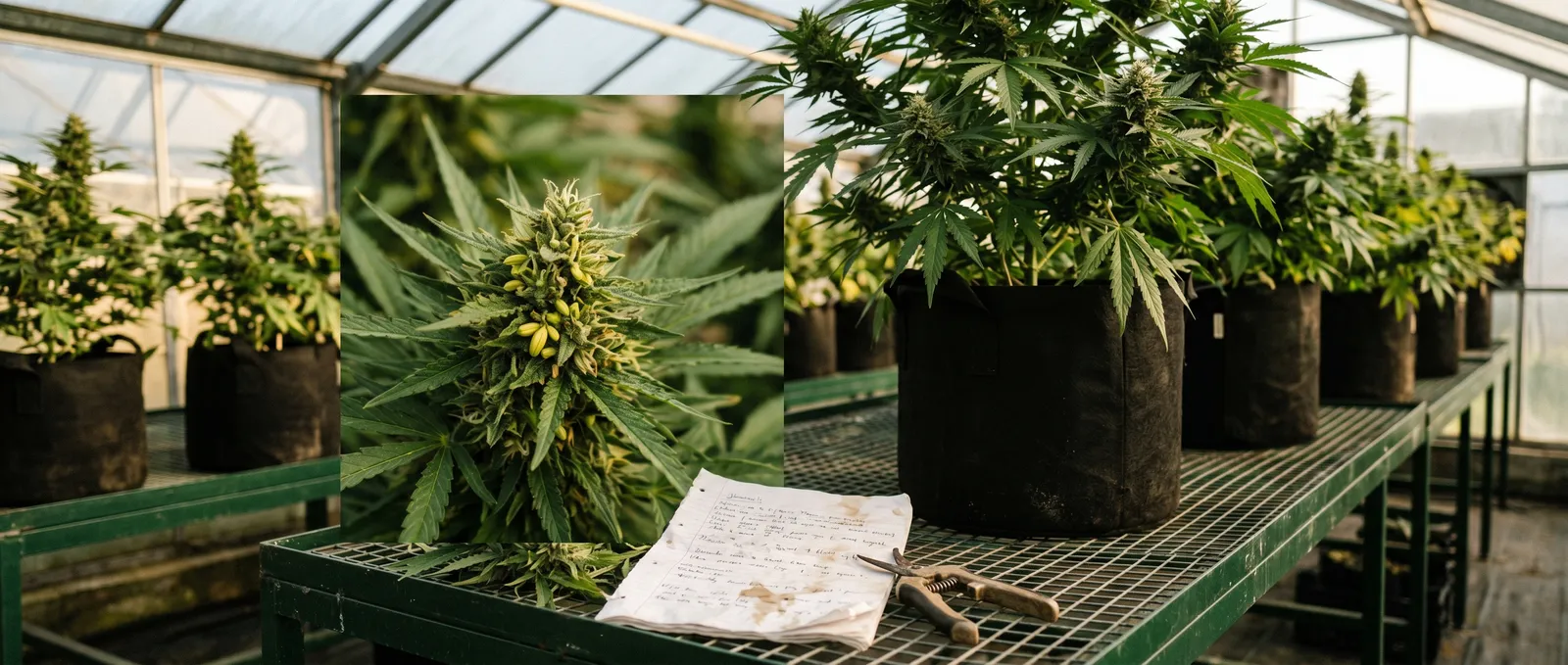
A cannabis hermaphrodite is a female plant that develops male pollen sacs or banana-shaped anthers (nanners), self-pollinating and seeding your harvest.
DIY Cannabis Fertilizer: Homemade Nutrient Guide
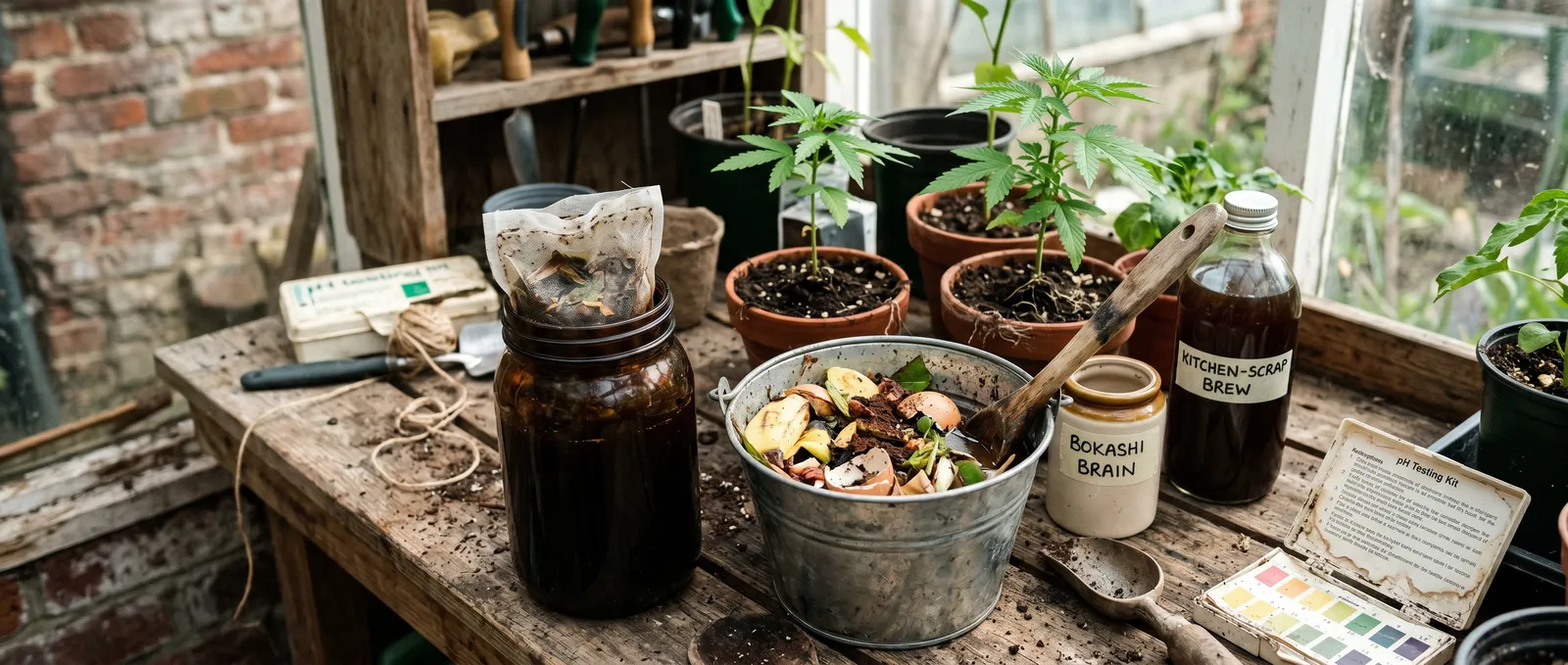
DIY cannabis fertilizer guide: compost, teas, banana ferments and feed schedules, with safety notes and cited research for home growers.
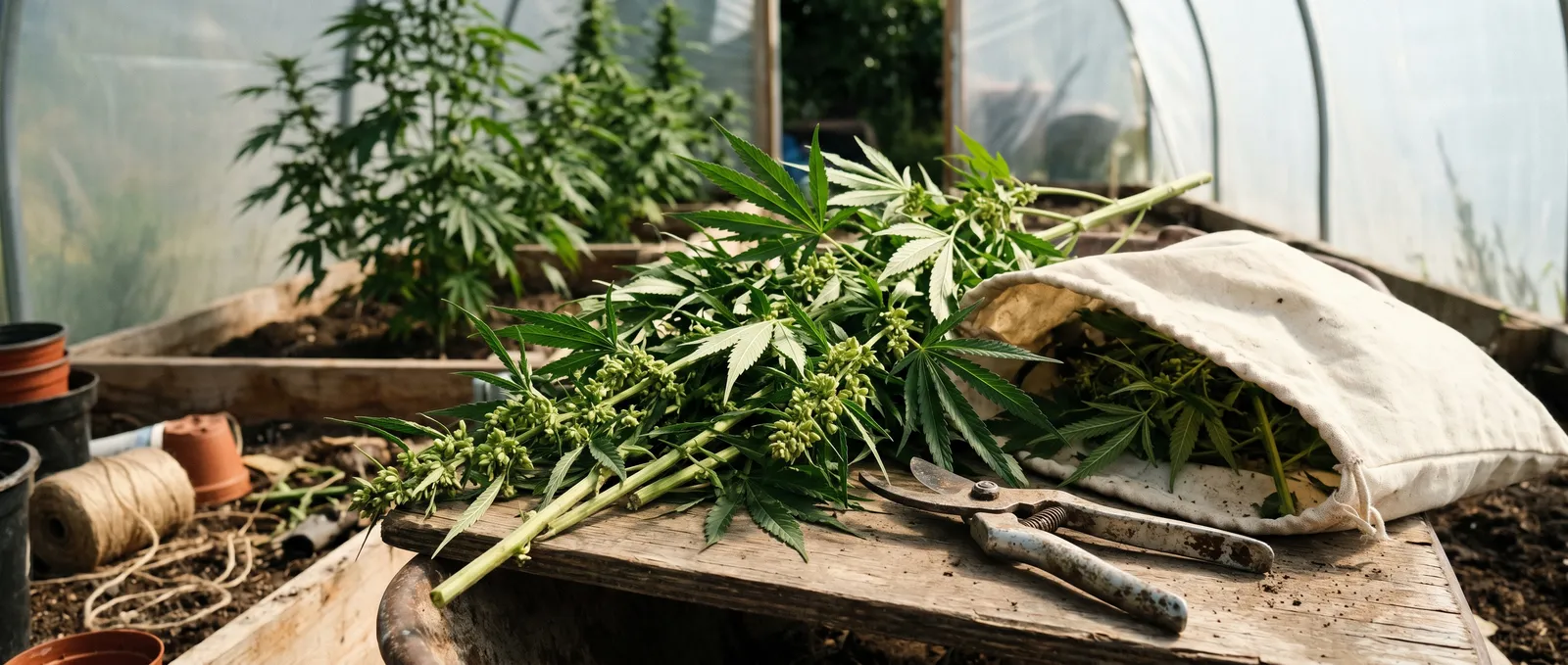
What To Do With Male Cannabis Plants: 6 Practical Uses
What to do with male cannabis plants: identify, isolate, breed, extract, or compost. A practical 6-step guide with sourcing and safety notes.
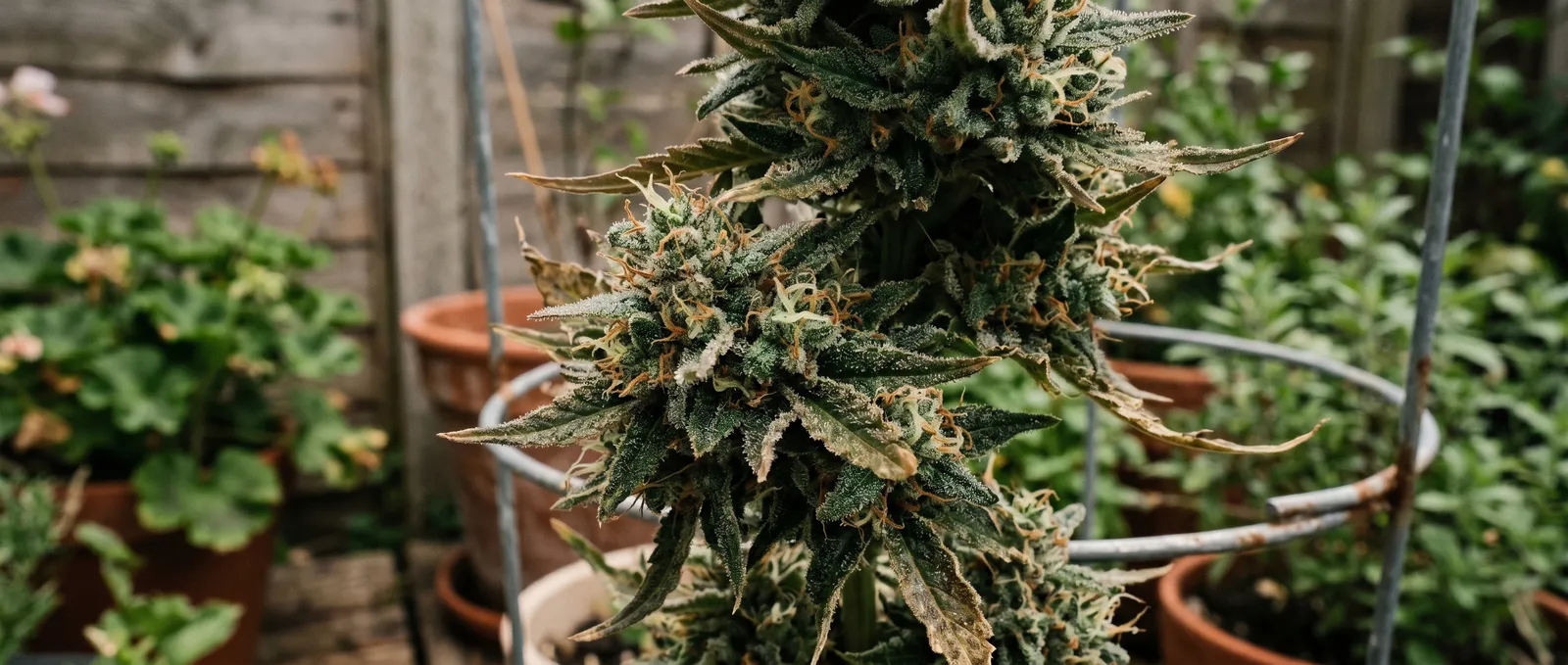
When To Harvest Cannabis Trichomes: A Grower's Guide
Deciding when to harvest cannabis trichomes means reading the resin glands on your calyxes under 60x–100x magnification and cutting when the milky-to-amber…
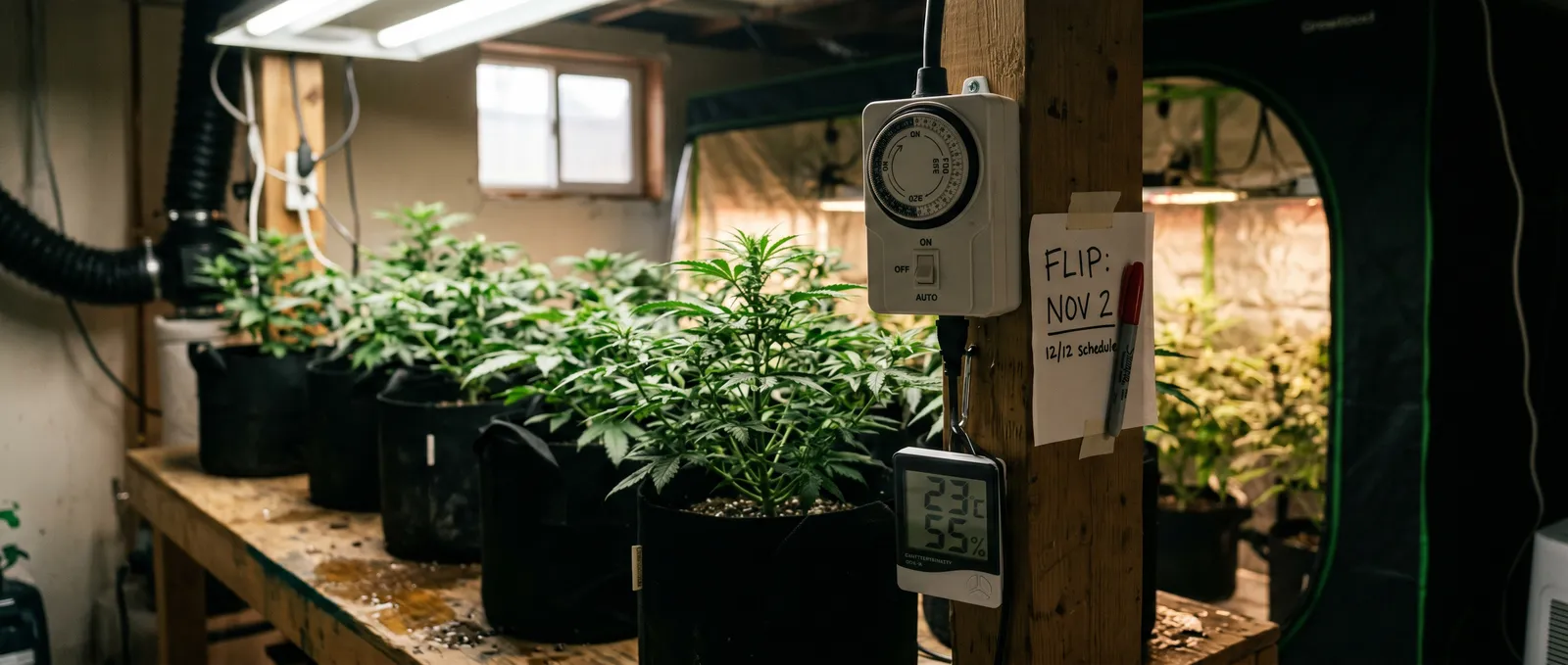
When To Flip Cannabis To 12/12: Timing The Switch
When to flip cannabis to 12/12 is a timing decision that switches photoperiod plants to 12 hours light and 12 hours dark to trigger flowering via florigen…
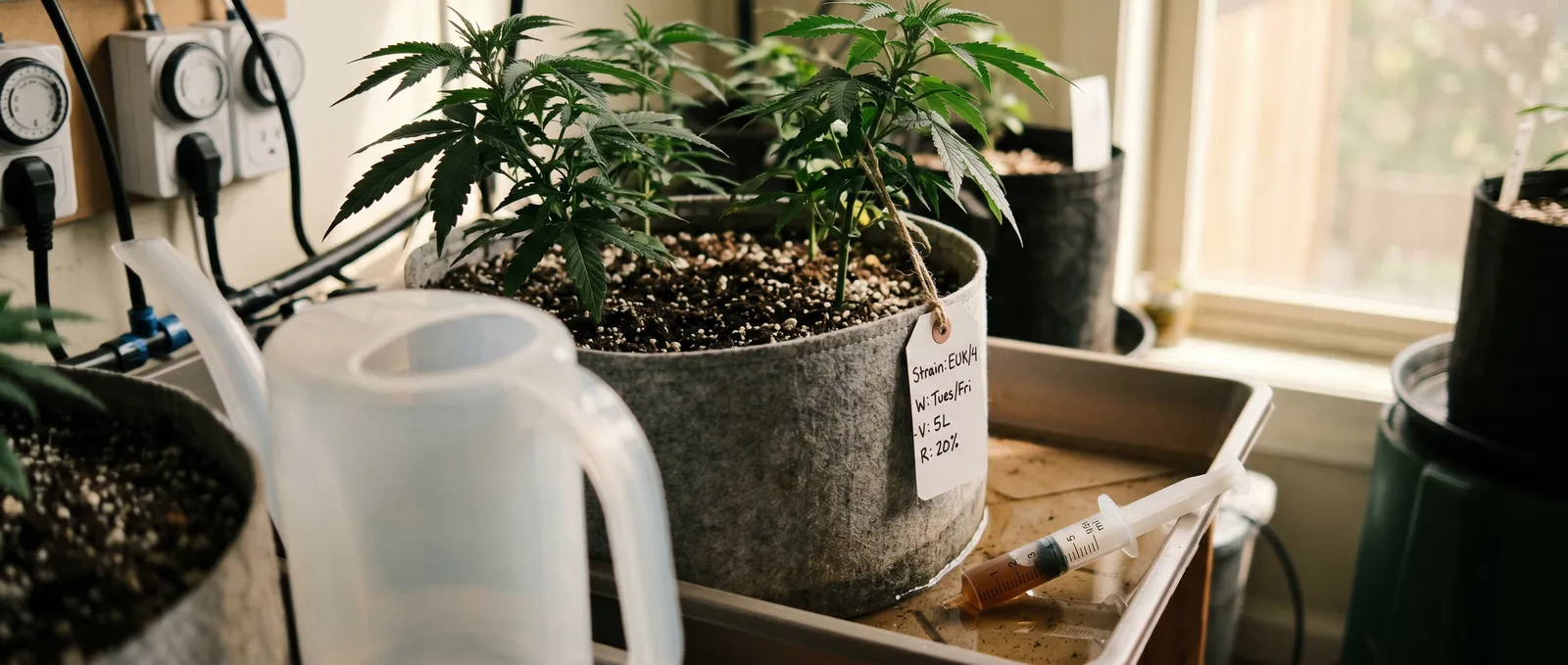
Watering Cannabis Frequency Volume Runoff: Full Guide
Watering cannabis frequency volume runoff is the feedback loop between how often you irrigate, how much you apply, and what drains from the pot.