
This article discusses psychoactive substances intended for adults (18+). If you have a health condition or take medication, consult a doctor before use. Our age policy
Cannabis Flowering Stage Week by Week: Full Guide
Definition
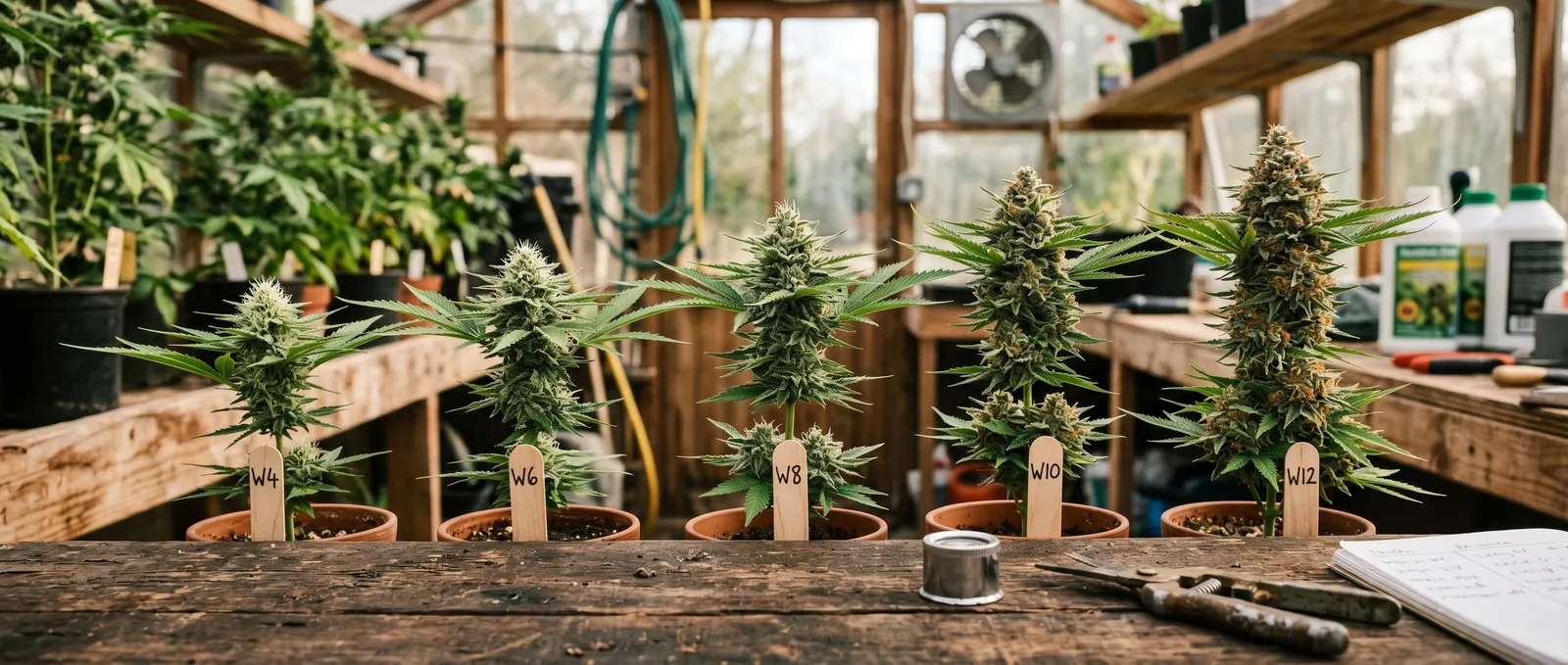
The cannabis flowering stage week by week is the 8–12 week period after the 12/12 flip (or around week 4 for autoflowers) during which pistils emerge, stretch ends, buds bulk, and trichomes ripen. Photoperiod genetics typically finish in 8–10 weeks under stable VPD and bloom nutrition (Chandra et al., 2015).
This guide is written for adults. Home cultivation is an adult-only activity, and the timelines below assume you're growing in a jurisdiction where it's permitted.
The cannabis flowering stage week by week is a structured 8–12 week cycle that takes your plant from the 12/12 flip through stretch, pistils, bulking and ripening to a harvestable crop. For photoperiod cannabis, it begins when you flip the light cycle to 12 hours on / 12 hours off. For autoflowers, it starts on the plant's own clock — usually around week 4 from seed. Most photoperiod genetics finish in 8–10 weeks of flower; some sativa-leaning lines push 12+. What changes week to week isn't just the buds — it's the environment you need to hold, the nutrients the plant wants, and the problems most likely to ruin your crop.
Educational content only. This guide does not constitute medical, horticultural, or formal advice. Consult a qualified professional before making decisions that affect your health or circumstances.
Before the flip: what week 0 looks like
Week 0 is the final 5–7 days of veg, when you lock in plant structure before triggering flower. You shouldn't flip to 12/12 until the plant has the structural frame you want. In our own tent testing over a decade, plants roughly double in height during the stretch — a 40cm plant at flip becomes ~80cm by week 3. If your tent is 120cm tall with a light hanging at the top, flip when the canopy is around 30–40cm, not 70cm. Any final topping, LST, or defoliation should happen 5–7 days before the flip so the plant can recover.
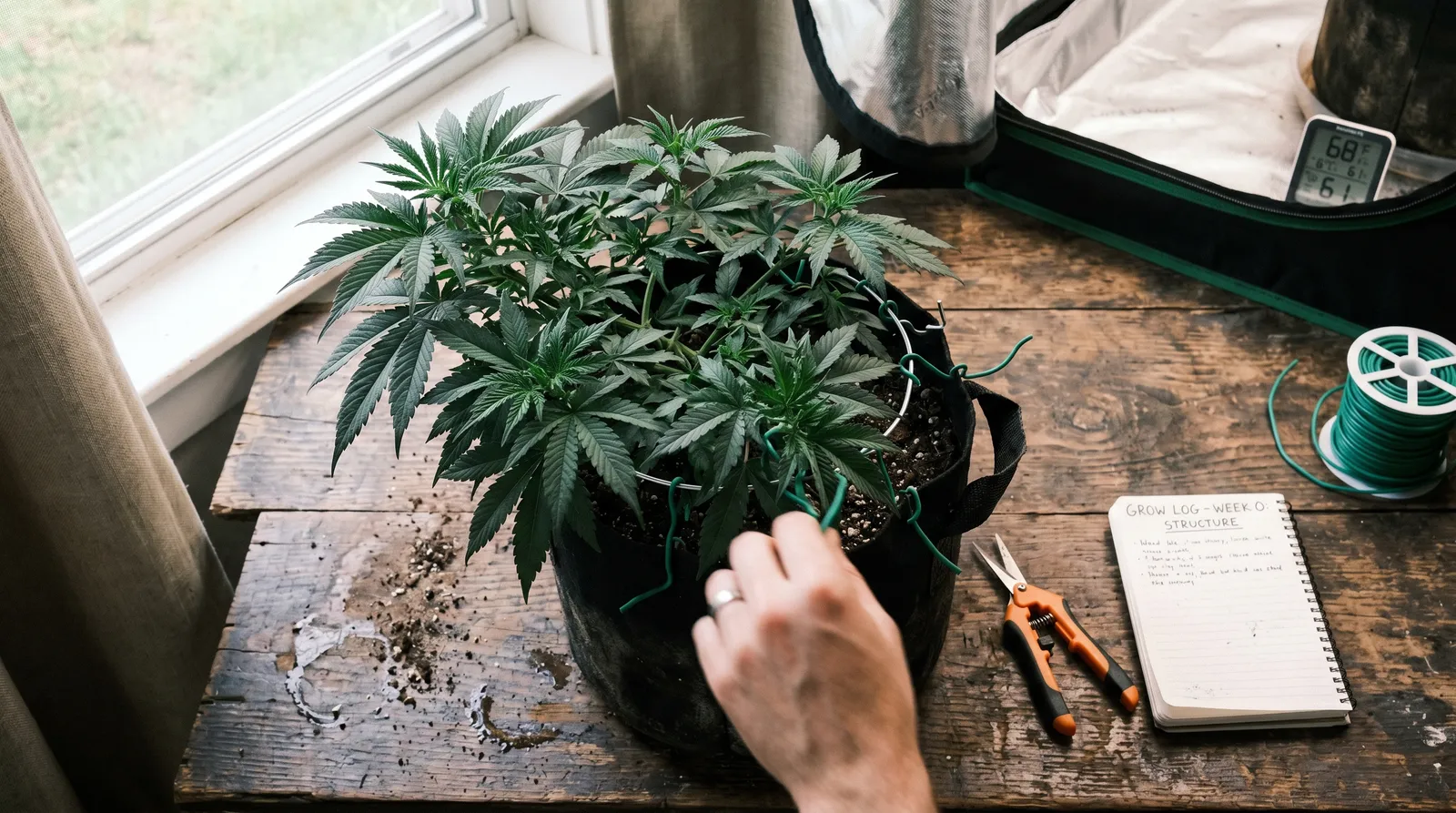
Target environment going in: 24–26°C lights-on, 60–65% RH, VPD ~1.0 kPa. PPFD in late veg sits around 400–600 µmol/m²/s (Chandra et al., 2015).
Week-by-week environmental targets
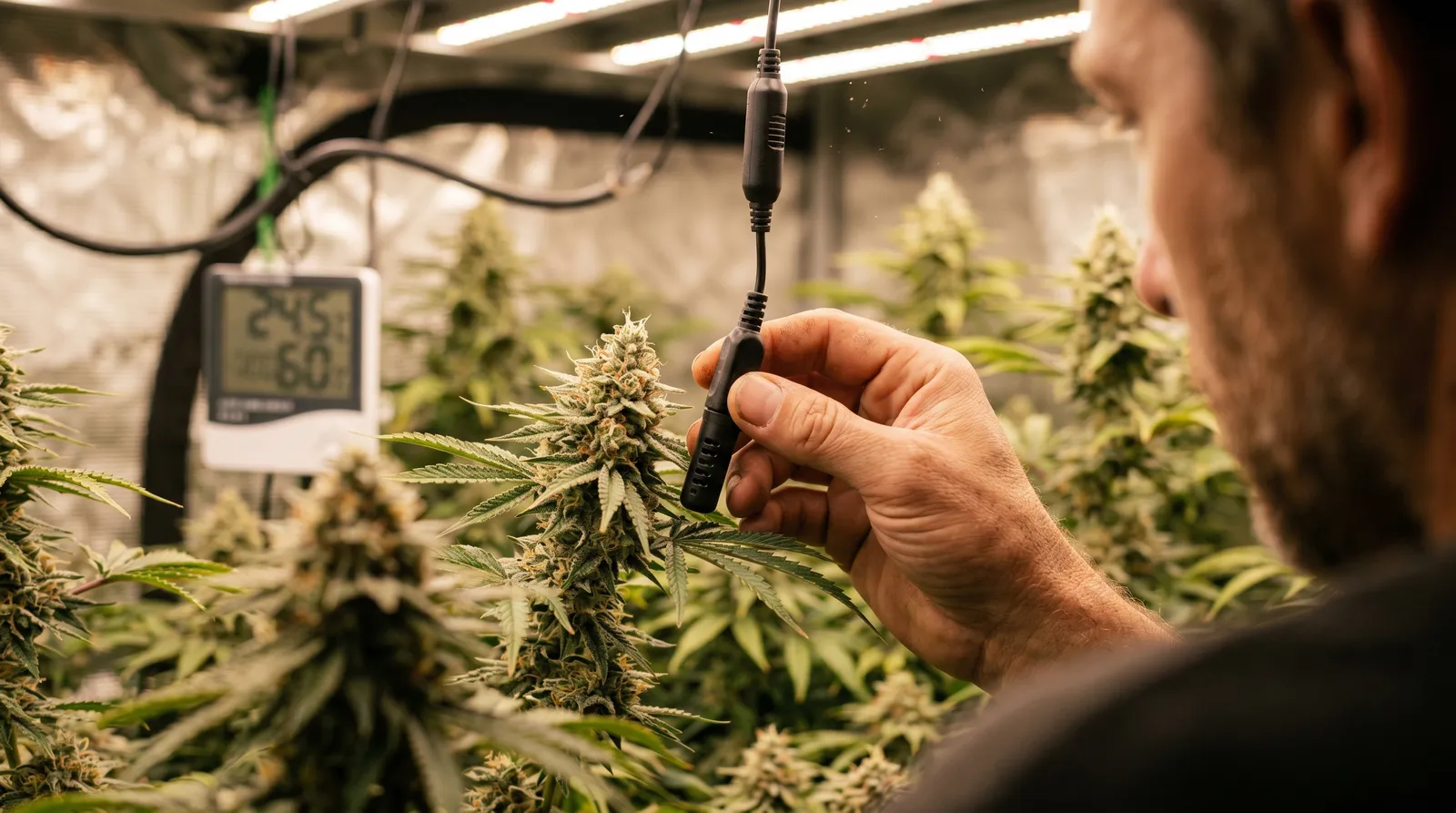
The table below summarises the core targets growers ask about most — use it as a quick reference when you set up climate controllers or buy a new grow tent kit.
| Week | Stage | PPFD (µmol/m²/s) | VPD (kPa) | RH (%) | EC (coco) |
|---|---|---|---|---|---|
| 1 | Transition | 500–700 | 1.0–1.2 | 60 | 1.4–1.8 |
| 2 | Pistils | 600–800 | 1.1–1.3 | 55–60 | 1.6–2.0 |
| 3 | Stretch ends | 700–900 | 1.2–1.3 | 55 | 1.8–2.2 |
| 4 | Bulking | 700–900 | 1.2–1.4 | 50–55 | 2.0–2.4 |
| 5–6 | Fattening | 800–900 | 1.3–1.5 | 45–50 | 1.8–2.2 |
| 7–8 | Ripening | 700–850 | 1.3–1.5 | 45–50 | 1.2–1.6 |
| 9–10 | Harvest | 600–800 | 1.3–1.5 | 45–50 | water/low |
Week 1 — The transition
Week 1 is a hormonal handover: the plant is still in veg mode visually but reading the shorter photoperiod. Flip day 1 to day 7. You'll see accelerated vertical growth (the "stretch" begins), lighter green new leaves, and no flowers. Sex shows near the end of the week on regular seeds as pre-flowers in the nodes; feminised seeds are effectively all female (breeder documentation from Dutch Passion, Royal Queen Seeds, and Sensi Seeds all report >99% female expression).
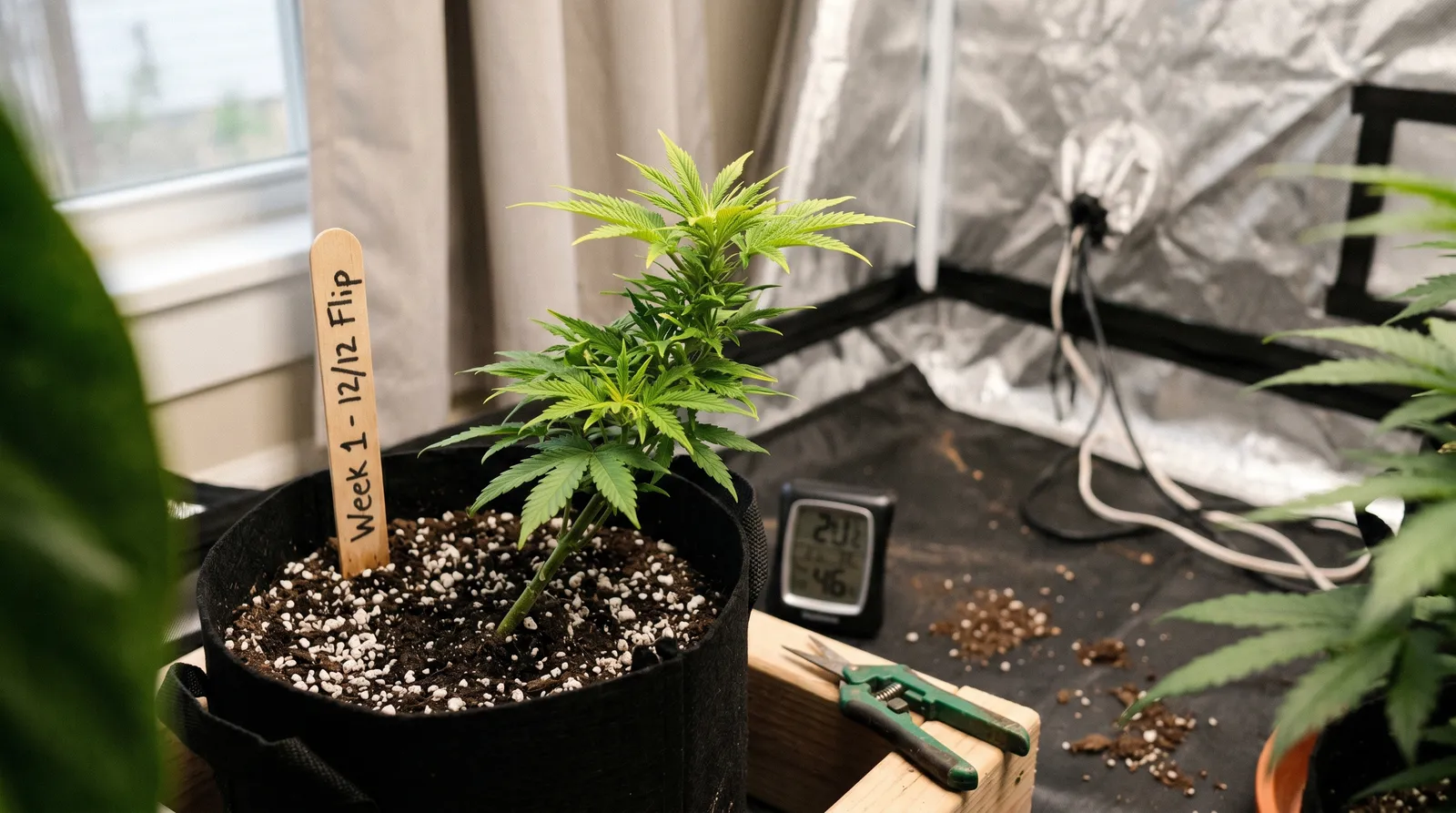
- Light: 12/12, PPFD 500–700 µmol/m²/s
- VPD: 1.0–1.2 kPa (around 25°C, 60% RH)
- Feed: still a veg-leaning ratio, higher N, EC 1.4–1.8 in coco
- Watch: stretch rate — if you're running out of headroom, start LST now
Week 2 — Pistils appear
Week 2 is when the first white pistils emerge at the bud sites, signalling flower initiation is locked in. They show on the main cola first, then laterals. Stretch continues aggressively — this is often the fastest vertical growth the plant will ever do. Start rotating branches and tucking leaves to keep light on the lower sites.
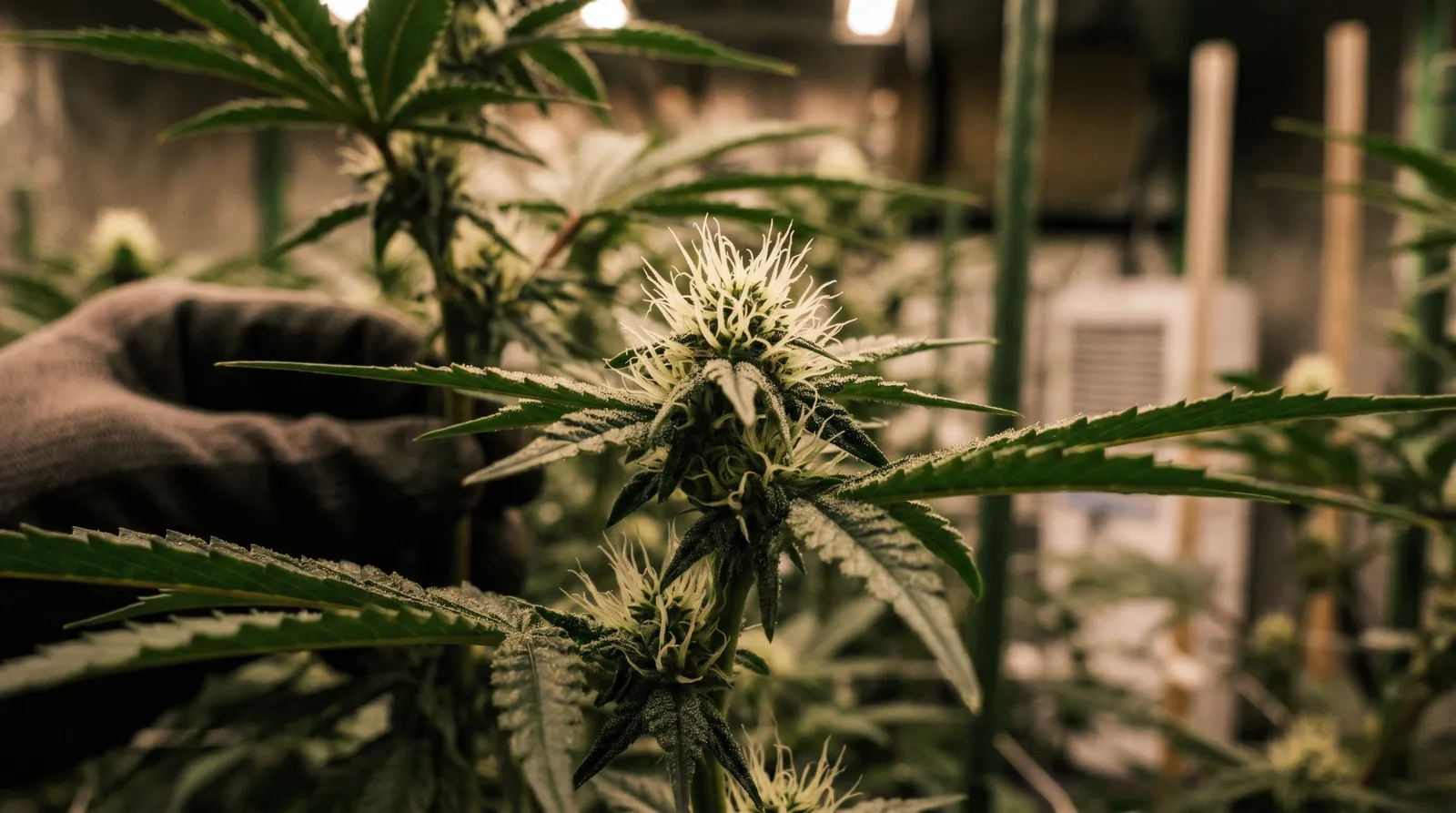
- Feed: transition feed — drop N slightly, bring P and K up. EC 1.6–2.0
- pH: 5.8–6.2 in coco/hydro, 6.2–6.8 in soil
- RH: 55–60%; you want it dropping steadily from here on
Week 3 — Stretch ends, bud sites define
Week 3 marks the end of vertical growth and the definition of every bud site you'll harvest. Pistil clusters thicken at every node. This is the last clean window for any plant training — after this, woody stems won't bend without snapping. If you're running a SCROG net, get everything tucked under it by the end of this week.
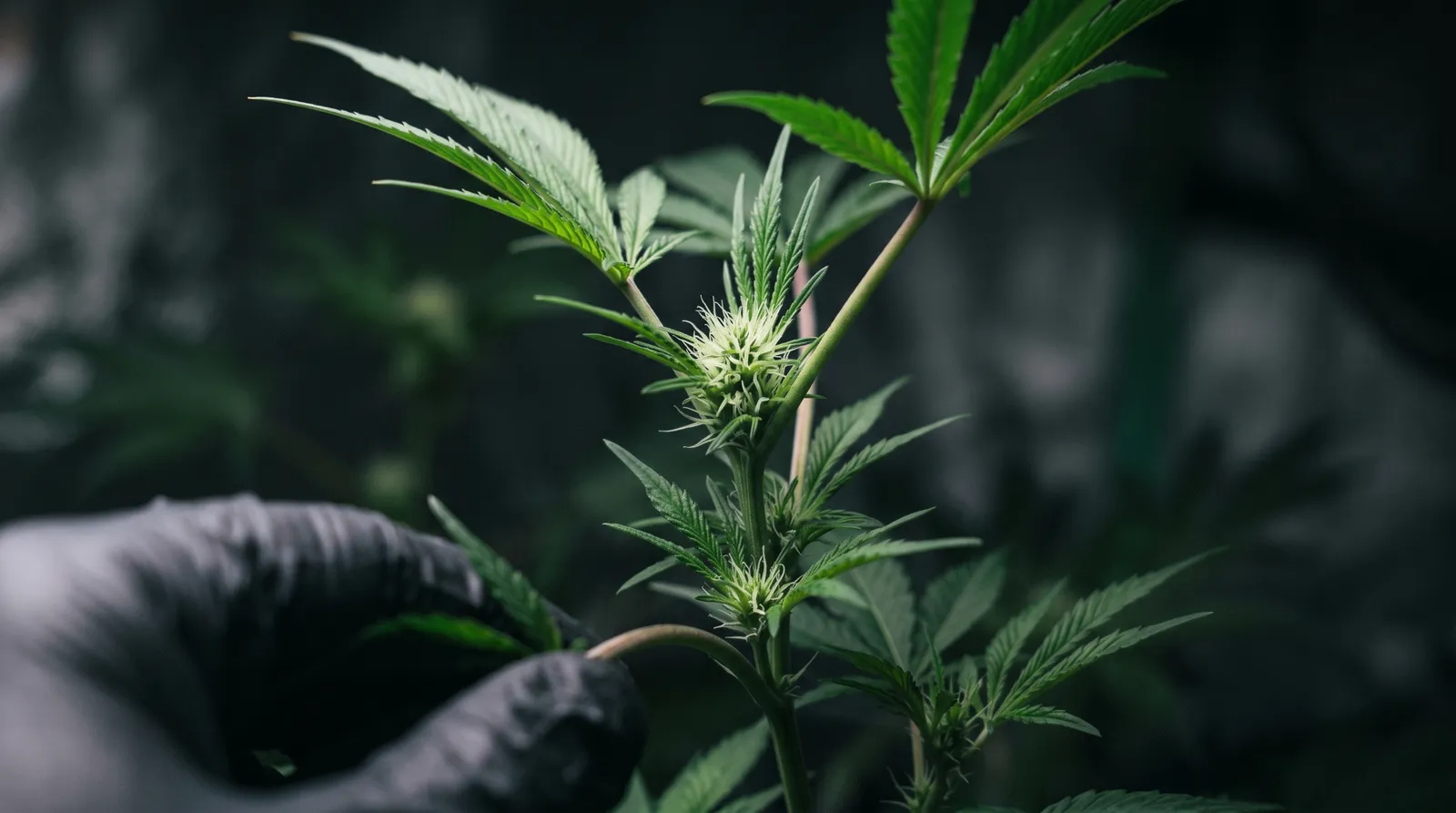
Feed: full bloom ratio now. Calcium and magnesium demand climbs — if you're in coco or RO water, Cal-Mag is doing real work. Early deficiencies usually show on new growth as pale, twisted leaves.
Week 4 — Bulking begins
Week 4 is where buds put on visible mass for the first time, and trichome frost appears on sugar leaves and calyxes. The plant's calorie demand peaks around now — this is where underfeeding shows as yellowing lower leaves, and overfeeding shows as clawed, dark-green fan leaves with burnt tips.
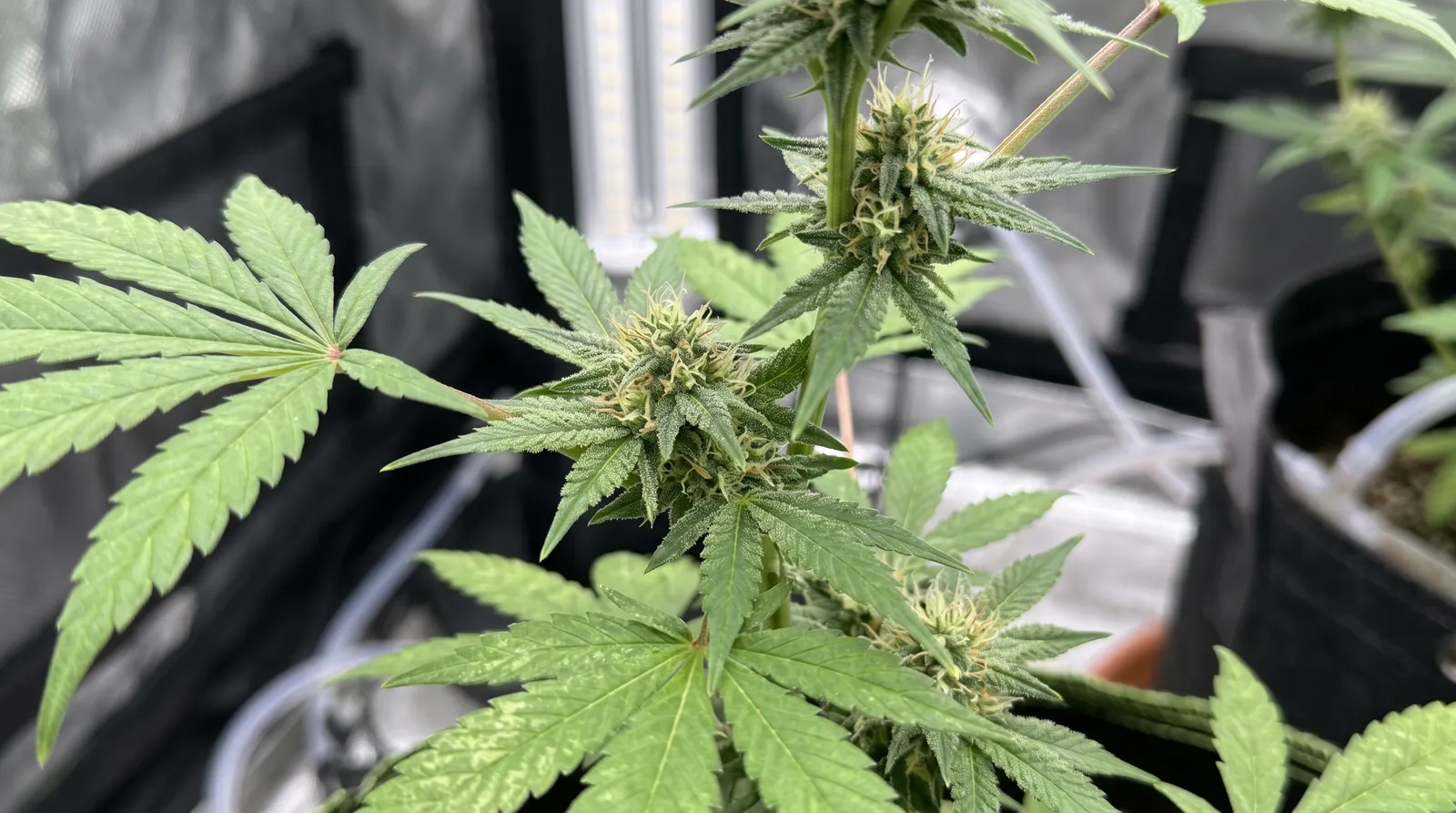
- PPFD: 700–900 µmol/m²/s (push to 1,000+ only with CO2 supplementation)
- VPD: 1.2–1.4 kPa — bump it by lowering RH to 50–55%
- Feed: peak bloom, EC 2.0–2.4 in coco
Weeks 5–6 — Fattening and smell
Weeks 5–6 are when buds stack vertically, fill out sideways, and resin production ramps hard enough that odour control becomes non-negotiable. Your tent will smell noticeably stronger by the end of week 5, which is when a good carbon filter stops being optional — order one before you need it, not after. Trichomes are mostly clear, transitioning to cloudy on early genetics.
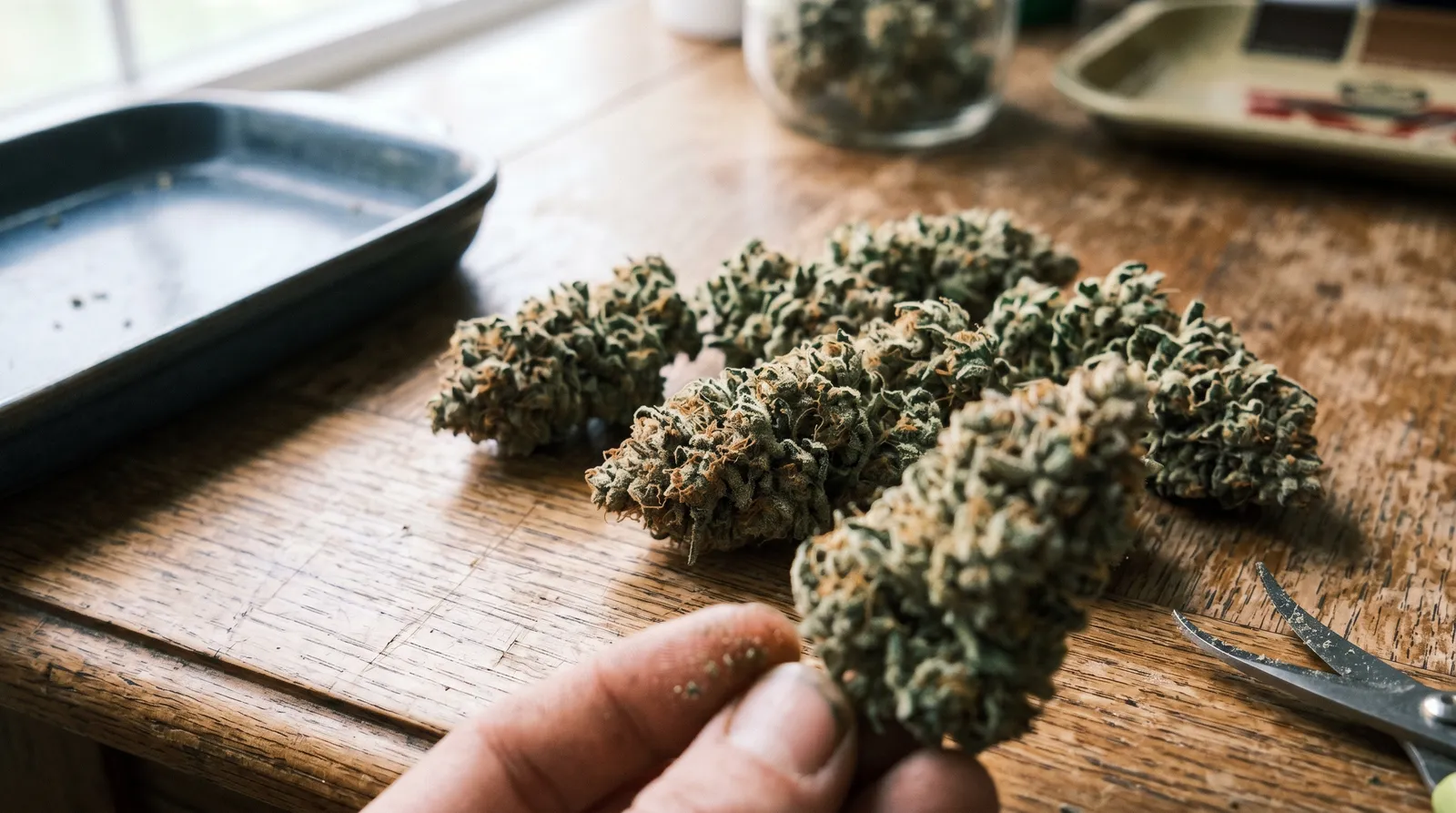
This is the highest-risk window for powdery mildew if RH climbs, and the start of the bud-rot (botrytis) risk window on dense-flowered genetics. Keep airflow moving through the canopy — not blasting directly at buds, but constant movement. Any defoliation here should be conservative: a few large fans blocking bud sites, not a schwazzing pass (the yield evidence on heavy mid-flower defoliation is contested and easy to get wrong).
Weeks 7–8 — Ripening
Weeks 7–8 are the ripening window: pistils brown and curl, trichomes shift from clear to cloudy, and mobile nutrients retreat from fan leaves into flowers. The first amber heads appear on early-finishing genetics. Fan leaves begin yellowing — this is normal and desired, not a deficiency.
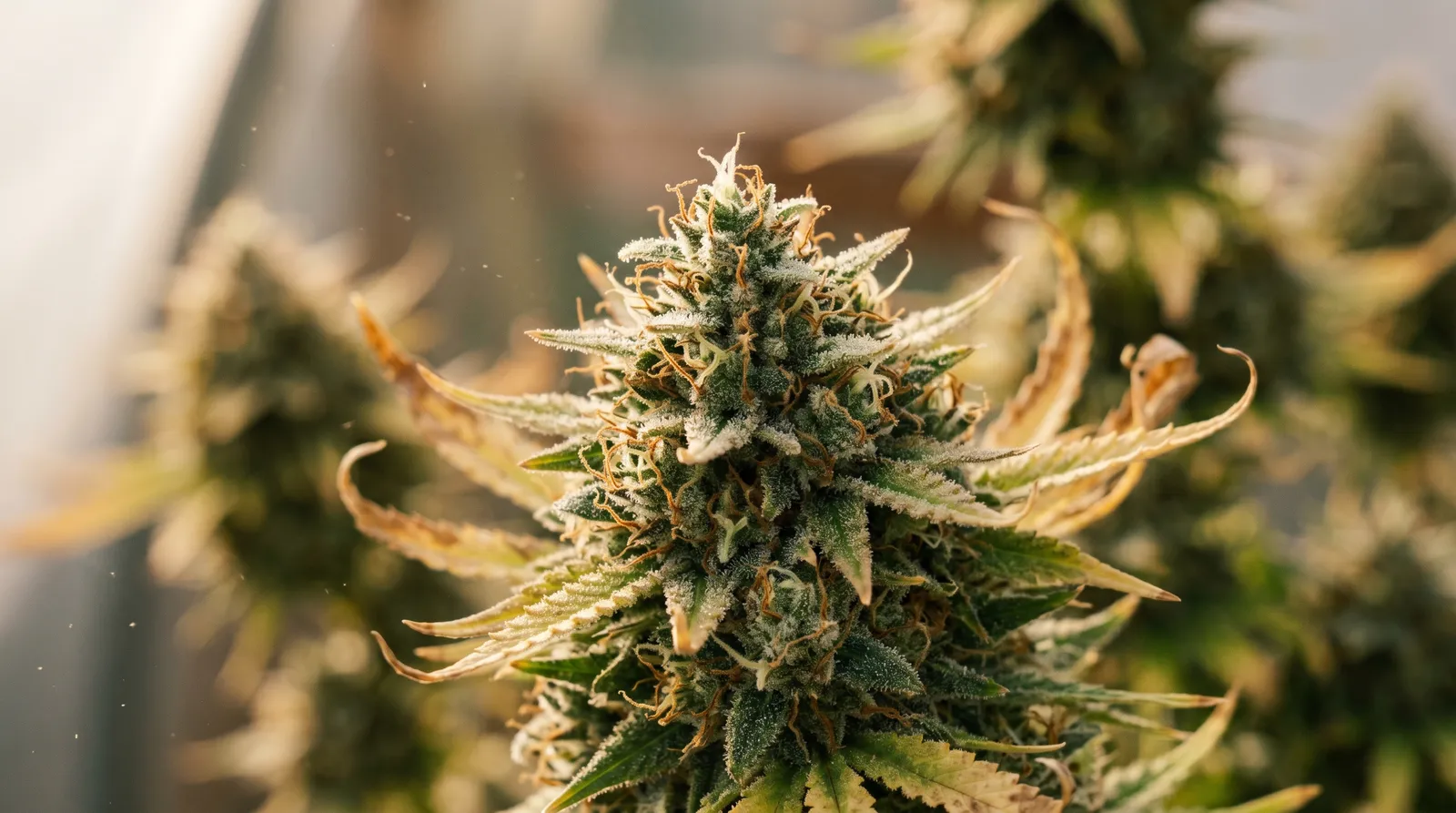
- Feed: drop EC to 1.2–1.6. If you flush, do it now — whether flushing meaningfully improves cure quality is genuinely disputed in the horticulture literature, but most growers taper nutrients in the final 1–2 weeks regardless
- RH: 45–50% — lower end of the range, especially overnight
- Temperature: drop night temps to ~18–20°C to deepen colour on anthocyanin-expressive genetics
Week 7 is when growers message us panicking about yellow fan leaves. Nine times out of ten, the plant is doing exactly what it should — pulling nitrogen back out of the leaves into the flowers. If the buds still look healthy and the trichomes are progressing, leave it alone. Honest limitation: we can't diagnose a plant from a photo in chat, and neither can anyone else — a USB microscope tells you more than any forum reply.
Weeks 9–10 — Harvest window
Weeks 9–10 are the harvest window for most indica-leaning and hybrid photoperiod genetics, with sativa-dominant lines pushing later. Sativa-dominant lines (Haze types, some landrace sativas) can push to week 12 or beyond. The only reliable harvest indicator is trichome colour under a 60x+ jeweller's loupe or USB microscope — if you don't own one yet, get one before week 6, not after. Compared to judging by pistil colour or the calendar, trichome reading is the only method that survives contact with real genetics.
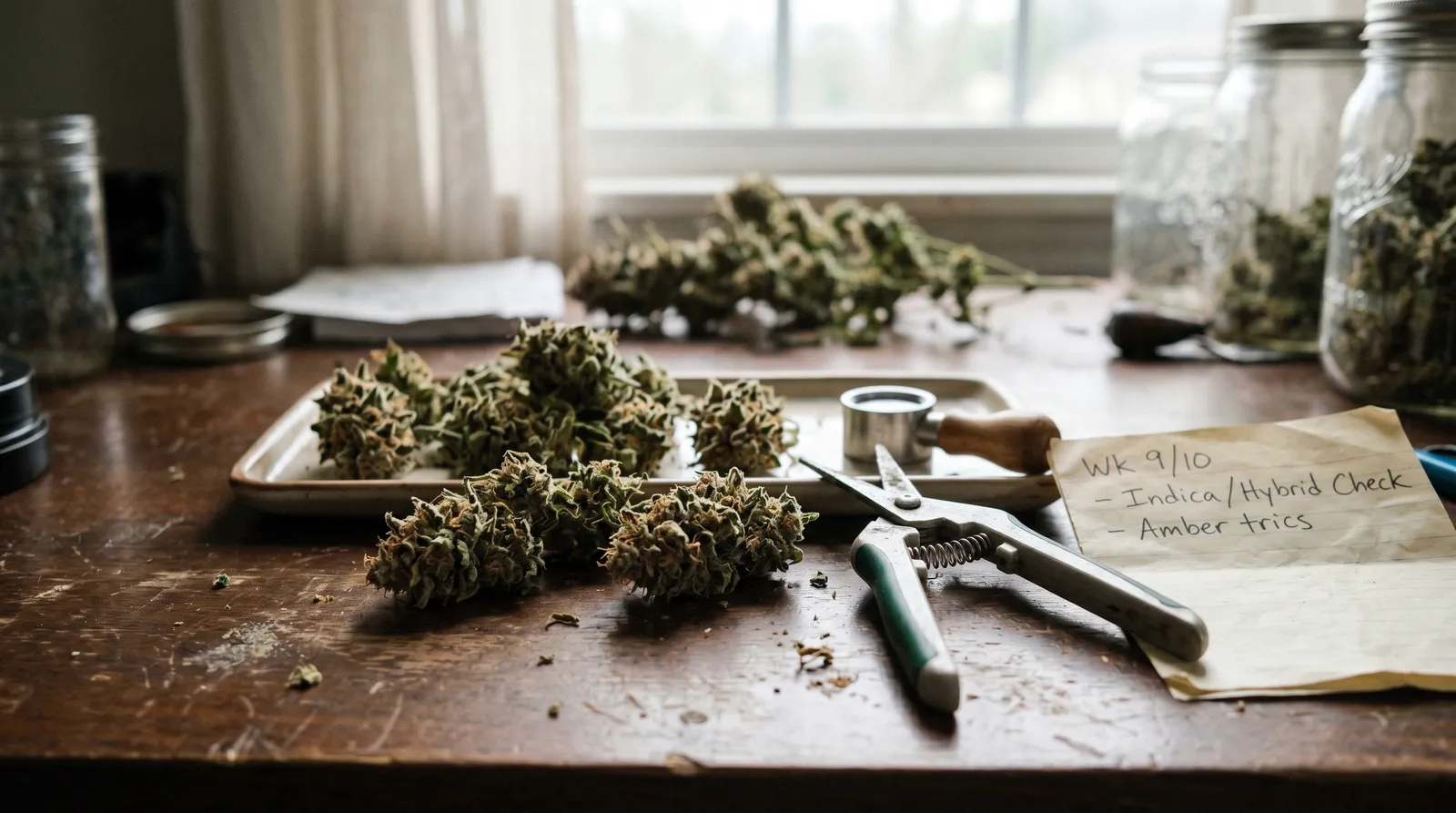
- Mostly cloudy + ~10–20% amber: classic harvest window
- All cloudy, no amber: earlier, clearer effect profile
- 30%+ amber: later, more sedating profile
Cut in the dark (lights-off or pre-dawn), hang whole plants or large branches in a space at 18–20°C and 55–60% RH. A proper dry takes 10–14 days. Rushing the dry is the single most common way growers ruin an otherwise good harvest.
How autoflowers differ
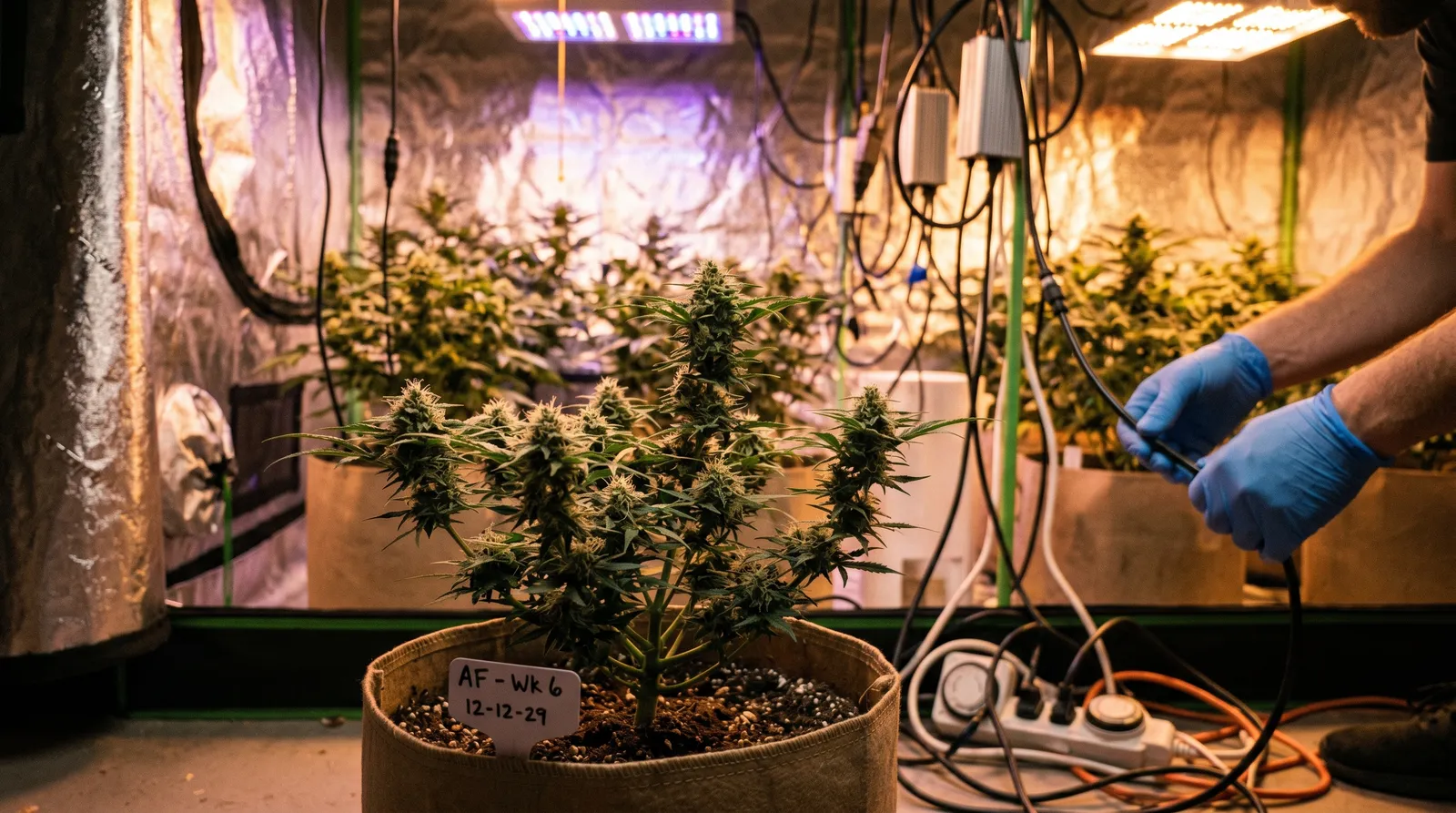
Autoflowers flower on age rather than photoperiod, compressing the full seed-to-harvest cycle into 9–11 weeks. Autoflower genetics (Cannabis ruderalis crosses) run on an 18/6 or 20/4 light cycle throughout. The weekly progression above still applies — pistils, stretch, bulking, ripening — it's just compressed, and you never flip the light cycle. Because the plant can't recover from stress the way a photoperiod can (no extended veg to regrow), keep training gentle: LST yes, topping late is risky, heavy defoliation no.
Common week-by-week failures
Most flowering-stage disasters cluster in predictable windows, which means they're also predictable to prevent.
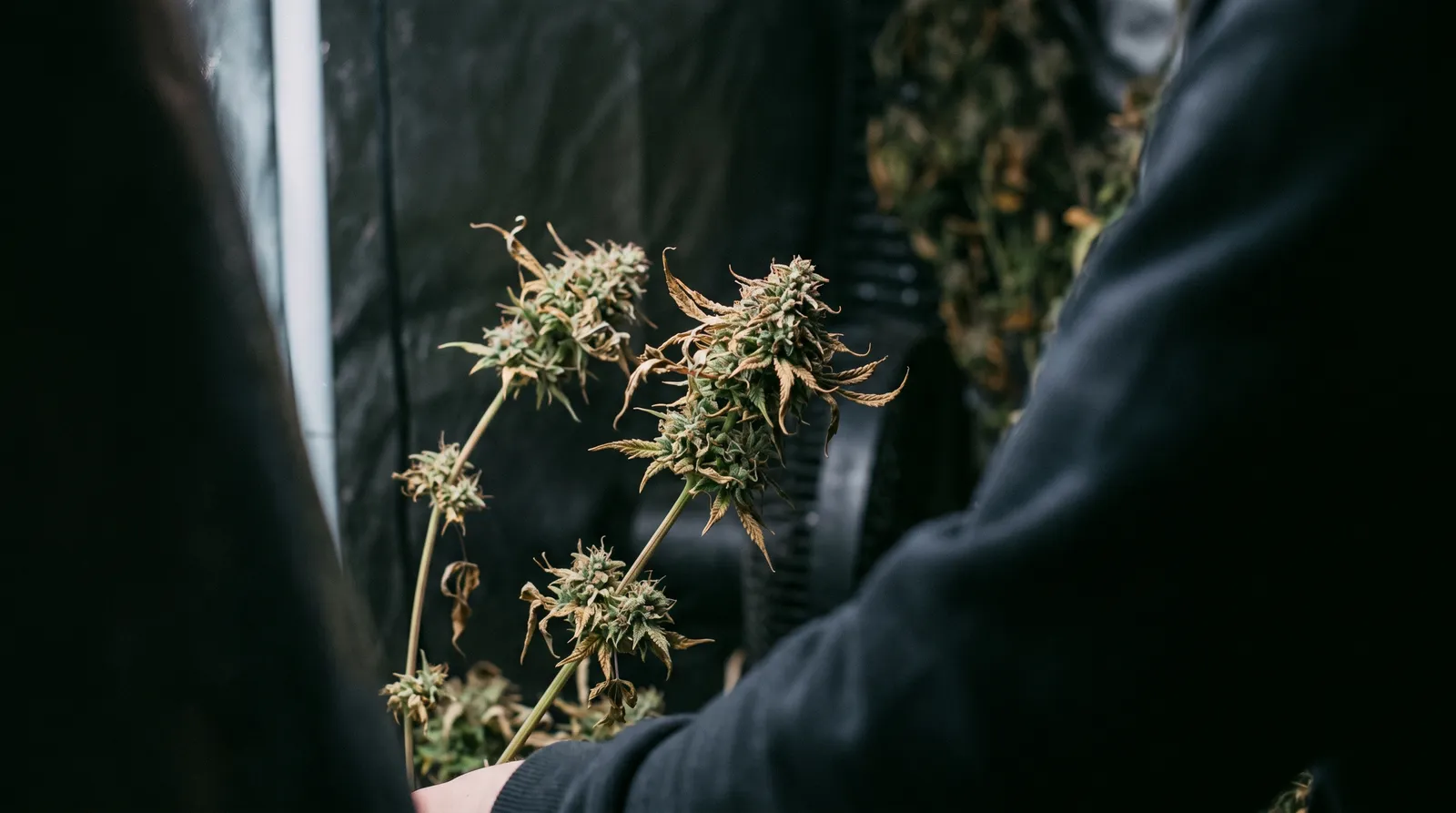
- Weeks 1–2: running out of headroom because the stretch was underestimated — burns the canopy on the light
- Weeks 3–4: nutrient burn from running veg-level N into bloom, or Cal-Mag deficiency in coco/RO setups
- Weeks 5–6: powdery mildew and the first botrytis spots on dense colas — almost always an airflow/RH problem
- Weeks 7–8: panicking about normal yellowing and overfeeding, pushing nitrogen back into leaves that should be draining
- Weeks 9–10: harvesting on the calendar instead of the trichomes, or rushing the dry because the tent is needed for the next run
Interaction risks for consumed cannabis (CNS depressants, SSRIs, MAOIs, warfarin) are covered on the cannabinoids hub, not here — this guide is about growing the plant, not consuming it.
Legal notice: Cannabis cultivation laws vary by country and region and change frequently. This guide is educational. Before growing, verify current laws for your specific jurisdiction. Azarius does not provide legal advice.
Last updated: April 2026
Frequently Asked Questions
8 questionsHow long does the cannabis flowering stage last?
When does the stretch stop during flowering?
What VPD and PPFD should I run in flower?
Do I need to flush before harvest?
Why are my fan leaves yellowing in late flower?
How do autoflowers differ week by week?
How tall will my cannabis plant grow after the 12/12 flip?
When should I change from veg nutrients to bloom nutrients?
About this article


Luke Sholl has been writing about cannabis, cannabinoids, and the broader benefits of nature since 2011, and has personally grown cannabis in home grow tents for more than a decade. That first-hand cultivation experience
This wiki article was drafted with AI assistance and reviewed by Luke Sholl, External contributor since 2026. Editorial oversight by Adam Parsons.
Medical disclaimer. This content is for informational purposes only and does not constitute medical advice. Consult a qualified healthcare provider before use of any substance.
Last reviewed April 24, 2026
References
- [1]Chandra, S., Lata, H., Khan, I. A., & ElSohly, M. A. (2015). Light dependence of photosynthesis and water vapor exchange characteristics in different Cannabis sativa L. phenotypes. Journal of Applied Research on Medicinal and Aromatic Plants, 2(2), 39–47.
- [2]Potter, D. J. (2014). A review of the cultivation and processing of cannabis for production of prescription medicines in the UK. Drug Testing and Analysis, 6(1–2), 31–38.
- [3]Caplan, D., Dixon, M., & Zheng, Y. (2017). Optimal rate of organic fertilizer during the flowering stage for cannabis grown in two coir-based substrates. HortScience, 52(12), 1796–1803.
- [4]EMCDDA (2023). Cannabis cultivation and drug monitoring reports, European perspective.
- [5]Beckley Foundation policy briefs on cannabis science and cultivation research.
- [6]Dutch Passion breeder documentation (2024) — feminised seed expression rates.
- [7]Royal Queen Seeds cultivation guide (2024) — photoperiod flowering week-by-week benchmarks.
Related Articles
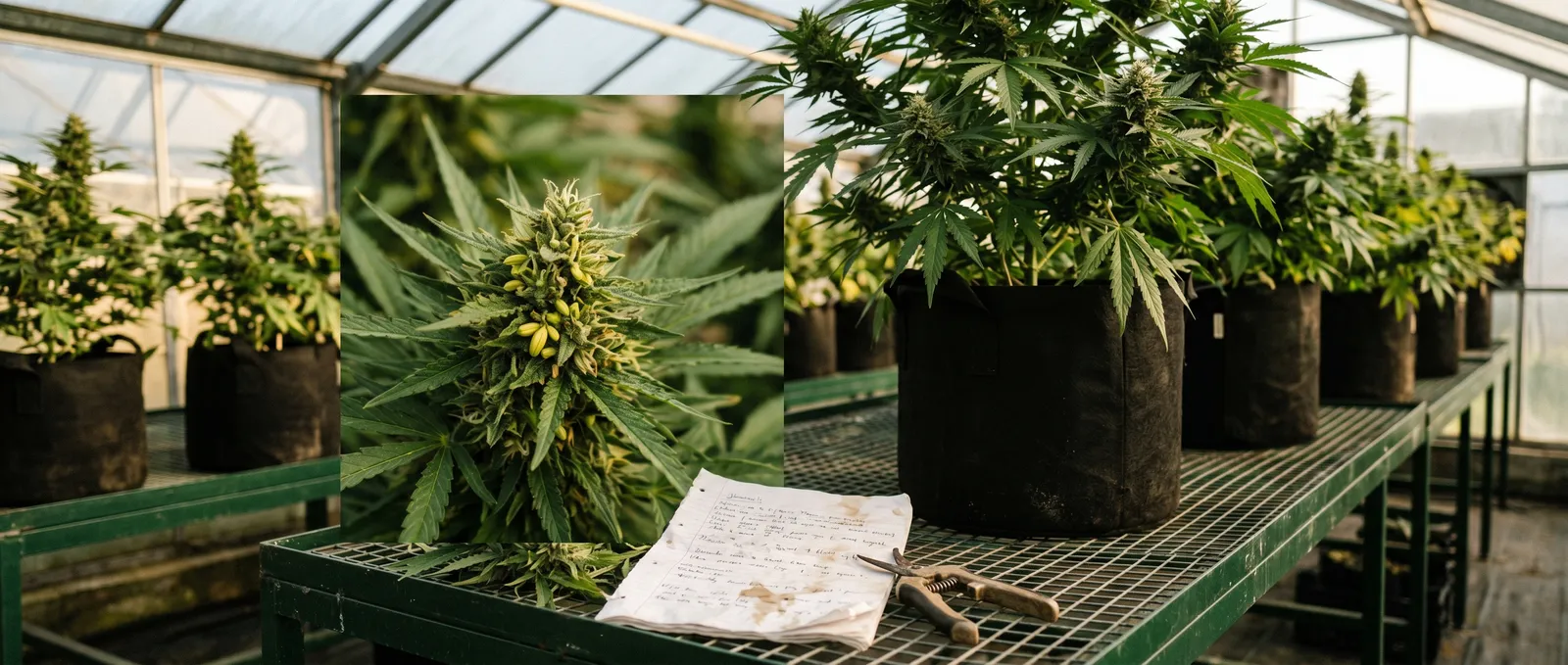
Cannabis Hermaphrodite: Identify, Prevent, Act
A cannabis hermaphrodite is a female plant that develops male pollen sacs or banana-shaped anthers (nanners), self-pollinating and seeding your harvest.
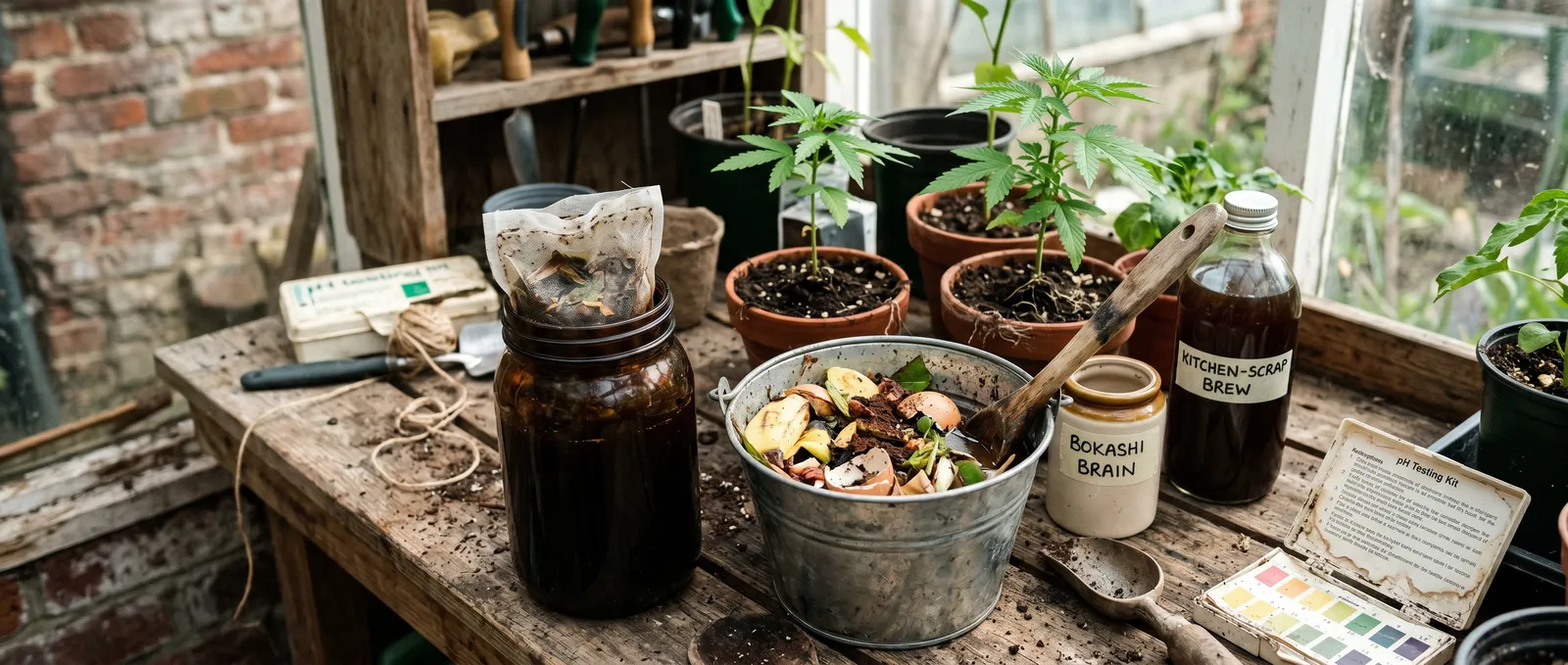
DIY Cannabis Fertilizer: Homemade Nutrient Guide
DIY cannabis fertilizer guide: compost, teas, banana ferments and feed schedules, with safety notes and cited research for home growers.
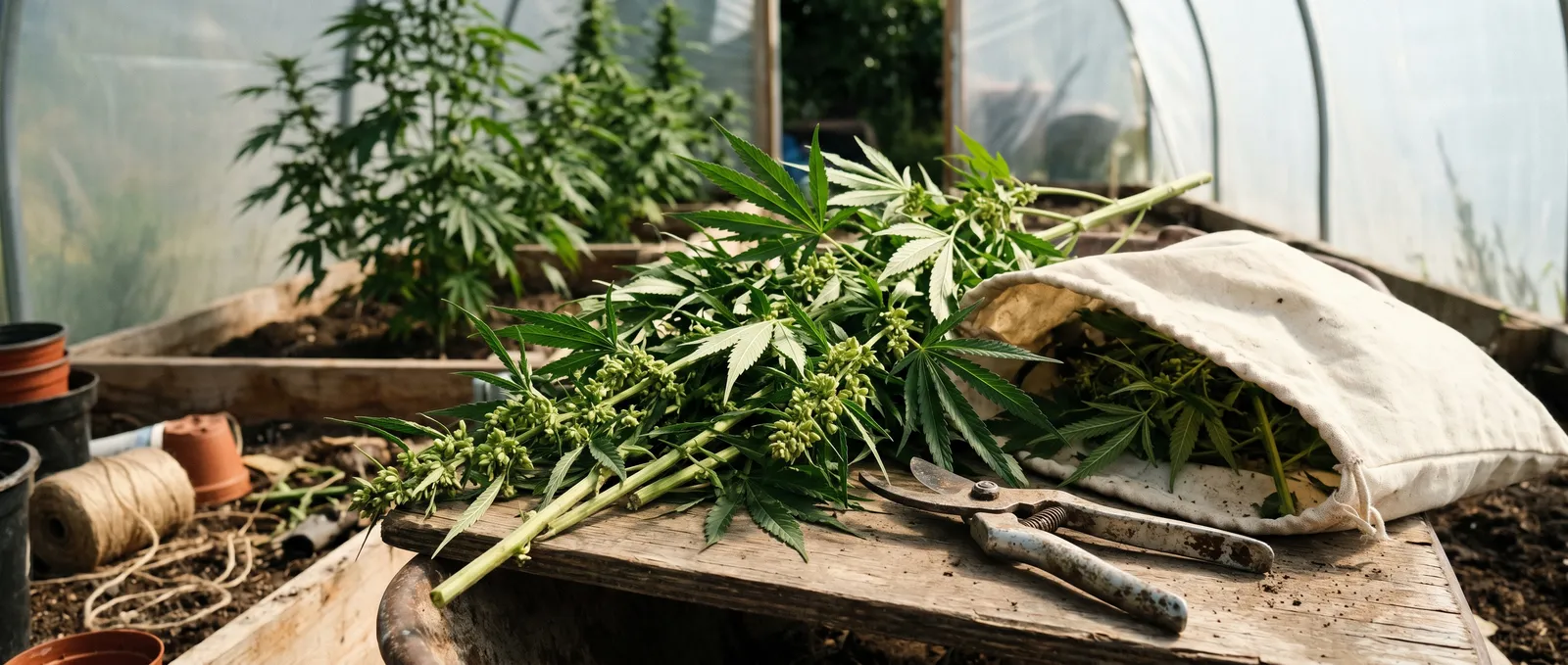
What To Do With Male Cannabis Plants: 6 Practical Uses
What to do with male cannabis plants: identify, isolate, breed, extract, or compost. A practical 6-step guide with sourcing and safety notes.
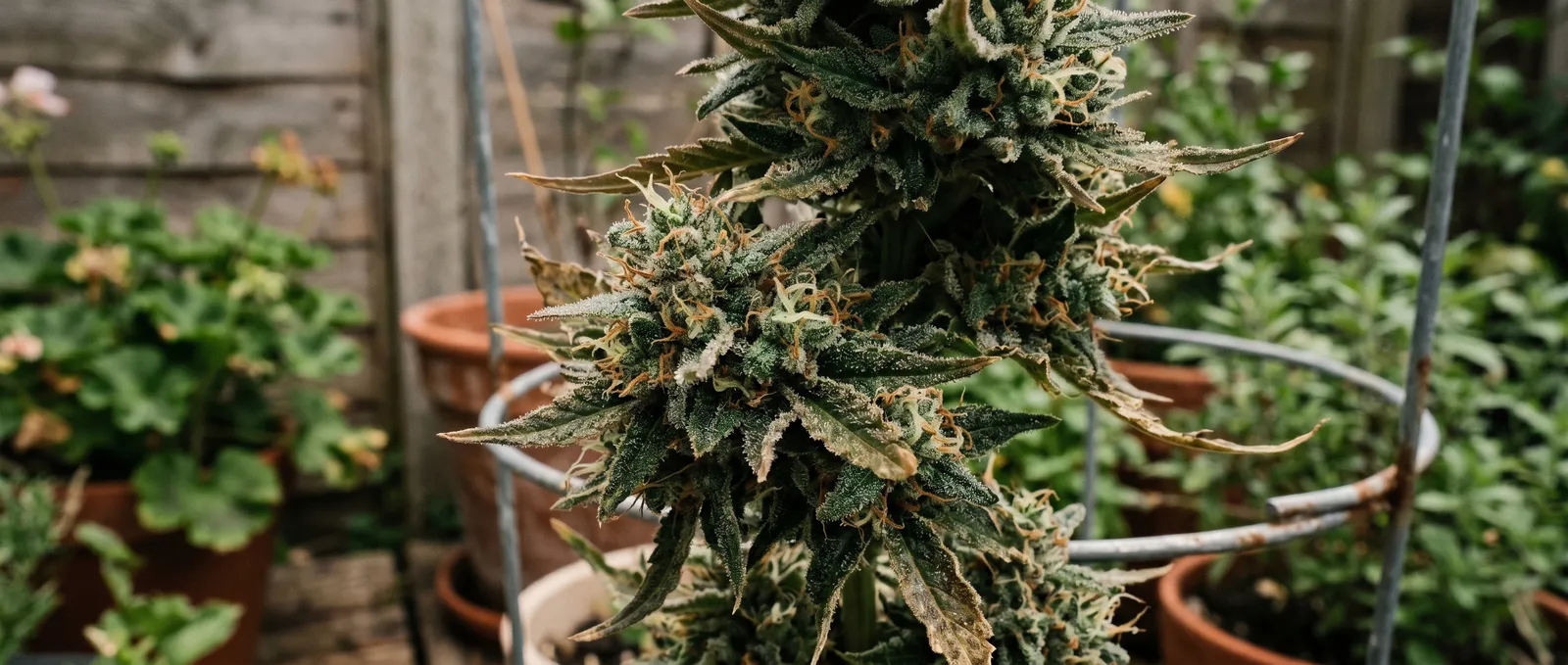
When To Harvest Cannabis Trichomes: A Grower's Guide
Deciding when to harvest cannabis trichomes means reading the resin glands on your calyxes under 60x–100x magnification and cutting when the milky-to-amber…
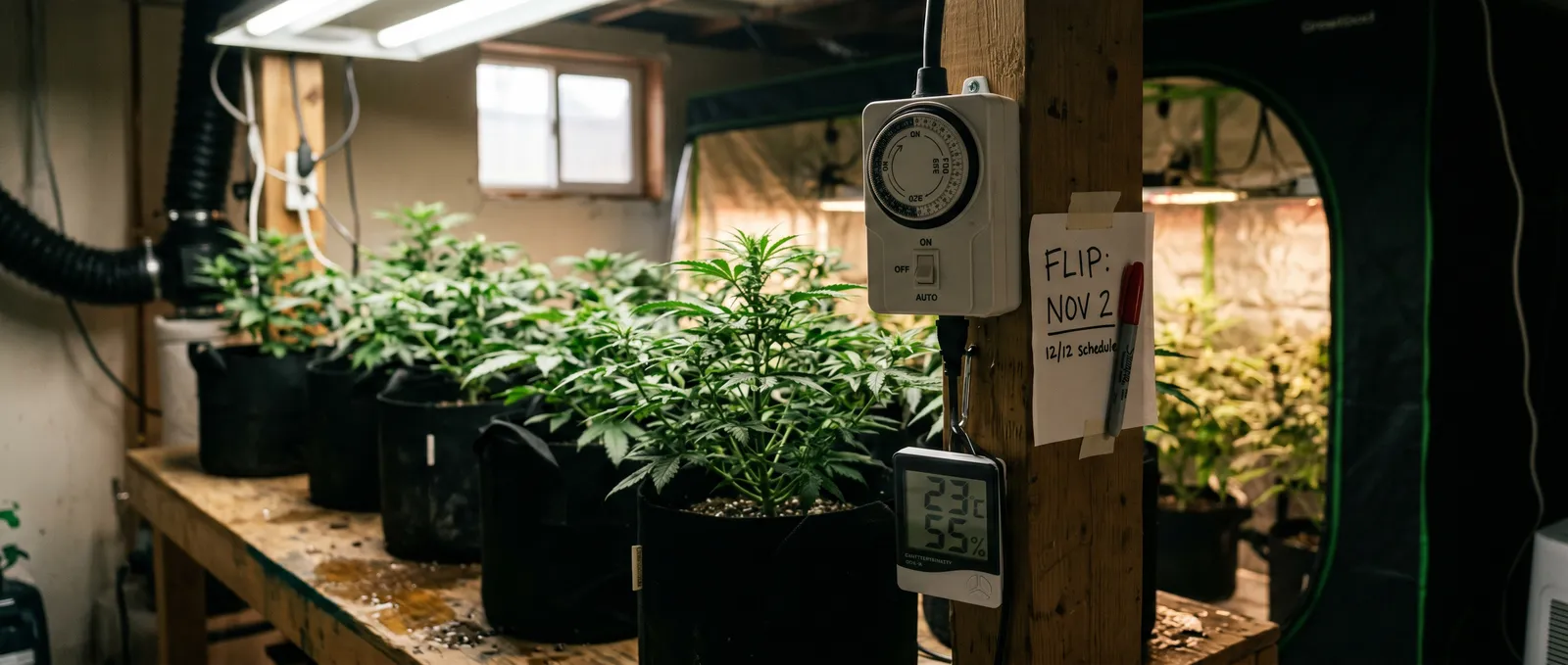
When To Flip Cannabis To 12/12: Timing The Switch
When to flip cannabis to 12/12 is a timing decision that switches photoperiod plants to 12 hours light and 12 hours dark to trigger flowering via florigen…
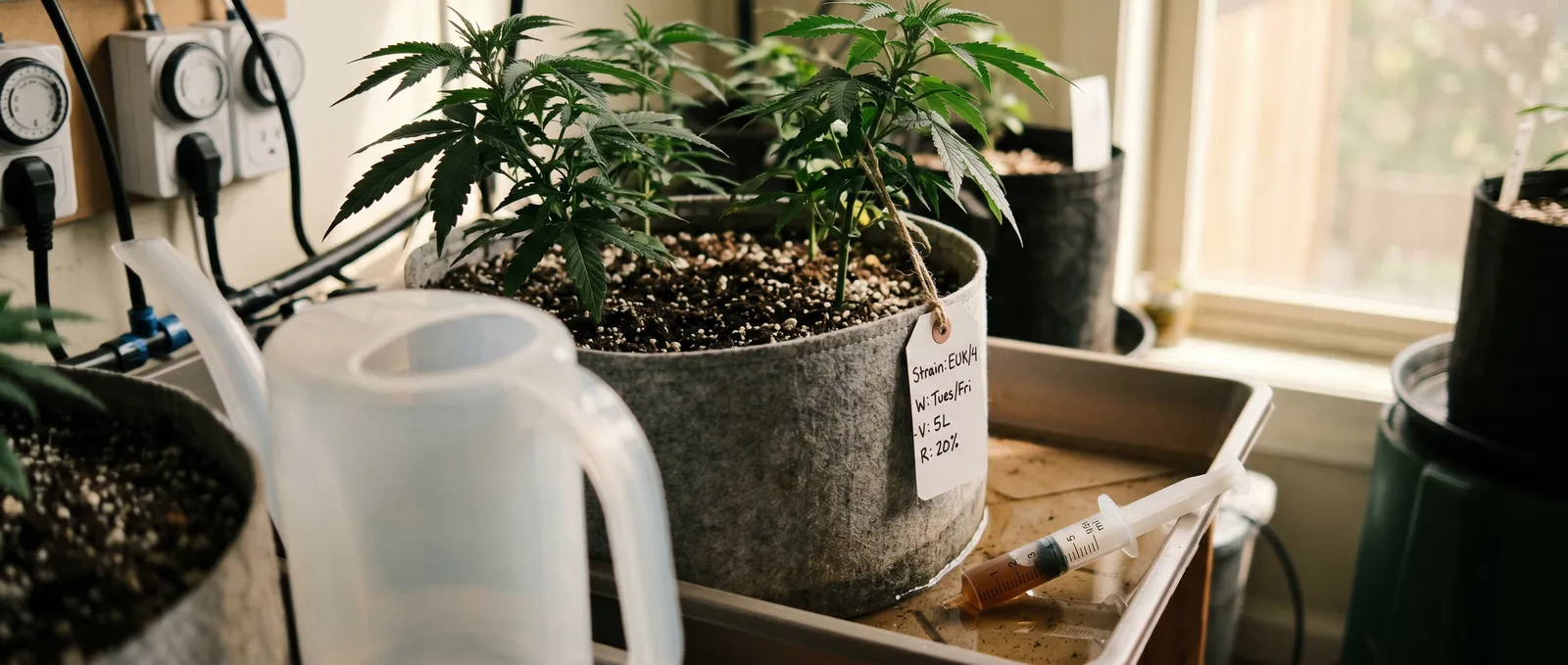
Watering Cannabis Frequency Volume Runoff: Full Guide
Watering cannabis frequency volume runoff is the feedback loop between how often you irrigate, how much you apply, and what drains from the pot.