
This article discusses psychoactive substances intended for adults (18+). If you have a health condition or take medication, consult a doctor before use. Our age policy
Cannabis Leaf Problems Yellowing Curling: Diagnostic Guide
Definition
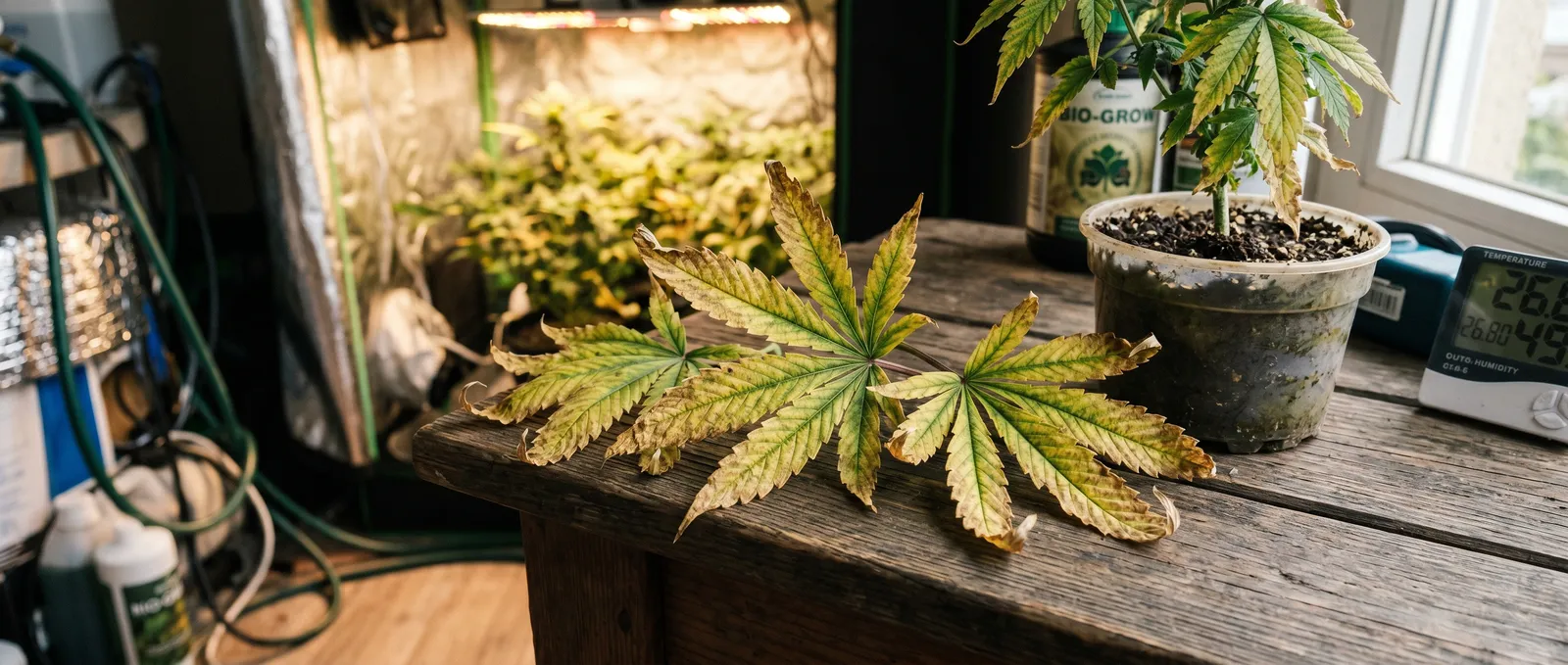
Cannabis leaf problems yellowing curling is a diagnostic framework that maps leaf symptoms to grow-room causes: older-leaf yellowing points to mobile nutrient deficiencies (nitrogen, magnesium), while new-growth symptoms point to pH lockout or immobile nutrients. Curling direction separates heat, light, and root-zone causes. Nitrogen uptake is tightly stage-dependent (Saloner & Bernstein, 2022), so the same feed can deficiency-stress a veg plant and toxicity-burn a finishing one.
This guide is written for adults. Cannabis home cultivation is restricted to adults in every jurisdiction that permits it.
Cannabis leaf problems yellowing curling is a diagnostic framework that maps visible leaf symptoms to specific grow-room causes, helping growers correct issues before yields suffer. Cannabis leaves are the plant's dashboard: yellowing, curling, clawing, taco-ing, and spotting each point to a specific stressor, and where the symptom appears on the plant narrows the cause faster than anything else.
Reading the leaves: what your plant is telling you
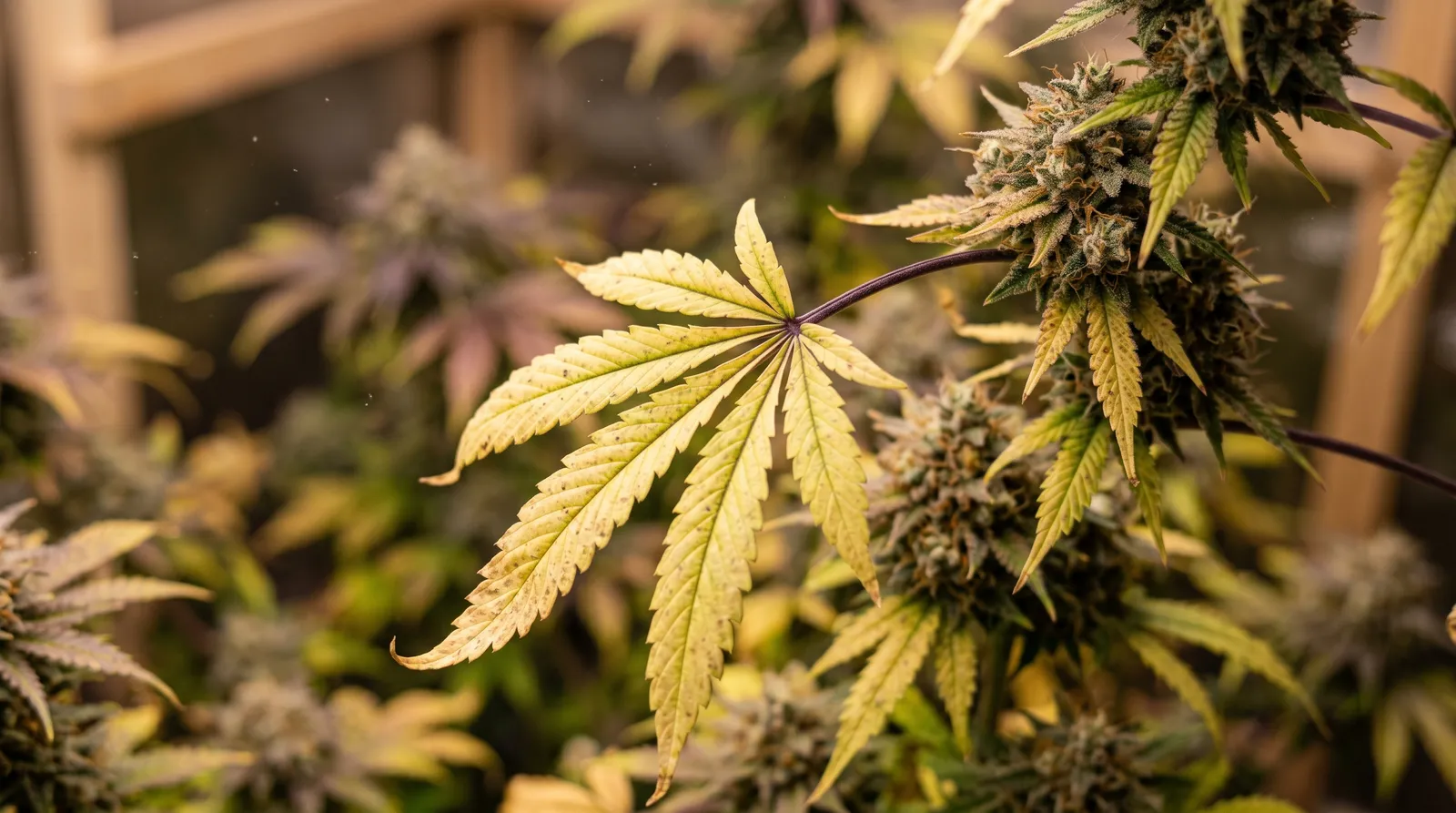
Leaf position is the fastest diagnostic shortcut in cannabis cultivation. Mobile nutrients (nitrogen, magnesium, potassium, phosphorus) show deficiency symptoms on the older, lower leaves first, because the plant cannibalises them to feed new growth (Cockson et al., 2019). Immobile nutrients (calcium, iron, sulphur, zinc) show up on new top growth, because the plant can't relocate what it already placed (Cockson et al., 2019).
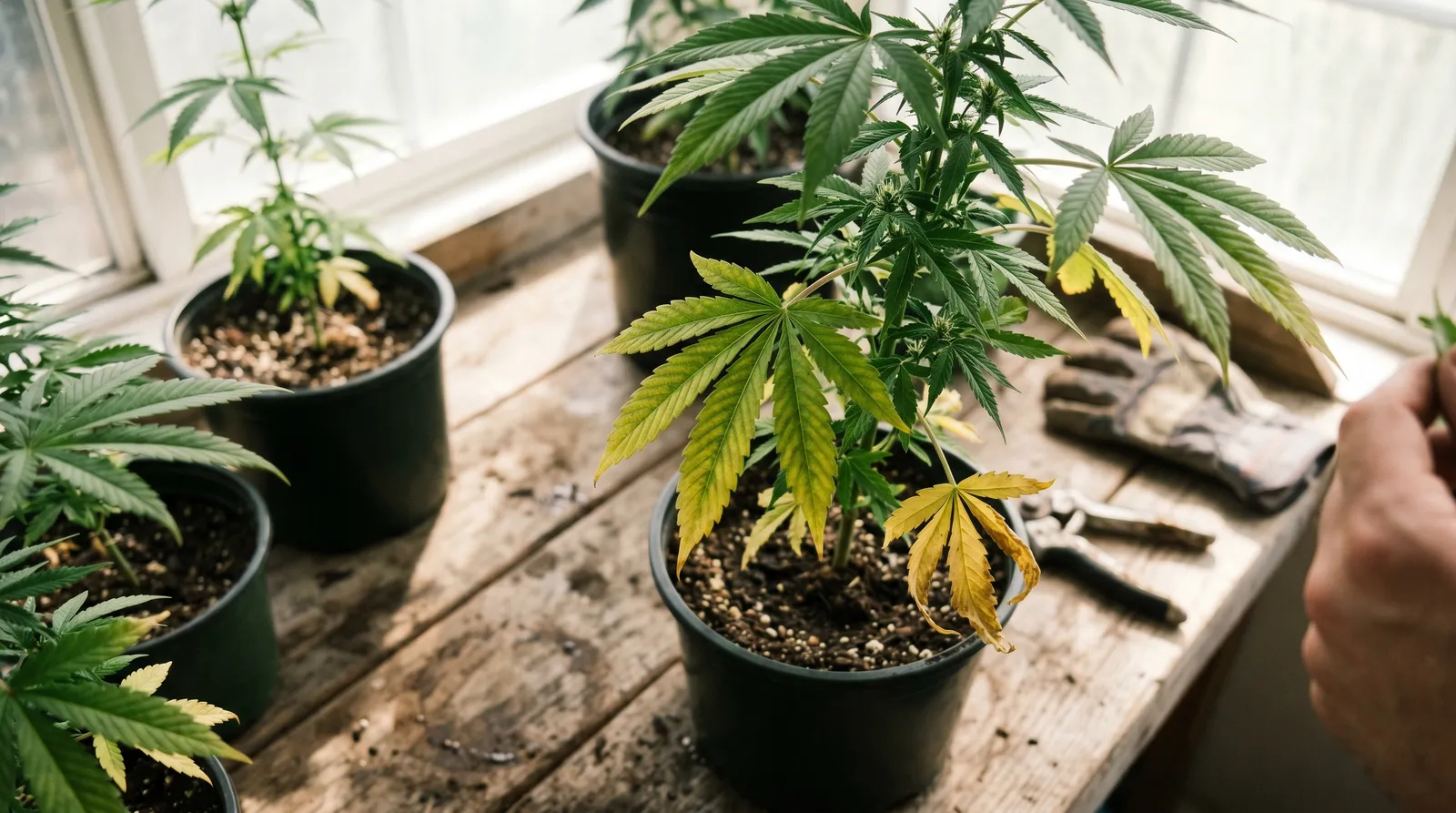
That single distinction — old growth vs new growth — solves about half of all diagnostic calls. The table below is the quick-reference version. Everything after it unpacks the mechanisms.
Diagnostic table: symptom to cause
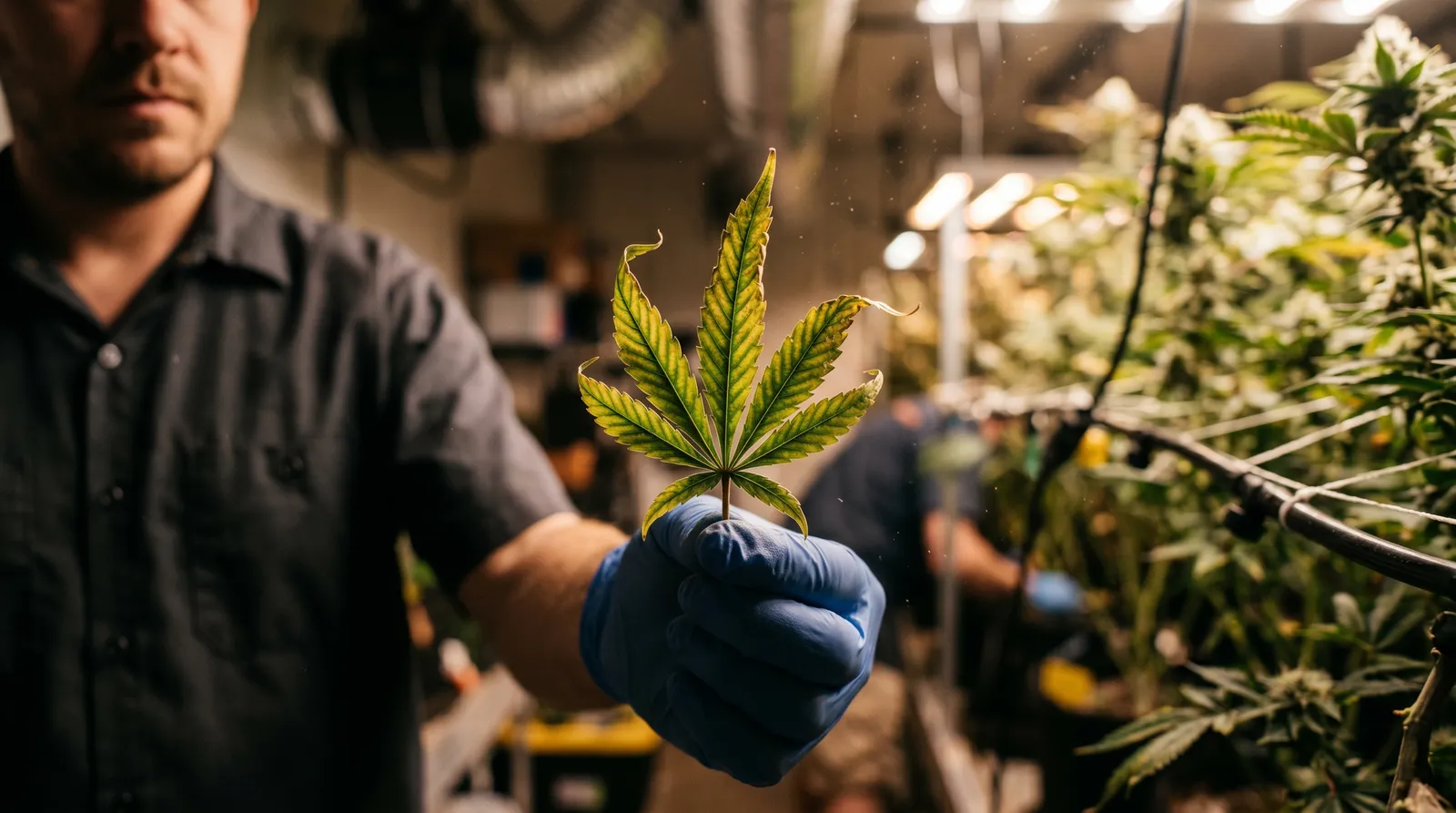
This table translates the most common cannabis leaf problems yellowing curling patterns into probable causes and fix directions.
| Symptom | Where on plant | Most likely cause | Fix direction |
|---|---|---|---|
| Uniform pale yellow, whole leaf fading | Bottom leaves, moving up | Nitrogen deficiency (veg), or natural fade (late flower) | Increase N feed; in last 2 weeks of flower, ignore it |
| Burnt brown tips, leaves dark green and glossy | Upper canopy, closest to feed | Nutrient burn / N toxicity | Flush with plain pH'd water, drop EC by 0.3–0.5 |
| Interveinal yellowing (veins stay green) | Middle-to-lower leaves | Magnesium deficiency | Epsom salt foliar or root drench; check pH |
| Interveinal yellow on new top growth | Newest leaves | Iron deficiency (usually a pH lockout) | Correct pH to 5.8–6.2 (coco/hydro) or 6.2–6.8 (soil) |
| Downward claw / tips pointing down | Upper canopy | Nitrogen toxicity or overwatering | Reduce N, check runoff EC, let medium dry back |
| Upward curl / "taco" leaves | Top of canopy | Heat stress or light burn | Raise light, drop tent temp below 28 °C, check VPD |
| Edges curling up, leaves crispy | Upper leaves | Low humidity / high VPD | Target VPD 1.0–1.5 kPa in flower, raise RH |
| Yellow/brown spots, curled edges, burnt tips | Older leaves first | Potassium deficiency | Increase K in feed; check pH lockout |
| Drooping, yellowing, soggy medium | Whole plant | Overwatering / root suffocation | Let medium dry; reduce frequency, not volume |
| Tiny yellow specks (stippling) on upper surface | Scattered, often undersides | Spider mites | Inspect undersides with loupe; IPM protocol |
Nitrogen: the most common yellowing culprit
Nitrogen deficiency is the single most frequent cause of yellow cannabis leaves in veg and early flower (Caplan et al., 2017). The pattern is unmistakable: lower, older leaves go uniformly pale, then yellow, then drop off. The plant is moving N upward to the new growth because it isn't getting enough from the root zone.
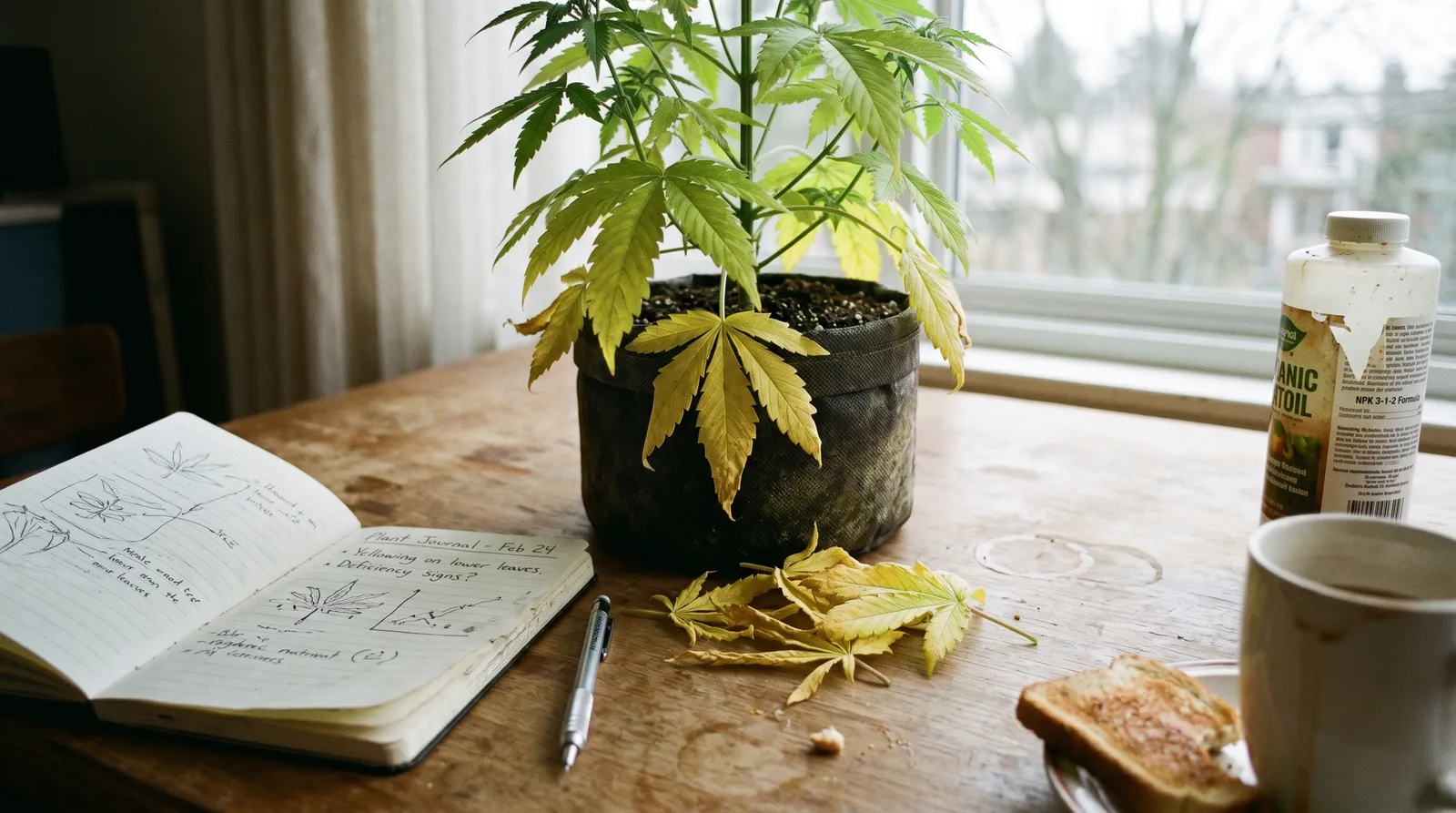
Two causes. Either you're not feeding enough (real deficiency), or your pH is off and the roots can't absorb what's there (lockout). Check runoff pH first — it's the faster answer. In soil, shoot for 6.2–6.8; in coco coir, 5.8–6.2; in hydro, 5.5–6.1. If pH is on target, raise your EC by 0.2–0.3 and see if new growth greens up over 3–5 days.
The flip side — nitrogen toxicity — produces the "clawing" leaf: dark green, glossy, tips bent downward like a claw. Growers chasing lush canopies overfeed young plants constantly. A 2022 review in Frontiers in Plant Science (Saloner & Bernstein, 2022) showed that cannabis nitrogen uptake is tightly stage-dependent, with vegetative demand roughly double that of late flower. Feeding flower-stage EC to a veg plant, or veg-stage N to a week-6 flowering plant, is how most toxicity cases happen.
Curling: up, down, and sideways
Curling direction is environmental more often than nutritional, and each direction points to a different root cause.
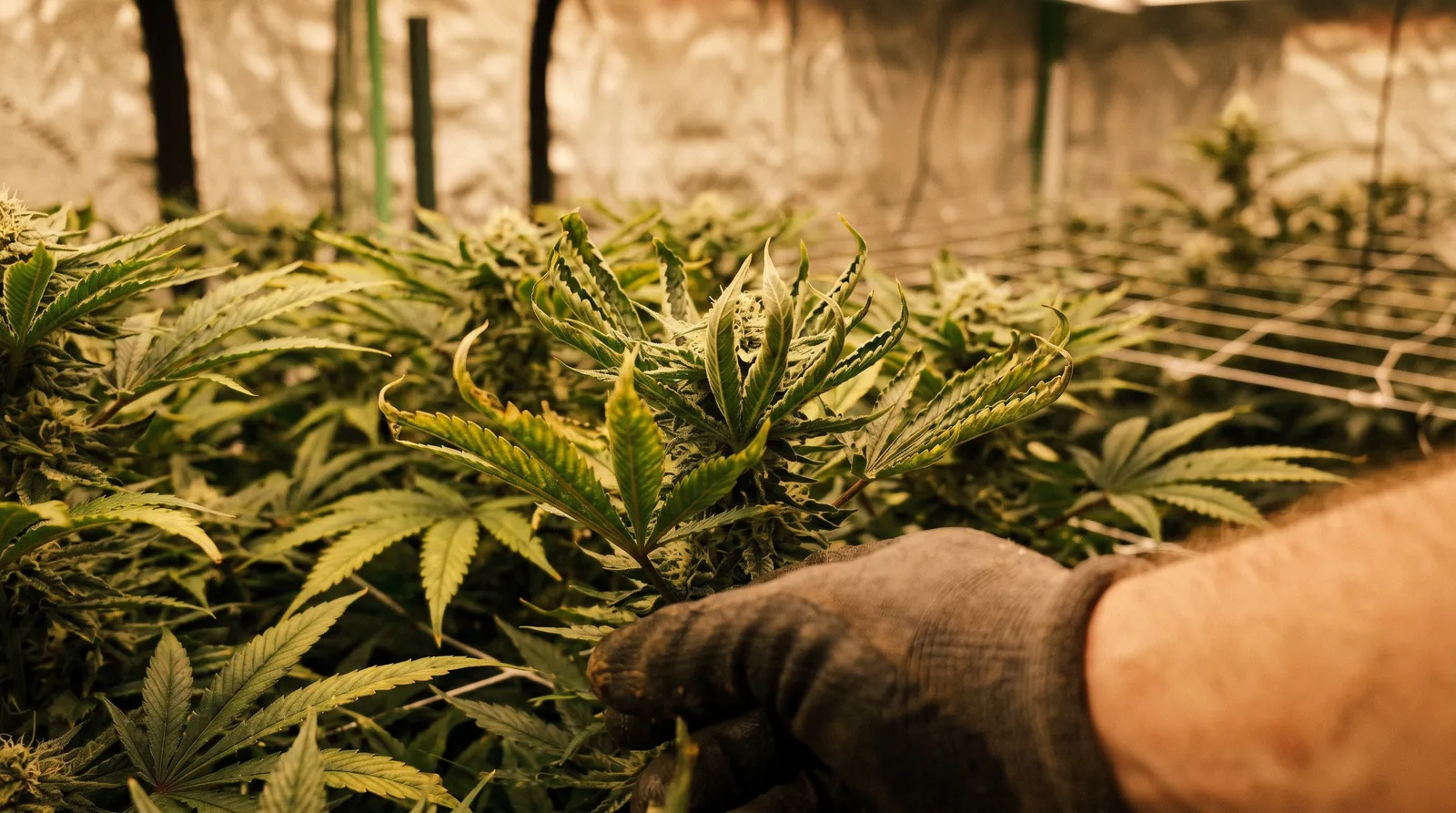
Upward curl (taco) is almost always heat or light (Westmoreland et al., 2021). If your canopy temperature is above 28–30 °C, or your LED is too close (PPFD pushing over 1,000 in flower without CO₂), the leaves cup upward to reduce their exposed surface area. Raise the light 10–15 cm, add airflow across the canopy, and check VPD — 1.0–1.5 kPa during flower keeps transpiration moving without stress.
Downward claw points to root-zone issues: too much N, waterlogged medium, or root rot. Stick your finger into the medium; if it's still wet three days after watering, you have a drainage or frequency problem, not a feed problem.
Edges curling up with crispy, brittle texture is low humidity. In a Dutch winter with central heating running, RH can drop to 25–30% — well outside the 40–60% flower window. A small humidifier inside the tent resolves it cheaper than anything else, and you can buy a basic ultrasonic unit for less than a decent pH pen.
Week 4 of flower, a previous grow: every top fan leaf tacoing hard despite a 26 °C canopy and what looked like textbook VPD. Turned out the HPS hood had shifted 4 cm closer to the canopy after we re-tied the ratchet hangers, pushing PAR up enough to cook the top third. Temperature was fine. Light was the problem. Always check two variables before you change one.
pH lockout: the deficiency that isn't
pH lockout is when nutrients are present in the root zone but chemically unavailable to the plant because the pH is out of range. Iron locks out below 5.5 and above 6.5; calcium and magnesium lock out at low pH; phosphorus locks out at high pH (Shiponi & Bernstein, 2021). The plant shows the classic deficiency symptom of whatever it can't absorb, and growers respond by dumping more of that nutrient in, which worsens the imbalance.
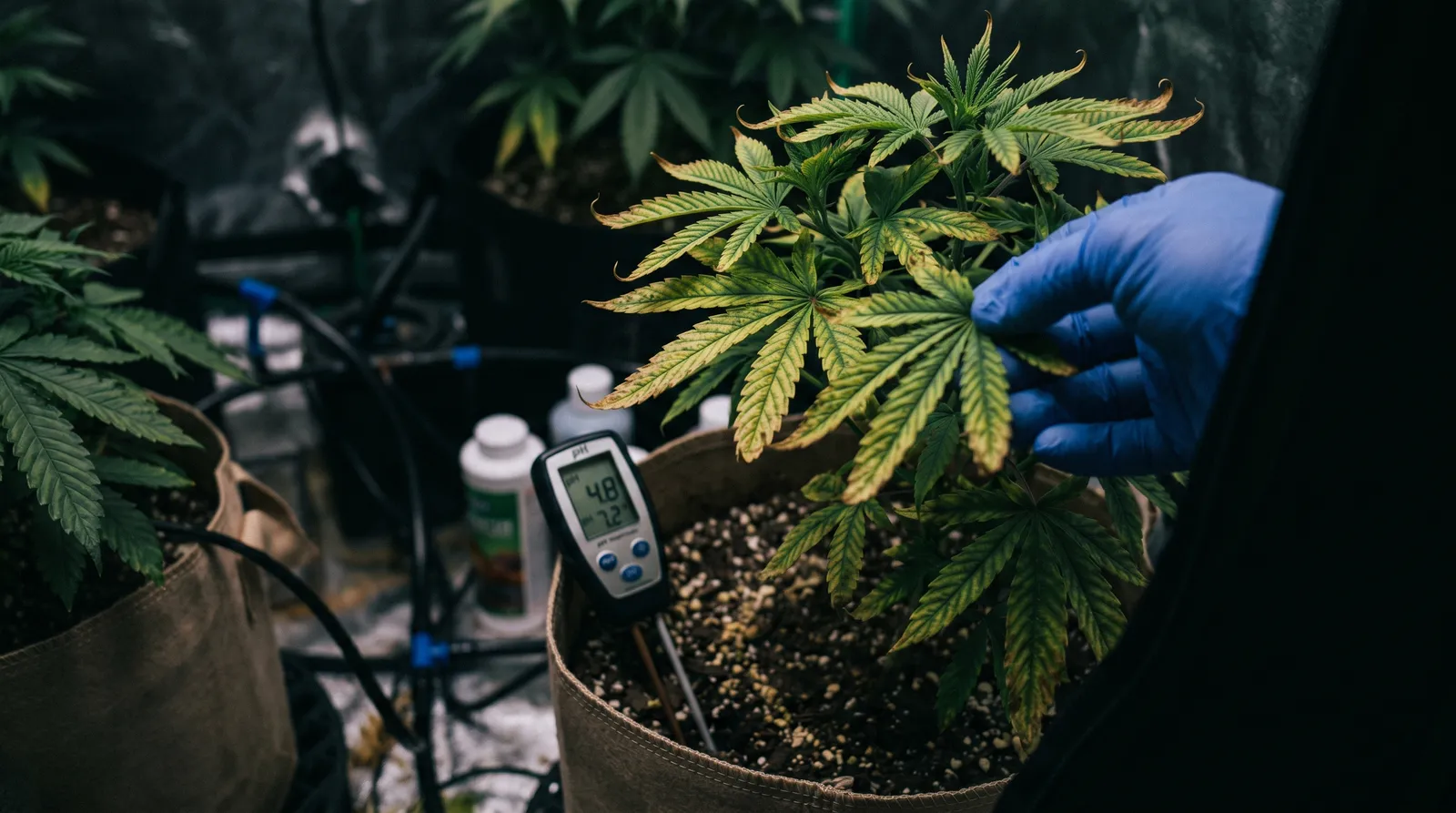
The diagnostic sequence: (1) measure runoff pH and EC, (2) compare to your input pH and EC, (3) if runoff pH is drifting, flush with pH-corrected water until runoff matches input, (4) reintroduce feed at 70% strength. Do this before you add any supplements. CalMag, Epsom, iron chelate — all useless until the pH is right. If you need to order a reliable pH pen, get a two-point-calibration model rather than the cheapest stick meter; drift on the budget units is the single most common reason growers misdiagnose lockout.
Overwatering vs underwatering (they can look identical)
Overwatering and underwatering produce nearly identical droop and yellowing, but the leaf texture and pot weight separate them instantly. Underwatered leaves go limp and paper-thin — they recover within hours of a proper watering. Overwatered leaves are droopy but firm, the medium is heavy when you lift the pot, and the problem gets worse after every feed. The root system is effectively drowning, and oxygen-starved roots stop transporting nutrients — which is why overwatering masquerades as multiple deficiencies at once.
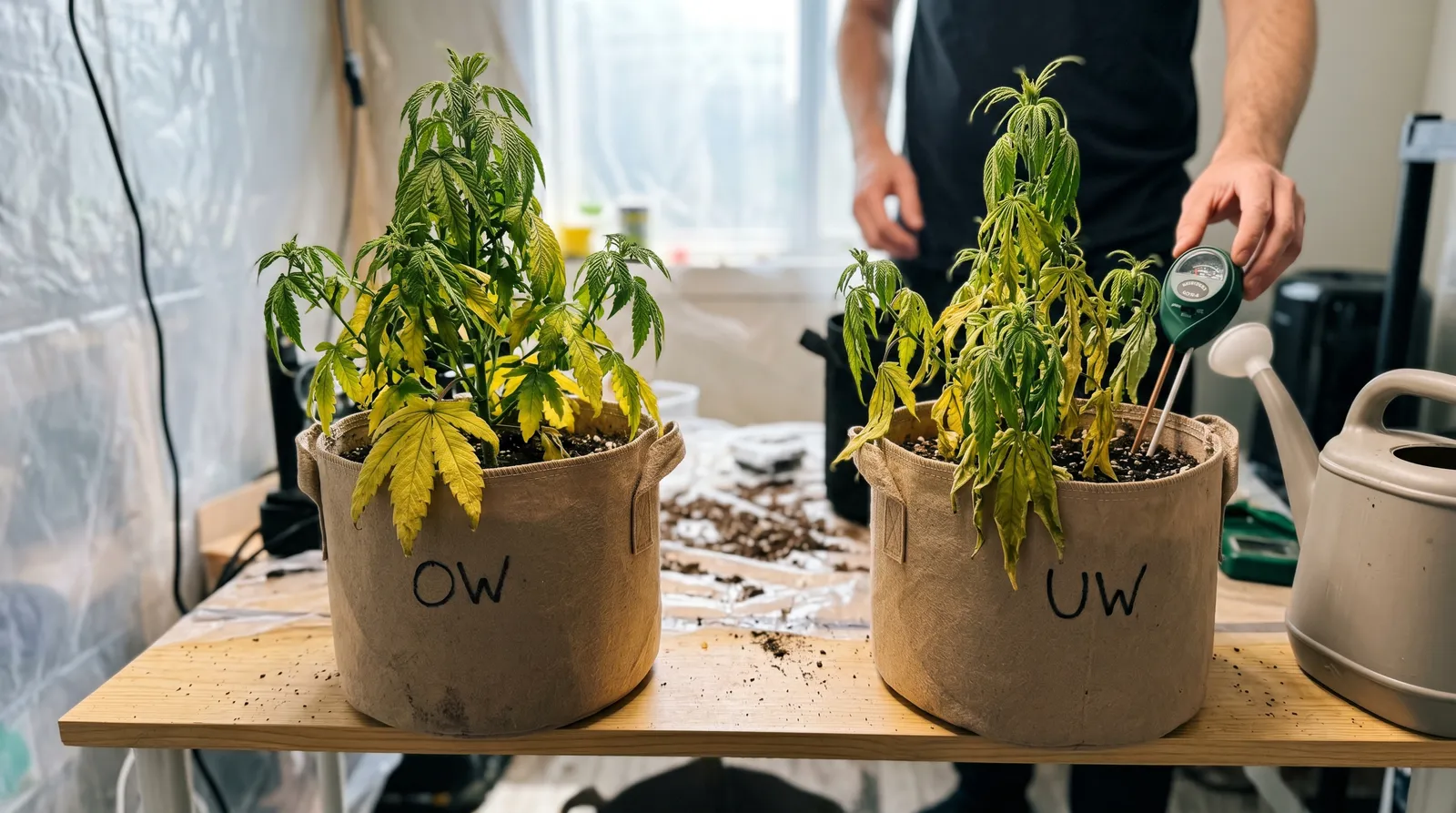
Rule of thumb by medium: soil wants a proper dry-back between waterings (lift-test the pot — when it's light, water). Coco coir prefers little-and-often, ideally 2–4 small feeds per day at 10–20% runoff (Bevan et al., 2021). Hydroponic systems are a different conversation entirely — dissolved oxygen, solution temperature, and EC drift are the diagnostic inputs there.
Honest limits of visual diagnosis
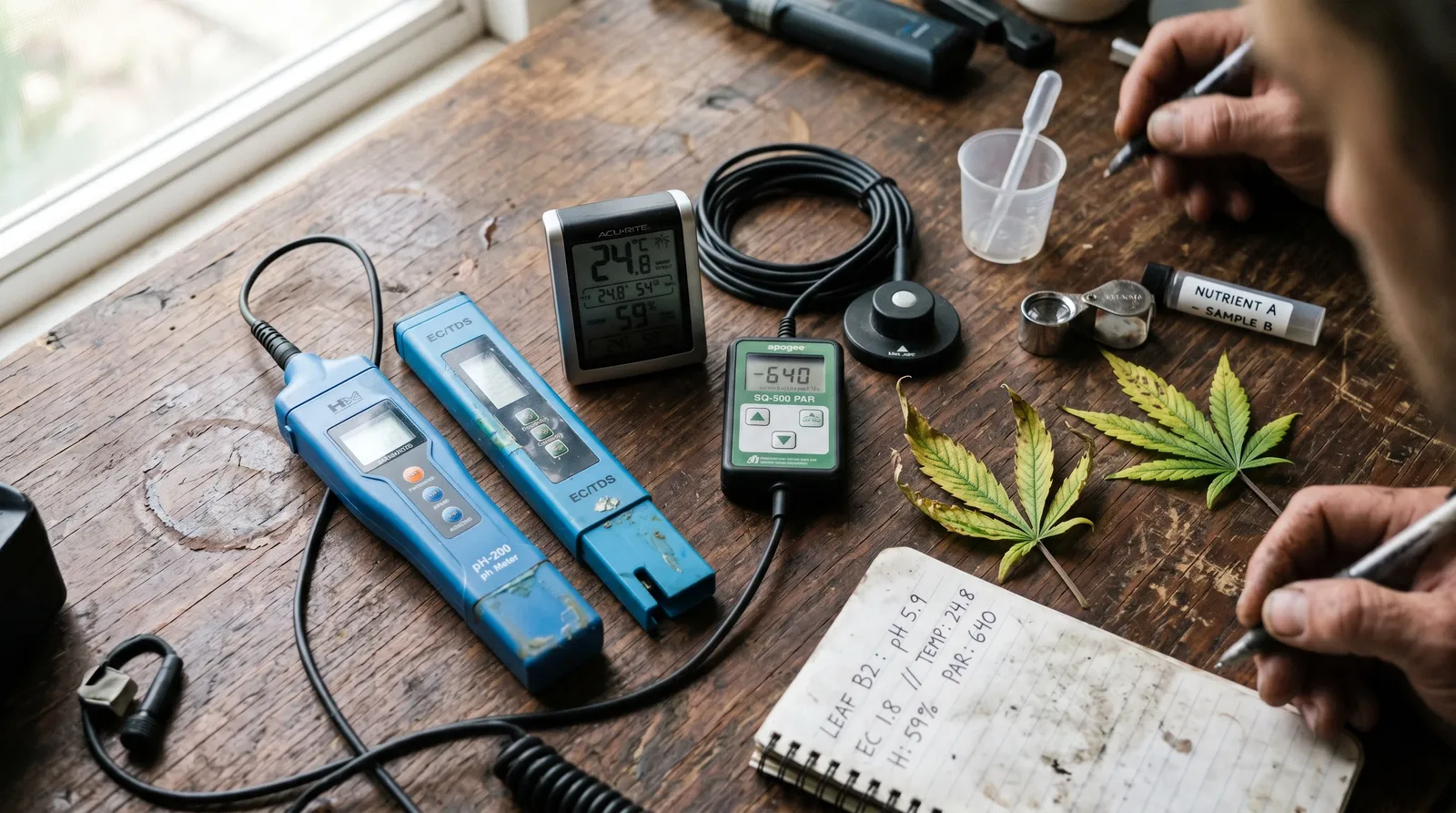
Leaf-reading gets you maybe 70% of the way there. The remaining 30% requires instruments: a calibrated pH pen, an EC meter, a thermometer/hygrometer inside the canopy, and ideally a PAR meter. Two different problems (magnesium deficiency and a pH lockout of magnesium) can produce visually identical symptoms and require opposite fixes. When in doubt, measure before you medicate. And if you're a new grower, keep a written log — date, feed, pH, EC, temperature, RH, and a photo — because patterns only emerge across weeks.
When yellowing is fine
Late-flower yellowing is normal senescence, not a problem to fix. In the last 2–3 weeks of flower, photoperiod plants naturally fade. The plant pulls mobile nutrients from fan leaves into developing buds, and those leaves yellow, curl, and drop. If you see it in week 3 of flower, you have a deficiency. If you see it in week 8 of a 9-week strain, you have a plant that's almost done.
Legal notice: Cannabis cultivation laws vary by country and region and change frequently. This guide is educational. Before growing, verify current laws for your specific jurisdiction. Azarius does not provide legal advice.
Educational content for adult home growers. This guide does not provide medical advice; consult a qualified professional for health-related questions. Always verify cultivation rules in your jurisdiction before starting a grow.
Last updated: April 2026
Frequently Asked Questions
8 questionsWhy are the lower leaves on my cannabis plant turning yellow first?
What does it mean when cannabis leaves curl up at the edges like tacos?
Why do my cannabis leaves claw downward?
How do I tell overwatering from underwatering in cannabis?
Can pH problems cause yellow cannabis leaves?
Is it normal for cannabis leaves to yellow during late flower?
Why are only the newest top leaves on my cannabis plant turning yellow?
How do I tell if yellow spots on cannabis leaves are a nutrient problem or spider mites?
About this article


Luke Sholl has been writing about cannabis, cannabinoids, and the broader benefits of nature since 2011, and has personally grown cannabis in home grow tents for more than a decade. That first-hand cultivation experience
This wiki article was drafted with AI assistance and reviewed by Luke Sholl, External contributor since 2026. Editorial oversight by Adam Parsons.
Medical disclaimer. This content is for informational purposes only and does not constitute medical advice. Consult a qualified healthcare provider before use of any substance.
Last reviewed April 24, 2026
References
- [1]Bevan, L., Jones, M., & Zheng, Y. (2021). Optimisation of nitrogen, phosphorus, and potassium for soilless production of Cannabis sativa in two coir-based substrates. Frontiers in Plant Science, 12, 764103. DOI: 10.3389/fpls.2021.764103
- [2]Caplan, D., Dixon, M., & Zheng, Y. (2017). Optimal rate of organic fertilizer during the vegetative-stage for cannabis grown in two coir-based substrates. HortScience, 52(9), 1307-1312. DOI: 10.21273/HORTSCI11903-17
- [3]Cockson, P., Landis, H., Smith, T., Hicks, K., & Whipker, B.E. (2019). Characterization of nutrient disorders of Cannabis sativa. Applied Sciences, 9(20), 4432. DOI: 10.3390/app9204432
- [4]Shiponi, S., & Bernstein, N. (2021). The highs and lows of P supply in medical cannabis: Effects on cannabinoids, the ionome, and morpho-physiology. Frontiers in Plant Science, 12, 657323. DOI: 10.3389/fpls.2021.657323
- [5]Westmoreland, F.M., Bugbee, B., & Kusuma, P. (2021). Cannabis lighting: Decreasing blue photon fraction increases yield but efficacy is more important for cost effective production of cannabinoids. PLoS ONE, 16(3), e0248988. DOI: 10.1371/journal.pone.0248988
Related Articles
Cannabis Hermaphrodite: Identify, Prevent, Act
A cannabis hermaphrodite is a female plant that develops male pollen sacs or banana-shaped anthers (nanners), self-pollinating and seeding your harvest.
DIY Cannabis Fertilizer: Homemade Nutrient Guide
DIY cannabis fertilizer guide: compost, teas, banana ferments and feed schedules, with safety notes and cited research for home growers.
What To Do With Male Cannabis Plants: 6 Practical Uses
What to do with male cannabis plants: identify, isolate, breed, extract, or compost. A practical 6-step guide with sourcing and safety notes.
When To Harvest Cannabis Trichomes: A Grower's Guide
Deciding when to harvest cannabis trichomes means reading the resin glands on your calyxes under 60x–100x magnification and cutting when the milky-to-amber…
When To Flip Cannabis To 12/12: Timing The Switch
When to flip cannabis to 12/12 is a timing decision that switches photoperiod plants to 12 hours light and 12 hours dark to trigger flowering via florigen…
Watering Cannabis Frequency Volume Runoff: Full Guide
Watering cannabis frequency volume runoff is the feedback loop between how often you irrigate, how much you apply, and what drains from the pot.