
This article discusses psychoactive substances intended for adults (18+). If you have a health condition or take medication, consult a doctor before use. Our age policy
Cannabis Growing Medium Soil Coco Hydro Compared Guide
Definition
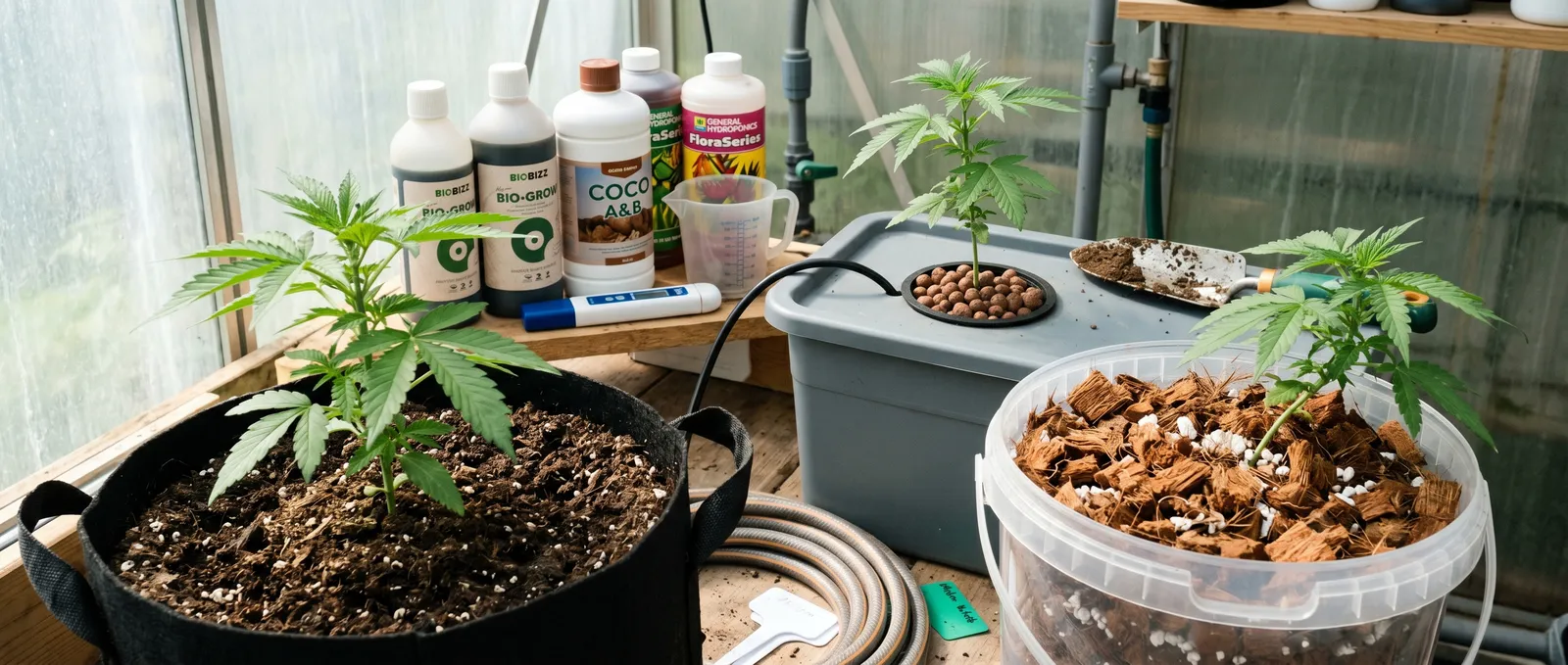
A cannabis growing medium is the substrate roots grow in — soil, coco coir, or hydroponic nutrient solution — and each sets different pH, EC, and watering rules. Caplan et al. (2017) found coco-based substrates produced faster vegetative growth than peat mixes under matched feeding.
Cannabis growing medium soil coco hydro is a substrate choice that shapes nearly every part of your grow — watering frequency, nutrient strategy, pH targets, recovery time, and how fast your plants grow. Soil, coco coir, and hydroponics are the three main options, and this guide compares all three head-to-head so you can pick the one that matches your setup, your time, and your tolerance for fiddling. Adult use only — this is a cultivation guide for grown-up home growers who want to get started with confidence.
This guide is educational. Before you buy seeds or order equipment, verify the current rules for your specific jurisdiction. Azarius does not provide formal advice.
Soil vs coco vs hydro at a glance
Soil is forgiving, coco is fast, hydro is fastest but least forgiving. Here's how the three cannabis growing medium soil coco hydro options stack up on the metrics that actually matter in a home tent.
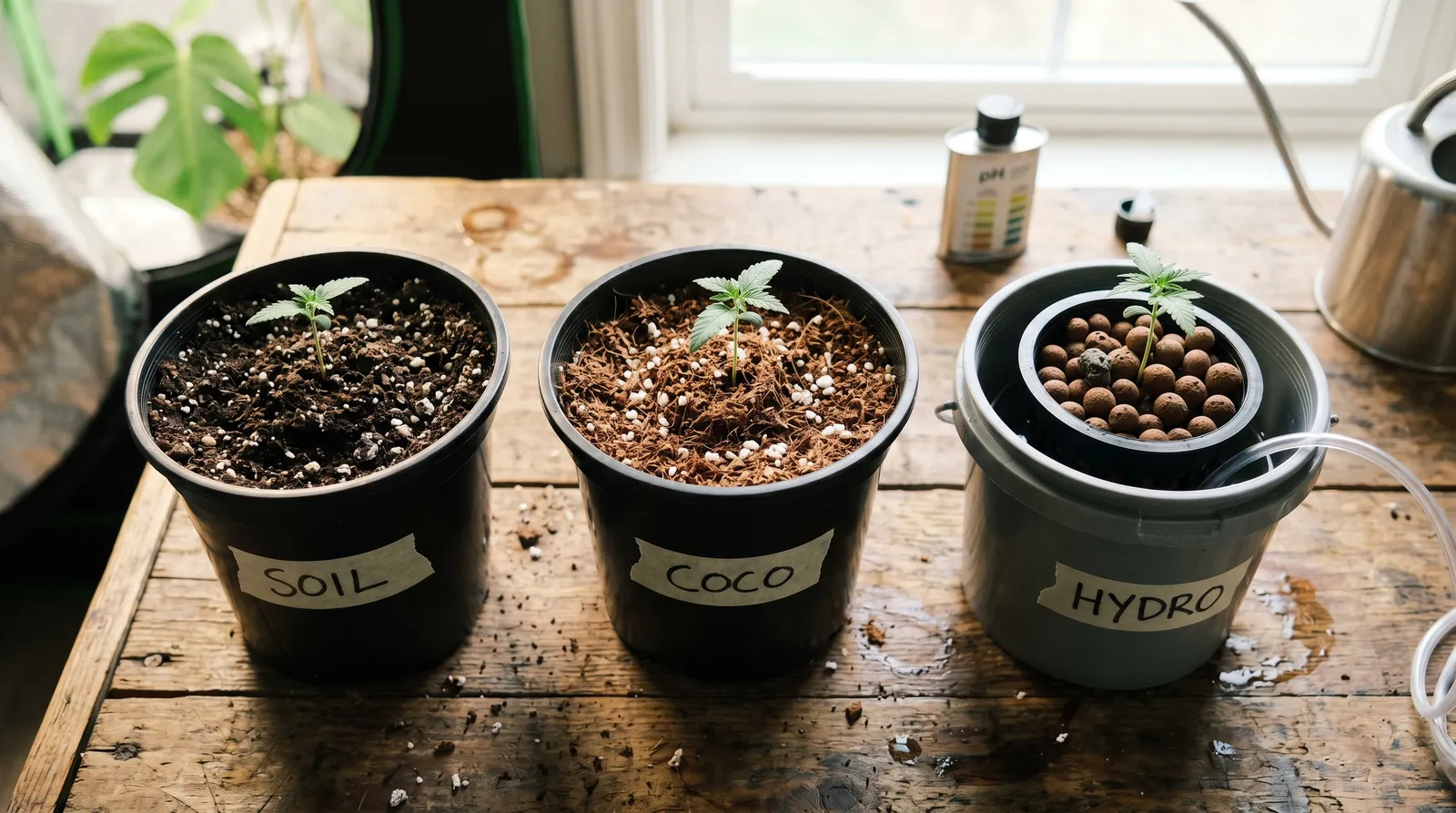
| Factor | Soil | Coco coir | Hydroponics (DWC/RDWC) |
|---|---|---|---|
| pH target (root zone) | 6.0–7.0 | 5.8–6.2 | 5.5–6.0 |
| EC range (flower) | 1.2–1.8 mS/cm | 1.6–2.2 mS/cm | 1.4–2.0 mS/cm |
| Watering frequency | Every 2–4 days | Daily to 2–3× daily | Continuous (recirculating) |
| Feed frequency | Weekly or less (pre-amended) | Every feed ("feed every time") | Every feed |
| Growth speed | Baseline | ~10–20% faster than soil | Fastest — often 20–30% faster than soil |
| Mistake recovery | Slow but buffered | Fast — flushes clean | Minutes, not days |
| Pest/disease pressure | Higher (fungus gnats, soil pathogens) | Lower, but mould-prone if wet | Lowest (sterile), but root rot if oxygen fails |
| Beginner-friendliness | High | Medium | Low |
| Setup cost | Low | Low–medium | Medium–high |
Soil: the forgiving default
Soil is the medium most home growers start in, and for good reason: it buffers pH and holds nutrients, so small mistakes don't become disasters. A quality pre-amended organic soil holds water, holds nutrients, and buffers pH swings — meaning when you inevitably misread a bottle or forget a feed, the plant doesn't crash immediately. The root zone acts like a savings account: small deposits, slow withdrawals.
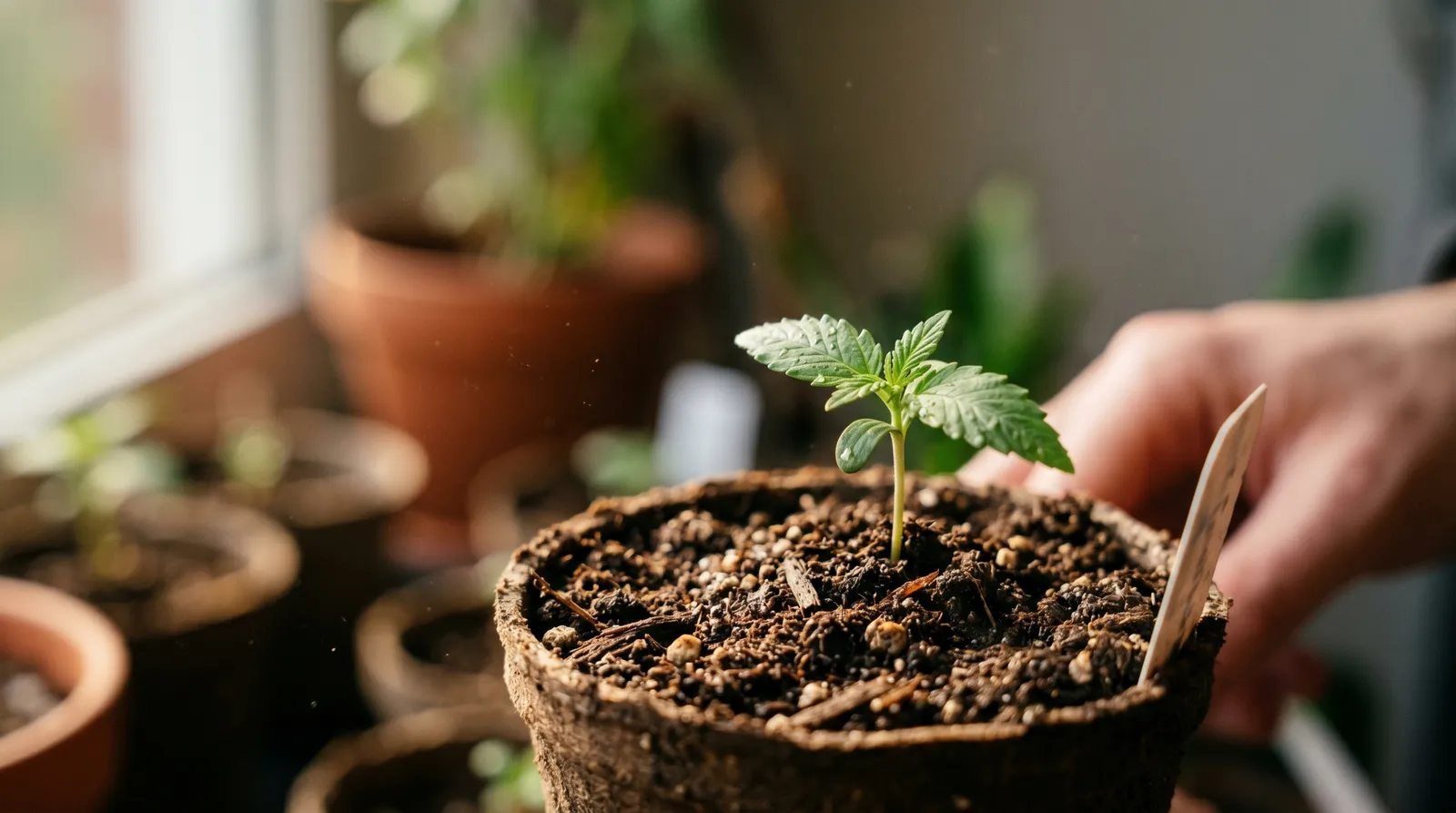
Watering in soil is the opposite of coco. You want a proper wet-to-dry cycle. Water thoroughly (roughly 20% runoff), then wait until the pot feels noticeably lighter before watering again — typically every 2–4 days in a 15L fabric pot, depending on plant size, canopy, and tent VPD. Overwatering is the single biggest killer of soil-grown cannabis, especially in seedlings. Roots need oxygen, and soggy soil smothers them.
pH in soil sits higher than in soilless media: aim for 6.0–7.0 at the root zone, which keeps nitrogen, phosphorus, potassium, and the micronutrients all available (Bugbee, 2004). Feeding depends entirely on what's already in the bag. A living or pre-amended organic soil may need nothing but plain water for the first 3–4 weeks; a lighter peat-based mix will want weekly feeds from week two.
The downsides: soil is slower than coco or hydro, harder to diagnose when something goes wrong (symptoms lag the cause by days), and fungus gnats will find you eventually. Honest limitation: if you're impatient and love gadgets, soil will bore you within one grow.
Coco coir: hydro speed, soil simplicity
Coco coir is technically a hydroponic medium — an inert, soilless substrate made from coconut husk fibre that delivers near-hydro speed without a reservoir. It holds water and air in a near-perfect ratio (roughly 30% air porosity even when fully saturated), which is why roots explode through it. The De Meijer et al. horticulture literature on soilless media consistently shows faster vegetative growth in coco versus peat/soil mixes under identical nutrient regimes.
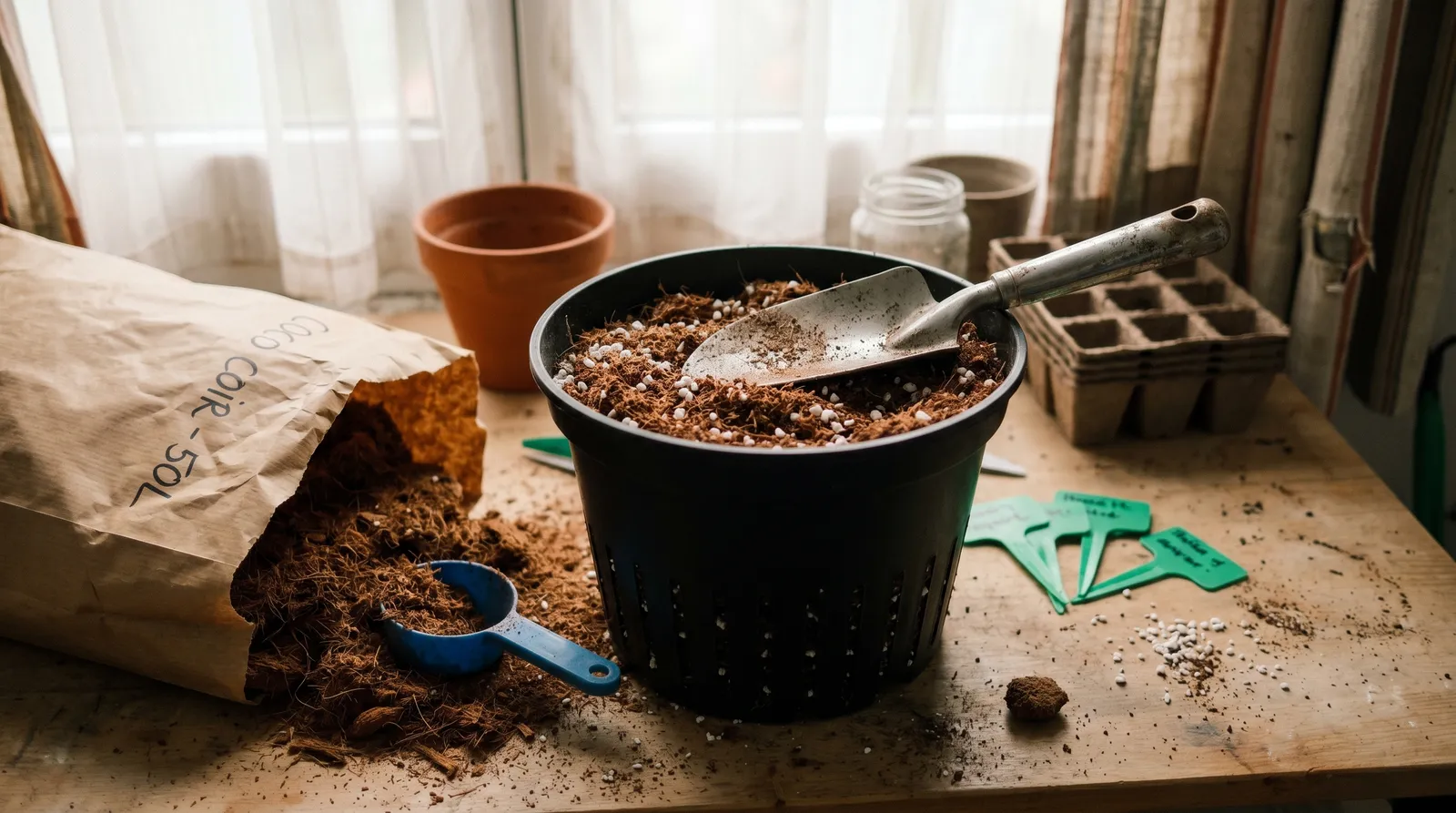
The catch: coco has no nutrients of its own. Every watering is a feed. You mix nutrients to an EC of around 1.2 mS/cm for seedlings, climbing to 1.6–2.2 mS/cm through flower, and deliver it at pH 5.8–6.2. Coco also holds onto calcium and magnesium — which is why "Cal-Mag" exists as a product category at all. Skip it and you'll see rusty spotting on leaves within two weeks.
Water frequently. In small pots (7–11L) with mature plants, that means once or twice a day minimum. In larger pots with automated drip lines, growers often run 4–6 small feeds per day. Coco should never fully dry out — it goes hydrophobic and stops rewetting properly.
The upside is how fast coco corrects. Nutrient lockout? Flush with plain pH'd water and you're back to baseline in a day. In soil, the same fix takes a week of patient re-feeding.
The first time we ran coco side-by-side with soil in the same 120x120 tent — same genetics, same light, same feed brand — the coco plants were a full node ahead by week three of veg. The soil plants caught up somewhat by harvest, but coco finished two days earlier and the roots, when we tipped the pots out, looked like white dreadlocks packed edge-to-edge.
We've killed plants in all three mediums. Soil took the longest to kill (three weeks of slow yellowing before we admitted the pH was wrong), coco took four days (salt buildup from skipping runoff), and hydro took one afternoon (air pump died in August, reservoir hit 28°C, roots went brown by evening). Speed of failure tracks speed of growth almost exactly.
Hydroponics: the fastest and the twitchiest
Hydroponics grows plants in oxygenated nutrient solution with no substrate holding reserves, giving the fastest growth and the narrowest margin for error. The category covers deep water culture (DWC), recirculating DWC, NFT, flood-and-drain, and drip-to-waste — but they all share the same principle: roots sit in (or are fed by) the solution directly. Uptake is constant and fast. Cannabis grown in well-dialled DWC can finish 20–30% faster than the same genetics in soil, with yields to match when everything runs clean.
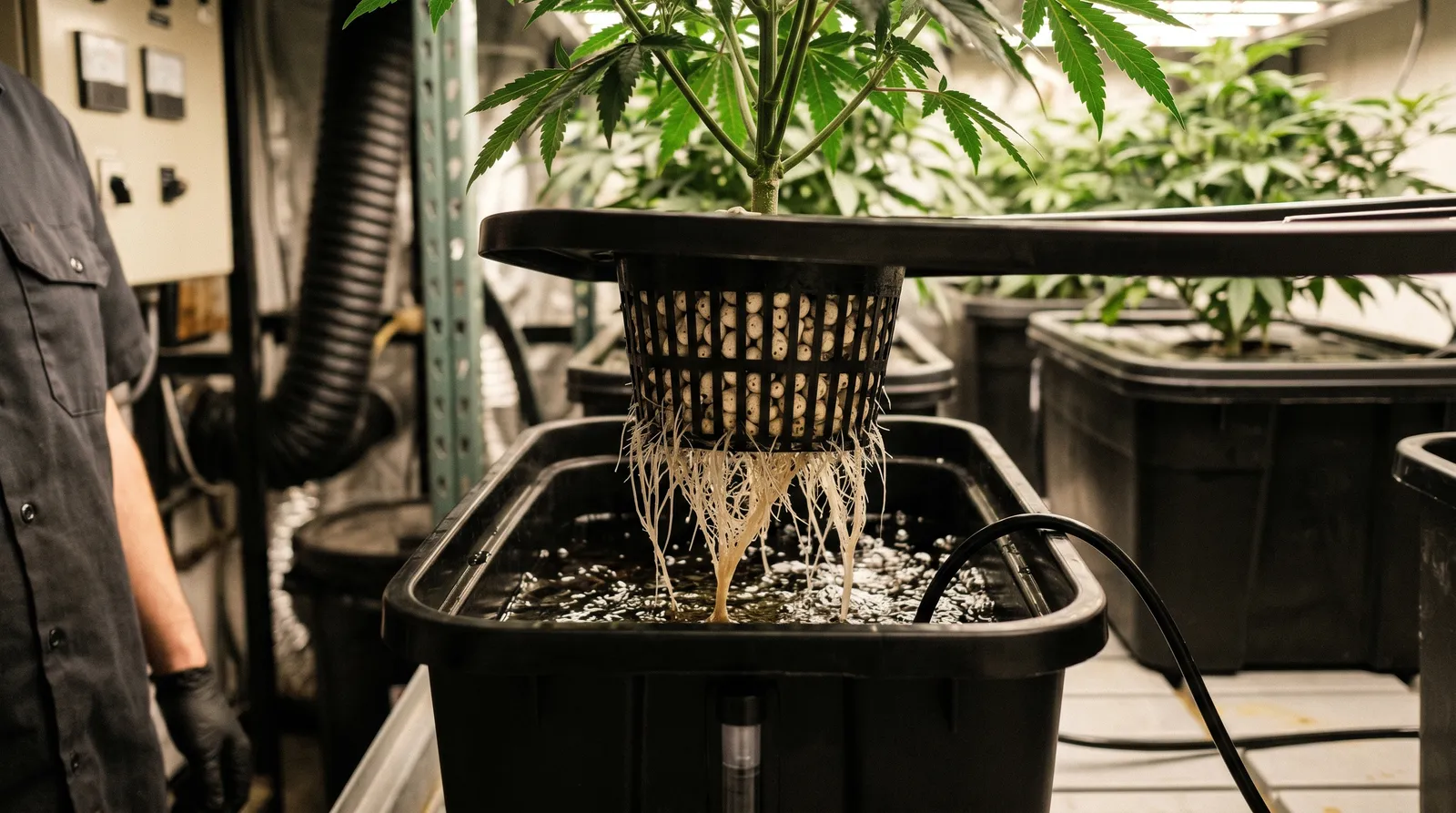
"When everything runs clean" is the key phrase. Hydroponics has no buffer. pH drifts up through the day as plants consume nutrients — you'll check and correct daily, sometimes twice. Root zone temperature matters enormously: above 22°C, dissolved oxygen drops and Pythium (root rot) risk climbs sharply (Sutton et al., 2006). Power cut for six hours in summer? Your air pumps stop, roots suffocate, and the grow can be over by the time you get home.
Nutrient solution EC sits roughly 1.4–2.0 mS/cm in flower, at pH 5.5–6.0. Most serious hydro growers get reverse-osmosis water as the starting point — tap water minerals throw off EC readings and lock nutrients at the top of the uptake chart.
Hydro isn't a beginner medium. It's a medium for growers who enjoy dialling systems and don't mind meter-checking every morning before coffee.
Which medium suits you?
The right cannabis growing medium soil coco hydro choice depends on your experience, your schedule, and what you actually enjoy about growing. Pick soil if: you're new to growing, your tent lives somewhere you can't always monitor, you like the idea of organic/living soil, or you're running autoflowers (their short life makes slow correction less of a liability than you'd think — stable beats fast).
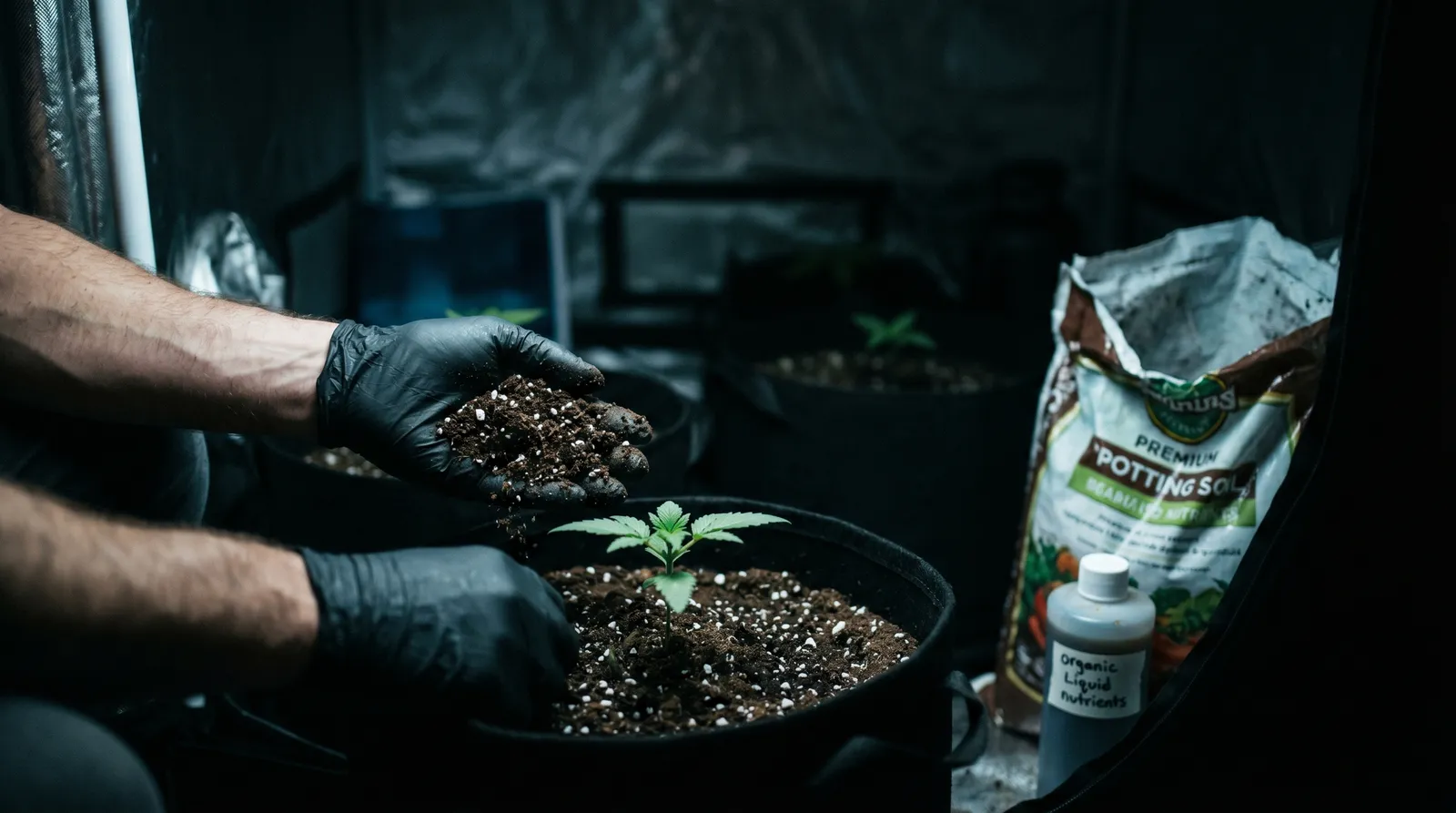
Pick coco if: you've grown once or twice in soil, you want faster results, you're comfortable mixing nutrients for every feed, and you can water at least daily. Coco is the sweet spot for most intermediate home growers — it gives you 80% of the hydro speed advantage with 30% of the hydro stress.
Pick hydro if: you've successfully harvested in soil or coco, you're home reliably, you own (or are willing to buy) a pH meter, EC meter, and backup air pump, and you actually enjoy the engineering side. Yields scale beautifully in hydro — but so do mistakes.
One cross-cutting point on IPM: avoid any soil-based amendment during flower in soil grows (fungus-gnat drenches with beneficial nematodes are fine; systemic pesticides are not), watch for Pythium in warm hydro reservoirs, and inspect coco bricks from unknown suppliers — poor-quality coco has been documented as a mould vector on finished buds (Punja et al., 2019). Rinse and buffer coco with Cal-Mag before planting.
Legal notice: Cannabis cultivation laws vary by country and region and change frequently. This guide is educational. Before growing, verify current laws for your specific jurisdiction. Azarius does not provide legal advice.
Disclaimer: This article is provided for educational and harm-reduction purposes only. It is not medical, horticultural, or professional advice. Home cultivation carries risks to plants, property, and electrical safety — consult qualified professionals for your specific situation. Azarius does not encourage activity outside what is permitted where you live.
Last updated: April 2026
Frequently Asked Questions
8 questionsIs soil really the best medium for beginners?
How often do you water cannabis plants in coco?
Do you need different nutrients for coco versus soil?
What equipment do you need for a hydroponic cannabis setup?
Can you switch mediums mid-grow?
Which medium gives the highest yield?
What pH range should I target for each cannabis growing medium?
How does growth speed compare between soil, coco, and hydro for cannabis?
About this article


Luke Sholl has been writing about cannabis, cannabinoids, and the broader benefits of nature since 2011, and has personally grown cannabis in home grow tents for more than a decade. That first-hand cultivation experience
This wiki article was drafted with AI assistance and reviewed by Luke Sholl, External contributor since 2026. Editorial oversight by Adam Parsons.
Medical disclaimer. This content is for informational purposes only and does not constitute medical advice. Consult a qualified healthcare provider before use of any substance.
Last reviewed April 24, 2026
References
- [1]Bugbee, B. (2004). Nutrient management in recirculating hydroponic culture. Acta Horticulturae, 648, 99–112.
- [2]Punja, Z. K., Collyer, D., Scott, C., Lung, S., Holmes, J., & Sutton, D. (2019). Pathogens and molds affecting production and quality of Cannabis sativa L. Frontiers in Plant Science, 10, 1120.
- [3]Sutton, J. C., Sopher, C. R., Owen-Going, T. N., Liu, W., Grodzinski, B., Hall, J. C., & Benchimol, R. L. (2006). Etiology and epidemiology of Pythium root rot in hydroponic crops. Summa Phytopathologica, 32(4), 307–321.
- [4]Caplan, D., Dixon, M., & Zheng, Y. (2017). Optimal rate of organic fertilizer during the vegetative-stage for cannabis grown in two coir-based substrates. HortScience, 52(9), 1307–1312.
- [5]EMCDDA (2023). Cannabis cultivation in Europe: monitoring report. European Monitoring Centre for Drugs and Drug Addiction, Lisbon.
Related Articles
Cannabis Hermaphrodite: Identify, Prevent, Act
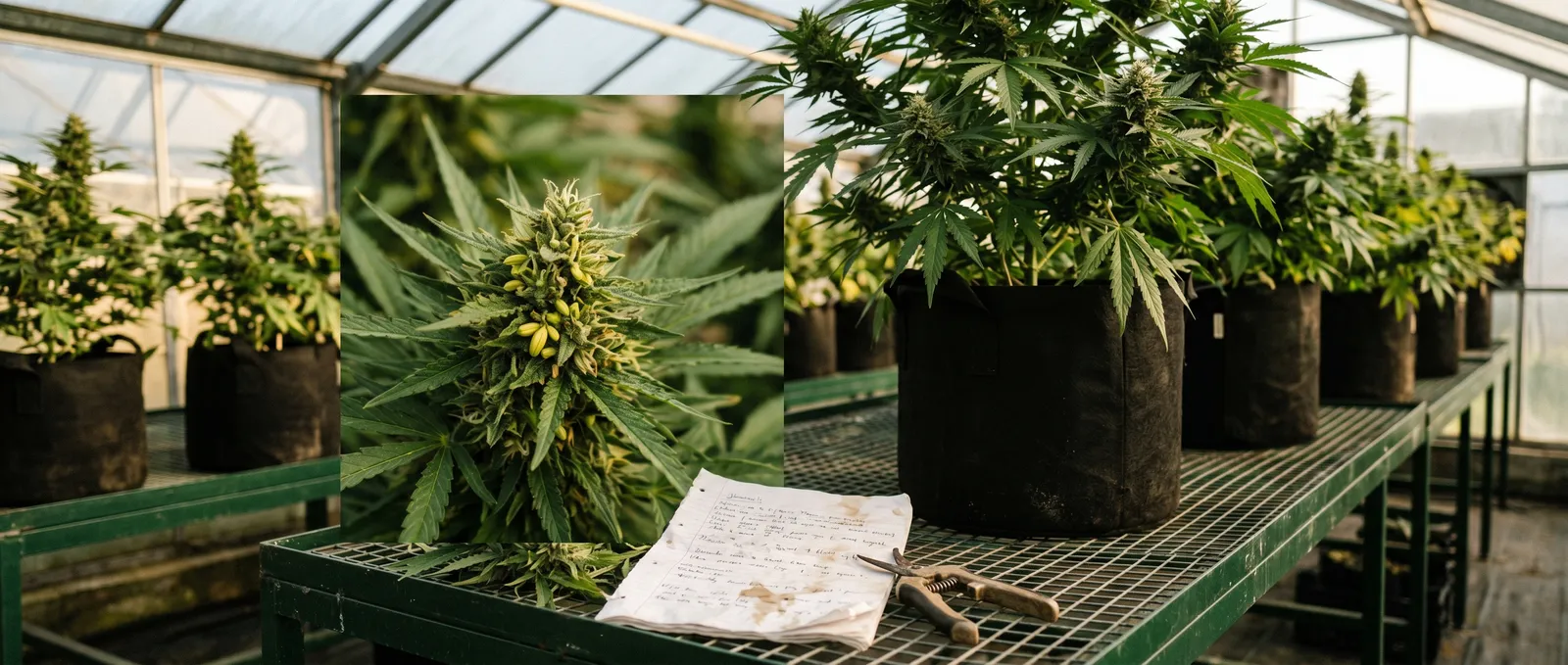
A cannabis hermaphrodite is a female plant that develops male pollen sacs or banana-shaped anthers (nanners), self-pollinating and seeding your harvest.
DIY Cannabis Fertilizer: Homemade Nutrient Guide
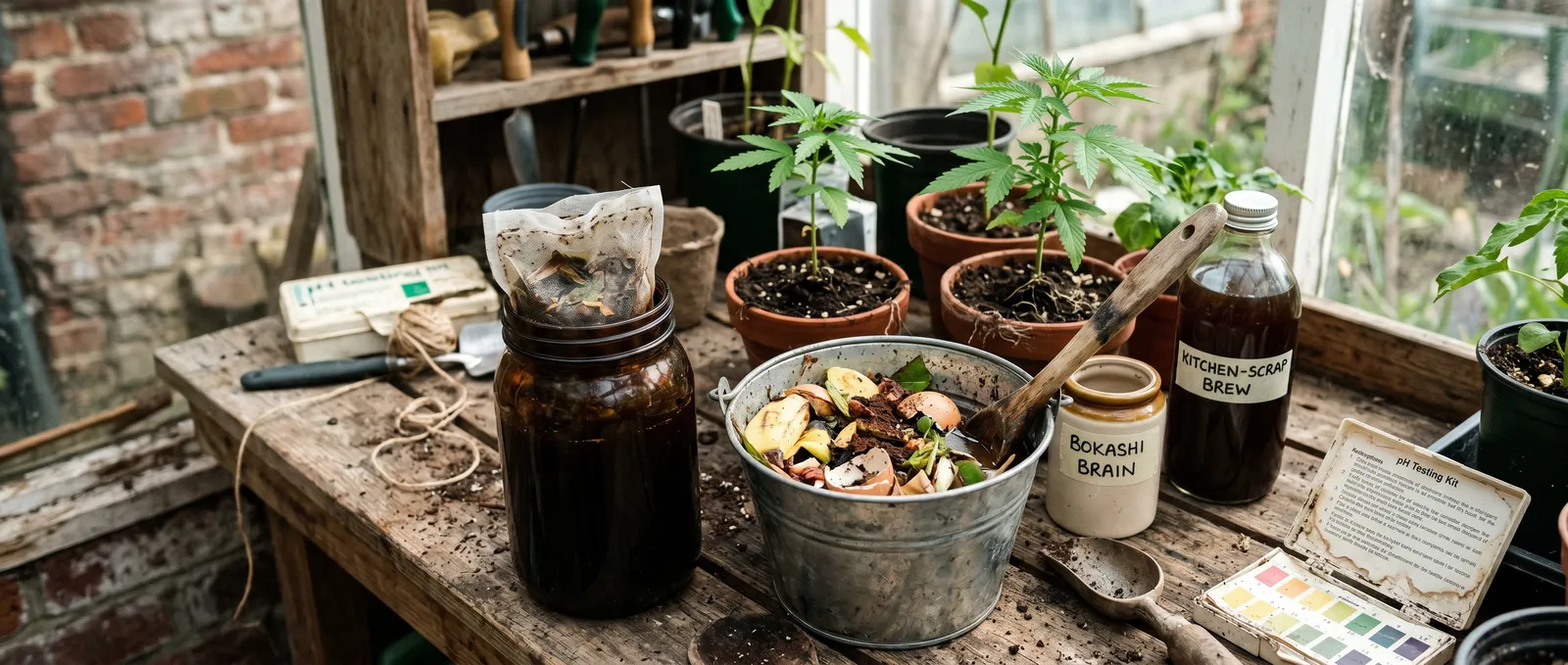
DIY cannabis fertilizer guide: compost, teas, banana ferments and feed schedules, with safety notes and cited research for home growers.
What To Do With Male Cannabis Plants: 6 Practical Uses
What to do with male cannabis plants: identify, isolate, breed, extract, or compost. A practical 6-step guide with sourcing and safety notes.
When To Harvest Cannabis Trichomes: A Grower's Guide
Deciding when to harvest cannabis trichomes means reading the resin glands on your calyxes under 60x–100x magnification and cutting when the milky-to-amber…
When To Flip Cannabis To 12/12: Timing The Switch
When to flip cannabis to 12/12 is a timing decision that switches photoperiod plants to 12 hours light and 12 hours dark to trigger flowering via florigen…
Watering Cannabis Frequency Volume Runoff: Full Guide
Watering cannabis frequency volume runoff is the feedback loop between how often you irrigate, how much you apply, and what drains from the pot.