
This article discusses psychoactive substances intended for adults (18+). If you have a health condition or take medication, consult a doctor before use. Our age policy
Indica Sativa Hybrid Chemovar: What It Means for Growers
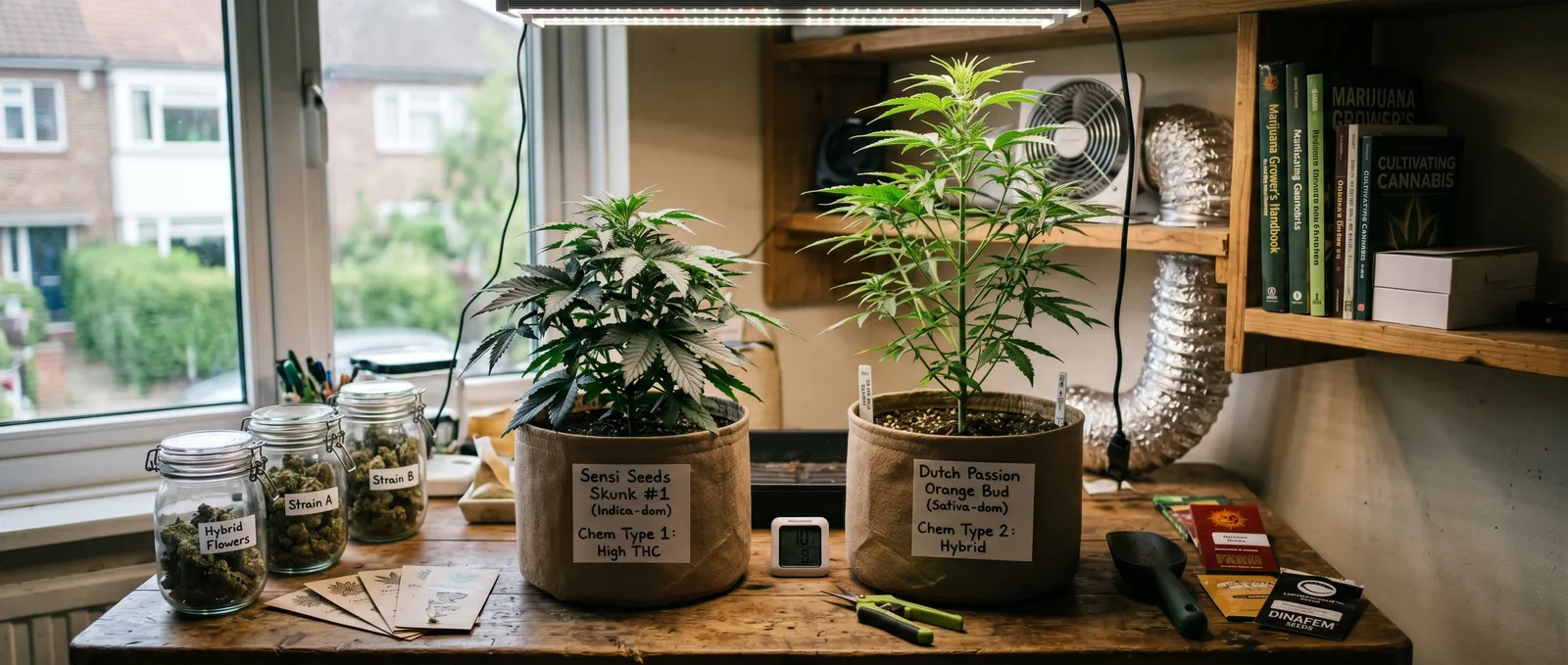
Definition
An indica sativa hybrid chemovar is a cannabis cultivar crossing both morphological lineages, classified by its cannabinoid and terpene profile rather than the indica/sativa label alone. Research by Hazekamp et al. (2016) found traditional labels correlate poorly with actual chemistry, making chemovar the more accurate framework for growers.
This guide is written for adult home growers and is educational in nature. Azarius does not provide formal advice.
An indica sativa hybrid chemovar is a cannabis cultivar that crosses both morphological lineages and is classified by its cannabinoid and terpene fingerprint rather than the indica/sativa label on the packet. Walk into any seedbank catalogue and you'll see the same three labels plastered across every variety: indica, sativa, hybrid. It's the oldest taxonomy in cannabis retail, and from a plant-science perspective it's wobblier than most growers realise. For growers looking to buy seeds and plan a tent, that distinction matters more than the marketing suggests.
What "hybrid" actually means on a seed packet
Hybrid on a seed packet describes plant structure and flowering window, not chemistry. Start with the morphology, because that's what breeders genuinely selected for over decades. Classic indica-leaning plants are short, bushy, broad-leafed, and finish flowering in roughly 7–9 weeks (Chandra et al., 2017). Classic sativa-leaning plants stretch — sometimes doubling in height during the flip — have narrow leaves, and often want 10–14 weeks of flowering (Chandra et al., 2017). A hybrid sits somewhere in between. When Sensi Seeds labels Jack Herer as "sativa-dominant hybrid," or Royal Queen Seeds sells Northern Light as "indica-dominant," they're describing plant structure and flowering window, not a guarantee about what molecules the finished flower will contain.
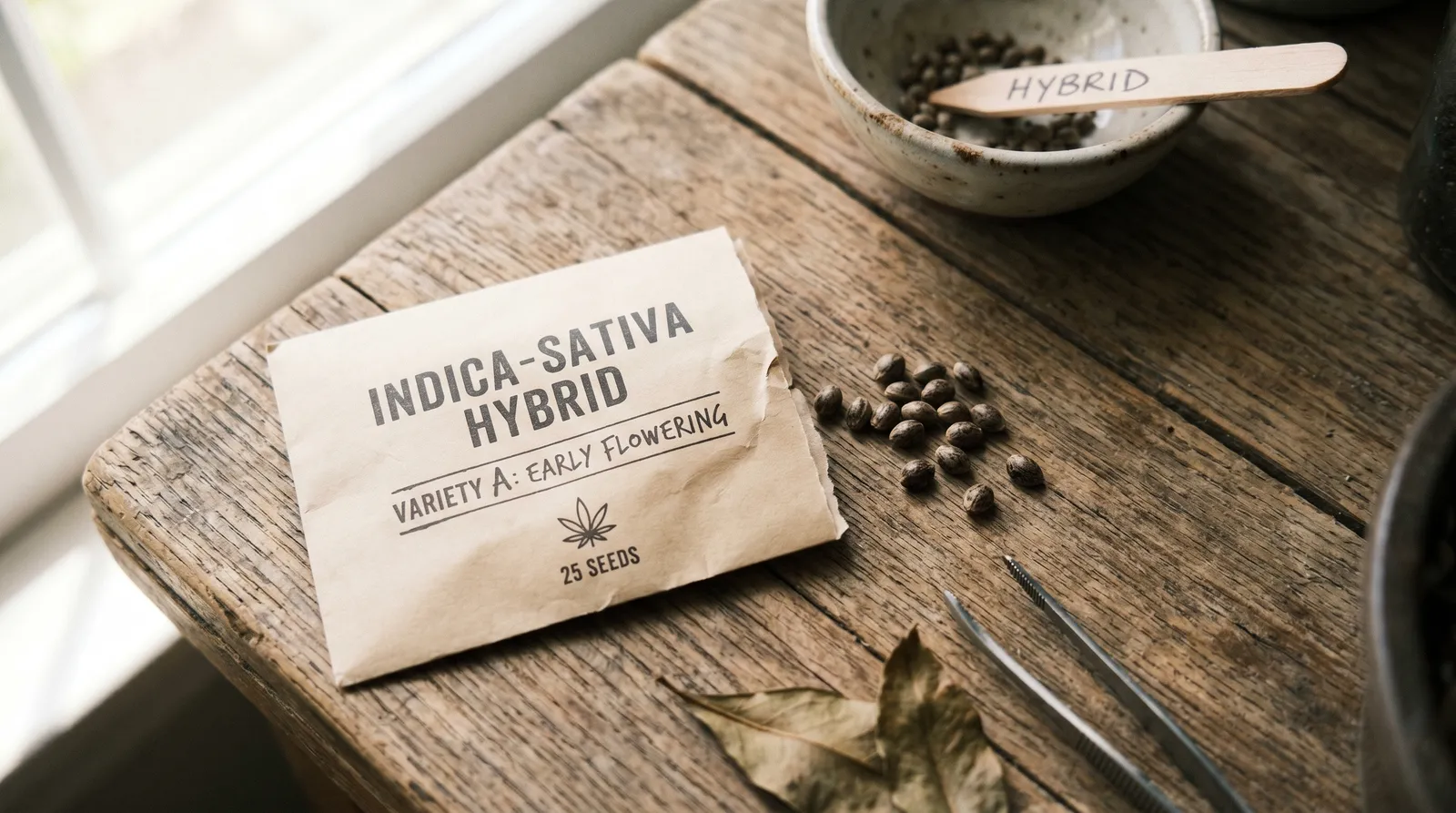
That's the first practical takeaway: treat the indica/sativa/hybrid label as a growing guide, not a chemistry guide. If you're planning a 1.2m tent with a 120cm height budget after pot and lamp, a 70/30 indica-leaning hybrid is going to behave very differently to a 70/30 sativa-leaning hybrid during the stretch. The label tells you whether the plant will fit. It tells you very little about what's in the trichomes.
Why chemovar replaced the old vocabulary in plant science
Chemovar replaced the old vocabulary because the indica/sativa label correlates poorly with actual chemistry. A widely cited analysis by Hazekamp et al. (2016) in Cannabis and Cannabinoid Research examined over 450 cannabis samples and found that the indica/sativa label correlated poorly with actual chemical composition (Hazekamp et al., 2016). A "pure indica" cultivar could share a near-identical cannabinoid and terpene profile with a "sativa-dominant hybrid" sold across the street.
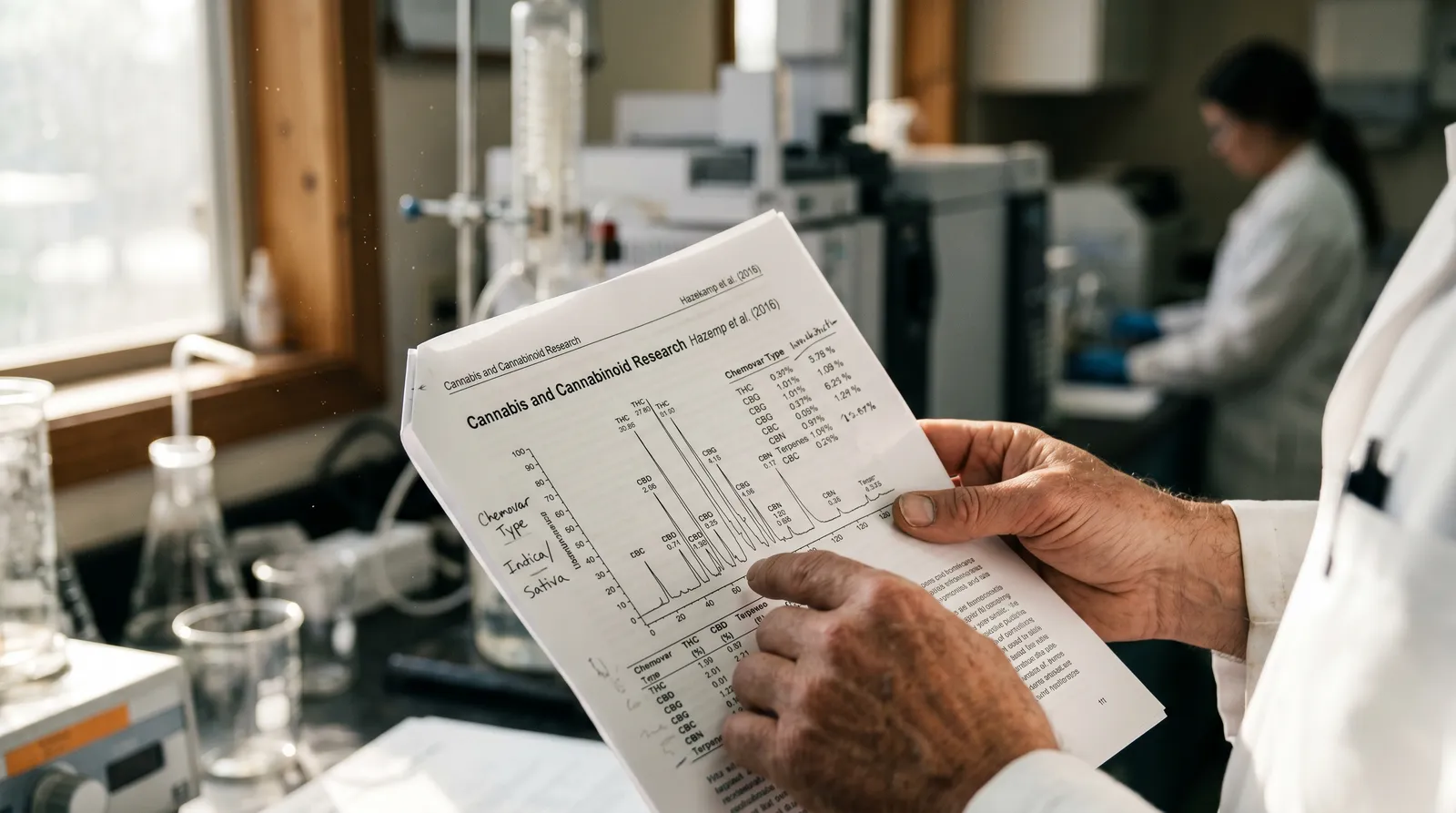
The response from plant scientists was to group cannabis by chemovar — chemical variety — rather than morphology. The framework most commonly used today, described by Lewis, Russo and Smith (2018) in Planta Medica, recognises three principal chemotypes (Lewis, Russo and Smith, 2018):
- Chemotype I — THC-dominant (THC > 0.3%, low CBD). Most modern recreational cultivars sit here.
- Chemotype II — balanced THC:CBD, often near 1:1. Cultivars like Dutch Passion's CBD Charlotte's Angel or Sensi Seeds' CBD-dominant lines.
- Chemotype III — CBD-dominant, low THC. Industrial hemp and dedicated CBD cultivars.
Terpene profiles layer on top. A myrcene-dominant chemovar and a limonene-dominant chemovar can both be labelled "indica-dominant hybrid" on the seed packet and produce visually similar plants in your tent — while ending up with very different aromatic and resin characteristics at harvest. For any discussion of how those molecules affect the body, the cannabinoids hub is the correct reference point; this guide stays in the garden.
Growing an indica sativa hybrid chemovar in practice
Growing a hybrid in practice comes down to three variables: flowering time, stretch, and feeding. The real question for a home grower isn't philosophical. It's: what does "hybrid" mean for your grow calendar, your tent dimensions, and your feeding schedule?
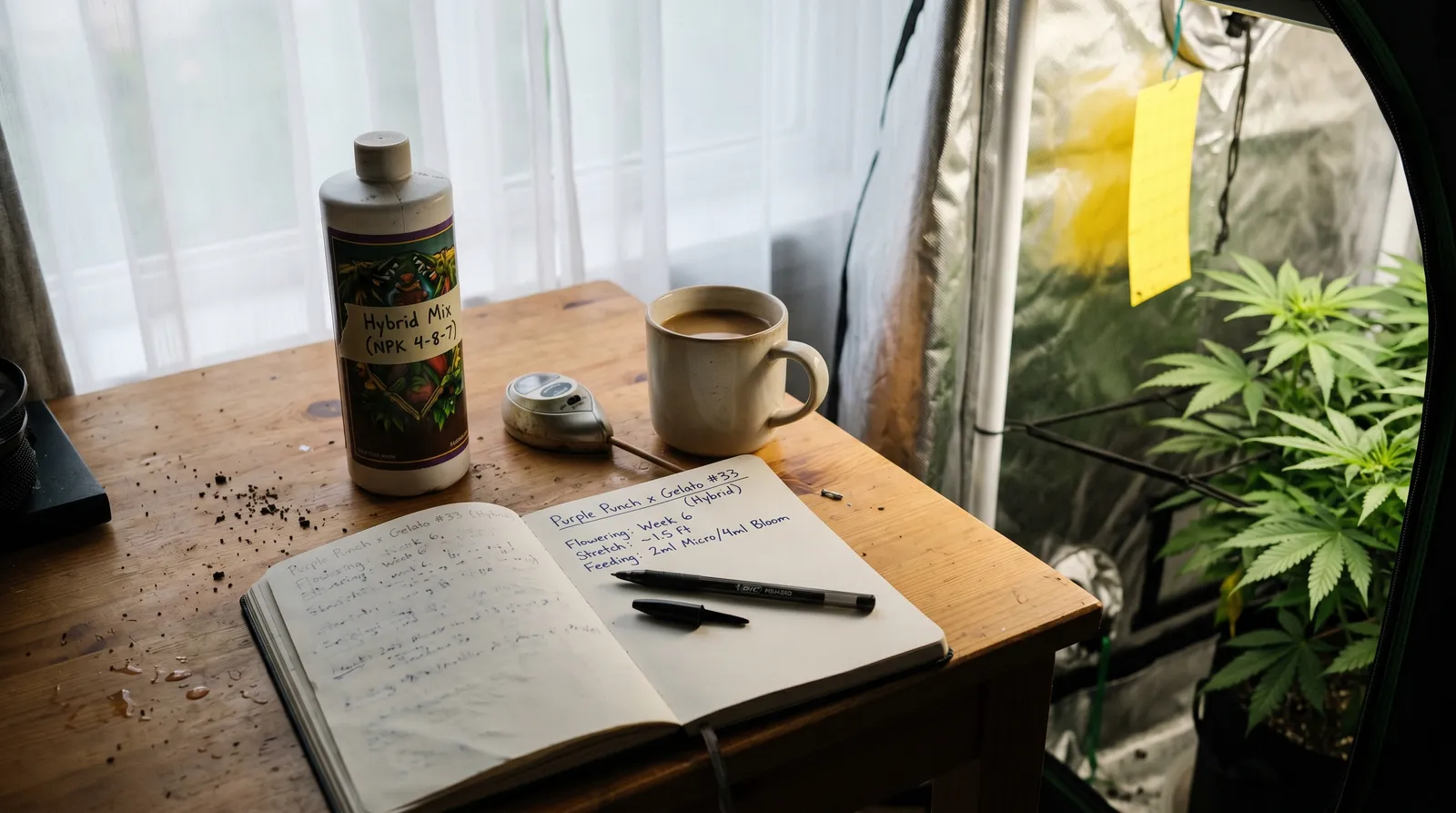
Flowering time is the first variable. An indica-leaning hybrid like Barney's Farm Pineapple Chunk typically finishes in 8–9 weeks of 12/12. A sativa-leaning hybrid like Paradise Seeds Wappa or the older Jack Herer line can push 10–11 weeks, sometimes longer. If you're running a perpetual rotation, mixing cultivars with wildly different finish windows in the same tent is a scheduling headache — one plant is ready to chop while the other still needs a fortnight of ripening light.
Stretch is the second. Photoperiod hybrids generally stretch 50–200% of their veg height during the first three weeks of flower. Indica-leaning hybrids sit at the low end (50–80%), sativa-leaning at the high end (150–200%), and balanced hybrids somewhere in the middle. In a 1.2m-tall tent with a 60cm veg height and an LED hanging 30cm below the ceiling, a 100% stretch puts your canopy directly in the lamp. This is where training earns its keep: topping at the 4th–5th node, LST during late veg, or a SCROG net set 20–25cm above the medium keeps the canopy flat and the light penetration even.
Third: nutrient uptake and environmental preferences are less dramatic than the folklore suggests (Bernstein et al., 2019). A quick comparison of targets across lineage:
| Parameter | Indica-leaning hybrid | Sativa-leaning hybrid | Balanced hybrid |
|---|---|---|---|
| Flowering time | 8–9 weeks | 10–11+ weeks | 9–10 weeks |
| Stretch (% of veg height) | 50–80% | 150–200% | 80–150% |
| EC in peak flower (coco) | 1.8–2.2 mS/cm | 1.8–2.2 mS/cm | 1.8–2.2 mS/cm |
| PPFD in flower (no CO2) | 600–800 | 700–900 | 600–900 |
| Suggested pot size | 7–11L | 11–18L | 11L |
VPD targets — roughly 0.8–1.1 kPa in veg, 1.0–1.5 kPa in flower — apply across the board (Chandra et al., 2017). Sativa-leaning hybrids sometimes tolerate slightly higher light intensity without leaf curl (Magagnini et al., 2018), but this varies by cultivar more than by taxonomy.
In our own tent over a decade, the most useful distinction between "indica hybrid" and "sativa hybrid" turned out to be the pot size. A sativa-leaning hybrid in an 11L fabric pot will out-yield the same genetics cramped into a 7L every time — the root system wants the room to match the stretch. Indica-leaning hybrids often do fine in 7L and keep the tent manageable. Honest limitation: these are our observations under 400W LED in a 1.2m tent; results in a larger room with HPS will shift the numbers.
Autoflower hybrids: a different animal
Autoflower hybrids flower by plant age rather than light cycle, which makes the indica/sativa label purely descriptive of structure. An autoflower is a cross that incorporates Cannabis ruderalis genetics — the short, hardy, day-neutral subspecies from Central Asia (Small, 2015) — which means flowering is triggered by plant age. You don't flip to 12/12; the plant flowers when it's ready, usually around week 4 from germination, finishing the whole seed-to-harvest cycle in 9–11 weeks under an 18/6 or 20/4 schedule throughout.
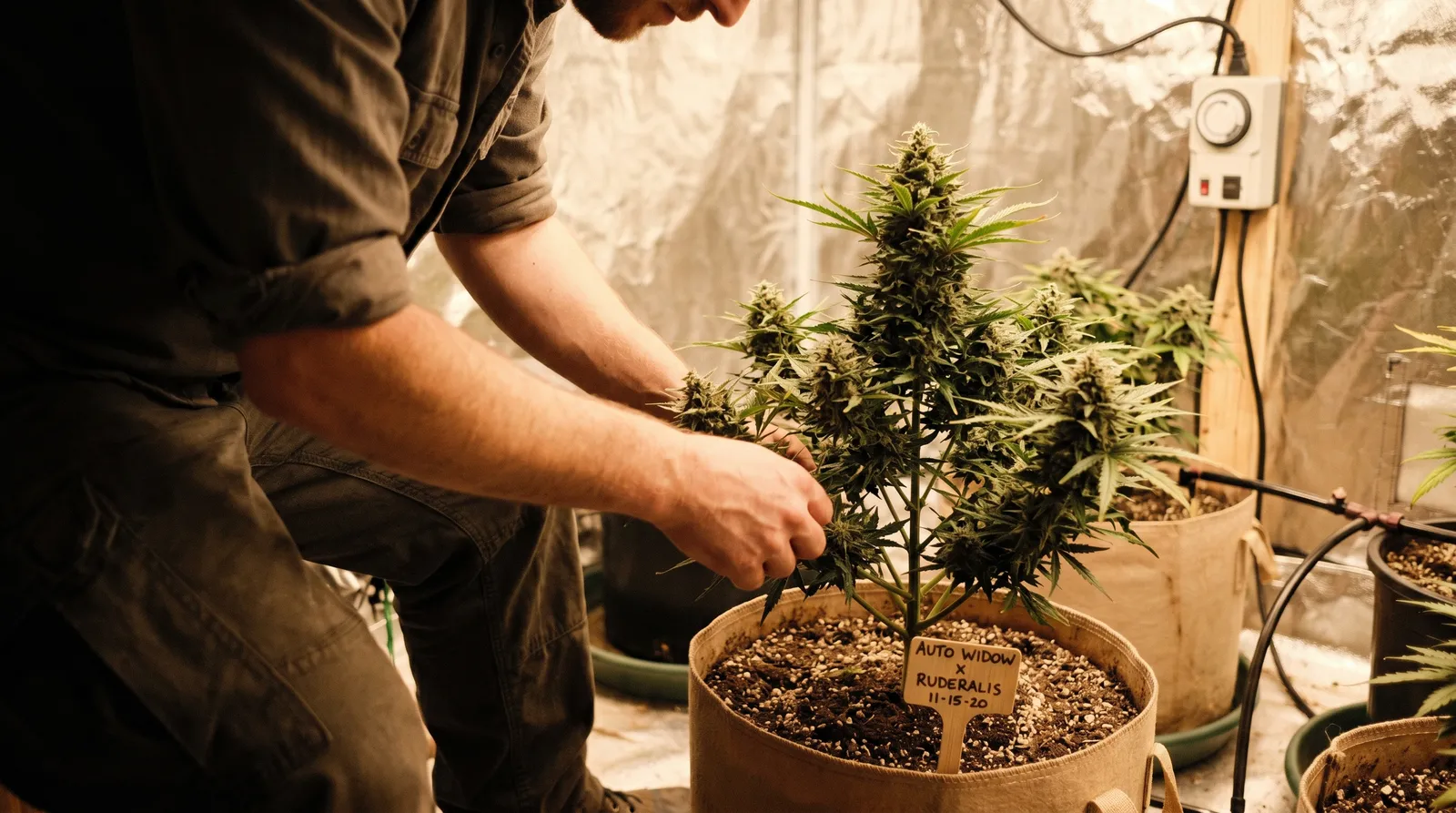
A breeder labelling an autoflower as "indica-dominant" or "sativa-dominant" is describing the non-ruderalis parent's dominant phenotype. Dutch Passion's Auto Mazar leans indica in structure; Royal Queen Seeds' Quick One has more sativa character. Both still flower by age. Both still finish faster than a photoperiod cultivar of similar heritage. If your grow space is limited to a 60x60 tent or your calendar is tight, the indica/sativa label on an autoflower tells you about plant shape and smoke character — the timing is dictated by ruderalis regardless.
Reading the chemovar, not just the label
Reading the chemovar means looking at cannabinoid percentages, dominant terpenes, and flowering time — not just the morphology label. Reputable breeders increasingly publish cannabinoid and terpene data alongside the old morphology labels. Dutch Passion's testing programme, Barney's Farm's cannabinoid profiles, and Paradise Seeds' lab-verified percentages are useful starting points when you order genetics. Look at three things: dominant cannabinoid (THC%, CBD%, or a ratio), dominant terpenes where listed (myrcene, limonene, pinene, caryophyllene), and flowering time. That triad tells you more about what you're actually growing than "indica-dominant hybrid" ever will.
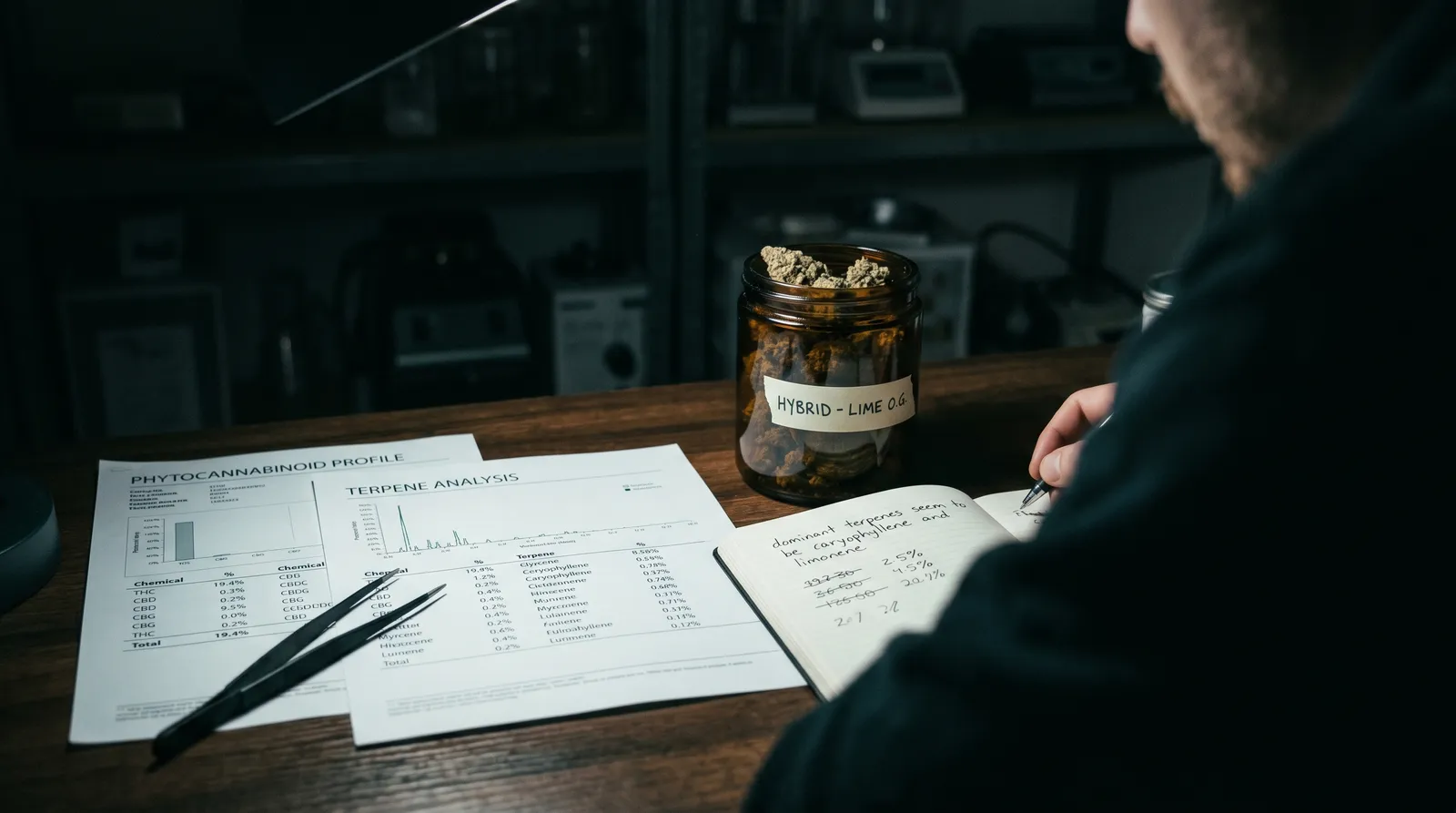
The honest caveat: breeder-reported percentages are pheno-dependent and grower-dependent. A cultivar listed at 22% THC won't hit 22% if your lamp is underpowered, your cure is rushed, or you pulled two weeks early. Published numbers represent the upper envelope under controlled conditions, not a guarantee. Compared to wine grape varietals — where terroir shifts the expressed profile dramatically — cannabis behaves similarly: the same seed in two tents will give you two different jars.
Legal notice: Cannabis cultivation laws vary by country and region and change frequently. This guide is educational. Before growing, verify current laws for your specific jurisdiction. Azarius does not provide legal advice.
Azarius cannabis seeds
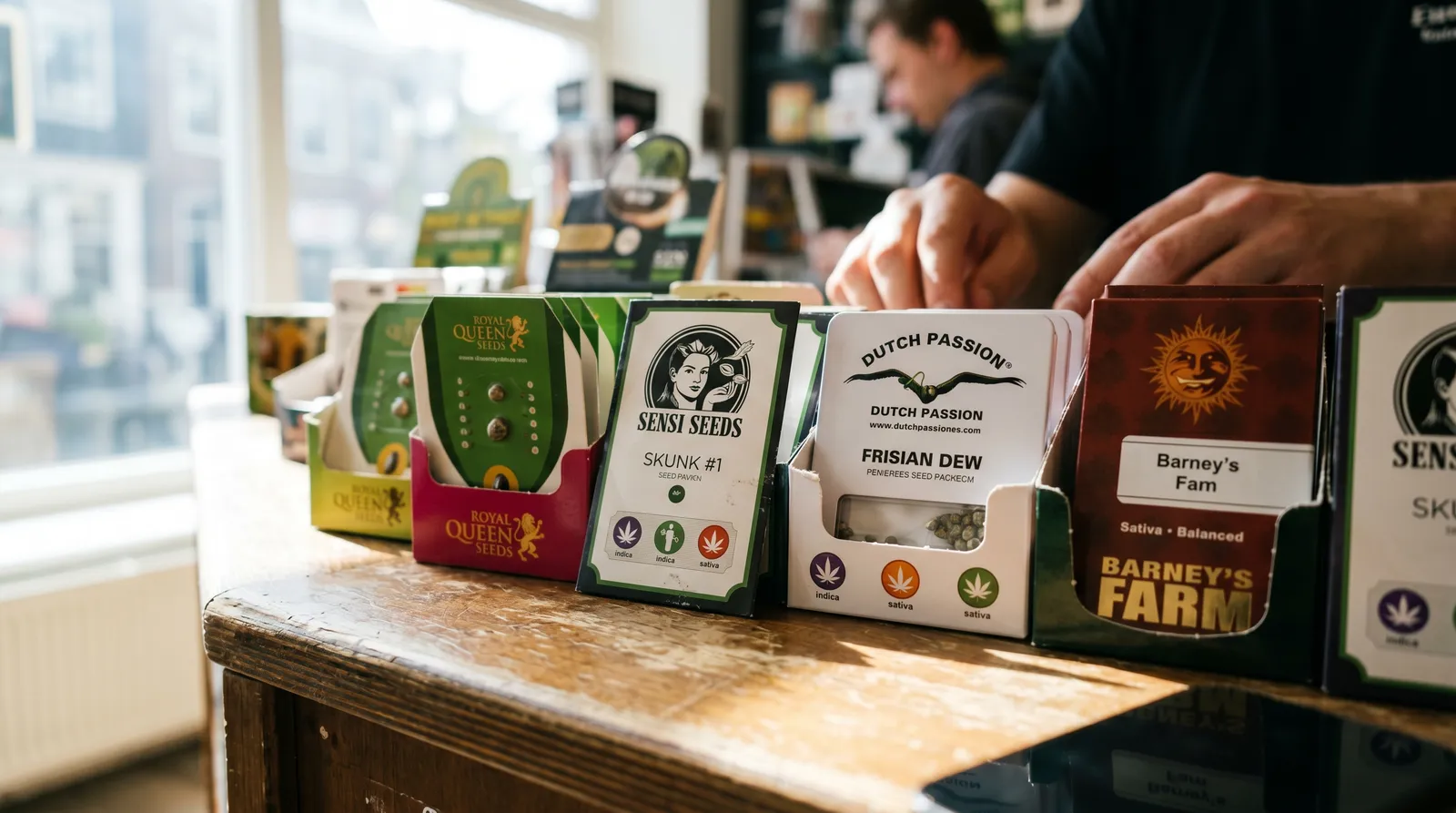
Growers looking to buy indica-leaning, sativa-leaning, or balanced hybrid genetics will find stock from breeders including Sensi Seeds, Dutch Passion, Royal Queen Seeds, Barney's Farm, and Paradise Seeds — across feminised, regular, and autoflowering formats. Breeder documentation on cannabinoid ratios and flowering times is a more reliable guide than the indica/sativa label alone.
Frequently Asked Questions
8 questionsDoes the indica/sativa hybrid label predict how a plant grows?
What is the difference between a chemovar and a strain?
Can an autoflower be an indica sativa hybrid chemovar?
Do balanced hybrids need different nutrients than indica or sativa plants?
Why do breeders still use the indica/sativa label if it's inaccurate?
How do I know what chemovar I'm actually growing?
Can two plants of the same indica sativa hybrid strain have different chemovars?
Does the stretch phase differ between indica-dominant and sativa-dominant hybrid chemovars?
About this article


Luke Sholl has been writing about cannabis, cannabinoids, and the broader benefits of nature since 2011, and has personally grown cannabis in home grow tents for more than a decade. That first-hand cultivation experience
This wiki article was drafted with AI assistance and reviewed by Luke Sholl, External contributor since 2026. Editorial oversight by Adam Parsons.
Medical disclaimer. This content is for informational purposes only and does not constitute medical advice. Consult a qualified healthcare provider before use of any substance.
Last reviewed April 24, 2026
References
- [1]Hazekamp, A., Tejkalová, K., & Papadimitriou, S. (2016). Cannabis: From Cultivar to Chemovar II—A Metabolomics Approach to Cannabis Classification. Cannabis and Cannabinoid Research, 1(1), 202-215. DOI: 10.1089/can.2016.0017
- [2]Lewis, M. A., Russo, E. B., & Smith, K. M. (2018). Pharmacological Foundations of Cannabis Chemovars. Planta Medica, 84(4), 225-233. DOI: 10.1055/s-0043-122240
- [3]Chandra, S., Lata, H., Khan, I. A., & ElSohly, M. A. (2017). Cannabis sativa L.: Botany and Biotechnology. Springer, pp. 1-474. DOI: 10.1007/978-3-319-54564-6
- [4]Small, E. (2015). Evolution and Classification of Cannabis sativa (Marijuana, Hemp) in Relation to Human Utilization. The Botanical Review, 81(3), 189-294. DOI: 10.1007/s12229-015-9157-3
- [5]Magagnini, G., Grassi, G., & Kotiranta, S. (2018). The Effect of Light Spectrum on the Morphology and Cannabinoid Content of Cannabis sativa L.. Medical Cannabis and Cannabinoids, 1(1), 19-27. DOI: 10.1159/000489030
- [7]Chandra, S., Lata, H., ElSohly, M. A., Walker, L. A., & Potter, D. (2017). Cannabis cultivation: Methodological issues for obtaining medical-grade product. Epilepsy & Behavior, 70, 302-312. DOI: 10.1016/j.yebeh.2016.11.029
- [8]Bernstein, N., Gorelick, J., Zerahia, R., & Koch, S. (2019). Impact of N, P, K, and Humic Acid Supplementation on the Chemical Profile of Medical Cannabis (Cannabis sativa L.). Frontiers in Plant Science, 10, 736. DOI: 10.3389/fpls.2019.00736
Related Articles
Cannabis Hermaphrodite: Identify, Prevent, Act
A cannabis hermaphrodite is a female plant that develops male pollen sacs or banana-shaped anthers (nanners), self-pollinating and seeding your harvest.
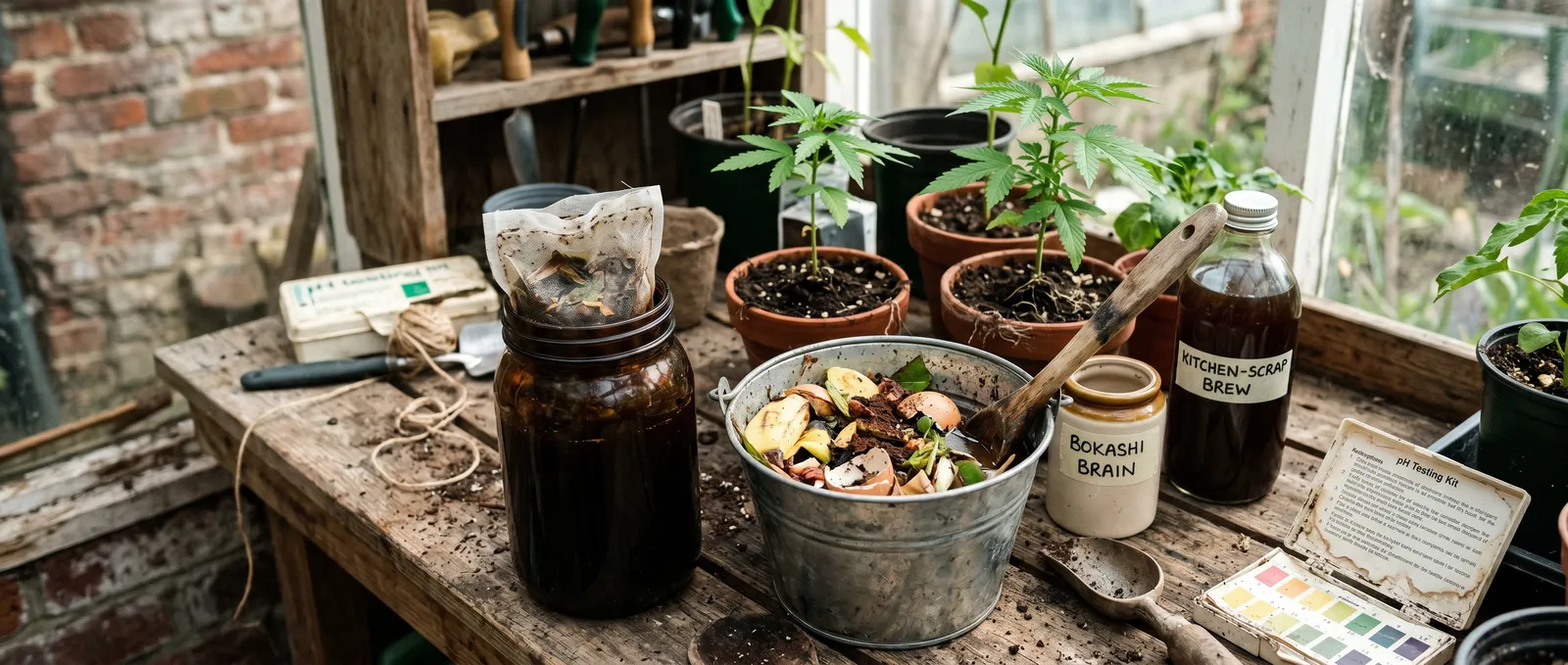
DIY Cannabis Fertilizer: Homemade Nutrient Guide
DIY cannabis fertilizer guide: compost, teas, banana ferments and feed schedules, with safety notes and cited research for home growers.
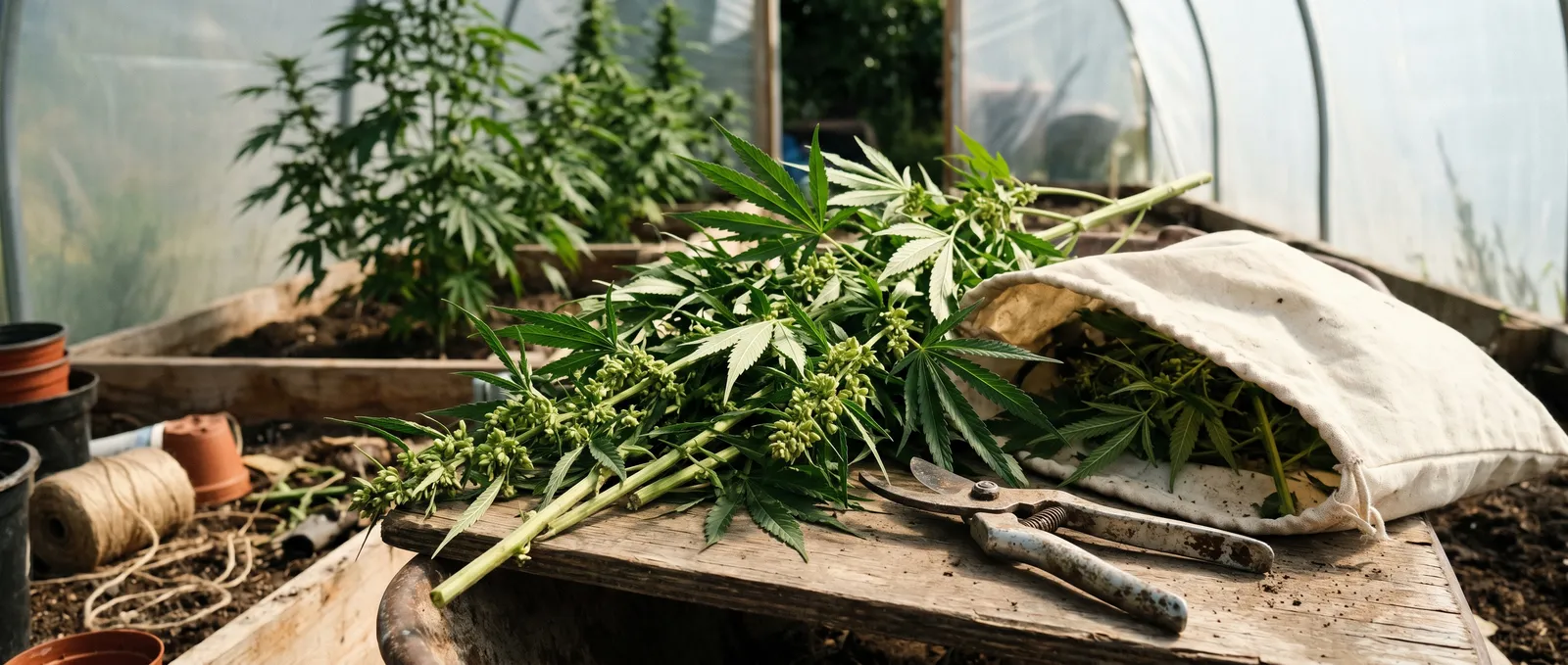
What To Do With Male Cannabis Plants: 6 Practical Uses
What to do with male cannabis plants: identify, isolate, breed, extract, or compost. A practical 6-step guide with sourcing and safety notes.
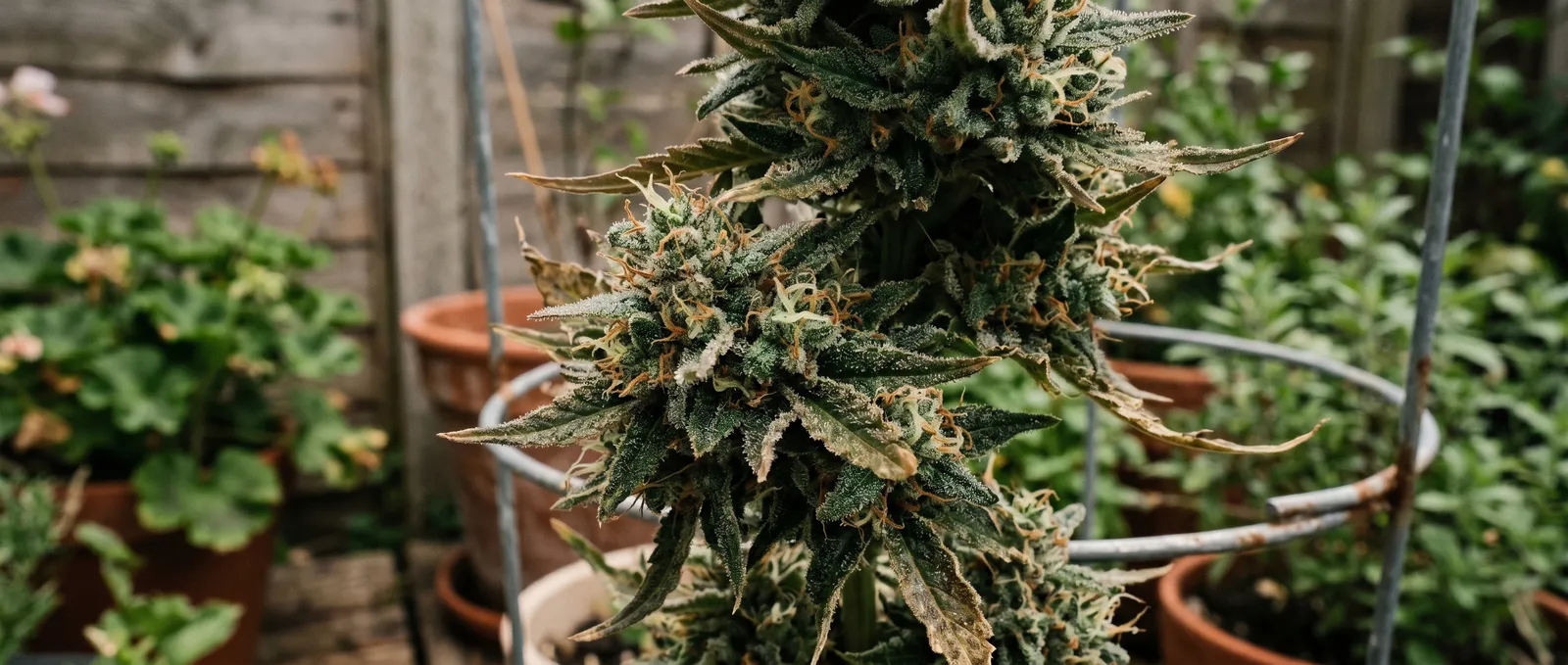
When To Harvest Cannabis Trichomes: A Grower's Guide
Deciding when to harvest cannabis trichomes means reading the resin glands on your calyxes under 60x–100x magnification and cutting when the milky-to-amber…
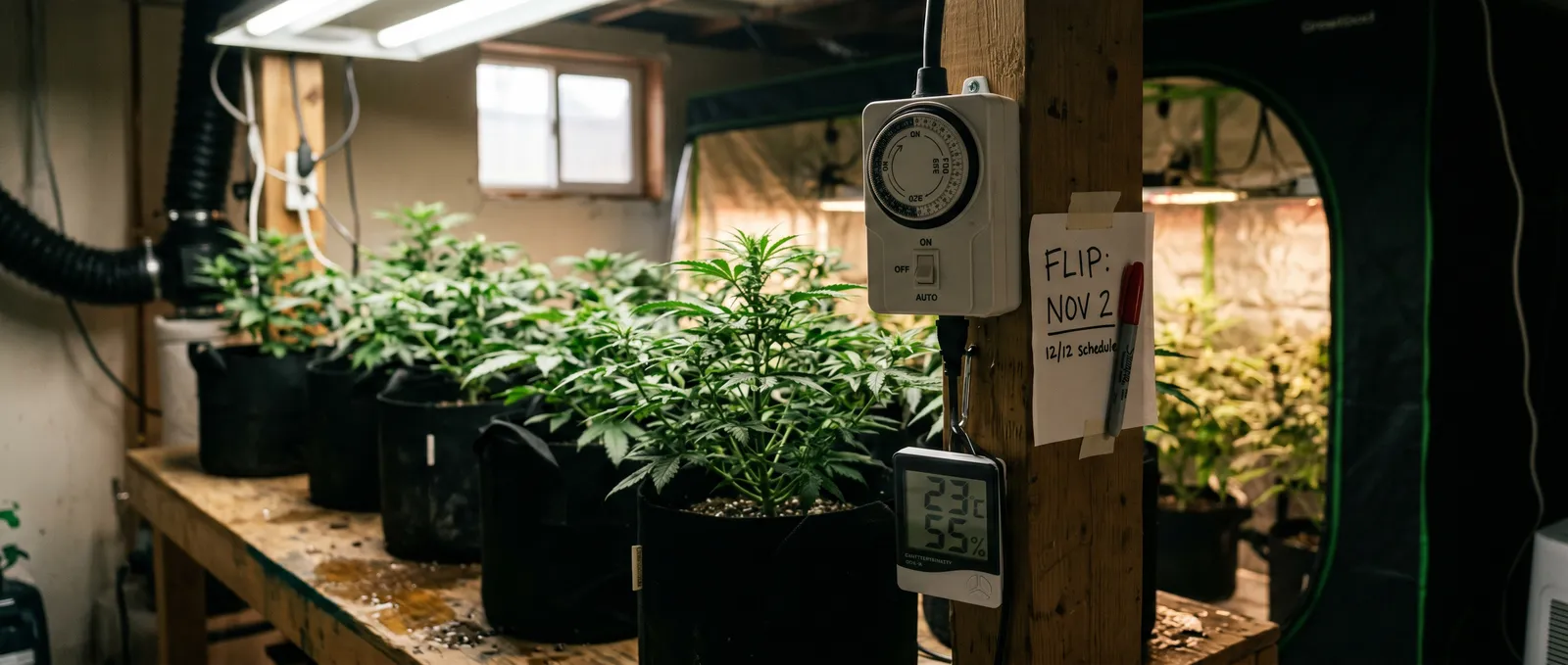
When To Flip Cannabis To 12/12: Timing The Switch
When to flip cannabis to 12/12 is a timing decision that switches photoperiod plants to 12 hours light and 12 hours dark to trigger flowering via florigen…
Watering Cannabis Frequency Volume Runoff: Full Guide
Watering cannabis frequency volume runoff is the feedback loop between how often you irrigate, how much you apply, and what drains from the pot.