
This article discusses psychoactive substances intended for adults (18+). If you have a health condition or take medication, consult a doctor before use. Our age policy
CBG vs CBD vs CBN
Definition
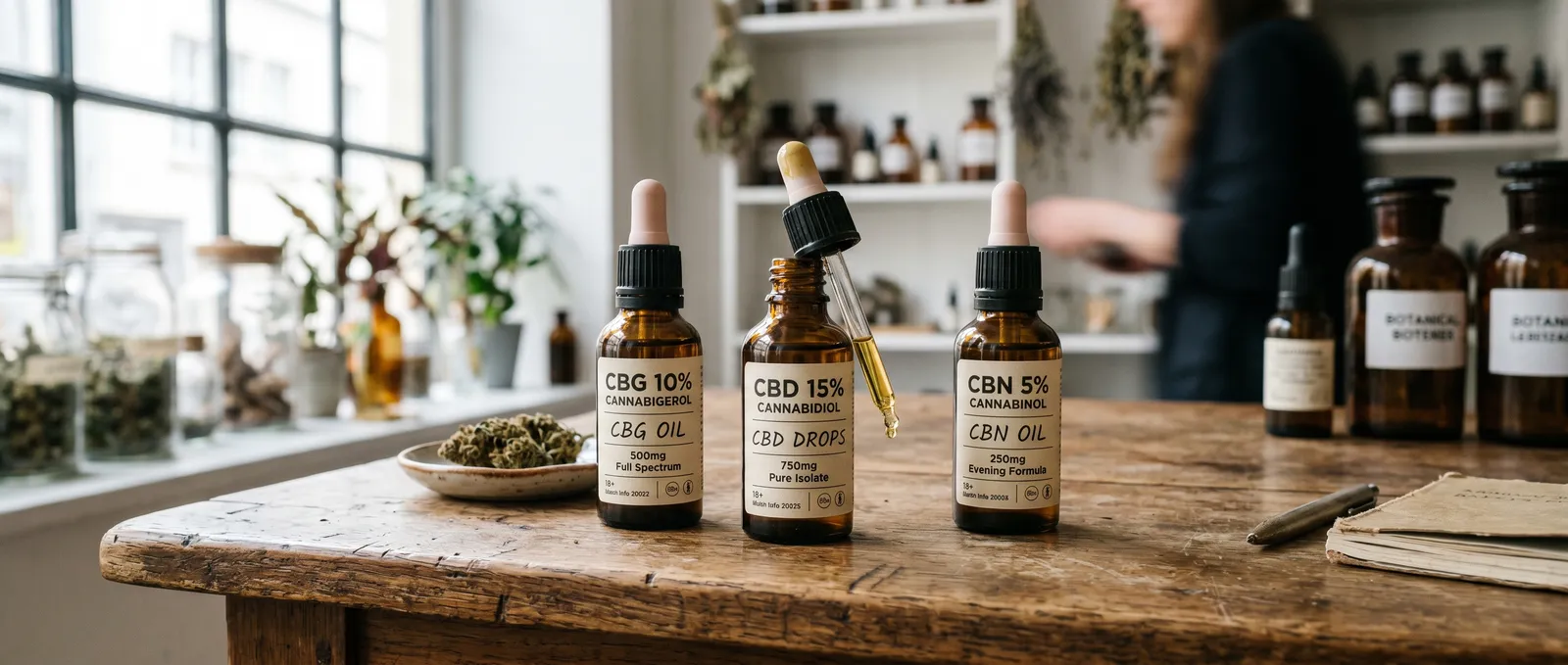
CBG vs CBD vs CBN is a comparison of three non-intoxicating cannabinoids with distinct pharmacological profiles. CBG acts on alpha-2 adrenergic and serotonin receptors (Cascio et al., 2010), CBD modulates the endocannabinoid system indirectly via CB1 allosteric modulation, and CBN is a mild CB1/CB2 partial agonist formed from THC degradation. Each suits different goals.
18+ only — the pharmacology and dosing information below applies to adults.
CBG vs CBD vs CBN is a comparison guide that examines three non-intoxicating cannabinoids that interact with the endocannabinoid system in distinct ways. Cannabis produces well over a hundred cannabinoids, but these three keep surfacing in oils, capsules, and edibles across Europe: cannabigerol (CBG), cannabidiol (CBD), and cannabinol (CBN). All three are non-intoxicating, all interact with the endocannabinoid system, yet each has a distinct pharmacological profile. This guide on CBG vs CBD vs CBN breaks down how they differ, where they overlap, and which one suits what you're actually trying to achieve.
Disclaimer: This article is for informational purposes only and does not constitute medical advice. Cannabinoid products are not intended to diagnose, treat, cure, or prevent any disease. If you are taking prescription medication or have a medical condition, consult a qualified healthcare professional before using any cannabinoid product. The research cited below reflects the current state of evidence, which remains incomplete for all three compounds.
| Dimension | CBG (Cannabigerol) | CBD (Cannabidiol) | CBN (Cannabinol) |
|---|---|---|---|
| Origin in the plant | Precursor — CBGA is the "parent" acid from which other cannabinoids derive | Decarboxylated from CBDA; abundant in mature hemp flower | Degradation product of THC; forms as cannabis ages or oxidises |
| Typical concentration in hemp | Less than 1% in mature flower; higher in young plants | 12–25% in CBD-bred cultivars | Less than 1%; increases in aged or poorly stored material |
| Primary receptor activity | Partial agonist at CB1 and CB2; also acts on alpha-2 adrenergic and 5-HT1A receptors (Cascio et al., 2010) | Negative allosteric modulator at CB1; agonist at 5-HT1A; antagonist at GPR55 (Laprairie et al., 2015) | Weak partial agonist at CB1; stronger affinity at CB2 (Mahadevan et al., 2000) |
| Research-associated effects | Focus, appetite stimulation, gut motility support | Calming, anti-inflammatory, anticonvulsant | Sedation, mild analgesic properties |
| Intoxicating? | No | No | Very mildly — roughly one-tenth the CB1 affinity of THC |
| Studied dosage ranges | 12.5–50 mg/day (limited human data) | 15–600 mg/day depending on indication (Millar et al., 2019) | 2.5–10 mg before bed (very limited human data) |
| Common product forms | Oil, capsules, flower blends | Oil, capsules, edibles, topicals, flower | Oil, sleep-targeted edibles |
| Enzyme inhibition (key interaction risk) | Possible CYP3A4 inhibition — data still emerging | Inhibits CYP2C19 and CYP3A4 (Nasrin et al., 2021) | Inhibits CYP2C9 and CYP3A4 |
CBG — The Precursor Cannabinoid
CBG is the metabolic precursor from which all other major cannabinoids originate (Cascio et al., 2010). Every cannabinoid in the plant starts life as cannabigerolic acid (CBGA). Enzymes then convert CBGA into THCA, CBDA, or CBCA — which is why CBG is sometimes called the "stem cell" or "mother" cannabinoid. By the time the plant matures, most CBGA has already been converted, leaving very little CBG behind. That scarcity is why CBG-rich products tend to cost more per milligram than their CBD equivalents.

Pharmacologically, CBG is interesting because it doesn't restrict itself to cannabinoid receptors. Cascio et al. (2010) showed that CBG acts as an agonist at alpha-2 adrenergic receptors and blocks 5-HT1A serotonin receptors — a profile that may explain why users describe it as focusing rather than sedating. A 2021 survey published in Scientific Reports by Russo et al. found that 51.2% of CBG users reported using it for anxiety, 33.1% for chronic pain, and 73.9% said it worked better than conventional medication for their condition — though survey data carries obvious self-selection bias, so take those percentages as directional rather than definitive.
Animal research has pointed toward CBG's potential in gut health. Borrelli et al. (2013) demonstrated that CBG reduced nitric oxide production and markers of inflammation in a murine model of colitis. Human trials are still thin on the ground, though, so translating mouse data to your morning routine requires a healthy dose of caution.
If you want to try CBG for yourself, you can buy CBG oil or CBG capsules from the Azarius cannabinoid range. Many people start with a low-concentration oil and adjust upward over two to three weeks.
CBD — The Most Studied of the Three
CBD is the most extensively researched non-intoxicating cannabinoid, with roughly two decades of serious clinical investigation behind it (Millar et al., 2019). It's the only one of the three with an approved pharmaceutical application: Epidiolex (cannabidiol oral solution) was approved by the EMA in 2019 for Lennox-Gastaut and Dravet syndromes at doses of 10–20 mg/kg/day — far higher than anything you'd find in a consumer oil.
At more typical supplement-range doses (15–50 mg/day), the evidence is more modest but still the strongest of the trio. A systematic review by Millar et al. (2019) in the Journal of Clinical Medicine analysed 25 studies and concluded that CBD showed a favourable safety profile, with the most common side effects being tiredness, diarrhoea, and changes in appetite or weight. According to Zuardi et al. (2017), a single 300 mg dose of CBD reduced anxiety scores in a simulated public speaking test — a finding replicated across several small trials.
CBD doesn't bind strongly to CB1 or CB2 receptors directly. Instead, it acts as a negative allosteric modulator at CB1 — meaning it changes the shape of the receptor so that other cannabinoids (including your body's own endocannabinoids like anandamide) bind differently. It also inhibits FAAH, the enzyme that breaks down anandamide, effectively raising your baseline endocannabinoid tone (Leweke et al., 2012). That indirect mechanism is part of why CBD's effects feel subtle rather than switched-on.
Azarius stocks a wide selection of CBD oils, CBD capsules, and CBD edibles. If you're new to cannabinoids, CBD is the most straightforward place to start — you can buy CBD oil in several concentrations and work out what suits your body.
CBN — The Sleepy One (With Caveats)
CBN is a mild CB1/CB2 partial agonist formed when THC degrades through oxidation, heat, or age (Mahadevan et al., 2000). It has built a reputation as "the sleep cannabinoid," and you'll find it in nearly every cannabinoid sleep formula on the market. The reality is a bit more complicated. The sedative reputation traces back to a single 1975 study by Musty et al. that tested THC and CBN in combination — and the sedation may have been a THC effect amplified by CBN rather than CBN acting alone. Standalone human sleep data for CBN is remarkably thin.
A 2024 randomised controlled trial by Saleska et al. published in Journal of the American Nutrition Association found that a 20 mg CBN dose did not significantly improve sleep quality versus placebo in healthy adults over a two-week period. That doesn't mean CBN is useless for sleep — it means the evidence hasn't caught up with the marketing yet. Anecdotally, many people report that CBN helps them wind down, and there may be a mild muscle-relaxant component at play via CB2 receptor activity, but rigorous proof is still pending.
CBN forms naturally when THC degrades through heat, light, or age. If you've ever found old cannabis that felt more sedating and less cerebral than fresh material, oxidation of THC into CBN is likely part of that shift. This origin story also means that CBN products derived from hemp must be carefully manufactured to keep total THC content below the 0.2% threshold required across most EU member states.
How They Work Together
Cannabinoids appear to modulate each other's receptor activity when taken in combination, a phenomenon known as the entourage effect (Mechoulam & Ben-Shabat, 1998). The term was coined by Mechoulam and Ben-Shabat (1998), and it proposes that cannabinoids, terpenes, and flavonoids act in concert, producing effects that differ from any single isolated compound. A 2020 review by Russo in Frontiers in Plant Science compiled evidence suggesting that whole-plant preparations outperformed isolates in several preclinical models of inflammation and pain.
In practice, this means a daytime formula might pair CBG (for alertness) with a low dose of CBD (for background calm), while a nighttime blend might combine CBD with CBN. Whether these combinations are genuinely synergistic or simply additive remains an open question — the controlled human studies to tease apart the difference haven't been done yet. The EMCDDA (2024) has noted the growing consumer interest in minor cannabinoid blends across EU markets, though regulatory frameworks have not yet caught up with product innovation.
Dosage Ranges From Research
Effective dosage varies widely across CBG, CBD, and CBN, and the evidence base is not equal for each (Millar et al., 2019; Russo et al., 2021).
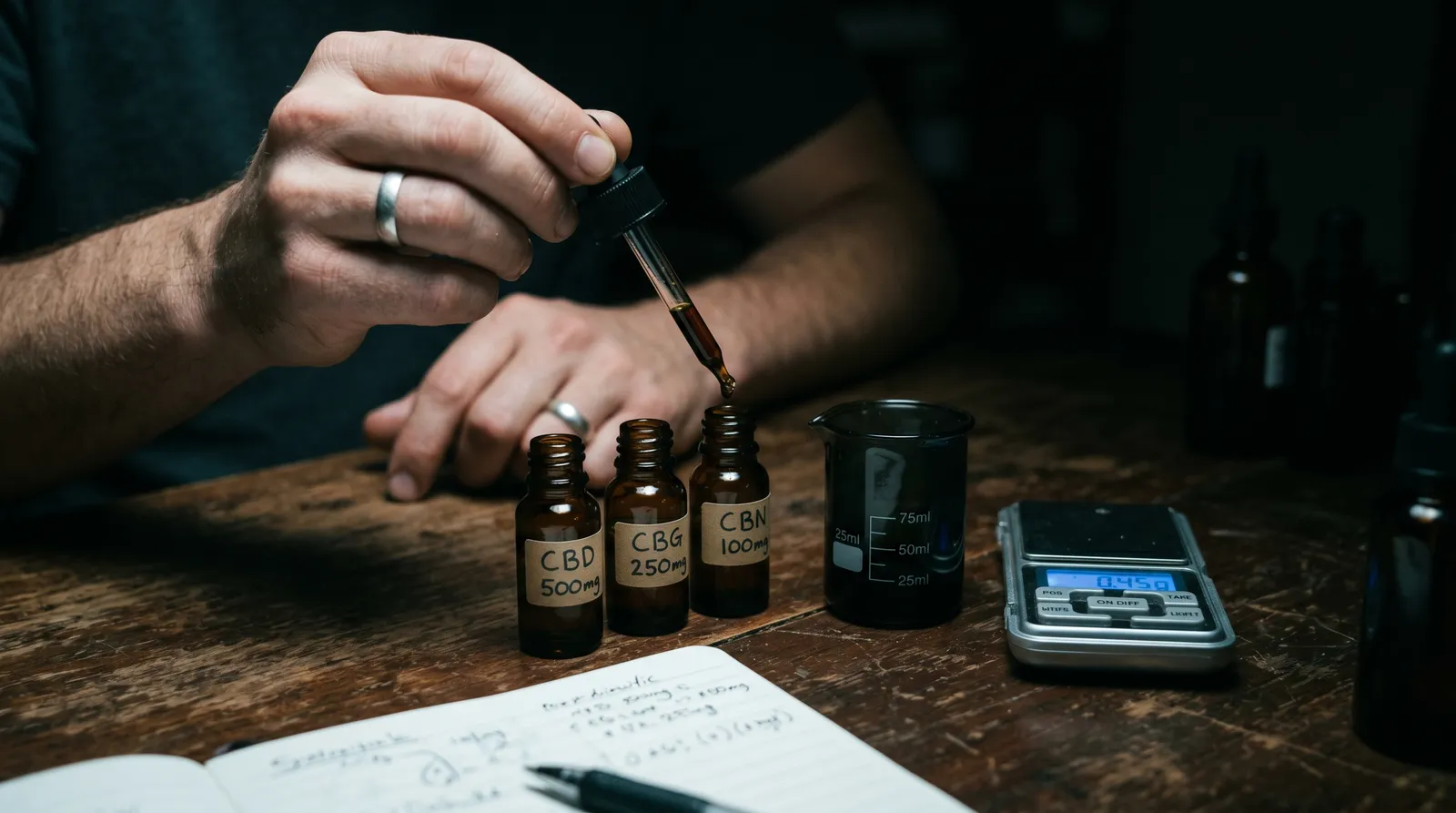
For CBD, clinical studies have used doses ranging from 15 mg/day for general wellbeing surveys up to 1,500 mg/day in epilepsy trials, with anxiolytic effects observed around 300 mg in acute dosing studies (Zuardi et al., 2017). The European Medicines Agency monograph for Epidiolex sets therapeutic dosing at 10–20 mg/kg/day, but that's a pharmaceutical context far removed from consumer oils.
CBG dosing in human research is limited. The Russo et al. (2021) survey noted that most respondents used between 20 and 50 mg/day, but this was self-reported, not clinically controlled. Sublingual administration — holding oil under the tongue for 30–60 seconds — appears to offer better bioavailability than swallowing directly, as the sublingual mucosa bypasses first-pass liver metabolism.
CBN has even less dosing clarity. Most commercial sleep products contain 2.5–10 mg per serving. The Saleska et al. (2024) trial used 20 mg and found no significant effect on sleep quality, which raises the question of whether current commercial doses are too low, or whether CBN simply isn't the sleep molecule it's been marketed as.
Safety and Interaction Risks
All three cannabinoids inhibit cytochrome P450 liver enzymes, which can alter the metabolism of prescription drugs (Nasrin et al., 2021). CBD is the best-documented offender here — Nasrin et al. (2021) showed that CBD significantly inhibits CYP2C19 and CYP3A4, enzymes responsible for metabolising a wide range of pharmaceuticals including anticoagulants (warfarin), benzodiazepines, and certain antidepressants. CBN also inhibits CYP2C9 and CYP3A4, which may increase bleeding risk for anyone on blood thinners. CBG's enzyme inhibition profile is less well characterised, but early data suggests CYP3A4 involvement.
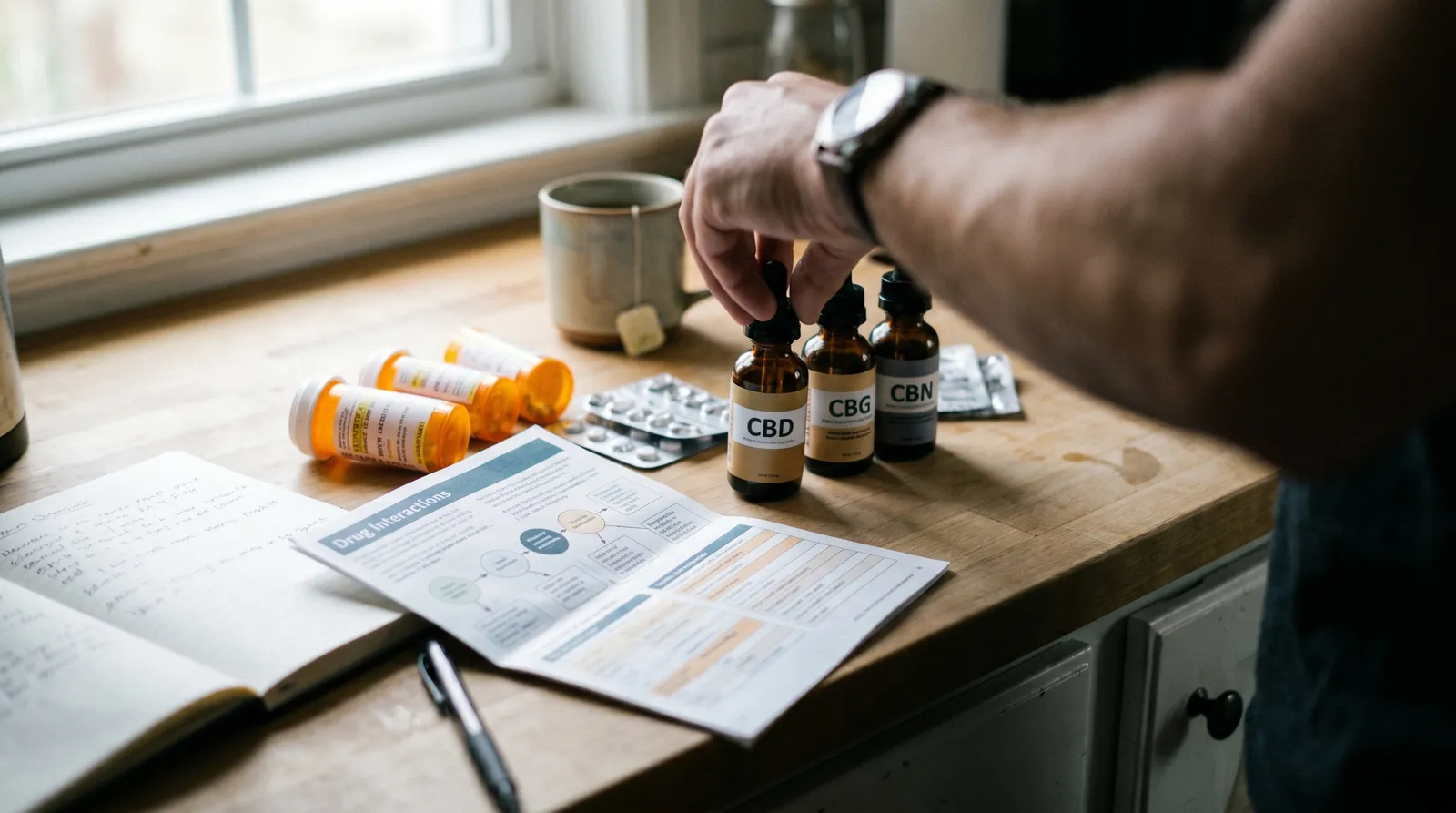
If you're taking prescription medication — particularly anticoagulants, anti-epileptics, or SSRIs — the dedicated cannabinoid interactions article on the Azarius wiki covers this in proper detail. The short version: don't assume "non-intoxicating" means "no interactions."
Common side effects across all three tend to be mild: dry mouth, slight drowsiness (especially CBN), and occasional gastrointestinal discomfort. CBD at high doses (above 300 mg/day) has been associated with elevated liver enzymes in some clinical trials, though this was primarily observed in combination with other medications (Devinsky et al., 2017).
Honest Limitations of This Comparison
The CBG vs CBD vs CBN comparison is constrained by uneven evidence. CBD has hundreds of peer-reviewed studies; CBG has a handful of animal models and one large survey; CBN has even less. Drawing neat side-by-side conclusions when the data quality differs this dramatically requires acknowledging that the CBG and CBN columns of any comparison table are built on much thinner foundations than the CBD column. We present the best available evidence, but "best available" is not the same as "conclusive." The EMCDDA (2024) European Drug Report similarly notes that consumer interest in minor cannabinoids has outpaced the regulatory and scientific evidence base across EU member states.
CBG vs CBD vs CBN — Which One, and When?
The best cannabinoid for you depends on the specific effect you're targeting and the time of day you plan to use it.
If you're after a general-purpose calming cannabinoid with the deepest evidence base, CBD remains the obvious starting point. It has the most human data, the widest availability, and the best-understood safety profile. You can buy CBD oil in a range of concentrations at Azarius to get started.
If you're specifically looking for daytime alertness or gut support, CBG is worth exploring — though you should go in knowing the human evidence is still mostly survey-based and preclinical. The pharmacological profile is genuinely distinct from CBD, not just a marketing rebrand. You can buy CBG oil from the Azarius cannabinoid selection to try it yourself.
CBN makes the most sense if you've already tried CBD for sleep and found it insufficient. Combining CBN with CBD in an evening routine is the most common approach, and the entourage effect hypothesis at least provides a theoretical basis for why the combination might outperform either alone. Just don't expect the knockout sedation that some product labels imply — the clinical data simply isn't there yet to support that claim.
None of these three will get you high. None are habit-forming based on current evidence. And all of them work best when you treat the dose as something to calibrate over a few weeks rather than expect immediate results from night one. When comparing CBG vs CBD vs CBN, the honest answer is that most experienced users end up rotating or combining them rather than picking just one.
Last updated: April 2026
Frequently Asked Questions
8 questionsCan you take CBG, CBD, and CBN together?
Is CBN actually proven to help with sleep?
Why is CBG more expensive than CBD?
Does CBN get you high?
What side effects do CBG, CBD, and CBN share?
What is the best CBG vs CBD vs CBN option for daytime use?
How is CBN formed and why is it linked to old cannabis?
Can CBG, CBD, or CBN interact with prescription medications?
About this article


Joshua Askew serves as Editorial Director for Azarius wiki content. He is Managing Director at Yuqo, a content agency specialising in cannabis, psychedelics and ethnobotanical editorial work across multiple languages. Th
This wiki article was drafted with AI assistance and reviewed by Joshua Askew, Managing Director at Yuqo. Editorial oversight by Adam Parsons.
Medical disclaimer. This content is for informational purposes only and does not constitute medical advice. Consult a qualified healthcare provider before use of any substance.
Last reviewed April 24, 2026
References (14)
- [1]Borrelli, F. et al. (2013). Beneficial effect of the non-psychotropic plant cannabinoid cannabigerol on experimental inflammatory bowel disease. Biochemical Pharmacology, 85(9), 1306–1316.
- [2]Cascio, M.G. et al. (2010). Evidence that the plant cannabinoid cannabigerol is a highly potent α2-adrenoceptor agonist. British Journal of Pharmacology, 159(1), 129–141.
- [3]Devinsky, O. et al. (2017). Trial of cannabidiol for drug-resistant seizures in the Dravet syndrome. New England Journal of Medicine, 376(21), 2011–2020.
- [4]EMCDDA (2024). European Drug Report 2024: Trends and Developments. European Monitoring Centre for Drugs and Drug Addiction.
- [5]Laprairie, R.B. et al. (2015). Cannabidiol is a negative allosteric modulator of the cannabinoid CB1 receptor. British Journal of Pharmacology, 172(20), 4790–4805.
- [6]Leweke, F.M. et al. (2012). Cannabidiol enhances anandamide signaling and alleviates psychotic symptoms of schizophrenia. Translational Psychiatry, 2(3), e94.
- [7]Mahadevan, A. et al. (2000). Novel cannabinol probes for CB1 and CB2 cannabinoid receptors. Journal of Medicinal Chemistry, 43(20), 3778–3785.
- [8]Mechoulam, R. & Ben-Shabat, S. (1998). From gan-zi-gun-nu to anandamide and 2-arachidonoylglycerol. Chemistry and Physics of Lipids, 108(1–2), 1–13.
- [9]Millar, S.A. et al. (2019). A systematic review on the pharmacokinetics of cannabidiol in humans. Frontiers in Pharmacology, 9, 1365.
- [10]Musty, R.E. et al. (1975). Effects of cannabinol and cannabidiol alone and in combination with delta-9-THC. Pharmacologist, 17, 217.
- [11]Nasrin, S. et al. (2021). Cannabinoid metabolites as inhibitors of major hepatic CYP450 enzymes. Clinical Pharmacology & Therapeutics, 109(6), 1523–1529.
- [12]Russo, E.B. et al. (2021). Survey of patients employing cannabigerol-predominant cannabis preparations. Cannabis and Cannabinoid Research, 7(5), 652–663.
- [13]Saleska, J.L. et al. (2024). A randomized, double-blind, placebo-controlled crossover study of cannabinol for sleep. Journal of the American Nutrition Association, 43(4), 345–355.
- [14]Zuardi, A.W. et al. (2017). Inverted U-shaped dose-response curve of the anxiolytic effect of cannabidiol. Journal of Psychopharmacology, 31(9), 1188–1196.
Related Articles

Pinene Alpha and Beta: Aroma, Chemistry & Vaporisation Guide
Pinene is a bicyclic monoterpene occurring as two isomers — α-pinene and β-pinene — and ranks as the most abundant terpene in the plant kingdom.

CBD and Recovery: What the Research Actually Shows
CBD and recovery is a research topic spanning exercise-induced muscle damage, sleep quality, and perceived soreness. As McCartney et al.

CBD Pet Dosing Vet Consultation: Prepare for Your Visit
Veterinary CBD dosing is not a scaled-down version of human dosing — dogs and cats metabolise cannabidiol through different enzymatic pathways and at…

CBD for Cats Veterinary Considerations: Feline Research, Safety and Guidance
Cats metabolise cannabinoids differently from dogs and humans, lacking key glucuronidation enzymes that affect CBD clearance. Deabold et al.

EU Novel Food Regulation CBD: Country Status, EFSA Safety & Guide
EU novel food regulation CBD is a policy framework under EU rule 2015/2283 that classifies cannabidiol extracts as a novel food, requiring safety assessment…
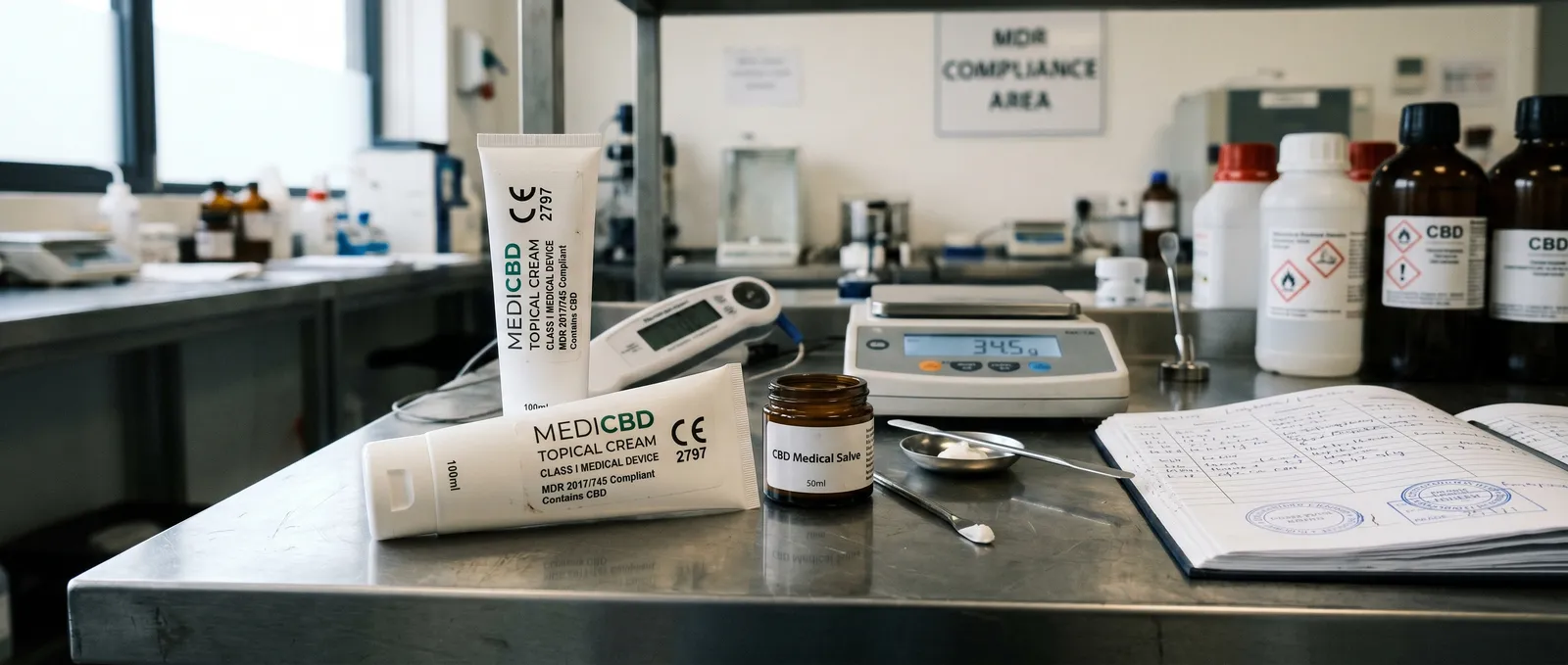
CBD Topical Creams Medical Grade: CE-Marked Class I Explained
CBD topical creams deliver cannabidiol directly to the skin rather than the bloodstream.
Humulene Effects and Aroma Profile | Terpene Guide
Humulene (α-humulene) is a monocyclic sesquiterpene named after Humulus lupulus — hops.

Terpene Entourage Effect: Current Evidence Reviewed
The terpene entourage effect proposes that cannabis terpenes modulate cannabinoid activity, producing different outcomes than isolated compounds alone.
CBD and Skin Conditions: What Research Shows
Cannabidiol (CBD) interacts with the endocannabinoid system expressed in human skin — including CB1 and CB2 receptors on keratinocytes, sebocytes, and…