
This article discusses psychoactive substances intended for adults (18+). If you have a health condition or take medication, consult a doctor before use. Our age policy
CBG: The Mother Cannabinoid and How Cannabis Biosynthesis Actually Works
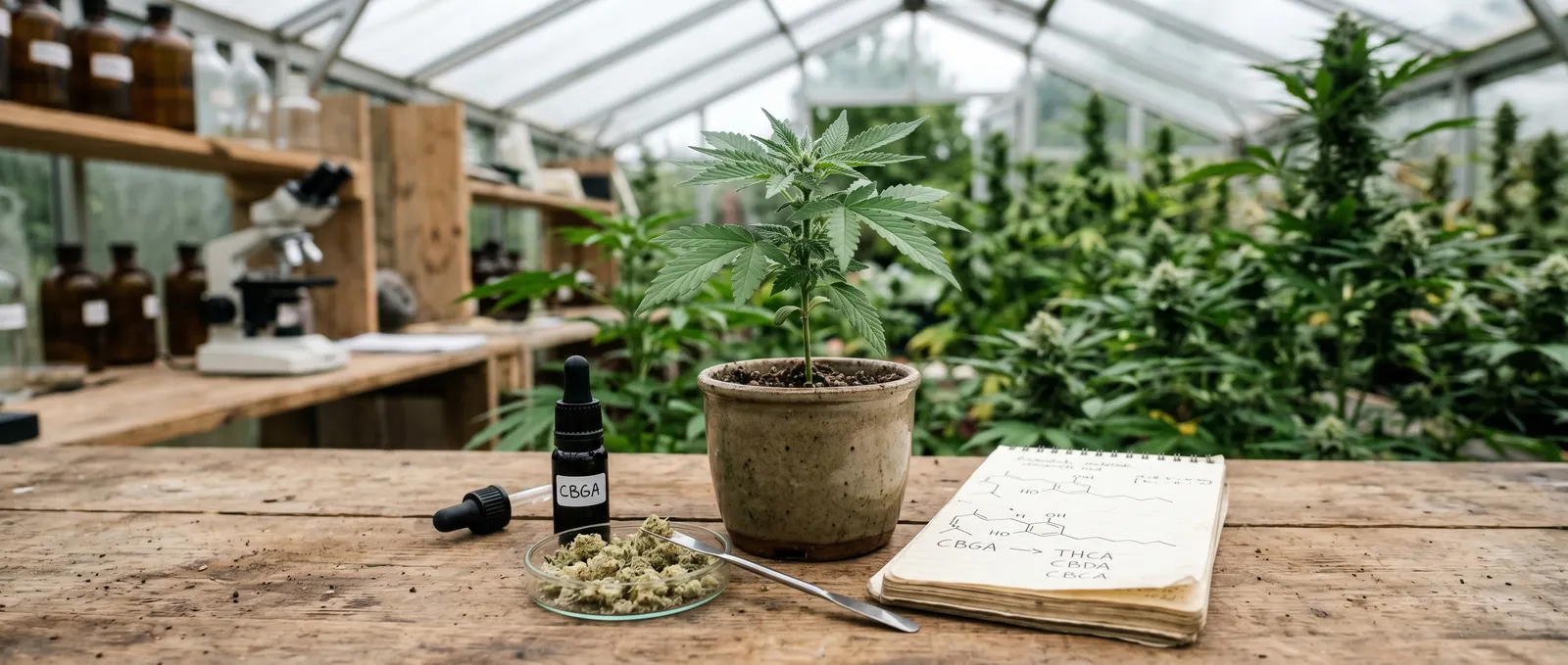
Definition
Cannabigerolic acid (CBGA) is the universal biochemical precursor from which cannabis produces THC, CBD, CBC, and other cannabinoids. First characterised alongside THC by Gaoni and Mechoulam (1964), CBG earned its 'mother cannabinoid' title because without it, the plant's entire cannabinoid toolkit would not exist.
This article is for informational purposes only and does not constitute medical advice. Cannabinoid research is ongoing; consult a qualified healthcare professional before using CBG products, especially if you are taking medication or have a pre-existing condition. Nothing here is intended to diagnose, treat, cure, or prevent any disease.
Every cannabinoid you've ever heard of — THC, CBD, CBC — started life as the same molecule. CBG mother cannabinoid biosynthesis is the process by which cannabigerolic acid (CBGA) serves as the universal precursor from which the cannabis plant builds its entire chemical toolkit. This guide is written for adults; the biochemistry and dosing ranges below apply to adult physiology. If you've ever wondered why a young cannabis plant tests high in CBG but a mature one barely contains a trace, the answer sits in a handful of enzymes and a ticking developmental clock. Understanding CBG mother cannabinoid biosynthesis also helps explain why CBG-rich products are increasingly available for those who want to buy CBG flower, order CBG oil, or get CBG isolate from specialist retailers like Azarius.
What is CBG, and why is it called the mother cannabinoid?
CBG is a non-psychoactive phytocannabinoid whose acidic form, CBGA, is the biochemical starting point for nearly every major cannabinoid in cannabis. First isolated by Gaoni and Mechoulam in 1964 — the same year they characterised THC — cannabigerol binds to both CB1 and CB2 receptors in the endocannabinoid system, but with far lower affinity at CB1 than THC, which is why there is no intoxicating effect.
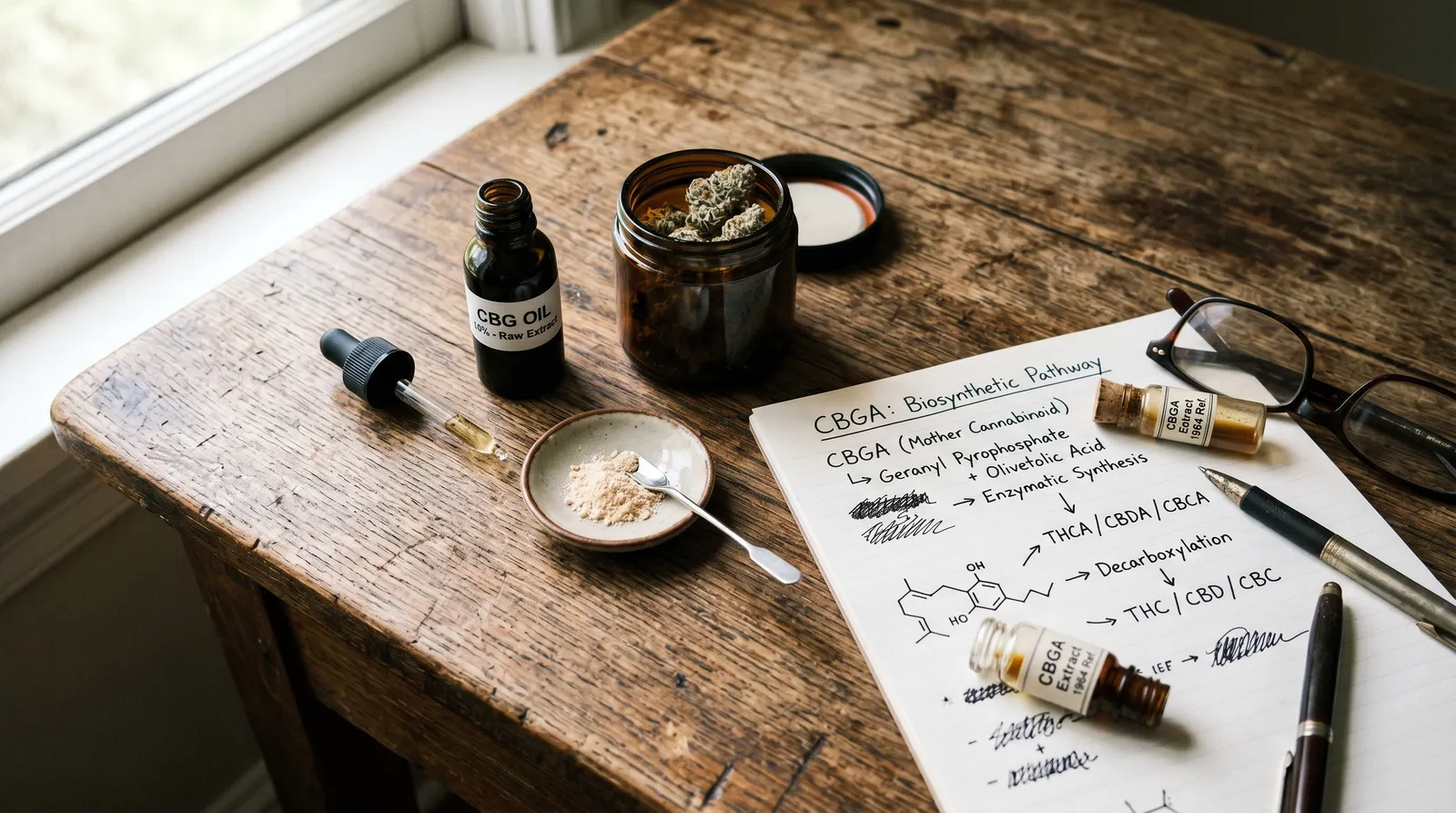
The "mother" label comes from a simple fact: without CBGA, the plant cannot produce THCA, CBDA, or CBCA. It's not a metaphor — it's a literal biosynthetic dependency. According to Degenhardt et al. (2017), CBGA sits at the branching point of three enzymatic pathways, making it the single most important intermediate in cannabinoid production. This central role in CBG mother cannabinoid biosynthesis is why researchers and breeders alike pay such close attention to this compound.
How does the plant make CBGA in the first place?
CBGA biosynthesis begins with two precursor molecules from completely different metabolic pathways that converge inside the glandular trichomes. The first is olivetolic acid (OA), produced via the polyketide pathway. The second is geranyl pyrophosphate (GPP), a ten-carbon terpene precursor from the methylerythritol phosphate (MEP) pathway. An enzyme called geranylpyrophosphate:olivetolate geranyltransferase — mercifully shortened to GOT — stitches these two together to form CBGA.
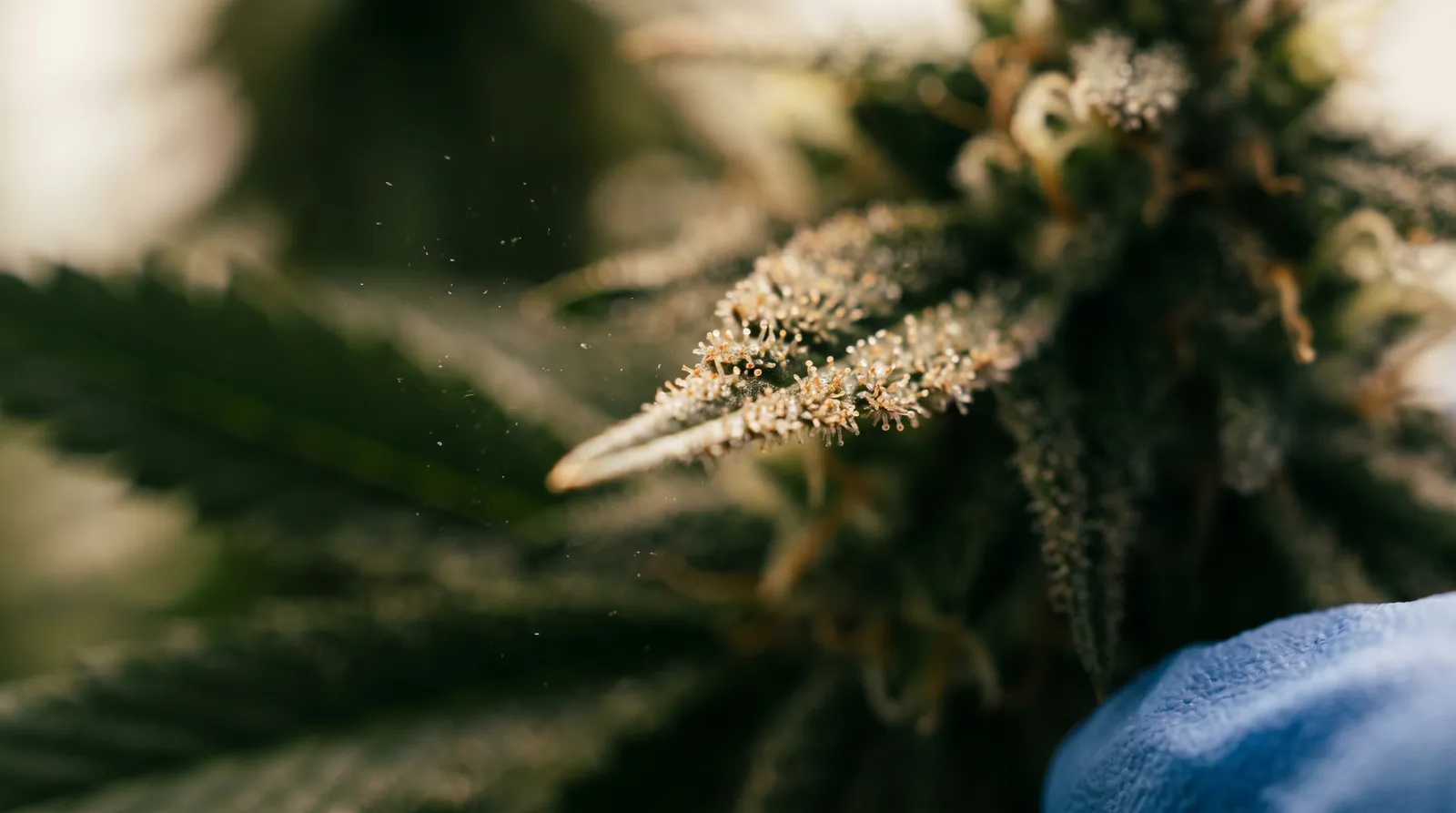
This happens primarily in the glandular trichomes of the cannabis plant, those tiny resinous stalks on the flowers and sugar leaves. The trichomes are essentially miniature chemical factories. Fellermeier and Zenk (1998) demonstrated that the GOT enzyme is localised in these structures, confirming that cannabinoid biosynthesis is a trichome-specific process rather than a whole-plant affair.
Here's the part that surprises people: the plant doesn't "want" to accumulate CBGA. It makes CBGA specifically to convert it into something else. In a healthy, mature cannabis plant, CBGA is a transient intermediate — produced and consumed almost as fast as it appears. This rapid conversion is the core mechanism of CBG mother cannabinoid biosynthesis.
What happens to CBGA after it's made?
CBGA is funnelled into three competing enzymatic pathways, each governed by a specialised synthase enzyme that produces a different acidic cannabinoid. Which pathway dominates depends entirely on the plant's genetics:
| Enzyme | Product | Decarboxylated form | Primary effect profile |
|---|---|---|---|
| THCA synthase | THCA | THC | Psychoactive |
| CBDA synthase | CBDA | CBD | Non-psychoactive |
| CBCA synthase | CBCA | CBC | Non-psychoactive |
A THC-dominant cultivar expresses more THCA synthase; a CBD-dominant cultivar expresses more CBDA synthase. The ratio is largely determined by a single genetic locus — the B locus — mapped by de Meijer et al. (2003). Homozygous BT/BT plants produce almost exclusively THCA. Homozygous BD/BD plants produce almost exclusively CBDA. Heterozygotes produce a mix.
This is why mature cannabis flowers typically contain less than 1% CBG — most of the CBGA has already been enzymatically converted. The small amount of CBG you find in finished flower is essentially the leftover that didn't get processed before harvest.
So how do breeders produce high-CBG strains?
Breeders create high-CBG strains either by harvesting early or by selecting for plants with non-functional synthase enzymes that allow CBGA to accumulate. If CBGA is always being converted into other cannabinoids, how do some modern cultivars test at 15% CBG or higher? Two strategies.
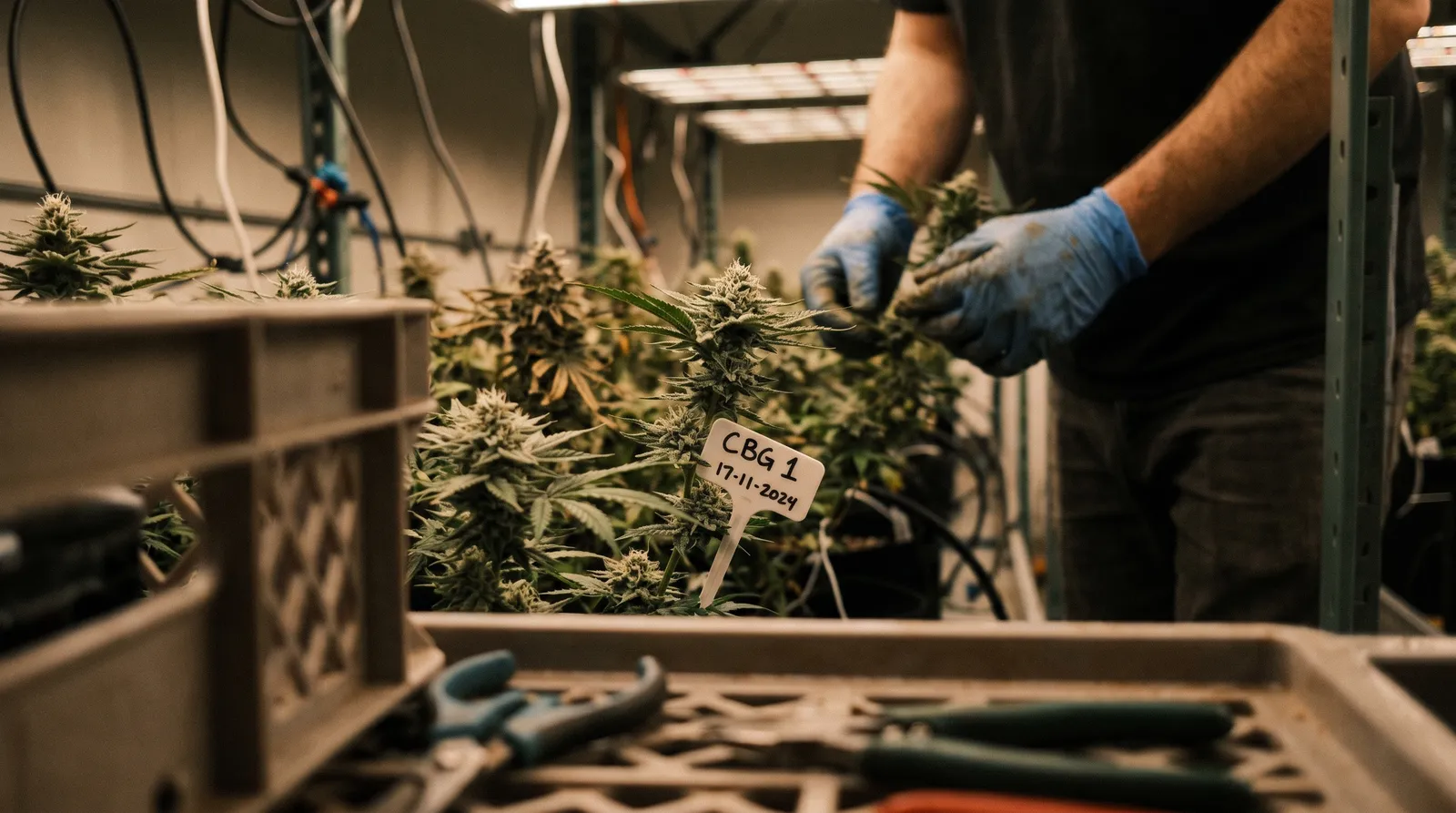
The first is harvesting early. Young cannabis plants — roughly three to four weeks into flowering — contain significantly more CBG than mature plants because the synthase enzymes haven't finished their work yet. Some producers deliberately harvest at this stage to capture CBG content, though yields are lower and the terpene profile is less developed.
The second, more elegant approach involves breeding for plants with non-functional or weakly expressed synthase enzymes. If the plant makes CBGA but lacks efficient THCA synthase and CBDA synthase, the CBGA accumulates with nowhere to go. According to a 2019 study by Grassa et al. published in New Phytologist, researchers identified specific mutations in the synthase genes that result in "broken" enzymes, allowing CBGA to pile up in the trichomes. These plants are sometimes called "Type IV" cannabis — a chemotype classification where CBG is the dominant cannabinoid.
The genetics are still being refined. Early CBG-dominant cultivars tended to produce lower total cannabinoid content compared to their THC- or CBD-dominant cousins, though that gap is narrowing as breeding programmes mature — exact yield parity data across chemotypes remains limited as of early 2026. Understanding CBG mother cannabinoid biosynthesis at the genetic level is what makes these breeding advances possible.
What about the difference between CBGA and CBG?
CBGA is the acidic, "raw" form found in the living plant, while CBG is the neutral, decarboxylated form created by heat or degradation. The conversion from CBGA to CBG happens through heat (smoking, vaping, baking) or slow degradation over time with exposure to light and air. This is the same acid-to-neutral conversion that turns THCA into THC.
In fresh, sealed cannabis flowers, nearly all the cannabigerol-type content exists as CBGA. Poorly stored or old flower will have more CBG relative to CBGA because decarboxylation has already occurred passively. If you're specifically after CBGA — some researchers are interested in the acidic form's distinct pharmacological profile — look for freshly harvested, properly sealed material.
A 2022 review by Formato et al. in Molecules noted that CBGA and CBG may have different receptor binding characteristics and bioavailability, though head-to-head clinical comparisons remain sparse. The acidic forms of cannabinoids are a relatively young area of research, and assuming CBGA and CBG are interchangeable would be premature.
Does CBG have its own pharmacological profile?
Preclinical research identifies CBG as a multi-target compound that interacts with cannabinoid receptors, ion channels, and serotonin receptors, though human clinical data remains too limited for firm conclusions. Cascio et al. (2010) found that CBG acted as an antagonist at CB1 receptors and a partial agonist at CB2 receptors in vitro, suggesting a pharmacological profile distinct from both THC and CBD. A 2021 survey study by Russo et al. published in Cannabis and Cannabinoid Research reported that among 127 CBG-predominant product users, the majority reported using it for anxiety, chronic pain, and sleep difficulties, with most rating it as more effective than conventional treatments — though self-reported survey data carries obvious bias limitations.
CBG also appears to interact with non-cannabinoid targets. It shows activity at TRPV1 and TRPA1 ion channels (Muller et al., 2019), alpha-2 adrenergic receptors, and 5-HT1A serotonin receptors. This multi-target profile is why researchers keep circling back to it, even though no randomised controlled trial has yet established a clear therapeutic indication.
Because CBG is metabolised in the liver, it can interact with medications processed by the same cytochrome P450 enzymes — particularly CYP3A4 and CYP2C9. If you're on prescription medication, this matters. The dedicated cannabinoid interactions article on the Azarius wiki covers the specifics in detail.
CBG vs CBD: a quick comparison
People who order CBG products often ask how CBG compares to CBD. Both are non-intoxicating, but their receptor profiles differ. CBD has very low direct affinity for CB1 and CB2 receptors, acting more as a modulator. CBG, by contrast, binds directly — albeit weakly — to both. In terms of availability, CBD products remain far more widespread; CBG oils and CBG capsules are catching up but still represent a smaller share of the market. A 2020 EMCDDA technical report on novel cannabinoid products noted the growing commercial interest in minor cannabinoids like CBG across European markets, though regulatory frameworks vary by country.
How CBG mother cannabinoid biosynthesis shapes what you can buy
The biosynthetic pathway directly determines what ends up on the shelf, from the cannabinoid ratios in flower to the price of CBG isolate. Understanding CBGA's role as the universal precursor isn't just academic trivia — it has practical consequences for anyone looking to buy cannabinoid products. It explains why you can't breed a plant that's simultaneously abundant in THC, CBD, and CBG: they all draw from the same CBGA pool. It explains why harvest timing changes the cannabinoid profile so dramatically. And it explains why CBG-rich products cost more: you're either harvesting early (lower yields) or growing specialised genetics (smaller breeding stock, fewer seeds available).
For anyone interested in cannabinoid science, CBGA is where the story begins — literally. Every tincture, every edible traces its active chemistry back to this single molecule sitting at the top of the biosynthetic tree. If you want to get a deeper understanding of individual cannabinoids, the Azarius cannabinoid overview wiki page covers each one in turn. Those looking to order CBG flower or buy CBG oil can find current options on the Azarius CBG product page.
What we still don't know about CBG
Honest assessment: the gaps in CBG research are substantial, and acknowledging them matters more than overstating what's been established. While CBG mother cannabinoid biosynthesis at the plant chemistry level is well characterised, human pharmacology lags far behind. We lack large-scale randomised controlled trials for any specific indication. Bioavailability data for oral CBG products is sparse — we don't have reliable figures for how much CBG actually reaches the bloodstream after swallowing an oil. Long-term safety data in humans is essentially non-existent. And the interaction between CBG and other cannabinoids (the so-called entourage effect) remains more hypothesis than proven mechanism, despite its popularity in marketing copy.
The Beckley Foundation has highlighted the need for more rigorous clinical cannabinoid research across the board, and CBG is no exception. Until controlled trials catch up with preclinical promise, caution is warranted — especially for anyone considering CBG as a substitute for established treatments.
Here is a summary of the key steps in CBG mother cannabinoid biosynthesis for quick reference:
- Olivetolic acid (OA) is produced via the polyketide pathway
- Geranyl pyrophosphate (GPP) is produced via the MEP pathway
- The GOT enzyme combines OA and GPP to form CBGA in the trichomes
- THCA synthase converts CBGA into THCA (precursor to THC)
- CBDA synthase converts CBGA into CBDA (precursor to CBD)
- CBCA synthase converts CBGA into CBCA (precursor to CBC)
- Remaining unconverted CBGA decarboxylates into CBG through heat or time
- Type IV cannabis cultivars accumulate CBGA due to non-functional synthase enzymes
Key terms related to CBG mother cannabinoid biosynthesis at a glance:
- CBGA — cannabigerolic acid, the universal acidic precursor
- GOT — geranylpyrophosphate:olivetolate geranyltransferase, the enzyme that forms CBGA
- Type IV cannabis — chemotype classification for CBG-dominant cultivars
- B locus — the genetic locus that determines THCA-to-CBDA synthase ratio
- Decarboxylation — heat- or time-driven conversion of acidic cannabinoids to their neutral forms
Last updated: April 2026
Frequently Asked Questions
8 questionsWhy does mature cannabis flower contain so little CBG?
What is the difference between CBGA and CBG?
Can a cannabis plant be high in both THC and CBG at the same time?
How are high-CBG cannabis strains bred?
Does CBG interact with medications?
How does CBG compare to CBD?
What enzymes convert CBGA into other cannabinoids like THC and CBD?
Where in the cannabis plant does CBG biosynthesis take place?
About this article


Joshua Askew serves as Editorial Director for Azarius wiki content. He is Managing Director at Yuqo, a content agency specialising in cannabis, psychedelics and ethnobotanical editorial work across multiple languages. Th
This wiki article was drafted with AI assistance and reviewed by Joshua Askew, Managing Director at Yuqo. Editorial oversight by Adam Parsons.
Medical disclaimer. This content is for informational purposes only and does not constitute medical advice. Consult a qualified healthcare provider before use of any substance.
Last reviewed April 24, 2026
References (2)
- [1]ElSohly, M. A., & Slade, D. (2005). Chemical constituents of marijuana: the complex mixture of natural cannabinoids. Life Sciences, 78(5), 539-548. DOI: 10.1016/j.lfs.2005.09.011
- [2]Russo, E. B. (2011). Taming THC: potential cannabis synergy and phytocannabinoid-terpenoid entourage effects. British Journal of Pharmacology, 163(7), 1344-1364. DOI: 10.1111/j.1476-5381.2011.01238.x
Related Articles
Pinene Alpha and Beta: Aroma, Chemistry & Vaporisation Guide
Pinene is a bicyclic monoterpene occurring as two isomers — α-pinene and β-pinene — and ranks as the most abundant terpene in the plant kingdom.

CBD and Recovery: What the Research Actually Shows
CBD and recovery is a research topic spanning exercise-induced muscle damage, sleep quality, and perceived soreness. As McCartney et al.
CBD Pet Dosing Vet Consultation: Prepare for Your Visit
Veterinary CBD dosing is not a scaled-down version of human dosing — dogs and cats metabolise cannabidiol through different enzymatic pathways and at…

CBD for Cats Veterinary Considerations: Feline Research, Safety and Guidance
Cats metabolise cannabinoids differently from dogs and humans, lacking key glucuronidation enzymes that affect CBD clearance. Deabold et al.
EU Novel Food Regulation CBD: Country Status, EFSA Safety & Guide
EU novel food regulation CBD is a policy framework under EU rule 2015/2283 that classifies cannabidiol extracts as a novel food, requiring safety assessment…
CBD Topical Creams Medical Grade: CE-Marked Class I Explained
CBD topical creams deliver cannabidiol directly to the skin rather than the bloodstream.
Humulene Effects and Aroma Profile | Terpene Guide
Humulene (α-humulene) is a monocyclic sesquiterpene named after Humulus lupulus — hops.
Terpene Entourage Effect: Current Evidence Reviewed
The terpene entourage effect proposes that cannabis terpenes modulate cannabinoid activity, producing different outcomes than isolated compounds alone.
CBD and Skin Conditions: What Research Shows
Cannabidiol (CBD) interacts with the endocannabinoid system expressed in human skin — including CB1 and CB2 receptors on keratinocytes, sebocytes, and…