
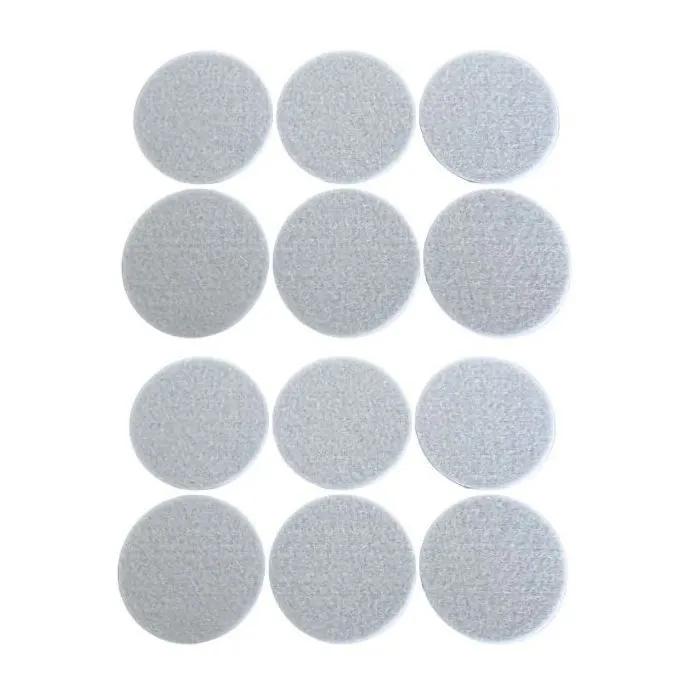
Adherable Monotub Filters 12-Pack (Microppose)
Grow supplies
by Microppose
We'll only email you about this product — no marketing.
Microppose Adherable Monotub Filters: Fresh Air In, Contaminants Out
The Microppose Adherable Monotub Filters are a 12-pack of self-adhesive air exchange filters designed for the Microppose Monotub grow chamber. Each filter measures just over 2 inches (roughly 5 cm) in diameter, covers the tub's pre-drilled holes precisely, and lets fresh air flow in while locking humidity inside and keeping bacterial and fungal contaminants outside. Made from 100% recycled filter material with a durable 3M adhesive backing, they stick on in seconds and stay put flush after flush.
| Spec | Value |
|---|---|
| Brand | Microppose |
| Quantity | 12 filters per pack |
| Filter diameter | Just over 2" (~5 cm) |
| Material | 100% recycled filter media |
| Adhesive | 3M self-adhesive backing |
| Designed for | Microppose Monotub |
| Primary use | Fruiting-stage air exchange |
| SKU | SH0195 |
Running a Microppose Monotub? These filters are only half the equation. Pair them with the Microppose Monotub itself for a matched setup, or grab the Adherable Injection Ports 50-Pack if you're inoculating your own substrate bags and want clean, self-healing entry points.
Why Monotub Filters Matter More Than You Think
Mushroom mycelium needs gas exchange to fruit properly — carbon dioxide builds up inside a sealed tub, and without fresh air replacing it, your pins stall or never form at all. The obvious fix is to drill holes in your monotub. The less obvious problem: every open hole is an invitation for contaminants. Bread mould, Trichoderma, Bacillus, cobweb mould (Hypomyces rosellus) — any of these can colonise your substrate faster than your mycelium can, and once contamination takes hold, the batch is usually done for.
We've seen growers lose entire flushes to a single unfiltered hole. It's genuinely painful to watch three weeks of patience get wiped out by green Trichoderma creeping across the surface. These Microppose filters sit over each hole and act as a physical barrier: air molecules pass through, spores and bacteria don't. The recycled filter material has a slightly rough, papery texture — not as stiff as polyfill, not as flimsy as micropore tape. It feels like it'll actually last, and the 3M adhesive confirms that. Once pressed on, it doesn't peel at the corners the way tape tends to after a few days of humidity.
The honest limitation: no filter replaces proper sterile technique. If you're reaching into the tub with unwashed hands or opening the lid in a dusty room, contamination will find a way in regardless. These filters handle passive air exchange through the side holes — they don't sterilise your workflow. Think of them as one layer in a clean setup, not a magic shield.
How to Install Microppose Monotub Filters
- Clean the outside surface of your Microppose Monotub around each pre-drilled hole with isopropyl alcohol (70% works well). Let it dry completely — the 3M adhesive bonds best to a clean, dry surface.
- Peel the adhesive backing off one filter. Handle it by the edges to avoid getting oils from your fingers on the filter surface.
- Centre the filter over one of the tub's holes and press firmly for 10–15 seconds. Run your thumb around the entire perimeter to seal the edges down.
- Repeat for each hole on the tub. A standard Microppose Monotub setup typically uses 4–6 filters on the sides, but the 12-pack gives you enough for a full tub plus spares for replacements or a second tub.
- Once all filters are in place, load your colonised substrate, mist the interior walls lightly, and close the lid. The filters will handle passive fresh air exchange (FAE) from here — no need to fan manually unless your fruiting conditions call for it.
- Replace filters between grows or whenever they look discoloured, damp-through, or start peeling at the edges. Fresh filters for each new batch is cheap insurance.
What These Filters Protect Against
The Microppose Adherable Monotub Filters are specifically designed to block common mushroom cultivation contaminants. Here's what you're defending against:
| Contaminant | What it looks like | Why it's a problem |
|---|---|---|
| Bread mould (Rhizopus/Mucor) | Grey-black fuzzy patches | Spreads rapidly, smothers mycelium |
| Trichoderma | Bright green spots or patches | Aggressively outcompetes mushroom mycelium |
| Bacillus (bacterial) | Slimy wet spots, sour smell | Breaks down substrate, produces off-odours |
| Cobweb mould (Hypomyces rosellus) | Wispy grey overlay | Covers pins and fruits, ruins the harvest |
Filtered air exchange won't eliminate risk entirely — substrate preparation, spawn quality, and your own hygiene practices all play a role — but it removes one of the most common contamination vectors: airborne spores drifting through open holes.
Frequently Asked Questions
Do these filters fit tubs other than the Microppose Monotub?
They're sized at just over 2 inches to match the Microppose Monotub's holes specifically. If you've drilled your own holes in a different tub and they're roughly 2" or smaller, the adhesive ring will cover them. Anything larger and you'll get gaps around the edges.
How often should I replace the monotub filters?
Replace them between each grow cycle. After 3–4 weeks of exposure to high humidity, the filter material can become saturated or start to degrade. At 12 per pack, you've got enough for at least two full tub setups or one tub with spares for a mid-grow swap.
Can I reuse the filters after cleaning them?
No. The 3M adhesive is single-use — once peeled off, it won't re-stick reliably. And washing the filter material risks compromising its pore structure, which defeats the purpose. Fresh filters are the way to go.
Are these filters better than micropore tape or polyfill?
They're more consistent than both. Micropore tape loses adhesion in humid environments within days, and polyfill is fiddly to get the density right — too loose and contaminants slip through, too tight and you choke airflow. These filters are purpose-built for monotub growing and the 3M adhesive actually holds in high humidity. That said, micropore tape works in a pinch if you're on a tight budget.
Do the filters block all contamination?
They block airborne contaminants from entering through the tub's holes, which is one of the main contamination routes. They won't protect against contamination already present in your substrate, spawn, or introduced by handling. Always sanitise your hands, tools, and workspace before touching anything inside the tub.
Should I use the filters during colonisation or only during fruiting?
Use them during both stages. During colonisation, they allow minimal gas exchange while keeping contaminants out. During fruiting, when you need more FAE, the same filters let a steady flow of fresh air in. Some growers tape over a few filtered holes during colonisation and remove the tape for fruiting — that works well.
What's the filter material made from?
100% recycled filter media. Microppose doesn't disclose the exact polymer composition, but the material is non-woven, breathable, and rated to block bacterial and fungal spores while allowing air exchange. It has a slightly textured, papery feel — sturdy enough to hold up in a humid monotub environment.
Last updated: April 2026
Related products
You might also like
Medical disclaimer. This content is for informational purposes only and does not constitute medical advice. Consult a qualified healthcare provider before use of any substance.