
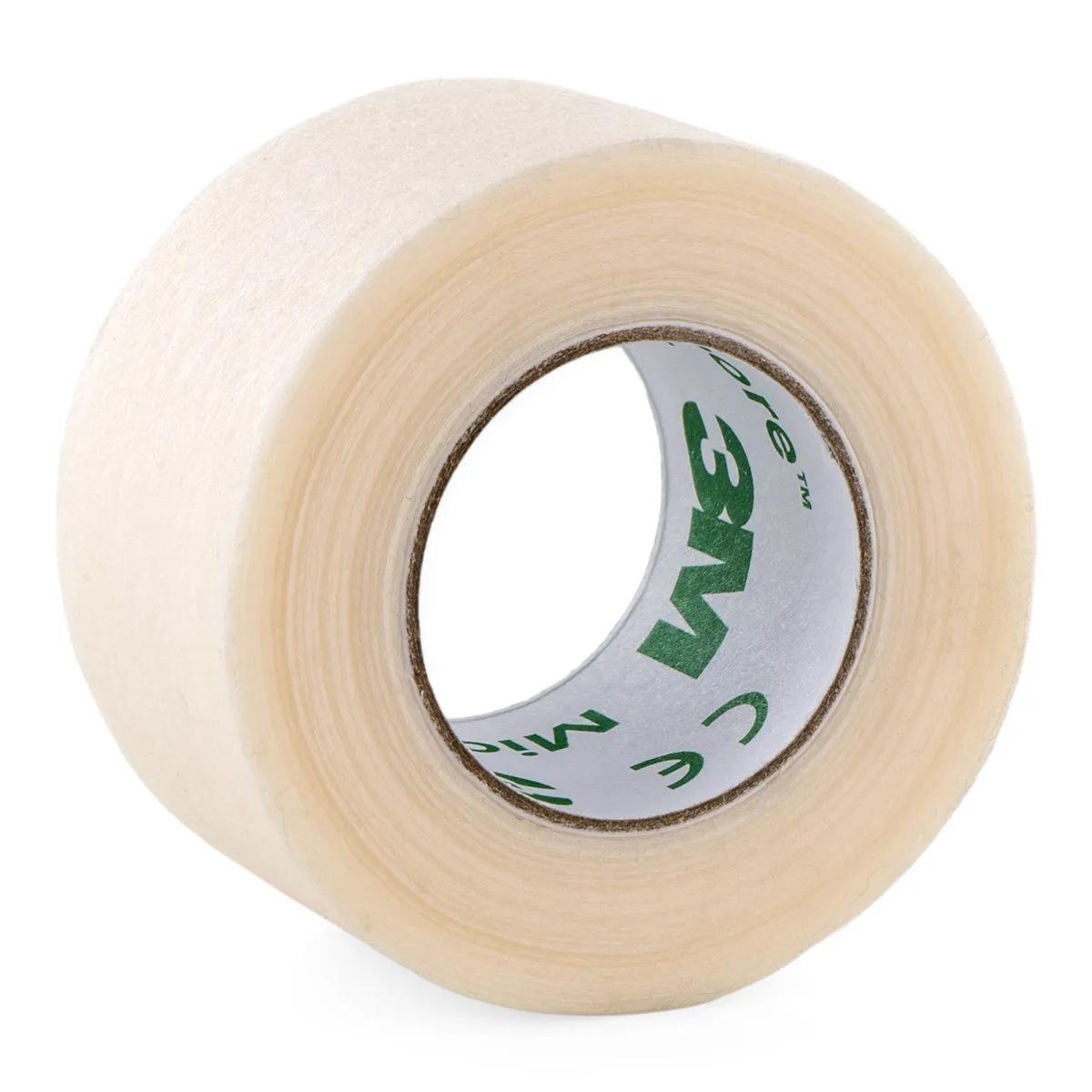
Micropore Tape 3M
Grow supplies
by 3M
Micropore Tape 3M: The Simple Fix for Gas Exchange
3M Micropore Tape is a breathable, perforated surgical tape that mushroom growers repurpose as a gas exchange filter for spawn jars and grain containers. At 2.5 cm wide and 9.1 metres long, a single roll covers dozens of jar lids before you need a replacement. Stick a strip over your injection port or air hole, and you get the airflow your mycelium needs without letting contaminants waltz in.
Why Micropore Tape Belongs in Your Grow Kit
Mushroom mycelium needs two things from its environment: humidity and fresh air exchange (FAE). Seal a jar completely and your spawn suffocates in its own CO2. Leave it open and every mould spore in your kitchen gets an invitation. Micropore tape threads the needle — its tiny perforations allow oxygen and CO2 to pass through while acting as a physical barrier against airborne contaminants.
We've seen growers try all sorts of improvised filters: cotton wool stuffed into holes, coffee filters held on with rubber bands, even cling film with pin pricks. Most of these either restrict airflow too much or don't filter finely enough. Micropore tape sits flat, sticks reliably, and tears cleanly by hand — no scissors needed. It's the kind of product that costs almost nothing but saves you from losing an entire batch to contamination.
One honest limitation: micropore tape is not a sterile barrier in the way a HEPA filter is. According to a study published in PMC, "the lack of antimicrobial activity confirms that Micropore tape should not be relied upon to suppress microbial proliferation; its role remains mechanical" (PMC12969583). Translation: it physically blocks particles but doesn't kill anything. That means your sterile technique still matters — gloves, a still air box, and wiping surfaces with isopropyl alcohol. The tape is your last line of defence, not your only one.
Micropore Tape Specifications
| Spec | Value |
|---|---|
| Brand | 3M |
| Width | 2.5 cm (approx. 1 inch) |
| Length | 9.1 metres (approx. 10 yards) |
| Material | Non-woven microporous paper |
| Adhesive type | Hypoallergenic, pressure-sensitive |
| Colour | White |
| Tearable by hand | Yes |
| Originally designed for | Surgical dressings and medical use |
| Mycology application | Gas exchange filter for spawn jars, grain bags, and agar plates |
| SKU | SH0133 |
Complete your cultivation setup with Adherable Lid Filters — purpose-built filter discs that sit directly on mason jar lids for a more permanent gas exchange solution. Pair with a Magic Mushroom Grow Kit for a ready-to-fruit setup, or grab a pack of Sterile Substrate Jars if you prefer to inoculate from scratch.
How Micropore Tape Keeps Humidity and Airflow in Balance
The texture of this tape tells you a lot. Run your thumb across a strip and you can feel the slight roughness of the microporous surface — it's paper-like, not plasticky. That open weave structure is what lets water vapour and gases pass through while physically blocking particles larger than the pore size. Your spawn jar stays humid inside (mycelium loves 90%+ relative humidity at the colonisation stage) but CO2 doesn't build up to the point where growth stalls.
A single layer is usually enough for standard jar lids with a 6-10 mm hole drilled through them. Some growers double up for extra protection, especially in rooms without a HEPA filter or still air box. We'd say one layer is fine if your sterile technique is solid. Two layers if you're working in a kitchen with open windows or pets. More than two and you start restricting airflow more than necessary.
The adhesive holds well on metal lids, glass, and polypropylene containers. It does lose grip over time in high-humidity environments — if you notice edges peeling after 2-3 weeks, just peel off the old strip and apply a fresh one. At 9.1 metres per roll, you've got enough tape for roughly 30-40 jar lids (depending on hole size and how generous you are with overlap), so a single roll easily covers multiple growing projects.
How to Use Micropore Tape for Mushroom Cultivation
- Drill or punch a hole (6-10 mm diameter) in the centre of your jar lid. Smooth any rough edges with a file or sandpaper so the tape adheres cleanly.
- Wipe the lid surface around the hole with isopropyl alcohol (70%) and let it dry completely. Any grease or moisture weakens the adhesive.
- Tear off a strip of 3M Micropore Tape roughly 4-5 cm long — enough to cover the hole with at least 1 cm overlap on all sides.
- Press the tape firmly over the hole, smoothing from centre to edges to eliminate air pockets. Make sure the seal is complete around the entire perimeter.
- If you're using the jar for inoculation, apply a second small piece of tape over your injection port (self-healing injection ports work best, but tape over a second hole is a budget alternative).
- After inoculating through the tape or port, check that the tape is still sealed. Replace any strip that's been punctured by a needle.
- Store colonising jars in a dark, warm spot (22-25 degrees C). Check the tape every 10-14 days and replace any strips that have started to peel or become damp.
Related products
You might also like
Medical disclaimer. This content is for informational purposes only and does not constitute medical advice. Consult a qualified healthcare provider before use of any substance.