
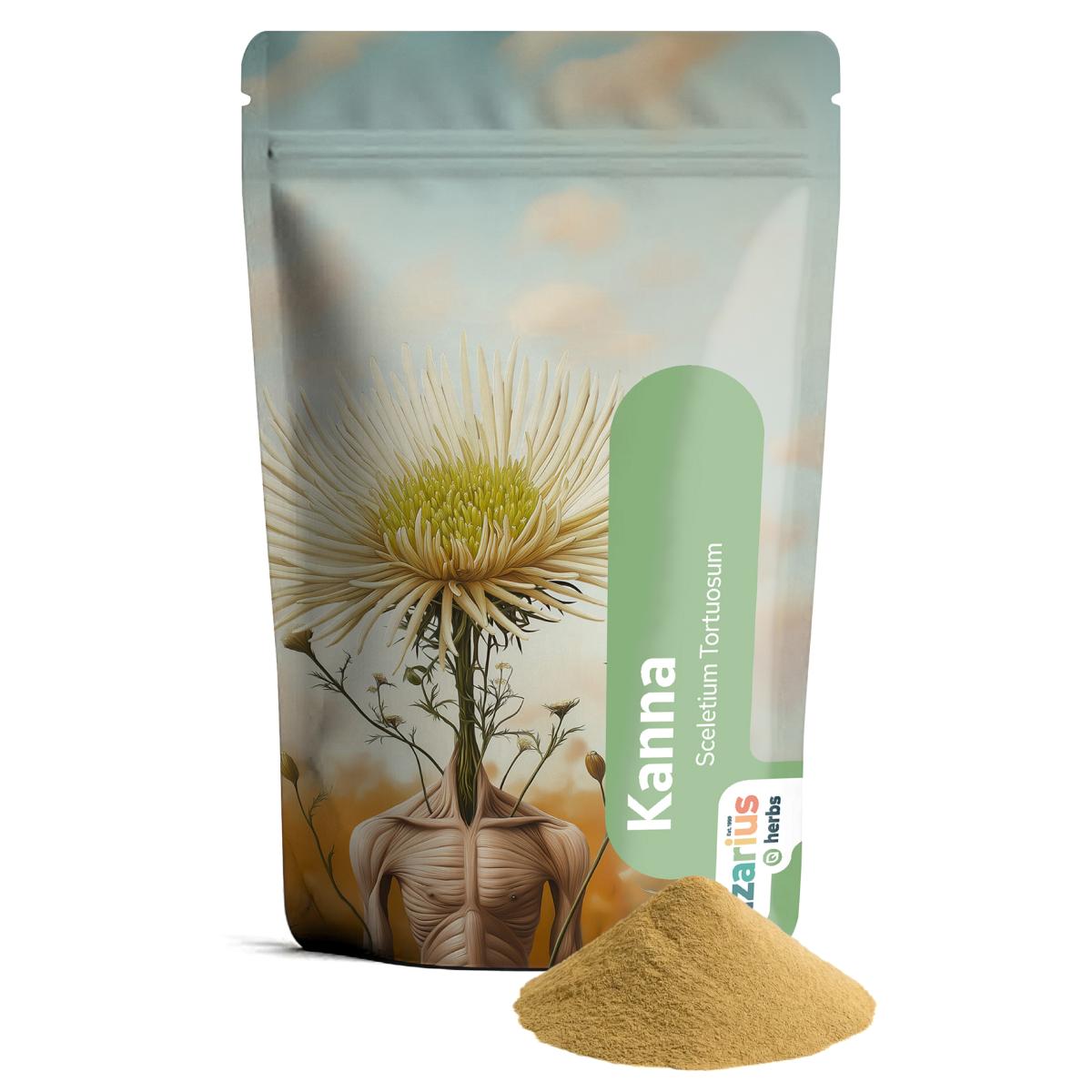
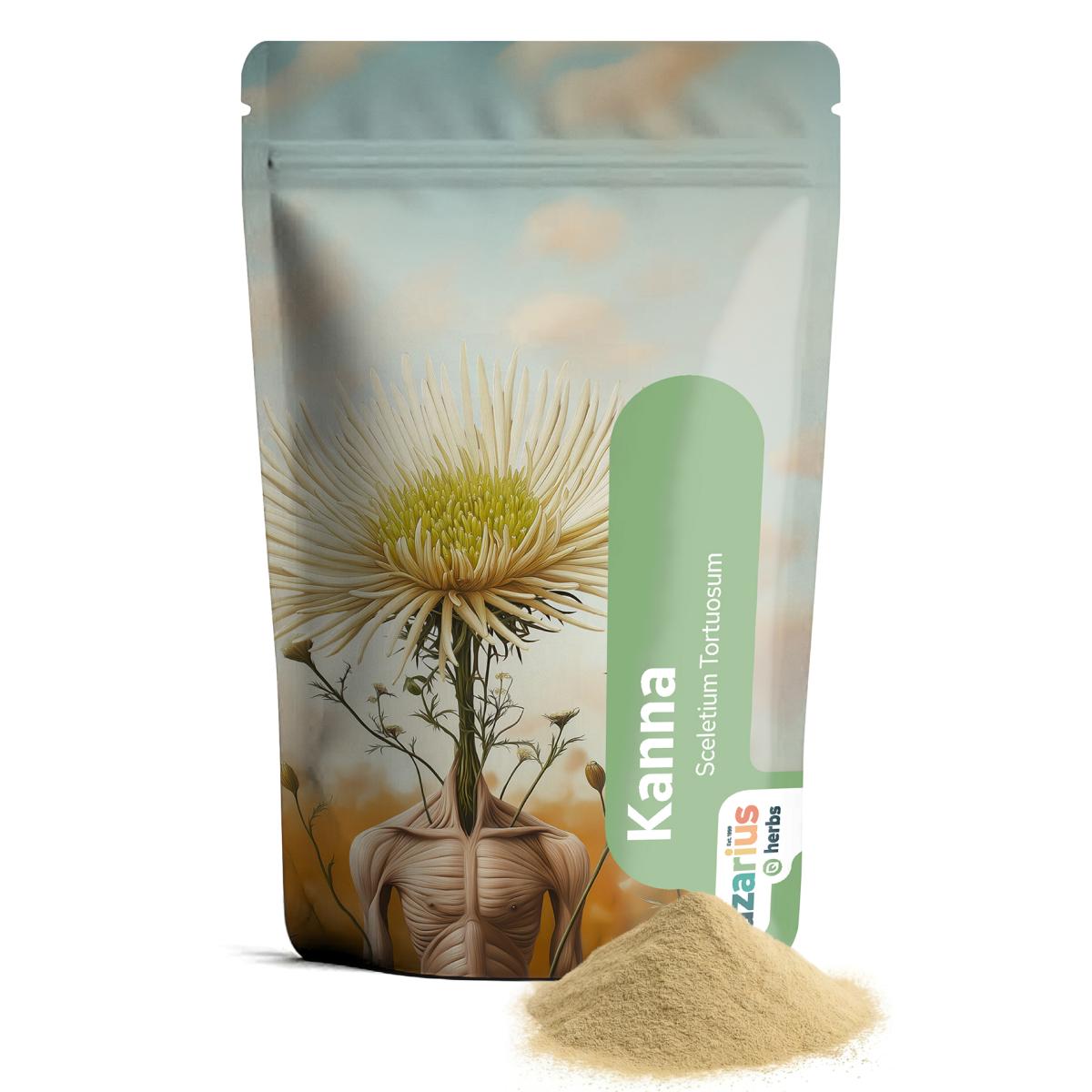
Kanna Fine Powder
1g Kanna FS20
by Azarius
Buy more, pay less
Kanna Fine Powder (FS20) — Full-Spectrum Sceletium Tortuosum Extract for Sublingual Use
Kanna fine powder is a finely milled preparation of Sceletium tortuosum that delivers rapid absorption through the mucous membranes under your tongue. FS20 is the middle grade of our full-spectrum kanna extract series: concentrated rather than raw milled leaf, but extracted to keep the whole alkaloid profile intact instead of isolating a single compound, and milled fine enough to dissolve without chewing on gritty fibres.
What Makes Kanna Fine Powder Different from Crushed Leaf or Single-Compound Concentrates
The grind matters more than most people think. Coarsely chopped kanna leaf works fine for brewing tea, but a lot of the alkaloid content stays locked in the plant fibre and ends up in the bin with your teabag. Single-compound concentrates swing the other way: potent, but you lose everything in the plant that is not the target alkaloid. A full-spectrum extract like FS20 aims at the middle. It is concentrated, so a small measured amount does the work of a much larger pile of leaf, but the extraction carries the whole mesembrine-type alkaloid group across rather than isolating one fraction.
We've stocked kanna in every format over the past 25 years — crushed leaf, shredded, UC (ultra-cut), extracts, and this FS20 fine powder. The powder consistently gets the best feedback because it's the most versatile. You can hold it under your tongue, stir it into warm water, add it to juice, or cap it yourself if you prefer. The texture is smooth, almost flour-like, with a slightly bitter, herbaceous taste that's far less harsh than chewing raw leaf.
Kanna Alkaloid Profile and Traditional Context
Sceletium tortuosum contains a group of mesembrine-type alkaloids — primarily mesembrine, mesembrenone, mesembrenol, and tortuosamine. These are the active compounds responsible for the plant's traditional reputation. The San and Khoikhoi peoples of southern Africa have used kanna for centuries, traditionally fermenting the plant material before chewing or smoking it. The fermentation step was believed to reduce oxalic acid content and mellow the flavour.
Modern research has focused on mesembrine in particular. According to Harvey et al. (2011), mesembrine acts as a serotonin reuptake inhibitor and also shows affinity for the PDE4 enzyme — a dual mechanism that distinguishes it from most single-target compounds in the same category. That said, the research is still in relatively early stages, and most clinical work has been done on one standardised extract in particular (Zembrin). We're honest about that gap: traditional use goes back generations, and there is research on standardised material, but large-scale clinical trials on full-spectrum kanna extracts like FS20 specifically are limited.
How Kanna Fine Powder Tastes and Feels in Practice
Straight talk: kanna doesn't taste great. The fine powder has a bitter, slightly tannic flavour with an earthy undertone — think green tea concentrate crossed with raw cacao. Under the tongue, you'll notice a mild numbing sensation after 30–60 seconds, which is actually a sign the alkaloids are absorbing through the mucosa. It's not unpleasant, just unusual the first time.
The colour is a warm sandy tan, and the texture is genuinely fine — no visible stems or chunky bits. It clumps slightly if exposed to humidity, so keep the pouch sealed between uses. If you're mixing into a drink, warm (not boiling) water dissolves it faster than cold. A small whisk or even just vigorous stirring for 20 seconds does the job. In juice, the bitterness is mostly masked. In plain water, you'll taste it.
Kanna Specifications
| Specification | Detail |
|---|---|
| Botanical name | Sceletium tortuosum |
| Brand | Azarius Herbs |
| Format | Full-spectrum extract powder (FS20) |
| Plant part | Aerial parts (leaf and stem) |
| Origin | South Africa |
| Primary alkaloids | Mesembrine, mesembrenone, mesembrenol, tortuosamine |
| Pouch size | 1g |
| Recommended storage | Cool, dry, sealed — away from direct sunlight |
| Shelf life | 12–18 months when stored correctly |
How to Use Kanna Fine Powder
Three methods, ranked by how quickly you'll notice the effects. The sublingual route is fastest because it bypasses digestion entirely — alkaloids absorb straight into the bloodstream through the tissue under your tongue.
- Sublingual (fastest onset, roughly 15–30 minutes): Measure your chosen amount of kanna fine powder. Place it under your tongue and hold it there for 60–90 seconds. You'll feel a slight numbness — that's normal. Swallow the remainder with a sip of water. The bitter taste fades within a minute or two.
- Mixed into a beverage (moderate onset, roughly 30–60 minutes): Stir your measured amount into warm water, juice, or a smoothie. Warm liquids dissolve the powder faster. Avoid boiling water — excessive heat may degrade some alkaloid content. Drink on a relatively empty stomach for faster absorption.
- Capsules — DIY (slowest onset, roughly 45–90 minutes): If you can't stand the taste, fill empty capsules yourself using a capsule machine. Weigh each capsule to your own measured amount rather than filling it to the brim: a size 00 capsule holds roughly 400–500mg, which is far more FS20 than anyone should take in one go. This method is the most convenient but the slowest to take effect since the capsule needs to dissolve first.
Honest Limitations — What This Product Won't Do
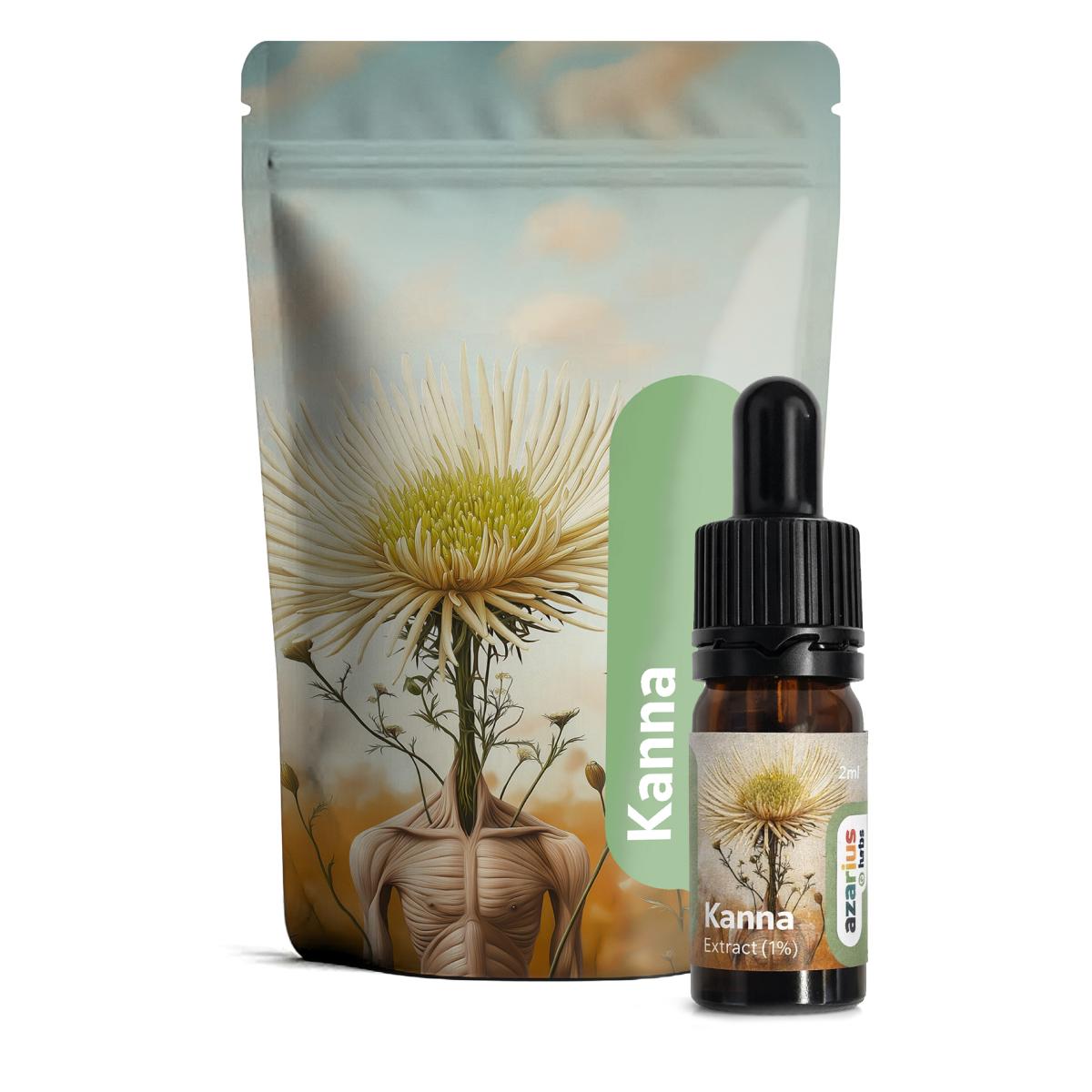
This is a full-spectrum extract, not a compound standardised to a stated alkaloid percentage. The extraction concentrates the plant, but it does not pin the result to a fixed number, so the strength can vary a little between batches. If you need precise, repeatable milligram dosing every single time, something standardised to a declared mesembrine percentage is a better fit. Our Kanna Liquid Extract is standardised to 1% mesembrine and is worth comparing before you decide.
The other thing: fine powder absorbs moisture. Once you open the pouch, use it within a few months and keep it sealed between sessions. If it starts clumping into hard lumps or smells musty, it's past its best. A small silica gel packet in your storage jar goes a long way.
Kanna Safety and Interactions
Kanna should not be combined with SSRIs, SNRIs, or MAOIs. Because mesembrine acts on the serotonin reuptake system, stacking it with pharmaceutical antidepressants that target the same pathway carries a risk of serotonin syndrome — a potentially serious condition. If you're on any medication that affects serotonin levels, speak to your doctor before using kanna in any form.
At higher amounts, some users report mild nausea, headache, or a jittery feeling. Research compiled across multiple sources suggests keeping initial amounts conservative — clinical studies on Zembrin (a standardised Sceletium tortuosum extract) have typically used 25mg of extract daily, though different extracts are not directly comparable in potency and FS20 is not standardised to a declared percentage. Treat this as a concentrate, weigh it on a milligram scale, start well below what you think you need and adjust gradually.
Avoid using kanna if you are pregnant or breastfeeding — there's simply no safety data for those populations.
Already familiar with kanna and want something stronger? Our Kanna Extract 10x concentrates the alkaloids into a more potent format — good if you want smaller amounts with bigger results. For a different mood-supporting herb altogether, Damiana pairs well with kanna in tea blends and offers its own distinct character. Both are worth a look if you're building a personal herbal toolkit.
Why Kanna Fine Powder Belongs in Your Collection
We've been selling kanna since the early 2000s, and the fine powder format outsells every other version by a wide margin. The reason is simple: it works with however you want to use it. Sublingual, tea, smoothie, capsules — one product, four methods. You're not locked into a single route the way you are with pre-made capsules or tinctures.
Compared to a single-compound concentrate, FS20 carries the complete alkaloid group rather than one isolated fraction. Some people prefer that broader spectrum; others want a number on the label they can dose against. Neither is objectively better, it depends on what you're after. If you want consistent, declared potency, go for a standardised extract. If you want the full alkaloid picture in a concentrated form and can live with slight batch variation, FS20 is your format.
Frequently Asked Questions
What does kanna fine powder taste like?
Bitter and earthy, with a tannic edge similar to over-steeped green tea. Under the tongue you'll notice a mild numbing sensation. Mixing it into juice or a smoothie masks most of the bitterness. It's not the worst-tasting herb we sell, but it's not exactly a treat either.
How much kanna fine powder should I use?
FS20 is a concentrate, so it works in milligrams rather than the grams you would use with shredded leaf. It is not standardised to a declared percentage, which means we cannot give you a number that holds for every batch, and any figure quoted for a different extract will not transfer. Use a scale that reads to the milligram, start well below where you think you need to be, and give it a full 60 to 90 minutes before deciding whether to adjust. For reference on the research side, clinical studies on the standardised extract Zembrin have used 25mg daily, but that is a different preparation and not a dose for this one.
Can I mix kanna with other herbs?
Kanna pairs well with calming herbs like damiana or passionflower in tea blends. However, never combine kanna with SSRIs, SNRIs, MAOIs, or other serotonergic substances due to the risk of serotonin syndrome. Stick to one serotonin-active substance at a time.
Is kanna fine powder an extract or milled leaf?
It is an extract. FS20 sits in our full-spectrum extract series, milled to a flour-like consistency, so it is considerably more concentrated than milled kanna leaf and works in milligrams rather than grams. What separates it from a single-compound concentrate is that the extraction carries the whole mesembrine-type alkaloid group across rather than isolating one fraction. If you want raw milled plant material instead, our shredded kanna is the whole herb.
How should I store kanna fine powder?
Keep it in a sealed container in a cool, dry spot away from direct sunlight. The fine grind absorbs moisture easily, so avoid leaving the pouch open. A small silica gel packet inside the container helps. Stored properly, it stays fresh for 12–18 months.
Is kanna the same as kratom?
No. Kanna (Sceletium tortuosum) is a South African succulent containing mesembrine alkaloids. Kratom (Mitragyna speciosa) is a Southeast Asian tree containing mitragynine. They're completely different plants with different active compounds, different traditional uses, and different safety profiles.
Can I use kanna fine powder to make tea?
Yes. Stir your measured amount into warm water — not boiling, as excessive heat may degrade some alkaloids — and steep for 5–10 minutes. The fine grind dissolves more readily than crushed leaf, giving you better extraction in a shorter brew time. Add honey or lemon to offset the bitterness.
Last updated: April 2026
Related products
You might also like
Medical disclaimer. This content is for informational purposes only and does not constitute medical advice. Consult a qualified healthcare provider before use of any substance.