
This article discusses psychoactive substances intended for adults (18+). If you have a health condition or take medication, consult a doctor before use. Our age policy
Mescaline Cactus Market Observations
Definition
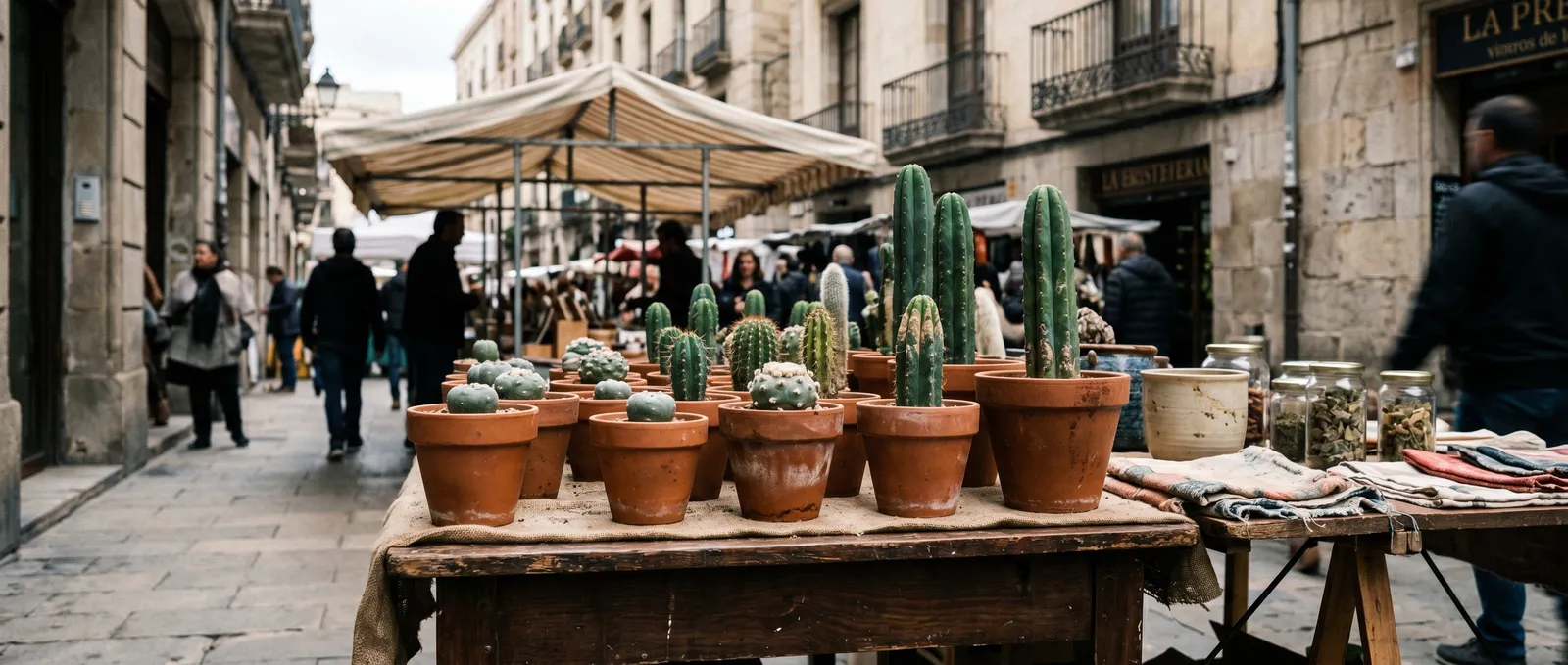
Mescaline cactus market observations is a research and retail term that describes the shifting patterns in sourcing, species selection, and consumption of mescaline-bearing cacti. San Pedro now dominates non-ceremonial use, driven by faster growth rates and conservation awareness (Cassels & Sáez-Briones, 2018). Peyote's slow maturation and declining wild populations have reshaped buyer behaviour across Europe.
18+ only — this article covers psychoactive cacti and is written for adults.
Disclaimer: This article is provided for informational and harm-reduction purposes only. Mescaline is a controlled substance in many jurisdictions. Azarius does not encourage or condone any illegal activity. Always check your local laws before sourcing or possessing mescaline-bearing cacti or their derivatives.
Mescaline cactus market observations is a research and retail term that describes the shifting patterns in how people source, select, and consume mescaline-bearing cacti — primarily peyote (Lophophora williamsii) and San Pedro (Echinopsis pachanoi). A preliminary descriptive study by Cassels and Sáez-Briones (2018) found that San Pedro consumers now outnumber peyote consumers in non-ceremonial settings by a wide margin, driven largely by sustainability concerns and ease of cultivation. This article looks at why the mescaline cactus market has tilted that way, what the supply picture actually looks like, and what buyers should understand before making choices.
Why Has San Pedro Overtaken Peyote in the Market?
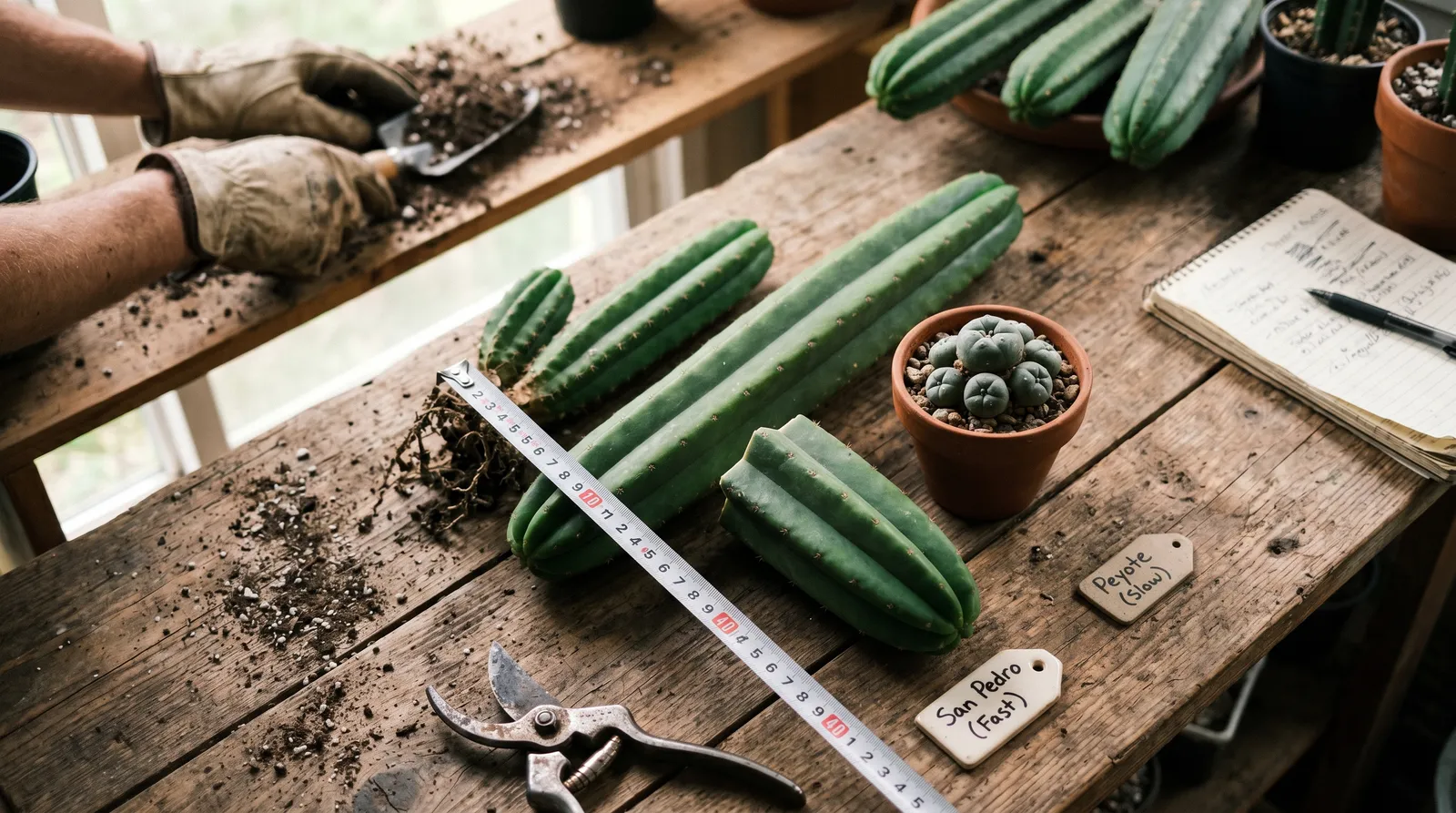
San Pedro overtook peyote primarily because of its dramatically faster growth rate. A San Pedro column can grow 30–40 cm per year under decent conditions. Peyote? You're looking at roughly 1–2 cm of diameter per year. That biological reality shapes everything downstream. A San Pedro cutting you buy or order today can yield harvestable material within 2–3 years, while a peyote button needs a decade or more to reach maturity from seed.
The conservation angle matters too. According to Terry et al. (2011), wild peyote populations in the Chihuahuan Desert have declined significantly due to overharvesting and habitat loss from agriculture and oil drilling. Their fieldwork measured mescaline concentrations across three tissue types — crown, non-chlorophyllous stem, and root — and found that traditional harvesting methods (slicing the crown at ground level) leave behind tissue with lower alkaloid content, meaning regrown buttons are pharmacologically weaker than the originals. That finding alone has pushed many informed buyers toward San Pedro as the less destructive option.
Pricing reflects this asymmetry. Dried peyote buttons, where they circulate, command steep prices per gram. San Pedro cuttings and dried material cost a fraction, because the cactus grows like a weed in comparison. The mescaline cactus market observations from retail data confirm that buyers have responded rationally to the supply constraints.
What Species Are Actually Circulating?
At least four mescaline-bearing cactus species circulate regularly in the European market. Beyond the two headline species, several other mescaline-bearing cacti show up:
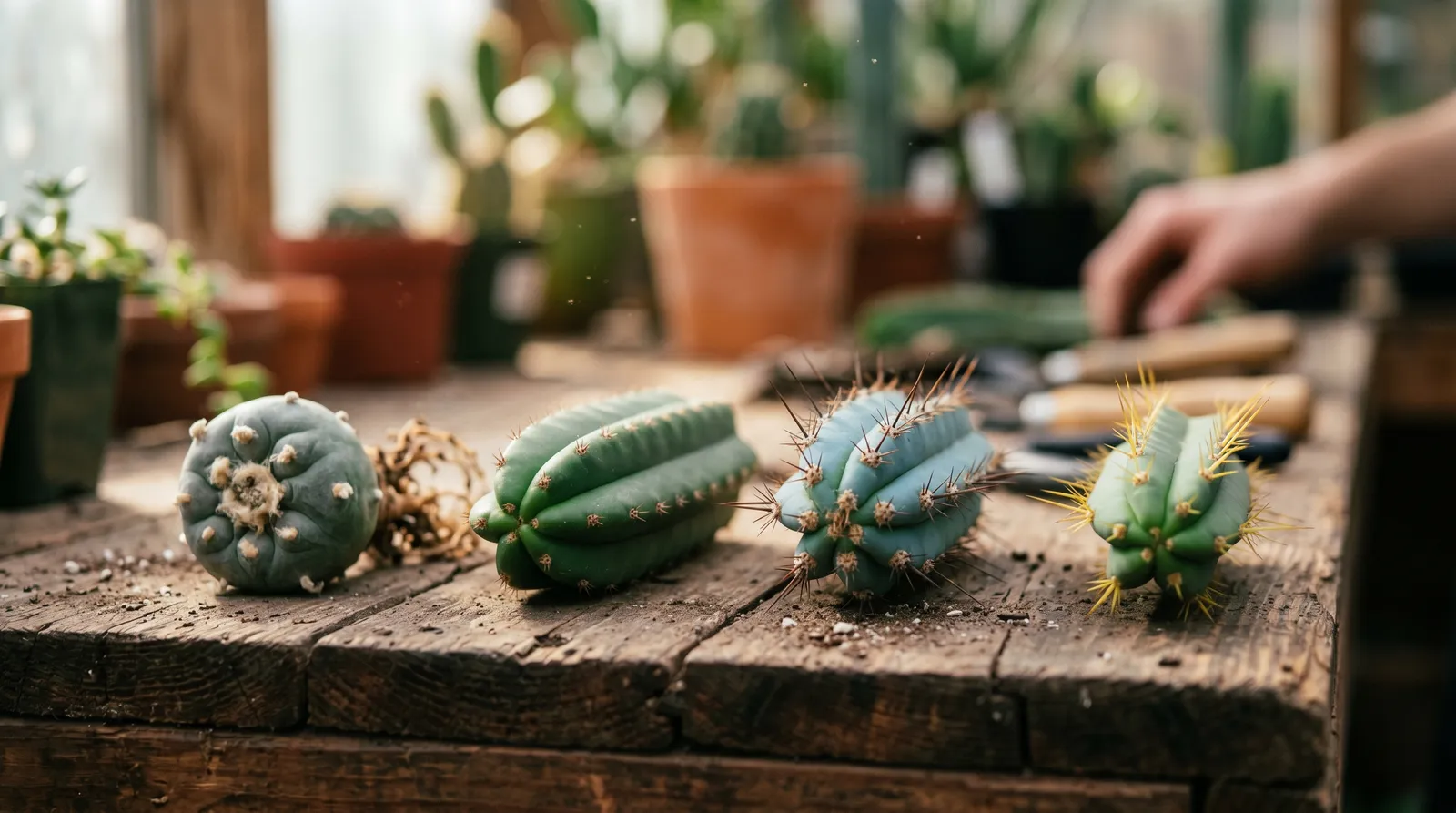
- Echinopsis pachanoi (San Pedro) — the workhorse, widely available as live cuttings, dried chips, and powder
- Echinopsis peruviana (Peruvian Torch) — often considered more potent per gram of dried material than San Pedro, though alkaloid content varies wildly between specimens
- Echinopsis lageniformis (Bolivian Torch) — less common but growing in popularity among collectors
- Lophophora williamsii (Peyote) — slow-growing, conservation-sensitive, and increasingly difficult to source ethically
An overview published by Dinis-Oliveira et al. (2019) catalogued over 60 alkaloids in peyote alone, including pellotine, anhalonidine, and hordenine alongside mescaline. This means the subjective effects of peyote aren't purely mescaline-driven — they reflect a cocktail. San Pedro has a simpler alkaloid profile by comparison, which some users prefer for its "cleaner" character, though that description is anecdotal rather than pharmacologically precise.
Species Comparison at a Glance
| Species | Common Name | Growth Rate | Approx. Mescaline (% dry weight) | Availability |
|---|---|---|---|---|
| Echinopsis pachanoi | San Pedro | 30–40 cm/year | 0.1–2.3% | Very common |
| Echinopsis peruviana | Peruvian Torch | 20–30 cm/year | 0.2–2.5% (reported) | Common |
| Echinopsis lageniformis | Bolivian Torch | 20–30 cm/year | 0.1–1.5% (limited data) | Less common |
| Lophophora williamsii | Peyote | 1–2 cm diameter/year | 1–6% | Scarce, ethically sensitive |
How Does Mescaline Content Vary Between Sources?
Mescaline content varies enormously, and this is the single biggest variable that mescaline cactus market observers struggle with. Mescaline content in San Pedro has been reported anywhere from 0.1% to 2.3% of dried weight, depending on the specimen, growing conditions, and which part of the cactus you're measuring. Peyote buttons typically contain 1–6% mescaline by dry weight, but as Terry et al. (2011) demonstrated, regrown crowns after harvesting contain significantly less than undisturbed mature specimens.
This variability has practical consequences. Someone preparing dried San Pedro material has no reliable way to know the mescaline concentration without analytical testing. Two batches of identically sourced, identically dried cactus chips can differ in potency by a factor of five or more. Clinical research by Holze et al. (2022) used pure synthetic mescaline at doses of 100 mg, 300 mg, and 500 mg to establish dose-response curves — but translating those numbers to raw cactus material requires knowing the mescaline percentage, which most consumers simply don't have access to.
The Holze et al. study also tested an 800 mg dose and noted substantial adverse effects at that level, including pronounced nausea, anxiety, and cardiovascular strain. Their data suggests a ceiling effect may exist, where increasing the dose beyond a certain point adds side effects without proportionally intensifying the desired experience — though they noted that a 1,000 mg dose (roughly equivalent to 200 µg of LSD in subjective intensity) was not tested for safety reasons. The EMCDDA has flagged the difficulty of dose standardisation in plant-derived psychedelics as a persistent public health concern in their 2024 European Drug Report.
We'll be honest about a limitation here: most alkaloid percentages cited in the literature come from small sample sizes, and field conditions differ vastly from laboratory growing environments. The numbers above should be treated as rough ranges, not guarantees. Anyone relying on published figures for dosing decisions is working with incomplete information.
What Forms Do Mescaline Cacti Appear In?
Mescaline cacti appear in three main forms on the market: live cuttings, dried material, and concentrated extracts.
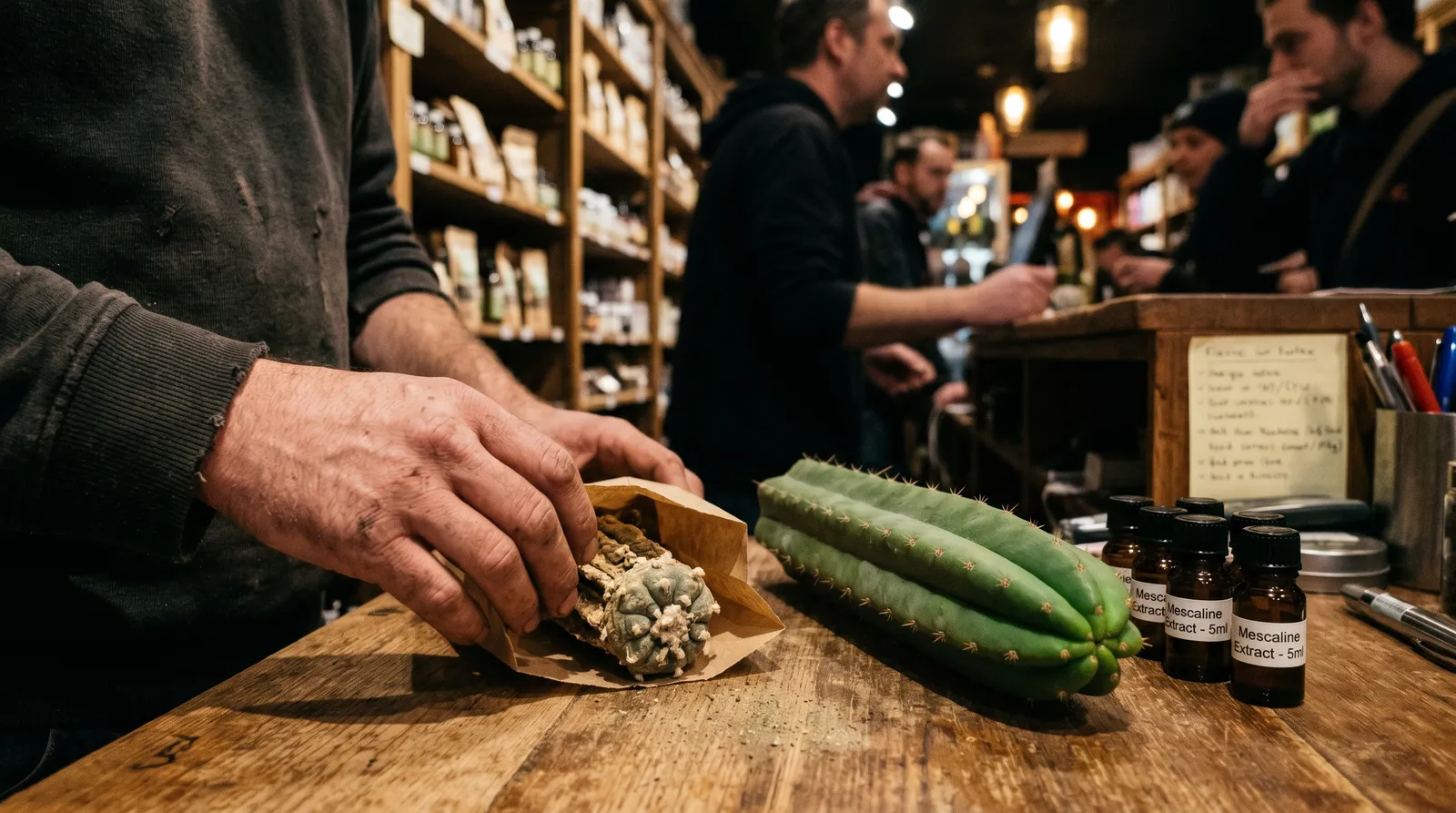
Live cuttings are the most common form for San Pedro and Peruvian Torch. These are sold as ornamental plants and are widely available from garden centres and specialist nurseries across Europe. People who want to get started with cultivation typically order a 30 cm cutting. Growing them is straightforward — they tolerate poor soil, irregular watering, and even light frost.
Dried material — chips, slices, or powder — represents the next step. Traditional preparations involve removing the waxy outer skin, slicing the green flesh away from the woody core, and drying it. The green layer directly beneath the skin contains the highest alkaloid concentration. According to PsychonautWiki's collation of ethnobotanical sources, traditional peyote preparations involve cutting the crown at ground level, drying the buttons into disc-shaped "mescal buttons," and either chewing them directly or brewing them into a bitter tea.
Resin and concentrated extracts occasionally appear but are far less common. The extraction process is not trivial, and the resulting product carries greater dosing uncertainty than dried material — which is already uncertain enough.
Is the Market Shifting Toward Sustainability?
Yes, the mescaline cactus market is shifting noticeably toward sustainability. The preliminary descriptive study by Cassels and Sáez-Briones (2018) specifically surveyed consumer motivations and found that sustainability and conservation awareness ranked among the top reasons people chose San Pedro over peyote. This wasn't just lip service — respondents who cited conservation concerns were also more likely to cultivate their own cacti rather than purchasing dried material.
The Native American Church's long-standing relationship with peyote adds an ethical dimension that many non-indigenous consumers are increasingly aware of. Wild peyote populations serve a specific ceremonial function for indigenous communities, and non-ceremonial demand puts direct pressure on an already strained supply. Several online communities and forums have adopted informal norms discouraging peyote purchases by non-indigenous people, steering newcomers toward San Pedro or Peruvian Torch instead.
From a cultivation standpoint, the shift makes sense. San Pedro grows in a wide range of climates, roots easily from cuttings, and doesn't require the specialised conditions that peyote demands. A windowsill in Amsterdam can sustain a San Pedro column; peyote needs carefully controlled humidity, temperature, and soil mineral content to thrive outside its native desert habitat. For those looking to buy San Pedro cuttings, our San Pedro cactus category page lists the varieties we carry. Readers interested in the broader context of psychedelic cacti may also find our mescaline wiki article and our blog post on cactus cultivation useful. The Beckley Foundation's comparative pharmacology programme has also published useful context on how mescaline fits within the broader classical psychedelic field.
How Does Mescaline Compare to Other Psychedelics?
Mescaline occupies a distinct pharmacological niche among classical psychedelics. Compared to psilocybin (found in magic truffles, which you can browse in our magic truffles category) and LSD, mescaline has a notably longer duration — typically 8–12 hours versus 4–6 hours for psilocybin and 8–12 hours for LSD. The onset is also slower, often taking 1.5–2.5 hours before full effects manifest, which can tempt inexperienced users into redosing prematurely.
Subjectively, users frequently describe mescaline as more grounded and body-oriented than psilocybin or LSD, with stronger visual patterning and a warm, empathogenic quality. However, the Beckley Foundation's ongoing psychedelic research programme has noted that set, setting, and dose account for more subjective variance than the specific compound used — a reminder that the substance is only one variable among many.
Duration and Onset Comparison
| Substance | Typical Onset | Duration | Primary Character (Anecdotal) |
|---|---|---|---|
| Mescaline (cactus) | 1.5–2.5 hours | 8–12 hours | Body-oriented, visual, empathogenic |
| Psilocybin (truffles/mushrooms) | 20–60 minutes | 4–6 hours | Introspective, emotional, fluid |
| LSD | 30–90 minutes | 8–12 hours | Analytical, energetic, visual |
What Should Buyers Actually Watch Out For?
Misidentification is the most common pitfall in the mescaline cactus market. Not every columnar cactus sold as "San Pedro" actually is Echinopsis pachanoi. Some are closely related species with lower or negligible mescaline content. The number of ribs is a rough guide — classic San Pedro typically has 6–8 ribs — but it's not definitive. Buying from reputable sources with botanical knowledge reduces this risk considerably.
Alkaloid variability, as discussed above, means that treating raw cactus material like a standardised pharmaceutical is a mistake. Anyone working with dried material should approach dosing conservatively, particularly with unfamiliar batches. Our mescaline wiki article covers research-observed dose ranges in more detail.
Interactions with other substances deserve a mention here, though the full picture belongs in the dedicated mescaline interactions article on our wiki. The critical ones: MAOIs can dangerously potentiate mescaline's effects, lithium combined with any serotonergic psychedelic carries seizure risk, and SSRIs may either blunt or unpredictably alter the experience.
Nausea is nearly universal with cactus preparations. Traditional users consider it part of the process — a purging. Clinical data from Holze et al. (2022) confirmed that nausea was the most commonly reported adverse effect across all dose levels, peaking at 1–2 hours post-ingestion and generally resolving by hour four.
Where Is the Market Heading?
The mescaline cactus market is trending toward synthetic alternatives and increased research scrutiny. The Forbes synthesis discussion (2024) highlighted growing interest in synthetic mescaline as a way to bypass both the conservation problems and the dosing inconsistency of raw plant material. Synthetic mescaline offers precise dosing and eliminates the alkaloid variability issue entirely, but it also removes the broader phytochemical context — the other 60-odd alkaloids that may contribute to the peyote or San Pedro experience in ways we don't yet fully understand.
Research interest is climbing. The Holze et al. (2022) study was one of the first modern clinical trials to rigorously characterise mescaline's acute pharmacology in healthy volunteers, and further studies are reportedly in development. Whether this translates into therapeutic applications — as it has for psilocybin — remains to be seen, but the groundwork is being laid. Current mescaline cactus market observations suggest that informed consumers are watching these developments closely.
For now, the cactus market remains a space defined by botanical patience, significant natural variability, and a slow but genuine shift toward more sustainable sourcing. It rewards people who do their reading and punishes those who treat it like ordering a standardised product off a shelf.
Last updated: April 2026
Frequently Asked Questions
8 questionsWhy is San Pedro more common than peyote in the European cactus market?
How much does mescaline content vary between San Pedro specimens?
What is the difference between peyote and San Pedro alkaloid profiles?
Can you standardise dosing with raw mescaline cactus material?
Is synthetic mescaline replacing cactus-derived mescaline?
How does mescaline compare to psilocybin in duration and effects?
How fast does San Pedro cactus grow compared to peyote?
Is Peruvian Torch more potent than San Pedro?
About this article

Joshua Askew serves as Editorial Director for Azarius wiki content. He is Managing Director at Yuqo, a content agency specialising in cannabis, psychedelics and ethnobotanical editorial work across multiple languages. Th
This wiki article was drafted with AI assistance and reviewed by Joshua Askew, Managing Director at Yuqo. Editorial oversight by Adam Parsons.
Medical disclaimer. This content is for informational purposes only and does not constitute medical advice. Consult a qualified healthcare provider before use of any substance.
Last reviewed April 24, 2026
References (6)
- [1]Cassels, B.K. and Sáez-Briones, P. (2018). 'A preliminary descriptive study of mescaline cacti consumers.' Journal of Psychoactive Drugs.
- [2]Dinis-Oliveira, R.J. et al. (2019). 'An Overview on the Hallucinogenic Peyote and Its Alkaloid Mescaline.' Current Topics in Medicinal Chemistry.
- [3]EMCDDA (2024). European Drug Report: Trends and Developments. European Monitoring Centre for Drugs and Drug Addiction.
- [4]Holze, F. et al. (2022). 'Acute dose-dependent effects of mescaline in a randomized, placebo-controlled crossover study in healthy participants.' Neuropsychopharmacology, 47, pp. 1004–1012.
- [5]Terry, M. et al. (2011). 'Mescaline concentrations in three principal tissues of Lophophora williamsii.' Phytochemistry.
- [6]Beckley Foundation (2023). Psychedelic Research Programme: Comparative Pharmacology of Classical Psychedelics.
Related Articles
Hawaiian Baby Woodrose Sourcing
Hawaiian baby woodrose sourcing is a practice that covers how to obtain quality Argyreia nervosa seeds — a vine whose seeds contain LSA (lysergic acid amide).
LSA Legal Status in Europe
LSA (lysergic acid amide, or ergine) occupies a legal grey zone across Europe — rarely scheduled as a compound, yet subject to varied NPS legislation that…
Ololiuqui Mazatec Tradition: Ceremonial Seeds of the Sierra Mazateca
Ololiuqui — the seeds of Turbina corymbosa — played a specific ceremonial role among the Mazatec people of Oaxaca, distinct from their better-known use of…
Morning Glory LSA Plants Family
Morning glory LSA plants family is a group of Convolvulaceae vines whose seeds contain d-lysergic acid amide (ergine), a naturally occurring tryptamine first…
Hawaiian Baby Woodrose Plant Botany
Argyreia nervosa, commonly called Hawaiian baby woodrose, is a perennial climbing vine native to the Indian subcontinent, not Hawai'i.
Magic Truffle Quality Indicators
Magic truffle quality indicators are the measurable and sensory characteristics — psilocybin content, texture, aroma, packaging integrity, and storage…
Growing Mescaline Cacti as Ornamental Plants
Growing mescaline cacti ornamental is a horticultural practice that involves cultivating species like San Pedro, Peruvian Torch, and peyote for their…
Commercial Magic Truffle Cultivation
Commercial magic truffle cultivation is a large-scale agricultural process that produces psilocybin-containing sclerotia in climate-controlled indoor…
Huachuma Andean Tradition
The huachuma Andean tradition is a ceremonial healing lineage centred on the San Pedro cactus (Echinopsis pachanoi) that has been documented across at least…