
This article discusses psychoactive substances intended for adults (18+). If you have a health condition or take medication, consult a doctor before use. Our age policy
Magic Truffle Quality Indicators
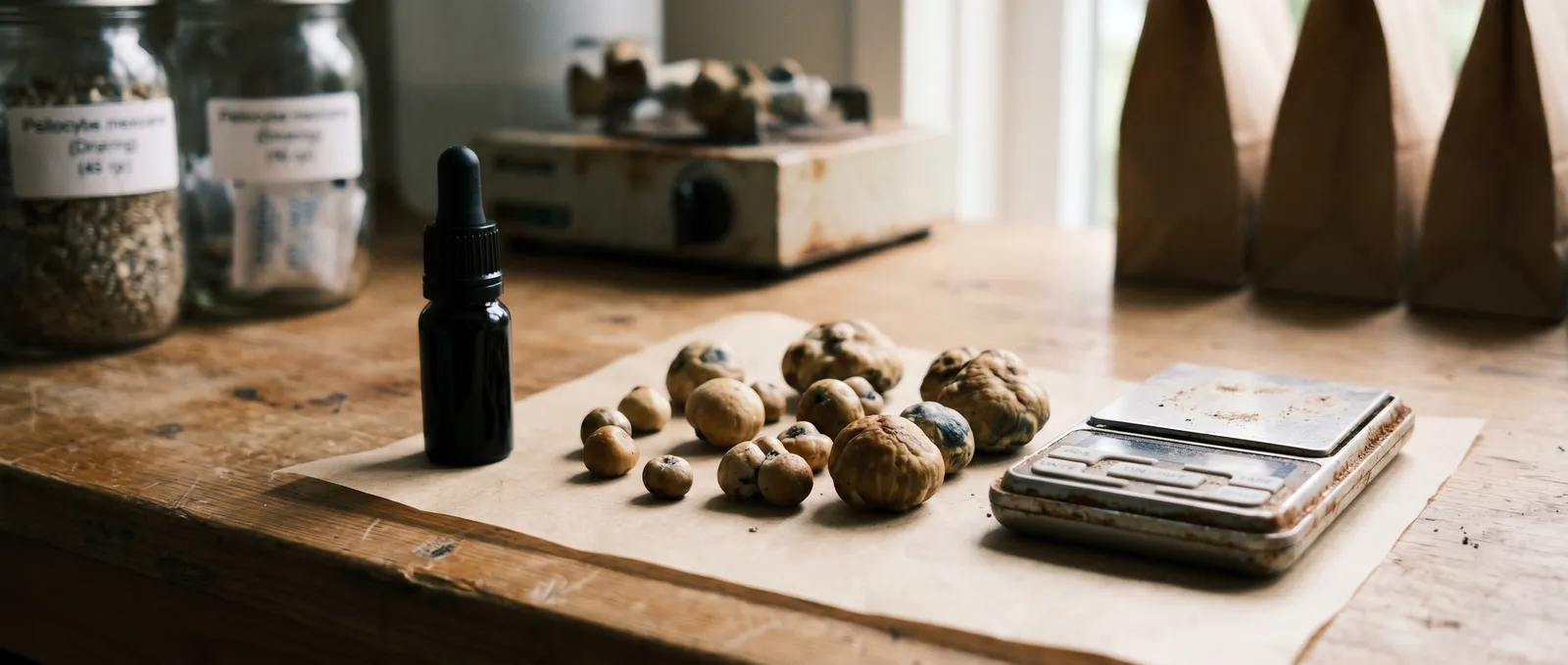
Definition
Magic truffle quality indicators are the measurable and sensory characteristics — psilocybin content, texture, aroma, packaging integrity, and storage conditions — that determine whether a batch of fresh sclerotia delivers reliable potency or falls short. Commercially available Dutch truffles show up to sevenfold variation in psilocybin concentration (Thomsen et al., 2023), making informed assessment a practical skill rather than an academic exercise.
18+ only — this guide is written for adults. The quality markers and potency data below apply to adult physiology.
A magic truffle quality indicator is a measurable or sensory characteristic that determines whether a batch of fresh sclerotia delivers reliable potency or falls short. Psilocybin content, moisture level, texture, aroma, and storage conditions all feed into whether a truffle matches what's printed on the packet — or disappoints. Unlike dried mushroom fruit bodies, truffles (technically sclerotia of Psilocybe tampanensis, P. mexicana, and related species) are sold fresh and vacuum-sealed in the Netherlands, which means quality degrades differently and the signs of a good batch are specific to this format. If you've ever opened a pack and wondered whether what you're holding is still worth eating, this article gives you the framework to judge.
What Actually Makes a Truffle "Good"?
Alkaloid content and freshness are the two factors that matter above all else. Everything else — colour, size, brand name — is secondary. A 2023 analysis published in Drug Testing and Analysis found that psilocybin concentrations in commercially available Dutch truffles ranged from 0.13% to 0.97% of dry weight (Thomsen et al., 2023). That's roughly a sevenfold spread. Two packets labelled the same strain, bought from different producers, can deliver wildly different experiences. The species and growing conditions account for most of that variation, but post-harvest handling — how the sclerotia were dried or stored, how long they sat on a shelf, and whether the cold chain was maintained — chips away at potency too.
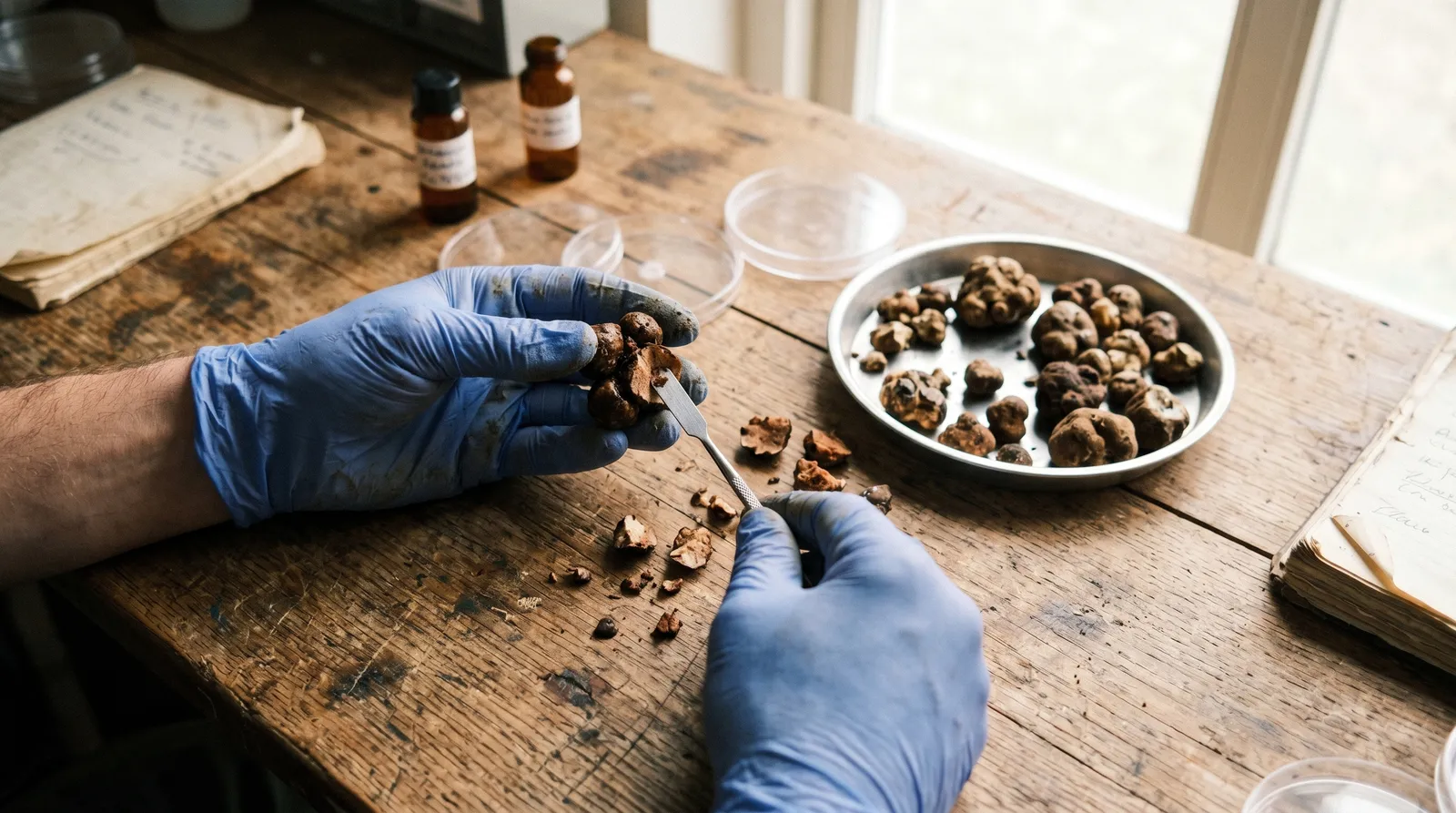
Psilocin, the compound that actually binds your 5-HT2A receptors, is far less stable than psilocybin. It oxidises on contact with air. A bruised, air-exposed truffle loses psilocin faster than an intact, vacuum-sealed one. Psilocybin itself is more robust but still degrades under heat, UV light, and prolonged moisture exposure. According to Gotvaldová et al. (2021), psilocybin in Psilocybe sclerotia retained roughly 80% of its initial content after three months of refrigerated vacuum-sealed storage — though that figure comes from a small sample set, and real-world conditions (interrupted cold chains, variable packaging) could push degradation further.
Sensory Quality Markers You Can Check Yourself
Three senses — touch, smell, and sight — catch the most common quality problems without any lab equipment. Here's what to look for before and after you buy magic truffles.
Texture
A fresh, properly stored truffle feels firm — not rock-hard, not mushy. Think of a dense walnut. If you squeeze it and it gives like wet bread, moisture has crept in and bacterial or fungal contamination is likely underway. If it's bone-dry and crumbly, it's been desiccated beyond the point where the vacuum seal was doing its job, or it was packaged incorrectly.
Aroma
Fresh sclerotia smell earthy and slightly nutty, with a faint sourness that's normal. What you don't want is a sharp ammonia note, a yeasty-fermented smell, or anything reminiscent of wet cardboard. Ammonia signals protein breakdown — the truffle is decomposing. A mild vinegar tang can appear in older packs and isn't always dangerous, but it correlates with reduced potency.
Colour
Colour varies by species and is the least reliable single indicator. P. tampanensis sclerotia tend toward beige-brown; P. mexicana runs darker. The warning sign isn't a specific colour but inconsistency within the same pack — dark splotches, greenish patches (possible Trichoderma contamination), or a slimy film on the surface. Blue bruising on truffles is less dramatic than on mushroom fruit bodies, but a blue-grey tint where the truffle has been cut or damaged indicates psilocin oxidation. That's not harmful, but it means active compound is being lost to the air.
Packaging and Storage: Where Quality Is Won or Lost
Proper vacuum sealing combined with unbroken refrigeration at 2–4°C is the single most important factor in preserving truffle quality after harvest. Break either condition and quality drops fast.
Vacuum seal integrity: If the plastic is puffed up or loose around the truffles, gas-producing bacteria have been active inside the pack. Don't eat it. A proper seal should press the plastic tight against every contour of the sclerotia, with no air pockets.
Moisture content: Fresh truffles are typically around 60–70% water. That's normal and expected — it's why fresh truffle dosing (5–15g for most people) is so much higher by weight than dried mushroom dosing. But excess free moisture inside the pack — visible condensation pooling at the bottom — suggests the cold chain was broken. The truffles sweated, and that liquid becomes a breeding ground for bacteria.
Shelf life: Most Dutch producers print a use-by date roughly 2–3 months from packaging, assuming unbroken refrigeration. After opening, consume within 48 hours or dry them for longer storage. Freezing is sometimes suggested online but tends to rupture cell walls and create a mushy, less palatable product upon thawing — and the freeze-thaw cycle may accelerate psilocin degradation, though controlled data on this specific point is thin.
How Truffle Quality Compares to Dried Mushroom Quality
Fresh vacuum-sealed truffles degrade primarily through cold chain failure in an already-moist product, while dried mushroom fruit bodies degrade when residual moisture reintroduces mould risk — the quality checks are not interchangeable. Dried mushrooms lose psilocin rapidly during the drying process itself, which is why truffle psilocin levels — when fresh — tend to be proportionally higher relative to total alkaloid content. On the other hand, dried mushrooms stored in airtight containers with desiccant packs can remain stable for a year or more, while truffles have a much narrower window of peak quality. If you want the longest shelf life, dried mushrooms win. If you want the highest psilocin-to-psilocybin ratio at the point of consumption, fresh truffles have the edge — provided the cold chain held.
Potency Reference by Species
Published analytical data confirms clear potency brackets by species, though overlap between them is significant. All psilocybin percentages refer to dry weight. Fresh weight is roughly 2.5–3× the dry weight figure due to water content.
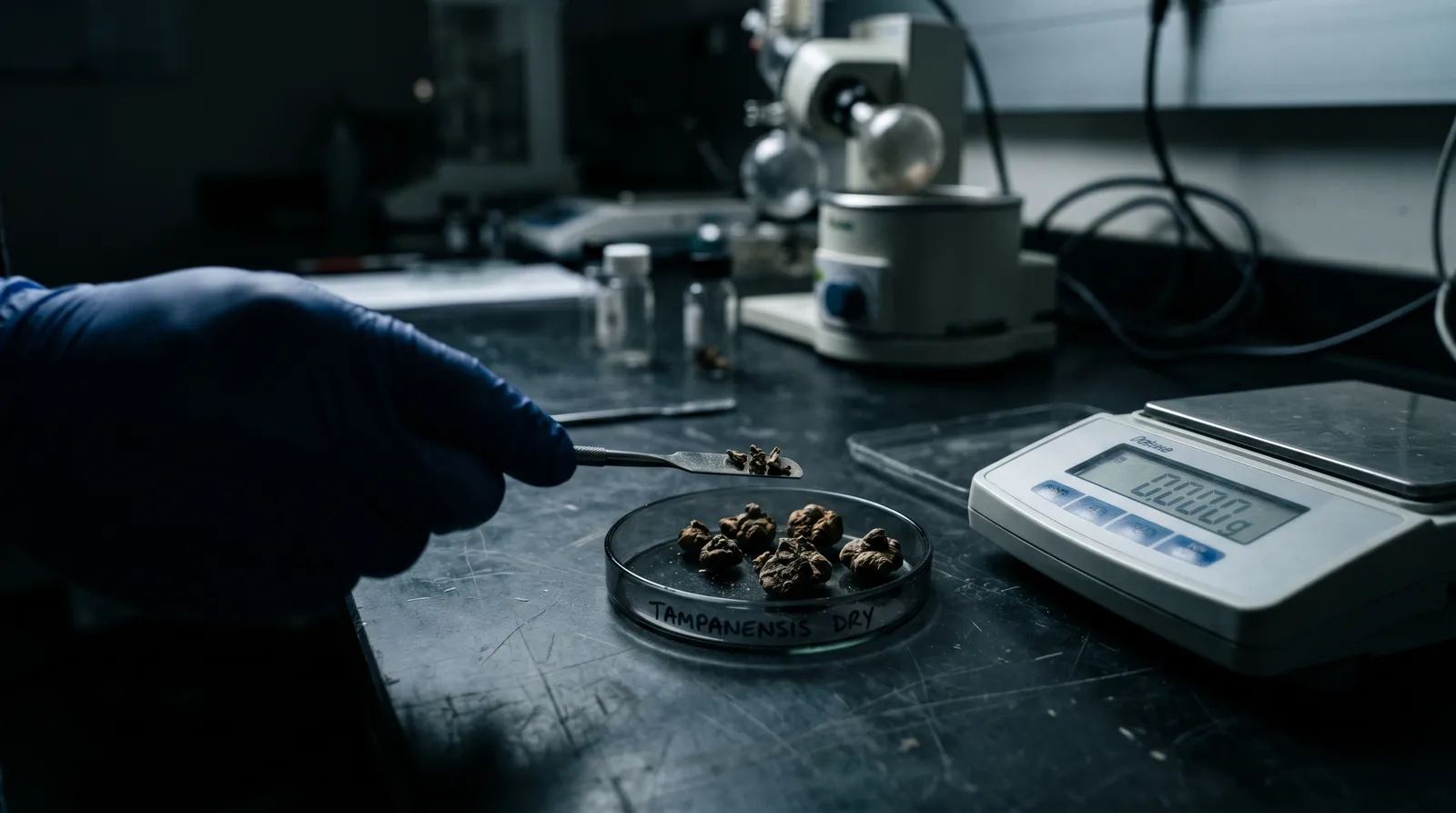
| Species / Common Name | Psilocybin (% dry weight) | Typical Strength Rating | Source |
|---|---|---|---|
| P. mexicana (Mexicana, Pajaritos) | 0.13–0.35% | Mild to moderate | Thomsen et al., 2023 |
| P. tampanensis (Tampanensis, Atlantis, Fantasia) | 0.30–0.68% | Moderate | Gotvaldová et al., 2021; Thomsen et al., 2023 |
| P. galindoi (often sold as "Hollandia", "Utopia") | 0.45–0.97% | Strong | Thomsen et al., 2023 |
Notice the overlap in ranges. A strong P. tampanensis batch can outpunch a weak P. galindoi batch. Species gives you a rough bracket, not a guarantee. This is why weighing your dose on a digital scale — like the Scales available in the Azarius shop — matters far more than eyeballing "about half the packet."
What Lab Testing Tells You (and What It Doesn't)
HPLC reports showing both psilocybin and psilocin levels are the gold standard for confirming potency and freshness. Some Dutch producers now publish batch-level alkaloid analyses using this method. A lab report showing both figures is more useful than one showing only total alkaloid content, because psilocin degrades faster and its presence confirms the product is genuinely fresh.
What lab testing doesn't capture well: the ratio of baeocystin and norbaeocystin, two minor tryptamines present in sclerotia whose contribution to the overall experience is still debated. A 2020 study in Journal of Natural Products (Sherwood et al., 2020) found that baeocystin had minimal serotonergic activity on its own, but whether it modulates the psilocybin experience through an entourage-like effect remains unresolved. If a producer claims their truffle is special because of "full-spectrum alkaloid content," take that with a generous pinch of salt — the science isn't there yet to support it as a meaningful quality differentiator.
Contaminant testing — for heavy metals, pesticide residues, and microbial load — is arguably more important than potency testing for safety purposes. The EMCDDA's 2023 Drug Profile on psilocybin notes that natural products carry inherent variability and that contamination, not psilocybin toxicity, represents the primary physical risk from truffle consumption. No lethal dose of psilocybin has been documented in humans.
How to Buy Magic Truffles With Confidence
Buying from a licensed Dutch smartshop or a reputable online retailer like Azarius is the most reliable way to get quality-tested sclerotia. When you order magic truffles, check that the listing mentions refrigerated shipping, a printed batch number, and an expiry date — these are baseline signals that the seller takes cold chain integrity seriously. If you can find a producer that publishes HPLC lab reports per batch, even better.
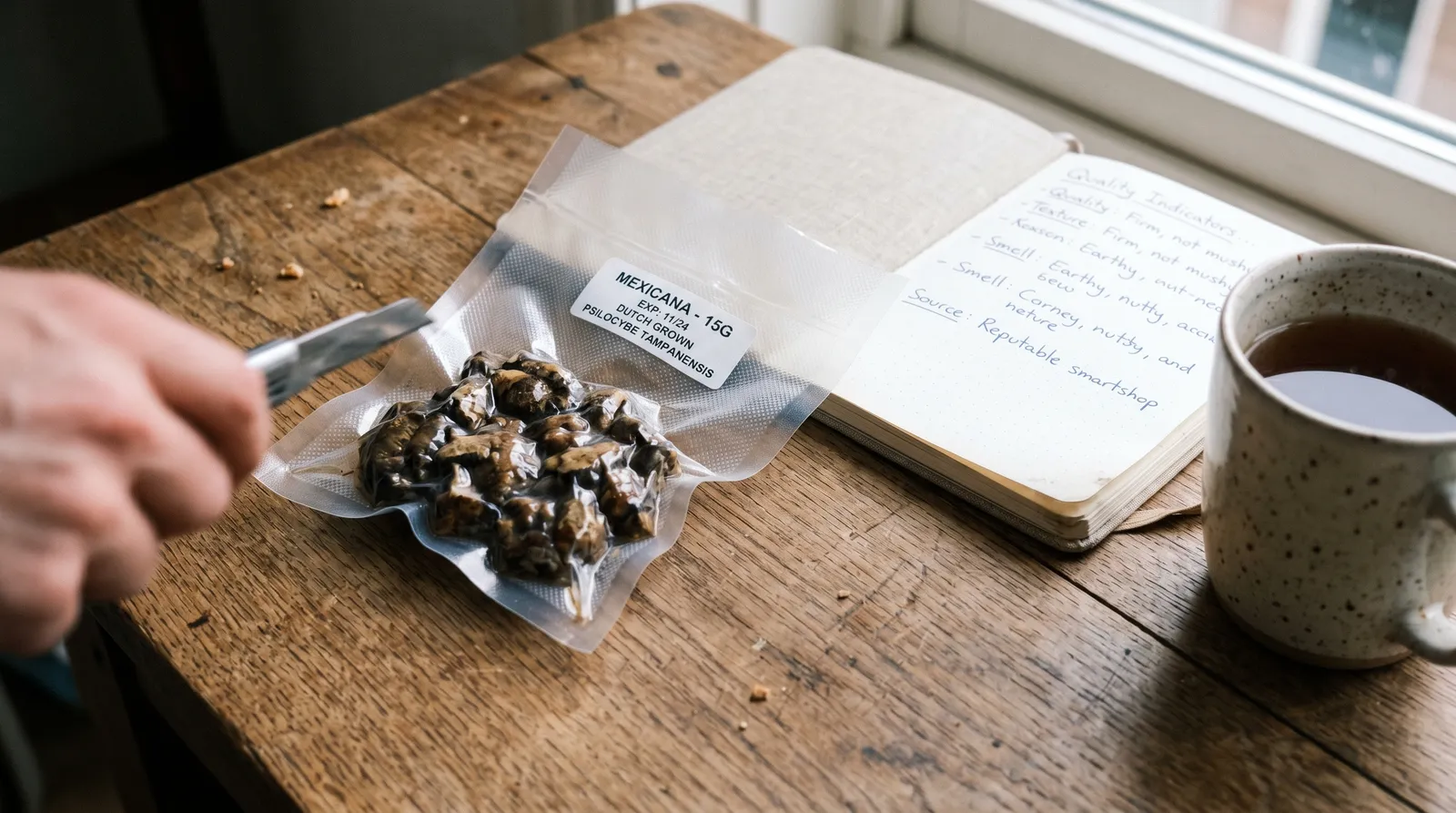
Once your truffles arrive, run through the sensory checks described above: firm texture, earthy-nutty aroma, tight vacuum seal, no pooled condensation. If everything passes, refrigerate immediately and consume before the printed expiry date. For dosing accuracy, get a precision milligram scale — the Smartshop Accessories section at Azarius carries several reliable options. And if this is your first time, the Psychedelic Preparation guide on the Azarius blog walks through set, setting, and integration essentials before your session.
Red Flags: When to Walk Away
Any single item on this list is reason enough to discard a pack, regardless of what the label says:
- Broken vacuum seal — gas inside the pack means microbial activity.
- Ammonia or strongly fermented smell — protein decomposition, likely unsafe.
- Slimy or wet surface — bacterial film, discard the pack.
- Green or black mould patches — contamination, not bruising.
- No expiry date or batch number — reputable producers label both. If it's missing, the supply chain is questionable.
- Stored at room temperature for extended periods — if a shop keeps truffles on an unrefrigerated shelf, potency and safety are both compromised.
If you're interested in how psilocybin interacts with medications — particularly SSRIs, MAOIs, and lithium — the dedicated psilocybin drug interactions article on the Azarius wiki covers that ground in detail. The short version: combinations with MAOIs can dangerously intensify effects, and lithium carries a seizure risk. Don't wing it.
For those ready to get started, the Azarius magic truffles category page lists every variety currently in stock with strain descriptions and strength ratings. A precision milligram scale is also worth picking up if you don't already own one — the Smartshop Accessories section has several options. And if you want to understand set and setting before your session, the Psychedelic Preparation guide on the Azarius blog walks through the essentials.
Last updated: April 2026
Frequently Asked Questions
8 questionsHow can you tell if magic truffles have gone bad?
Does the colour of magic truffles indicate potency?
How long do vacuum-sealed magic truffles stay potent?
Why do magic truffles from the same species vary so much in strength?
Do magic truffle lab reports actually matter?
Where can I buy quality-tested magic truffles?
How should magic truffles be stored to preserve potency?
What does the texture of a magic truffle tell you about its quality?
About this article


Adam Parsons is an external cannabis and psychedelics writer and editor who contributes to Azarius's wiki as both author and reviewer. On the writing side, he authors Azarius's kratom and kanna clusters, drawing on exten
This wiki article was drafted with AI assistance and reviewed by Adam Parsons, External contributor. Editorial oversight by Joshua Askew.
Medical disclaimer. This content is for informational purposes only and does not constitute medical advice. Consult a qualified healthcare provider before use of any substance.
Last reviewed April 24, 2026
References (4)
- [1]Thomsen, C. et al. (2023). Quantification of psilocybin and psilocin in commercially available magic truffles from the Netherlands. Drug Testing and Analysis, 15(11-12), 1356–1363.
- [2]Gotvaldová, K. et al. (2021). Stability of psilocybin and its four analogs in the biomass of the psychotropic mushroom Psilocybe cubensis. Drug Testing and Analysis, 13(2), 439–446.
- [3]Sherwood, A. M. et al. (2020). Synthesis and biological evaluation of tryptamines found in hallucinogenic mushrooms: norbaeocystin, baeocystin, norpsilocin, and aeruginascin. Journal of Natural Products, 83(2), 461–467.
- [4]EMCDDA (2023). Psilocybin Drug Profile. European Monitoring Centre for Drugs and Drug Addiction.
Related Articles
Hawaiian Baby Woodrose Sourcing
Hawaiian baby woodrose sourcing is a practice that covers how to obtain quality Argyreia nervosa seeds — a vine whose seeds contain LSA (lysergic acid amide).
LSA Legal Status in Europe
LSA (lysergic acid amide, or ergine) occupies a legal grey zone across Europe — rarely scheduled as a compound, yet subject to varied NPS legislation that…
Ololiuqui Mazatec Tradition: Ceremonial Seeds of the Sierra Mazateca
Ololiuqui — the seeds of Turbina corymbosa — played a specific ceremonial role among the Mazatec people of Oaxaca, distinct from their better-known use of…
Morning Glory LSA Plants Family
Morning glory LSA plants family is a group of Convolvulaceae vines whose seeds contain d-lysergic acid amide (ergine), a naturally occurring tryptamine first…
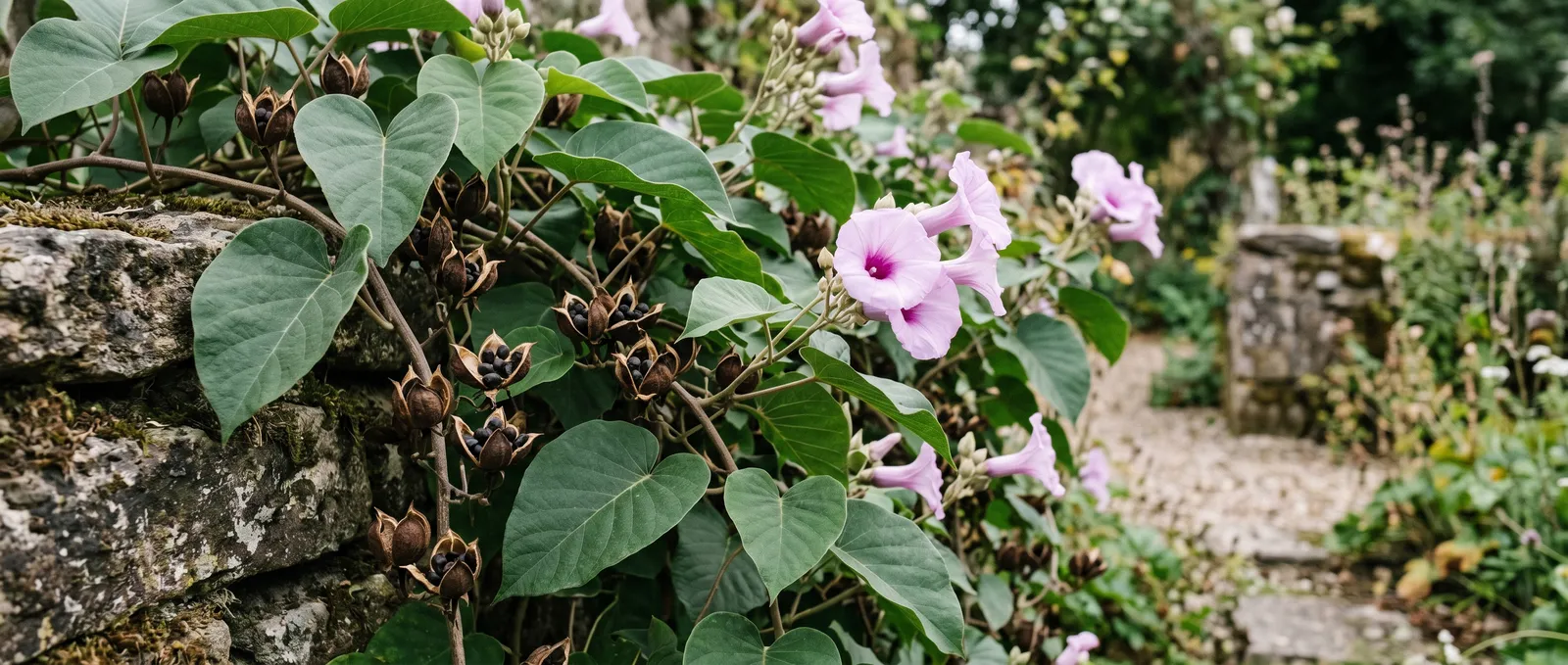
Hawaiian Baby Woodrose Plant Botany
Argyreia nervosa, commonly called Hawaiian baby woodrose, is a perennial climbing vine native to the Indian subcontinent, not Hawai'i.
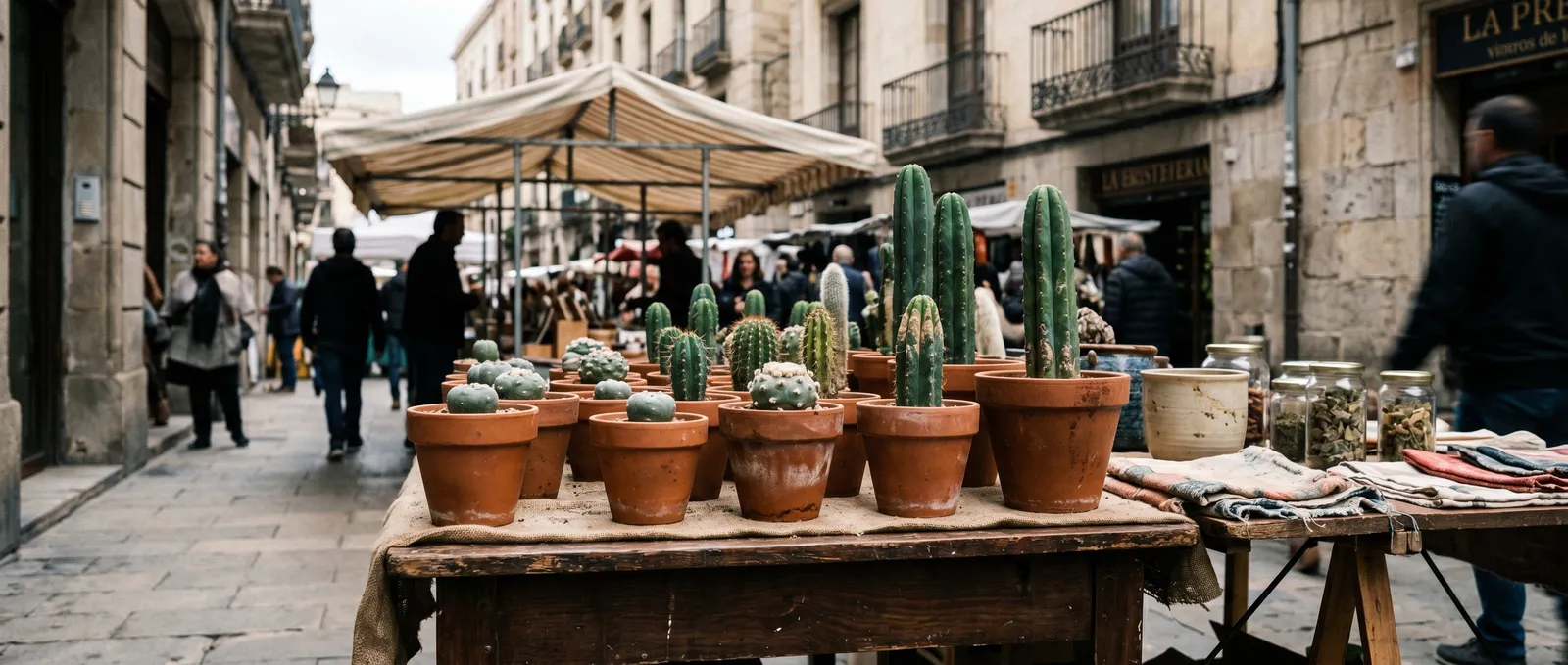
Mescaline Cactus Market Observations
Mescaline cactus market observations is a research and retail term that describes the shifting patterns in sourcing, species selection, and consumption of…
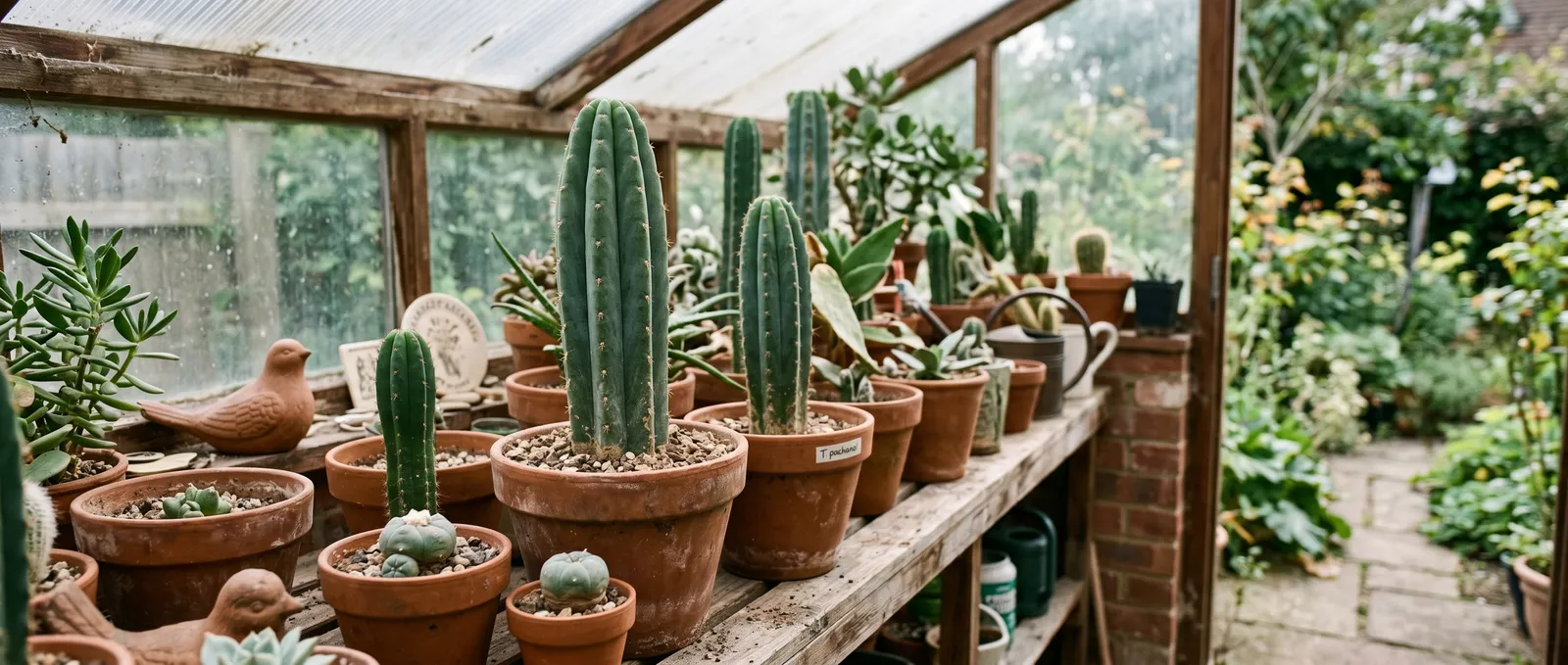
Growing Mescaline Cacti as Ornamental Plants
Growing mescaline cacti ornamental is a horticultural practice that involves cultivating species like San Pedro, Peruvian Torch, and peyote for their…
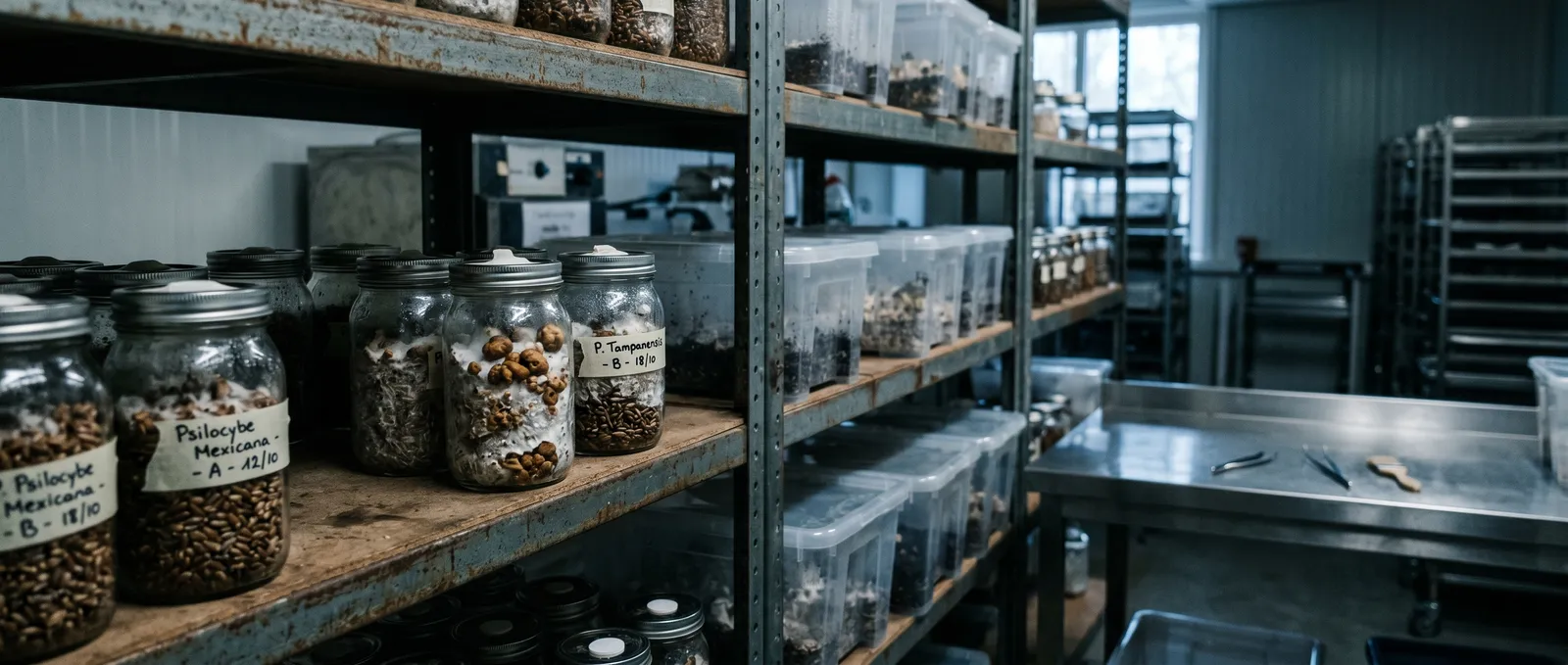
Commercial Magic Truffle Cultivation
Commercial magic truffle cultivation is a large-scale agricultural process that produces psilocybin-containing sclerotia in climate-controlled indoor…
Huachuma Andean Tradition
The huachuma Andean tradition is a ceremonial healing lineage centred on the San Pedro cactus (Echinopsis pachanoi) that has been documented across at least…