
This article discusses psychoactive substances intended for adults (18+). If you have a health condition or take medication, consult a doctor before use. Our age policy
Ololiuqui Mazatec Tradition: Ceremonial Seeds of the Sierra Mazateca
Definition
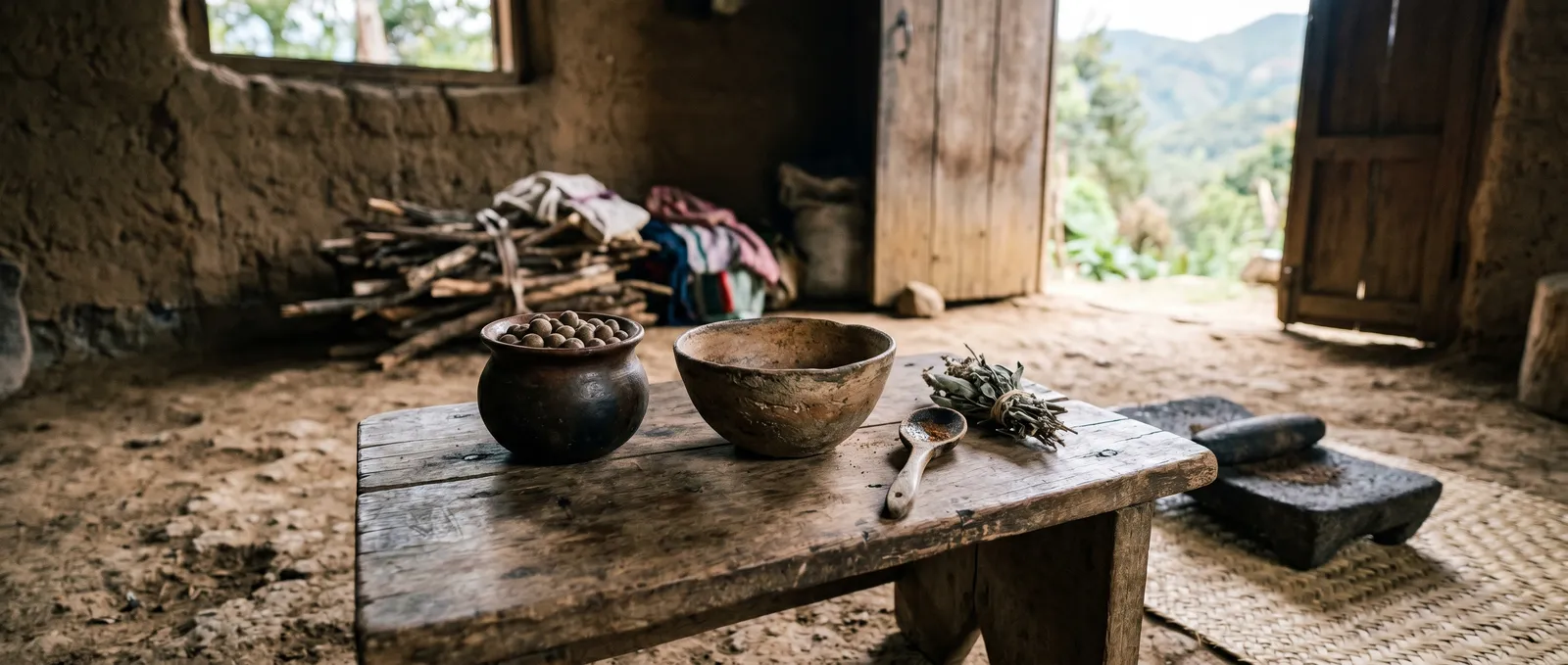
Ololiuqui — the seeds of Turbina corymbosa — played a specific ceremonial role among the Mazatec people of Oaxaca, distinct from their better-known use of psilocybin mushrooms. Curanderos ground and soaked the seeds for nighttime divination rituals that persisted despite centuries of colonial suppression (Schultes & Hofmann, 1979).
18+ only — This article covers a psychoactive substance and is written for adults. Dosing ranges and effects described below apply to adult physiology.
The ololiuqui Mazatec tradition is a centuries-old ceremonial practice in which Oaxacan curanderos use the seeds of Turbina corymbosa for divination and healing. Ololiuqui — the small, round seeds of Turbina corymbosa (formerly Rivea corymbosa) — has been part of Mesoamerican ritual life for at least five centuries. Among the indigenous peoples of Oaxaca, including the Mazatec, these seeds served as a divinatory tool long before Western ethnobotanists arrived with their notebooks. The Mazatec tradition around ololiuqui sits within a broader system of sacred plant use that also includes psilocybin mushrooms and Salvia divinorum, but the seeds occupy their own distinct ceremonial niche. This article focuses narrowly on the Mazatec relationship with these seeds — their ritual context, the role of the curandero, and how the tradition compares with the better-documented Aztec practices. If you want to buy ololiuqui seeds for ethnobotanical study, Azarius stocks untreated Turbina corymbosa seeds in the smartshop catalogue.
Disclaimer — educational content only: This article is provided strictly for ethnobotanical and historical education. It does not constitute medical advice, does not encourage the use of controlled or unregulated substances, and should not be used as a guide for self-treatment. Consult a qualified healthcare professional before considering any psychoactive substance. Legal status varies by jurisdiction; readers are responsible for knowing and following their local laws.
Not Just an Aztec Story
The ololiuqui Mazatec tradition developed independently from Aztec seed use, though both cultures drew from a shared Mesoamerican heritage of ergoline-containing seeds for divination. Most sources on ololiuqui lead with the Aztecs, and fair enough — the Aztec name is the one that stuck. The 16th-century friar Bernardino de Sahagún documented ololiuqui use among the Aztecs in his Florentine Codex (c. 1569), describing it as a seed that "deranges and disturbs" those who consume it. Spanish colonial authorities lumped it in with psilocybin mushrooms (teonanácatl) and peyote as instruments of the devil, and did their best to stamp all three out.
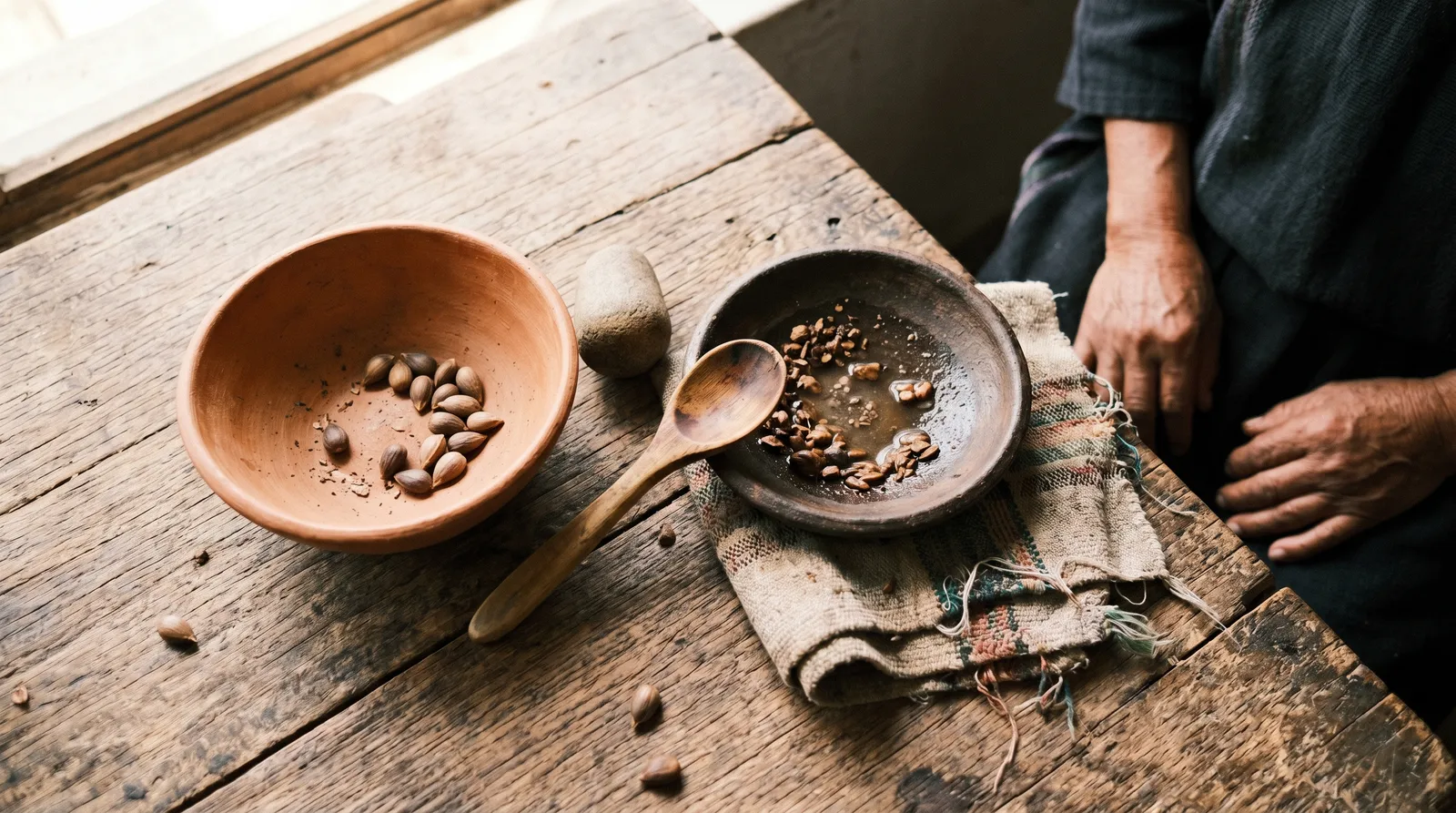
But the Mazatec people of the Sierra Mazateca in northern Oaxaca maintained their own parallel tradition. While the Aztec accounts are filtered almost entirely through hostile Spanish observers, the Mazatec practices survived into the 20th century in a more intact form. The ethnomycologist R. Gordon Wasson, who famously participated in a Mazatec mushroom ceremony in 1955, also documented the continued use of morning glory seeds and ololiuqui in the region (Wasson, 1963). The Mazatec didn't borrow from the Aztecs — both cultures drew from a shared Mesoamerican heritage of using ergoline-containing seeds for divination and healing.
The Ceremonial Context
Mazatec ololiuqui ceremonies were structured nighttime rituals overseen by a curandero, who served as intermediary between the patient and the spirit world. The seeds were one tool in a kit that also included psilocybin mushrooms (Psilocybe mexicana, P. caerulescens, and others), Salvia divinorum leaves, and various herbal preparations.
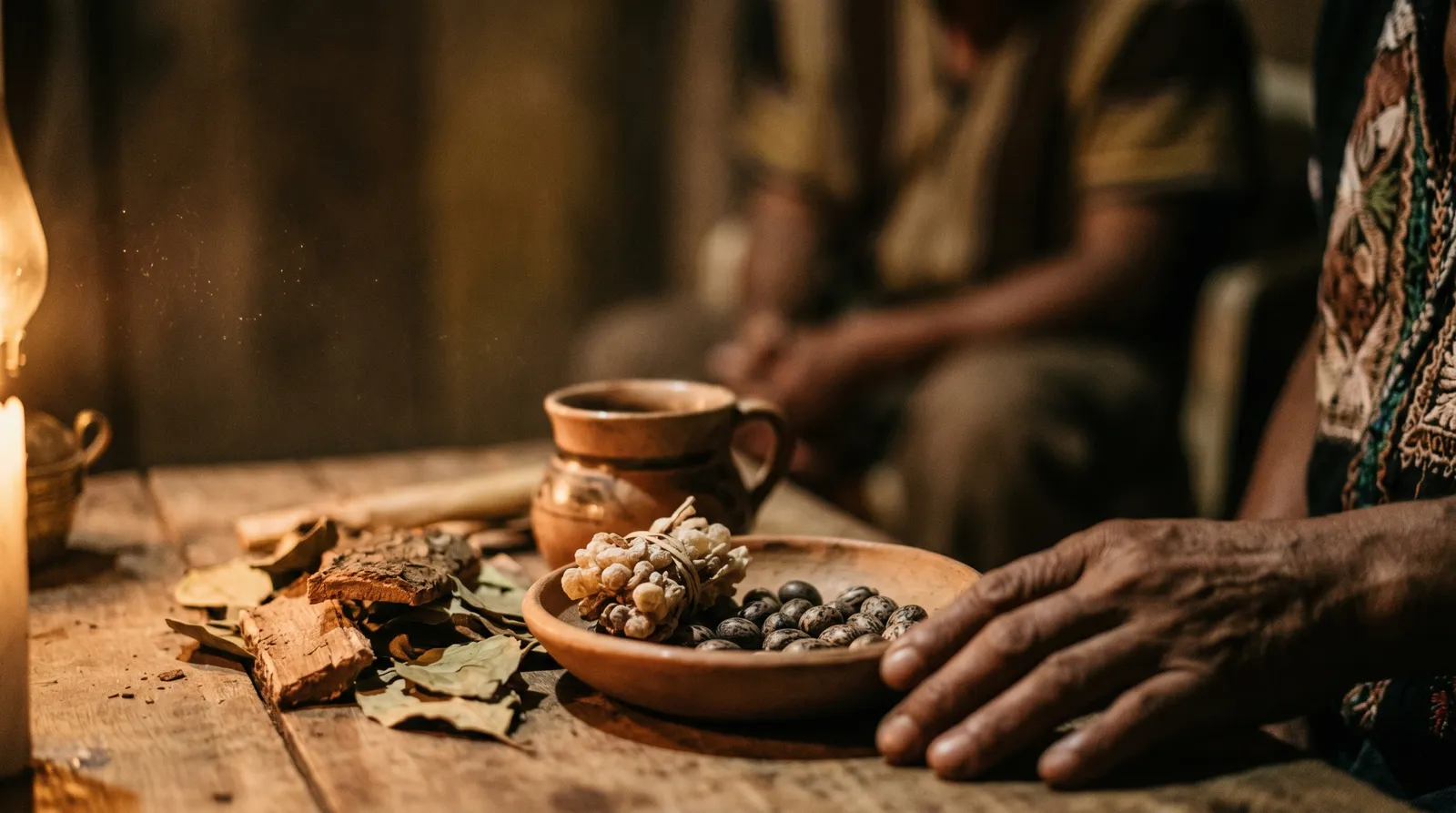
The ceremony typically took place in darkness, following a period of dietary restriction. According to ethnobotanical fieldwork conducted by Richard Evans Schultes and Albert Hofmann, the seeds were ground on a metate (stone grinding slab) and soaked in water, which was then strained and drunk (Schultes & Hofmann, 1979). The curandero would chant, pray, and interpret the visions or messages that the seeds produced — the patient might or might not consume the seeds themselves, depending on the purpose of the consultation.
The reasons for a ceremony were practical as much as spiritual: locating lost objects, diagnosing illness, identifying the cause of misfortune, or communicating with deceased relatives. This is a pattern that runs across Mazatec sacred plant use — mushrooms, seeds, and salvia each had overlapping but not identical applications. The choice of which to use depended on availability, the curandero's preference, and the specific problem at hand.
Seeds Versus Mushrooms in Mazatec Practice
Ololiuqui seeds served as a complementary sacrament to psilocybin mushrooms, not a substitute, though seasonality made them especially valuable when mushrooms were unavailable. Psilocybin mushrooms fruit during the rainy season (roughly June to October in the Sierra Mazateca). Seeds, by contrast, can be stored dried for months. When mushrooms were unavailable, seeds filled the gap.
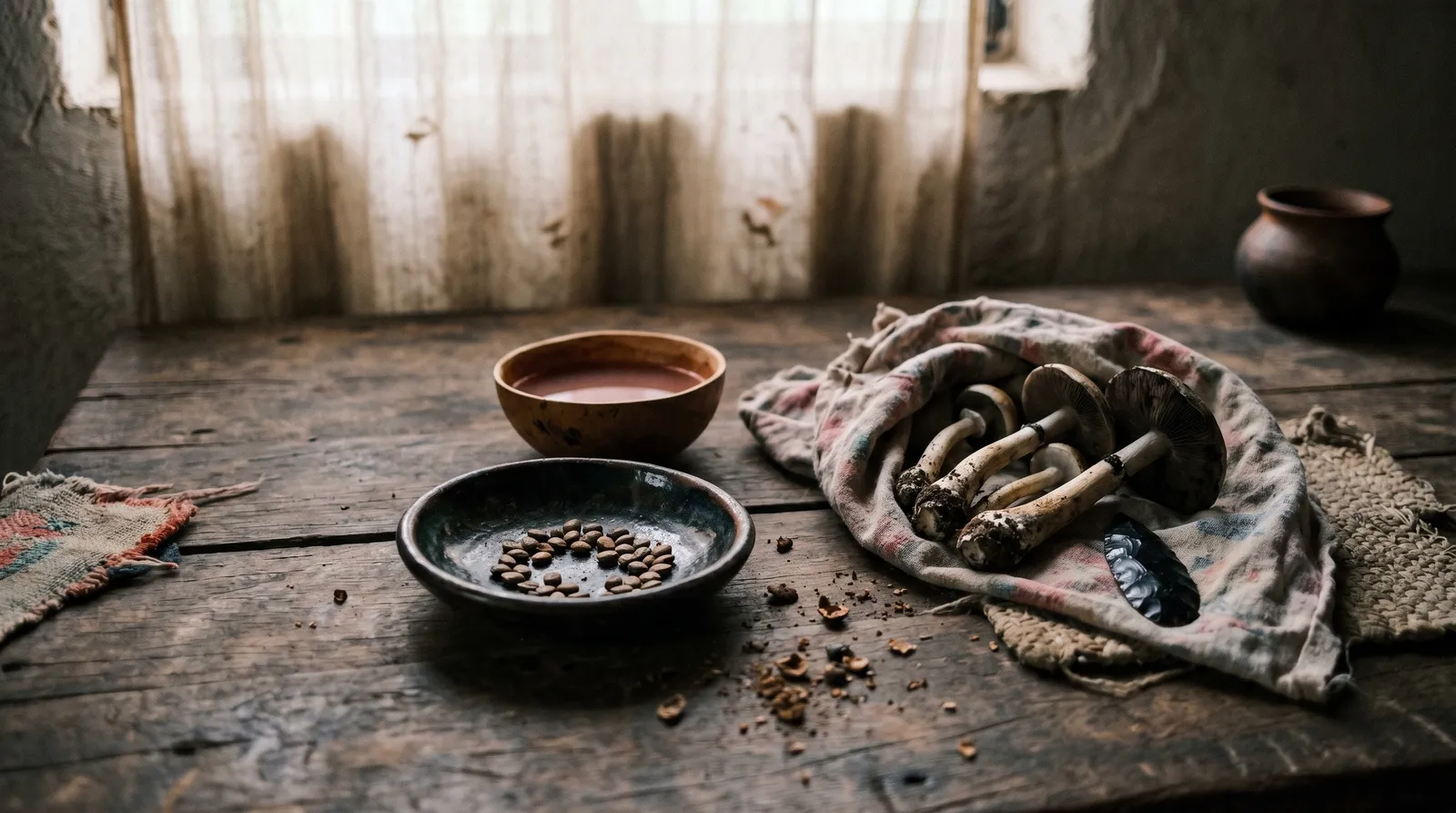
But it wasn't purely a matter of convenience. Mazatec practitioners described the seeds as producing a different quality of experience — quieter, more introspective, and more suited to certain types of divination. The mushrooms were considered more powerful and more directly communicative. María Sabina, the Mazatec curandera who became internationally famous after Wasson's visit, primarily used mushrooms but acknowledged the role of seeds within the broader healing tradition (Estrada, 1981).
According to a United Nations Office on Drugs and Crime (UNODC) bulletin from 1971, both teonanácatl and ololiuqui were "used since prehispanic times by the Aztecs and related tribes" for religious and medicinal purposes, and the two were often discussed together by colonial-era chroniclers precisely because they served parallel functions (UNODC, 1971). The Mazatec tradition reflects this pairing — seeds and mushrooms as complementary, not competing, sacraments.
Comparison: Ololiuqui vs. Mushrooms vs. Salvia in Mazatec Use
| Feature | Ololiuqui (T. corymbosa) | Psilocybin mushrooms | Salvia divinorum |
|---|---|---|---|
| Availability | Year-round (dried seeds store well) | Rainy season only (June–October) | Year-round (fresh leaves) |
| Character of experience | Quiet, introspective, dreamlike | Powerful, communicative, visionary | Brief, intense, disorienting |
| Typical ceremonial use | Divination, locating lost objects | Healing, diagnosis, communication with spirits | Divination, lower-dose healing |
| Preparation | Ground on metate, soaked in water | Eaten fresh, sometimes with cacao | Chewed fresh or brewed |
| Duration | Several hours | 4–6 hours | 15–30 minutes |
| Primary active compound | LSA (ergine) | Psilocybin / psilocin | Salvinorin A |
Comparison: LSA-Containing Seed Species
| Species | Common name | Traditional ololiuqui? | Typical seed size | LSA concentration | Available at Azarius |
|---|---|---|---|---|---|
| Turbina corymbosa | Ololiuqui | Yes — the original | Small, round, brown | Low–moderate | Yes |
| Ipomoea tricolor | Morning glory | No (tlitlitzin, a separate tradition) | Small, black, angular | Moderate | Yes |
| Argyreia nervosa | Hawaiian baby woodrose | No (not Mesoamerican) | Large, fuzzy, brown | Higher per seed | Yes |
Traditional Dosing: Pairs and Counting
Traditional ololiuqui doses followed a counting system rather than weighing, with a standard shamanic dose consisting of thirteen pairs — 26 seeds total. According to ethnobotanical literature, this practice was documented among both the Zapotec and Mazatec (Schultes & Hofmann, 1979). Other traditional doses ranged from 14 to 26 seeds depending on the practitioner and purpose. Fifteen or more seeds would be ground and soaked in roughly half a cup of water.
These numbers are worth noting because they're considerably lower than the doses sometimes reported in modern recreational contexts with Ipomoea tricolor (heavenly blue morning glory) or Argyreia nervosa (Hawaiian baby woodrose), which are different species with different alkaloid profiles and concentrations. The Turbina corymbosa seeds used in the Mazatec tradition contain d-lysergic acid amide (LSA, also called ergine) as the primary active compound, but at concentrations that vary significantly between seed batches — a point that makes precise modern dosing difficult to standardise against the traditional framework.
Albert Hofmann, who first isolated LSA from ololiuqui seeds in 1960, noted that the total alkaloid content was relatively low compared to what he expected given the reported strength of the effects (Hofmann, 1963). He speculated that set, setting, and the ceremonial context might amplify the subjective experience beyond what the pharmacology alone would predict — a hypothesis that modern psychedelic research has broadly supported for other substances.
Colonial Suppression and Quiet Survival
Ololiuqui use survived roughly 400 years of active colonial and ecclesiastical suppression, primarily because the Sierra Mazateca's remoteness placed it beyond effective Spanish control. The Spanish Inquisition in New Spain targeted ololiuqui use specifically. A 1620 Inquisition document described the seeds as enabling "communication with the devil" and prescribed punishment for their use. Despite this, the practice survived in remote mountain communities where colonial authority was thin. The Sierra Mazateca — rugged, isolated, and difficult to access — provided a natural refuge for traditions that the colonial church wanted destroyed.
By the time Western researchers arrived in the mid-20th century, ololiuqui use among the Mazatec had diminished relative to mushroom use but had not disappeared. Schultes collected Turbina corymbosa specimens from Oaxaca in 1941 and confirmed that the seeds were still in active ceremonial use. The tradition had survived roughly 400 years of suppression — not by confrontation, but by simply continuing quietly in villages that outsiders rarely visited.
Modern Interest and Honest Limits
Modern interest in the ololiuqui Mazatec tradition has grown alongside the broader psychedelic renaissance, but the gap between traditional ceremonial use and contemporary experimentation remains wide. The Beckley Foundation has published reviews noting renewed scientific attention to traditional psychoactive plant practices, including those involving ergoline-containing seeds (Beckley Foundation, 2016). The European Monitoring Centre for Drugs and Drug Addiction (EMCDDA) also catalogues LSA-containing seeds in its databases on new and emerging psychoactive substances.
We are honest about what we don't know: there are no controlled clinical trials on ololiuqui, no long-term safety data, and no pharmacokinetic profiles that meet modern standards. The ethnographic record is rich but it is not a substitute for clinical evidence. Anyone who tells you that centuries of traditional use proves safety in a modern, uncontrolled context is making a leap the data does not support. We sell these seeds; we do not pretend to have answers that science has not yet produced.
What the Tradition Actually Tells Us
The Mazatec ololiuqui tradition demonstrates that these seeds were always used within a structured ceremonial framework — set, setting, intention, and guidance were built into the practice, not afterthoughts. Second, it shows that traditional practitioners recognised the seeds as a distinct tool with specific applications, not interchangeable with mushrooms or salvia. Third, the dosing traditions suggest a conservative approach: small numbers of seeds, carefully prepared, in a controlled environment.
What the tradition does not tell us is anything about long-term safety in a clinical sense. There are no controlled studies on chronic ololiuqui use, and the ethnographic record describes occasional ceremonial use, not daily consumption. Extrapolating from traditional practice to modern use patterns requires caution — the contexts are fundamentally different. We are honest about this gap: no amount of ethnographic richness substitutes for clinical data, and anyone treating traditional use as a safety guarantee is making an assumption the evidence does not support.
For a broader look at the chemistry and pharmacology of these seeds, including LSA, ergine, and isoergine, see the main ololiuqui wiki article. For interactions with SSRIs, MAOIs, and other medications, the dedicated LSA interactions article covers the key risks. The morning glory seeds product page and the Hawaiian baby woodrose seeds product page in the Azarius smartshop provide further details on those related but distinct species. The Beckley Foundation has also published relevant reviews on the renewed scientific interest in traditional psychoactive plant use (Beckley Foundation, 2016).
Where to Buy Ololiuqui Seeds
You can buy ololiuqui seeds — untreated Turbina corymbosa — from the Azarius smartshop for ethnobotanical study or collection. These are the same species documented in the Mazatec tradition. You can also order Hawaiian baby woodrose seeds (Argyreia nervosa) and get morning glory seeds (Ipomoea tricolor) from our catalogue, though as noted above, these are distinct species with different alkaloid profiles and should not be confused with traditional ololiuqui. For those exploring the broader category of ethnobotanical seeds, the Azarius seeds and herbs collection is worth browsing.
Last updated: April 2026
Frequently Asked Questions
7 questionsDid the Mazatec use ololiuqui the same way as the Aztecs?
Why did the Mazatec choose ololiuqui over psilocybin mushrooms?
How many ololiuqui seeds were used in a traditional Mazatec ceremony?
Is Turbina corymbosa the same as morning glory or Hawaiian baby woodrose?
How did ololiuqui use survive Spanish colonial suppression?
What active compounds are in ololiuqui seeds?
What was the role of the curandero in a Mazatec ololiuqui ceremony?
About this article


Joshua Askew serves as Editorial Director for Azarius wiki content. He is Managing Director at Yuqo, a content agency specialising in cannabis, psychedelics and ethnobotanical editorial work across multiple languages. Th
This wiki article was drafted with AI assistance and reviewed by Joshua Askew, Managing Director at Yuqo. Editorial oversight by Adam Parsons.
Medical disclaimer. This content is for informational purposes only and does not constitute medical advice. Consult a qualified healthcare provider before use of any substance.
Last reviewed April 24, 2026
References (7)
- [1]Beckley Foundation (2016). Research programmes: Psychoactive plant traditions. Beckley Foundation.
- [2]EMCDDA (2023). European Drug Report: New psychoactive substances database. European Monitoring Centre for Drugs and Drug Addiction.
- [3]Estrada, Á. (1981). María Sabina: Her Life and Chants. Ross-Erikson Publishers.
- [4]Hofmann, A. (1963). The active principles of the seeds of Rivea corymbosa and Ipomoea violacea. Botanical Museum Leaflets, Harvard University, 20(6), 194–212.
- [5]Schultes, R.E. & Hofmann, A. (1979). Plants of the Gods: Origins of Hallucinogenic Use. McGraw-Hill.
- [6]UNODC (1971). Teonanácatl and Ololiuqui, two ancient magic drugs of Mexico. Bulletin on Narcotics, 1971(1).
- [7]Wasson, R.G. (1963). The hallucinogenic fungi of Mexico: An inquiry into the origins of the religious idea among primitive peoples. Botanical Museum Leaflets, Harvard University, 19(7), 137–162.
Related Articles
Hawaiian Baby Woodrose Sourcing
Hawaiian baby woodrose sourcing is a practice that covers how to obtain quality Argyreia nervosa seeds — a vine whose seeds contain LSA (lysergic acid amide).
LSA Legal Status in Europe
LSA (lysergic acid amide, or ergine) occupies a legal grey zone across Europe — rarely scheduled as a compound, yet subject to varied NPS legislation that…
Morning Glory LSA Plants Family
Morning glory LSA plants family is a group of Convolvulaceae vines whose seeds contain d-lysergic acid amide (ergine), a naturally occurring tryptamine first…
Hawaiian Baby Woodrose Plant Botany
Argyreia nervosa, commonly called Hawaiian baby woodrose, is a perennial climbing vine native to the Indian subcontinent, not Hawai'i.
Magic Truffle Quality Indicators
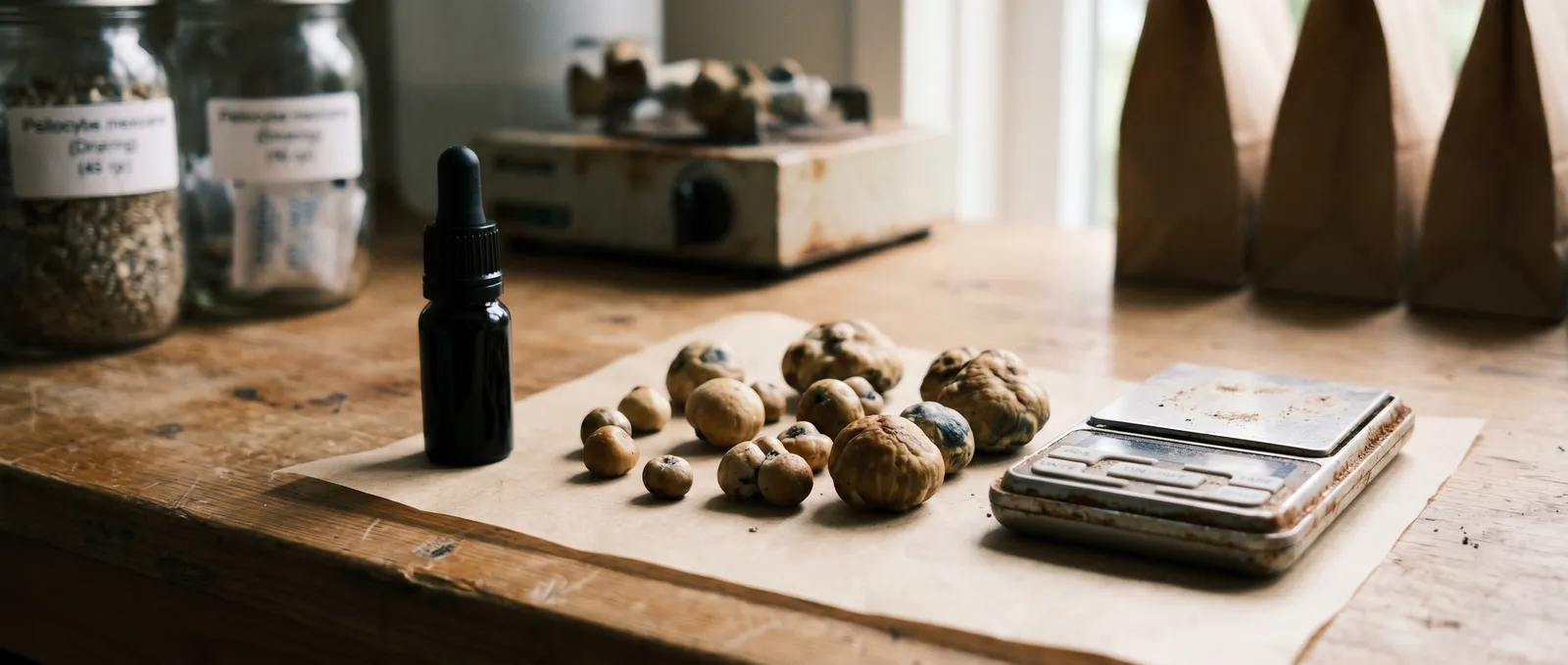
Magic truffle quality indicators are the measurable and sensory characteristics — psilocybin content, texture, aroma, packaging integrity, and storage…
Mescaline Cactus Market Observations
Mescaline cactus market observations is a research and retail term that describes the shifting patterns in sourcing, species selection, and consumption of…
Growing Mescaline Cacti as Ornamental Plants
Growing mescaline cacti ornamental is a horticultural practice that involves cultivating species like San Pedro, Peruvian Torch, and peyote for their…
Commercial Magic Truffle Cultivation
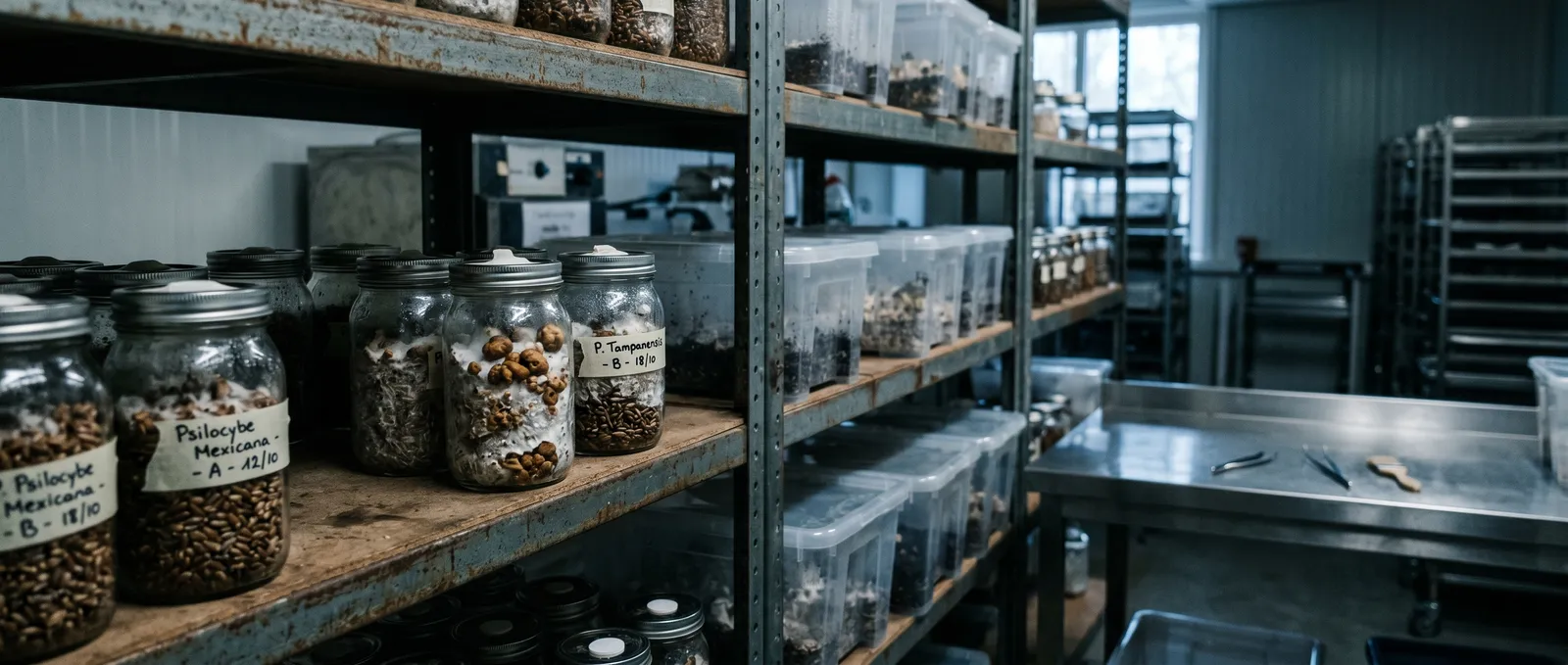
Commercial magic truffle cultivation is a large-scale agricultural process that produces psilocybin-containing sclerotia in climate-controlled indoor…
Huachuma Andean Tradition
The huachuma Andean tradition is a ceremonial healing lineage centred on the San Pedro cactus (Echinopsis pachanoi) that has been documented across at least…