
Reishi East Asian History
Definition
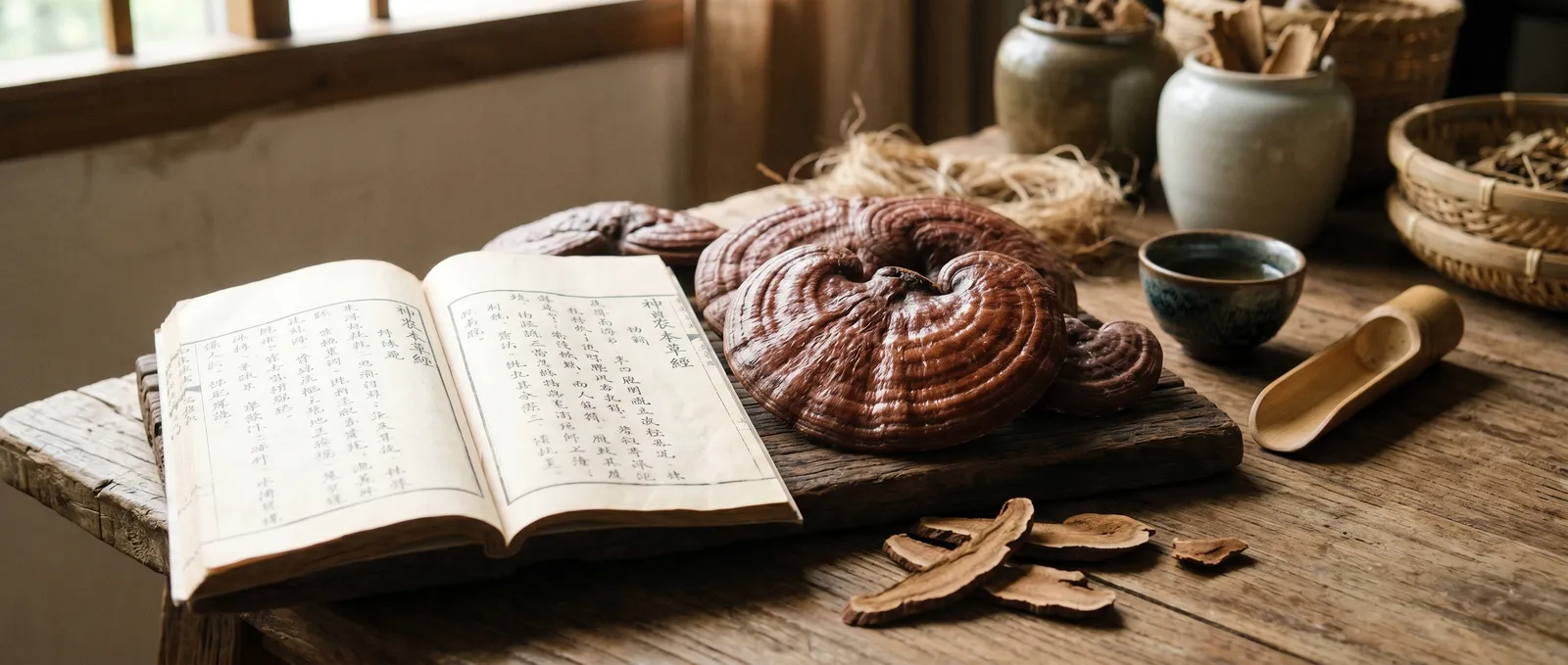
Reishi (língzhī, 靈芝) has been documented in East Asian medicine for over 2,000 years, first appearing in the Shénnóng Běncǎo Jīng around 200 CE. Classified as a superior tonic rather than an acute remedy, the mushroom became central to Taoist longevity practice and Chinese imperial culture before Japanese researchers enabled commercial cultivation in the 1970s (Wachtel-Galor et al., 2011).
Reishi east asian history is a record of one of the most thoroughly documented medicinal fungi on the planet — a story spanning over two thousand years of medical texts, imperial courts, and spiritual practice. Known as língzhī (靈芝) in Chinese and mannentake in Japanese, reishi is a woody bracket fungus that has been woven into East Asian medicine, art, and Taoist longevity traditions since at least 200 CE. According to Wachtel-Galor et al. (2011), Ganoderma lucidum has a longer documented history of medicinal use than virtually any other mushroom species. If you want to understand why reishi supplements line health-shop shelves in 2026 — or why customers buy reishi extract at shops like Azarius — you need to start here, roughly 200 CE, give or take a dynasty.
Disclaimer: The information in this article is provided for educational and harm-reduction purposes only. It does not constitute medical advice. Reishi supplements are not intended to diagnose, treat, cure, or prevent any disease. Always consult a qualified healthcare professional before using any supplement, especially if you are pregnant, nursing, or taking medication.
The Earliest Written Records
The earliest unambiguous written reference to reishi appears in the Shénnóng Běncǎo Jīng (神農本草經), compiled around 200 CE during the Eastern Han dynasty. This foundational Chinese materia medica classifies língzhī among the "superior" (上品) medicines — substances considered non-toxic and suitable for prolonged use to promote vitality. Six colour varieties are described (red, black, blue/green, white, yellow, and purple), each associated with different organs and therapeutic properties. The red variety, chì zhī (赤芝), corresponds to what modern mycology identifies as Ganoderma lucidum or the closely related Ganoderma lingzhi (Cao et al., 2012).
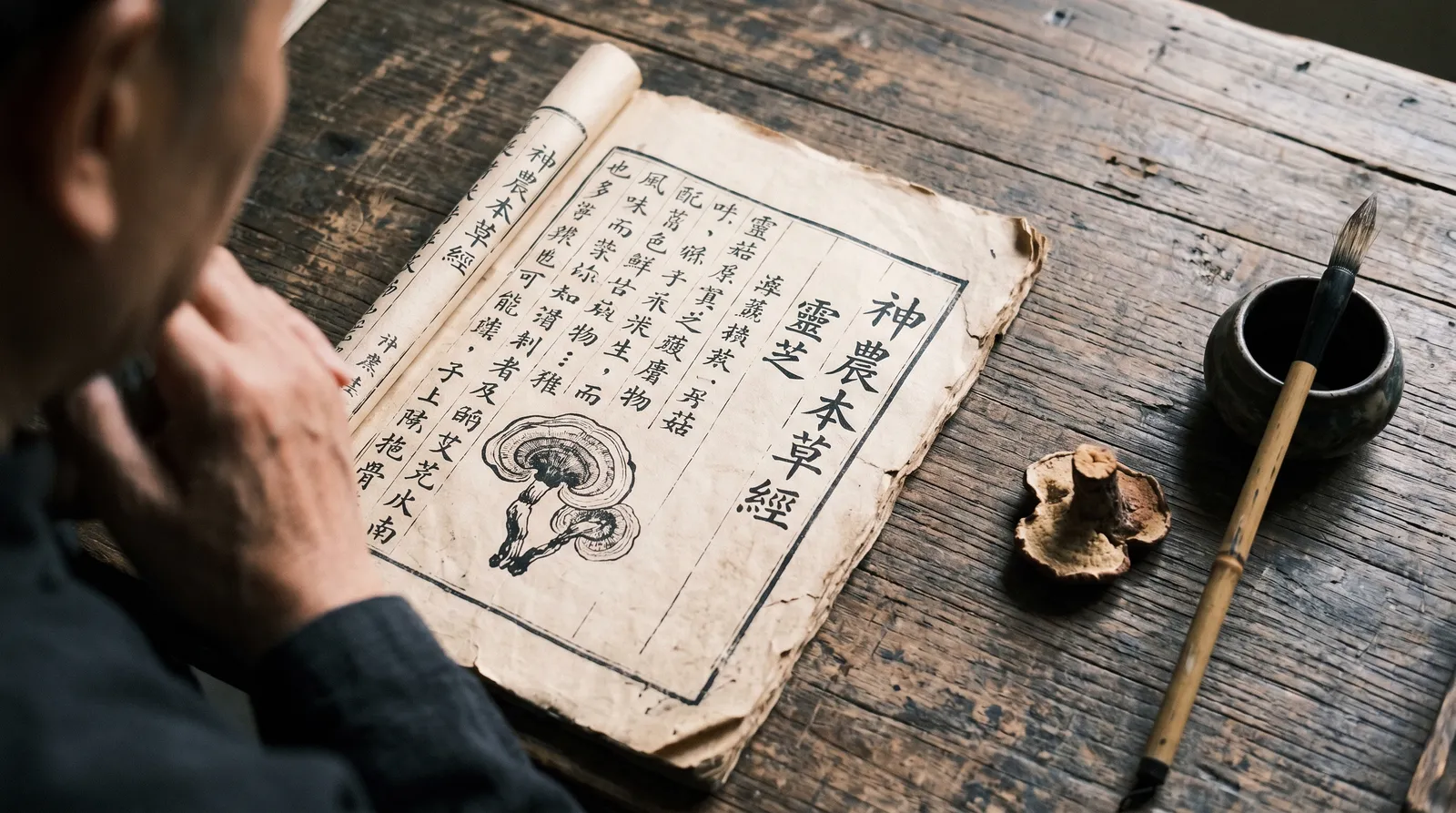
What makes the Shénnóng Běncǎo Jīng classification interesting is its framing. The text doesn't describe língzhī as a medicine for specific diseases — it positions the fungus as a tonic for "nourishing life" (養生, yǎngshēng). That distinction matters because it set the template for how reishi would be used for the next eighteen centuries: not as an acute remedy, but as a long-term supplement for general resilience.
By the time Táo Hóngjǐng revised and expanded the materia medica around 500 CE, língzhī had accumulated additional associations — with mental clarity, balanced breathing, and what we'd loosely translate as cardiovascular support. Táo's commentary also notes that wild língzhī was already rare and highly prized, a theme that would only intensify over the following millennium. The reishi east asian history trail through these early pharmacopoeias reveals a consistent pattern: the mushroom was always framed as systemic support, never a quick fix.
Reishi in Taoist Tradition and Imperial Culture
Taoism elevated reishi from a medicinal fungus to a spiritual symbol, classifying língzhī as a "herb of spiritual potency" believed to confer longevity or even immortality. Within Taoist cosmology, the mushroom was one of several substances that Taoist alchemists included in elixir formulations. The character 靈 (líng) itself means "spiritual" or "numinous," and 芝 (zhī) refers to a type of fungus or plant. So the name literally translates to something like "spirit mushroom" or "numinous fungus."
During the Tang dynasty (618–907 CE), alchemists included língzhī in elixir formulations alongside minerals like cinnabar and jade powder. While we now know those mineral ingredients were often toxic (mercury poisoning killed more than one emperor chasing immortality), the fungal components were comparatively harmless. Reishi's association with Taoist immortals (仙人, xiānrén) cemented its status as a symbol of divine favour, and it began appearing in imperial architecture, textiles, and court paintings.
During the Ming dynasty (1368–1644), the great physician Lǐ Shízhēn compiled the Běncǎo Gāngmù (本草綱目), arguably the most complete pre-modern pharmacopoeia in Chinese history. Published in 1578, it dedicates substantial entries to all six língzhī varieties, describing preparation methods (typically simmering dried slices into decoctions), recommended contexts for use, and observations about habitat. Lǐ Shízhēn notes that wild língzhī grows on decaying hardwood — an observation that modern cultivation science confirmed when Japanese researchers first succeeded in growing Ganoderma lucidum on logs in the early 1970s (Wachtel-Galor et al., 2011).
Reishi Crosses to Japan and Korea
Reishi entered Japanese and Korean medicine through the broader transmission of Chinese medical knowledge across East Asia, arriving in Japan by at least the Nara period (710–794 CE). In Japan, the mushroom became known as mannentake (万年茸, "ten-thousand-year mushroom") or simply reishi — the Japanese reading of the Chinese characters 霊芝. The term "reishi" is actually the one that stuck in Western languages, largely because Japanese researchers were the first to publish extensively on the mushroom in English-language journals during the 1970s and 1980s.
Korean traditional medicine (한의학, hanuihak) incorporated reishi under the name yeongji (영지). Korean texts from the Joseon dynasty (1392–1897) reference yeongji in formulations for fatigue and respiratory complaints, though Korean practitioners tended to use it in multi-herb combinations rather than as a standalone ingredient — a pattern that persists in modern Korean herbal practice.
Japan's contribution to the reishi east asian history narrative is primarily scientific rather than folkloric. In 1971, Yukio Naoi of Kyoto University developed a reliable method for cultivating Ganoderma lucidum on plum-tree sawdust, breaking the centuries-old dependence on scarce wild specimens. By the 1980s, Japanese firms were producing reishi commercially, and researchers like Shigeru Arichi and Hiroshi Hikino had begun isolating and characterising the mushroom's triterpenoid compounds — the ganoderic acids that modern studies focus on (Sanodiya et al., 2009). Without Japanese cultivation breakthroughs, reishi would likely have remained a rare collector's item rather than a globally traded supplement ingredient.
Symbolism Beyond Medicine
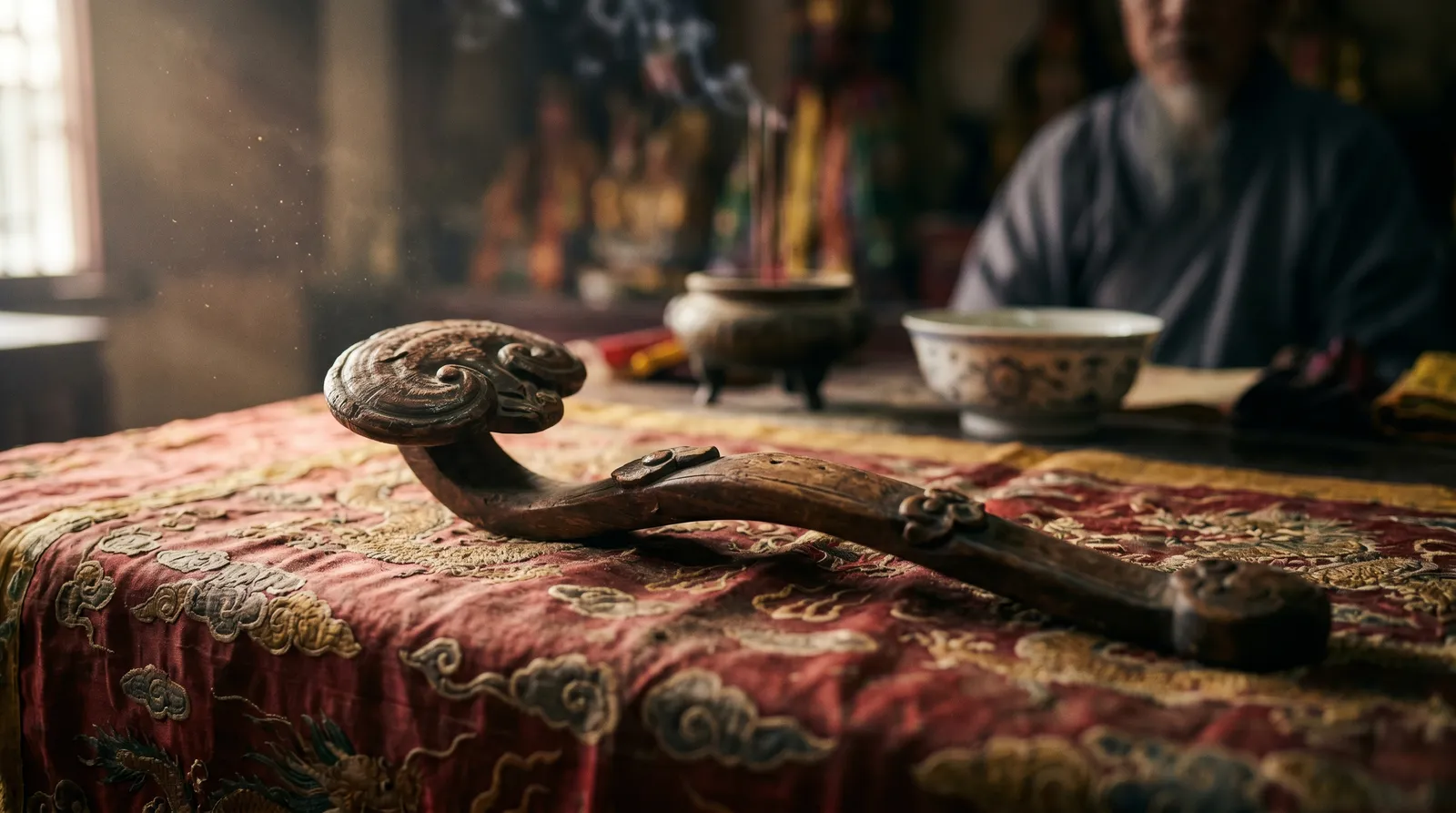
Reishi's cultural significance in East Asia extends well beyond pharmacy, encompassing art, architecture, and court ritual from at least the Song dynasty (960–1279 CE) onward. The mushroom typically appears as a symbol of longevity, good fortune, and official favour. The ruyi sceptre (如意) — a curved ceremonial object carried by scholars and officials — is widely believed to derive its shape from the língzhī mushroom, though art historians debate whether the resemblance is intentional or coincidental.
In imperial gardens, língzhī motifs decorated screens, roof tiles, and textiles. The Forbidden City in Beijing contains over 30 architectural elements featuring stylised língzhī carvings, according to surveys by the Palace Museum (故宮博物院). The mushroom also appears on jade carvings, porcelain, and embroidered silk robes — always as an auspicious symbol, never a mundane one.
This symbolic weight helps explain why reishi occupies a different cultural register than, say, shiitake or maitake. Those are food mushrooms with medicinal properties. Reishi was never really food — it's too bitter and woody to eat. It was always positioned as something rarer: a bridge between the medicinal and the sacred. By comparison, lion's mane — another fungus with a long East Asian pedigree — was prized as both a culinary delicacy and a medicine, giving it a more approachable reputation. Reishi's bitterness kept it firmly in the apothecary rather than the kitchen.
From Tradition to Modern Research
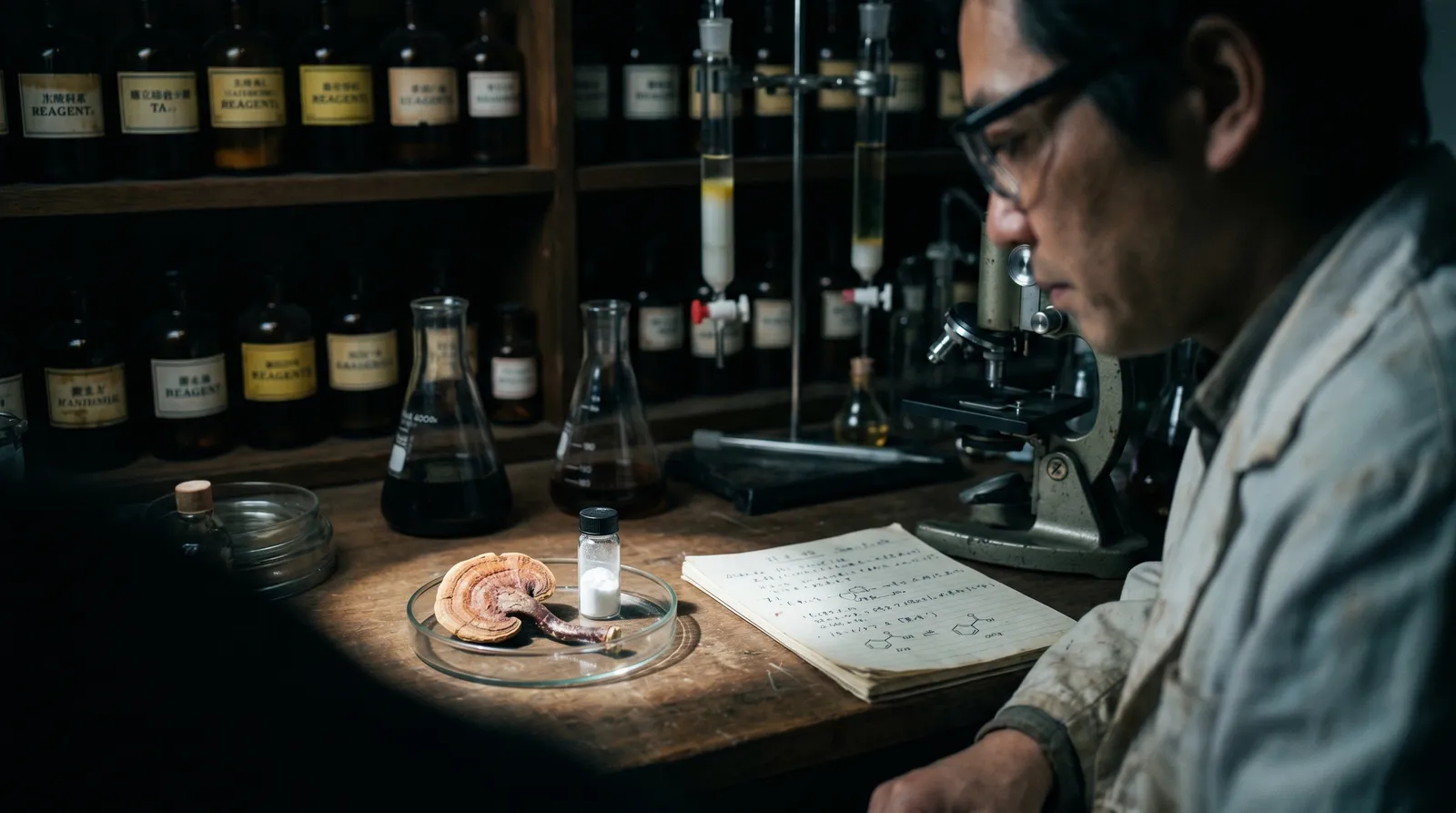
The transition from traditional reishi use to modern pharmacological investigation began in earnest during the 1970s, when Chinese and Japanese laboratories started isolating specific bioactive compounds. Researchers identified polysaccharides (particularly beta-glucans) and triterpenoids (ganoderic acids A through Z and beyond) from Ganoderma lucidum fruiting bodies and spores. A 2012 review by Boh et al. catalogued over 400 individual bioactive compounds identified in the species — a staggering chemical diversity that goes some way toward explaining the breadth of traditional claims.
Modern taxonomy has also complicated the picture. What Chinese and Japanese practitioners historically called língzhī or reishi likely encompassed several Ganoderma species. Cao et al. (2012) proposed that the species most commonly cultivated and used in China should properly be called Ganoderma lingzhi, distinct from the European Ganoderma lucidum first described by William Curtis in 1781. The naming debate remains active — most supplement labels still say G. lucidum regardless of actual species, and the triterpenoid profiles differ measurably between species and even between cultivation substrates. So when you read a study on "reishi," it's worth checking which species and which preparation method the researchers actually used. Data from the EMCDDA and related European monitoring bodies increasingly note the importance of species-level identification for any substance sold as a supplement.
Key compounds identified in Ganoderma species include:
- Beta-glucans — polysaccharides studied for immune-modulating properties
- Ganoderic acids — triterpenoids with over 130 structural variants catalogued
- Ganodermanontriol — a triterpenoid investigated in cell-culture studies
- Ergosterol derivatives — precursors to vitamin D₂ when exposed to UV light
- Peptidoglycans — protein-bound polysaccharides found in mycelium and fruiting body
| Historical Period | Region | Key Development |
|---|---|---|
| ~200 CE | China | First classification in Shénnóng Běncǎo Jīng as superior medicine |
| ~500 CE | China | Táo Hóngjǐng expands materia medica entries on língzhī |
| 618–907 CE | China | Tang dynasty Taoist alchemists include língzhī in longevity elixirs |
| 1578 | China | Lǐ Shízhēn publishes Běncǎo Gāngmù with detailed língzhī entries |
| 1971 | Japan | Yukio Naoi develops reliable cultivation on plum-tree sawdust |
| 1980s | Japan | Commercial production begins; triterpenoids first characterised |
| 2012 | China | Cao et al. propose Ganoderma lingzhi as distinct species name |
For the full picture of reishi's bioactive compounds and how they're understood today, see the Reishi Pharmacology article in the Azarius wiki. If you're curious about how traditional preparation methods compare to modern extracts, the Reishi Preparation Methods article covers that ground. Those looking to get reishi extract or buy reishi capsules can find current options in the Azarius mushroom supplements category.
What two millennia of reishi east asian history established — and what modern research is slowly catching up with — is that reishi was never a single-purpose remedy. It was a systemic tonic, used over months and years, in cultures that thought about health in terms of balance rather than targeted intervention. That framing doesn't map neatly onto Western clinical trial design, which typically tests one compound against one condition over a fixed period. We should be honest about this limitation: most modern clinical trials on reishi are small, short-term, and use varying preparations, making it difficult to draw firm conclusions that match the breadth of traditional claims. The gap between traditional context and modern methodology is where most of the interesting questions about reishi still live.
Last updated: April 2026
Frequently Asked Questions
8 questionsWhen was reishi first mentioned in Chinese medicine?
Why is the mushroom called 'reishi' if it's Chinese?
How did Taoism influence the use of reishi?
When did commercial reishi cultivation begin?
Is the reishi in modern supplements the same species used historically in China?
Where can I buy reishi supplements?
What is the difference between reishi and lingzhi?
Why was reishi historically reserved for emperors and nobility?
About this article


Joshua Askew serves as Editorial Director for Azarius wiki content. He is Managing Director at Yuqo, a content agency specialising in cannabis, psychedelics and ethnobotanical editorial work across multiple languages. Th
This wiki article was drafted with AI assistance and reviewed by Joshua Askew, Managing Director at Yuqo. Editorial oversight by Adam Parsons.
Medical disclaimer. This content is for informational purposes only and does not constitute medical advice. Consult a qualified healthcare provider before use of any substance.
Last reviewed April 24, 2026
References (2)
- [1]Wasser, S. P. (2005). Reishi or Lingzhi (Ganoderma lucidum). Encyclopedia of Dietary Supplements, 603-622. DOI: 10.1081/E-EDS-120022119
- [2]Hobbs, C. (1995). Medicinal Mushrooms: An Exploration of Tradition, Healing, and Culture. Botanica Press, Santa Cruz, CA.
Related Articles
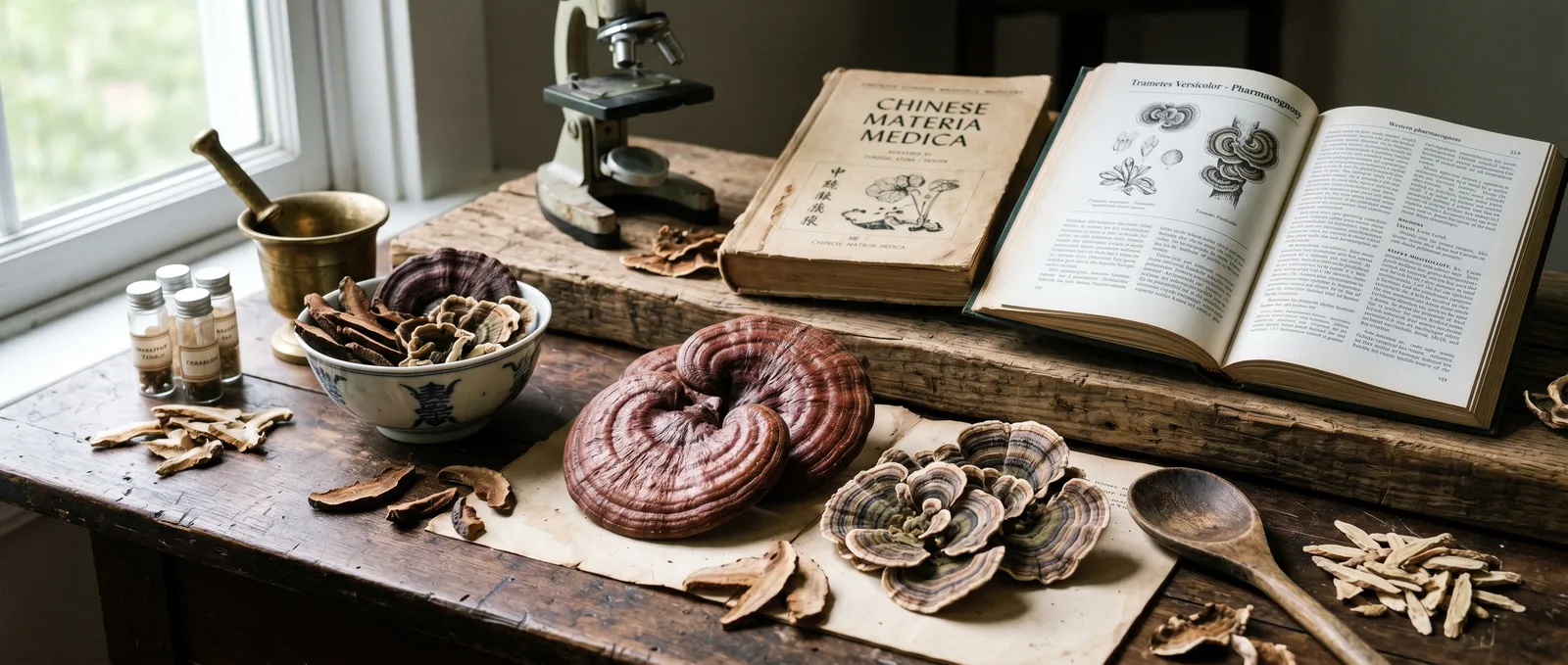
Medicinal Mushrooms TCM Western Pharmacognosy Guide
Guide to medicinal mushrooms TCM Western pharmacognosy — how reishi, lion's mane, cordyceps are classified, extracted, and studied.
Research on Immune Modulation by Functional Mushrooms
What does research on immune modulation by functional mushrooms actually show? Beta-glucans, Dectin-1 signalling, human trials, and the honest gap...
Allergic Reactions & Mushroom Sensitivities
Understand allergic reactions and mushroom sensitivities: mould cross-reactivity, shiitake dermatitis, species-specific risks, and safer product…
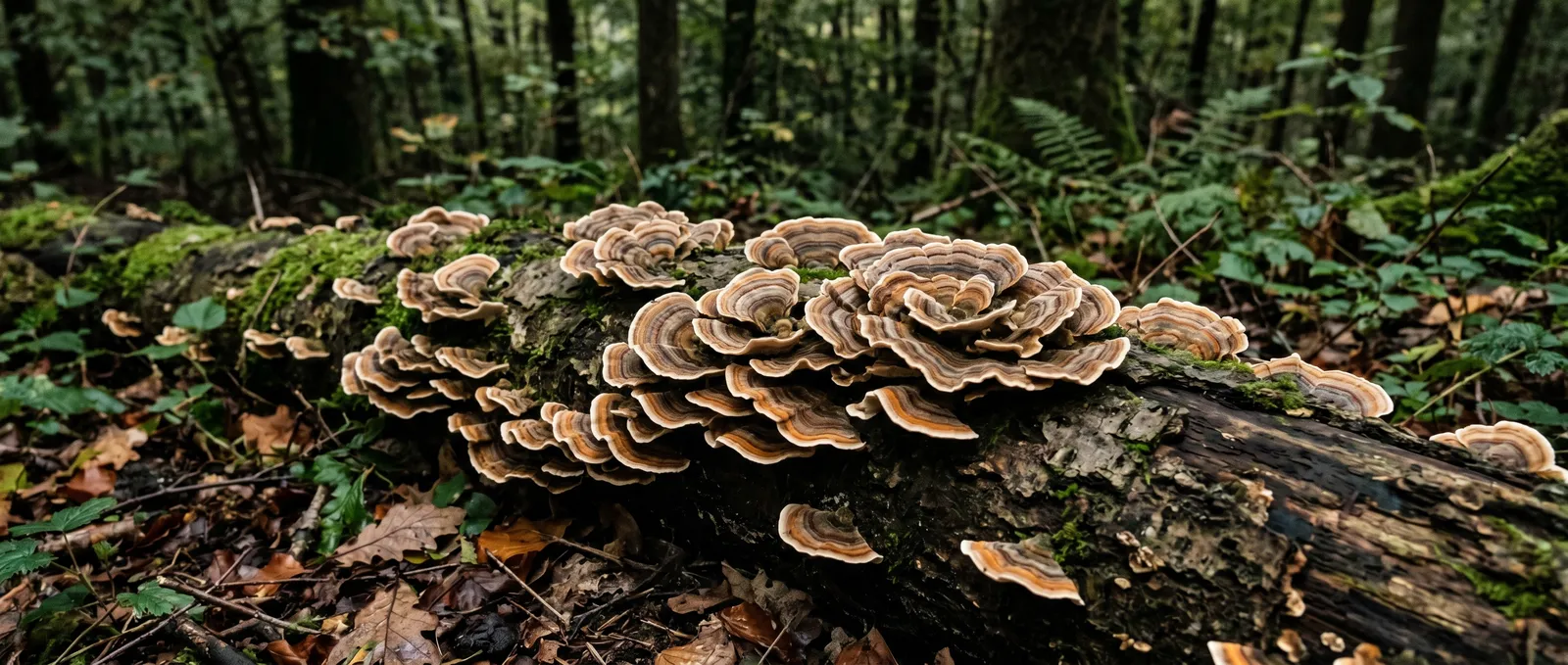
Turkey Tail Trametes versicolor — Buy Supplements
Buy turkey tail Trametes versicolor supplements at Azarius. PSK and PSP evidence, beta-glucan dosage, extraction methods, and safety.
Triterpenes In Medicinal Mushrooms
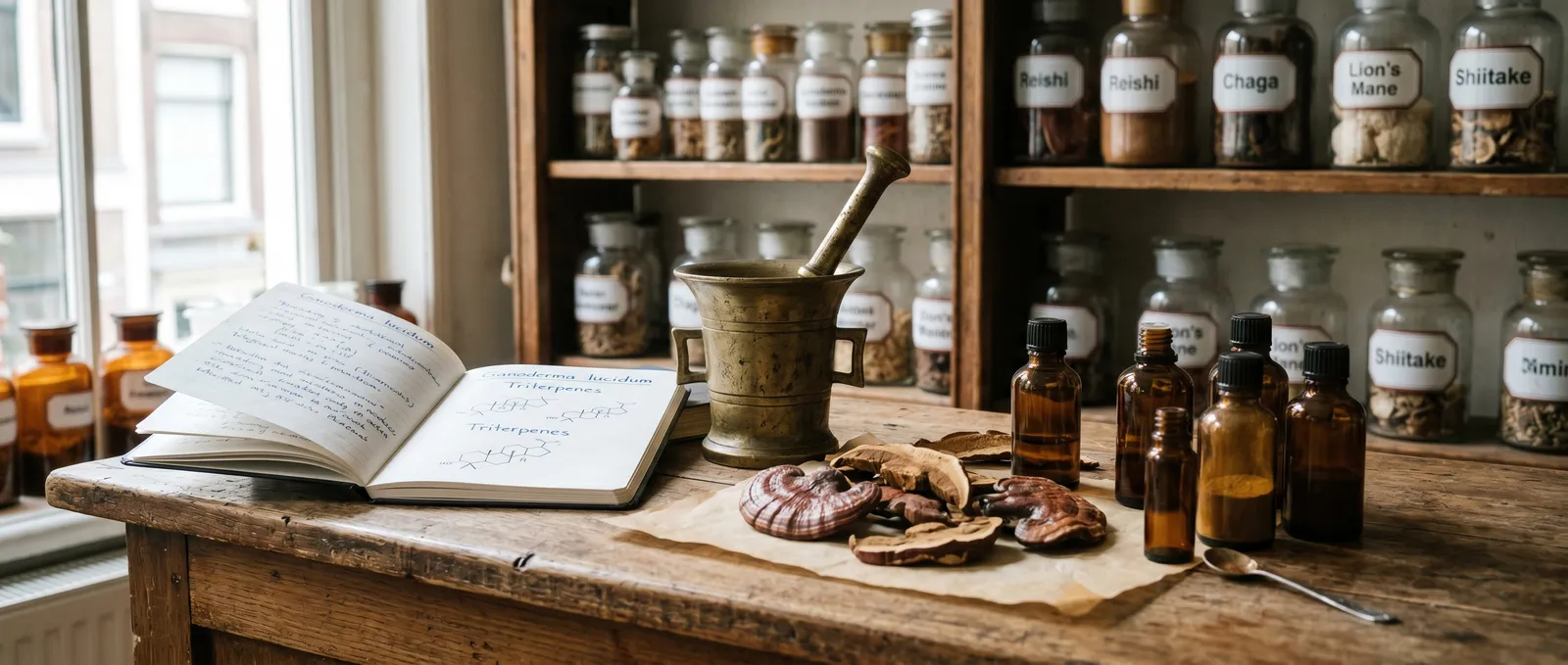
Triterpenes in medicinal mushrooms are a class of 30-carbon terpenoid compounds produced as secondary metabolites by several functional mushroom species…
Chaga Siberian Nordic Folk Use
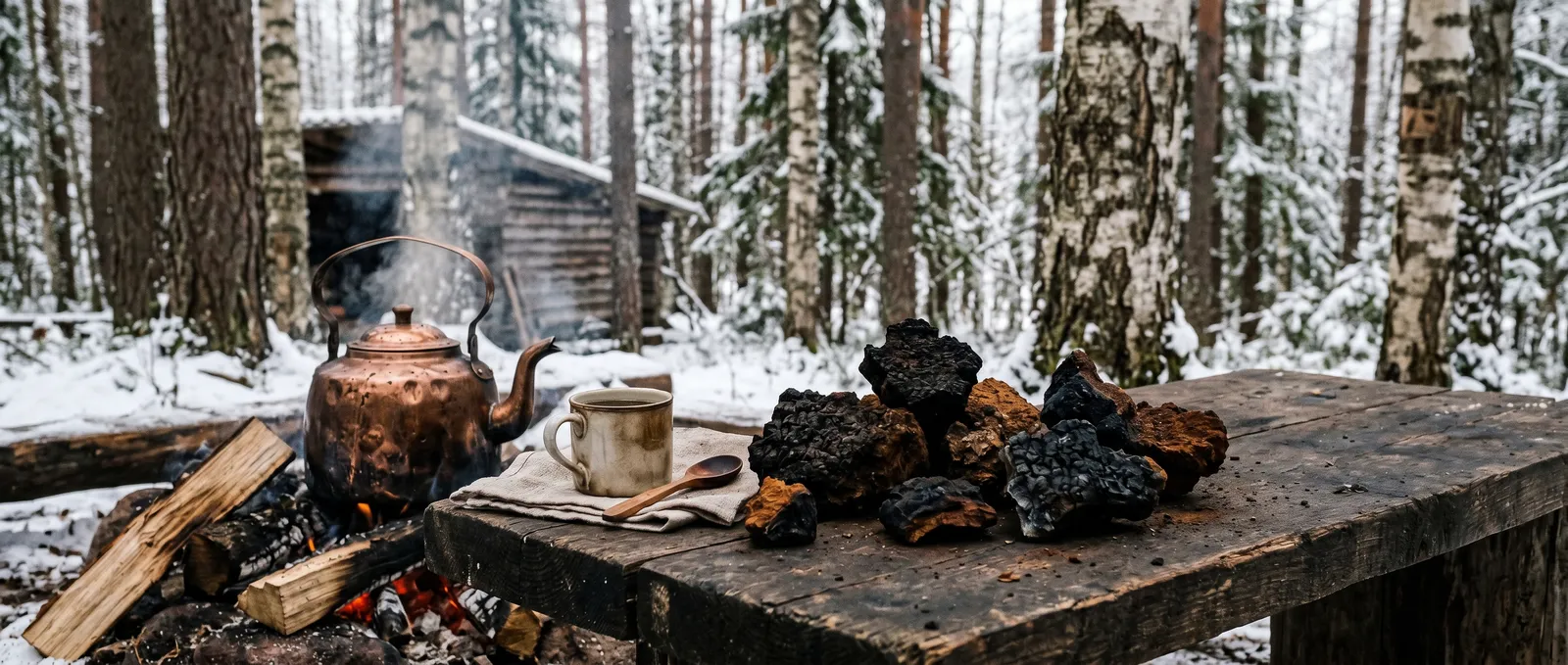
Chaga Siberian Nordic folk use is a centuries-old tradition in which indigenous Siberians and Nordic communities brewed the birch-parasitising fungus…
Red and Black Reishi Varieties
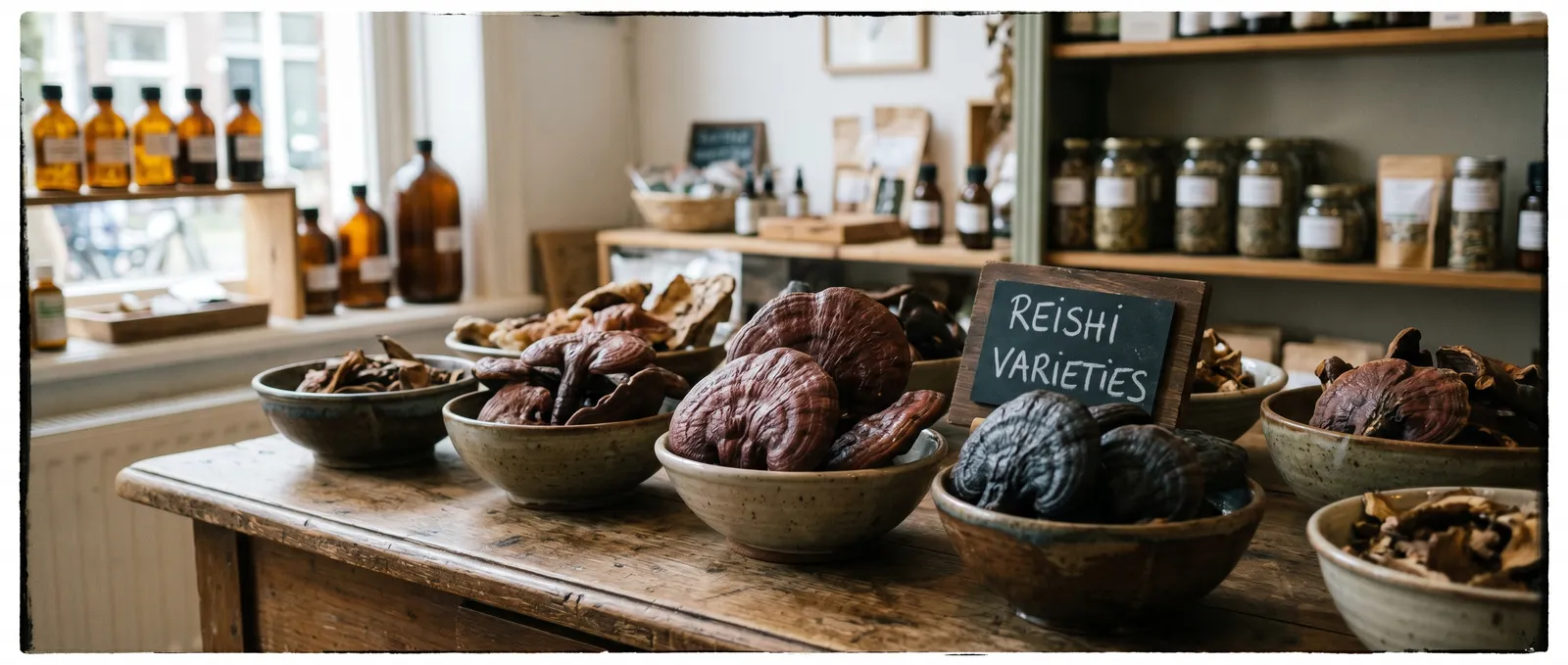
Red reishi (Ganoderma lucidum) and black reishi (Ganoderma sinense) both fall under the lingzhi umbrella in traditional Chinese medicine, but they differ in…
Lion's Mane Identification & Habitat
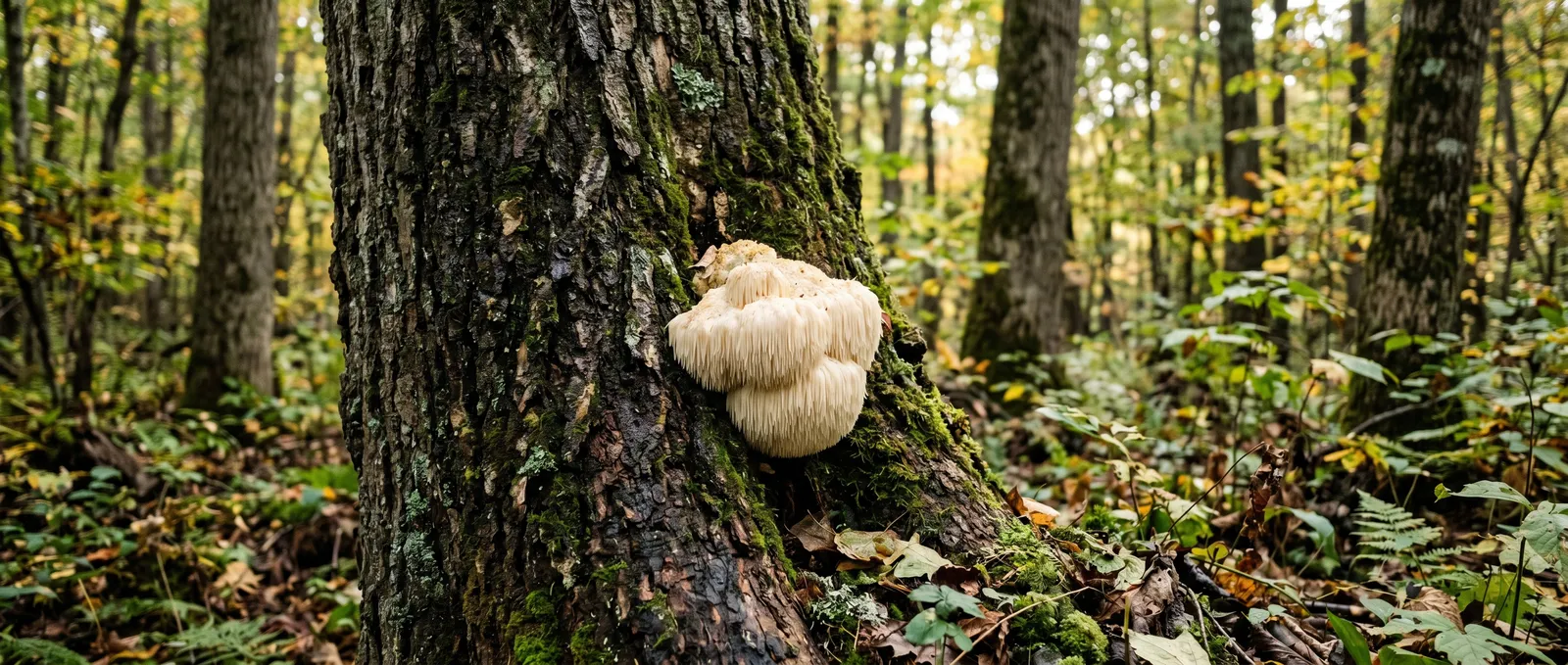
Hericium erinaceus is a tooth fungus that fruits as a single white, spine-covered mass on wounded or dead hardwood trees.
Cordyceps Lifecycle
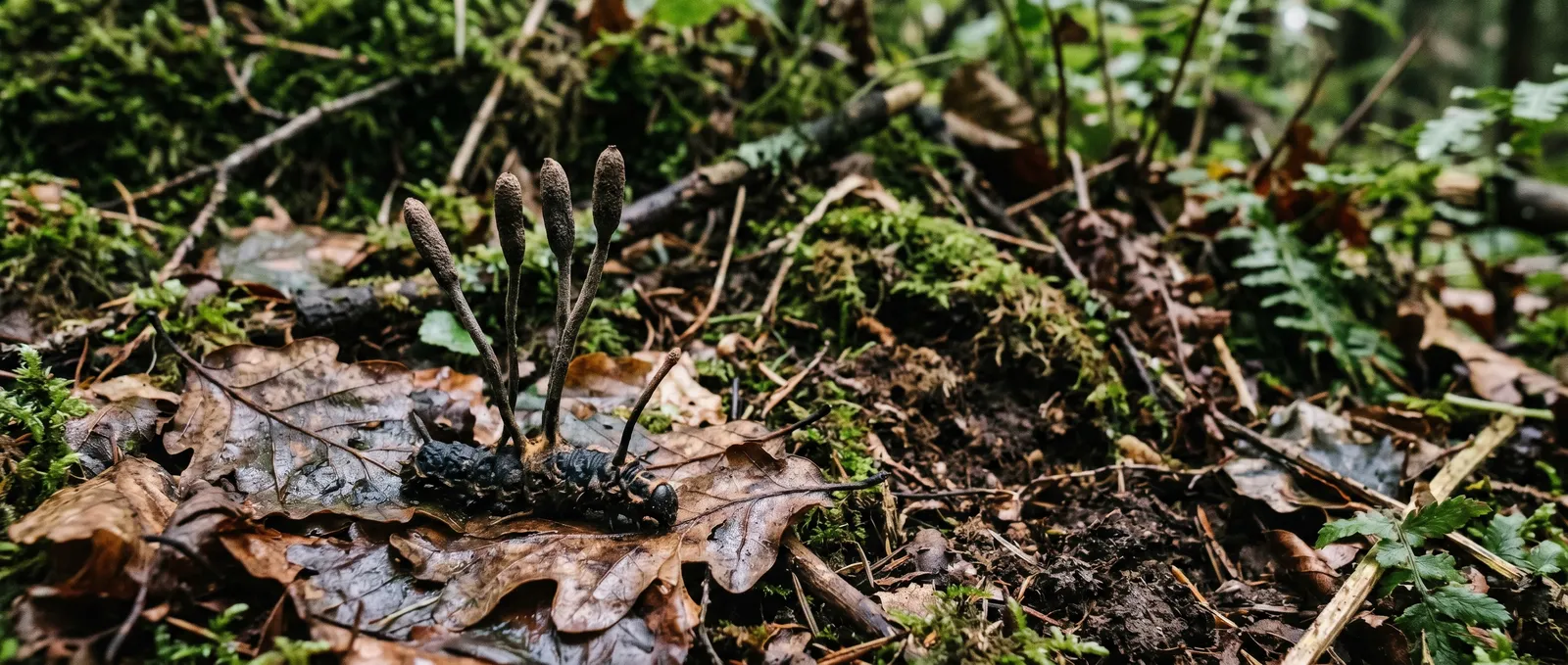
The cordyceps lifecycle is a parasitic biological sequence in which a fungus infects an insect host, colonises its body from within, and erupts as a…