
Chaga Sustainable Harvesting
Definition
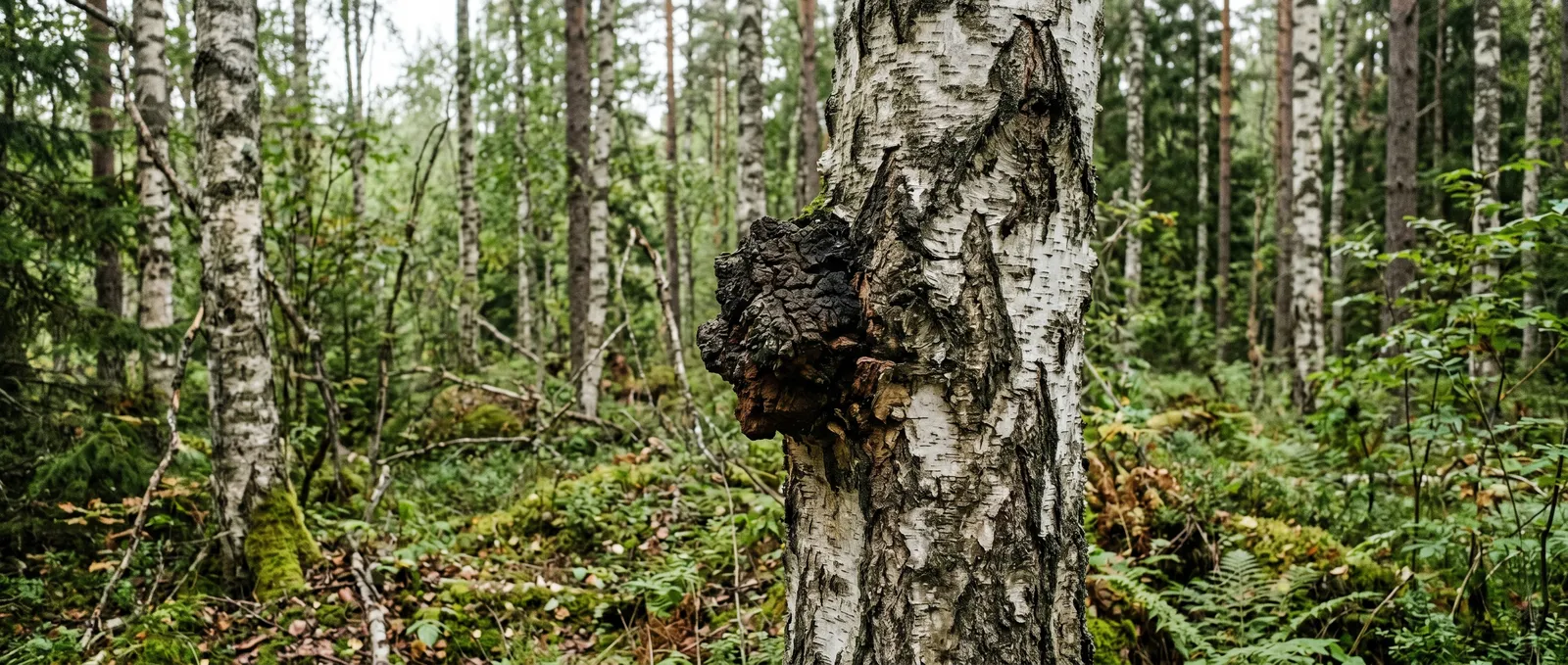
Chaga sustainable harvesting means collecting Inonotus obliquus conks from living birch trees without destroying the fungus or its host. Wild conks take 3–20 years to mature (Balandaykin & Zmitrovich, 2015), making overharvesting a serious risk as global demand rises. Responsible practice centres on partial harvest, mature-conk selection, and seasonal timing.
Chaga sustainable harvesting is the practice of collecting Inonotus obliquus conks from birch trees in ways that protect both the fungus and its host. Unlike most culinary or medicinal mushrooms, chaga grows as a parasitic sclerotium — a dense, charcoal-black mass that takes between 3 and 20 years to mature on a living birch (Balandaykin & Zmitrovich, 2015). Rip it off carelessly or too early, and you kill the organism's ability to regrow, damage the tree, and contribute to localised population collapse. With global demand for chaga extracts climbing sharply since the mid-2010s, the question isn't whether to harvest — it's whether we can keep doing it without emptying the boreal forests that produce it. If you want to buy chaga chunks or order chaga extract, understanding how your supply was collected matters more than most people realise. Chaga sustainable harvesting starts with knowing what you're buying and where it came from.
Why Chaga Cannot Be Farmed Like Other Mushrooms
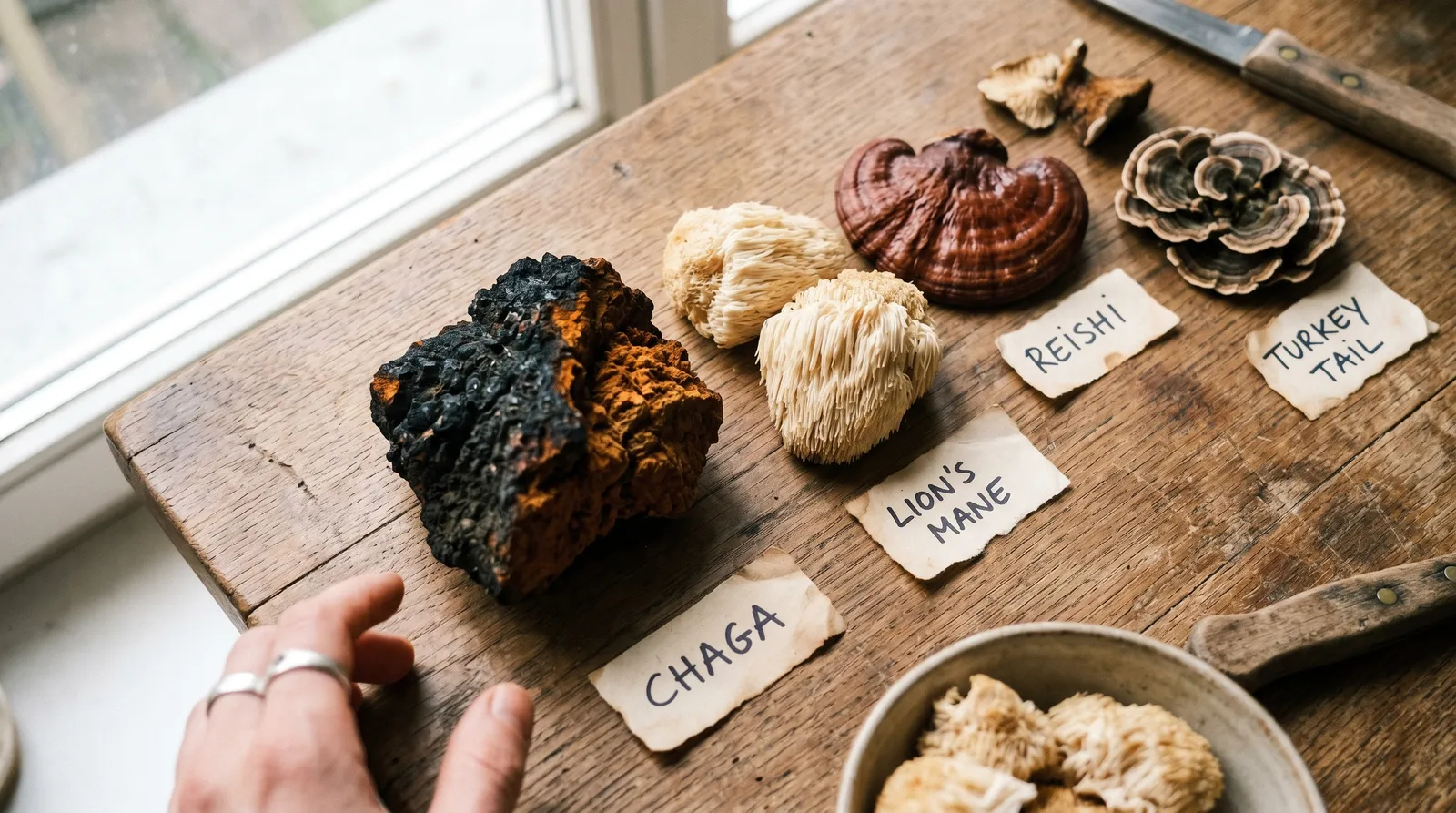
Chaga cannot be conventionally farmed because the conk develops only on living birch trees through a parasitic relationship that takes years to mature. Most functional mushrooms — lion's mane, reishi, turkey tail — fruit on substrates you can prepare in a lab. Grain bags, hardwood sawdust, sterilised straw. Chaga doesn't cooperate. The conk (the black mass people actually harvest) is not a fruiting body in the traditional sense. It's a sterile mass of mycelium and birch tissue that develops only when I. obliquus parasitises a living birch tree, typically Betula pendula or B. pubescens in subarctic and boreal climates. The relationship between fungus and host takes years. Lab-cultivated mycelium grown on grain can be produced, and some companies market it as "chaga," but its chemical profile differs substantially from wild conks — notably lower in betulinic acid derivatives, which the fungus synthesises by converting betulin from birch bark (Glamočlija et al., 2015).
This biological reality means wild harvesting remains the primary source for the conks most people associate with chaga sustainable harvesting. And that creates a bottleneck: you cannot scale wild harvest the way you scale indoor mushroom cultivation. The supply is limited by how many birch trees are infected, how fast conks grow, and how responsibly harvesters behave. Anyone looking to get chaga from a responsible source should understand this constraint.
What Overharvesting Actually Looks Like
Overharvesting manifests as progressive depletion of mature conks in accessible forests, forcing collectors deeper into wilderness each season. In Finland and Russia — the two largest sources of wild chaga — reports of overharvesting have increased since roughly 2015. The Finnish Natural Resources Institute (Luke) flagged declining chaga populations in accessible forests in southern Finland, noting that commercial harvesters were stripping conks from trees along roads and trails while leaving deeper forest populations untouched (Luke, 2019). Russia's Siberian forests still hold enormous reserves, but supply chains there are opaque, and verification of chaga sustainable harvesting practice is difficult. The EMCDDA's broader monitoring of botanical product supply chains has highlighted similar transparency gaps across multiple natural product categories in Eastern Europe (EMCDDA, 2021).
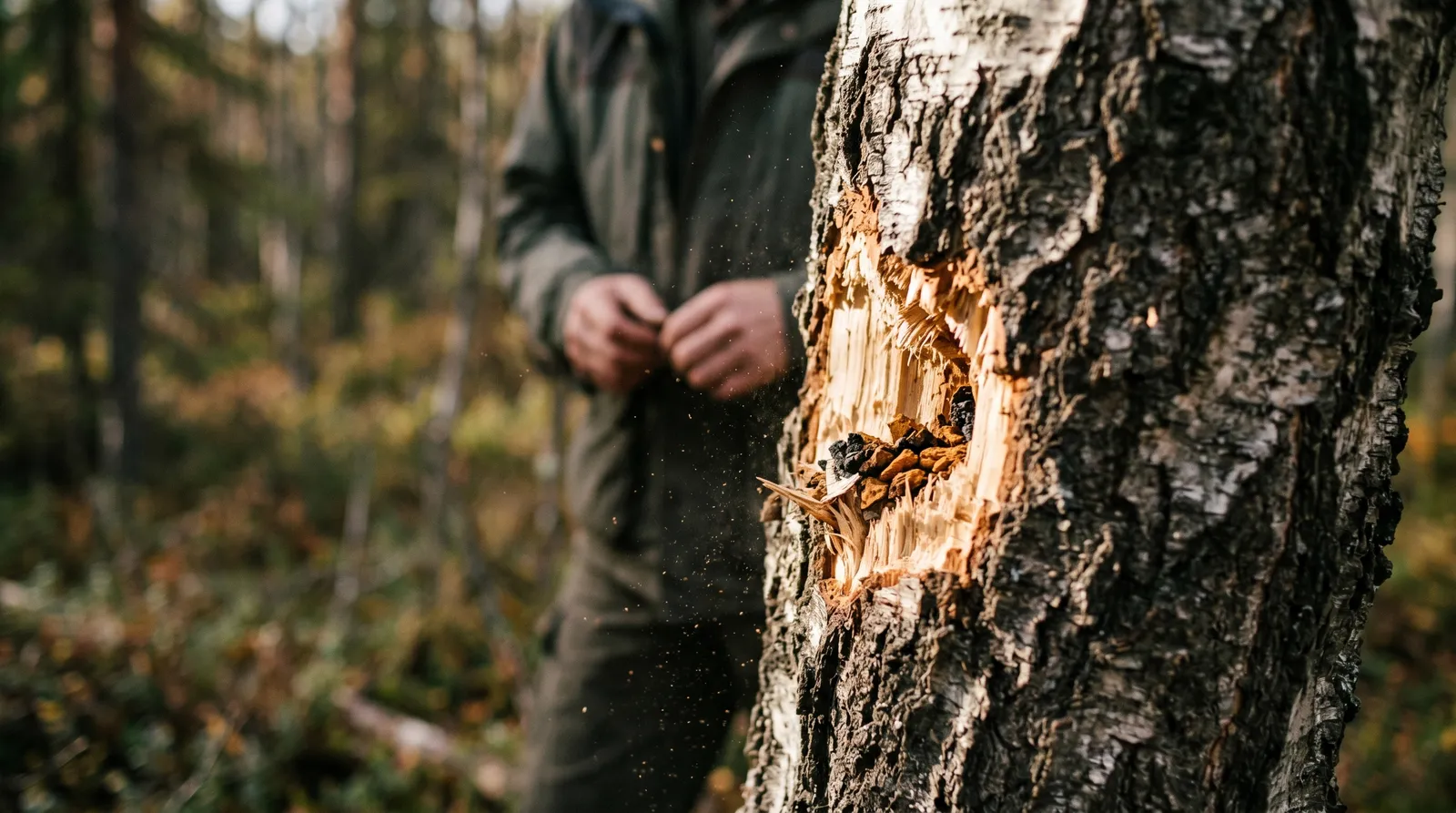
The damage from poor harvesting is twofold. First, removing a conk entirely — cutting flush to the bark or gouging into the heartwood — exposes the tree to secondary infections and can kill it. A dead birch produces no more chaga. Second, taking immature conks (under roughly 5 years old, typically smaller than a grapefruit) removes the fungus before it has produced spores, reducing the chance of new infections on nearby trees. Over a decade or two, this thins local populations to the point where natural regeneration can't keep up.
How Chaga Should Be Harvested Responsibly
Responsible chaga sustainable harvesting follows five core principles designed to preserve both the fungus colony and its birch host. The practices are straightforward, even if enforcement is patchy:
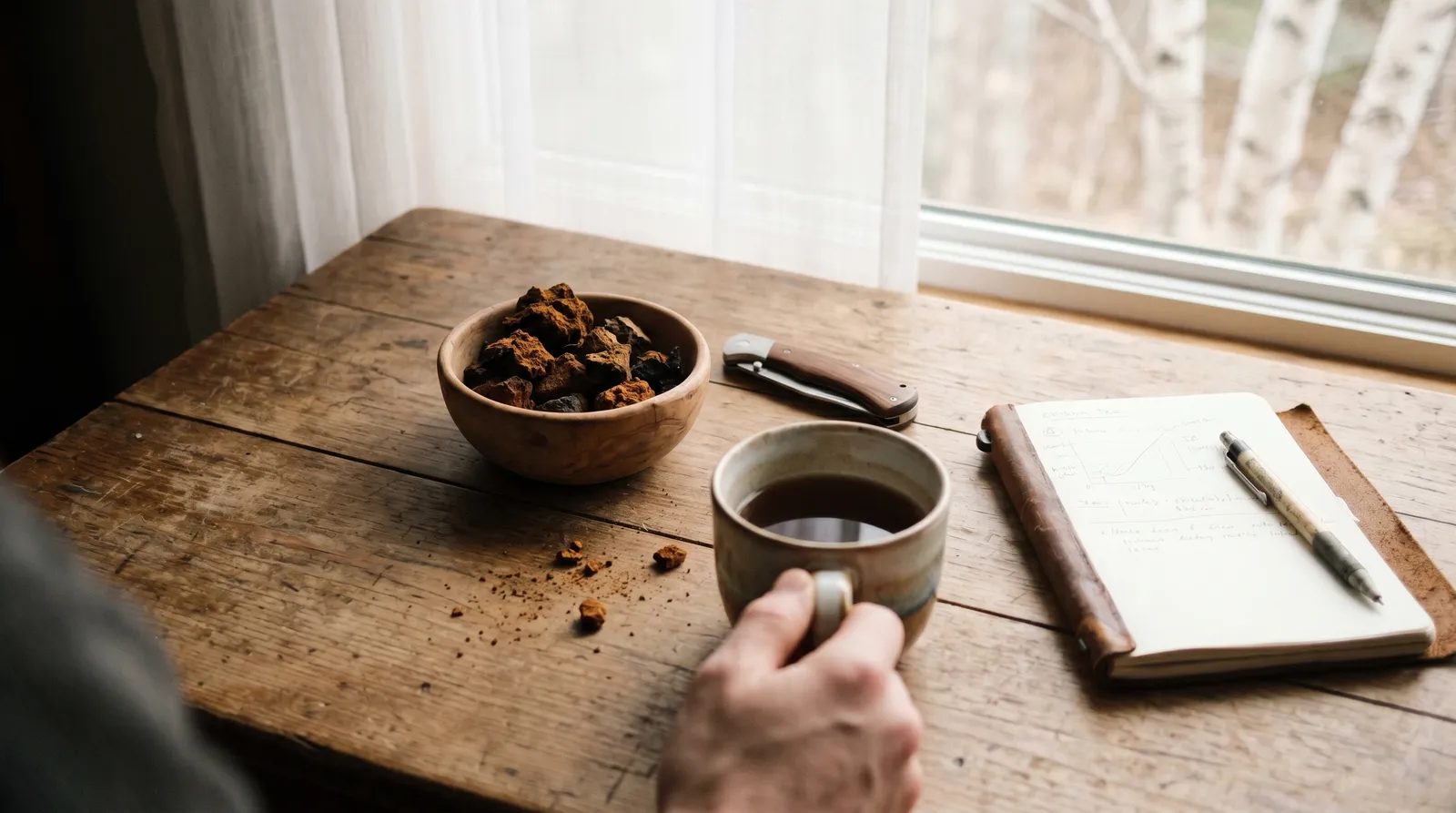
- Leave at least 15–20% of the conk attached to the tree. This allows the mycelium to continue growing and eventually regenerate the harvested mass. Complete removal kills the colony.
- Only harvest from living trees. Chaga on dead birches has already begun decomposing and has reduced bioactive content. More critically, the fungus on a dead tree is no longer producing the metabolites that make chaga interesting.
- Target mature conks only. A conk should be at least the size of a football (roughly 25 cm across) before harvest. Smaller conks haven't reached peak density or chemical complexity.
- Avoid harvesting during spring sap flow. Cutting into birch bark while the tree is actively moving sap (roughly March through May in northern Europe) causes excessive bleeding and weakens the tree significantly.
- Rotate harvest areas. Don't return to the same tree or stand for at least 3–5 years. Some Finnish guidelines suggest 5–10 years between harvests on the same tree.
These aren't formal rules in most countries — they're best practices circulated by mycological societies and a handful of responsible suppliers. In Finland, Everyman's Rights (jokamiehenoikeus) technically allow foraging chaga for personal use, but commercial-scale harvest on private land requires landowner permission, and there's growing discussion about whether formal quotas are needed.
| Characteristic | Wild Conk (Birch-Grown) | Lab-Cultivated Mycelium |
|---|---|---|
| Growth substrate | Living birch tree | Grain or liquid media |
| Time to maturity | 3–20 years | Weeks to months |
| Betulinic acid content | Significant (from birch betulin) | Little to none |
| Beta-glucan content | Present | Present |
| Scalability | Limited by forest ecology | Highly scalable |
| Sustainability risk | High without management | Low |
| Chemical complexity | Full spectrum | Partial spectrum |
Seasonal Timing and Regional Variation
The best time to harvest chaga varies by latitude but generally falls between late autumn and late winter, when the birch is dormant and sap flow has stopped. In Scandinavia, this means roughly October through February. In Canada's boreal belt, November through March is typical. Harvesting during dormancy reduces stress on the host tree and yields denser conk material, since the fungus concentrates its metabolites when not competing with active tree growth. Harvesters in Kainuu, Finland — one of the most well-documented chaga regions — report that winter-harvested conks are noticeably harder and darker in the interior than those taken in early autumn, though formal comparative studies on seasonal chemistry variation remain limited (Saar, 2020).
Is Cultivated Chaga a Real Alternative?
Cultivated chaga mycelium is a partial alternative that matches wild conks on some compounds but not others — most notably lacking betulinic acid. Companies like M2 Ingredients have developed methods for growing I. obliquus mycelium in fermentation tanks — liquid culture scaled up in bioreactors. The resulting biomass is biologically real chaga mycelium, and it contains polysaccharides (including beta-glucans) that show immunomodulatory activity in vitro. But it's not identical to a wild conk.
Wild chaga conks contain betulinic acid and its precursor betulin, which the fungus derives from birch bark. Lab-grown mycelium, cultivated on grain or in liquid media without birch, produces little to no betulinic acid (Zhong et al., 2021). Whether this matters depends on what you're after. If beta-glucans and general polysaccharide content are the goal, cultivated mycelium may serve. If the full spectrum of wild-conk chemistry is important, lab cultivation doesn't yet replicate it.
Some researchers are experimenting with inoculating living birch trees with I. obliquus in managed forestry settings — essentially farming wild-type chaga on its natural substrate. Early results from trials in Finland and South Korea show promise, but the timeline remains long: 5–10 years minimum before a harvestable conk develops. This isn't a quick commercial fix, though it could become part of the supply picture within a generation.
What to Look for When You Order Chaga
The most reliable indicator of sustainably harvested chaga is origin transparency — a supplier who names the specific region and describes their harvest method. You probably aren't trekking into Finnish birch forests yourself, so the chaga sustainable harvesting question becomes a supply-chain question. A few things to check:
- Origin transparency. Reputable suppliers name the country and region of harvest. "Sourced from Siberia" is vague. "Harvested in Kainuu, Finland, under landowner agreement" is specific.
- Wild vs. cultivated labelling. If a product says "chaga" without specifying, it could be mycelium-on-grain rather than wild conk. Neither is inherently bad, but they're different products with different chemical profiles, and you deserve to know which you're getting.
- Harvest method disclosure. Some suppliers describe their partial-harvest practice. Others say nothing. Silence isn't proof of bad practice, but transparency is a positive signal.
- Certification. Organic certification for wild-harvested chaga exists (USDA Organic and EU organic both have wild-crop provisions), though it certifies the absence of pesticides and contamination rather than sustainable harvest volume specifically. FairWild certification is rarer but more directly addresses sustainability — fewer than a handful of chaga suppliers hold it globally.
A 2020 review in Mycological Progress noted that the global chaga market was estimated at roughly USD 22 million and growing at over 8% annually, with most supply still wild-harvested from Russia, Finland, and Canada (Saar, 2020). At that growth rate, without formal management, localised depletion in accessible forests is essentially guaranteed within the next decade.
Does the Science Support Worrying About This?
Yes — field surveys in Finland show measurable population declines in accessible forests, and the fungus's multi-decade growth cycle means current damage won't become fully visible for years. I. obliquus is not classified as endangered by the IUCN, and no European country currently lists it as a protected species. But absence of formal protection doesn't mean populations are healthy. The Finnish Natural Resources Institute's field surveys showed measurable declines in southern Finland between 2010 and 2019, and anecdotal reports from commercial harvesters in Russia's Irkutsk and Krasnoyarsk regions describe having to travel deeper into forests each year to find mature conks (Luke, 2019).
The Alaska Cooperative Extension Service has published guidelines for sustainable wild harvest in North American boreal forests, recommending the same partial-harvest approach described above and explicitly warning against commercial-scale collection without population monitoring (Kellogg & Hupp, 2020). Their position: personal-use foraging at current levels is sustainable; commercial extraction without management is not.
Chaga's slow growth rate — that 3-to-20-year maturation window — means that population damage today won't become fully visible for years. By the time the decline is obvious, recovery takes a generation of birch trees. This is the core tension: demand is growing on a consumer-product timeline, while supply regenerates on a forest-ecology timeline.
Chaga Sustainable Harvesting Compared to Other Functional Mushrooms
Chaga is the only widely sold functional mushroom that cannot yet be fully replicated through indoor cultivation, making its sustainability challenge unique. Lion's mane, reishi, and turkey tail all fruit reliably on prepared substrates — sawdust blocks, supplemented hardwood, sterilised straw — with harvest cycles measured in weeks rather than years. Their supply scales with demand. Chaga doesn't. Cordyceps presents a partial parallel: wild Ophiocordyceps sinensis faces severe overharvesting pressure on the Tibetan Plateau, but cultivated Cordyceps militaris has largely replaced it in commercial supplements, something that hasn't happened with chaga because the chemistry gap between wild and cultivated is wider.
| Species | Indoor Cultivation | Harvest Cycle | Wild Supply Risk | Chemistry Match (Cultivated vs. Wild) |
|---|---|---|---|---|
| Chaga (I. obliquus) | Mycelium only (no conk) | 3–20 years (wild) | High | Partial — lacks betulinic acid |
| Lion's mane (H. erinaceus) | Full fruiting body | 3–5 weeks | Low | High |
| Reishi (G. lucidum) | Full fruiting body | 2–3 months | Low | High |
| Turkey tail (T. versicolor) | Full fruiting body | 6–8 weeks | Low | High |
| Cordyceps (C. militaris) | Full fruiting body | 6–8 weeks | Low (cultivated replaces wild) | High |
If you're browsing functional mushrooms in the Azarius smartshop — lion's mane capsules, reishi extract, turkey tail powder — those products carry far less ecological baggage than wild chaga. That's worth knowing when you decide what to order.
Supply-Chain Transparency and the European Market
Most chaga sold in European smartshops and supplement stores originates from three regions: Finland, Russia, and Canada. Finland offers the best traceability because harvest often occurs under landowner agreements with documented GPS coordinates. Russian supply, while abundant, passes through multiple intermediaries before reaching European buyers, making chaga sustainable harvesting verification difficult. The EMCDDA has noted broader challenges with botanical product traceability from Eastern European sources (EMCDDA, 2021), and chaga is no exception. Canadian supply falls somewhere between — provincial forestry agencies in Ontario and Quebec track commercial harvest permits, but enforcement varies.
For buyers in the Netherlands and broader EU, the key question is whether your supplier can trace the product back to a specific forest or region. The Azarius encyclopedia entry on chaga covers the chemistry and traditional use in more detail. The Azarius blog has published comparisons of functional mushroom bioactive profiles that help contextualise what makes wild chaga conks chemically distinct. The Azarius mushroom category page lists all available mushroom products including chaga chunks and chaga extract for those ready to buy.
Last updated: April 2026
Frequently Asked Questions
10 questionsCan chaga regrow after being harvested?
Why does lab-grown chaga lack betulinic acid?
How can you tell if a chaga conk was harvested too early?
Is wild chaga at risk of extinction?
What certifications indicate sustainably harvested chaga?
How does chaga sustainability compare to other functional mushrooms?
How long does it take for a chaga conk to reach harvestable size?
Why is the chaga supply chain from Russia considered less transparent?
Does harvesting chaga harm the host birch tree?
What is the minimum size a chaga conk should be before harvesting?
About this article


Joshua Askew serves as Editorial Director for Azarius wiki content. He is Managing Director at Yuqo, a content agency specialising in cannabis, psychedelics and ethnobotanical editorial work across multiple languages. Th
This wiki article was drafted with AI assistance and reviewed by Joshua Askew, Managing Director at Yuqo. Editorial oversight by Adam Parsons.
Medical disclaimer. This content is for informational purposes only and does not constitute medical advice. Consult a qualified healthcare provider before use of any substance.
Last reviewed April 24, 2026
References (2)
- [1]Lee, M. W., Hur, H., Chang, K. C., Lee, T. S., Ka, K. H., & Jankovsky, L. (2008). Introduction to distribution and ecology of sterile conks of Inonotus obliquus. Mycobiology, 36(4), 199-202. DOI: 10.4489/MYCO.2008.36.4.199
- [2]Glamoclija, J., Ciric, A., Nikolic, M., Fernandes, Â., Barros, L., Calhelha, R. C., Ferreira, I. C., Sokovic, M., & van Griensven, L. J. (2015). Chemical characterization and biological activity of Chaga (Inonotus obliquus). Journal of Ethnopharmacology, 162, 323-332. DOI: 10.1016/j.jep.2014.12.069
Related Articles
Medicinal Mushrooms TCM Western Pharmacognosy Guide
Guide to medicinal mushrooms TCM Western pharmacognosy — how reishi, lion's mane, cordyceps are classified, extracted, and studied.
Research on Immune Modulation by Functional Mushrooms
What does research on immune modulation by functional mushrooms actually show? Beta-glucans, Dectin-1 signalling, human trials, and the honest gap...
Allergic Reactions & Mushroom Sensitivities
Understand allergic reactions and mushroom sensitivities: mould cross-reactivity, shiitake dermatitis, species-specific risks, and safer product…
Turkey Tail Trametes versicolor — Buy Supplements
Buy turkey tail Trametes versicolor supplements at Azarius. PSK and PSP evidence, beta-glucan dosage, extraction methods, and safety.
Triterpenes In Medicinal Mushrooms
Triterpenes in medicinal mushrooms are a class of 30-carbon terpenoid compounds produced as secondary metabolites by several functional mushroom species…
Chaga Siberian Nordic Folk Use
Chaga Siberian Nordic folk use is a centuries-old tradition in which indigenous Siberians and Nordic communities brewed the birch-parasitising fungus…
Red and Black Reishi Varieties
Red reishi (Ganoderma lucidum) and black reishi (Ganoderma sinense) both fall under the lingzhi umbrella in traditional Chinese medicine, but they differ in…
Lion's Mane Identification & Habitat
Hericium erinaceus is a tooth fungus that fruits as a single white, spine-covered mass on wounded or dead hardwood trees.
Cordyceps Lifecycle
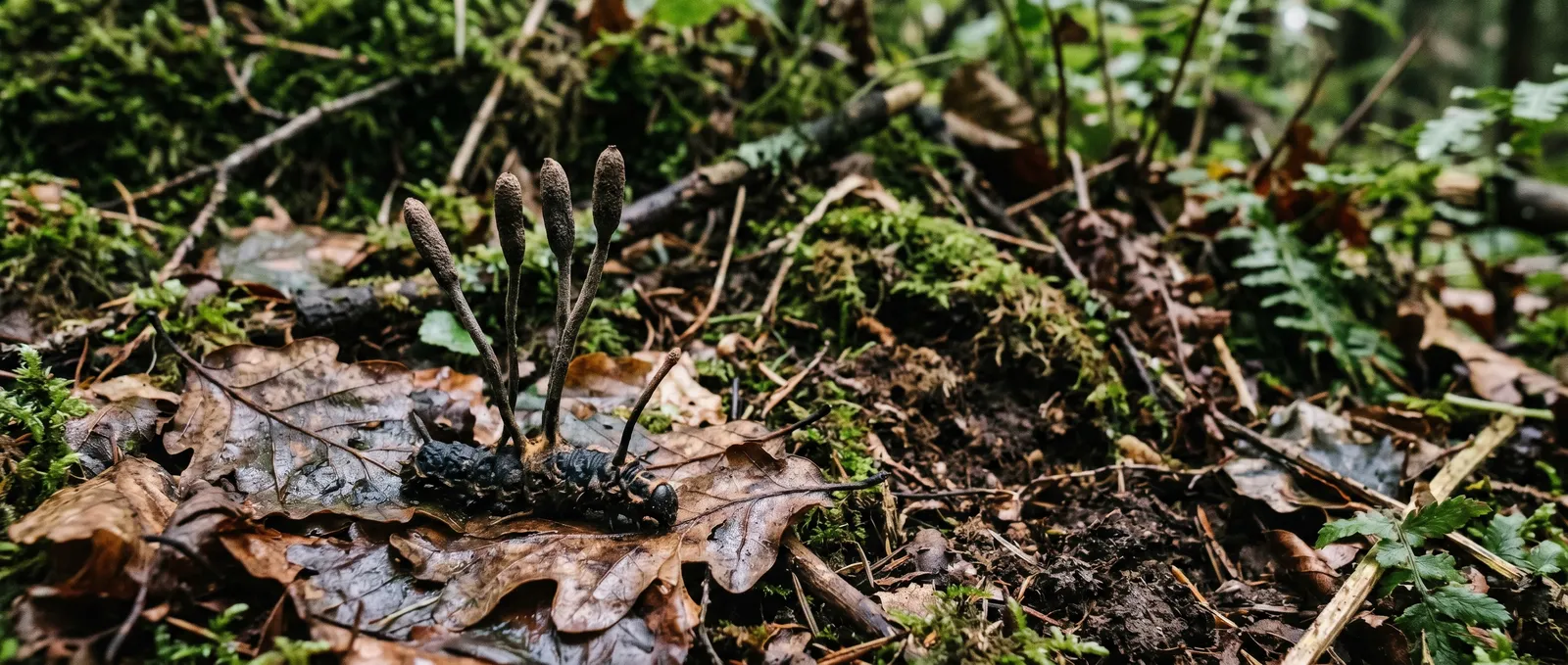
The cordyceps lifecycle is a parasitic biological sequence in which a fungus infects an insect host, colonises its body from within, and erupts as a…