
This article discusses psychoactive substances intended for adults (18+). If you have a health condition or take medication, consult a doctor before use. Our age policy
Guarana Paullinia Cupana Caffeine Source: Botany, Content & Safety
Definition
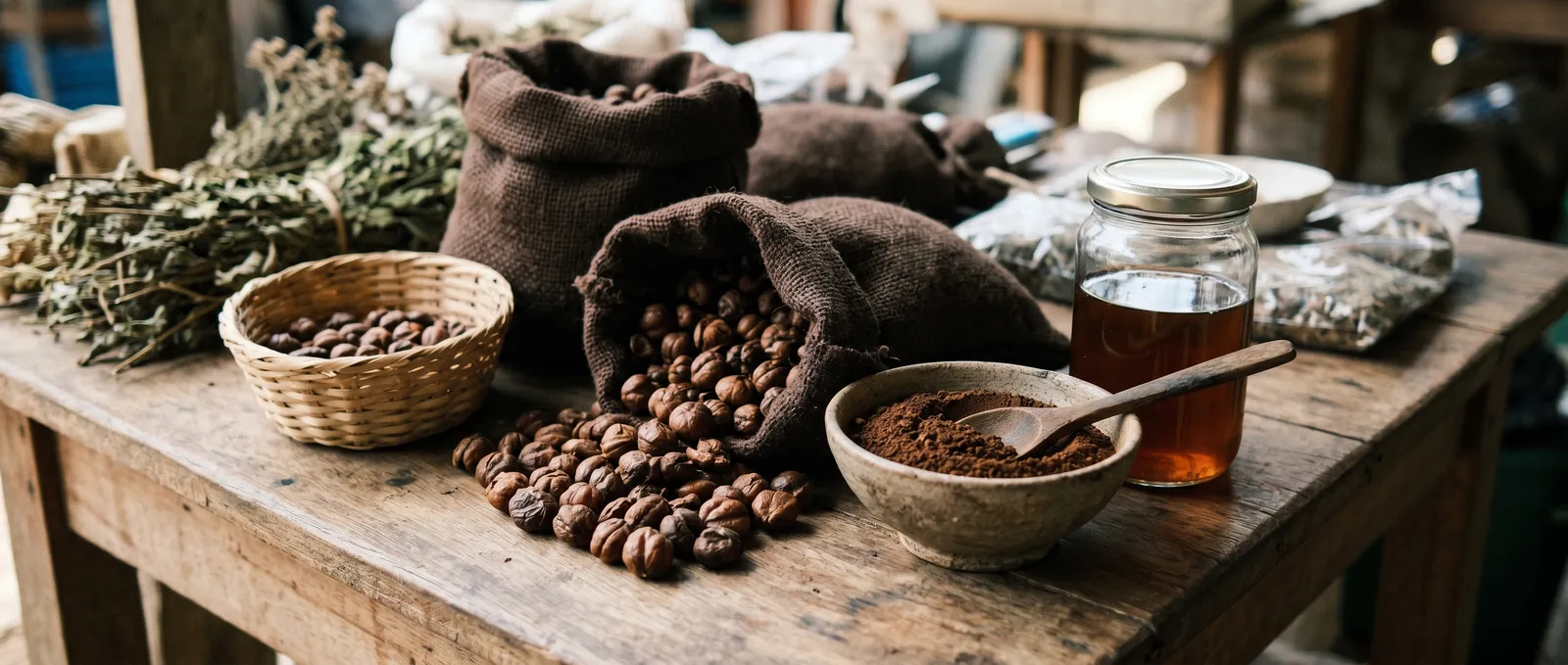
Guarana Paullinia cupana caffeine source is a stimulant seed from the Amazon basin that delivers two to three times the caffeine concentration of coffee beans by dry weight. The Sateré-Mawé people of Brazil have cultivated and consumed roasted guarana seed for centuries as a stimulant drink (Schimpl et al., 2013).
Caffeine per Serving: How Guarana Stacks Up
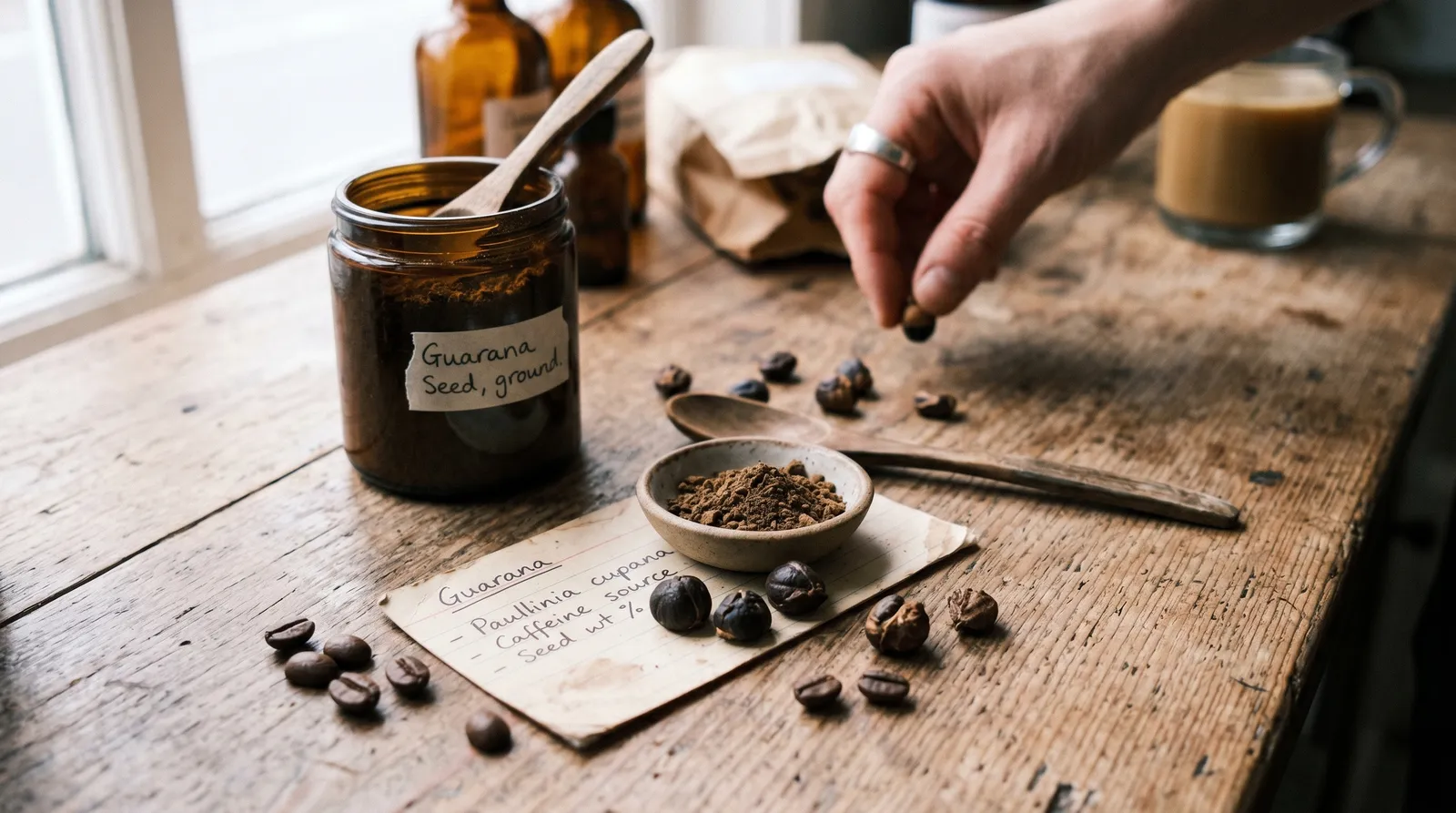
Guarana Paullinia cupana caffeine source is a stimulant seed from the Amazon basin that delivers two to three times the caffeine concentration of coffee beans by dry weight. The seed of Paullinia cupana Kunth packs more caffeine by dry weight than almost any other plant on earth. Where a roasted coffee bean sits at roughly 1–2.5% caffeine, guarana seed ranges from 2–7.6%, with some analyses reporting up to 8% (Schimpl et al., 2013). That does not mean a cup of guarana tea automatically delivers more caffeine than a double espresso — serving size and preparation method matter enormously. The table below puts the numbers side by side.
| Source | Typical serving | Caffeine per serving (approx.) | Caffeine by dry weight | Data source |
|---|---|---|---|---|
| Guarana seed powder | 1 g powder in water | 20–76 mg | 2–7.6% | Schimpl et al. (2013) |
| Brewed coffee | 240 ml drip | 80–100 mg | 1–2.5% | USDA FoodData Central (2018) |
| Yerba mate | 240 ml infusion | 30–50 mg | 0.7–2% | Heck & de Mejia (2007) |
| Black tea | 240 ml brewed | 40–70 mg | 2–4% | USDA FoodData Central (2018) |
| Green tea | 240 ml brewed | 20–45 mg | 1.5–3.5% | USDA FoodData Central (2018) |
A gram of guarana powder stirred into water can deliver anywhere from a mild green-tea equivalent to nearly a full cup of coffee, depending on the batch and the plant's growing conditions. That variability is worth keeping in mind: two different bags of guarana powder are not guaranteed to hit the same way.
Botany and Origin
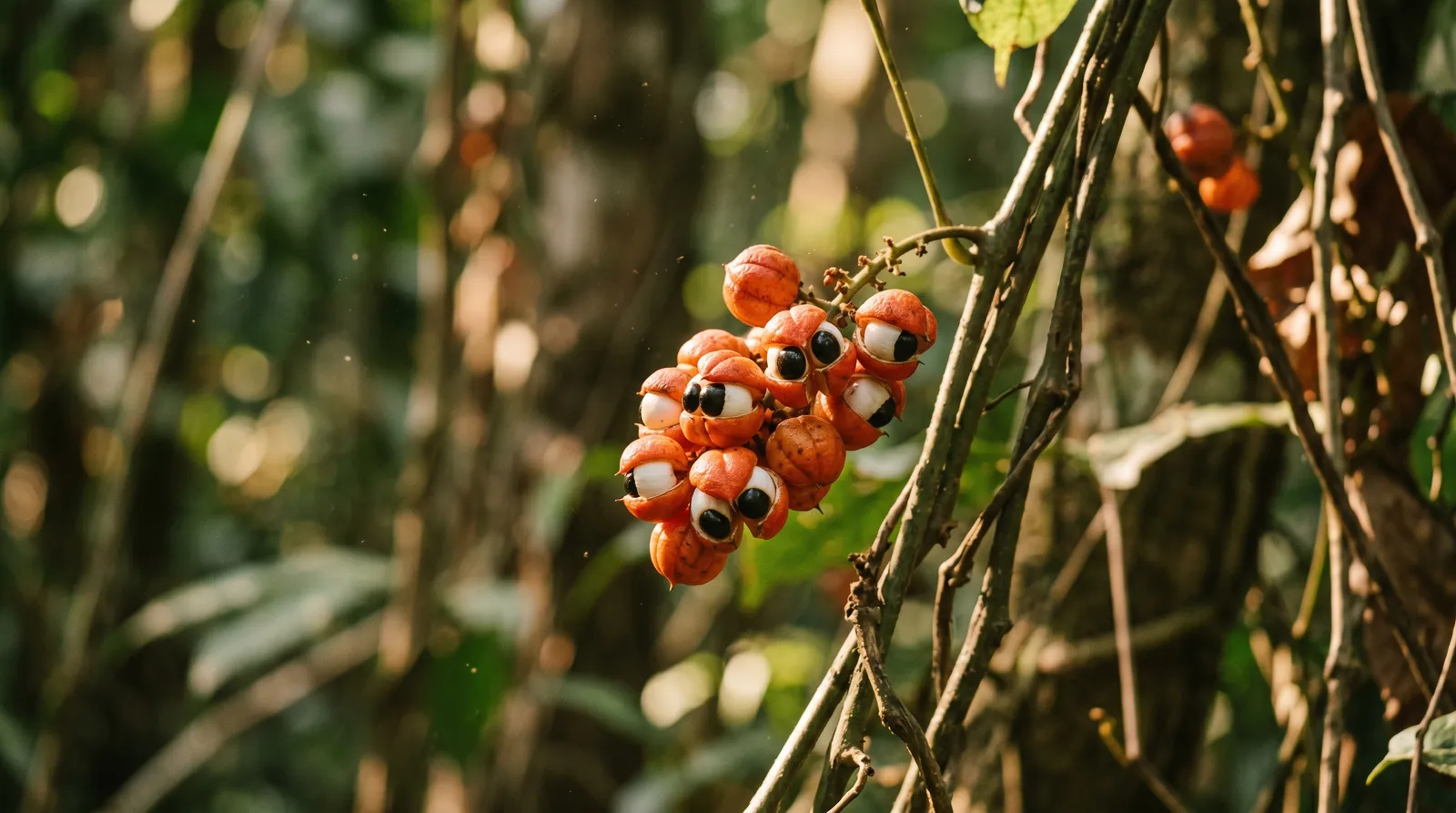
Paullinia cupana is a climbing vine in the Sapindaceae (soapberry) family, native to the central Amazon basin — particularly the middle Amazon region around the Maués municipality in Amazonas state, Brazil. The plant produces small red fruit that split open when ripe to reveal a black seed with a white aril, giving the fruit a striking eye-like appearance. The Sateré-Mawé people of the Maués region have cultivated guarana for centuries, long before Portuguese colonists documented the plant in the seventeenth century. Jesuit missionary João Daniel described guarana preparation in his writings from the 1750s, noting that the Sateré-Mawé ground roasted seeds into a paste using a pestle and water from the river (Henman, 1982).
Traditional preparation involved roasting the seeds over low fire, grinding them into a fine powder, and shaping the powder into sticks or cylinders with cassava starch and water. These guarana sticks could be stored for months and grated as needed into water — a portable caffeine source for long journeys through the forest. The Sateré-Mawé considered guarana a gift from the forest spirit and used it during communal gatherings and before hunts (Henman, 1982).
Phytochemistry: More Than Just Caffeine
Caffeine (1,3,7-trimethylxanthine) is the headline compound, but guarana Paullinia cupana caffeine source plants contain a broader methylxanthine profile. Theobromine and theophylline are present in smaller quantities — typically 0.02–0.06% theobromine and trace theophylline (Schimpl et al., 2013). On their own, these amounts are pharmacologically minor, but they contribute to the overall alkaloid fingerprint.
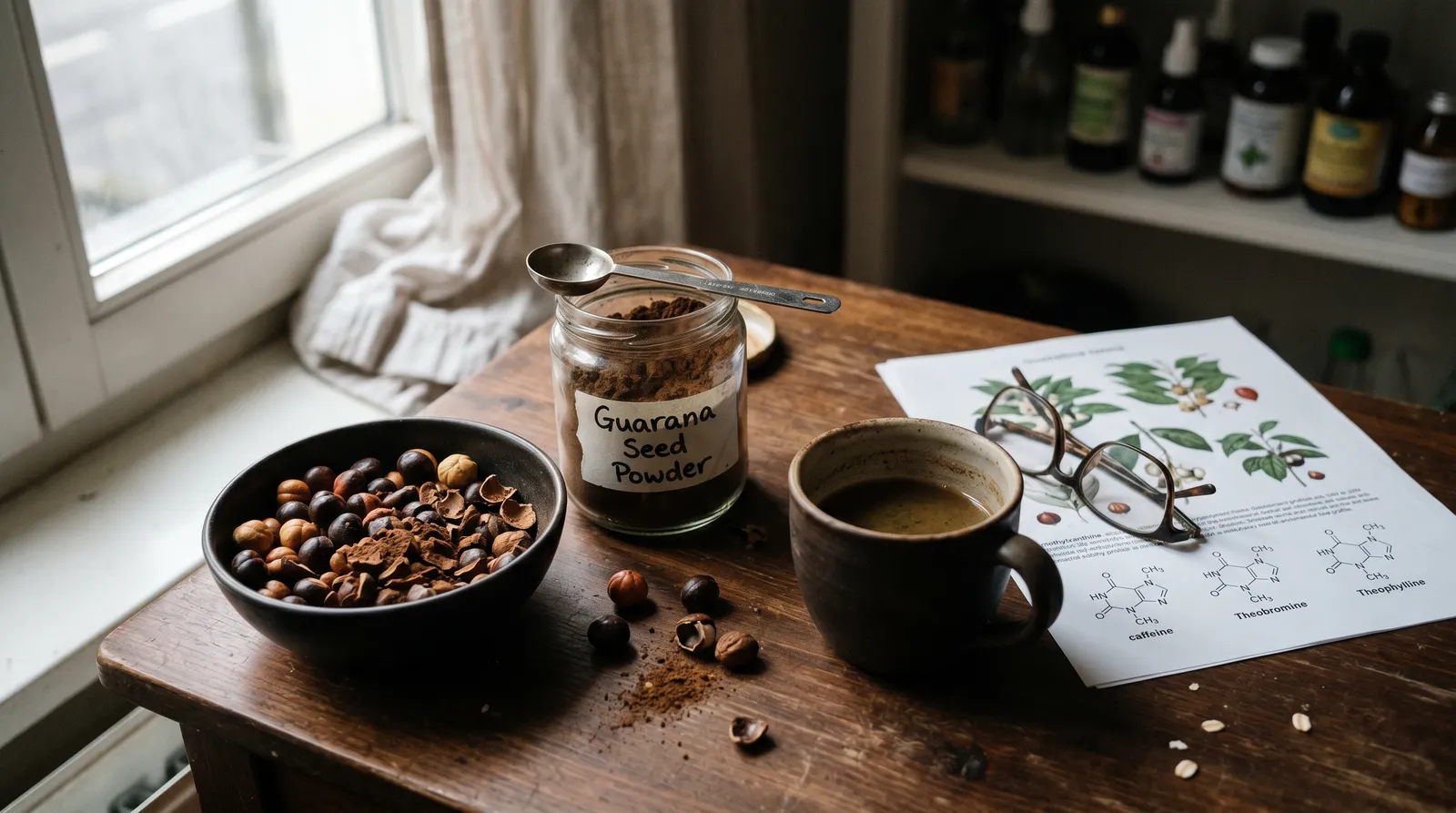
The more interesting supporting cast may be the seed's tannin and catechin content. Guarana is rich in condensed tannins (proanthocyanidins) and contains catechin and epicatechin at concentrations comparable to green tea (Yamaguti-Sasaki et al., 2007). A 2007 analysis published in Molecules found catechin concentrations of roughly 6 mg/g in guarana seed powder. Some researchers have speculated that these tannins slow the intestinal absorption of caffeine, producing a more gradual onset compared to coffee — though direct pharmacokinetic comparison studies in humans are thin on the ground, and the claim remains more plausible hypothesis than established fact.
A 2019 systematic review by Marques et al. catalogued over 100 identified compounds in guarana, including saponins, polysaccharides, and essential oils, though caffeine and the catechins remain the best-characterised (Marques et al., 2019).
Guarana Compared to Other Stimulant Herbs
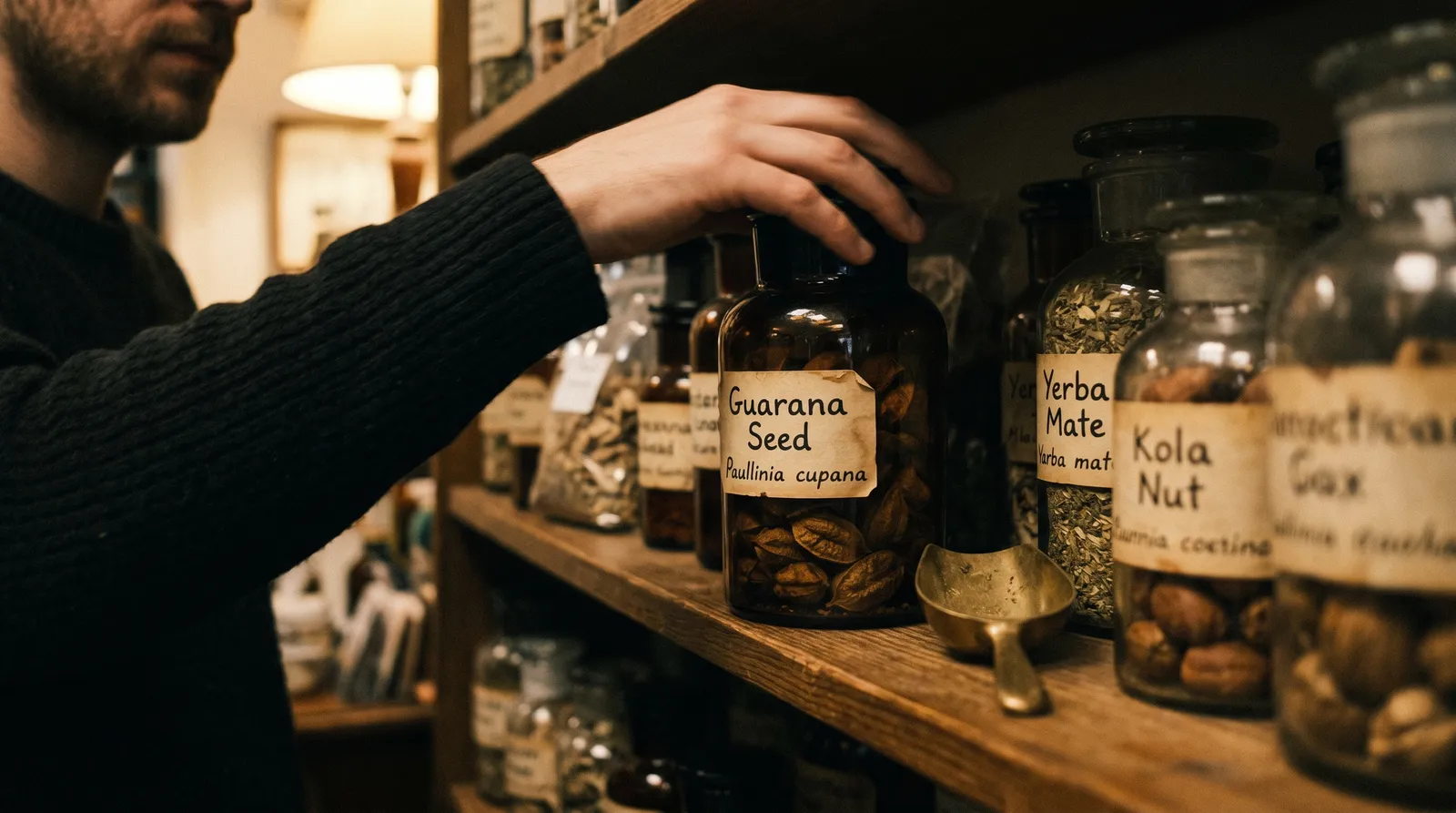
Guarana Paullinia cupana caffeine source stands apart from other popular caffeine sources in both concentration and phytochemical profile. Yerba mate, for instance, delivers a gentler caffeine dose per cup and contains different polyphenols — chlorogenic acids rather than the proanthocyanidins dominant in guarana. Kola nut, another traditional caffeine source from West Africa, sits at roughly 1.5–3% caffeine by dry weight, placing it between coffee and guarana. Green tea offers L-theanine alongside its caffeine, which modulates the stimulant effect in a way guarana does not replicate. Each of these plants has its own character, and people who buy guarana powder often keep yerba mate or green tea on hand as well, rotating depending on the day's needs. Those looking to order guarana alongside other botanicals will find that specialist ethnobotanical shops typically stock all of these stimulant herbs.
What the Research Says
Most peer-reviewed work on guarana examines it through the lens of its caffeine content, making it difficult to separate guarana-specific effects from caffeine-general effects. A few studies have tried.
A 2007 randomised trial by Haskell et al. gave participants either guarana extract (containing 9 mg caffeine), caffeine alone (9 mg), or placebo. The guarana group showed improved attention and contentedness ratings beyond what the caffeine-only group achieved, suggesting that non-caffeine compounds in guarana may contribute to cognitive effects (Haskell et al., 2007). The dose was deliberately low to isolate non-caffeine activity — an elegant design, though the sample was small (26 participants) and the findings have not been robustly replicated.
A 2023 narrative review by Hack et al. in Nutrients examined guarana supplementation in the context of physical performance. The authors concluded that while guarana's caffeine content reliably improves endurance markers in the same way coffee does, evidence for guarana-specific ergogenic effects beyond caffeine remains limited (Hack et al., 2023).
The EMCDDA drug profiles database lists caffeine among monitored psychoactive substances and notes that plant-derived caffeine sources like guarana, kola nut, and yerba mate are widely available across Europe (EMCDDA, 2024). Animal and in vitro studies have explored antioxidant and anti-inflammatory properties of guarana extracts (Marques et al., 2019), but these do not translate directly to human health claims — cell-culture results and human metabolism are different beasts entirely.
Traditional and Modern Use
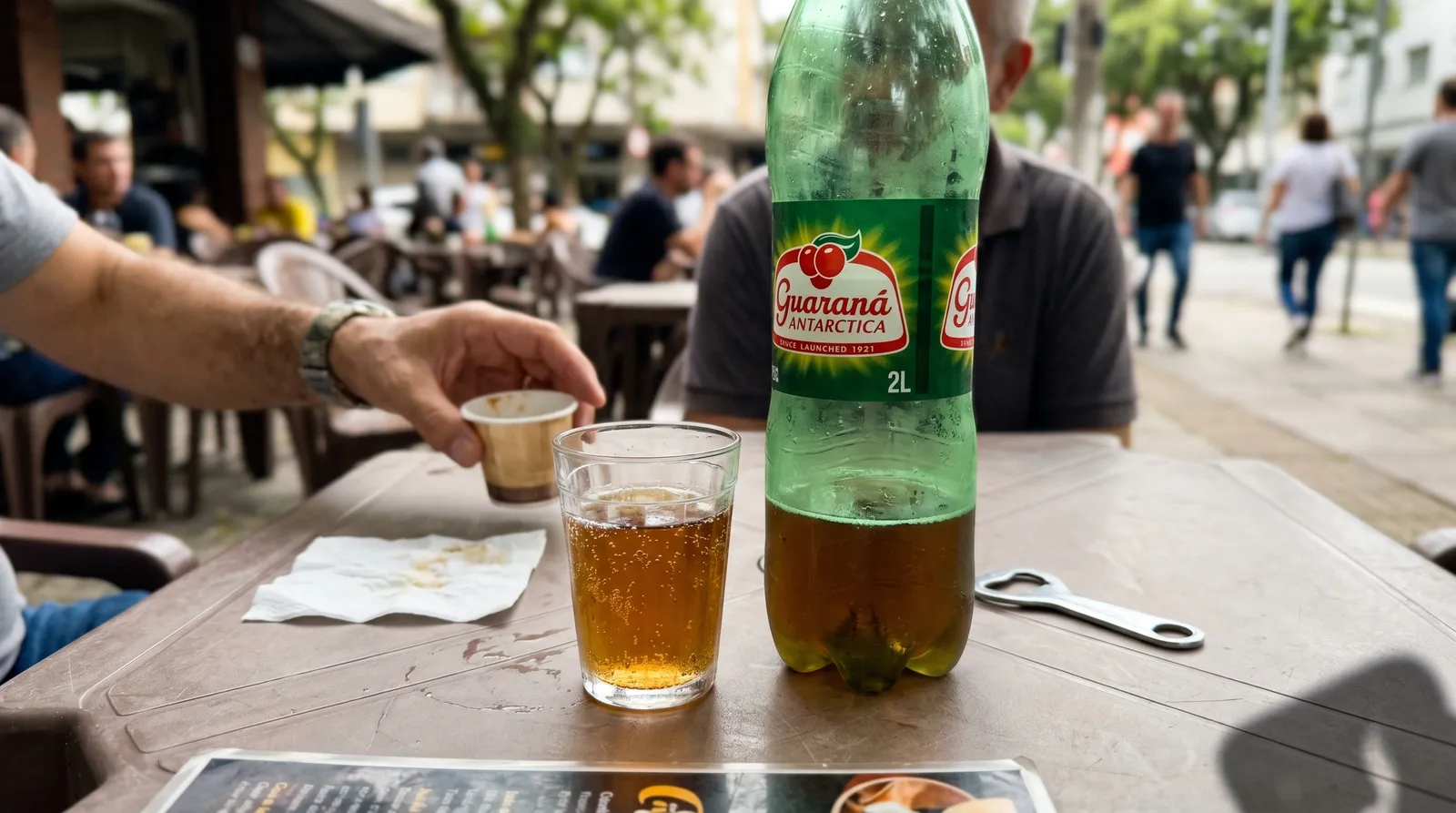
In Brazil, guarana moved from indigenous Sateré-Mawé tradition into mainstream culture centuries ago. Guarana-flavoured soft drinks (Guaraná Antarctica, launched 1921) outsell cola in parts of Brazil. The powdered seed is sold at markets across the Amazon and mixed into fruit smoothies, açaí bowls, and plain water. It is one of the most widely consumed caffeine sources in South America.
In European and North American markets, guarana appears primarily as an ingredient in energy drinks and dietary supplements. People who want to buy guarana in its most traditional format — the ground seed powder — can find it through specialist ethnobotanical shops. A teaspoon (roughly 2–3 g) stirred into water or juice delivers a caffeine dose in the range of 40–230 mg, depending on the powder's caffeine concentration. That range is wide, which is why starting with a smaller amount and adjusting is the standard approach described in ethnobotanical literature.
What We Do Not Know Yet
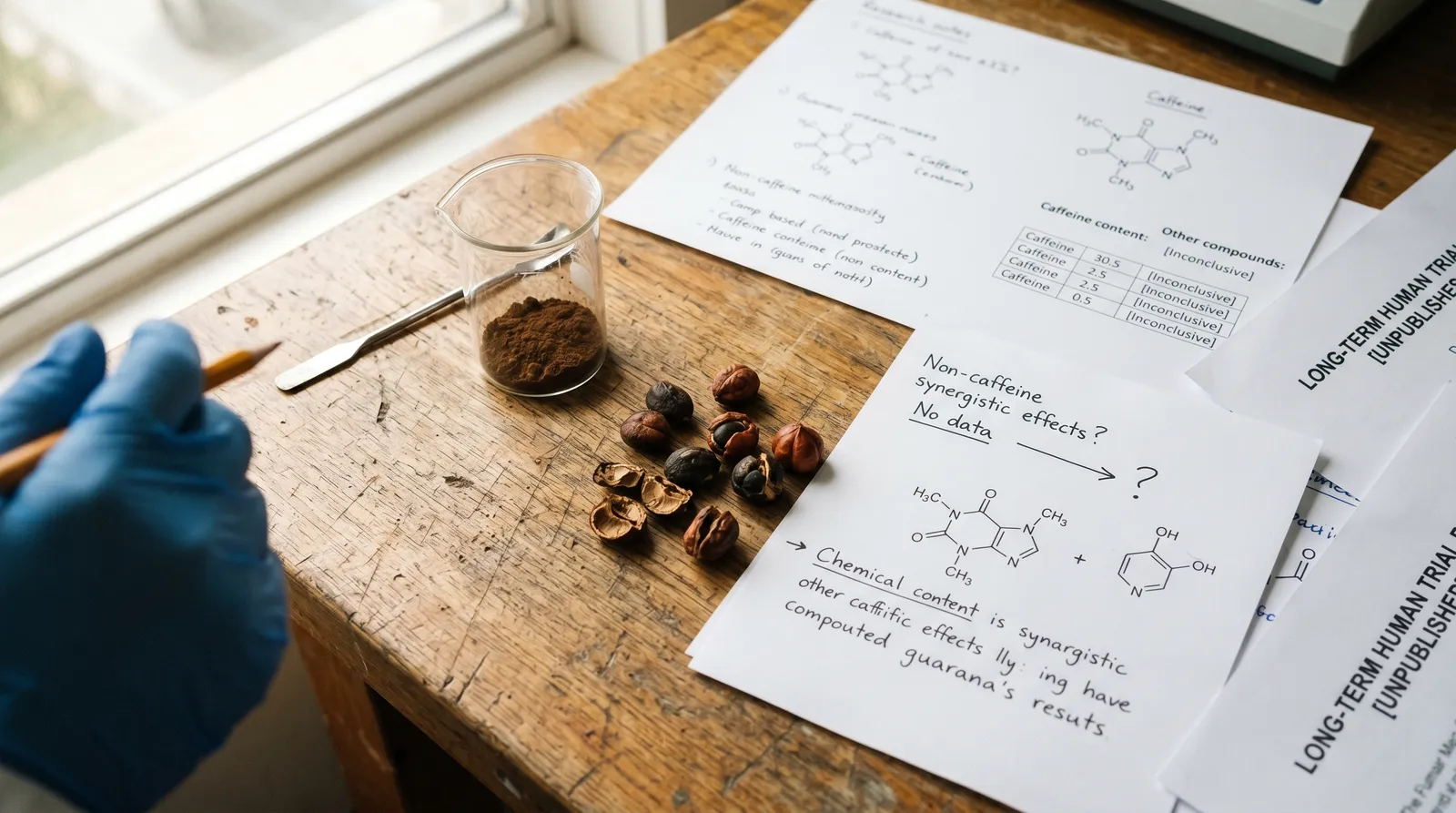
There are genuine gaps in the guarana literature that deserve honest acknowledgement. No large-scale, long-term human trial has isolated guarana's non-caffeine compounds to measure their independent effects on cognition or metabolism. The tannin-slowed-absorption hypothesis, while biochemically plausible, lacks direct pharmacokinetic evidence from controlled human studies. Most safety data comes from caffeine research broadly, not guarana specifically. And the wide variability in caffeine content between batches — 2% to nearly 8% — means that standardised dosing from raw powder is genuinely difficult without laboratory analysis. We share this not to discourage use, but because informed consumers make better decisions.
How Guarana Fits Into a Daily Routine
Many people who get guarana powder use it as a morning alternative to coffee or as an afternoon pick-me-up. Because the caffeine concentration per gram is higher than coffee grounds, a smaller quantity goes further. A common approach is to start with half a gram (roughly a quarter teaspoon) dissolved in warm water or blended into a smoothie, then adjust upward over several days. Pairing guarana Paullinia cupana caffeine source powder with a fat source like coconut milk or nut butter can soften the bitter edge and may slow gastric emptying slightly, though this is kitchen wisdom rather than clinical pharmacology.
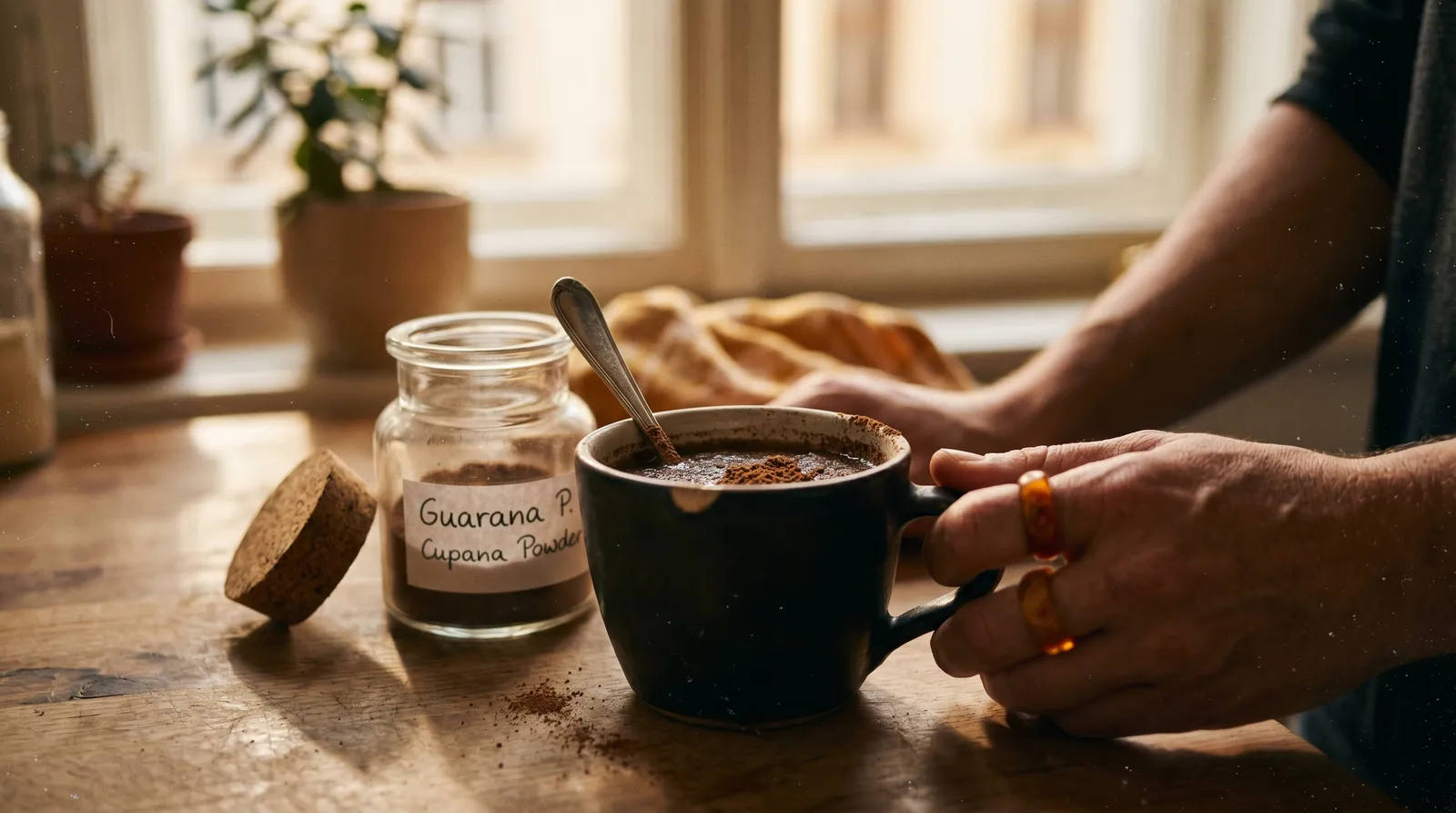
People who rotate between stimulant herbs — guarana one day, yerba mate the next, green tea on the third — sometimes report that this pattern helps them avoid building a steep caffeine tolerance. The scientific evidence for rotation as a tolerance-management strategy is thin, but the practice is common in ethnobotanical communities and at least ensures dietary variety.
Safety and Caffeine Load
Guarana is a concentrated caffeine source. Do not stack with coffee, energy drinks, or pre-workout formulas. Anyone with a heart condition, high blood pressure, or caffeine sensitivity should consult a qualified healthcare professional before use.
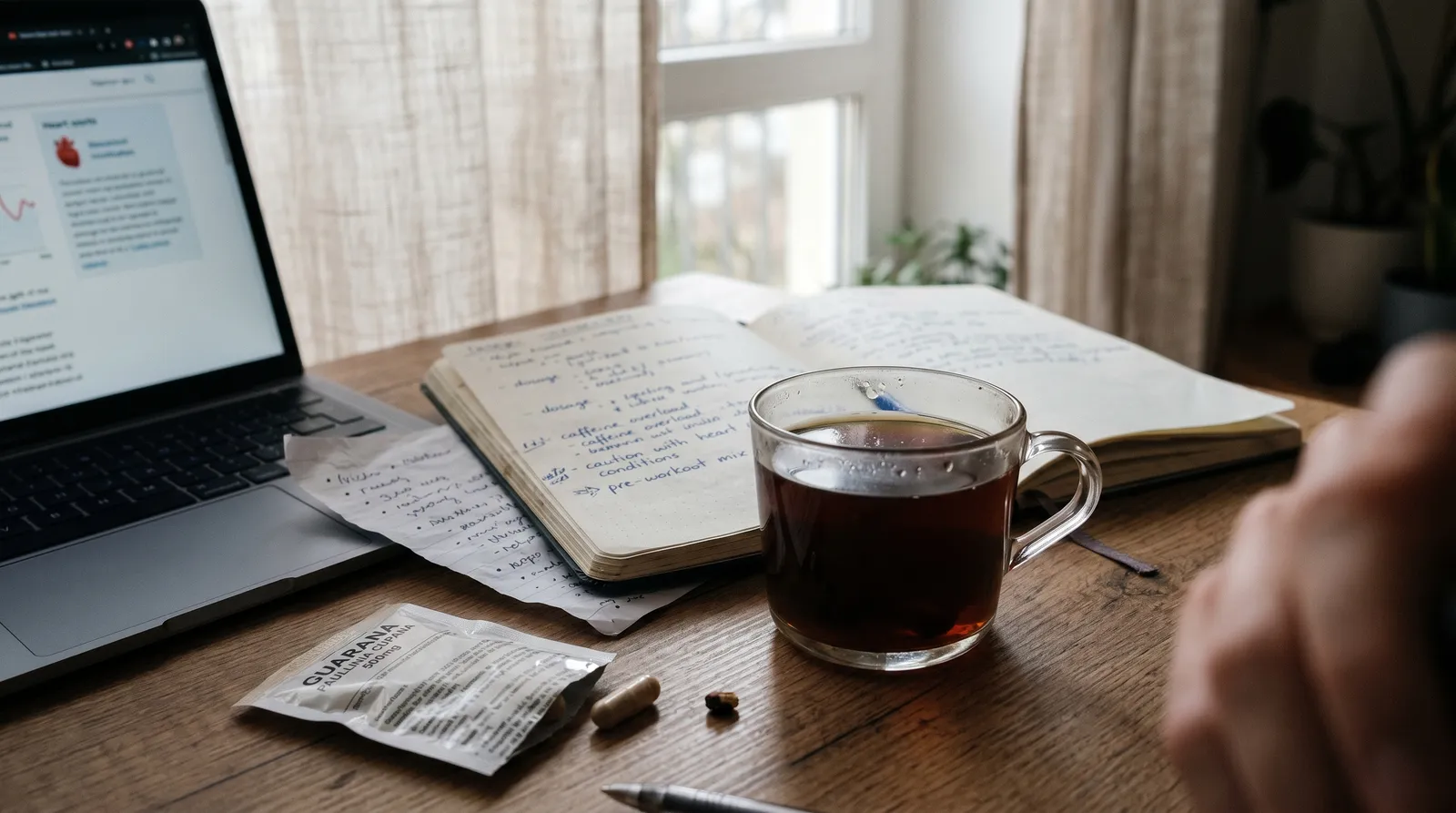
Because guarana's caffeine content varies between 2% and nearly 8%, a person who switches brands or batches without adjusting their serving size could inadvertently double their caffeine intake. The practical ceiling cited in most dietary guidance is 400 mg of caffeine per day from all sources combined — that figure comes from the European Food Safety Authority's 2015 scientific opinion on caffeine safety, which identified up to 400 mg/day as not raising safety concerns for healthy adults (EFSA Panel on Dietetic Products, 2015). A single serving above 200 mg caffeine may cause jitteriness, elevated heart rate, and disrupted sleep in caffeine-sensitive individuals.
Guarana should not be consumed alongside other caffeine-bearing botanicals — yerba mate, kola nut, or strong tea — without accounting for the total caffeine load. Caffeine is also a mild diuretic at higher doses, so adequate water intake alongside guarana is sensible.
Pregnancy and breastfeeding: caffeine crosses the placenta, and most obstetric guidance recommends limiting intake to under 200 mg/day during pregnancy. Because guarana's caffeine content per gram is variable, precise dosing is harder to manage than with a measured cup of coffee, which makes it a less predictable caffeine source during pregnancy.
Format and Preparation
Guarana reaches consumers in several forms. The most common are:
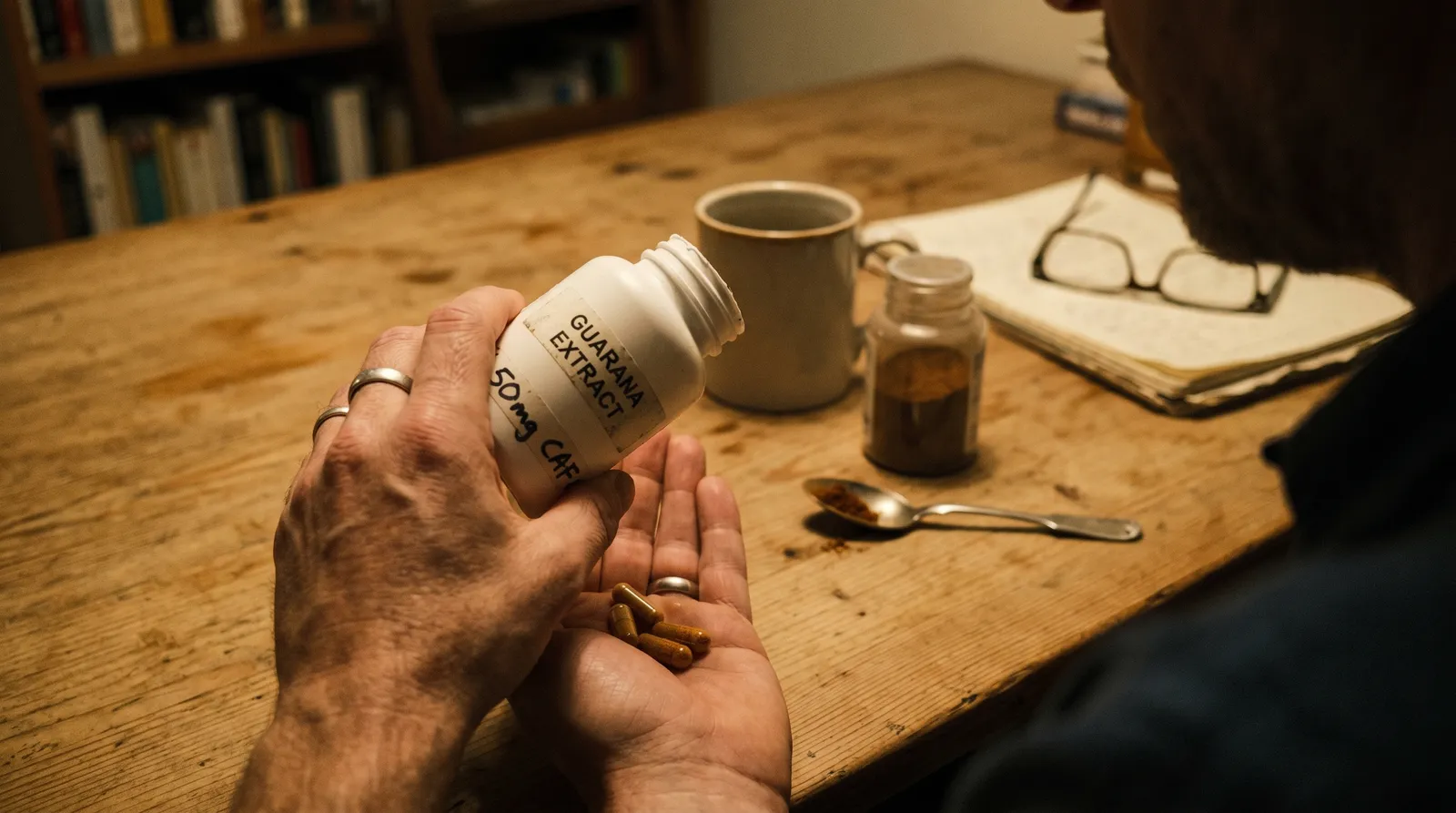
- Ground seed powder — the traditional format. Mixed into water, juice, or smoothies. Caffeine content varies by batch. Bitter, astringent flavour with faint chocolate notes. This is the format to get if you want the full phytochemical profile.
- Capsules — standardised extracts, typically listing caffeine content per capsule on the label. More predictable dosing than loose powder.
- Energy drink ingredient — guarana extract is added to commercial beverages alongside synthetic caffeine, taurine, and B-vitamins. The guarana contribution to total caffeine in these drinks is usually minor.
For someone who wants to know exactly how much caffeine they are consuming, capsules with a labelled caffeine content are the most transparent option. For someone who values the full phytochemical profile of the seed — tannins, catechins, and all — the ground powder is closer to what the Sateré-Mawé have been drinking for generations. Those looking to order guarana powder should look for products that state the caffeine percentage on the packaging.
This article is consumer education, not medical advice. Traditional and ceremonial uses are described for cultural and historical context. Botanicals can interact with medications and are not a substitute for professional care. If you are pregnant, nursing, taking prescription medication, or managing a health condition, consult a qualified healthcare practitioner before use.
References
- EFSA Panel on Dietetic Products, Nutrition and Allergies (2015). Scientific opinion on the safety of caffeine. EFSA Journal, 13(5), 4102.
- EMCDDA (2024). Drug profiles: caffeine. European Monitoring Centre for Drugs and Drug Addiction.
- Hack, B. et al. (2023). Guarana (Paullinia cupana) supplementation and physical performance: a narrative review. Nutrients, 15(6), 1397.
- Haskell, C.F. et al. (2007). A double-blind, placebo-controlled, multi-dose evaluation of the acute behavioural effects of guaraná in humans. Journal of Psychopharmacology, 21(1), 65–70.
- Heck, C.I. & de Mejia, E.G. (2007). Yerba mate tea (Ilex paraguariensis): a complete review on chemistry, health implications, and technological considerations. Journal of Food Science, 72(9), R138–R151.
- Henman, A.R. (1982). Guaraná (Paullinia cupana var. sorbilis): ecological and social perspectives on an economic plant of the central Amazon basin. Journal of Ethnopharmacology, 6(3), 311–338.
- Marques, L.L.M. et al. (2019). Paullinia cupana: a multipurpose plant — a review. Revista Brasileira de Farmacognosia, 29(1), 77–110.
- Schimpl, F.C. et al. (2013). Guarana: revisiting a highly caffeinated plant from the Amazon. Journal of Ethnopharmacology, 150(1), 14–31.
- USDA FoodData Central (2018). Caffeine content of beverages. U.S. Department of Agriculture.
- Yamaguti-Sasaki, E. et al. (2007). Antioxidant capacity and in vitro prevention of dental plaque formation by extracts and condensed tannins of Paullinia cupana. Molecules, 12(8), 1950–1963.
Last updated: April 2026
Frequently Asked Questions
11 questionsIs guarana stronger than coffee?
Does guarana release caffeine more slowly than coffee?
How much guarana powder is safe per day?
Can you mix guarana with yerba mate?
What does guarana powder taste like?
Where can I buy guarana powder in Europe?
Is guarana the same as caffeine?
Can I take guarana before exercise?
Does guarana contain antioxidants?
How should I store guarana powder?
Is guarana Paullinia cupana caffeine source suitable for vegans?
About this article


Adam Parsons is an external cannabis and psychedelics writer and editor who contributes to Azarius's wiki as both author and reviewer. On the writing side, he authors Azarius's kratom and kanna clusters, drawing on exten
This wiki article was drafted with AI assistance and reviewed by Adam Parsons, External contributor. Editorial oversight by Joshua Askew.
Medical disclaimer. This content is for informational purposes only and does not constitute medical advice. Consult a qualified healthcare provider before use of any substance.
Last reviewed April 26, 2026
Related Articles
Blue Lotus vs Kanna: Effects & Safety
Blue lotus vs kanna compared — Nymphaea caerulea's aporphine profile against Sceletium tortuosum's mesembrine chemistry, with interaction warnings.
Lotus Clinical Research Overview
What does lotus clinical research actually show? A critical review of Nymphaea caerulea and Nelumbo nucifera pharmacology, preclinical data, and…
Kanna South Africa To West History
Sceletium tortuosum was used by San and Khoekhoe communities in southern Africa for centuries before European colonists first documented it in the 1660s.
Sceletium Tortuosum Plant
Learn about the sceletium tortuosum plant: botany, alkaloids, fermentation, safety warnings, and where to buy kanna.
Kanna Pharmacokinetics Explained
Complete guide to kanna pharmacokinetics: how Sceletium tortuosum alkaloids are absorbed, metabolised via CYP2D6, and eliminated.
Kanna Chemistry: Sceletium Alkaloids Explained
Kanna chemistry explained: mesembrine, mesembrenone, their mechanisms, how fermentation and extraction change alkaloid profiles, and why it matters…
Rapé Shamanic Snuff Guide: How to Use It Safely
A practical rapé shamanic snuff guide covering dose, kuripe technique, effects, nicotine safety, interactions and Amazonian tradition.
White Sage Salvia Apiana Cultural Smudging Guide
Salvia apiana is a non-psychoactive shrub native to southern California's coastal sage scrub, burned as ceremonial incense in Indigenous North American…
Mulungu Erythrina Traditional Amazonian Use — Bark, Alkaloids & Research
Erythrina mulungu is a Brazilian legume tree whose bark has been brewed as a calming decoction in rural folk medicine for generations.