
This article discusses psychoactive substances intended for adults (18+). If you have a health condition or take medication, consult a doctor before use. Our age policy
Kratom Tolerance
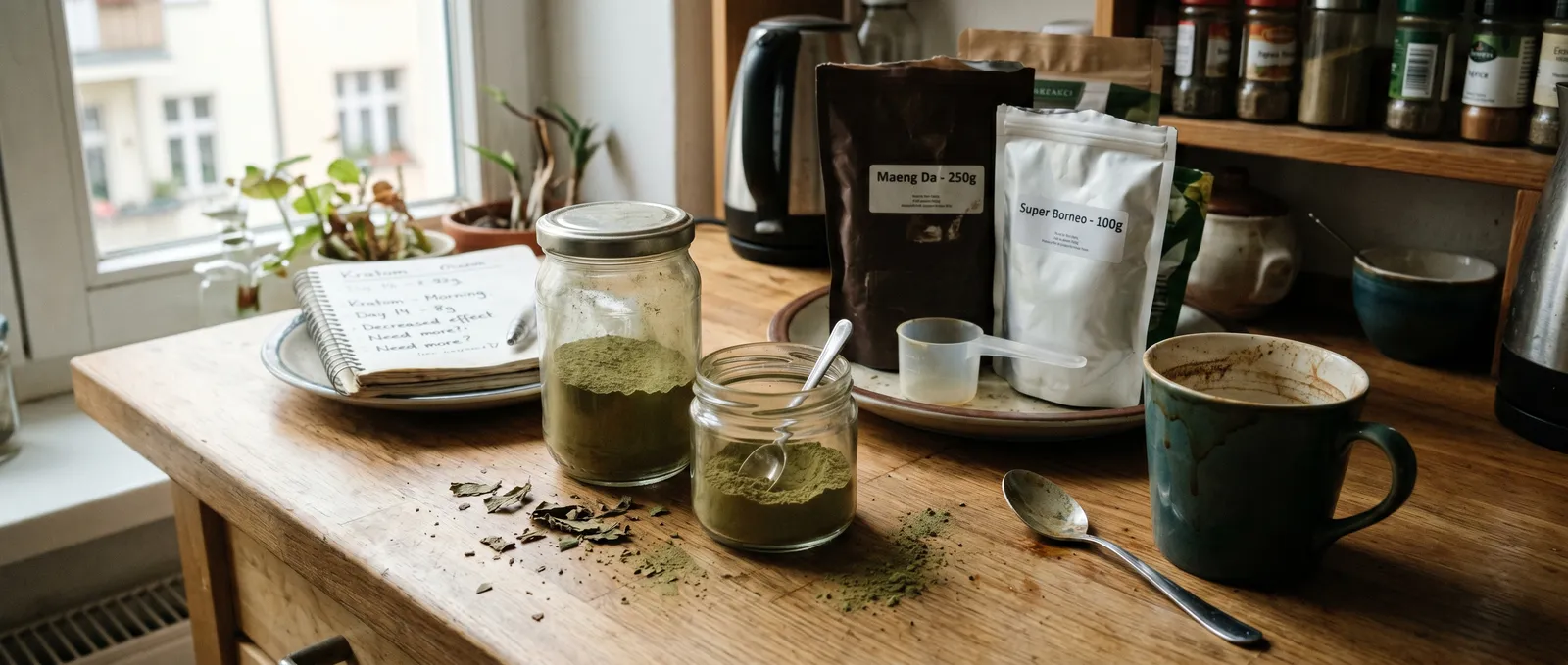
Definition
Kratom tolerance is the progressive reduction in effects that occurs when your mu-opioid receptors adapt to regular mitragynine exposure. It develops within days to weeks of daily use and is significantly accelerated by extract consumption compared to plain leaf.
What Is Kratom Tolerance?
Kratom tolerance is the progressive reduction in effects that occurs when your mu-opioid receptors adapt to regular mitragynine exposure. It develops through the same basic mechanism that drives opioid tolerance more broadly — receptor-level adaptation — and it can set in surprisingly fast. If you're using kratom daily, kratom tolerance isn't a question of if but when.
Adult audience (18+). The dosing ranges and effects described in this article apply to adult physiology. This content is not intended for minors.
Understanding how this works, what accelerates it, and how to manage it is probably the single most practical thing you can learn about long-term kratom use. It's also the thing that separates people who maintain a stable, functional relationship with the plant from those who find themselves chasing doses upward until the whole thing stops working — or starts causing problems.
The Pharmacology Behind Tolerance
Kratom tolerance is driven primarily by mu-opioid receptor downregulation in response to repeated mitragynine and 7-hydroxymitragynine exposure. These two primary active alkaloids are partial agonists at the mu-opioid receptor (Kruegel et al., 2016). When these molecules bind repeatedly and predictably, your neurons respond the way they respond to any persistent opioid-receptor stimulation: they downregulate. Receptor density decreases, intracellular signalling cascades become less responsive, and you need more compound to achieve the same downstream effect.
This is well-characterised pharmacology — the same basic process that drives tolerance to morphine, codeine, or any other mu-opioid agonist. The difference with kratom is degree. Because mitragynine is a partial agonist with a ceiling on receptor activation, tolerance development tends to be slower and less dramatic than with full agonists. But "slower" doesn't mean "absent." A survey by Grundmann (2017) of over 8,000 kratom users in the United States found that 50% of regular users (daily or near-daily, six months or more) reported needing increased amounts over time to achieve the same effects. The European Monitoring Centre for Drugs and Drug Addiction has similarly flagged tolerance development as a consistent finding across kratom user populations.
There's also a second layer. Mitragynine is metabolised primarily by CYP3A4 and CYP2D6 enzymes in the liver (Kamble et al., 2019). With chronic exposure, there's reason to suspect metabolic tolerance — your liver gets more efficient at breaking the compound down, so less reaches your brain per gram consumed. This is harder to measure in humans and the data is thin, but it's a plausible contributor to the dose escalation many people report.
How Fast Does It Develop?
Kratom tolerance typically becomes noticeable within one to two weeks of daily use, though the exact timeline varies by individual. Swogger and Walsh (2018) noted that among habitual users in Southeast Asia — people chewing fresh leaf multiple times daily — tolerance was nearly universal and typically emerged within the first few weeks of regular consumption.
The speed depends heavily on three variables:
- Dosing frequency. Once a day builds tolerance more slowly than twice or three times a day. Every-other-day use slows it further. This isn't unique to kratom — it's how opioid receptors work.
- Dose size. Higher doses drive faster adaptation. Someone using a low amount daily will generally develop tolerance more slowly than someone using substantially more.
- Product form. This is critical and often overlooked. Extracts concentrate mitragynine and 7-hydroxymitragynine far beyond what plain leaf contains. An extract standardised to high mitragynine content delivers a pharmacologically different stimulus than leaf powder at roughly 1–2% mitragynine content. Extract users consistently report faster tolerance onset, steeper escalation, and more pronounced withdrawal symptoms. Treat extracts as a fundamentally different risk category, not just "stronger leaf."
The practical upshot: if you're using plain leaf powder every day for two weeks straight, you'll almost certainly notice diminishing returns. With extracts, that timeline compresses.
Tolerance vs. Dependence — They're Related but Not the Same
Tolerance means your body requires more kratom to achieve the same effect, while dependence means your body has adapted to the point where stopping produces withdrawal symptoms. They travel together, but they're distinct phenomena, and conflating them leads to bad decisions.
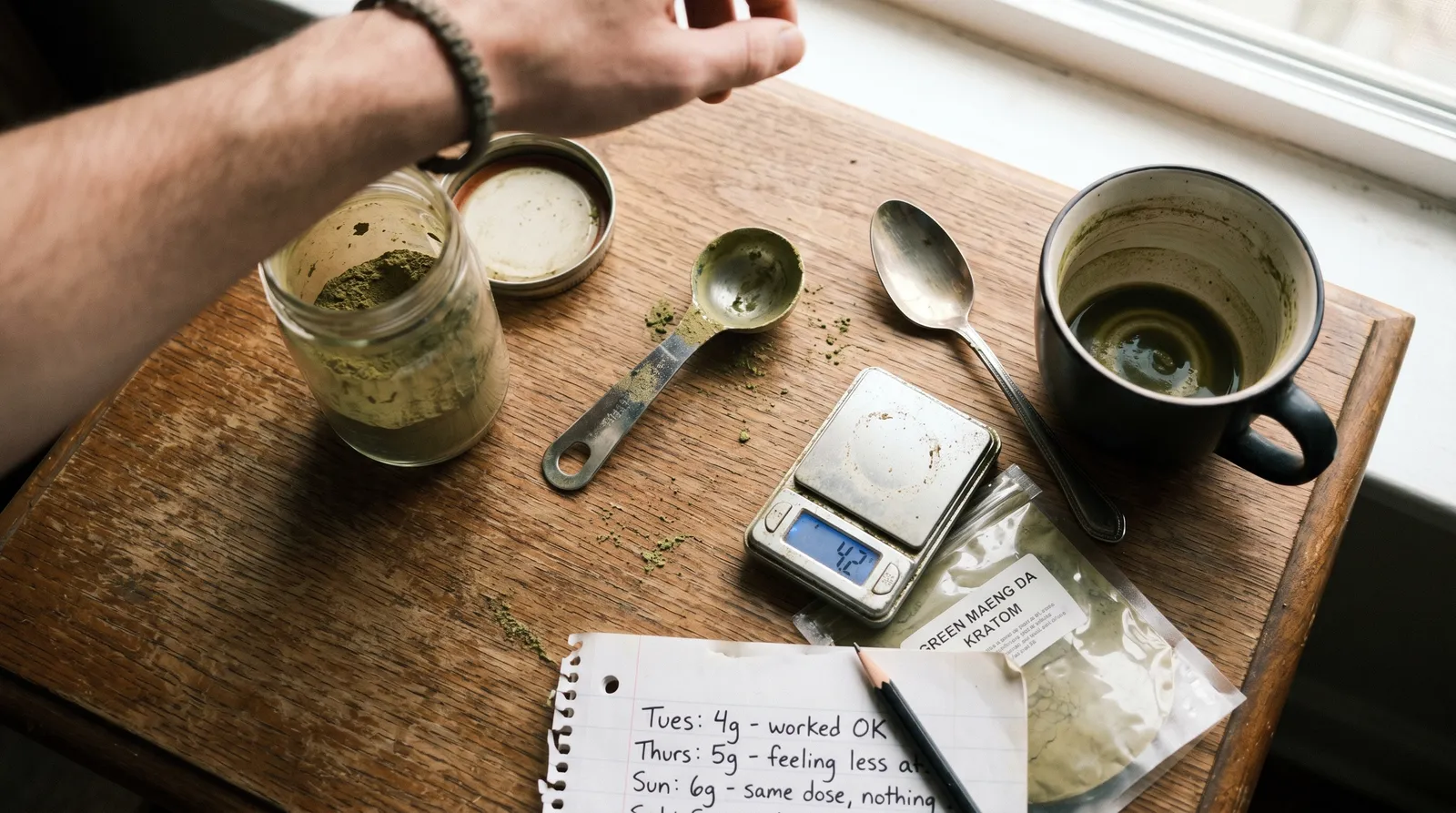
You can develop meaningful tolerance without yet being physically dependent. But if you keep pushing through tolerance by raising your amount, dependence follows. A recognised kratom withdrawal syndrome has been documented in daily heavy users, including muscle aches, irritability, insomnia, nausea, and mood disturbance (Singh et al., 2014). The severity correlates with amount, duration, and product potency. People using high-potency extracts daily for months tend to report the most difficult withdrawals.
This is why kratom tolerance management matters beyond just "keeping the effects working." Unchecked tolerance escalation is the conveyor belt toward dependence. Managing one helps prevent the other.
Plain Leaf vs. Extracts: A Tolerance Comparison
Extracts accelerate kratom tolerance dramatically compared to plain leaf, and this distinction matters more than almost any other variable. The table below summarises the key differences based on available survey data and pharmacological reasoning.
| Factor | Plain Leaf Powder | Kratom Extracts |
|---|---|---|
| Mitragynine content | ~1–2% by weight | Varies widely; often 20–50%+ |
| Typical tolerance onset | 1–3 weeks of daily use | Days to 1–2 weeks of daily use |
| Escalation pattern | Gradual | Steep |
| Withdrawal severity | Mild to moderate | Moderate to significant |
| Dependence risk (Veltri & Grundmann, 2019) | Lower | Significantly higher |
| Re-sensitisation after break | Faster | Slower |
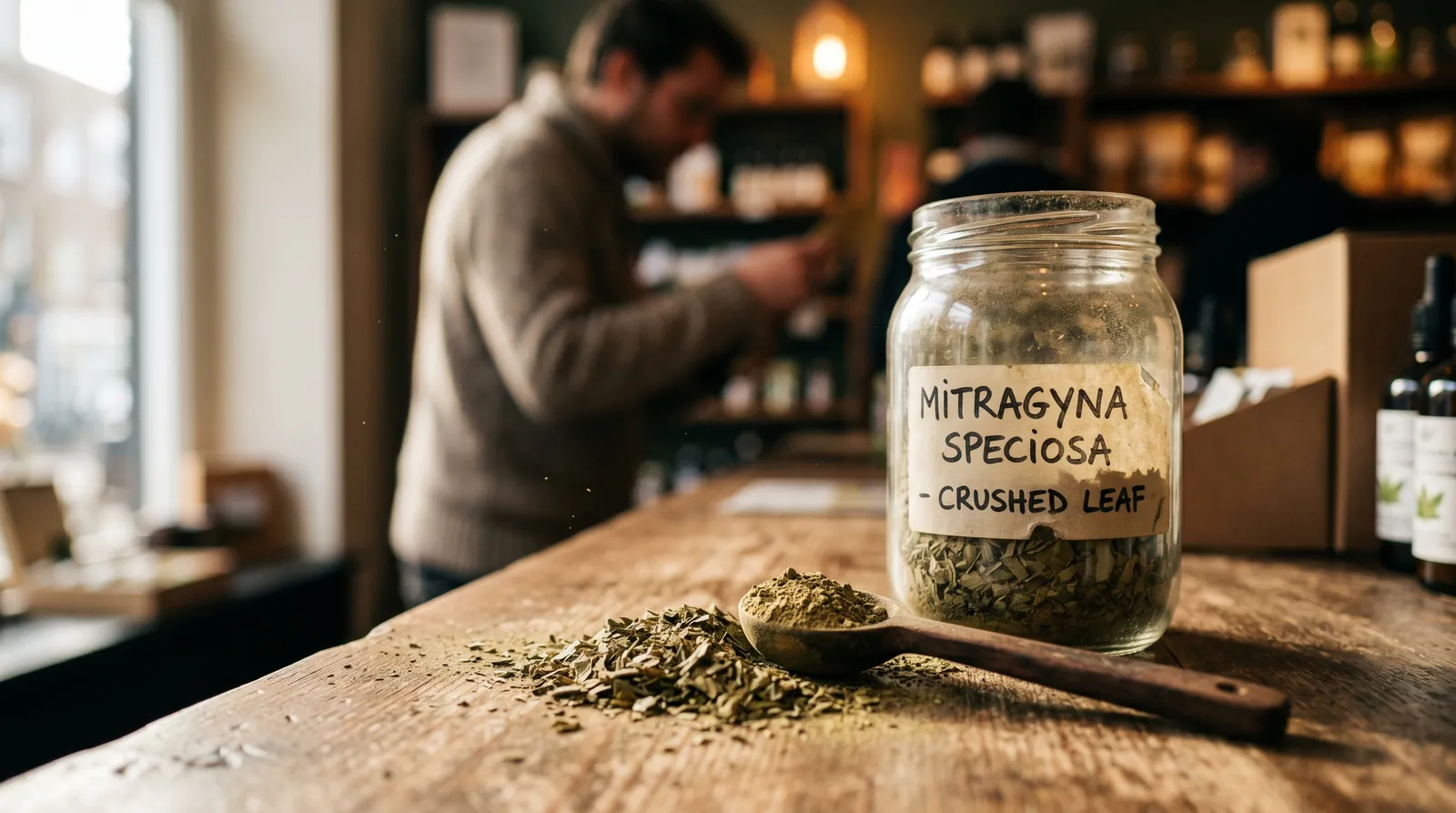
If you want to buy kratom and keep your tolerance manageable long-term, sticking with plain leaf powder rather than extracts is the single most impactful choice you can make. Many customers who order extracts for the first time don't realise how quickly the tolerance dynamic shifts. When browsing products like Kratom Bali or Kratom Maeng Da powder, you're looking at a fundamentally more sustainable format for regular use.
Strategies for Managing Kratom Tolerance
The most effective way to manage kratom tolerance is to give your opioid receptors regular periods of rest through planned breaks. Everything else is a variation on that theme.
Planned breaks. Survey data from Grundmann (2017) showed that users who took regular breaks — even two to three consecutive days off per week — reported significantly less escalation than daily users. A common pattern that many long-term users describe is five days on, two days off, or using only on weekdays. The longer the break, the more complete the receptor recovery.
Amount discipline. Resist the urge to chase diminishing effects by increasing your amount. If your usual serving used to feel effective and now feels weaker, the answer is almost never "use more." It's "take a break." Escalation feels like a solution in the moment but compounds the problem within days.
Keep extracts occasional. Because extracts deliver a concentrated alkaloid payload, they accelerate tolerance far more aggressively than leaf. Using extracts as your daily driver is probably the fastest route to a tolerance wall. If you use extracts at all, treating them as an occasional thing rather than a baseline keeps your receptor sensitivity in a much better place.
In practice, the evidence for pharmacologically meaningful differences between vein colours is weak. All kratom contains mitragynine as the dominant alkaloid, and all of it acts on the same mu-opioid receptors. Rotation might provide a mild subjective sense of novelty, but there's no controlled data showing it meaningfully slows receptor downregulation. Don't rely on it as your primary kratom tolerance strategy — planned breaks are far more reliable.
Track what you're taking. This sounds obvious, but it's remarkably easy to lose track. Keeping a simple log — date, amount, product form — makes creep visible before it becomes a problem. If you notice your weekly total climbing steadily over a month, that's your signal to take a break, not to stock up.
What About "Tolerance Resets"?
The most reliable kratom tolerance reset is complete abstinence for five to seven days, with more thorough re-sensitisation occurring after two to three weeks. The internet is full of protocols involving magnesium, agmatine, black seed oil, or NMDA receptor antagonists as supposed tolerance-reduction tools. Some of these have a theoretical basis — magnesium and agmatine do interact with NMDA receptors, which play a role in opioid tolerance at the cellular level. But the human evidence for any of these specifically reducing kratom tolerance is essentially nonexistent. A few small studies have looked at magnesium's effect on morphine tolerance in clinical settings (McCarthy et al., 1998), but extrapolating that to kratom self-administration is a stretch. If you try these, keep your expectations modest and don't use them as a substitute for actual breaks.
If you've been using daily for months at high amounts, expect the first few days off to involve some withdrawal discomfort — which itself is a signal that a break was overdue.
Why Extracts Deserve Their Own Conversation
Extract consumption is the single biggest accelerator of kratom tolerance problems. Kratom extracts — whether liquid shots, enhanced powders, or concentrated resins — deliver dramatically higher alkaloid loads per serving than plain leaf. A 50x extract doesn't necessarily contain 50 times the mitragynine (extraction efficiency varies and labelling is inconsistent), but even conservatively, extracts provide a much more intense receptor stimulus.
This means faster tolerance, steeper escalation, and a more pronounced withdrawal profile. Veltri and Grundmann (2019) found that extract users were significantly more likely to report dependence symptoms than leaf-only users, even when controlling for frequency of use. If you're concerned about kratom tolerance — and you should be — the single most impactful decision you can make is keeping extracts out of your daily routine. When you get kratom for regular use, plain leaf formats are the sustainable choice.
Contraindications and Interaction Risks
Kratom tolerance escalation increases interaction risks proportionally as amounts climb. Do not combine kratom with MAOIs, other opioids, benzodiazepines, or alcohol. CYP3A4 inhibitors (ketoconazole, clarithromycin, grapefruit juice) and CYP2D6 inhibitors (fluoxetine, paroxetine, bupropion) can alter mitragynine metabolism unpredictably. Pre-existing liver conditions, pregnancy, breastfeeding, and a personal or family history of substance use disorder are all contraindications. For a full breakdown, see the dedicated article on kratom interactions and safety.
This article is for informational purposes only and does not constitute medical advice. Kratom is not approved for the treatment of any medical condition. Consult a qualified healthcare professional before using kratom, especially if you take medication or have pre-existing health conditions. Do not use kratom if you are pregnant or breastfeeding.
Last updated: April 2026

Frequently Asked Questions
7 questionsHow long does it take for kratom tolerance to develop?
Does rotating kratom strains prevent tolerance?
How long does a kratom tolerance break need to be?
Do kratom extracts cause tolerance faster than leaf powder?
Can magnesium or agmatine reduce kratom tolerance?
Does kratom tolerance reset after quitting completely?
Why does my kratom feel weaker even at higher doses?
About this article


Adam Parsons is an external cannabis and psychedelics writer and editor who contributes to Azarius's wiki as both author and reviewer. On the writing side, he authors Azarius's kratom and kanna clusters, drawing on exten
This wiki article was drafted with AI assistance and reviewed by Adam Parsons, External contributor. Editorial oversight by Joshua Askew.
Medical disclaimer. This content is for informational purposes only and does not constitute medical advice. Consult a qualified healthcare provider before use of any substance.
Last reviewed April 24, 2026
References (8)
- [1]European Monitoring Centre for Drugs and Drug Addiction. (2021). Kratom (Mitragyna speciosa) drug profile. Retrieved from emcdda.europa.eu.
- [2]Grundmann, O. (2017). An online survey of kratom use: demographics, use patterns, and health effects. Drug and Alcohol Dependence , 176, 63–70. DOI: 10.1016/j.drugalcdep.2017.03.007
- [3]Kamble, S.H. et al. (2019). Metabolism of a kratom alkaloid metabolite in human plasma and its detection in urine. Journal of Analytical Toxicology , 44(1), 52–60.
- [4]Kruegel, A.C. et al. (2016). Synthetic and receptor signaling explorations of the Mitragyna alkaloids. Journal of the American Chemical Society , 138(21), 6754–6764. DOI: 10.1021/jacs.6b00360
- [5]McCarthy, R.J. et al. (1998). Magnesium sulfate and morphine tolerance. Anesthesia & Analgesia , 86(1), 7–13.
- [6]Singh, D. et al. (2014). Traditional and non-traditional uses of Mitragynine (Kratom). Journal of Ethnopharmacology , 157, 90–97.
- [7]Swogger, M.T. & Walsh, Z. (2018). Kratom use and mental health. Drug and Alcohol Dependence , 183, 134–140. DOI: 10.1016/j.drugalcdep.2017.10.012
- [8]Veltri, C. & Grundmann, O. (2019). Current perspectives on the impact of Kratom use. Substance Abuse and Rehabilitation , 10, 23–31. DOI: 10.2147/sar.s164261
Related Articles
Blue Lotus vs Kanna: Effects & Safety
Blue lotus vs kanna compared — Nymphaea caerulea's aporphine profile against Sceletium tortuosum's mesembrine chemistry, with interaction warnings.

Lotus Clinical Research Overview
What does lotus clinical research actually show? A critical review of Nymphaea caerulea and Nelumbo nucifera pharmacology, preclinical data, and…

Kanna South Africa To West History
Sceletium tortuosum was used by San and Khoekhoe communities in southern Africa for centuries before European colonists first documented it in the 1660s.
Sceletium Tortuosum Plant
Learn about the sceletium tortuosum plant: botany, alkaloids, fermentation, safety warnings, and where to buy kanna.
Kanna Pharmacokinetics Explained
Complete guide to kanna pharmacokinetics: how Sceletium tortuosum alkaloids are absorbed, metabolised via CYP2D6, and eliminated.

Kanna Chemistry: Sceletium Alkaloids Explained
Kanna chemistry explained: mesembrine, mesembrenone, their mechanisms, how fermentation and extraction change alkaloid profiles, and why it matters…

Rapé Shamanic Snuff Guide: How to Use It Safely
A practical rapé shamanic snuff guide covering dose, kuripe technique, effects, nicotine safety, interactions and Amazonian tradition.

White Sage Salvia Apiana Cultural Smudging Guide
Salvia apiana is a non-psychoactive shrub native to southern California's coastal sage scrub, burned as ceremonial incense in Indigenous North American…

Mulungu Erythrina Traditional Amazonian Use — Bark, Alkaloids & Research
Erythrina mulungu is a Brazilian legume tree whose bark has been brewed as a calming decoction in rural folk medicine for generations.