
This article discusses psychoactive substances intended for adults (18+). If you have a health condition or take medication, consult a doctor before use. Our age policy
How To Take Kratom
Definition
How to take kratom is a question of method, dose, and timing. Kratom (Mitragyna speciosa) is a tropical tree whose alkaloid-rich leaves can be taken as powder, capsules, or tea — getting these variables right matters more than the strain or vein colour you choose.
How to take kratom is a question of method, dose, and timing — and getting these three right matters more than the strain or vein colour you choose. Kratom (Mitragyna speciosa) is a tropical tree in the Rubiaceae family that produces alkaloid-rich leaves people consume for stimulant and sedative effects depending on dose. You can take kratom as powder stirred into liquid, capsules swallowed whole, or brewed as tea — and each method affects onset, duration, and intensity differently. This guide walks through how to take kratom step by step, covers dosage ranges from published research, and flags the mistakes that turn a manageable experience into an unpleasant one. If you're looking for deeper pharmacology, the companion article What Is Kratom on the Azarius encyclopedia covers mechanism of action, and the encyclopedia article Kratom Interactions and Contraindications handles the safety side in full.
Adult audience (18+). The dosing ranges and effects described in this article apply to adult physiology. This content is not intended for minors.
Disclaimer: This article is for informational purposes only and does not constitute medical advice. Kratom is a pharmacologically active substance with real risks including dependence, adverse effects, and dangerous interactions with other substances. Do not use kratom if you are pregnant, nursing, taking prescription medications, or have pre-existing health conditions without consulting a qualified healthcare professional. If you experience serious adverse effects, seek immediate medical attention.
Before You Start: Leaf Powder vs. Extract
Leaf powder and extract are pharmacologically distinct products, and confusing them is the single most dangerous dosing mistake you can make. Leaf powder is dried, ground Mitragyna speciosa leaf — typically containing roughly 1–1.5% mitragynine by weight, with trace amounts of 7-hydroxymitragynine (Kruegel & Bhowmik, 2016). Extracts concentrate these alkaloids, sometimes dramatically. A "10x" or "50x" extract label suggests a concentration factor relative to leaf, though labelling standards vary and those numbers aren't always reliable. The practical consequence: a dose of extract that looks identical in volume to a dose of leaf powder can deliver many times the alkaloid load. Dose figures for leaf are not interchangeable with dose figures for extracts. Treat them as pharmacologically distinct substances throughout this guide. Always check the product description for alkaloid content before deciding how to take kratom from a particular product.
Step 1: Choose Your Ingestion Method
The best method for how to take kratom depends on your tolerance for bitter taste, how quickly you want onset, and how much preparation you're willing to do. There are four common ways to take kratom leaf powder, and each has trade-offs in onset speed, taste tolerance, and convenience.
Toss and Wash
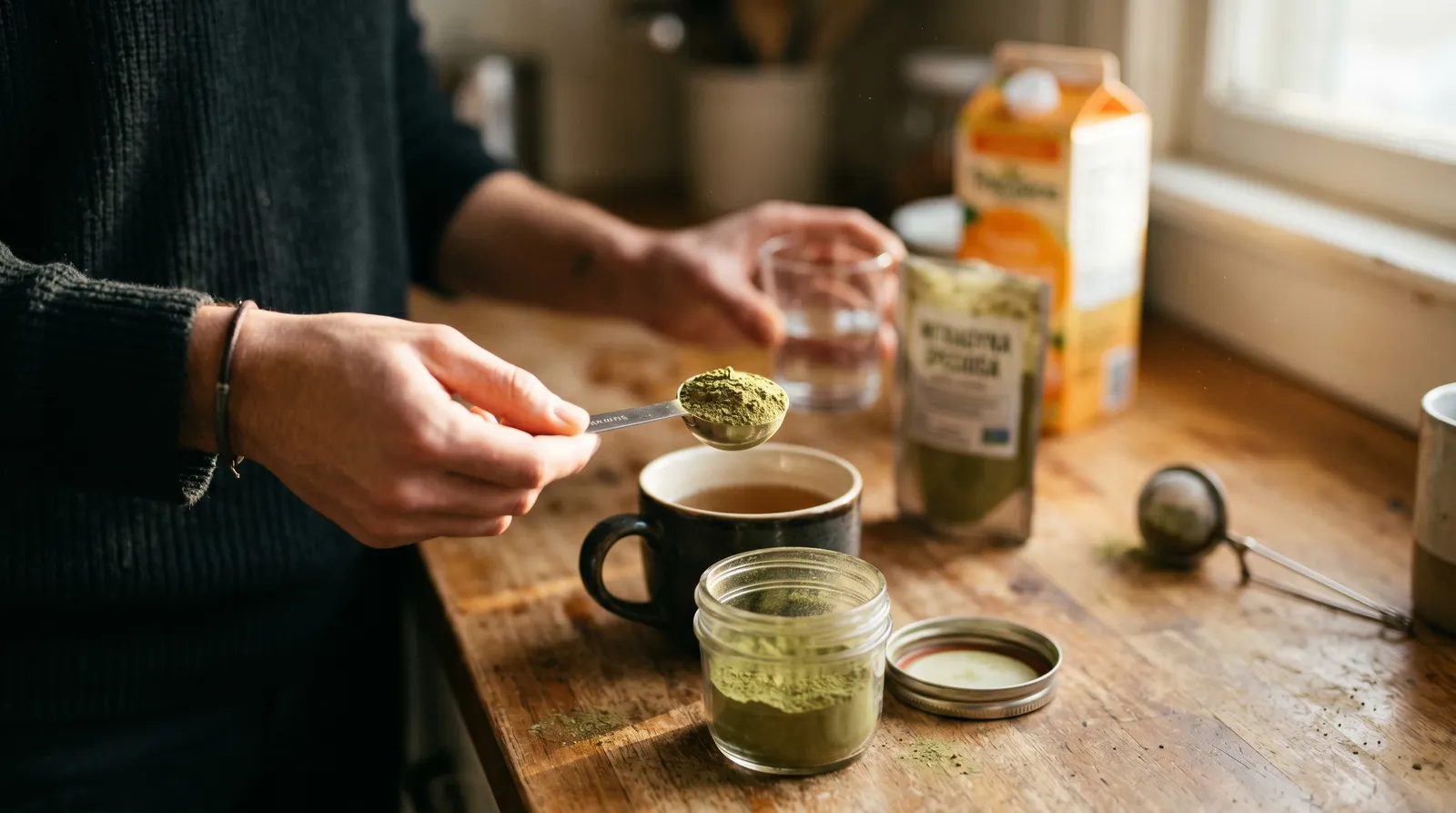
Toss and wash is the fastest no-preparation method for taking kratom powder. Place the measured powder on your tongue and wash it down with water or juice. It requires no preparation and hits relatively quickly — but the taste is aggressively bitter and earthy. Some people gag. If you can handle the flavour, this is the most straightforward method for how to take kratom quickly. Acidic juice (orange juice works well — though see the interaction note below regarding grapefruit) helps mask the bitterness somewhat.
Stirred Into Liquid
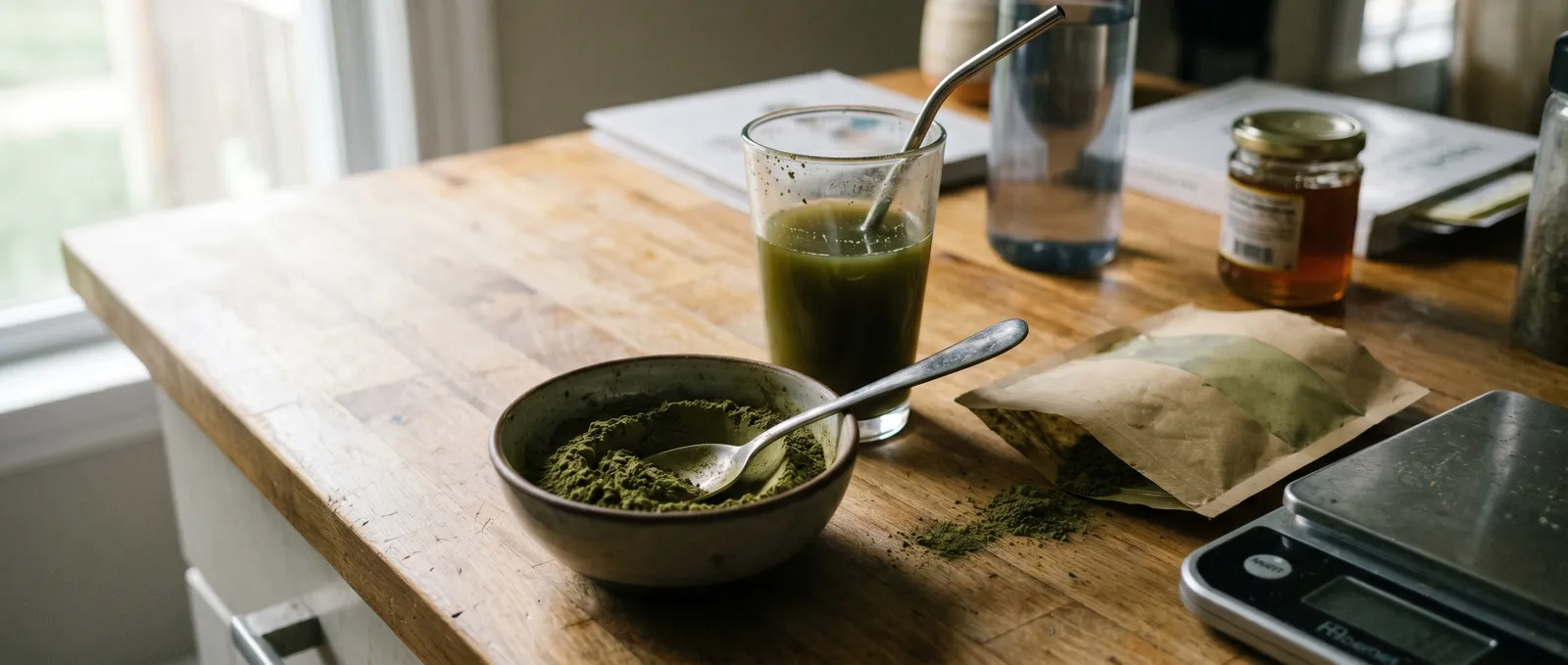
Stirring kratom into liquid is the most popular method among survey respondents who dislike the toss-and-wash texture. Mix the powder into warm water, juice, or a smoothie. Kratom powder doesn't dissolve — it suspends — so you'll need to stir vigorously or use a shaker bottle. Warm water works better than cold for getting the powder to mix without clumping. Some people add honey or sugar to cut through the bitterness. Onset is similar to toss-and-wash: roughly 20–40 minutes on an empty stomach, based on self-reported survey data (Grundmann, 2017).
Brewed as Tea
Kratom tea is the gentlest method on the stomach and produces a slightly faster onset than eating raw powder. Simmer the powder in water for 15–20 minutes, then strain through a fine mesh or coffee filter. You lose some plant material (and potentially some alkaloid content — mitragynine is reasonably heat-stable but prolonged boiling may degrade it), but the result is easier on the stomach. Adding lemon juice during brewing may help extract alkaloids due to the acidic pH, though controlled data on this is thin. Some users describe a shorter duration than eating raw powder — though individual variation is wide and no controlled study has directly compared these methods.
Capsules
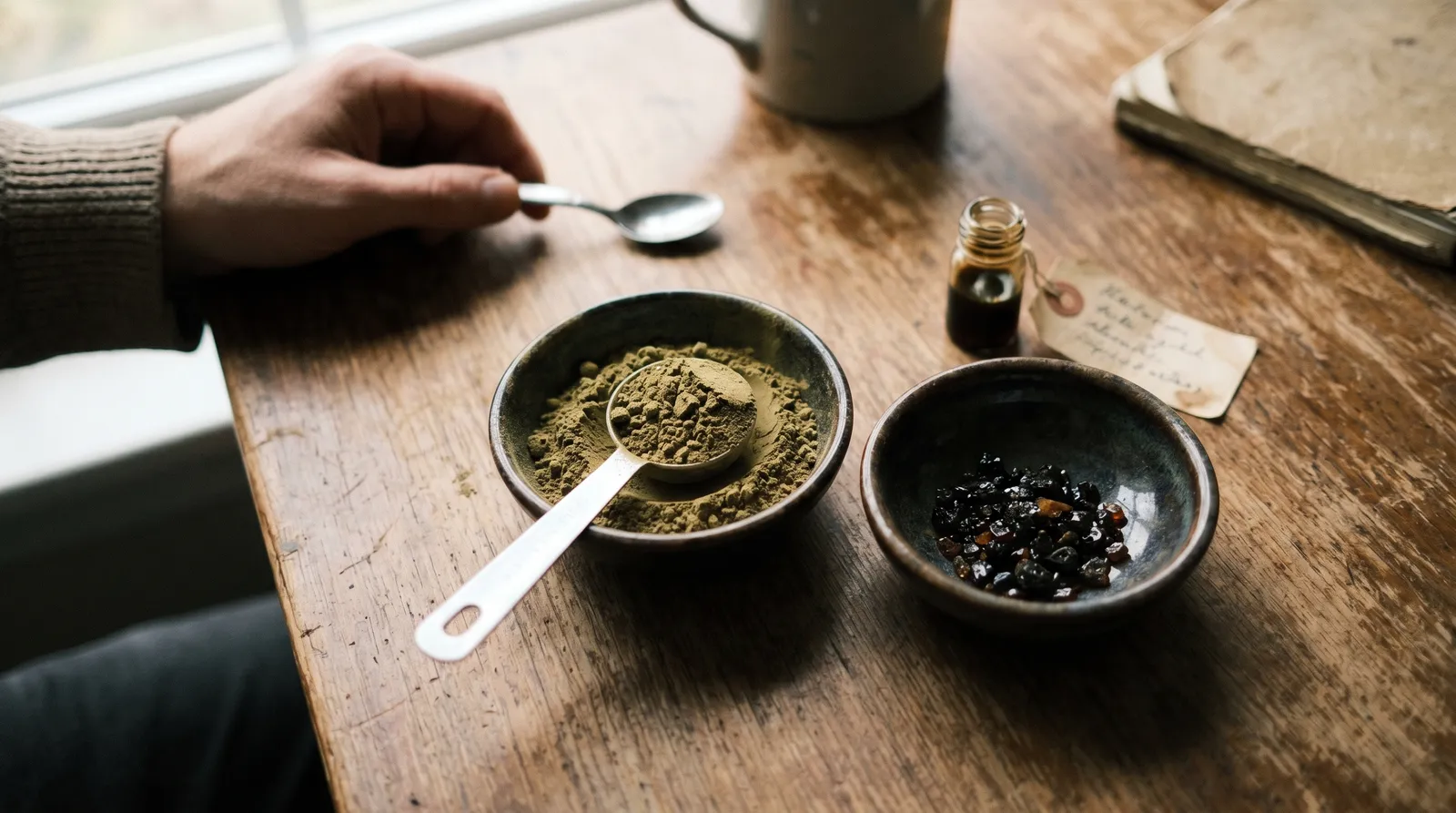
Capsules bypass the taste entirely, making them the preferred choice for people who want to take kratom without dealing with bitterness at all. The trade-off is slower onset — the gelatin or vegetable cellulose shell needs to dissolve first, which can add 15–30 minutes compared to powder taken directly. Capsules also make it harder to fine-tune your dose in small increments, since each capsule contains a fixed amount (typically 0.5–1g). Capsules offer convenience if precision matters less to you than the taste.
Step 2: Measure Your Dose Carefully
Accurate dosing is the single most important factor in having a manageable kratom experience. A cross-sectional survey of 8,049 kratom users found that the majority reported using 1–3 "servings" per session, with a median single dose of roughly 2–3 grams of leaf powder (Grundmann, 2017). A smaller survey by Veltri and Grundmann (2019) found self-reported doses ranging from under 1g to over 8g, with higher doses associated with more adverse effects including nausea and irritability.
Published dose ranges for leaf powder based on survey and ethnobotanical data:
| Range | Leaf powder (grams) | Notes |
|---|---|---|
| Low | 1–2g | Where most researchers suggest starting; associated with stimulant-like effects in survey data |
| Moderate | 2–4g | The range most commonly reported in user surveys (Grundmann, 2017) |
| High | 5–8g | Associated with increased nausea, sedation, and adverse effects (Veltri & Grundmann, 2019) |
| Very high | 8g+ | Doses above 8g were not well-represented in published clinical surveys; risk of adverse effects rises substantially |
For extracts: there is no universally applicable dose table because concentration varies between products. A gram of a concentrated extract might contain 5–50 times the mitragynine of a gram of leaf. If you're using an extract, start with a fraction of what you'd use as leaf powder — the product should state its alkaloid content or concentration factor. If it doesn't, that's a reason to be cautious, not adventurous.
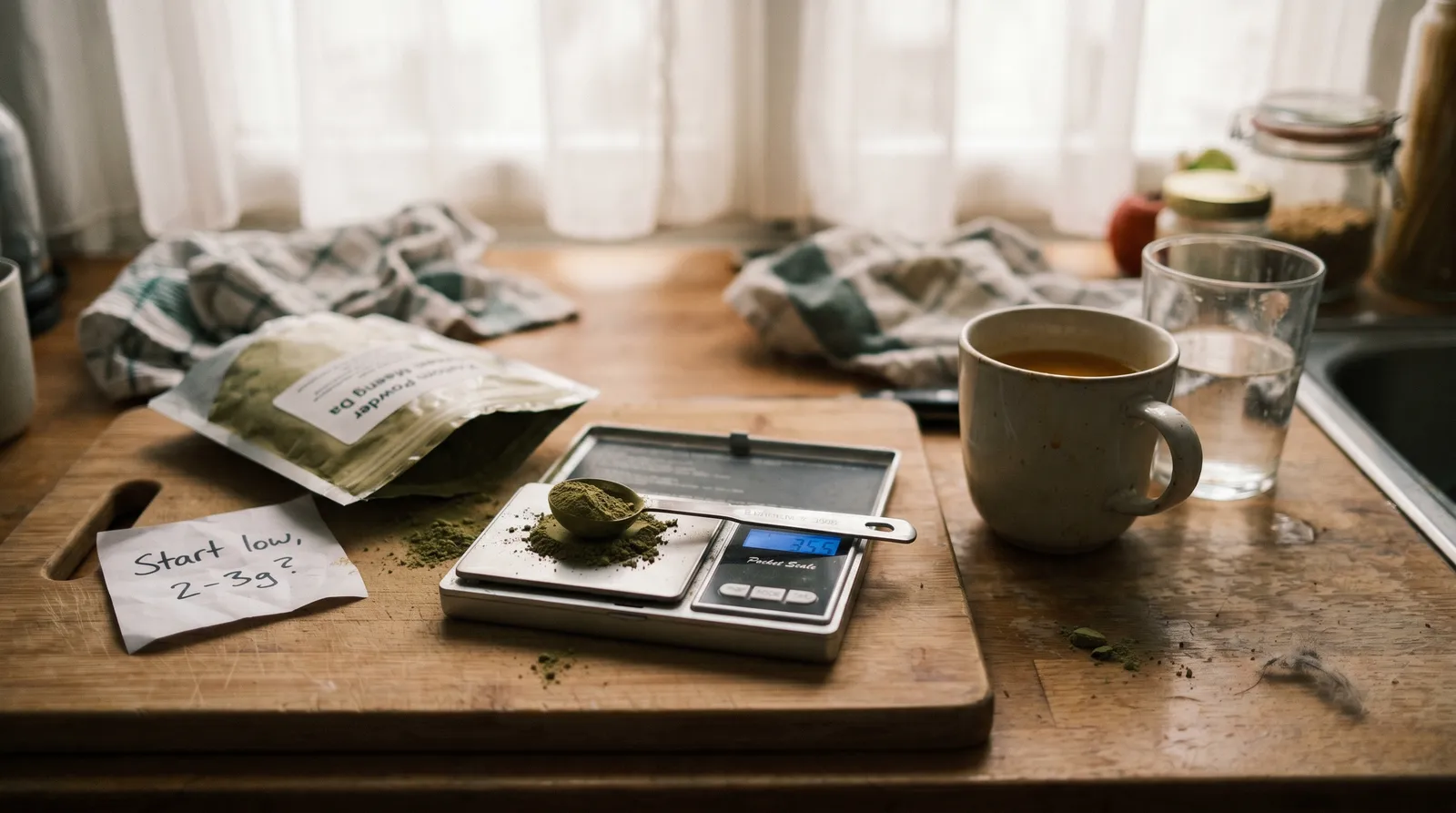
Use a digital scale that reads to 0.1g. A kitchen teaspoon of kratom powder is roughly 2–2.5g, but "roughly" isn't good enough when the difference between a comfortable dose and a nauseating one can be a single gram. Scales cost less than a bad afternoon. Knowing how to take kratom properly starts with knowing exactly how much you're taking.
Step 3: Time It With Your Stomach
Kratom on an empty stomach hits faster and harder — typically within 20–30 minutes — while a full stomach can delay onset by an hour or more. This is consistent with general pharmacokinetic principles for orally ingested alkaloids and matches self-reported data from user surveys. This is also where impatient redosing causes problems. If you've eaten a large meal, the temptation is to take more because "nothing's happening." Then the first dose and the top-up arrive together, and you spend the next two hours nauseated.
A practical approach: take kratom 2–3 hours after a meal, or on a genuinely empty stomach if you can handle it. Have a light snack (crackers, a banana) ready for 30–45 minutes after dosing if the bitterness or the alkaloids unsettle your stomach.
Stay hydrated. Kratom is mildly dehydrating — multiple survey respondents in Grundmann's 2017 study reported dry mouth and increased thirst as common side effects. Water is your best companion here. Combining kratom with alcohol increases sedation and nausea risk, and the interaction profile is poorly studied.
Step 4: Wait Before Redosing
The minimum recommended wait time before redosing is 2 hours from your initial dose. Mitragynine has a reported elimination half-life of roughly 23 hours based on limited pharmacokinetic data (Trakulsrichai et al., 2015), though this comes from a small sample and individual variation is likely wide. The subjective effects of a single dose typically last 2–5 hours depending on the amount and method, with peak effects at roughly 1–2 hours for powder taken orally.
If you feel nothing after 90 minutes, the most common explanations are a full stomach, a weak product, or unrealistic expectations — not insufficient quantity. Adding more before the first dose has fully manifested is the single most reliable way to overshoot. We say this often because it's the mistake we hear about most often.
Step 5: Recognise When Something's Wrong
Nausea, dizziness, and "the wobbles" are the most common adverse effects at moderate-to-high doses — and they are dose-dependent, usually resolving within a few hours. The wobbles are an unpleasant combination of nystagmus and dizziness that experienced users learn to recognise as a sign they've taken too much. Lying down, sipping water, and waiting it out is the standard approach.
More serious warning signs that warrant attention:
- Persistent vomiting that prevents fluid intake
- Rapid or irregular heartbeat
- Seizures (rare, but reported in case literature)
- Jaundice or dark urine — hepatotoxicity has been reported in case studies, though the mechanism is still under investigation and population-level incidence is unclear (Kapp et al., 2020)
- Severe sedation or difficulty breathing, particularly if kratom was combined with other substances
If you or someone nearby shows these signs after taking kratom, seek immediate help. Tell responders what was taken and how much — being specific helps clinicians respond appropriately.
Tolerance and Frequency
Tolerance to kratom develops rapidly with consecutive daily dosing, often within a week of regular use. This is well-documented both in survey literature and in the pharmacology — repeated mu-opioid receptor agonism leads to receptor downregulation, requiring higher doses for the same effect (Swogger & Walsh, 2018). Higher doses mean more side effects and greater dependence risk.
A recognised withdrawal syndrome has been documented in daily heavy users, with symptoms including irritability, muscle aches, insomnia, and mood disturbance (Singh et al., 2014). The threshold at which clinically meaningful dependence develops in moderate or occasional users is less clear — the available evidence mostly describes daily, high-dose consumption patterns.
If you're using kratom more than 2–3 days in a row, you're building tolerance. That's not a moral judgement; it's pharmacology. Spacing sessions with at least 2–3 days between them is the most commonly discussed harm-reduction strategy among experienced users, though no controlled study has validated a specific schedule.
Critical Interactions
Mitragynine is metabolised primarily by CYP3A4 and CYP2D6 enzymes, which means a wide range of common substances can alter its blood levels unpredictably. Substances that inhibit these enzymes — including grapefruit juice, fluoxetine, paroxetine, ketoconazole, and clarithromycin — can increase mitragynine concentrations in ways that are difficult to predict. Combining kratom with other opioids, benzodiazepines, or alcohol creates compounding sedation and respiratory depression risk. Kratom should not be combined with MAOIs, and anyone with pre-existing liver concerns or a personal or family history of substance use disorder should exercise particular caution. European drug monitoring bodies have flagged kratom in its monitoring of novel psychoactive substances in Europe, noting the limited but growing evidence base around adverse events and polydrug interactions. For the full breakdown, see the Azarius encyclopedia article Kratom Interactions and Contraindications.
Common Mistakes and How to Avoid Them
The most avoidable kratom mistakes come down to impatience with dosing and carelessness with product type. If you're learning how to take kratom for the first time, read this section twice.
- Eyeballing doses. Kratom powder density varies between batches and vendors. A heaped teaspoon from one bag might weigh 3g; from another, 2g. Use a scale.
- Treating extracts like leaf. A 2g dose of a concentrated extract is not the same as 2g of leaf powder. Read the product label for alkaloid content or concentration ratio, and dose accordingly — starting very low.
- Chasing effects with redoses. If 3g didn't produce what you expected, taking another 3g an hour later gives you 6g arriving at overlapping times. That's how you end up nauseated and dizzy.
- Daily use "just for a few weeks." Tolerance and dependence don't announce themselves. They accumulate quietly. By the time you notice you need more for the same effect, you're already on the escalator.
- Ignoring vein-colour marketing. The red/green/white/yellow vein distinction is commercial vocabulary with a weak evidence base — no controlled study has demonstrated consistent pharmacological differences between vein colours. Some users describe different effects from different products, but batch-to-batch alkaloid variation within a single "strain" can be as large as the variation between them. Don't build your dosing expectations around colour labels.
- Mixing with other depressants. Alcohol and kratom together amplify sedation and nausea. Benzodiazepines and opioids compound respiratory risk. Keep it simple, especially while you're learning how to take kratom safely.
Quick Storage Note
Kratom powder degrades with exposure to UV light, heat, and moisture — store it in an airtight container in a cool dark place. A cupboard is fine. Properly stored leaf powder remains reasonably stable for 6–12 months, though alkaloid content may decline gradually. Extracts and resins follow the same principles. For more detail, see the Azarius encyclopedia article How To Store Kratom.
Related Azarius Products
Azarius carries a range of kratom leaf powders, capsules, and extracts in various regional varieties and vein colours — browse the kratom category to see current options.
Frequently Asked Questions
What is the best way to take kratom powder without tasting it?
Capsules bypass the taste entirely but slow onset by 15–30 minutes. Mixing powder into a thick smoothie with strong flavours (mango, banana, citrus) also masks bitterness well. Toss-and-wash with orange juice is the fastest option that partially covers the flavour. Capsules are the simplest route if taste avoidance is your priority.
How long should I wait before taking a second dose of kratom?
At least 2 hours from your first dose. Mitragynine has a long half-life (roughly 23 hours per Trakulsrichai et al., 2015), and subjective effects peak at 1–2 hours. Redosing before the first dose fully manifests is the most common cause of nausea and overshooting.
Can I brew kratom as a tea without losing potency?
Mitragynine is reasonably heat-stable at simmering temperatures, so tea remains an effective method. You may lose some alkaloid content through straining out plant material, but many users report satisfactory results. Adding lemon juice during brewing may aid extraction, though controlled data on this is limited.
Why does kratom make me nauseous and how do I prevent it?
Nausea is the most commonly reported adverse effect, especially at doses above 4–5g (Veltri & Grundmann, 2019). Reducing your dose, taking it on a partially empty stomach rather than completely empty, staying hydrated, and avoiding redosing too early are the most reliable preventive steps. Switching from toss-and-wash to tea can also help, since straining removes some of the raw plant material that irritates the stomach.
Is there a real difference between kratom powder and kratom extract dosing?
Yes — a critical one. Extracts concentrate mitragynine and 7-hydroxymitragynine relative to leaf, so a gram of extract can contain many times the alkaloid load of a gram of powder. Dose figures for leaf are not interchangeable with extract figures. Always check the product's stated concentration and start very low.
Where do you buy kratom powder and capsules?
Azarius stocks a range of kratom leaf powders, capsules, and extracts from multiple regions. Popular options include Kratom Bali, Kratom Maeng Da, Kratom Borneo, and Kratom Maeng Da Capsules. Browse the kratom category on the Azarius website to see current options, and check product descriptions for alkaloid content or concentration details before choosing a dose.
Last updated: April 2026
Frequently Asked Questions
10 questionsWhat is the best way to take kratom powder without tasting it?
How long should I wait before taking a second dose of kratom?
Can I brew kratom as a tea without losing potency?
Why does kratom make me nauseous and how do I prevent it?
Is there a real difference between kratom powder and kratom extract dosing?
Where can I buy kratom powder and capsules?
How long does it take for kratom to kick in depending on the method?
Can I mix kratom powder with food to mask the taste?
Should I take kratom on an empty stomach or with food?
Does mixing kratom with grapefruit juice make it stronger?
About this article


Adam Parsons is an external cannabis and psychedelics writer and editor who contributes to Azarius's wiki as both author and reviewer. On the writing side, he authors Azarius's kratom and kanna clusters, drawing on exten
This wiki article was drafted with AI assistance and reviewed by Adam Parsons, External contributor. Editorial oversight by Joshua Askew.
Medical disclaimer. This content is for informational purposes only and does not constitute medical advice. Consult a qualified healthcare provider before use of any substance.
Last reviewed April 24, 2026
References (8)
- [1]European Monitoring Centre for Drugs and Drug Addiction. Kratom (Mitragyna speciosa) drug profile. Retrieved from emcdda.europa.eu.
- [2]Grundmann, O. (2017). Patterns of kratom use and health impact in the US — results from an online survey. Drug and Alcohol Dependence , 176, 63–70. DOI: 10.1016/j.drugalcdep.2017.03.007
- [3]Kruegel, A.C. & Bhowmik, S. (2016). Synthetic and receptor signalling explorations of the Mitragyna alkaloids. Journal of the American Chemical Society , 138(21), 6754–6764.
- [4]Veltri, C. & Grundmann, O. (2019). Current perspectives on the impact of kratom use. Substance Abuse and Rehabilitation , 10, 23–31. DOI: 10.2147/sar.s164261
- [5]Trakulsrichai, S. et al. (2015). Pharmacokinetics of mitragynine in man. Drug Design, Development and Therapy , 9, 2421–2429.
- [6]Swogger, M.T. & Walsh, Z. (2018). Kratom use and mental health: a systematic review. Drug and Alcohol Dependence , 183, 134–140. DOI: 10.1016/j.drugalcdep.2017.10.012
- [7]Singh, D. et al. (2014). Traditional and non-traditional uses of mitragynine (kratom): a survey of the literature. Brain Research Bulletin , 126, 41–46.
- [8]Kapp, F.G. et al. (2020). Intrahepatic cholestasis following abuse of powdered kratom (Mitragyna speciosa). Journal of Medical Toxicology , 7(3), 227–231.
Related Articles
Blue Lotus vs Kanna: Effects & Safety
Blue lotus vs kanna compared — Nymphaea caerulea's aporphine profile against Sceletium tortuosum's mesembrine chemistry, with interaction warnings.
Lotus Clinical Research Overview
What does lotus clinical research actually show? A critical review of Nymphaea caerulea and Nelumbo nucifera pharmacology, preclinical data, and…
Kanna South Africa To West History
Sceletium tortuosum was used by San and Khoekhoe communities in southern Africa for centuries before European colonists first documented it in the 1660s.
Sceletium Tortuosum Plant
Learn about the sceletium tortuosum plant: botany, alkaloids, fermentation, safety warnings, and where to buy kanna.
Kanna Pharmacokinetics Explained
Complete guide to kanna pharmacokinetics: how Sceletium tortuosum alkaloids are absorbed, metabolised via CYP2D6, and eliminated.
Kanna Chemistry: Sceletium Alkaloids Explained
Kanna chemistry explained: mesembrine, mesembrenone, their mechanisms, how fermentation and extraction change alkaloid profiles, and why it matters…

Rapé Shamanic Snuff Guide: How to Use It Safely
A practical rapé shamanic snuff guide covering dose, kuripe technique, effects, nicotine safety, interactions and Amazonian tradition.
White Sage Salvia Apiana Cultural Smudging Guide
Salvia apiana is a non-psychoactive shrub native to southern California's coastal sage scrub, burned as ceremonial incense in Indigenous North American…
Mulungu Erythrina Traditional Amazonian Use — Bark, Alkaloids & Research
Erythrina mulungu is a Brazilian legume tree whose bark has been brewed as a calming decoction in rural folk medicine for generations.