
This article discusses psychoactive substances intended for adults (18+). If you have a health condition or take medication, consult a doctor before use. Our age policy
How To Make Kratom Tea
Definition
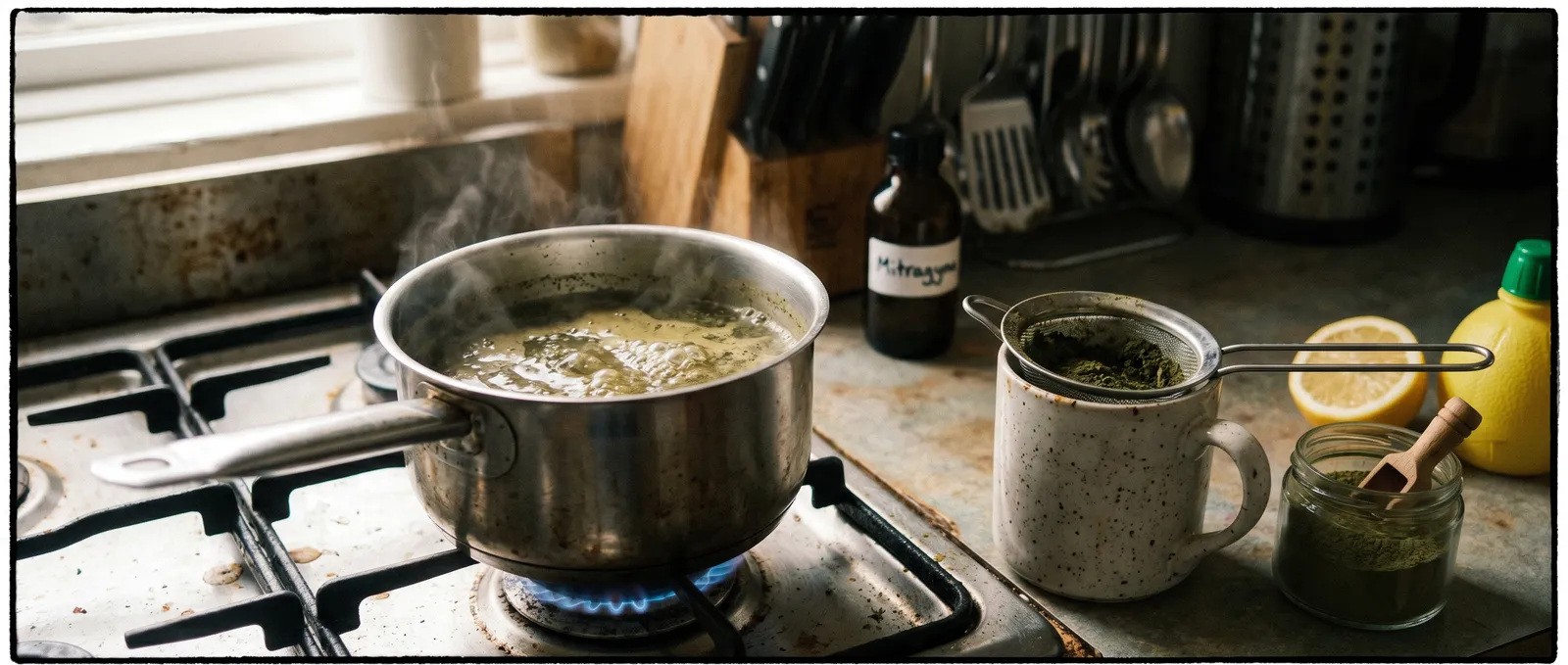
Kratom tea is the traditional and most documented method of consuming Mitragyna speciosa leaf. Brewing it properly involves managing temperature, acidity, and straining to extract alkaloids efficiently while keeping the result drinkable. This guide walks through each step with practical detail.
How To Make Kratom Tea
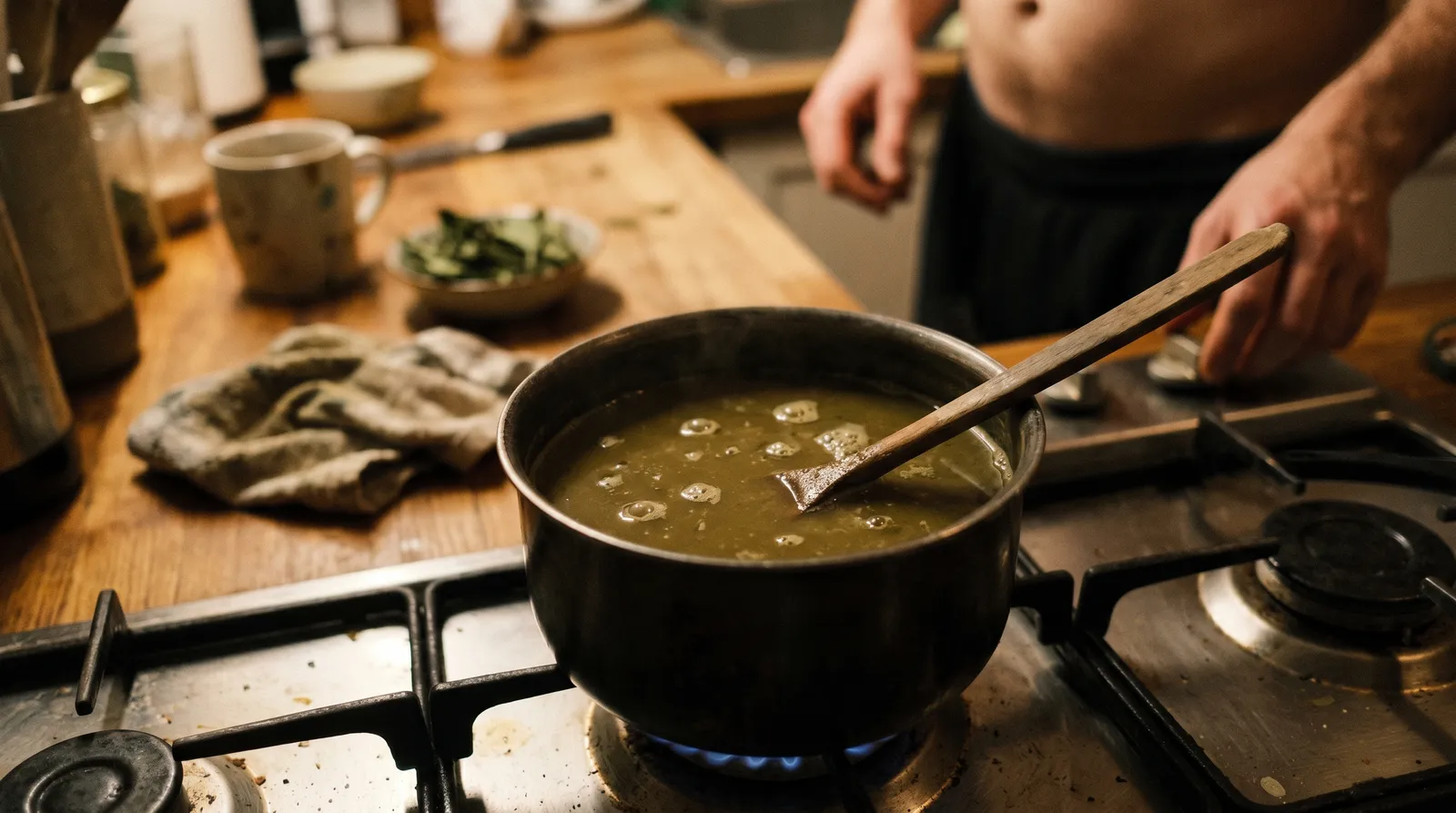
Kratom tea is a hot-water extraction of Mitragyna speciosa leaf powder, made by simmering the powder with an acidic liquid for 15–20 minutes and then straining out the plant matter. It is the oldest and most common way to consume kratom leaf — Southeast Asian labourers have been brewing it for centuries, and it remains the preparation method with the most ethnobotanical documentation behind it. Making kratom tea well is straightforward, but a few details around temperature, acidity, and straining make the difference between a drinkable cup and a gritty, bitter slog that puts you off the whole thing. This guide covers the basic method for how to make kratom tea, the variables that actually matter, and what to watch out for when brewing kratom tea at home.
This article is for informational purposes only. Kratom is a pharmacologically active substance that interacts with opioid receptors and is metabolised by cytochrome P450 enzymes. It is not suitable for everyone. Kratom carries a risk of dependence with regular use. Nothing in this guide should be interpreted as encouragement to use kratom or as a substitute for professional medical guidance.
What You Need
The essential equipment for kratom tea is a digital scale, a saucepan, an acidic liquid, and a fine strainer — everything else is optional. The ingredient list is short and inexpensive. The only thing that varies much is the kratom itself — and the critical distinction here is between plain leaf powder and extracts. Extracts concentrate mitragynine and 7-hydroxymitragynine relative to leaf, sometimes dramatically, and the two are not interchangeable in any recipe. This guide covers leaf powder and crushed leaf. If you're working with an extract, do not follow these gram amounts — refer to the specific product's guidance and the Azarius encyclopedia article on kratom extracts for appropriate ranges.
For leaf powder kratom tea, you'll need:
- Kratom leaf powder or crushed leaf — choose any regional variety or vein colour; you can order kratom powder from the Azarius kratom category
- Water (around 500 ml per serving)
- An acidic element: lemon juice, lime juice, or apple cider vinegar — roughly 1–2 tablespoons
- A fine-mesh strainer, cheesecloth, or coffee filter
- A small saucepan or pot
- Optional: honey, sugar, ginger, or another flavouring to offset bitterness
Regarding how much leaf powder to use when you make kratom tea: survey research by Grundmann (2017) found that the majority of kratom users in the United States reported using between 1 and 5 grams of leaf powder per session, with a median around 2–3 grams. A separate cross-sectional study by Veltri and Grundmann (2019) reported a similar range, noting that daily users tended toward the higher end. These are observational figures — individual responses vary considerably based on body weight, tolerance, and the alkaloid content of the specific batch.
Step 1: Measure and Acidify
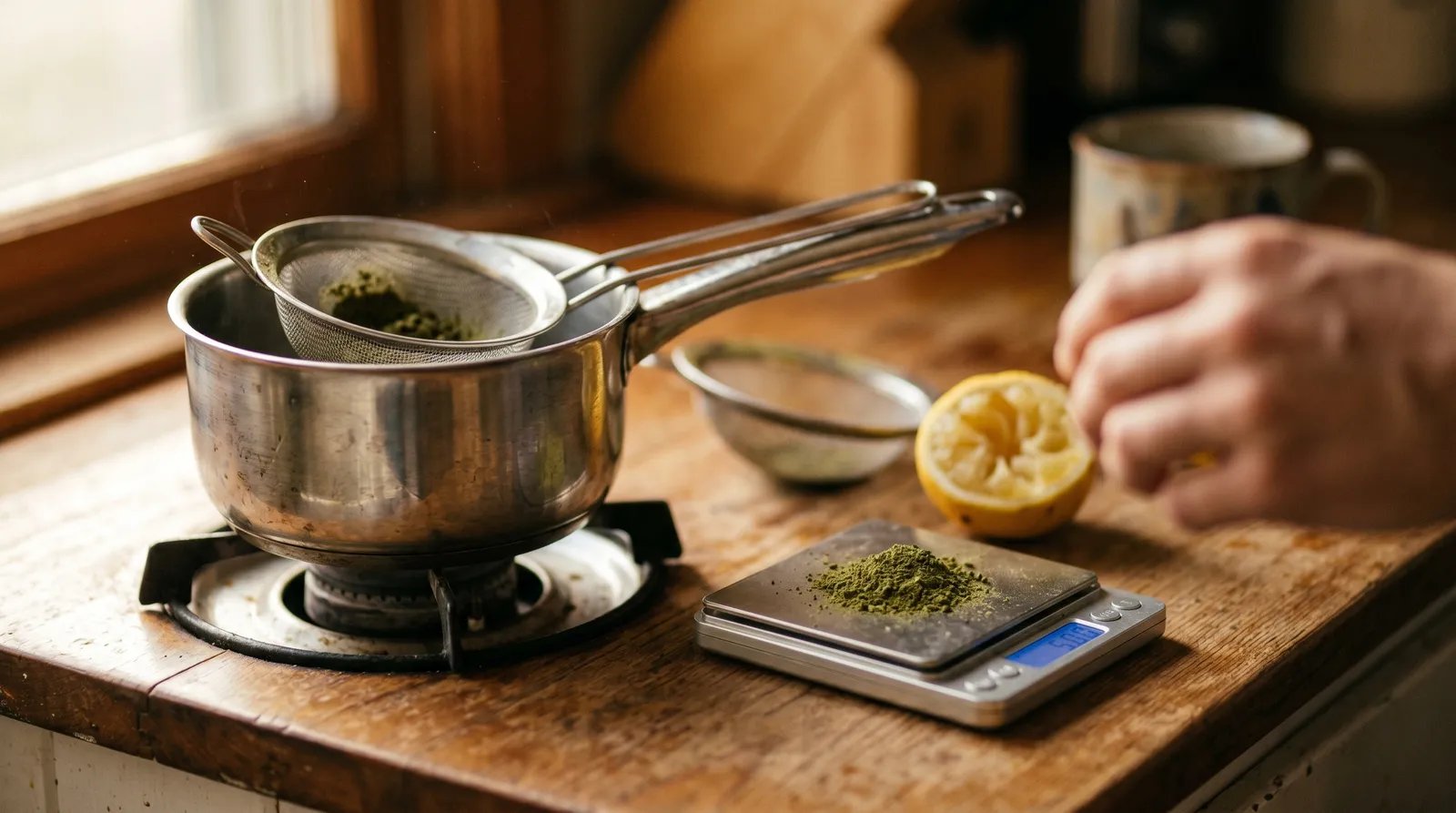
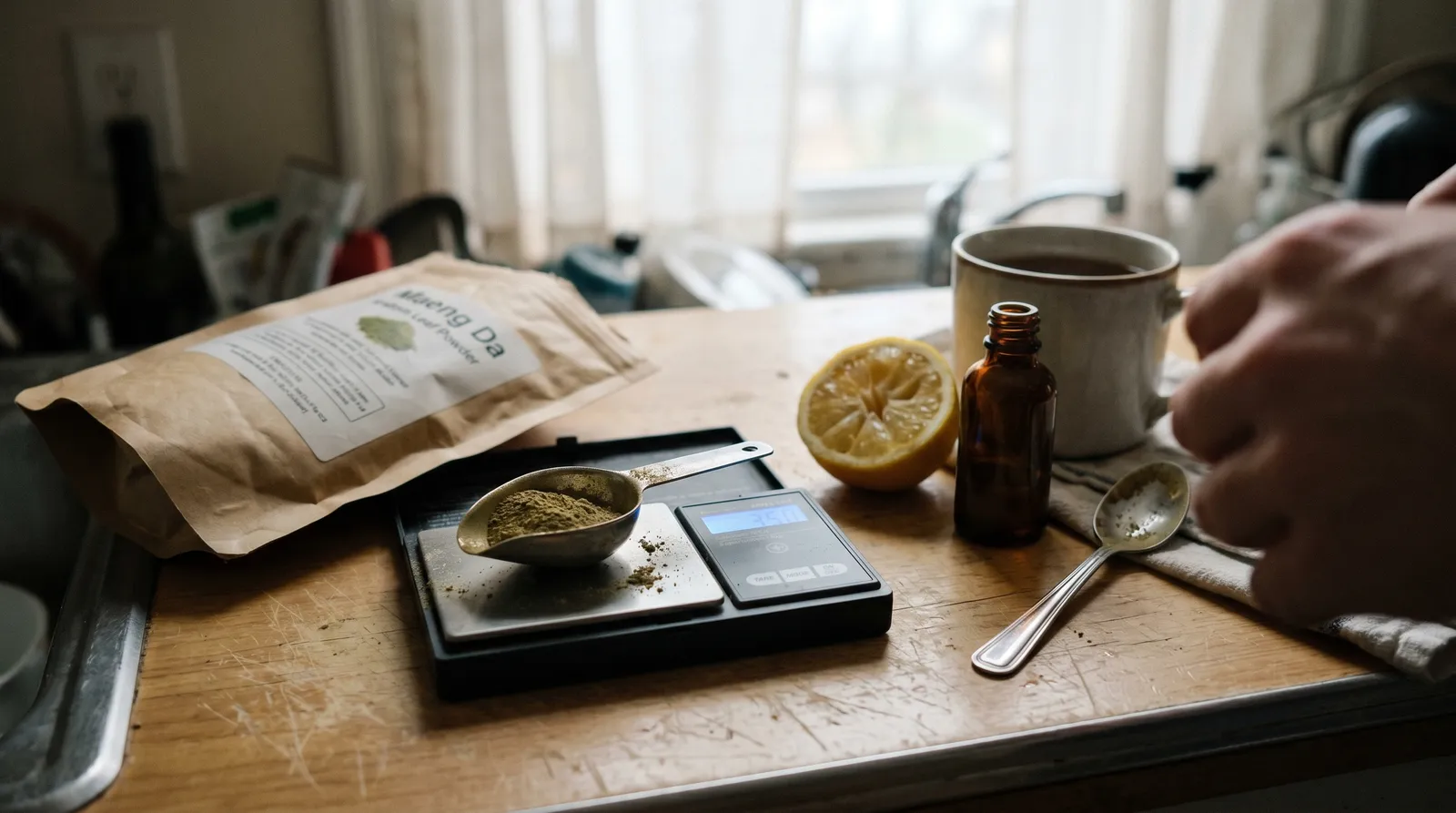
Accurate measurement with a digital scale is the single most important step for a consistent kratom tea experience. Weigh your leaf powder precisely — eyeballing with a teaspoon is common but imprecise, since a "heaped teaspoon" can range from 2 to 4 grams depending on how fine the grind is and how enthusiastically you heap. A 0.1g kitchen scale costs a few euros and removes the guesswork.
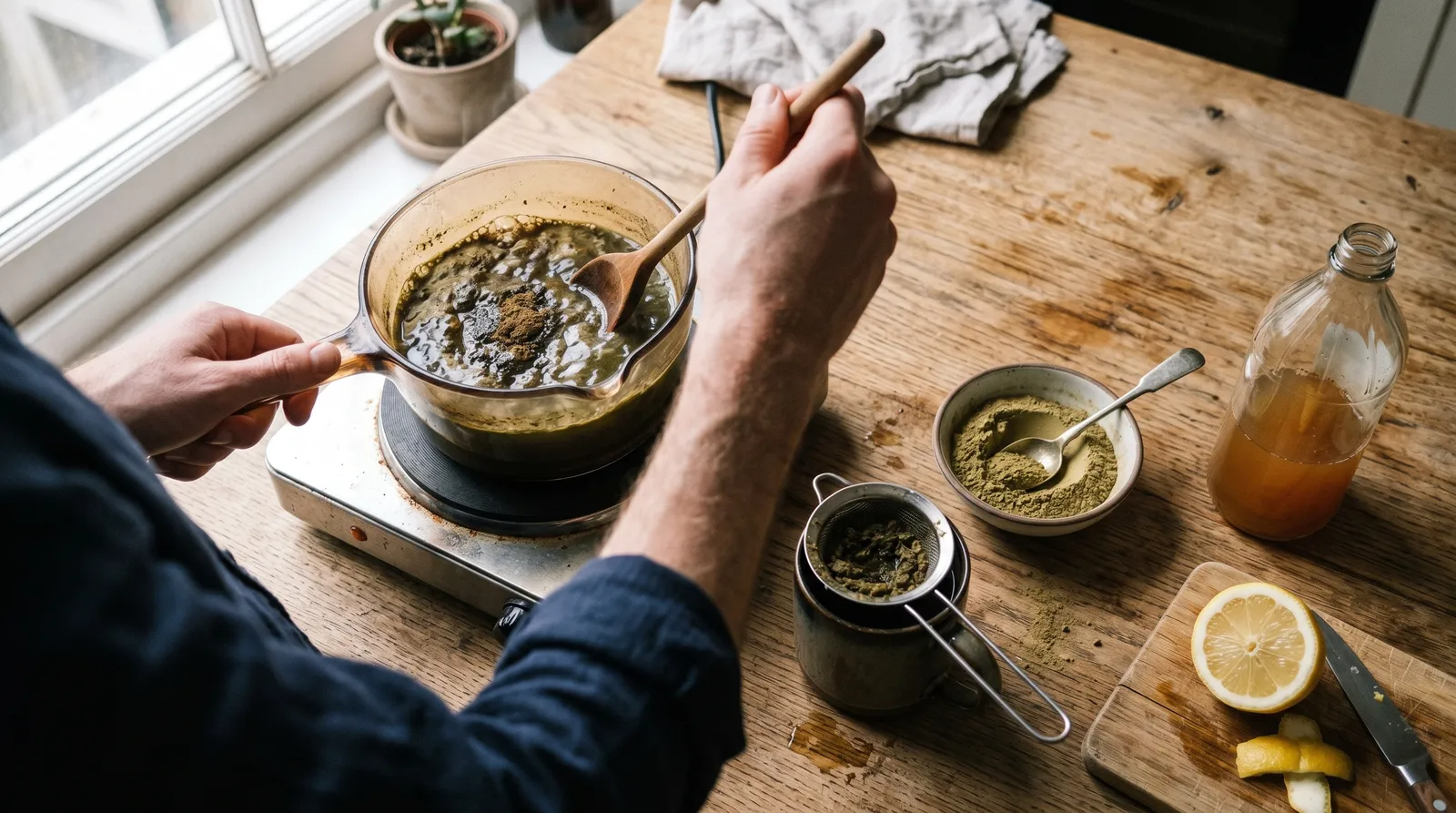
Place the measured powder in your saucepan, add about 500 ml of water, and squeeze in the juice of half a lemon (or equivalent). The acid serves a real purpose: mitragynine is more soluble under acidic conditions. Traditional Thai preparations often use lime, and the principle is the same — lowering the pH of the water helps pull more alkaloids into solution. Some users skip this step and still get results, but extraction efficiency drops noticeably when you make kratom tea without acid.
Step 2: Heat, but Don't Boil
A gentle simmer between 80–95 °C for 15–20 minutes is the ideal temperature range for brewing kratom tea. There's a persistent debate about whether boiling destroys mitragynine. The honest answer is that the data is thin: no published study has systematically tested alkaloid degradation across a range of brewing temperatures in a kitchen-realistic setup. Mitragynine's melting point is around 102–106 °C (Takayama, 2004), which is above water's boiling point, so brief boiling probably doesn't obliterate it. But a sustained hard boil is unnecessary and likely degrades at least some alkaloid content over time, particularly 7-hydroxymitragynine, which is present in much smaller quantities and may be less thermally stable. A simmer for 15–20 minutes is the pragmatic middle ground.
Stir occasionally. The powder tends to clump and settle.
Step 3: Strain Thoroughly
Thorough straining through a fine-mesh sieve or paper coffee filter is what separates a pleasant cup of kratom tea from a gritty, nausea-inducing ordeal. This is the step people rush, and it's the one that most affects the drinking experience. Pour the liquid through a fine-mesh strainer or cheesecloth into a mug or jug. If you used a fine powder, a single pass through a metal strainer will still leave sediment — run it through a second time, or use a paper coffee filter for the final pass.
Leftover plant material in the cup doesn't add meaningful alkaloid content (you've already extracted the soluble portion) but it does add a gritty, unpleasant mouthfeel and can cause nausea in some people. The extra 90 seconds of straining is worth it.
Some people save the spent leaf material and re-brew it for a weaker second cup. This works — there's still some alkaloid left in the plant matter after one extraction — but the second brew will be noticeably less potent than the first.
Step 4: Flavour and Drink
Kratom tea tastes aggressively bitter — not mildly bitter like green tea, but properly, confrontationally bitter, with an earthy undertone that some people find tolerable and others find actively repulsive. Honey and sugar help. Ginger masks the flavour reasonably well and may also settle the stomach. Some people brew it alongside a strong-flavoured herbal tea (peppermint, chamomile) to dilute the taste. Others just hold their nose and drink it quickly — not elegant, but effective.
You can also chill the strained kratom tea and drink it cold. The alkaloid content doesn't change with temperature once it's in solution. Iced kratom tea with honey and lemon is genuinely more palatable than the hot version for most people.
Common Mistakes and How To Avoid Them
The most frequent kratom tea mistakes are dosing errors, impatience with onset timing, and dangerous substance combinations — all of which are avoidable with basic awareness.
Using extract doses in a leaf recipe. This cannot be overstated. Extracts — whether liquid tinctures, enhanced powders, or resin — concentrate the active alkaloids well beyond what leaf powder contains. A gram of a 50x extract is not the same as a gram of leaf. Treating them interchangeably is the fastest route to an unpleasant experience. If you're making kratom tea with extract, you need extract-specific dosing information — the Azarius encyclopedia article on kratom extracts covers this in detail.
Redosing too soon. Tea onset is typically 15–30 minutes on an empty stomach, but it can take longer — up to 45 minutes in some cases. The temptation to brew a second cup because "it's not working" leads to stacking doses, which is how people end up nauseated and dizzy. Wait at least 60 minutes before deciding whether to adjust.
Skipping the scale. A "tablespoon" of kratom powder can weigh anywhere from 3 to 7 grams depending on grind fineness, moisture content, and packing. If you're paying attention to dose — and you should be — use a scale.
Ignoring tolerance. Tolerance to kratom develops rapidly with consecutive daily dosing. This is well-documented in both the ethnobotanical literature on traditional Thai use (Suwanlert, 1975) and in modern survey data (Grundmann, 2017). If you find yourself increasing the amount of leaf per cup week on week, that's tolerance at work, and it's a signal to take breaks rather than escalate.
Combining with other substances. Kratom's primary alkaloids — mitragynine and 7-hydroxymitragynine — are partial agonists at mu-opioid receptors (Kruegel & Grundmann, 2016). Combining kratom tea with other opioids, benzodiazepines, alcohol, or MAOIs carries real risk. CYP3A4 and CYP2D6 inhibitors (including common medications like fluoxetine, paroxetine, clarithromycin, ketoconazole, and even grapefruit juice) can alter how kratom is metabolised, potentially increasing its effects unpredictably (Hanapi et al., 2013). For a full breakdown of interactions, see the dedicated Azarius encyclopedia article on kratom interactions and safety.
Why Tea Rather Than Toss-and-Wash or Capsules?
Tea offers the best balance of onset speed, stomach comfort, and flavour control among the common kratom preparation methods. The "toss-and-wash" method — dumping dry powder into your mouth and chasing it with water — is faster but bypasses any filtration. You're consuming the entire plant matter, which some users report causes more gastrointestinal discomfort than strained tea. Capsules are convenient but slower to take effect because the gelatin or cellulose shell needs to dissolve first. You can buy kratom capsules from Azarius if convenience matters more to you than the brewing ritual.
The trade-off with tea is preparation time and potentially slightly lower total alkaloid extraction compared to consuming the raw powder directly — though no controlled study has quantified this difference precisely. The following table summarises the practical differences:
| Method | Onset Time | Stomach Comfort | Preparation Effort | Flavour Control |
|---|---|---|---|---|
| Kratom tea (strained) | 15–30 min | Generally good | Moderate (15–25 min) | High — can add honey, ginger, citrus |
| Toss-and-wash | 15–20 min | Often poor — raw plant matter | Minimal (under 1 min) | None |
| Capsules | 30–45 min | Good | None (pre-made) | None (no taste) |
| Mixed into food/smoothie | 20–40 min | Variable | Moderate | Moderate — depends on recipe |
Traditional use in Thailand and Malaysia overwhelmingly favoured chewing fresh leaves or brewing dried leaf as tea (Vicknasingam et al., 2010). The kratom tea method aligns most closely with the ethnobotanical record, for whatever that's worth in terms of your Tuesday evening.
Kratom Tea Potency Compared to Raw Powder
Strained kratom tea likely delivers somewhat fewer total alkaloids than consuming the same weight of raw powder, but the difference has never been precisely quantified in a controlled study. When you make kratom tea and strain out the plant matter, you're drinking only what dissolved into the water — some alkaloid content inevitably remains bound in the discarded fibre. Anecdotally, many users report that kratom tea feels "cleaner" in onset and slightly shorter in duration compared to toss-and-wash, which is consistent with faster absorption of a dissolved alkaloid versus slow digestion of raw plant material. The practical takeaway: if you're switching from raw powder to tea, your first few brews may feel slightly milder at the same gram weight. Adjust gradually rather than jumping up in dose.
Storage and Reheating
Brewed kratom tea keeps in the fridge for 4–5 days in a sealed container — that is the practical consensus, though no published stability data exists specifically on mitragynine in aqueous solution at refrigerator temperatures. If it smells off or develops visible mould, discard it — that's basic food safety.
You can reheat refrigerated kratom tea in a saucepan or microwave without issue. Freezing works too: pour into ice cube trays, freeze, and drop a couple of cubes into hot water when you want a cup. This is a decent batch-preparation method if you don't want to brew fresh every time.
For storing dry kratom powder before brewing, keep it in an airtight container away from light and moisture. The Azarius blog article on storing herbal products covers best practices in more detail.
Dependence and Tolerance
Daily heavy kratom use carries a real risk of physical dependence, with a recognised withdrawal syndrome documented in multiple studies (Singh et al., 2014; Grundmann, 2017). Symptoms documented in the literature include muscle aches, irritability, insomnia, nausea, and anxiety. Whether moderate or occasional users develop meaningful dependence is still contested — the available data skews heavily toward daily, high-dose populations, and controlled studies in lighter users are lacking. But the risk is real, and the pattern is consistent enough across multiple studies that it warrants attention. Taking regular breaks from use is the most straightforward way to mitigate tolerance and dependence risk.
Safety and Interactions
Kratom's primary alkaloids interact with opioid receptors and are metabolised by CYP3A4 and CYP2D6 enzymes, making pharmacological interactions a genuine concern rather than a theoretical one (Henningfield et al., 2018; Hanapi et al., 2013). Combining kratom tea with other substances that act on the same pathways can increase risk of serious adverse effects. The Beckley Foundation has noted the need for more rigorous pharmacokinetic research on kratom alkaloid interactions.
Substances to avoid combining with kratom tea include:
- Other opioids
- Benzodiazepines
- Alcohol
- CYP3A4 inhibitors (clarithromycin, ketoconazole, grapefruit juice, among others)
- CYP2D6 inhibitors (fluoxetine, paroxetine, bupropion, among others)
Case reports of hepatotoxicity exist in the literature, though the mechanism is still under investigation and population-level incidence remains unclear (Schimmel & Dart, 2020). Individuals with pre-existing liver conditions or those taking concurrent hepatotoxic medication should exercise particular caution. For a full breakdown of interactions and risk factors, see the dedicated Azarius encyclopedia article on kratom interactions and safety.
Choosing Kratom Powder for Tea
Fine-ground leaf powder extracts more efficiently than crushed leaf because the smaller particles expose more surface area to the hot water. Crushed leaf works but requires longer simmering — around 25–30 minutes rather than 15–20. Regional varieties (often labelled by origin such as Borneo, Bali, or Thai) and vein colours (red, green, white) reflect differences in alkaloid profiles, though the practical distinctions are often subtler than marketing suggests. If you're new to making kratom tea, starting with a standard green or red vein powder is reasonable. You can buy kratom leaf powder from the Azarius kratom category, which includes multiple regional varieties and vein colours suitable for tea brewing. For those who prefer not to brew, you can also get pre-filled kratom capsules from Azarius — convenient for travel or days when you don't feel like simmering. The Azarius encyclopedia section on kratom covers related topics including strain comparisons, extract dosing, and interaction safety. The Azarius blog features additional guides on herbal preparation techniques that complement this kratom tea guide.
Batch Brewing and Iced Kratom Tea
Batch brewing is the most time-efficient way to make kratom tea if you plan to drink it regularly throughout the week. The method is identical to single-serving preparation — measure, acidify, simmer, strain — but scaled up to 1.5–2 litres at a time. Pour the strained tea into a glass jar or bottle, refrigerate, and portion out servings as needed. This approach saves roughly 15 minutes per session compared to brewing fresh each time, and the tea holds well for 4–5 days refrigerated.
For iced kratom tea, simply brew hot as usual, strain thoroughly, sweeten if desired, and pour over ice or chill in the fridge. Adding a bit more lemon juice to the cold version helps brighten the flavour — cold liquids taste less sweet and less acidic than hot ones, so you may want to adjust. Some people freeze strained tea in ice cube trays and blend them into smoothies, which buries the bitterness effectively. Fine-ground options from the Azarius kratom category work especially well for batch brewing, extracting efficiently in larger volumes.
Where To Buy Kratom Powder for Tea
The best kratom for tea is fresh, finely ground leaf powder from a reputable source that provides batch-specific information. You can order kratom leaf powder from the Azarius kratom category, which stocks multiple regional varieties (Borneo, Bali, Thai, Malay) and vein colours (red, green, white) in various quantities. For those who prefer not to brew, Azarius also carries pre-filled kratom capsules — convenient for travel or days when you don't feel like simmering. If you want to explore different preparation styles, you can also buy kratom crushed leaf, which works well for longer steeps and French press brewing. The Azarius encyclopedia section on kratom covers related topics including strain comparisons, extract dosing, and interaction safety. The Azarius blog features additional guides on herbal preparation techniques that complement this kratom tea guide.
Frequently Asked Questions
Does boiling water destroy the alkaloids in kratom tea?
Probably not significantly. Mitragynine's melting point is around 102–106 °C, above water's boiling point. Brief boiling is unlikely to obliterate it, but no study has systematically tested kitchen-realistic brewing temperatures. A gentle simmer for 15–20 minutes is the pragmatic approach — it extracts well without unnecessary thermal stress.
Can you reuse kratom leaf powder for a second brew?
Yes. The spent leaf still contains some alkaloid after the first extraction. A second brew will be noticeably weaker than the first, but it's not worthless. Some people combine both brews into one batch for a more even result.
How long does brewed kratom tea last in the fridge?
Roughly 4–5 days in a sealed container. No published stability data exists for mitragynine in aqueous solution at fridge temperatures, so this is practical guidance. Discard if it smells off or shows mould. Freezing in ice cube trays works well for longer storage.
Why add lemon juice to kratom tea?
Mitragynine is more soluble under acidic conditions. Adding lemon or lime juice lowers the pH of the water, improving alkaloid extraction into solution. Traditional Thai preparations used lime for the same reason. You can skip it, but extraction efficiency drops.
Is kratom tea easier on the stomach than toss-and-wash?
Many users report less gastrointestinal discomfort with strained tea compared to consuming raw powder, since straining removes most indigestible plant matter. No controlled study has confirmed this, but the pattern is consistent across user reports.
Where can I buy kratom leaf powder for making tea?
Azarius stocks a range of kratom leaf powders in various regional varieties and vein colours, as well as pre-filled kratom capsules. Browse the Azarius kratom category to compare options and find a variety that suits your preferences.
Can I make kratom tea with crushed leaf instead of powder?
Yes, crushed leaf works well for kratom tea and is actually easier to strain than fine powder. The trade-off is that crushed leaf requires a longer simmer — around 25–30 minutes instead of 15–20 — because the larger particle size means less surface area is exposed to the water. Some tea drinkers prefer crushed leaf specifically because it produces a cleaner brew with less sediment.
What is the best kratom strain for tea?
There is no single best strain — the choice depends on personal preference. Red vein varieties are the most popular for tea among Azarius customers, but green and white vein powders brew just as well. The differences between regional varieties and vein colours are real but often subtler than marketing implies. If you are new to kratom tea, a standard green or red vein powder is a reasonable starting point.
Last updated: April 2026
Frequently Asked Questions
10 questionsDoes boiling water destroy the alkaloids in kratom tea?
Can you reuse kratom leaf powder for a second brew?
How long does brewed kratom tea last in the fridge?
Why add lemon juice to kratom tea?
Is kratom tea easier on the stomach than toss-and-wash?
Where can I buy kratom leaf powder for making tea?
How much kratom leaf powder should I use per cup of tea?
Can I use crushed kratom leaf instead of powder for tea?
Can I add milk or honey to kratom tea?
Should I strain kratom tea before drinking it?
About this article


Adam Parsons is an external cannabis and psychedelics writer and editor who contributes to Azarius's wiki as both author and reviewer. On the writing side, he authors Azarius's kratom and kanna clusters, drawing on exten
This wiki article was drafted with AI assistance and reviewed by Adam Parsons, External contributor. Editorial oversight by Joshua Askew.
Medical disclaimer. This content is for informational purposes only and does not constitute medical advice. Consult a qualified healthcare provider before use of any substance.
Last reviewed April 24, 2026
References (10)
- [1]Grundmann, O. (2017). Patterns of kratom use and health impact in the US — results from an online survey. Drug and Alcohol Dependence , 176, 63–70. DOI: 10.1016/j.drugalcdep.2017.03.007
- [2]Veltri, C. & Grundmann, O. (2019). Current perspectives on the impact of kratom use. Substance Abuse and Rehabilitation , 10, 23–31. DOI: 10.2147/sar.s164261
- [3]Takayama, H. (2004). Chemistry and pharmacology of analgesic indole alkaloids from the rubiaceous plant, Mitragyna speciosa . Chemical and Pharmaceutical Bulletin , 52(8), 916–928. DOI: 10.1248/cpb.52.916
- [4]Suwanlert, S. (1975). A study of kratom eaters in Thailand. Bulletin on Narcotics , 27(3), 21–27.
- [5]Vicknasingam, B., Narayanan, S., Beng, G. T., & Mansor, S. M. (2010). The informal use of ketum ( Mitragyna speciosa ) for opioid withdrawal in the northern states of peninsular Malaysia and implications for drug substitution therapy. International Journal of Drug Policy , 21(4), 283–288. DOI: 10.1016/j.drugpo.2009.12.003
- [6]Singh, D., Müller, C. P., & Vicknasingam, B. K. (2014). Kratom ( Mitragyna speciosa ) dependence, withdrawal symptoms and craving in regular users. Drug and Alcohol Dependence , 139, 132–137. DOI: 10.1016/j.drugalcdep.2014.03.017
- [7]Schimmel, J. & Dart, R. C. (2020). Kratom ( Mitragyna speciosa ) liver injury: a complete review. Drugs , 80(3), 263–283. DOI: 10.1007/s40265-019-01242-6
- [8]Henningfield, J. E., Fant, R. V., & Wang, D. W. (2018). The abuse potential of kratom: implications for regulation and research. Psychopharmacology , 235(2), 573–589.
- [9]Kruegel, A. C. & Grundmann, O. (2016). Synthetic and receptor signaling explorations of the Mitragyna alkaloids: mitragynine as an atypical molecular framework for opioid receptor modulators. Journal of the American Chemical Society , 138(21), 6754–6764. DOI: 10.1021/jacs.6b00360
- [10]Hanapi, N. A., Ismail, S., & Mansor, S. M. (2013). Inhibitory effect of mitragynine on human cytochrome P450 enzyme activities. Pharmacognosy Research , 5(4), 241–246.
Related Articles
Blue Lotus vs Kanna: Effects & Safety
Blue lotus vs kanna compared — Nymphaea caerulea's aporphine profile against Sceletium tortuosum's mesembrine chemistry, with interaction warnings.
Lotus Clinical Research Overview
What does lotus clinical research actually show? A critical review of Nymphaea caerulea and Nelumbo nucifera pharmacology, preclinical data, and…
Kanna South Africa To West History
Sceletium tortuosum was used by San and Khoekhoe communities in southern Africa for centuries before European colonists first documented it in the 1660s.
Sceletium Tortuosum Plant
Learn about the sceletium tortuosum plant: botany, alkaloids, fermentation, safety warnings, and where to buy kanna.
Kanna Pharmacokinetics Explained
Complete guide to kanna pharmacokinetics: how Sceletium tortuosum alkaloids are absorbed, metabolised via CYP2D6, and eliminated.
Kanna Chemistry: Sceletium Alkaloids Explained
Kanna chemistry explained: mesembrine, mesembrenone, their mechanisms, how fermentation and extraction change alkaloid profiles, and why it matters…
Rapé Shamanic Snuff Guide: How to Use It Safely
A practical rapé shamanic snuff guide covering dose, kuripe technique, effects, nicotine safety, interactions and Amazonian tradition.
White Sage Salvia Apiana Cultural Smudging Guide
Salvia apiana is a non-psychoactive shrub native to southern California's coastal sage scrub, burned as ceremonial incense in Indigenous North American…
Mulungu Erythrina Traditional Amazonian Use — Bark, Alkaloids & Research
Erythrina mulungu is a Brazilian legume tree whose bark has been brewed as a calming decoction in rural folk medicine for generations.