
This article discusses psychoactive substances intended for adults (18+). If you have a health condition or take medication, consult a doctor before use. Our age policy
Kanna Contraindications

Definition
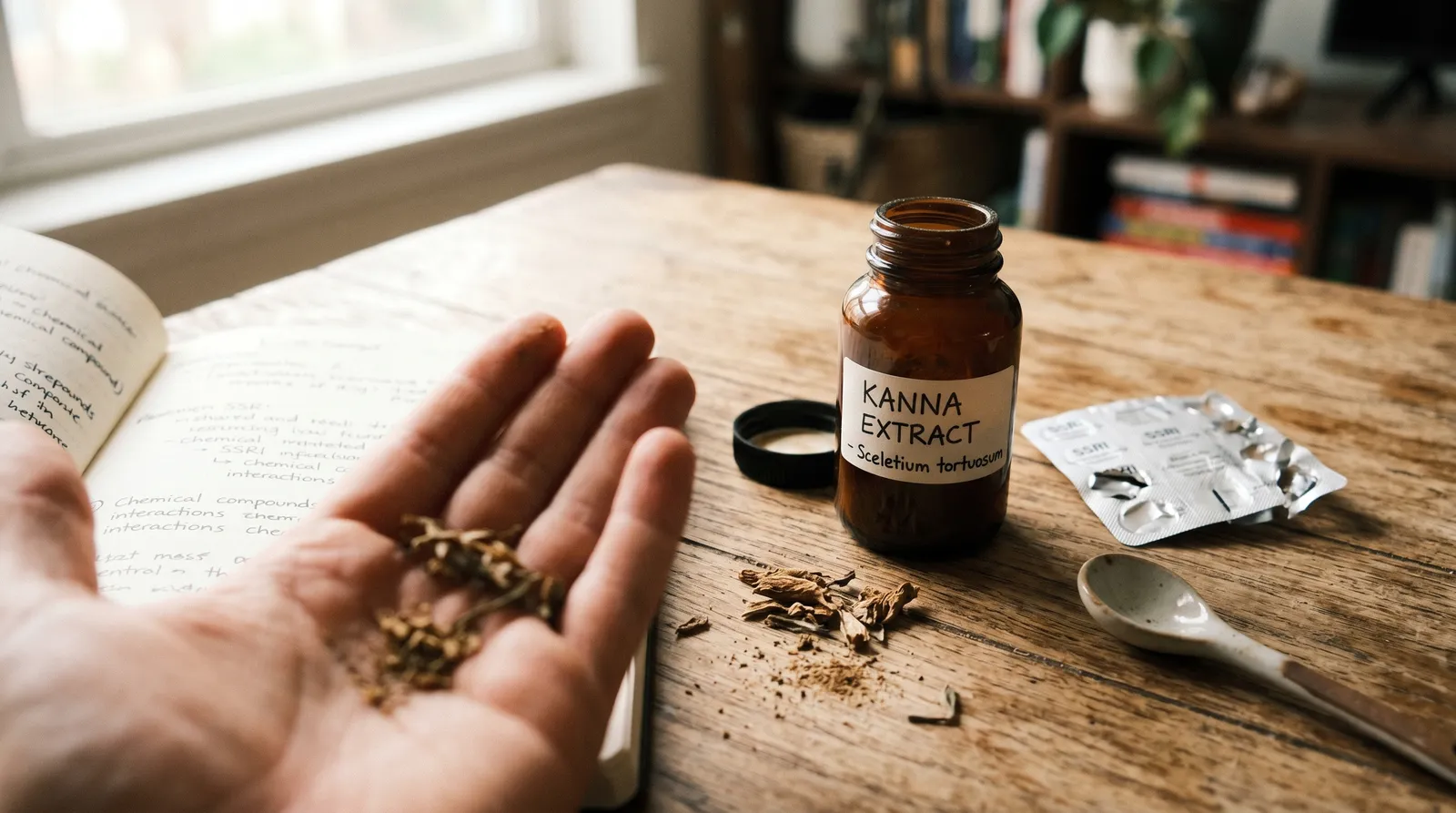
Kanna contraindications revolve around its serotonergic mechanism. Mesembrine, the principal alkaloid in Sceletium tortuosum, inhibits serotonin reuptake in vitro (Harvey et al., 2011), making combinations with SSRIs, MAOIs, and other serotonergic substances a genuine risk for serotonin syndrome. Anyone taking antidepressants, serotonergic supplements, or planning to combine kanna with MDMA or classical psychedelics needs to understand these interactions before use.
Kanna contraindications centre on its serotonergic activity. Sceletium tortuosum contains alkaloids — primarily mesembrine — that inhibit serotonin reuptake in vitro (Harvey et al., 2011). That mechanism is the same basic lever pulled by prescription SSRIs, which means combining kanna with other substances that raise serotonin levels creates a real and potentially dangerous risk: serotonin syndrome. Before you buy kanna in any form — fermented plant material, powder, or concentrated extract — you need to know who should avoid it entirely and which combinations are off the table. Understanding kanna contraindications thoroughly is non-negotiable if you plan to use this plant responsibly.
Adult audience (18+). The dosing ranges and effects described in this article apply to adult physiology. This content is not intended for minors.
| Contraindication Category | Specific Examples | Core Risk | Severity |
|---|---|---|---|
| SSRIs | Fluoxetine, sertraline, citalopram, escitalopram, paroxetine, fluvoxamine | Serotonin syndrome | High |
| SNRIs | Venlafaxine, duloxetine, desvenlafaxine | Serotonin syndrome | High |
| MAOIs | Phenelzine, tranylcypromine, moclobemide, selegiline | Serotonin syndrome, hypertensive crisis | High |
| Tricyclic antidepressants | Amitriptyline, nortriptyline, clomipramine, imipramine | Serotonin syndrome | High |
| Serotonergic supplements | 5-HTP, St John's Wort (Hypericum perforatum) | Serotonin syndrome | High |
| Serotonergic recreational substances | MDMA, psilocybin, LSD, DMT | Serotonin syndrome | High |
| Recent SSRI discontinuation | Especially fluoxetine (active metabolite norfluoxetine: half-life 4–16 days) | Residual serotonergic activity | Moderate to High |
| Pregnancy and breastfeeding | All trimesters, all kanna forms | No safety data available | Moderate (precautionary) |
| History of serotonin syndrome | Any prior episode, regardless of cause | Increased susceptibility | Moderate to High |
| Inability to seek emergency help | Solo use in remote settings, impaired communication | Delayed treatment if symptoms develop | Moderate |
That table is the backbone of this article. Below, each category is unpacked so you understand why it matters, not just that it does.
Serotonin Syndrome — the Central Risk
Serotonin syndrome is a potentially life-threatening condition caused by excessive serotonin activity in the central nervous system, and it is the single most important reason kanna contraindications exist. Symptoms range from mild (agitation, diarrhoea, muscle twitching, sweating) to severe (hyperthermia above 38.5 °C, sustained clonus, seizures, loss of consciousness). According to Boyer and Shannon (2005), severe serotonin syndrome is a medical emergency with potential fatality if untreated. It is rare in isolation with a single serotonergic agent at normal doses — the danger spikes when two or more serotonergic substances are active simultaneously.
Kanna's mesembrine acts as a serotonin reuptake inhibitor in vitro (Harvey et al., 2011). Whether the potency at typical oral doses in humans matches that of pharmaceutical SSRIs is not fully established — the human pharmacokinetic data is thin. But the mechanism is clear enough that the combination risk cannot be dismissed. Extracts, which concentrate mesembrine relative to raw plant material, carry this concern with greater weight because the serotonergic load per milligram is higher. The European Monitoring Centre for Drugs and Drug Addiction (EMCDDA) does not currently maintain a detailed monograph on Sceletium tortuosum, which itself shows how thin the regulatory and clinical data remains.
Antidepressants: SSRIs, SNRIs, MAOIs, and Tricyclics
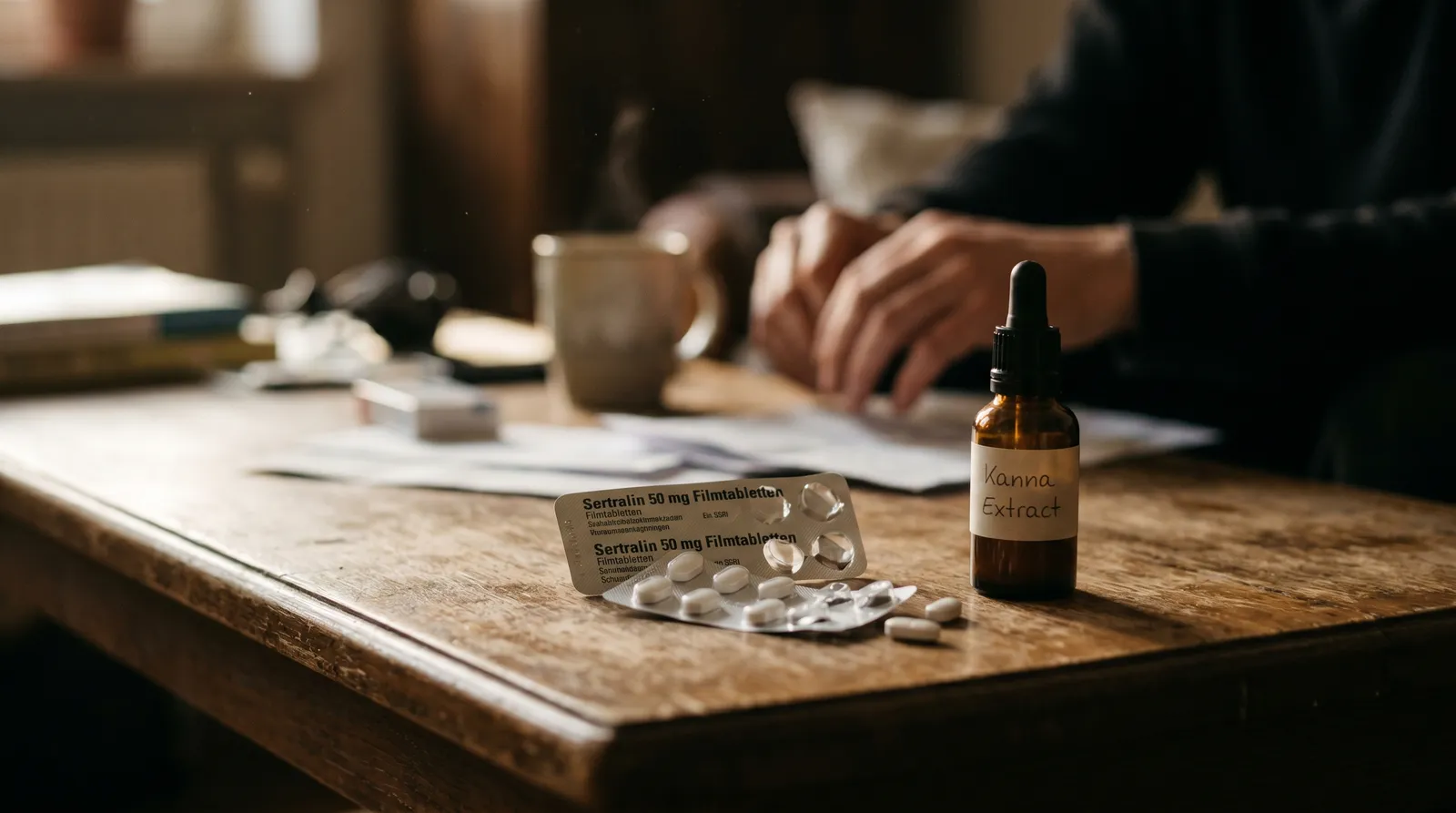
Prescription antidepressants represent the most dangerous category of kanna contraindications, and the rule is absolute: do not combine them. If you are currently taking any prescription antidepressant — whether an SSRI like sertraline, an SNRI like venlafaxine, an MAOI like phenelzine, or a tricyclic like amitriptyline — do not use kanna. The pharmacological overlap is direct: both the drug and the kanna alkaloids increase serotonin availability, and stacking that effect raises the probability of serotonin syndrome.
MAOIs deserve a specific note. Monoamine oxidase inhibitors prevent the breakdown of serotonin (among other monoamines), so combining them with a reuptake inhibitor like mesembrine creates a double hit — more serotonin released and less serotonin cleared. This combination is considered especially dangerous in pharmacology, and the same logic applies to reversible MAOIs like moclobemide and to natural MAO-inhibiting preparations such as Syrian rue (Peganum harmala) or ayahuasca-style brews containing harmine or harmaline.
Recent SSRI Discontinuation
Stopping an SSRI does not instantly clear it from your system, and the washout period is a critical part of understanding kanna contraindications. Most SSRIs have half-lives measured in hours to a day or two, meaning they wash out within a week or so. Fluoxetine is the glaring exception: its active metabolite, norfluoxetine, has a half-life of 4–16 days (Hiemke and Härtter, 2000). That means pharmacologically significant levels can persist for five to six weeks after the last dose. If you have recently stopped fluoxetine — or any SSRI — and are considering kanna, speak to the prescribing clinician about the washout timeline before making any decisions. This is not a situation where guessing is sensible.
Serotonergic Supplements and Recreational Substances
Several widely available supplements and recreational substances also raise serotonin levels, making them firm kanna contraindications when used in combination. The risk is not limited to prescription drugs:
- 5-HTP — a direct serotonin precursor. Combining it with a reuptake inhibitor increases the total serotonin pool while simultaneously slowing its clearance from the synapse.
- St John's Wort (Hypericum perforatum) — itself a mild serotonin reuptake inhibitor with documented serotonin syndrome cases when combined with pharmaceutical SSRIs (Lantz et al., 1999). Adding kanna to St John's Wort layers the same type of mechanism.
- MDMA — a potent serotonin releaser. The combination of a releaser and a reuptake inhibitor is pharmacologically reckless. Do not combine kanna with MDMA.
- Classical psychedelics (psilocybin, LSD, DMT) — these act primarily as serotonin 5-HT2A receptor agonists. The interaction profile with serotonin reuptake inhibitors is less predictable than with releasers like MDMA, but the serotonergic load is additive and the combination is not studied in humans. Avoid it.
For a more complete breakdown of specific interaction pairs, see the dedicated article Kanna Drug Interactions.
Pregnancy and Breastfeeding
Kanna is contraindicated during pregnancy and breastfeeding due to a complete absence of safety data. There are no published studies on the safety of Sceletium tortuosum during pregnancy or lactation. Zero. The absence of evidence is not evidence of safety — it is simply an absence. Given that mesembrine crosses biological membranes readily enough to reach the central nervous system in adults, the precautionary position is to avoid kanna entirely during pregnancy and while breastfeeding. This applies to plant material, extracts, and any preparation containing Sceletium alkaloids.
Prior Serotonin Syndrome
A previous episode of serotonin syndrome — from any cause — should be treated as a firm kanna contraindication. Your threshold for a repeat episode may be lower, and your ability to recognise early symptoms may be complicated by familiarity bias ("this feels like last time, it'll pass"). Anyone with a history of serotonin syndrome should treat kanna as contraindicated unless a qualified clinician who understands the pharmacology says otherwise.
Plant Material Versus Extracts
Every kanna contraindication listed above applies to both raw plant material and concentrated extracts, but the margin for error is narrower with extracts. A typical kanna extract concentrates mesembrine by a factor of 10× to 50× relative to dried plant material. Clinical trials on a specific standardised extract used doses of 8–25 mg (Terburg et al., 2013), while traditional use of fermented plant material (kougoed) involved chewing quantities measured in hundreds of milligrams to grams. The serotonergic load per unit weight is dramatically different, and the interaction risk scales accordingly. If you are assessing whether a contraindication applies to you, assume it applies more strongly to extracts than to unprocessed plant material — but do not assume plant material is safe to combine with serotonergic drugs. It is not.
Kanna Contraindications Compared to Other Serotonergic Herbs
Kanna is not the only herbal product with serotonergic contraindications, but its mechanism makes it more directly comparable to pharmaceutical SSRIs than most botanicals. St John's Wort, for instance, also inhibits serotonin reuptake but does so through a broader and weaker mechanism involving multiple active compounds (hyperforin, hypericin). Kanna's mesembrine is more selective. Compared to valerian or passionflower — which primarily modulate GABA rather than serotonin — kanna carries a fundamentally different and more specific contraindication profile. If you are looking for a calming herb and you take an SSRI, valerian or passionflower may be options worth discussing with your doctor; kanna is not. The distinction matters because the safety profiles of different serotonergic herbs are not interchangeable, even when they are grouped together as "calming botanicals."
Recognising Serotonin Syndrome
Serotonin syndrome symptoms typically appear within hours of the precipitating dose and can escalate rapidly. Early symptoms: agitation, restlessness, rapid heart rate, dilated pupils, muscle twitching (especially in the lower limbs), diarrhoea, and excessive sweating. Moderate symptoms: sustained clonus (involuntary rhythmic muscle contractions), hyperreflexia, and fever. Severe symptoms: hyperthermia above 41 °C, rigidity, seizures, and cardiovascular instability. According to Boyer and Shannon (2005), the condition can escalate quickly. If you or someone near you develops these symptoms after combining kanna with any serotonergic substance, seek emergency medical attention immediately. Do not wait to see if it resolves on its own.
What Is Not Contraindicated (As Far As We Know)
Kanna used on its own, at conventional doses, by a healthy adult not taking serotonergic medication, does not appear to carry a high risk profile based on current evidence. A clinical trial on a specific standardised extract reported no serious adverse events at 25 mg daily over three weeks in healthy volunteers (Nell et al., 2013) — though this tells us about that particular preparation, not about kanna products in general. Some users report mild headaches, transient nausea, or appetite changes, particularly at higher doses or with insufflated use. These are side effects, not contraindications. The distinction matters: a contraindication means "do not use"; a side effect means "this might happen."
The evidence base for long-term daily use is essentially nonexistent. Whether chronic use introduces additional kanna contraindications — hepatic, cardiovascular, or otherwise — is simply unknown at this point. We are honest about that limitation: nobody can tell you with certainty what daily kanna use for six months does, because the study has not been done.
Last updated: April 2026
Frequently Asked Questions
8 questionsCan I use kanna if I recently stopped taking an SSRI?
Is kanna safe to combine with 5-HTP?
Does the serotonin syndrome risk apply to kanna plant material or only extracts?
What are the early warning signs of serotonin syndrome?
Can I take kanna while pregnant or breastfeeding?
How do kanna contraindications compare to those of St John's Wort?
Can I drink alcohol while using kanna?
Should I avoid kanna if I have low blood pressure?
About this article


Adam Parsons is an external cannabis and psychedelics writer and editor who contributes to Azarius's wiki as both author and reviewer. On the writing side, he authors Azarius's kratom and kanna clusters, drawing on exten
This wiki article was drafted with AI assistance and reviewed by Adam Parsons, External contributor. Editorial oversight by Joshua Askew.
Medical disclaimer. This content is for informational purposes only and does not constitute medical advice. Consult a qualified healthcare provider before use of any substance.
Last reviewed April 24, 2026
References (6)
- [1]Boyer, E.W. and Shannon, M. (2005). The serotonin syndrome. New England Journal of Medicine , 352(11), pp.1112–1120. DOI: 10.1056/nejmra041867
- [2]Harvey, A.L., Young, P., Dajas-Bailador, F. and Bhatt, H. (2011). The pharmacology of Sceletium tortuosum and its alkaloids. Journal of Ethnopharmacology , 137(3), pp.1124–1129. DOI: 10.1016/j.jep.2011.07.035
- [3]Hiemke, C. and Härtter, S. (2000). Pharmacokinetics of selective serotonin reuptake inhibitors. Pharmacology & Therapeutics , 85(1), pp.11–28. DOI: 10.1016/s0163-7258(99)00048-0
- [4]Lantz, M.S., Buchalter, E. and Giambanco, V. (1999). St. John's Wort and antidepressant drug interactions in the elderly. Journal of Geriatric Psychiatry and Neurology , 12(1), pp.7–10. DOI: 10.1177/089198879901200103
- [5]Nell, H., Siebert, M., Chellan, P. and Gericke, N. (2013). A randomized, double-blind, parallel-group, placebo-controlled trial of extract Sceletium tortuosum (Zembrin) in healthy adults. Journal of Alternative and Complementary Medicine , 19(11), pp.898–904. DOI: 10.1089/acm.2012.0185
- [6]Terburg, D., Syal, S., Rosenberger, L.A., Heany, S.J., Phillips, N., Gericke, N., Stein, D.J. and van Honk, J. (2013). Acute effects of Sceletium tortuosum (Zembrin), a dual 5-HT reuptake and PDE4 inhibitor, in the human amygdala and its connection to the hypothalamus. Neuropsychopharmacology , 38(13), pp.2708–2716. DOI: 10.1038/npp.2013.183
Related Articles
Blue Lotus vs Kanna: Effects & Safety
Blue lotus vs kanna compared — Nymphaea caerulea's aporphine profile against Sceletium tortuosum's mesembrine chemistry, with interaction warnings.

Lotus Clinical Research Overview
What does lotus clinical research actually show? A critical review of Nymphaea caerulea and Nelumbo nucifera pharmacology, preclinical data, and…
Kanna South Africa To West History
Sceletium tortuosum was used by San and Khoekhoe communities in southern Africa for centuries before European colonists first documented it in the 1660s.
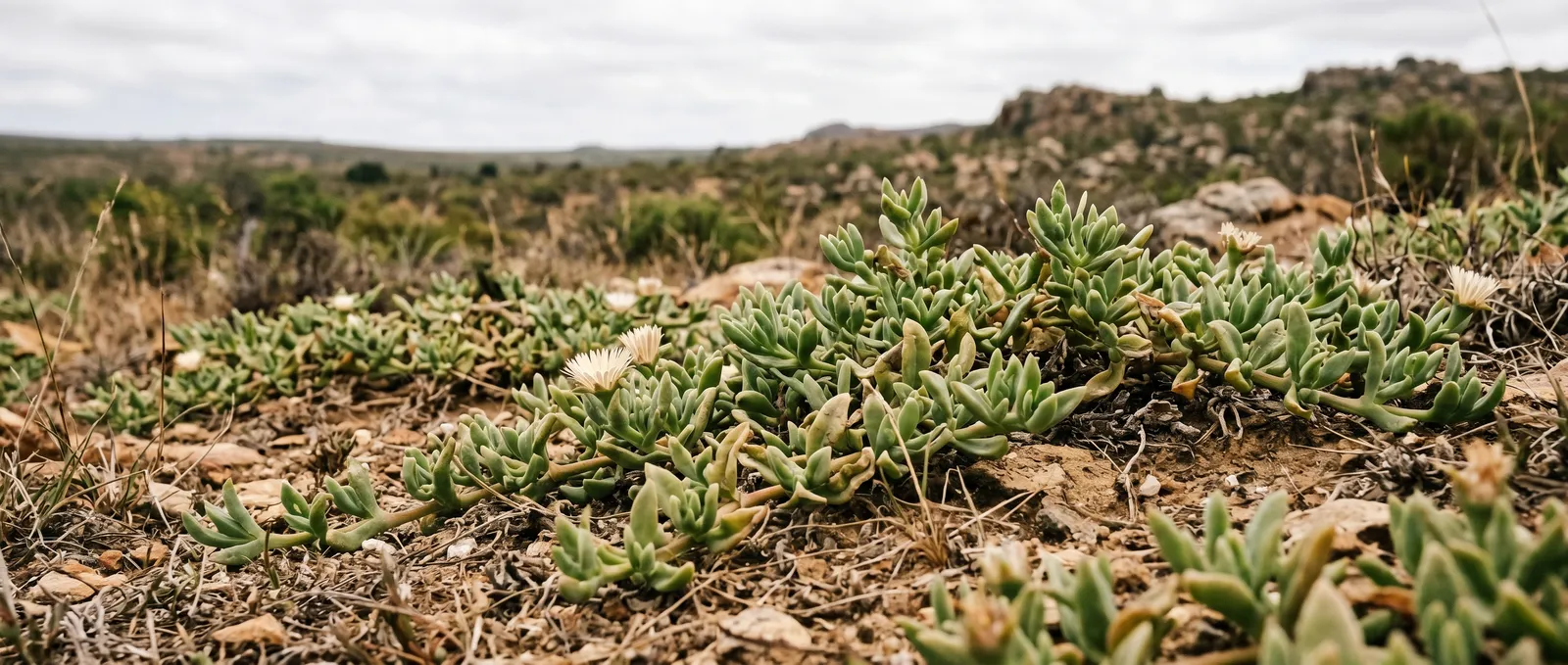
Sceletium Tortuosum Plant
Learn about the sceletium tortuosum plant: botany, alkaloids, fermentation, safety warnings, and where to buy kanna.
Kanna Pharmacokinetics Explained
Complete guide to kanna pharmacokinetics: how Sceletium tortuosum alkaloids are absorbed, metabolised via CYP2D6, and eliminated.
Kanna Chemistry: Sceletium Alkaloids Explained
Kanna chemistry explained: mesembrine, mesembrenone, their mechanisms, how fermentation and extraction change alkaloid profiles, and why it matters…

Rapé Shamanic Snuff Guide: How to Use It Safely
A practical rapé shamanic snuff guide covering dose, kuripe technique, effects, nicotine safety, interactions and Amazonian tradition.

White Sage Salvia Apiana Cultural Smudging Guide
Salvia apiana is a non-psychoactive shrub native to southern California's coastal sage scrub, burned as ceremonial incense in Indigenous North American…
Mulungu Erythrina Traditional Amazonian Use — Bark, Alkaloids & Research
Erythrina mulungu is a Brazilian legume tree whose bark has been brewed as a calming decoction in rural folk medicine for generations.