
This article discusses psychoactive substances intended for adults (18+). If you have a health condition or take medication, consult a doctor before use. Our age policy
Fermentation Kanna
Definition
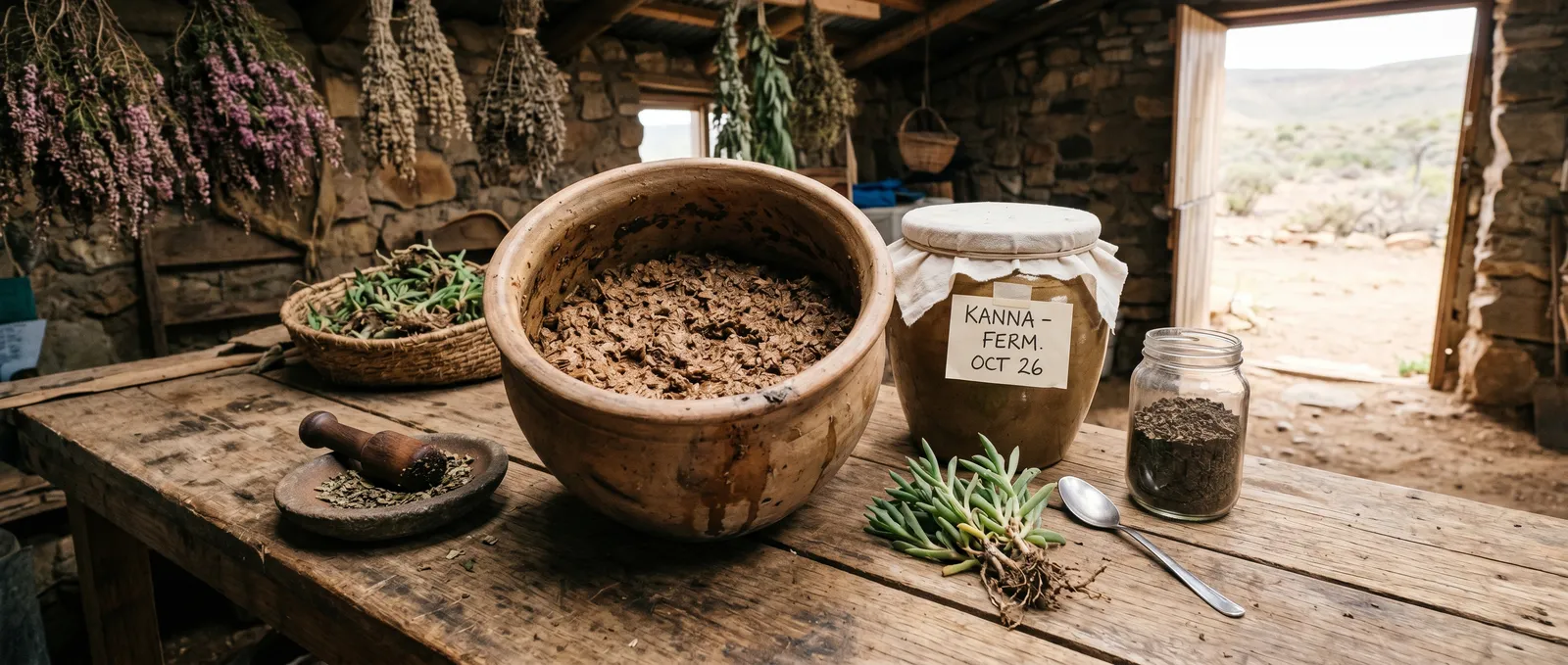
Fermentation is the traditional Khoisan method of processing Sceletium tortuosum into kougoed — bruising the fresh plant and allowing enzymatic breakdown under semi-anaerobic conditions. According to Shikanga et al. (2012), this process shifts the mesembrine-to-mesembrenone ratio and reduces oxalate content, producing material that is chemically and experientially distinct from unfermented kanna or standardised extracts.
Disclaimer: This article is provided for educational and harm-reduction purposes only. It does not constitute medical advice. Kanna (Sceletium tortuosum) contains pharmacologically active alkaloids with serotonergic properties. Do not use fermentation kanna or any kanna product as a substitute for professional medical treatment. If you are taking prescription medication — particularly antidepressants — consult a qualified healthcare provider before using kanna in any form. Azarius does not make therapeutic claims about this product.
Adult audience (18+). The dosing ranges and effects described in this article apply to adult physiology. This content is not intended for minors.
Fermentation kanna is a traditionally processed form of Sceletium tortuosum that is created by bruising fresh plant material and allowing enzymatic breakdown under semi-anaerobic conditions for four to eight days, producing a product with a distinct alkaloid profile and reduced oxalate content. Long before standardised extracts existed, the Khoisan peoples of southern Africa bruised the aerial parts of the plant — leaves, stems, sometimes roots — and left them to ferment in sealed containers for several days. The resulting product, called kougoed (literally "something to chew"), had a different alkaloid profile, a different taste, and reportedly different effects compared to the fresh or simply dried plant. Understanding what fermentation kanna actually involves at a chemical level helps explain why fermented material remains a distinct category — not just a historical curiosity. If you want to buy fermentation kanna, Azarius stocks traditionally fermented plant material alongside standardised extracts so you can order the form that best suits your needs.
What Fermentation Means in This Context
Fermentation kanna refers to plant material that has undergone enzymatic breakdown under anaerobic or semi-anaerobic conditions for four to eight days, fundamentally altering its chemistry. With kanna, the traditional process involves crushing or bruising the fresh plant material, packing it tightly into bags or containers to limit air exposure, and leaving it at ambient temperature for four to eight days. During this period, the material heats up, changes colour — typically from green to brown — and develops a distinctive, somewhat sour smell. After fermentation, the material is spread out and sun-dried.
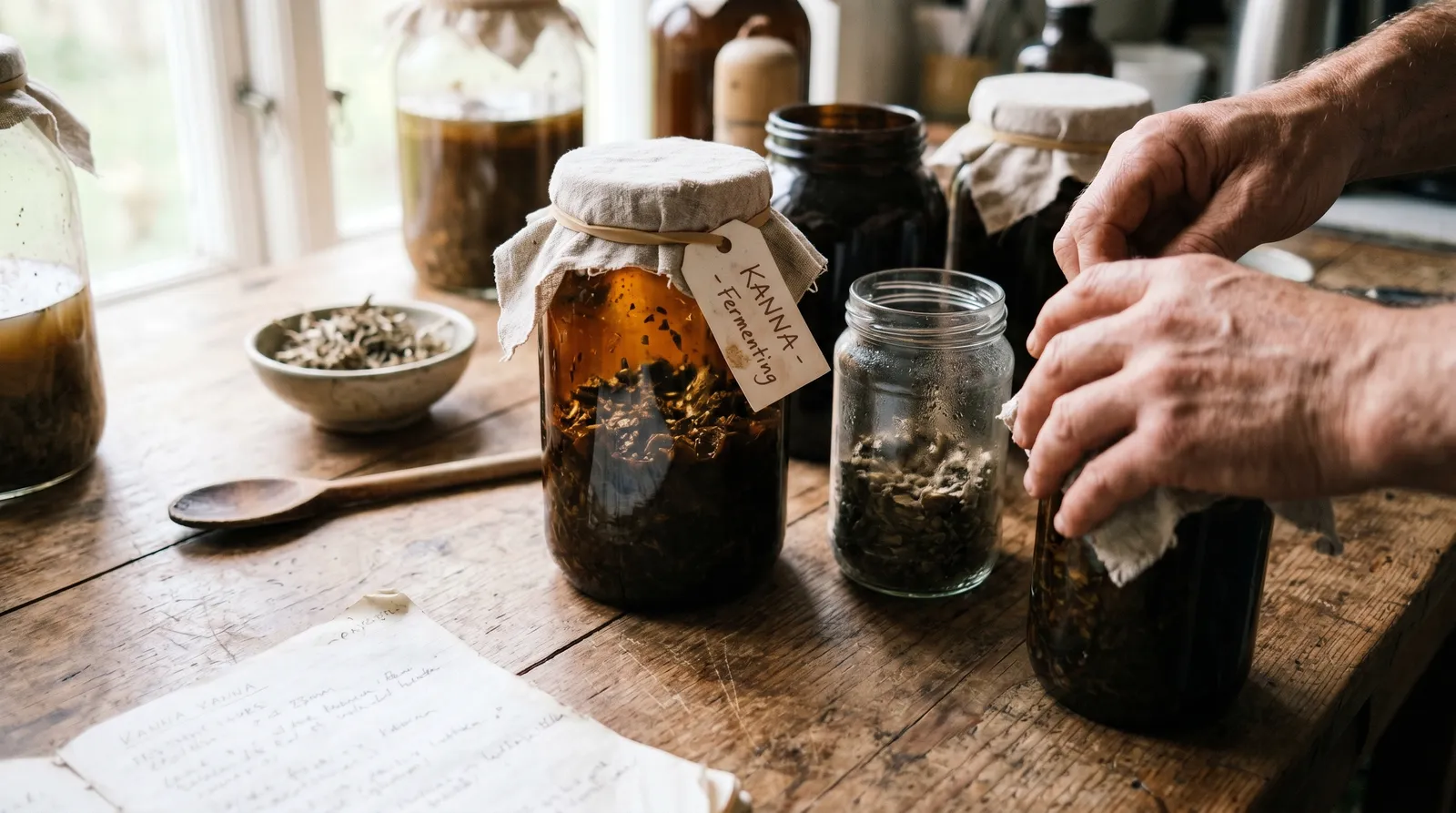
This is not fermentation in the beer-brewing or yoghurt-making sense, where specific microbial cultures drive the process. It is closer to a controlled autolysis: the plant's own cellular enzymes, released when the tissue is crushed, break down cell walls and modify the chemical contents. Microbial activity likely contributes, but the primary driver appears to be endogenous plant enzymes acting on the alkaloid and oxalate content of the fresh material. According to data reviewed by the EMCDDA in their assessments of novel psychoactive botanicals, this type of traditional processing can substantially alter the pharmacological character of plant preparations.
How Fermentation Changes the Alkaloid Profile
Fermentation shifts the ratio of mesembrine to mesembrenone — the two principal alkaloids — with mesembrine typically increasing as a proportion of total alkaloids by 20–40% depending on conditions. The four principal alkaloids in Sceletium tortuosum are mesembrine, mesembrenone, mesembrenol, and Δ7-mesembrenone. Their relative proportions vary significantly between fresh, dried, and fermented material — and this is the critical point.
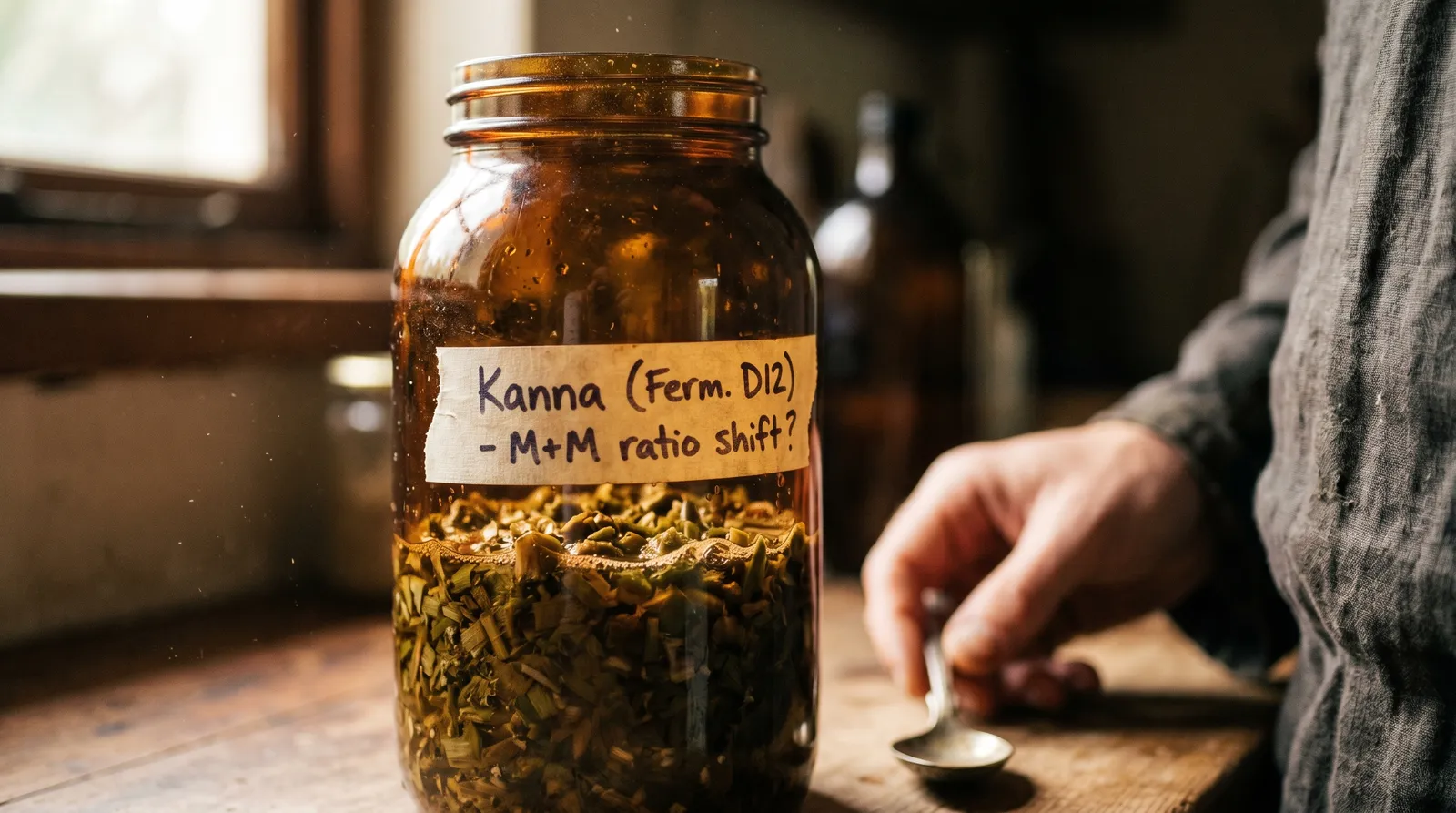
According to Shikanga et al. (2012), who used HPLC and NMR to compare fermented and unfermented Sceletium samples across 14 different accessions, the fermentation process substantially alters the ratio of mesembrine to mesembrenone. Fresh plant material tends to contain higher proportions of mesembrenone relative to mesembrine — in some chemotypes, mesembrenone accounts for over 60% of total alkaloids. After fermentation, mesembrine content typically increases as a proportion of total alkaloids, while mesembrenone decreases. The total alkaloid content may also shift, though this depends heavily on the specific plant chemotype, growing conditions, and fermentation parameters (temperature, duration, moisture).
Why does this matter? Mesembrine and mesembrenone have overlapping but non-identical pharmacological profiles. In vitro data suggests mesembrine is a more potent serotonin reuptake inhibitor (with an IC₅₀ of approximately 1.4 nM), while mesembrenone shows stronger phosphodiesterase-4 (PDE4) inhibitory activity (Harvey et al., 2011). The relative contribution of each mechanism in living humans remains contested — published human pharmacokinetic data is limited — but the shift in alkaloid ratios means that fermented and unfermented kanna are, pharmacologically speaking, not the same product. Treating them interchangeably is a mistake.
Oxalate Reduction
Fermentation kanna contains approximately 50–70% less calcium oxalate than fresh or air-dried material, making it significantly more tolerable for oral and sublingual use. Fresh Sceletium tortuosum contains calcium oxalate crystals — needle-shaped raphides common in many plant families — that can irritate mucous membranes. Chewing unfermented fresh kanna is reportedly harsh on the mouth and throat. Fermentation breaks down a significant portion of these oxalate crystals, making the material more tolerable for oral and sublingual use. This is likely one practical reason the Khoisan developed the fermentation process in the first place: it made the plant physically easier to chew for extended periods.
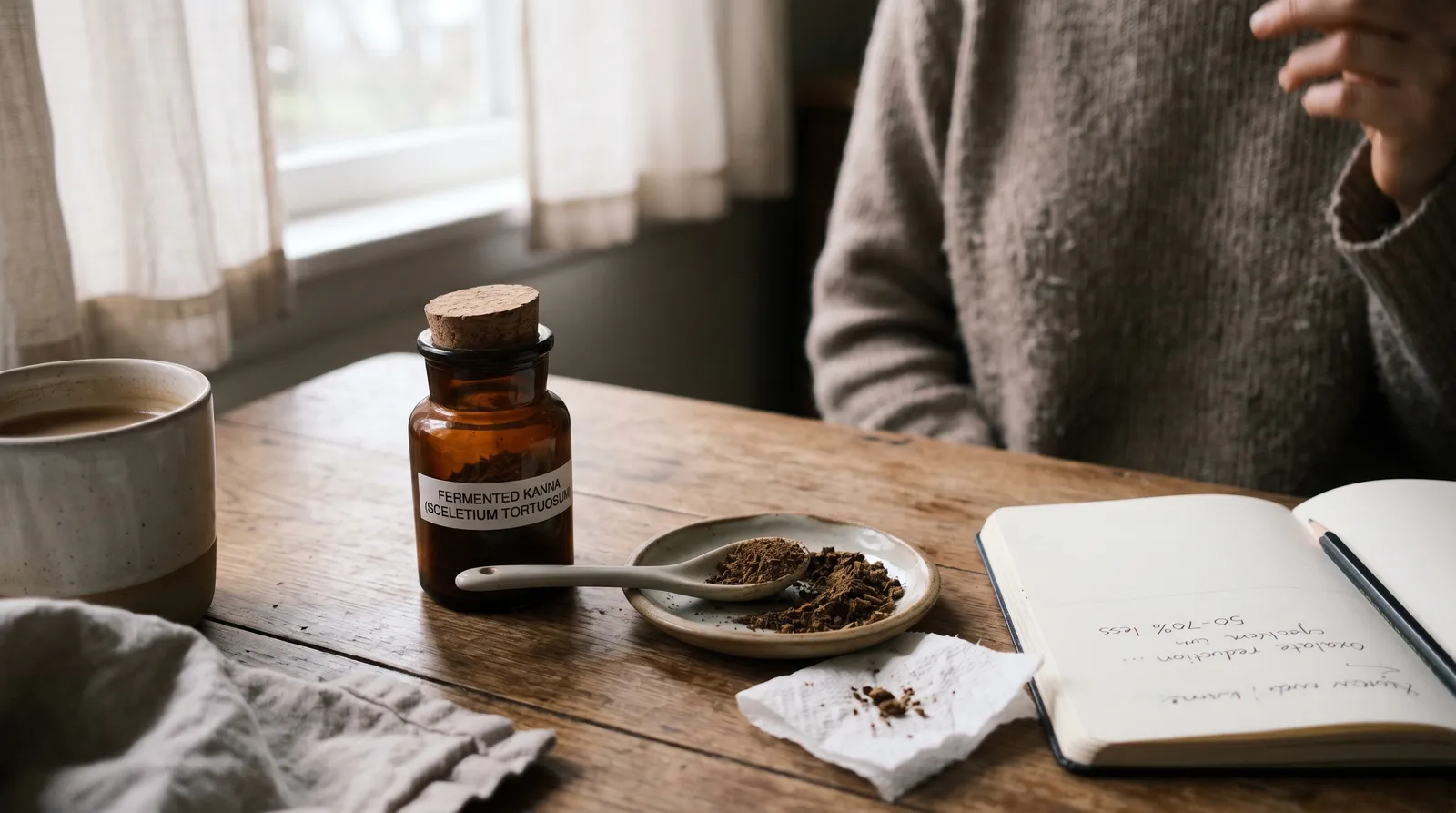
Smith et al. (2014) confirmed this oxalate reduction analytically, noting that fermented samples contained approximately 40–65% lower concentrations of calcium oxalate compared to fresh or simply air-dried material. The reduction is not complete — some oxalate remains — but the difference is substantial enough to affect the user experience.
Traditional Preparation vs Modern Fermentation
Traditional Khoisan fermentation kanna preparation varied by region, season, and practitioner — there was no single standardised method. The San and Khoekhoe peoples used the plant material available in their region, which itself varied in chemotype. Fermentation conditions — ambient temperature in the southern African climate (typically 25–35 °C), duration judged by appearance and smell rather than by clock — introduced further variability. The ethnobotanical literature, including work by Smith et al. (1996), documents the process but also notes regional variation in technique.
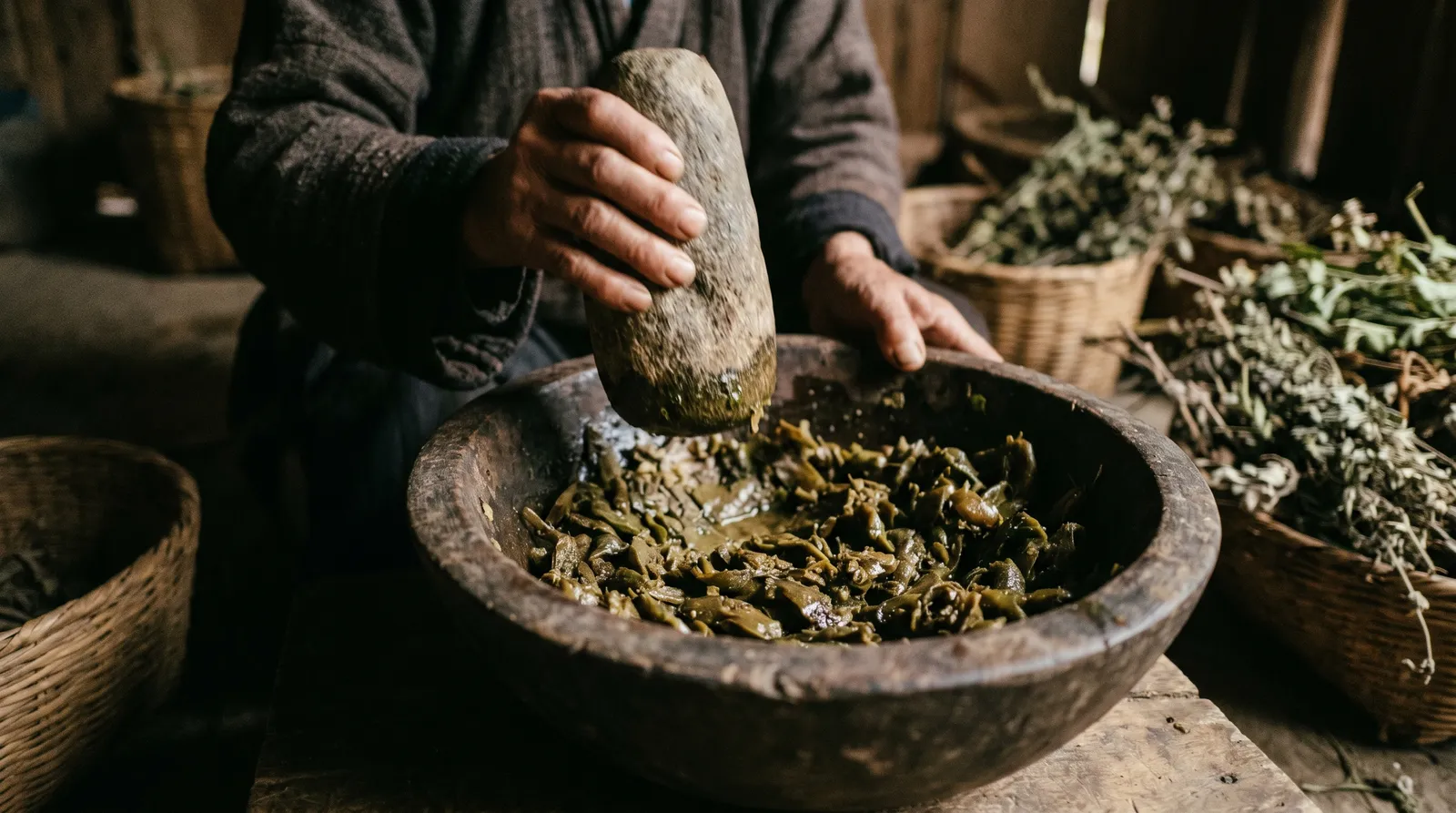
Modern producers of fermented kanna attempt to replicate this process with greater consistency. Some use controlled-temperature environments, specified fermentation durations, and post-fermentation alkaloid testing via HPLC. Others follow a more traditional approach. The result is that "fermentation kanna" on the market is not a single uniform product — it spans a range of alkaloid profiles depending on the starting material, the fermentation method, and the producer's quality control. This variability is worth keeping in mind when comparing experiences or reading user reports.
Comparing Fermentation Kanna to Other Forms
Fermentation kanna, unfermented dried kanna, and standardised extracts differ in alkaloid concentration, ratio, oxalate content, and effective amount — they are fundamentally different products despite sharing the same plant source.
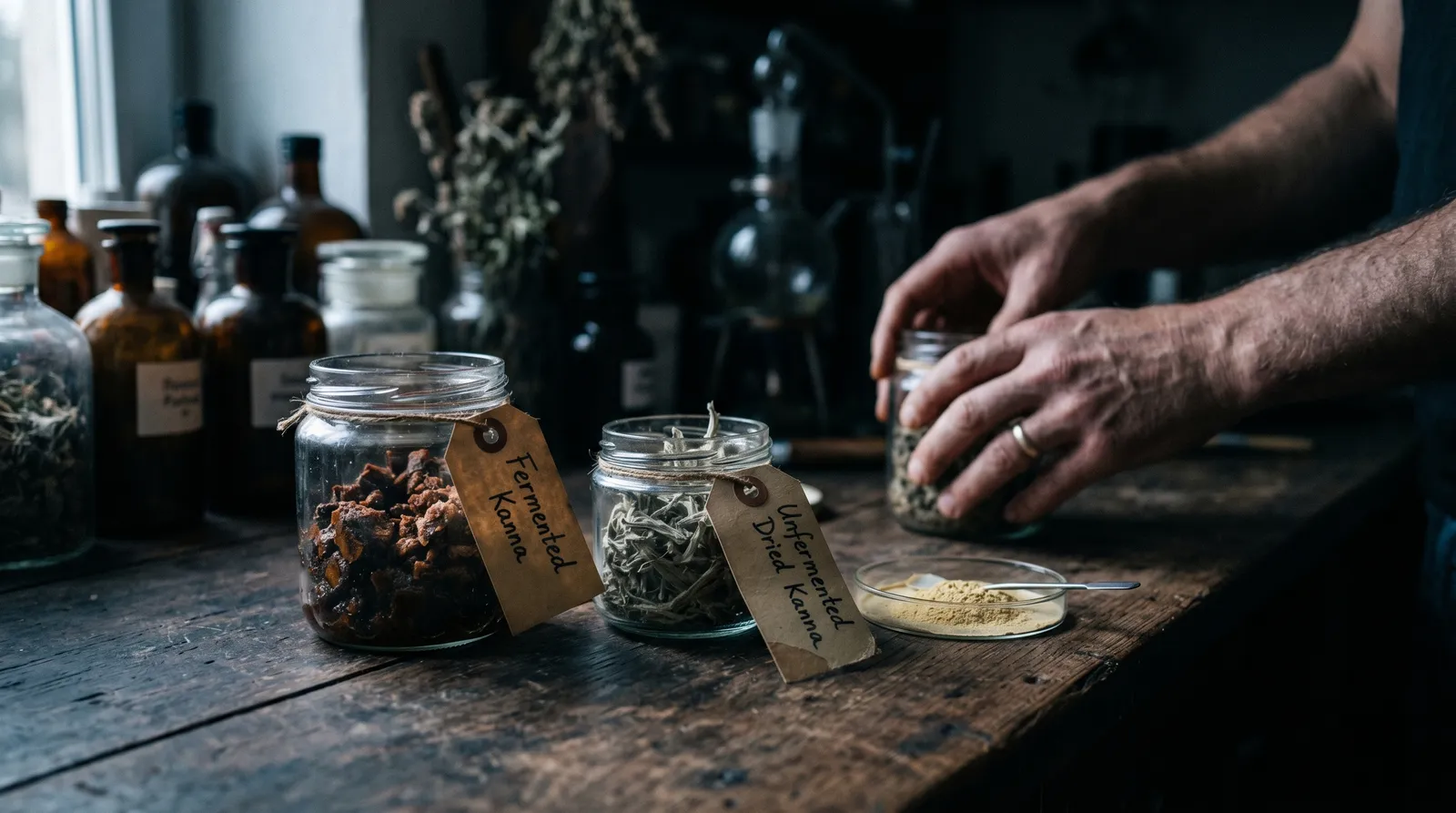
| Property | Fermented Kanna (plant material) | Unfermented Dried Kanna | Standardised Extract |
|---|---|---|---|
| Primary alkaloid ratio | Higher mesembrine proportion | Higher mesembrenone proportion | Fixed ratio (varies by product) |
| Total alkaloid content | 0.3–1.5% by weight | 0.3–1.2% by weight | 3–10%+ by weight |
| Typical reported range | 200 mg – 2 g | 200 mg – 2 g | 10 – 50 mg |
| Oxalate content | Reduced (approx. 50–70% less) | High | Negligible |
| Batch consistency | Variable | Variable | High (lab-tested) |
| Oral tolerability | Moderate to good | Poor (irritating) | Good |
| Serotonergic risk | Yes — dose-dependent | Yes — dose-dependent | Yes — higher per mg |
Fermented vs Unfermented: What Users Describe
Fermented kanna is generally described by users as smoother and more mood-oriented, while unfermented material is often called more stimulating or "edgier" — though these are anecdotal observations, not findings from controlled studies. No published clinical trial has directly compared the subjective effects of fermented versus unfermented Sceletium plant material in humans.
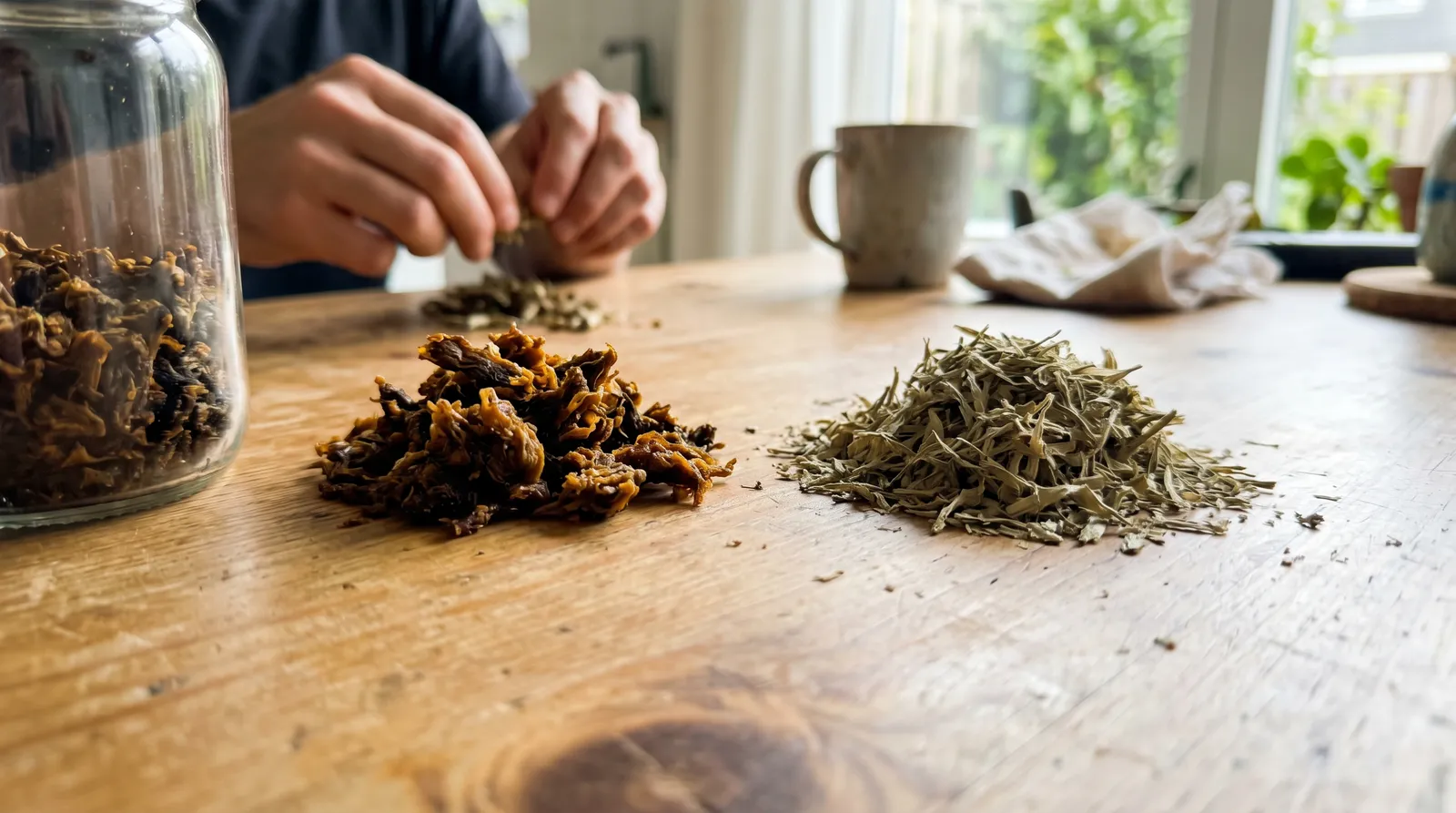
The anecdotal distinction is plausible given the alkaloid-ratio shift described above, but individual responses vary widely. Factors like amount used, route of administration (chewed, brewed as tea, taken sublingually, or insufflated), individual metabolism, and the specific batch all influence the experience. Anyone drawing firm conclusions from a single comparison is working with insufficient data.
Why Fermentation Kanna Is a Distinct Category
Fermentation kanna is the only form of processed Sceletium tortuosum that has been shaped by centuries of indigenous Khoisan knowledge and iterative refinement. No other processing method for Sceletium tortuosum has the same depth of ethnobotanical history — standardised extracts are a 21st-century development, while fermentation kanna dates back at least several hundred years in the Khoisan tradition. This matters because the fermentation process was refined over generations specifically for human use: the reduction in oxalates, the shift toward higher mesembrine proportions, and the improved oral tolerability are not accidental — they are the result of iterative traditional knowledge.
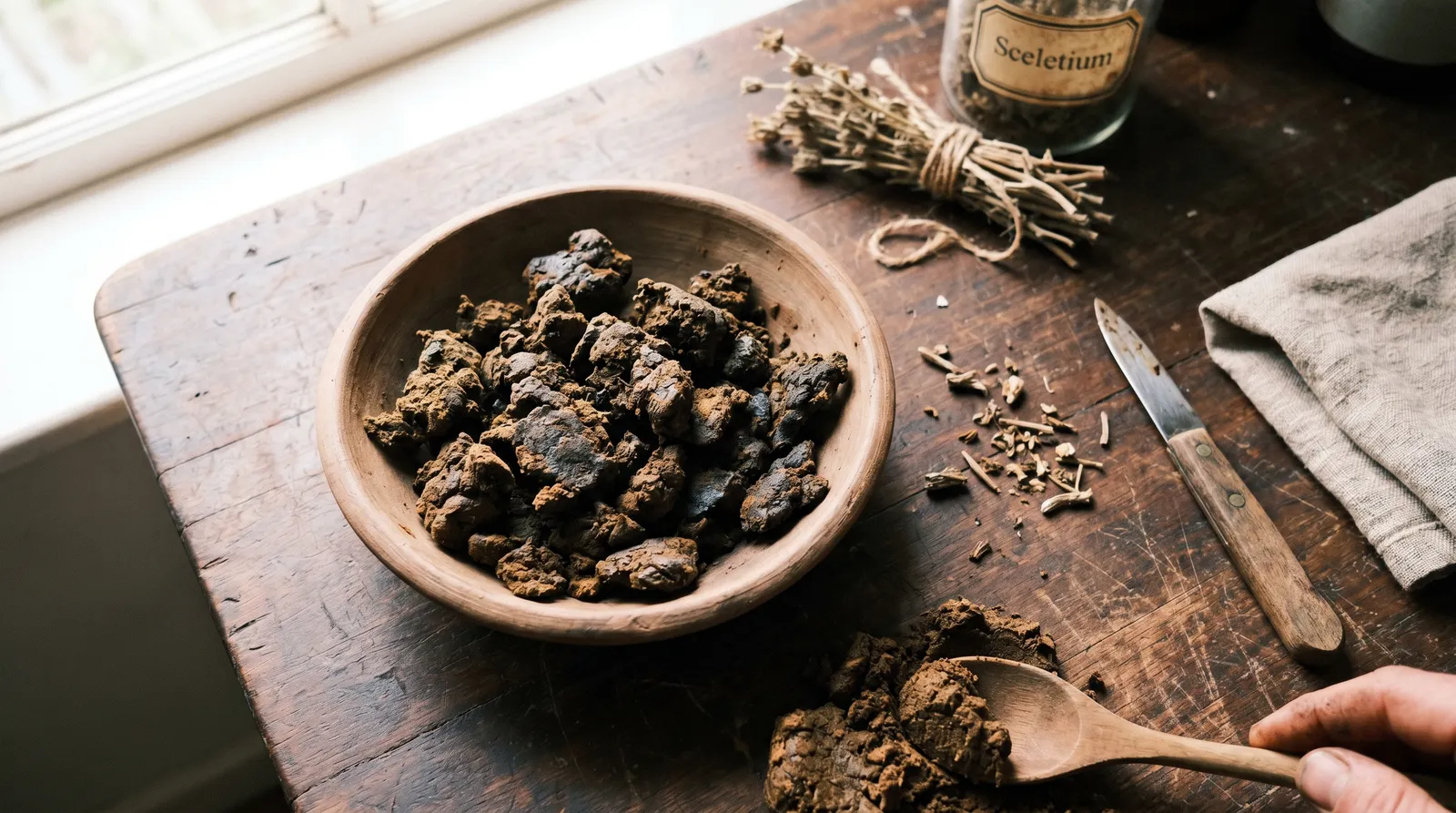
What also makes fermentation kanna distinct is its full-spectrum alkaloid profile. Unlike extracts that isolate or concentrate specific compounds, fermented plant material retains the complete range of Sceletium alkaloids, flavonoids, and other phytochemicals in their naturally occurring ratios (albeit shifted by the fermentation process). Whether this full-spectrum character produces meaningfully different effects in humans compared to isolated alkaloids remains an open question — but it is a genuine chemical distinction, not marketing language.
Fermented Plant Material Is Not a Standardised Extract
Fermented kanna plant material contains roughly 0.3–1.5% total alkaloids by weight, compared to 3–10% or more in standardised extracts — making them fundamentally different in potency per milligram. Most published clinical research on Sceletium tortuosum concerns a specific standardised extract — a concentrated preparation with a defined mesembrine content (typically standardised to ≥0.35% mesembrine) and a fixed alkaloid ratio, produced under pharmaceutical-grade conditions. The findings from those trials — effects on anxiety-related outcomes, cognitive measures, and amygdala reactivity — apply to that preparation. They cannot be transferred onto fermented plant material, which has a different alkaloid concentration, a different ratio of active compounds, and far greater batch-to-batch variability.
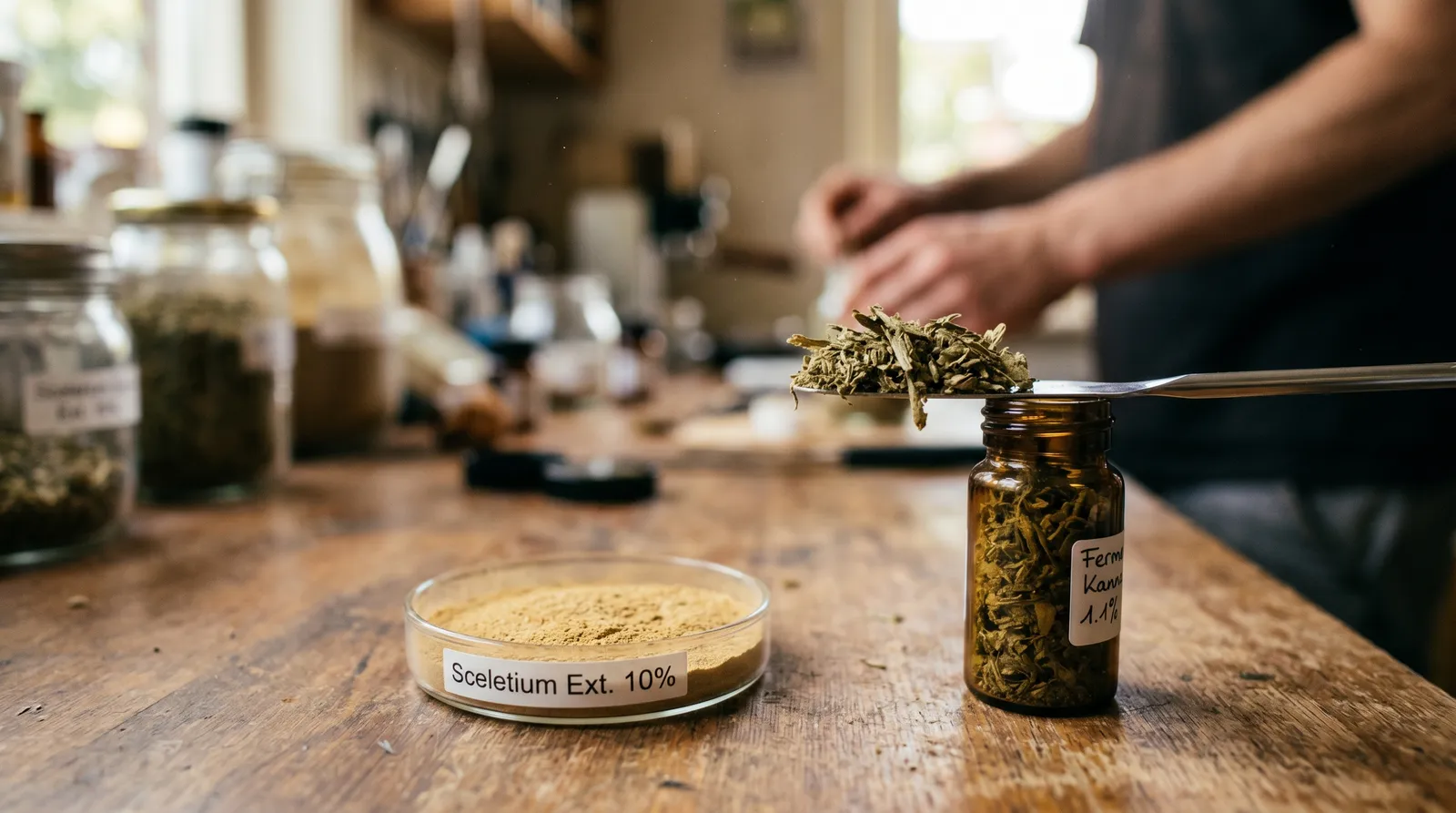
Fermented plant material contains the full spectrum of Sceletium alkaloids at concentrations far lower than a concentrated extract. Reported amounts of plant material used are measured in hundreds of milligrams to grams, while extract amounts are measured in tens of milligrams. This distinction matters for both expected effects and safety considerations. If you want to buy fermentation kanna, look for products from producers who test alkaloid content post-fermentation — this gives you at least a baseline for comparison. Azarius stocks fermented kanna alongside other kanna products including Kanna UC2 extract and Kanna ET2 extract, so you can order the form that suits your needs.
How to Approach Fermentation Kanna
Most people who are new to fermentation kanna find that beginning with a conservative amount — and assessing their individual response before adjusting — provides the most informative first experience. Because fermented plant material varies in alkaloid content between batches (typically 0.3–1.5% total alkaloids), individual responses can differ substantially. Common routes of administration include sublingual (held under the tongue for 15–20 minutes), chewed, or brewed as a tea. Sublingual use tends to produce faster onset — typically within 15–30 minutes according to user reports — while oral ingestion via tea may take 30–60 minutes.
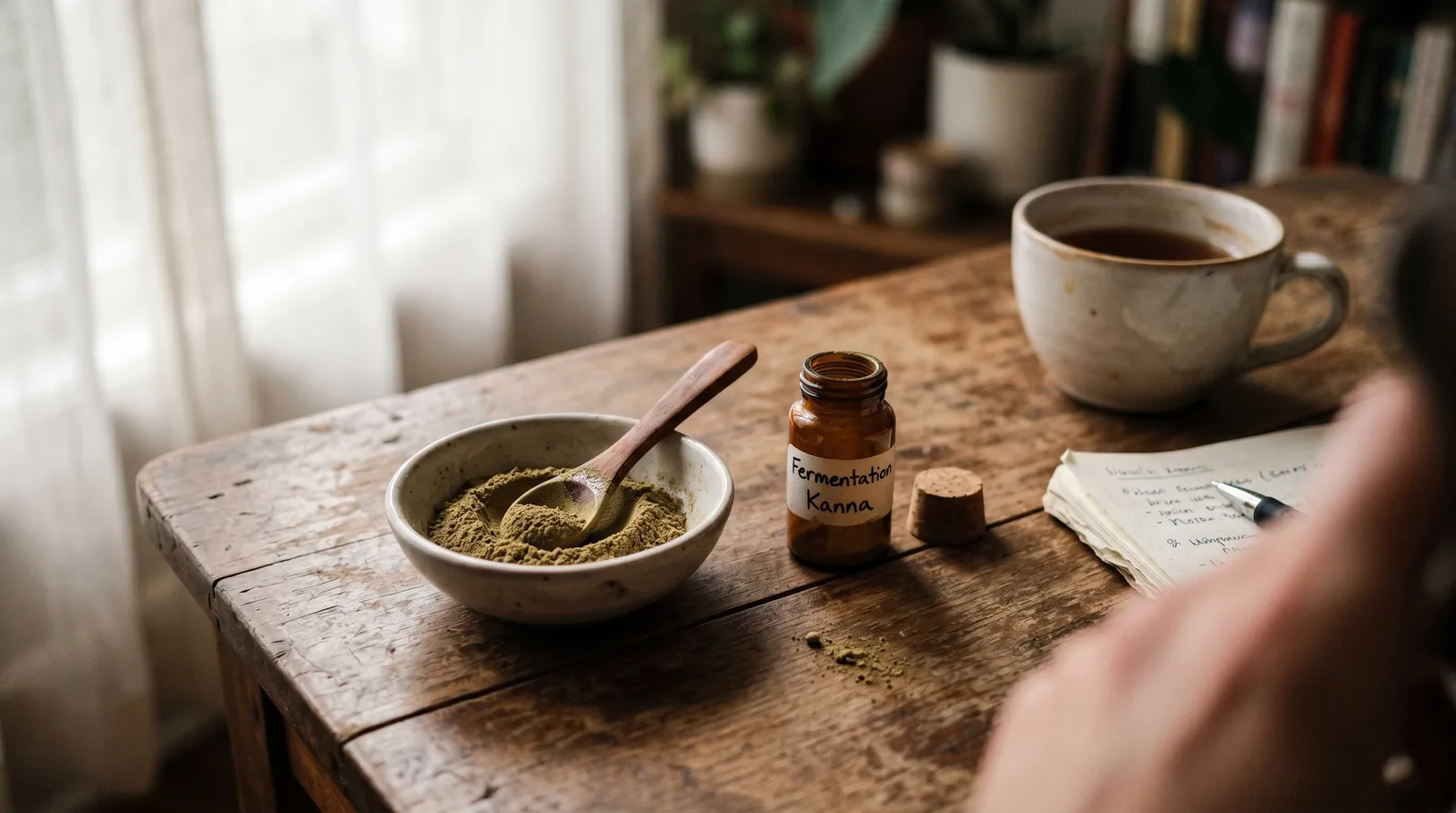
- Sublingual: User reports commonly describe holding fermented kanna under the tongue for 15–20 minutes, with onset typically noted within 15–30 minutes. Amounts reported in ethnobotanical literature range from 200–500 mg.
- Chewed: Ethnobotanical accounts describe chewing fermented material slowly, allowing saliva to absorb alkaloids. Fermented material is significantly less irritating than unfermented due to approximately 50–70% lower oxalate content. Amounts reported in the literature range from 300 mg – 1 g.
- Tea: Traditional preparation involves steeping fermented kanna in hot (not boiling) water for 10–15 minutes. Onset is typically slower at 30–60 minutes according to user reports. Ethnobotanical sources describe amounts of 500 mg – 1.5 g.
- Storage: Keep fermented kanna in a cool, dry, dark place. Properly stored fermented material retains its alkaloid content for 12–18 months.
If you want to order fermentation kanna to try for the first time, Azarius carries fermented Sceletium tortuosum plant material with batch information available. You can also get Kanna UC2 extract or Kanna ET2 extract if you prefer standardised options.
What We Still Do Not Know
No controlled human trial has compared fermented versus unfermented Sceletium tortuosum head-to-head, leaving several fundamental questions about fermentation kanna unanswered. The Beckley Foundation, which has supported psychoactive plant research, has not published specific work on fermented kanna preparations to date. We do not have reliable data on how fermentation affects the bioavailability of mesembrine in humans — only in vitro and compositional analyses. The gut microbiome's role in metabolising kanna alkaloids from fermented versus unfermented material is entirely unstudied. The EMCDDA has assessed kanna as a novel psychoactive substance but has not published specific risk assessments differentiating fermented from unfermented preparations. These are not minor details; they represent the boundary between what we can say with confidence and what remains speculation. Anyone — including us — who claims certainty about the superiority of one form over another is overstating the evidence.
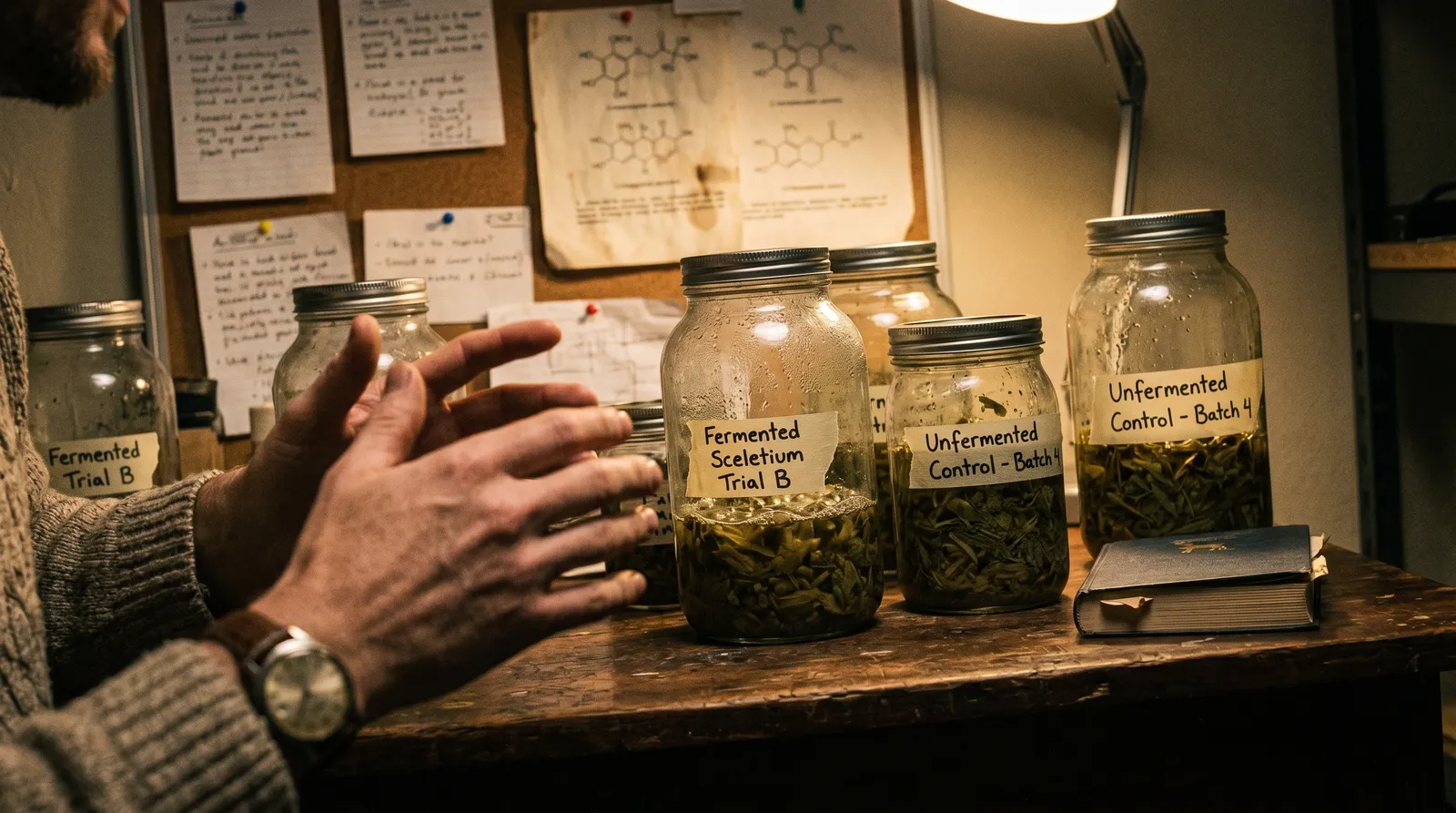
Safety Note: Serotonergic Activity Applies to Fermented Kanna Too
Fermented kanna retains all serotonergic alkaloids present in the original plant — mesembrine chief among them, with an IC₅₀ of approximately 1.4 nM for serotonin reuptake inhibition — and carries the same interaction risks as any other kanna product. The serotonergic interaction risk therefore applies to fermented plant material, not only to concentrated extracts. Do not combine fermented kanna with SSRIs, SNRIs, MAOIs, tricyclic antidepressants, or other serotonergic substances including 5-HTP, St John's Wort, or MDMA. The combination risks serotonin syndrome — a rare but potentially serious condition characterised by agitation, hyperthermia, rapid heart rate, and muscle rigidity. Anyone currently taking antidepressant medication should not use fermented kanna. The dedicated article on kanna interactions and safety covers this in full.
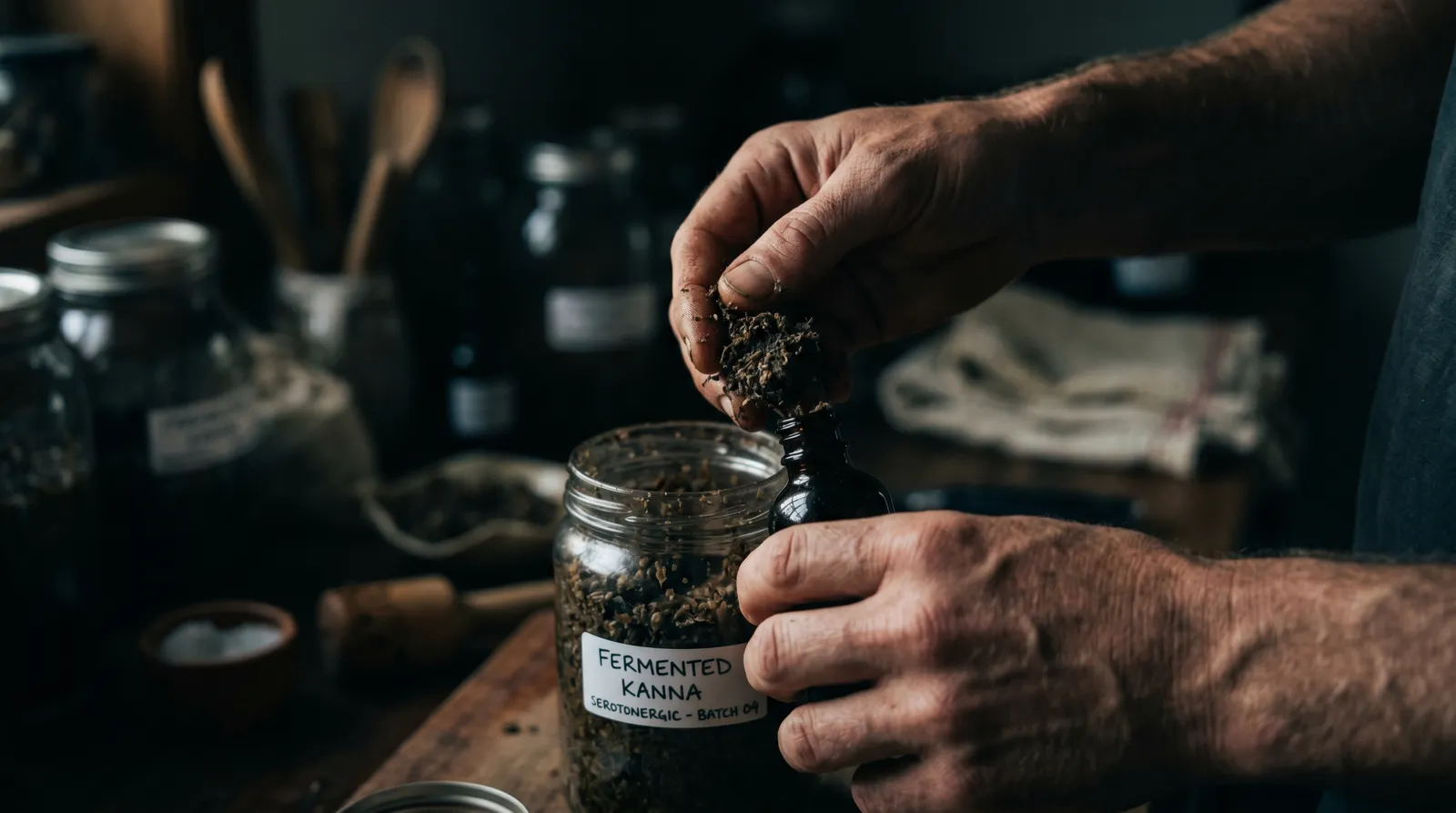
The serotonergic risk is proportional to the amount used and the mesembrine content of the specific material. Concentrated extracts carry this risk at greater weight per milligram than plant material, but plant material is not exempt — particularly at higher amounts or when combined with other serotonergic compounds.
How Fermentation Kanna Compares to Kanna Tinctures
Fermentation kanna and kanna tinctures differ primarily in preparation method and alkaloid delivery — tinctures use alcohol extraction while fermented material relies on enzymatic transformation of the whole plant. Tinctures typically extract a narrower range of compounds depending on the solvent ratio, and their alkaloid concentration per millilitre can vary as much as fermented material varies per gram. Customers who want to buy fermentation kanna sometimes ask whether a tincture would be simpler, and honestly, it depends on your preference for whole-plant material versus a liquid preparation. Both are available in the Azarius herbs and seeds category, and both carry the same serotonergic considerations. The Azarius kanna information wiki page covers tinctures in more detail for those who want to compare before they order.
Shelf Life and Storage of Fermentation Kanna
Properly stored fermentation kanna retains its alkaloid content for approximately 12–18 months, though degradation rates depend on exposure to light, heat, and moisture. The key factors are keeping the material in an airtight container, away from direct sunlight, and at a stable temperature below 25 °C. Humidity is the main enemy — fermented material that reabsorbs moisture can develop mould, which renders it unusable. Customers who order fermentation kanna in larger quantities from Azarius sometimes ask about long-term storage, and the most reliable approach is to divide the material into smaller portions and keep what you are not using sealed and refrigerated.
The Role of Chemotype in Fermentation Kanna Quality
The alkaloid profile of any fermentation kanna batch depends as much on the chemotype of the starting plant as on the fermentation process itself — making source material one of the most important variables in product quality. Sceletium tortuosum exhibits significant chemotypic variation across its native range in the Western and Eastern Cape provinces of South Africa — some populations are naturally high in mesembrine, while others contain predominantly mesembrenone or mesembrenol. Shikanga et al. (2012) documented this variation across 14 accessions and found that fermentation amplified existing chemotype tendencies rather than overriding them. This means two batches of fermentation kanna, both processed identically, can have meaningfully different alkaloid profiles simply because the source plants were different chemotypes. For customers who want to buy fermentation kanna with a specific alkaloid emphasis, asking the supplier about the source material's chemotype — when that information is available — is more informative than asking about fermentation duration alone.
Combining Fermentation Kanna with Other Herbs
No clinical data exists on combining fermentation kanna with other botanicals, so any guidance here is based on pharmacological reasoning and anecdotal reports rather than controlled evidence. Customers who browse the Azarius herbs and seeds category occasionally ask whether fermented kanna pairs well with other botanicals they have seen on the site. The honest answer is that we have no published research to guide these combinations — only anecdotal reports from customers. What we can say with certainty is that any combination involving another serotonergic substance is off the table for safety reasons, as discussed in the safety section above. For non-serotonergic herbs, the general principle of starting conservatively with each substance individually before combining applies. The Azarius kanna information wiki page includes broader context on kanna's pharmacology that may help inform your decisions.
Where to Buy Fermentation Kanna
Azarius stocks fermented Sceletium tortuosum plant material sourced from producers who conduct post-fermentation alkaloid testing, alongside standardised options like Kanna UC2 extract and Kanna ET2 extract. If you want to order fermentation kanna, the Azarius kanna category page lists all available forms — fermented plant material, unfermented dried kanna, and concentrated extracts — so you can compare and get the product that matches your preference. For those exploring kanna for the first time, the Azarius kanna information wiki page provides broader context on the plant, its history, and the different product types available. Customers interested in other ethnobotanical preparations may also find the Azarius herbs and seeds category worth browsing.
Last updated: April 2026
Frequently Asked Questions
9 questionsDoes fermenting kanna make it stronger?
How long does traditional kanna fermentation take?
Why does fermented kanna taste different from unfermented?
Can you use fermented kanna the same way as a kanna extract?
Is fermented kanna safer than unfermented kanna?
What is the difference between fermentation kanna and kanna extract?
How should you store fermented kanna to keep it fresh?
Can you ferment kanna at home?
Does fermented kanna have a longer shelf life than fresh plant material?
About this article


Adam Parsons is an external cannabis and psychedelics writer and editor who contributes to Azarius's wiki as both author and reviewer. On the writing side, he authors Azarius's kratom and kanna clusters, drawing on exten
This wiki article was drafted with AI assistance and reviewed by Adam Parsons, External contributor. Editorial oversight by Joshua Askew.
Medical disclaimer. This content is for informational purposes only and does not constitute medical advice. Consult a qualified healthcare provider before use of any substance.
Last reviewed April 24, 2026
References (6)
- [1]Harvey, A.L. et al. (2011). Pharmacological actions of the South African medicinal and functional food plant Sceletium tortuosum and its principal alkaloids. Journal of Ethnopharmacology , 137(3), 1124–1129. DOI: 10.1016/j.jep.2011.07.035
- [2]Shikanga, E.A. et al. (2012). An HPTLC–densitometry method for the quantification of pharmacologically active alkaloids in Sceletium tortuosum raw material and products. Journal of Planar Chromatography , 25(4), 283–289. DOI: 10.1556/jpc.25.2012.4.1
- [3]Smith, M.T. et al. (1996). Psychoactive constituents of the genus Sceletium N.E.Br. and other Mesembryanthemaceae: a review. Journal of Ethnopharmacology , 50(3), 119–130. DOI: 10.1016/0378-8741(95)01342-3
- [4]Smith, M.T. et al. (2014). Analytical studies on the preparation and composition of kougoed . South African Journal of Botany , 90, 1–5.
- [5]EMCDDA (European Monitoring Centre for Drugs and Drug Addiction). Risk assessment reports on novel psychoactive substances. Available at emcdda.europa.eu.
- [6]Beckley Foundation. Research programme on psychoactive plant preparations. Available at beckleyfoundation.org.
Related Articles
Blue Lotus vs Kanna: Effects & Safety
Blue lotus vs kanna compared — Nymphaea caerulea's aporphine profile against Sceletium tortuosum's mesembrine chemistry, with interaction warnings.
Lotus Clinical Research Overview
What does lotus clinical research actually show? A critical review of Nymphaea caerulea and Nelumbo nucifera pharmacology, preclinical data, and…
Kanna South Africa To West History
Sceletium tortuosum was used by San and Khoekhoe communities in southern Africa for centuries before European colonists first documented it in the 1660s.
Sceletium Tortuosum Plant
Learn about the sceletium tortuosum plant: botany, alkaloids, fermentation, safety warnings, and where to buy kanna.
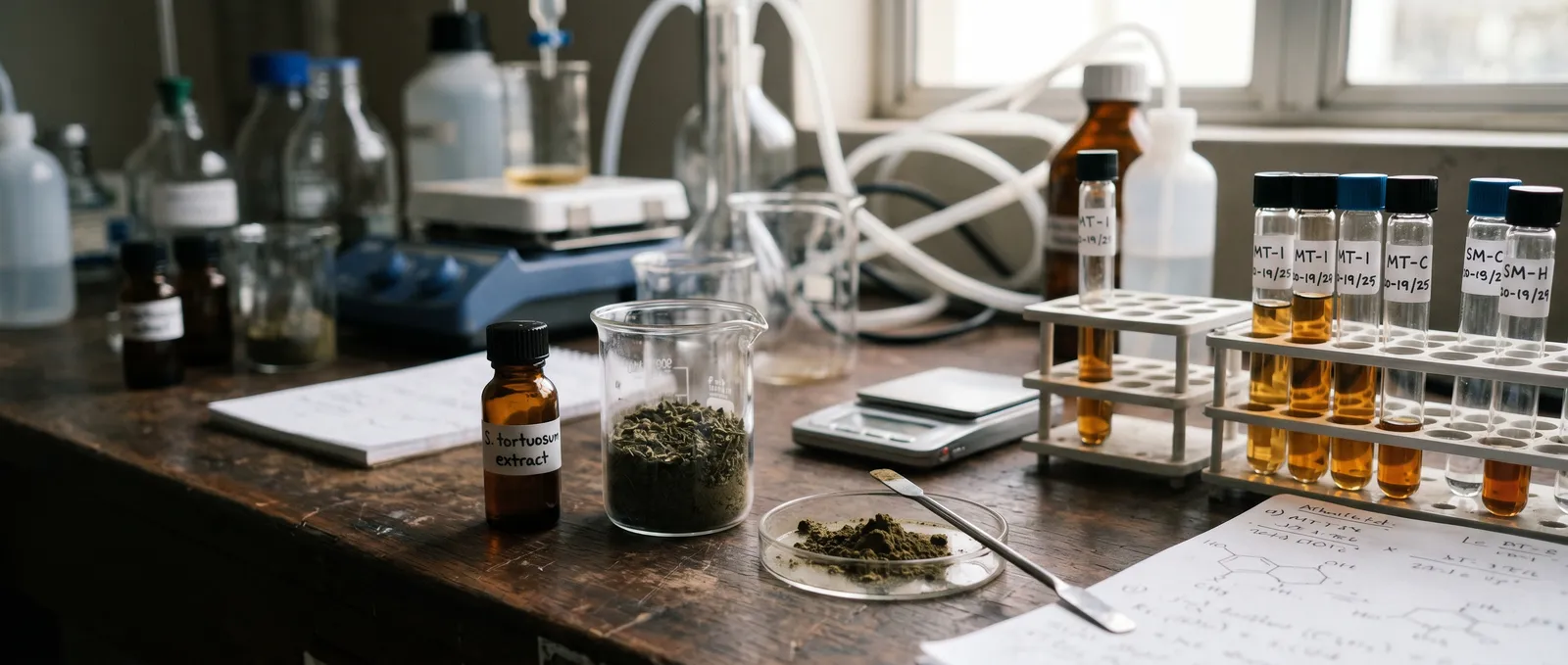
Kanna Pharmacokinetics Explained
Complete guide to kanna pharmacokinetics: how Sceletium tortuosum alkaloids are absorbed, metabolised via CYP2D6, and eliminated.
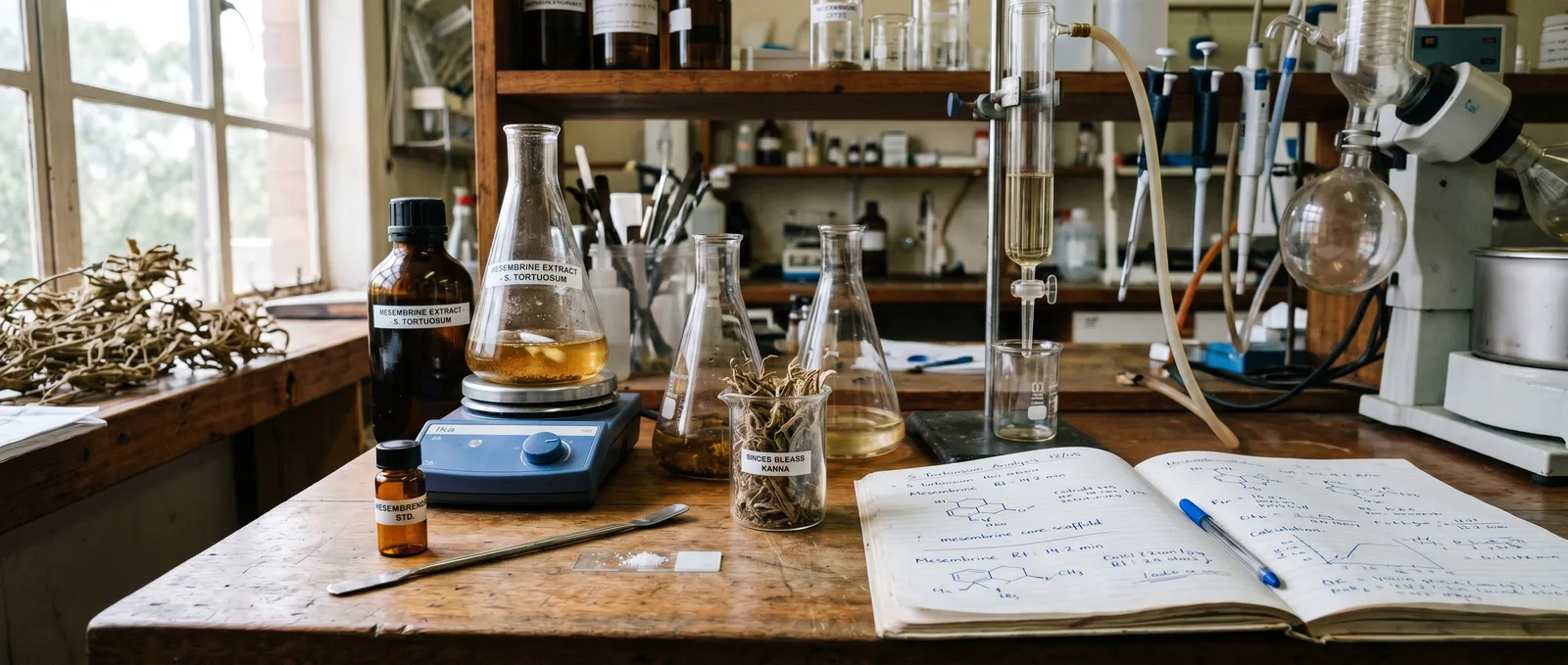
Kanna Chemistry: Sceletium Alkaloids Explained
Kanna chemistry explained: mesembrine, mesembrenone, their mechanisms, how fermentation and extraction change alkaloid profiles, and why it matters…
Rapé Shamanic Snuff Guide: How to Use It Safely
A practical rapé shamanic snuff guide covering dose, kuripe technique, effects, nicotine safety, interactions and Amazonian tradition.
White Sage Salvia Apiana Cultural Smudging Guide
Salvia apiana is a non-psychoactive shrub native to southern California's coastal sage scrub, burned as ceremonial incense in Indigenous North American…
Mulungu Erythrina Traditional Amazonian Use — Bark, Alkaloids & Research
Erythrina mulungu is a Brazilian legume tree whose bark has been brewed as a calming decoction in rural folk medicine for generations.