
This article discusses psychoactive substances intended for adults (18+). If you have a health condition or take medication, consult a doctor before use. Our age policy
Lotus Safety and Side Effects

Definition
Lotus safety and side effects is a harm-reduction topic covering the risk profiles of Nymphaea caerulea (blue lotus), Nymphaea ampla (white lotus), and Nelumbo nucifera (pink lotus), whose aporphine and bisbenzylisoquinoline alkaloids interact with dopamine receptors and can lower blood pressure. Farrell et al. (2016) confirmed nuciferine's receptor-binding profile in vitro, but human safety data remains thin. This article covers documented side effects, cardiovascular and dopaminergic interaction risks, and the critical distinction between shredded-petal and extract dosing.
Lotus safety and side effects is a topic that covers the risk profiles of three commercially available lotus species — Nymphaea caerulea (blue lotus), Nymphaea ampla (white lotus), and Nelumbo nucifera (pink/sacred lotus) — whose aporphine and bisbenzylisoquinoline alkaloids interact with dopamine receptors and can lower blood pressure. The principal alkaloids — nuciferine and apomorphine in the Nymphaea species, plus liensinine, neferine, and nelumbine in Nelumbo nucifera — are not inert. The side-effect and interaction profiles differ between the two genera, and extracts concentrate these alkaloids well beyond what you would get from shredded petals. Whether you buy blue lotus petals for tea or order a concentrated extract, understanding lotus safety and side effects before your first dose is essential. This article lays out what is known — and what remains thin — about the risks.
Adult audience (18+). The dosing ranges and effects described in this article apply to adult physiology. This content is not intended for minors.
Side-Effect Reference Table by Species and Form
Drowsiness, nausea, and blood-pressure changes are the three most commonly reported lotus side effects, with severity scaling sharply by preparation form and dose. The table below maps each documented side effect against species and severity so you can assess lotus safety and side effects for the specific product you plan to use.
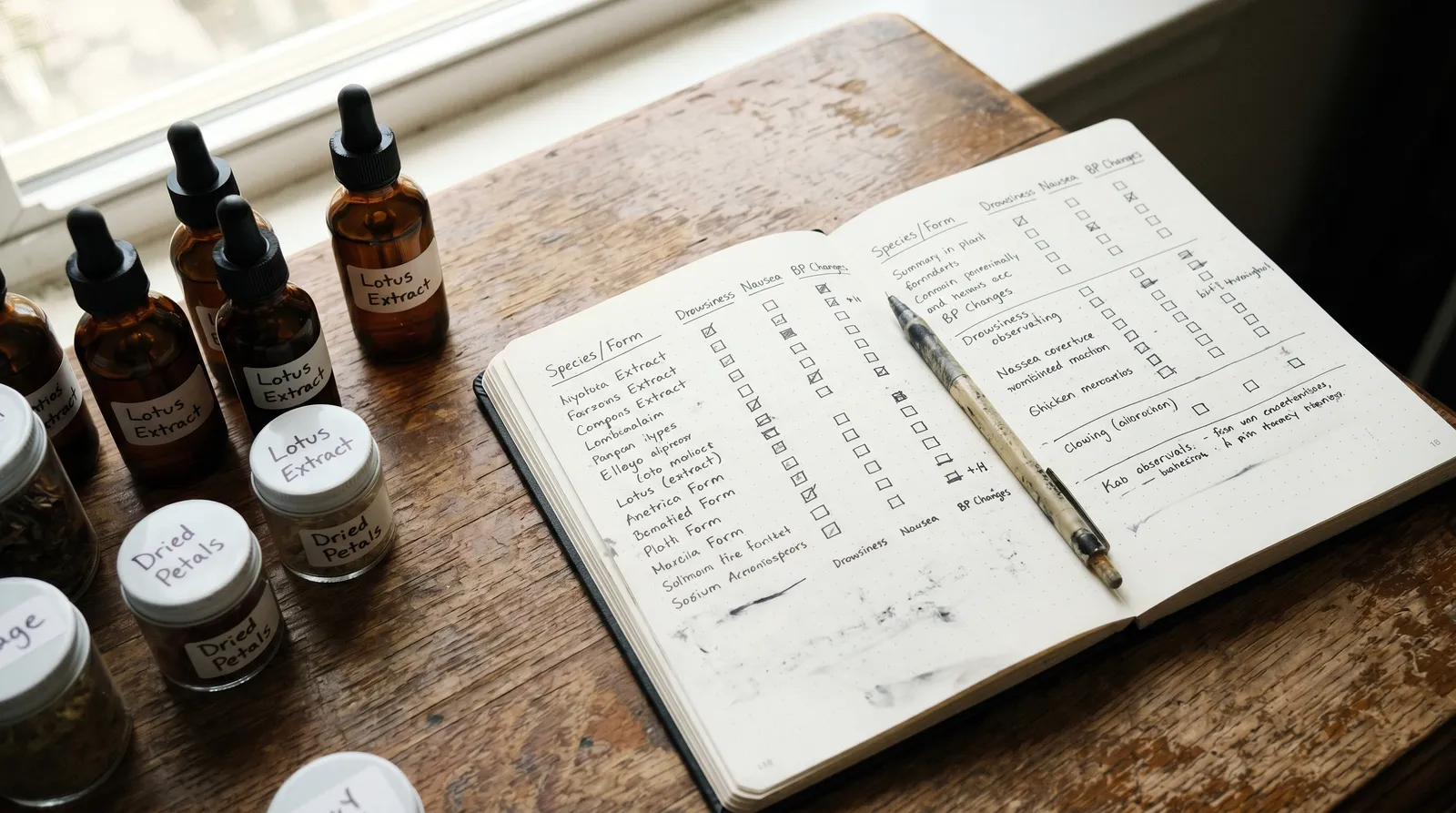
| Side Effect | Nymphaea caerulea / N. ampla (Blue / White Lotus) | Nelumbo nucifera (Pink / Sacred Lotus) | Severity Note |
|---|---|---|---|
| Drowsiness / sedation | Commonly reported, especially with tea or extract | Reported, though traditional Ayurvedic use frames it as mild | Dose-dependent; stronger with extracts and resins than shredded petals |
| Nausea | Reported at moderate-to-high doses, particularly smoked | Reported with excessive consumption of any plant part | Usually transient; more frequent on an empty stomach |
| Blood-pressure drop | Proposed via apomorphine-related vasodilation (Agrawala & Mahdi, 2006) | Proposed via liensinine and neferine activity on calcium channels (Xiao et al., 2005) | Clinically relevant if stacking with antihypertensives |
| Dizziness / lightheadedness | Users report, likely secondary to blood-pressure lowering | Users report, same mechanism suspected | Stand up slowly; hydrate |
| Altered dream intensity | Frequently reported; no controlled studies confirm mechanism | Less commonly reported than for Nymphaea species | Not dangerous per se, but disorienting for some |
| Gastrointestinal upset (flatulence, constipation) | Occasional with large amounts of plant material | Documented with excessive consumption of petals, seeds, or rhizome | Dose-related; more likely with whole-plant preparations |
| Hot flushes / sweating | Rare user reports | Rare user reports | May relate to autonomic effects of aporphine alkaloids |
| Psychotic symptoms at very high doses | Case reports exist for blue lotus at doses well above typical use | Not documented at typical doses | Relevant only at extreme doses; risk increases with concentrated extracts |
Why the Form You Use Changes the Risk
Extracts and resins deliver a significantly higher alkaloid load per gram than shredded petals, making preparation form the single biggest variable in lotus safety and side effects. A cup of Nymphaea caerulea tea brewed from 5 g of shredded petals and a pea-sized ball of resin are not the same thing pharmacologically. Extracts — dried, liquid, or resin — concentrate the aporphine alkaloids (nuciferine and apomorphine in the Nymphaea species; nuciferine, liensinine, and neferine in Nelumbo nucifera) relative to raw plant material. Dose-response curves comparing routes of administration in humans are essentially absent from the published literature, so what follows is a structural caution rather than a precise pharmacokinetic statement.

Shredded petals, whether brewed as tea or smoked, deliver a relatively dilute alkaloid load. The onset is slower with tea (users report 20–40 minutes) and faster when smoked, though smoking any plant material introduces combustion byproducts — carbon monoxide, tar, particulates — that carry their own respiratory risks unrelated to the lotus alkaloids themselves.
Extracts and resins compress that alkaloid load into a much smaller volume. A dose of extract that looks physically tiny can deliver as much nuciferine as a large cup of petal tea — possibly more, depending on the extraction ratio, which is rarely standardised across products. The cardiovascular and dopaminergic interaction concerns described below apply with greater weight to extracts for exactly this reason. If you are new to any lotus preparation, starting with shredded petals rather than a concentrate is the lower-risk option. If you want to buy blue lotus or get pink lotus preparations, choose whole petals for your first experience.
Cardiovascular Concerns
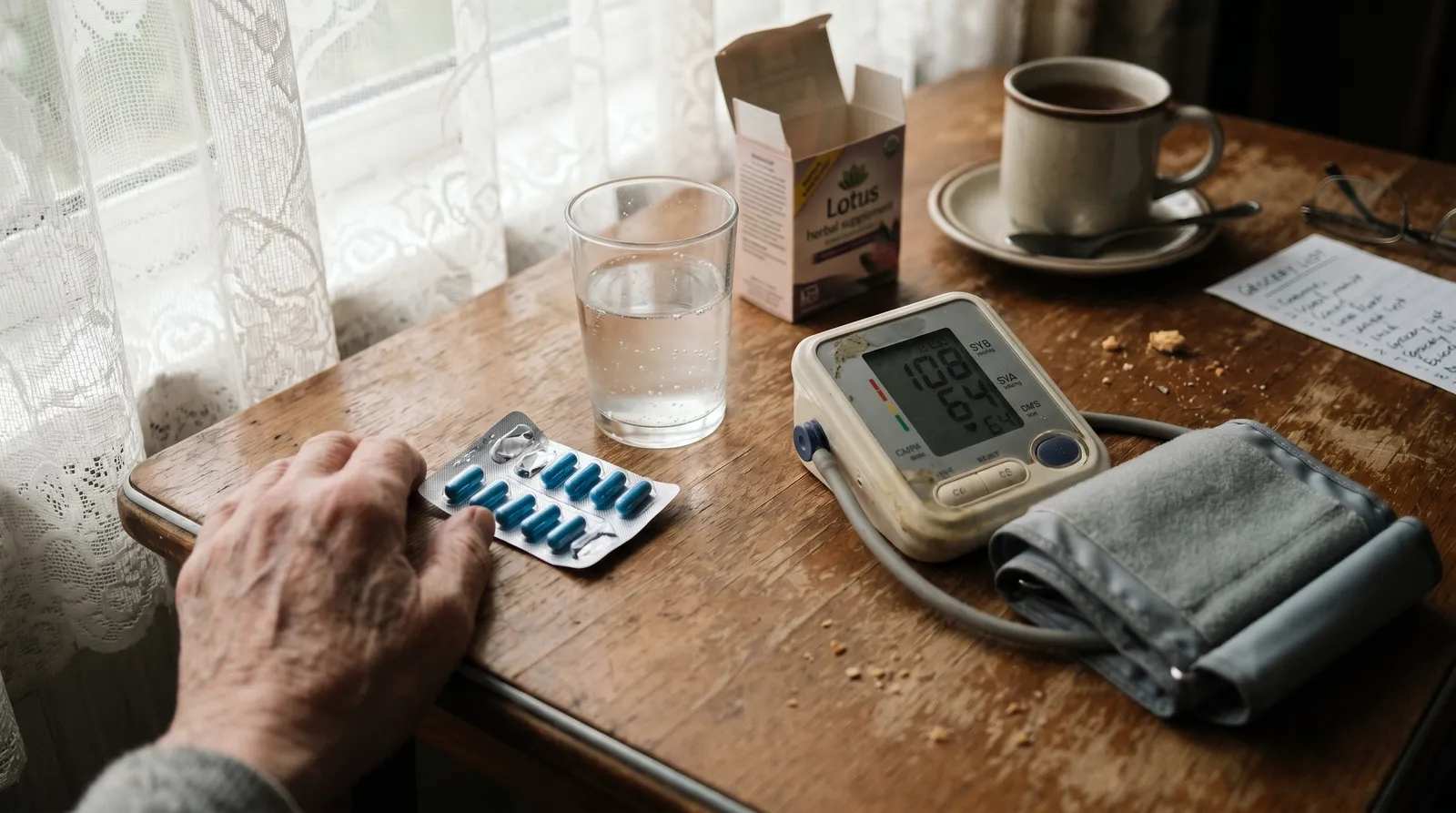
Blood-pressure lowering is the single most clinically relevant safety concern across all lotus species, operating through different but overlapping mechanisms depending on the genus. In Nymphaea caerulea, apomorphine — a dopamine-receptor agonist — is the proposed driver of vasodilation. Apomorphine is used therapeutically in Parkinson's disease at controlled doses specifically because it acts on dopamine receptors, and hypotension is one of its documented clinical side effects (Dewey et al., 2001). The apomorphine present in blue lotus petal material is in far smaller quantities than a pharmaceutical dose, but the direction of the effect is the same: blood pressure goes down.
In Nelumbo nucifera, the bisbenzylisoquinoline alkaloids liensinine and neferine have demonstrated antihypertensive and antiarrhythmic activity in animal models, likely via calcium-channel modulation (Xiao et al., 2005). The EMCDDA (European Monitoring Centre for Drugs and Drug Addiction) has not published a formal risk assessment on lotus alkaloids specifically, though their monitoring of novel psychoactive substances includes plant-derived preparations with cardiovascular activity. Human pharmacokinetic data for these compounds is thin, but the animal evidence is consistent enough to warrant caution.
The practical upshot: if you are taking antihypertensive medication — ACE inhibitors, beta-blockers, calcium-channel blockers, diuretics — combining any lotus preparation from either genus introduces additive blood-pressure-lowering risk. Symptoms of excessive hypotension include dizziness on standing, visual darkening, fainting, and in severe cases, falls. People with uncontrolled cardiovascular disease (particularly those already prone to hypotensive episodes) should avoid lotus preparations entirely. This applies to both Nymphaea and Nelumbo species, and it applies more strongly to extracts than to shredded petals.
Dopaminergic Medication Interactions
Nuciferine and apomorphine from Nymphaea species act as partial agonists at dopamine D1 and D2 receptors, creating interaction risk with any medication targeting the same receptor family. The in-vitro evidence for this is coherent (Farrell et al., 2016), though human pharmacokinetic confirmation remains limited. Nelumbo nucifera shares nuciferine, so the same concern applies to pink lotus, albeit with a less characterised overall dopaminergic profile.
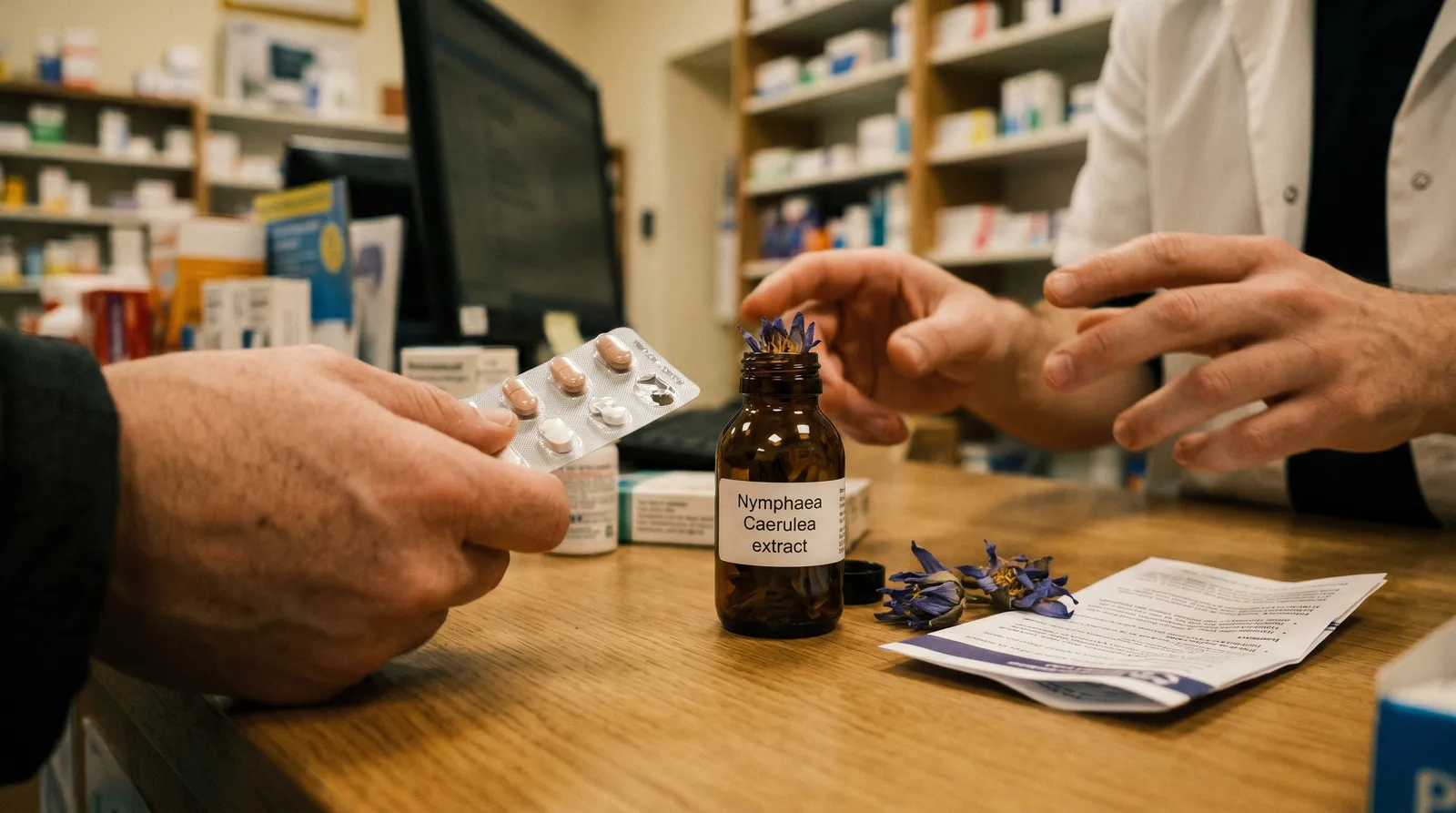
This matters because several medication classes target the same receptors:
- Parkinson's disease medications — levodopa, pramipexole, ropinirole, and pharmaceutical apomorphine itself. Stacking plant-derived aporphine alkaloids on top of therapeutic dopamine agonists risks unpredictable potentiation or interference. The interaction could go in either direction (additive agonism or competitive displacement), and no clinical data exists to clarify which.
- Dopamine-receptor-active antiemetics — metoclopramide and domperidone work by blocking dopamine receptors in the chemoreceptor trigger zone. Aporphine alkaloids acting as partial agonists at the same receptors could theoretically reduce the antiemetic effect.
- MAOIs (monoamine oxidase inhibitors) — this is a theoretical concern. Aporphine-class compounds may be substrates for monoamine oxidase, and MAOIs could alter their metabolism, potentially increasing plasma levels and duration of effect. No clinical or even robust preclinical data confirms this interaction for lotus-derived aporphines specifically, but the pharmacological logic is sound enough to flag it.
For a complete breakdown of interaction mechanisms, see the dedicated article Lotus Drug Interactions.
Sedation, Dream Effects, and Driving
Mild sedation lasting two to four hours is the most consistently reported effect of Nymphaea caerulea tea, making driving and machinery operation unsafe during that window. The sedation is proposed to stem from nuciferine's activity at dopamine receptors, though the exact mechanism in humans has not been confirmed in controlled studies. The dream-enhancement effect is entirely anecdotal — no published trial has measured it, and the neurochemical pathway is speculative.

Regardless of whether the mechanism is confirmed, the practical consequence is clear: mild sedation plus altered dream-state cognition makes driving and operating machinery inappropriate within approximately four hours of using any lotus preparation. This is not a conservative estimate padded for liability — it reflects the reported duration of noticeable effects from a standard petal-tea dose. With extracts, the window may be longer, though again, dose-response data in humans is absent.
Nelumbo nucifera users report milder sedation and less pronounced dream effects than those using Nymphaea species, but the same driving caution applies. If you feel drowsy, you should not be behind the wheel, full stop.
How Lotus Compares to Other Sedative Herbs
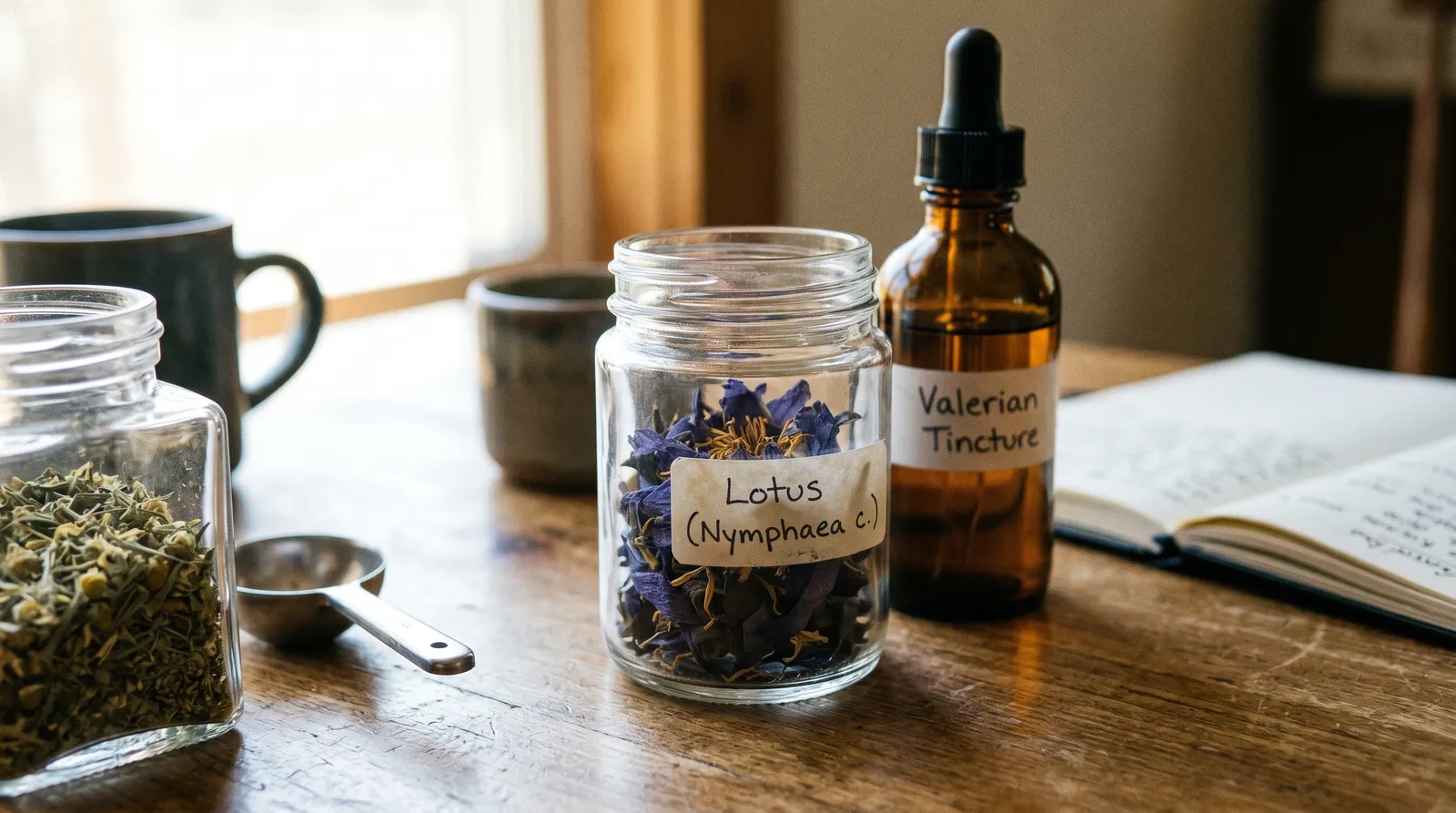
Lotus occupies a distinct pharmacological niche among legal sedative herbs because its primary mechanism is dopaminergic rather than GABAergic. Valerian and passionflower, for instance, are thought to work primarily through GABA-receptor modulation, which produces a qualitatively different sedation — heavier, more sleep-promoting, less "dreamy." Kanna (Sceletium tortuosum) acts mainly as a serotonin-reuptake inhibitor and PDE4 inhibitor, producing mood-lift with mild sedation at higher doses. Blue lotus, by contrast, produces what users describe as a warm, mildly euphoric relaxation with enhanced dream imagery — a profile that reflects its dopaminergic rather than GABAergic character. This distinction matters for lotus safety and side effects because the interaction risks are different: lotus clashes with dopaminergic and cardiovascular medications, while valerian and passionflower clash more with benzodiazepines and other GABAergic sedatives. If you want to order a sedative herb and are already on a dopamine-active medication, valerian or passionflower may be a safer starting point; if you are on benzodiazepines, lotus carries less overlap risk — but neither scenario replaces a conversation with your prescriber.
Pregnancy and Breastfeeding
No safety data exists for any lotus species during pregnancy or breastfeeding — avoid all lotus preparations during both. The aporphine alkaloids in Nymphaea species cross the blood-brain barrier (that is how they produce central effects), and it is reasonable to assume they could cross the placental barrier as well. The bisbenzylisoquinoline alkaloids in Nelumbo nucifera have demonstrated smooth-muscle-relaxant properties in animal models, which raises additional theoretical concerns during pregnancy. Avoid all lotus preparations — from either genus, in any form — during pregnancy and while breastfeeding.

What Happens at High Doses
Very high doses of Nymphaea caerulea extract have caused psychotic symptoms including visual hallucinations and disorientation in documented case reports. A 2017 case described in the Journal of Psychoactive Drugs (Poklis et al., 2017) involved a young adult presenting with agitation and altered mental status after consuming a large quantity of blue lotus extract. The symptoms resolved without lasting harm, but they illustrate that the "mild" reputation of lotus has limits.

Excessive consumption of Nelumbo nucifera — petals, seeds, or rhizome — has been associated with gastrointestinal complaints including flatulence and constipation, though these are uncomfortable rather than dangerous. The cardiovascular effects (blood-pressure lowering, potential antiarrhythmic activity) are the more serious concern at high doses of pink lotus.
Dose-response curves for either genus in humans have not been published. What "high dose" means in milligrams of specific alkaloid varies by preparation, extraction method, and individual metabolism. This is not a gap that can be filled with cautious estimates — the data simply does not exist yet.

Honest Limits: What We Can and Cannot Tell You
We are a smart shop, not a pharmacy, and there are questions about lotus safety and side effects that we simply cannot answer with certainty. We do not have access to batch-specific alkaloid assays for every product we carry — no retailer in this space does. When a customer asks "how much nuciferine is in this bag of petals," the honest answer is that we do not know to the milligram, and anyone who claims otherwise is guessing. What we can tell you is which species you are buying, what form it is in, and what the existing research says about the alkaloids that species contains. We think that honesty is more useful than false precision, and it is why this article flags evidence gaps rather than papering over them.

Gaps in the Evidence
The safety profile of lotus is built on a thin evidence base, and being straightforward about that is more useful than overstating what a handful of in-vitro studies and case reports can tell us. Specifically:

- Long-term safety of chronic use — no published study has followed regular lotus users over months or years for either Nymphaea or Nelumbo species.
- Dose-response relationships by route — smoking versus tea versus extract versus resin: the relative bioavailability of nuciferine and apomorphine across these routes in humans is not characterised.
- Interaction severity — the cardiovascular and dopaminergic interactions described above are pharmacologically logical, but their clinical magnitude in real-world lotus use is unknown. They could be trivial at petal-tea doses and serious at extract doses, or they could be clinically irrelevant across the board. Nobody has tested this.
- Species-specific alkaloid concentrations — batch-to-batch variation in nuciferine and apomorphine content of Nymphaea caerulea plant material is poorly documented. For Nelumbo nucifera, alkaloid profiles vary by plant part (leaf, petal, seed, rhizome), and most safety data comes from leaf extracts rather than petal preparations.
- Regulatory monitoring — the EMCDDA (European Monitoring Centre for Drugs and Drug Addiction) tracks novel psychoactive substances but has not issued a dedicated risk assessment for lotus alkaloids. The Beckley Foundation has not published lotus-specific research either. This means the European evidence base relies on the same small set of international studies cited throughout this article.
This does not mean lotus is dangerous — it means that treating it as categorically safe because it is a plant is not supported by what the research actually shows. We are honest about this because we think you deserve better than vague reassurance.
How Dutch Smart-Shop Culture Shaped Lotus Use in Europe
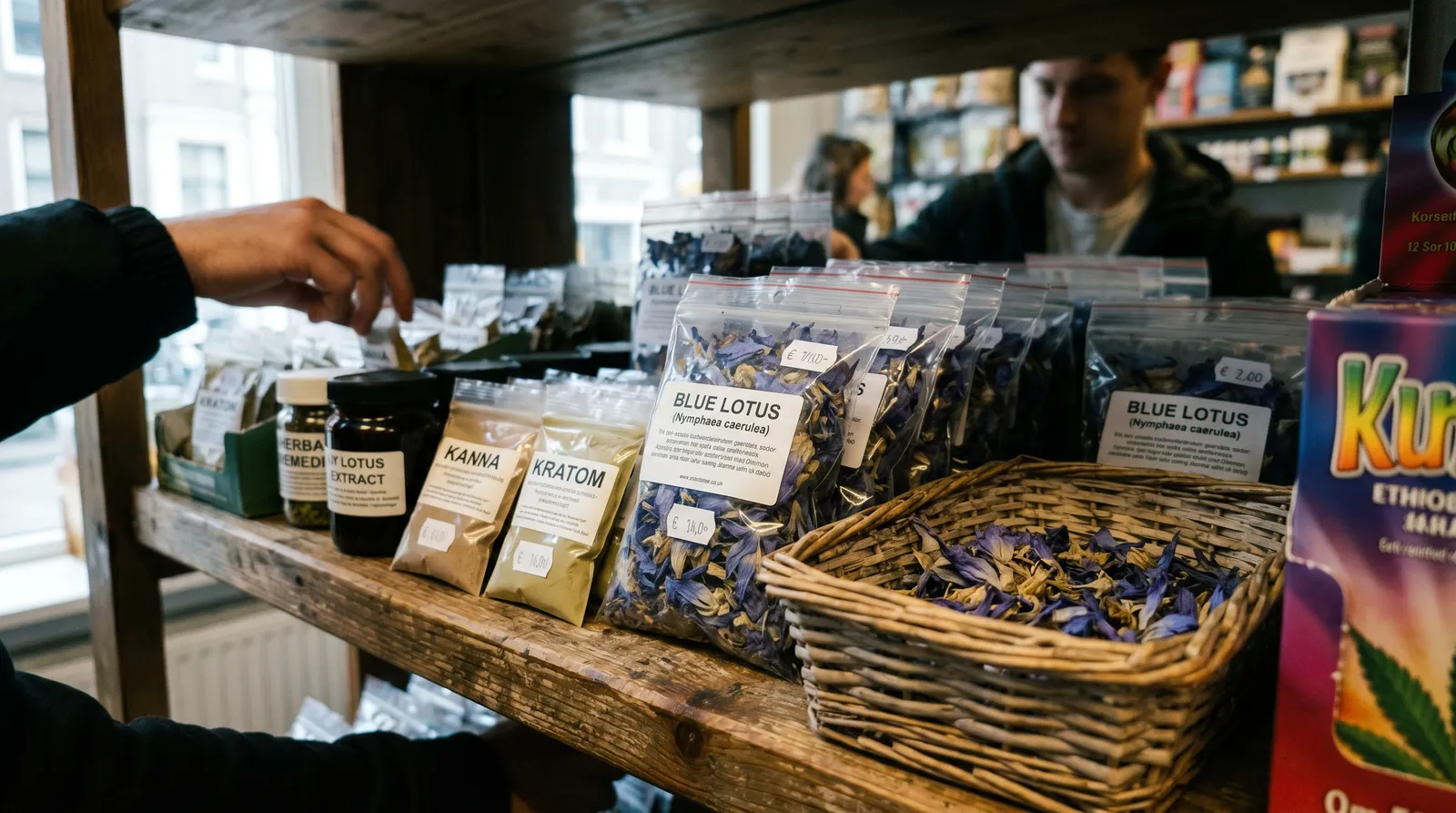
Blue lotus first appeared in Dutch smart shops in the early 2000s, initially sold alongside other ethnobotanicals like kanna and kratom. The Netherlands' relatively permissive regulatory framework for novel plant preparations meant that Nymphaea caerulea products reached European consumers years before they became widely available elsewhere. This head start gave Dutch retailers — including us — more accumulated customer feedback on lotus safety and side effects than exists in the published literature. The EMCDDA's monitoring of novel psychoactive substances has tracked this category without issuing a formal restriction, and the Beckley Foundation's psychoactive-plant research programme has not yet included lotus. In practice, this means the harm-reduction knowledge base for lotus in Europe has been built as much by smart-shop experience as by academic study — a situation that is unusual and worth acknowledging.
Practical Harm-Reduction Summary
The following steps represent the minimum responsible approach to lotus safety and side effects based on current evidence:

- Identify your species. Nymphaea caerulea (blue), Nymphaea ampla (white), and Nelumbo nucifera (pink) have overlapping but distinct alkaloid profiles. Do not assume they are interchangeable.
- Start with shredded petals, not extracts. Extracts concentrate the active alkaloids, and dose-response data in humans does not exist for any form. If you buy blue lotus extract, begin with a fraction of the suggested amount.
- Do not combine with antihypertensive medications, dopaminergic medications (levodopa, pramipexole, ropinirole, pharmaceutical apomorphine), dopamine-active antiemetics (metoclopramide, domperidone), or MAOIs.
- Do not drive or operate machinery for at least four hours after use.
- Avoid during pregnancy and breastfeeding.
- If you have cardiovascular disease — particularly uncontrolled blood pressure in either direction — avoid lotus preparations from both genera.
- If you experience dizziness, fainting, or visual disturbances, lie down, hydrate, and seek medical attention if symptoms persist.
Last updated: April 2026
Frequently Asked Questions
10 questionsCan blue lotus lower your blood pressure?
Is lotus extract more dangerous than dried petals?
Can you drive after drinking blue lotus tea?
Does pink lotus have the same side effects as blue lotus?
What medications interact with lotus?
Are there long-term safety studies on lotus use?
Can you smoke blue lotus and is it harder on your body than tea?
Is blue lotus safe to use during pregnancy or breastfeeding?
Can you develop a tolerance to blue lotus with regular use?
Does blue lotus show up on a standard drug test?
About this article


Adam Parsons is an external cannabis and psychedelics writer and editor who contributes to Azarius's wiki as both author and reviewer. On the writing side, he authors Azarius's kratom and kanna clusters, drawing on exten
This wiki article was drafted with AI assistance and reviewed by Adam Parsons, External contributor. Editorial oversight by Joshua Askew.
Medical disclaimer. This content is for informational purposes only and does not constitute medical advice. Consult a qualified healthcare provider before use of any substance.
Last reviewed April 24, 2026
References (6)
- [1]Agrawala, I.P. & Mahdi, A.A. (2006). Aporphine alkaloids: pharmacological review. Journal of Ethnopharmacology , 108(1), pp. 1–9.
- [2]Dewey, R.B. et al. (2001). Subcutaneous apomorphine for acute "off" episodes in Parkinson's disease. Movement Disorders , 16(6), pp. 1132–1136.
- [3]EMCDDA (European Monitoring Centre for Drugs and Drug Addiction). Novel psychoactive substances monitoring. Available at: emcdda.europa.eu.
- [4]Farrell, M.S. et al. (2016). In vitro and in vivo characterization of the alkaloid nuciferine. PLOS ONE , 11(3), e0150602.
- [5]Poklis, J.L. et al. (2017). Blue lotus (Nymphaea caerulea): a case report of recreational use and analytical confirmation. Journal of Psychoactive Drugs , 49(2), pp. 152–159.
- [6]Xiao, J.H. et al. (2005). Liensinine and neferine: cardiovascular alkaloids from Nelumbo nucifera. Journal of Natural Products , 68(7), pp. 1067–1071.
Related Articles
Blue Lotus vs Kanna: Effects & Safety
Blue lotus vs kanna compared — Nymphaea caerulea's aporphine profile against Sceletium tortuosum's mesembrine chemistry, with interaction warnings.

Lotus Clinical Research Overview
What does lotus clinical research actually show? A critical review of Nymphaea caerulea and Nelumbo nucifera pharmacology, preclinical data, and…
Kanna South Africa To West History
Sceletium tortuosum was used by San and Khoekhoe communities in southern Africa for centuries before European colonists first documented it in the 1660s.
Sceletium Tortuosum Plant
Learn about the sceletium tortuosum plant: botany, alkaloids, fermentation, safety warnings, and where to buy kanna.
Kanna Pharmacokinetics Explained
Complete guide to kanna pharmacokinetics: how Sceletium tortuosum alkaloids are absorbed, metabolised via CYP2D6, and eliminated.

Kanna Chemistry: Sceletium Alkaloids Explained
Kanna chemistry explained: mesembrine, mesembrenone, their mechanisms, how fermentation and extraction change alkaloid profiles, and why it matters…

Rapé Shamanic Snuff Guide: How to Use It Safely
A practical rapé shamanic snuff guide covering dose, kuripe technique, effects, nicotine safety, interactions and Amazonian tradition.

White Sage Salvia Apiana Cultural Smudging Guide
Salvia apiana is a non-psychoactive shrub native to southern California's coastal sage scrub, burned as ceremonial incense in Indigenous North American…

Mulungu Erythrina Traditional Amazonian Use — Bark, Alkaloids & Research
Erythrina mulungu is a Brazilian legume tree whose bark has been brewed as a calming decoction in rural folk medicine for generations.