
This article discusses psychoactive substances intended for adults (18+). If you have a health condition or take medication, consult a doctor before use. Our age policy
Sclerotia vs Fruit Bodies: Cultivation Comparison
Definition
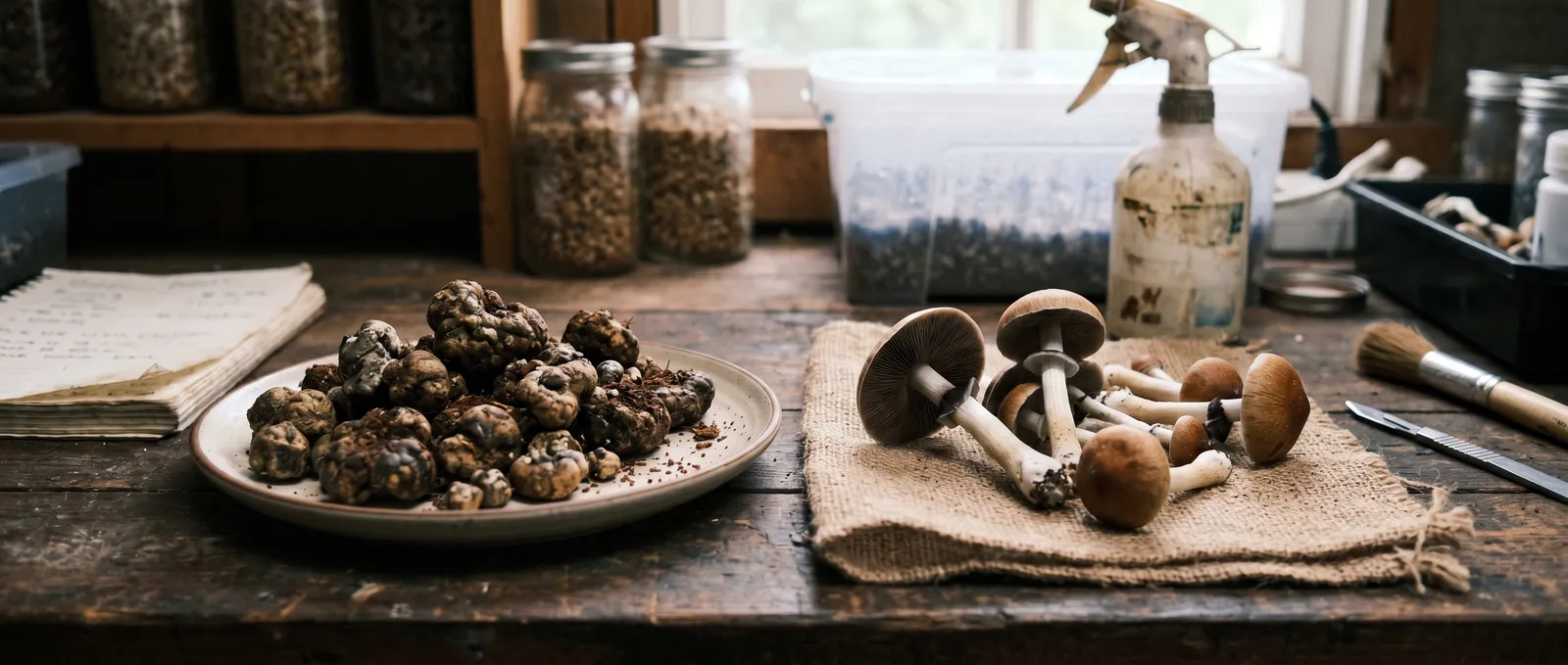
Sclerotia and fruit bodies are two different life stages of Psilocybe fungi: sclerotia are hardened underground mycelial storage bodies (the 'magic truffle'), while fruit bodies are the above-ground reproductive mushroom. Both contain psilocybin, but concentrations, cultivation demands and yields differ markedly (Gotvaldová et al., 2021).
Sclerotia vs fruit bodies is a comparison of two different life stages of the same Psilocybe fungus that shapes your entire cultivation setup: substrate, humidity, timeline, yield, and potency profile. This is an educational comparison for growers aged 18 and over. Here's the side-by-side on sclerotia vs fruit bodies, with the trade-offs that actually matter to a home grower who wants to get started, order a kit, or buy fresh truffles ready-made.
Quick comparison at a glance
Sclerotia vs fruit bodies differ in biology, cultivation demand, timeline and yield, even though both are produced by the same genus (Psilocybe) and both contain psilocybin and psilocin. The table below summarises the practical differences. The sections underneath unpack each row.
| Dimension | Sclerotia (magic truffles) | Fruit bodies (magic mushrooms) |
|---|---|---|
| What it is biologically | Hardened underground mycelial mass — a survival structure | Above-ground reproductive structure — the "mushroom" proper |
| Species that produce it reliably | P. tampanensis, P. mexicana, P. atlantis, P. pajaritos | P. cubensis (Golden Teacher, McKennaii, B+, etc.) |
| Cultivation complexity | Low — sealed jar, dark, 21–24 °C, no misting | Medium — requires humidity (>90%), FAE, light cycle, misting |
| Time to harvest | 8–16 weeks from inoculation | 2–4 weeks from kit delivery (pre-colonised kits) |
| Alkaloid content (dry weight) | ~0.3–0.7% psilocybin + psilocin (Gartz, 1994) | ~0.5–1.3% psilocybin + psilocin, cubensis range (Tsujikawa et al., 2003) |
| Yield per kit / container | 15 g fresh per pack is standard retail portion | 400–600 g fresh across 2–4 flushes from a standard kit |
| Fresh storage | Sealed pack, fridge (2–4 °C), ~30 days | Paper bag, fridge, ~7–10 days before drying required |
| Contamination risk | Low — sealed substrate, never opened during formation | Medium — open casing layer exposed to airborne spores |
What they actually are biologically
Sclerotia are hardened lumps of compacted mycelium that the fungus builds underground as a famine reserve — a stockpile of nutrients and water that lets the organism survive drought, fire, or a bad season and then push up fruit bodies when conditions improve. Stamets (2000) describes them as "mycelial tubers," which is about right. They're not a separate organ, they're the same mycelial network densified into a storage body.
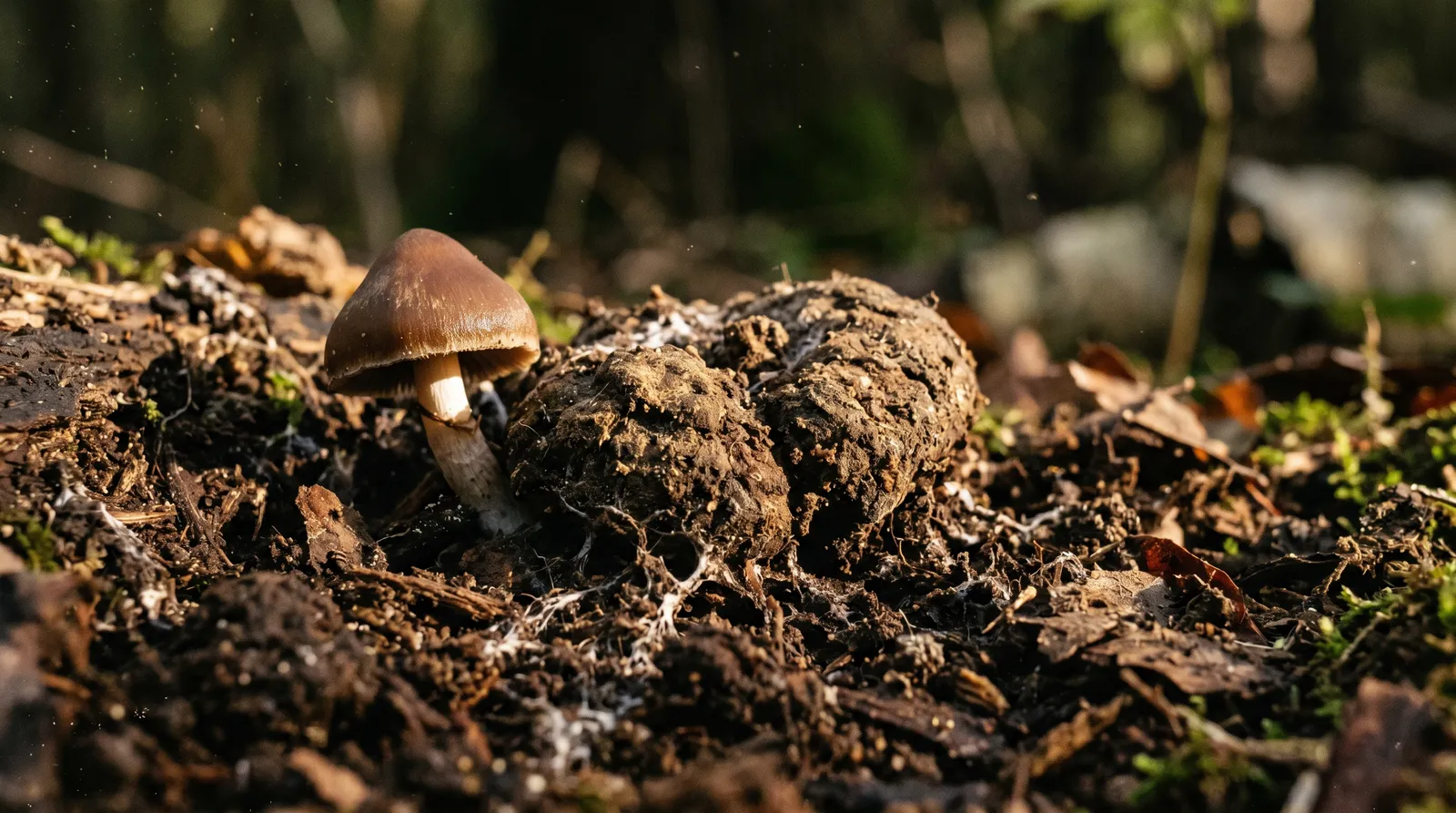
Fruit bodies are the opposite job description: reproductive structures whose entire purpose is to push above ground, open a cap, and dump spores into the air. The cap, stem, gills, and veil are all there to disperse. In Psilocybe cubensis this stage is what most home growers picture when they think of growing — the classic stemmed, brown-capped mushroom that breaks through a casing layer.
Crucially: not every Psilocybe species does both well. P. cubensis produces abundant fruit bodies but almost no usable sclerotia. P. tampanensis, P. mexicana and P. atlantis produce robust sclerotia and only modest fruit bodies. This is a genetic split — you don't get to pick which one your species does. You pick the species based on which form you want.
Chemistry and potency differences
Sclerotia vs fruit bodies share an alkaloid profile — both contain psilocybin, psilocin, baeocystin and norbaeocystin — but the concentrations and distribution differ. A comparative analysis noted that psilocybin, baeocystin, tryptophan, ergothioneine, and phenylethylamine preferentially accumulate in fruit bodies rather than in sclerotia of the same species (Gotvaldová et al., 2021). In practical terms: gram for gram dry, cubensis fruit bodies tend to pack more alkaloid than tampanensis sclerotia.
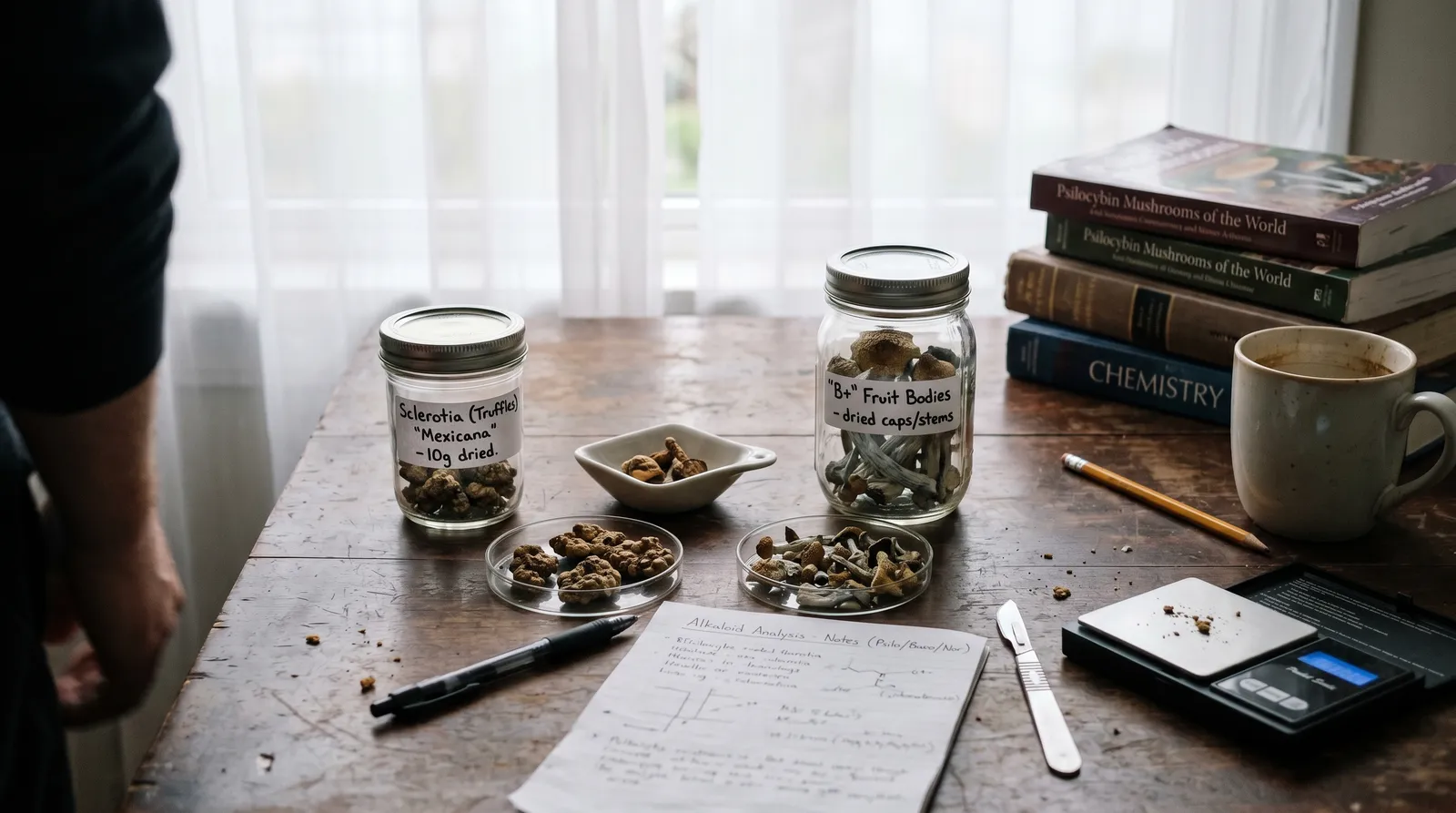
But dry weight is where this gets slippery. Fresh truffles are roughly 65–70% water; fresh fruit bodies are 90–92% water. That difference reshuffles the maths — a 15 g fresh truffle pack delivers a comparable dose to something like 5 g of fresh cubensis, despite the truffles being "weaker" per dry gram. Tsujikawa et al. (2003) measured cubensis fruit bodies at 0.5–1.3% total alkaloids dry; Gartz (1994) reported sclerotia of P. tampanensis and P. mexicana at 0.3–0.7% dry.
Composition beyond alkaloids also differs. Sclerotia are polysaccharide-rich and fibrous — that's what the storage-organ function demands. Fruit bodies carry higher levels of minerals and certain bioactives, but can also accumulate heavy metals from substrate more readily than sclerotia, which has been flagged in several edible-mushroom reviews (Berger et al., 2022). Honest limitation: most published alkaloid ranges come from small sample sets across different labs and extraction methods, so treat any single number as a rough guide rather than a rule.
Cultivation setup — what each one demands
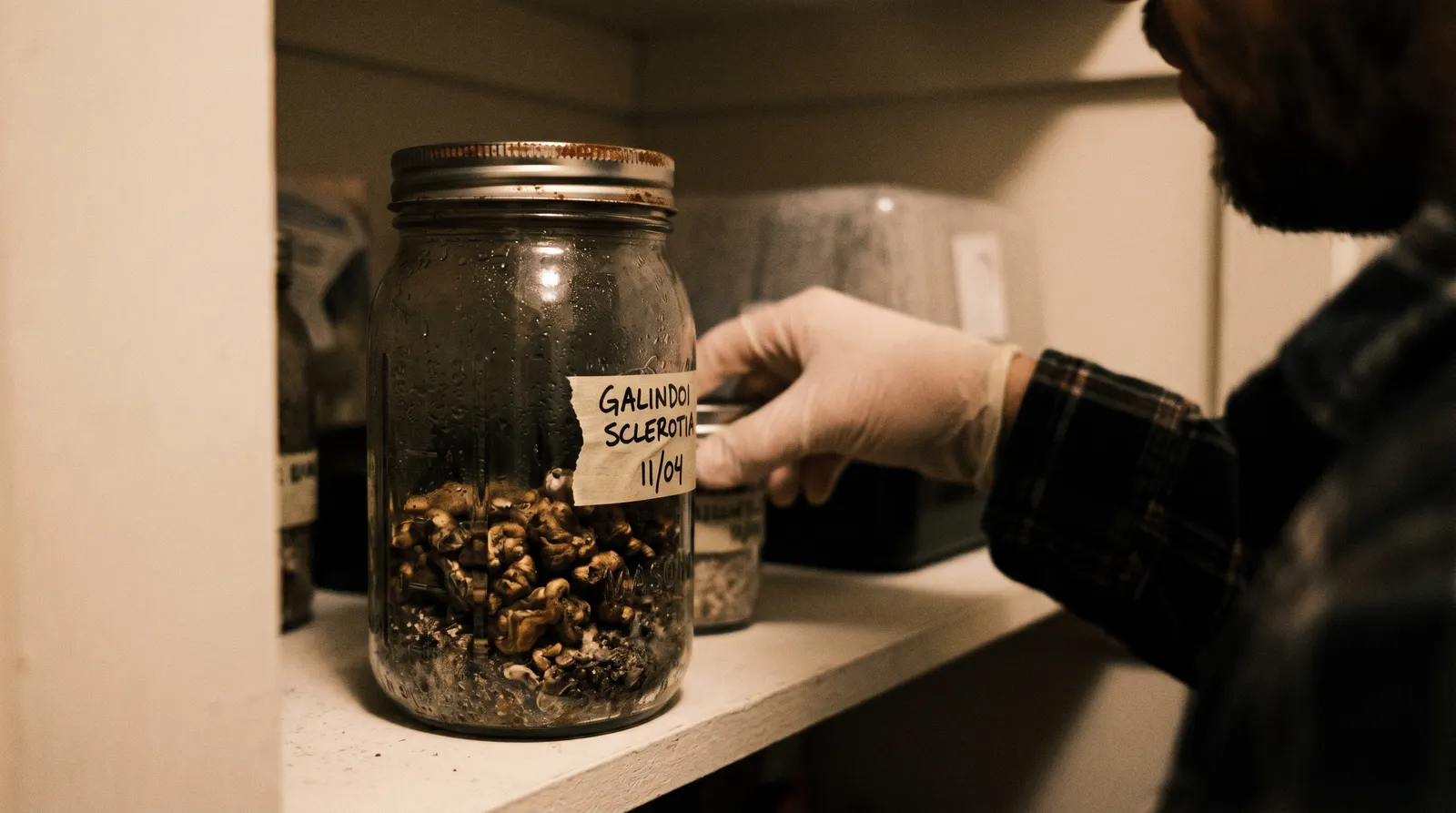
Fruit-body cultivation demands active environmental control while sclerotia cultivation runs in a sealed container with none. Sclerotia form entirely inside a sealed, dark container at room temperature (21–24 °C works). No humidity control, no fresh air exchange, no light cycle, no misting. You inoculate a grain/rye substrate, close the jar or bag, put it in a cupboard, and wait. Most of the failures here are contamination from poor sterile technique at inoculation — once the lid is sealed, the environment is stable.
Fruit bodies are fussier. Cubensis needs:
- Colonisation temperature: 24–28 °C
- Fruiting temperature: 21–24 °C (the drop itself triggers pinning)
- Humidity at fruiting: 90–95%
- Fresh air exchange (FAE): 2–4 times per day for a kit; more for larger setups
- Light: indirect, 12 hours on / 12 off — cubensis uses light as a directional cue, not for photosynthesis
- Casing layer: perlite/vermiculite, kept moist but not wet
Miss any one of these consistently and you get aborts (small fruit bodies that turn black and stop growing), bruised pins, or cobweb mould creeping across the casing. Sclerotia growers mostly avoid this entire category of problem because the substrate is never opened.
Yield, timeline, and what you actually end up with
A standard home cubensis kit produces 400–600 g fresh across 2–4 flushes, while a sclerotia jar produces roughly 15–30 g fresh per standard vessel. Kits like a Golden Teacher Grow Kit or a Ready-2-Grow Bag McKennaii yield the largest first flush, with diminishing returns across subsequent flushes. Time from kit delivery to first harvest is typically 2–4 weeks, because you're buying a pre-colonised substrate and only managing the fruiting phase.
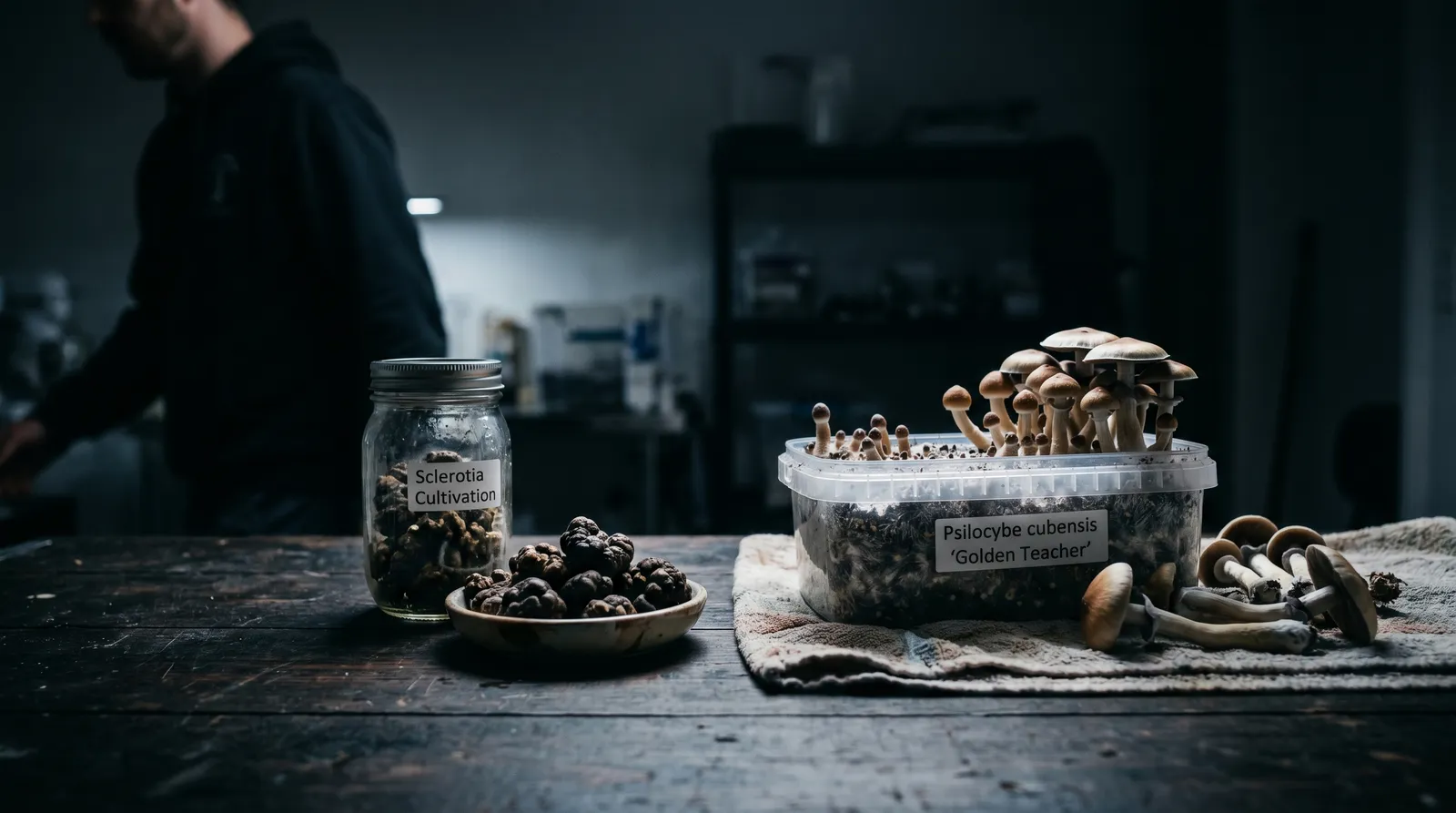
Sclerotia are a slower game. From inoculation to harvestable truffle mass takes 8–16 weeks depending on species — P. atlantis is on the fast end, P. tampanensis the slow end. That's why commercial sclerotia are almost always sold as the end product (15 g fresh vacuum-sealed packs), not as grow kits. The timeline doesn't match home-grower patience, and the vacuum-packed-and-refrigerated fresh product stores for ~30 days where fresh fruit bodies need drying within a week.
Contamination and failure modes
Sclerotia cultivation is more forgiving than fruit-body cultivation because the substrate stays sealed throughout formation. The main failure points are at inoculation — ungloved hands, an unsterile needle, an airborne trichoderma spore landing on the grain before the lid closes. Once sealed, the jar either colonises cleanly or it doesn't, and you know within 2–3 weeks (white mycelium = good, green patches = trichoderma, pink slick = bacterial).
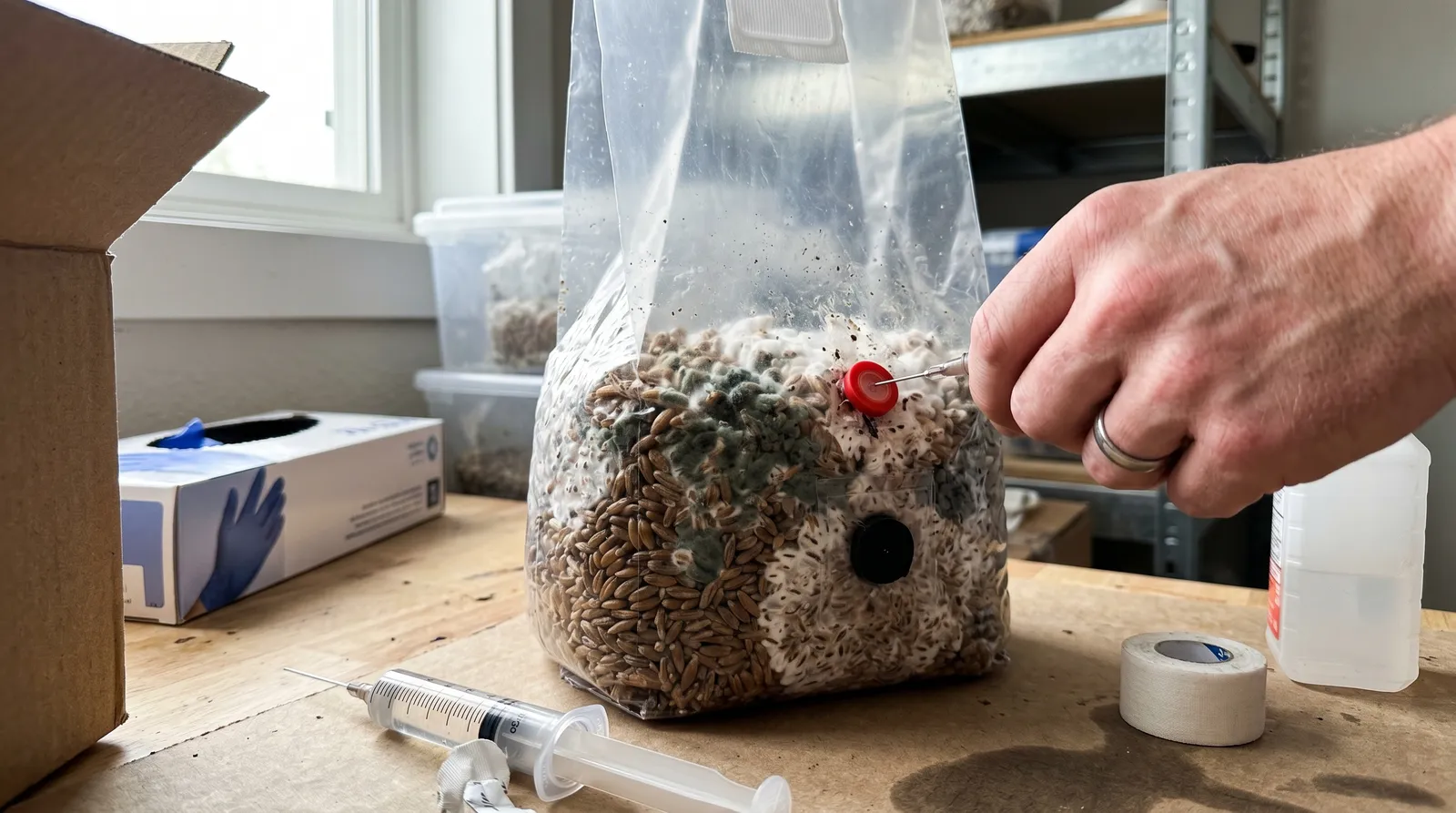
Fruit body cultivation opens the substrate to room air the moment you set it up to fruit. Common contamination identifiers:
- Trichoderma (green mould): bright green patches on casing or substrate. Toss the kit — not salvageable.
- Cobweb mould: fine grey fuzz, often across the casing surface. Spreads fast. If caught early, a light misting with 3% hydrogen peroxide sometimes works, but most growers bin it.
- Wet rot: yellow-brown liquid pooling in low spots. Bacterial. Toss.
- Pink bacterial slick: usually from over-misting. Toss.
The rule in both cases: when in doubt, throw it out. Psilocybin mushrooms grown alongside mould are not food-safe just because the mould is "over there" on the substrate. Respiratory PPE during harvest and drying is sensible either way — mushroom dust is a known allergen, and sclerotia crumble into dust when fully dried.
Which one suits which grower
Sclerotia suit low-effort, low-equipment growers willing to wait months, while fruit bodies suit higher-yield growers willing to manage humidity and air exchange. They're not substitutes — they're different products of different fungi with different workflows. Per-kit output is modest for sclerotia; fruit bodies deliver larger harvests across multiple flushes but demand more active management.
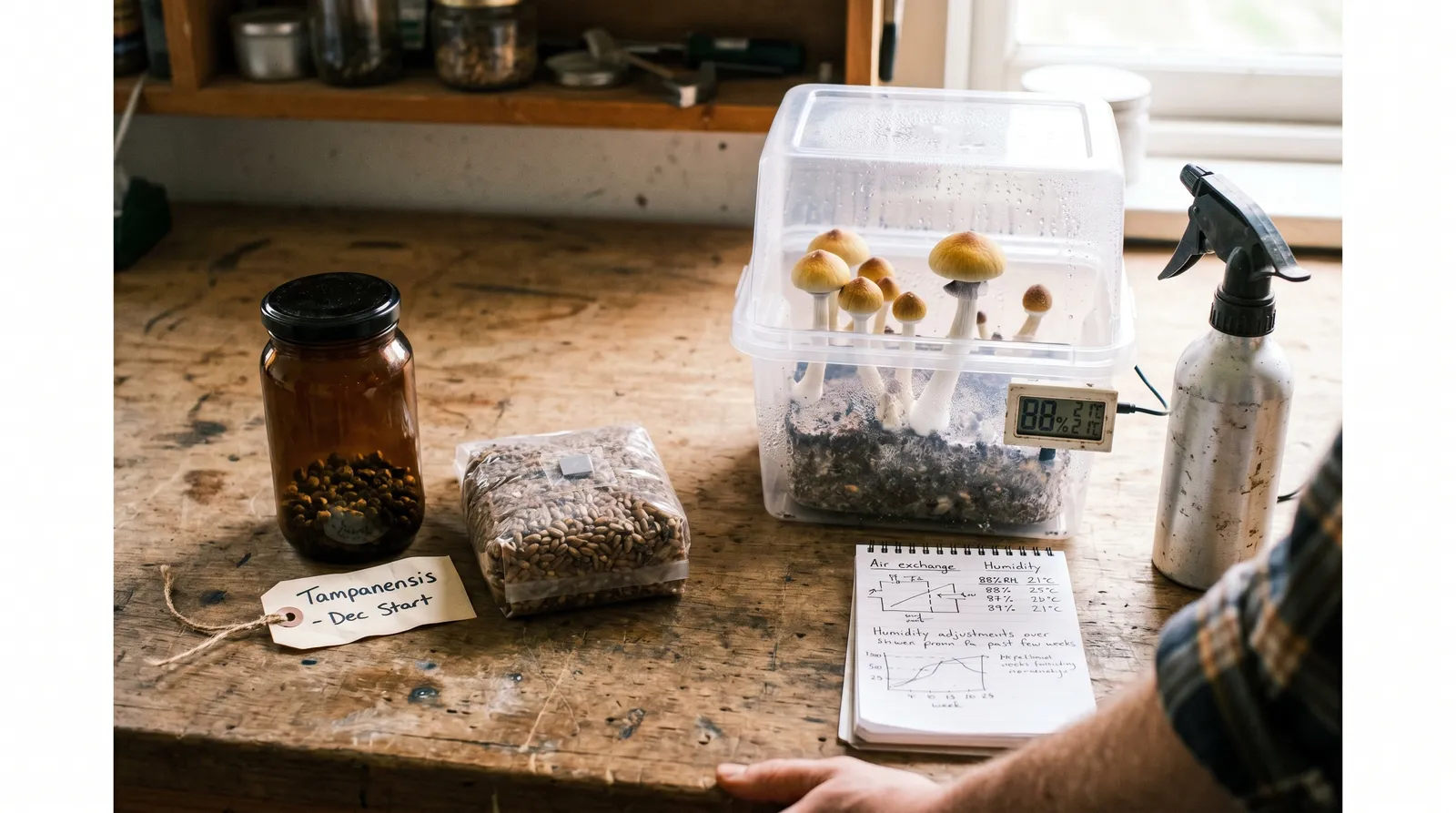
For complete beginners, a pre-colonised cubensis kit actually undercuts the "sclerotia are easier" argument, because the kit-maker has already handled the sterile phase. You're just fruiting. For growers who want to start from inoculation and don't want to buy humidity-controlled gear, sclerotia make more sense. Harm-reduction resources from MAPS and the EMCDDA are worth a read before anyone dosing-plans either form; the Beckley Foundation publishes useful background on psilocybin research.
Consumption, dosing, and experience-design for either form sit outside the cultivation scope — the psilocybin hub covers those. For storage and drying specifics, see the dedicated harvest and preservation article. Interactions with MAOIs, SSRIs and lithium apply to both forms and are covered in the dedicated interactions article; short version, don't combine.
Azarius cultivation products
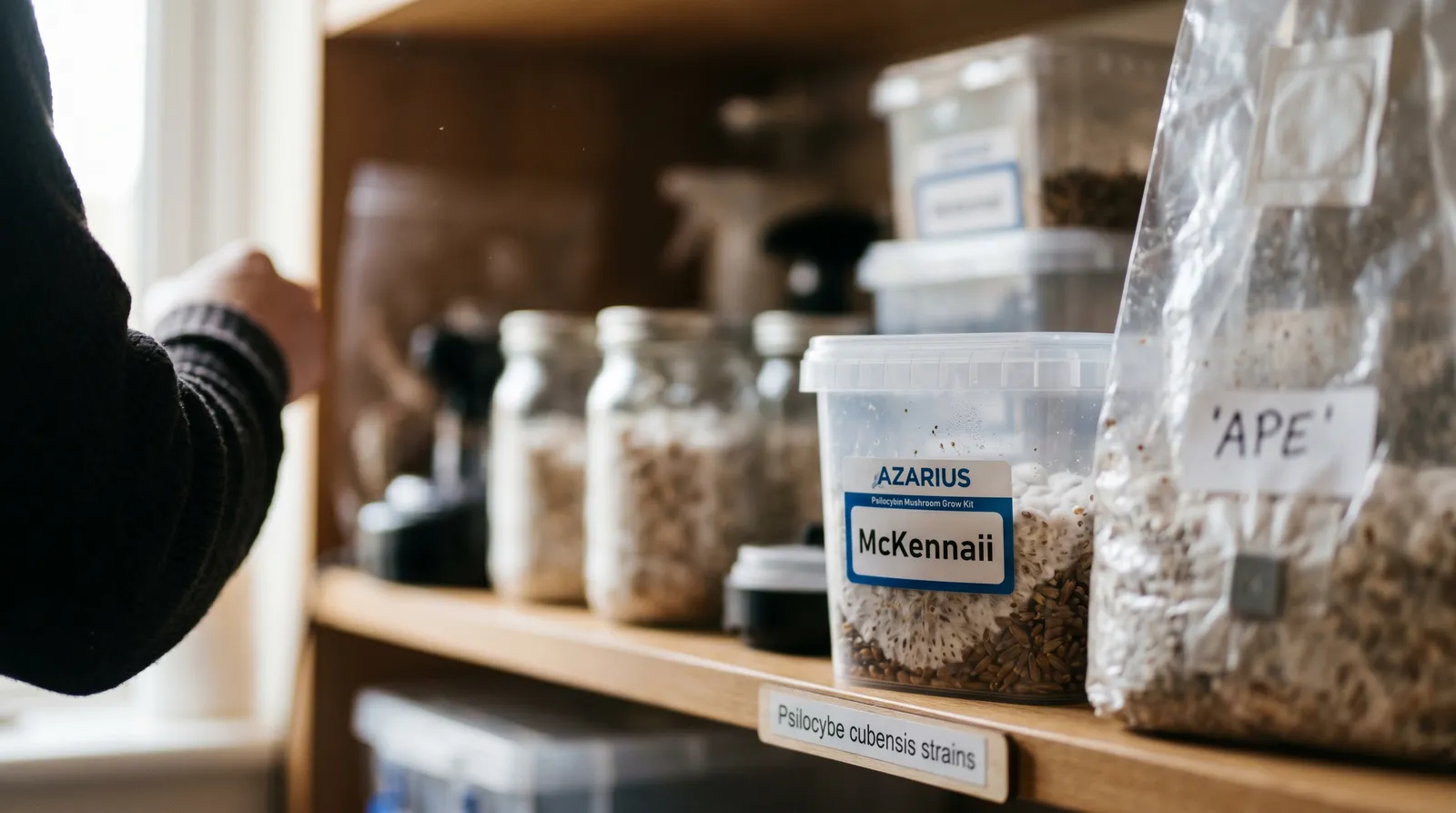
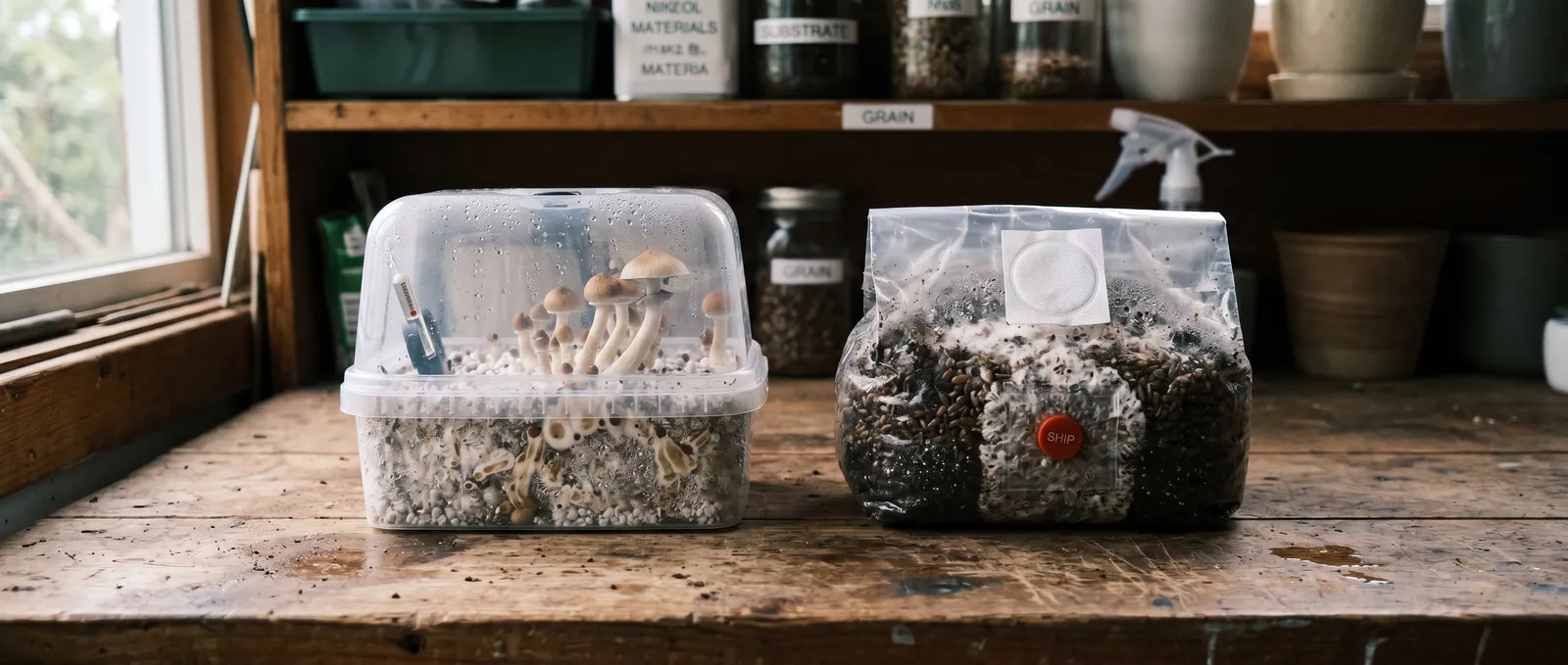
On the fruit-body side, Azarius stocks two formats: the plastic-tub Grow Kit (8 strains including Golden Teacher, McKennaii, B+, Mexican) and the sealed Ready-2-Grow Bag (9 strains including APE, Enigma, Jedi Mind Fuck). On the sclerotia side, the Azarius own-brand range covers 10 truffle SKUs — Atlantis, Fantasia, Hollandia, Mexicana, Mokum, Pajaritos, Pandora, Tampanensis, Utopia and Valhalla — alongside third-party truffles like Dragon's Dynamite and MushRocks. Customers can order grow kits or buy fresh truffles depending on which route matches their setup.
Safety and educational disclaimer
This article is educational information for adults aged 18 and over and is not medical advice. Psilocybin is a potent psychoactive and is not suitable for people with a personal or family history of psychosis, schizophrenia, bipolar disorder, cardiovascular disease, or those taking MAOIs, SSRIs or lithium. Consult a qualified healthcare professional before considering any psychoactive substance. If you experience adverse effects, seek medical help immediately. Azarius does not encourage misuse.

Last updated: April 2026
Frequently Asked Questions
8 questionsAre sclerotia and magic truffles the same thing?
Which is stronger per gram, sclerotia or mushrooms?
Can the same species produce both sclerotia and fruit bodies?
Which is easier for a first-time grower?
Why do sclerotia store fresh for longer than mushrooms?
Do sclerotia contain the same heavy-metal risks as fruit bodies?
How long does it take to grow sclerotia compared to mushroom fruit bodies?
What is the contamination risk when growing sclerotia versus mushroom fruit bodies?
About this article


Adam Parsons is an external cannabis and psychedelics writer and editor who contributes to Azarius's wiki as both author and reviewer. On the writing side, he authors Azarius's kratom and kanna clusters, drawing on exten
This wiki article was drafted with AI assistance and reviewed by Adam Parsons, External contributor. Editorial oversight by Joshua Askew.
Medical disclaimer. This content is for informational purposes only and does not constitute medical advice. Consult a qualified healthcare provider before use of any substance.
Last reviewed April 25, 2026
References (4)
- [1]Gartz, J. (1994). Magic Mushrooms Around the World. LIS Publications, Los Angeles, CA.
- [2]Tsujikawa, K., Kanamori, T., Iwata, Y., Ohmae, Y., Sugita, R., Inoue, H., & Kishi, T. (2003). Morphological and chemical analysis of magic mushrooms in Japan. Forensic Science International, 138(1-3), 85-90. DOI: 10.1016/j.forsciint.2003.08.009
- [3]Gotvaldová, K., Hájková, K., Borovička, J., Jurok, R., Cihlářová, P., & Kuchař, M. (2021). Stability of psilocybin and its four analogs in the biomass of the psychotropic mushroom Psilocybe cubensis. Drug Testing and Analysis, 13(2), 439-446. DOI: 10.1002/dta.2950
- [4]Berger, T., Nopcsa, R., Kornell, A., et al. (2022). Cultivation parameters of Psilocybe cubensis affecting fruit-body yield. Mycological Progress, 21(7), 67. DOI: 10.1007/s11557-022-01816-x
Related Articles
Cannabis Hermaphrodite: Identify, Prevent, Act
A cannabis hermaphrodite is a female plant that develops male pollen sacs or banana-shaped anthers (nanners), self-pollinating and seeding your harvest.
DIY Cannabis Fertilizer: Homemade Nutrient Guide
DIY cannabis fertilizer guide: compost, teas, banana ferments and feed schedules, with safety notes and cited research for home growers.
What To Do With Male Cannabis Plants: 6 Practical Uses
What to do with male cannabis plants: identify, isolate, breed, extract, or compost. A practical 6-step guide with sourcing and safety notes.
Mushroom Grow Kit Temperature & Humidity: Full Setup Guide
A temperature humidity control grow kit is the small set of climate tools — hygrometer, heat mat, humidifier or perlite tray — that keeps a mushroom fruiting…
When to Harvest Mushrooms: Veil Break Timing Explained
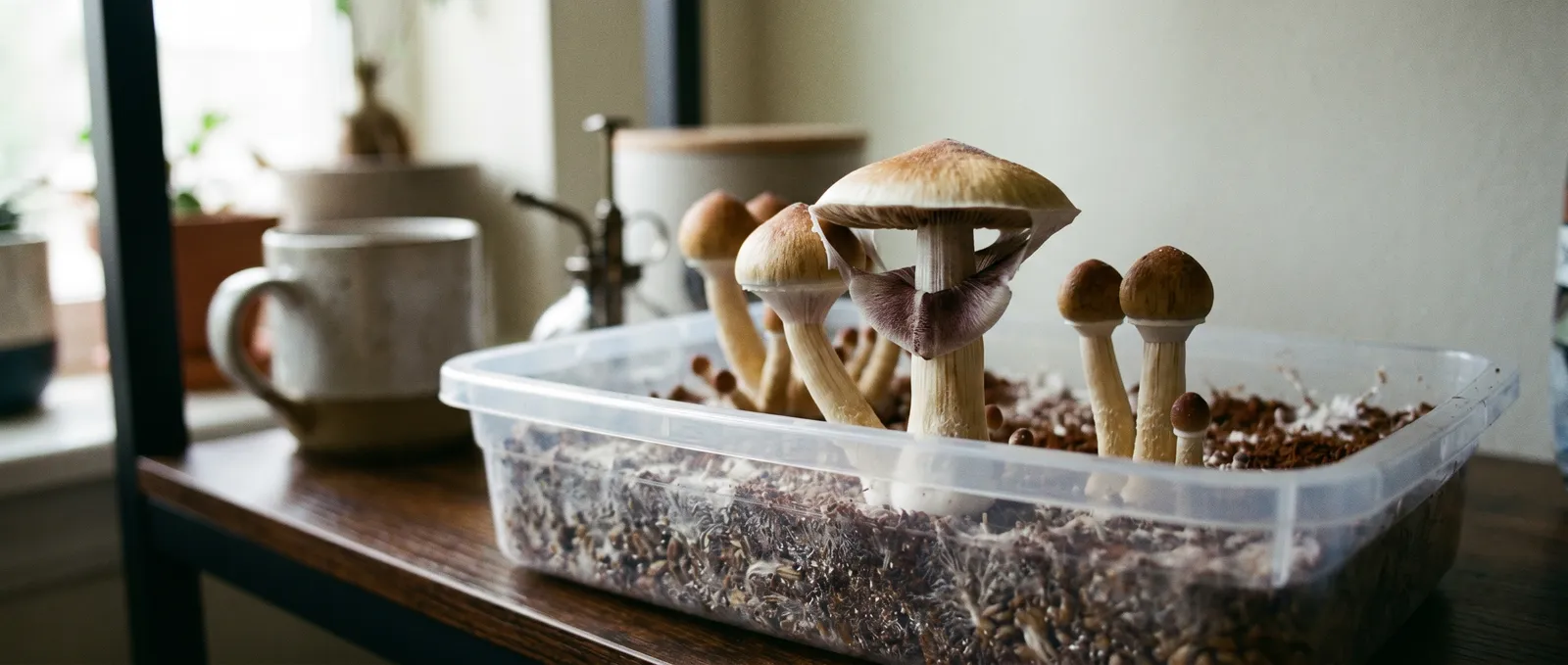
Harvest timing veil break is a cultivation technique that uses the tearing of the partial veil on maturing Psilocybe cubensis to mark peak alkaloid content.
First Grow Checklist: What You Need for Mushroom Kits
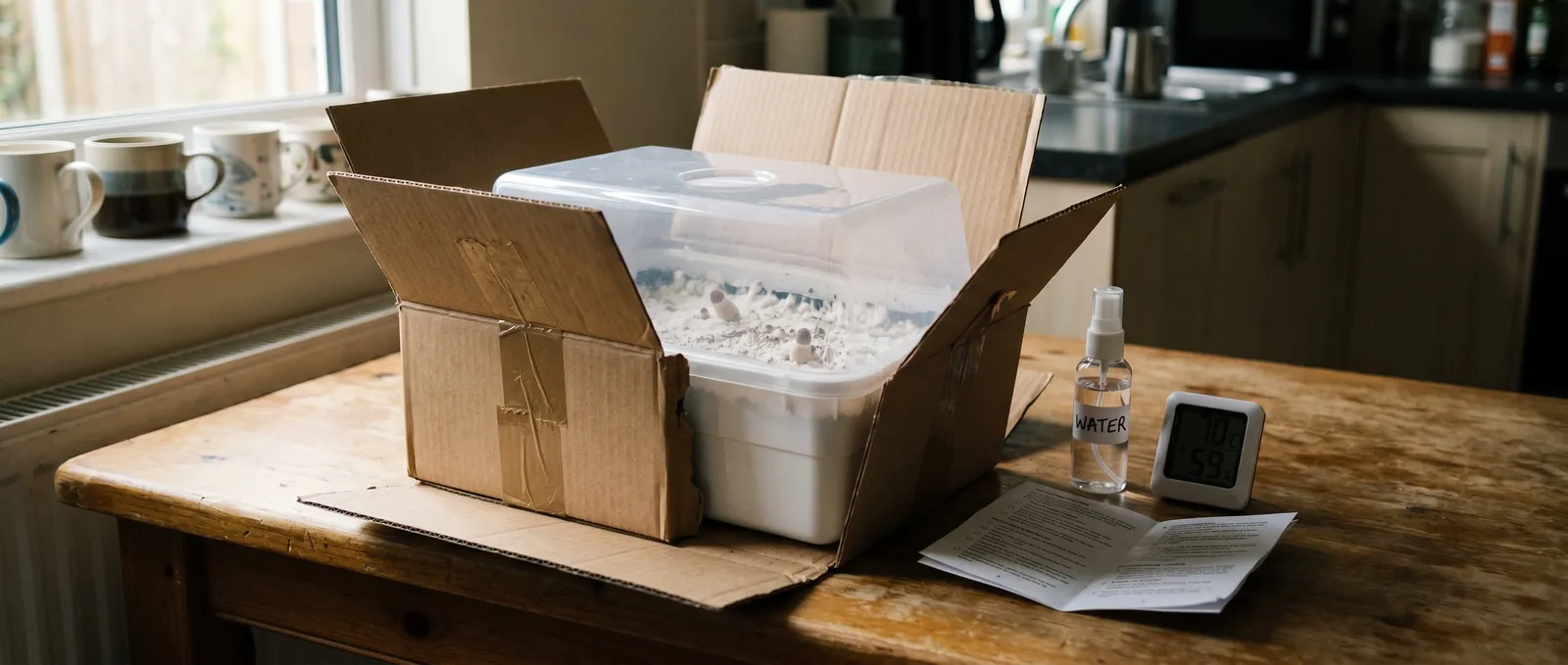
A first grow checklist is the short list of supplies and environmental conditions needed to run a home psilocybin mushroom kit from inoculated substrate to…
Storing Dried Mushrooms Long Term: Full Guide
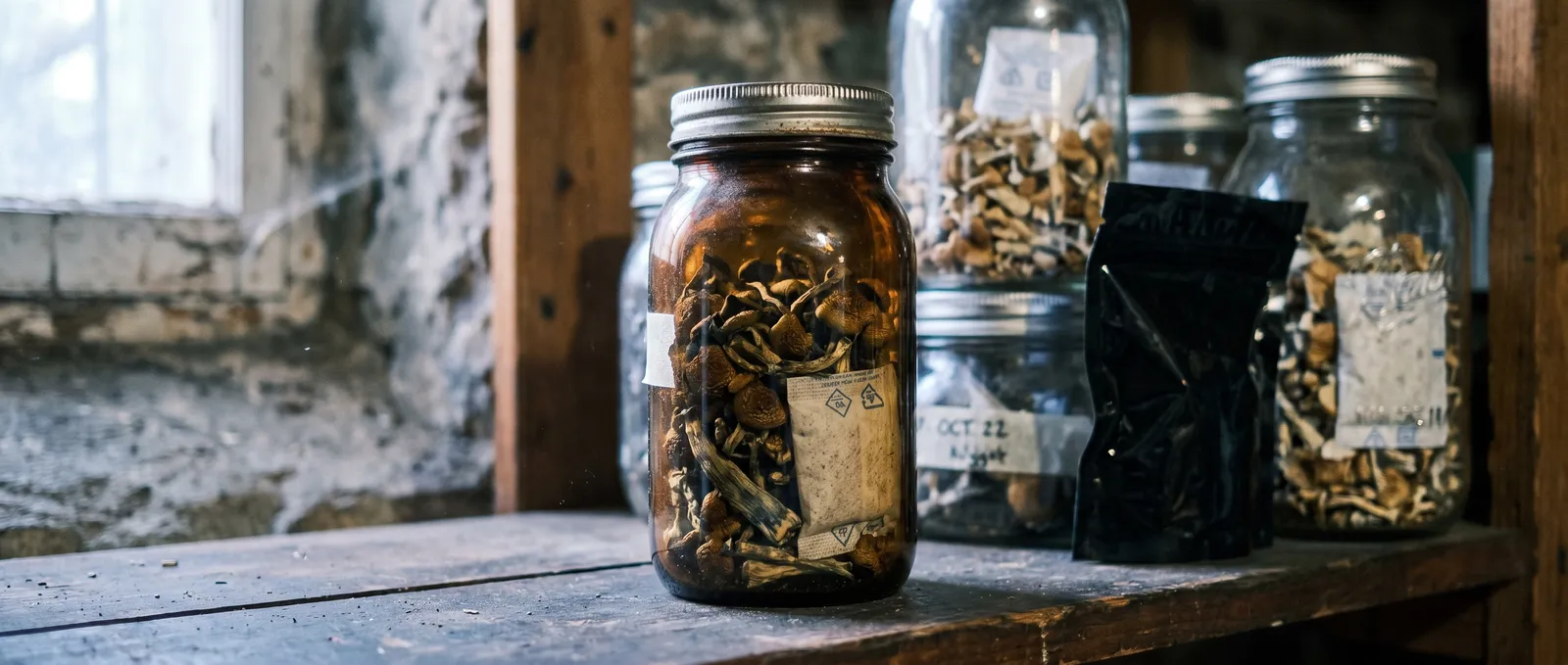
Storing dried mushrooms long term means keeping well-dried Psilocybe fruit bodies in airtight, opaque containers with desiccant, cool and dark, to slow…
Drying Mushrooms Air Desiccant Oven: Methods Compared
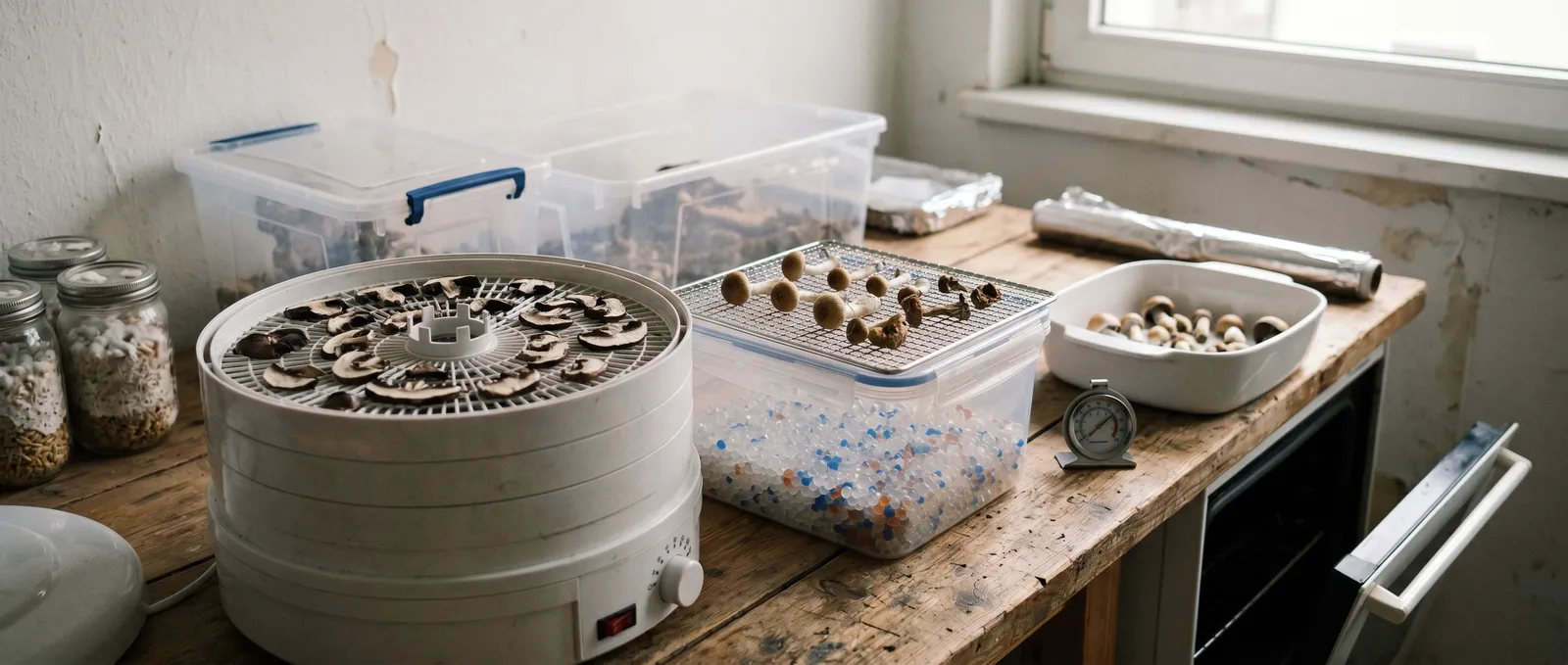
Drying mushrooms air desiccant oven refers to the three home methods for reducing fresh fruit bodies from ~90% water to cracker-dry (<5%). Gotvaldová et al.
Grow Kit vs Ready 2 Grow Bag: Which to Pick
The grow kit vs Ready 2 Grow Bag choice compares two Psilocybe cubensis home-cultivation formats: a tub with rye substrate and casing layer designed for…