
This article discusses psychoactive substances intended for adults (18+). If you have a health condition or take medication, consult a doctor before use. Our age policy
Cannabis Growth Stages Timeline: Seed to Harvest
Definition
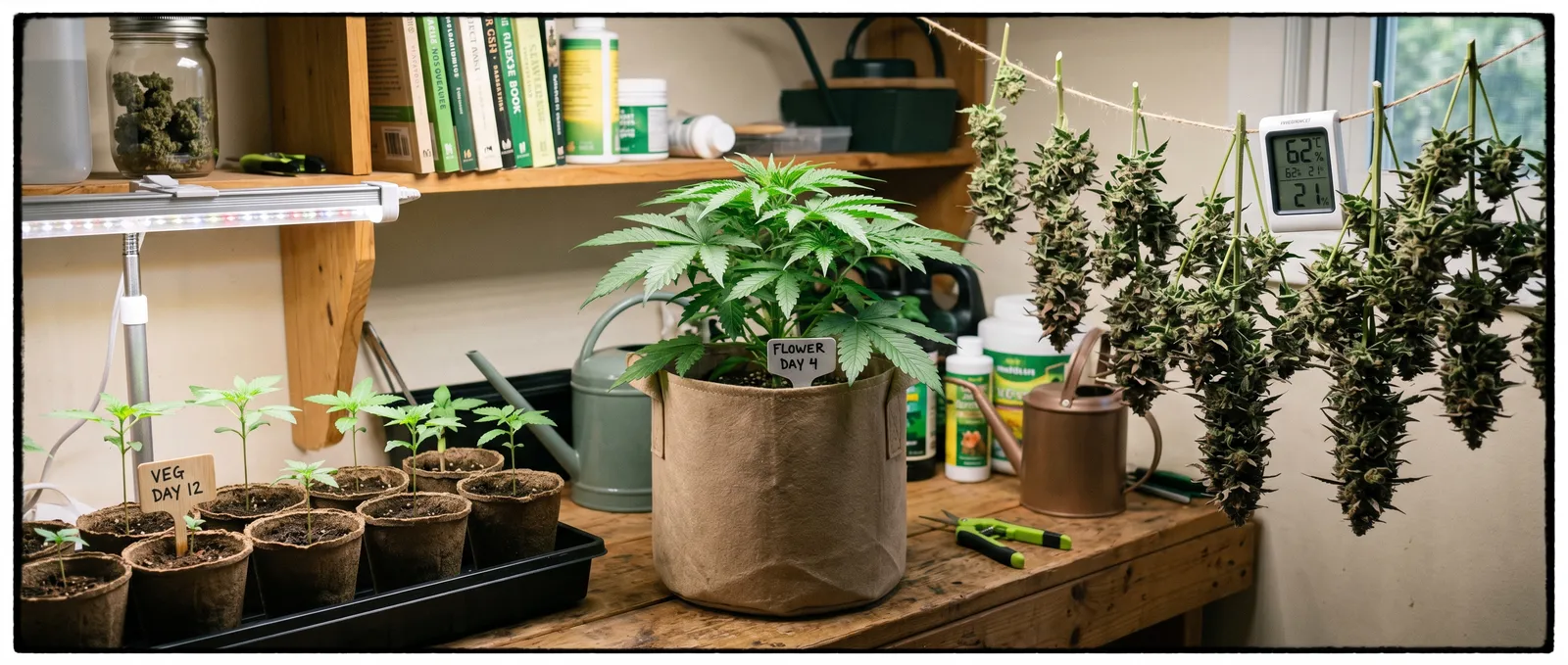
The cannabis growth stages timeline is a cultivation roadmap covering germination, seedling, vegetative, pre-flower, flowering, and cure — typically 14–24 weeks seed-to-jar for photoperiod plants and 11–16 weeks for autoflowers, depending on genetics and grower choices (Chandra et al., 2017). Autoflowers flower on age; photoperiod plants flower on light cycle.
The cannabis growth stages timeline is a cultivation roadmap that tracks a plant from cracked seed to cured jar across six defined phases — roughly four to six months for photoperiod plants, or nine to eleven weeks total for autoflowers. The timeline below is what we work with in our own tents — real weeks, not marketing weeks. This guide is written for adults who want to order seeds and grow their own supply responsibly.
Educational content for informed adults. This guide does not constitute medical, horticultural, or professional advice. Results vary by genetics, environment, and grower experience. Consult a qualified professional before making decisions that affect your health or property.
The full cannabis growth stages timeline at a glance
A complete seed-to-jar run spans 11–24 weeks depending on genetics. The table below covers both genetic types side by side. Photoperiod plants flower when you switch the lights to 12/12; autoflowers flower on an internal clock, so you skip the "flip" entirely. Everything downstream of germination depends on which you've planted.
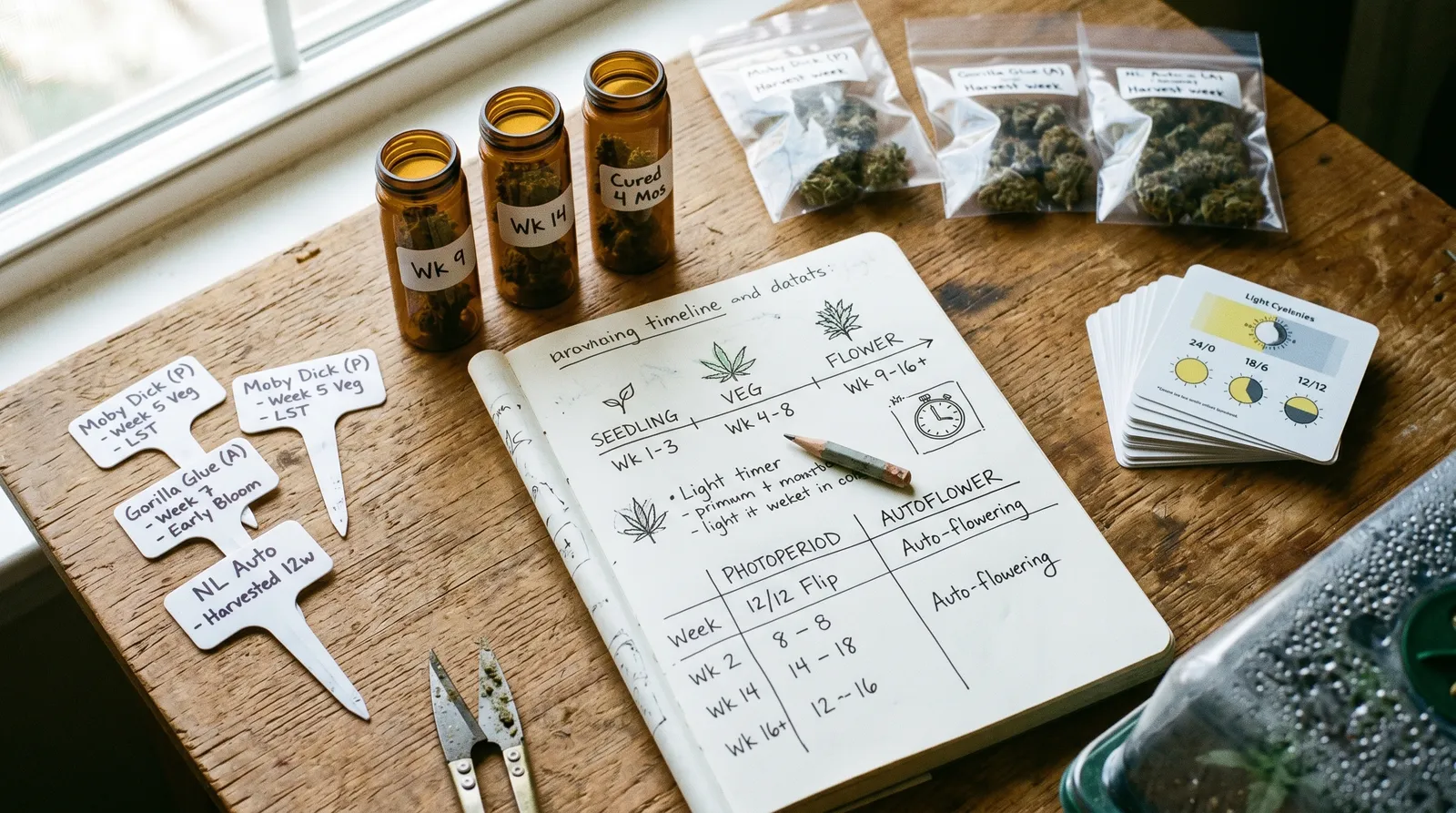
| Stage | Photoperiod (weeks) | Autoflower (weeks) | Light cycle | Target VPD (kPa) | Target PPFD (µmol/m²/s) |
|---|---|---|---|---|---|
| Germination | 0.5–1.5 | 0.5–1.5 | Dark / 18/6 once sprouted | 0.4–0.8 | 100–300 |
| Seedling | 2–3 | 2–3 | 18/6 | 0.6–0.9 | 200–400 |
| Vegetative | 3–8 (grower's choice) | Rolls into pre-flower ~week 3–4 | 18/6 | 0.8–1.1 | 400–600 |
| Pre-flower / stretch | 1–2 (after 12/12 flip) | 1–2 | 12/12 (photo) or 18/6 (auto) | 1.0–1.2 | 500–700 |
| Flowering | 6–10 | 5–7 | 12/12 (photo) or 18/6 (auto) | 1.0–1.5 | 600–1,000 |
| Harvest + dry + cure | 3–6 | 3–6 | Dark room | ~1.0 (drying) | n/a |
Total seed-to-jar: roughly 14–24 weeks for photoperiod, 11–16 weeks for autoflower. PPFD ranges are from Fluence's cannabis cultivation guide (2022); VPD targets reflect standard horticultural figures used across commercial cannabis research (Chandra et al., 2017). The EMCDDA (2023) and Beckley Foundation (2022) both document how home cultivation practices in Europe have shifted toward compact indoor tents over the last decade.
Germination (3–10 days)
Germination is the seed cracking open and the taproot emerging. The three reliable methods — paper towel, direct-to-medium, and glass of water — all hit about the same success rate if the seeds are fresh. You want warmth (22–25 °C), darkness, and moisture. Not wet. Moist.
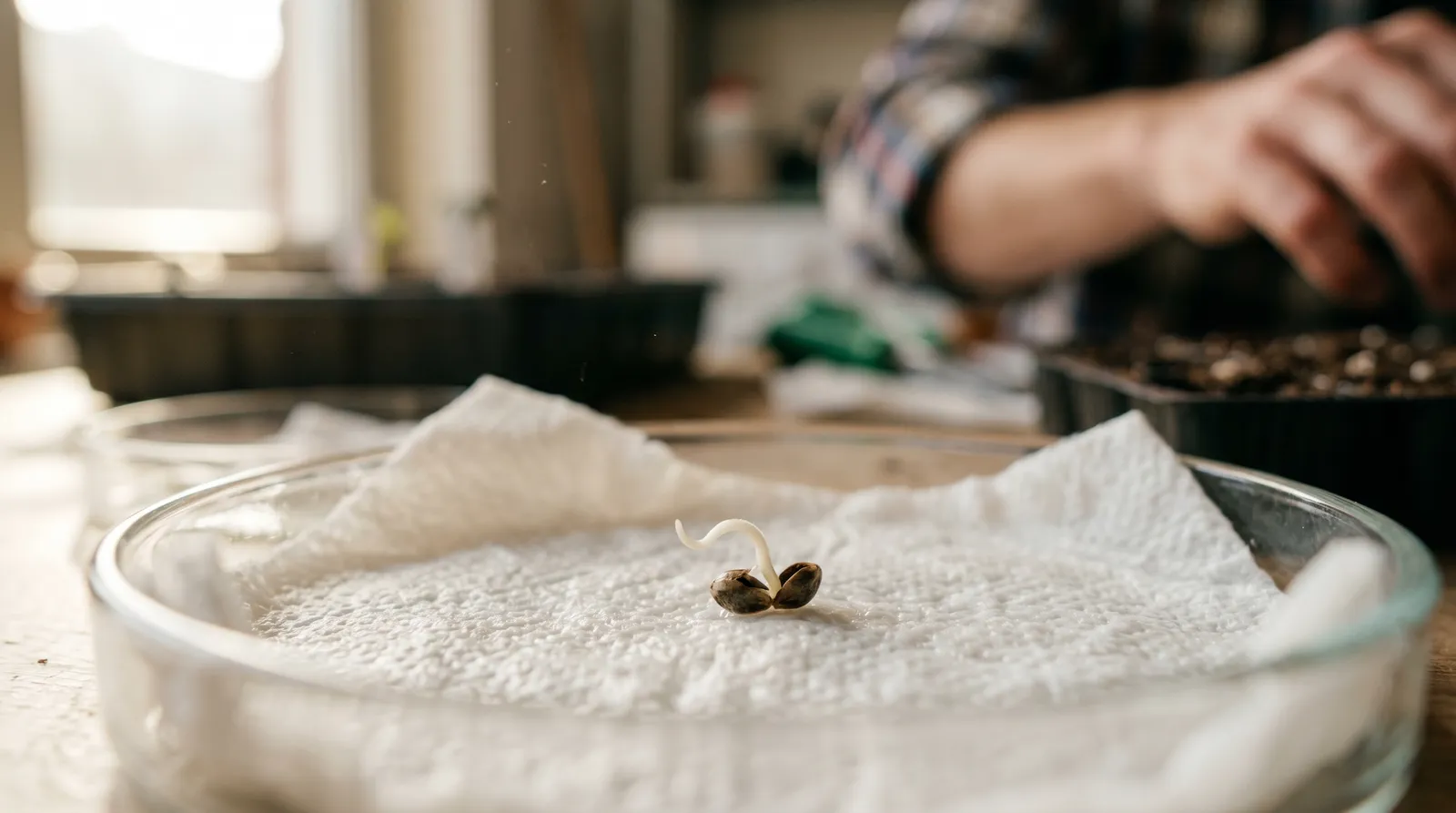
Fresh seeds from a reputable breeder (Dutch Passion, Sensi Seeds, Royal Queen Seeds, Barney's Farm, Ministry of Cannabis, Paradise Seeds) typically pop in 2–5 days. Older seeds or stressed genetics can take up to 10. If nothing's happening after 10 days, the seed is probably dead — soaking it longer won't help.
Honest limitation: you can't really rush germination without increasing failure rate. The Royal Queen Seeds germination guide recommends 21 °C paper towel in total darkness, which matches what we see work consistently.
Seedling (2–3 weeks)
Seedling stage runs 2–3 weeks from cotyledon emergence to the first few sets of true leaves. The plant is building its root system and first sets of serrated true leaves. It doesn't need much — low light (200–400 PPFD), high humidity (65–70%), and minimal feeding. Overwatering kills more seedlings than anything else; the root ball is tiny and can't drink what a full pot holds.
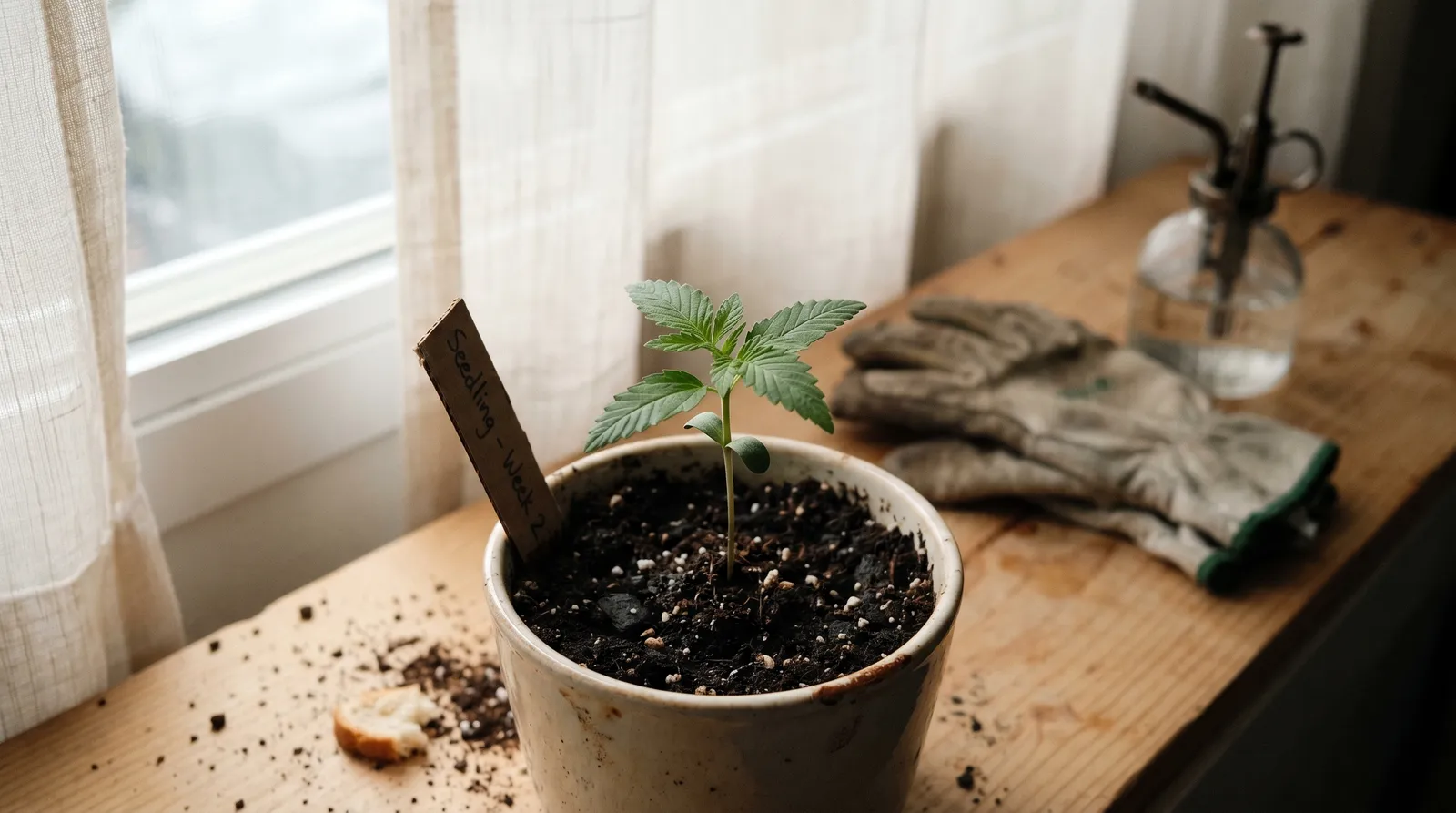
In coco, water small volumes daily or every other day. In soil, wait until the top 2–3 cm dries. Hydroponic setups (DWC, ebb-and-flow) run very weak nutrient solutions at this stage — EC around 0.6–0.8, pH 5.8–6.0 for coco/hydro, 6.2–6.5 for soil.
Vegetative growth (2–8 weeks, photoperiod only)
Vegetative growth is where photoperiod genetics diverge from autoflowers. Under 18/6 light, photoperiod plants build the frame — stems, nodes, fan leaves — that will hold the flower weight later. This is also where you train: topping, FIMing, LST, SCROG netting. Short version: every bud site you create now is a future cola.
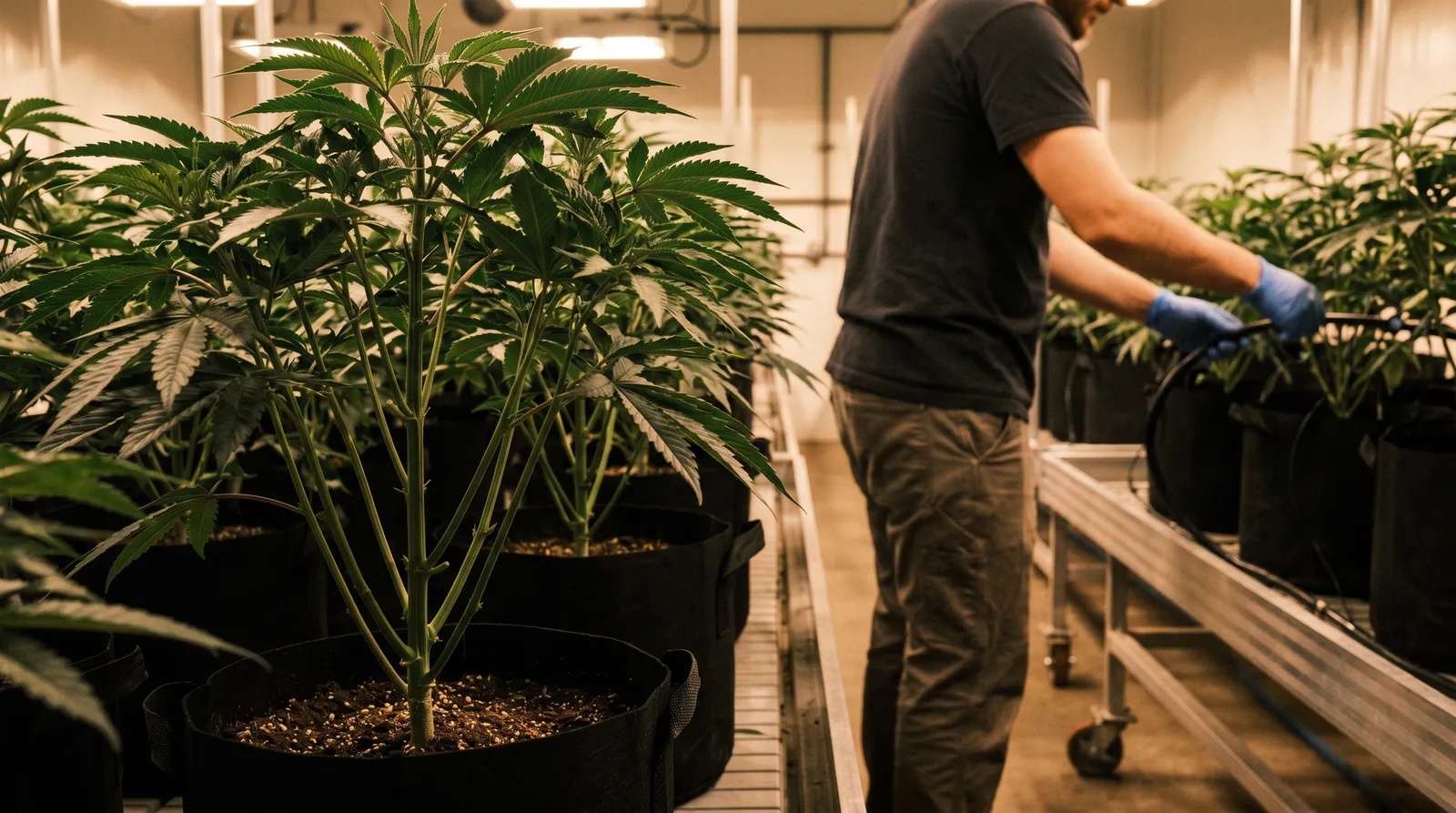
Veg length is the grower's decision. A sea-of-green setup with many small plants might veg for 1–2 weeks. A single plant in a 120×120 tent under SCROG might veg 6–8 weeks to fill the net. Longer veg = bigger plant = bigger yield, capped by tent size and light footprint.
Autoflowers don't have a controllable veg stage. They spend roughly 3–4 weeks bulking under 18/6 or 20/4 and then transition to flower on their own, regardless of what you do with the timer. Compared to photoperiod training, heavy topping on autos is risky — you can't "veg longer to let them recover."
Target climate: 22–27 °C, 60–65% RH, VPD around 0.9–1.1 kPa. PPFD 400–600. Feed at EC 1.2–1.8 depending on medium, with nitrogen leading the N-P-K ratio.
Pre-flower and the stretch (1–2 weeks)
Pre-flower begins when photoperiod plants are flipped to 12/12, or when autoflowers reach roughly week 4. First you'll see the sex show: pistils (female, two white hairs from a calyx) or pollen sacs (male, little round balls). Feminised seeds should show pistils on all plants; regular seeds will be roughly 50/50 and males need culling unless you're breeding.
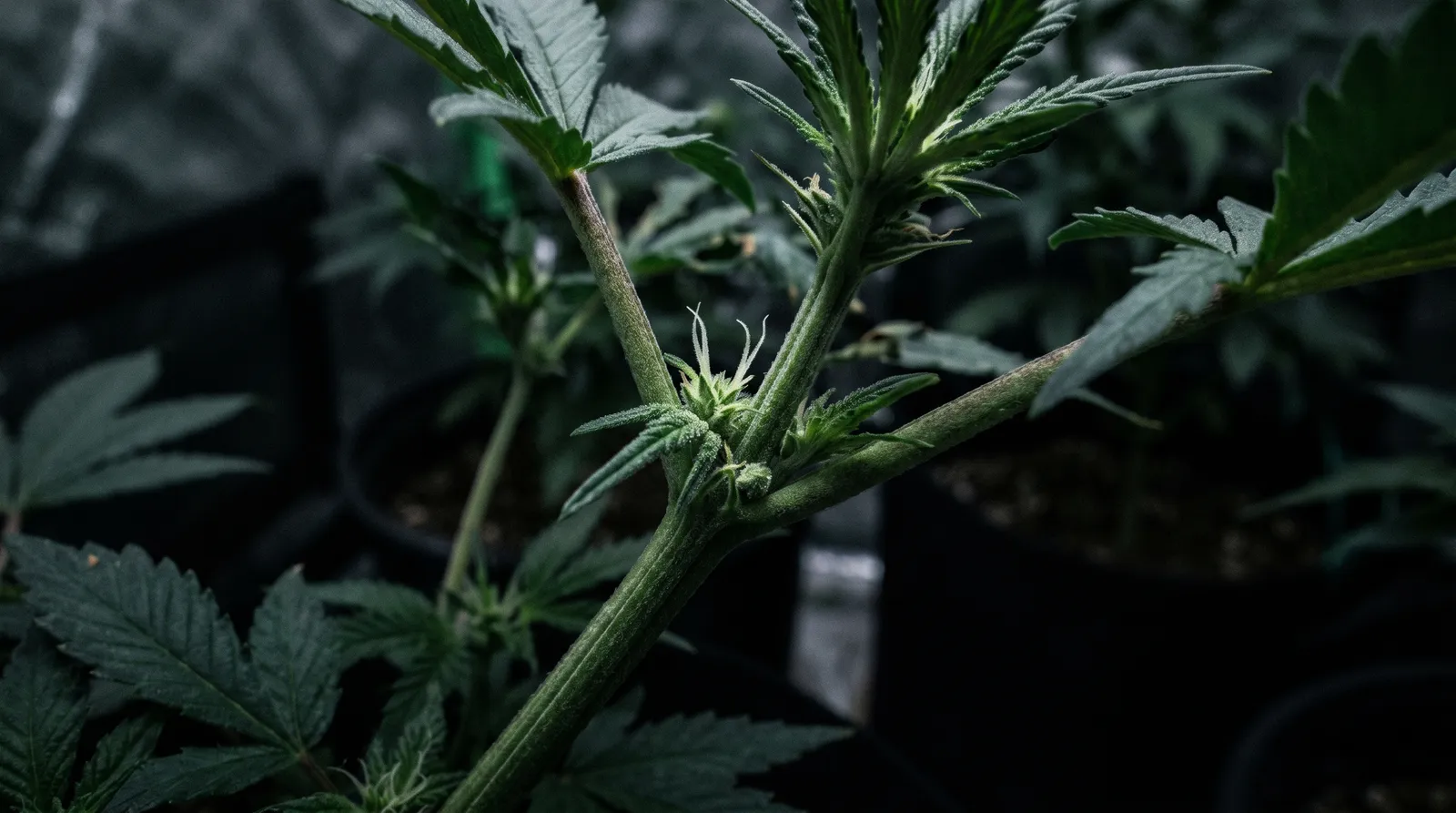
Then comes the stretch: the plant can double or triple in height in 10–14 days. This is the "last chance" window for low-stress training. After stretch ends, the internodes lock in and bud development takes over. Defoliation during this window (removing some fan leaves to open canopy airflow) is contested — some growers swear by it, published data is thin. We leave the big healthy fans alone and only pull leaves that are blocking bud sites.
Flowering (6–10 weeks)
Flowering lasts 6–10 weeks and is the long home stretch where the plant shifts energy from vegetative growth to resin and calyx production. Lighting demand goes up (600–1,000 PPFD under LED, higher if you're supplementing CO2), humidity comes down (45–55% to reduce botrytis risk), and the N-P-K ratio shifts toward more phosphorus and potassium.
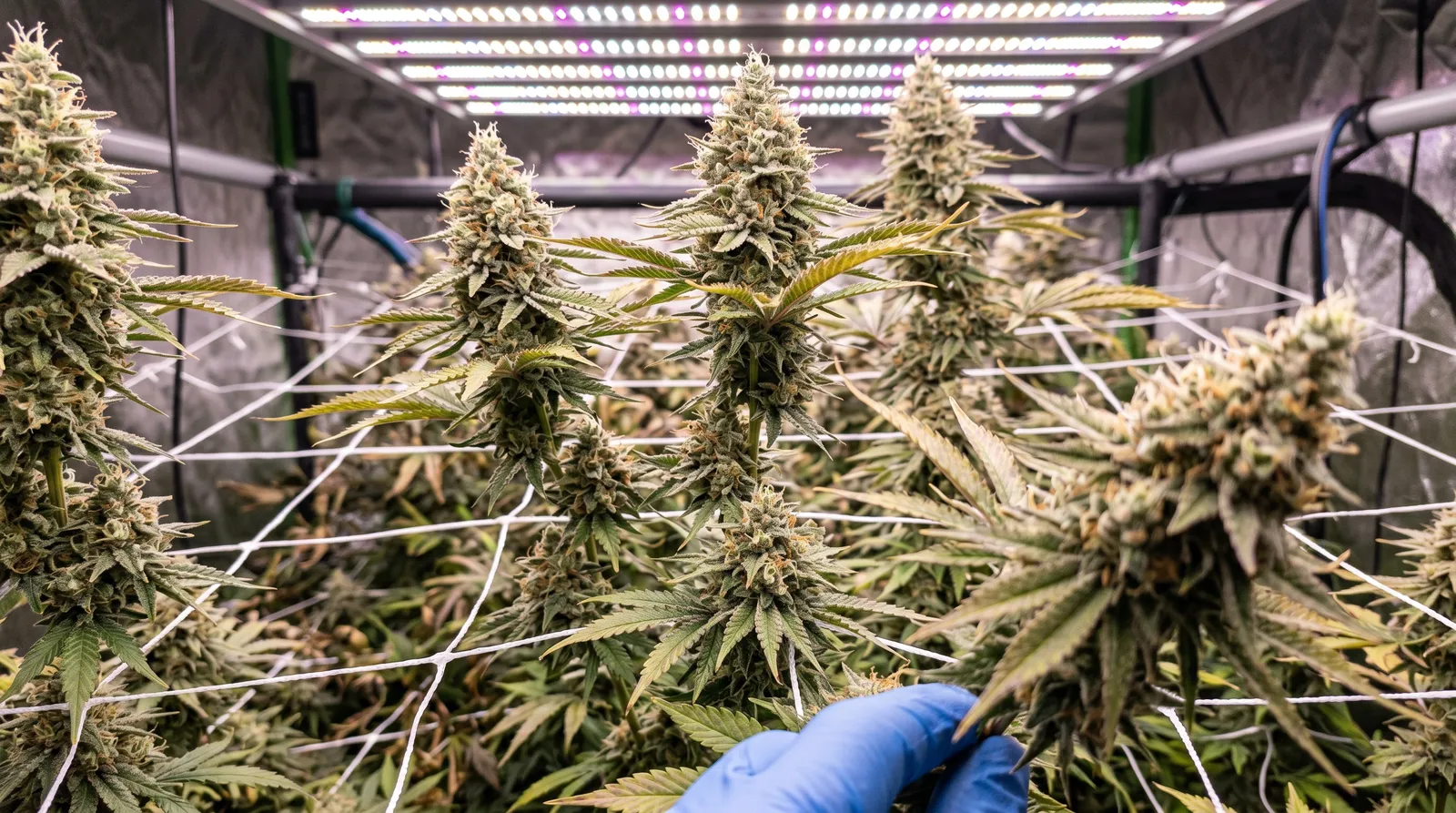
Flowering length is breeder-dependent. Most indica-leaning hybrids finish in 7–9 weeks; sativa-dominant genetics (Haze lines, some African landraces) can stretch to 10–12+ weeks. Autoflowers typically flower 5–7 weeks from pre-flower onset. Breeder pack times are usually honest — if Dutch Passion says 9 weeks, expect 9 weeks give or take a few days.
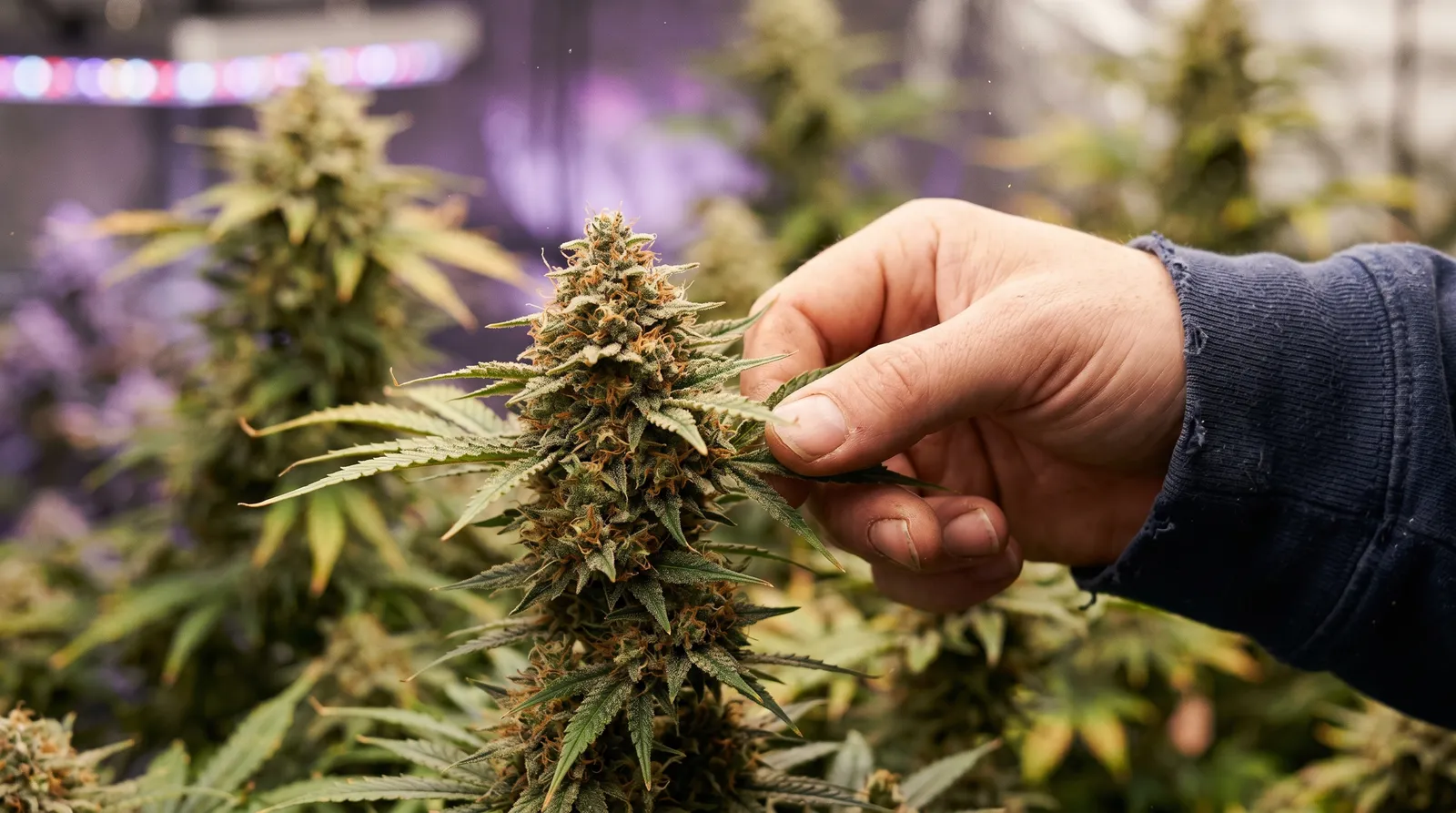
The last 1–2 weeks matter most. Watch the trichomes under a loupe or USB microscope: clear = not ready, cloudy/milky = peak resin, amber = degrading. Many growers track trichome colour as a visual milestone for that genetic — though that crosses into cannabinoid pharmacology, which is covered on the cannabinoids hub, not here.
Harvest, drying, and curing (3–6 weeks)
Harvest-to-jar takes 3–6 weeks total: cut, trim (wet or dry, both work — dry trimming is slower but preserves terpenes better in our experience), and hang in a dark room at 18–20 °C and ~60% RH for 10–14 days. When stems snap rather than bend, the flower is ready for jars.
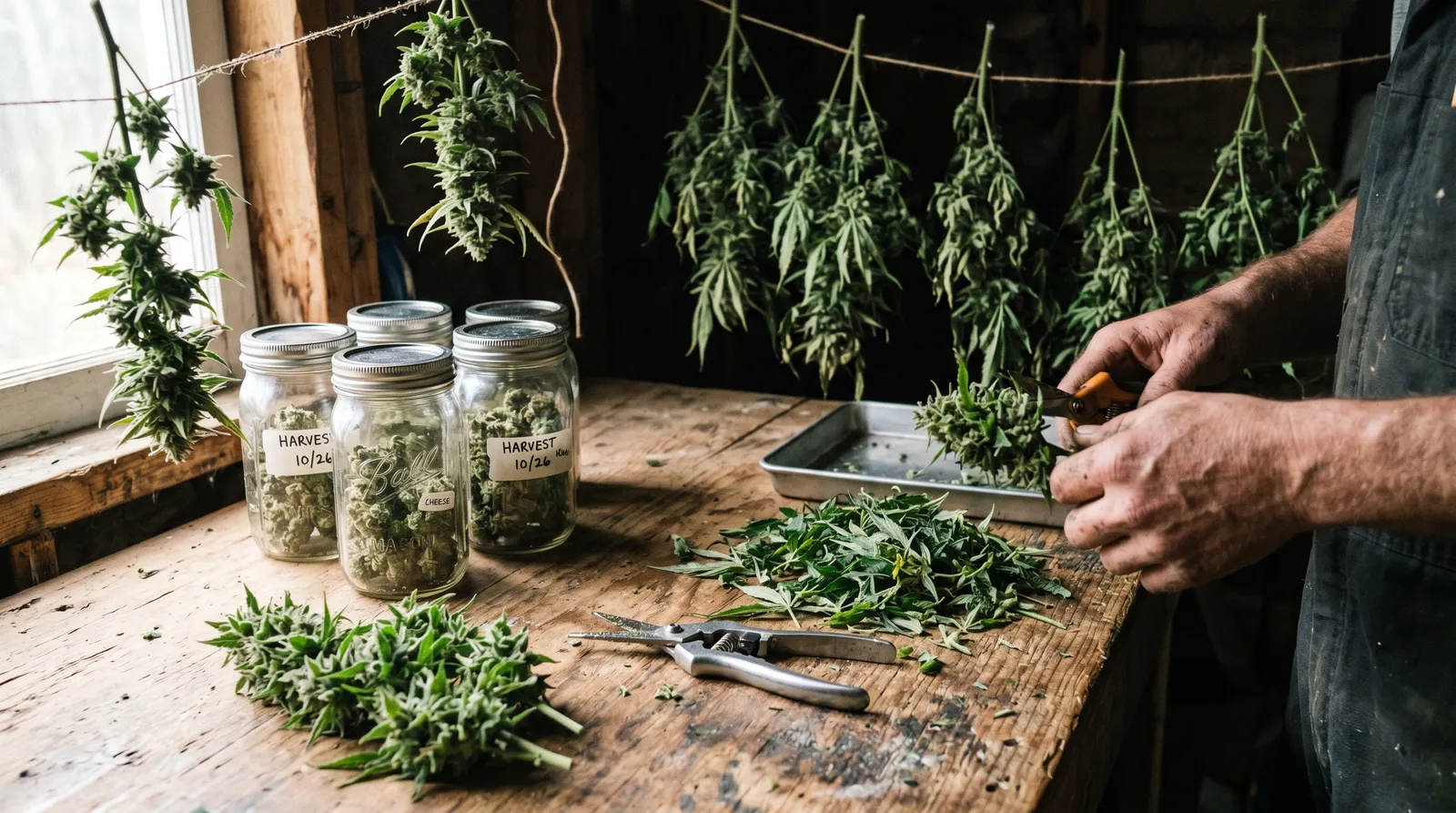
Cure in airtight glass jars at ~62% RH (Boveda or Integra packs do this reliably). Burp daily for the first week, every few days for weeks 2–4. Minimum usable cure is 2 weeks; the meaningful flavour improvements happen between weeks 3 and 8.
What changes the timeline
Three things shift the numbers above: genetics, light, and grower choices. A Paradise Seeds Wappa autoflower under a decent 150W LED finishes seed-to-jar in about 13 weeks. A Barney's Farm LSD photoperiod vegged hard in a 120×120 SCROG tent might take 22 weeks and yield four times as much. Compared to indoor tents, outdoor grows are locked to the calendar — one harvest per year in most of Europe versus three to four indoor runs. Actual yield figures vary enormously by lighting wattage, plant count, medium, and experience — ignore "500g per plant" pack claims without context.
Legal notice: Cannabis cultivation laws vary by country and region and change frequently. This guide is educational. Before growing, verify current laws for your specific jurisdiction. Azarius does not provide legal advice.
Azarius cannabis seeds and grow supplies
We've sold cannabis seeds and grow equipment since 1999. For beginners working to a tight timeline, growers often buy autoflower genetics from Royal Queen Seeds or Dutch Passion — the shortest path from seed to jar. For growers wanting control over veg length and training, you can buy feminised photoperiod seeds from Sensi Seeds or Barney's Farm to get more room to work. We also stock propagation kits, pH meters, and LED lights to round out a first grow.
Last updated: April 2026
Frequently Asked Questions
8 questionsHow long does the cannabis growth stages timeline take from seed to harvest?
Can you speed up germination?
What does the pre-flower stage look like?
How long is the vegetative stage for autoflowers versus photoperiod plants?
How do I know when cannabis is ready to harvest?
Does the cannabis growth stages timeline differ between soil, coco, and hydroponic setups?
What light cycle should I use during each cannabis growth stage?
What VPD should I maintain during the cannabis flowering stage?
About this article


Luke Sholl has been writing about cannabis, cannabinoids, and the broader benefits of nature since 2011, and has personally grown cannabis in home grow tents for more than a decade. That first-hand cultivation experience
This wiki article was drafted with AI assistance and reviewed by Luke Sholl, External contributor since 2026. Editorial oversight by Adam Parsons.
Medical disclaimer. This content is for informational purposes only and does not constitute medical advice. Consult a qualified healthcare provider before use of any substance.
Last reviewed April 24, 2026
References (7)
- [1]Chandra, S., Lata, H., ElSohly, M.A., Walker, L.A., Potter, D. (2017). "Cannabis cultivation: Methodological issues for obtaining medical-grade product." Epilepsy & Behavior, 70, 302–312.
- [2]Fluence Bioengineering (2022). Cannabis Cultivation Guide: Light Intensity and Spectrum Recommendations.
- [3]Royal Queen Seeds (2024). Cannabis Grow Guide: The Five Stages of Cultivation.
- [4]EMCDDA (2023). Cannabis cultivation in Europe: patterns and trends. European Monitoring Centre for Drugs and Drug Addiction.
- [5]Beckley Foundation (2022). Cannabis policy and cultivation science briefing.
- [6]Potter, D.J. (2014). "A review of the cultivation and processing of cannabis for production of prescription medicines." Drug Testing and Analysis, 6(1–2), 31–38.
- [7]Caplan, D., Dixon, M., Zheng, Y. (2019). "Increasing Inflorescence Dry Weight and Cannabinoid Content in Medical Cannabis Using Controlled Drought Stress." HortScience, 54(5), 964–969.
Related Articles
Cannabis Hermaphrodite: Identify, Prevent, Act
A cannabis hermaphrodite is a female plant that develops male pollen sacs or banana-shaped anthers (nanners), self-pollinating and seeding your harvest.
DIY Cannabis Fertilizer: Homemade Nutrient Guide
DIY cannabis fertilizer guide: compost, teas, banana ferments and feed schedules, with safety notes and cited research for home growers.
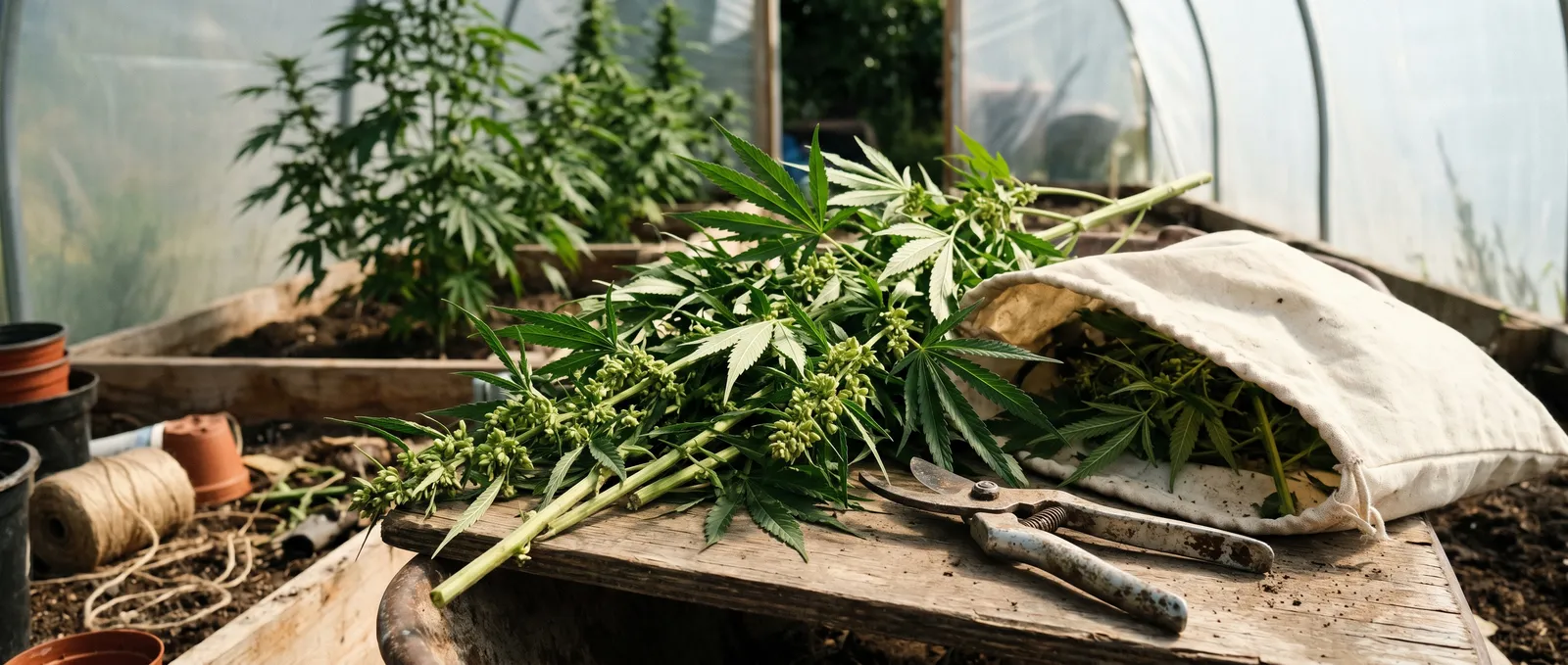
What To Do With Male Cannabis Plants: 6 Practical Uses
What to do with male cannabis plants: identify, isolate, breed, extract, or compost. A practical 6-step guide with sourcing and safety notes.
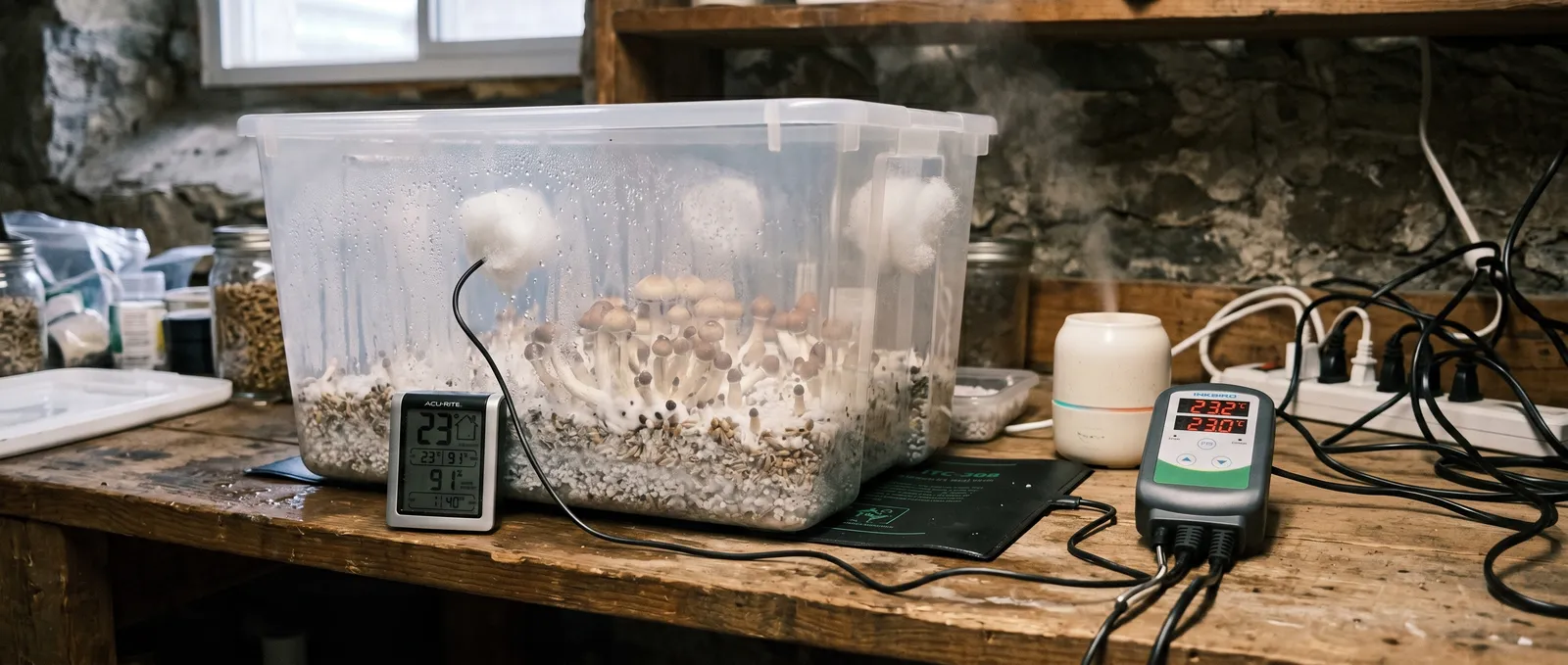
Mushroom Grow Kit Temperature & Humidity: Full Setup Guide
A temperature humidity control grow kit is the small set of climate tools — hygrometer, heat mat, humidifier or perlite tray — that keeps a mushroom fruiting…
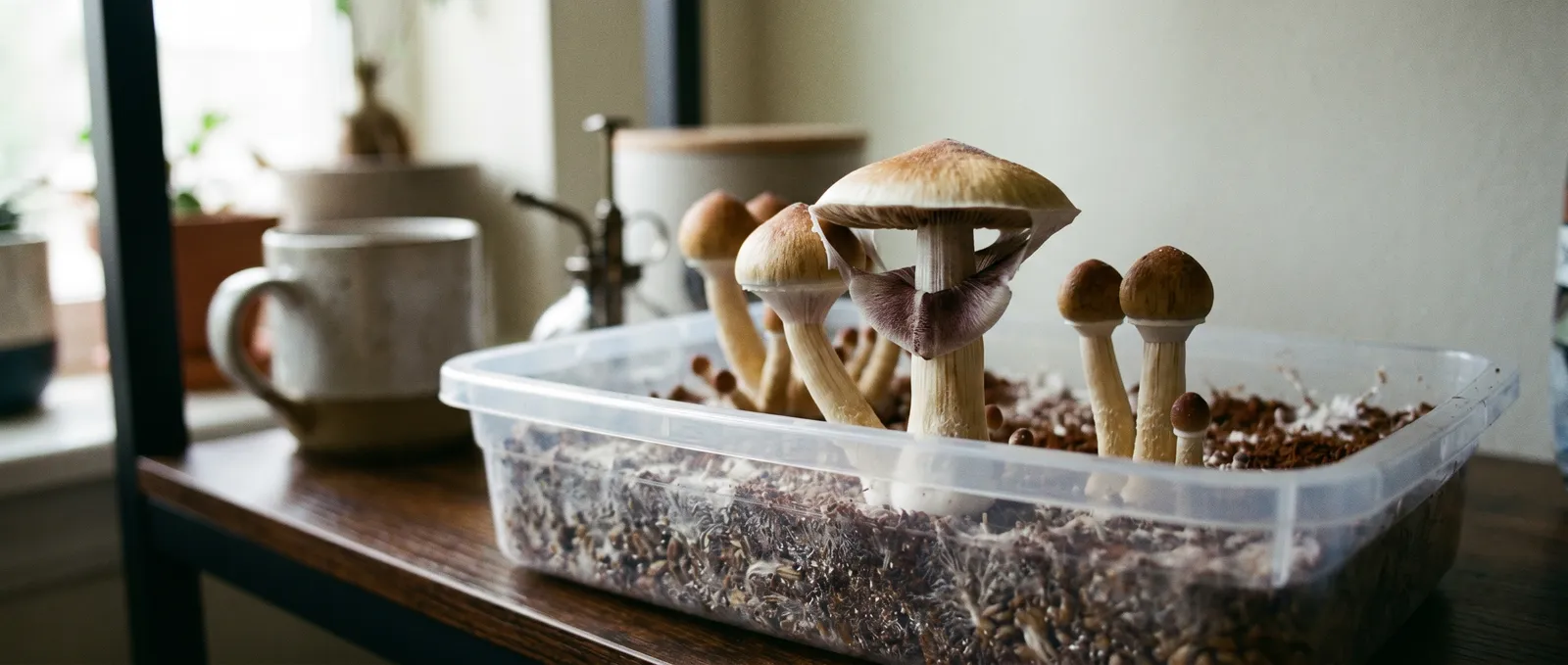
When to Harvest Mushrooms: Veil Break Timing Explained
Harvest timing veil break is a cultivation technique that uses the tearing of the partial veil on maturing Psilocybe cubensis to mark peak alkaloid content.
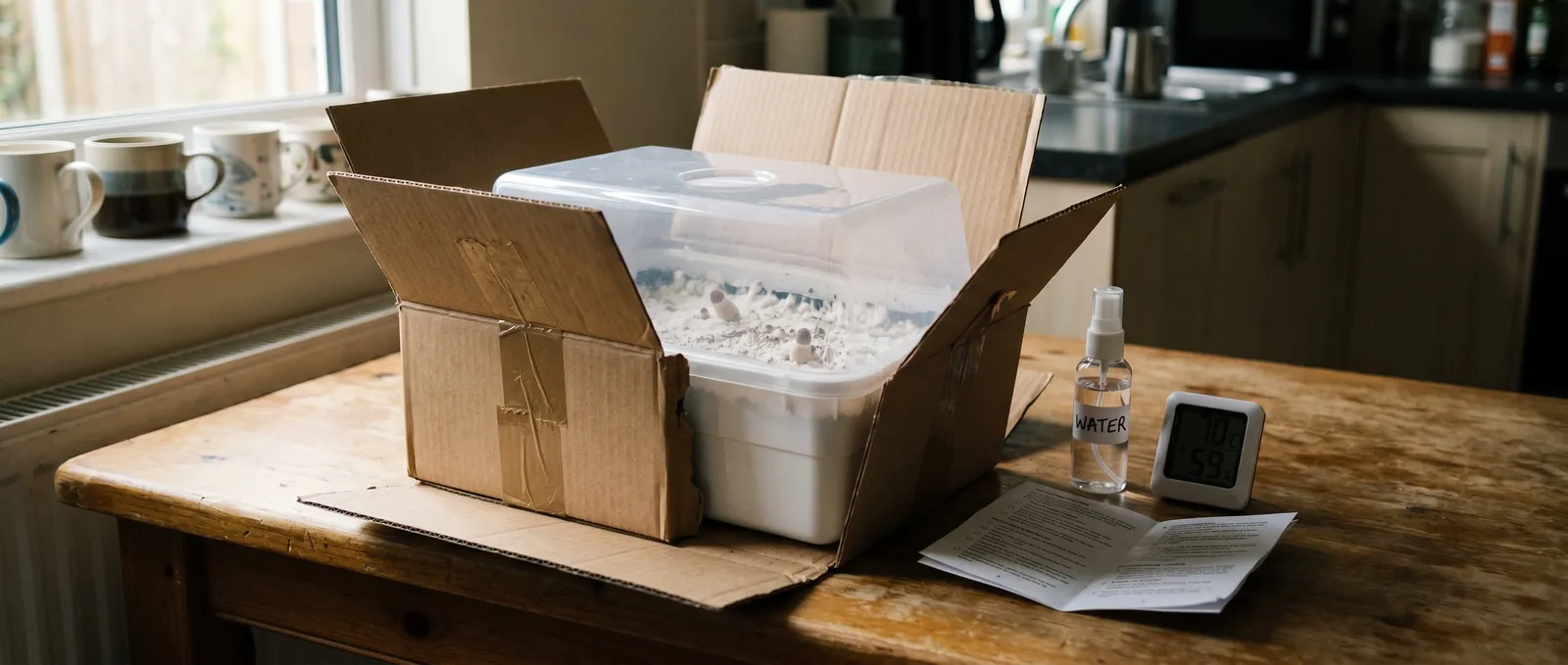
First Grow Checklist: What You Need for Mushroom Kits
A first grow checklist is the short list of supplies and environmental conditions needed to run a home psilocybin mushroom kit from inoculated substrate to…
Sclerotia vs Fruit Bodies: Cultivation Comparison
Sclerotia and fruit bodies are two different life stages of Psilocybe fungi: sclerotia are hardened underground mycelial storage bodies (the 'magic…
Storing Dried Mushrooms Long Term: Full Guide
Storing dried mushrooms long term means keeping well-dried Psilocybe fruit bodies in airtight, opaque containers with desiccant, cool and dark, to slow…
Drying Mushrooms Air Desiccant Oven: Methods Compared
Drying mushrooms air desiccant oven refers to the three home methods for reducing fresh fruit bodies from ~90% water to cracker-dry (<5%). Gotvaldová et al.