
This article discusses psychoactive substances intended for adults (18+). If you have a health condition or take medication, consult a doctor before use. Our age policy
CBD vs THC: Differences in Effects, Dosing, and How They Work Together
Definition
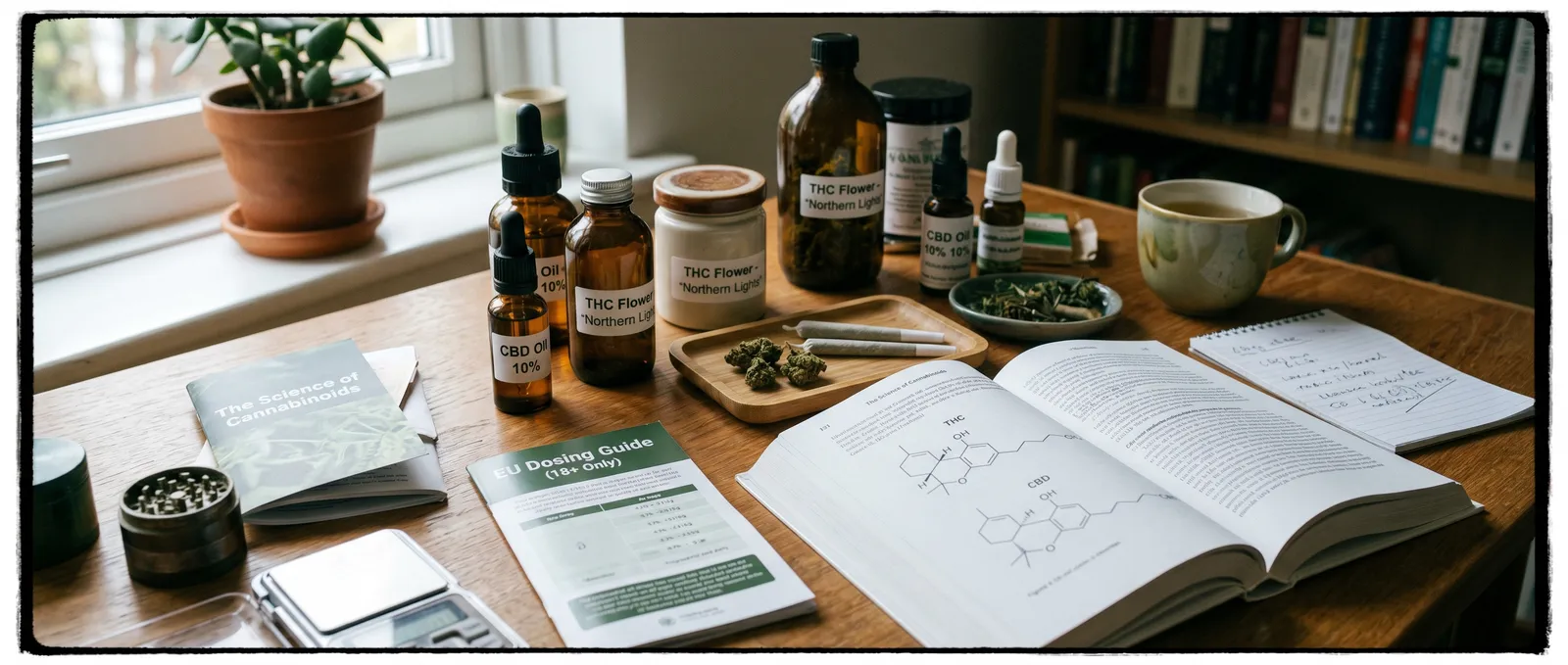
CBD (cannabidiol) is a non-intoxicating cannabinoid that modulates serotonin and vanilloid receptors, while THC (Δ9-tetrahydrocannabinol) is the intoxicating partial agonist at CB1 receptors responsible for the cannabis high. They share the same molecular formula yet produce fundamentally different effects (Pertwee, 2008). Both interact with the endocannabinoid system, but their safety profiles, dosing ranges, and therapeutic applications diverge sharply.
18+ only — this guide covers cannabinoid pharmacology and dosing ranges relevant to adult physiology.
CBD (cannabidiol) is a non-intoxicating cannabinoid that modulates serotonin and vanilloid receptors, while THC (Δ9-tetrahydrocannabinol) is the intoxicating partial agonist at CB1 receptors responsible for the cannabis high. Understanding the cbd vs thc differences starts with this fundamental split: same molecular formula, entirely different receptor activity, and sharply divergent safety profiles. Both interact with the endocannabinoid system, but their dosing ranges, side effects, and therapeutic applications could hardly be more different. This article breaks down the real cbd vs thc differences — molecular, pharmacological, and practical — so you can stop guessing and start understanding what each one actually does. Whether you want to buy CBD oil or order THC edibles, knowing these cbd vs thc differences is the first step toward choosing the right product.
Disclaimer: This article is for educational purposes only and does not constitute medical advice. Cannabinoids may interact with prescription medications and affect individuals differently. Always consult a qualified healthcare professional before using CBD or THC products, especially if you take other medications or have underlying health conditions. Information presented here reflects published research as of the date shown and may not reflect the latest findings.
Head-to-Head: CBD and THC at a Glance
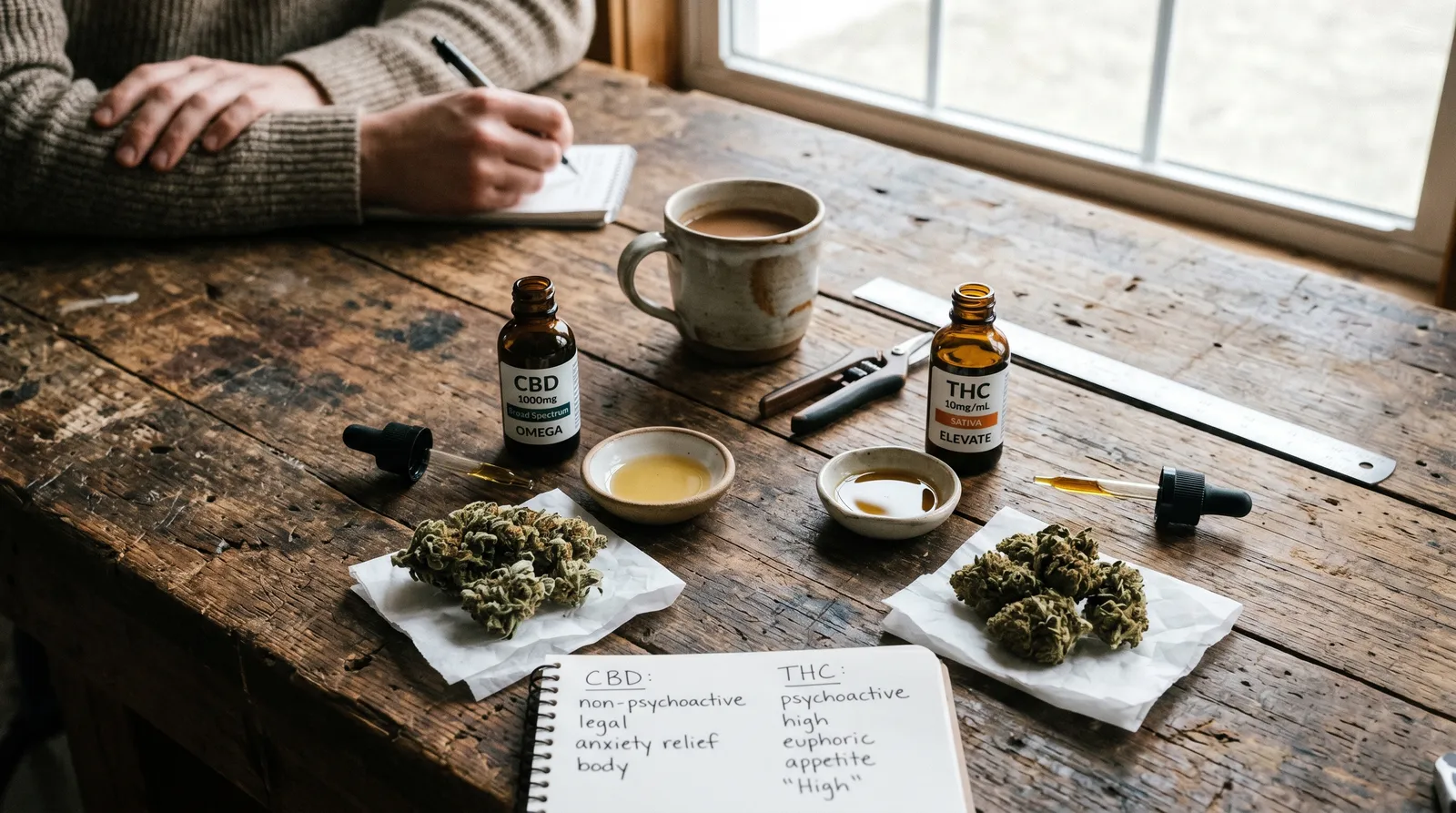
The most important cbd vs thc differences can be summarised in a single table covering pharmacology, effects, and safety. Below is a direct comparison drawn from peer-reviewed sources that highlights why these two cannabinoids require entirely different approaches to dosing and expectations.
| Dimension | CBD (Cannabidiol) | THC (Δ9-Tetrahydrocannabinol) |
|---|---|---|
| Molecular formula | C₂₁H₃₀O₂ | C₂₁H₃₀O₂ |
| Intoxicating? | No — non-intoxicating | Yes — produces the characteristic cannabis "high" |
| Primary receptor activity | Low affinity for CB1/CB2; modulates other receptors (5-HT1A, TRPV1, GPR55) | Partial agonist at CB1 (brain) and CB2 (immune system) |
| Reported subjective effects | Calm, reduced tension; no impairment of coordination or cognition | Altered perception, relaxation, appetite increase, possible anxiety at higher doses |
| Typical research dose range | 10–50 mg/day for general use; up to 300–600 mg in clinical anxiety studies | 2.5–5 mg for low-tolerance adults; 10–25 mg moderate; above 50 mg considered high |
| Onset (oral/edible) | 30–90 minutes | 30–120 minutes |
| Duration (oral) | 4–8 hours | 4–8 hours (subjective effects may linger longer) |
| Common side effects | Dry mouth, drowsiness at high doses, mild GI upset | Dry mouth, red eyes, impaired short-term memory, increased heart rate, anxiety/paranoia at high doses |
| Key enzyme inhibition | CYP2C19, CYP3A4 | CYP2C9, CYP3A4 |
| Conditions studied | Epilepsy, anxiety, inflammation, chronic pain (adjunct) | Nausea/vomiting (chemotherapy), appetite loss, spasticity, chronic pain |
Same Formula, Different Molecule — How Is That Possible?
CBD and THC are structural isomers that share the exact same molecular formula (C₂₁H₃₀O₂) but differ in how those atoms are arranged in three-dimensional space. THC has a closed cyclic ring that lets it slot neatly into your CB1 receptors in the brain. CBD's ring is open, which means it essentially bounces off that same receptor. That single structural kink is the entire reason one compound gets you intoxicated and the other does not — and it is the most fundamental of all cbd vs thc differences at the molecular level.
According to Pertwee (2008), THC acts as a partial agonist at CB1 receptors — it activates them, but not fully, which is part of why cannabis intoxication feels different from, say, synthetic cannabinoids that slam those receptors at full force. CBD, by contrast, has negligible binding affinity for CB1. Instead, it works through a scattershot of other targets: serotonin 5-HT1A receptors, vanilloid TRPV1 channels, and the orphan receptor GPR55, among others (Laprairie et al., 2015). This is why researchers sometimes call CBD a "multi-target" compound — it doesn't do one thing loudly, it does several things quietly.
Is CBD Psychoactive? (It Depends on Your Definition)
CBD is psychoactive in the strict pharmacological sense — it affects mental state — but it is non-intoxicating, meaning it does not impair cognition, alter perception, or produce a high. People say "CBD is non-psychoactive" all the time, and it is technically wrong. If CBD reduces your anxiety or helps you sleep, it is affecting your mental state — that is, by definition, psychoactive. The accurate term is non-intoxicating. You can take 50 mg of CBD and drive a car without issue. You cannot say the same about 50 mg of THC. This distinction is one of the most misunderstood cbd vs thc differences in popular discussion.
A 2017 WHO Expert Committee report on CBD concluded that cannabidiol "does not appear to have abuse potential or cause harm" and exhibits no effects indicative of dependence (WHO ECDD, 2017). THC, on the other hand, can produce tolerance with regular use and, in a subset of heavy users, cannabis use disorder — estimated at roughly 9% of people who try cannabis and about 17% of those who start in adolescence (Lopez-Quintero et al., 2011).
Myth: CBD Is "Medical" and THC Is "Recreational"
Both CBD and THC have documented therapeutic applications supported by clinical research, and both are used outside medical settings — the medical-vs-recreational distinction is cultural, not pharmacological. THC has well-documented medical applications. Dronabinol (synthetic THC) has been an approved pharmaceutical for chemotherapy-induced nausea since 1985. Nabiximols (a roughly 1:1 THC:CBD spray) is prescribed for multiple sclerosis spasticity in over 25 countries. Meanwhile, the only CBD-based pharmaceutical with widespread regulatory approval is Epidiolex, used for rare forms of epilepsy (Devinsky et al., 2017).
Flipping it around: plenty of people use CBD purely for relaxation or general wellbeing, which is about as "recreational" as taking a supplement. The medical-vs-recreational split is a cultural and political distinction, not a pharmacological one. Both compounds have therapeutic research behind them, and both are used outside clinical settings. The EMCDDA (European Monitoring Centre for Drugs and Drug Addiction) has noted this blurring of categories in its reports on cannabis policy across EU member states. The Beckley Foundation has similarly advocated for evidence-based policy that moves beyond simplistic good-vs-bad framing of individual cannabinoids.
Myth: CBD Is "Good" and THC Is "Bad"
Neither cannabinoid is inherently good or bad — both have dose-dependent benefits and risks that depend on individual physiology and context. THC's side effects — impaired short-term memory, increased heart rate, anxiety at high doses — are real, but they are dose-dependent and context-dependent. Research settings have observed that most adults report mild relaxation without significant cognitive impairment at lower oral doses, while higher amounts with no tolerance may produce a genuinely unpleasant experience lasting several hours.
CBD is not without its own issues either. At doses above 300 mg/day — the range used in clinical anxiety and epilepsy studies — CBD can cause drowsiness, diarrhoea, and changes in appetite. More critically, CBD inhibits cytochrome P450 enzymes (particularly CYP2C19 and CYP3A4), which means it can alter the blood levels of other medications. According to Nasrin et al. (2021), both THC and CBD inhibit CYP2C and CYP3A4, though clinically relevant drug interactions are more likely with THC at doses above 30 mg/day. If you take prescription medications — especially blood thinners, anti-epileptics, or immunosuppressants — this matters. The dedicated cannabinoid interactions article on the Azarius wiki covers this in detail.
Is CBD More Effective With or Without THC?
Evidence suggests CBD and THC work better together than alone for certain applications — a phenomenon called the entourage effect — though the research is still evolving and far from settled. The concept was first proposed by Mechoulam and Ben-Shabat (1998) and has been debated ever since.
There is some clinical support. A 2018 meta-analysis by Pamplona, da Silva, and Coan found that patients using CBD-rich whole-plant extracts for epilepsy reported effective doses roughly four times lower than those using purified CBD (Epidiolex), and with fewer side effects. That is a striking difference, though the study design was observational, not randomised — so the evidence is suggestive rather than definitive.
What seems fairly well established is that CBD can modulate THC's effects. According to Niesink and van Laar (2013), CBD appears to reduce some of THC's less pleasant effects — particularly anxiety and paranoia — when both are present. This is one reason why cannabis strains with a balanced THC:CBD ratio tend to produce a more manageable experience than high-THC, zero-CBD strains. If you have ever wondered why some cannabis feels jittery and anxious while other cannabis feels smooth, the CBD:THC ratio is often a large part of the answer.
Whether single-molecule pharmaceuticals are "better" than whole-plant preparations remains genuinely unresolved. Pharmaceutical CBD (Epidiolex) has the advantage of precise, consistent dosing and regulatory approval for specific conditions. Whole-plant extracts may offer broader effects at lower doses but come with batch-to-batch variability and less regulatory oversight. Neither is categorically superior — it depends entirely on what you are using it for and how much dosing precision matters to you.
Dosing: Why THC Requires More Caution
THC has a narrow effective window where the gap between a comfortable dose and an overwhelming one can be as little as 10 mg, while CBD tolerates a much wider range without serious adverse effects. Clinical studies have used up to 1,500 mg/day of CBD without life-threatening adverse effects (Taylor et al., 2018), though that is an extreme research dose, not a recommendation. For general use, research ranges sit around 10–50 mg/day, with anxiety studies typically using 300–600 mg. Researchers and clinicians generally advise starting at the low end of any range and adjusting gradually based on individual response.
THC is a different animal. In published research, 2.5 mg is considered a microdose for adults without tolerance, 5 mg is a standard low dose, and anything above 25 mg orally is firmly in "experienced users only" territory. The gap between "pleasant" and "deeply uncomfortable" can be as little as 10 mg for someone without tolerance. This is especially relevant with edibles, where onset is slow (often 60–90 minutes) and the temptation to redose is high. The oral bioavailability of THC also varies significantly based on whether you have eaten — a fatty meal can increase absorption substantially.
One more thing worth flagging: THC edibles undergo first-pass metabolism in the liver, converting Δ9-THC into 11-hydroxy-THC, which crosses the blood-brain barrier more efficiently and is subjectively reported as more potent in research settings. This is why 10 mg of THC in an edible can feel much stronger than 10 mg inhaled. CBD does not have this amplification problem. These dosing cbd vs thc differences are among the most practically important things to understand before you buy any cannabinoid product.
Side Effects Compared
THC produces more acute side effects than CBD at typical doses, including dry mouth, red eyes, increased heart rate, impaired short-term memory, and anxiety at higher amounts. According to a 2020 review by Hoch et al. in Deutsches Ärzteblatt International, chronic heavy cannabis use (primarily high-THC) is associated with cognitive impairment that partially reverses after sustained abstinence, though adolescent users may see longer-lasting effects.
CBD's side-effect profile is milder but not absent. The most commonly reported adverse effects in clinical trials include fatigue, diarrhoea, and changes in appetite or weight (Iffland and Grotenhermen, 2017). At high doses, CBD can elevate liver enzymes — something flagged during Epidiolex trials, particularly when co-administered with valproate. For most adults using standard supplement-range doses (10–50 mg), serious side effects are rare.
Neither compound has a documented lethal dose in humans. Cannabis-related emergency department visits are almost exclusively linked to THC — usually edible overconsumption — and resolve without lasting harm, though the experience can be genuinely distressing. The EMCDDA has tracked these incidents across European member states and consistently finds that serious medical complications from cannabinoids alone remain extremely rare.
Side Effects Unique to THC
Certain adverse effects appear exclusively or predominantly with THC and have no equivalent in CBD use. These include the characteristic "red eyes" caused by vasodilation, short-term memory impairment during intoxication, increased heart rate (typically 20–50% above baseline in the first hour), and — at higher doses — acute anxiety or paranoia. CBD does not produce any of these effects at any studied dose, which is one of the clearest practical cbd vs thc differences for anyone deciding what to order.
Side Effects More Common With CBD
CBD has its own profile of adverse effects that are less dramatic but still worth noting. Gastrointestinal upset — particularly diarrhoea — appears more frequently in CBD clinical trials than in THC studies, likely because of the higher absolute doses used in CBD research. Liver enzyme elevation is a CBD-specific concern at pharmaceutical doses (above 300 mg/day), especially when combined with other hepatically metabolised drugs. These effects are rarely reported at the 10–50 mg range typical of consumer CBD oils available at Azarius.
Choosing Between CBD and THC Products
Which product to buy depends on whether you want non-intoxicating support or the full cannabinoid experience — and in many cases, a combination of both delivers the most balanced results. If you are looking to buy CBD oil for general calm without any intoxication, full-spectrum CBD oils (which contain trace amounts of THC below 0.2%) are the most popular starting point. For those interested in the entourage effect, you can order products with balanced CBD:THC ratios where legal. Azarius carries a range of CBD oils, CBD capsules, and hemp-derived products — check the CBD product category for current options.
What We Still Don't Know
Cannabinoid science has significant gaps that no amount of confident marketing copy can fill — and being honest about these gaps is more useful than pretending certainty where none exists. Long-term safety data for daily CBD use beyond 2–3 years is essentially nonexistent in healthy adults. The entourage effect, while plausible, lacks the randomised controlled trial evidence that would make it scientifically settled. Individual variation in cannabinoid metabolism (driven by CYP450 genetic polymorphisms) means that dosing guidelines are approximations at best. And the interaction between CBD, THC, and the dozens of minor cannabinoids in whole-plant extracts remains poorly characterised. We present the best available evidence here, but "best available" is not the same as "complete." The cbd vs thc differences outlined in this article reflect the current state of research — and that state will keep evolving.
The Verdict
CBD and THC are complementary tools from the same plant with fundamentally different risk profiles, and understanding the cbd vs thc differences helps you choose the right cannabinoid for your situation. THC is more potent per milligram, more intoxicating, more tightly dose-dependent, and more likely to cause acute side effects — but it also has unique therapeutic applications that CBD cannot replicate. CBD is gentler, more forgiving in dosing, non-intoxicating, and broadly well-tolerated — but it is not a magic molecule, and "non-intoxicating" does not mean "no effects at all."
The most interesting territory may be where they overlap. A growing body of evidence suggests the two compounds complement each other, with CBD softening THC's rough edges and THC potentially enhancing CBD's efficacy. If you want to go deeper on how cannabinoids interact with medications, the dedicated cannabinoid drug interactions article on the Azarius wiki covers the pharmacology in detail. For product options, browse the CBD oils category or the edibles section to find what suits your needs and get started with the cannabinoid that matches your goals.
Last updated: April 2026
Frequently Asked Questions
8 questionsIs CBD psychoactive or non-psychoactive?
Does CBD always make you sleepy?
Are whole-plant CBD extracts better than purified CBD?
Should THC and CBD edibles be dosed differently?
Can CBD reduce the side effects of THC?
Do CBD and THC interact with prescription medications?
How can CBD and THC have the same molecular formula but produce completely different effects?
How long do CBD and THC edibles take to kick in and how long do the effects last?
About this article


Luke Sholl has been writing about cannabis, cannabinoids, and the broader benefits of nature since 2011, and has personally grown cannabis in home grow tents for more than a decade. That first-hand cultivation experience
This wiki article was drafted with AI assistance and reviewed by Luke Sholl, External contributor since 2026. Editorial oversight by Toine Verleijsdonk.
Medical disclaimer. This content is for informational purposes only and does not constitute medical advice. Consult a qualified healthcare provider before use of any substance.
Last reviewed April 24, 2026
References (16)
- [1]Devinsky, O. et al. (2017). Trial of cannabidiol for drug-resistant seizures in the Dravet syndrome. New England Journal of Medicine, 376(21), 2011–2020.
- [2]Hoch, E. et al. (2020). Risks associated with the non-medicinal use of cannabis. Deutsches Ärzteblatt International, 116(49), 849–856.
- [3]Iffland, K. and Grotenhermen, F. (2017). An update on safety and side effects of cannabidiol. Cannabis and Cannabinoid Research, 2(1), 139–154.
- [4]Laprairie, R.B. et al. (2015). Cannabidiol is a negative allosteric modulator of the cannabinoid CB1 receptor. British Journal of Pharmacology, 172(20), 4790–4805.
- [5]Lopez-Quintero, C. et al. (2011). Probability and predictors of transition from first use to dependence on nicotine, alcohol, cannabis, and cocaine. Drug and Alcohol Dependence, 115(1-2), 120–130.
- [6]Mechoulam, R. and Ben-Shabat, S. (1998). From gan-zi-gun-nu to anandamide and 2-arachidonoylglycerol: the ongoing story of cannabis. Natural Product Reports, 16(2), 131–143.
- [7]Nasrin, S. et al. (2021). Cannabinoid metabolites as inhibitors of major hepatic CYP450 enzymes. Clinical Pharmacology and Therapeutics, 109(6), 1523–1529.
- [8]Niesink, R.J.M. and van Laar, M.W. (2013). Does cannabidiol protect against adverse psychological effects of THC? Frontiers in Psychiatry, 4, 130.
- [9]Pamplona, F.A., da Silva, L.R., and Coan, A.C. (2018). Potential clinical benefits of CBD-rich cannabis extracts over purified CBD. Frontiers in Neurology, 9, 759.
- [10]Pertwee, R.G. (2008). The diverse CB1 and CB2 receptor pharmacology of three plant cannabinoids. British Journal of Pharmacology, 153(2), 199–215.
- [11]Suraev, A.S. et al. (2020). Cannabinoid therapies in the management of sleep disorders: a systematic review of preclinical and clinical studies. Sleep Medicine Reviews, 53, 101339.
- [12]Taylor, L. et al. (2018). A phase I, randomized, double-blind, placebo-controlled, single ascending dose, multiple dose, and food effect trial of the safety, tolerability and pharmacokinetics of highly purified cannabidiol. CNS Drugs, 32(11), 1053–1067.
- [13]WHO ECDD (2017). Cannabidiol (CBD) Pre-Review Report. Expert Committee on Drug Dependence, 39th Meeting, Geneva.
- [14]EMCDDA (2020). Cannabis legislation in Europe: an overview. European Monitoring Centre for Drugs and Drug Addiction, Lisbon.
- [15]Zuardi, A.W. et al. (2017). Inverted U-shaped dose-response curve of the anxiolytic effect of cannabidiol during public speaking in real life. Frontiers in Pharmacology, 8, 259.
- [16]Beckley Foundation (2016). Cannabis Policy: Moving Beyond Stalemate. The Beckley Foundation, Oxford.
Related Articles

Pinene Alpha and Beta: Aroma, Chemistry & Vaporisation Guide
Pinene is a bicyclic monoterpene occurring as two isomers — α-pinene and β-pinene — and ranks as the most abundant terpene in the plant kingdom.

CBD and Recovery: What the Research Actually Shows
CBD and recovery is a research topic spanning exercise-induced muscle damage, sleep quality, and perceived soreness. As McCartney et al.
CBD Pet Dosing Vet Consultation: Prepare for Your Visit
Veterinary CBD dosing is not a scaled-down version of human dosing — dogs and cats metabolise cannabidiol through different enzymatic pathways and at…

CBD for Cats Veterinary Considerations: Feline Research, Safety and Guidance
Cats metabolise cannabinoids differently from dogs and humans, lacking key glucuronidation enzymes that affect CBD clearance. Deabold et al.
EU Novel Food Regulation CBD: Country Status, EFSA Safety & Guide
EU novel food regulation CBD is a policy framework under EU rule 2015/2283 that classifies cannabidiol extracts as a novel food, requiring safety assessment…
CBD Topical Creams Medical Grade: CE-Marked Class I Explained
CBD topical creams deliver cannabidiol directly to the skin rather than the bloodstream.
Humulene Effects and Aroma Profile | Terpene Guide
Humulene (α-humulene) is a monocyclic sesquiterpene named after Humulus lupulus — hops.
Terpene Entourage Effect: Current Evidence Reviewed
The terpene entourage effect proposes that cannabis terpenes modulate cannabinoid activity, producing different outcomes than isolated compounds alone.
CBD and Skin Conditions: What Research Shows
Cannabidiol (CBD) interacts with the endocannabinoid system expressed in human skin — including CB1 and CB2 receptors on keratinocytes, sebocytes, and…