
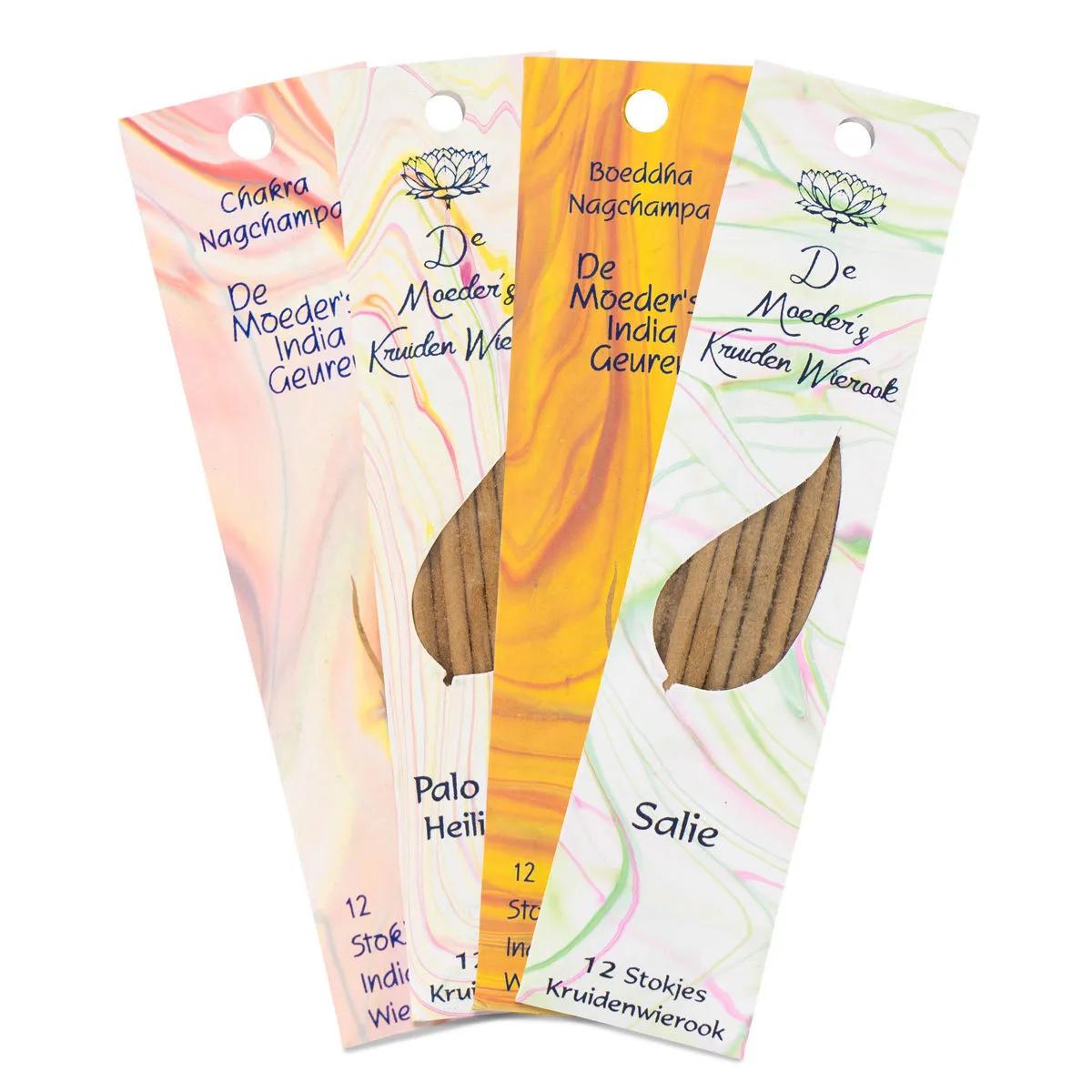
Buy more, pay less
Small Herbal Incense Sticks: Huge Aromas From Small Sticks
Small Herbal Incense Sticks are hand-made, all-natural incense sticks that fill your space with rich, exotic aromas from just 10cm of slow-burning botanical fragrance. Available in five distinct scents — Buddha, Chakra Nagchampa, Palo Santo, Sage, and Aloe Vera — each pack of 12 sticks is fair trade sourced and burns clean, meaning you only smell the fragrance itself, not chemical fillers or charcoal residue. If you've ever lit a cheap incense stick and ended up with a headache instead of a vibe, these are the antidote.
Which Scent Should You Pick?
| Variant | SKU | Character |
|---|---|---|
| Buddha | SM0307 | Warm, resinous, meditative — the classic temple scent. Best for winding down in the evening. |
| Chakra Nagchampa | SM0308 | Sweet, earthy, slightly floral. If you've ever walked into a yoga studio and thought "what is that?", it was probably Nagchampa. |
| Palo Santo | SM0309 | Woody, citrusy, with a faint minty finish. Traditionally used in South American cleansing rituals. The scent lingers nicely after the stick is done. |
| Sage | SM0306 | Herbaceous, dry, grounding. The go-to if you want something less sweet and more earthy. |
| Aloe Vera | SM0305 | Light, green, slightly cooling. The most subtle of the five — good if strong incense tends to overwhelm you. |
Our honest pick? Nagchampa is the crowd-pleaser if you're not sure where to start.
Why These Small Herbal Incense Sticks Belong on Your Shelf
There's a reason incense has been burned for thousands of years across virtually every culture on earth — it changes the feel of a room in seconds. But most of the cheap sticks you find at market stalls are loaded with synthetic fragrances, dipped in chemicals, and held together with charcoal binders that produce a harsh, smoky smell underneath whatever "lavender" or "sandalwood" they're claiming. You end up opening windows instead of relaxing.
These small herbal incense sticks take a different approach. They're hand-rolled from natural botanical ingredients — no synthetic fragrance oils, no charcoal core. The "clean burn" isn't just marketing talk; you can actually smell the difference. Light one up next to a mass-produced stick and the contrast is obvious. The herbal stick produces a lighter, more transparent smoke where you can pick out the individual scent notes. The cheap one smells like a car air freshener set on fire.
At 10cm, they're deliberately compact. A full-size incense stick (typically 25-30cm) burns for 45-60 minutes, which can be too much if you just want to scent a room for a bit before bed or during a short meditation session. These burn for roughly 15-20 minutes — enough to transform the atmosphere without committing to an hour of smoke. We've been stocking incense since the shop opened in 1999, and the shorter format is genuinely more practical for most people's daily use.
How Natural Incense Sticks Compare to Synthetic Alternatives
The difference between natural and synthetic incense comes down to what's actually in the stick and what ends up in your air. According to a study published in PMC on incense smoke composition, "in several epidemiological studies, incense burning had shown no harmful effect" when examining traditional natural incense formulations (PMC2377255). A separate Taiwanese cohort study noted that "short-term exposure to incense burning may not influence lung function and respiratory symptoms" (PMC8548258). That said, any combustion produces particulate matter, so burning in a ventilated space is just common sense — crack a window.
The fair trade sourcing is worth mentioning too. These aren't factory-extruded sticks from an industrial line. They're hand-made by artisans who are paid fairly for the work. At this price point, you're getting a genuinely ethical product that also happens to smell brilliant. That's not always the case with incense — a lot of what's on the market is made under conditions you'd rather not think about.
| Feature | These Small Herbal Incense Sticks | Typical Mass-Produced Sticks |
|---|---|---|
| Ingredients | All-natural botanical materials | Synthetic fragrance oils, charcoal binder |
| Burn time | Approx. 15-20 minutes | 45-60 minutes (full-size) |
| Length | 10cm | 25-30cm |
| Smoke character | Light, transparent, true-to-scent | Heavy, acrid undertone from charcoal |
| Sourcing | Fair trade, hand-made | Varies — often unclear |
| Pack size | 12 sticks | Typically 20-50 sticks |
How to Use Small Herbal Incense Sticks
- Choose your scent based on mood — Palo Santo or Sage for something grounding, Nagchampa or Buddha for something warmer and sweeter, Aloe Vera for something light and fresh.
- Place the stick in an incense holder or press it into a small mound of sand, ash, or rice in a heat-safe dish. The stick needs to stand upright or at a slight angle so it burns evenly.
- Light the tip of the stick with a match or lighter. Let the flame catch for 5-10 seconds until the tip glows orange.
- Blow out the flame gently. The stick should smoulder and produce a thin, steady stream of fragrant smoke.
- Place the holder on a stable, heat-proof surface away from curtains, paper, or anything flammable. A ceramic plate or stone tile works well.
- Crack a window slightly for ventilation — you want the scent to circulate, not stagnate.
- Let the stick burn down completely (roughly 15-20 minutes). The ash will fall downward, so make sure your holder or dish catches it.
- Once fully extinguished, dispose of the ash. If you need to put it out early, press the glowing tip into the sand or dip it in water.
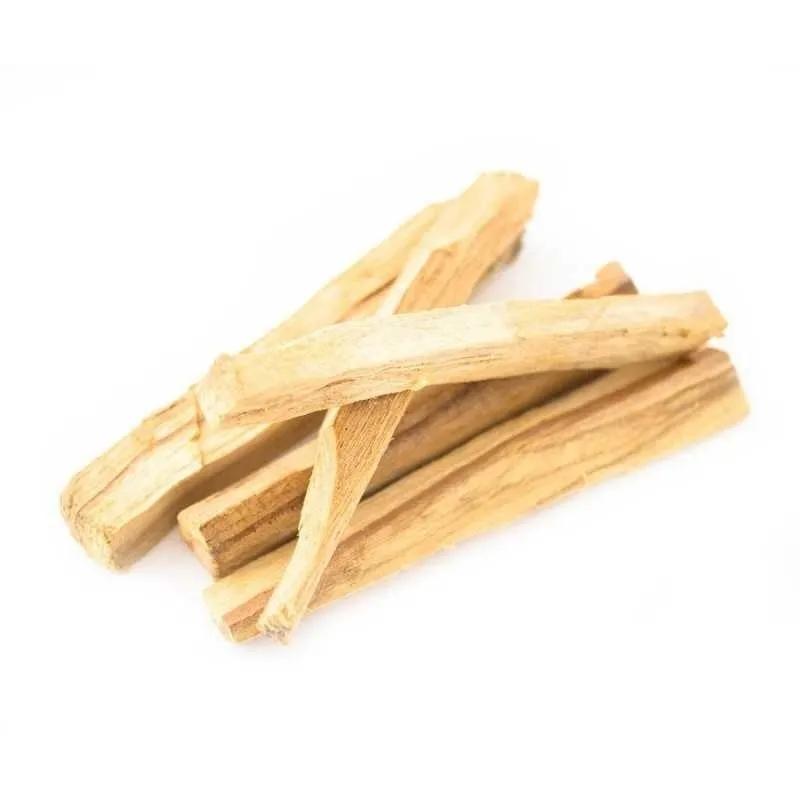
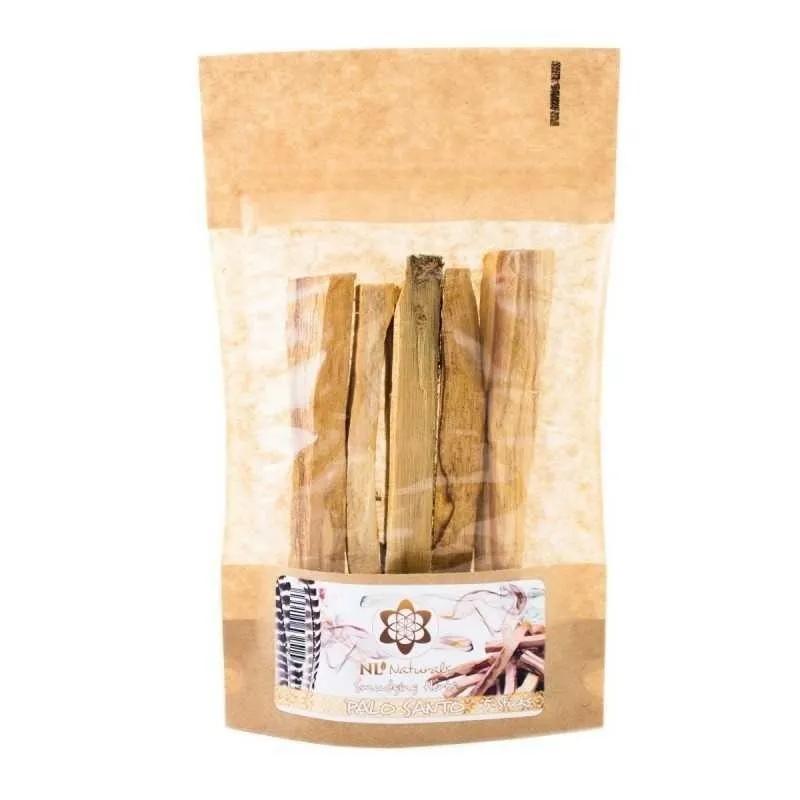
Complete your setup with a proper incense holder — burning a stick balanced on a random saucer works in a pinch, but a dedicated holder catches the ash cleanly and looks the part. If you're into the Palo Santo scent, check out our actual Palo Santo wood sticks for a rawer, more intense version of that same woody-citrus character.
Frequently Asked Questions
How long do these small herbal incense sticks burn?
Around 15-20 minutes per stick. They're 10cm long with no charcoal core, so they burn a bit quicker than full-size sticks. Good for short sessions — one stick is about right for a quick wind-down before bed.
Are these incense sticks truly all natural?
Yes. They're hand-made from natural botanical ingredients with no synthetic fragrance oils or charcoal binders. That's why the burn smells clean — you're only getting the scent of the actual herbs and resins, not chemical additives.
What does Palo Santo incense smell like?
Woody and warm with a surprising citrus brightness and a faint minty undertone. It's less sweet than Nagchampa and less herbaceous than Sage — somewhere in between. The scent tends to linger in the room for a good while after the stick finishes burning.
Can I burn these incense sticks without a holder?
Technically yes, but we wouldn't recommend it. At minimum, press the stick into a small mound of sand or rice on a ceramic plate. Without something to catch the falling ash, you'll end up with scorch marks on your furniture. A basic incense holder costs very little and saves the hassle.
What's the difference between Nagchampa and Buddha scent?
Nagchampa (Chakra Nagchampa here) is sweet, earthy, and slightly floral — the classic yoga studio scent. Buddha is warmer and more resinous, leaning toward a traditional temple incense character. Nagchampa is the more universally liked of the two; Buddha is better if you prefer deeper, heavier aromas.
Are these fair trade incense sticks?
Yes. They're hand-made and fair trade sourced. The artisans who produce them are compensated fairly, which isn't always the case in the incense industry — a lot of cheap sticks come from supply chains with zero transparency.
Is incense smoke harmful?
Any combustion produces some particulate matter. However, according to research published in PMC, several epidemiological studies found that traditional incense burning showed no harmful effect. Burning in a ventilated room is sensible practice — open a window slightly and you're sorted.
Last updated: April 2026
Related products
Medical disclaimer. This content is for informational purposes only and does not constitute medical advice. Consult a qualified healthcare provider before use of any substance.