
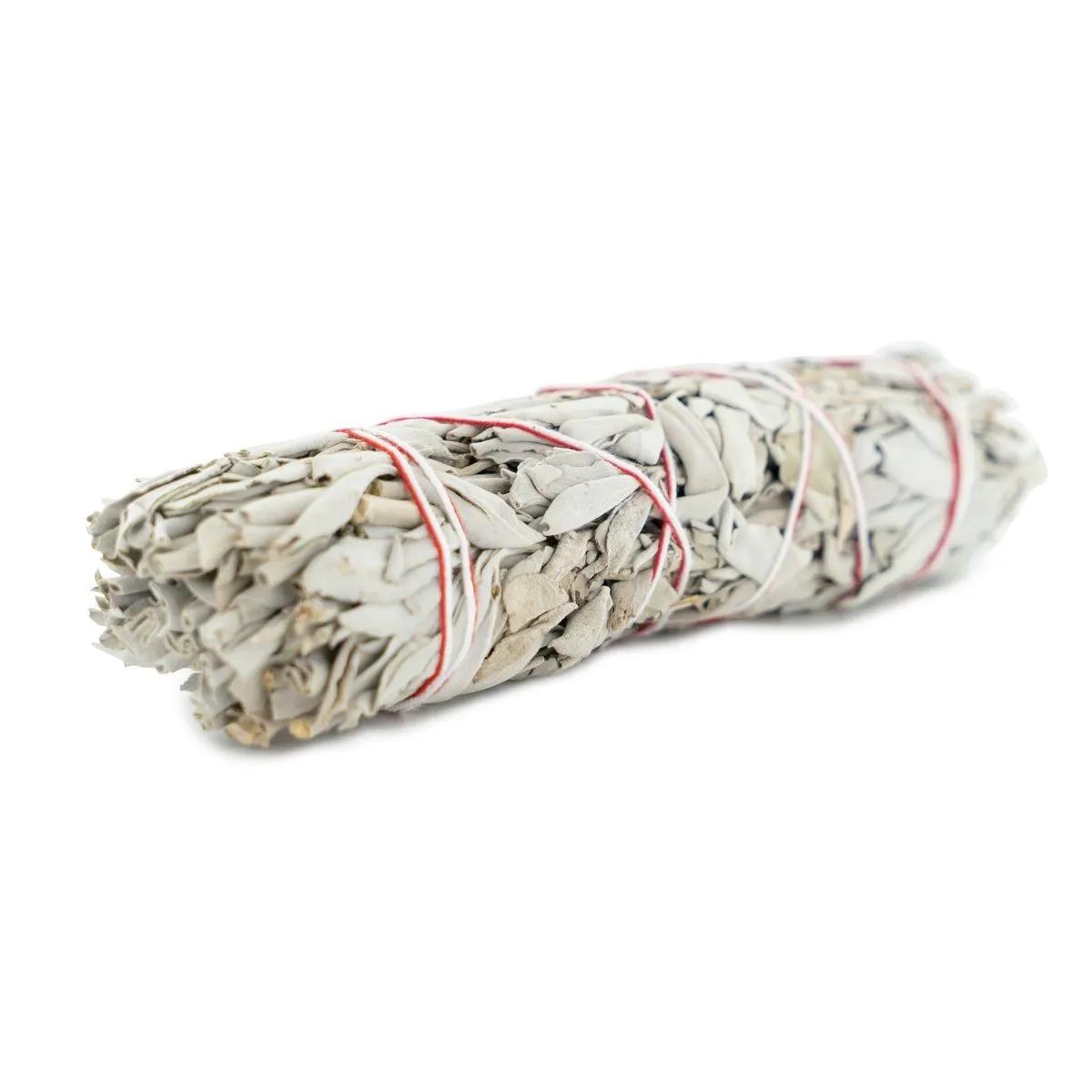
Incense White Sage
Buy more, pay less
White Sage Incense from California
White sage incense is a Californian-grown botanical bundle used traditionally by Native American tribes for space purification and ceremonial cleansing. This particular bundle — roughly 14 cm long and 3.5 cm thick — is made from whole dried Salvia apiana leaves, tightly bound into a smudge stick that burns slow and fills a room with that unmistakable resinous, slightly peppery smoke. If you've ever walked into a yoga studio or a mate's flat and caught that clean, herbaceous scent hanging in the air, this is what they were burning.
| Spec | Detail |
|---|---|
| Botanical name | Salvia apiana |
| Origin | California, USA |
| Length | ~14 cm |
| Thickness | ~3.5 cm |
| Form | Bundled dried leaf smudge stick |
| SKU | SM0272 |
| Traditional use | Space purification, ceremonial cleansing |
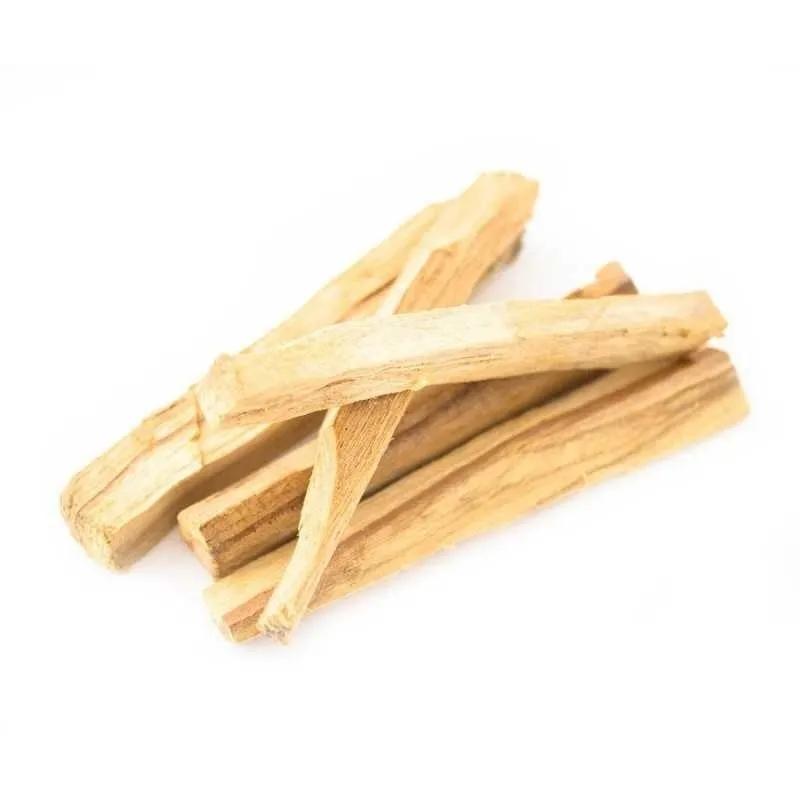
Pair your white sage bundle with a ceramic incense holder or abalone shell to catch falling ash safely. If you're drawn to ceremonial aromatics, Palo Santo wood sticks make a brilliant complement — lighter, sweeter, and traditionally burned after sage to invite positive energy once a space has been cleared.
Why White Sage Belongs in Your Ritual Kit
There's a reason this particular plant has been burned for centuries rather than any old herb. White sage (Salvia apiana) grows wild in the coastal sage scrub of Southern California and northern Mexico, where Native tribes in both North and South America used it in sacred purification rituals to cleanse a space of stale or negative energy. The practice has stuck around because the experience is genuinely striking — the smoke is thick, aromatic, and lingers in a way that changes the feel of a room.
Now, the honest bit: white sage smoke is potent. If you've got sensitive lungs, asthma, or pets (particularly birds or cats), crack a window while you burn. The smoke can irritate airways in enclosed spaces. That's not a design flaw — it's just the nature of burning dense, resinous plant material. Ventilation is your friend here.
What Does the Research Say About Sage?
White sage (Salvia apiana) is a distinct species from common sage (Salvia officinalis), but they share the Salvia genus and several overlapping bioactive compounds including terpenes and phenolics. Most clinical research focuses on S. officinalis, so it's worth knowing what the science has found there.
According to a review published in Nutrients (2021), the sage plant contains a host of terpenes and phenolics which interact with mechanisms pertinent to brain function and may improve aspects of cognition (PubMed 33466627). A separate systematic review noted that genus Salvia has been traditionally used as a brain-enhancing tonic across multiple cultures (PubMed 27888449). According to research in Pharmacognosy Magazine (2017), pharmacological properties of S. officinalis include antioxidant and antimicrobial activity among other observed effects (PMC 5634728).
According to a 2021 meta-analysis in Frontiers in Pharmacology, Salvia supplementation showed acute effects on cognitive function including attention and memory in both healthy individuals and clinical populations (PMC 8671046). The NCCIH (National Center for Complementary and Integrative Health) also notes ongoing research into sage's potential cognitive effects, though they emphasise that evidence remains preliminary (NCCIH).
One thing to flag: these studies involve oral ingestion of sage extracts at specific doses (research has used S. officinalis ethanolic extract at 333 mg in studies on memory and attention), not inhalation of smoke. Burning white sage is a traditional aromatic practice, not a clinical intervention. We mention the research because it's interesting context for the plant's broader profile — not because lighting a smudge stick replicates a clinical trial.
How to Use Your White Sage Smudge Stick
- Open a window or door in the room you plan to cleanse. Ventilation matters — you want the smoke to move through the space and out, not just accumulate.
- Hold the white sage bundle at a 45-degree angle and light the tip with a match or lighter. Let it catch for 10–15 seconds until you see a steady flame.
- Blow out the flame gently. The bundle should now be smouldering with a thick, fragrant smoke rising from the tip. If it goes out, relight — sometimes it takes a couple of tries with a fresh stick.
- Walk slowly through the space, letting the smoke drift into corners, doorways, and any areas that feel stagnant. Traditionally, you'd move clockwise through a room.
- Hold a fireproof dish, ceramic plate, or abalone shell underneath the bundle to catch any falling ash or embers.
- When finished, press the smouldering tip firmly into sand, soil, or the fireproof dish until it stops producing smoke. Don't run it under water — this damages the remaining leaves and makes relighting difficult.
- Store the unused portion somewhere dry. A single 14 cm bundle typically lasts 4–6 sessions depending on how long you let it burn each time. Most people burn for 3–5 minutes per room.
Safety Notes and Interactions
Burning white sage is generally straightforward, but a few things worth knowing. The smoke is dense and can trigger coughing or irritation in people with asthma or chronic respiratory conditions — always ventilate. Never leave a smouldering bundle unattended, and always use a fireproof holder.
For oral sage products (not this smudge stick, but worth noting if you use sage in other forms): according to pharmacological data, Salvia officinalis may interact with medications metabolised by CYP2C19 and CYP2C9 liver enzymes. If you take prescription medication and use sage supplements internally, that's a conversation for your doctor. Burning sage as incense does not carry the same interaction profile as oral consumption.
Last updated: April 2026
Related products
Medical disclaimer. This content is for informational purposes only and does not constitute medical advice. Consult a qualified healthcare provider before use of any substance.