
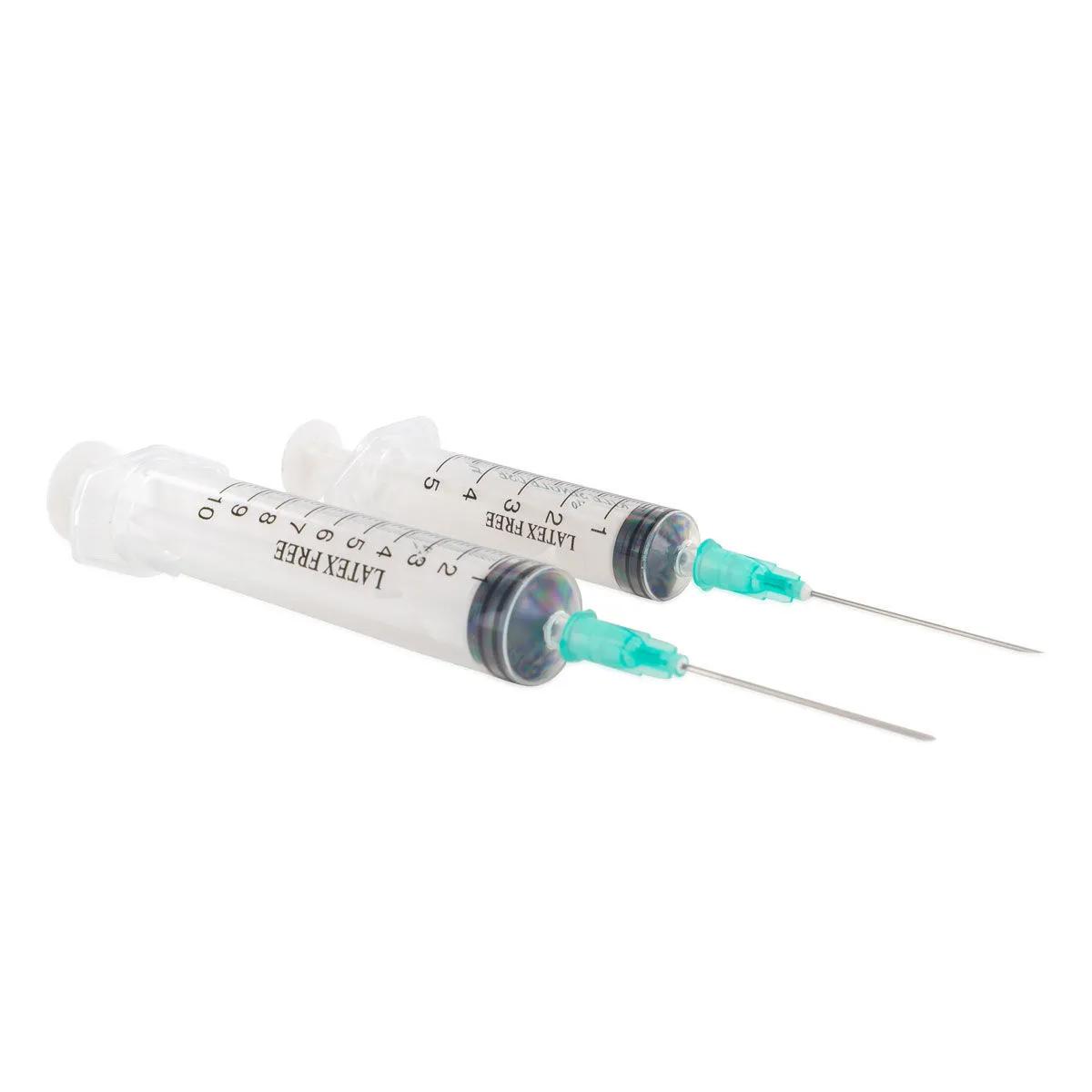
Syringe
Grow supplies
by Romed Holland
Sterile Empty Syringe for Spore Inoculation
A sterile empty syringe is a basic mycology tool that lets you prepare your own spore syringes with precision and confidence. Available in 5 ml and 10 ml sizes, each syringe ships with a separately packed sterile needle — ready to use straight out of the packet. We've been selling these since before most online grow shops existed, and they remain one of the most-ordered items in our mushroom supplies section for good reason: you can't inoculate substrate without one.
Which Size: 5 ml or 10 ml?
The 10 ml syringe (SKU: SH0005) is the one we'd pick for most growers. It holds enough spore solution to inoculate 2–3 substrate jars or bags in a single fill, which means fewer refills and less exposure to contaminants. The 5 ml syringe (SKU: SH0004) is lighter in the hand and gives you finer control over small injections — handy if you're working with agar plates or doing precise 1–2 ml inoculations into individual grain jars. Both accept the same needle gauge.
| Variant | Volume | SKU | Best use |
|---|---|---|---|
| 5 ml syringe | 5 millilitres | SH0004 | Agar work, small grain jars, precise micro-inoculations |
| 10 ml syringe | 10 millilitres | SH0005 | Standard spore syringes, multi-jar inoculation, substrate bags |
Specifications for Empty Sterile Syringe
Every syringe arrives individually sealed with the needle packed separately — both sterile until you open them. Here are the details at a glance.
| Specification | Detail |
|---|---|
| Type | Empty syringe with separate sterile needle |
| Available sizes | 5 ml / 10 ml |
| Sterility | Factory-sealed sterile packaging |
| Needle | Included, packed separately |
| Reusable | Yes — sterilise in pressure cooker for 15–20 minutes |
| Material | Polypropylene barrel, stainless steel needle |
| Category | Mushroom grow supplies |
Complete your inoculation setup with a spore vial and a mushroom grow kit. The spore vial gives you the genetics; this syringe delivers them into the substrate. If you're making multiple spore syringes at once, grab a pack of sterile alcohol wipes to keep your workspace clean between fills.
Why You Need a Dedicated Sterile Syringe
Contamination is the number one reason mushroom grows fail. We see it constantly — someone reuses an old syringe without sterilising it, or grabs a random one from a drawer, and within a week there's green mould where mycelium should be. A factory-sealed sterile syringe eliminates that variable entirely on your first use. You're starting clean, with zero bacterial or fungal hitchhikers.
The separately packed needle matters more than people think. When the needle sits inside the syringe during storage or shipping, any micro-abrasion on the barrel can harbour contaminants. Separate packaging means both components stay sealed in their own sterile environment until the moment you're ready to work. It's a small detail that makes a measurable difference — according to research published in the Journal of Hospital Infection, proper sterile packaging and handling of syringes and needles is a key factor in preventing microbial contamination during preparation procedures.
And here's the honest limitation: these are polypropylene syringes, not glass. They're lighter and cheaper, which is exactly what you want for mycology work where you might go through several in a session. But polypropylene can warp if you exceed 20 minutes in a pressure cooker, so stick to the 15–20 minute window when re-sterilising. Compared to glass syringes — which cost 3–4 times more — these do the same job for spore work. Glass only becomes worth it if you're doing repeated liquid culture transfers and want something that survives hundreds of autoclave cycles.
How to Use Your Sterile Syringe for Spore Inoculation
Proper technique takes about 5 minutes and saves you weeks of heartache. Follow these steps in a still-air box or in front of a laminar flow hood for best results.
- Wash your hands thoroughly, then put on clean nitrile gloves. Wipe your work surface with isopropyl alcohol (70% concentration works best — 99% evaporates too fast to kill everything).
- Open the syringe packaging carefully, touching only the plunger end. Avoid contact with the barrel tip where the needle attaches.
- Open the needle packaging and attach it to the syringe by twisting it clockwise onto the Luer-lock fitting until snug. Do not over-tighten.
- Draw up sterile water into the syringe to your desired volume — 10 ml for a standard spore syringe, or less if you're doing smaller batches.
- Scrape or drop your spore print material into the sterile water inside the syringe, or draw spore solution directly from a spore vial by inserting the needle through the vial's rubber septum.
- Replace the needle cap and shake the syringe gently for 15–30 seconds to distribute spores evenly throughout the solution.
- Store the completed spore syringe in the fridge (2–8°C) for 24 hours before use. This hydration period helps spores separate and disperse, giving you more even colonisation.
- When ready to inoculate, flame-sterilise the needle tip with a lighter until it glows red, let it cool for 10 seconds, then inject 1–2 ml of spore solution into each inoculation point on your substrate jar or bag.
How to Re-Sterilise Your Syringe
These syringes are reusable — a genuine advantage over single-use alternatives. Here's the process we recommend after 25 years of selling grow supplies.
- Disassemble the syringe: remove the needle and pull the plunger out of the barrel.
- Rinse all three components (barrel, plunger, needle) with distilled water to remove any residue.
- Wrap each component loosely in aluminium foil — this keeps them clean after sterilisation while allowing steam penetration.
- Place the wrapped components in your pressure cooker at 15 PSI (1 bar).
- Sterilise for 15–20 minutes. Do not exceed 20 minutes — polypropylene starts to soften and warp beyond that point, and a warped barrel means an unreliable seal with the plunger.
- Turn off the heat and let the pressure cooker depressurise naturally. Do not open it early — the rush of unsterile air defeats the purpose.
- Remove the foil-wrapped components once cool and store them sealed until your next session.
According to research on the reuse of disposable syringes (Greenough et al., 1990), the primary risk of multiple reuse is microbial contamination rather than mechanical failure — which is exactly why the pressure cooker step is non-negotiable. Skip it and you're gambling your entire grow.
Frequently Asked Questions
Can I reuse these syringes more than once?
Yes. Sterilise them in a pressure cooker at 15 PSI for 15–20 minutes between uses. We've seen growers get 10+ uses from a single syringe before the plunger seal starts to loosen. Replace when the plunger no longer slides smoothly or the barrel shows visible wear.
Why are the syringe and needle packed separately?
Separate packaging keeps both components independently sterile until you open them. If the needle sat inside the barrel during transit, vibration and friction could compromise the sterile environment. It's a small manufacturing choice that makes a real difference to contamination rates.
What needle gauge is included?
The included needle is a standard gauge suitable for spore work — thin enough to pierce injection ports and rubber septa on spore vials, wide enough to let spore solution pass without clogging. For most mushroom cultivation, this is the only gauge you'll need.
Should I choose the 5 ml or 10 ml syringe?
Go with 10 ml if you're making standard spore syringes for grain jar or substrate bag inoculation. The 5 ml is better for precision work like agar transfers or when you want tighter control over small volumes. We'd pick the 10 ml as a default — you can always draw less.
What happens if I sterilise for longer than 20 minutes?
The polypropylene barrel can warp, which means the plunger won't seal properly anymore. A bad seal means air gets in during draws and spore solution leaks during injection. Set a timer. 15–20 minutes at 15 PSI is the sweet spot — long enough to kill contaminants, short enough to preserve the plastic.
Can I use boiling water instead of a pressure cooker?
Boiling water (100°C) doesn't reliably kill all endospores. A pressure cooker reaches 121°C at 15 PSI, which is the standard for proper sterilisation. If you're serious about mycology, a pressure cooker is a one-time investment that saves countless failed grows.
Do I need a still-air box when using these syringes?
Strongly recommended. A still-air box (even a simple plastic tub flipped upside down with arm holes) reduces airborne contaminants dramatically during inoculation. Without one, every air current in your room carries potential mould spores straight to your work.
Last updated: April 2026
Related products
You might also like
Medical disclaimer. This content is for informational purposes only and does not constitute medical advice. Consult a qualified healthcare provider before use of any substance.