
Buy more, pay less
We'll only email you about this product — no marketing.
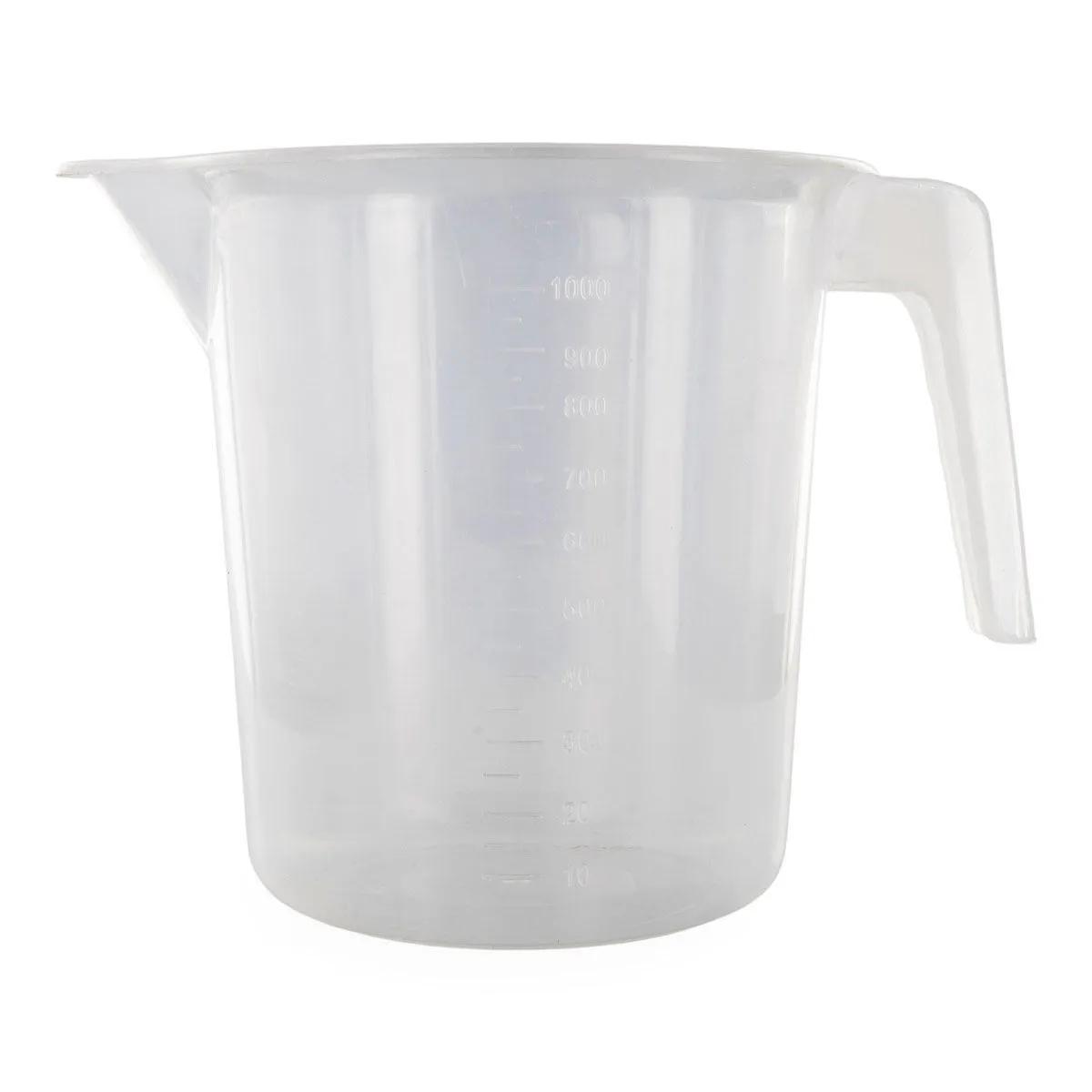
Measuring Cup for Precise Liquid Dosing
A measuring cup is a graduated plastic container that lets you portion liquids down to the exact millilitre — no guessing, no waste. This 1-litre measuring cup features clear 100ml interval markings running up the side, so you can read volumes at a glance. If you're mixing nutrients, preparing substrate solutions, or topping up a humidifier, this is the tool that keeps your measurements honest.
| Spec | Value |
|---|---|
| Material | Plastic |
| Capacity | 1000 ml |
| Graduation intervals | Every 100 ml |
| SKU | SH0153 |
| Weight | Lightweight (handheld) |
| Primary use | Gardening, substrate preparation, nutrient mixing |
Complete your grow setup: pair this measuring cup with a mushroom grow kit and a misting bottle. Accurate nutrient dosing and consistent humidity are the two things that separate a clean flush from a failed tub — this cup handles the first half of that equation.
Why You Need a Measuring Cup in Your Grow Space
Eyeballing liquids is one of those habits that works until it doesn't. We've seen growers dump twice the recommended nutrient concentration into a substrate soak and wonder why their mycelium stalled. The margin between "enough" and "too much" is often just 50–100 ml, and your eye simply can't judge that reliably in a bucket or bottle.
According to a study on accuracy and precision of fluid volume measurement, the type of container used has a measurable effect on pouring accuracy — participants were significantly less precise when using unmarked or poorly graduated vessels (PMC8859054). It's that straightforward.
The honest limitation? This is a basic plastic measuring cup — it's not borosilicate glass, it won't survive a drop onto tiles the way a thick Pyrex jug would, and the markings will fade over time if you scrub them aggressively. But for the price, you'd buy three before you'd invest in a lab-grade graduated cylinder. It does the job, it's light enough to hold one-handed while you pour with the other, and it rinses clean in seconds. That's all you need from a measuring cup at this price point.
How to Use Your Measuring Cup
- Place the measuring cup on a flat, level surface. Reading volumes while holding the cup mid-air introduces tilt error — according to research on dosing accuracy, measuring on a flat surface significantly reduces mistakes (PMC6963991).
- Pour your liquid slowly until it reaches the desired graduation line. Crouch down so your eye is level with the marking — reading from above creates a parallax error that can throw you off by 50–100 ml at the 1-litre mark.
- For nutrient solutions, add the concentrate to the water already in the cup rather than the other way round. This gives you better control and avoids overshooting.
- After use, rinse the cup immediately with warm water. Dried nutrient residue can obscure the graduation lines and affect your next measurement.
- Store upside down on a clean surface to keep dust and debris out of the cup between uses.
Measuring Cup vs. Kitchen Alternatives
| Method | Accuracy | Durability in a grow space | Cost |
|---|---|---|---|
| Graduated measuring cup (this product) | 100 ml intervals — reliable to approx. 50 ml | High — plastic, shatterproof | Low |
| Kitchen mug (unmarked) | Guesswork — 15–20% error at 1 litre | Medium — ceramic chips and cracks | Free (you already own one) |
| Glass lab beaker | 10–50 ml intervals — very precise | Low — one drop and it's done | Higher |
| Syringe (small volumes) | 1 ml intervals — best for small doses | High | Low, but only useful under 60 ml |
If you need to measure volumes under 50 ml — say, for a concentrated additive — a syringe is the better tool. This measuring cup is the best measuring cup for bulk liquid tasks: water for soaking substrate, nutrient solution for a reservoir, or hydrogen peroxide dilutions for sterilisation. Different tools for different scales.
Frequently Asked Questions
Can I use this measuring cup for hot liquids?
It's plastic, so boiling water is a bad idea — it could warp the cup and distort the graduation markings. Warm water up to around 50–60°C is fine for most nutrient mixes. For anything hotter, use a heat-resistant glass jug.
How accurate are the 100 ml markings?
Accurate enough for gardening and grow-room work. You're looking at roughly 50 ml margin at worst, which is well within tolerance for substrate soaking and nutrient mixing. For laboratory-grade precision, you'd need a glass graduated cylinder.
Will the markings fade over time?
The graduations are moulded into the plastic, so the physical lines stay put. The printed numbers can fade with heavy scrubbing or prolonged exposure to acidic nutrient solutions. Rinse promptly after each use and they'll last longer.
Is a 1-litre measuring cup big enough for grow kits?
For most standard mushroom grow kits, 1 litre is plenty — typical soaking volumes sit between 300 ml and 750 ml. If you're running multiple large monotubs simultaneously, you might want a 2-litre or 5-litre bucket alongside this cup for batch mixing.
Can I measure dry materials like perlite or vermiculite with this?
You can, but volume measurements for dry substrates are less precise because of air gaps between particles. Pack loosely, tap the side gently, and read the level. For weight-critical mixes, a digital scale is more reliable.
How should I clean the measuring cup after mixing nutrients?
Rinse with warm water immediately after use. For stubborn residue, a drop of washing-up liquid and a soft sponge does the job. Avoid abrasive scourers — they'll scratch the plastic and make the markings harder to read.
Last updated: April 2026
Related products
Medical disclaimer. This content is for informational purposes only and does not constitute medical advice. Consult a qualified healthcare provider before use of any substance.