
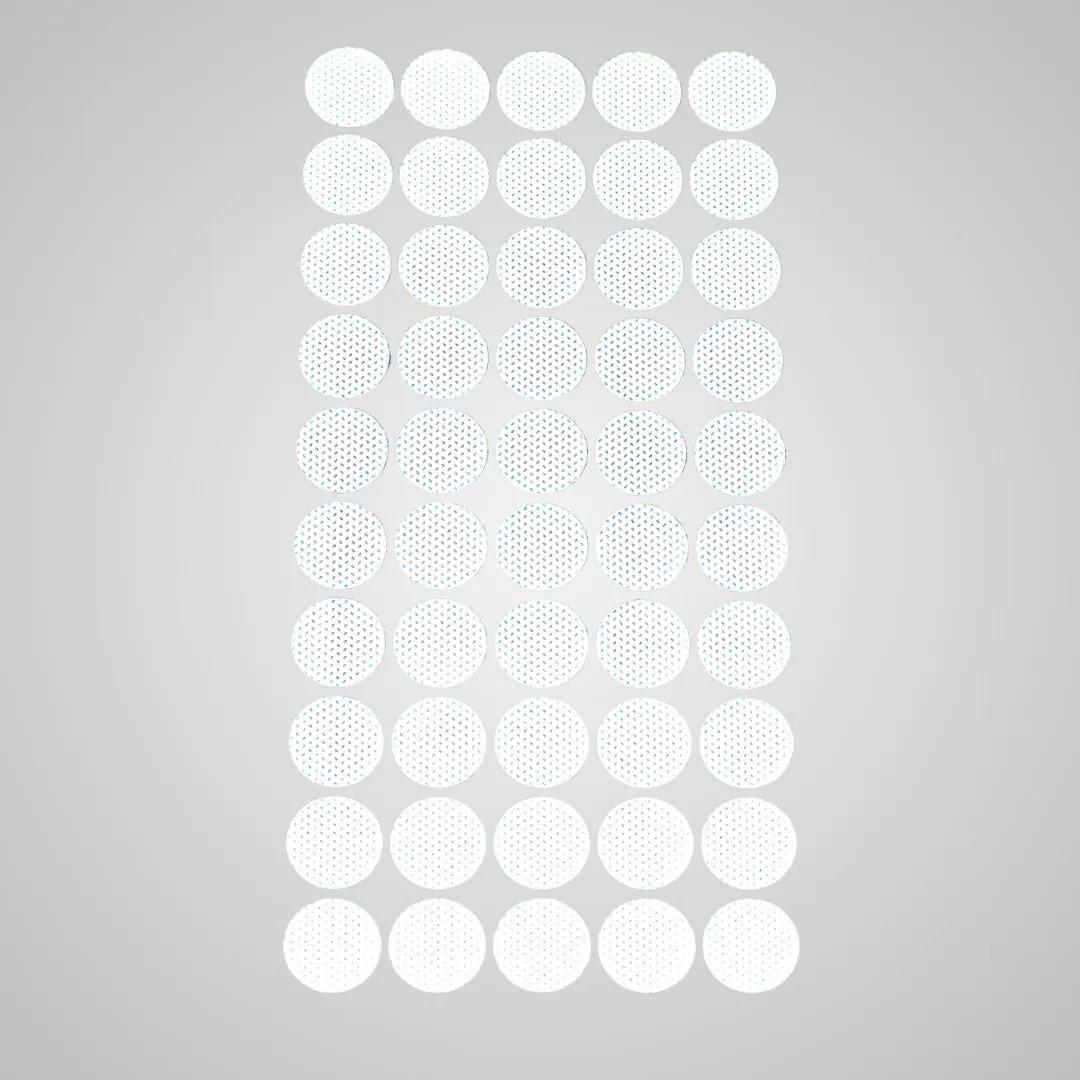
Adherable Lid Filters 50-Pack (Microppose)
Grow supplies
by Microppose
We'll only email you about this product — no marketing.
Microppose Adherable Lid Filters 50-Pack: 0.3-Micron Contamination Defence for Mushroom Growers
The Microppose Adherable Lid Filter is a self-adhesive, 0.3-micron filter patch that blocks bacterial and fungal contaminants from entering your growing containers while still allowing gas exchange. Stick one over a hole in your jar lid, spawn bag, or monotub and your mycelium gets the fresh air it needs without the uninvited guests. Fifty filters per pack — enough to kit out a serious batch run or keep a hobbyist stocked for months.
Why 0.3-Micron Lid Filters Are Critical for Mushroom Cultivation
Contamination is the single biggest reason mushroom grows fail — and it usually happens through the air holes you drilled yourself. Trichoderma, Neurospora crassa (the bright orange bread mould), Rhizopus stolonifer, Bacillus species — they're all floating around your workspace on invisible spores. One lands inside your jar and the whole thing is done. We've seen growers lose ten jars in a row because they used micropore tape that peeled back after a single sterilisation cycle.
These Microppose filters solve the problem properly. The 0.3-micron pore size is small enough to physically block bacterial spores (most are 0.5-5 microns) and fungal contaminants (typically 2-50 microns), while still allowing oxygen and CO2 to pass through. That's the balance you need: your mycelium breathes, contaminants don't get in. The oleophobic and hydrophobic material means moisture and oils won't clog the filter either, so it keeps working through the entire colonisation and fruiting cycle.
The honest limitation? These are single-use. Once you've pressure-cooked a jar or autoclaved your grain, the adhesive has done its job and you shouldn't try to peel and reapply. At 50 per pack, though, the cost per jar is minimal — and that's a fraction of what you'd lose replacing a contaminated batch of grain spawn.
Specifications
| Spec | Value |
|---|---|
| Brand | Microppose |
| SKU | SH0194 |
| Filter pore size | 0.3 microns |
| Material properties | Oleophobic and hydrophobic |
| Adhesive | 3M industrial-grade |
| Material | 100% recycled |
| Quantity | 50 filters per pack |
| Compatible with | Jars, tubs, spawn bags, monotubs, any growing container |
| Autoclavable | Yes — withstands pressure cooking at 15 PSI / 121°C |
Complete your sterile setup with the Microppose Adherable Injection Ports 50-Pack. Stick a filter on one side of your lid for gas exchange and an injection port on the other for inoculation — no need to open the jar at all. That closed-system approach is the best way to keep contaminants out from start to finish.
What Makes These Better Than Micropore Tape
Most growers start with micropore tape. It's cheap, it's available at any pharmacy, and it works — sort of. The problem is that micropore tape peels. Condensation from sterilisation loosens the adhesive, and once there's a gap between the tape and the lid, contaminants walk right in. We've had customers tell us they double- and triple-layered micropore tape only to find green mould in their jars two weeks later.
Microppose filters use 3M adhesive that's specifically designed to hold under heat and moisture. Once it's stuck, it stays stuck. The filter material itself is also a step up — the 0.3-micron rating is tighter than standard micropore tape (which typically sits around 0.5 microns), and the oleophobic coating prevents the filter from becoming saturated and losing airflow. It's the difference between a bodge job and a proper solution. If you're running more than a couple of jars, the upgrade pays for itself the first time you don't lose a batch.
How to Apply Microppose Adherable Lid Filters
- Drill or punch a hole in your jar lid, tub lid, or growing container. A 20-25mm hole works well — large enough for adequate gas exchange but not so large the filter can't cover it with overlap on all sides.
- Clean the surface around the hole with isopropyl alcohol (70% IPA). The adhesive bonds best to clean, dry, grease-free surfaces. Let it dry completely.
- Peel the backing off one Microppose filter and press it firmly over the hole, smooth side out. Make sure the adhesive makes full contact around the entire perimeter — no air gaps, no lifted edges.
- If you're using these on grain jars for pressure cooking, apply the filter before sterilisation. The 3M adhesive and filter material are rated to withstand autoclave temperatures (121°C at 15 PSI).
- After sterilisation, allow jars to cool to room temperature before inoculation. If you're using Microppose Injection Ports, inoculate through the port without ever opening the lid.
- Once colonisation is complete and you move to fruiting conditions, the same filter continues to provide gas exchange. No need to swap or modify.
Contaminants These Filters Block
| Contaminant | Typical spore size | Blocked by 0.3-micron filter |
|---|---|---|
| Trichoderma (green mould) | 2.5-4.5 microns | Yes |
| Neurospora crassa (orange bread mould) | 6-8 microns | Yes |
| Rhizopus stolonifer (black bread mould) | 6-15 microns | Yes |
| Bacillus species (bacteria) | 0.5-1.5 microns | Yes |
| Aspergillus (black/yellow mould) | 2.5-3.5 microns | Yes |
| Penicillium (blue-green mould) | 2.5-4 microns | Yes |
Frequently Asked Questions
Can Microppose lid filters survive pressure cooking?
Yes. The 3M adhesive and 0.3-micron filter material are designed to withstand standard autoclave conditions — 121°C at 15 PSI for 60-90 minutes. Apply the filter before sterilisation and it'll stay put.
How many lid filters do I need per jar?
One filter per jar is standard. Drill a single hole in the lid, cover it with one filter. If you're also using an injection port, you'll have two holes — one filter and one port per lid.
Are these reusable after a grow cycle?
No. These are single-use filters. The adhesive is designed for a permanent bond, and attempting to peel and reapply risks creating gaps that let contaminants through. At 50 per pack, the cost per jar is low enough that reusing isn't worth the risk.
What size hole should I drill in my jar lid?
A 20-25mm hole gives good gas exchange while leaving enough lid surface around the edges for the adhesive to grip. Use a step drill bit for clean, burr-free holes in metal lids.
Do these work on spawn bags as well as jars?
Yes. Microppose filters stick to any clean, smooth surface — metal lids, plastic tubs, polypropylene bags. Just make sure the surface is wiped with isopropyl alcohol and fully dry before applying.
What's the difference between these and standard micropore tape?
Two things: filtration rating and adhesion. These filters are rated at 0.3 microns (tighter than most micropore tape at around 0.5 microns), and the 3M adhesive holds through sterilisation cycles where tape commonly peels. The oleophobic coating also prevents moisture clogging.
Can I use these filters on a monotub for fruiting?
Absolutely. Drill your FAE holes in the tub, cover them with Microppose filters, and you get passive gas exchange without contaminant entry. Works well for unmodified or lightly modified monotub setups.
Last updated: April 2026
Related products
You might also like
Medical disclaimer. This content is for informational purposes only and does not constitute medical advice. Consult a qualified healthcare provider before use of any substance.